Feeds:
Posts
Comments

Archive for the ‘Art Rock’ Category

TRACKLISTING:
1. Hawks Circle The Mountain (7:09)
2. Snowswept (4:12)
3. Kansas Regrets (4:39)
4. Red Leaves (8.39)
5. Floor 67 (9:53)
6. Natasha of the Burning Woods (6:28)
7. Searise (13:10)
8. A Rumour of Twilight (2:33)
9. The Howling Wind (5:28) (bonus track)

LINEUP:
Jacob Holm-Lupo – guitars
Lars Fredrik Frøislie – keyboards
Sylvia Skjellestad – vocals
Mattias Olsson – drums
Ketil Vestrum Einarsen – flutes, woodwinds
Ellen Andrea Wang – bass

With:
Tim Bowness – vocals (3)
David Lundberg – Fender Rhodes and Wurlitzer (3), orchestration (2)
Michael S Judge – guitar solo (1)

In the early Nineties, Norwegian outfit White Willow was among the contingent of Scandinavian bands that spearheaded a revival of progressive rock that in the next two decades would spread to the rest of the world. After almost 20 years of activity, appearances at high-profile festivals such as NEARfest, Crescendo and Summer’s End,  and the release of 6 studio album, they have established themselves as one of the most important modern prog acts. Led by multi-instrumentalist and composer Jacob Holm-Lupo (owner of Termo Records together with keyboardist Lars Fredrik Frøislie), the band have gone through numerous line-up changes, and the release of their fifth album, Signal To Noise (2006) was followed by a six-year hiatus. Now down to a quintet, with only Holm-Lupo remaining of the band that had debuted in 1995 with the acclaimed Ignis Fatuus, White Willow have made their long-awaited comeback with the return of original vocalist Sylvia Erichsen (now Skjellestad), as well as two new entries  – bassist Ellen Andrea Wang (of Norwegian avant-garde outfit SynKoke) and drummer Mattias Olsson (known for his work with Änglagård and Pär Lindh Project).

Before Terminal Twilight, White Willow were one of the (unfortunately) many bands with whose name and reputation I was acquainted – without, however, having ever heard any of their music. Being familiar with the “big two” names of the Scandinavian prog renaissance, and having read reviews of the band’s previous albums, I was expecting something along the lines of Änglagård or Anekdoten’s output, a  riveting mixture of melody and angularity tinged with sadness, though never gratuitously depressing. My first taste of Terminal Twilight was, however, quite different, as some of the songs (especially those in the first half of the album) featured catchy, almost upbeat elements typical of successful “crossovers” between conventional progressive rock modes and more mainstream genres. Sylvia Skjellestad occasionally sounded like a gentler, less quirky version of Björk, and a few times I was reminded of Celtic/New Age artists such as Clannad or Loreena McKennitt.

It took me a number of listens before the many layers of the album began to unfold, revealing the sheer eclecticism of the band. While the album is not tainted with the blatant derivativeness that seems to be common currency nowadays, I was able to detect quite a few diverse influences while listening to Terminal Twilight. At first,  the mainstream component (mainly conveyed by the vocals) seemed to prevail, but with successive listens the complexity of the compositions began to emerge. The classic symphonic component, represented by Frøislie’s impressive array of vintage keyboards, is at times cleverly concealed, and will often surface when least expected. With a line-up that reads like a “who’s who” of Scandinavian prog (besides Olsson’s past associations, Frøislie is also involved with Wobbler and In Lingua Mortua, and flutist Ketil Westrum Einarsen was a member of Jaga Jazzist), the stunning musicianship displayed on the album will certainly not come as a surprise, though listeners never feels they are being bludgeoned over the head with technical fireworks. In true Scandinavian tradition, the members of White Willow are ensemble players, and individual skill is put at the service of the end result.

Clocking in at about one hour, Terminal Twilight features eight “official” tracks, plus a bonus track, the strongly percussive “The Howling Wind”, which with its experimental feel might point to intriguing future developments in the band’s sound. Opener “Hawks Circling the Mountain” immediately evidences the contrast between the mellow, almost genial vocals and the intricacy of the instrumental sections. Frøislie’s keyboards paint a rich range of soundscapes, with chilly electronics competing with the warmth of the piano and mellotron to which the flute adds its distinctive voice, while the guitar remains on the sidelines for most of the song, emerging towards the end in a jangly, slightly discordant solo (courtesy of Mike Judge, aka The Nerve Institute). In the next two tracks, with their restrained running time and strong crossover appeal, White Willow veer into contemporary prog/art rock territorie,. The combination of martial, tribal-sounding drums and chiming guitar in “Snowswept” reminded me of U2, while the atmospheric “Kansas Regrets” sees a sensitive vocal performance from guest Tim Bowness of No-Man; not surprisingly, the song contains echoes of Porcupine Tree, as well as Jakko Jakszyk’s work as a solo artist and on the latest King Crimson project, A Scarcity of Miracles.

With “Red Leaves”, the album enters more traditional prog territory, with an orgy of Mellotron and other keyboards whose majestic sweep brings to mind Rick Wakeman and his essential contribution to the classic Yes albums of the early Seventies. Jacob Holm-Lupo’s guitar steps into the limelight in the second half of the track, lending both a harder edge and an almost Hackettian lyricism. “Floor 67”, the second longest song on the album, merges the poppy, Latin-tinged accessibility of the vocals (reinforced by the mention of siestas and verandas in the lyrics) with faintly new-agey acoustic passages, and heavier, drum-fuelled  moments – in my view, not very successfully, since the track comes across as a bit patchy. On the other hand, the album’s pièce de resistance, the 13-minute “Searise”, will delight fans of vintage Anglagard and Anekdoten. Mattias Olsson’s sensational drum performance is aided and abetted by Froislie’s no-holds-barred keyboards (incuding some particularly fine Hammond organ runs), and tempered by gently pastoral flute inserts that reminded me of early PFM. Mostly instrumental, the song packs quite a few tempo changes, and its solemn symphonic structure is enlivened by glimpses of jazz and folk influences. The album is wrapped up by the short “A Rumour of Twilight”, a melancholy, mainly acoustic number with lovely guitar; the other instrumental, “Natasha of the Burning Woods”, hovers between rarefied and densely orchestrated without clearly choosing either direction, though enhanced by the clear, melodic tone of the steel guitar.

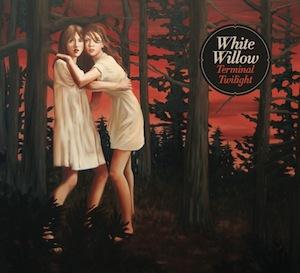
With its beautiful though faintly disturbing cover artwork,  Terminal Twilight enjoys superb sound quality (not surprising to anyone acquainted with both Frøislie and Holm-Lupo’s painstaking search for sonic perfection), and achieves a commendable balance between vocal and instrumental sections. However, it is an also an album that requires time and attention in order to be fully appreciated, and the first approach might be deceiving as well as disappointing. Moreover, the album’s unabashed eclecticism may produce an impression of patchiness that only repeated listens will dispel. In any case, Terminal Twilight is a very solid release that manages to  reconcile the classic symphonic prog tradition with the more contemporary trends of the genre, and is therefore likely to appeal to both conservative and adventurous fans.

Links:
http://www.whitewillow.info/
http://www.myspace.com/whitewillowband

http://www.termorecords.com/

Read Full Post »

TRACKLISTING:
1. Repeat It (4:33)
2. In A Sense (5:24)
3. A (Post-Apocalyptic) Bedtime Story (5:07)
4. Chrysalis:
Part 1: In Between The Lines (2:53)
Part 2:  The Pundits (3:00)
Part 3: The Muse Returns (1:41)
Part 4: Free to Fall (3:15)
5. The Projectionist (4:40)
6. Tear Gas (4:46)
7. Higher Than Mountains (4:19)
8. Gravity (10:12)
9. Gravity (instrumental – bonus track) (10:02)

LINEUP:
Eric Sands – fretted and fretless bass, electric guitars
Jeff Hodges – vocals, piano, organ, synth, samples, percussion
Elise Testone – vocals
Quentin Ravenel – drums
Cameron Harder Handel – trumpet
Jenny Hugh – violin
Steve Carroll – lyrics, imagery

With:
Keith Bruce – electric guitar (1, 5)
Oliver Caminos – guitar (2, 3)
Alexandra Hodges – backing vocals (5)
Tim Hodson – acoustic guitar (2, 8 )
Vitaly Popeloff – guitar (1, 4/1, 4/2)
Dan Wright – guitar (4/4, 6)

Hailing from Atlanta, Georgia, where they were founded by multi-instrumentalists Eric Sands and Jeff Hodges, Man On Fire first appeared on the music scene in 1998 with the release of their eponymous debut album. It was followed by The Undefined Design (2003), which featured Kansas’ David Ragsdale on violin, and Habitat (2006), with Adrian Belew guesting on guitar (as well as  Ragsdale’s return). Chrysalis, their long-awaited fourth album, sees the band expanded to a six-piece, with lyrics provided once again by 10T Records president Steve Carroll.

Though I was familiar with the band’s name, my only contact with Man On Fire prior to Chrysalis occurred when I had the opportunity to listen to Undercover, a compilation of cover versions of famous progressive rock songs released by 10T Records in 2009. Man On Fire’s contribution to the album, Japan’s “Visions of China”, obviously attracted my attention, as the song is a great favourite of mine; however, in the intervening months I was so overwhelmed with music to review that I all but forgot about it. The comments I had heard about the band were all largely positive, but most of them pointed out that Man On Fire were not “really” prog – meaning they did not sound like Yes or Genesis, and had at least some “mainstream” potential, which made them somewhat suspect in the eyes of purists.

When, a couple of weeks ago, I received a promo copy of Chrysalis in the mail, I did expect a measure of accessibility from the band. What took me completely by surprise, however, was the sheer brilliance of the music that came out of my speakers once I put the CD into my player. Fresh and exhilarating, brimming with memorable melodies and stunning vocal performances, it took me back to that time – the early to mid-1980s – when I spent most of my days glued to the radio, soaking in all the newest releases. In spite of that period’s grim reputation of being a wasteland for progressive rock, the ‘80s were rife with incredible talent, both as regards quality pop and more experimental fare (not to mention the wealth of classic heavy metal albums). The essence of that musical bounty – so undeservedly reviled by the snobs of this world – came back in full force when I first heard Chrysalis. The album was that rare beast – a perfect marriage between the cream of the ‘80s’ musical crop and a genuinely progressive attitude, made of technical brilliance and unabashed eclecticism.

Indeed, to borrow a metaphor from the world of cooking, Chrysalis is definitely not “your mom’s prog” Though the very mention of  the ‘80s and prog in the same breath may conjure memories of extremely divisive albums such as Yes’ 90125 or the whole of Genesis’ output in that decade, Chrysalis possesses a warm, organic sound that avoids some of the excesses of that decade (such as the over-reliance on electronic drums), all the while keeping that inimitable blend of accessibility and subtle complexity. Unlike so many “real” prog releases, which seem to adopt a “more is more” approach often resulting in bloated, pretentious affairs, this is an album that makes listening a pleasure rather than a chore. Chrysalis is a lean, mean machine offering 58 minutes of perfectly balanced music – with the majority of the tracks between 4 and 5 minutes, a 4-part epic that, in spite of its very restrained running time (10 minutes), manages to hold the attention much better than its twice-as-long counterparts, and a stunner of a closing track that sums up the album and lays the groundwork for the future developments of the band’s career.

Right from the opening strains of “Repeat It” it becomes obvious that Chrysalis is not your average symphonic prog album with a Seventies fetish. Its funky swagger, with Eric Sands’s meaty bass lines enhanced by synth bursts, provides a perfect foil for Jeff Hodges’ occasionally gruff, immensely expressive vocals. Organ flurries and airy keyboards, accented by guitar (courtesy of From.uz mainman Vitaly Popeloff), add layers of texture to the catchy yet intriguing fabric of the song. The haunting folksy beauty of Jenny Hugh’s violin refrain joins the mix of pneumatic bass and weird electronics – so reminiscent of Japan’s best moments – to make “In a Sense” one of the highlights of the album, driven to an exhilarating pace by the soulful vocal interplay between Hodges and Elise Testone, and tempered by more atmospheric moments. The Japan influence is unmistakable on most of the album, though Hodges’ voice is definitely not as languid as David Sylvian’s, often coming across as more Motown than standard prog. The skewed ballad of “A (Post-Apocalyptic) Bedtime Story”, bolstered by the flawless work of the rhythm section and peppered with trumpet bursts underscoring the intensity of the vocals, reminded me of another exquisitely boundary-crossing outfit – New Jersey’s own 3RDegree, who share Man On Fire’s appreciation of eclectic acts such as Rush. The Canadian trio’s influence crops up in the most accessible track on the album, the upbeat “Higher Than Mountains”, whose mainstream appeal is subtly spiked by a slightly chaotic ending.

The title-track offers a nice twist on the old warhorse of the multi-part epic, with short sections strung together by a main theme, and made especially memorable by the wistful voice of Cameron Harder Handel’s trumpet. Eric Sands is again joined by Vitaly Popeloff on guitar, providing both clean, melodic lines with an almost Gilmourian touch and  harsh riffs, while the mood runs the gamut from hauntingly melancholy (as in Pt 3, “The Muse Returns”) to dynamic and muscular (as in Pt 4, “Free to Fall”), with distinct echoes of bands such as Tears for Fears or Talk Talk as well as Rush or Pink Floyd. With “The Projectionist” the band dive headlong into pure ‘80s territory with an irresistibly funky, slightly angular number propelled by Quentin Ravenel’s drums, spiced up by bits of dissonance and softened by lovely vocal harmonies and entrancing keyboard washes,  hinting at some of Duran Duran’s best output. “Tear Gas” goes even further, regaling the listener with a prime example of “progressive dance” that  evokes both Madonna and the “red/blue/yellow” period of King Crimson’s career – throwing in weird electronic effects, razor-sharp riffing, slinky bass lines, soulful trumpet and haunting female backing vocals. Then, when you thought things could not get more interesting, “Gravity (also included in an instrumental-only version) kicks in, wrapping up the album with 10 minutes of absolute bliss, and the splendid voice of Elise Testone (bringing back memories of Alison Moyet or Frankie Goes To Hollywood’s Holly Johnson) as the icing on the cake. The song is so funky and exhilarating that it makes you want to dance, the synergy between the instruments nothing short of astonishing, while the trumpet solo at the end, followed by sparse, wistful piano and recorded voices, is alone worth the price of admission.

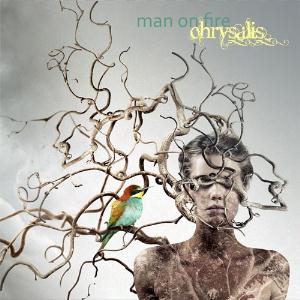
As many of the references I have used in the previous paragraphs make abundantly clear, those who believe that the 1980s were a dismal time for interesting music would do very well to steer clear of Chrysalis. While, from a compositional point of view, the album has enough complexity to sustain any comparisons with  more “traditional” prog releases,  the music featured on Chrysalis is quite unlikely to appeal to purists or staunch ‘70s worshippers. On the other hand, anyone into art rock/crossover (labels that are often used condescendingly to define something that cannot fully aspire to the hallowed “prog” tag), and, obviously, devotees of ‘80s music will not fail to appreciate the brilliance of Man On Fire’s latest effort. With striking artwork and photography and Steve Carroll’s literate, thought-provoking lyrics rounding off a thoroughly modern package, Chrysalis is another strong contender for my personal Top 10 of 2011. Hopefully the band will not keep us waiting for another six years before their next release.

Links:
http://www.myspace.com/manonfireband

http://10trecords.com/

Read Full Post »

TRACKLISTING:

1. Schizoid & Guntrip (2:46)
2. In the Movie of You (7:57)
3. Devotee (7:24)
4. Ambiance for the Active Mind (6:40)
5. Fantastic Dreamer (6:26)
6. Releasing (5:21)
7. Fading in the Rain (6:29)
8. Upon Further Review (4:26)
9. Vision (13:50)

LINEUP:

Henry Tarnecky – vocals, keyboards
Blake Tobias – keyboards, bass
Jack Wright – guitars, drums

With:
Glenn Arpino – keyboards
Tom Shiben – bass
Nicole Tarnecky – vocals

Temporal Chaos Project (TCP for short) are a trio based in different states of north-eastern USA, who initially met on the Internet and started a collaboration that resulted in the album The Way, released in 2009. Their second album, Fantastic Dreamer, followed in April 2011, with the core group of Henry Tarnecky, Blake Tobias and Jack Wright augmented by three guest musicians. Both albums were released on Georgia-based label 10T Records, one of the most interesting independent labels for progressive rock.

In spite of their name, there is nothing chaotic about TCP. Fantastic Dreamer, which has garnered a lot of positive critical attention since its release, is one of those albums for which the definition ‘solid’ seems to be tailor-made. Though studio-only projects can often be hit-and-miss, formally perfect but somewhat lacking in the soul department – therefore producing an overall unsatisfactory impression – TCP’s sophomore effort comes across as a mature, well-balanced album, with excellent instrumental performances, enough compositional complexity to appeal to fans of traditional prog, and more than just a smattering of contemporary flair. While some bands or artists show a more or less clear direction (as in symphonic, neo or prog-metal), TCP are unabashedly eclectic, with roots in the great progressive tradition and some recognizable classic influences, yet no fear of dipping their collective toes in more modern waters. While TCP’s eclecticism is of a different kind than the one displayed by bands of a more innovative disposition, the end result is definitely worthy of attention.

Running at about one hour (in my opinion, the almost perfect length), Fantastic Dreamer features 10 tracks, most of them between 2 and 8 minutes, with the exception of the ‘epic’ “Visions”, an ambitious yet cohesive piece that wraps up the album in fitting fashion.. Though, like many modern prog albums, Fantastic Dreamer is very much vocal-based, TCP achieve admirable balance between the singing and the lush, varied instrumental sections. Keyboardist Henry Tarnecky is in charge of the vocals, and does a fine job of it. His voice brings to mind the husky, slightly rough around the edges tone of Peter Gabriel, with some hints of the dramatic power of Peter Hammill or Fish, and fits the material perfectly.

Though clocking in at under 3 minutes, opener “Schizoid & Guntrip” already sets the tone for the whole album – a melodic yet assertive number, evoking a vintage hard rock vibe, with a subtly catchy quality and sleek instrumental interplay. “In the Movie of You” blends suggestions of early Pink Floyd (down to the use of recorded ambient sounds) with heavier tones, the sharpness of the guitar tempered by the gentleness of the piano. Pink Floyd references also crop up in the aptly-titled “Ambiance for the Active Mind”, where the atmospheric surge of the keyboards climaxes in dramatic rifferama before loosening up in a lovely guitar solo amidst waves of mellotron; while the mid-paced “Releasing”, with the faintly eerie tone of the guitar solo, points rather to the later output of the seminal English band. The catchiest number on the album, “Devotee” pushes keyboards and vocals to the forefront, with plenty of drama and melody in the vein of crossover/art rock bands like Queen or Supertramp.

With the title-track and “Fading in the Rain”, TCP tread similar territory, displaying their grandiose, even bombastic side, though without overdoing things; the latter song in particular, in which Tarnecky is assisted by a female guest vocalist, Nicole Tarnecky, clearly references Genesis, with airy guitar soloing and masses of stately keyboards. The folksy, mainly acoustic “Upon Further Review”, embellished by harpsichord and Mellotron, acts as an introduction of sorts to the 13-minute “Visions”, a powerful keyboard-driven extravaganza composed by guest musician Glenn Arpino, in which a climactic crescendo somewhat reminiscent of Supertramp’s more ambitious pieces is bookended by rarefied, understated passages and fluidly melodic guitar leads.

While I would not go as far as to call Fantastic Dreamer a masterpiece (as other enthusiastic reviewers have done), it is undoubtedly a very well-crafted album, with all-round excellent performances, and an interesting compositional structure. The occasional bouts of heaviness do not disrupt the melodic, nicely knit fabric of the music, and Henry Tarnecky’s expressive vocals tackle the often ambitious lyrical matter with assurance and aplomb. The very detailed CD booklet, enhanced by striking artwork and photography, adds visual interest to a substantial musical package. Even if TCP are, at least for the time being, a studio-based project, I hope they will consider taking their music on the road in the near future, because they sound like a band worth hearing in a live setting.

Links:
http://www.temporalchaos.com/html/home.html

http://10trecords.com/


Read Full Post »

TRACKLISTING:
1. Apophenia (4:45)
2. It Works (5:05)
3. Narrow-Caster (3:09)
4. Live With This Forever (5:09)
5. Cautionary Tale (5:05)
6. The Proverbial Banana Peel (3:09)
7. Young Once (5:14)
8. Scenery (5:49)
9. Free For All (4:35)
10. The Last Gasp (4:57)

LINEUP:
George Dobbs – lead vocals, keyboards
Robert James Pashman – bass, keyboards, vocals
Pat Kliesch – guitars, vocals
Rob Durham – drums, percussion

With:
Dan D’Elia – drums (3, 10)
Veronica Puleo – backing vocals (10)

“3RDegree – Defiling perfectly good songs with prog since 1990”

The definition of ‘narrow-caster’ (as opposed to a broadcaster) –  “one who transmits a TV programme […] or otherwise disseminate information, to a comparatively small audience defined by special interest or geographical location” – seems to be a perfect fit for anyone engaged in the production of progressive rock. In spite of the genre’s relative popularity these days, both the musicians and those who (like myself and many others) support it through our writings are perfectly aware that prog is not likely to become the next mainstream sensation, and its appeal will remain limited to a niche audience.

Based in New Jersey (though guitarist Pat Kliesch resides in Los Angeles), 3RDegree formed over 20 years ago, but disbanded after a few years after the release of two albums, discouraged by the lack of response from their intended audience. In 2005, Kliesch and the other two original members, bassist Robert James Pashman and drummer Rob Durham (vocalist/keyboardist George Dobbs would join them later), met again with a view to reforming the band, taking advantage of those opportunities offered by the Internet that were not yet fully available in the mid-Nineties. The result was Narrow-Caster, released in the first half of 2008, mostly comprising material that had been conceived prior to the band’s demise in 1997, but completely rearranged for the occasion.

The reactions of the ‘prog community’ to the album have been somewhat mixed, as illustrated by the many reviews published since its release. Although 3RDegree have always proclaimed their love of progressive rock (as stated by the quote I used as a heading, which is proudly emblazoned on the band’s official T-shirt), the influences they list on their Facebook page point to a very eclectic bunch of musicians – with the likes of Rush, Level 42, Genesis and Stevie Wonder mentioned in the same breath. In fact, labelling 3RDegree as a ‘conventional’ prog band would do them a serious disservice: they should rather be counted among the rightful heirs of legendary genre-bending outfits such as 10cc, Supertramp, Roxy Music and Queen. These bands and others, pioneers of the much-debated genre called Art Rock, are seen by some as little more than marginally related to prog, by others as no less progressive than icons such as Yes or Genesis.

For today’s standards, Narrow-Caster is a short album, with no track longer than 5-odd minutes. Chock-full of hooks and melodies that would be the envy of many bigger-name bands, it is one of those independent releases that manage to sound like a million dollars. While the label-happy brigade (the ones that always wonder if a band, artist or album is prog or not before they say anything else) might frown and turn up their noses, at the beginning of the 21st century, with progressive rock in all its manifestations enjoying an almost unexpected Renaissance, an increasing number of outfits have rediscovered the importance of a well-crafted song as opposed to sprawling, patchy  and often terminally boring epics. 3RDegree are part of a solid, though not too large, contingent of bands who do not believe that ‘pop’ is always a bad word, and who deliver consistently intelligent, classy music without the need to release a whopping 80 minutes of it.

While all the members of 3RDegree are gifted musicians, creating rich sonic textures without anyone seeking to outdo the other, the band’s real ace in the hole is George Dobbs’ absolutely stunning voice (which, I am happy to say, sounds every bit as good live as it does on CD). Though I have seen it compared to the likes of Michael Jackson, in my view the closest comparison are Glenn Hughes (of Trapeze, Deep Purple and, more recently, Black Country Communion fame), and of course Stevie Wonder. George’s versatile, soul-infused tenor can shift from soothing to aggressive in the space of a single song, stamping his unique imprint on the band’s music without overwhelming it. 3RDegree’s love of classic prog acts such as Yes and Gentle Giant – as well as The Beatles and the hard-to-pinpoint King’s X – shines through the superb vocal harmonies that grace most of the songs.

The album kicks off in high gear with “Apophenia”, an intriguing mid-tempo with echoes of Rush in the guitar parts that immediately introduces the listener to 3RDegree’s heady blend of aggressive, catchy and atmospheric elements. Dobbs delivers the thought-provoking lyrics, belying the apparently carefree tone of the music (something perfected by the likes of Steely Dan and Supertramp, to name but two) in impassioned yet perfectly controlled fashion. The Steely Dan comparisons rear their head in the splendid “It Works”, my favourite number on the album, with excellent guitar and keyboard work bolstered by Pashman’s nimble bass lines, and one of Dobbs’ finest moments together with the energetic “Free for All” – where a deceptively blissful chorus is offset by the spiky, riff-heavy electricity of the verse.

While the title-track and the smooth, jazz- and soul-tinged “Scenery” showcase 3RDegree’s more accessible side, with plenty of catchy vocal harmonies and laid-back melodies, the short but punchy “The Proverbial Banana Peel” sees the band experiment with both electronics and metal-like power chords The nicely-paced “Cautionary Tale” delivers a biting indictment of religious fanaticism through almost seductive vocals and an atmospheric guitar solo, and “Live With This Forever” marries a great hook, supported by Dobbs’ stellar performance both on vocals and keyboards, with some harder-edged guitar work. “Young Once” and “The Last Gasp”, on the other hand, are probably the two songs where the constantly lurking progressive component of 3RDegree’s sound emerges most clearly: the former, a wistful number in the Steely Dan vein, unexpectedly features a lovely, ambient-like bridge; while the latter closes the album in style with a brilliant combination of dreamy vocals, Rush-like guitar riffs and a majestic, orchestra-backed, bass- and keyboards-led coda that brings Yes to mind.

If you are looking for music that successfully combines accessibility, great musicianship and stunning vocals, look no further than Narrow-Caster, definitely one of the best releases of the first decade of the 21st century – regardless of labels.  In a perfect world, these guys would be stars, since it takes a whole lot of skill and dedication to write music that is at the same time approachable and sophisticated. At the time of writing, 3RDegree are working on their fourth album, which will hopefully be released by the end of the year. In the meantime, check out the band’s two DVD releases, The Reunion Concerts (released in the same year as Narrow-Caster) and Live at ProgDay 2009, capturing their performance on the small but legendary stage in the beautiful surroundings of  Storybook Farm.

Links:
http://www.3rdegreeonline.com/3RDegree/Home.html

http://www.myspace.com/3RDegreeNJ


Read Full Post »

TRACKLISTING:
1. Cannonball (7:40)
2. Still in Love (4:28)
3. No Inbetween (4:41)
4. Better Days (6:12)
5. Brother Where You Bound (16:34)
6. Every Open Door (3:05)

LINEUP:
Rick Davies – keyboards, vocals
John Helliwell – saxophone, vocals
Bob Siebenberg – drums
Dougie Thompson – bass, Cha Cha, background vocals (2)

With:
David Gilmour – guitar solos (5)
Scott Gorham –  guitar (5)
Scott Page – flute (4, 5)
Marty Walsh – guitar (1, 2, 4, 5)
Doug Wintz – trombone (1)

When Roger Hodgson left the band in 1983, many were ready to write Supertramp off for good. After all, the interplay between his distinctive high-pitched vocals and Rick Davies’ gruff, bluesy tones, as well as their differing songwriting styles, had always been one of the main points of attraction for the many fans of the band. It was therefore quite a shock for the sceptics to be confronted with such a strong release as 1985’s Brother Where You Bound – a still relatively underappreciated album that, however, can easily be put on a par with the band’s renowned Seventies output.

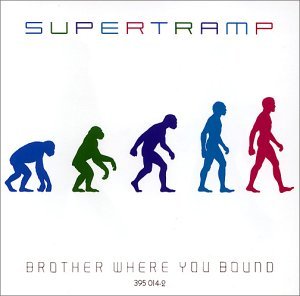
Starting from the elegantly minimalistic cover, depicting the stages of man’s evolution in five different colours on a pristine white background, Brother Where You Bound simply oozes class. Supertramp always had the uncanny knack of marrying catchy hooks with interesting, thought-provoking lyrics, and this album is no exception. Rick Davies, left alone to cope with vocal duties, unleashes a performance that is nothing short of awesome, especially on the album’s pièce de resistance, the 16-minute title-track. Add a couple of prestigious guest musicians to the mix, and you have a near-masterpiece on your hands.

In the best tradition of a band known for strong opening tracks, “Cannonball” does not disappoint the listener. Backed by a steady, almost danceable beat, and introduced by Davies’ scintillating piano, it is one of the vocalist/keyboardist’s many songs about a broken relationship, where you can positively hear the anger in his voice, belying the mock-cheerfulness of the sudden bursts of horns and the almost singalong coda. However, while the horn-heavy “Still in Love” seems to reprise the apparently carefree mood of Breakfast in America, on the whole the songs come across as definitely more somber and less accessible. Both the slow, understated “No Inbetween” (featuring great keyboards and sax) and the relentless “Better Days”, with its frantic pace and splendid flute solo, convey an aura of almost claustrophobic pessimism and disillusion

Interestingly, it is mainly Davies’ voice that makes Brother Where You Bound a markedly darker, less upbeat offering than Supertramp’s 1979 mega-hit, Breakfast in America.The title-track, in particular, is anything but an easy, radio-friendly listen, made up as it is of various parts interspersed by recorded voices, odd noises and sudden silences, underpinning the oppressive atmosphere conjured up by lyrics imbued with all the paranoia of the Cold War years. Davies’ stunning, highly dramatic vocal performance and David Gilmour’s trademark, crystal-clear guitar tones link all the pieces together to create what is possibly the band’s best epic. In comparison with such a wild, exhilarating ride, album closer “Every Open Door”, a slow, moody piece, is a tad anticlimactic, also on account of its decidedly more optimistic message.

If you only know Supertramp for the likes of “Dreamer” and “The Logical Song” (which is as perfect a pop song as they come), you will probably be inclined to dismiss them as little more than ‘prog-lite’ for those who hesitate to delve into the more demanding examples of the genre. Although it is true that the band possess a great feel for melody and memorable hooks, they are also outstanding musicians, and purveyors of above-average lyrics.  While they may represent the ‘easier’ side of prog, they do so with inimitable style and class, displaying songwriting skills that are far from average. Brother Where You Bound is a prime example of ‘crossover’  prog at its very best, and as such highly recommended to anyone but those prog fans who think that ‘pop’ is inevitably a bad word.

Read Full Post »

« Newer Posts