Feeds:
Posts
Comments

Archive for the ‘Instrumental’ Category

Pensiero-Nomade

TRACKLISTING:
1. Barcarola (4:25)
2. Cerchi d’acqua (4:26)
3. Danza notturna (5:14)
4. Calce e carbone (5:09)
5. La colomba e il pavone (4:17)
6. Tournesol (4:28)
7. Prima dell’estate (5:50)
8. Scirocco (5:03)
9. Imperfetta solitudine (6:19)
10. Sensitive (2:54)
11. Verso casa (4:07)

LINEUP
:
Salvo Lazzara – guitars
Luca Pietropaoli – trumpet, flugelhorn, contrabass, piano, electronics
Davide Guidoni – drums, percussion

With:
Clarissa Botsford – vocals (10)

Pensiero Nomade is a solo project by Sicilian-born guitarist/composer Salvo Lazzara – previously know to fans of Italian progressive rock as a member of Germinale, a band that released three albums for Mellow Records in the Nineties, and also participated in some of the tribute compilations released by that label. At the beginning of the new century Lazzara moved to Rome, where he realized that his musical interests were changing, and took up the study of jazz and improvisation. Pensiero Nomade was born from that experience: the project’s very name hints at the wide range of influences that inform Lazzara’s compositional approach, from jazz to world music to ambient/electronics. The project’s debut album, Per questi e altri naufragi, was released in 2007, and followed by Tempi migliori (2009), Materie e memorie (2011), and, finally, Imperfetta solitudine in the summer of 2013.

While Pensiero Nomade’s previous album saw Lazzara flanked by a group of four musicians, including a flutist and a keyboardist, the lineup on Imperfetta solitudine is a stripped-down trio that features Luca Pietropaoli on trumpet, flugelhorn, piano, contrabass and electronics, and Davide Guidoni (one-half of Daal, as well an excellent graphic artist) on drums and percussion. The result is an album that, while undoubtedly “progressive”, is quite far removed from “prog” in a conventional sense.

Indeed, unlike many contemporary prog albums, Imperfetta solitudine is neither brash or loud, though it would be a mistake to consider it mere background music. It certainly needs to be savoured at the right time and in the right surroundings, preferably after the sun has gone down, and when it is possible to lend it some attention – as is the case with albums in which subtlety and nuance are much more important than forced variety. Nothing is fast or hurried here, and the musical texture is loose and atmospheric, though not random. The sounds are organic, never jarring, but not artificially smooth either. The gentle movement of Lazzara’s acoustic guitar in opener “Barcarola” evokes flowing water, while the trumpet’s smoky, melancholy voice sounds almost human. The same pensive tone, almost an aid to meditation and reflection, can be found in the melodiously wistful “Calce e carbone”, the ethereal  “Tournesol” and solemn closing track “Verso casa”. The faintly disquieting “Sensitive” is the only number to feature the haunting vocals of guest artist Clarissa Botsford; while the uplifting “Cerchi d’acqua” exudes an almost vintage West Coast feel.

The 11 tracks are all relatively short, and only the title-track – a lovely, harmonious guitar bravura piece in which Lazzara uses the strings to create a percussion-like effect – exceeds 6 minutes. While the emphasis is firmly placed on the seamless, constantly riveting interplay between Lazzara’s guitar and Pietropaoli’s trumpet, Guidoni’s elegant, accomplished rhythmic touch adds dimension to otherwise low-key tracks such as “Scirocco” and La colomba e il pavone”; then it comes into its own in the lively “Prima dell’estate”, where it engages in a striking “dialogue” with the trumpet, and” and the stately “Danza notturna”, to which hand percussion adds a discreet touch of warmth.

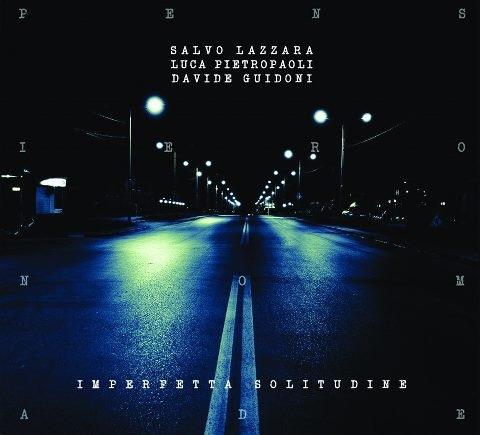
Although Imperfetta solitudine is very likely to have flown under the radar of most “mainstream” prog fans, it can be warmly recommended to lovers of music that speaks to inner feelings and emotions as well as the ear, and evokes far subtler moods and atmospheres than those usually associated with the pomp and circumstance of classic progressive rock. Complemented by stylishly minimalist cover photography that reflects the nocturnal, meditative nature of the music, this album will appeal to devotees of the output of labels such as ECM or Moonjune Records, as well as those who are keen to explore the thriving diversity of the Italian music scene.

Links:
http://www.reverbnation.com/pensieronomade
http://www.myspace.com/pensieronomade

http://www.zonedimusica.com

Read Full Post »

cover_4618212312013_r

TRACKLISTING:
1. The Pilman Radiant (26:15):
i. Visitation
ii. The Divine Vessel
iii. Wriggling Magnet
iv. Mosquito Mange
v. Divine Vessel’s Reprise
2. Complex #7 (4:47)
3. Tremors From the Future (11:15)

Bonus Live DVD:
1. Five Suns (32:19)
2. King Lindorm (14:19)

LINEUP:
Emmet Elvin – Fender Rhodes, organ, synth, harmonium, screeching guitar (1.i)
James Sedwards  – bass
Kavus Torabi – guitar, santoor
David J. Smith – drums, percussion, additional keyboards, santoor

With
:
Thomas Frasier Scott – soprano sax, alto sax, flute, clarinet, oboe, bassoon
Dave Newhouse – baritone sax, tenor sax, bass clarinet, alto flute
Chloe Herington – bassoon
Sarah Anderson – violin, viola
Geri McEwan – violin
Sam Morris – French horn
Emma Sullivan – trumpet
Antti Uusimaki – additional keyboards and effects

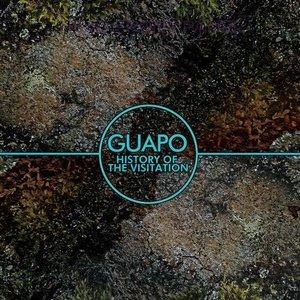
After  having produced one of the most powerful album trilogies in recent times – Five Suns (2003), Black Oni (2004) and Elixirs (2008) – in the past few years British outfit Guapo seemed to have dropped off the radar. Multi-instrumentalist Daniel O’Sullivan’s departure following the release of Elixirs (which had been recorded as a duo by O’Sullivan and drummer David J. Smith after the departure of bassist/guitarist Matt Thompson in 2005) brought about a lengthy hiatus and rumours of the band’s demise. However, at the end of January 2013 Guapo resurfaced with a veritable bang – a brand-new studio album (their ninth), titled History of the Visitation, which also saw their return to the Cuneiform Records fold ten years after the career-defining Five Suns.

Lineup changes are nothing new in Guapo’s chequered history, which began in the mid-Nineties with the release of three EPs, and then unfolded with various recordings and collaborations. In the intervening years, the trio configuration that had recorded  Five Suns and Black Oni became a quartet with the addition of Iranian-born guitarist Kavus Torabi (of Cardiacs and Knifeworld fame, recently announced as the new guitarist for Gong) and bassist James Sedwards, while  keyboardist Emmett Elvin (like Sedwards, also a member of fellow Cuneiform outfit Chrome Hoof) replaced O’Sullivan in time for the recording of History of the Visitation.

Guapo are a textbook example of the mind-boggling variety to be found under the RIO/Avant umbrella – a label that, as is the case of bands such as miRthkon and Zevious, fits them only in part .Though the names of Magma and Univers Zéro often crop up in reviews of their material, those two seminal left-field bands are just a small part of Guapo’s musical identity in the second decade of the 21th century. The central role of David J. Smith (the only member left of the band’s original lineup) evokes comparisons with Christian Vander and Daniel Denis. However, Kavus Torabi’s pyrotechnic guitar skills lend to modern-day Guapo a keen, metal-like edge, while Emmett Elvin’s keyboards can weave heady, majestic textures in the best prog tradition, and James Sedwards’ rumbling bottom end often emerges from the fray to add another dimension to the uncompromisingly arcane, brooding nature of the band’s sound. The frequent repetition of lines and themes increases the hypnotic feel of the music in a fashion that brings to mind King Crimson and also some instances of post-rock.

Recorded with the assistance of a number of guest musicians (including The Muffins’ Dave Newhouse), History of the Visitation clocks in at a mere 42 minutes. The first of the album’s three tracks is a 26-minute, 5-movement suite titled “The Pilman Radiant” – a title that, just like the album’s own title, references the cult Russian science-fiction novel Roadside Picnic, written by the brothers Arkady and Boris Strugatsky in 1971, on which Andrey Tarkovsky’s 1979 film Stalker is also based.  Guapo’s  moody yet hard-hitting music renders the intricate, visionary content of the story without any need for words, painting a picture that, in its own way, is as grandiose as any “classic” prog, though more viscerally intense.

Somewhat more streamlined than the monumental Five Suns and Black Oni suites, “The Pilman Radiant” wins my personal prize as best “epic” of 2013. Its five movements are easily distinguishable, yet they form an organic whole. Introduced by the surging layers of keyboards, assorted sound effects and crashing drums of “Visitation” – later reprised by the short, appropriately spacey “Mosquito Mange” – the suite comes into its own with the eerie, quietly brooding beauty of the waltz-like “The Divine Vessel”, led by fluid electric piano and unexpectedly melodic guitar; pace and intensity increase, propelled by drums and bass, in the driving “Wriggling Magnet”, in which Elvin’s roaring organ complements Torabi’s gorgeous, rock-styled solo turn, then a grittier, metal-edged reprise of “The Divine Vessel” brings this exhilarating musical experience to a close.

Strategically inserted between two much longer, more complex compositions, the 4-minute dark ambient piece of “Complex #7” skillfully piles up layers keyboards and assorted sound effects with the added contribution of reeds, creating a mounting sense of tension with the ominous feel of a horror-movie soundtrack.  On the other hand, “Tremors From the Future” concentrates a dizzying variety of twists and turns in slightly over 11 minutes, its skewed melodic development powered by guitar and organ sparring and interweaving while drums and bass evoke the titular tremors with their steadily pulsing movement.

The interest value of History of the Visitation gets a further boost from the presence of an almost 50-minute DVD featuring two of the band’s most iconic live performances from the past few years. The NEARfest 2006 performance of a somewhat shortened version of Five Suns, flawlessly shot in black and white, highlights Torabi’s flamboyant stage presence and boundless energy, as well as Smith’s role as the band’s rhythmic engine; while the more rudimentary quality of the video recorded the following year at the RIO festival does not detract at all from the power of the angular “King Lindorm” thanks to Udi Koomran’s top-notch mixing and mastering work.

In spite of the band’s reputation for scaring away some of the more conservative prog fans – also on account of the notoriously loud volume of their performances – History of the Visitation is a relatively more listener-friendly proposition than Guapo’s previous albums. The higher melodic content and skillfully achieved balance between hard-driving sections and more low-key ones are likely to surprise people who would not ordinarily appreciate anything bearing a RIO/Avant tag. Indeed, there are moments of sheer beauty on History of the Visitation that offset the band’s trademark looming darkness and wall-of-sound heaviness. With its toweringly Gothic atmosphere conveyed through stunning musicianship, this is definitely one of the year’s landmark releases.

Links:
http://guaponews.blogspot.com/

https://www.facebook.com/guapoband/info

http://guapo1.bandcamp.com/album/history-of-the-visitation

http://www.cuneiformrecords.com

Read Full Post »

cover_17723192013_r

TRACKLISTING:
1. Attend to Your Configuration (2:47)
2. Was Solis (6:02)
3. Pantocyclus (4:07)
4. White Minus Red (6:55)
5. Crime of Separate Action (6:32)
6. Entanglement (4:19)
7. A Tiller in a Tempest (3:15)
8. Passing Through the Wall (4:22)
9. This Could Be the End of the Line (2:23)
10. Plying the Cold Trade (8:02)

LINEUP:
Mike Eber – guitars
Jeff Eber – drums
Johnny DeBlase – bass

Four years after their barnstorming second album, the aptly-titled After the Air Raid, New York-based trio Zevious are back with their long-awaited third full-length CD, Passing Through the Wall, also released on Cuneiform Records. In the intervening years the band have maintained a brisk schedule of live performances – including the 2011 edition of ProgDay and, a couple of months later, Cuneifest at Baltimore’s Orion Studios. All three Zevious members are also involved in other projects, which pits them against the likes of Steven Wilson as the most hard-working people in progressive rock.

Zevious, like miRthkon and many of the bands and artists featured on these pages, stand on the outer limits of the progressive rock spectrum – that twilight zone that some would label as “progressive but not prog”, a definition that shows how for many fans the genre has become nothing more than a collection of dated mannerisms. The trio’s musical approach, however, is every bit as complex as the average “mainstream” prog band’s, though relying only on the essential rock instrumentation to create an impressive volume of sound characterized by a very high level of energy. Indeed, Zevious are definitely not for everyone, especially those who believe that the “progressive” in “progressive rock” has been stripped of its original meaning.

The definition of “King Crimson on steroids” that I used in my previous reviews of the band still holds true for Passing Through the Wall – perhaps even more so than for its predecessor. Zevious take the hauntingly repetitive, angular structure of pieces like “Red” or “Discipline” as a springboard, and inject it with an almost manic energy that owes a lot to metal and punk. As drummer Jeff Ebert, whose mind-boggling polyrhythms are at the core of the band’s sound, is also a member of hyper-technical metal band Dysrhythmia (with whom Zevious played some shows in November 2013), Zevious are seriously heavy, though in a different way than, for instance, miRthkon or Guapo – two bands that, like Zevious, straddle the line between Avant Progressive and experimental metal.

Clocking in at about 48 minutes, and packaged in a minimalistic, black-and-white cover with an Escherian feel, Passing Through the Wall comprises 10 tracks ranging from 2 to 8 minutes – a structure both similar and different from their previous album. The shorter tracks emphasize energy and dynamic pacing, while the longer ones allow for more variation. However, those who are looking for dramatic shifts within the same track  in classic prog tradition are in for a disappointment, because at a first listen the compositions on the album may sound all rather alike. Tempo changes are handled subtly as a whole, and the music’s hard-driving intensity does not disguise the complexity of the instrumental interplay.

The imperiously-titled and –paced “Attend to Your Configuration” barges in with its relentless web of interlocking bass and guitar lines driven by Jeff Ebert’s acrobatic drumming, then slows down to an almost Sabbathian plod in the second half. In  the considerably longer “Was Solis” Mike Ebert’s clear-toned guitar weaves sinuously in and out the rumbling backdrop of Johnny DeBlase’s bass, sparring with the drums and occasionally going into slo-mo mode for atmospheric effect. “Pantocyclus” melds skewed melody and haunting, insistent pattern peppered by piercing guitar effects, while the strikingly Crimsonian “White Minus Red” is powered by a superb performance by DeBlase, the rhythmic foundation steadily surging and flowing, then gaining momentum towards the end. The slow, ominous strains of “Crime of Separate Action” wrap up the first half of the album, again showcasing DeBlase’s astonishing propulsive/textural bass work supporting Mike Eber’s eerily chiming guitar.

The first half of“Entanglement” pulls out all the stops in terms of escalating guitar assault,  with drums all over the place; in contrast, “A Tiller in the Tempest” slower, somewhat rarefied pauses relieve the tension of the tight instrumental work. The short, fast-paced “This Could Be the End of the Line” acts as an interlude of sorts between the two most distinctive pieces on the album – the title-track, with its uncharacteristically muted guitar-bass-drum pattern, whose understated intensity creates a heady, drone-like texture; and 8-minute closing track “Plying the Cold Trade”, whose dirge-like pace and somber, Gothic feel offer a rather sharp departure from the unrelenting energy of the previous numbers.

Obviously, Zevious are not going to encounter the favour of the average melodic prog fan, while their music should prove to be far more appealing to the younger generations, weaned on a diet of post/math rock, technical metal and crossover bands such as The Mars Volta. They are also one of those bands who – as good as they sound on CD – have to be experienced live to be fully appreciated, as their hard-driving yet sophisticated music gains a whole new dimension on stage. In any case, Passing Through the Wall is a riveting slice of modern progressive music, powerful and intricate though not devoid of melody, and definitely deserving to be heard with some measure of concentration. Highly recommended to all adventurous prog fans, this album is sure to be featured in many “best of 2013” lists.

Links:
http://zevioustrio.blogspot.com/

http://cuneiformrecords.com

Read Full Post »

Relics+from+the+Wasteland

TRACKLISTING:
1. That’s a Malört (3:17)
2. Relapse (3:40)
3. Forty Flights (3:33)
4. Bardog  (4:03)
5. Trials of Cromulence (4:03)
6. The Camels Make the Rules (4:15)
7.  La Hojarasca (4:05)
8.  Crab Recess (2:37)
9.  Medea’s Dance of Vengeance (3:10)
10. Sarabande (5:18)
11. For Ellie (2:57)
12. Songs from the Wood (4:40)

LINEUP:
Aaron Geller – acoustic guitar
Andy Tillotson – acoustic guitar
Tim McCaskey – acoustic guitar
Luis Nasser – acoustic bass

With:
Brian Harris – keyboards (10)

With their distinctive name that celebrates the joys of possibility, all-acoustic outfit Might Could started out as a duo formed by Andy Tillotson and Tim McCaskey when they were in graduate school at the University of Maryland. They expanded to a trio with the arrival of Aaron Geller in 2003, and finally became a quartet when Luis “Gordo” Nasser, who was at college with both founders, joined on acoustic bass. They released two albums, All Intertwined and Wood Knot,  in 2005 and 2007 respectively, before going on hiatus for a few years. Nasser, Tillotson and McCaskey are also members of Sonus Umbra, and Might Could’s third effort, Relics from the Wasteland, was released at the end of August 2013, at the same time as Sonus Umbra’s Winter Soulstice.

For all their high technical quotient, acoustic guitar albums can fail to impress some progressive rock fans, who may not fully appreciate the subtlety of music that dispenses with the conventional trappings of rock – without realizing that a band such as Might Could  can produce as much complexity as the average prog band with their lush keyboard textures and  intricate arrangements. Additionally, as exciting an instrument as the electric guitar can be, it can occasionally come across as ham-fisted if compared to the versatility of its acoustic counterpart – which can be in some ways compared to that of the human voice. Even if acoustic guitar albums can be perceived by some as one-dimensional, Relics from the Wasteland proves this common misconception quite wrong, displaying as many layers of complexity and as wide a range of influences as any “real” prog album.  In fact, the presence of Luis Nasser’s acoustic bass adds a depth that compensates for the lack of a conventional rock rhythm section, and the riveting interplay between the three guitars possesses a natural elegance all too often disguised by an electric instrumentation.

Relics from the Wasteland’s 12 tracks – none longer than 5 minutes – were all written by Geller, Nasser and Tillotson, with the sole exception of the band’s first two covers: an intense rendition of Samuel Barber’s “Medea’s Dance of Vengeance”, with its spiraling lead guitar, and a version of Jethro Tull’s “Songs from the Wood”. The entertaining liner notes relate the story of some of the titles, mixing family life (the delightful “Crab Recess” and “For Ellie”) with good-natured debauchery (“That’s a Malört” and “Bardog”), and creating a connection between musicians and listeners that accentuates the intimate nature of music such as this – made of a palette of subtle nuances rather than bold brushstrokes.

As acoustic guitar music is often associated with the Spanish and Latin tradition, it is not surprising to find a definite Latin flavour right in opener “That’s a Malört”, as well as the sprightly “La Hojarasca”. The lovely, pensive “Relapse”, with its circular structure, and the lilting “Crab Recess” emphasize the band’s more subdued side, while in “Forty Flights” and “Bardog” pace and mood shift nimbly, juxtaposing moments of bouncy energy with pauses of melodic reflection. “Trials of Cromulence” and “The Camels Make the Rules” explore more complex territory, the former introducing some frantic riffs and dynamic percussive patterns in an almost counterpointal structure, the latter unfolding like a conversation between the three guitars, with the bass in a solid supporting role. “For Ellie”, after a very low-key start, turns into a lively homage to Django Reinhardt’s “gypsy jazz” style, while the swaying dance movement of “Sarabande” is fleshed out by organ (courtesy of Sonus Umbra’s keyboardist Brian Harris). An amazingly faithful cover of “Songs from the Wood” wraps up the album, the guitars recreating the vocal interplay of the original, while the bass comes into its own in the second half of the song, with some great percussive effects.

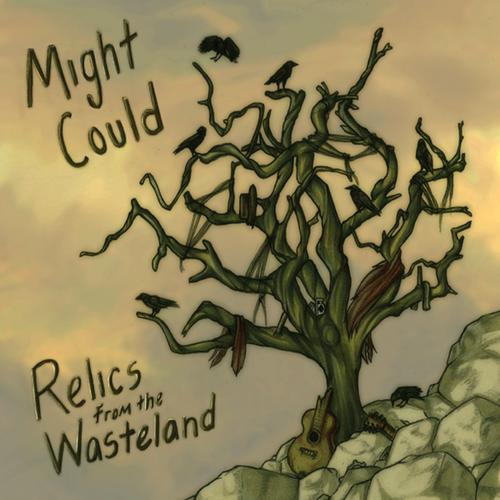
Relics from the Wasteland is highly recommended to lovers of acoustic, progressive-oriented instrumental music such as California Guitar Trio, Béla Fleck or Djam Karet’s Gayle Ellett’s side project Fernwood. This is the kind of music that shines in a live setting, highlighting ensemble playing as well as each musician’s individual style. The cover artwork by New England artist Elizabeth Moss, striking in its stark, almost primitive style, rounds out a classy package that will appeal to all fans of sophisticated music, especially those keen to explore the intriguing soundscapes created by acoustic string instruments..

Links:
https://www.facebook.com/pages/Might-Could/85937785745

https://mightcouldguitars.bandcamp.com/

https://myspace.com/mightcould/music/album/relics-from-the-wasteland-19221682

Read Full Post »

cover_713122182013_r

TRACKLISTING:
1. Open the Door, See the Ground (10:17)
2. Conversation (8:02)
3. Pop Sick Love Carousel (6:16)
4. Reverie #2 (14:51)
5. Love Letter from Canada (4:26)
6. Dangerous Kitchen (9:04)
7. A Dancing Girl from Planet Marsavishnu Named After the Love (10:48)

LINEUP:
Reza Ryan – guitar
Adi Wijaya – keyboards
Enriko Gultom – bass
Alfiah Akbar – drums

With:
Nicholas Combe – sax (6, 7)

With their rather intriguing handle (allegedly referring to a former girlfriend of guitarist Reza Ryan’s), accompanied by equally intriguing cover artwork, I Know You Well Miss Clara are the latest gem unearthed by Moonjune Records’ Leonardo Pavkovic in the thriving Indonesian music scene. The quartet join fellow countrymen simakDialog, Tohpati and Ligro on the New York label’s ever-growing roster of progressive artists with their debut album, aptly titled Chapter One. Formed in 2010 in the erstwhile Indonesian capital of Yogyakarta (which is also a renowned centre for Javanese classical art and culture) when its members were studying at the Indonesia Institute for the Arts, the band caught Pavkovic’s attention during one of his frequent trips to South-East Asia in search of new talent.

As pointed out in the liner notes (penned by esteemed music writer and King Crimson biographer Sid Smith), Chapter One was recorded in 18 hours, all of the tracks being first or second takes – a testimony to the band’s energy and enthusiasm for their craft. The album itself offers a refreshing take on the classic jazz-rock template so well interpreted in the Seventies by the likes of Return to Forever, Weather Report and Mahavishnu Orchestra – the latter being by far the biggest influence on the band’s sound. Canterbury outfits such as Hatfield and the North and National Health are also a clear source of inspiration for I Know You Well Miss Clara, as indicated by a playful exuberance that speaks volumes about the  members’ enjoyment of music-making, coupled (though never in conflict) with a very high level of technical proficiency.

If compared with simakDialog (whose latest album, The 6th Story, was released at the same time as Chapter One) I Know You Well Miss Clara are more firmly rooted in the Western jazz-rock tradition, with a lone drummer (the excellent Alfiah Akbar) employing a standard kit rather than a trio of kendang percussionists. Although their sound also places a stronger emphasis on guitar (which is not surprising, seen as Reza Ryan is the main composer), none of the four band members prevails on the other or indulges in showing off his skills. Opening track “Open the Door, See the Ground” starts out sedately, then veers into a more experimental mood, with dramatic drums and whooshing, spacey synth complementing Ryan’s sizzling yet tasteful solo. The interplay between the guitar and Adi Wijaya’s piano (both electric and acoustic) is spotlighted in the appropriately-titled “Conversation”, a more laid-back piece with an entrancing ebb-and-flow movement and plenty of melody. This elegant yet accessible approach, injected with sudden surges of energy driven by organ and guitar, is also pursued in the Canterbury-flavoured“Pop Sick Love Carousel”; while the album’s centerpiece, the almost 15-minute “Reverie #2”, starts out at a slow-burning pace, then gradually gains momentum – both piano and guitar emoting in almost improvisational fashion, bolstered by Enriko Gultom’s nimble bass lines – slowing down again towards the end.

The shortest track on the album at around 4 minutes, “Love Letter From Canada” is also the most unusual: a haunting, emotional ambient study of surging keyboard washes, sparse guitar  and cascading cymbals, it hints at interesting future developments in the band’s sound. Its mood is briefly reprised at the beginning of “Dangerous Kitchen”, which then morphs into a leisurely jazzy piece where guest Nicholas Combe’s sax and guitar work almost in unison, leaving some room for a bit of improvisation before the end. A lovely tribute to Ryan’s idol John McLaughlin – by the amusingly tongue-in-cheek title of “A Dancing Girl from Planet Marsavishnu Named After the Love” – closes the album in style, referencing the iconic “Dance of Maya” (from Mahavishnu Orchestra’s debut album, The Inner Mounting Flame) in a buoyant, dance-like ride interspersed by pensive, sax-led passages before its exhilarating, almost cinematic finale.

Clocking in at around 63 minutes, Chapter One is never at risk of overstaying its welcome in spite of the length of the majority of its tracks. Successfully blending serious chops with engaging spontaneity and enthusiasm, I Know You Well Miss Clara’s debut is one of the best instrumental albums released in 2013 so far, and will delight devotees of classic jazz-rock/fusion – especially those who prize emotion over an excess of technical fireworks. Hopefully the band will follow in simakDialog’s footsteps and visit the US as soon as possible.

Links:
http://iknowyouwellmissclara.weebly.com/index.html

http://moonjunerecords.bandcamp.com/album/chapter-one

http://www.moonjune.com/mjr_web_2013/catalog_mjr/057_I-KNOW-YOU-WELL-MISS-CLARA_Chapter-One_MJR057/

Read Full Post »

cover_214101882013_r

TRACKLISTING:
1. La roue (3:43)
2. Cobra Fakir (8:53)
3. RVB7 (3:56)
4. Paris-Roubaix (2:14)
5. Titan (4:17)
6. Un cas sibérien (2:28)
7. Speed-dating sur Mars (7:07)
8. Tandem (8:23)
9. Maringouin (3:41)
10. Space Cowboy (3:11)
11. Expérience 7 (2:27)

LINEUP:
Pascal Globensky – keyboards, synths, piano
Rémi Leclerc – drums, percussion, keyboards, turntable
Bernard Falaise – guitars, bass, keyboards, banjo, turntable

Born in 1980 from the meeting of keyboardist Pascal Globensky and multi-instrumentalist François Émon, French Canadian band Miriodor can be counted amongst the veterans of the current progressive rock scene. Surprisingly, despite the many changes the lineup has undergone in the past three decades, Globensky and drummer Rémi Leclerc, another of the band’s earliest members, are still on board – as is guitarist Bernard Falaise, who has been with the band for 20 years even if not part of its original configuration.

Never a prolific outfit, with only eight studio albums released since their inception and lengthy breaks between each new release, Miriodor seem to have embraced the old tenet about quality trumping quantity. They have also maintained a healthy level of concert activity throughout the years, with high-profile performances at international events such as NEARfest in 2002, FMPM in 2007 and 2008, the Rock in Opposition Festival in Carmaux (France) and Sonic Circuits in Washington DC (where they opened for Univers Zéro) in 2010. Cobra Fakir, their eighth studio album, was finally released on Cuneiform Records at the end of September 2013, a few weeks after their appearance at the 19th edition of ProgDay. Though the album was recorded as a trio, Miriodor have gone back to being a quartet with the addition of bassist Nicolas Lessard, who replaced longtime member Nicolas Masino.

As one of the landmark progressive rock releases of the first decade of the 21st century, Miriodor’s 2009 album, Avanti!, was a tough act to follow. Cobra Fakir, however, though it obviously shares a lot with its predecessor, it also shows the band moving in a somewhat different direction. While their sound – sometimes described as the “happy” counterpart to Univers Zéro austere gloom – is immediately recognizable, the band have made some changes to their compositional approach. Unlike Avanti!, which featured six longish tracks, Miriodor’s latest effort presents a wider range of running times, from the almost 9 minutes of the title-track to 2-minute interludes such as “Paris-Roubaix” (a perfect sonic rendition of the titular bicycle race with its layers of slightly atonal keyboards) and the appealingly noisy, almost improvisational “Un cas sibérien”. A longer track list also means a more noticeable diversity –  with the shorter compositions providing an outlet for experimentation, often involving an array of inventive sound effects. Though there are no guests contributing to Cobra Fakir, this does not necessarily result in a more stripped-down sound, and very few listeners will miss Avanti!’s richer instrumentation.  In fact, the album perfectly demonstrates how multilayered keyboards, far from becoming a byword for bombast, can be used for rhythmic as well as melodic and textural purposes.

Leisurely acoustic guitar introduces “La roue”, whose upbeat main theme – as its title (“The Wheel”) suggests – hints at carnival music, offset by angular, somewhat darker patterns around the middle, and reinforced by sounds of clanging metal, breaking glass and the scratchy turntable effects that crop up throughout the album. The title-track sums up the album’s many faces in its 9 minutes of musical whirlwind – the sedate, meditative first half rendering in sonic terms the tale of the cobra and the fakir outlined in the liner notes, followed by a myriad of tempo and mood changes, often sharply veering towards dissonance yet always informed by an internal logic, then coming full circle with its melancholy, acoustic close. Only a handful of seconds shorter, “Tandem” has a more cohesive structure and an almost classical feel, with sampled flute and harpsichord complementing the piano and synth, and a plethora of sound effects intensifying the trippy, guitar-heavy mood of the ending.

In “RVB7”, assorted percussive effects and the crystalline tinkle of the vibraphone create an amazing blend of sounds that enhances the keyboards and guitar in a lively, dance-like pace; while “Titan” hinges on a brooding, cinematic crescendo punctuated by organ, solemn drum rolls, and surging, distorted guitar, creating a Gothic atmosphere that evokes Univers Zéro. Without any need for words, “Speed-dating sur Mars” tells an entertaining tale through  spacey effects and a sprightly, keyboard-led rhythm, as well as a brief, romantic piano interlude. More spacey goodness (as the title makes it quite obvious) is offered by “Space Cowboy”, where electronic effects hold sway, while melody, infused with a nostalgic Old-World flavour and the gentle sway of a waltz, is the key word in “Maringouin”, easily the most “mainstream” piece on the album. “Experiénce 7” wraps up the album with a short yet intense exercise in atmospheric buildup, conducted almost solely by surging keyboard washes and eerie sound effects.

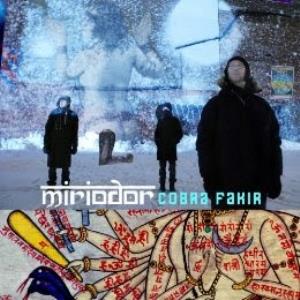
With its intriguing cover art juxtaposing Hindu mysticism and their native Québec’s winter landscape, Cobra Fakir may well confirm Miriodor’s status as the RIO/Avant band that – on account of their keen melodic flair coexisting with more boundary-pushing tendencies – manages to appeal even to staunch symphonic/neo fans. Balancing edgy dissonance and  haunting atmospheres, engaging circus-like tunes and moments of reflection, the album will benefit from repeated listens in order to let its magic unfold, but will amply reward the listener’s patience. Another outstanding effort from one of the best live bands I have seen in the past few years – their understated mastery of their instruments as close to perfection as it gets – Cobra Fakir does not disappoint expectations, and will certainly feature in many “best of 2013” lists.

Links:
http://miriodor.com/wp/

http://www.cuneiformrecords.com


Read Full Post »

cover_429103182013_r

TRACKLISTING:
1. Stepping In (10:01)
2. Lain Parantina (9:06)
3. Harmologic (3:52)
4. What I Would Say (6:17)
5. For Once and Never (6:29)
6. Common League (3:53)
7. As Far As It Can Be (Jaco) (8:01)
8. 5, 6 (4:38)
9. Ari (6:52)

LINEUP:
Riza Arshad – Fender Rhodes electric piano, acoustic piano, synth, soundscapes
Tohpati – guitar
Adhitya Pratama - bass
Endang Ramdan – Sundanese kendang percussion (left)
Erlan Suwardana – Sundanese kendang percussion (right)
Cucu Kurnia – assorted metal percussion

Undoubtedly the best-known modern Indonesian outfit in a progressive rock/jazz context, simakDialog have attracted a cult following in the West since the release of their 2007 live album Patahan (their first for Leonardo Pavkovic’s Moonjune Records), followed in 2009  by Demi Masa. Formed in 1993 in the Indonesian capital of Jakarta by jazz-trained keyboardist Riza Arshad and guitarist extraordinaire Tohpati Ario Hutomo, the band released three albums – Lukisan, Baur and Trance/Mission – between 1995 and 2002 before Pavkovic took them under his wing and gave them international recognition. After a series of mishaps (including the cancellation of NEARfest 2011, where they were scheduled to appear), their long-awaited US tour – which coincided with the release of their fifth studio album, The 6th Story – finally materialized in the late summer of 2013, kicking off with a headlining performance at ProgDay that was unfortunately interrupted by heavy rain, and wrapped up by a very well-attended show at the Orion Studios, introduced by French avant-garde trio Jean-Louis.

As used and abused as the “East meets West” definition can be, there is no better way to describe simakDialog’s music to the uninitiated. Alongside electric guitar, bass and that iconic cornerstone of jazz-rock, the Fender Rhodes electric piano, the six-piece configuration of the band features a trio of percussionists in the style of the traditional gamelan ensembles – Erdang Ramdan and Erlan Suwardana playing the Sundanese two-headed kendang drums, and Cucu Kurnia (the band’s most recent addition) handling metal percussion. The result is a uniquely warm sound with a remarkably natural flow, capable of flashes of angularity and even brief forays into noise, yet never overwrought. In addition, though each of simakDialog’s members is a virtuoso of his own instrument, the band emphasize ensemble playing at its finest rather than technical flash, with individual skills put at the service of the composition rather than the other way round.

SimakDialog’s music, on the other hand, may not prove to be the easiest proposition for those who are used to the in-your-face antics of many traditional prog bands. Subtlety is the operative word on The 6th Story, and that in itself requires a lot of patience on the part of the listener. Their leisurely, unhurried approach to live performance has also more in common with Eastern than Western tradition, focusing on the sheer joy of playing and the creation of subtle moods rather than the head-on adrenaline rush of the standard rock concert.

Clocking in at a handful of seconds under an hour, The 6th Story (the band’s first entirely instrumental album in over 10 years) opens with “Stepping In”, the album’s longest track, which aptly illustrates simakDialog’s  modus operandi. While the sinuous interplay of Tohpati’s guitar and Riza Arshad’s scintillating Fender Rhodes immediately leaps out from the speakers, it is the joyful mayhem of the three percussionists that impresses in the long run, bolstered by Adithya Pratama’s impeccable bass emerging every now and then in the foreground. The track unfolds with supreme elegance, spiced up by sound effects that turn slightly chaotic towards the end. The 9-minute “Lain Parantina” also conveys a sunny, bright feel with its oddly catchy main theme and skillfully handled tempo changes, gaining momentum then slowing down to an almost sparse texture,  held together by the steady stream of percussion. Tohpati’s guitar is spotlighted in the much shorter “Harmologic”, while the piano takes an almost supporting role, working almost as an additional percussion instrument. In the second shortest track on the album, “Common League”, soundscapes add an intriguing note to the lively yet fluid sparring of piano and guitar.

SimakDialog’s more energetic side surfaces in “5,6”, where Tohpati displays his rock credentials (amply demonstrated in his power trio Tohpati Bertiga’s 2012 debut, Riot) with a distorted guitar solo; while the upbeat “For Once and Never” revolves around the expressive, almost conversational interplay of the two main instruments, supported by Pratama’s versatile bass. The discreet, laid-back “What Should I Say” pleases the ear with its smooth sounds, and “As Far As It Can Be (Jaco)” – a tribute to the ground-breaking bassist written by Arshad together with fellow Indonesian musician Robert M.K. – takes on a suitably elegiac tone, full of lovely, stately melody. “Ari” then closes the album by giving synth a leading role alongside the piano, with the ever-reliable percussion background seconding the music’s ebb and flow.

For the audiophile, headphones will be a must in order to savour The 6th Story in full, as letting it run in the background will definitely not do any favours to the music’s understated elegance.  Although the album may resonate more with jazz fans than the average prog audience, it is highly recommended to all open-minded listeners, especially those who enjoy the influence of different ethnic traditions on established Western modes of expression. All in all, The 6th Story is an extremely classy  effort (and one of the standout releases of 2013) from a group of very nice, unassuming and talented musicians, whom I hope to see again in the US very soon.

Links:
http://simakdialog.com

http://www.moonjune.com/mjr_web_2013/artists_mjr/simakDialog/

https://myspace.com/simakdialog/music/songs

Read Full Post »

trancelucid5

TRACKLISTING:
1. TM (3:33)
2. Spyglass (4:47)
3. Illumination (4:03)
4. Pocket (3:31)
5. The Crossing (3:29)

Palace of Ether:
6. Many Rooms (2:47)
7. Saints in Stone (3:25)
8. Dream of Antiquity (4:34)
9. Painted Dancer (1:51)
10. Actors in Armor (2:56)
11. Before the Idiots (3:51)
12. Vox of Silence (2:02)
13. Horsemen at the Gate (2:13)
14. Nightlit Moons (2:34)
15. Remembrance (5:40)

LINEUP:
Dave Halverson – guitar, synthesizer, bass
Terry Lee – drums, percussion
Richard Bugbee – keyboards

With:
Damien Gonzalez – bass (1)

Although they have been around for about 20 years, Oakland-based outfit Trance Lucid have managed to keep under the radar of the majority of progressive rock fans. Formed in 1993 by guitarist Dave Halverson and drummer Terry Lee, the band released their debut album, Arise, in 1996, followed by Vigil (2000) and The Colors of Darkness (2005). Very active on the live front in the Bay Area, at the end of 2007 Trance Lucid also released a live album, Unrevisited Live, which included 11 previously unreleased compositions performed at five different shows. After a few years’ hiatus, the band regrouped with the addition of keyboardist Richard Bugbee and Halverson himself replacing Bill Noertker on bass duties, and finally released their fifth album, Palace of Ether, in the summer of 2013. Halverson is also an established solo artist, with four albums to his name released between 2003 and 2009.

Stylishly packaged, with an appealing, sepia-toned vintage photo reproduced on the cover, Palace of Ether is a 51-minute slice of instrumental, guitar-based music that reflects the breadth of Halverson’s musical interests and sources of inspiration. While it can be loosely labeled as jazz-rock, Trance Lucid’s sound features elements of other genres, such as blues, funk, world music and even post-rock. Though Halverson’s guitar might be expected to dominate the proceedings, the other instruments are given ample space, and prove equally essential to the musical development of the compositions. The music featured on Palace of Ether runs the gamut from almost straightforward bluesy rock to haunting Oriental influences, showing Halverson’s versatility as a composer. His fluid, consistently melodic style steers clear of self-indulgence, and meshes perfectly with his bandmates’ accomplished input.

Palace of Ether is clearly divided in two halves, the first comprising five stand-alone tracks, the second a 32-minute, 10-part suite that, according to the band’s website, originated 15 years ago. With the exception of the slightly longer closing number “Remembrance” none of the tracks exceed 5 minutes; the album, however, comes across as remarkably tight. In fact, while the tracks may sound somewhat alike on the first couple of listens, the use of apparently similar themes contributes to the cohesive feel of the album.

Opener “TM” gives a taste of Halverson’s compositional approach with a raw-sounding riff in pure Hawkwind style, gradually morphing into a melodic yet somewhat rarefied variation on a single theme. His mastery of quiet-loud dynamics also comes out in the funky “Spyglass” and the brisk, electric “Pocket”, in which Richard Bugbee’s keyboard textures intensify the sense of mounting tension; while “Illumination” and “The Crossing” showcase Trance Lucid’s mellower side –  the latter highlighting the jazzy component of the band’s sound, Halverson’s guitar nicely underpinned by piano ripples, then gradually building up to an exhilarating finale.

As good as these tracks are, the Palace of Ether suite is the true focus of interest of the album, especially for progressive rock fans – and not merely on account of its running time. The twangy, sitar-like sound of the guitar on “Many Rooms” weaves a mystical, Eastern-tinged atmosphere, aptly conveying the “ethereal” nature of the title with the aid of surging mellotron washes – a subdued, entrancing mood that returns in “Saints in Stone”, and even more so in the lovely “Dream of Antiquity”, whose spacious yet carefully structured instrumental texture emphasizes Bugbee’s skillfully layered keyboards. The intricate guitar arpeggios in “Painted Dancer” boldly blend vintage psychedelic rock and hints of bluegrass, while “Vox of Silence” and “Horsemen at the Gate” veer towards an ambient-like direction. On the other hand, “Actors in Armor” “Before the Idiots” and “Remembrance” reprise the more energetic, blues- and jazz-inflected tone of the first half of the album, occasionally reminiscent of the work of Jeff Beck and Allan Holdsworth.

Though Trance Lucid may not be exactly a household name to most of the readers of this blog, Dave Halverson and his bandmates deserve to be more widely known on account of the quality of the music showcased on Palace of Ether. Indeed, both fans and practitioners of the six strings find a lot to appreciate in this eminently listenable album – with enough original ideas not to sound like a rehash of the work of other, better-known names, and avoiding the descent into self-indulgence that has been the undoing of many a would-be ”guitar hero”. Especially recommended to fans of Moonjune Records’ classy output, and instrumental rock in general, the album may need a few spins to click, but is definitely worth the effort.

Links:
http://www.trancelucid.com/home.html

http://www.davehalverson.com/

Read Full Post »

cover_2653162812013_r

TRACKLISTING:
1. Sopla viento del Este (4:36)
2. Bounkam Rêverie (4:08)
3. Leilya (4:00)
4. Una para Lars (3:57)

Suite Sendas de Ofir:
5. En Ruta (1:39)
6. White Bird (6:21)
7.  Sendas de Ofir (4:44)
8. Oricalco (2:32)
9. Oricalco Coda (2:28)

10. Aurelia quiere saber (2:23)
11. Sunda Stream (2:42)
12. Aguas del Bagradas (4:18)

LINEUP:
Ángel Ontalva –  guitar, flute
Víctor Rodríguez – keyboards, melodica (10)
Amanda Pazos Cosse – bass
Fran Mangas – saxophones
Toni Mangas – drums
Pablo Ortega – cello (4)
Salib – vocals (3)

Spanish guitarist and graphic artist Ángel Ontalva is the mind behind RIO/Avant band October Equus and a slew of other eclectic projects. He is also the founder of the independent label OctoberXart Records, on which his main band’s latest album, Permafrost, was released in the late spring of 2013. A few months before Permafrost, Ontalva released his first solo album, Mundo Flotante, which includes material originated around 2007, and recorded between 2009 and 2012. Two other members of October Equus – bassist Amanda Pazos Cosse, who is also the artist’s wife, and keyboardist Victor Rodriguez – appear on the album,  as well as other musicians who had already previously collaborated with Ontalva.

Those who approach this album expecting something along the lines of October Equus’ austerely refined take on Avant-Prog may be disappointed, because Mundo Flotante is quite a different animal. Though featuring the same accomplished musicianship and compositional skill, there is very little to remind the listener of Univers Zéro or Henry Cow, while comparisons with the Canterbury scene will often crop up. Indeed, the album’s very title of “Floating World” neatly sums up the airy, effortlessly fluid nature of the music, reminiscent of the quirky elegance of Hatfield and the North or National Health. A rich instrumental texture unfolds a subtly shifting backdrop for Ontalva’s beautiful guitar excursions, suffused with the warmth of the Mediterranean and Middle Eastern tradition. In fact, the album’s roots lie in one of Ontalva’s many projects, called Transarabian Connection, whose sound blended classic jazz-rock and chamber music with the traditional music of Spain’s Sephardic Jews. The overall effect is of refined elegance and high listenability in spite of the obvious complexity of the pieces. The music possesses an upbeat, almost catchy feel – obviously not in a mainstream sense, but still making listening a pleasurable experience even for those who are used to more straightforward, melodic fare.

Five of the 12 tracks listed on Mundo Flotante are grouped in a suite titled “Sendas de Ofir”, the album’s centerpiece also on account of it strategic placement in the middle of things. Bookended by gentle, subtly melancholy melodies woven by electric and acoustic guitar, saxophone and keyboards, its central section alternates rarefied passages with an almost improvisational feel and more buoyant ones, led by energetic drums and sax and introducing a hint of dissonance. The elegant flow of the music, its many changes handled with a skilled touch, make for riveting listening, without none of the pretentiousness often associated with ambitious, multi-part compositions.

The remaining tracks are even more intriguing, some of their titles hinting at the presence of heady Middle Eastern suggestions. In particular“Leilya”, the only piece featuring Salib’s haunting wordless vocals well complemented by flute, sax, piano and guitar, conjures a North African market place, as well as the timeless magic of flamenco; opener “Sopla el viento del Este”, on the other hand, marries ethnic flavour and a jaunty, appealingly loose jazzy pace, which spotlights Ontalva’s guitar alongside organ and sax. The charming “Bounkam Reverie” evokes the Canterbury sound with its smooth yet intricate interplay between guitar, keyboards and drums (especially in evidence here), while in “Una para Lars” the cello adds its sober voice to the beautiful, romantic tapestry of acoustic guitar arpeggios embellished by tinkling percussion. The wistful “Aurelia quiere saber” pursues the almost autumnal mood of the last part of the suite, with melodica adding an appealing folksy touch. In contrast, the two final tracks on the album – “Sunda Stream” and “Aguas del Bagradas”-  reprise the brisk, jazzy tone of the opener, with some sharper, angular moments that hint at Ontalva’s work with October Equus.

Clocking in at a mere 43 minutes, Mundo Flotante is full of beautiful, laid-back music that is never in danger of overstaying its welcome, and where Ontalva’s remarkable compositional skill is not overshadowed by excessive ambition (as is often the case with solo albums). The strong ethnic component will especially appeal to those who love some exotic spice in their music of choice, but the album can be safely recommended to most lovers of progressive rock, especially those who lean towards the instrumental side of the genre.

Links:
http://www.octoberxart.com/

Read Full Post »

cover_43291862013_r

TRACKLISTING:
1. Erosive Forces of Wind and Water (5:14)
2. Lead Poisoning (5:14)
3. Boots, Nails, Watches… (5:25)
4. Thermokarst (5:15)
5. Trapped in the Sea Ice (3:59)
6. …Books, Saws, Silk Handkerchiefs… (3:52)
7. Graves of the Crewmen Buried on Beechey Island (6:17)
8. …Two Double-Barreled Guns and 40 Lbs of Chocolate (5:31)

LINEUP:
Ángel Ontalva – guitar
Victor Rodriguez – keyboards
Amanda Pazos Cosse – bass
Vasco Trilla – drums, percussion

Formed in 2003 in the historic Spanish city of Toledo by guitarist/composer Ángel Ontalva, bassist Amanda Pazos Cosse and keyboardist Victor Rodriguez, for their fourth CD release October Equus have gone back to a quartet format, just as they started out ten years ago. Permafrost,  released in May 2013, is also their first album released by Ontalva’s own independent label, OctoberXart Records. Though, after 2011’s Saturnal, the band have parted ways with AltrOck Records, they appeared at the Italian label’s festival in June 2013, and the new album was mastered by AltrOck’s preferred sound engineer, Udi Koomran, at his Tel Aviv studio.

The lineup changes occurred after Saturnal (recorded as a seven-piece) imply that October Equus have gone back to the basics  on their fourth album – taking reeds and cello out of the equation, though without renouncing the complexity of their particular take on the RIO/Avant-Prog aesthetics. In fact, the album marks a definite step forward for the band, allowing them to distance themselves from the influence of Univers Zéro – which loomed quite large on their previous releases –  and give their sound a more personal imprint. While their style remains firmly ensconced in “chamber rock” territory, the new stripped-down format pushes Ontalva’s guitar to the fore, constantly supported by Victor Rodriguez’s array of keyboards. Drummer Vasco Trilla (also a member of jazz-rock outfit Planeta Imaginario) provides an inventive, often dramatic rhythmic backbone, assisted by Amanda Pazos Cosse’s discreet yet versatile bass lines.

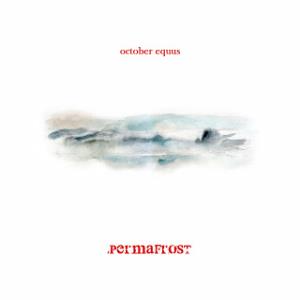
As suggested by the title and the booklet’s detailed artwork, Permafrost is a concept album, based on the tragic ending of Sir John Franklin’s Northwest Passage expedition. Besides his obvious musical talent, Ontalva (who, together with Rodriguez,  is the band’s main songwriter,) is also an outstanding graphic artist, and his black-and-white illustrations complement each episode of the musical odyssey. Though completely instrumental, the music manages to convey the atmosphere of fear, loneliness and impending doom without relying on words – perhaps even more effectively because of their absence. The stark appearance of the cover, distinguished by a striking use of white space, evokes the bleakness of the Arctic winter, while on the back cover Franklin’s last note is reproduced.

 Those who believe any band tagged RIO/Avant-Prog must thrive on dissonance might find their convictions challenged by Permafrost. Indeed, the album often comes across as surprisingly melodic – though of course, not exactly in the same way as your average symphonic/neo prog release. As a whole, though Univers Zéro are referenced on more than one occasion, I was often reminded of Miriodor’s effortless complexity and elegant blend of angularity and fluidity. Obviously, given the nature of the story narrated by the music, the album has its fair share of tense, Gothic moments, rendered by a skillful mix of electronic effects and conventional rock instruments – as in closing track “…Two Double-Barreled Guns and 40 Lbs of Chocolate”, as ominously menacing as a horror movie soundtrack.

The correspondence between track titles and musical content is often astonishingly precise: eerie mellotron and swelling piano flurries, coupled with tinkling vibraphone, evoke the desolation of the abandoned ships in “…Books, Saws, Silk Handkerchiefs…” , while the mesmerizingly measured pace of “Graves of the Crewmen Buried on Beechey Island” – almost Pinkfloydian in its slow, mournful development – is punctuated by suitably dirge-like drumming. Rodriguez switches from organ (whose fuzzed-over sound hints at Soft Machine) to synths, piano and even mellotron, working in unison with Ontalva’s expressive, jazzy guitar to create a wide range of atmospheres – haunting and almost romantic at times (as in the autumnal, melancholy “Lead Poisoning”), strident and aggressive at others (“Thermokarst”).

Clocking in at barely over 40 minutes, Permafrost is an intense, cohesive effort that packs more punch  in its very restrained running time than most 70-minute albums. Though, as was the case with its predecessors, its main audience will be the RIO/Avant crowd, there is enough on the album to appeal to those with somewhat more mainstream tastes. Among its many qualities, this disc proves that “concept albums” can be something different from the overblown messes that have unfortunately become synonymous with progressive rock, and that a purely instrumental palette can be used very effectively for storytelling purposes. Definitely one of the strongest releases of the year so far, Permafrost is highly recommended to all open-minded music fans.

Links:
www.octoberxart.com

Read Full Post »

« Newer Posts - Older Posts »