Feeds:
Posts
Comments

Archive for the ‘Jazz-Rock’ Category

TRACKLISTING:
1. Cuckoo (9:23)
2. Knowledge (6:09)
3. Let Go (4:54)
4. Khajurao (5:22)
5. Hero (10:13)
6. UFO-RA (6:44)
7. Falling Up (18:03)
8. Palitana Mood (3:05)

LINEUP:
Tony Bianco – drums, loops, percussion
Michel Delville – electric guitar, bouzouki, electronics
Jordi Grognard – tenor sax, bass clarinet, flute, bansuri, electronic tempura

Machine Mass Trio was originally born as a side project of douBt, the electric jazz trio formed by Belgian guitarist Michel Delville whose acclaimed debut album, Never Pet a Burning Dog, was released in 2009 by influential New York-based label Moonjune Records. For this project, Delville and renowned NYC drummer Tony Bianco recruited a rising star of the modern jazz scene, Belgian reedist/saxophonist Jordi Grognard, who is also well-versed in non-Western woodwind instruments. Machine Mass Trio’s debut, As Real As Thinking, recorded live in the studio in October 2010, was released in November 2011 with the support of the Belgian French Community.

Like most of Moonjune Records’ output, As Real As Thinking is definitely not an immediately accessible album – sophisticated and multilayered, yet permeated with a sense of sharp urgency that surfaces when you would least expect it. In a veritable melting pot of diverse influences, the album merges the raw power of free jazz and guitar-based progressive rock à la King Crimson with the heady mysticism of Eastern music filtered through the electronic experimentalism of Krautrock. The three band members alternating in the spotlight or blending their collective strengths together to produce music that is constantly challenging but always rewarding, contribute in equal measure to the success of the final product.

At the core of Machine Mass Trio’s sound lies Tony Bianco’s astonishing drumming, a concentrate of pure energy and flawless time-keeping. He lays down an unflagging beat for the whole 10 minutes of the jammy, deceptively sedate “Hero”, providing a steady rhythmic backdrop for Delville and Grognard’s exertions. On the other hand, in the spectacular 18 minutes of “Falling Up Nº 9” – a tour de force that marries intoxicating psychedelic suggestions with chaotic free-jazz improvisation – he unleashes the pyrotechnics, the drums starting out in a subdued fashion, then gradually gaining intensity, sparring with Delville’s guitar and eerie electronic effects in an exhilarating crescendo.

Delville’s guitar runs the gamut from the blistering riffage of “Let Go”, with its almost metallic edge coupled with Grognard’s unbridled, highly emotional sax, to the intriguingly laid-back textures and staggered rhythms of “Knowledge”. The distinctive sound of the bouzouki, with its haunting, sitar-like twang, replaces the guitar in the Eastern-inspired “Khajurao” (named after the Hindu temple complex famous for its erotic sculptures) and album closer “Palitana Mood” – sinuously intertwining with Grognard’s breathy flutes, discreet percussion and buzzing electronic effects; while “UFO-RA” revolves around Delville’s slightly dissonant synth guitar, emoting over the lively pace set by drums, piano and sax.

A classy blend of stunning technical prowess, energy and creativity, As Real As Thinking is never predictable, and will not disappoint fans of independent labels such as ECM and Cuneiform, which, like Moonjune, comfortably straddle the lines between jazz, avant-garde, world music and progressive rock. In spite of the collective talent gathered here, the album celebrates the joy of unfettered playing, in a spirit that is both collaborative and mindful of each musician’s background and inclination. Though the album may be a daunting prospect for those who prize flowing melodies and carefully structured compositions, it is highly recommended to adventurous listeners and anyone who supports genuinely progressive music-making.

Links:
http://www.myspace.com/machinemasstrio

http://www.moonjune.com


Read Full Post »

TRACKLISTING:
1. Infinicheese (1:35)
2. Clacos Zero (0:35)
3.Untung Untungan 2.0 (11:13)
4. Clacos 1 : Notre Mère à Tous (1:58)
5. El Ruotuav Ed Sram (8:16)
6. Clacos 2 : Die Experimente von Dr Frankenschnörgl (0:48)
7. Le Meurtrier Volant (9:01)
8. La Danse du Chameau:
a) Batifolade  (5:29)
b) Soif! (1:17)
c) La Tempête De Sable (4:51)
d) Rêveries Lubriques Sous une Dune (1:09)
e) The Final Run  (5:01)

LINEUP:
Fabrice Toussaint – tenor trombone, xybraphone, congas, tam-tam, triangle, other percussionBernard Eber – trumpet, didgeridoo, cowbell, whistle, voices
Pierre Wawrzyniak – bass, acoustic guitar, voices
Philémon Walter – drums
Guillaume Gravelin – harp
Vincent Sexauer – electric guitar

 With:
Julien Travelletti – bass trombone (3, 5, 7, 8), tuba (7)
Francesco Zago – electric guitar (3)

When coming across a French band named Camembert, and an album title featuring the word “Attahk”, most progressive rock fans will inevitably think of two illustrious outfits such as Magma and Gong – both of whom have also ties with France. Add to that a rather left-field story about the Earth being invaded by small, gelatin-like beings from outer space called Schnörgl, led by a mad scientist researching weapons of mass destruction, and involving a giant spaceship made of intergalactic cheese – and the resemblance will steadily grow, so that a first-time listener might wonder if they are being confronted with the new frontier of “retro-prog”. However, there is very little “retro-anything” about Camembert, whose thoroughly modern brand of jazz-rock proudly sports that strongly absurdist streak that is one of the distinctive traits of French prog.

Camembert are a six-piece hailing from the city of Strasbourg in north-eastern France, where they formed in 2005.  Schnörgl Attahk, their first full-length CD, which marks the beginning of the band’s collaboration with Milan-based label AltrOck Productions, was preceded in 2009 by the release of the 6-track EP Clacosmique. Most of the material that had originally appeared on the EP has been included on the album, though in almost completely rearranged form. Camembert members Fabrice Toussaint and Pierre Wawrzyniak had also appeared on another noteworthy 2011 release, Ske’s 1000 Autunni – and Ske mainman Paolo Botta (who also plays keyboards with Yugen, and is a gifted graphic artist) returned the favour by providing suitably wacky artwork for Camembert’s debut.

As previously hinted, Schnörgl Attahk manages the remarkable feat of combining an amazing level of complexity with an upbeat, ebullient mood that will provide the perfect antidote to the excess of earnestness of far too much prog. The outrageous tale of Dr Frankenschnörgl and his dastardly plans for a global takeover is told through the artwork and detailed liner notes, as the album is completely instrumental. On the other hand, while no actual singing is involved, the music suggests the events in strikingly effective manner, appealing to the listener’s powers of imagination.

Like the best examples of progressive rock (modern or otherwise), Schnörgl Attahk is a quintessentially eclectic effort. The band’s handling of their main sources of inspiration eschews derivativeness, moving rather along the lines of incorporating those sources into the fabric of their own original sound – whose foundation is a sinuously intricate brand of jazz-rock with roots in Frank Zappa’s output circa Apostrophe, as well as Shamal/Gazeuse!-era Gong (incidentally, both Pierre Moerlen and Mireille Bauer were originally from the Strasbourg area – perhaps something in the water?). However, the many pieces of Camembert’s musical mosaic are extremely variegated, supported by a very distinctive instrumentation that rules out keyboards, but hinges primarily on an unusual combination of horns, mallet percussion and harp. The gentle, liquid voice of the latter, blending harmoniously with the rippling tinkle of Fabrice Toussaint’s xybraphone and the warm, organic sound of various percussion instruments, gives Camembert’s sound a unique imprint.

While the two short, consecutive openers, “Infinicheese” and “Clacos Zero”, set the scene in textbook-spacey fashion, with swishing electronics and occasional guitar touches, the 11-minute “Untung Untungan 2.0” makes a bold entrance with its lively avant-fusion allure, then unfolds in a myriad of dazzling twists and turns, to which Francesco Zago’s guitar lends some extra bite. The easy, natural flow of the music, whose melodic flair almost belies its inherent complexity, brings to mind Canterbury acts like Hatfield and the North, and the energetic presence of the horns, coupled with Pierre Wawrzyniak’s solid bass lines, lend a funky swagger to tracks like “El Ruotuav ed Sram” (“Le Vautour de Mars” spelled backwards). Shades of Magma and Univers Zéro lurk in the imperious, martial pace of  the intense “Le Meurtrier Volant”, while in the 5-part suite, “La Danse du Chameau”, sprightly Latin-tinged rhythms in the style of early Santana, weird voices and dense, faintly dissonant passages coexist, held together by the lush yet unconventional instrumentation.

An exciting slice of sparkling eclecticism, combining melody, complexity and zany humour in an irresistible mixture, Schnörgl Attahk is almost mandatory listening for fans of modern jazz-rock and RIO/Avant prog, and will particularly appeal to fans of genre-straddling bands such as Frogg Café, miRthkon or Miriodor, as well as newer outfits like Calomito or Slivovitz. With all-round outstanding performances, excellent production values (courtesy of Udi Koomran and Eric Gauthier-Lafaye), and a genuinely positive attitude that will put a smile on your face (as well as a very restrained running time, which allows the music to be absorbed without weariness setting in), Schnörgl Attahk  proves that it is fully possible to pay homage to the trailblazers of the past without turning into a nostalgia act.

Links:
http://www.myspace.com/camembert67

http://production.altrock.it/home.asp?lang=ita_&id=9&id2=9

Read Full Post »

TRACKLISTING:
1. Irreducible Complexity (3:39)
2. Manifest Density (3:45)
3. Save the Yuppie Breeding Grounds (4:07)
4. Disillusioned Avatar/Dub Interlude/Ephebus Amoebus (10:25)
5.  Disoriental Suite (11:46):
a) Bagua
b) Kan Hai De Re Zi
c) Views from Chicheng Precipice
6. Kuru (4:31)
7. The Okanogan Lobe (7:36)
8. Uncle Tang’s Cabinet of Dr. Caligari (3:44)
9. Blues for a Bruised Planet (4:35)
10. Waylaid (5:31)
11.  Middlebräu (9:09)

LINEUP:
Dennis Rea – guitar
Alicia DeJoie – violin
James DeJoie – baritone sax, flute, percussion
Kevin Millard – NS/Stick (8-string extended-range bass)
Stephen Cavit – drums, percussion

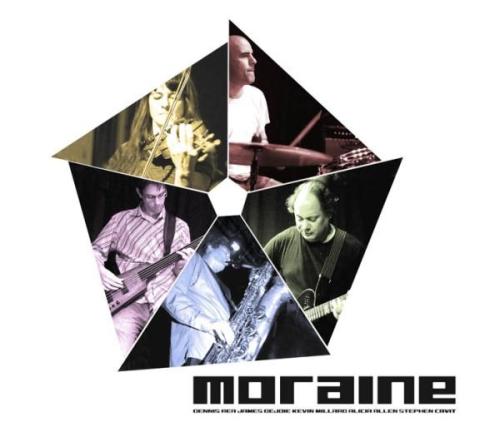
Two years after the release of their debut album, Manifest Density, Seattle-based quintet Moraine enjoy an impressive reputation as one of the most eclectic outfits on the modern progressive rock scene, purveyors of music that, while constantly dynamic and challenging, is never devoid of atmosphere and melody. In the months between the release of the album and their career-defining performance at NEARfest 2010, the band, led by veteran guitarist and composer Dennis Rea, underwent a lineup change, with the departure of cellist Ruth Davidson and drummer Jay Jaskot that determined a distinct shift in their sound.

For their sophomore effort – bearing the brilliant name of Metamorphic Rock, which, like the band’s own, reflects Dennis Rea’s passion for geology and mountaineering, as well as referring to the metamorphosis undergone by the band – Moraine have chosen a rather unconventional format. Though it is a live album, capturing their NEARfest set in crystal-clear detail, it focuses on new, unreleased material as much as on compositions originally featured on Manifest Density. The latter have been rearranged to accommodate the obvious differences in sound due to the presence of a baritone saxophone instead of a cello, their running time often extended as if to indulge the average prog fan’s preference for longer tracks.

With five members coming from very different musical backgrounds, Moraine are quite unlike conventional prog bands in being much less prone to reproduce their compositions verbatim when on stage, and thrive on freedom of improvisation. This diversity results in a headily eclectic direction, blending rock with jazz, funk, blues, world music and avant-garde, which however never descends into the sprawling “kitchen sink” approach adopted by many acts, with often debatable outcomes. Since its very beginning, Moraine has been a collaborative effort, with every member getting an opportunity to contribute to the songwriting – even if Dennis Rea gets the most credit on this album as a composer. As much as he is the band’s mouthpiece and most experienced member, even a cursory listen to either of Moraine’s albums will reveal a dense, tightly woven structure in which all instruments bring their own distinctive voice, and no one overwhelms the other.

The 11 tracks chosen for the band’s NEARfest set highlight their unique dynamics and the wide range of influences and ideas that characterize their compositional approach. Traces of their beginnings as a “chamber rock” outfit (or, as Rea puts it, a string quartet with drums) emerge occasionally throughout the set, but the definite rock turn taken by the band is hard to miss. In its three minutes, opener “Irreducible Complexity” effectively sums up the “new” Moraine: written by James DeJoie, it emphasizes how seamlessly the saxophone has become part of the whole, replacing the solemn drone of the cello with its more forceful tone, acting both as foundation (together with Stephen Cavit’s understated but subtly propulsive drumming and Kevin Millard’s versatile 8-string bass) and as a protagonist, in combination with the flowing, melodic strains of Alicia DeJoie’s violin and Rea’s clear, almost tinkling guitar.

Interestingly, the majority of Moraine’s compositions seem to make use of a leitmotiv device, a main theme, generally introduced right from the beginning, which crops up in different parts of a song, rendering it more memorable as well as more cohesive. This device is also explored by “Manifest Density”, with its catchy guitar-sax-violin riff, and the more angular “Kuru” – as well as newer material like the hauntingly majestic “The Okanogan Lobe”, and the forceful, slightly chaotic “Waylaid”. Like many of those RIO/Avant bands they have often been compared with, Moraine balance beautifully melodic, lyrical sections, dominated by Alicia DeJoie’s soaring violin, with others where a carefully controlled chaos seems to reign. “Uncle Tang’s Cabinet of Dr. Caligari” represents the band’s noisier side; while in the 10-minute medley of “Disillusioned Avatar/Dub Interlude/ Ephebus Amoebus”, all the different souls of Moraine are given a voice – from the gorgeously melancholy, violin-driven beginning – a masterpiece of careful atmosphere-building with its loose, rarefied texture – to the lazy reggae pace of the “dub interlude” (which allows the rhythm section to step into the limelight), finally climaxing with an effects-drenched, free-jazz workout.

Running at almost 12 minutes, the amusingly-named “Disoriental Suite”, based on Dennis Rea’s solo album Views from Chicheng Precipice illustrates Moraine’s more meditative side, opening with a gentle, lilting melody enhanced by James DeJoie’s flute, and culminating with a sparser, more experimental, violin-led section. As its title implies, the somber mood of “Blues for a Bruised Planet” – a fresh take on the old warhorse of the blues ballad – expressed by the mournful voice of the sax and reinforced by violin and guitar, stems from Dennis Rea’s deep concern with the sorry state of Planet Earth. My personal favourite from the band, the towering “Middlebräu”, closes the album with a bang, its funky intro followed by a short, snappy drum solo, and then culminating with the gorgeous, slow-motion coda in which the interplay between guitar and violin reaches unparalleled heights.

The sheer quality of the recording (mixed by legendary Seattle-based engineer Steve Fisk) and the brilliance of the individual performances more than compensates for the editing of Rea’s unassumingly witty on-stage banter – my only quibble about an otherwise outstanding album. As I pointed out in my review of the 2010 edition of NEARfest, Moraine were by far the most authentically progressive band on the bill. Moreover, their particular brand of “East-meets-West” is quite far removed from cheesy attempts at exoticism for its own sake, but rather motivated by genuine love and interest for different musical modes than ours. Needless to say, Metamorphic Rock is unlikely to be fully appreciated by symphonic prog traditionalists, especially those who object to the absence of keyboards, but it is otherwise highly recommended to all open-minded prog fans. Another contender for my personal Top 10 of 2011 – hoping for a third album some time in 2012.

Links:
http://www.moraineband.com

http://www.moonjune.com

Read Full Post »

Seattle-based band Moraine, one of the most interesting finds by MoonJune Record’s volcanic mastermind, Leonardo Pavkovic, first came to the attention of the progressive rock scene in 2009, with the release of their debut album Manifest Density. Their reputation as purveyors of complex, intelligent and energetic music with a definitely eclectic bent – chamber rock with an edge – was consolidated by their exhilarating performance at the 2010 edition of NEARfest, and, earlier this year, by a short but successful East Coast tour. With the official release of their second album, Metamorphic Rock (recorded on the occasion of the above-mentioned NEARfest appearance) less than a month away, band members – guitarist Dennis Rea, violinist Alicia DeJoie, saxophonist Jim DeJoie, bassist Kevin Millard and drummer Stephen Cavit – have kindly agreed to share some of their thoughts and experiences on behalf of my readers.

———————————————————————————————————————

Let us start with a rather unoriginal, though obligatory, question. How did the band come into existence, and what was the reason for its inception?

Dennis: Speaking of metamorphosis, Moraine has mutated so thoroughly since its inception that its origins as a free-improvising duo between myself and cellist Ruth Davidson are barely discernable now. The project began as a casual series of get-togethers with no specific agenda; there was certainly no expectation that it would evolve into the type of band it is today. As the musical relationship deepened, both of us brought in some compositions and it soon became apparent that the music would benefit from additional instruments. So we enlisted violinist Alicia DeJoie and drummer Jay Jaskot and named the newly formed band Moraine, a term denoting the debris carried along and deposited by a glacier, very apt for our part of the world. I had worked with Alicia in singer-songwriter Eric Apoe’s group They and knew that she would be perfect for what I had in mind. Jay had been the drummer in my late-90s band Axolotl and we had always been keen to continue our musical partnership.

After briefly trying out a couple of bassists, we found the ideal fit in Kevin Millard, who had played with Ruth back in their native Minnesota; it was an odd coincidence that I met the two of them independently. This lineup persisted for a year or so until Ruth departed for graduate school on the East Coast and Jay relocated to New York City. The drum chair was filled by Stephen Cavit, a longtime musical associate of mine who, in addition to being a phenomenal drummer, is also an Emmy Award–winning film composer and choir director. We considered replacing Ruth with another cellist but didn’t know any in Seattle who had the right temperament for this particular project, so we decided to deploy woodwinds (primarily baritone saxophone) in place of cello. James DeJoie was an easy choice for this role because he is not only one of the finest and most versatile saxophonists in the Pacific Northwest, but also is married to Alicia and thus had already grown familiar with our repertoire. This lineup has been in place for about two years now, and there’s every reason to believe that it will continue indefinitely.

Most of the interviews I have read so far seem to focus on Dennis Rea’s background. However, this time I would rather concentrate on everyone else’s experiences prior to joining the band. What prompted you to join, and how different are Moraine from your previous (or even current) musical experiences?

Alicia: When Dennis Rea approached me about Moraine, I was immediately interested. I had played with Dennis before and had greatly enjoyed it, profoundly impressed by his unique sound and compositional prowess. I had also seen him in the group Axolotl and absolutely loved that band, and was very excited to learn that Moraine would be doing some tunes in common. Moraine is unlike any band I’ve ever been in – our sound is unique, ultra-creative, yet what I like to think of as approachable. In addition to the musical camaraderie shared amongst us in the band, we all get along extraordinarily well as people, which is another aspect of the group I love and appreciate.

Jim: Prior to joining Moraine, I was doing a lot of jazz (well, still do!). I’ve always played in a few large ensembles as well as my own groups. I feel I have a little different take on “jazz” than most, by including “rock” and “pop” elements into the revered jazz world. I have been into using effects on my saxes, flutes, and clarinets for years and really love exploring the sounds created with what are essentially guitar efffects. When Ruth Davidson (Moraine’s cello player) left the band to continue her educational pursuits, Dennis asked if I would be interested in joining. The range of the bari sax and bass clarinet seemed an appropriate replacement for the cello (and they were rehearsing at my wife’s and my house!). I did have some reservations at first, only because I knew my sound would be a completely different thing for the group. I said “yes” with the condition that if it didn’t work out, Dennis could fire me – no hard feelings. Needless to say, I think it’s working out fantastically!

Stephen: When Dennis called me to potentially replace Jay (how is that possible?!?), I was fully engrossed in my composition career — during which time I’ve won an Emmy Award and been named a Sundance Composers Lab Fellow, among other great honors. I had been pretty active in the Seattle music scene before returning to live in Los Angeles for work in early 2000. When I made it back to Seattle a few short years later I found the scene had changed substantially and I didn’t recognize many of the new faces. Which is what made Dennis’ call all the more sweet: I was really jones-ing to perform again!

Kevin: My earliest musical experiences in Seattle (having moved here in ’96) were in the experimental music circles; I met Dennis back then.  He was playing in a band I adored called Axolotl, and my own band at the time (Panopticon, we called ourselves “avant-groove” or “trailer park jazz”) briefly shared a practice space with them.  I also had known Ruth back in Minneapolis; when she moved here, I introduced her to Dennis’ music.  Fast forward several years: imagine my delight to find they had formed an amazing band.  A month after seeing Moraine for the first time, their bassist left town suddenly.  I auditioned, and the fit was very natural.  I love playing music with such good friends.  The band’s music itself is very close to my heart, being a fan of Dr. Nerve, Univers Zero, and 70’s King Crimson.

What is your approach to your respective instruments, and to the compositional process? What about your main musical influences?

Dennis: In a word, I am nondoctrinaire in my approach to playing the guitar; that is, I don’t subscribe to any particular doctrine, ideology, or school of playing. I’m not a jazz guitarist, I’m not a rock guitarist or avant-garde guitarist, but simply a guitarist who is free to exercise any of my many musical interests.

Although I started out taking the standard lessons like everyone else and have periodically studied this or that aspect of music making, I’ve had relatively little formal musical training. I long ago came to the realization that my gift is my ear and that a more intuitive, listening-based approach suits me best. I can read music with a gun to my head but prefer to communicate simply through playing whenever possible. Some people have commented that my playing has a ‘searching’ quality, and that’s because I am literally searching for the right note or phrase rather than following patterns and formulae. As for composing, most of my tunes begin with a single musical motif that gets embedded in my mind; from there I begin crafting variations and complementary parts for my fellow musicians. I typically compose the other players’ parts in my pieces while making sure to leave them ample room for soloing and interpretation. Most of this polyphonic writing actually takes place in my head rather than on paper, when I’m walking down the street or doing something similarly innocuous – I seem to have the ability to hear fully formed pieces in my imagination. I then bring the parts to the other musicians at rehearsal, either in written or recorded form or transmitted using a sort of musical onomatopoeia.

As for my main influences, it’s futile to try to compress them into a baker’s dozen, but some very important influences would have to include John Abercrombie, Art Ensemble of Chicago/AACM, Derek Bailey, Paul Bley, Anthony Braxton, Brotherhood of Breath, John Cage, Eugene Chadbourne, Don Cherry, John Coltrane, Cui Jian, Miles Davis, Stuart Dempster, Eric Dolphy, the ECM catalog in general, Bill Evans, free improvisation, Fred Frith, Stan Getz, Egberto Gismonti, Jimi Hendrix, King Crimson, Gyorgy Ligeti, John McLaughlin, Charles Mingus, Ben Monder, the NYC No Wave movement, William Parker, Harry Partch, Annette Peacock, Jim Pepper, psychedelia, George Russell, Terje Rypdal, Elliott Sharp, Soft Machine, Sun Ra, Toru Takemitsu, Keith Tippett, Ralph Towner, Robert Wyatt, and the music of Brazil, Cambodia, China, Korea, the Naxi people of southwest China, North Africa, Vietnam, and Xinjiang

Alicia: My approach to the violin is to be as present as I can with the instrument while I’m playing, yet free enough to plunge into the unknown, stretching the gamut of sounds the instrument is capable of making. The solid, sonic landscapes laid down by Moraine compositions provide compelling foundations which inspire me to explore myriad melodic and rhythmic elements when soloing. The compositions I’ve brought to Moraine have all started at the piano and migrated to the different instruments from there. I love knowing that when I bring a new piece to rehearsal, the rest of the band will contribute much more with their unique sounds and ideas. Every piece is then honed, enhanced, and ultimately transformed into an expression of the entire band.

Jim: Well, I’ve always approached all my instruments with the mantra “sound first.”  In other words, tone and passion – the effects I use are extensions of my acoustic tone and feel. Compositionally, my ideas generally come from the sax and piano – once an idea starts, I  try to keep fleshing it out until it feels done – I have many, many unfinished pieces! My main influences are wide: John Hollenbeck, Miles Davis, Yusef Lateef, Ornette Coleman, and Tom Waits are some of my personal heroes. Of course there are many others: Eric Dolphy, George Crumb, Morton Feldman, Jim Black, Chris Speed, Portishead, Battles, Anthony Braxton, Dave Douglas, David Bowie… There is so much great music to explore.

Stephen: I haven’t written anything for Moraine, probably because I am not a tune writer and feel more than a little intimidated by the prospect, but I do have a very developed process when it comes to scoring for film…..   I have pretty broad influences and, in regards to drumming, I would cite Paul Motian, Ed Blackwell, Gene Lake, and a few others of that ilk as my favs. When I first joined Moraine the music seemed to have a free-flowing jazz sensibility, more so than the driving rock sound it has today. The music spoke to me in that way and I feel, as a whole, our arrangements became tighter and more dynamic as a result of that shift.  In terms of what I listen to daily, I am mostly a classical music junky. I enjoy Eastern European post-minimalism, in particular, including most of the usual suspects like Arvo Part and Henryk Gorecki and some possibly lesser known composers like Petris Vasks. It’s hard to say how that listening effects my drumming on a conscious level, but I’m certain it does. There’s a much more direct influence on my choral, concert and film work.

Kevin: I am a bit of a “red-headed stepchild” in Moraine, given that I don’t read music and am self-taught on tapping instruments and bass guitar.  (I’m not ashamed to admit that the Violent Femmes and Tones On Tail helped inspire me to take up the bass.)  But when I picked up my first Chapman Stick, it encouraged my dabblings in music theory and into “fancier” music.  My only real ‘bass idol,’ as it were, is Mick Karn (RIP) – a humble, self-taught iconoclast whose lack of formal training helped him develop his own unique tones and voice.  As for composition, I am not much of a tune-writer, having contributed only one tune to Moraine thus far (which was a tune I wrote for Panopticon).  I prefer to take more of a collaborative approach to writing music, probably because I am secretly a lazy man.

How has Moraine’s sound developed since its beginnings, and how did it change with the addition of Stephen and Jim?

Dennis: As mentioned previously, the group began as a free-improvising duo, morphed into a sort of chamber-rock quintet with a ‘string quartet plus drums’ configuration, and then arrived at its current lineup of guitar, violin, woodwinds (including flute), drums, and bass (an eight-string NS/Stick, to be precise). The net result of this transformation is that we are much more of a rock band now, albeit one that is just as likely to make excursions into jazz, world (particularly East Asian) music, and any other musical dialect that interests us.

The addition of Stephen and Jim pretty cemented our current, more forceful approach, for a number of reasons. For one thing, we had often faced challenges making the cello heard in an electric band setting due to issues with amplification, feedback, and overlapping range, whereas Jim’s baritone saxophone, fitted with a microphone, cuts through loud and clear. And unlike his more straightahead jazz gigs, Jim sees in Moraine an opportunity to explore creative sound processing, so his use of various effects such as harmonizers further beefs up the group sound, to the point where it’s almost as though we have a second heavy-duty guitarist on board. Alicia has recently begun incorporating more effects into her sound as well, which opens up a whole other set of possibilities.

Our previous drummer, Jay Jaskot, is a gifted musician whose heart really lies in jazz. With Moraine, he tended to play freely across the bar lines rather than delineate the transitions in our compositions. This approach often produced marvelous results, but as our repertoire grew increasingly intricate, the music called for a more architectural rather than free-flowing style of drumming. While Stephen is also adept at playing jazz, his parallel career as a composer brings a more structural approach to the music, thus enhancing dynamics and lending more drama to the music.

Since I was present at NEARfest 2010, where I had the pleasure to meet all of you for the first time, I am interested in your take  on the whole experience – especially as the future of the festival seems to be hanging by a thread. I also know that most of you had had no involvement with the “prog scene” prior to the release of Manifest Density. What have been your impressions so far?

Dennis: For us, NEARfest was a dream gig in every respect. We were frankly stunned to have been invited, given our exceedingly low profile among progressive rock enthusiasts at the time. Indeed, I saw quite a few “Who?” responses to the announcement in Internet forums. That makes it all the more satisfying that our set was not only well attended but very enthusiastically received.

To put things in perspective, our gigs in Seattle are typically in small dive bars and cafes for about 10-20 people. We’ve landed some decent gigs at local festivals and performance series, but nothing remotely approaching the caliber of NEARfest. It goes without saying that we had never experienced such top-flight sound, lighting, and acoustics as a band, and indeed that’s what made Metamorphic Rock possible. For starters, the warm hospitality and overall good vibe fortunately elicited one of the band’s best performances to date. The recording we obtained from NEARfest was of superb audio fidelity, and subsequent mix work with legendary Northwest producer / sonic genius Steve Fisk and mastering wizard Barry Corliss made it even richer. It’s the best-sounding specimen of my own playing ever.

I was especially blown away to find myself sharing a stage with what was essentially Gentle Giant (Three Friends), one of my towering musical icons. And the experience of connecting with so many like-minded people (yourself included) was priceless.

I was dismayed at the sudden, unexpected cancellation of this year’s NEARfest – since we played on the festival’s last day in 2010, I sometimes quip, ‘Was it something we played?’ Seriously, I really hope that the organizers regroup and come back stronger than ever next year, and some of them have indicated to me that they will. I really don’t want to get caught up in the controversy over why public support for NEARfest dropped off so abruptly this year, though I suspect that part of it is that a certain segment of the once-loyal NEARfest audience doesn’t have the patience for newer bands like ours.

Alicia: We had a fabulous time at NEARfest 2010. I was thrilled at the response we received there, as well as the wonderful contacts we made and have kept since then. Our East Coast tour in the spring of 2011 was a small reunion of sorts with many of the people we met at NEARfest, which makes the release of our upcoming album Metamorphic Rock: Live at NEARfest that much more exciting to us.

Jim: I loved the experience. Usually, I consider myself a “journeyman” in a lot of groups – sort of show up and play and try not to make too many requests. But the NEARfest people were so accommodating and nice, it made the whole time a great experience (and for once I didn’t feel bad asking for more of me in the monitors!). The “prog scene” seemed really cool to me – full of people who truly love and are excited about music, a phenomenon not always associated with the “jazz” crowd. I’m disappointed to hear that the festival may not be happening in the future.

Stephen: If  having two drum techs is any kind of a taste of heaven, then I will be sure to be a good boy! We were so well cared for by people who clearly had a passion for this music. Fortunately, I was the only band member not to have any of the famous, high-octane espresso before the gig (I don’t drink coffee); otherwise, it’s possible Metamorphic Rock would have turned supersonic!!

Kevin: NEARfest was such a fantastic experience.  Having such an accommodating and friendly technical staff was a special pleasure (heck, having *any* technical help at all was a rare treat for us!, but seriously, the NEARfest crew was superb).  The coffee before the show was truly world-class.  And playing through not one but TWO full SVT 8×10 stacks was wish-fulfillment fantasy for me.  If NEARfest is, or was, the prog scene, then I look forward to more!  Such great audience and staff as well.

You recently completed a 4-date tour of the US East Coast. Do you consider it a success, or do you wish you could have done something otherwise?

Dennis: Though it was a modest tour by most measures, we felt that it was an almost complete success, marred only by some problems with borrowed equipment and a rather thin turnout in Philadelphia, but it was after all a Sunday night. Even so, we played very well that night and went down great with the the audience. Overall we received a tremendous response at every tour stop and offers to come back anytime (and we will). It was an almost disorienting contrast to our usual lot in Seattle (more on that below). In several cases people traveled long distances to see us, which was humbling; some had seen us the previous year at NEARfest and wanted more. Audience enthusiasm was palpable, and that fed into the music and charged up the performances. What’s more, we were astonished to actually break even on our travel costs through admissions and merchandise sales, which was wholly unexpected. We’ve also noticed that the touring experience has lifted us up to a new level of confidence and tightness – the Seattle shows we’ve done since then have been very high-energy.

Playing East Coast venues did underline our isolation in faraway Seattle. It was hard not to conclude that there is far more support for progressive rock in the U.S. Northeast than out in the Northwestern Hemisphere; folks back there might not think so, but all things are relative. Naturally, this makes us eager to return for more, but the geographical distance makes it a steep challenge to bring a five-piece band across the country without going deep in the hole. But we’ll be back, one way or another.

How did the new tracks featured  on Metamorphic Rock come about, and what makes them different from the material on Manifest Density?

Dennis: What’s different about our newer material is that it is being written expressly with our current instrumentation and musical personalities in mind, whereas many pieces on the previous two CDs were written before Moraine was formed and then adapted for our specific instrumental resources. Everyone in the band has a stake in the new material, and most of us are writing.

There are also different considerations when writing for woodwinds rather than cello. This will be apparent to those who listen to Metamorphic Rock who’ve also heard Manifest Density. We considered releasing a shorter version of the concert at first, to avoid repeating tracks that appeared on the first album, but found the total listening experience to be so cohesive that the energy would be sompromised by removing any pieces from the set list. We felt that it was excusable to reissue tracks from Manifest Density because with the new lineup, the arrangements are sometimes dramatically different from the previous versions. I’m pretty confident that people will be down with the record’s mix of new and refashioned material.

I know that you have been asked about your name more times than you care to admit, so this time I would rather inquire about the new album’s name, which sounds fantastic. Does it have anything to do with the Pacific Northwest being a heavily volcanic area?

Dennis: Not exactly, as volcanic rock is considered igneous rather than metamorphic rock. Due to the geological nature of our name, I like the idea of threading that theme through our work, not because it has any direct bearing on the music itself but because it’s a perennial area of interest for me. In fact, one of the song titles on Metamorphic Rock, “The Okanogan Lobe,” continues the theme, for the track’s namesake was a feature of the vast ice sheet that once covered parts of Washington State.

Strictly speaking, metamorphic rock isn’t related to moraines, except in an incidental way. Metamorphic Rock occurred to me in a flash of insight as the perfect way of answering that perennial question dreaded by musicians, ‘What type of music do you play?’ In our case we play a variety of rock music that continually seeks to transform itself, hence metamorphosis, hence Metamorphic Rock, which also plays on rock music and underscores that our music-making is a dynamic process.

While Seattle is commonly perceived as a sort of mecca for rock music, I know your experience is rather different, especially as regards getting opportunities for live performances. What are the main strengths (if any) and weaknesses of the Seattle scene?

Dennis: Seattle gets a lot of hype for being a happening music town, but personally I think it’s greatly overrated. As in any city its size, you can find many fabulously gifted musicians working in any genre you can name, but by far the lion’s share of opportunities and attention go to unimaginative indie rock and, lately, the fad for stovepipe-beard neo-Americana. There is no prog scene as such, and while there are a fair number of musicians whose music more or less fits that description, venues that will occasionally present that sort of thing are rare as hen’s teeth, and attention from the local music press scarcer still. Apart from the local jazz publication, where we have allies, Moraine has never received a single mention in any of the Seattle weeklies or arts/music scene rags – and yes, we do send them our CDs and press releases. But if I were to tattoo a middle finger on my forehead, guzzle a flask of Jägermeister, moon the audience, and throw up on the drummer, I can guarantee that there’d be a breathless feature profile of me in the local paper the following week 😉 While Seattle certainly has no monopoly on this sorry state of affairs, the fact remains that for a majority of listeners, physical appearance and attitude trump the music itself.

Lately I’ve seen some signs of a possible resurgence of interest in progressive rock out here, but it seems to be facing resolutely backward. For example, I came across a ‘Seattle Progressive and Art Rock Community’ Facebook group with great interest, but all I ever see discussed there are things like announcements of Kansas and Return to Forever concerts and calls for forming yet another Genesis tribute band. The few postings I’ve seen or submitted about live local progressive music events have been met with total radio silence – most of these folks would apparently rather hole up with their ‘70s records than support a living artform. In fact, I just heard about a local prog nut who passed up seeing a best friend’s first public performance in 10 years in favor of going to listen to old prog LPs at a local bar. There seems to be a persistent perception among many (particularly older) prog fans that local music is somehow always inferior, and that nothing can ever live up to the gold standards set by their ‘70s heroes.

But not to dwell on the negative… Whatever challenges Seattle progressive musicians face in terms of bookings and publicity, we’re blessed with an incredibly rich community of gifted musicians working in the areas of avant-rock, leading-edge jazz and improvised music, noise and experimental forms, world music, and more. Moraine cofounder Ruth Davidson informs me that Seattle has probably the best weird art-metal scene anywhere in the country, and extreme post-rockers like Sunn O))) are having a big impact outside of Seattle. Figures like Bill Frisell, Trey Gunn, and Stuart Dempster are recognized as master innovators around the globe. While many exceptional players end up following the well-worn path to New York or other big-league entrepots in search of more and better opprtunities, those of us who choose to remain here do so for any number of reasons that may or may not have anything to do with music – the inspiring natural surroundings, human-scale urban core, and so on.

Jim: Seattle is a great city with a lot of things happening. Generally, you have to search a bit to find those “happenings,” but there a lot of truly innovative musicians here. The Seattle music scene does tend to move in cliques, with the same group playing the same venues (especially true in the “jazz” scene). In my opinion, Moraine is one of the top jazz bands going. (I know, I know – jazz has such a bad rap these days, and unfortunately deservedly so!) Moraine sure ain’t Ellington, but I feel we exemplify what I consider the best thing about jazz: adventurous explorations into music.

Stephen: The strengths, as with any art scene, lie squarely with the array of great, creative players who make it up. Without a doubt, we have an embarrassment of riches in that regard. When things are good, that creative spirit is accompanied by a supportive, well established, infrastructure of venues and promoters/bookers who care as much for their end of the bargain as us players do for ours. There are some great people involved in booking here and a few great venues to showcase our wares, but for the most part, Seattle is not one of those high-functioning scenes. So far, as a general rule, we find our best opportunities outside of the Northwest.

Kevin:  In my experience, there are a great many Seattle “scenes,” and the town is full of good music, but it seems very clique-ish.  Each genre and sub-genre seems to keep to itself.  Fans of one band rarely seem interested in checking out other bands on the same bill. Also, there are thousands of bands (of all kinds) in the area, but we’re all scrabbling for the same short list of decent clubs.  Consequently, the venues often take the bands for granted – unpaid (or underpaid) and slighted.  But I have a hunch these are very common problems these days – I doubt this is unique to Seattle.

Do you see Moraine as a progressive (rather than “prog”) band? In case you do, how so?

Dennis: Well, I can’t rightly say, since nobody seems to be able to agree on a definition of progressive rock. If by progressive you mean a type of music that privileges instrumental and compositional skill and a spirit of inquiry over recycled forms, personality, fashion, and attitude, I’d say the label fits. But if progressive rock is taken to mean banks of florid keyboards, 20-minute multi-movement suites, and vocalists emoting dramatically about the battle at the end of the world, then no, we’re clearly not. Maybe this gets to the heart of the distinction you drew between ‘progressive’ and ‘prog.’

Based on many reviews and discussions I’ve seen, a lot of people seem to view us as a prog band. That’s valid to some extent, but I’m the only member of Moraine who has a progressive rock background, so we have to factor in the others’ widely varying musical backgrounds as well. One thing’s for sure, we did not consciously set out to become a ‘prog’ band. If anything, I’d say that Moraine has much more in common with the sort of avant-jazz-rock associated with the Downtown NYC scene; it has always puzzled me why more prog rock enthusiasts don’t embrace that music, which more faithfully carries forward the questing spirit of the progressive pioneers than most of the current crop of prog bands if you ask me.

Some reviewers have placed Moraine in the Canterbury or RIO subgenre. I don’t feel that we have much musical affinity to the so-called Canterbury scene since our music tends to be darker, is short on whimsy, and lacks vocals. Not that I’m not a huge fan of several of those groups, particularly Soft Machine. The RIO comparison is much more apt in terms of instrumentation and a somewhat similar compositional approach; I have no problem with that linkage. But in the end, we’re not consciously trying to emulate any models – our influences are going to show through sometimes, but that’s only natural.

Do you have any plans for a third album in the near future? I know you have been writing and performing new material in the past few months, and it would be great if Metamorphic Rock was followed by another studio album relatively soon.

Dennis: We’re getting close to having enough material for our third CD, which will be a studio effort and will probably see release in fall 2012 as MoonJune has many astounding projects to unleash on the world in the interim.

A little bird told me about a possible tour of South America and Europe in the fall or early next year. Any news as to now? Which countries are high on your list?

Dennis: Negotiations are underway for a possible tour of Brazil sometime in 2012, arranged through MoonJune contacts. It goes without saying that we would be absolutely thrilled to visit and play in that country, where we apparently have some fans. Several MoonJune artists were there earlier this year for a gigantic festival in Sao Paolo; they were very well received and had a fabulous time. Brazilian music – particularly bossa nova, tropicalia, and musica popular brasileira – have long been a major influence on me.

We also may have an opportunity to perform in a major jazz festival in Korea, in which case we’d try to set up additional shows in that part of Asia. The opportunity arose through our recent collaboration with Korean master musician Young Sub Lee, a national treasure in the field of Korean traditional music who was integrated into Moraine for a special performance of our East Asian repertoire, a memorable event.

As for Europe, the funding doesn’t appear to be there for that at present. We’d like nothing better than to tour Europe as we’ve gained a lot of fans over there, but realistically it will have to wait until travel funding is forthcoming. We will likely return to the East Coast and make our way farther down the West Coast over the coming year as well.

Thank you very much for your time and patience in answering all these questions! Really looking forward to listening to Metamorphic Rock, and hopefully to another East Coast tour.


Links:
http://www.moraineband.com

http://www.moonjune.com


Read Full Post »

TRACK LISTING:
1. Where’s the Captain? (5:11)
2. Coma Cluster (4:42)
3. Mostly Skulls (5:12)
4. That Ticket Exploded  (5:54)
5. The Noose (4:28)
6. iNCITING (4:39)
7. Gradual Decay (4:45)
8. The Ditch (5:49)
9. After the Air Raid (3:20)
10. The Children and the Rats (4:59)
11. Glass Tables (4:35)

LINEUP:
Mike Eber – guitars
Jeff Eber – drums
Johnny DeBlase – electric and upright bass

Another impressive find from the ever-reliable Cuneiform Records, Zevious hail from New York City.  Formed in 2006 by guitarist Mike Eber, his cousin, drummer Jeff Eber (formerly of experimental progressive metal band Dysrhythmia) and bassist Johnny DeBlase, they started out as a straight-ahead jazz trio before they decided to take a more innovative direction.  Their self-titled debut album was released in 2008, followed one year later by After the Air Raid, recorded and mixed by Colin Marston of tech/extreme prog-metal band Behold…The Arctopus. Following a successful US tour in the spring of 2011, Zevious have been invited to perform at the 2011 edition of ProgDay (Chapel Hill, North Carolina), the longest-running progressive rock festival in the USA.

The three members of the band have been active on the music scene for over ten years, and their collective experience is clearly brought to bear in After the Air Raid, a high-energy blend of sleek jazz/fusion, angular math-rock, and a spicy sprinkling of metal – challenging without being overtaxing, thoroughly modern without turning its back to the old-school progressive rock tradition. Not as spiky and impenetrable as their label mates Upsilon Acrux, Zevious have managed not to banish melody altogether, though it is handled in a very unconventional manner.  For all its cutting-edge allure, Zevious’ music is not meant to be abrasive or forbidding, and draws much of its power from being able to keep the listener on their toes, though without wearying them out with a relentless barrage of wildly clashing sounds.

A cutting-edge permutation of that old classic rock stalwart, the power trio, Zevious manage to produce a huge volume of sound without the use of any keyboards or other props. Theirs is also a fully collaborative effort, as it would be hard to single out any of the three members as the star of the album. While Mike Eber’s guitar weaves dazzling webs, avoiding the ever-present pitfalls of mindless shredding, Johnny DeBlase’s fluid yet powerful bass provides a solid layer of bottom end for Jeff Eber’s stunning drum patterns, displaying the experience gained as a member of avant-progressive metal band Dysrhythmia in an array of head-spinning polyrhythms – though the influence of more “classic” drummers, such as Bill Bruford, can also be detected.

The 11 tracks featured on After the Air Raid are rather short from a prog-purist point of view, but pack more twists and turns in their restrained running time than many “epics”, though without descending into the excesses to which the more experimental prog acts are often prone. While most of the compositions clearly point to math-rock’s hypnotic, multilayered angularity, the band’s original jazz foundation adds a welcome touch of melody that is often lacking in otherwise outstanding bands like Don Caballero or Battles. With such a consistently high level of quality, it is difficult to pick out any standout tracks; however, I was particularly impressed by the brilliant, Black Sabbath-meets-jazz/fusion workout of That Ticket Exploded, or the Rush-on-steroids, bass-driven extravaganza that is iNCITING. The Noose and The Ditch both steer towards heavier territory – the former strongly reminiscent of a jazzier version of King Crimson with its devastatingly effective bass-drum interplay; the latter more aggressive, with an almost punk intensity, Mike Eber’s guitar let loose over thundering drums and a steady bass line. In sharp contrast, the title-track reveals the more subdued side of the band’s sound, a hauntingly melancholy piece revolving around Mike’s muted, atmospheric guitar work.

Clocking in at 51 minutes, this is a very dense album, and perhaps just a tad overlong on account of the unabated intensity of the music. In fact, those who prefer a more traditional approach to prog, as well as those who object to a lack of vocals, may find it a somewhat stressful listen. On the other hand, with stellar performances all round, and a brilliant combination of diverse influences and creative ideas, After the Air Raid is highly recommended to anyone with a keen interest in contemporary progressive rock.

Links:
http://zevious.com/

http://www.cuneiformrecords.com

Read Full Post »

TRACKLISTING:
1. G.B. Evidence (5:19)
2. Arabesque (12:32)
3. Dark Magus (9:00)
4. L’Ombra di un Sogno (6:55)
5. Più Limpida e Chiara di Ogni Impressione Vissuta, Part I (5:08)
6. Battery Park (6:37)

LINEUP:
Giovanni Parmeggiani – Hammond organ, acoustic and electric piano, Arp Odyssey, Minimoog
Cristian Franchi – drums
Daniele Piccinini – bass
Marco Marzo Maracas – guitar, oud

With:
Richard Sinclair – vocals (4)
Antonio “Cooper” Cupertino – percussion (4)

Hailing from the historic Italian city of Bologna, home to the oldest university in the world, Accordo dei Contrari (Italian for “Agreement of the Opposites”) started out their career in as a trio; then, after a number of line-up changes, recorded their debut album, Kinesis (released in 2007) as a quartet. The same line-up is featured on Kublai, their sophomore effort, released in the spring of 2011 – an album that is sure to put them on the map of even the most demanding lovers of progressive rock. Sadly, the band was one of the “innocent victims”, so to speak, of the unfortunate cancellation of the 2011 edition of NEARfest, which deprived American prog fans of the opportunity to witness a number of exciting modern bands.

While the album’s title may bring to mind the fabled character of the Mongolian emperor celebrated by the likes of Marco Polo and S.T. Coleridge, in this case the name Kublai is meant to  represent “the most distant point in an imaginary landscape. It represents ordered chaos, light and dark, the balance between written and improvised music.” A clear statement of intent that accurately sums up the musical content of Accordo dei Contrari’s second album. With its stylishly minimalistic cover artwork, Kublai is a supremely classy package that shows a band whose compositional and instrumental mastery is growing by leaps and bounds.

Running at a compact, perfectly balanced 45 minutes, the album sounds fresh and original even when the band’s main sources of inspiration are referenced. While Accordo dei Contrari do not choose to employ as extensive an array of instruments as other modern bands, they manage to create an impressive volume of sound with a rather restrained instrumentation, dispensing with the violin and saxophone featured on their debut, and therefore perfecting the “electric quartet” format. For an album that might be tagged as jazz-rock, Kublai seems to revolve a lot around Giovanni Parmeggiani’s stunning keyboard work. Indeed, the keyboards are definitely the driving force of the disc, with the distinctive rumble of the Hammond organ lending a touch of unbridled hard rock passion to the overall sound: there are moments on Kublai in which Parmeggiani sounds as if he was channeling Jon Lord.

Opener “G.B. Evidence”, a variation on a Thelonious Monk composition, immediately introduces the listener to the fascinating world of Accordo dei Contrari, with Cristian Franci’s crisp, inventive drumming, bolstered by Daniele Piccinini’s sleek, versatile bass lines, sparring with Marco Marzo’s simmering guitar and Parmeggiani’s subtly layered keyboards. In the second half, guitar and organ engage in a sort of dialogue that conjures images of Deep Purple jamming with Mahavishnu Orchestra. Clocking in at 12 minutes “Arabesque” presents Accordo dei Contrari’s own twist on the obligatory prog ‘epic’, making effective use of a steady electronic drone to create a faintly ominous atmosphere underlying the stately beauty of the Eastern-flavoured acoustic guitar arpeggios in the first part of the track. The overall loose, somewhat rarefied texture, the flow of the music broken by frequent pauses and surges in volume, occasionally gains intensity in bursts of energy that bring to mind the revolutionary sonic melting pot of Area circa Arbeit Macht Frei. Bookended by sonorous gong. “Dark Magus” (a nod to Miles Davis’ 1974 album of the same title) reinforces the impression of classic jazz rock coupled with the intensity of vintage hard rock. Parmeggiani attacks his Hammond with unadulterated abandon, while Franci’s stellar drumming propels the whole of the composition along, with Marco Marzo’s guitar in an invaluable supporting role.

Strategically placed at the opening of the album’s second half, “L’Ombra di un Sogno (Shadow of a Dream)” is the only track with vocals, provided by none other than the ‘voice of Canterbury’, Richard Sinclair, who also wrote the gentle, moving lyrics in memory of his dog. Centred around Sinclair’s subdued yet emotional interpretation, his velvety baritone bending the music to its will, the song – somewhat sparse at first, with a hauntingly insistent guitar line, then taking a jazzier turn towards the end – brings the the sound of iconic Canterbury bands such as Hatfield and the North and National Health into the 21st century. On the other hand, “Piu’ Limpida e Chiara di Ogni Espressione Vissuta, Pt. 1”  steers towards a more symphonic direction, with organ and guitar alternating in the lead role, and an overall solemn, meditative feel even when the pace picks up. The album ends with the “Battery Park” (inspired by a windy, sunny February day by the Hudson River in New York City), a lovely, piano-led  piece based around a main theme developed in a stop-start movement, the various sections climaxing and then subsiding like the natural flow of a water course.

A perfect marriage of formal elegance and emotion, rich with diverse influences but always cohesive, Kublai clearly proves that Accordo dei Contrari are ready to take their rightful place alongside D.F.A. as purveyors of impeccably executed, yet warm and emotional jazz-rock in which keyboards play a prominent role. The band have amply fulfilled the promise shown by their debut, Kinesis, and the compositional and technical maturity shown on their sophomore effort bodes extremely well for their future career. A must for fans of the Canterbury scene and classic jazz-rock in general, Kublai will delight anyone who loves great music – whatever the label attached to it.

Links:
http://www.accordodeicontrari.com/


Read Full Post »

TRACKLISTING:
1. Stone Salad (13:26)
2. Familiarization Results (7:45)
3. Harry Heller Theater (12:11)
4. Perfect Place (1:37)
5. Parallels (20:01)
6. Influence of Time (10:22)
7. Crashmind (9:57)
8. Desert Circle (15:51)
9. Babylon Dreams (9:38)

LINEUP:
Igor Elizov – keyboards, grand piano
Al Khalmurzaev – keyboards, synths, 12-string guitar, flute
Vitaly Popeloff  – acoustic steel & nylon guitars, voice
Ali Izmailov – drums, percussion
Sur’at Kasimov – fretless bass

While quite a few people might consider the Central Asian republic of Uzbekistan little more than a backwater plagued by many of  the same issues as most developing countries, very few would ever associate it with rock, let alone prog. However, the country, situated on the ancient Silk Road, is anything but irrelevant in terms of historical and cultural heritage, and has a surprisingly high literacy rate – higher than many Western countries. Though its contribution to progressive rock (like the majority of Asian countries with the exception of Japan and very few others) is certainly not large in terms of quantity, the few outfits hailing from Uzbekistan have attracted enough attention to put the country on the prog map, and none more effectively than Tashkent-based quintet From.uz.

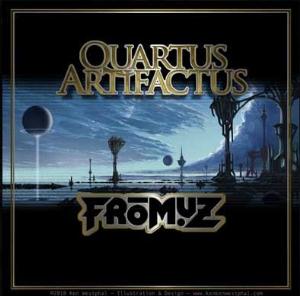
Formed in 2004 by guitarist Vitaly Popeloff and bassist/producer Andrew Mara-Novik, From.uz proudly declare their origins in their own name, with the dot added on occasion of the release of their third album, Seventh Story, in order to make the meaning “from Uzbekistan” even clearer. The band underwent a line-up change prior to the release of Seventh Story, with only Vitaly Popeloff and Al Khalmurzaev left from the line-up that had recorded their first two albums, and three new musicians joining the ranks. From.uz’s new configuration is the one featured on the aptly-titled Quartus Artifactus, a double CD/DVD set recorded live in June 2009. As the album’s subtitle points out, Quartus Artifactus contains “the best of From.uz in a progressive chamber style”, yhet there is definitely more to it than the usual live album/compilation format.

The live setting seems to be the most natural for a band like From.uz, whose debut, Audio Diplomacy (2007), was a live recording – quite an unusual choice for an album of completely new material. Quartus Artifactus, on the other hand, contains mainly acoustic versions of material taken from the band’s three previous albums. Since practical issues make playing abroad rather difficult for them, the recourse to the DVD format is the band’s chosen way to bring their music out to their growing fanbase. Being signed to US-based label 10T Records has obviously helped them to gain a larger following than if they had kept within their borders, and their music possesses an undeniably exotic appeal. While many other outfits bring ethnic elements to their sound, From.uz are the real thing, bridging the East-West divide with a musical offer that brings together the great Russian classical tradition, centuries of Eastern folk music and the modernity of rock and jazz – as well as other, perhaps less obvious influences.

The members of From.uz are very accomplished musicians, but thankfully they never give the impression of wanting to hit the listener over the head with their technical skill. While their music is undeniably quite complex, and requiring quite a bit of attention, the acoustic dimension lends additional warmth and depth to it, smoothing the occasionally hard edges of its electric counterpart. Furthermore, the accompanying DVD, even in its almost stark simplicity, reveals a genuine sense of enjoyment on the part of the musicians. While the quality of the images may not be as pristine as in other productions, watching the band perform injects new life into the material. Arranged in a semicircle, and seated most of the time, the band members come across as concentrated but never detached from the audience, and the intimate setting of the small theatre reinforces the ‘chamber’ definition mentioned in the album’s subtitle. The extra features allow us a look behind the scenes, showing the crew’s tireless work and the band members’ unassuming yet dedicated attitude.

Running at abour 100 minutes, the 9 tracks featured  on the set offer a well-rounded picture of the band’s output and general approach. As anyone already familiar with From.uz will know, their compositions tend to be rather long, with only the short guitar/vocal interlude “Perfect Place” and “Familiarization Results” clocking in at below 9 minutes. The music’s inherent complexity benefits from the semi-acoustic rendition immensely, retaining its head-spinning intricacy while acquiring more than a hint of endearing softness.  Guitarist Vitaly Popeloff’s is a delight to watch (or even just to hear), his stunningly accomplished acoustic playing, together with Ali Izmailov’s spectacular drumming, the engine behind From.uz’s sound. While he is very much in evidence throughout the set, Popeloff’s showcase spot occurs in the first half of “Desert Circle”, where he runs the gamut of his instrument’s expressive possibilities, ranging from slow, meditative tones to jazzier, Latin-tinged licks. He is also a more than capable vocalist, as proved by his performance on the aforementioned “Perfect Place” and “Parallels”.

Opener “Stone Salad” (from Overlook) introduces the listener to the lush tapestry of From.uz’s music, with its jazz-rock foundation overlaid by many different influences, including the expected Eastern ones. The earlier material from the Audio Diplomacy album (“Familiarization Results”, “Harry Heller Theatre” and “Babylon Dreams”) possesses a more distinct classical flavour, though the latter number takes a sharper, jazzy route. The monumental “Parallels” (taken from Seventh Story, like “Perfect Place”, “Desert Circle” and “Influence of Time”,), at 20 minutes the longest item on the album, blends the symphonic, the atmospheric and the jazzy component of the band’s inspiration in a richly complex, yet deeply emotional creation; while “Crashmind” (also from Overlook) is a dynamic, fusiony number based on variations on a theme that runs through the whole composition. Igor Elizov and Al Khalmurzaev’s keyboards add rich, subtly shaded layers of sound, and Sur’at Kasimov’s fretless bass acts as a discreet but reliable driving force.

The splendid artwork, courtesy of the band’s official artist and US manager, Ken Westphal, offers an added bonus to both newcomers and fans of the band. Westphal’s style, here rendered in gorgeous shades of blue, green and grey, is subtly reminiscent of Roger Dean, though more streamlined – the dreamlike quality of the  inner gatefold image of water and sky tempered by a life-like touch. All in all, Quartus Artifactus provides a stunningly-packaged introduction to one of the best instrumental progressive rock bands on the current scene, and one that will hopefully get an opportunity to perform in the US in the near future.


Links:
http://www.fromuzband.com/

http://10trecords.com/

http://www.kenwestphal.com/


Read Full Post »

TRACKLISTING:
1. Bella Lee (3:34)
2. Parliamone (5:43)
3. Infraditi (7:36)
4. Fungo (6:42)
5 Cane di Schiena (6:32)
6. Pappa Irreale (2:27)
7. Antenna (7:59)
8. Klez (4:16)
9. Max Dembo (8:47)

LINEUP:
Filippo Cantarella – violin, viola
Marco Ravera – electric and acoustic guitar, synthesizer
Tommaso Rolando  – acoustic bass, electric bass, acoustic guitar, synthesizer, sampler, trumpet
Nando Magni – trombone
Nicola Magri – drums

With:
Cosimo Francavilla – soprano saxophone (2)
Antonio Carletti – weird vocals (7)

In my writings I have often mentioned the lively music scene of the great port of Genoa – not surprising for a city that, throughout its long history, has been one of the many melting pots of the Mediterranean region, bringing together East and West, North and South in a heady mixture of tradition and modernity. This is the kind of fertile ground from where Fabrizio De André’s Creuza de Ma, one of the undisputed masterpieces of the whole ‘world music’ scene, originated. Five-piece Calomito, a relatively recent addition to the variegated Italian music scene, bring an unique twist to the time-honoured musical heritage of their home town, with a sound that marries the warmth of the Mediterranean with a strong international bent.

Calomito have been around since the mid-2000, releasing their debut album, Inaudito, in 2005. After a five-year hiatus and some line-up changes, the band have made a comeback with Cane di Schiena, issued in the first half of 2011 by Milan-based label AltrOck Productions (also responsible for outstanding, cutting-edge releases such as Yugen’s three albums and mirRthkon’s Vehicle). Though they have been almost forcibly placed under the RIO/Avant umbrella, Calomito are one of those bands that – luckily for fans of genuinely interesting music, much less so for those who delight in labelling everything – are extremely hard to pigeonhole, due to their boldly eclectic approach to music-making.

As a fellow Italian reviewer  jokingly stated at the beginning of his own review of the album, you may want to consider taking a couple of days off in order to listen to Cane di Schiena properly. Indeed, though clocking in at a mere 53 minutes, the album presents an  incredibly dense (though never claustrophobic) amount of music which unfolds with each successive listen, and therefore devoid of any immediately digestible tunes. On the other hand, unlike what many believe about any kind of music that bears even a faint whiff of ‘avant-garde’, there is nothing discordant, abrasive or random about Calomito’s sound. Each of the tracks is clearly very carefully structured, as it is nearly always the case with ‘chamber rock’ outfits – a definition that, in my view, fits Calomito to a T. Like their label mates Yugen, they transcend the boundaries of the RIO/Avant classification, and should rather be seen as purveyors of eclectic yet oddly intimate music tha requires all of the listener’s attention to be fully appreciated.

This does not imply that Cane di Schiena is one of those deadly serious albums that command a quasi-religious devotion. Calomito’s humorous disposition, which descends directly from the likes of Stormy Six and Picchio dal Pozzo (as well as the Canterbury scene, which is also a clear musical influence), immediately comes across from titles such as “Pappa Irreale”(a pun on pappa reale, the Italian for “royal jelly”) or “Infraditi” (an intentionally ungrammatical spelling of the  word meaning “flip-flops”). The music itself, while quite light-hearted at times, can on occasion reach for a more subdued, sober tone. On the whole, Cane di Schiena comes across as a flawlessly executed album that never descends into a depressing or overly involved tone.

As is the case of other ‘chamber prog’ ensembles, Calomito employ a number of other instruments alongside the traditional rock trinity of bass, guitar and drums, assisted by various synthesizers. The substantial contribution of the horns evokes parallels with bands such as Miriodor, which emerge quite clearly right from the album’s opening track, “Bella Lee” – an incredibly dense 3 minutes of music; while the equally important role played by strings (violin and viola) brings instead to mind one of the best modern‘chamber rock’ outfits,  Seattle-based band Moraine, as well as vintage Frank Zappa. The more upbeat passages, suggesting a jazz-rock or Canterbury matrix, made me think of Forgas Band Phenomena, though Calomito sound slightly more angular than the French band. Furthermore, while Univers Zéro’s broodingly apocalyptic production seems to be the polar opposite in tone to Calomito’s essentially cheerful approach, Nicola Magri’s stunning, beyond-merely-propulsive drumming style cannot but evoke the way in which Daniel Denis supports the whole fabric of the Belgian outfit’s sound.

Trying to describe any of the nine tracks in detail would not do any of them justice. While “Infraditi” is probably the one track with the strongest connections to the RIO/Avant school of progressive rock – an astoundingly complex, 7-minute rollercoaster ride apparently throwing in anything but the proverbial kitchen sink, from carnival-like music to jazzy touches to jagged, almost dissonant passages – the somewhat low-key “Parliamone”, true to its title (meaning “let’s talk about it”) seems to reproduce a dialogue between two persons, with horns and synthesizers in the role of human voices. The choppy, dynamic “Fungo” exemplifies the way in which Calomito use pauses to create interest, rather than produce an impression of patchiness; while the title-track’s slow, meditative mood, some passages so low as to be barely audible, produces an intense, almost mesmerizing effect.

Especially in the second half of the album some intriguingly exotic influences show up, which bring to mind comparisons with Slivovitz, another über-eclectic Italian outfit hailing from Naples, my home country’s second biggest port (and musical capital). “ Pappa Irreale”’s lilting, dance-like pace punctuated by violin is sharply redolent of Irish folk, or even American country; and the upbeat, drum-driven “Klez”, as the title points out, contains elements of klezmer and Eastern European gypsy music. A folksy also tone emerges in parts of the initially low-key “Antenna”, possibly the most complex number on the album (and the only one briefly featuring ‘weird vocals’), ending with an exhilarating crescendo in which guitar, trombone and violin seem to engage in a sort of conversation. Closing track “Max Dembo” introduces some new elements, such as spacey sound effects that  enhance the powerful, rolling tone of the drums and the echoing guitar lines, as well as shades of Brazil in the relaxed, almost sultry pace of first half of the track.

In spite of the density of its musical content, Cane di Schiena is far from inaccessible, and – while undoubtedly a challenging listen – does not rely on spiky, jarring sounds to make its impact. There is plenty of melody to be found on the album, and the music possesses a natural flow and easy elegance that make listening a pleasure rather than a chore. Even though fans of traditional symphonic prog may be daunted by anything bearing the label of ‘avant-garde’, I would encourage everyone who loves progressive music to give Calomito a try. With their successful blend of technical skill, seemingly boundless creativity, eclectic influences and keen sense of humour, they are one of the most interesting bands heard in the past couple of years, and definitely one to watch.

Links:
http://www.calomito.com/

http://www.myspace.com/calomito

http://production.altrock.it/start.asp

Read Full Post »

TRACKLISTING:
1. Loopy (5.59)
2. A Serious Man (3.49)
3. Mom’s Song (2.05)
4. Bar Stomp (3.04)
5. Outdoor Revolution (3.08)
6. Western Sky (2.12)
7. Burning Match (5.11)
8. Claire’s Indigo (2.11)
9. Snufkin (2.48)
10. Old Silhouette (4.12)
11. Winds of Grace (8.39)

LINEUP:
Dani Rabin – guitar
Danny Markovitch – saxophone
Steve Rodby – bass
Paul Wertico – drums, percussion (1, 8)

With:
Jamey Haddad – percussion (2, 4, 6, 8, 9, 10)
Matt Davidson – vocals (3, 6)
Leslie Beukelman – vocals (3, 6)
Makaya McCraven – drums (4)
Daniel White – lyrics, vocals (11)

Marbin’s eponymous debut came to my attention towards the end of 2009, soon after its release. Even if the duo formed by two young, talented Israeli-born musicians who had recently moved to Chicago was an unknown quantity to me and most other reviewers, the album’s endearingly naïve artwork and intriguing musical offer were enough to warrant closer scrutiny. With a name cleverly fashioned out of the surnames of the two artists (Danny MARkovitch and Dani RaBIN), Marbin made their debut on the US music scene with an album full of intriguing melodies crafted with ony two instruments – Rabin’s guitar and Markovitch’s saxophone – characterised by an ethereal, almost brittle quality, reminiscent of the delicacy of Far Eastern art, complex yet at the same time not too taxing for the listener.

The year 2010 marked a veritable quantum leap for Marbin (very active on the live front in the Chicago area), when they came under the radar of MoonJune Records’ mainman Leonardo Pavkovic, a man with a keen eye for new acts of outstanding quality. Promptly snapped up by the New York-based label, Marbin – who in the meantime had become a real band, with the addition of  Pat Metheny alumni Steve Rodby (bass) and Paul Wertico (drums) – released their second album at the beginning of 2011.

Breaking the Cycle is indeed an impressive effort, which sees the band build upon the foundation laid by their debut, while fine-tuning their sound and adding layers of complexity, though without making things unnecessarily convoluted. Indeed, rather interestingly, a fellow reviewer used the term ‘easy listening’ in connection to the album –  a definition that may conjure images of that openly commercial subgenre known as smooth jazz. However, while Breaking the Cycle does have plenty of smoothness and melody, I would certainly never call it background music. The presence of a full-blown rhythm section has given a boost to the ambient-tinged, chamber-like atmosphere of the debut, and some of the tracks display a more than satisfying level of energy and dynamics, all the while keeping true to the deeper nature of their sound.

Clocking in at slightly over 40 minutes, Breaking the Cycle immediately appears as a supremely sophisticated effort, starting from the striking cover artwork whose mix of the industrial (the bridge on the front cover) and the natural (the elephant on the back cover) seems to reflect the nature of the music itself. While the majority of the tracks lean towards the slower, more atmospheric side of things, delivered in a rather short, somewhat compact format, the album is bookended by two numbers that differ quite sharply from the rest, as well as from each other. Opener “Loopy” is the closest Marbin get to a ‘conventional’ jazz-fusion sound, almost 6 minutes of sax and guitar emoting over an exhilarating jungle beat laid down by Wertico’s drums and percussion that gives a first taste of the seamless interplay between the instruments. On the other hand, the medieval-tinged, acoustic folk ballad “Winds of Grace”, masterfully interpreted by guest singer Daniel White (who also wrote the lyrics), though apparently out of place in the context of the album,  is imbued with a feeling of nostalgia and loss suggested by several other tracks.

Indeed, the three numbers that form the central section of the album might almost be considered as parts of a single suite, since they are characterized by a wistful, romantic (though anything but cheesy) mood. An extended sax solo is the real showstopper in “Outdoor Revolution”, while wordless vocalizing enhances the country-tinged acoustic guitar in “Western Sky”. “Burning Match” seems to reflect its title almost perfectly, its smouldering atmosphere touched with a hint of sadness, the yearning tone of the sax suggesting the end of a love affair. A strong visual element is evoked throughout the album: “Old Silhouette” creates a faintly mysterious picture, yet full of subtle warmth intensified by the slow, deep movement of the percussion; while the sweet, soothing chanting in “Mom’s Song”, combined with the gentleness of the guitar, brought to my mind images of a beach at sunset. In sharp contrast, “Bar Stomp” delivers exactly what the title promises – a bluesy, electrified romp with Rabin’s guitar taking centre stage, bolstered by an imposing percussive apparatus involving the presence of three drummers (Wertico plus guests Makaya McCraven and Jamey Haddad), and spiced up with a hint of cinematic tension.

The final remarks I made in my review of Boris Savoldelli’s Biocosmopolitan may also apply to Breaking the Cycle. Oozing sheer class, with outstanding performances all round, yet plenty of warmth and accessibility (unlike a lot of hyper-technical albums), this is a release that has the potential to appeal to anyone who loves good music and does not care about sticking a label on anything they hear. Judging from the positive reactions to this album, Marbin are definitely going to be another asset for the ever-reliable MoonJune Records.

Links:
http://www.marbinmusic.com

http://www.moonjune.com

Read Full Post »
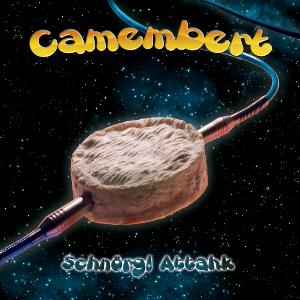

TRACKLISTING:
1. Aria (2:09)
2. Biocosmopolitan (3:36)
3. Concrete Clima (4:26)
4. The Discordia (3:42)
5. Kerouac in New York City (3:13)
6. Is Difficult to Fly Without Whisky (3:26)
7. Dandy Dog (2:12)
8. Danny Is a Man Now (1:42)
9. Biocosmo (3:39)
10. Lovecity (2:47)
11. Springstorm (3:21)
12. The Miss Kiss (2:57)
13. My Barry Lindon (1:28)
14. Closin’ Theme (2:32)
15. Crosstown Traffic (bonus track) (4:03)
16. Biocosmo (English version – bonus track) (4:14)

Bonus video:
The Miss Kiss

LINEUP:
Boris Savoldelli – all vocals and vocal instruments, piano (9, 16)

With:
Jimmy Haslip – bass (2)
Paolo Fresu – trumpet, flugelhorn (3, 5)

At a first glance, Boris Savoldelli’s second solo album does not spell ‘progressive rock’. With 14 songs (plus two bonus tracks) between 1 and 4 minutes in length, and a rather minimalistic instrumental accompaniment, Biocosmopolitan looks light years away from the lushly orchestrated productions of the flag-bearers of the genre. Moreover, even if the output of New York-based MoonJune Records (one of the few authentically forward-thinking labels in the business) is frequently placed under the used-and-abused ‘prog’ umbrella, this album displays a somewhat different approach to music-making, one that tries to offers something genuinely original rather than a more or less successful replica of Seventies modes.

My first encounter with Boris Savoldelli’s music dates back from 2009, when I reviewed his solo debut, Insanology – an album that impressed me for its unique blend of elegance and uncontrived cheerfulness. It was one of those truly enjoyable discs whose apparent simplicity reveals layers of complexity with every successive listen. It is, however, not the complexity for its own sake that can be sometimes encountered in ‘standard’ progressive rock, but is rather achieved with a lightness of  touch, a kind of consummate subtlety that is all too rare on the modern music scene – all accomplished with one main instrument, Savoldelli’s voice, a veritable one-man-orchestra of stunning versatility that has been compared to luminaries like Bobby McFerrin or Demetrio Stratos.

Indeed, Boris Savoldelli is much more than an ordinary singer – to quote our fellow Italians PFM, he is a real maestro della voce, a master of the art of shaping his voice in ways that would sound impossible to most people, replacing most of the conventional instrumentation used in jazz and rock with an array of awe-inspiring effects whose apparently effortless nature belie the years of hard work behind it all. While most of the songs, which blend traditional and unconventional features, have a similar structure – where two or more vocal lines (both percussive and harmonic) intersect and spar with each other – as a whole Biocosmopolitan does not sound monotonous or repetitive. In my view, his unique handling of the linguistic aspects is probably the single most important factor for the album’s success. English and Italian intermingle with astounding naturalness (while on most other albums a mix of languages would sound contrived) that lends the album a truly cosmopolitan feel – with devices such as alliteration and assonance used to bolster the musical content, creating intriguing rhythms and textures.

In the four years between Insanology and Biocosmopolitan, Boris Savoldelli has been quite busy, though on a more decidedly experimental level – releasing the album Protoplasmic in collaboration with Elliott Sharp, as well as three albums with avant-garde outfit S.A.D.O. While Insanology saw the presence of veteran jazz guitarist Marc Ribot on two tracks, this time Savoldelli avails himself of the collaboration of two outstanding musicians – renowned Italian trumpeter Paolo Fresu, and bassist Jimmy Haslip (of Yellowjackets fame). Haslip’s bass adds depth and interest to the title-track, complementing Savoldelli’s bluesy vocals in a song that is much more complex than it short running time would suggest. Fresu’s wistful-sounding trumpet punctuates the cheery, infectious repetition of the line “the corner is dirty” in the pause-laden “Concrete Clima” (the longest track on the album at slightly over 4 minutes), and its sudden bursts of sounds enrich the fabric of the bright, endearingly nonsensical “Kerouac in New York”.

Most of the songs share the same sunny, upbeat nature and exude a genuine sense of warmth, reminding the listener of exotic vocal styles or of the sensuality of Latin rhythms, combining modernity and a charming retro feel (most evident in the Fifties’ doo-wop style of the hugely entertaining “The Miss Kiss”). Boris’s voice ranges from gritty, passionate blues tones to elegant, jazzy smoothness, infused with a genuine sense of humour and enjoyment. The only number that clearly differs from the rest is the melancholy ballad “Biocosmo”, a slow-burner (also present as a bonus track with English-language vocals) accompanied by piano and ending with solemn, choir-like chanting and distant clinking sounds, which one can almost imagine Savoldelli performing in the semi-darkness of a smoky night club. The album is then wrapped up, in cinematic fashion,  by two humorous complementary pieces, “My Barry Lindon “ – basically a series of ‘thank you’, handclaps and assorted sounds with occasional vocal harmonies thrown in – and “Closin’ Theme”, where a voice recites the album’s credits in English with mock seriousness. The second bonus track, a cover of Jimi Hendrix’s “Crosstown Traffic”(already included on Insanology), is the closest the album goes to traditional rock, with Savoldelli offering a more than credible performance as a hard rock vocalist.

Biocosmopolitan is one of those rare albums that are potentially appealing to all music lovers, regardless of genres and labels – though it might disappoint those who require songs to be over 10 minutes in length, or object to the lack of ‘proper’ instruments, or even shun any kind of music that is not dead serious or just plain depressing. Progressive without necessarily being ‘prog’, entertaining and at times even exhilarating, Biocosmopolitan is an ideal showcase for the amazing vocal and compositional talents of an artist whose work proves that impeccably performed music can also be fun.

Links:
http://www.borisinger.eu

http://www.moonjune.com

Read Full Post »

« Newer Posts - Older Posts »