Feeds:
Posts
Comments

Archive for the ‘Jazz-Rock’ Category

TRACKLISTING:
1. Apophenia (4:45)
2. It Works (5:05)
3. Narrow-Caster (3:09)
4. Live With This Forever (5:09)
5. Cautionary Tale (5:05)
6. The Proverbial Banana Peel (3:09)
7. Young Once (5:14)
8. Scenery (5:49)
9. Free For All (4:35)
10. The Last Gasp (4:57)

LINEUP:
George Dobbs – lead vocals, keyboards
Robert James Pashman – bass, keyboards, vocals
Pat Kliesch – guitars, vocals
Rob Durham – drums, percussion

With:
Dan D’Elia – drums (3, 10)
Veronica Puleo – backing vocals (10)

“3RDegree – Defiling perfectly good songs with prog since 1990”

The definition of ‘narrow-caster’ (as opposed to a broadcaster) –  “one who transmits a TV programme […] or otherwise disseminate information, to a comparatively small audience defined by special interest or geographical location” – seems to be a perfect fit for anyone engaged in the production of progressive rock. In spite of the genre’s relative popularity these days, both the musicians and those who (like myself and many others) support it through our writings are perfectly aware that prog is not likely to become the next mainstream sensation, and its appeal will remain limited to a niche audience.

Based in New Jersey (though guitarist Pat Kliesch resides in Los Angeles), 3RDegree formed over 20 years ago, but disbanded after a few years after the release of two albums, discouraged by the lack of response from their intended audience. In 2005, Kliesch and the other two original members, bassist Robert James Pashman and drummer Rob Durham (vocalist/keyboardist George Dobbs would join them later), met again with a view to reforming the band, taking advantage of those opportunities offered by the Internet that were not yet fully available in the mid-Nineties. The result was Narrow-Caster, released in the first half of 2008, mostly comprising material that had been conceived prior to the band’s demise in 1997, but completely rearranged for the occasion.

The reactions of the ‘prog community’ to the album have been somewhat mixed, as illustrated by the many reviews published since its release. Although 3RDegree have always proclaimed their love of progressive rock (as stated by the quote I used as a heading, which is proudly emblazoned on the band’s official T-shirt), the influences they list on their Facebook page point to a very eclectic bunch of musicians – with the likes of Rush, Level 42, Genesis and Stevie Wonder mentioned in the same breath. In fact, labelling 3RDegree as a ‘conventional’ prog band would do them a serious disservice: they should rather be counted among the rightful heirs of legendary genre-bending outfits such as 10cc, Supertramp, Roxy Music and Queen. These bands and others, pioneers of the much-debated genre called Art Rock, are seen by some as little more than marginally related to prog, by others as no less progressive than icons such as Yes or Genesis.

For today’s standards, Narrow-Caster is a short album, with no track longer than 5-odd minutes. Chock-full of hooks and melodies that would be the envy of many bigger-name bands, it is one of those independent releases that manage to sound like a million dollars. While the label-happy brigade (the ones that always wonder if a band, artist or album is prog or not before they say anything else) might frown and turn up their noses, at the beginning of the 21st century, with progressive rock in all its manifestations enjoying an almost unexpected Renaissance, an increasing number of outfits have rediscovered the importance of a well-crafted song as opposed to sprawling, patchy  and often terminally boring epics. 3RDegree are part of a solid, though not too large, contingent of bands who do not believe that ‘pop’ is always a bad word, and who deliver consistently intelligent, classy music without the need to release a whopping 80 minutes of it.

While all the members of 3RDegree are gifted musicians, creating rich sonic textures without anyone seeking to outdo the other, the band’s real ace in the hole is George Dobbs’ absolutely stunning voice (which, I am happy to say, sounds every bit as good live as it does on CD). Though I have seen it compared to the likes of Michael Jackson, in my view the closest comparison are Glenn Hughes (of Trapeze, Deep Purple and, more recently, Black Country Communion fame), and of course Stevie Wonder. George’s versatile, soul-infused tenor can shift from soothing to aggressive in the space of a single song, stamping his unique imprint on the band’s music without overwhelming it. 3RDegree’s love of classic prog acts such as Yes and Gentle Giant – as well as The Beatles and the hard-to-pinpoint King’s X – shines through the superb vocal harmonies that grace most of the songs.

The album kicks off in high gear with “Apophenia”, an intriguing mid-tempo with echoes of Rush in the guitar parts that immediately introduces the listener to 3RDegree’s heady blend of aggressive, catchy and atmospheric elements. Dobbs delivers the thought-provoking lyrics, belying the apparently carefree tone of the music (something perfected by the likes of Steely Dan and Supertramp, to name but two) in impassioned yet perfectly controlled fashion. The Steely Dan comparisons rear their head in the splendid “It Works”, my favourite number on the album, with excellent guitar and keyboard work bolstered by Pashman’s nimble bass lines, and one of Dobbs’ finest moments together with the energetic “Free for All” – where a deceptively blissful chorus is offset by the spiky, riff-heavy electricity of the verse.

While the title-track and the smooth, jazz- and soul-tinged “Scenery” showcase 3RDegree’s more accessible side, with plenty of catchy vocal harmonies and laid-back melodies, the short but punchy “The Proverbial Banana Peel” sees the band experiment with both electronics and metal-like power chords The nicely-paced “Cautionary Tale” delivers a biting indictment of religious fanaticism through almost seductive vocals and an atmospheric guitar solo, and “Live With This Forever” marries a great hook, supported by Dobbs’ stellar performance both on vocals and keyboards, with some harder-edged guitar work. “Young Once” and “The Last Gasp”, on the other hand, are probably the two songs where the constantly lurking progressive component of 3RDegree’s sound emerges most clearly: the former, a wistful number in the Steely Dan vein, unexpectedly features a lovely, ambient-like bridge; while the latter closes the album in style with a brilliant combination of dreamy vocals, Rush-like guitar riffs and a majestic, orchestra-backed, bass- and keyboards-led coda that brings Yes to mind.

If you are looking for music that successfully combines accessibility, great musicianship and stunning vocals, look no further than Narrow-Caster, definitely one of the best releases of the first decade of the 21st century – regardless of labels.  In a perfect world, these guys would be stars, since it takes a whole lot of skill and dedication to write music that is at the same time approachable and sophisticated. At the time of writing, 3RDegree are working on their fourth album, which will hopefully be released by the end of the year. In the meantime, check out the band’s two DVD releases, The Reunion Concerts (released in the same year as Narrow-Caster) and Live at ProgDay 2009, capturing their performance on the small but legendary stage in the beautiful surroundings of  Storybook Farm.

Links:
http://www.3rdegreeonline.com/3RDegree/Home.html

http://www.myspace.com/3RDegreeNJ


Read Full Post »

TRACKLISTING (2005  edition):
Disc 1:
1. Dark Side Of The Moog (6:17)
2. Down To You (9:05)
3. Gemini And Leo (4:48)
4. Secret Places (3:59)
5. On Second Thoughts (7:30)
6. Winds (10:23)
7. Castles Version 1. (previously unreleased demo – 1975)(11:09)
8. Gary’s Lament (previously unreleased demo – 1975) (7:00)
9. Walking The Park (previously unreleased demo – 1975) (7:05)

Disc 2:
1. Night Creeper (previously unreleased demo – 1976) (3:46)
2. The Awakening (previously unreleased demo – 1976) (11:43)
3. Siren Song (previously unreleased demo – 1976) (6:55)
4. Castles Version 2. (previously unreleased demo – 1976) (5:00)
5. The Scorch (previously unreleased demo – 1976) (4:39)
6. Rivers (previously unreleased demo – 1976) (4:27)
7. Interplanetary Slut (previously unreleased demo – 1976) (5:32)
8. Dark Side Of The Moog (BBC session, In Concert – June 1976) (9:00)
9. Siren Song (BBC session, In Concert- June 1976) (12:13)
10. The Awakening (BBC session, In Concert – June 1976) (15:46)

LINEUP:
Don Airey – keyboards, synthesizers
Jon Hiseman – drums, tympani, gongs
Gary Moore – guitars, vocals
Neil Murray – bass
Mike Starrs – lead vocals

Although I had been thinking for a while of posting a review of this album for my ‘vault’ series, the sad events of today have made it almost mandatory for me to do so.  And what better way to celebrate the life and work of Irish guitar legend Gary Moore – who passed away last night at the still young age of 58 – than posting a review of an album that sees some of his finest contributions to the history of rock music?

In spite of the name, the only connection between Colosseum II and the original Colosseum is the presence of monster skinsman Jon Hiseman (so conveniently forgotten in those boring “best drummer” polls, where everybody seems to think that Portnoy and his ilk are God’s gift to drumming).  The new band also showcased the considerable talents of keyboard maestro Don Airey (who went on to replace Jon Lord in Deep Purple) and bassist Neil Murray, nowadays better known for his stints in Whitesnake and Black Sabbath. Murray tends to be given less credit than other four-stringers – in spite of having previously played with such Canterbury legends as Gilgamesh and  National Health, where he took the place left vacant by Richard Sinclair after Hatfield and the North’s demise. The musical proficiency of somebody who can keep up with both Jon Hiseman and Pip Pyle cannot be so easily disregarded, and Murray’s playing on Strange New Flesh is immaculate.

However, Colosseum II’s ace in the hole was the fiery fretboard prowess of then 24-year-old Gary Moore, formerly with Dublin-based band Skid Row. Moore’s stunning guitar work gave  Colosseum II a definitely harder edge  than the band’s former incarnation – straddling the line between Colosseum’s blues-based, sax-laden jazz-rock and Deep Purple-style hard rock. Unlike other jazz-rock bands, Colosseum II did not start out as a purely instrumental outfit. For Strange New Flesh, their debut album, Hiseman and Moore enlisted the talents of  vocalist Mike Starrs  (later with German-based band Lucifer’s Friend). For some, the sometimes overpowering presence of Starrs’s otherwise excellent vocals – a powerful tenor that, at times, oddly reminds me of a richer, more restrained version of James LaBrie – detracts from the overall brilliance of the album. Personally, though I quite like Starrs’s singing (Moore’s backing vocals being quite abrasive most of the time, though he developed quite a respectable voice in later years), I must also admit to having a slight preference for the instrumental tracks.  As Starrs (together with Murray) was subsequently fired by the band’s record label, Colosseum II’s next two albums were almost completely instrumental.

Most of the songs on the album were penned by Moore, with the exception of the Joni Mitchell cover “Down to You” – apparently an odd choice, yet rather successful, mainly thanks to Starrs’ passionate vocal performance and Moore’s beautifully melodic guitar. The album, however, opens in a completely different vein, with the blistering keyboard and guitar tour de force of the aptly-titled “Dark Side of the Moog”. “Gemini and Leo” is a funkier, jazzier track, with Starrs sounding a bit like Glenn Hughes in his Trapeze years. The following songs, “Secret Place” and On Second Thoughts” continue in much the same vein, all featuring superb interplay between the four virtuoso musicians, as well as soaring, powerful vocals. Hiseman and Murray’s propulsive rhythm section is masterful throughout, but Moore and Airey are the ones who really steal the show, Airey’s majestic keyboard sweeps duelling with Moore’s fluid yet searing lead. Original album closer “Winds” , a 10-minute-plus epic, summarizes all that is great about this record, at the same time jazzy and edgy, with plenty of tempo changes and that magnificent guitar sound.

The 2005 edition contains some real treats for fans of the band, including a number of live tracks (such as a killer version of “Dark Side of the Moog”) and quite a few unreleased demos of songs, part of which would end up on the band’s following albums, Electric Savage and War Dance – notably the original versions of blistering, intricate “Intergalactic Strut” (here bearing the amusing title of “Interplanetary Slut”),  the self-explanatory “The Scorch”  and romantic ballad “Castles”.

The highlight of those bonus tracks, though, is  the utterly beautiful Moore showcase “Gary’s Lament”, a wistful slow burner that  sounds particularly poignant in the light of today’s news. Gary was the anti-shredder, a down-to-earth guy who could really make his instrument speak and sing with an almost human voice. This review is dedicated to him, one of the many great musicians who left us way too soon. On any account, Strange New Flesh is a superb album, highly recommended to all lovers of great musicianship combined with heart and soul.

Read Full Post »

TRACKLISTING:
1. Baltasaurus (14:18)
2. Flying Trip (7:51)
3. Vietato Generalizzare (6:38)
4. Mosoq Runa (18:58)
5. The Mirror (10:16)
6. La Ballata de s’Isposa ‘e Mannorri (10:16)

LINEUP:
Alberto De Grandis – drums, percussion, vocals (5)
Alberto Bonomi – Hammond A-100 organ with Leslie 760, Fender Rhodes electric piano, Steinway acoustic piano, synthesizers, flute
Silvio Minella – electric guitars
Luca Baldassari – bass guitar

With:
Andhira (Elena Nulchis, Cristina Lanzi, Egidiana Carta) –  vocals (6)
Zoltan Szabo – cello (4, 6)
Maria Vicentini – violin, viola (4, 6)

Hailing from Shakespeare’s own ‘fair Verona’ (one of the most beautiful cities in Italy), where they formed in the mid-Nineties, D.F.A. (acronym of Duty Free Area) are living proof of the old Latin saying that a prophet has no honour in his own country. Hailed as one of the best progressive rock bands of the past decade, they took the NEARfest audience by storm in 2000, and offered a stunning repeat performance in 2009 – when I first saw them, and was floored right from the opening strains of  their set. However, as seems to happen all too frequently, they are barely known in their home country, where their extremely elegant yet punchy brand of Canterbury-tinged jazz-rock starkly contrasts with worship of all things Genesis that is still widespread in Italy. That historic first NEARfest performance was captured on the band’s 2001 live album, Work in Progress, which for over seven years remained the last testimony of the band’s activity.

D.F.A. are nothing but pure class. A quartet reproducing the configuration of bands such as Hatfield and the North and National Health – with both keyboards and guitar in a prominent role,  and the occasional contribution of other instruments – they are one of those rare outfits where each member’s contribution is essential to the band’s overall sound. Even if drummer Alberto De Grandis –  a drummer that, like Christian Vander or Daniel Denis, is much more than a simple timekeeper – gets most of the composing credits, all of the instruments get their chance to shine and create a tightly woven mesh of sound. Alberto Bonomi’s multilayered keyboards lay a lush tapestry for Silvio Minella’s brilliantly expressive guitar work; while Luca Baldassarri’s bass provides ever-reliable bottom end, adding fullness and texture to De Grandis’ propulsive drumming. D.F.A.’s music is effortlessly fluid, yet complex enough to please the most demanding jazz-rock fans – striking a perfect balance between technical skill and genuine emotion, breathless dynamics and captivating atmospheres.

Taking a leaf out of Soft Machine’s book, the album’s title is a simple numeral – not surprising, in the light of their affiliation with Leonardo Pavkovic’s far-sighted MoonJune label. Though it runs at almost 70 minutes, unlike the majority of albums running at over an hour it never outstays its welcome, and always manages to hold the listener’s attention. Most of the six tracks are instrumental, with one notable exception (on which more later). Interestingly, though D.F.A. do not sound as typically ‘Italian’ as those bands who opt for a more traditionally symphonic sound, they possess the inimitable flair for melody that seems to be ingrained in most Italian musicians. Their music is never harsh or needlessly convoluted, yet it also manages to eschew that somewhat overblown theatricality that can turn people off Italian progressive rock. It would be unfair to the band, however, to imply that they are mere Canterbury imitators. While D.F.A have a definitely international appeal (as proved by their choice of giving their composition titles both in Italian and in English), their Mediterranean inspiration – even if thankfully untainted by the overly sentimental excesses of Italian melodic pop – can be often keenly felt. This is one aspect that D.F.A. share with historic jazz-rock outfits such as Area, Il Baricentro and Napoli Centrale.

Chosen to accompany the opening images of the documentary film Romantic Warriors, “Baltasaurus” introduces the album in charmingly subdued mode, a feature shared by most of the tracks. Elegant guitar licks and flawless rhythm section lead the way for a splendid, mid-paced development, in which keyboards and guitar seamlessly interact, bolstered by De Grandis’ stunning drum work – never overwhelming, but very much a protagonist. Gently atmospheric sections alternate with more energetic ones, and the many tempo changes do not break up the smooth flow of the music. The following number, “Flying Trip”,  picks up the Canterbury references with a wistful mid-tempo spiced up by occasional jazzy, Latin-flavoured passages, and featuring some stunningly beautiful organ passages and delicate flute; while the barnstorming “Vietato Generalizzare” (It Is Forbidden to Generalize – the track with which D.F.A. opened their set at NEARfest 2009) barges in, propelled by a vertiginous synth riff and high-energy drumming. Very much guitar-driven, it allows Silvio Minella to display his considerable chops in an intense, expressive solo reminiscent of Gary Moore during his Colosseum II tenure. “The Mirror”, on the other hand, is a classic jazz-rock workout, with the instruments creating a keen, somewhat darker-hued sense of tension – though eased by snippets of muted singing at the beginning and in the middle of the track – and climaxing with an arresting, yet subtle drum ‘solo’.

That leaves the album’s epic, the almost 19-minute “Mosoq Runa” (Quechua for “new human being”), which, not surprisingly, displays a definitely more symphonic bent – thanks also to the presence of strings, as well as a recurring main theme. The amazing interplay between the instruments is nowhere more evident than here, and – in spite of its running time – the track never once feels overlong or overdone; as usual, both the guitar and the keyboards get their chance to shine, with Minella’s soloing at its most soulful. However, 4th’s most distinctive track is strategically placed at the close of the disc. Sung entirely in the ancient Sardinian language (the most archaic of Romance languages) by the heavenly voices of the folk trio Andhira, “La Ballata de s’Isposa ‘e Mannorri” (The Ballad of the Bride of Mannorri) is a tale of love, betrayal and vengeance that would be perfectly at home on a Pentangle album – in spite of the frequent comparisons between Andhira and Canterbury’s own trio of female vocalists, The Northettes. The three Sardinian vocalists, though, are less operatic and more emotional; the resonant contralto timbre of one of them lends even more depth to their performance. The minimalistic instrumental accompaniment does not divert the attention from the sheer beauty of the vocal interplay – though the bridge features a lovely, touching guitar solo that seems to echo the profound sadness of the story.

At the time of writing, D.F.A. are reported to be on indefinite hiatus, due to the all too familiar pressures of ‘real life’ (i.e. family and work) on any non-professional musician. It may even be that the band has reached the end of the road – which would obviously result in a great loss for the whole progressive rock scene. However, even if they indeed decide to call it a day, they will have left a lasting legacy in the history of progressive rock, both for the beauty and power of their music and their genuinely down-to-earth attitude – as captured in the aforementioned Romantic Warriors.. Needless to say, 4th is a must-listen for devotees of the Canterbury scene and classic jazz-rock, and very highly recommended to prog fans of every persuasion. This is one of the landmark albums of the first decade of the 21st century, and one of the very best productions to ever come out of the Italian progressive music scene.

Links:
http://www.myspace.com/dutyfreearea
http://www.moonjune.com/MJR021.htm
http://www.andhira.com

Read Full Post »

TRACKLISTING:
1. Bodhisattva  (5:19)
2. Razor Boy  (3:11)
3. The Boston Rag  (5:40)
4. Your Gold Teeth  (7:02)
5. Show Biz Kids  (5:25)
6. My Old School  (5:47)
7. Pearl of the Quarter  (3:50)
8. King of the World  (5:04)

LINEUP:
Donald Fagen – piano, electric piano, synthesizer, vocals
Walter Becker – electric bass, harmonica, vocals
Ray Brown – string bass on Razor Boy
Denny Dias – guitar, Stereo Mixmaster General
Jeff “Skunk” Baxter – guitar, pedal steel guitar
Jim Hodder – drums, percussion, vocals

With:
Ben Benay – acoustic guitar
Ray Brown – string bass (2)
Rick Derringer – slide guitar (5)
Victor Feldman – vibes, marimba, percussion
Ernie Watts – saxophone
Johnny Rotella – saxophone
Lanny Morgan – saxophone
Bill Perkins – saxophone
Sherlie Matthews, Myrna Matthews, Patricia Hall, David Palmer, Royce Jones, James Rolleston, Michael Fennelly – background vocals

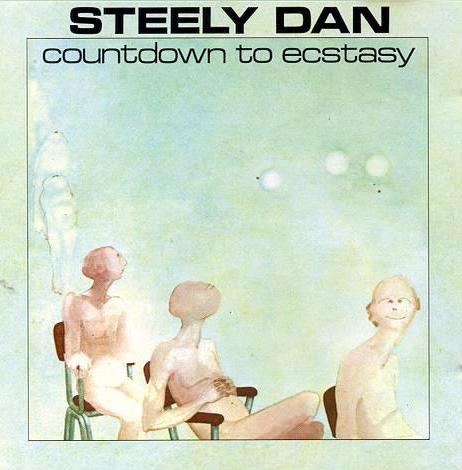
Steely Dan are one of those bands that are loved passionately by a great many progressive rock fans, but whose legitimacy as a genuinely progressive outfit can spark some really heated debate. Now, while their music has definitely little in common with ‘traditional’ prog (as in 30-minute epics, head-spinning time signature changes, and all that jazz), its sheer complexity, sophistication and technical brilliance – not to mention Donald Fagen’s literate, sarcastic lyrics –  deserves a place in any self-respecting, comprehensive account of progressive music.

Though I was already vaguely familiar with the band, it was only in the past few years that I really got to know them in depth – thanks to the man who is now my husband. Having listened to all of their albums, I can safely state that I consider Countdown to Ecstasy (the band’s sophomore effort) their masterpiece, superior even to the much-praised Aja. Almost every track on it is a gem, a perfectly crafted example of music that is at the same time accessible and demanding, intricate and smoothly flowing. Steely Dan can do great hooks with the same ease as any seasoned pop band, and stun you with  complex instrumental interplay that would do any ‘classic’ prog band proud. Their choruses are infectiously memorable, but a dark, often seedy reality is hidden beneath those apparently carefree melodies.

Coundown to Ecstasy opens in upbeat mode with “Bodhisattva”, which targets the hippie fad for Eastern philosophies (the pun in ‘the sparkle of your China’ is quite priceless). Rich with horns, guitar and piano, the song has a brisk, almost danceable rhythm, but (unlike other songs on the album) no recognizable verse-chorus-verse structure. “Razor Boy” follows with its melancholy, laid-back vibe underlying one of Steely Dan’s many seedy tales of lost lives: “Will you still have a song to sing/When the razor boy comes and takes your fancy things away….”  The presence of an unusual instrument like the vibraphone lends a haunting quality to the song. The initial triple-whammy is closed by my favourite number, the moody, somewhat menacing “The Boston Rag”, another tale hinting at crime and punishment with one of the best choruses ever known to man (“Bring back the Boston rag/ Tell all your buddies that it ain’t no drag”), and the closest Steely Dan get to guitar power chords.

Out of the remaining songs, the hit “My Old School” and the romantic, French-flavoured “Pearl of the Quarter” lean more towards the more commercial side of things. The former is a real delight for lovers of brass rock, but as a whole leaves me somewhat cold; while I agree with those who think the latter is the weakest track on the album. “Your Gold Teeth”, the longest song at over 7 minutes, is instead an exercise in slinky elegance, deceptively lazy and effortlessly sophisticated. That leaves us with another couple of crackers – the venomous “Showbiz Kids”, punctuated by relentless background chants of ‘outrageous’, and featuring some killer slide guitar courtesy of Rick Derringer; and album closer “King of the World”, another lyrically intriguing tour-de-force enhanced by distinctive, slightly cheesy synth sounds.

Even though at a superficial listen the Dan may sound like an entertaining, yet ultimately hollow pop/jazz band, if you bother to peel away the layers you will find a lot to keep even the most demanding prog fan on their toes. Everything is there – the technical proficiency, the sterling production values, the intelligent lyrics, the expressive singing, the flawless songwriting. So, forget any labels and preconceptions, and get hold of a copy of this gem. You will not regret it.

Read Full Post »

TRACKLISTING:
1. Three Score And Ten, Amen (5:36)
2. Time Lament (6:04)
3. Take Me Back To Doomsday (4:26)
4. The Daughter Of Time (3:30)
5. Theme For An Imaginary Western (4:05)
6. Bring Out Your Dead (4:25)
7. Downhill And Shadows (6:11)
8. The Time Machine (8:12)

LINEUP:
Jon Hiseman – drums
Dick-Heckstall-Smith – saxes
Dave Greenslade – organ, piano, vibes
Clem Clempson – guitar, vocals
Mark Clarke  – bass
Chris Farlowe – vocals

With:
Barbara Thompson – flute, saxes
Louis Cennamo – bass

Colosseum’s first studio album since the departure of singer/guitarist James Litherland (who went on to form the short-lived Mogul Thrash, known for having been John Wetton’s first band) sounds at the same time similar and unlike its illustrious predecessor, Valentyne Suite.  In comparison with the latter, it is a bluesier, jazzier effort, somewhat ‘bigger’-sounding, and with a harder, more guitar-oriented edge.

While progressive rock  fans will find a lot to enjoy in Daughter of Time, at least as regards the instrumental performances, new singer Chris Farlowe’s powerful, blues-tinged vocals do not fit with many people’s expectations of what a prog singer should sound like, and for some they may even be an acquired taste. To these ears, though, his voice is simply stunning, and complements perfectly the epic sweep and overall uplifting mood of the album.

I set great store by the opening track of an album, and “Three Score and Ten, Amen” does not disappoint, with Farlowe’s commanding vocals fitting perfectly into the lush texture of Colosseum’s music. Saxophonist  Dick Heckstall-Smith is joined by Barbara Thompson (Jon Hiseman’s wife) on flute, so that the presence of a mini brass section boosts the band’s already dramatic sound, providing a foil for Hiseman’s textbook-perfect drumming. Clem Clempson’s brilliant guitar work shines throughout the album,  and the instrumental section of “Time Lament” showcases his sadly underrated skills as a six-stringer. “Take Me Back to Doomsday”, my own personal favourite, is an exhilarating ride dominated by an awesome vocal performance by Farlowe and Greenslade’s scintillating piano, as well as a soothing, tasteful flute section.

While the title-track may sound slightly too bombastic for comfort, “Theme for an Imaginary Western” is another vocal tour-de-force for Farlowe, though of a somewhat more understated nature than his trademark, over-the-top style. Originally written by legendary bassist Jack Bruce for his 1969 album, Songs for a Tailor, it is a melancholy ballad vaguely reminiscent of Procol Harum’s best efforts. The intricate instrumental “Bring Out Your Dead” “, featuring sterling organ work by Dave Greenslade, comes closest to the band’s sound on Valentyne Suite; while the powerful, bluesy “Downhill and Shadows” introduces the live recording of “The Time Machine”, mainly an extended solo by master drummer Jon Hiseman. Even if drum solos have the reputation of being all too often terminally boring, this one is eminently listenable even for non-musicians.

The release of Daughter of Time was followed in 1971 by the legendary  Colosseum Live!, and then by the rather unexpected demise of the band.  The same line-up got back together in 1994 for a tour, which led to a permanent reformation of Colosseum.  Barbara Thompson, who had often guested in the band’s live performances, eventually replaced Dick Heckstall-Smith after his untimely passing in 2004.  On any account, though not as ground-breaking as Valentyne Suite, and slightly less cohesive, Daughter of Time is an excellent offering, blending jazz, blues, classic rock and progressive stylings in a single package – as well as lashings of genuine emotion. A highly recommended release from one of the landmark years in the history of rock.

Read Full Post »

TRACKLISTING:
1. Intro/Dio del Silenzio (1:23)
2. Il Nome del Vento (6:01)
3. Verso il Naufragio (6:35)
4. L’Acquario delle Stelle (6:15)
5. Luci Lontane (4:14)
6. Profeta Senza Profezie (4:20)
7. Ogni Storia (5:02)
8. Note di Tempesta (4:29)
9. Dopo il Vento (9:40)
10. Cuore Sacro (8:49)
11. L’Aurora Boreale (4:26) (bonus track)

Bonus Video:
L’Acquario delle Stelle

LINEUP:
Ettore Vigo – keyboards
Martin Grice – sax, flute, keyboards
Pino Di Santo – drums, vocals
Roberto Solinas – guitars, vocals
Fabio Chighini – bass
Mimmo Di Martino – vocals (2)

String quartet:
Chiara Giacobbe Chiarilla – violin
Diana Tizzani – violin
Simona Merlano – viola
Daniela Caschetto Helmy – cello

With:
Stefano “Lupo” Galifi – vocals (6)
Sophya Baccini – backing vocals (2, 4, 7, 9), piano (9)

After having spent the past few months concentrating on albums from the English-speaking world, now it is time for me to to spotlight some  Italian bands and artists. Though many great albums (in some cases essential for a true prog fan) have come out of my native country from the Seventies onwards, only a part of this vast, exciting output has received the attention it deserves.  Here in the US most of the attention tends to be directed at the likes of  Le Orme, PFM and Banco (also owing to their relatively frequent visits to the New World), to the detriment of other acts who seem to be familiar only to a selected few.

Genoa-based band Delirium hold a special place in my heart, since their debut album, Dolce Acqua, was the first progressive rock album that I bought – at the ripe old age of 11. Among the founders of the original Italian progressive rock scene, in 1972 they experienced mainstream success with  the anthemic single “Jesahel”, which introduced the Italian public to the gritty, bluesy vocal talents of Ivano Fossati.  Soon afterwards Fossati  left the band  to embark on a successful career as  a singer-songwriter, to be replaced by British-born Martin Frederick Grice.  After the release of their third album, released in 1974, Delirium split up, but thankfully got back together in 2001 with most of the original members on board.

When listening to Il Nome del Vento, one might almost be tempted to feel that the 30-year hiatus between  Delirium III and this album has in some way been beneficial to the band – a lengthy yet necessary ‘recharging of the batteries’, so to speak. This is indeed a mature, finely-crafted album, very much in the way of  PFM’s  Stati di Immaginazione – a sumptuous, accomplished effort from seasoned prog veterans that had been forgotten or written off far too soon.

Although Il Nome Del Vento is a concept album of sorts (the wind symbolizing the energies that sweep negativity away and usher positive change), it does not feel as contrived as many similar efforts can be. Shunning the clichés than often plague concept albums, Mauro La Luce’s lyrics opt instead for simplicity and emotion, a perfect complement to the outstanding performances of all the vocalists involved. The latter are nicely balanced by the brilliance of the instrumental sections, where the background of each musician, their individual tastes and preferences, is put to effective use. While Martin Grice’s love of jazz and vintage English prog shines through his flute and sax  work, guitarist/vocalist Roberto Solinas (a true revelation) injects a welcome dose of classic rock energy in what is largely an acoustic effort. The presence of an all-female string quartet contributes an authentically symphonic feel to many of the compositions, infused by that uniquely Italian flair for melody and lyricism.

The continuity between the new and the old incarnation of Delirium is highlighted right from the start, as “Intro/Dio del Silenzio (Reprise)” references one of the songs featured on Delirium III. This brief, intense introduction (complete with sounds of rain and thunder at the beginning) sets the scene for what is to come. The title-track is a magnificent slice of complex yet melodic prog, soulfully interpreted by the band’s former guitarist Mimmo Di Martino, whose deep, bluesy tones find a perfect foil in Sophya Baccini’s ethereal soprano. The following track, “Verso il Naufragio” (one of two instrumentals featured on the album), is an exhilarating rollercoaster ride of slow, majestic keyboard washes and electrifying guitar riffs; it also incorporates a passage from George Martin’s “Theme One” (also covered by Van Der Graaf Generator, Cozy Powell and Osanna). The jaw-dropping duel between sax and organ in the second half of the track displays the band’s jazzier side, a constant of their sound since their debut album, Dolce Acqua.

More jazzy influences surface in the uptempo “Profeta Senza Profezie”, further enriched by a  commanding vocal performance by Stefano ‘Lupo’ Galifi (of Museo Rosenbach fame), somewhat reminiscent of the late Demetrio Stratos’ acrobatics; while the romantic “L’Acquario delle Stelle” (dedicated by Martin Grice to his first grandson) is a gorgeous slice of classic Italian prog, in which flute and keyboards emote over a lush background of strings. However, it is the double whammy of “Dopo il Vento” and “Cuore Sacro” that forms the album’s climactic point. The former alternates jazzy passages with calmer, more melodic ones, the string quartet holding the fabric of the song together; while the latter is markedly darker and rockier, enhanced by rippling piano, dynamic drumming, and assertive flute work that recalls early Jethro Tull.

A truly classy offering, and undoubtedly one of the top releases of 2009, Il Nome Del Vento is the ideal showcase for the unique talents of a band that seem to be finally about to get the recognition they highly deserve. It is also a textbook example of how classic progressive rock can sound modern without jettisoning its glorious past. Hopefully this stunning comeback disc will lead the way for more releases of the same high quality from a band that still has a lot to offer to the discerning prog fan.

Links:
http://www.idelirium.it
http://www.blackwidow.it

Read Full Post »

TRACKLISTING:
1. The Encounter ( 5:03 )
2. The Push ( 3:36 )
3. Out Of The Mist ( 8:25 )
4. Sequence Of Events ( 3:25 )
5. DIP ( 6:56 )
6. The Departure ( 4:40 )
7. Gray Matter ( 6:16 )
8. Orb ( 7:47 )
9. 11th Heaven Blues ( 4:00 )
10. Still (Unsettled ) ( 2:10 )

LINEUP:
Dean Watson – all instruments

While so-called ‘solo-pilot’ instrumental albums seem to be rather ubiquitous these days (with results not always up to scratch), it is far from an everyday occurrence to come across an album as impressive as Unsettled, Dean Watson’s debut release – even more so if we consider that we are dealing with a wholly independent production. An amazingly accomplished disc, structured in a remarkably balanced way, it presents music that is eclectic without being directionless, and complex without being unnecessarily convoluted.

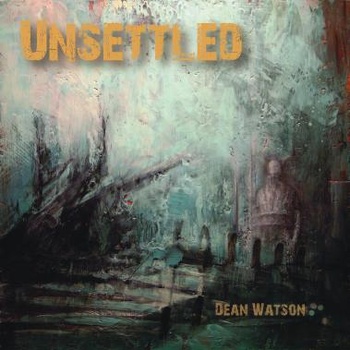
For such a proficient composer and multi-instrumentalist, Toronto-based Dean Watson is a very unassuming character, in spite of his decades-long experience in the music world. Dispensing with the bells and whistles to which so many new acts seem to be addicted, he has embarked on the promotion of his music completely on his own, offering his album for review on progressive rock discussion boards, and eliciting almost unanimously positive feedback. Indeed, though it falls somewhat short of perfection,  Unsettled as a whole is an impressively cohesive effort: inspired by the painting of the same name by Ron Eady (a visual artist also based in Toronto), it is conceived as a sonic rendition of the painting itself, realized with a successful blend of emotion and technical skill that often eludes all-instrumental productions.

Other reviewers have labelled Unsettled as progressive fusion, and, in some ways at least, the description fits the album quite well – especially if we take into account the many diverse sources of inspiration (listed by Watson on his MySpace page) that make up its sound.  the actual jazz-rock component in Unsettled is rather restrained, sharing the stage with spacey touches, progressive metal overtones, and even subtle classic rock influences. Although comparisons have been made with the likes of Planet X and Liquid Tension Experiment – at least as regards those moments on the album where things take a more metallic turn – I feel they limit the scope of Watson’s creative impulse. In fact, while some tracks on the album may bring to mind the aforementioned, hyper-technical instrumental combos, others reveal a vintage jazz-rock feel akin to Jeff Beck’s two seminal mid-Seventies albums, Blow by Blow and Wired, eschewing the feeling of chilly perfection that often plagues the output of metal-fusion acts.

Unsettled’s main flaw lies in the use of programmed drums, though they are nowhere as annoying than on other similar projects. True, their artificial nature occasionally surfaces, marring (albeit slightly) the otherwise warm and engaging sound of the compositions, and making one wonder how the album would sound if Watson had instead gone for the real thing. A couple of tracks also come across as somewhat less cohesive than the others, with abrupt changes in mood and pace that may leave the listener a tad baffled. However, the level of both composition and execution is so consistently high that it amply compensates for these shortcomings.

Running at around 52 minutes, Unsettled is a compact album that strikes the right balance between longer, more complex compositions and shorter numbers with a more direct impact. Watson’s approach definitely helps the listener to concentrate on each number, and appreciate the diversity on offer. Watson always keeps melody at the forefront, opting for power rather than harshness when introducing heavy riffing into the fabric of his songs, so that even the heaviest moments are amazingly tuneful. Opener “The Encounter” is a good example of how Watson merges progressive metal vibes with more sedate moods;  the use of keyboard-based riffs reminded me of Relocator’s self-titled debut (another excellent instrumental album released in 2010), with various electronic effects adding a spacey note, and some remarkable Hammond organ and guitar work. “Sequence of Events”, one of the shortest items on the album at barely over 3 minutes, offers an intense, almost concentrated atmosphere made of brisk keyboard flights and hard-edged riffing reminiscent of classic instrumental metal-fusion; while the brisk, high-energy “Orb” would have been more effective without the overpowering drums and whistling synth sounds.

On the other hand, Watson’s talent emerges most clearly in those tracks where the prog-metal component is kept to a minimum – such as the jazzy, almost funky “The Push”, relying on some fine organ-guitar interplay with a warm, rugged Seventies sound, or the exhilarating “Gray Matter”, propelled by energetic bass and drums and showcasing Watson’s outstanding skills as a guitarist. His soloing here, as well as in the splendid first half of “The Departure”, possesses a clean, melodic feel that evokes  the aforementioned Jeff Beck, as well as another guitar great, Irish legend Gary Moore. While the latter number is somewhat marred by an abrupt change in pace and style towards the end, its slow-burning, wistful first half brought to my mind some of Moore’s more meditative pieces, such as “Sunset”, “The Loner” or “Gary’s Lament”. With “Out of the Mist”, the longest piece on the album (and possibly its highlight), we are presented with a musical version of Ron Eady’s intriguing cover painting, with its romantic, melancholy beginning, backed by strings that add depth to the beautiful strumming of the acoustic and electric guitars, and a second half full of tension and menace, driven by intense riffing and crashing drums.

Though the problem with an album such as Unsettled might lie in its evident metal subtext – which may put off the more conservative jazz-fusion fans – lovers of eclectic instrumental rock will definitely find a lot to enjoy in this finely-crafted effort, an excellent debut from an outstanding musician. In any case, it would be interesting to see Watson branch out and enlist the help of some other musicians, in order to bring his compositions before a live audience.

Links:
http://www.myspace.com/deanwatson2
http://www.roneady.com

Read Full Post »

TRACKLISTING:
1. Clear Air Turbulence  (7:35)
2. Five Moons  (7:30)
3. Money Lender  (5:38)
4. Over the Hill (7:14)
5. Goodhand Liza  (5:24)
7. Angel Manchenio  (5:17)

LINEUP:
Ian Gillan – lead vocals
Colin Towns – keyboards, flutes
John Gustafson – bass, vocals
Ray Fenwick – guitars, vocals
Mark Nauseef – drums, percussion
Martin Firth – baritone saxophone
John Huckridge – trumpets
Derek Healey – trumpets
Malcolm Griffiths – trombone
Phil Kersie – tenor saxophone (2)

It would not be too much of an exaggeration to call  Clear Air Turbulence, the second album released by the sadly short-lived Ian Gillan Band, one of the forgotten masterpieces of Seventies progressive rock. For those who think of Ian Gillan as little more than a hirsute hard rock screamer,  even a casual listen to this record may definitely bring somewhat of a shock – and not just because of the vocals.

Following his return to the world of music after a series of unsuccessful business ventures, Ian surrounded himself with a bunch of seasoned musicians (including bassist John Gustafson, of Quatermass and Roxy Music fame), and proceeded to surprise his fans by slowly but inexorably detaching himself from his Deep Purple past. Unfortunately, though, rock fans are not always as open-minded as we would wish them to be, and the project folded after releasing a total of three studio albums, plus a posthumous live one.

When listening to Clear Air Turbulence,  we cannot but regret the demise of such an exciting outfit, offering an incredibly high level of musicianship as well as  creativity. The six tracks on the album, which all exceed the five-minute mark, feature complex, multi-layered structures, enhanced by the discreet presence of a horn section, and distinguished by an overall sense of  sophistication, a lightness of touch seldom associated with Gillan’s mother band. Even Ian’s vocals, while easily recognizable, never really sound like the original ‘air raid siren’ unleashed on the likes of  Machine Head and  Made in Japan.

However, the ace in the hole on Clear Air Turbulence is undoubtedly keyboardist Colin Towns.  Another of the many unsung heroes of the rock world, now a composer of jazz and soundtrack music, Towns joined the band for the recording of this album (replacing original member Mike Moran), and immediately stamped his mark on their music, as well as on the band’s later incarnation – simply called Gillan, and much more akin to Deep Purple in sound, with excursions into outright heavy metal.

Weird, spaced-out keyboard sounds introduce the title-track, surging into a crescendo that soon gives way to a manic, bass- and drum-driven riff, and a wildly exhilarating, 7-minute-plus ride, powered by Towns’ sweeping synthesizers. In the middle section of the song, guitarist Ray Fenwick (a veteran of the British rock scene, formerly with the Spencer Davis Group) demonstrates his skills with a slow-burning, emotional solo. Towns is  also responsible for the delicate flutes on the dreamy, soulful ballad “Five Moons”; while on the funky “Money Lender” horns take pride of place, with Gillan’s  commanding, even aggressive vocal performance somewhat reminiscent of his hard-rockin’ past.

“Over the Hill” (my personal favourite, together with the title-track) showcases drummer Mark Nauseef’s impressive skills, as well as brilliant piano and synth in the bridge, and more understated yet distinctive guitar work. The atmospheric “Good Hand Liza” follows, punctuated by Latin-style percussion and spacey synths, and driven along by John Gustafson’s meaty, dynamic bass lines. The album ends in style with another intricate, highly structured number, the romantic “Angel Manchenio”, dedicated to a Gypsy who became Gillan’s blood brother (an intriguing tale, as told by both the lyrics and the liner notes). The song, which alternates slower, almost Latin-flavoured moments with full-fledged jazzy flights of instrumental and vocal prowess, is probably the furthest Gillan ever strayed away from his hard rock roots, and a perfect closer for such a distinctive album.

At the time of its release, Clear Air Turbulence was not considered rock enough by Deep Purple fans, and probably not jazzy enough by fusion devotees; moreover,  the competition of the fledgling punk scene did it no favours. Over thirty years later, however, it is high time it was recognized as an adventurous, stimulating effort, at times bordering on masterpiece status. It is a sad fact of the music world that, all too often, musicians are much more ready to try new avenues than their fans…  I would encourage my readers not to make the same mistake:  if you love sophisticated, complex jazz-rock/fusion, do not be put off by the name, and get hold of this album.

Read Full Post »

TRACKLISTING:
1. Save The Yuppie Breeding Grounds (4:12)
2. Ephebus Amoebus (4:55)
3. Nacho Sunset (4:29)
4. $9 Pay-Per-View Lifetime TV Movie (5:51)
5. Manifest Density (3:55)
6. Uncle Tang’s Cabinet of Dr. Caligari (4:01)
7. Disillusioned Avatar (5:15)
8. Kuru (5:02)
9. Revenge Grandmother (5:11)
10. Staggerin’ (4:41)
11. Middlebräu (6:46)

LINEUP:
Dennis Rea – electric guitar
Ruth Davidson – cello
Alicia Allen – violin
Kevin Millard – bass guitar, baliset
Jay Jaskot – drums

The city of Seattle has long been known as a hotbed for innovative music, from Jimi Hendrix to the grunge movement through progressive metal pioneers Queensryche. For several decades, it has also been the home of globe-trotting guitarist and composer Dennis Rea, originally from upstate New York, but now a full-fledged member of the Pacific Northwest artistic community. While Rea, in  his many years of tireless activity in the realms of creative music-making, has gathered an impressive discography (especially in terms of quality), he has never become a household name as he would have amply deserved. Luckily, the release of Moraine’s debut album in 2009, as well as his first solo album proper, View from Chicheng Precipice, and Iron Kim Style’s debut in 2010, have contributed to putting Rea’s name on the sprawling map of the progressive music scene.

Indeed, Moraine were selected for the 2010 edition of NEARfest, where they elicited quite a lot of interest – in spite of having been described as ‘avant-garde’ on the festival’s press material, a definition which (coupled with their placement in the opening Sunday slot, also known as the ‘rude awakening’, and generally reserved for rather idiosyncratic bands) kept the more conservative members of the audience away from their set. The members of the band, and Rea in particular, were somewhat amused at having been lumped together with much more ‘mainstream’ bands under the all-encompassing prog banner. In these times of derivative acts being peddled as the best thing since sliced bread, Moraine were possibly the most genuinely progressive band on the bill – though, as purveyors of hard-to-pinpoint music, they left some of the more label-happy members of the audience a tad baffled.

Although instrumental albums are seemingly a dime a dozen these days, Manifest Density (a brilliant pun on one of the most obnoxious aspects of US history) is not your average cookie-cutter instance of amazing chops unencumbered by soul and emotion. With a total of 11 tracks averaging 5 minutes in length  (the longest running at under 7 minutes),  and all of the five band members but drummer Jay Jaskot contributing to the compositional process, it is very much an ensemble effort, a collection of contemporary chamber rock pieces that comes with a liberal helping of almost Canterbury-like dry wit – though more geared to 21st-century American society. The essential input of the violin may draw comparisons with bands such as King Crimson circa Larks’ Tongue in Aspic or Mahavishnu Orchestra, while the pervasive presence of the cello may bring to mind Swedish Gothic proggers Anekdoten. However, in Moraine’s sound the cello’s unmistakable drone does not create the same kind of claustrophobic atmosphere, but rather adds that kind of depth that is generally supplied by the keyboards in the output of more conventional prog bands.

Since the individual members of Moraine have parallel involvements in a number of very diverse projects, ranging from jazz to stoner rock, it will not come as a surprise that eclecticism is the name of the game on Manifest Density. However, those anticipating a hodge-podge of disparate ideas that ultimately do not coalesce would be making the wrong assumption: the album as a whole impresses for its cohesion, even allowing for the different compositional styles of each band member. While Dennis Rea’s compositions (such as “Kuru” or “Staggerin’”) tend to favour a jazzier, more experimental style, two of the three tracks penned by co-founder Ruth Davidson (“$9 Pay-Per-View Lifetime TV Movie” and “Revenge Grandmother”) possess a wistful, low-key quality, shared by Alicia Allen’s deeply lyrical “Disillusioned Avatar”. On the other hand, album opener “Save the Yuppie Breeding Grounds”, also written by Davidson, is an energetic yet haunting number with a strong Crimsonian vibe; while bassist Kevin Millard’s “Ephebus Amoebus” opens in a slow, atmospheric fashion, then develops into a frenzied workout, with guitar and violin sparring with each other.

The quirky track titles inject a welcome dose of humour into the proceedings – a recurring feature in the work of other modern instrumental bands, but which Moraine (and especially Dennis Rea) seem to have got down to a fine art. Actually, the titles fit the musical content astonishingly well: “Uncle Tang’s Cabinet of Dr Caligari” is suitably dissonant, at times chaotic, with subtle Gothic undertones; while the upbeat “Nacho Sunset”, embellished by stunningly clear, lilting guitar work and gentle violin, has a relaxed, almost Latin feel. Though the album’s sound is mostly driven by the flawlessly intricate interplay between Rea’s distinctive guitar and Allen’s versatile violin lyrical and assertive in turns, none of the other instruments is confined to a mere supporting role, and each of them contributes in keeping the sonic texture tight. An excellent example of this is album closer (and personal favourite) “Middlebräu”: after a funky first half, propelled by magnificent bass and drums (very much in classic jazz-rock vein),  a pause signals an abrupt change of pace, and the beginning of a simply magnificent, almost slo-mo coda featuring an intense, meditative guitar solo (the closest Rea comes to a traditional rock solo).

When Moraine performed at NEARfest, their lineup had changed, with obvious consequences for their sound. Ruth Davidson and Jay Jaskot had moved away from Seattle, and been replaced by  drummer Stephen T Cavit (also an award-winning composer of film and TV scores), and woodwind player Jim DeJoie ( now Alicia Allen’s husband). The switch from cello to woodwinds lent the music a brighter, but also slightly more angular quality, reminiscent of those bands, such as Henry Cow, on the more experimental end of the Canterbury scene. This bodes well for the band’s second album, which is already in the works at the time of writing. In the spring of 2011 Moraine will also embark on a tour of the US East Coast, with dates at the New Jersey Proghouse and the legendary Orion Studios in Baltimore already confirmed. Catch them if you can – they are a very entertaining live act, and Manifest Density qualifies as one of the most promising debut albums of the past decade in the progressive music field.

Links:
http://www.moraineband.com

Read Full Post »

TRACKLISTING:
1. …The Launch (0:19)
2. Spyplane (6:19)
3. Waste Management (6:20)
4. Me & My TV (5:52)
5. Dance of the Wild Koba (7:26)
6. The Curse  (7:38)
7. Interlude  (0:40)
8. Redemption (5:55)
9. Everything  (5:52)
10. Zero Hour (6:22)
11. Escape from Rome  (8:05)

LINEUP:
Joe Scatassa – guitar
Dan Asher – bass
Jason Isaac – drums
Seth Moutal – percussion
Matt Iselin – organ, clavinet, el. piano, vocals (3)

With:
Ronnie Cuber – baritone saxophone, bass clarinet
Justin Flynn – tenor saxophone
Rafi Malkiel – trombone
Jeff Pierce – trumpets
Rick Trolsen – trombone solo (6)
Mark Teofilo – orchestral percussion (11)
Michael Taylor – vocals (9)

Before I start my review in earnest, a word of warning is needed for the hardcore proggers among my readers:  To Obscurity and Beyond is quite a different beast from what might be conventionally seen as prog. Described by its creators – the New York-by way of-New Orleans outfit Afroskull – as a ‘sonic gumbo’ with ingredients such as Black Sabbath, Funkadelic, Zappa and a generous pinch of jazz influences, this is an album that is exciting, exhilarating and musically impeccable as any canonical progressive rock offering.

To Obscurity and Beyond, released about one year ago after a number of line-up changes and a brief hiatus, follows Afroskull’s 2000 excellent recording debut, Monster for the Masses. A mostly instrumental effort, with only two out of 11 tracks featuring vocals, it possesses enough energy and swing to make you want to dance to it, coupled with the kind of musicianship that makes you want to listen. It is, in some ways, an old-school album, where the accessibility quotient does not come across as contrived in many modern releases, and the technical skill is not used to bludgeon the listener on the head, but rather to convey the musical message in the clearest terms available. The band’s inspiration is rooted in the past – albeit with a thoroughly modern flavour – with influences such as Chicago Transit Authority, Blood Sweat and Tears, Colosseum, and, of course Funkadelic and Zappa’s more fusion-oriented output. This is the kind of disc that a band like the Red Hot Chili Peppers might have produced if they had not turned to more lucrative pursuits.

A quintet augmented by a horn section (brilliantly dubbed “The Horns of Doom”), plus a number of guest musicians, Afroskull sound like a mini-orchestra, their music well-rounded and multi-dimensional. Going very much against the grain of this age where programmed drums and all kinds of digital equipment seem to hold sway, the band employ real instruments, in the finest rock tradition, which results in a genuinely warm, expressive sound. Next to the chilly though formally impeccable mood evidenced by so many current releases, listening to  To Obscurity and Beyond might be compared to the sheer comfort offered by an old-fashioned, home-cooked meal.

Muscular and compelling, Afroskull’s music is also capable of subtlety. Though, at a superficial glance, it may sound like a good-time, shake-your-butt album, there is a lot of variation on To Obscurity and Beyond, as a careful listen of individual tracks will reveal. While the album opens with the funky pyrotechnics of  “Spyplane”, the band show their more restrained side in tracks like the aptly-titled, slow-burning “Redemption”, with the pace slowing down to an almost Sabbathian plod in the ominous “The Curse”.  Gritty guitar riffs and scintillating solos, courtesy of mainman Joe Scatassa, spar with the powerful blaring of the horns and the smooth yet understated presence of the keyboards, powered by Jason Isaac’s and Seth Moutal’s stellar percussive work and Dan Asher’s relentless bass lines. “Waste Management” and “Everything”, the only two vocal tracks, blend bluesy, soulful vocal performances  – respectively by keyboardist Matt Iselin (somewhat reminiscent of a less histrionic Chris Farlowe) and guest singer Michael Taylor – with irresistible funky rhythms, fiery guitar licks and triumphant horns. The album ends with a bang, with the highly cinematic “Escape from Rome” – an 8-minute tour-de-force veering from the almost free-jazz opening to the intense, martial pace of the main body of the track, in which all the instruments take their turn in creating a hypnotic, powerful texture.

A stunning collection of flawlessly penned tunes, supported by incredible musicianship and a sense of genuine enjoyment, To Obscurity and Beyond definitely deserves to be tagged as one of the outstanding releases of the past year, and possibly of the whole decade. This is an album the likes of which is all too rarely seen in the current music world, and one that will appeal to most self-respecting fans of great rock music – especially those who do not believe that great grooves and interesting musical structures are mutually exclusive. Even if prog purists may find the album a bit too funky for comfort, many discerning listeners are bound to appreciate the marriage of boundless energy and disciplined musicianship featured on To Obscurity and Beyond – as well as its ebullient, unabashedly crossover appeal. Hopefully Afroskull  will not make its many fans wait another nine years for their next release, even if this one was definitely worth the wait.


Links:
http://www.afroskull.com

Read Full Post »

« Newer Posts - Older Posts »