Feeds:
Posts
Comments

Archive for the ‘Canterbury Scene’ Category

TRACKLISTING:
1. Bella Lee (3:34)
2. Parliamone (5:43)
3. Infraditi (7:36)
4. Fungo (6:42)
5 Cane di Schiena (6:32)
6. Pappa Irreale (2:27)
7. Antenna (7:59)
8. Klez (4:16)
9. Max Dembo (8:47)

LINEUP:
Filippo Cantarella – violin, viola
Marco Ravera – electric and acoustic guitar, synthesizer
Tommaso Rolando  – acoustic bass, electric bass, acoustic guitar, synthesizer, sampler, trumpet
Nando Magni – trombone
Nicola Magri – drums

With:
Cosimo Francavilla – soprano saxophone (2)
Antonio Carletti – weird vocals (7)

In my writings I have often mentioned the lively music scene of the great port of Genoa – not surprising for a city that, throughout its long history, has been one of the many melting pots of the Mediterranean region, bringing together East and West, North and South in a heady mixture of tradition and modernity. This is the kind of fertile ground from where Fabrizio De André’s Creuza de Ma, one of the undisputed masterpieces of the whole ‘world music’ scene, originated. Five-piece Calomito, a relatively recent addition to the variegated Italian music scene, bring an unique twist to the time-honoured musical heritage of their home town, with a sound that marries the warmth of the Mediterranean with a strong international bent.

Calomito have been around since the mid-2000, releasing their debut album, Inaudito, in 2005. After a five-year hiatus and some line-up changes, the band have made a comeback with Cane di Schiena, issued in the first half of 2011 by Milan-based label AltrOck Productions (also responsible for outstanding, cutting-edge releases such as Yugen’s three albums and mirRthkon’s Vehicle). Though they have been almost forcibly placed under the RIO/Avant umbrella, Calomito are one of those bands that – luckily for fans of genuinely interesting music, much less so for those who delight in labelling everything – are extremely hard to pigeonhole, due to their boldly eclectic approach to music-making.

As a fellow Italian reviewer  jokingly stated at the beginning of his own review of the album, you may want to consider taking a couple of days off in order to listen to Cane di Schiena properly. Indeed, though clocking in at a mere 53 minutes, the album presents an  incredibly dense (though never claustrophobic) amount of music which unfolds with each successive listen, and therefore devoid of any immediately digestible tunes. On the other hand, unlike what many believe about any kind of music that bears even a faint whiff of ‘avant-garde’, there is nothing discordant, abrasive or random about Calomito’s sound. Each of the tracks is clearly very carefully structured, as it is nearly always the case with ‘chamber rock’ outfits – a definition that, in my view, fits Calomito to a T. Like their label mates Yugen, they transcend the boundaries of the RIO/Avant classification, and should rather be seen as purveyors of eclectic yet oddly intimate music tha requires all of the listener’s attention to be fully appreciated.

This does not imply that Cane di Schiena is one of those deadly serious albums that command a quasi-religious devotion. Calomito’s humorous disposition, which descends directly from the likes of Stormy Six and Picchio dal Pozzo (as well as the Canterbury scene, which is also a clear musical influence), immediately comes across from titles such as “Pappa Irreale”(a pun on pappa reale, the Italian for “royal jelly”) or “Infraditi” (an intentionally ungrammatical spelling of the  word meaning “flip-flops”). The music itself, while quite light-hearted at times, can on occasion reach for a more subdued, sober tone. On the whole, Cane di Schiena comes across as a flawlessly executed album that never descends into a depressing or overly involved tone.

As is the case of other ‘chamber prog’ ensembles, Calomito employ a number of other instruments alongside the traditional rock trinity of bass, guitar and drums, assisted by various synthesizers. The substantial contribution of the horns evokes parallels with bands such as Miriodor, which emerge quite clearly right from the album’s opening track, “Bella Lee” – an incredibly dense 3 minutes of music; while the equally important role played by strings (violin and viola) brings instead to mind one of the best modern‘chamber rock’ outfits,  Seattle-based band Moraine, as well as vintage Frank Zappa. The more upbeat passages, suggesting a jazz-rock or Canterbury matrix, made me think of Forgas Band Phenomena, though Calomito sound slightly more angular than the French band. Furthermore, while Univers Zéro’s broodingly apocalyptic production seems to be the polar opposite in tone to Calomito’s essentially cheerful approach, Nicola Magri’s stunning, beyond-merely-propulsive drumming style cannot but evoke the way in which Daniel Denis supports the whole fabric of the Belgian outfit’s sound.

Trying to describe any of the nine tracks in detail would not do any of them justice. While “Infraditi” is probably the one track with the strongest connections to the RIO/Avant school of progressive rock – an astoundingly complex, 7-minute rollercoaster ride apparently throwing in anything but the proverbial kitchen sink, from carnival-like music to jazzy touches to jagged, almost dissonant passages – the somewhat low-key “Parliamone”, true to its title (meaning “let’s talk about it”) seems to reproduce a dialogue between two persons, with horns and synthesizers in the role of human voices. The choppy, dynamic “Fungo” exemplifies the way in which Calomito use pauses to create interest, rather than produce an impression of patchiness; while the title-track’s slow, meditative mood, some passages so low as to be barely audible, produces an intense, almost mesmerizing effect.

Especially in the second half of the album some intriguingly exotic influences show up, which bring to mind comparisons with Slivovitz, another über-eclectic Italian outfit hailing from Naples, my home country’s second biggest port (and musical capital). “ Pappa Irreale”’s lilting, dance-like pace punctuated by violin is sharply redolent of Irish folk, or even American country; and the upbeat, drum-driven “Klez”, as the title points out, contains elements of klezmer and Eastern European gypsy music. A folksy also tone emerges in parts of the initially low-key “Antenna”, possibly the most complex number on the album (and the only one briefly featuring ‘weird vocals’), ending with an exhilarating crescendo in which guitar, trombone and violin seem to engage in a sort of conversation. Closing track “Max Dembo” introduces some new elements, such as spacey sound effects that  enhance the powerful, rolling tone of the drums and the echoing guitar lines, as well as shades of Brazil in the relaxed, almost sultry pace of first half of the track.

In spite of the density of its musical content, Cane di Schiena is far from inaccessible, and – while undoubtedly a challenging listen – does not rely on spiky, jarring sounds to make its impact. There is plenty of melody to be found on the album, and the music possesses a natural flow and easy elegance that make listening a pleasure rather than a chore. Even though fans of traditional symphonic prog may be daunted by anything bearing the label of ‘avant-garde’, I would encourage everyone who loves progressive music to give Calomito a try. With their successful blend of technical skill, seemingly boundless creativity, eclectic influences and keen sense of humour, they are one of the most interesting bands heard in the past couple of years, and definitely one to watch.

Links:
http://www.calomito.com/

http://www.myspace.com/calomito
http://production.altrock.it/start.asp

Read Full Post »

TRACKLISTING:
1. A Visit to Newport Hospital (8:25)
2. Contrasong (4:21)
3. Boilk (9:23)
4. Long Piece No. 3 –  Part One (5:06)
5. Long Piece No. 3 –  Part Two (7:39)
6. Long Piece No. 3 –  Part Three (8:01)
7. Long Piece No. 3 –  Part Four (2:51)

LINEUP:
Mont Campbell – bass, vocals, organ, piano, French horn
Dave Stewart – organ, piano, tone generator
Clive Brooks – drums

With:
Henry Lowther – trumpet (2)
Mike Davis – trumpet (2)
Bob Downes – tenor sax (2)
Tony Roberts – tenor sax (2)

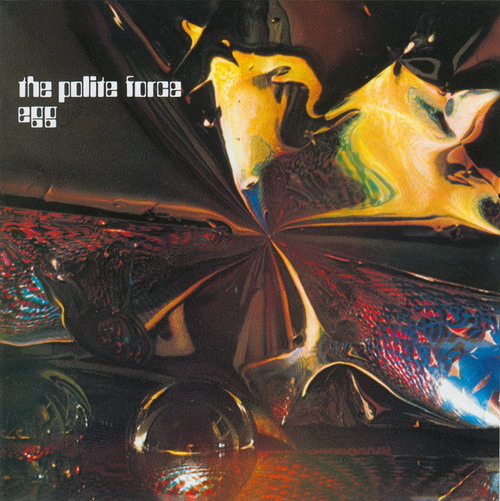
Released in 1971, Egg’s sophomore effort is one of those albums that, in a way, can be said to be representative of a whole movement, though they rarely get the appreciation they deserve. Though “Canterbury scene” may sound rather vague as a definition, being more about a place than an actual musical style, it is nonetheless undeniable that most of the bands and artists associated with this most peculiar subgenre do share a number of features that go beyond their somewhat ‘incestuous’ sharing of personnel. Many see the output of the  “Canterbury scene” as a subsection of jazz-rock with poppy leanings and occasional excursions into more avant-garde territory; however, to these ears at least, the best Canterbury outfits offer a complete progressive package of humour, sophistication, diverse influences, and remarkable musical chops. Quintessentially English,  with a timeless feel that often eludes the more stereotyped instances of symphonic prog, the Canterbury sound commands fierce devotion, though its quirky nature can also leave listeners somewhat cold.

To all intents and purposes, Egg was a continuation of Uriel, the psychedelic progressive quartet that also included guitarist Steve Hillage (later with Khan and Gong), whose only album was released in 1969 under the name of Arzachel.  After Hillage left, the three remaining members took a different, more experimental route, pushing the keyboards at the forefront, and dabbling in those genre-defining contaminations between rock and classical music – as witnessed by “Fugue in D Minor” and “Symphony No.2”, both featured on their 1970 self-titled debut album.

In spite of its cult status among true-blue Canterbury fans, The Polite Force is generally not rated as highly as the likes of Third or In the Land of Grey and Pink. Some reviewers have even hinted at comparisons with the much-reviled ELP – owing to the similar configuration of both bands – which, unfortunately, does not do the album any favours. Now, though I consider ELP one of the most influential bands in the history of progressive rock, and rate their first five studio albums quite highly, I do not find the connection between their sound and Egg’s as evident as some maintain. While The Polite Force is very much a showcase for Dave Stewart’s distinctive style, and therefore a real delight for keyboard fans, it would also be unfair to state that the band is dominated by him. In fact,  bassist/vocalist Monty Campbell and drummer Clive Brooks (who joined blues-rock trio The Groundhogs after Egg’s demise) do not just function as supporting cast for Stewart’s keyboard antics, but drive the band’s sound along with their impressive, though understated, skills. Campbell is also a vocalist very much in the classic Canterbury mould, with a polite (pun unintended), pleasant voice that is the perfect complement to the band’s quirky, complex sound.

Though seven tracks are listed on the back cover, the album actually comprises four compositions, one of which, “Long Piece No.3” is divided into four parts. “A Visit to Newport Hospital” is one of the most impressive openers to be found on a Canterbury album – introduced by an almost Sabbath-like riff, heavy and plodding, which suddenly loosens up into a cheery, sprightly organ section. The gently ironical lyrics, relating some of the band’s experiences in their Uriel days, are an unobtrusive yet essential accompaniment to Stewart’s elegantly assertive organ; Brooks’ drumming underpins everything with a discreet touch.  The song then comes full circle, ending with the same gritty organ riff as it began.  In the following “Contrasong” a full-blown horns quartet punctuates Stewart’s dynamic piano forays and Campbell’s urgent vocals, with a basic 5/8 9/8 pattern reminiscent of Gentle Giant’s counterpoint arrangements; Stewart switches to organ later during the song, propelling it forward in parallel with Brook’s drumming, and the horns coming in bursts.  Next comes the somewhat controversial “Boilk”, a full-fledged avant-garde piece almost 10 minutes long, very much in the vein of King Crimson’s “Moonchild”. The composition, which had already appeared on Egg’s debut (though in shorter form), opens with the sound of running water, and includes improvisations on a Bach theme, tolling bells and a host of other effects.

The album closes with the ‘epic’ instrumental “Long Piece No.3”, about 20 minutes long if taken as a whole – though its four parts are listed separately. As the liner notes point out, the ‘outer’ parts (One and Four) are rhythmically based, while the ‘inner’ ones are harmonically based. Interestingly, the whole composition comes across as somewhat fragmented, with frequent pauses breaking up the flow of the music. Part One opens with Stewart’s briskly repetitive organ, assisted by Campbell on piano and organ, and driven along by Brooks’ skilful drumming. Part Two immediately introduces Stewart’s fluid organ, with the drums going back to a supporting role (though essential), and a palpably more melodic texture – though its central section contains a sort of improvisational organ piece that might bring “Boilk” to mind. Campbell’s bass introduces the textbook-Canterbury Part Three, with its almost military drum pattern, unbridled organ flights (sometimes reminiscent of Soft Machine’s Mike Ratledge), and tone generator adding wailing, guitar-like effects. Part Four wraps up the album in a short but intense climax, driven along by frantic drumming and harsh, fuzzed organ.

As Edward Macan intimates in his book Rocking the Classics, The Polite Force can be seen as bridging the gap between keyboard-based symphonic prog and the jazzier, quirkier sound typical of the Canterbury scene. Definitely one of the finest moments of  Stewart’s career, its eclectic nature – featuring as it does avant-garde experimentation, more or less ‘conventional’ songs, classical touches and plenty of instrumental brilliance –is likely to appeal to a wide range of fans of progressive music. While not a full-blown masterpiece like Third or The Rotters’ Club, it is doubtlessly one of the most interesting productions coming from the variegated Canterbury universe – and as such highly recommended.

Read Full Post »

TRACKLISTING:
1. Baltasaurus (14:18)
2. Flying Trip (7:51)
3. Vietato Generalizzare (6:38)
4. Mosoq Runa (18:58)
5. The Mirror (10:16)
6. La Ballata de s’Isposa ‘e Mannorri (10:16)

LINEUP:
Alberto De Grandis – drums, percussion, vocals (5)
Alberto Bonomi – Hammond A-100 organ with Leslie 760, Fender Rhodes electric piano, Steinway acoustic piano, synthesizers, flute
Silvio Minella – electric guitars
Luca Baldassari – bass guitar

With:
Andhira (Elena Nulchis, Cristina Lanzi, Egidiana Carta) –  vocals (6)
Zoltan Szabo – cello (4, 6)
Maria Vicentini – violin, viola (4, 6)

Hailing from Shakespeare’s own ‘fair Verona’ (one of the most beautiful cities in Italy), where they formed in the mid-Nineties, D.F.A. (acronym of Duty Free Area) are living proof of the old Latin saying that a prophet has no honour in his own country. Hailed as one of the best progressive rock bands of the past decade, they took the NEARfest audience by storm in 2000, and offered a stunning repeat performance in 2009 – when I first saw them, and was floored right from the opening strains of  their set. However, as seems to happen all too frequently, they are barely known in their home country, where their extremely elegant yet punchy brand of Canterbury-tinged jazz-rock starkly contrasts with worship of all things Genesis that is still widespread in Italy. That historic first NEARfest performance was captured on the band’s 2001 live album, Work in Progress, which for over seven years remained the last testimony of the band’s activity.

D.F.A. are nothing but pure class. A quartet reproducing the configuration of bands such as Hatfield and the North and National Health – with both keyboards and guitar in a prominent role,  and the occasional contribution of other instruments – they are one of those rare outfits where each member’s contribution is essential to the band’s overall sound. Even if drummer Alberto De Grandis –  a drummer that, like Christian Vander or Daniel Denis, is much more than a simple timekeeper – gets most of the composing credits, all of the instruments get their chance to shine and create a tightly woven mesh of sound. Alberto Bonomi’s multilayered keyboards lay a lush tapestry for Silvio Minella’s brilliantly expressive guitar work; while Luca Baldassarri’s bass provides ever-reliable bottom end, adding fullness and texture to De Grandis’ propulsive drumming. D.F.A.’s music is effortlessly fluid, yet complex enough to please the most demanding jazz-rock fans – striking a perfect balance between technical skill and genuine emotion, breathless dynamics and captivating atmospheres.

Taking a leaf out of Soft Machine’s book, the album’s title is a simple numeral – not surprising, in the light of their affiliation with Leonardo Pavkovic’s far-sighted MoonJune label. Though it runs at almost 70 minutes, unlike the majority of albums running at over an hour it never outstays its welcome, and always manages to hold the listener’s attention. Most of the six tracks are instrumental, with one notable exception (on which more later). Interestingly, though D.F.A. do not sound as typically ‘Italian’ as those bands who opt for a more traditionally symphonic sound, they possess the inimitable flair for melody that seems to be ingrained in most Italian musicians. Their music is never harsh or needlessly convoluted, yet it also manages to eschew that somewhat overblown theatricality that can turn people off Italian progressive rock. It would be unfair to the band, however, to imply that they are mere Canterbury imitators. While D.F.A have a definitely international appeal (as proved by their choice of giving their composition titles both in Italian and in English), their Mediterranean inspiration – even if thankfully untainted by the overly sentimental excesses of Italian melodic pop – can be often keenly felt. This is one aspect that D.F.A. share with historic jazz-rock outfits such as Area, Il Baricentro and Napoli Centrale.

Chosen to accompany the opening images of the documentary film Romantic Warriors, “Baltasaurus” introduces the album in charmingly subdued mode, a feature shared by most of the tracks. Elegant guitar licks and flawless rhythm section lead the way for a splendid, mid-paced development, in which keyboards and guitar seamlessly interact, bolstered by De Grandis’ stunning drum work – never overwhelming, but very much a protagonist. Gently atmospheric sections alternate with more energetic ones, and the many tempo changes do not break up the smooth flow of the music. The following number, “Flying Trip”,  picks up the Canterbury references with a wistful mid-tempo spiced up by occasional jazzy, Latin-flavoured passages, and featuring some stunningly beautiful organ passages and delicate flute; while the barnstorming “Vietato Generalizzare” (It Is Forbidden to Generalize – the track with which D.F.A. opened their set at NEARfest 2009) barges in, propelled by a vertiginous synth riff and high-energy drumming. Very much guitar-driven, it allows Silvio Minella to display his considerable chops in an intense, expressive solo reminiscent of Gary Moore during his Colosseum II tenure. “The Mirror”, on the other hand, is a classic jazz-rock workout, with the instruments creating a keen, somewhat darker-hued sense of tension – though eased by snippets of muted singing at the beginning and in the middle of the track – and climaxing with an arresting, yet subtle drum ‘solo’.

That leaves the album’s epic, the almost 19-minute “Mosoq Runa” (Quechua for “new human being”), which, not surprisingly, displays a definitely more symphonic bent – thanks also to the presence of strings, as well as a recurring main theme. The amazing interplay between the instruments is nowhere more evident than here, and – in spite of its running time – the track never once feels overlong or overdone; as usual, both the guitar and the keyboards get their chance to shine, with Minella’s soloing at its most soulful. However, 4th’s most distinctive track is strategically placed at the close of the disc. Sung entirely in the ancient Sardinian language (the most archaic of Romance languages) by the heavenly voices of the folk trio Andhira, “La Ballata de s’Isposa ‘e Mannorri” (The Ballad of the Bride of Mannorri) is a tale of love, betrayal and vengeance that would be perfectly at home on a Pentangle album – in spite of the frequent comparisons between Andhira and Canterbury’s own trio of female vocalists, The Northettes. The three Sardinian vocalists, though, are less operatic and more emotional; the resonant contralto timbre of one of them lends even more depth to their performance. The minimalistic instrumental accompaniment does not divert the attention from the sheer beauty of the vocal interplay – though the bridge features a lovely, touching guitar solo that seems to echo the profound sadness of the story.

At the time of writing, D.F.A. are reported to be on indefinite hiatus, due to the all too familiar pressures of ‘real life’ (i.e. family and work) on any non-professional musician. It may even be that the band has reached the end of the road – which would obviously result in a great loss for the whole progressive rock scene. However, even if they indeed decide to call it a day, they will have left a lasting legacy in the history of progressive rock, both for the beauty and power of their music and their genuinely down-to-earth attitude – as captured in the aforementioned Romantic Warriors.. Needless to say, 4th is a must-listen for devotees of the Canterbury scene and classic jazz-rock, and very highly recommended to prog fans of every persuasion. This is one of the landmark albums of the first decade of the 21st century, and one of the very best productions to ever come out of the Italian progressive music scene.

Links:
http://www.myspace.com/dutyfreearea
http://www.moonjune.com/MJR021.htm
http://www.andhira.com

Read Full Post »

Tracklisting:

1. If I Could Do It All Over Again, I’d Do It All Over You (3:07)
2. And I Wish I Were Stoned – Don’t Worry (8:21)
3. As I Feel I Die (5:17)
4. With an Ear to the Ground You Can Make It / Martinian / Only Cox /     Reprise (9:56)
5. Hello Hello (3:46)
6. Asforteri 25 (1:21)
7. Can’t Be Long Now / Françoise / For Richard / Warlock (14:18)
8. Limits (1:34)

Lineup:

Pye Hastings – vocals, guitars, claves
David Sinclair – keyboards
Richard Sinclair – vocals, bass, tambourine
Richard Coughlan – drums, congas, bongos, maracas, finger cymbals

With:
Jimmy Hastings –  sax, flute

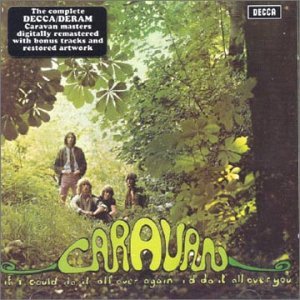
In keeping with my intention of offering a wide range of musical styles to the readers of my reviews, my next pick is one of the greatest albums to ever come out of the so-called ‘Canterbury scene’. Though for most people the most obvious choice would be the band’s most celebrated work, its follow-up In the Land of Grey and Pink, I have always found this one to be, in some ways, an even better effort – though, unlike … Grey and Pink, it is  less immediate and more of a steady grower.

The best way to listen to this album is to put on your headphones and wallow in the beautiful vocal harmonies, intricate bass lines and splendid  keyboard work. The opening title-track is an infectious, ’60s-style ditty sung by both vocalists, the deeper-voiced Richard Sinclair repeating the line “Who do you think you are?”, with the higher-pitched, graceful voice of guitarist Pye Hastings singing the verse. Most of the following tracks, though varying in length, are structured as mini-suites, with at least two movements (and accordingly long, hard-to-remember titles). “And I Wish I Were Stoned” starts off as a wistful melody, then becomes increasingly jazzy and dynamic. “As I Feel I Die”, one of the highpoints of the album, has much the same structure, with a slow intro featuring great vocals from Hastings, then culminating in a rousing instrumental duel between the two Sinclair cousins, Dave’s incendiary keyboards and Richard’s complex, fluid bass. “With an Ear to the Ground”, the second longest track on the album, sees more spectacular work from Dave Sinclair,  backed by a very tight, yet understated rhythm section.

“Hello Hello” is a lesson in how to write a song that’s both hummable and intelligent, with the added bonus of one of the strangest percussive accompaniments this side of King Crimson’s Jamie Muir – a pair of hedge clippers wielded by  Richard Sinclair himself, who also sings lead vocals. In fact, if I were to name one flaw of this otherwise flawless album, is that Sinclair does not sing often enough…  The short, delightful “Asforteri” leads the way for the album’s pièce de resistance, the 14-minute-plus “For Richard”, one of the band’s undisputed classic, and a constant presence in their live sets.  David S. gives a stunning demonstration of his impressive skills as an organ player, while Richard S. provides a solid yet intricate rhythmic background. The track ends with a brief yet tasteful guitar solo by Pye Hastings  – perhaps unlikely as a guitar hero,  but also very effective.

The remastered version (featuring the unreleased gem “A Day in the Life of Maurice Haylett”) sounds as fresh as it had been recorded last year, and not 40  years ago. This is vintage prog at its best – impeccably performed, complex and challenging, yet at the same time witty and light-hearted, devoid of the pretentiousness that can occasionally mar the output of some of the better-known bands.

Though, to some people’s ears,  If I Could Do… might sound a tad lightweight,  it is nevertheless a magnificent album by a band who, in their heyday, were able to effortlessly combine accessibility with progressive potential. Highly recommended indeed – unless you are one of those people who will shy away from anything that sounds too conventionally ‘poppy’.

Read Full Post »

« Newer Posts