Feeds:
Posts
Comments

Archive for the ‘Progressive Rock’ Category


TRACKLISTING:
1. Here I Stand (4:11)
2. In My Place (3:33)
3. The Keeper (5:33)
4. Cannibal Tango (3:27)
5. Fever (the Battle Rages On) (4:48)
6. Hate Incarnate (2:58)
7. Get Out of My Way (4:38)
8. Russian Girls (3:32)
9. Demon Disco (4:05)
10. Be My Pride (4:30)
11. Fathers & Sons (5:01)
12. Inner Feelings (Silence) (18:54)

LINEUP:
Christophe Godin – guitar, lead and background vocals
Julien “Peter Puke” Rousset – vocals, drums, percussion, background vocals
Gaby Vegh – vocals, bass guitar, background vocals; tablas (3)

With:
Lilit Karapetyan – Russian girl’s voice (8)

French power trio Gnô are one of the projects of guitarist Christophe Godin, known in progressive rock circles as the founder and mastermind of Mörglbl, as well as one of France’s hottest guitar players. Cannibal Tango, Gnô’s second album, was released in the early summer of 2011 on the US-based label The Laser’s Edge – 10 years after their debut, Trash Deluxe, released in 2001 after Mörglbl’s temporary demise.

Mörglbl are widely considered as one of the most exciting bands on the current prog scene, and anticipation is running very high for their forthcoming US tour – whose culmination will be the  headlining slot on Saturday, September 3, at the legendary ProgDay festival in Chapel Hill, North Carolina. Though adopting a somewhat more straightforward format than Mörglbl’s output, Cannibal Tango is bound to win over most fans of Godin’s main gig, especially those who have a broader view of progressive rock than the average fan pining for the good old days of the Seventies. With their irrepressible, genre-bending attitude and obvious enthusiasm for making music, Gnô deliver a real rollercoaster ride of an album, bubbling with a wild and wacky sense of humour, crushingly heavy but also full of infectious grooves and catchy hooks.

Cannibal Tango’s press release describes the band as “Pantera meets The Beatles” – a rather weird, but oddly effective definition.  Driven by Godin’s high-powered, razor-sharp riffs and searing lead breaks, propelled by Julien “Peter Puke” Rousset’s thunderous drums and Gaby Vegh’s solid yet nimble bass lines, Gnô;s music is always brimming with energy, but capable of unexpected twists and turns. While the influence of heavy metal – both in its classic incarnation (as in Black Sabbath and Iron Maiden) and the more eclectic strains represented by the likes of the above-mentioned Pantera, Faith No More or System of a Down – is clearly recognizable, one of the closest terms of comparison would be King’s X, whose imprint is hard to miss in the impossibly catchy vocal harmonies. Like the American trio, Gnô rely on conventional song structures spiced up by intriguing hints of a higher complexity.

With 12 tracks averaging between 3 and 5 minutes, the album’s 63-minute running time is quite deceptive, as it includes the unexpected “Easter egg” (a funny a cappella version of “Fever”) tacked at the end of closing number “Inner Feelings (Silence)” after a lengthy pause.  Although the canonical “prog” features of mind-boggling time signature changes and extended instrumental sections are conspicuously absent on Cannibal Tango, there is still plenty of variety to hold the listener’s interest. Starting with opener “Here I Stand”, the songs as a whole are bold and relentlessly dynamic, without too much subtlety, yet introducing different elements into the sheer heaviness of their foundation. The funky  pace and catchy chorus coexisting with an aggressive guitar solo reminded me of another of the seminal crossover bands of the Eighties, New Yorkers Living Colour; while with “In My Place” some lazy reggae licks are thrown into the mix, together with a chorus that owes a lot to The Beatles, though with a much harder edge. Echoes of King’s X emerges in numbers such as the slower, doom-infused “The Keeper” with its faint Middle Eastern vibe, the groovy “Get Out of My Way” and the intense, slow-burning “Inner Feelings”. The more nuanced instrumental bridge of  the brisk “Demon Disco”, on the other hand, points to another hugely influential power trio – the mighty Rush; while the unabated intensity of “Russian Girls”, probably the heaviest number on the album, borders on hardcore punk.

As pointed out in the previous paragraphs, Cannibal Tango requires a high level of tolerance for heaviness and fast and furious riffing in order to be fully enjoyed – as well as a taste for artists such as Frank Zappa or Primus, whose music prominently features a blend of chops and off-the-wall humour. Packaged in a colourful, zany cover proudly emblazoned with the band’s striking logo,  and photos hinting at the “cannibal” motif gracing the CD’s inner sleeve, this is a genuinely entertaining album from a very talented outfit, which fans of the more crossover-

Links:
http://www.gno-music.com/

Read Full Post »

TRACKLISTING:
1. B (5.34)
2. C  (3:02
3. D  (1:39)
4. F  (1:36)
5. G (2:03
6. H  (3:48)
7. J  (3:39)
8. K  (2:56)
9. L  (3:41)
10. M (3:00)
11. N  (3 :11)
12. P  (3 :23)
13. Q  (3 :34)
14. R  (2:00)
15. S  (2:41)
16. T  (1:24)
17. V  (1:48)
18. W (2:34)
19. X  (2:38)
20. Z  (7:50)

LINEUP:
Jocelyn Maheux – guitar
Michel Landry – drums
Thierry Alexandre Zambo – bass

Opusculus are a trio based in Montréal (Canada), where they were first formed in 2004 by drummer Michel Landry. The current line-up, featuring guitarist Jocelyn Maheux and bassist Thierry Alexandre Zambo, has been together since 2007. Part of the material on Consonant, the band’s debut album,  released in the second half of 2010, dates back from their early years. All of the three members have extensive musical training and experience; the band are also quite active on the live front in their home town, both as performers and organizers of musical events, though they are still relatively unknown outside Québec. Fiercely proud of their independent status, Opusculus fly the flag for all those bands who would rather take risks rather than bow down to market pressures.

The mention of a  power trio hailing from Canada is inevitably bound to bring Rush to mind, and the legendary Toronto outfit is indeed listed among the main influences on Opusculus’ music. However, while Rush’s output has always been based on songs, even in the days when they still wrote 20-minute epics, Opusculus have adopted a sharply different approach for their debut album – which is basically a single, completely instrumental composition divided into 20 movements (or, as the band put it, “a 20-chapter epic song”), each named after a consonant of the English alphabet. Though employing nothing more than the basic rock setup of guitar, bass and drums, the trio produce an impressive volume of highly complex music, aided by superb sound quality that lends a detailed, multi-dimensional feel to each instrument’s contribution.

The CD’s press release points out that Consonant was inspired by a wide range of musical genres, and as such likely to appeal to fans of such iconic bands as King Crimson, Rush, Porcupine Tree, Liquid Tension Experiment and Tool. While all of those acts base their sound on a finely balanced mix of creativity and outstanding technical skill, most of them also employ vocals and more conventional song structures, as well as keyboards, seen by many as an almost mandatory ingredient of progressive rock. Indeed, although the lack of the depth and fullness that keyboards can provide to instrumental music can occasionally be felt on Consonant, the classic “power trio” format encourages the three musicians to push their own boundaries, weaving a tight web of sound with the rather minimalistic instrumentation at their disposal.

Clocking in at almost 62 minutes, Consonant is bookended by its two longest segments, which seem to summarize the  whole of the band’s musical conception in a more articulate fashion. The remaining 18 tracks, all between 1 and 3 minutes, run into each other without any clearly defined pauses, though often distinguished by sharp changes in mood and pace. Like a statement of intent, opener “B” introduces the listener to the three instruments’ seamless interaction – alternating aggressively riff-driven sections with more sedate ones, which spotlight Thierry Alexandre Zambo’s role in providing a steady, rumbling stream of bottom end to complement Michel Landry’s acrobatic drumming. The track reminded me of Rush in terms of style rather than actual sound, with the rhythm section playing as much of a starring role as the guitar, though Jocelyn Maheux’s amazing performance runs the gamut from harsh, metal-infused riffing to laid-back, melodic soloing. The band’s wide- ranging network of influences is clearly displayed throughout the album, from the strong King Crimson vibe of “C” and “S” to the mellower, jazzy feel of “K” and the Latin suggestions in “G”. The almost 8-minute “Z” wraps up the album by juxtaposing two very different styles such as the relaxed, faintly hypnotic warmth of reggae and the obsessive angularity of math-rock. The latter influence pervades most of the album, with some of the frantic, high-energy drum parts reminiscent of heavily percussion-focused bands like Battles or Don Caballero.

Complemented by stylish though slightly disturbing cover artwork, Consonant is a very ambitious project, especially for a debut album, and a bit of an acquired taste on account of its idiosyncratic format.  Definitely an attractive proposition for fans of instrumental progressive rock with a high degree of complexity and eclecticism, the bare-bones instrumentation, frequently repetitive patterns and occasional bouts of dissonance may put off those who prize carefully structured compositions with plenty of melody to offset the technical brilliance. However, while the album might have benefited from some editing here and there, Consonant is an intriguing first effort by a trio of very talented and dedicated artists, and would deserve to get more exposure in prog circles, especially when all-instrumental bands are discussed.

Links:
http://opusculusprog.blogspot.com/

http://www.myspace.com/opusculus

Read Full Post »

TRACKLISTING:
1. A Thousand Islands (3:59)
2. Clouds and Stars (2:46)
3. Heavy Water (5:55)
4. Biddeford Pool (4.30)
5. Harold’s Budds (6:01)
6. The Doorman’s Dairy Dream(4:10)
7. Rainy Day Trains (6:33)
8. Weathering (5:36)

LINEUP:
John Orsi  – drums, percussion, keyboards
Mike Marando – guitars (3, 5, 7, 8), bass (5, 7), ebow guitar (7)
Manny Silva – guitars (1)

Knitting By Twilight is a music and art collective based in the historic New England city of Providence (known as the hometown of cult horror writer HP Lovecraft), where it was founded by John Orsi and Michael Watson in the spring of 1994. Orsi, a talented composer and multi-instrumentalist, has been the only constant in the outfit throughout the years. Weathering, the sixth CD released by Knitting By Twilight since their inception, comes in a stunning six-panel package graced with a full-size image of late 19th-century French artist Antoine Bouguereau’s painting Biblis. Orsi is also involved with Incandescent Sky and Herd of Mers, both signed to his own label It’s Twilight Time.

When I started my “career” as an official reviewer (as opposed to writing about albums in my own collection), I chose Knitting By Twilight’s fourth album, bearing the charming title of An Evening Out of Time, for my very first review. In spite of my extensive exposure to all kinds of music, I had rarely chanced upon something so distinctive and delicate, yet bearing very little resemblance to the “prog” that made up the bulk of my listening and reviewing routine. Everything about the album drew my attention – from the lovely, romantic artwork (a constant of Knitting By Twilight’s output) to the quirkily delightful titles, reminiscent of haiku-style poems or Impressionist paintings rather than the slightly self-conscious grandeur of a lot of “mainstream” progressive rock. The music within was no less fascinating, even if very much of an acquired taste, requiring both patience and an appreciation for muted contrasts of light and shade rather than intricate arrangements, flowing melodies or instrumental flights of fancy.

Knitting By Twilight’s music revolves around John Orsi’s remarkable, yet understated skill as a percussionist. Totally passionate about his craft, and using his extensive, inspirational array of instruments (listed in loving detail on the CD) to generate sounds that range from pastoral gentleness to eerie dissonance, Orsi is the polar opposite of the stereotype of the muscular, propulsive rock drummer, his approach quite far removed from the technically gifted, yet overly assertive likes of Mike Portnoy and his ilk. He also handles keyboards, which add depth to the compositions and create an atmospheric backdrop for both his percussive forays and the guitar touches provided by Manny Silva and Mike Marando (the latter also a member of Incandescent Sky) on some of the tracks.

Unlike most traditional prog, the music featured on Weathering is not tightly orchestrated, but rather loose and improvisational, deeply evocative, often airy and rarefied, occasionally a tad uncomfortable. As both the main title and the individual titles suggest, the album is very much a celebration of weather and nature, seen as metaphors for many of life’s situations. However, though some listeners might expect a new-agey, somewhat limp-wristed musical offer, there are different kinds of beauty on display on this album, some of them reflecting the languor and sensuality of the cover art, others edgier and slightly ominous.

At a superficial glance, there is not a lot of variety on Weathering, centred as it is on Orsi’s elaborate, yet oddly natural percussive patterns, achieved with both traditional instruments and more exotic ones – many made of metal, producing sharp, bell-like sounds. Clocking in at a very restrained 38 minutes, the album is a collection of tracks that run the gamut from the understated, haunting beauty of opener “A Thousand Islands” to the chaotic, challenging bouts of dissonance of the aptly-titled “Heavy Water” and the eerily buzzing keyboard tapestry of “Harold’s Budds” (a pun on the name of American composer Harold Budd), punctuated by bells and piercing guitar. In “Rainy Day Trains”, the title’s vivid imagery is conjured by clanging cymbals and surging keyboard waves, a difficult though exhilarating combination of sounds tempered by the solemn tone of Marando’s guitar. In the subtly melodic “The Doorman’s Dairy Dream”, layers of keyboards support the delicate, sparse percussion, used more as an accent than as the main event.  “Clouds and Stars” is as gracefully romantic as its title implies, with a main theme embroidered by various percussion, and faint Eastern suggestions backed by faraway-sounding keyboards; while in “Biddeford Pool” the keyboards suggest the ebb and flow of water, spiked by the faint metallic dissonance produced by the percussion. The title-track wraps up the album in stately fashion, with guitar, percussion and keyboards interacting slowly and steadily to create a rich, haunting texture.

As hinted in the previous paragraphs, Weathering is not for everyone – its refined minimalism very much in contrast with the carefully arranged lushness of most symphonic/neo prog, and the lack of memorable melodic structures posing another hurdle for those accustomed to more conventional fare. Like all mood/ambient-based music, it has its own time and place, being much better suited to moments of calm and meditation than more energetic activities. Warmly recommended to those who appreciate music that can evoke subtle nuances, dreamy soundscapes and also slightly disquieting atmospheres, it should also not be missed by  dedicated percussionists and lovers of inventive drumming. Fans of artists such as Robert Fripp, David Sylvian, Peter Gabriel, Kate Bush and Dead Can Dance are also quite likely to appreciate Weathering’s exquisite, though not immediately accessible nature.

Links:
http://www.overflower.com/KnittingByTwilight_Welcome.htm

Read Full Post »

TRACK LISTING:
1. Where’s the Captain? (5:11)
2. Coma Cluster (4:42)
3. Mostly Skulls (5:12)
4. That Ticket Exploded  (5:54)
5. The Noose (4:28)
6. iNCITING (4:39)
7. Gradual Decay (4:45)
8. The Ditch (5:49)
9. After the Air Raid (3:20)
10. The Children and the Rats (4:59)
11. Glass Tables (4:35)

LINEUP:
Mike Eber – guitars
Jeff Eber – drums
Johnny DeBlase – electric and upright bass

Another impressive find from the ever-reliable Cuneiform Records, Zevious hail from New York City.  Formed in 2006 by guitarist Mike Eber, his cousin, drummer Jeff Eber (formerly of experimental progressive metal band Dysrhythmia) and bassist Johnny DeBlase, they started out as a straight-ahead jazz trio before they decided to take a more innovative direction.  Their self-titled debut album was released in 2008, followed one year later by After the Air Raid, recorded and mixed by Colin Marston of tech/extreme prog-metal band Behold…The Arctopus. Following a successful US tour in the spring of 2011, Zevious have been invited to perform at the 2011 edition of ProgDay (Chapel Hill, North Carolina), the longest-running progressive rock festival in the USA.

The three members of the band have been active on the music scene for over ten years, and their collective experience is clearly brought to bear in After the Air Raid, a high-energy blend of sleek jazz/fusion, angular math-rock, and a spicy sprinkling of metal – challenging without being overtaxing, thoroughly modern without turning its back to the old-school progressive rock tradition. Not as spiky and impenetrable as their label mates Upsilon Acrux, Zevious have managed not to banish melody altogether, though it is handled in a very unconventional manner.  For all its cutting-edge allure, Zevious’ music is not meant to be abrasive or forbidding, and draws much of its power from being able to keep the listener on their toes, though without wearying them out with a relentless barrage of wildly clashing sounds.

A cutting-edge permutation of that old classic rock stalwart, the power trio, Zevious manage to produce a huge volume of sound without the use of any keyboards or other props. Theirs is also a fully collaborative effort, as it would be hard to single out any of the three members as the star of the album. While Mike Eber’s guitar weaves dazzling webs, avoiding the ever-present pitfalls of mindless shredding, Johnny DeBlase’s fluid yet powerful bass provides a solid layer of bottom end for Jeff Eber’s stunning drum patterns, displaying the experience gained as a member of avant-progressive metal band Dysrhythmia in an array of head-spinning polyrhythms – though the influence of more “classic” drummers, such as Bill Bruford, can also be detected.

The 11 tracks featured on After the Air Raid are rather short from a prog-purist point of view, but pack more twists and turns in their restrained running time than many “epics”, though without descending into the excesses to which the more experimental prog acts are often prone. While most of the compositions clearly point to math-rock’s hypnotic, multilayered angularity, the band’s original jazz foundation adds a welcome touch of melody that is often lacking in otherwise outstanding bands like Don Caballero or Battles. With such a consistently high level of quality, it is difficult to pick out any standout tracks; however, I was particularly impressed by the brilliant, Black Sabbath-meets-jazz/fusion workout of That Ticket Exploded, or the Rush-on-steroids, bass-driven extravaganza that is iNCITING. The Noose and The Ditch both steer towards heavier territory – the former strongly reminiscent of a jazzier version of King Crimson with its devastatingly effective bass-drum interplay; the latter more aggressive, with an almost punk intensity, Mike Eber’s guitar let loose over thundering drums and a steady bass line. In sharp contrast, the title-track reveals the more subdued side of the band’s sound, a hauntingly melancholy piece revolving around Mike’s muted, atmospheric guitar work.

Clocking in at 51 minutes, this is a very dense album, and perhaps just a tad overlong on account of the unabated intensity of the music. In fact, those who prefer a more traditional approach to prog, as well as those who object to a lack of vocals, may find it a somewhat stressful listen. On the other hand, with stellar performances all round, and a brilliant combination of diverse influences and creative ideas, After the Air Raid is highly recommended to anyone with a keen interest in contemporary progressive rock.

Links:
http://zevious.com/

http://www.cuneiformrecords.com

Read Full Post »

TRACK LIST:

1. We Are in the Time of Evil Clocks  (6:30)
2. Klak  (5:31)
3. Wordplay  (8:21)
4. Scales of the Ebony Fish  (5:33)
5. Settling of Bones  (4:52)
6. The Discovery of Witchcraft  (30:26):
Pt.1 Convent
Pt. 2 Hags 1
Pt. 3 MadNight

Pt. 4 Hags 2
Pt. 5 Invitation to the Dance
Pt. 6 Hags 3
Pt. 7 Cavort
7. Evil Clocks 2   (2:47)

LINEUP:
David Campbell – guitars, keyboards, vocals; bass (3, 5)
Angie MacIvor – sax, vocals, keyboards
Aaron Clark – drums, percussion
Claude Prince – bass

With:
Guy Dagenais  – bass (1)
Guy LeBlanc – synths (4)
Rick Barkhouse – piano (6)

Based in Ottawa, Canada, The Rebel Wheel first started in the early Nineties as a midi-based studio project by guitarist David Campbell. After going through numerous incarnations over the years, the band released their first, self-titled official CD in 2003, followed by Diagramma in 2008.  Their third album, We Are in the Time of Evil Clocks, was released in the late spring of 2010 on 10T Records, like the band’s previous effort. At the time of writing, vocalist/keyboardist/saxophonist Angie MacIvor is on leave following the birth of her first child, but is planning to rejoin the band in 2012, while bassist Claude Prince has been replaced by Andrew Burns.  In early September The Rebel Wheel will be performing at the 2011 edition of ProgDay, with former Camel and Nathan Mahl keyboardist Guy LeBlanc (who also appears on one track of this album) as a special guest.

As even a cursory listen to We Are in the Time of Evil Clocks will reveal, The Rebel Wheel delve deep into the legacy of controlled chaos and mesmerizing, romantic gloom bestowed to the prog world by the likes of King Crimson and Van Der Graaf Generator. The album is certainly dark-hued, as its title and stylishly macabre artwork suggest, with most of the songs bearing esoteric titles, and a 30-minute, seven-part epic dedicated to witchcraft. However, unlike in the case of some “retro” outfits clearly inspired by Coven or Black Widow, there is no occult subtext whatsoever to be found on the album, which instead revolves around a gloomily dystopian view of the future, reminiscent in some ways of Sinfield-era King Crimson.

Guitarist/keyboardist David Campbell and keyboardist/saxophonist Angie McIvor share vocal duties, assisted by a strong rhythm section – Claude Prince’s extremely impressive bass work being, in my view, the cornerstone of the album. They also manage to shift almost effortlessly between aggressive passages and more subdued ones, with dissonant patterns occasionally lurking in the sax and guitar lines, creating a sense of driving intensity. Even though King Crimson are undoubtedly the main term of comparison, the band succeed in presenting their own individual twist on some of the most influential, cutting-edge music produced in the Seventies without sounding as overtly derivative as other celebrated outfits.

In keeping with its title, We Are in the Time of Evil Clocks is bookended by the eerie, ominous sound of ticking clocks and assorted machinery. Its structure distinctly resembles Shadow Circus’ Whispers and Screams, released in the second half of 2009, which also features a 30-minute suite followed by separate songs. In this case, however, the epic is located in the second half of the disc rather than the first, which comprises five songs, most of them in a similar vein to the epic. The only exception is the folksy, low-key Settling of Bones, where Angie McIvor’s distinctive voice – warm and melodic, yet with a slightly plaintive quality – is enhanced by gently plucked guitar and bass strings. The title-track, on the other hand, opens the proceedings with a forceful, King Crimson-meets-VDGG punch that mellows out in the song’s second half. Soothing and menacing in turns, Klak sports a huge bass sound and choppy rhythm in the best tradition of Fripp’s crew; while Wordplay shifts from a gentle, acoustic mood to a tense, bristling pace redolent of Red-era King Crimson.

Like Shadow Circus’ Project Blue, The Discovery of Witchcraft is split into seven sections that work equally well as stand-alone tracks and as parts of a whole. The three short songs titled Hags (mostly interpreted by McIvor, and sharing a recurring theme) connect the four main episodes of the suite, their mellow yet subtly haunting mood reminiscent of early King Crimson, or even The Mars Volta’s slower numbers such as The Widow. The remaining four parts, however, evoke the titular witchcraft quite effectively. Convent is a stunning, bass-led piece with suitably sinister Hammond organ and eerie whispered vocals that may bring to mind a cello-less Anekdoten, and the strident, dissonant MadNight is very much in the mould of King Crimson circa “Starless and Bible Black”; while the swingy piano and sax in Invitation to the Dance remind the listener of the band’s jazz-rock roots, and Cavort blends spacey electronics with deep, powerful bass lines in an intense, yet disciplined build-up.

We Are in the Time of Evil Clocks  is a striking effort, though, in my view, its impact would have been even stronger if it had been trimmed down a bit. Lovers of the angular, eclectic sound of King Crimson, VDGG or Anekdoten will definitely find the album a very rewarding listen, especially on account of the admirable balance between melody and intensity. It also seems that the band has finally reached a measure of stability, and the overall feel of maturity projected by the album certainly bodes well for The Rebel Wheel’s future. I will be definitely be looking forward to their ProgDay performance next month.

Links:
http://www.therebelwheel.com/

http://www.progday.net/Bands-TheRebelWheel.html

http://www.10trecords.com

Read Full Post »


Taking for once a well-deserved break from the posting of my own writings, I want to advertise a really excellent piece of work on the part of my friend Jim Russell, who is in charge of the Rock Progressivo Italiano genre team at ProgArchives. My husband and I, together with a few others, laid the groundwork in the second half of the previous decade; then, after we stopped being active contributors to the site, a group of very motivated people, madly in love with Italian prog (in both its vintage and modern incarnations), have been carrying the torch, introducing the visitors of the site to this incredibly fertile and diverse subgenre. While most of these RPI enthusiasts are not Italian (or even European), and some of them – like Jim himself – have never visited Italy,  the sheer enthusiasm and dedication with which they have been carrying out their “mission” has earned them the gratitude of many Italian bands and artists, and also increased the level of exposure of RPI on the international scene.

Over the past  few months, Jim and his collaborator Andrea Parentin (an Italian with outstanding command of English and an encyclopedic knowledge of the Italian progressive rock scene) have managed to track down three former members of one of the best original RPI bands, Rome-based Quella Vecchia Locanda (QVL for short), who in the early Seventies released two very highly rated albums before disbanding for good. In their exhaustive answers, Massimo Roselli, Donald Lax and Claudio Filice give some invaluable insights into the Italian prog scene in those heady years, even if (to the disappointment of the many fans of the subgenre) they put paid to any thoughts of  a possible comeback. The interview is a must-read for every fan of Italian progressive rock, and a wonderful piece of  journalism that puts  much of the stuff published on the “mainstream” music press to shame.

Here is the link to the interview: http://www.progarchives.com/forum/forum_posts.asp?TID=80190&PID=4243740#4243740

I also encourage all my readers to check out the excellent work of the RPI team on ProgArchives, and possibly join the discussion in the dedicated forum thread (called “The Italian Prog Appreciation Den”). Heartfelt thanks to Jim and his fellow team members for all they do on behalf of Italian progressive rock.

Read Full Post »

First of all, a little background information. Although I am a native speaker of Italian, the English language has been a constant presence in my life since I was 7 years old. Languages are not only a passion for me, but also my main professional expertise (I am a language teacher with experience as a translator), and probably my biggest talent, though I have not been able to learn as many as I would have liked. Having learned English at such an early age (something I will never thank my parents enough for), as well as a few other languages along the way, has not only allowed me to meet and communicate with people from every corner of the world, but also shaped the kind of person I am today, and my whole worldview. Therefore, whenever I happen upon people singing the praises of monolingualism, or stating that they do not need to learn any foreign languages because “everyone speaks English”, my hackles rise, and I tend to lose at least some respect for those who utter such nonsense.

While the original progressive rock movement originated in England, and extremely influential bands such as Yes and Genesis are as English as afternoon tea, that same movement put deep-seated roots in other countries whose first language is not English – first and foremost my native Italy, but also places as far removed from Europe as Japan, Brazil and Argentina. Nowadays the practice of English lyrics may have become widespread, especially out of commercial considerations, but in the early Seventies most bands and artists from non-English-speaking countries (with some notable exceptions such as many German bands) chose to use their native languages. Though lack of proficiency was undoubtedly  one of the main reasons (since foreign language teaching was not as widespread or methodologically advanced at the time as it is today), this choice was also closely connected to a desire to adapt the new musical trend to the musical and cultural roots of the artists. As any treatise on Italian prog (or RPI, as it is now commonly called in prog circles) worth its salt will clearly illustrate, the whole scene cannot be divorced by its use of Italian – a language that has been often labelled as “the most beautiful in the world”, and which has proved its worth time and again in the history of music, regardless of genre.

Obviously, there is also a school of thought maintaining that English is the only language suited to rock music –  which seems to hold more or less true for heavy metal, though not necessarily for other rock genres. In particular, the distinctive features of prog make it an ideal vehicle for just about any language, and not just because it contains extended instrumental breaks that make vocals almost an afterthought. No one who has ever listened to Banco del Mutuo Soccorso, Los Jaivas or Ange (to mention three bands from different countries and cultural environments) will regret their choice to use Italian, Spanish or French instead of English, on account of the perfect fit between those languages and the band’s musical direction. Not surprisingly, real devotees of Italian prog are not particularly keen on “translated” albums such as PFM’s Photos of Ghosts or Banco’s As in a Last Supper, and even albums that were originally recorded in English, such as Cherry Five’s self-titled debut or New Trolls’ Searching for a Land, tend not to evoke as much enthusiasm as their Italian-language counterparts.

Indeed, the use of Italian is as much a part of RPI as the passionate, quasi-operatic vocal style or the incorporation of folk and classical elements – and the same holds true for Spanish or French prog. Even an impenetrable (at least for us Westerners) language like Japanese complements the music of Japanese prog bands much better than the often poor attempts at English lyrics – equally often marred by a less than stellar pronunciation (a common problem for speakers of languages with vastly different phonetic systems than English). Conversely, the choice to use English may come at the price of error-riddled lyrics and liner notes, with often laughable results that inevitably end up hurting the band’s credibility on the international scene. The misguided idea that English is a much easier language to master than, say, Italian or Spanish – coupled with the utterly deplorable trend of resorting to those terrifying language manglers, online translators – is the main culprit behind song titles containing visible blunders, or positively ridiculous lyrics which do a band or artist no favours.

In spite of all the arguments in favour of using one’s native tongue, there is still quite a lot of prejudice about progressive rock with lyrics in languages other than English – mostly on the part of people from English-speaking countries, though not always necessarily so. Many native English speakers are not used to hearing other languages spoken on TV or at the movies, due to the prevalence of English in the entertainment industry; some people may even feel threatened by what they cannot understand, while others are hampered by a kind of mental laziness, so to speak. This is especially true in a country like the USA, where English has always been instrumental to the assimilation of newcomers into American society – to the extent that most second-generation Americans do not speak their parents’ language. In general terms, Europeans are more used to hearing different languages, in some cases within their own country, and learning one or more foreign languages  (even as a hobby)  is definitely more common in Europe than in the US.

A couple of months ago, a shockingly mean-spirited attack on prog with non-English vocals was delivered in a review published on the only mainstream magazine currently dedicated to prog.  In his account of Il Tempio delle Clessidre’s excellent debut album, the reviewer stated that “ […] no matter how hard they might try to build it up, the majority of Italian prog bands have made little impact on the world stage”, and then proceeded to make matters worse by adding that “the blunt, politically incorrect truth is that, in spite of occasional flashes of musical magic,with all the lyrics being delivered in Italian, it’s still an album most would never listen to more than once.” Though it was not the first time that the magazine had taken a swipe at non-English prog, the virulence of the attack was unprecedented.

Obviously, the author of the review was unaware, or maybe intentionally oblivious, of the sizable number of people worldwide whose appreciation of Italian prog drives them to invest large amounts of money in the purchase of both vintage and modern releases. The same might be said for French or Spanish prog, or even for Eastern European acts, all of whom have a dedicated following in English-speaking countries. In fact, the news that Greg Walker, one of the foremost online prog sellers,  is organizing a festival for 2012 which will feature bands from Italy and other European countries (most of them singing in their respective languages) has already created a lot of anticipation in the prog community, proving that particular writer’s statement dead wrong, as well as unnecessarily chauvinistic. While people have every right to dislike music sung in foreign languages (and, in my years of frequentation of prog discussion boards, I have come across quite a few that fit this description), the line should be drawn at blatantly untrue statements, especially when informed by a sense of condescension and barely concealed xenophobia.

Personally, I find it rather sad that, in the second decade of the 21st century, there are still people who feel out of their depth when confronted with something even slightly unfamiliar. The aversion to foreign-language vocals might be compared to many people’s unwillingness to taste any “exotic” foods, even relatively tame ones, and it is definitely rooted in a reluctance to step out of one’s comfort zone. However, one would expect a bit more open-mindedness from fans of a genre that proudly bears the “progressive” tag, and the suspicion that there may be some ulterior motives behind statements such as the ones featured in that review leaves a bitter taste in one’s mouth. Thankfully, in the far-flung community of progressive rock lovers there are enough people who recognize that understanding lyrical content is nowhere as important as being captivated by the music, and that vocals can often be considered as an additional instrument – regardless of what a singer is singing about.  Petty, spiteful comments such as “no one would listen more than once to an album not sung in English” paint their author as a narrow-minded person who is stuck in a sort of late-colonial frame of mind, basically viewing anyone who does not adopt their language as inferior and unworthy of attention. Progressive rock deserves better than so-called journalists supporting such bigoted views.

Read Full Post »

TRACKLISTING:

1. Where Are They Now? (20:38)
2. The Mind’s Eye (8:15)
3. Perdu Dans Paris (10:47)
4. Paroxetine 20mg (7:15)
5. A Sale of Two Souls (7:51)
6. GPS Culture (7:00)
7. The Music That Died Alone (7:51)
8. In Darkest Dreams (including “After Phaedra”) (21:25)**

** on DVD disc only

LINEUP:
Andy Tillison – lead vocals, keyboards
Jonathan Barrett – bass
Luke Machin – guitar, vocals
Tony Latham – drums
Theo Travis – saxophones, flute

Just like Phideaux, The Tangent are one of those bands that do not need to be introduced to prog fans – unless they are the kind that adamantly refuses to listen to anything produced later than 1989. In spite of their frequent line-up changes, the fiercely independent outfit, based in an artistically fertile area like the north of England, has always been much more than just a vehicle for the undisputed talent of Andy Tillison – keyboardist, singer and songwriter with a a passion for the making of progressive rock with a keen edge of social and political awareness. Straddling the line between vintage and modernity, The Tangent have established a reputation for thought-provoking music with a healthy dose of dry British wit, and the kind of technical brilliance that is put at the service of the music rather than the other way around.

As the title indicates, Going Off on Two is the logical follow-up to the band’s first live album and DVD, released in 2007 and titled Going Off on One – though the line-up has undergone yet another overhaul (and, at the time of writing, has further changed, with drummer Nick Rickwood replacing Tony Latham). However, while the 2007 set was based on actual concerts, for Going Off on Two The Tangent have chosen a bold, unusual format that may well set a trend within the prog scene. Making full use of a live-in-the studio situation, the band are playing, to all intents and purposes, before a worldwide audience: the numerous fans from over 40 countries that have helped the DVD happen through their financial support. Recorded over a period of five days in December 2010 in a converted abattoir in the town of Stockport (on the outskirts of Manchester), it was inspired by popular Seventies TV programmes such as the legendary “The Old Grey Whistle Test”, whose performances often resulted in much sought-after recordings. The “gig” brings together the best of two worlds, the immediacy of a live performance and the relative comfort of the studio surroundings.

The polar opposite of the shallow, image-driven acts that command the attention of modern audiences, the band members are five refreshingly ordinary men of various ages that look as if they are genuinely having fun, in spite of the high level of complexity of their music – they are even shown dancing outside the studio in the end credits of the DVD. Dressed in comfortable, everyday clothes, obviously at ease with each other, they certainly do not deserve the vicious jibes flung at them by some alleged music journalist with a shockingly unprofessional attitude. Thankfully, progressive rock is not the sole prerogative of young, good-looking hipsters, and prog artists have every right to look like “accountants and sheep farmers” instead of posing as something they are not.

The 90-minute DVD, filmed by experienced documentary director Paul Brow, comes strikingly packaged with stunning cover artwork by renowned artist Ed Unitsky (a longtime collaborator of the band). While it contains few extras, they will definitely be of interest to fans of the band, or even to those who are getting acquainted with them. The images are crisp and clean, and the excellent photo gallery depicts the band members in various, often humorous situations, emphasizing their endearingly down-to-earth attitude. Though mostly focused on technical matters, the interviews are liberally laced with humour, and can be enjoyed even by those who (like myself) are not practising musicians. I especially liked the part in which Tillison explains his use of computers to generate all sorts of keyboard sounds, pointing out that Seventies icons like Emerson and Wakeman were ground-breaking because they made use of cutting-edge technology. So much for the current obsession with anything analog!

The 8 tracks chosen for this landmark performance span all of The Tangent’s almost 10-year career, bearing witness to the band’s remarkable skill in quality control. Indeed, The Tangent bridge the gap between classic prog of the symphonic persuasion and the elegant jazz-rock of the Canterbury scene, with a sound that is at the same time sleek and intricate, melodic and edgy, with plenty of wit thrown into soften the blow of the often barbed social commentary. While Andy Tillison’s voice may be a bit of an acquired taste, and it is definitely not you would call conventionally “beautiful”, its wry, understated tone blends surprising well with the music. And then, in spite of the obvious collective talent involved, The Tangent are not interested in bludgeoning the listener over the head with their technical prowess, even if their obvious dedication to their craft is highlighted in the brief interviews included in the Extras. While the current members of the band may not be as well-known as some of its former members (which, especially in the early days of the band’s activity, led critics to label them as a “supergroup”), they are certainly no less talented. In particular, Tony “Funkytoe” Latham’s drumming is nothing short of stunning, and Jonathan Barrett’s fretless bass delivers the kind of fat, slinky lines that prog fans have come to treasure.

The setlist offers a nicely balanced selection of material, bookended by two 20-minute epics dating from different stages of The Tangent’s career – “Where Are They Now?”, from 2009’s Down and Out in Paris and London,  and “In Darkest Dreams” from their 2003 debut, The Music That Died Alone. Two particularly tasty tidbits for the band’s fans appear in the shape of “The Mind’s Eye”, from the forthcoming album COMM (to be released in the fall of 2011), and Andy Tillison’s homage to German Seventies electro-prog masters Tangerine Dream, “After Phaedra” (which is only featured on the DVD). The former is a tense, edgy number driven by Tillison’s powerfully expressive keyboard work and fresh-faced new guitarist Luke Machin’s sharp yet fluid guitar; while the latter is accompanied by striking psychedelic visuals reminiscent of the Seventies, yet also amazingly modern.The occasional use of split, parallel frames (which in “Where Are They Now?” show idyllic views of England’s “green and pleasant land”) adds further interest to the “concert” footage. However the highlight of the DVD , in visual terms lies in the stunning images of Paris by night that are seamlessly integrated into the band’s performance of “Perdu Dans Paris” – which in the second half of the song, in order to complement the lyrical matter, turn into heart-wrenching shots of homeless people, in stark contrast with the beauty and allure of the Ville Lumière.

The stripped-down setting – so unglamorous to trendy so-called journalists, but perfectly in character with the reality of things for most prog artists (as illustrated in my reviews of gigs at Baltimore’s Orion Studios) – sets off the band’s unassuming, yet dedicated attitude, the undeniable intricacy of the music tempered by humour and level-headedness. The members of The Tangent may not look like rockstars (as none of us thankfully do), but they obviously love every minute of what they do, and the very format of the DVD celebrates the nowadays indispensable synergy between artists and their followers. The Tangent represent a voice of strong integrity in today’s music world, proving to the sceptics that progressive rock in the 21st century is not merely a vehicle for dazzling instrumental performances and lyrical escapism, but can foster social awareness and create a genuine bond between providers and users of art.

Links:
http://www.thetangent.org

http://www.paulbrow.co.uk

www.edunitsky.com


Read Full Post »

TRACKLISTING:
1. Snowtorch – Part One (19:39)
a) Star of Light
b) Retrograde
c) Fox on the Rocks
d) Celestine
2. Helix (5:54)
3. Snowtorch – Part Two (16:11)
a) Blowtorch Snowjob
b) Fox Rock 2
c) Coronal Mass Ejection
4. ” … ” (2:34)

LINEUP:
Phideaux Xavier – acoustic guitar, piano, vocals
Ariel Farber – vocals, violin
Valerie Gracious – vocals
‘Bloody’ Rich Hutchins – drums
Mathew Kennedy – bass guitar
Gabriel Moffat – electric guitar
Linda Ruttan Moldawsky – vocals, metal percussion
Molly Ruttan – vocals
Mark Sherkus – keyboards, piano
Johnny Unicorn – keyboards, saxophone, vocals

With:
Stephanie Fife – cello
Chris Bleth – flute, soprano saxophone

With 7 albums released since 2003 (not counting Ghost Story, originally released in 1997 and reissued in 2004, and mostly consisting of material dating from a previous project called Satyricon) Phideaux need  no introduction to prog fans. Based on a group of childhood friends who grew up together in the New York area, but are now scattered all over the US territory, they are a proudly independent outfit, a group of gifted musicians coming from diverse backgrounds led by the remarkable talent of Phideaux Xavier, whose highly individual approach to the production of progressive rock has turned them into firm favourites of a wide-ranging, yet rather volatile scene.

Throughout the years the band have perfected a format that, while not exactly uncommon in the prog world, has been given a new twist by Phideaux Xavier’s fertile mind and keen awareness of social matters. All of the band’s albums since 2006’s The Great Leap have been based on elaborate concepts that, eschewing the  often formulaic fantasy topics that are still quite popular with prog bands and their fans, present reflections on the state of  the modern world – albeit coached in metaphorical terms. In some ways, Phideaux has become a 21st-century equivalent of Roger Waters, down to the configuration of the band – which, with its ten members, plus various collaborators, is a veritable mini-orchestra. Everything, so to speak, is done in the family, with guitarist Gabriel Moffat in the role of the producer, and backing vocalists (and twin sisters) Molly Ruttan and Linda Ruttan Moldavsky responsible for the elegantly minimalistic artwork.

Released in the spring of 2011, a couple of months before Phideaux’s appearance at the 2011 edition of ROSfest, Snowtorch is a compact, 45-minute offering that  manages to pack more content in its streamlined running time than most of the sprawling behemoths favoured by some artists. Featuring the same line-up as its predecessor, 2009’s  Number Seven, it is, in Phideaux’s own words, “a musing on life, language and solar flares”, conceived as single suite in various movements, though split in two separate halves connected by a stand-alone song also based on the composition’s main theme.This strategy of building the album’s musical content around a recurring theme is what makes Snowtorch a symphonic offering in the truest sense of the word. With a perfect balance between vocal and instrumental parts, and the added bonus of thought-provoking lyrics, the album stakes its claim as the rightful heir of the great classics of the Seventies – though bringing a definitely modern twist to those old prog warhorses, the epic and the concept album.

In fact, listening to Snowtorch may evoke strong comparisons with classical music, on account of both the structure and the nature of the compositions, which combine the powerful surge of exhilarating crescendos with intimate, low-key moments. However, Phideaux’s sound is quite far removed from the somewhat cheesy grandiosity of bands such as The Enid. With two keyboardists (plus Phideaux himself on piano) providing a lush, yet tightly-woven background tapestry, bolstered by Ariel Farber’s violin and guest artist Stephanie Fife’s cello, Chris Bleth’s flute adding a pastoral touch to some of the quieter sections, the music possesses a dramatic fullness that complements the harmonious beauty of the vocal parts.

The first half of the “Snowtorch” suite opens with the subdued melody of “Star of Light”, introduced by piano, organ and Phideaux’s husky, expressive voice; then it soon gains intensity, the intricate, orchestral keyboards and relentless drumming driving the vocals along towards a climax. The main theme is introduced, and brought to fruition in a splendid, organ-driven section peppered by guitar excursions, the two instruments sparring in a peaks-and-valleys pattern. “Retrograde” revolves around a lovely, emotional duet between Phideaux and the band’s other lead vocalist, Valerie Gracious, whose soaring soprano shows more than a hint of steel without any trace of saccharine – an enthralling song almost out of a classic Broadway musical. The entertaining ditty “Fox on the Rocks” (with lyrics penned by keyboardist Johnny Unicorn), sung by Phideaux in a near-falsetto register, prepares the listener for  instrumental “Celestine”, a veritable keyboard tour-de-force,  pastoral and stormy in turns, where solemn mellotron washes underpin the sparring of piano, synth and organ, with violin, metal percussion and sax joining the fray.

As previously hinted, “Helix” bridges the gap between the two parts of the titular suite – a majestic, powerful piece sustained by Valerie Gracious’ commanding performance, with all the instruments working together to produce a solid wall of sound  – which reminded me of the dramatic sweep of some episodes of Pink Floyd’s “The Wall”. “Snowtorch Part Two” – shorter and somewhat edgier than Part One – opens in almost upbeat fashion with the funnily (and punnily)-titled instrumental “Blowtorch Snowjob”, then culminates in the explosive, ELP-influenced keyboard-and-drum orgy of “Fox Rock 2” (with an unbridled organ solo that would sit quite comfortably on Tarkus). Things finally mellow out with the sedate, Pinkfloydian atmosphere of “Coronal Mass Ejection”, an ominous, somber piece which reprises the album’s main theme, briefly climaxes with guitar slashes and intense vocals, then ends with sparse piano. The short “ghost track” included at the end as a sort of instrumental summary wraps things up with a cheery feel that seems to release the tension built up throughout the album.

Effortlessly marrying superb musicianship and genuine passion, Snowtorch brims with gorgeous melodies, the kind that stick in your mind for quite a while. While often pervaded by a sense of impending doom, it can also be oddly jaunty; for all its lush, multilayered arrangements, it is never gratuitously pretentious. With all-round flawless performances, excellent songwriting and beautiful singing, it has quickly established itself as one of the strongest releases of the year so far. Though influenced by the great tradition of the golden age of prog, unlike the myriad of “retro” acts Phideaux manage to sound like no one else on the current scene. An album such as Snowtorch is living proof of how they are almost single-handedly dragging symphonic prog right into the 21st century.

Links:
http://www.bloodfish.com/


Read Full Post »

TRACKLISTING:
1. Calling Out (4:55)
2. Still Water (5:04)
3. Unity (1:59)
4. Another Day (4:36)
5. Water Of Life (10:00)
6. Live For Him (5:26)
7. Indian Summer (2:38)
8. By My Side (3:55)
9. Vacant Halls (6:44)
10. Freedom Road (6:05)

LINEUP:
Dave Auerbach – guitars
Dean Hallal – lead and backing vocals
Kevin Jarvis – keyboards, guitars, dulcimer, vocals
Jennifer Meeks – flute, lead and backing vocals
Frank Tyson – bass, vocals, whistling
Rick Walker – drums, percussion

With:
Jeff Hodges – additional keyboards, percussion, samples and loops

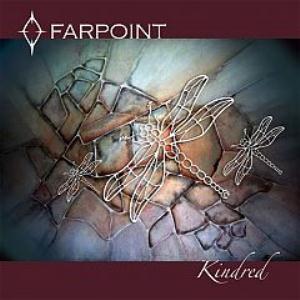
Hailing from Sumter (South Carolina), where they were formed in 1997 by keyboardist Kevin Jarvis and drummer Rick Walker, Farpoint have 12 years of live performances and 5 studio albums under their collective belts. Their recording debut, First Light, appeared  in 2002, though with a different line-up than the one appearing on this album.  Kindred is also the band’s first release for Georgia-based label 10T Records, while their previous albums had all been released independently.

Farpoint are part of a group of mostly American bands and artists that are openly Christian in inspiration, which is bound to alienate some listeners. To be honest, Farpoint are not as heavy-handed as other acts (Neal Morse comes to mind) in the way they handle the religious content of their lyrics. Moreover, the generally upbeat, positive nature of their musical offer may come across as refreshing in an age of often somewhat contrived misery and navel-gazing. Rather than concentrating on complex theological issues, Farpoint’s lyrical universe is simple, almost naive, their unabashedly optimistic songs revolving about ideas of love, hope and trust, both in God and mankind.

On a personal level, even if I am not religious, and would rather not see music turned into a vehicle for any ideological manifesto, I do not see anything wrong with delivering a positive message. The main problem, at least to my ears, is that quite a few of the songs on Kindred (right from opener “Calling Out”) remind me of the music that would be played during a service, back in my days as a good Catholic girl and a member of the local church choir. Associating this kind of music with progressive rock can be a tad awkward, and indeed Kindred is only marginally related to prog as we know it. On occasion, the instrumental interplay allows glimpses of greater complexity, but on the whole the majority of the tracks featured on the album are rather conventional, mainstream-sounding songs with a heavy emphasis on vocals and plenty of catchy hooks.

In any case, the members of Farpoint show excellent musicianship, and their songwriting skills are none too shabby either. Production-wise, Kindred can boast of outstanding clarity of sound, which allows each instrument to shine without overwhelming the others. Farpoint are very much ensemble players, each of the members contributing to the final result. The album is also quite well-balanced, clocking in at a very reasonable 51 minutes, with two shorter, mostly acoustic instrumental interludes (“Unity” and “Indian Summer”) and most of the other songs between 4 and 6 minutes – with the sole exception of the 10-minute “Water of Life”. However, those expecting a towering effort in typical “prog epic” tradition will be disappointed, because the song – in spite of some noteworthy instrumental passages such as the lengthy, flute- and guitar-driven introduction, with some sterling bass work by Frank Tyson (whose flawless performance is one of the best points of the album) – becomes quite lightweight every time vocals are involved.

On the other hand, the prog references are few and far between, and mostly concentrated in the uncharacteristically meditative, downbeat “Vacant Rooms” (in my view the highlight of the album, a heartfelt reflection on the loss of loved ones), with its spacey keyboards and lovely, Gilmour-influenced guitar solo leading to an intense crescendo in the final part of the song. “Live for Him” displays some lively classic rock touches, especially in Dave Auerbach’s excellent guitar and Hammond organ passages that bring to mind early Deep Purple, as well as an interesting drumming pattern in the bridge – but is somehow let down by the country-meets-church-music flavour of the vocal parts. A couple of other songs – notably “Another Day”, with its jangly, bluegrass-style guitar – reminded me of the alt.country slant of The Decemberists’ latest album, The King Is Dead,  though minus Colin Meloy’s distinctive vocals. Indeed, Dean Hallal’s smooth, well-modulated voice seems quite well-suited to mainstream, country-tinged pop-rock; while Jennifer Meeks’s ethereal soprano is quite underused, her only solo spot being the rather cheesy “By My Side”.

Clearly informed by strong faith and a positive worldview, Kindred is likely to appeal to those listeners who lean towards the melodic, more accessible side of prog, as well as those who like a well-crafted mainstream song delivered in a pleasing manner. Personally, I found the instrumental passages far more interesting than anything featuring vocals, though I am quite sure that  a lot of people will find the album as a whole to their taste. Needless to say, anyone who objects to religious or other ideological messages in their music will do well to steer clear of this album.

Links:
http://www.farpointband.com/

http://www.farpointband.com/

http://www.10trecords.com

Read Full Post »

« Newer Posts - Older Posts »