Feeds:
Posts
Comments

Archive for the ‘Progressive Rock’ Category

TRACKLISTING:
1. Skating on Europa 9:35
2. Know Again 6:26
3. A Poet’s Talespin I: Half-Slept Moments 1:56
4. A Poet’s Talespin II: Soft Collisions 8:28
5. A Poet’s Talespin III: The Bridge 7:55
6. A Poet’s Talespin IV: I Write 5:01
7. A Poet’s Talespin V: In the Shadows 6:17
8. Get the Hell off my Lawn 4:20
9. Counted the Stars 1:18

LINEUP:
Dave Kulju – electric and acoustic guitars, bass guitar, keyboards, guitar synthesizer, sound effects and programming
Frank Basile – drums

With:
Annie Oya – vocals (3)
Ian Cameron – electric and acoustic violins (2)

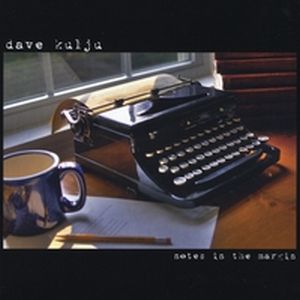
Notes in the Margin is the second album released by US multi-instrumentalist Dave Kulju, based in Rochester (New Hampshire). After his recording debut with Electrum, Frames of Mind (1998), followed in 2002 by Standard Deviation, when the band went on hiatus he started devoting his free time to his solo career, releasing Abstract Expression in 2007, which brought him to the attention of the community of progressive rock followers.  Like Abstract Expressions – even if Kulju is in charge of the majority of the instrumentation – Notes in the Margin is not your typical, ubiquitous ‘solo-pilot’ projects made possible by modern recording technology, but features a real drummer, Frank Basile, as well as a couple of other guests. Unlike its predecessor, though, the album is not completely instrumental, and its centrepiece, the five-part epic “A Poet’s Talespin” (adapted from two poems by Australian poet Amanda Joy) features the amazing contribution of UK-based  session vocalist Annie Oya.

Three years in the making, the process lovingly detailed on Dave’s own website, Notes in the Margin is an unusually elegant, deeply literate effort that eschews any of the pretentiousness often associated with prog, and manages to emphasize emotional content without being mawkish or contrived. The striking cover, a photo taken by Kulju himself (who is a gifted photographer as well as a talented musician), immediately projects a stylish contemporary image that sharply deviates from the old prog cliché of fantasy/sci-fi themed artwork, with its still life centred around a vintage typewriter. According to the artist, the album title is a reflection on the process of making the record itself – a process involving a lot of rewriting and refinement, just like a work of literature.

For a project completely conceived in the studio, Notes in the Margin sounds remarkably organic,  multilayered though never overdone, each instrument standing out in clear detail. It comes very much across as a guitar-based album, showcasing Kulju’s fluid, clean style, inspired by the likes of David Gilmour and Andy Latimer without being derivative. Keyboards, on the other hand, are used more as a foundation than the main event, though the epic can boast of some positively gorgeous piano passages. Surprisingly, however, the real protagonist of Notes in the Margin is the bass, merging seamlessly with Frank Basile’s excellent drum work to set the pace, and stamping its own distinctive touch on the fabric of the compositions. The music flows smoothly, with enough complexity to satisfy the cravings of most prog fans, except those who are looking for innovation at all costs. Indeed, while Notes in the Margin does not offer anything startlingly new, neither does the vast majority of current releases, and the musical content here is undeniably above average.

With a practically perfect running time of about 51 minutes, no filler is needed on Notes in the Margin, and none of the tracks feels padded or stretched beyond reason. Album opener “Skating on Europa”, loosely based on the work of sci-fi author Arthur C. Clarke, is a forceful yet melodic number which, in spite of its almost 10-minute duration, never outstays its welcome. Driven by thunderous yet not overwhelming drums and a sleek, dynamic bass line, it pushes Kulju’s fluid, fiery lead guitar to the forefront with exhilarating effect. In “Know Again” (the English translation of the Greek word anagnorisis, the moment of recognition for the protagonist of a Greek tragedy)  the keyboards take more of a lead role, and Ian Cameron’s contribution on acoustic and electric violin add further layers of dimension to a piece that, while not exactly jazzy, shifts subtly from a subdued tone to a sort of crescendo, slowing down again towards the end.

The album’s epic, “A Poet’s Talespin”, which (like Shadow Circus’ “Project Blue” or The Rebel Wheel’s “The Discovery of Witchcraft”, to name but two recent examples) is conceived as five separate pieces strung together by a  musical and lyrical fil rouge, rather than as a massive 30-minute behemoth. As previously hinted, it is also the only composition featuring Annie Oya’s lovely vocals, soothing and melodious yet devoid of that cloying sweetness all too frequent in female prog singers. Introduced by a gorgeous classical piano piece, the romantic, mid-paced (and very aptly titled) “Soft Collisions” develops into a number of subtle complexity where the vocals are complemented by Kulju’s superb guitar and bass work and the recurring presence of the piano. “The Bridge” treads spacey territory, with a subdued, more acoustic bent; while the symphonic, keyboard-driven “I Write” is brimming with gentle sadness, and “In the Shadows” closes the epic with an instrumental reprise of the main theme, rendered in spacious, atmospheric tones reminiscent of Pink Floyd. The album is wrapped up by two instrumentals – the highly dynamic, riff-based “Get the Hell Off My Lawn”, bringing to mind Rush compositions such as “Leave That Thing Alone”, with bass and guitar working together to create intense textures; and the short, somber keyboard piece “Counted the Stars”, named after a phrase in an Anne Sexton poem that was the earliest inspiration for the epic.

With superb production values and sterling sound quality, Notes in the Margin is indeed an excellent release, worthy of the attention of even the more demanding prog listeners. It is a pity that – like most studio-only projects – it will probably flow under the radar of many fans in favour of more extensively publicized albums. A labour of love in every sense of the term, classy and literate yet full of endearing warmth, this is a must for everyone who loves melodic, guitar-oriented progressive rock. It would be a boon if, one day, Dave managed to put a band together and perform his music on stage, in spite of all the well-documented difficulties that plague those artists looking for live outlets for their work.

Links:
http://www.davekmusic.com/

http://www.littleglasspen.com/

Read Full Post »

TRACKLISTING:
1. Fino all’Aurora (6:44)
2. D-Sigma (4:13)
3. 4.18 (1:37)
4. Discesa (7:32)
5. Tra Due Petali di Fuoco (6:06)
6. L’Inganno (7:20)
7. Agli Uomini Che Sanno Già Volare (4:36)
8. Il Declino (5:44)
9. Phoenix (5:07)
10. La Notte Trasparente (7:47)

LINEUP:
Alessandro Corvaglia – vocals
Fabio Zuffanti –  bass, bass pedals, backing vocals
Agostino Macor – keyboards
Andrea Monetti – flute, sax
Matteo Nahum – guitars
Maurizio Di Tollo – drums, backing vocals

One of the many projects in which Genoa-based bassist and composer Fabio Zuffanti is involved, La Maschera di Cera (The Wax Mask, named after a ‘50s horror movie starring Vincent Price) have been active since the beginning of the new millennium, releasing four studio albums and a live one. Their third album, LuxAde (released in 2006, and based on the Greek myth of Orpheus) brought them to the attention of the many fans of classic Italian prog scattered around the globe, which culminated with their appearances at the 2007 edition of NEARfest and the 2009 edition of ProgDay, two of the highest-profile progressive rock events in the world. They also appeared in the Romantic Warriors documentary, alongside fellow Italians D.F.A.

Petali di Fuoco, their fourth studio release (produced by a veritable RPI icon such as PFM drummer/frontman Franz Di Cioccio) marks a distinct change in the band’s compositional approach, and consequently also in their sound, which has been somewhat streamlined. While the band’s three previous albums had the hard-edged, retro-symphonic sound of Seventies outfits such Il Balletto di Bronzo and Biglietto per l’Inferno down pat, dispensing with the electric guitar in favour of luxurious keyboard textures and plenty of Mellotron – as well as sporting a strong conceptual bent – Petali di Fuoco takes a more mainstream direction, featuring 9 shorter, unconnected songs with more straightforward lyrics. While there are still Italian bands paying homage to the great tradition of the elaborate concept album, La Maschera di Cera seem to have followed the example set by other Genoese bands like Delirium (with their superb comeback release Il Nome del Vento) and Il Tempio delle Clessidre, and chosen a more accessible format for this album.

On Petali di Fuoco, the core of founding members Alessandro Corvaglia, Fabio Zuffanti, Agostino Macor and Andrea Monetti (plus drummer Maurizio Di Tollo, who joined the band in 2004) has been augmented by guitarist Matteo Nahum, who proves to be the album’s real ace in the hole. A classically-trained musician (and devoted Steve Hackett fan)  with the perfect combination of flawless technique (without any concessions to the deplorable shredding trend) and genuine emotion, his contribution lifts the level of the album from merely good to excellent. Even though the music is unabashedly retro, a loving homage to the classic Italian prog sound of the Seventies without any real claim to innovation, and the songs sometimes skirt the Italian melodic pop tradition a bit too close for comfort, Petali di Fuoco delivers a very satisfying listening experience, at least for those people who like their prog with lots of vocals. On the other hand, Alessandro Corvaglia’s strong, confident voice, markedly different from the operatic style of the likes of Francesco Di Giacomo, but equally suited to tackling material at the same time melodic and challenging, can bring to mind some internationally-known Italian pop singers, and therefore come across as vaguely annoying to those who like the angular, acquired-taste vocal styles of so many prog singers.

Running at about 55 minutes, Petali di Fuoco is a well-balanced effort that never threatens to outstay its welcome. Most of the songs – as immediately evidenced by opener “Fino all’Aurora”, an upbeat, organ- and flute-driven number ending with a beautiful guitar solo  – have a conventional verse-chorus-verse structure, but the lush orchestration and seamless instrumental interplay reveal their progressive matrix. Though Corvaglia’s voice often seems to dominate the proceedings, the instruments spin a tightly-knit web of sound that provides a solid foundation for the development of each song. While “D-Sigma” and “Discesa” keep things simmering in the same spirit as the opener, with melodious, Hackett-inspired guitar passages opening airy spaces in the dense, keyboard-driven heavy prog textures of the songs, the title-track and “Agli Uomini Che Sanno Già Volare” take a more subdued direction, with a sparser, somewhat melancholy instrumental backdrop that pushes the vocals to the forefront and leaves a lot of room for Corvaglia’s emotional delivery.

Though Petali di Fuoco is a strongly vocal-driven album, two instrumentals have been included – one, “4.18”, a short classical guitar number in the style of Genesis’ “Horizons”, the other, “Phoenix”, starting out slowly but building up to a crescendo powered by keyboards and drums – a structure paralleled by “Il Declino”, in which a somewhat somber piano solo is offset by the unbridled passion of Corvaglia’s vocals. On the other hand, with “L’Inganno” La Maschera di Cera explore vintage hard rock territory, powered by Agostino Macor’s rumbling Hammond organ and whistling Moog, and featuring an almost jazzy piano passage in the middle, as well as a soaring guitar solo at the end. The album ends with a veritable bang: “La Notte Trasparente”, at almost 8 minutes the longest track on the album, is also the most complex, with all the instruments creating intricate yet airy textures with more than a nod to classic Genesis, and a showcase for Matteo Nahum’s spectacular guitar work. His solo at the end starts out slowly, and then gradually drives towards an exhilarating climax that had me think about Gary Moore or Blue Oyster Cult’s Buck Dharma.

Though some prog fans may be disappointed by the lack of epics and the generally more streamlined nature of Petali di Fuoco, the album will certainy prove a treat for lovers of the sounds of vintage Italian prog. With lush instrumentation, a nice balance between orchestral grandiosity and more intimate, subdued moments, plenty of melody and warm, passionate vocals, it contains all the elements that keep attracting many listeners to Italian progressive rock – as well as those that often turn people off, such as the enhanced sentimentality and occasionally bombastic passage (though not as prominently as in their previous studio albums). It is, indeed, very much a ‘retro-prog’ effort – which might make it pointless (as a fellow reviewer put it) in the eyes of some of the more jaded set – but it cannot be denied that Petali di Fuoco is a quality offering brimming with flair and songwriting expertise. Even if, speaking from a strictly personal point of view, the music on the album is not always my cup of tea, I would not hesitate to recommend the album to everyone interested in Italian prog.

Links:
http://www.myspace.com/lamascheradicera

http://www.zuffantiprojects.com/

Read Full Post »

TRACKLISTING:

CD1
1. Hymn (4:29)
2. The Joy of Molybdenum (feat. The Trey Gunn Band) (5:29)
3. The Fifth Spin of the Sun (2:04)
4. Val El Diablo (feat. Alonso Arreola) (4:35)
5. Morning Dream (feat. Sergey Klevensky) (6:49)
6. Real Life (5:12)
7. Maslenitsa (feat. The Farlanders) (9:31)
8. Gallina (1:05)
9. Dziban (6:15)
10. Misery, Misery, Die, Die, Die… (feat. TU) (1:55)
11. Pole (0:44)
12. Thick and Thorny (feat. Quodia) (2:35)
13. Down Spin (1:13) 14. Absinthe & A Cracker (feat. TU) (3:17)
15. The Shimmering (2:23)
16. Fandango (feat. TU) (4:05)
17. Well (feat. Inna Zhelannaya) (5:56)

CD2
1. Jacaranda (feat. KTU) (3:57)
2. The Magnificent Jinn (3:24)
3. Contact (3:50)
4. Drunk (feat. Inna Zhelannaya) (6:26)
5. Killing for London (6:32)
6. Kuma (4:29)
7. Single Cell Shark (feat. Matte Henderson) (3:31)
8. Cheeky (feat. matt Chamberlin) (3:33)
9. Make My Grave in the Shape of a Heart (feat. TU) (1:24)
10. Spectra (1:57)
11. Capturing the Beam (1:23)
12. Hard Winds (3:05)
13. Arrakis (feat. The Trey Gunn Band) (6:54)
14. Flood (3:17)
15. Untamed Chicken (feat. TU) (4:15)
16. Down in Shadows (feat. N.Y.X.) (4:44)
17. Californ-a-tron (0:49)
18. Vals (feat. Sergey Klevensky) (3:18)
19. 9:47 P.M. (feat. Saro Cosentina) (5:03)

Reviewing a compilation obviously involves a rather different process than reviewing an album of completely new material. My readers will forgive me if this write-up is not as detailed as my reviews usually are, and, for instance, does not include information on all the musicians featured on every track. In this particular case, the compilation is a 2-CD package, comprising a total of 36 tracks spanning almost 20 years of the career of one of the most interesting artists on the current music scene – Texas-born touch guitarist, composer and multimedia storyteller  Trey Gunn, known to the majority of prog fans for his 10-year stint in King Crimson.

I have to admit to having been for quite a long time largely unfamiliar with Gunn’s musical output outside Fripp’s legendary band and a handful of scattered tracks from some of his solo projects. However, two years ago I had the opportunity to see him perform live as a guest of Eddie Jobson’s UKZ project, and was highly impressed by his skills and warm stage personality. Later, I found out that he was born exactly two days before me – perhaps not very relevant from a musical point of view, but an interesting bit of trivia nonetheless.

Released in November 2010, I’ll Tell What I Saw is jam-packed with extremely stimulating music taken from the numerous albums recorded by Gunn in the years from 1993 to the present day, both in his own name or with various other projects featuring international artists. Running at over 2 hours, it manages to sustain a consistently high level of quality, with hardly any filler at all, offering a heady mix of musical styles interpreted with flair, skill and soul. Indeed, Trey Gunn’s output might easily be held up as an example of a genuinely progressive approach to music-making, open-minded and eclectic, always looking for new sources of inspiration, and never letting his creative impulse grow stale.

The oldest items included in the compilation date back from Gunn’s debut album One Thousand Years (released in 1993), and (perhaps unsurprisingly) reveal a strong King Crimson influence, with “Kuma” in particular sounding like something out of the magnificent Discipline. As a matter of fact, the Crimsonian vibe can be heard in all of Gunn’s Nineties material, as witnessed by “Hard Winds”, another track characterized by the insistent, interlocking guitar lines and heavy yet intricate drumming typical of Fripp’s crew in their Eighties and Nineties incarnations. Gunn’s two more recent projects involving drummers – TU with fellow KC alum Pat Mastelotto, and Modulator with German-born wunderkind Marco Minnemann (who was also part of Eddie Jobson’s band when I saw them in 2009) – spotlight the marriage between the drums and the stunning versatility of Gunn’s trademark Warr guitar, with dramatic, mesmerizing textures and plenty of driving energy. However, while the TU tracks are more structured, the Modulator stuff (originally conceived as a 51-minute guitar solo) is largely improvisational in nature. Some of these numbers, especially the thunderous “Untamed Chicken”, seem to emphasize the drum-driven heaviness that characterizes compositions like “Level Five” (from King Crimson’s 2003 album The Power to Believe). Italian outfit N.Y.X.’s “Down in the Shadows” carries nuances of ‘alternative prog’ in the dark, industrial-tinged style perfected by Tool; while the bass-powered “Arrakis”, recorded live in 2001, foreshadows the avant-fusion of contemporary bands such as Zevious.

On the other hand, Gunn’s collaboration with Russian singer Inna Zhelennaya on her 2009 album Cocoon and on the eponymous 2005 album by The Farlanders explore the fascinating reaches of world music, injecting a welcome dose of thoroughly un-cheesy melody (also evidenced in gorgeous opening “Hymn”) in the proceedings. Zhelennaya’s hauntingly keening Russian-language vocals, somehow reminiscent of Lisa Gerrard’s otherworldly chanting, blend uncannily well with Gunn’s quicksilver guitar, producing some very distinctive results in the likes of the hypnotic “Maslenitsa” (the longest track on the album at almost 10 minutes, and possibly its highlight), “Well” and “Drunk”. Entrancing ambient tones, coloured with a feel of gentle melancholy, surface in Gunn’s collaboration with Russian clarinetist Sergey Klevezny; while the slow, liquid “9:47 PM Eastern Time” brings to mind KC’s “The Sheltering Sky”. KTU’s accordion-laden ”Jacaranda” and the Middle Eastern-flavoured “The Magnificent Jinn” branch further out in world music territory, though combining those ethnic influences with the angular dynamics typical of King Crimson.

As exciting and eclectic as I’ll Tell What I Saw is, I would not recommend listening to the whole 2-CD set in one take, since music this challenging and edgy might induce a sense of sonic overload, especially in those listeners who are used to more conventionally structured fare. Thankfully, there is enough diversity within those 36 tracks to keep the most demanding listeners happy. It is, however, music with a high level of complexity, even in the case of the shorter compositions, and needs to be approached with the right attitude. All in all, this is an excellent summary of Trey Gunn’s adventurous, ever-changing career, and an outstanding introduction to the work of one of the most intriguing purveyors of genuinely progressive music on the current scene.

Links:
http://www.treygunn.com

Read Full Post »

TRACKLISTING:
1. Into the Subatomic (5:21)
2. Free at Last! (5:17)
3. Mud Becomes Mind (5:14)
4. I Don’t Believe (5:53)
5. Matter Is Energy (4:55)
6. Comprehensible (6:38)
7. Infinite Strength (8:05)
8. Where No One Can Win (8:05)
9. Step Out of Your Body (5:12)
10. The Cauldron (15:18)

LINEUP:
Copernicus – poetry, lead vocals, keyboards
Pierce Turner – musical director, piano, Hammond organ, percussion, backing vocals
Larry Kirwan – electric guitar, vocals
Mike Fazio – electric guitar
Bob Hoffnar – steel guitar
Raimundo Penaforte – viola, acoustic guitar, cavaquinho, percussion, vocals
Cesar Aragundi – electric and acoustic guitar
Fred Parcells – trombone
Rob Thomas – violin
Matty Fillou – tenor saxophone, percussion
Marvin Wright – bass guitar, electric guitar, percussion
George Rush – tuba, contrabass, bass guitar
Thomas Hamlin – drums, percussion
Mark Brotter – drums, percussion

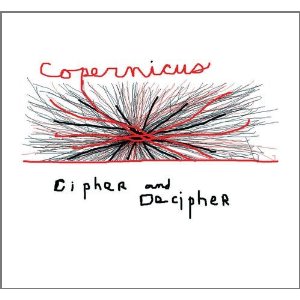
The thirteenth album by New York-based performer-poet Copernicus (aka Joseph Smalkovski), and the third released by MoonJune Records (which is going to reissue the artist’s whole catalogue), Cipher and Decipher is definitely not your average ‘progressive rock’ album, ambitious but ultimately accessible. In fact, is one of those records for which the expression ‘acquired taste’ seems to be tailor-made, and which is at the same time easy and difficult to describe: easy if you want to simplify matters, and say that it is based around a somewhat loopy guy’s ranting and raving over a rather free-form musical background; difficult if you want, instead, to avoid platitudes and offer would-be listeners a more in-depth, nuanced analysis.

Needless to say, even from a quick perusing of the release notes it should be clear that Cipher and Decipher is not for the faint-hearted, or those who like carefully structured music, engaging melodies and conventional singing. This is the archetypal underground production, a marriage of music and poetry steeped in the American beat tradition, dripping with existential ennui and metaphysical musings, in which the music often feels like an afterthought, often sharply diverging from the vocal parts in a sort of schizophrenic effect. Clocking in at slightly under 70 minutes, and barely offering any respite from Copernicus’ over-the-top vocal exertions, it sounds more than a bit daunting (even for a forward-thinking label like MoonJune) and as such quite unlikely to appeal to casual or mainstream-oriented listeners.

And yet, in spite of all these drawbacks, Cipher and Decipher exerts a weird sort of attraction. After a while everything seems to click and, so to speak, begins to make sense. Even as Copernicus’ voice may rub you the wrong way, and make you wish he limited himself to publishing books of poetry like most other people would do, the music perversely sucks you in, and you may find yourself actually enjoying the experience – almost in spite of yourself. At times Copernicus’ secular-preacher recitation blends with the music, at others the two go their separate ways, in a somewhat frustrating fashion. He roars, cajoles, whines, chants, emotes like a Shakespearian actor, leaving very little breathing space to the listener, repeating the key words around which his whole work seems to revolve with a sort of incantatory effect, often augmented by the loose yet oddly mesmerizing nature of the musical accompaniment.

Regarding the concept on which Cipher and Decipher is based, my readers will be able to find all the background information they need in the links I have provided at the end of the review – as well as in the album’s very thorough liner notes. While other reviewers have dedicated at least some space to the album’s lyrical content, I would rather concentrate on the musical aspect, even if I realize it is far from easy to divorce the two. Generally, I do not particularly care for nihilism, and have to admit not being too interested in speculations about the nature of the universe, though neither aspect disturbs me as other kinds of content (i.e. overtly racist lyrics) would. My main interest here is the music, and this is why I would rather avoid launching in any detailed analysis of Copernicus’ message which is much better presented elsewhere.

When listening to Cipher and Decipher, it is important to bear in mind that the music and the vocals often seem to be at odds with each other instead of working together, as would happen in more mainstream recordings. This means that special attention to the musical part is required, and it obviously helps if you like almost completely unscripted music as opposed to the carefully constructed patterns of most conventional progressive rock. Provided by a veritable orchestra of 15 outstanding musicians (including 4 guitarists and almost a full horn section) led by long-time Copernicus associates, expatriate Irishmen Pierce Turner and Larry Kirwan (the latter, together with Thomas Hamlin and Fred Parcells, a member of Celtic-inspired band Black 47), the musical accompaniment to Copernicus’ proclamations is a wildly eclectic mix of influences ranging from experimental free-jazz to early Pink Floyd-style psychedelia.

Organ-drenched opener “Into the Subatomic” immediately sets the scene, both musically and lyrically, followed by the lovely but somber “Free at Last!”, the most genuinely Pinkfloydian number on offer, embellished by some noteworthy acoustic and electric guitar work; while “Mud Becomes Mind” sports a cheery, Afro-Brazilian vibe. The disc’s central section owes quite a lot to free-jazz, rather gloomy in “I Don’t Believe” with its lonesome-sounding trumpet, sparse yet upbeat in “Matter Is Energy”. On the other hand, “Comprehensible” superimposes an overt homage to Pink Floyd, with Larry Kirwan repeating “set the controls further out of the sun” (a paraphrase of the title of one of their most iconic early compositions) to the somewhat chaotic free-jazz template, and “Infinite Strength” (based on Van Morrison’s celebrated “Gloria”) sounds like something out of the Blues Brothers soundtrack – making you want to dance in spite of Copernicus’ weighty proclamations. More Latin influences surface in the funky “Step Out of Your Body”, and the references to Iraq and Afghanistan in “No One Can Win” are aptly punctuated by Middle Eastern echoes conjured by flute and strings. The album climaxes with the sonic and verbal apocalypse of the aptly-titled “The Cauldron”, a 15-minute, voice-driven space jam.

As the previous paragraphs clearly illustrate, Cipher and Decipher is a very peculiar effort, targeted to adventurous listeners, and likely to send the more conservative set of prog fans running for the exits. This is not background music, and is definitely not relaxing – on the contrary, it can easily become a tad wearying, especially on account of Copernicus’ very idiosyncratic vocal delivery and apocalyptic lyrics. The album’s running time can also be an issue, so those who find it hard to concentrate for long might want to avoid tackling it in one go. However, its somewhat sneaky allure may well win over those who are not afraid to get acquainted with less predictable approaches to progressive music.

Links:
http://www.copernicusonline.net

http://www.moonjune.com

http://www.progarchives.com/forum/forum_posts.asp?TID=74511 (interview)

Read Full Post »

SETLIST:
1. Irreducible Complexity
2. Manifest Density
3. Nacho Sunset
4. Kuru
5. Disillusioned Avatar > Dub > Ephebus Amoebus
6. Skein
7. Synecdoche
8. Okanogan Lobe
[Break]
9. Bagua > Kan Hai De Re Zi > Third View
10. Save the Yuppie Breeding Grounds
11. Fountain of Euthanasia
12. Uncle Tang’s Cabinet of Dr Caligari
13. Blues for a Bruised Planet
14. Waylaid
15. Middlebräu [encore]

Last year at NEARfest I had my first taste of Moraine’s music, even if in the months prior to the event I had often been tempted to check out their debut album, Manifest Density, after reading some flattering comments around the Internet. Unfortunately, my commitments as a reviewer did not allow me a lot of room for ‘recreational listening’, so to speak, so the day of Moraine’s performance found me still completely unfamiliar with their considerable talent. Those who have read my review of the festival will know that I considered Moraine to be probably the most authentically progressive band of the whole weekend, and one of my personal highlights together with Forgas Band Phenomena (an outfit whose music has some similarities with Moraine’s, though more noticeably influenced by the Canterbury sound). Even though they had been placed in the awkward slot of Sunday openers, and faced with an audience many members of which swooned at The Enid’s somewhat cheesy antics and thought that The Pineapple Thief were not ‘prog enough’ for the hallowed halls of the Zoellner Arts Center, they managed to gain quite a few fans – including my husband and myself. Indeed, we were so impressed by their performance that we went to meet the band after their set. In the following months, that first contact blossomed into a treasured friendship.

Even if somebody might think that my judgment as regards Moraine’s performance on the night of Saturday, April 30 (the third date of a 4-date Northeast tour) might be clouded by my personal feelings, I am quite capable of being objective, and would not spare any criticism if I believed it was in any way warranted. However, I am happy to say that Saturday’s gig at the Orion was an unqualified success. Having had almost a whole year to become familiar with Moraine’s output,  this time I was able to appreciate every nuance of the show, as well as the subtle but noticeable modifications in their sound brought about by the line-up change that followed the release of Manifest Density. In spite of the hurdles faced by almost every independent outfit these days – lack of touring opportunities, real-life commitments and such – on the Orion stage Moraine came across as a well-oiled machine, the chemistry between the five members nothing short of amazing.

Those who have watched the seminal documentary Romantic Warriors will remember the Orion Studios, a former warehouse located in a decidedly unglamorous neighbourhood on the outskirts of Baltimore, yet possessed of a unique, club-like character. With a couple of couches, a few folding chairs and a table generally laid out with snacks and drinks, countless posters and flyers decorating the walls, a couple of weird figures hanging from the ceiling, it reminds me of the basements (or ‘cellars’) in the centre of Rome which, in the Eighties, functioned as both rehearsal spaces for bands and meeting points for their friends and supporters. In spite of the diminutive size of the main stage area, the place is like a maze, offering valuable recording and rehearsing spaces to local musicians. This quirky yet intimate backdrop was ideal for a band like Moraine, even more so than the immaculate NEARfest stage. As regards attendance, I judged about 50 people to be present – more than the band are used to attracting in their home town of Seattle,  and a satisfactory turnout for a single-bill evening – even though last year I had seen twice as many people line up outside the venue in order to see a tribute band. This, unfortunately, seems to be the nature of the ‘prog community’ in the US Northeast, as I pointed out in the two essays I wrote after NEARfest 2011’s cancellation.

Though often tagged as ‘avant-garde’ (much to their amusement), like all truly progressive bands Moraine defy description. Their variegated backgrounds converge very effectively both on stage and on record, instead of resulting in a patchy mess: while their compositions – often penned by individual members rather than shared efforts – showcase their different approaches. With the dry, slightly self-deprecating humour that characterizes their interaction with the public, the band describe themselves as ‘omnivorous’. On the other hand, at least from what was seen at the Orion, they have not abandoned their rock roots – though of course there is not even a whiff of the time-honoured, though somewhat corny antics of the typical rock musician in Moraine’s stage presence. Even if towards the end of the set we were treated to a short drum solo, it was blessedly devoid of the cheesiness often inherent to such spots.

Coming on stage at about 8.30 p.m., the band delivered an extremely tight performance, richly eclectic and riveting in its intensity, interspersed by Dennis Rea’s brief but humorous introductions. A short break allowed both the band and audience to recharge their batteries, and from comments overheard during that time it was clear that the audience was won over by Moraine’s blend of chops and sheer enthusiasm. This was progressive rock with a capital P, fresh and innovative even when occasionally hinting at some ‘golden oldies’. Unlike far too many modern prog bands, Moraine manage not to sound like anyone else: the closest term of comparison would be King Crimson circa Red, though more in terms of attitude than actual sound, especially as regards the coexistence of melody and angularity, and the presence of both violin and reeds coupled with the conspicuous absence of prog’s ‘sacred cow’, the keyboards. The departure of cellist and band founder Ruth Davidson (a fan of Univers Zéro, as evidenced by her composition “Save the Yuppie Breeding Grounds”) has also altered the ‘chamber’ nature of the band in favour of a more dynamic approach, powered by Jim DeJoie’s assertive sax (which on Saturday night was a bit low in the mix).

To those who had read reviews of the band’s NEARfest performance described as ‘noise-drenched’ (something that, coupled with the ‘avant-garde’ tag, is guaranteed to strike fear into the hearts of the more conservative set of prog fans), the melodic quotient of Saturday night’s show is likely to have come as a surprise. The medley featuring Alicia DeJoie’s gorgeous “Disillusioned Avatar” and Kevin Millard’s “Ephebus Amoebus” aptly displayed the band’s more sensitive side; while the overtly jarring chaos of “Uncle Tang’s Cabinet of Dr Caligari” (wittily introduced as a ‘romantic ballad’, and probably the one track actually deserving of the ‘avant-garde’ tag) was followed by the melancholy beauty of “Blues for a Bruised Planet”. Millard’s distinctive-looking, customized Chapman stick (dubbed ‘baliset’ by the bassist, a long-time fan of Frank Herbert’s iconic Dune) meshed seamlessly with Stephen Cavit’s complex yet remarkably unflashy drum patterns, and Alicia DeJoie’s shiny purple violin caught the eye as well as the ear. Jim DeJoie (Alicia’s husband) expertly wielded his impressive saxophone, coming across as the most ‘physical’ member of the band. In fact, if I had to level one criticism at Moraine’s performance, it would concern their somewhat static presence, at least partially due to the size of the stage. Not that anyone was expecting Dennis Rea to start throwing guitar-hero-style shapes, though his solos revealed a definitely sharper rock bent than evidenced either on Manifest Density or in his other recent projects. Besides the jazz, rock and avant-garde influences, fans of world music were also catered for by the enchanting “Asian Suite”, featuring themes from three of the five tracks included on View from Chicheng Precipice, Rea’s first solo venture.

The show also provided Moraine with the opportunity to present some of the new material they had been working on in the past year or so – namely three intense, hard-hitting yet multifaceted numbers titled “Skein”, “Synecdoche” and “Fountain of Euthanasia”, which showed a band growing by leaps and bounds both in cohesion and on the compositional level. Like the material on Manifest Density, those new tracks are rather short for prog standards, yet brimming with energy and a kind of creative impulse divorced from sterile displays of technical skill. On the other hand, unlike the debut’s compositions, which in many ways represented each member’s temperament, the new numbers sound more clearly shaped by collective input.  As impressive as Moraine’s debut was, their future – judging by what was heard on Saturday night – looks even brighter.

The wonderful musical experience was wrapped up by a night out in downtown Baltimore, complete with a walk through the city’s rather seedy red-light district and a late-night dinner (or perhaps early breakfast, since it was 2 a.m. when we sat down) at an ‘Italian’ restaurant – the kind that serves filling but rather unauthentic dishes such as spaghetti with meatballs. We also managed to get the last of the T-shirts and mugs designed expressly for the tour by David Gaines, a friend of the band and talented musician himself, based like us in the DC metro area. All in all, it was an evening that packed the friendly, laid-back vibe of a get-together at someone’s house with a select group of friends, as well as that community spirit that I have often mentioned in my reviews. Hopefully Moraine will be able to return to the Northeast soon after the release of their second album, which will mainly feature music recorded live at NEARfest.

Links:
http://www.moraineband.com

http://www.orionsound.com/

Read Full Post »

It is my pleasure to present the very first guest review to be featured on my blog – a wonderful account of Van der Graaf Generator’s Rome show written by my dear friend Victor Andrei Părău, a professional musician whom ProgArchives regulars will remember by his screen name of Ricochet. Enjoy!

————————————————————————————————-

Such a great concert.” That was all I managed to write down, three days after returning home. Surely, a Van der Graaf Generator concert has to be more inspiring than that.

Well, my first impulse was to catch a flight to the nearest stop of their spring tour, since they did quite an arch throughout Europe after playing several times in England. It is perhaps strange for some, this express desire to finally see one of your favorite bands on stage, to make on your own all the right moves in order to accomplish that, to travel and make a special case out of it, or even to think of it as something to be done “at least once in your lifetime”. Yet, to be honest, most of the concerts I’ve attended were this emotional. While I do already have a strong backup of jazz or experimental concerts, should Jethro Tull’s progressiveness be up for debate (I think that’s the trend lately) and also not count a few less evoking names, then what Van der Graaf offered was quite the first fully ranked progressive rock concert for me, in all its details – from the atmosphere down to the trio’s own manifest.

Time affecting bands was never a hot topic for me, although many groups have embarrased themselves – some still do. Make no mistake, time is ticking loud enough for VdGG themselves. Peter Hammill looks the most dried up; even Guy Evans’ look isn’t as badass as it was a couple of years ago. In contrast, Hugh Banton’s appearance is elegant and humble, something further proved by how he looked so zen at the keyboards, playing his part, more so brilliantly.  But their reunion is truly one of the most successful. The first great sign of this concert was to witness these seniors’ instrumental skills, as good as ever, most of the times veraciously energetic, even with a tinge of crassness, with all their trademark accents and maddening difficult rhythms, something they’ve never let go of.

Of course, I did miss the best rides of their comeback, those up until 2007, highlighted by the live gem Real Time, if not by the work on Present as well, which I always considered to be a great album, with its clever duality. I’ve seen enough fans being a little more sceptical  when it comes to the new trio form and their recent acts. While preparing for the trip, I caught news of this tour’s first shows being heavily focused on the new material, while later mixing it with the heavily desired classics. Actually, if you check the Live List on their homepage, this is all pretty relative. Nevertheless, let’s just say the Rome concert was one of the odd-numbered ones or something, indeed promoting the new stuff, with the old tracks being the high points. Hammill even joked about it a bit when announcing they will move on to something “vecchioma non troppo vecchio”.

Oh right, Rome! Well, Prague would have initially been my pick, had it not taken me a total of two days just to travel by train back and forth. There was no window for me to go to the smaller town of Cesena, so it had to be the Eternal City, adding touristic pressure to the entire trip. By the end of a five-day experience, it was hard  to consider that I went there just to see the guys. The Auditorium Parco della Musica was a destination in itself, with exhibits taking place in the Luciano Berio Largo, with chatty and modish people at the coffeehouse making me look like a peasant, with Mahler’s Ninth playing at the same time in another concert hall. I was definitely split in many sides that evening: one completely burned out after seeing Ancient Rome the whole day, one being, of course, the eager music fan and a third moderating, as in trying to keep the first alive and the second from pretentiously picking the pulse, thus simply enjoy the whole thing. As I waited for the M bus to arrive and take me to the Auditorium, along with a rather impatient British old lady and a German couple of the same age, I feared I might actually be among the youngest spectators. Fortunately, the public proved to be mixed: genuine rock enthusiasts and Graaf fanboys, people who had forgotten to change their clothes since the ‘70s, young bloods equally interested.

The screechy “nearer and nearer” (constantly misheard by me as mirror, mirror) chorus, or even the keyboard polyphonic frolics from Interference Patterns could have proved annoying, but I felt it was a good opener. The chorus blasts were heavier than usual and the keyboard animation was also of great effect. As mentioned before, picking up the strange rhythms and intricate melodic patterns, all in heterogeneous time signatures, can be the first thing that connects you with the profoundly personal, however awkward, Van der Graaf spirit – something even Trisector, as shabby of an album as it is often credited, does manage. This, on the other hand, is the departure I regret on A Grounding in Numbers, an album I met with too great expectations, the positive reactions doing no good either. Actually, even without thinking about the past when listening to it  (which is indeed a rather bad viewpoint), I find very little substance in their new songs – or the slideshow itself. The trio picked the decent stuff from that album, avoiding, for instance, nutty songs on mathematics and such. First was Mr. Sands – a sort of odd character every band gives life to at some point (see R.E.M.’s Mr. Richards) – and the more halcyon Your Time Starts Now, with a first fully sonorous organ line from Banton. Hammill moved to electric guitar, acting clumsy between each piece to mask the seconds delayed by his preparations. The heavy instrumental verve returned with All That Before,  portions of an already towering intensity.

There was no greater enthusiasm than when the classics were played (a small sad side to it being  that it felt like they were the only thing the public was truly waiting for). Hammill did prepare us for them, yet, as the ovations interrupted the first line of Childlike Faith in Childhood’s End, it was clear the game would carry on. There was indeed more to it. When Hammill made his dramatic pause at “frightening in the silence”, someone from the audience jumped in, screaming the “sileeeeeeeeence” in perfect imitation. Hammill replied  faithfully. It was a bloody genius moment. Needless to say, at the end of the final triumphing choral of the piece, the audience jumped to its feet. It felt less great to follow up with irritating keyboard dialogues from All Over the Place, something matched on the new album only by the awful irregularities on Splink. I really enjoyed  Over the Hill next. It’s the most powerful separator between Trisector and A Grounding in Numbers, also linking closest to the old Van der Graaf, with its catchphrases, cold/pulsating transitions, lyrically & musically encompassing.

Finalmente there was Man-Erg, apparently a given in these concerts, proving even more what this band is all about. The sentimental, lyrical opening was never too comforting, while the thundering section was downright macabre and convulsive. At one point, Evans kicked the hell out of his small gong so much that he send it flying. People were shouting requests by the time of the encore, be it Sleepwalkers, Wondering or Necromancer (what!). However, it was Scorched Earth – probably my favorite VdGG of all time (but I could be biased to say that right now). I can’t think of a better encore that I’ve heard. Yes, it did lack Jaxxon’s crazy improvisations, but everything else was in place. It pierced through me entirely and it was mind-blowing. The lights were turned back on right after the trio left the stage, and the fans gave up too quickly.

So, going back to my first line, it was a great concert. Hammill’s vocals were slightly off, but I dare mention it again that all three of them were absolutely impressive at their instruments. Becoming their fan(boy) was a rough deal, so I’m pretty content with going all the way through this – except, perhaps, a couple more bits and pieces on their creation that aren’t quite put together, even now. Occasionally, it’s great to also hear others puzzle over what Van der Graaf were able to create, extending to how refined music sounded back in those days.

…okay, maybe it was my dad being so nostalgic. But my feelings persist.

Read Full Post »

TRACKLISTING:
1. Pyjamageddon  4:16
2. Blind Jack of Knaresborough  4:21
3. Yockenthwaite  3:59
4. Metal Trees  4:52
5. The Cloud Of Unknowing 6:56
6. Blind Jack’s Unicycle 0:59
7. The Modern Architrave  5:43
8. Kirton In The Rain  3:55
9. Long Shore Drift  3:33
10. Rubber Road  3:16
11. Crossing the Bay 0:37
12. The Sun Unconquered  3:34

LINEUP:
Mark Joell – keyboards, tumbi, shouting through cymbals, funny vocals, funny handshake
Colin Robinson – 6-string fretless bass, corrupted vocals, shehnai, xaphoon, tablas, junk
Alex Stone –  guitar, accordion, kantele, portable harmonium, serious vocals

With:
Sean Corlett – voice (1)
Tim Bradshaw – trombone  (7)
Nastassja Joell – vocals (8,12)

In spite of England’s exalted status as the cradle of the original progressive rock movement, I do not get to review modern English bands very often. This week, however, I have chosen to devote both of  my new reviews to bands hailing from the British Isles, even if I can hardly imagine two acts as different from each other as purveyors of classy pop-prog Exhibit A and arch-experimental outfit Big Block 454.

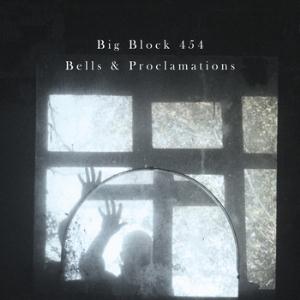
Hailing from the north-western English city of Manchester – better known for its pre-Britpop scene of the early Nineties than for progressive music – Big Block 454 (named after a car engine developed in the Seventies) were founded in 1988 by Colin Robinson and Pete Scullion, and have been active since then, though in different configurations. Bells and Proclamations, their seventh album, sees them stripped down to a trio of multi-instrumentalists (including Robinson, the one constant member of the band) with guest musicians featured on some tracks.

Even a cursory look at Big Block 454’s back catalogue will clearly reveal their self-proclaimed nature as “a semi-amorphous post-modern / situationist neo-dada cross-platform compositional construct” rather than a band in the traditional sense. While quirky, absurdist titles such as Their Coats Flapped Like God’s Chops (their fifth album, released in 2004) might bring to mind post-rock bands, Big Block 454 are quite a different beast – a veritable melting pot of diverse influences and sources of inspiration, rendered in an outwardly conventional song form, with short, even snappy morsels which are instead densely packed with ideas and variations. This is art-rock in its purest and most literal form – indeed, in its earliest manifestation, the band provided the soundtrack for a Dadaist art installation. Though the easiest way to categorize Big Block 454 would be to place them squarely in the somewhat overcrowded RIO/Avant camp, if you expect something along the lines of the darkly mesmerizing chamber-rock of Univers Zéro or the Canterbury-meets-avant-garde compositions of Henry Cow, you will be disappointed. In fact, the band lean more towards the humorous side of the RIO/Avant spectrum, as embodied by the likes Samla Mammas Manna or Stormy Six, though with an uniquely British twist.

Armed with an impressive instrumentation, including both conventional rock staples and more exotic items, the band offer 12 tracks none of which runs longer than 7 minutes, and which might be very effectively described as deconstructed pop songs. While there faint mainstream suggestions to be found in Bells and Proclamations, they are treated as parts of a fascinating mosaic. Indeed, though the very first impression may be a bit too off-kilter for comfort, threads of melody will emerge from repeated listens, and the album as a whole may prove much less impenetrable than a lot of music bearing the RIO/Avant tag. Eclecticism is the name of the game here, and – though it will probably not have symphonic prog fans jumping for joy – the album will intrigue and reward motivated listeners.

All of the 12 numbers feature vocals, and the vocal style adopted by the members of the band complements the music perfectly – deep-toned, not exactly melodic, yet oddly catchy, occasionally even infectious. Opener “Pyjamageddon” immediately sets the tone, both with its quirky title (used as a chorus of sorts throughout the song) and its extensive use of electronic effects, enhancing an almost danceable tune that might bring to mind some instances of techno/house music. The next two songs develop in a similar vein: “Blind Jack of Knaresborough” blends snippets of melody with electronic noises, theatrical vocals and blaring sax over a strong percussive background; while “Yockenthwaite”, with its mix of the pastoral, the quirky and the experimental, made me think of Barrett-era Pink Floyd. Things turn mellower with the haunting, folksy “Metal Trees” and its accordion-infused coda, and especially the beautiful “The Cloud of Unknowing”, the album’s longest item at almost 7 minutes – a hypnotic, psychedelic mini-epic driven by organ and melancholy guitar chords and vocals, again strongly reminiscent of early Pink Floyd – like a 21st-century version of “Careful With That Axe, Eugene” minus the scream.

After the short, chaotic interlude of “Blind Jack’s Unicycle”, “The Modern Architrave” offers a skewed take on an Eighties synth-pop song, suggestive of archetypal ‘pronk’ acts such as The Stranglers, followed by an entertaining (though quite unrelated), circus-like section; while the brisk “Kirton in the Rain” evokes memories of Devo, with its funny vocal harmonies weaving in and out of the song. The hauntingly minimalistic “Long Shore Drift” is another highlight, with its slow, almost liquid movement and mournful vocals, which seems to flow into the muted, lullaby-like “Rubber Road”, peppered by faintly sinister creaking sounds. The album is then wrapped up by the snappy “Crossing the Bay”, almost like a Fifties’ pop song filtered through modern electronics, and the New Wave-meets-raga of  “The Sun Unconquered”, with its quirky, slightly out-of-tune vocals and atmospheric keyboard coda.

From the above description, it should be quite clear that Bells and Proclamations is the kind of album that is likely to send fans of traditional prog running for the exits. Indeed, I would call it a textbook example of the ‘great divide’ between ‘progressive’ and ‘Prog’. Needless to say, an open mind is indispensable in approaching this album, as well as the whole of Big Block 454’s output. This is an album that, as I previously hinted, may need repeated listens in order to sink in fully, and is also very unlikely to appeal to people who prize melody and great hooks. On the other hand, fans of Krautrock, Eighties new wave, electronic music and genre-bending acts such as Zappa, Gong and King Crimson (and eclectic-minded listeners in general) will find a lot to appreciate in Bells and Proclamations – a genuinely progressive effort with a welcome dose of offbeat, very British humour. The album can be downloaded (for free or by naming your own price) from Big Block 454’s Bandcamp page.

Links:
http://bigblock454.bandcamp.com/

http://bigblock454.tumblr.com/

Read Full Post »

TRACKLISTING:
1. Touch the Stars (4:21)
2. Carousel (4:16)
3. First to Last (5:24)
4. A Far Cry (5:37)
5. Rush of Blood (6:00)
6. Darker Sun (6:54)
7. Wake Up to Reality (5:08)
8. Missing Years (4:45)
9. Scenario (6:32)

LINEUP:
Dave Foss – vocals
Nick Hampson – guitars, voices (spooky)
Neil Foss – guitar, backing vocals
Steve Watts – keyboards, backing vocals
Paul Caswell – drums

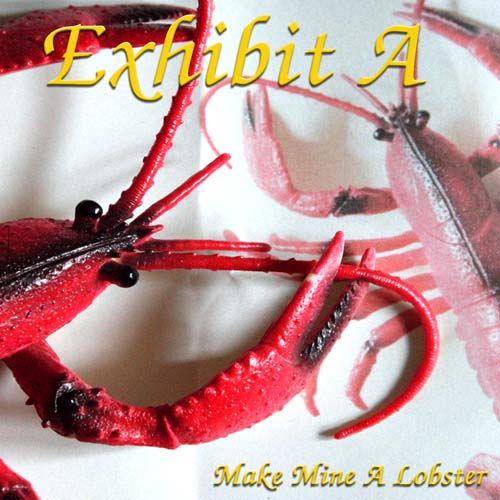
As my long-time readers probably know, I have never been a keen follower of either neo-prog or AOR. In the Eighties – that supposed wasteland for good music – I mostly listened to heavy metal or new wave, and I never went much further than Fish-era Marillion in my exploration of the neo-prog scene. In recent years, thanks to my activity as a reviewer for several progressive rock websites and, I have got acquainted with a lot of diverse, challenging music, which has shaped my tastes in a direction that is often quite the opposite of radio-friendliness. Anyway, whatever my personal tastes, it is essential for a reviewer to keep an open mind and be able to step out of his or her comfort zone – which can lead to pleasant surprises, such as Exhibit A’s third album, the quaintly-titled Make Mine a Lobster.

Based in the county of Essex in southern England, Exhibit A were formed in 1986 after the demise of another band called Mithra. They released two albums in the early Nineties, then went into a lengthy hiatus that lasted until 2007, when the five members of the band got back together to discuss recording some new material. In the second half of 2010, Make Mine a Lobster was finally released – sixteen years after the band’s second album – attracting the attention of fans of the more melodic, listener-friendly variety of progressive rock.

Unlike so many modern outfits that do so while blithely ripping off other bands or artists, the members of Exhibit A do not claim to be purveyors of wildly innovative fare. Their album – skilfully composed, arranged and performed – is a tribute to the sheer joy of making music that has nothing to do with a desire to rake in the big bucks. They clearly play the music they like, without caring about whether it is trendy or rather a bit on the dated side. Although some reviewers have compared them to Asia, there is a world of difference between that custom-built supergroup, put together with the clear purpose of scaling the charts, and Exhibit A’s  genuine enthusiasm.

After reading reviews of Make Mine a Lobster, I was somewhat doubtful about what I was going to find – and was, instead, confronted with a genuinely pleasing listen, something that I might slip into my CD player for pleasure and not just for reviewing purposes. Thankfully, my attitude towards ‘pop music’ (a definition that is, in my opinion, way too broad to be used with any real accuracy) is anything but snobbish and narrow-minded. It takes quite a lot of skill to write a good pop song, and I would take good pop over bad prog any day. Bands like Exhibit A, who are not afraid of labelling themselves ‘prog-pop-rock’, are perfect for those times when I need music to please my ear without challenging it too much – and I do not mean this statement to be in the least patronizing. Weary as I am of the endless posturing and waving around of the word ‘proggy’ as if it was the greatest accolade, I found Exhibit A’s approach to music-making extremely refreshing and honest. In the Eighties, mentioning prog and Duran Duran in the same breath would have been next to anathema, but on their website Exhibit A proudly display quotes referencing the former ‘pin-up’ band. Indeed, their sound is firmly rooted in the Eighties, blending AOR, quality synth-driven pop and progressive suggestions in a classy mixture, admirably complemented by the clear, versatile tenor of lead vocalist Dave Foss.

Not surprisingly, Make Mine a Lobster is based on relatively short songs that display a rather traditional verse-chorus-verse structure. However, what sets the album above many comparable efforts is the tightness of both the songwriting and the performances, which does not allow for the presence of weak links. The two longest numbers, “Darker Sun” and “Scenario”, clocking in at almost 7 minutes, offer plenty of unobtrusive but noticeable progressive touches in the instrumental parts, such as excellent guitar-keyboards interplay bolstered by precise drumming, and slower, atmospheric sections. Album opener “Touch the Stars” and “Rush of Blood”, on the other hand, are definitely accessible tracks with some serious airplay potential, offering plenty of sweeping keyboards, soaring vocals and melodic guitar licks. All of the above-mentioned songs, as well as “Carousel”, bear the imprint of Rush circa Hold Your Fire. The slower, more subdued numbers like “First to Last”, with its moody guitar coda, and the piano-infused ballad “Missing Years” (featuring a lovely, almost Gilmourian guitar solo) may bring to mind Asia at their best, or even purveyors of quality Eighties pop like Tears for Fears or Talk Talk. “Wake Up to Reality”, with its subtle tempo changes and remarkable synth-guitar interplay, is somewhat more complex than the rest; while “A Far Cry”, despite the Rush reference in the title, brings again Asia to mind, spiced up by some sharper guitar riffing and enhanced by Dave Foss’s outstanding vocals.

Though I would not call it a masterpiece (and masterpieces are rather thin on the ground these days…), Make Mine a Lobster is quite a worthwhile effort, at least for those progressive rock fans who are not averse to the more accessible side of their favourite musical genre. True, the keyboards (especially the synths) may occasionally sound a bit dated, and, if you object to high tenor vocals or 4/4 time signatures, then you should probably give this one a pass.In any case, this is as accomplished an album as those released by bands in the same vein with far higher aspirations, and one that will appeal not just to fans of AOR and the catchier end of the prog spectrum, but also to anyone keeping an open mind as regards musical matters.

Links:
http://www.exhibita.org.uk/

Read Full Post »

Now that the dust has settled, and life is slowly getting back to normal for the ‘prog community’ after a lengthy wound-licking session, it is time to draw some conclusions, and see if there is any way forward for the whole scene after such a traumatic, unexpected event – or else, if we have to consider the possibility that NEARfest’s cancellation might spell the genre’s upcoming demise. The many thoughtful responses to my original article go to show that this unfortunate occurrence had a strong impact on the far-flung community of progressive rock fans. However, it is probably much too soon to gauge if this impact will have a destructive effect on the prog scene, or rather help people to understand that nothing can be taken for granted, and that the music which we all claim to love should be cherished and nurtured.

When the full import of the cancellation finally sank in, some long-time NEARfest attendees reacted as if they had experienced the loss of a loved one, or, at the very least, of something precious and unique. Some, believing that the festival (like the Titanic) was unsinkable, and would always break even, had been completely blindsided the situation. Others, conversely, stood by their conviction that the organizers had somehow ‘asked for it’ by assembling a weak line-up, and claimed their right to bail out if the programme was not attractive enough. All in all, it was not a particularly pretty sight.

Those outside the core group of stalwart festival-goers had rather different insights to provide. While the news made no one happy, most of the ‘outsiders’ contested the motivations that had led the organizers to their decision, and – almost unanimously – laid the blame on the lack of support on the part of the community. After a few days from the announcement, people’s façades of goodwill and equanimity began to slip. Instead of pulling together, the community showed that the cracks were deepening, and none more noticeably than the one between the two main ‘factions’ – those still steeped in nostalgia, and those who choose to look forward. It feels like, to paraphrase Rudyard Kipling, the twain shall never meet, at least not for some time.

One of the biggest implications of the whole débacle is that the prog scene has been left with a metaphorical black eye – even if now, some two weeks after the fact,  everything seems to be back to ‘business as usual’ in the extensive network of prog-related sites. With prog fans’ long-standing reputation for elitism and ‘living in the past’, this is not going to do them any favours with the rest of the underground music scene. In spite of the negative comments that had accompanied the announcement of their headliner status, the members of Umphrey’s McGee had been looking forward to performing for the NEARfest audience, and  the statement posted on their own website after the cancellation made their disappointment quite obvious.

Unfortunately, in their stubborn close-mindedness, many prog fans do not realize that even a relatively successful band like Umphrey’s McGee might be glad to be involved in something that might expose them to a new audience and pose them a challenge of sorts. Caught up in endless, hair-splitting debates about the nature of prog, and obsessed with putting a label on everything they hear, they seem to forget that in their beloved Seventies the music scene was much more open and accepting. It was normal at the time to see bands as diverse as ELP, Deep Purple, Black Sabbath, The Eagles and Earth, Wind and Fire share a stage at California Jam without people having hissy fits –a trend that seems to have made a comeback in recent years, as proved by last year’s High Voltage festival in London. Many festival-goers also seem to have forgotten about the “Art Rock” present in the NEARfest acronym in their cries of woe over the booking of anything that does not fit their own narrow definition of progressive rock.

Indeed, the adventurous spirit of the late Sixties and early Seventies seems to have deserted a large slice of the prog community, in spite of the almost idealized portrait painted by last year’s documentary Romantic Warriors. To paraphrase Genesis, far too many fans seem to know what they like, and like what they know – and, in times of severe economic crisis, this has made them even more suspicious of leaving their individual comfort zones. Therefore, the need for ‘big names’ (a musical equivalent of designer labels) in order to draw the crowds, even when they do not necessarily mean better quality. The 2010 edition of NEARfest was headlined by Eddie Jobson and his Ultimate Zero Project (an impressive collection of gifted musicians), which, against all expectations, left a good part of the audience cold, when not positively frustrated. Indeed, the complaining about the band coming on stage late (with accusations of ‘star behaviour’ liberally thrown around), or just not delivering from a musical point of view, went on for days – just like any discussion brimming with negative comments about Yes’ latest incarnation or Phil Collins’ alleged destruction of Genesis usually does.

Yet, it seems the lesson has not been learned. At least here in the US, any ‘vintage’ band will always have the edge over modern bands, no matter how good the latter may be. The comments that I have often come across about bands or artists not being as good live as they are on CD are quite revealing of this suspicious (for lack of a better word) attitude towards anything new. Moreover, bands or artists who try to publicize their activity on discussion boards may end up being accused of ‘spamming’ – not to mention the deplorable attitude that seems to consider ‘international’ acts the only ones worth spending money on. Apparently, for quite a few prog fans, so-called ‘obscure’ bands are interesting only as additions to their already extensive CD or vinyl collections.

At the time of writing, only three of the major US prog festivals are still standing. ROSfest (which mainly appeals to a more ‘conservative’ audience) will be taking place on the third weekend of May, and has indeed has taken advantage of NEARfest’s cancellation by attracting at least some of its ‘orphans’ (including myself and my husband), especially those living in the Northeast. The ProgDay lineup seems to have already been finalized, though only two bands have been announced so far; while the future of CalProg is still uncertain. In the meantime, Europe, in spite of the economic crisis, is teeming with prog and other music festivals, most of them featuring up-and-coming bands.

As I observed in my opening paragraph, my original essay received a lot of feedback, both from artists and fans. Interestingly (though not surprisingly), the points of view of these two groups often differ quite sharply. While the fans displayed a range of feelings that went from censure to disappointment and even outright sadness, the musicians’ attitude as a whole expressed worry about the future of the scene, especially as regards opportunities for live performances. Having met many of those people in the past few years, and knowing about the constant struggles they face in order to get their music to be heard, I have no qualms in stating that I am completely on their side – even if I have never played a note in my whole life. Here are a few of the points that have emerged from the discussion of the past two weeks.

  • Promoters and independent label owners are growing disenchanted with the overall attitude of the fandom. Bringing international artists to the USA is neither cheap nor fast, and a snag in the visa process may cause a cancellation of a band or artist’s appearance (as it already did several times in the past). Moreover, those who work behind the scenes are quite likely to sustain financial losses in the event of a cancellation, as well as damage to their reputation of reliability – on top of the inevitable practical headaches. Promoters have already started wondering whether is worth going through all that hassle in order to bring bands to the US with the looming risk of seeing  an event evaporate if their prospective audience do not find their names appealing enough.
  • Home-grown acts are growing increasingly frustrated with being relegated to the status of stopgaps to fall back on when international names defect – ignoring the struggles they have to go through in order to find gigs outside the narrow borders of their home states or regions. Some of the comments about last year’s amazing ProgDay line-up being second-rate because of the lack of international bands were rather enlightening, as well as profoundly depressing. The US are currently home to a large number of exciting acts, ranging from the retro-oriented to those of a more avant-garde bent.  Quite a few of them have also produced genuinely challenging music, which does not deserve being dismissed so offhandedly. It is not like any of those bands are able to perform every weekend somewhere around the country. Such a blinkered attitude is not only deeply unfair towards those talented, hard-working musicians, but unmotivated as well. The oversaturation of the market that I so often mention in my reviews does not help either, as it causes a staggering number of bands or solo artists to compete for a handful of live spots.
  • A number of interesting suggestions have come from the ranks of the artists, who in some cases have had direct experience of organizing events. The almost unanimous advice was to stop catering solely to a niche audience, and consider the idea of multi-genre festivals, like the above-mentioned High Voltage, Reading Festival and other lower-profile events taking place in Europe and on the American continent. In spite of the jaded, world-weary attitude of many members of the community, who blithely foresee the death of live performances, people still enjoy live music quite a lot, and multi-genre events have the advantage of offering something to everyone. While most musicians would welcome the opportunity to perform at a festival covering a broader range of genres, they are also aware of the often unbending mindset of many fans. There is a clear disconnect between the two camps, with the fans standing their ground and claiming their right to support only the music they find worthwhile, and musicians feeling increasingly marginalized and taken for granted.
  • The disconnect between the organizers and their prospective audience also played a large role in the festival’s demise. Having been able to rely for years on end on a core of regular attendees, the organizers put too much faith in them, and were caught off guard when support dropped as sharply as it did this year. Practically no efforts were made to reach outside this restricted group, and the tools offered by the Internet were not deployed to their full effect. Not only did the organizers neglect to advertise the event on other progressive sites than their privileged channel (a US-based forum), but they declined to use the three public Facebook pages dedicated to the event, or even their own board. The latter has been down for over a year, and their dedicated mailing list is only accessible to those who register from the event’s website – not as visible as the social networking sites of which other events make widespread use. Since patron sales were the festival’s cornerstone, no efforts should have been spared to gain new supporters – possibly among forward-thinking people who would have jumped at the opportunity of seeing the bands on the bill, instead of turning up their noses because they were not famous or not ‘prog’ enough.
  • A number of NEARfest attendees (including myself and my husband) have often been left with the feeling of intruding on a private club meeting. Some have felt definitely rebuffed, and complained about a borderline hostile atmosphere – an impression that the core community has tried to refute in every way, even to the point of denying the evidence. In my humble opinion, when organizers rely so heavily on patrons’ donations in order to keep the festival going, they cannot afford to give part of the audience the impression of a high-school-style clique that keeps interlopers at bay. Last year’s incident with my review made me briefly consider not to attend in 2011, no matter how much I liked most other aspects of the festival. Other people had decided to stop attending altogether after one snub too many. Unfortunately, it seems that the members of the core group are either unaware of their attitude, or have decided not to care about other people’s opinions.
  • Some people from both camps have also suggested alternative methods of funding events, such as using funding platforms like Kickstarter or CrowdFund – as well as scaling back the size of the events, at least until the economy recovers. Indeed, as illustrated by the previous paragraphs, it is not wise to rely too much on the goodwill of patrons, especially when such reliance implies damaging the prospects of younger bands in order to craft a more attractive line-up. This might be a viable option to pursue in a country like the US, where public funding for the arts is not as widespread as in Europe and other Western countries.

To be perfectly honest, many of the reactions I have come across in the past two weeks do not bode well for the future of the US progressive rock scene. Thanks to the Internet, bands and artists would still be able to get their material across to interested listeners – but the opportunities for live performances would get even more scarce than they currently are, which would favour those bands who are chiefly studio-based projects. The frustration may eventually put an end to the existence of many bands, and the competition for the very few remaining live slots may well become unsustainable. Even worse, many of the more cutting-edge bands that in the past few years have been welcomed under the prog umbrella might decide to seek greener pastures, and disassociate themselves from the scene. That would leave prog as the preserve of those bands that, with their conservative, even ‘regressive’ approach,  are still capable of attracting crowds. The gap between ‘Prog’ and ‘progressive’ would inevitably widen, and become almost impossible to bridge – as a few enlightened people realize. Anyway, even if it is probably too soon to give in to pessimism, as long as the majority of the fans are unwilling to step out of their comfort zones, the future of the scene looks anything but bright.

Read Full Post »

TRACKLISTING:
1. Le Labyrinthe Du Cochon (9:15)
2. Jeudi (De) Poisson (10:34)
3. Sombre Trafic Sur Le Nil (3:40)
4. La Marmite Du Pygmée (8:55)
5. Le Château De L’Eléphant (6:26)
6. Cravate Sauvage (9:27)
7. Oppression, Dépression, Les Valeurs Du Cool (13:37)

LINEUP:
Arnaud M’Doihoma – bass, vocals
Gregory Pozzoli – guitars, vocals
Thomas Larsen – drums, percussion, vocals
Philippe Prebet – guitars, vocals

Just like Jethro Tull and Pink Floyd (“by the way, which one’s Pink?”), Jack Dupon is not a solo artist, but a French quartet whose debut album, L’Echelle du Désir, was released in the second half of 2008. It is also the name of the fictitious character whose picaresque stories are told in the band’s songs and live performances. Formed in 2001 by three school mates, Arnaud M’Doihoma, Gregory Pozzoli and Thomas Larsen (now in their late twenties), in 2004 Jack Dupon was joined by an older, more experienced musician, guitarist Philippe Prebet.  In September 2010 the band embarked on their first US tour, playing in venues such as the legendary Orion Studios in Baltimore, as well as the ProgDay Festival Pre-Show – their quirky, theatrical performances leaving a strong impression on American audiences.

My first contact with Jack Dupon occurred in 2009, when I reviewed L’Echelle du Désir, and was left with mixed feelings. While I could not help appreciating the band’s eclecticism and the undeniable impact of their music, I also felt they had been overambitious in recording an album that clocked in at nearly 75 minutes, and opened with a 30-minute epic. It seemed that the members of Jack Dupon, as talented and inventive as they obviously were, had not yet learned the valuable lesson that sometimes less is more – with the result that the album, after a while, overstayed its welcome. This time around, however, they seem to have heeded the advice of most reviewers, and gone for a relatively pared-down offering, slightly over an hour long, and avoiding the over-indulgence of L’Echelle du Désir’s two sprawling epics.

Unlike other bands placed under the RIO/Avant umbrella (a subgenre that is much more diverse than its detractors might think), Jack Dupon use a very traditional rock instrumentation – which means no strings, no woodwinds, no saxes, and even no keyboards. Indeed, their configuration (two guitars plus rhythm section) closely resembles King Crimson’s in the Eighties and onward – and Fripp’s crew, together with Frank Zappa, are clearly one of the main inspirations behind Jack Dupon’s output. However, the theatrical bent of the band, as well as the ‘mythology’ on which their music is based,  possess an unmistakably European flavour. While their French origins bring to mind concept-based bands like Magma and Gong (as well as Ange, a clear blueprint for the vocal department), some Italian bands of the Seventies are also evoked, especially those that, like Jumbo and the short-lived Pholas Dactylus, pushed the dramatic element at the forefront of their sound.

One of the biggest obstacles for people who approach Jack Dupon’s music are undeniably the vocals, mostly handled by bassist Arnaud M’Doihoma with the assistance of his bandmates. Harsh, grating and exaggerated, reminiscent of Ange’s Christian Descamps or even Jumbo’s Alvaro Fella, M’Doihoma’s singing style fits the music like a glove, but is likely to put off those who like a more traditional approach. Personally, I see the vocals very much as another instrument.  From the instrumental point of view, though there is plenty of razor-sharp riffing, Jack Dupon’s sound hardly ever suggests the heaviness of metal, but rather the angularity of King Crimson – with interlocking guitar lines very much in Fripp/Belew style, insistent to the point of occasional monotonousness, and frequent surges followed by pauses of relative calm that create sonic peaks and valleys. The undercurrent of zany, Dadaist humour running through the album (also reflected by the titles, as well as by the nonsensical lyrics and distinctive artwork suggestive of German Expressionism) – echoes not only Zappa, but also Gong (whose flying teapots are referenced in “Le Château de l’Eléphant”), RIO/Avant bands like Samla Mammas Manna and Höyry-Kone, and borderline progressive bands like Primus and Les Claypool’s Frog Brigade.

The tracks on Démon Hardi (“Bold Demon”), with the sole exception of the Middle-Eastern-tinged instrumental “Sombre Trafic Sur le Nil”, an unusually melodic, guitar-driven piece, are all over 6 minutes in length, though this time the longest number is strategically placed at the album’s close. The remaining tracks are prevailingly similar in structure, with an ‘ebb and flow’ movement that alternates slow, almost ominous passages and frantic ones, the vocals used sparingly but forcefully to add further intensity to the musical texture. The Zappa influence clearly surfaces in the more upbeat sections, as in the almost cheerful “Le Château de l’Eléphant”, a veritable drum tour de force with a classic rock feel in the guitar parts and occasionally funky touches. “Cravate Sauvage”, on the other hand, is somber and somewhat monotonous, spiced up with effects-laden guitars seemingly ‘conversing’ with the drums in the style perfected by King Crimson in their Eighties period; while “La Marmite du Pygmée” drags a bit at times, but features some outstanding guitar work. The longer tracks (such as opener “Le Labyrinthe du Cochon” or the jazz-meets-King-Crimson “Jeudi (de) Poisson”) offer plenty of changes, even though an impression of patchiness may occasionally emerge – as on closing track “Oppression, Dépression, Les Valeurs du Cool” (at 13 minutes the longest track on the album), whose riff-driven intro hints at metal and is then followed by a sedate, melodic section with a bluesy guitar solo, then climaxes with a choppy, funky passage.

As other reviewers have pointed out, Jack Dupon’s music seems to be tailor-made for the stage – which means that its effectiveness is not always as strong as one might expect when heard on CD. While the vocals are undeniably an acquired taste, they go hand-in-hand with the music and the concept behind it, and it is not hard to imagine that a live setting would increase their impact exponentially. The somewhat repetitive, jam-like nature of the music, with its often hypnotic pacing, also seems to be much more suited to live performance than more or less ‘passive’ listening. On any account, even if clearly not everyone’s cup of tea, Démon Hardi is definitely an interesting album, and Jack Dupon a very promising band that have obviously grown a lot since their debut. Though their musical offer may not be to everyone’s taste, and needs the right disposition on the part of the listener to be appreciated in full, they manage to deliver a product in which the various influences are reworked in a genuinely personal manner. At the time of writing, Jack Dupon are about to embark on a European tour, and are scheduled to appear at the 2011 edition of the Rock in Opposition Festival (Carmaux, France) in September.

Links:
http://www.jack-dupon-rock-progressif.net/

Read Full Post »

« Newer Posts - Older Posts »