Feeds:
Posts
Comments

Archive for the ‘Progressive Rock’ Category

cover_5621161442013_r

TRACKLISTING:
1. Some Stories (3:07)
2. Dance of the Sun/The Remark/Dance of the Sun (Birth of the Light) (6:16)
3. The Withered Throne (7:22)
4. We All Stand in Our Broken Jars (5:32)
5. A Safe Haven (3:40)
6. Knight’s Vow (4:00)
7. Clumsy Grace (2:45)
8. Mellow Days (9:38)
9. ‘Til the Morning Came (4:54)
10. Some Stories (Reprise) (3:47)

LINEUP:
Valerio Smordoni – lead and backing vocals, Minimoog, keyboards, piano, harmonium, acoustic guitar, tambourine, Taurus pedal
Manolo D’Antonio – acoustic and 12-string guitars, electric guitar, classical guitar, ukulele, backing vocals
Marco Avallone – bass, bass synthesizer, Taurus pedal, percussion

With:
Francesco Favilli – drums, percussion
Carlo Enrico Macalli – flute
Andrea Bergamelli – cello
Eliseo Smordoni – bassoon
Giovanni Vigliar – violin

The Morning Choir: Valerio Smordoni, Manolo D’Antonio, Marco Chiappini, Marco Del Mastro, Francesco Macrì, Simone Giglio, Giovanni Peditto, Igi Tani.

One of the newest additions to the Fading Records subdivision of AltrOck Productions, Camelias Garden are also very much of an unknown quantity to most progressive rock fans  – and not only on account of the band members’ young age. Hailing from my own hometown of Rome, they originally started as vocalist/multi-instrumentalist Valerio Smordoni’s one-man project, and subsequently turned into a full-fledged band with the addition of guitarist Manolo D’Antonio, bassist Marco Avallone and drummer Walter Palombi. Their debut album, You Have a Chance, produced by Massimo Dolce of Gran Turismo Veloce, was released in March 2013.

Labeling themselves as “post-progressive”, Camelias Garden (who are quite active on the live front, even if most of their gigs happen outside recognized prog circles) cite such diverse influences as  Genesis (an essential reference point for practically every Italian prog band), The Beatles and Porcupine Tree, but also post-rock icons Explosions in the Sky and crossover hotshots Tame Impala. In fact, unlike most currently active Italian prog bands, Camelias Garden are firmly rooted in the English musical tradition – both progressive and vintage folk-rock – although echoes of some of the RPI greats of the past occasionally surface. Rather unusually for an Italian band, their grasp of the English language is outstanding, and Smordoni’s enunciation is nearly accentless.

On You Have a Chance, the three core members of the band (drummer Walter Palombi joined after the album had been recorded) are supplemented by a number of guest musicians. A look at the lineup will also reveal a prevalence of acoustic instruments – and, in fact, in Camelias Garden music the electric component is kept to a minimum. As hinted by the deceptively naïf cover artwork – with a slightly disturbing, surrealistic touch in the eyeballs replacing the flower centres – You Have a Chance, much in the way of Genesis’ early output, is not as airy-fairy as the band’s name might initially suggest; while the melancholy, somewhat world-weary lyrics have a late Romantic feel. With its circular structure, the album can be seen as a concept of sorts, and the tracks flow into one another without discernible breaks.

The short, sweet “Some Stories”, a delicate, pastoral vignette highlighting Smordoni’s harmonious, medieval-storyteller’s vocals, complemented by dreamy birdsong and gentle acoustic guitar, provides a fitting introduction for the album, its veiled melancholy enhanced by flute and the solemn drone of the cello. The mood picks up with the folksy, lively “Dance of the Sun” and its sweeping Moog sharply reminiscent of PFM’s iconic “Celebration” (and, occasionally, of vintage Genesis), culminating in a lively Celtic jig.

Most of the album, however, rests on muted, gentle melodies, its whimsical English folk matrix bolstered by the haunting presence of the mellotron, whose interplay with the acoustic guitar enhances the catchy ballad “The Withered Throne” (which reminded me a lot of The Decemberists), and lends classic prog appeal to the romantic instrumental “We All Stand in Our Broken Jars”, with its charming juxtaposition of the acoustic and the electric component. The album’s other instrumental, “A Safe Haven”, is a lovely, autumnal piano piece to which flute and mellotron add depth. Then, a couple of ethereal ballads, “Knight’s Vow” and “Clumsy Grace”, whose endearing folksiness gains prog credentials from Moog and Mellotron, introduce the album’s own mini-epic, the almost 10-minute “Mellow Days”, in which echoes of medieval music merge with a full-fledged early Genesis tribute: indeed, some of the keyboard parts will not fail to recall the iconic “Firth of Fifth”. The album comes full circle with “Some Stories (Reprise)”, a celebration of nostalgia in which the opening track is presented as a faint, scratchy recording on a backdrop of falling rain, in a fascinating sonic collage.

Clocking in at a sensible 49 minutes, There’s a Chance is obviously a labour of love, put together with painstaking care by a group of young, dedicated musicians. Although derivative in parts, and occasionally a tad repetitive, devoid of those sharper edges that might make it more attractive to fans of more experimental fare, its soothing, mainly acoustic nature will offer a lot of listening pleasure to those who like their melody untainted by overt mainstream pretensions. Blending nostalgia with a subtle touch of modernity, You Have a Chance is a solid first showcase for a band that shows a lot of promise for the future, and another intriguing find from the ever-reliable AltrOck team.

Links:
http://cameliasgarden.com/

http://cameliasgarden.bandcamp.com/

http://www.altrock.it

Read Full Post »

marbin13

TRACKLISTING:
1. Blue Fingers (3:09)
2. Inner Monologue (4:34)
3. Breaking the Cycle (4:15)
4. On the Square (4:24)
5. Café De Nuit (2:32)
6. Redline (5:21)
7. Volta (4:17)
8. The Ballad of Daniel White (4:31)
9. Down Goes the Day (2:02)
10. The Way to Riches (3:21)
11. And the Night Gave Nothing  (2:48)
12. Purple Fiddle  (4:46)
13. Last Day of August  (5:01)
14. Last Chapter of Dreaming  (3:46)

LINEUP:
Danny Markovitch – saxophone, keyboards (5, 14)
Dani Rabin – guitar
Justyn Lawrence – drums (except for 2, 5, 10)
Jae Gentile – bass (except for 5, 10)

With:
Paul Wertico – drums (2, 3, 5, 8, 10, 12)
Steve Rodby – bass (5, 10, 14)
Zohar Fresco – percussion (3, 5, 9, 10, 11, 12)
Jamey Haddad – percussion (2, 5, 7, 8, 10, 12)
Victor Garcia – trumpet (3, 12)
Matt Nelson – keyboards (4, 5, 6, 8, 13)
Rob Clearfield – keyboards (14)
Greg Spero – keyboards (14)
Leslie Beukelman – vocals (3, 5, 12, 14)
Jabari Rayford – vocals (12, 14)
Abraha Rayford – vocals (12, 14)
Caleb Willitz – vocals (3, 12, 14)
Justin Ruff – vocals (3)

Chicago-based band Marbin, founded in 2007 by Israeli-born Dani Rabin (guitar) and Danny Markovitch (saxophone), and cleverly named by conflating their two surnames, have the distinction of being one of the busiest outfits on the current non-mainstream music scene. Indeed, with hundred of gigs a year under their belt, they have even found the time to produce a video tutorial on “How to Make a Living Touring With Your Band”. Though Marbin started out as a duo, independently releasing their self-titled debut in 2009, by the time they were snapped up by Leonardo Pavkovic’s Moonjune Records (which released their sophomore effort, Breaking the Cycle, in 2011), they had become a full-fledged band, a quartet that availed itself of the collaboration of two experienced jazz-fusion musicians such as Pat Metheny alumni Paul Wertico (drums) and Steve Rodby (bass).

Two years later, Marbin are back with Last Chapter of Dreaming, recorded with drummer Justyn Lawrence and bassist Jae Gentile, who have been part of Marbin’s live incarnation since 2008, plus a host of other musicians. Wertico and Rodby are still on board as special guests, together with percussionist Jamey Haddad, who was also present on Breaking the Cycle. Among the rather lengthy list of collaborators, prog fans will recognize the name of District 97 keyboardist Rob Clearfield, who guests on one track.

Though the album is very much a team effort, very cohesive from an instrumental point of view, Rabin’s guitar and Markovitch’s sax steal the show with their scintillating interplay, denoting the ease that comes from a long partnership coupled with the sheer enjoyment of music-making. Unlike the band’s previous effort, which featured a traditional song, on Last Chapter of Dreaming vocals appear only in the shape of wordless vocalizing; while the addition of other drummers and percussionists lends an appealing sense of dynamics to the two mainmen’s exertions. The final product is a very sophisticated mix of rock, jazz and blues with hints of world music, though in some ways not as successful as the band’s previous two albums.

Especially if compared to Marbin’s debut – an exquisitely minimalistic production that made the most of Rabin and Markovitch’s impressive skills – Last Chapter of Dreaming, at least in part, takes a sharp turn in a more mainstream direction, a trend that had already surfaced in some episodes of Breaking the Cycle, though not as noticeably as here. In particular, the handful of tracks featuring vocals veer dangerously close to easy listening. While “Breaking the Cycle” (oddly enough, not featured on the album of the same title) is given a dramatic, cinematic sweep by Victor Garcia’s wistful trumpet, the airy, lullaby-like “Café de Nuit” oozes a nostalgic Old-World feel, and both “Purple Fiddle” and the title-track – with their slow, laid-back vibe – put me in mind of a slightly cheesy soundtrack for some European Seventies movie.

The more rock-oriented tracks see Marbin at their best, such as pyrotechnic opener “Blue Fingers” with its assertive, metal-tinged riffing and energetic sax, the brisk, Hammond-laced “On the Square”, and the jazzy rock’n’roll workout of “Redline” (also enhanced by discreet Hammond organ). The exhilarating “Volta”, shifting from a melodic, laid-back mood to frantic, riff-laden bursts of energy complemented by a Morricone-influenced cinematic grandiosity, is one of the undisputed highlights of the whole album – as is the subdued “The Ballad of Daniel White”, showcasing Justyn Lawrence’s superb drumming.

With 14 rather short tracks spread over 55 minutes, Last Chapter of Dreaming avoids overstaying its welcome as other, more ambitious albums do, though some of the tracks might have been omitted without too much detriment. Though a classy offering, flawlessly performed by a group of outstanding musicians, it is not as organic as its predecessor, and flirts a bit too closely with smooth jazz to find favour with lovers of the more challenging fare generally released by Moonjune Records. The album makes nevertheless for a very pleasing listening experience, and a special mention is deserved by the stunning cover artwork, courtesy of Portland-based artist Brin Levinson (also responsible for the cover of Breaking the Cycle, as well as Dissonati’s debut Reductio Ad Absurdum).

Links:
http://marbinmusic.com/

http://www.moonjune.com/mjr_web_2013/catalog_mjr/050_MARBIN_Last-Chapter-of-Dreaming_MJR050/

http://www.youtube.com/user/marbinmusic

http://brinlevinson.com/

Read Full Post »

progsphere_logo

Websites dedicated to progressive rock seem to be multiplying these days, with a host of newcomers joining the more established resources such as ProgArchives or DPRP. Most of them are operated by a team of people who devote their free time to their favourite music, providing reviews, news and other items of interest. ProgSphere – the brainchild of Serbian-born Nikola Savić – was first conceived as a glorified blog, manned by a handful of volunteers, but has since expanded into a much more ambitious operation than a mere repository for  reviews, interviews and assorted news items. As a supporter and frequent contributor to the site, it was a pleasure for me to have Nick answer some questions about how the site came to be, and how it gradually developed into what it is today.

First things first… How did you get the idea for your website?

I have always been interested in running websites where I can talk about the music. It’s funny because music journalism is totally my kind of thing, but I decided to approach totally different professional career. My first website, called Metal Explosion (back in 2003), was a metal dedicated webzine, and after that I contributed for a few Serbian music web and magazines. Some time during 2004, the whole world of progressive rock entered my life, and I listened to the likes of King Crimson, Camel, Jethro Tull, Yes almost maniacally. In late 2009 I got an idea of creating a website that would serve as my look on progressive rock. In February 2010, I created a Blogger account (http://prog-sphere.bandcamp.com) and, besides the few reviews I already had written with the help of my friend Dan (Thaler), we conducted an interview with Andy Tillison of The Tangent. In the beginning we were mostly focused on interviews, but later we started writing about albums (both classic and contemporary). Meanwhile, we moved to a paid domain and hosting (www.prog-sphere.com), and the website slowly shaped into a standard news/review/interview portal.

As I pointed out in the introduction, progressive rock websites seem to be a dime a dozen these days. When you first started ProgSphere, did you set out to be different from what was already available?

To be honest, we didn’t actually care too much about any other websites. My idea at first was just to talk with the bands I love. But with time, I wanted to do something new and different that other websites did not offer. I guess that I literally took the term “progressive” and decided to implement it on the website (and even my life). I wanted to keep the website recognizable for its content and put some kind of a seal so that people can always pick Prog Sphere out from the crowd. 🙂

Did you have ambitious plans for your site right from the start, or was it something that developed gradually, after you realized there was a positive response to what you were doing?

As I said, in the beginning it was only about interviewing my favorite bands. But with time I saw that there is plenty of space for progress. The response from progressive rock fans on what we did was really great, and, to keep that feedback always high and positive, we introduced many different features. The Progstravaganza compilation series is one of them.

As one of the so-called “Millennials”, you did not grow up with prog as most fans of the genre (including myself) did. How did you get into this kind of music, which is not exactly hip or popular with the younger generation?

I’ve been surrounded by music since my childhood. My father  introduced me to many good bands/singer-songwriters he used to listen to in the late 60’s and early 70’s. During my teenage years I mostly listened to metal, exploring absolutely every subgenre this genre has given over the decades. Whether it’s traditional heavy metal or the most extreme subgenres such as black-death metal, I enjoyed that music. But then I (re)discovered that progressive rock world through my father’s record collection, and since then I have (mostly) been stationed in this wonderful genre. I never cared about what is popular. Maybe that’s why some of my friends considered me a codger, haha!

Is there a prog scene in your home country of Serbia? What about the neighbouring countries? Do you have the opportunity to go to concerts, or do you have to travel abroad if you want to see live music?

Former Yugoslavia had some pretty strong bands with progressive rock leanings (Time, YU Grupa, Smak, Leb i Sol, Tako, Igra Staklenih Perli, etc). After the breakup all hell broke loose, and the rock scene as a whole was marginalized. With the arrival of the new millennium, Serbia besides political changes started to improve its position musically as well. I cannot say that there is a prog scene in Serbia, but there are bands flirting with the genre, taking its elements and putting them into the modern mix. The best-known bands from Serbia doing so are Consecration, Temple of the Smoke, Draconic, Burning Circle, Through Art, Igra Staklenih Perli (who are active again)…

Serbia is lacking in progressive rock concerts; there are no promoters who would take the risk of bringing any prog bands – for obvious reasons. There are few jazz festivals with tradition and they are struggling every year to manage the organization. Most people are traveling to Zagreb, Budapest or Sofia to see bands in live.

A couple of years ago you introduced ProgSphere Promotions to help up-and-coming bands and artists gain more visibility on an already overcrowded scene. Has it really worked in this sense, or do you think things could be improved?

Yes, Prog Sphere Promotions (www.prog-sphere.com/promotions) was established to help bands getting attention from media and most importantly from the fans of progressive music. Our mission has been successful; we are sending the music of our bands to many radio stations all around the world (currently that number is 250 and counting), to webzines, magazines, TV channels… But, as you indicated in your question, there is always something that can be improved, and we are always looking to offer something new to our artists. And, actually, for the time being I am working on bringing a new service called Progify. It’s still in the works, but I can reveal that it’s about music distribution and streaming with tons of other ideas on how to expand it further. We are introducing some new aspects of promotion besides standard press promotion and public relations. Also, our plan is to get more involved in concert booking, so there is a lot of going on in the PSPR headquarters. 🙂

Another of of the site’s strong points, in my view, is the availability of podcasts and compilations –  another means for artists to achieve visibility and attract more fans. While podcasts are far from uncommon, compilations are much rarer. How did you get the idea, which has been very successful so far?

The Progstravaganza compilation series is the thing I am most proud of. Introduced back in 2010, the idea was simply to give people something actual, something to explore and enjoy and, at the same time, to give the bands some sort of recognition for what they do. I was spending a lot of my time searching for new bands, and it led me to start releasing the compilations. With the help of my friends, graphic designers Pahl Sundstrom (Klotet, Vallebrad, Usurpress) and Chris van der Linden (Fourteen Twentysix, Bow) who provided their skills in contributing cover arts and booklets, we showcased more than 100 bands from all over the globe. So far, we released 12 samplers and one “best of” compilation (with tracks from the first nine samplers that were originally available as lossy mp3 downloads), and reached over 25,000 downloads. And right now I am working on the 13th part, which should be released next week. Now, besides the compilation itself, we have a separate mini-site where we put basic information on the bands in addition of reviews, interviews or any other special features. The compilations are available for free from Bandcamp, so make sure to check out our page at http://prog-sphere.bandcamp.com if you haven’t already. As for the podcasts (or, as we call them, AwesomeCasts), it seems like it’s a trend now, so we decided to go with the flow instead of being trendsetters, haha.

While keeping a healthy balance between vintage prog and newer music, ProgSphere seems to have a definite bias towards metal – which can be a turn off for older fans. What is your take about the importance of metal in the development of the modern progressive rock scene?

Metal is very important for the progressive rock scene. It comes naturally that many contemporary bands base their sound on metal and if well implemented it can sound really great. As an example I would mention Norwegian proggers Leprous. These guys do absolutely everything right in mixing progressive rock with metal. My opinion is that the future of progressive rock scene will largely be based on this genre, as these two genres have a lot in common. No matter if it will be metal or any other genre, progressive rock needs to change. It is in the genre’s nature to evolve, no?

 I have to say that Prog Sphere (including Prog Sphere Promotions) is NOT only about progressive rock or progressive metal, as some people would think. It happened to me that, after sharing a post on Facebook about a band that is not related for progressive rock/metal, somebody commented saying that it’s not prog. We do not limit ourselves to writing only about Rush or Jethro Tull. There is a whole new world waiting to be explored, and that’s what we do – explore.

ProgSphere can also boast of a roster of fine reviewers. How do you “recruit” them, so to speak?

I love reading any kind of reviews, especially music reviews. And when I see that a reviewer is really into it, without any hesitation I get in contact and ask if he/she would be interested to contribute for Prog Sphere. That’s how I did with you, Roger, Conor and other Prog Sphere reviewers. I prefer “descriptive” reviews rather than ones that strictly require having a release rated with stars, numbers or percentages.

And now for a rather tricky question… What, in your opinion, are ProgSphere’s strengths if compared to other large prog websites? And what would you like to improve?

I think we are not snobs like some other large websites. We are treating all the bands equally, no matter if it’s Rush or Gösta Berlings Saga. Some of those large websites will only write about bands / artists that are a commercial success, and that will bring visitors (readers) for commercial purposes. I’m not going to poke anyone in the eye; there is enough on the Web for everyone. We have always been driven by enthusiasm. Speaking about improvements, we are in constant motion. Adding new features on the website (I am currently working on getting some big names of the scene to write occasional columns for Prog Sphere) is something I am trying to achieve all the time. The website is largely lacking in interviews and it would be really great to have someone who would only work on this. Other than that, what I would really love to improve is the performance of the website itself, speaking from the technical aspect. My plan is to move to a dedicated server hosting plan in the near future.

What are your plans for the future? Have you ever thought of branching out into the organization of festivals or similar events?

First things first… The new Progstravaganza compilation is about to hit the Internet shores. After that, sometime in August we will be unleashing the Progify service, which will closely be connected to our work with Prog Sphere PR. There are some talks about releasing another digital release on our netlabel Prog Sphere Records, but I cannot say anything more on that as everything is still under negotiation. Perhaps in the future Prog Sphere will be involved more in music publishing. Time will tell.

It has always been my plan to organize a festival under the Prog Sphere name, but due to my frequent movings from Serbia to Turkey it simply couldn’t be done so far. I have some thoughts for putting together an event in 2014. It’s a delicate process to have an event like that organized on a high level. Maybe we will be asking people to pledge through the crowdfunding campaigns and help us in organization, but for now it’s all under a huge question mark. However, there’s a lot going on and we will be taking one step at a time to achieve our goals. I would love to thank everyone for supporting Prog Sphere over the years. And special thanks to you, Raffaella, for having me interviewed for your website. It’s great to see with how much devotion you work on it, there are many people who appreciate it. Keep up great work!

Thank you for your time and patience, and best wishes for all your future endeavours!

Links:
www.prog-sphere.com
www.prog-sphere.com/promotions/
www.progstravaganza.com
www.facebook.com/ProgSphere
www.twitter.com/ProgSphere
www.youtube.com/user/ProgSphere


Read Full Post »

cover_27548232013_r

TRACKLISTING:
1. Kurt’s Casino (9:53)
2. The Little Man (3:55)
3. Accidentally in San Sebastian (4:22)
4. The Campfire Strikes Back (4:36)
5. The Dancing Dinosaur (10:28)
6. Skunks (5:01)
7. Pate a Tartiner (6:07)

LINEUP:
Gabor Humble – guitar, vocals
Megan Quill – vocals
Liesbeth Verlaet – vocals
Jouni Isoherranen – bass, keyboards
Jonathan Callens – drums
Pol Mareen – saxophone
Pedro Guridi – bass clarinet
Joren Cautaers – vibraphone, percussion

With:
Pieter Claus – marimba solo (1)
Jana Voros – baby sounds (3)
Lisa Jordens – backing vocals (3)
Francisca Rose – pronouncing “tartiner” correctly (3)

Two years after the release of Flanders Fields, their first album for Milan-based label AltrOck Productions, Belgian outfit Humble Grumble have made their comeback in the spring of 2013 with Guzzle It Up!. Though mainman Gabor Humble first established the band in 1996, Humble Grumble’s current incarnation dates back from very recent times, and is multi-national in nature – including, besides Hungarian-born Humble, Finnish bassist/keyboardist Jouni Isoherranen and Chilean reedist Pedro Guridi, as well as a number of Flemish musicians. The band also have quite a few festival appearances under their belt, and, around the time of the new album’s release, they performed at Gouveia Art Rock Festival in Portugal and AltrOck’s very own event in Milan, Italy.

While emphasizing the continuity of the band’s sound, Guzzle It Up! also marks a departure from Flanders Fields, and not just in terms of lineup. In fact, when the previous album featured a core group of six people and an extended cast of guest artists, here the situation has been reversed: the eight-piece band – with Humble, Isoherranen, Guridi, saxophonist Pol Mareen and drummer Jonathan Callens joined by vocalists Liesbeth Verlaet and Megan Quills and mallet percussionist Joren Cautaers – handles all the tracks, and the contribution of guests is marginal. The rich instrumental texture of Flanders Fields has remained unaltered, with the clear-voiced lilt of the vibraphone providing a refreshing change from the usual keyboards, and the saxophone often engaging in dynamic duets with Humble’s guitar. The latter’s versatile vocals are complemented by the two female voices, their lively exchanges often bordering on endearingly wacky, and perfectly suited to the music’s overall mood. On the other hand, Guzzle It Up! is clearly more ambitious in terms of structure: while Flanders Fields was a collection of 11 remarkably short songs, here a shorter tracklist is compensated by running times that have more than doubled. With two out of 7 songs around the 10-minute mark, even the shorter tracks seem to have adopted a more leisurely pace than the dense, whirlwind-like numbers that made up the band’s previous effort. There are no instrumentals either, and a lot of emphasis is placed on the vocal interplay between Humble and his two female cohorts.

Humble Grumble’s more ambitious approach is introduced right from the start with the almost 10-minute“Kurt’s Casino”, a brilliant combination of upbeat, downright infectious melodies and the rather somber subject matter of suicide, propelled by Jonathan Callens’ spectacular drum work and  Pol Mareen’s ebullient sax, and enhanced by vibraphone and marimba (the latter courtesy of former member Pieter Claus). The album’s longest track, “The Dancing Dinosaur”, gives a new meaning to the word “eclectic” by throwing a slew of diverse influences into the equation with carefree abandon – jazz inflections as well as the inevitable Zappaesque bent coexisting with catchy, almost poppy chorus, wistful sax section, an atmospheric guitar solo and an unexpected, galloping hoedown towards the end.

Driven by Callens’ pyrotechnic drumming, “The Little Man” suggests Samla Mammas Manna’s carnival-like zaniness; “The Campfire Strikes Again” strays even further into Zappa-meets-RIO-meets-Gong territory, seasoned with a pinch of dissonance and the vocalists’ striking repartee. Vocals (including rapping) and assorted wacky sound effects are the foundation of the off-kilter “Accidentally in San Sebastian”, while “Skunks” (whose lyrics that would make Frank Zappa quite proud) pulls out all the stops, with Humble’s exaggerated falsetto and chaotic vocal “harmonies” that sound like a skewed version of Gentle Giant, a wild guitar solo and hints of Eastern European folk. “Pate a Tartiner” wraps up the album in suitably eccentric fashion, also introducing an appealing funky note to complement the ever-present Gong and Zappa influences.

Clocking in at a very restrained 44 minutes, Guzzle It Up! is as much of an acquired taste as its predecessor – possibly even more so. Though the quality of the individual performances is outstanding, and the sheer joy of  making music refreshingly evident, its abrupt changes in mood and style can strike some of the more mainstream-oriented listeners as inconsistent and even frustrating, and the wacky, anarchist humour of the lyrics can be occasionally hard to take for those who prefer a bit more subtlety. On the other hand, fans of Zappa, Gong and the Canterbury scene will not fail to appreciate the album and its ambitious direction. The photos in the CD booklet and on the band’s website clearly point out that Humble Grumble belong on the stage, and that the studio format must be somewhat constraining to them. Highly recommended to any open-minded progressive rock fans, Guzzle It Up! may not be an easily approachable album, but is definitely an intriguing one.

Links:
http://www.humblegrumble.com/

https://myspace.com/humblegrumble

http://www.altrock.it

Read Full Post »

cover_1949131132013_r

TRACKLISTING:
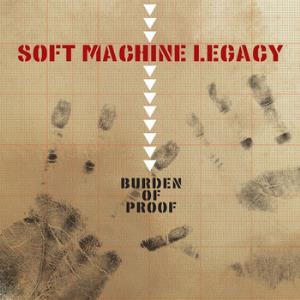
1. Burden Of Proof (5:51)
2. Voyage Beyond Seven (4:53)
3. Kitto (1:50)
4. Pie Chart (5:07)
5. JPS (1:03)
6. Kings and Queens (6:46)
7. Fallout (6:59)
8. Going Somewhere Canorous? (1:13)
9. Black And Crimson (5:05)
10. The Brief (2:27)
11. Pump Room (5:19)
12. Green Cubes (5:33)
13. They Landed on a Hill (3:03)

LINEUP:
John Etheridge – electric guitar
Roy Babbington – bass guitar
John Marshall – drums, percussion
Theo Travis, tenor sax, flute, Fender Rhodes piano

It should not come as a surprise to find Soft Machine Legacy on the roster of an independent label named after one of the original Soft Machine’s most iconic compositions. The band – the last in a series of Soft Machine offshoots started by bassist Hugh Hopper back in 1978 with Soft Heap – was born in 2004, when guitarist Allan Holdsworth left Soft Works and was replaced by John Etheridge. They released a studio album and two live ones between 2005 and 2006, just before founding member Elton Dean’s untimely passing. Their second studio-based effort, 2007’s Steam,  saw renowned flutist/saxophonist Theo Travis (currently also a member of Gong, The Tangent and Steven Wilson’s band)  take Dean’s place; the album was also to be the last with Hugh Hopper, who succumbed to leukemia in 2009. In spite of these setbacks, Travis, Etheridge and drummer John Marshall (who had originally replaced Robert Wyatt in 1971) recruited another Soft Machine alumnus, bassist Roy Babbington, and went on to produce their third studio album. Burden of Proof, recorded in Italy at Arti e Mestieri keyboardist Beppe Crovella’s Electromantic Studios was finally released on Moonjune Records in the spring of 2013.

Though its name may suggest yet another of the many tribute bands whose popularity often eclipses that of bands performing their own material, Soft Machine Legacy deliver much more than just a reverent homage to one of the most influential bands of the early progressive rock scene. The “Legacy” at the end of the band’s name (even when all of its founders had the legal right to call themselves Soft Machine) emphasizes the continuity between the “mother” band and its offshoots, while ruling out slavish imitation. Bringing together the variegated threads of the history of the band founded by Robert Wyatt, Mike Ratledge, Kevin Ayers and Daevid Allen in the mid-Sixties, the quartet led by John Etheridge have perfected their own original sound. Travis’ own soundscaping system, called Ambitronics, lends the proceedings a haunting ambient component, bringing to mind his work with Robert Fripp, and integrating with Etheridge’s use of loops and other effects to replace Mike Ratledge’s trademark fuzzed organ; while his sparing but effective use of the Fender Rhodes electric piano creates an ideal connection to Soft Machine’s turning-point album, Fourth (their first completely instrumental effort).

Featuring 13 relatively short compositions spread over a running time of about 55 minutes, Burden of Proof possesses an internal cohesion of its own. The longer, more structured pieces (between 3 and 7 minutes) are bridged by shorter interludes, mostly improvisational in nature; despite this apparent fragmentation, the music flows effortlessly, and the two “souls” of the album fit together without leaving an impression of patchiness. A stunning rendition of Hugh Hopper’s “Kings and Queens” (from Soft Machine’s Fourth) – strategically located in the middle of the album, and led by Theo Travis’ melodic, melancholy flute meshing with Etheridge’s measured guitar – functions as a centerpiece that captures the original band’s moment of transition from its psychedelic roots to state-of-the-art jazz-rock. Roy Babbington (who guested on Fourth, though not on “Kings and Queens”) is a discreet but unmistakable presence, his finely-honed synergy with John Marshall’s impeccable drumming in evidence right from the opening strains of the title-track – which later develops into an intriguing “conversation piece” between sax and guitar. The upbeat sax intro to “Voyage Beyond Seven” briefly dispels the previous number’s elegantly laid-back atmosphere, before going into a sort of slow-motion that culminates into a rather chaotic, spacey jam with sudden flares of volume.

The deeply atmospheric Etheridge showcase of “Kitto” leads into the slow-burning, jazz-blues saunter of “Pie Chart” – an unexpected but welcome deviation from the band’s heady yet somewhat lofty stylings, as is the bracing boogie-rock of “Pump Room”, with Etheridge delivering a barrage of rough-and-ready riffs and scratchy, distorted chords, aided and abetted by Travis’ buoyant sax. “Black and Crimson” is all about melody Soft Machine Legacy-style, with an almost Latin feel; while the nearly 7-minute “Fallout” sandwiches a loose, improvisational section between a brisk, sax-and-guitar-driven main theme, bolstered by Marshall’s dramatic drum rolls. The album is wrapped up by the noisy avant-garde bash of “Green Cubes”, followed by the spacey, meditative strains of “They Landed on a Hill” – a finale that, in a way, represents the album’s two souls.

Those who have followed Soft Machine Legacy and its previous incarnations for the past two decades will find a lot to love in Burden of Proof, an album that combines melody and ambiance with the almost carefree abandon of improvisation. The four members of Soft Machine Legacy draws upon their individual strengths, striving to create music that, while sophisticated, is also not too detached from the earthiness of rock. Though the amount of improvisation may put off those who prefer their music to be scripted, and the minimalistic approach to composition may be found unsatisfactory by fans of prog’s more convoluted aspects, the album captures a group of seasoned musicians who obviously still enjoy themselves both in the studio and on stage. Even if sometimes demanding, Burden of Proof is also a consistently rewarding listen.

Links:
http://www.moonjune.com/mjr_web_2013/catalog_mjr/052_SOFT-MACHINE-LEGACY_Burden-Of-Proof_MJR052/

http://www.johnetheridge.com/softmachinelegacy/index.htm

https://myspace.com/softmachinelegacy/

Read Full Post »

5-storey ens

TRACKLISTING:
1. The Harbinger (5:51)
2. Bondman’s Wings (2:24)
3. The Incommunication (5:23)
4. To Ringfly (3:12)
5. A Disappearing Road (4:43)
6. The Unpainted (7:58)
7. Yesterday Dormant (5:41)
8. The Protector (3:23)
9. Fear-Dream (3:47)
10. Amid the Smoke and Different Questions (6:31)
11. Not That City (6:58)

LINEUP:
Vitaly Appow – bassoon, saxes
Alexander But’ko – accordion
Andrey Evdokimov – acoustic and electric guitars
Natalja Malashkova – oboe
Dmitry Maslovsky – bass guitar
Olga Podgaiskaja – piano, keyboards, vocals
Olga Polakova – flute
Anastasia Popova – violin
Nikolay Semitko – drums, percussion
Vyacheslav Plesko — double bass
Sergey Dolgushev – vocals

With:
Jury Korogoda —electric guitar (6,9)
Cirill Christia — violin (6,8,9)
Nadia Christia — cello (6, 9,11)

One of the very few bands originating from the small and politically isolated Eastern European country of Belarus, Rational Diet was an unabashedly intellectual ensemble whose music was not for the faint-hearted. After releasing a total of five albums (the last three of which on Italian label AltrOck Productions) between 2000 and 2010, Rational Diet split up because of a disagreement over artistic direction. Its members went on to form two separate groups, Archestra and Five-Storey Ensemble, whose debut albums – titled Arches and Not That City – were both released in the spring of 2013. While Arches was released on French label Soleil Mutant (a subdivision of Soleil Zeuhl), Five-Storey Ensemble have remained part of the AltrOck roster.

Not That City’s liner notes trace the genesis of this new yet familiar band, explaining the reasons for the change, reflected in the album’s more intimate and “streamlined” sound if compared with Rational Diet’s overly intellectual approach (which had become a liability rather than an asset, hindering the band’s natural development). The transition from Rational Diet to Five-Storey Ensemble was complete when the former band’s  remaining members – keyboardist/vocalist/main composer Olga Podgaiskaja, bassist Dmitry Maslovsky, drummer Nikolaj Semitko and reedist Vitaly Appow – merged with  Fratrez, a quartet hailing from the Belarus capital of Minsk, whose sound was strongly rooted in medieval and folk music. The lineup that recorded Not That City (a mini-orchestra with no less than 11 members) is augmented by former Rational Diet bandmates Cirill and Nadia Christia and Archestra guitarist Jury Korogoda on a handful of tracks.

A mostly acoustic album, performed with instruments generally associated with classical and folk music, Not That City has very few connections to rock music (even of the progressive variety), and the presence of drums and electric guitar/bass is so discreet as to be almost imperceptible. In this and other aspects, Five-Storey Ensemble bring to mind Belgian outfit Aranis, though their sound also bears the unmistakable imprint of the Eastern European tradition. The literary inspiration that had been an essential component of Rational Diet’s output is still very much in evidence: the album features three songs with lyrics by early 20th century poet Alexander Vvedensky, and another two were originally part of the soundtrack for the experimental play Bondman’s Wings.

Though Not That City is largely instrumental, some of the tracks feature vocals with an operatic quality that, however, meshes remarkably well with the instrumentation rather than swamping it. Band leader Olga Podgaiskaja’s sweet, achingly wistful soprano complements Sergey Dolgushev’s intense tenor;  their duet in the sprightly, folksy “Yesterday Dormant” acquires a dramatic quality from the use of two different themes –  melodic, almost pleading for the female voice,  more upbeat for the male one. In the intimate, melancholy ”The Incommunication”, the two voices occupy centre stage, while the instruments (mainly piano and bassoon) keep discreetly in the background.

Running at a very reasonable 55 minutes, the album as a whole is very cohesive and surprisingly full of melody, with few concessions to those spiky, dissonant moments so often associated with the Avant-Progressive subgenre – the most notable of which can be found in the second half of “A Disappearing Road”  and in the complex, riveting textures of the nearly 8 minutes of “The Unpainted”, where the electric guitar is treated like an orchestral instrument rather than a typically rock one. Conversely, the influence of medieval and Renaissance music emerges clearly in the lilting, percussive “To Ringfly” and “The Protector”; while the aptly titled “Fear-Dream”, laden with a dark, menacing tone, taps into a richly cinematic vein that is also evident in “Amid the Smoke and Different Questions”, in which Dolgushev uses his voice as another instrument. The album’s bookends, opener “The Harbinger” and the title-track, sum up the whole of the band’s musical approach, blending almost gloomy solemnity with elegant dance-like passages, showcasing the instruments’ flawless interplay and the band’s mastery of the art of buildup – both examples of stately yet ]mesmerizing 21st –century chamber music with only passing nods to the rock aesthetics.

An astonishing beautiful album that (rather uncharacteristically) drew me in right from the first listen, Not That City, as already hinted in the previous paragraphs, has much more in common with modern classical music than rock. Though certainly more accessible than most of the band’s previous incarnation’s output, it does require a good amount of concentration on the part of the listener, as well as an appreciation for the minimalistic, understated approach of chamber rock as compared to conventional prog’s tendency towards bombast. As far as I am concerned, this is one of the top releases of the year so far, and highly recommended to only to fans of the RIO/Avant scene, but also to all open-minded music lovers.

Links:
http://www.allmusic.com/album/not-that-city-mw0002529122

http://production.altrock.it/prod2.asp?lang=ita_&id=205&id2=207

Read Full Post »

cover_344082852013_r

TRACKLISTING:
1. Windmaster (6:26)
2. Dorian Grey (4:27)
3. The Last Tribe (1:56)
4. Lydia in the Playground (5:20)
5. Unimpossible (7:47)
6. Tarde Demais (3:40)
7. Vintitreis (4:19)
8. Whereisit (5:11)
9. Sand Horses (4:07)
10. Chromaterius (3:42)

LINEUP:
Nelson Coelho – guitar
Jorge Pescara – touch guitars
Miguel Angel – drums

In the past few years, Leonardo Pavkovic’s Moonjune Records has become a go-to resource for fans of guitarists that eschew the tired antics of traditional “guitar heroes” to focus on creative, envelope-pushing playing put at the service of the  music. In the past few years, outstanding players from far-flung locales such as Indonesia have become part of  the Moonjune roster – with noteworthy releases such as Tohpati Bertiga’s Riot, Ligro’s Dictionary 2 and Dewa Budjana’s Dawai in Paradise. Brazilian power trio Dialeto  are the latest addition to the New York label, getting their first international release with their third album, The Last Tribe.

In the two years following the release of Chromatic Freedom, the São Paulo outfit, founded in the late Eighties and led by guitarist and composer Nelson Coelho, have replaced original bassist Andrei Ivanovic with touch guitarist Jorge Pescara – a change that has influenced their sound in a rather interesting way. While Chromatic Freedom featured a few songs with vocals, on The Last Tribe Dialeto have taken a completely instrumental direction, concentrating on compositions that blend King Crimson-style angular, asymmetrical patterns with heady Latin suggestions and fiery blues licks, occasionally with a keen metal-like edge. Though some reviewers have labeled them as jazz-fusion, the latter genre is only one of the ingredients of Dialeto’s heady brew. While technical virtuosity is definitely emphasized,  Dialeto’s musical offer exudes a surprising warmth and a pronounced sense of melody – which is not always the case with all-instrumental albums.

The introduction of touch guitars is the key to the subtle yet noticeable change in Dialeto’s sound on The Last Tribe, adding a sense of fullness and softening the rougher edges displayed on Chromatic Freedom. The versatility of the instrument – capable of producing dry, low-down bass lines as well as reverberating, keyboard-like sound waves – complements Coelho’s scintillating guitar exertions and Miguel Angel’s all-over-the-place drumming. Though not as heavy on the ambient component as Herd of Instinct (a band with a similar configuration and approach), Dialeto’s 2013 incarnation benefits from the synergy of touch and traditional guitar, which lends an intriguingly mysterious quality to its sound.

As already noticed on Chromatic Freedom, Coelho’s compositional style hinges on subtle yet recognizable variations on a theme, repeated with an almost hypnotic effect, creating a strong cohesion between The Last Tribe’s 10 tracks.  Running times are kept relatively short, packing a lot of content in those few minutes without putting too much strain on the listener’s attention span. The album as a whole runs at a very restrained 47 minutes, proving once again that, in the progressive rock realm, quality does not depend on quantity.

Opener “The Windmaster”sets the tone, with its clear-voiced guitar touched with a hint of Brazilian saudade; melody remains at the forefront even when the guitar turns a bit harsher and the  intensity increases. Similar in conception, “Dorian Grey” also introduces a haunting atmospheric note. The album hovers between low-key, mid-paced pieces such as the ballad-like “Lydia in the Playground” and the laid-back, Spanish-tinged “Tarde Demais”, spiced up by sudden flares of electricity in the shape of dense riffing and assertive drumming, and spiky, energy-laden ones )mostly concentrated in the album’s second half), descending directly from King Crimson circa Thrak and The Power to Believe.

The almost 8-minute, Brazilian-flavoured “Unimpossible”, which best illustrates the band’s modus operandi of building variations on a theme, and the exhilarating “Vintitreis” blend the soft and the hard side of Dialeto’s sound, Coelho’s guitar tone shifting from bright and sunny to razor-sharp, supported by Miguel Angel’s drum acrobatics; while “Whereisit”, “Sand Horses” and especially closing track “Chromaterius” kick the mood into high gear, with plenty of riffs and forceful drumming, the three main instruments interacting seamlessly in angular patterns only occasionally relieved by quieter moments. Finally, the steady drumbeat and brisk, dance-like pace of the short title-track convey the “tribal” element in the title.

Accompanied by amusingly weird cover artwork, The Last Tribe (mixed and mastered by fellow paulista Fabio Golfetti of Violeta de Outono, who has recently joined Gong) will not fail to appeal to lovers of instrumental progressive rock, especially those who set a great store by technically proficient yet soulful guitar playing rather than lightning-fast shredding. The album, which finally sees Nelson Coelho take his rightful place among other distinguished six-stringers on the Moonjune roster, such as Barry Cleveland, Dennis Rea and Michel Delville, is also warmly recommended to fans of King Crimson and its “trio” offshoots.

Links:
http://www.dialeto.org

http://www.moonjune.com/mjr_web_2013/catalog_mjr/054_DIALETO_The-Last-Tribe_MJR054/

Read Full Post »

cover_15772752013_r

TRACKLISTING:
1. Detox Gruel (4:13)
2. Spanish Fly (5:19)
3. Yantra (8:04)
4. Frank Nuts (3:38)
5. Jungle Cow Part I (5:50)
6. Jungle Cow Part II (4:40)
7. Jungle Cow Part III (6:07)
8. Glass Cubes (8:30)
9. Wrong but Not False (5:28)
10. Flashlight Into Black Hole (3:05)
11. Stammtisch (5:59)

LINEUP:
Michel Delville – guitar, Roland GR-09
Antoine Guenet  – keyboards, vocals
Marti Melia – bass and tenor saxes, clarinet
François Lourtie – tenor, alto and soprano saxes, voice
Pierre Mottet – bass
Laurent Delchambre – drums, percussion, objects, samples

With:
Benoît Moerlen – marimba and electronic vibraphone (2, 3, 5-7, 11)
Susan Clynes – vocals (8)

After the release of Machine Mass Trio’s As Real As Thinking and douBt’s Mercy, Pity, Peace and Love in the past couple of years, guitarist extraordinaire Michel Delville returns with his  main band, all-Belgian combo The Wrong Object. Only Delville and drummer Laurent Delchambre remain from the lineup that released Stories from the Shed in 2008: the band has now become a sextet with the addition of four new members, including brilliant keyboardist Antoine Guenet, the leader of avant-metal-jazz outfit Sh.tg.n. (whose self-titled debut was released in 2012), who recently joined RIO/Avant icons Univers Zéro.

One of the most prolific artists signed to Moonjune Records, the label founded by Leonardo Pavkovic in 2001, Delville is an extremely talented guitarist and composer, with a genuinely progressive attitude and a strong commitment to creative music-making. Though The Wrong Object have been in existence for over 10 years, and enjoyed a thriving concert activity all over Europe (witnessed by two live albums, The Unbelievable Truth (recorded in 2005 with the late, great Elton Dean) and Platform One (recorded in 2007 with renowned British jazz musicians Annie Whitehead and Harry Beckett), their studio debut came relatively late with Stories From the Shed – an excellent album drawing on a wide range of sources of inspiration. However, the 5-year break has brought further refinement to the band’s sound, resulting in a quantum leap in terms of quality.

Although Delville is the undisputed band leader and main composer, it would be wrong to assume that The Wrong Object’s sound is dominated by guitar antics. In fact – very much in the way of his Moonjune label mate Dennis Rea of Moraine –  Delville’s presence is surprisingly discreet, often leaving the limelight to the band’s duo of saxophonists, Marti Melia and François Lourtie. Guenet’s keyboards flesh out the tune according to need, adding occasional melodic flourishes or energetic organ runs, while Laurent Delchambre’s versatile drumming and Pierre Mottet’s understated yet nimble bass lines provide a reliable foundation that keeps up effortlessly with the shifts in tempo and mood. Delville’s guitar anchors the album to the rock aesthetics, ramping up the electricity quotient even when keeping almost unobtrusively in the background. Renowned mallet percussionist Benoit Moerlen (of Gong/Gongzilla fame) guests on more than half of the tracks, adding the tinkling, cascading sound of his marimba and electronic vibraphone to the sonic texture.

Spread over nearly 60 minutes, the 11 tracks on After the Exhibition flow naturally in spite of their density. For all its eclecticism, the music is surprisingly cohesive and never comes across as contrived or overdone. Electric flare-ups coexist with intimate, subdued moments in an unpredictable and constantly exciting mix; at the same time, though, is also a more disciplined feel than in Delville’s two previous releases with douBt and Machine Mass Trio.

Opening with the shock tactics of the brisk, exhilarating “Detox Gruel”, propelled by raucous sax with dashes of organ and Delville’s slightly strident guitar, the album’s first half culminates with the unorthodox three-part “suite” of “Jungle Cow”. In over 16 minutes of music, the composition morphs from a collection of sparse, spacey sound effects into an intense sax-and-guitar duel. The 8-minute “Yantra” juxtaposes atmospheric lyricism and heady, almost free-form improvisation with blaring saxes and unleashed guitar, while the jaunty “Spanish Fly” is reminiscent of modern classical composers such as Bartok or Stravinsky, as well as jazz and Middle Eastern music..

The album’s second half is introduced by the jaw-droppingly beautiful “Glass Cubes” interpreted by the elegantly expressive voice of Belgian singer/songwriter Susan Clynes (compared by some to modern jazz icon Annette Peacock), complemented by Guenet’s gorgeous piano and backing vocals – a stylish, magical slice of 21st-century Canterbury sound that hints at the best moments of Hatfield and the North and Soft Machine. The final three numbers feel like an ideal continuation of the mood set by “Glass Cubes”, with definite Canterbury undertones in the sprightly, catchy “Wrong but Not False” and the invigorating, funk-tinged “Flashlight Into Black Hole”, where Pierre Mottet’s bass comes into its own. Wrapping up the album in style, the romantic, Old-World flavour and elegant waltz-like pace of “Stammtisch”, conducted like a conversation between guitar, piano and sax, is briefly interrupted by the instruments interacting chaotically, then calm returns for a slo-mo finale.

With its perfectly balanced running time, After the Exhibition is a true rollercoaster ride of dazzling musicianship coupled with sophisticated flair for melody that tempers and softens the bristling intensity of the album’s more electrifying parts.  Even if the avant-garde component is not as strongly spotlighted as in their previous effort, RIO/Avant fans will find a lot to appreciate in the album, as will lovers of the Canterbury scene, classic jazz-rock, and even psychedelic/space rock. On the other hand, the sheer beauty of “Glass Cubes” might win over those who are more attached to prog’s traditional extended-song format. Highly recommended to everyone, After the Exhibition is an exercise in pure class, and will certainly grace many a “best of 2013” list.

Links:
http://www.wrongobject.com/

http://www.moonjune.com/mjr_web_2013/catalog_mjr/055_THE-WRONG-OBJECT_After-The-Exhibition_MJR055/

Read Full Post »

homecominglide2

Though I have often commented on the sorry state of the progressive rock concert scene in the US (with particular reference to NEARfest’s untimely demise), 2013 has been a much more positive year than the previous two, and has brought unexpectedly good news. With the possible exception of ROSfest, which draws hundreds of attendees every year  (even if it has never enjoyed NEARfest’s instant sell-outs), festivals held in 1000-seater theaters seem to have become a thing of the past, as proved by the failure of a couple of attempts to organize events on a similar scale. However, some people who are well aware of the importance of live performances to keep non-mainstream music alive have not been deterred by those failures, and have taken the plunge. Adopting the model that has allowed ProgDay to survive without interruption for 18 years by being able to count on a core of loyal supporters, they have scaled things down, choosing smaller, less pretentious venues, and giving preference to mostly homegrown acts instead of relying on “big names” to attract a larger number of attendees.

Seaprog, which took place in Seattle on the last weekend of June 2013, proved that a smaller-scale event can be reasonably successful, even in a location not generally known as a “prog hub”. Less than one month ago, the year’s second “mini-festival” was announced by the group of volunteers and dedicated prog fans (affectionately nicknamed “staph”) behind the NJ Proghouse, a venture started by James Robinson in central New Jersey, back in 1999. In its various incarnations, the organization has been hosting high-quality progressive rock shows in different venues for the past 15 years, building a dedicated following in that densely-populated region of the US East Coast, and offering concert opportunities to both established and up-and-coming bands.

The two-day festival – named NJ Proghouse’s Homecoming Weekend – intends to celebrate the organization’s 15th anniversary with a top-notch selection of Proghouse alumni. It will be hosted by Roxy and Duke’s Roadhouse in Dunellen (NJ), which has been the group’s venue of choice for the past year or so, on the weekend of October 12 and 13, 2013. Eight bands will take turns on the stage, four per day, starting at 12.30 p.m. Single-day tickets and weekend passes (as well as other relevant information) are available from the organization’s website in the link below.

With the sole exception of Sunday headliners, Swedish outfit Beardfish (a firm favourite of the US prog audience), the bands invited to perform at the event are all based in the US, most of them hailing from the New York/New Jersey area. Vocalist/composer Tammy Scheffer (originally from Belgium, but currently residing in NYC) and her band Morning Bound have been drafted in to replace Oblivion Sun, who had to pull out because of scheduling conflicts. Together with young but already established bands such as The Tea Club, Thank You Scientist (who are also on the ProgDay lineup) and Chicago hotshots District 97, and Saturday headliners IZZ, the festival will also offer the return to the stage of two local glories: renowned jazz-rock band Frogg Café after a six-year hiatus, and Advent, who are putting the finishing touches to their long-awaited third album.

While neither Seaprog nor the Homecoming Weekend may fill the gap left by NEARfest for those who expect a festival to be a showcase of “bucket list” bands and artists, it is heartening to see that some US prog fans are willing to follow the example set by the UK and continental Europe by going the “small is beautiful” route. Even if the music world has changed dramatically in the past couple of decades, no amount of albums recorded with the most sophisticated techniques will ever replace the experience of a live concert – neither for the fans nor for the artists.

Links:
http://www.njproghouse.com/2013/06/13/nj-proghouse-homecoming-weekend-october-12th-and-13th-2013/

http://www.roxyanddukes.com/

Read Full Post »

progstravaganza-620x400

For most up-and-coming progressive rock bands, while recording an album may be relatively easy because of the advantages offered by modern technology, giving exposure to their music has become increasingly difficult and frustrating. Indeed, as I have often pointed out in these pages, the market is oversaturated, opportunities to play live can be few and far between, and gigs often poorly attended. However, there are some brave souls who have made a mission out of helping new artists gain recognition, making full use of the many possibilities offered by the Internet.

One of these people is Nikola Savić, founder of the thriving ProgSphere website, to which I have been contributing articles for the past couple of years. The site, besides the usual reviews, interviews and other assorted news items on the progressive rock universe (with an eye to modern developments such as prog metal, but also a healthy respect for the icons of the genre and its decades-long history), has produced a number of podcasts and 12 compilations of new music, called Progstravaganza, launched in August 2010. With over 22,000 downloads, these compilations  have had a remarkable success for an independent endeavour, presenting a wide range of bands and artists – from standard-bearers of the modern psychedelic space-rock scene such as Astra or My Brother the Wind to the elegant jazz-rock of D.F.A. and Forgas Band Phenomena, from the cutting-edge jazz-metal of Exivious and Blotted Science to the heady eclecticism of Moraine, Herd of Instinct and Gösta Berlings Saga. A massive 79-track sampler of tracks taken from the first 11 Progstravaganza compilations has recently been made available on the site’s Bandcamp page.

Less than two weeks ago, ProgSphere has announced that a 13th Progstravaganza compilation is in the pipeline, and invited bands and artists to submit their music for inclusion. It is an opportunity not to be missed, as Progstravaganza XIII – to be released at the end of July – will be promoted by more than 50 radio stations, and every participant will be covered in depth in the compilation’s digital booklet. The contact information for anyone interested in participating in the initiative can be found in the first of the links below.

Links:
http://www.prog-sphere.com/news/prog-sphere-announces-new-progstravaganza-compilation-and-calls-on-bands-to-take-part/

http://prog-sphere.bandcamp.com/album/progstravaganza-i-ix

Read Full Post »

« Newer Posts - Older Posts »