Feeds:
Posts
Comments

Archive for the ‘RIO/Avant’ Category

a2677764587_2

TRACKLISTING:
1. QXP-13 Space Modulator (3:49)
2. Eat a Bag of DiX (5:08)
3. Hapax Legomena (4:47)
4. Nocturne, op.33 (4:15)
5. The Cascades (6:37)
6. Snack(s) – The Song! (7:12)
7. Osedax (6:16)
8. Mymaridae (6:25)
9. Variety Pack (2:52)
10.Fairies Wear Boots (7:35)

LINEUP:
Wally Scharold – electric and acoustic guitars, vocals, programming, clapping, keyboards, synths
Travis Andrews – electric and acoustic guitars, baritone guitar, vocals
Carolyn Walter – clarinet, bass clarinet, baritone sax, bassoon
Jamison Smeltz – alto sax, baritone sax, clapping
Matt Lebofsky – bass, vocals, keyboards, guitars, junk drums
Matt Guggemos – drums

In the late spring of 2009, the debut album of a hitherto unknown band from Oakland (California), by the idiosyncratically-spelled name of miRthkon, made waves on the progressive rock scene. A monumental, 70-minute slab of quirky, Zappaesque avant-progressive rock with a healthy dose of metal-inspired energy and intriguing references to contemporary classical music –  a package rounded out by outstanding artwork and a wacky background mythology – Vehicle was mentioned by many (including myself) in their personal “best of 2009” lists. Once again, Marcello Marinone and his AltrOck Productions cohorts had unearthed a gem.

Founded around 2005 by guitarist/composer Wally Scharold, miRthkon went through the customary stages of upheaval (and the release of EP The Joy of Illusion) before stabilizing their lineup. With two new members on board – guitarist Travis Andrews and bassist/keyboardistMatt Lebofsky (also a member of Secret Chiefs 3 and MoeTar) replacing Rob Pumpelly and Nat Hawkes – the band are a solid six-piece propelled by a twin-guitar and twin-reed attack that sets them apart from almost everyone else. A quintessential live outfit, they have recently managed to bring their unique brand of progressive rock to Europe. Indeed, after Scharold recovered from some health issues that had forced the band to cancel the second half of their 2012 tour with MoeTar, 2013 has proved to be very good year for miRthkon as a live act, with successful appearances at the first edition of Seaprog in Seattle, the 2013 edition of the Rock in Opposition Festival in Carmaux, and a one-day festival organized by the AltrOck staff in Milan. In addition to their busy concert schedule, the band have spent a good part of the past few years working on the follow-up to Vehicle – a full-length album by the title of Snack(s), which was finally released in the autumn of 2013, following the band’s European tour.

Though miRthkon are anything but your conventional “nostalgia prog” band, they seem to have learned an important lesson from the genre’s golden age: that is, the importance of the visual aspect. Their albums are not just challenging sonic buffets of wide-ranging eclecticism, but also visual feasts that display another facet of Wally Scharold’s considerable talent. Snack(s)’s artwork is a true stroke of genius,  a parody of modern society’s addiction to junk food, with the cover and each page of the booklet imitating the packaging of some popular snacks, down to the mandatory (in the US at least) nutritional breakdown – which contains detailed information about each track, including the daunting time signatures, as well as the lyrics cleverly disguised as “ingredients”. Not your average Roger Dean opus for sure, but extremely well-made, and hugely entertaining.

Though it might raise eyebrows, the “avant-garde metal” tag that has been attached to miRthkon is not as far-fetched as it may seem. The combination of deadpan humour and highbrow references is far from uncommon in the world of technical/avant-garde metal, though miRthkon take it up a notch and imbue their heady genre-bending blend with the jazz-tinged energy of Carolyn Walter and Jamison Smeltz’s array of reeds. Indeed, Snack(s) is the kind of album that will keep you on the edge of your seat, not knowing if that low-key, almost conventionally melodic passage will erupt into chaos (albeit of the controlled variety) in just a couple of seconds. Most of the album’s 10 tracks were written by either Scharold or Lebovsky, with the notable exception of an unrecognizable version of Samuel Barber’s piano piece “Nocturne” (which was part of the band’s setlist at the Orion Studios in August 2012), and a similarly idiosyncratic cover of Black Sabbath’s “Fairies Wear Boots”.

Compared to Vehicle, Snack(s) is more focused (also in virtue of being almost 15 minutes shorter) and also somewhat heavier, though losing none of the compositional complexity that had made miRthkon’s debut so riveting. Crushingly heavy guitar riffs coexist with joyfully blaring reeds in the exhilarating jazz-metal blend tinged with ska (of all things!) of opener “QXP-13 Space Modulator”, a hyper-energetic instrumental that prepares the listener for the mind-boggling twists and turns of “Eat a Bag of DiX”, which juxtaposes brooding chamber-like sections with electrifying guitar forays and almost punk vocals. “Hapax Legomena” ’s deceptively laid-back, jazzy intro soon turns into a bracing duel between guitars and reeds; while wistful clarinet keeps the classical flavour in “Nocturne”, though offset by the guitars and spiked by an odd reggae-like rhythm. The first half of the album ends with the angular yet atmospheric heaviness (and rather apocalyptic lyrics) of “The Cascades”, enhanced by the organic sound of the glockenspiel, organ and piano.

Eerie electronic effects and upbeat, anthemic singing pepper the 7-minute “Snack(s) – The Song!”, driven by Matt Guggemos’ spectacular drumming and reeds blaring in unison. The sinuous, faintly disturbing first half of “Osedax” again brings melody into the equation, with haunting clarinet and a brief yet striking bass-guitar duet followed by a choppy, drum-driven section complete with shouting vocals at the end. After the maze-like complexity of the multilayered “Mymaridae”- whose inexhaustible intensity evokes a swarm of the titular “microscopic parasitic wasps” in a textbook example of controlled chaos – the less than 3 minutes of the bassoon-led “Variety Pack” provide a short but welcome oasis of calm before the grand finale. The longest track on the album, miRthkon’s take on “Fairies Wear Boots” keeps the spirit of the original even in its “deconstructive” approach, replacing Tony Iommi’s iconic riffing with a spirited double baritone sax attack, and Scharold channeling his inner Ozzy Osbourne in a very aggressive vocal turn.

The somewhat clichéd expression “not for the faint-hearted” seems to have been tailor-made for miRthkon. Snack(s), just like the band’s live shows, is a constant adrenaline rush, with only occasional moments of respite, and therefore not very likely to make a dent in the convictions of those who equate prog with lush melodies and grandiose, quasi-symphonic arrangements. Such intense music, almost relentless at times, may require a lot of concentration on the part of the listener. In any case, Snack(s) is one of the most original albums released in 2013, and a must-listen for fans of truly progressive, challenging music. Highly recommended to anyone wishing to step out of their comfort zone.

Links:
http://www.mirthkon.com/

http://mirthkon.bandcamp.com/album/snack-s
http://www.altrock.it

Read Full Post »

cover_214101882013_r

TRACKLISTING:
1. La roue (3:43)
2. Cobra Fakir (8:53)
3. RVB7 (3:56)
4. Paris-Roubaix (2:14)
5. Titan (4:17)
6. Un cas sibérien (2:28)
7. Speed-dating sur Mars (7:07)
8. Tandem (8:23)
9. Maringouin (3:41)
10. Space Cowboy (3:11)
11. Expérience 7 (2:27)

LINEUP:
Pascal Globensky – keyboards, synths, piano
Rémi Leclerc – drums, percussion, keyboards, turntable
Bernard Falaise – guitars, bass, keyboards, banjo, turntable

Born in 1980 from the meeting of keyboardist Pascal Globensky and multi-instrumentalist François Émon, French Canadian band Miriodor can be counted amongst the veterans of the current progressive rock scene. Surprisingly, despite the many changes the lineup has undergone in the past three decades, Globensky and drummer Rémi Leclerc, another of the band’s earliest members, are still on board – as is guitarist Bernard Falaise, who has been with the band for 20 years even if not part of its original configuration.

Never a prolific outfit, with only eight studio albums released since their inception and lengthy breaks between each new release, Miriodor seem to have embraced the old tenet about quality trumping quantity. They have also maintained a healthy level of concert activity throughout the years, with high-profile performances at international events such as NEARfest in 2002, FMPM in 2007 and 2008, the Rock in Opposition Festival in Carmaux (France) and Sonic Circuits in Washington DC (where they opened for Univers Zéro) in 2010. Cobra Fakir, their eighth studio album, was finally released on Cuneiform Records at the end of September 2013, a few weeks after their appearance at the 19th edition of ProgDay. Though the album was recorded as a trio, Miriodor have gone back to being a quartet with the addition of bassist Nicolas Lessard, who replaced longtime member Nicolas Masino.

As one of the landmark progressive rock releases of the first decade of the 21st century, Miriodor’s 2009 album, Avanti!, was a tough act to follow. Cobra Fakir, however, though it obviously shares a lot with its predecessor, it also shows the band moving in a somewhat different direction. While their sound – sometimes described as the “happy” counterpart to Univers Zéro austere gloom – is immediately recognizable, the band have made some changes to their compositional approach. Unlike Avanti!, which featured six longish tracks, Miriodor’s latest effort presents a wider range of running times, from the almost 9 minutes of the title-track to 2-minute interludes such as “Paris-Roubaix” (a perfect sonic rendition of the titular bicycle race with its layers of slightly atonal keyboards) and the appealingly noisy, almost improvisational “Un cas sibérien”. A longer track list also means a more noticeable diversity –  with the shorter compositions providing an outlet for experimentation, often involving an array of inventive sound effects. Though there are no guests contributing to Cobra Fakir, this does not necessarily result in a more stripped-down sound, and very few listeners will miss Avanti!’s richer instrumentation.  In fact, the album perfectly demonstrates how multilayered keyboards, far from becoming a byword for bombast, can be used for rhythmic as well as melodic and textural purposes.

Leisurely acoustic guitar introduces “La roue”, whose upbeat main theme – as its title (“The Wheel”) suggests – hints at carnival music, offset by angular, somewhat darker patterns around the middle, and reinforced by sounds of clanging metal, breaking glass and the scratchy turntable effects that crop up throughout the album. The title-track sums up the album’s many faces in its 9 minutes of musical whirlwind – the sedate, meditative first half rendering in sonic terms the tale of the cobra and the fakir outlined in the liner notes, followed by a myriad of tempo and mood changes, often sharply veering towards dissonance yet always informed by an internal logic, then coming full circle with its melancholy, acoustic close. Only a handful of seconds shorter, “Tandem” has a more cohesive structure and an almost classical feel, with sampled flute and harpsichord complementing the piano and synth, and a plethora of sound effects intensifying the trippy, guitar-heavy mood of the ending.

In “RVB7”, assorted percussive effects and the crystalline tinkle of the vibraphone create an amazing blend of sounds that enhances the keyboards and guitar in a lively, dance-like pace; while “Titan” hinges on a brooding, cinematic crescendo punctuated by organ, solemn drum rolls, and surging, distorted guitar, creating a Gothic atmosphere that evokes Univers Zéro. Without any need for words, “Speed-dating sur Mars” tells an entertaining tale through  spacey effects and a sprightly, keyboard-led rhythm, as well as a brief, romantic piano interlude. More spacey goodness (as the title makes it quite obvious) is offered by “Space Cowboy”, where electronic effects hold sway, while melody, infused with a nostalgic Old-World flavour and the gentle sway of a waltz, is the key word in “Maringouin”, easily the most “mainstream” piece on the album. “Experiénce 7” wraps up the album with a short yet intense exercise in atmospheric buildup, conducted almost solely by surging keyboard washes and eerie sound effects.

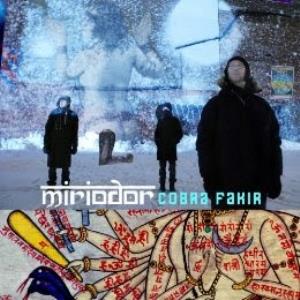
With its intriguing cover art juxtaposing Hindu mysticism and their native Québec’s winter landscape, Cobra Fakir may well confirm Miriodor’s status as the RIO/Avant band that – on account of their keen melodic flair coexisting with more boundary-pushing tendencies – manages to appeal even to staunch symphonic/neo fans. Balancing edgy dissonance and  haunting atmospheres, engaging circus-like tunes and moments of reflection, the album will benefit from repeated listens in order to let its magic unfold, but will amply reward the listener’s patience. Another outstanding effort from one of the best live bands I have seen in the past few years – their understated mastery of their instruments as close to perfection as it gets – Cobra Fakir does not disappoint expectations, and will certainly feature in many “best of 2013” lists.

Links:
http://miriodor.com/wp/

http://www.cuneiformrecords.com


Read Full Post »

cover_43291862013_r

TRACKLISTING:
1. Erosive Forces of Wind and Water (5:14)
2. Lead Poisoning (5:14)
3. Boots, Nails, Watches… (5:25)
4. Thermokarst (5:15)
5. Trapped in the Sea Ice (3:59)
6. …Books, Saws, Silk Handkerchiefs… (3:52)
7. Graves of the Crewmen Buried on Beechey Island (6:17)
8. …Two Double-Barreled Guns and 40 Lbs of Chocolate (5:31)

LINEUP:
Ángel Ontalva – guitar
Victor Rodriguez – keyboards
Amanda Pazos Cosse – bass
Vasco Trilla – drums, percussion

Formed in 2003 in the historic Spanish city of Toledo by guitarist/composer Ángel Ontalva, bassist Amanda Pazos Cosse and keyboardist Victor Rodriguez, for their fourth CD release October Equus have gone back to a quartet format, just as they started out ten years ago. Permafrost,  released in May 2013, is also their first album released by Ontalva’s own independent label, OctoberXart Records. Though, after 2011’s Saturnal, the band have parted ways with AltrOck Records, they appeared at the Italian label’s festival in June 2013, and the new album was mastered by AltrOck’s preferred sound engineer, Udi Koomran, at his Tel Aviv studio.

The lineup changes occurred after Saturnal (recorded as a seven-piece) imply that October Equus have gone back to the basics  on their fourth album – taking reeds and cello out of the equation, though without renouncing the complexity of their particular take on the RIO/Avant-Prog aesthetics. In fact, the album marks a definite step forward for the band, allowing them to distance themselves from the influence of Univers Zéro – which loomed quite large on their previous releases –  and give their sound a more personal imprint. While their style remains firmly ensconced in “chamber rock” territory, the new stripped-down format pushes Ontalva’s guitar to the fore, constantly supported by Victor Rodriguez’s array of keyboards. Drummer Vasco Trilla (also a member of jazz-rock outfit Planeta Imaginario) provides an inventive, often dramatic rhythmic backbone, assisted by Amanda Pazos Cosse’s discreet yet versatile bass lines.

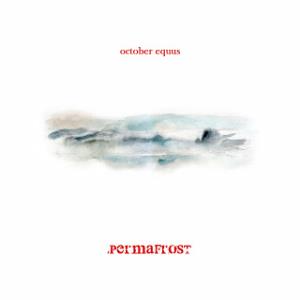
As suggested by the title and the booklet’s detailed artwork, Permafrost is a concept album, based on the tragic ending of Sir John Franklin’s Northwest Passage expedition. Besides his obvious musical talent, Ontalva (who, together with Rodriguez,  is the band’s main songwriter,) is also an outstanding graphic artist, and his black-and-white illustrations complement each episode of the musical odyssey. Though completely instrumental, the music manages to convey the atmosphere of fear, loneliness and impending doom without relying on words – perhaps even more effectively because of their absence. The stark appearance of the cover, distinguished by a striking use of white space, evokes the bleakness of the Arctic winter, while on the back cover Franklin’s last note is reproduced.

 Those who believe any band tagged RIO/Avant-Prog must thrive on dissonance might find their convictions challenged by Permafrost. Indeed, the album often comes across as surprisingly melodic – though of course, not exactly in the same way as your average symphonic/neo prog release. As a whole, though Univers Zéro are referenced on more than one occasion, I was often reminded of Miriodor’s effortless complexity and elegant blend of angularity and fluidity. Obviously, given the nature of the story narrated by the music, the album has its fair share of tense, Gothic moments, rendered by a skillful mix of electronic effects and conventional rock instruments – as in closing track “…Two Double-Barreled Guns and 40 Lbs of Chocolate”, as ominously menacing as a horror movie soundtrack.

The correspondence between track titles and musical content is often astonishingly precise: eerie mellotron and swelling piano flurries, coupled with tinkling vibraphone, evoke the desolation of the abandoned ships in “…Books, Saws, Silk Handkerchiefs…” , while the mesmerizingly measured pace of “Graves of the Crewmen Buried on Beechey Island” – almost Pinkfloydian in its slow, mournful development – is punctuated by suitably dirge-like drumming. Rodriguez switches from organ (whose fuzzed-over sound hints at Soft Machine) to synths, piano and even mellotron, working in unison with Ontalva’s expressive, jazzy guitar to create a wide range of atmospheres – haunting and almost romantic at times (as in the autumnal, melancholy “Lead Poisoning”), strident and aggressive at others (“Thermokarst”).

Clocking in at barely over 40 minutes, Permafrost is an intense, cohesive effort that packs more punch  in its very restrained running time than most 70-minute albums. Though, as was the case with its predecessors, its main audience will be the RIO/Avant crowd, there is enough on the album to appeal to those with somewhat more mainstream tastes. Among its many qualities, this disc proves that “concept albums” can be something different from the overblown messes that have unfortunately become synonymous with progressive rock, and that a purely instrumental palette can be used very effectively for storytelling purposes. Definitely one of the strongest releases of the year so far, Permafrost is highly recommended to all open-minded music fans.

Links:
www.octoberxart.com

Read Full Post »

cover_11468972013_r

TRACKLISTING:
1. Toz (9:25)
2. Intermud (2:59)
3. Dunb (8:57)
4. Bùmlo (5:34)
5. Mlùez (6:16)
6. Ïh (8:18)

LINEUP:
Captain Flapattak – drums, vocals
Fabien De Kerbalek – guitar, vocals
Brhüno – tenor/soprano saxophones, bassoon, vocals
Thybo – guitar
Sam – alto/baritone saxophones, alto clarinet, flute, vocals
Damoon – bass, vocals (1-3)
Sir Alron – bass, vocals (4-6)
Marhïon Mouette – vocals, percussion (1-3)
Emilie Massue – vocals, percussion (4-6)

With the Ensemble Pantagrulair (1-3):
Séverine – flute, piccolo
Rémi – oboe
Catherine – clarinet
Pierre – horn

Even if, at first, their name may ring a bell with the many fans of J.R.R. Tolkien’s work (Rhûn means “East” in one of his invented languages), French outfit Rhùn are firmly entrenched in the Zeuhl tradition initiated by their fellow countrymen Magma in the late Sixties. The subtitle “Fanfare du Chaos” proudly emblazoned on the cover of their full-length debut album, Ïh, should leave no doubts as to the contents of the disc itself and its potential to appeal to the more adventurous fringes of the progressive rock audience.

The band – based in the northern French region of Normandy – revolves around the figure of drummer/vocalist Captain Flapattak, flanked by a group of other musicians who, like him, go for the most part by pseudonyms in the style of early Gong. Though very little is available in the way of a biography, from their social media presence it can be inferred that Rhùn have enjoyed a lively concert activity in the past few years. After a three-song demo released in 2008, their first proper recording effort – an EP also titled Ïh (like one of the tracks on the demo)came at the end of 2012. Both of these recordings have been remastered by AltrOck Productions stalwart Udi Koomran and released in CD format by the Milan-based label in the early summer of 2013 – allowing the listener to trace the band’s development from a more rough-edged sound to longer, more elaborate compositions. Besides Captain Flapattak, Fabien de Kerbalek and Thybo (guitars, vocals), Brhüno (sax, bassoon, vocals) and Sam (sax, clarinet, vocals) appear on all the songs on the CD, while other members of this rather eclectic configuration have changed in the intervening years. At present, the band is a six-piece that also includes Damoon (bass, vocals); a reed quartet called Ensemble Pantagrulair also appears on the EP tracks.

The 9-minute “Toz” opens the album with a fair sonic rendition of that “fanfare of chaos” subtitle – a burst of horns, drums and vocals like a less melodic version of Magma, with hints of fellow French outfit Jack Dupon in the extravagantly theatrical vocals. The track develops as a veritable rollercoaster ride, reminiscent of Üdü Wüdü-era Magma – driven by powerful, martial bass and drums, and throwing in Hendrixian guitar solos, massed male-female choirs, majestic horns, carnival tunes and much more, with rare moments of respite. After this rather demanding listening experience, the short classical intermezzo of “Intermud” – with flute and oboe conversing discreetly in a Debussy-like piece – comes as a welcome surprise, though things change sharply once again when the insistent, hypnotic choir of “Dunb” kicks in. Alternating subdued, atmospheric passages with frantic bouts of dissonance, the track pushes Damoon’s thundering bass to the forefront, culminating in a fierce, almost operatic crescendo.

As can be expected, the two parts of the album (which runs barely over 40 minutes) differ quite noticeably. The three demo tracks also show a clear Gong influence – immediately suggested by the wacky, atonal female vocals and blaring saxes in “Bùmlo”– and a raw, almost unscripted quality. Captain Flapattak’s drum take the lead role in “Mlùez”, which combines a laid-back, jazzy allure with a smattering of RIO/Avant angularity; while the title-track veers into free-jazz territory, with low-key, psychedelic moments balancing out the dissonance. As a whole, the second half lacks the orchestral quality of the EP tracks, though the Magma influence is not as overwhelming.

Obviously, Ïh is not the kind of album that is going to convert those who find Zeuhl unpalatable, while lovers of this most idiosyncratic of prog subgenres will find a lot to appreciate in the album – including the stylish photography featured in the CD booklet. As pointed out in the previous paragraphs, the frequent lack of melody (at least in a conventional sense) may put off some listeners, and the compositional aspect might be improved upon, especially as regards cohesiveness. While Rhùn’s interpretation of Zeuhl is definitely more old-school than that of a band like Corima, and more dependent on the Magma influence, the band has still a lot of margin to develop a more personal approach.

Links:
https://myspace.com/rhundesfoins

https://www.facebook.com/pages/Rh%C3%B9n/348653246789

http://www.altrock.it

Read Full Post »

MI0003589820

TRACKLISTING:
1. Culturismo Ballo Organizzare (5.50)
2. ΔU (1:53)
3. Dj Psicosi (3:49)
4. Preparazione Bomba H (3:13)
5. Sintagma (1:09)
6. JessicaLaura (3:18)
7. (che ne sai tu di un) Cerchio nel Grano (3:49)
8. Rifondazione Unghie (3:18)
9. Ballata dell’amore stocastico (3:16)
10. χΦ (1:30)
11. Nabucco Chiappe d’Oro (4:14)
12. Il Papa buono (2:52)
13. Accidenti (0:24)
14. Centoquarantaduemilaottocentocinquantasette (2:06)
15. Profiterol (1:29)
16. Estate 216 solszt (1:24)
17. Puk 10 (2:25)
18. Il Contrario di Tutto (2:21)

LINEUP:
Dario D’Alessandro – guitar, vocals, keyboards, glockenspiel, percussion
Davide Di Giovanni – piano, organ, MS10, drums, bass, acoustic guitar, vocals
Daniele Di Giovanni – drums, percussion, acoustic guitar, vocals
Domenico Salamone – bass
Federico Cardaci – minimoog, memotron, organ
Dario Lo Cicero – flutes, wind controller
Mauro Turdo – additional guitar (1)

With
:
Paolo Ske Botta: synthesizers, organ, electronics, glockenspiel
Giovanni Di Martino – Microkorg (3)
Totò Puleo – trumpet (3)

With its high-sounding title – taken straight from the realms of philosophy –  Homunculus Res’ debut might initially give the impression of yet another stereotypically pretentious “conventional” prog opus. However, a closer look at the distinctive cover artwork depicting a mushroom-sprouting human head next to a tiny gnome in a pointed red hat should readily clue the listener in on the album’s true nature.

Hailing from the Palermo, Sicily, the band – one of the newest recruits of the thriving AltrOck Productions stable –  is a loose configuration of musicians revolving around multi-instrumentalist and main songwriter Dario D’Alessandro. If the triangular island in the southern Mediterranean sounds like an unlikely birthplace for a progressive rock band – especially if compared with hubs such as Genoa or Milan – it should be pointed out that Franco Battiato, one of the most iconic figures of the early Italian prog scene, also hails from Sicily. Like Battiato, Homunculus Res blend high and popular culture in their lyrics, and also enjoy citations from other musical sources, even though their sound is firmly rooted in the Canterbury tradition. The breezy, often infectious quality of the music –  interspersed with more sedate, almost introspective moments and some seriously intricate instrumental flights – recalls early Soft Machine and Caravan, as well as fellow Italians Picchio Dal Pozzo (whose legitimate heirs Homunculus Res are poised to become) and Stormy Six, or even a more obscure Canterbury-inspired gem,  Cocktail by Patrick Forgas (who later went on to form the outstanding jazz-rock combo Forgas Band Phenomena).

Most of the album’s 18 short tracks (whose titles will reveal an intriguing mix of highbrow, whimsical and more down-to-earth elements) are so closely linked together musically that they almost flow into each other – especially the instrumental numbers, mostly concentrated in the second half. In spite of the album’s overall light-hearted attitude and apparent focus on shorter compositions, the music is richly textured, thanks to the band’s impressively varied instrumentation. While keyboards (supplied by D’Alessandro, Davide Di Giovanni and Federico Cardaci, as well as special guest Paolo Ske Botta) are clearly the stars of the show –  aided and abetted by Daniele Di Giovanni’s ebullient, acrobatic drumming – the guitar plays a discreet but invaluable supporting role, only rarely stepping into the limelight.

The album opens with a song that will stick in your head for a long time – the mostly instrumental “Culturismo Ballo Organizzare”, whose almost 6 minutes are packed with exhilarating stops and starts, while vocals are used as an irresistibly quirky enhancement of the musical line  rather than the “main event”. The following “ΔU” starts in a deceptively low-key, almost wistful manner reminiscent of Hatfield and the North, then turns frantic and chaotic, with strident synth dominating the tune. “DJ Psicosi” returns to the upbeat form of the opener, its title repeated in almost hypnotic fashion, while a weirdly echoing trumpet adds a nostalgic note. The Canterbury vibe takes over in “Preparazione Bomba H”, as well as in the majority of the instrumental pieces comprising the second half of the album (which also occasionally hint at Latin and Brazilian rhythms).

Occasional references to other artists crop up throughout the album, as in the nod to Michael Jackson’s “Billy Jean” in the above-mentioned “Dj Psicosi”, and the lullaby-like homage to Fabrizio De André’ “La Guerra di Piero” at the beginning and at the end of the flute-laced “(che ne sai tu di un) Cerchio nel Grano” (whose very title hints at Lucio Battisti’s “Pensieri e parole”). On the album there is also room for a couple of  ballads, whose apparently romantic tone is belied by the subtle irony of the lyrics – “Jessicalaura” and “La ballata dell’amore stocastico”, in which Dario D’Alessandro channels his inner Richard Sinclair, accompanied by elegant piano. The energetic “Rifondazione Unghie”, on the other hand, features dynamic flute and guitar interplay in pure Jethro Tull style; while the subdued mood of album closer “Il Contrario di Tutto” emphasizes the lyrical musings on the plight of a disillusioned young man longing for an escape from day-to-day routine.

Loaded with humour and the obvious pleasure of the craft of music-making, Limiti all’eguaglianza della Parte con il Tutto is the perfect antidote to too much overwrought, self-important prog. Though the lyrics and their cultural references might be lost on non-speakers of Italian, an understanding of the words is not necessary to enjoy the album and its sophisticated yet accessible brand of “Canterbury Samba Progressive”. Highly recommended to everyone but those who believe that progressive rock and humour should not mix, or else object to non-English lyrics, Homunculus Res’ debut is a delightful, intelligent album that effortlessly blends retro and modern attitudes, with the added interest value of Dario D’Alessandro’s outstanding artwork.

Links:
http://www.altrock.it

http://www.allmusic.com/artist/homunculus-res-mn0003137197

https://www.facebook.com/HomunculusRes

http://www.youtube.com/channel/UC2lGwBU4eo-z8QDVLen0fnA?feature=watch


Read Full Post »

cover_27548232013_r

TRACKLISTING:
1. Kurt’s Casino (9:53)
2. The Little Man (3:55)
3. Accidentally in San Sebastian (4:22)
4. The Campfire Strikes Back (4:36)
5. The Dancing Dinosaur (10:28)
6. Skunks (5:01)
7. Pate a Tartiner (6:07)

LINEUP:
Gabor Humble – guitar, vocals
Megan Quill – vocals
Liesbeth Verlaet – vocals
Jouni Isoherranen – bass, keyboards
Jonathan Callens – drums
Pol Mareen – saxophone
Pedro Guridi – bass clarinet
Joren Cautaers – vibraphone, percussion

With:
Pieter Claus – marimba solo (1)
Jana Voros – baby sounds (3)
Lisa Jordens – backing vocals (3)
Francisca Rose – pronouncing “tartiner” correctly (3)

Two years after the release of Flanders Fields, their first album for Milan-based label AltrOck Productions, Belgian outfit Humble Grumble have made their comeback in the spring of 2013 with Guzzle It Up!. Though mainman Gabor Humble first established the band in 1996, Humble Grumble’s current incarnation dates back from very recent times, and is multi-national in nature – including, besides Hungarian-born Humble, Finnish bassist/keyboardist Jouni Isoherranen and Chilean reedist Pedro Guridi, as well as a number of Flemish musicians. The band also have quite a few festival appearances under their belt, and, around the time of the new album’s release, they performed at Gouveia Art Rock Festival in Portugal and AltrOck’s very own event in Milan, Italy.

While emphasizing the continuity of the band’s sound, Guzzle It Up! also marks a departure from Flanders Fields, and not just in terms of lineup. In fact, when the previous album featured a core group of six people and an extended cast of guest artists, here the situation has been reversed: the eight-piece band – with Humble, Isoherranen, Guridi, saxophonist Pol Mareen and drummer Jonathan Callens joined by vocalists Liesbeth Verlaet and Megan Quills and mallet percussionist Joren Cautaers – handles all the tracks, and the contribution of guests is marginal. The rich instrumental texture of Flanders Fields has remained unaltered, with the clear-voiced lilt of the vibraphone providing a refreshing change from the usual keyboards, and the saxophone often engaging in dynamic duets with Humble’s guitar. The latter’s versatile vocals are complemented by the two female voices, their lively exchanges often bordering on endearingly wacky, and perfectly suited to the music’s overall mood. On the other hand, Guzzle It Up! is clearly more ambitious in terms of structure: while Flanders Fields was a collection of 11 remarkably short songs, here a shorter tracklist is compensated by running times that have more than doubled. With two out of 7 songs around the 10-minute mark, even the shorter tracks seem to have adopted a more leisurely pace than the dense, whirlwind-like numbers that made up the band’s previous effort. There are no instrumentals either, and a lot of emphasis is placed on the vocal interplay between Humble and his two female cohorts.

Humble Grumble’s more ambitious approach is introduced right from the start with the almost 10-minute“Kurt’s Casino”, a brilliant combination of upbeat, downright infectious melodies and the rather somber subject matter of suicide, propelled by Jonathan Callens’ spectacular drum work and  Pol Mareen’s ebullient sax, and enhanced by vibraphone and marimba (the latter courtesy of former member Pieter Claus). The album’s longest track, “The Dancing Dinosaur”, gives a new meaning to the word “eclectic” by throwing a slew of diverse influences into the equation with carefree abandon – jazz inflections as well as the inevitable Zappaesque bent coexisting with catchy, almost poppy chorus, wistful sax section, an atmospheric guitar solo and an unexpected, galloping hoedown towards the end.

Driven by Callens’ pyrotechnic drumming, “The Little Man” suggests Samla Mammas Manna’s carnival-like zaniness; “The Campfire Strikes Again” strays even further into Zappa-meets-RIO-meets-Gong territory, seasoned with a pinch of dissonance and the vocalists’ striking repartee. Vocals (including rapping) and assorted wacky sound effects are the foundation of the off-kilter “Accidentally in San Sebastian”, while “Skunks” (whose lyrics that would make Frank Zappa quite proud) pulls out all the stops, with Humble’s exaggerated falsetto and chaotic vocal “harmonies” that sound like a skewed version of Gentle Giant, a wild guitar solo and hints of Eastern European folk. “Pate a Tartiner” wraps up the album in suitably eccentric fashion, also introducing an appealing funky note to complement the ever-present Gong and Zappa influences.

Clocking in at a very restrained 44 minutes, Guzzle It Up! is as much of an acquired taste as its predecessor – possibly even more so. Though the quality of the individual performances is outstanding, and the sheer joy of  making music refreshingly evident, its abrupt changes in mood and style can strike some of the more mainstream-oriented listeners as inconsistent and even frustrating, and the wacky, anarchist humour of the lyrics can be occasionally hard to take for those who prefer a bit more subtlety. On the other hand, fans of Zappa, Gong and the Canterbury scene will not fail to appreciate the album and its ambitious direction. The photos in the CD booklet and on the band’s website clearly point out that Humble Grumble belong on the stage, and that the studio format must be somewhat constraining to them. Highly recommended to any open-minded progressive rock fans, Guzzle It Up! may not be an easily approachable album, but is definitely an intriguing one.

Links:
http://www.humblegrumble.com/

https://myspace.com/humblegrumble

http://www.altrock.it

Read Full Post »

5-storey ens

TRACKLISTING:
1. The Harbinger (5:51)
2. Bondman’s Wings (2:24)
3. The Incommunication (5:23)
4. To Ringfly (3:12)
5. A Disappearing Road (4:43)
6. The Unpainted (7:58)
7. Yesterday Dormant (5:41)
8. The Protector (3:23)
9. Fear-Dream (3:47)
10. Amid the Smoke and Different Questions (6:31)
11. Not That City (6:58)

LINEUP:
Vitaly Appow – bassoon, saxes
Alexander But’ko – accordion
Andrey Evdokimov – acoustic and electric guitars
Natalja Malashkova – oboe
Dmitry Maslovsky – bass guitar
Olga Podgaiskaja – piano, keyboards, vocals
Olga Polakova – flute
Anastasia Popova – violin
Nikolay Semitko – drums, percussion
Vyacheslav Plesko — double bass
Sergey Dolgushev – vocals

With:
Jury Korogoda —electric guitar (6,9)
Cirill Christia — violin (6,8,9)
Nadia Christia — cello (6, 9,11)

One of the very few bands originating from the small and politically isolated Eastern European country of Belarus, Rational Diet was an unabashedly intellectual ensemble whose music was not for the faint-hearted. After releasing a total of five albums (the last three of which on Italian label AltrOck Productions) between 2000 and 2010, Rational Diet split up because of a disagreement over artistic direction. Its members went on to form two separate groups, Archestra and Five-Storey Ensemble, whose debut albums – titled Arches and Not That City – were both released in the spring of 2013. While Arches was released on French label Soleil Mutant (a subdivision of Soleil Zeuhl), Five-Storey Ensemble have remained part of the AltrOck roster.

Not That City’s liner notes trace the genesis of this new yet familiar band, explaining the reasons for the change, reflected in the album’s more intimate and “streamlined” sound if compared with Rational Diet’s overly intellectual approach (which had become a liability rather than an asset, hindering the band’s natural development). The transition from Rational Diet to Five-Storey Ensemble was complete when the former band’s  remaining members – keyboardist/vocalist/main composer Olga Podgaiskaja, bassist Dmitry Maslovsky, drummer Nikolaj Semitko and reedist Vitaly Appow – merged with  Fratrez, a quartet hailing from the Belarus capital of Minsk, whose sound was strongly rooted in medieval and folk music. The lineup that recorded Not That City (a mini-orchestra with no less than 11 members) is augmented by former Rational Diet bandmates Cirill and Nadia Christia and Archestra guitarist Jury Korogoda on a handful of tracks.

A mostly acoustic album, performed with instruments generally associated with classical and folk music, Not That City has very few connections to rock music (even of the progressive variety), and the presence of drums and electric guitar/bass is so discreet as to be almost imperceptible. In this and other aspects, Five-Storey Ensemble bring to mind Belgian outfit Aranis, though their sound also bears the unmistakable imprint of the Eastern European tradition. The literary inspiration that had been an essential component of Rational Diet’s output is still very much in evidence: the album features three songs with lyrics by early 20th century poet Alexander Vvedensky, and another two were originally part of the soundtrack for the experimental play Bondman’s Wings.

Though Not That City is largely instrumental, some of the tracks feature vocals with an operatic quality that, however, meshes remarkably well with the instrumentation rather than swamping it. Band leader Olga Podgaiskaja’s sweet, achingly wistful soprano complements Sergey Dolgushev’s intense tenor;  their duet in the sprightly, folksy “Yesterday Dormant” acquires a dramatic quality from the use of two different themes –  melodic, almost pleading for the female voice,  more upbeat for the male one. In the intimate, melancholy ”The Incommunication”, the two voices occupy centre stage, while the instruments (mainly piano and bassoon) keep discreetly in the background.

Running at a very reasonable 55 minutes, the album as a whole is very cohesive and surprisingly full of melody, with few concessions to those spiky, dissonant moments so often associated with the Avant-Progressive subgenre – the most notable of which can be found in the second half of “A Disappearing Road”  and in the complex, riveting textures of the nearly 8 minutes of “The Unpainted”, where the electric guitar is treated like an orchestral instrument rather than a typically rock one. Conversely, the influence of medieval and Renaissance music emerges clearly in the lilting, percussive “To Ringfly” and “The Protector”; while the aptly titled “Fear-Dream”, laden with a dark, menacing tone, taps into a richly cinematic vein that is also evident in “Amid the Smoke and Different Questions”, in which Dolgushev uses his voice as another instrument. The album’s bookends, opener “The Harbinger” and the title-track, sum up the whole of the band’s musical approach, blending almost gloomy solemnity with elegant dance-like passages, showcasing the instruments’ flawless interplay and the band’s mastery of the art of buildup – both examples of stately yet ]mesmerizing 21st –century chamber music with only passing nods to the rock aesthetics.

An astonishing beautiful album that (rather uncharacteristically) drew me in right from the first listen, Not That City, as already hinted in the previous paragraphs, has much more in common with modern classical music than rock. Though certainly more accessible than most of the band’s previous incarnation’s output, it does require a good amount of concentration on the part of the listener, as well as an appreciation for the minimalistic, understated approach of chamber rock as compared to conventional prog’s tendency towards bombast. As far as I am concerned, this is one of the top releases of the year so far, and highly recommended to only to fans of the RIO/Avant scene, but also to all open-minded music lovers.

Links:
http://www.allmusic.com/album/not-that-city-mw0002529122

http://production.altrock.it/prod2.asp?lang=ita_&id=205&id2=207

Read Full Post »

cover_15772752013_r

TRACKLISTING:
1. Detox Gruel (4:13)
2. Spanish Fly (5:19)
3. Yantra (8:04)
4. Frank Nuts (3:38)
5. Jungle Cow Part I (5:50)
6. Jungle Cow Part II (4:40)
7. Jungle Cow Part III (6:07)
8. Glass Cubes (8:30)
9. Wrong but Not False (5:28)
10. Flashlight Into Black Hole (3:05)
11. Stammtisch (5:59)

LINEUP:
Michel Delville – guitar, Roland GR-09
Antoine Guenet  – keyboards, vocals
Marti Melia – bass and tenor saxes, clarinet
François Lourtie – tenor, alto and soprano saxes, voice
Pierre Mottet – bass
Laurent Delchambre – drums, percussion, objects, samples

With:
Benoît Moerlen – marimba and electronic vibraphone (2, 3, 5-7, 11)
Susan Clynes – vocals (8)

After the release of Machine Mass Trio’s As Real As Thinking and douBt’s Mercy, Pity, Peace and Love in the past couple of years, guitarist extraordinaire Michel Delville returns with his  main band, all-Belgian combo The Wrong Object. Only Delville and drummer Laurent Delchambre remain from the lineup that released Stories from the Shed in 2008: the band has now become a sextet with the addition of four new members, including brilliant keyboardist Antoine Guenet, the leader of avant-metal-jazz outfit Sh.tg.n. (whose self-titled debut was released in 2012), who recently joined RIO/Avant icons Univers Zéro.

One of the most prolific artists signed to Moonjune Records, the label founded by Leonardo Pavkovic in 2001, Delville is an extremely talented guitarist and composer, with a genuinely progressive attitude and a strong commitment to creative music-making. Though The Wrong Object have been in existence for over 10 years, and enjoyed a thriving concert activity all over Europe (witnessed by two live albums, The Unbelievable Truth (recorded in 2005 with the late, great Elton Dean) and Platform One (recorded in 2007 with renowned British jazz musicians Annie Whitehead and Harry Beckett), their studio debut came relatively late with Stories From the Shed – an excellent album drawing on a wide range of sources of inspiration. However, the 5-year break has brought further refinement to the band’s sound, resulting in a quantum leap in terms of quality.

Although Delville is the undisputed band leader and main composer, it would be wrong to assume that The Wrong Object’s sound is dominated by guitar antics. In fact – very much in the way of his Moonjune label mate Dennis Rea of Moraine –  Delville’s presence is surprisingly discreet, often leaving the limelight to the band’s duo of saxophonists, Marti Melia and François Lourtie. Guenet’s keyboards flesh out the tune according to need, adding occasional melodic flourishes or energetic organ runs, while Laurent Delchambre’s versatile drumming and Pierre Mottet’s understated yet nimble bass lines provide a reliable foundation that keeps up effortlessly with the shifts in tempo and mood. Delville’s guitar anchors the album to the rock aesthetics, ramping up the electricity quotient even when keeping almost unobtrusively in the background. Renowned mallet percussionist Benoit Moerlen (of Gong/Gongzilla fame) guests on more than half of the tracks, adding the tinkling, cascading sound of his marimba and electronic vibraphone to the sonic texture.

Spread over nearly 60 minutes, the 11 tracks on After the Exhibition flow naturally in spite of their density. For all its eclecticism, the music is surprisingly cohesive and never comes across as contrived or overdone. Electric flare-ups coexist with intimate, subdued moments in an unpredictable and constantly exciting mix; at the same time, though, is also a more disciplined feel than in Delville’s two previous releases with douBt and Machine Mass Trio.

Opening with the shock tactics of the brisk, exhilarating “Detox Gruel”, propelled by raucous sax with dashes of organ and Delville’s slightly strident guitar, the album’s first half culminates with the unorthodox three-part “suite” of “Jungle Cow”. In over 16 minutes of music, the composition morphs from a collection of sparse, spacey sound effects into an intense sax-and-guitar duel. The 8-minute “Yantra” juxtaposes atmospheric lyricism and heady, almost free-form improvisation with blaring saxes and unleashed guitar, while the jaunty “Spanish Fly” is reminiscent of modern classical composers such as Bartok or Stravinsky, as well as jazz and Middle Eastern music..

The album’s second half is introduced by the jaw-droppingly beautiful “Glass Cubes” interpreted by the elegantly expressive voice of Belgian singer/songwriter Susan Clynes (compared by some to modern jazz icon Annette Peacock), complemented by Guenet’s gorgeous piano and backing vocals – a stylish, magical slice of 21st-century Canterbury sound that hints at the best moments of Hatfield and the North and Soft Machine. The final three numbers feel like an ideal continuation of the mood set by “Glass Cubes”, with definite Canterbury undertones in the sprightly, catchy “Wrong but Not False” and the invigorating, funk-tinged “Flashlight Into Black Hole”, where Pierre Mottet’s bass comes into its own. Wrapping up the album in style, the romantic, Old-World flavour and elegant waltz-like pace of “Stammtisch”, conducted like a conversation between guitar, piano and sax, is briefly interrupted by the instruments interacting chaotically, then calm returns for a slo-mo finale.

With its perfectly balanced running time, After the Exhibition is a true rollercoaster ride of dazzling musicianship coupled with sophisticated flair for melody that tempers and softens the bristling intensity of the album’s more electrifying parts.  Even if the avant-garde component is not as strongly spotlighted as in their previous effort, RIO/Avant fans will find a lot to appreciate in the album, as will lovers of the Canterbury scene, classic jazz-rock, and even psychedelic/space rock. On the other hand, the sheer beauty of “Glass Cubes” might win over those who are more attached to prog’s traditional extended-song format. Highly recommended to everyone, After the Exhibition is an exercise in pure class, and will certainly grace many a “best of 2013” list.

Links:
http://www.wrongobject.com/

http://www.moonjune.com/mjr_web_2013/catalog_mjr/055_THE-WRONG-OBJECT_After-The-Exhibition_MJR055/

Read Full Post »

5482_10200370401715147_931439010_n

In a couple of weeks’ time, fans of AltrOck Productions, the cutting-edge Italian label founded by Marcello Marinone and Francesco Zago in 2005, will be offered the unique opportunity to attend a two-day festival featuring a selection of exciting Italian and European bands, many of them have appeared on these pages.

The event, scheduled to take place on the weekend of June 1-2 at La Casa di Alex, a cultural centre on the outskirts of Milan, will see a total of seven bands taking turns on the stage. The label’s subsection Fading Records, dedicated to bands and artists who revisit “traditional” prog modes with a modern attitude, will be represented by Ciccada (Greece), La Coscienza di Zeno and Ske (Italy), who will be joined by highly awaited Norwegian outfit Wobbler; while October Equus (Spain) and Humble Grumble (Belgium) will add some intriguing RIO/Avant spice to the proceedings. Bassist Pierre “W-Cheese” Wawrzyniak (of fellow AltrOckers Camembert) will join Ske on stage for their first-ever live performance: while La Coscienza di Zeno will premiere their forthcoming second album, titled Sensitività.

The festival will also mark the stage debut of Not A Good Sign, the newest offering from AltrOck and  the label’s own “supergroup” of sorts, featuring Yugen’s Paolo “Ske” Botta (who is also the label’s main graphic artist) and Francesco Zago, and La Coscienza di Zeno’s Gabriele Guidi Colombi and Alessio Calandriello, as well as drummer Martino Malacrida. The band, who was started in 2011 by Botta and Zago (later joined by the other members),  aims to revisit the sounds of classic prog – liberally seasoned with hard rock and psychedelic suggestions – with a thoroughly modern attitude, focusing on the creation of melancholy, haunting atmospheres. Their self-titled recording debut, officially released on June 10, will be available for purchase at the festival. Yugen’s Maurizio Fasoli (piano), cellist Bianca Fervidi and vocalist Sharon Fortnam (Cardiacs/North Sea Radio Orchestra) also guest on the album. You can listen to a preview of the album here.

Links:
http://altrockfading.blogspot.it/

http://www.alexetxea.it/

www.altrock.it

https://www.facebook.com/notagoodsign

Read Full Post »

theater-banner

With the final curtain fallen on NEARfest in June 2012, a void has been left in the once-thriving US progressive rock festival scene. In the past couple of years, the increasing fragmentation of  the target audience – as well as other factors such as the lingering economic downturn – have provided a brusque reality check to anyone daring enough to invest time and money in this often unrewarding task  While the cottage-industry organization of ProgDay is still going strong (probably because of its unpretentious structure), and ROSfest keeps attracting a steady number of devotees to its Gettysburg premises, other more ambitious efforts have ended in failure before they even started. The enthusiasm about Baja Prog’s return after a four-year hiatus was tempered by a lineup that penalizes US bands, and is in many ways a duplicate of the last NEARfest  – not to mention that the festival takes place in a part of the continent that is not exactly convenient for many US dwellers.

However, almost unexpectedly, a new event has stepped in at that particular time of the year, though in no way aiming to fill  NEARfest’s daunting shoes by offering a range of reasonably high-profile bands, including some “bucket list”ones. In fact,  the organizers of Seaprog Music Festival seem to have taken the ProgDay template even further, concentrating almost exclusively on US acts and spotlighting local talent. The event is scheduled for June 28-30,  2013, at Columbia City Theater, a nearly 100-year-old venue in the iconic Pacific Northwest metropolis of Seattle – home to such diverse acts as Jimi Hendrix, Heart, Queensryche and the grunge bands of the early Nineties. Starting on the evening of Friday, June 28, with a free show, the festival proper will be spread over the whole of Saturday and Sunday, showcasing a total of 11 bands.

Seaprog comes with the uncompromising tagline of “not your parents’prog” and a well-articulated manifesto that invites people to be open-minded in their approach to the world of non-mainstream music. In spite of the many attempts to separate “prog” from the original meaning of the word “progressive”, and turn it into nothing more than a codified genre complete with plenty of sarcasm-inducing mannerisms, there are still those who want “progressive” to be much more than a byword for self-indulgence and worship of the past.

The members of the organizing committee are dedicated musicians with years of experience under their belt: guitarist Dennis Rea (of Moraine and Iron Kim Style fame), drummer John Reagan (formerly of Harlequin Mass, now with Dissonati) and stick player Jon Davis (currently a member of Zhongyu with Rea and Moraine’s Alicia and Jim DeJoie). All three of them share similar views on what constitutes “prog”, which may not necessarily resonate with those who espouse the “prog as a genre” theory, but will instead find support in genuinely adventurous listeners. The event is a strictly non-profit venture, and the organizers’s main aim in undertaking this effort, as stated at the bottom of every page of Seaprog’s excellently crafted website, is to offer a world-class music event in a city that is better known for heavy rock and trendy alternative/indie bands.

As can be expected after reading the festival’s manifesto, Seaprog is heavily geared towards the cutting-edge side of the progressive rock spectrum, with seminal RIO/Avant band Thinking Plague  in the coveted spot of Sunday headliner for their first-even Seattle show. The Colorado-based outfit’s latest recording effort, Decline and Fall, was one of the defining albums of 2012, and their triumphant appearance at last year’s RIO Festival helped to consolidate their reputation as purveyors of difficult but highly rewarding music. Thinking Plague’s Dave Willey and Elaine Di Falco will also appear on stage with Hughscore Revisited, a quartet that will perform compositions by legendary Soft Machine bassist Hugh Hopper, who passed away in 2009. Not surprisingly, Moraine, Zhongyu and Dissonati will also be on board. The other names on the lineup are less familiar to the majority of prog fans: local outfits Alex’s Hand, Monkey Bat Operation ID and Trimtab (originally formed in Minneapolis, but now based in Seattle), and  Italian multi-instrumentalist Jolanda. At the time of writing, the Saturday headliner remains to be announced. Links to all of the artists’ webpages are available on the event’s site. A Kickstarter campaign will also be launched to finance recording of the shows.

After so much fretting about the future of the US festival scene following the demise of NEARfest and the cancellation of OhioProg and FarFest, it is heartwarming to see people take things into their own hands in order to promote homegrown talent, even though on a much smaller scale than NEARfest, ROSfest or Baja Prog. As I have often written on these pages, this is probably the most viable model, which allows the organizers not to be bound by the necessity of filling a larger venue, therefore having to budget for inevitably more expensive “international” bands. Hoping for a healthy turnout that will allow the festival to continue at least in 2014, I applaud the organizers for their bravery and dedication to the cause of progressive music.

Links:
http://www.seaprog.org/

Read Full Post »

« Newer Posts - Older Posts »