Feeds:
Posts
Comments

Archive for the ‘RIO/Avant’ Category

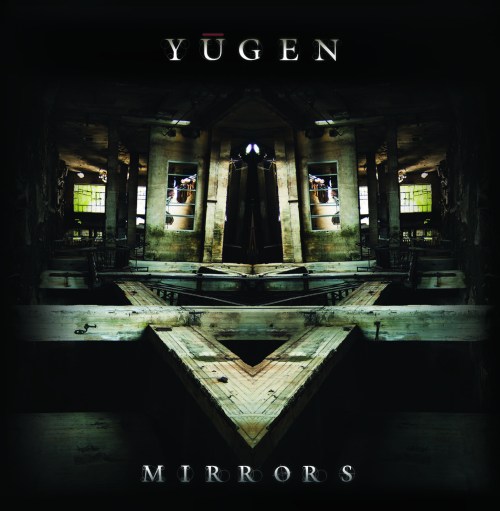
yugen mirrors

TRACKLISTING:
1. On the Brink (0:59)
2. Brachilogia7  (3:09)
3. Catacresi5 (6:39)
4. La Mosca Stregata ( 0:57)
5. Overmurmur (5:30)
6. Industry (7:50)
7. Cloudscape (10:38)
8. Ice (1:55)
9. Becchime (12:38)
10. Corale Metallurgico (9:19)

LINEUP:
Paolo Ske Botta – organ, electric piano, synth
Valerio Cipollone – soprano sax, clarinets
Jacopo Costa – marimba, vibes
Maurizio Fasoli – piano
Matteo Lorito – bass
Michele Salgarello – drums
Francesco Zago – guitar

Founded in 2004 in Milan (Italy) by guitarist/composer Francesco Zago and AltrOck Productions mainman Marcello Marinone, Yugen (a core concept of  Japanese aesthetics that can be roughly translated as “profound grace and beauty”) took the progressive rock scene by storm with the 2006 release of their debut album, Labirinto d’Acqua – a supremely accomplished slice of chamber rock following in the footsteps of the original Rock in Opposition movement. Their second album, Uova Fatali, came two years later, and was based on music composed by Stormy Six’s Tommaso Leddi; while their third effort, Iridule (2010), was widely hailed as a masterpiece of the RIO/Avant subgenre.

An ensemble rather than a conventional band, Yugen revolve around a core group of Zago, keyboardist Paolo Ske Botta (often mentioned in this blog for his work as AltrOck’s in-house graphic artist) and pianist Maurizio Fasoli, joined in 2008 by reedist Valerio Cipollone, and augmented by a number of high-profile guest artists (including  mainstays of the US Avant Progressive scene such as Dave Kerman, Dave Willey, Elaine DiFalco and Mike Johnson,  and Guy Segers of Univers Zéro fame) In September 2011, almost exactly one year after Iridule’s release, the band appeared at the fourth edition of the Rock in Opposition festival, organized in the southern French town of Carmaux. Their performance as a seven-piece –a short excerpt of which is featured in Adele Schmidt and José Zegarra Holder’s documentary Romantic Warriors II – was captured on CD with the assistance of Orion Studios owner Mike Potter, and released at the tail end of 2012 with the title of Mirrors.

Though some may have wondered about Yugen’s ability to recreate Zago’s astonishingly intricate, painstakingly orchestrated compositions as a mere seven-piece rather than as an ensemble of up to 18 musicians (as in their studio albums), any doubts will immediately be dispelled by the sheer quality of the performances recorded on Mirrors. In spite of the constraints –  such as the allegedly short time dedicated to rehearsal – the band as a whole handle the complexities of the music with remarkable flair, without sounding cold or clinical as the highbrow quality of the material might suggest. While Zago’s main sources of inspiration as a composer (as pointed out by Sid Smith in his excellent liner notes) lie in both Renaissance and 20th-century classical music, his earlier rock roots often surface. His dense guitar riffs provide a backdrop for the constantly shifting dialogue between reeds and keyboards, bolstering the impeccable work of Michele Salgarello and Matteo Lorito’s rhythm section – which tackles daunting tempo changes with admirable composure. The music blends sharp angles and smooth curves, flowing naturally even at its most intricate, with melody lurking in the most unexpected places and revealing the unmistakable Italian imprint of this quintessentially cosmopolitan outfit.

The almost 60-minute album features 10 tracks drawn from Labirinto d’Acqua and Iridule, rearranged so as to adapt to the more rigid configuration of a live band. The longest, more intense compositions are concentrated in the second half of the album, which is introduced by a stunning version of Henry Cow’s iconic “Industry” (from the English band’s final release, 1979’s Western Culture). With their deeply intellectual titles reflecting the nature of the music, the compositions are arrestingly complex, though with a sense of organic warmth that is sometimes lacking in the production of highly celebrated bands belonging to the same movement.

Introduced by the dramatic drums and piercing, sustained guitar of “On the Brink”, the set unfolds with two tracks from Labirinto d’Acqua. The shorter “Brachilogia” weaves a sinuous, slightly dissonant tune, beefed up by guitar riffs and high-energy drumming, in which clarinet and marimba share the spotlight, interspersed by subdued piano passages; while “Catacresi” fully deploys Paolo Botta’s arsenal of keyboards, ranging from the sharp whistle of the synth to airy, atmospheric passages that would not be out of place on a Genesis album, creating a sort of cinematic tension. The instruments at times converge in perfect unison, at others pursue their individual paths, though with a constantly perceptible sense of inner discipline.

After the brief respite of “La Mosca Stregata”, “Overmurmur” barges in with an almost strident, apparently chaotic development, each instrument thrown in sharp relief, gradually mellowing out towards the end. The aforementioned “Industry” renders the martial, intense mood of the original, though softening its abrasive quality and spotlighting the deep, slightly hoarse rumble of the organ. On the other hand, “Cloudscape” reveals a different facet of Zago’s creative inspiration, its 10 minutes a masterpiece of skillfully handled atmospherics that paint a breathtaking sonic picture of the title. The track develops fluidly and elegantly, its sounds beautiful and melodic albeit not in a conventional, mainstream sense, slowing down almost to a whisper before the end. In the short, entrancing “Ice” – originally conceived as a showcase for Elaine DiFalco’s distinctive contralto, with lyrics by Nobel Prize winner Seamus Heaney  – the vocals are replaced with a wistful clarinet line redolent of Debussy, preparing the listener for the one-two punch of “Becchime” and “Corale Metallurgico”. The former is the kind of composition that is likely to send fans of melodic prog running for the exits, and makes indeed for demanding listening. Unabashedly cerebral and gloriously intricate (and twice as long as the studio version featured on Iridule) its multiple, angular twists and turns and bristling sound effects evoke the squawking of the chickens referenced in the title (becchime means “chicken feed” in Italian). Also true to its title, album closer “Corale Metallurgico” conveys a powerful industrial feel, with peaks of intensity ebbing into rarefied pauses, and moments of almost unbridled chaos suddenly morphing into a dynamic flow.

Presented in a visually stylish package with outstanding artwork and photography (courtesy of Paolo Botta, Lutz Diehl and Alessandro Achilli), as well as Sid Smith’s thought-provoking liner notes, Mirrors captures one of the foremost standard-bearers of contemporary cutting-edge progressive rock at the very height of its creative powers. Although the music may not always be what one would term accessible, even staunch followers of the more traditional branches of prog might find something to appreciate in the album’s pristine beauty. An absolute must for fans of RIO/Avant –Prog and chamber rock, Mirrors is sure to go down as one of the standout releases of 2012.

Links:
http://us.myspace.com/yugenband

https://www.facebook.com/Yugentheband

http://production.altrock.it/

Read Full Post »

cover_large

TRACKLISTING:
1. There Is a War Going On (3:22)
2. Jalal (7:16)
3. No More Quarrel With the Devil (4:41)
4. Rising Upon Clouds (5:41)
5. Purple Haze (4:47)
6. The Invitation (4:03)
7. Mercy, Pity, Peace & Love (12:14)
8. There Is a War Going On (reprise) (1:18)
9. Tears Before Bedtime (2:44)
10. The Human Abstract (6:24)
11. No More Quarrel With the Devil (reprise) (1:14)
12. Mercury (4:19)
13. Goodbye My Fellow Soldier (9:10)

LINEUP:
Alex Maguire – keyboards, sequencer
Michel Delville – guitar, Roland GR09, samples
Tony Bianco – drums, sequencer

Three years after the release of their debut, Never Pet a Burning Dog (with Canterbury legend Richard Sinclair guesting on three tracks), multinational trio douBt are back with a new album whose title of Mercy, Pity, Peace & Love comes from “The Divine Image”, one of the poems in William Blake’s inspirational Songs of Innocence and Experience. The album, recorded in 2011, was released in the autumn of 2012. The three band members – British keyboardist Alex Maguire, seasoned American drummer Tony Bianco and volcanic Belgian guitarist Michel Delville  – come from different yet complementary musical experiences, and have also collaborated on previous occasions (Delville and Bianco in Machine Mass Trio, Delville and Maguire on the Brewed in Belgium live album, released by Moonjune in 2008). Together they form an unconventional power trio, where the bass guitar is replaced by cutting-edge technology:  indeed, on Mercy, Pity, Peace & Love the role of technology as support to the explosive energy of rock is promoted with great effectiveness.

Just like its predecessor, Never Pet a Burning Dog (where the improvisational, free-jazz component was married to an unmistakable Canterbury influence), Mercy. Pity, Peace & Love sums up the current direction of Moonjune Records mainman Leonardo Pavkovic’s view of progressive music-making. Drawing upon rock, jazz, fusion, ambient and avant-garde with a fearlessly genre-bending attitude, the three band members bring their respective musical backgrounds to the table and merge them in a multifaceted yet cohesive whole. Tony Bianco’s jazz-inflected drumming is capable of understated finesse as well as muscular, propulsive power, and lays down a reliably eclectic foundation for the interplay between Alex Maguire’s fuzzy, slightly hoarse-sounding organ, reminiscent of Mike Ratledge’s unique tone, and Michel Delville’s dazzling guitar exertions.

Including parts of a recorded speech in an album is not a new device in rock music, and may come across either as a powerful statement of intent or as a rather cheap gimmick Here, the speech in question – delivered by firebrand US Senator Bernie Sanders – is focused on “class warfare” and the gradual disappearance of the middle class. The vintage psychedelic feel of the swirling organ and guitar fits the mood of the song perfectly, and is briefly reprised later in the album, reinforcing the sense of cohesiveness of the whole work. In a similar vein, the mid-paced yet raw-sounding “Tears Before Bedtime” and  a blistering cover of Jimi Hendrix’s iconic “Purple Haze” showcase Delville’s fierce, distorted guitar while emphasizing the remarkable synergy between the three musicians. Propelled by Bianco’s flawlessly dynamic drumming patterns, the  funky “Jalal” features stunning guitar and piano in an alternation of atmospheric and fiery moments.

Mercy, Pity, Peace & Love’s two “epics” – 12-minute title-track, strategically placed in the middle of the album, and  9-minute closing track “Goodbye My Fellow Soldier”-  highlight the fundamental influence of Soft Machine on douBt’s sound. Indeed, the  wailing keyboards and sinuous drumming of the former – bolstered by sampled strings at the onset, then allowed free rein –   bring to mind the legendary Canterbury outfit on steroids, while the latter takes a solemn, even somber direction, as hinted by the title. The angular, riff-driven opening of “No More Quarrel With the Devil” leads into a scorching guitar-organ duel that blends King Crimson and Deep Purple, while “Rising Upon Clouds” offers a surging, appropriately chaotic sonic description of a gathering storm that evokes Pink Floyd’s “A Saucerful of Secrets”. On the other hand, the band’s jazz matrix emerges clearly in the discreet, piano-led “Mercury” and the nostalgic, ballad-like “The Invitation”, where Delville’s beautifully melodic guitar is underpinned by understated drums and keyboards.. Finally in “The Human Abstract”, the instruments seem almost to be playing at odds, yet everything holds together, with electronics adding a spacey touch.

Combining outstanding musicianship, a healthy dose of eclecticism and plenty of emotion (which is not always the case with this kind of music),  Mercy, Pity, Peace & Love is riveting from start to finish, and – though clocking in at a rather hefty 67 minutes – never feels as padded or overstretched as other albums with a comparable running time. Highly recommended to all lovers of instrumental music, both of the rock and the jazz persuasion, Mercy, Pity, Peace & Love will equally appeal to fans of Soft Machine and Jimi Hendrix, and will definitely earn a mention in many a “best of 2012” list.

Links:
http://www.myspace.com/doubt3

http://www.moonjune.com

Read Full Post »

TRACKLISTING:
Disc One (CD)
1.  Beat Mm (3:16)
2.  Siska (2:02)
3.  Crazy Stuff (1:05)
4. Tyskromans (3:15)
5.  Nyfin (2:23)
6.  Mellan Stol Och Bord (2:30)
7.  Skrona (1:24)
8.  Tages (2:01)
9.  Kanske (1:08)
10.  Den Arga Kvinnan (1:08)
11.  Tivolimarsch (3:32)
12.  Forutbestämningen (Predestinator) (2:50)
13.  Vendelvarianter (2:34)
14.  Okjak (2:41)
15.  Ukuleles (2:33)
16.  Bam ba ra (0:33)
17.  Antilobo (1:31)
18.  Innanpop (2:49)
19.  Proggövergång (0:12)
20.  Talrika (original) (4:36)
21.  Radioyl (2:07)
22.  Aningar (1983) (2:45)
23.  Go to Africa (3:58)
24.  Vandelmässa (1:11)
25.  Franklåt (original) (3:01)
26.  In the R.I.O. (concept) (1:37)

Disc Two (DVD)
Live: Gouveia Art Rock Festival 2005
1. Viandra (3:52)
2. Simfågeldans (4:48)
3. Moro (1:45)
4. Dron (4:20)
5. Tama-Chan Snoa (3:40)
6. Höstvisa (4:09)
With Michel Berckmans (bassoon):
7. Portaletyde (3:41)
8. Nåt (4:13)
9. Utflykt Med Damcykel (6:04)
10. Inte Quanta (2:54)
With Miriodor:
11. Talrika (4:59)

Live: Houwiesse, Weite, Switzerland 2005 (with Fizzè [accordion])
  1. Portaletyde (4:03)
2. Franska Valsen (2:47)
3. Nåt (4:27)
4. Höstvisa (3:42)
5. Boeves Psalm (3:26)
6. Dron (4:31)
7. Inte Quanta (3:02)

LINEUP:
Lars Hollmer – accordion, keyboards, melodic, ukulele, mandolin, percussion, voices, and more

With:
Eino Haapala – guitar (14)

The release of With Floury Hand (English translation of the Swedish Med Mjölad Hand) in the summer of 2012 – three and a half years after Lars Hollmer’s untimely passing on Christmas Day, 2008 – came as a boon to all the devoted followers of the influential Swedish artist who had still not come to terms with his demise. The presence of a 72-minute DVD, capturing Hollmer on stage on two different occasions, both in 2005, makes the album an even more valuable document of the creativity of a musician who, in the almost forty years of his career, managed to carve a niche for himself even when playing music that never pandered to commercial trends.

The album’s quirky title, derived from a recipe that Hollmer’s daughter was reading aloud during a family dinner in 2007, highlights the artist’s keen sense of humour, always a prominent feature of his musical output. As pointed out by its bracketed subtitle, With Floury Hand is a collection of sketches – 26 short tracks (the longest clocking in at slightly over 4 minutes), belonging to different periods of Hollmer’s career, some of them still in a draft state, which showcase the artist’s zest for inventive, boundary-pushing music-making. As both the CD and the DVD poignantly illustrate, Hollmer’s creative spark was clearly far from being extinguished: indeed, unlike in the case of many of his contemporaries, his wide-ranging inspiration and brilliantly eclectic vein had not been dimmed by the passing years.

A year or so after his father’s passing, when the worst of the grief had run its course, Hollmer’s son Gabriel started to delve into the extensive archives that the artist himself had been exploring when, in May 2008, he was diagnosed with the advanced-stage lung cancer that took his life a few months later. The result of this not always comfortable, yet ultimately cathartic process was released three years later thanks to the intervention of Steve Feigenbaum of Cuneiform Records, who helped Gabriel give shape to the project. Some of the material that Hollmer had intended for the follow-up to 2007’s somber, subdued Viandra – an album that was to have a very different tone, reflecting the more upbeat, whimsical side of the artist’s creativity – has been included on With Floury Hand. As Gabriel explains in his thorough liner notes, the album as a whole blends finished and unfinished material, experimentation and tradition, melody and  endearing silliness – summing up Hollmer’s artistic personality in under an hour’s running time.

With Floury Hand is introduced by the bracing tune of “Beat Mm”, a jam built around a sequencer theme that Hollmer had conceived as a “car song”. Jaunty, folksy accordion showcases such as “Siska” or the infectious, circus-like “Tivolimarsch” alternate with more sedate, gently melancholy pieces reminiscent of another master of the instrument, Argentinian composer Astor Piazzolla – such as the melancholy “Tages”, “Nyfin” or “Vendelvarianter”. The warm tone of the accordion is often complemented by neat percussion patterns, while the liberal use of electronics introduces modernity in a traditional context. Nods to Hollmer’s role as one of the founders of the RIO movement appear in the more left-field offerings, such as “Den Arga Kvinnan” (The Angry Woman”), with its clashing sounds, the eerie electronics of “Radioyl” , and the multilayered, synth-driven “Mellan Stol Och Bord”.

The few tracks that feature vocals reveal Hollmer’s playful side,  like the ‘fake German lied’ of “Tyskromans”, or the ‘stupid and funny’ “Kanske”. On the other hand, the very aptly-titled “Aningar” (Premonitions” exemplifies Hollmer’s darker vein, its menacing. cinematic pace hinting at Univers Zéro; while “Go to Africa”, as the title implies, is a vocal jam over a steady arpeggiator beat that pays homage to the African musical tradition. Finally, the exhilarating “Okjak” – a fine specimen of ‘happy’ RIO/Avant composition – sees Hollmer flanked by his former Von Zamla bandmate Eino Haapala on guitar.

The two performances featured on the  DVD, while quite different from each other, will delight Hollmer’s fans in equal measure. The first half shows Hollmer on stage at the Gouveia Art Rock Festival – first on his own, accompanied only by his faithful accordion and melodica, then by his friend and longtime collaborator Michel Berckmans (of Univers Zéro fame) on bassoon, and finally with Miriodor, for a stunning rendition of “Talrika” (featured on the French Canadian band’s 2005 album Parade, and whose original version appears on the CD). In the second half of the DVD, the artist is captured in the small, intimate setting of Swiss club Heuwiesse, performing as a duo with Swiss accordionist Fizzè.

With its colourful cover artwork (by Hollmer’s daughter Rinda) and heartfelt liner notes, With Floury Hand is a touching homage to a gifted artist who never compromised his integrity, and who would have continued to produce great music if fate had not decreed otherwise. The album is obviously recommended to fans of the original RIO/Avant movement, as well as European folk; however, it can be enjoyed by anyone who is interested in quality rather  than labels or tags.

Links:
http://www.allmusic.com/artist/lars-hollmer-mn0000783767

http://www.myspace.com/larshollmer

http://www.cuneiformrecords.com

Read Full Post »

TRACKLISTING:
Absence (29:38):
1. overt (2:25)
2. primo frammento (2:24)
3. epicicli I (2:24)
4. secondo frammento (2:09)
5. arioso (2:01)
6. terzo frammento (2:12)
7. un coeur mécanique (2:14)
8. resti (quarto frammento) (1:58)
9. epicicli II (2:22)
10. toccata (2:29)
11. hélas avril (2:15)
12. danzante (quinto frammento) (2:05)
13. clos (2:41)
Upon a Ground (15:29):
14. part I (5:22)
15. part II (6:01)
16. part III (4:00)

LINEUP:
Michele Epifani – Hammond organ (1-13), e-piano, synthesizer (14-16)
Stefano Colombi – e-guitar (1-16)
Luca Falsetti- drums, percussion (1-16)
Valerio Cipollone – clarinet, bass clarinet (1-13)
Maurizio Fasoli – grand piano (1-13)
Antonio Marrone – e-bass (1-13)
Pierluigi Mencattini – violin (1-13)
Cristiano Pomante – vibraphone, marimba (1-13)
Carmine Ianieri – tenor sax (14-16)
Massimo Magri – cello (14-16)
Simone Pacelli – e-bass (14-16)
Manuel Trabucco – tenor sax (14-16)

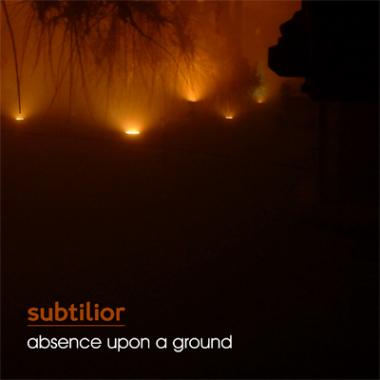
Subtilior (Latin for  “more refined”) is the name adopted by Michele Epifani, keyboardist and main driving force of Italian “retro-prog” band Areknamés, for his first solo outing. With its rather obscure reference to a musical style of the late Middle Ages, called ars subtilior, the project hints at a highly complex, sophisticated offer, and indeed –  very much in keeping with AltrOck Productions’ consistently high level of quality – this is what Absence Upon a Ground delivers.

Though Epifani is credited as composer on all the 16 short pieces featured on the album, Absence Upon a Ground is anything but one of those ubiquitous (and often tiresome) “solo pilot” projects that clutter the oversaturated progressive market. It is instead very much an ensemble effort, to which each of the 12 musicians involved contributes his unique expertise. In some ways, this album is a perfect complement to Altrock Chamber Quartet’s Sonata Islands Goes Rio, as both represent a fusion of traditional chamber music and progressive rock that demands a lot from the listener, but will offer rich rewards to those who will have the patience to give it their full attention.

Due to Absence Upon a Ground’s peculiar structure, a track-by-track analysis would be hard to conduct, if not actually counterproductive. The album features two main multi-part suites – the almost 30-minute “Absence”, and the 15-minute “Upon a Ground”. Epifani, drummer Luca Falsetti and guitarist Stefano Colombi perform on all the tracks, while the other artists appear on either one or the other composition. Valerio Cipollone and Maurizio Fasoli of Yugen are among the performers on “Absence” (Epifani guested on both Le Uova Fatali and Iridule, the second and third release of the Milan-based outfit). In true chamber-rock tradition, the instrumentation blends rock staples such as drums, guitar and bass with reeds (clarinet and saxophone), strings and the haunting chimes of marimba and vibraphone, which combine seamlessly with the warm, fluid sound of the grand piano. Epifani’s signature Hammond organ, though credited in the liner notes, is barely perceptible, while the reeds, strings and percussion form the most readily noticeable layer of the sound’s fabric.

“Absence”  (which, as the title suggests, is meant to be a reflection in musical terms on the topic of absence) comprises 13 short movements – all around the 2-minute mark – that are meant to be taken in as a whole. The chamber feel is very strong in the stately pace and often sparse texture of the music, or in the occasionally lively, conversation-like interaction between different instruments. Dissonance is used sparingly, and hints of melody – though handled in rather unconventional fashion – surface to bind the parts of the suite together. Sudden flares of intensity leave room to rarefied, ambient-like moods with a meditative, almost autumnal feel. The overall effect is one of understated elegance, though with an underlying density that makes repeated listens essential.

The 15-minute “Upon a Ground” features three longer, relatively self-contained sections, characterized by a more cinematic feel that leans more towards the RIO/Avant-Prog side of things. Mainstays of the genre such as sax and cello, as well as eerily intriguing electronic effects, replace the lyrical sounds of clarinet and violin, and the texture often feels looser, almost improvisational – in that deceptive fashion typical of Avant-Prog that effectively disguises a high degree of compositional discipline. All the three movements alternate atonal, knotty passages, with bursts of tenor sax and underpinned by the steady, mournful drone of the cello, and more subdued moments sprinkled by the gentle, tinkling sound of the mallet percussion.

If I had to level some criticism at Absence Upon a Ground, I might say that the album may come across as slightly cold and detached – a not uncommon problem with a lot of Avant/chamber rock. On the other hand, the sheer quality of the performances and the superior compositional skills involved are undeniable, and will delight those who privilege this particular manifestation of progressive music. Highly recommended to lovers of RIO/Avant prog and chamber music – as well as any open-minded listeners – the album is, however, unlikely to appeal to those who like a more “mainstream” approach to progressive rock. As usual for AltrOck releases, the visual aspect of the packaging (with Paolo Ske Botta in charge of the artwork) is top-notch, adding to the album’s interest value.

Links:
http://production.altrock.it/prod2.asp?lang=eng_&id=188&id2=193

http://altrockproductions.bandcamp.com/track/subtilior-medley

http://www.allmusic.com/album/absence-upon-a-ground-mw0002389334

Read Full Post »

TRACKLISTING:
1. Snake Eating Its Tail (1:44)
2. Norrgarden Nyvla (3:03)
3. Hands of the Juggler  (4:44)
4. Rethinking Plague (3:49)
5. Presage (10:21)
6. Land Arf   (6:19)
7. Brachilogia (3:08)
8. Distillando   (4:11)
9. Crossroads (4:37)
10. Luoghi Che Aspettano (6:44)

LINEUP:
Emilio Galante – flute, piccolo
Valerio Cipollone – bass clarinet, clarinet
Andrea Pecolo – violin
Bianca Fervidi – cello

With:
Massimo Giuntoli – piano (6)

As my readers will have noticed, this blog generally deals with music that, in one way or the other, belongs to the rock universe. However, the album that will be reviewed in the following paragraphs (as the ensemble’s own name aptly points out), while conceived as an homage to a movement in whose name the word is prominently featured, cannot by any stretch of the imagination be described as rock.

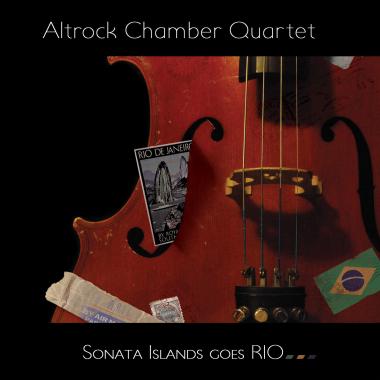
AltrOck Chamber Quartet is the brainchild of gifted flutist and composer Emilio Galante, known for his work with avant-jazz ensemble Sonata Islands (hence the album’s title), who is here assisted by Valerio Cipollone (also a member of Yugen, one of the finest modern outfits in the RIO/Avant vein), Bianca Fervidi and Andrea Pecolo. The album’s witty cover artwork (a brilliant concept by AltrOck resident graphic artist Paolo Ske Botta), showing a violin adorned by Brazilian-themed images, plays on the possible misunderstanding of the word RIO  by those unaware of the acronym’s meaning. Composer Giovanni Venosta, who was responsible for the transcription of three of the original compositions featured on the album, revisits his first experiences with the Rock in Opposition movement in the album’s foreword (offered also in an English-language version, with an eye for AltrOck’s growing international following).

Recorded in February 2012 and released a few months later,  Sonata Islands Goes RIO might be  called (at least in part) a rather highbrow take on a very popular rock product such as the tribute album. Indeed, half of the 10 tracks on the album reinterpret well-known RIO/Avant compositions, while the remaining five are the work of modern Italian composers (including Galante himself) who have been influenced by the subgenre’s distinctive modes of expression. In true chamber tradition, the music is performed by a very limited number of instruments – flute, piccolo, clarinet, violin and cello – ruling out the presence of percussion, guitars or keyboards (with the exception of Massimo Giuntoli’s “Land Arf”, on which the composer himself guests on piano). While at first the result is very intriguing, even fascinating, those who are not chamber music devotees may find things a bit heavy going after a while – even if the album, at around 48 minutes, is by no means excessively long.

For the chamber-music novice, the most approachable tracks are definitely those in the first half of the album, especially the three Fred Frith compositions, “Snake Eating Its Tail” (transcribed by renowned clarinetist Mauro Pedron), “Norrgarden Nyvla” and “Hands of the Juggler” (both transcribed by Giovanni Venosta). In the second, Galante’s flute adopts a particularly assertive, almost harsh tone, while the first makes the most of the lively dialogue-like interplay of the reeds, and the third skillfully shifts from stately melody to dissonance. Galante’s revisitation of Thinking Plague’s “Love” – aptly titled “Rethinking Plague” –  conveys the  elaborate angularity of the Denver band’s sound, while adapting it to a somewhat different musical format. However, Venosta’s string-driven transcription of Univers Zéro’s iconic “Presage”, while undoubtedly faithful to the spirit of the original, cannot fully convey its hauntingly martial allure, and the absence of  Daniel Denis’ imperious drumming diminishes the impact of the final product .

On the other hand, the more recent compositions seem to  be much more suited to the minimalistic chamber format – starting with Francesco Zago’s jagged, intricate “Brachilogia7”, led by Galante’s sharp-toned piccolo. Massimo Giuntoli’s brisk, almost upbeat piano lends a sense of fullness and rhythm to “Land Arf”, whose melancholy middle section showcases Andrea Pecolo’s violin to great effect. Galante’s own composition “Distillando” (originally commissioned by the History Museum of the north-eastern Italian city of Trento) is sparse and almost ethereal in spite of the piercing tone of the piccolo, while the lilting tango of Tiziano Popoli’s “Crossroads” reintroduces a measure of melody in its engaging duet between violin and reeds. “Luoghi Che Aspettano”, penned by Stefano Zorzanello, closes the album with its ambitious but surprisingly effective combination of eerie dissonance and more upbeat, almost melodic flow.

From the above description, it should be quite clear that Sonata Islands Goes RIO is not for everyone. Chamber music in itself can be an acquired taste even for classical music fans, and the daunting nature of anything bearing a RIO label has been discussed all too often in this blog. However, the sheer excellence of the individual performances and the often riveting quality of the music should be enough to attract open-minded listeners who are looking for something more challenging than traditional progressive rock. Needless to say, the album will delight fans of RIO/Avant Prog and contemporary chamber music.

Links:
http://www.altrock.it

http://www.allmusic.com/album/sonata-islands-goe-rio-mw0002397513

http://www.sonataislands.com/


Read Full Post »

TRACKLISTING:
1. Nebulos (4:40)
2. Un Peuplier Un Peu Plié (5:32)
3. Sprouts (3:11)
4. Sprouts (Continued) (1:57)
5. Sprouts (Continued) (1:19)
6. Sprouts (Continued) (3:57)
7. Troïde (7:31)
8. La Serrure (2:32)
9. Soft Fate (1:25)
10. Boletus Edulis (2:52)
11. Dynamique Cassoulet (2:28)
12. Fast Fate (0:35)
13. Le Chiffre (4:05)

LINEUP:
Guillaume Amiel-  bass marimba, vibraphone, percussion
Maxime Delporte – double bass
Ferdinand Doumerc – tenor, alto and sopranino saxes, flute, crooning (11)
Stéphane Gratteau –  drums
Rémi Leclerc – Fender Rhodes, clavinet, Moog, Hammond organ, piano
Marc Maffiolo – bass and tenor saxes

With:
Olivier Cussac – lap steel guitar (2)
Sarah Roussel – words (3-7)
Nicolas Gardel – trumpet (9, 12, 13)
Olivier “Lapin” Sabatier – trombone (9, 12, 13)

Based in the southern French city of Toulouse, Stabat Akish are a sextet formed in 2007 by bassist/composer Maxime Delporte. In 2009 they caught the attention of free-jazz icon John Zorn, who released their self-titled debut album on his own label, Tzadik Records. The band’s sophomore effort, Nebulos, was released on Italian label AltrOck Productions in the early summer of 2012.

As much as I try to avoid resorting to definitions that might sound a bit overblown, “jazz meets chamber rock with a liberal dash of Zappaesque humour thrown in for good measure” describes Stabat Akish’s music quite effectively. With a distinctive, mostly acoustic instrumentation that rules out the guitar on all but one track, but places a heavy emphasis on reeds and mallet percussion (as well as on founder Maxime Delporte’s expertly handled double bass)  they privilege a sophisticated delivery that, while undeniably full of twists and turns, is not as daunting as the typical output of other bands and artists found under the RIO/Avant umbrella. In fact, Nebulos is at the same time very complex and surprisingly approachable, and not just on account of its very restrained running time and light-hearted attitude. The band members, while all considerably gifted and in full command of their own instruments, behave like true ensemble players, and avoid hitting the listener over the head with their technical skill.

On the whole, Nebulos is elegant and very pleasing to the ear, its intricate instrumental texture relieved by an appealing lightness of touch and a keen sense of melody that is not often associated with the genre. Even when the music possesses a loose, almost improvisational feel, it never sounds unscripted or haphazard. The title-track acts introduces the album in style, opening briskly then gradually slowing down, with all the instruments engaged in a sort of lively conversation, blending subtle electronics with warmer, organic tones. However, it is the second track – bearing the tongue-twister-like title of “Un Peuplier Un Peu Plié” (A Slightly Bent Poplar) – that best illustrates Stabat Akish’s effortless marriage of sheer melodic beauty and avant-garde tendencies. Pervaded by the heady tinkle of marimba and vibraphone and the ethereal, faraway strains of Olivier Cussac’s lap steel guitar, contrasted with  buzzing sound effects and cascading drums, it is oddly cinematic and thoroughly riveting.

Stabat Akish’s take on the old prog stalwart of the “epic”, the four-part “Sprouts”,  is made of almost bite-size sections veering from the sax-driven, meditative mood of the first part to the classic jazz feel of the final part, and includes a short spoken-word section in which Sarah Roussel recites something concerning the titular sprouts. Roussel’s voice – almost an additional instrument – also stars in the 7-minute “Troïde”, the longest track on the album, and also the most openly experimental, in which an increasingly agitated phone conversation in three languages is punctuated by sparse drums, piano and whistling synth. “La Serrure” begins in low-key, atmospheric fashion, then suddenly turns into a very upbeat, circus-like tune; similarly, “Dynamique Cassoulet” packs an astonishing amount of variety in under 3 minutes, including a very entertaining appearance by reedist Ferdinand Doumerc in the role of a crooner. On the other hand, “Boletus Edulis” (the scientific name of the delicious porcini mushrooms) blends ambient-like sound effects of birdsong and burbling water with charming, Eastern-tinged  percussion and flute; while “Le Chiffre” closes the album in style with a triumphant, albeit slightly chaotic big-band workout, in which the saxes are augmented by trumpet and trombone.

An intriguingly classy effort, Nebulos is warmly recommended to lovers of modern jazz and RIO/Avant/chamber rock, though the more traditionally-minded faction of the prog audience might find it a more appealing proposition than other recent releases in a similar vein.  Another fine release from the AltrOck roster, purveyor of endless musical surprises, the album – in keeping with the label’s tradition for outstanding visual packaging – is accompanied by high-quality artwork and photography.

Links:
http://stabatakish.com/

http://www.altrock.it

Read Full Post »

SETLIST:

MoeTar
Butchers of Baghdad
Dichotomy
Infinitesimal Sky
Regression to the Mean
Random Tandem
Entropy of the Century
New World Chaos
Never Home
Ist or an Ism
Friction

miRthkon
Zhagunk
Automaton
Daddylonglegz
Kharms Way
Coven of Coyotes
Nocturne
Bag
Banana
Cascades
Honey Key Jamboree
QX1
Hapax Legomena
Encore (?)

In the slightly unlikely timeframe of mid-August, two of Oakland’s finest bands, miRthkon and MoeTar, finally landed on the East Coast for their first-ever tour in this part of the country. Although the heat and humidity must have come as a shock to residents of a region blessed (at least in the eyes of this hot-weather hater) with a permanently mild, cool climate, the bands’ members – in spite of the inevitable tiredness and the less-than-ideal temperature inside the notoriously AC-less Orion Studios – acquitted themselves splendidly, and inaugurated their long-awaited tour with a bang.

Not surprisingly, seen the high level of praise garnered by both bands’ debut albums – miRthkon’s Vehicle (2009) and MoeTar’s From These Small Seeds (2010, reissued in 2012 with a new cover) – the venue was almost packed to capacity, with its usual “house party” atmosphere in full swing – folding chairs, coolers and small buffet of refreshments included. The lower-than-average temperature, helped by an almost strategically-timed summer storm that allowed some pleasantly cool air to waft into the crowded stage area from the open bay, made things more bearable – at least for the audience, because the bands had to cope not only with the intense humidity, but also with the heat generated by the stage lights. However, none of these adverse circumstances had any impact on the quality of either performance, which exceeded the attendees’ already high expectations.

Five-piece MoeTar had already elicited very positive reactions by West Coast prog fans, opening for the likes of Sleepytime Gorilla Museum and Allan Holdsworth in the past few months. Fronted by vocalist extraordinaire Moorea Dickason (aka Moe) – simply put, one of the best female voices I have had the privilege to hear in a long time – they share one member with miRthkon, multi-instrumentalist Matt Lebofsky. With his highly focused, somewhat serious mien, Lebovsky (who plays keyboards in MoeTar, and bass in miRthkon) was a perfect foil to Moorea’s boundless energy and thoroughly engaging stage presence. Sporting streaks of bright blue face paint that gave her an endearingly childlike look, she commanded the audience’s attention right from the first notes of opener “Butchers of Baghdad” with her jaw-dropping vocal acrobatics. While many female singers adopt a stereotypical melodic approach, often with rather tiresome operatic touches (and equally often sounding alarmingly alike), Moorea bends the music to her will, tackling vertiginous scales with seemingly no effort at all. MoeTar’s songs, built around her interpretation of Tarik (aka Tar) Ragab’s quirky, literate lyrics, offer a heavily eclectic mix of accessibility and complexity, with influences as far-ranging as traditional jazz, iconic acts such as XTC and Kate Bush, and a healthy pinch of RIO/Avant spice. Together with other modern North American bands such as 3Rdegree or Half Past Four, MoeTar are at the vanguard of what I call the “new frontier” of progressive rock, embracing the song form and giving it a much-needed overhaul, all the while shunning the blatant AOR leanings of other bigger-name bands or artists.

During their hour-long set, MoeTar treated the audience to a selection of tracks from their debut – including the haunting torch song for the 21st century “Never Home” and the superbly intense, hard-edged “Ist or an Ism” – plus a couple of tantalizing previews of their new album, which revealed a more experimental bent while remaining true to the band’s song-based approach. Individual performances were top-notch – from Matthew Heulitt’s assertive but consistently melodic guitar to Tarik Ragab and David M. Flores’ dynamic rhythm section and Lebofsky’s seamless handling of organ, synth and piano – but MoeTar are very much an ensemble operation, even if Moorea’s vocals may be the most obvious draw. Most importantly, the band members looked completely at ease on stage, conveying a genuine sense of enjoyment that reinforced the intelligent, yet down-to earth appeal of their music.

After a leisurely break dedicated to social interaction and purchase of CDs and assorted merchandise, miRthkon – that self-professed “amplified chamber ensemble masquerading as a rock band” – took to the stage, and proceeded to blow the roof off the venue with their highly energized, highly technical blend of almost everything under the sun (including classical music, with an unrecognizable version of Samuel Barber’s “Nocturne”). Possibly the most qualified pretenders to the Frank Zappa throne, with an idiosyncratic lineup that dispenses with keyboards but boasts a dual-guitar, dual-reed attack, they reinterpret the sometimes overly serious Avant-Prog aesthetic with a lightness of touch and oodles of absurdist humour that belie the mind-boggling complexity of their music. Indeed, miRthkon are not by any means minimalistic, and a glorious sense of bombast occasionally runs through their brilliantly-titled and –executed compositions.

Though dealing with the effects of a kidney stone discovered during the 3000-mile coast-to-coast drive, guitarist and founder Wally Scharold fulfilled his frontman duties with aplomb, his endearingly whimsical between-song banter adding to the entertainment value of the evening. Since the release of Vehicle, the band have replaced guitarist and co-founder Rob Pumpelly with Travis Andrews, who looked a bit shy at first, but then got nicely into the swing of things, proving an excellent sparring partner for Scharold. While drummer Matt Guggemos was hidden behind his bandmates, due to the distinctive configuration of the Orion stage, his often thunderous, but always creative drumming, in perfect synergy with Matt Lebofsky’s powerful yet sleek bass lines, lent both texture and dynamics to the band’s dazzlingly unpredictable sound. However, the duo of alto saxophonist Jamison Smeltz, with his impressive sideburns and amusing facial expressions, and “Goddess of the Cane” Carolyn Walter, in a bright blue dress and a funny head ornament that looked like a pair of small goat horns, were the true focus of attention. Both seemed to be enjoying themselves immensely, and their visual appeal went hand-in-hand with their boisterous musical contribution. For a band that calls itself by the slightly daunting tagline of “Oaklandish chambercore”, miRthkon were a lot of fun and, in their own peculiar way, much more approachable than many outfits bearing the RIO/Avant label. In fact, the music was never noisy or gratuitously chaotic, and the band’s inimitable sense of humour enhanced its appeal, avoiding the dour, needlessly convoluted stance that often gives Avant-Prog a bad rap.

As usual, the sound quality – masterfully engineered by Mike Potter, who looked as pleased as punch throughout the evening – was excellent, and brought out each of the bands’ distinctive qualities without beating the attendees’ eardrums into submission. A special mention goes to the selection of music played before and between sets – I never thought I would hear James Brown played alongside Blue Öyster Cult and more traditional fare at a progressive rock concert! I was also glad to see quite a few women and younger people among the audience. Indeed, the evening was also a celebration of female talent, with Moorea Dickason’s incredible vocal performance and Carolyn Walter’s masterful handling of her “forest of horns” – both talented, attractive women with a friendly, engaging attitude who manage to shine without capitalizing on their looks.

All in all, it was definitely one of the best shows of the past few years, and a very uplifting moment after the setbacks suffered by the US prog scene in recent times. These two bands are a brilliant example of proactive behaviour and genuine creative spirit, and deserve to have their efforts crowned with success. If they are playing anywhere near you, do yourselves a favour and make sure you do not miss them: their performance will dispel any doubts you might harbor about the future of progressive rock.

Links:
http://www.moetar.com

http://www.mirthkon.com

Read Full Post »

A documentary film by José Zegarra Holder and Adele Schmidt
Produced by Zeitgeist Media LLC
Total time: 98 minutes

In the summer of 2010, the release of Romantic Warriors – A Progressive Music Saga took the music scene by surprise, putting a semi-official seal on the much-touted renaissance of progressive rock in the early 21st century. Retracing the origins of the genre while detailing its development in more recent times, the documentary’s no-frills style and unabashed sincerity captured the attention of viewers beyond the usual circles of prog stalwarts. However, Adele Schmidt and José Zegarra Holder did not rest long on their laurels, and, a mere few months after the film’s release, they were already busy working on a follow-up – this time dedicated to the Rock in Opposition movement, a subset of progressive rock with unique characteristics and a devoted following.

In spite of the common misconception that attaches a political meaning to the “opposition” part of the name, the RIO movement was one of the first attempts by a group of bands to break free of the shackles imposed by major record labels and distribution companies and take matters into their own hands. In a way, the five bands that initiated the short-lived, though hugely influential movement (Henry Cow, Univers Zéro, Etron Fou Leloublan, Stormy Six and Samla Mammas Manna, hailing from five different European countries) were forerunners of the current endeavours of non-mainstream bands and artists.

For two solid years, Adele and José worked unceasingly at the second installment of a planned series of documentary films on the progressive rock scene, travelling from their home in the Washington DC metro area to Europe and other parts of the US to meet the protagonists of the original RIO movement and those who have followed in their footsteps. Romantic Warriors II relies on interviews and concert footage (both archival and recent) for the bulk of the narration, though with the addition of elements that had not been fully exploited the first time around. Roland Millman’s judiciously used voice-over lends narrative cohesion to a storyline that might have otherwise come across as somewhat rambling. While in the first Romantic Warriors both authors remained constantly behind the camera, this time the viewer can catch glimpses of José in a few scenes – either behind the wheel, or interacting with the artists. Most of the interviews were conducted on location, though the filmmakers also made use of modern technology by using Skype to conduct video interviews with some of the movement’s main actors.

Romantic Warriors II retraces the history of Rock in Opposition, from its inception in 1978 – when the original progressive rock movement was already on the wane – to its demise and long-lasting legacy. The original protagonists of the scene and their heirs take turns in the spotlight, offering not just a historical perspective, but also a lesson on how the artists can take control by implementing various forms of collaboration. As was also the case with the first Romantic Warriors, the film is as much about the social and historical aspect of the movement and its ramifications as about the music itself – making it more approachable for outsiders. A very interesting mention of the cross-fertilization between the post-RIO bands and the post-punk scene in the early Eighties drives another nail in the coffin of the commonly held myth of the irreconcilable enmity between punk and progressive rock.

For all the undeniable similarities to the first film, both in concept and format, Romantic Warriors II represents a quantum leap in terms of quality. The slightly gritty, warts-and-all approach of the original has been replaced by a more polished brand of realism that, while retaining its objectivity, also leaves room for artistry. The location shots, while often stunning, avoid the pitfalls of a tourist-brochure effect – whether it is a starkly beautiful view of the Rocky Mountains – a very apt visual complement to Thinking Plague’s music – or bustling views of London or Paris (including a breathtaking shot of the Tour Eiffel at night). Those “travelogue” scenes lend a coherent “road-movie” feel to the whole, and also emphasize the quintessentially cosmopolitan nature of the RIO movement. The use of concert-related ephemera (posters, tickets and newspaper clippings) and vintage photos brings the story to life and anchors it to reality. On the other hand, the striking fantasy sequence in which a cloaked and masked figure moves through the medieval alleys of Prague’s Old Town as a visual embodiment of Univers Zéro’s iconic “Jack the Ripper” adds a touch of weirdness and drama to the basically matter-of-fact fabric of the narration.

Not surprisingly, the film features a very broad cast of characters, ranging from the main actors of the original RIO movement to those who have been carrying the torch up to the present day – fans included. Those who are familiar with the first Romantic Warriors will recognize some familiar faces, such as Steve Feigenbaum of Cuneiform Records and Paul Sears of The Muffins. Of the many musicians that appear in the film, Henry Cow’s drummer Chris Cutler (who will be present at the Washington DC premiere of the film, on September 28, 2012) is the one who gets the longest time in the spotlight, his testimony providing almost a running commentary to the development of the story – augmented by each of the other contributions until all the pieces of the mosaic fall into place. Thinking Plague’s Mike Johnson’s musings about the sorry state of Planet Earth (with the endless vistas of the Rocky Mountains as a backdrop) add new layers of meaning to the “opposition” part of the movement’s name, anchoring its present developments to some of the most urgent concerns of contemporary society. The last word, however, is left for Magma’s charismatic Christian Vander – an artist who, while never part of the RIO movement, almost embodies the definition of “groundbreaking”. His final quote, reminding the viewer that “something is always possible, even in the worst circumstances”, conveys a strongly inspirational message to anyone who believes in what they do.

Festival and concerts play as large a role as in the original Romantic Warriors. The historic joint performance of Belgian outfits Univers Zéro, Présent and Aranis at the 2011 edition of the Rock in Opposition festival sets the scene, right before the opening credits; the once-in-a-lifetime event, named “Once Upon a Time in Belgium”, also gets ample coverage towards the end of the documentary. The film includes footage from the equally historic performances of Magma and Univers Zéro at the 2010 edition of the Sonic Circuits Festival, as well as scenes from 2011’s CuneiFest at the Orion Studios. The “new guard” of the Avant-Progressive scene is represented by an international cast of bands from both Europe and America.

While the first Romantic Warriors may have been chiefly conceived for the benefit of the prog audience, the second episode of Adele Schmidt and José Zegarra Holder’s progressive rock saga holds a much wider appeal. The music’s very combination of the arty, the quirky and the academically austere will attract people who appreciate forms of non-mainstream music that do not necessarily fall under the “progressive rock” umbrella – including modern classical. The amount of care and attention that have gone into the making of this documentary is also reflected in the DVD’s stylish, scrapbook-like cover photo. Regardless of the intrinsically niche nature of the music, Romantic Warriors II is an outstanding piece of filmmaking in its own right, with the potential to kindle the interest of any lover of the tenth Muse.

Links:
http://www.progdocs.com

http://www.zeitgeistmedia.tv

Read Full Post »

The name of Argentine band Cucamonga will not fail to ring a bell with Frank Zappa fans, as it references the Californian suburban city (now called Rancho Cucamonga) where Zappa’s Studio Z was located. Unfortunately, the information available on this quintet – led by guitarist Oscar “Frodo” Peralta, who is also the band’s main composer – is very sparse, and they currently have no active website or social media presence. Their debut album, Alter Huevo, recorded in early 2011 in the northern Argentine city of Santa Fe, was released a year later by AltrOck Productions.

Not surprisingly, Zappa is a major influence on Cucamonga’s sound, which comfortably straddles the line between avant-progressive rock and classic jazz-rock/fusion, with liberal doses of humour thrown in as an added bonus. Clearly a bunch of talented and dedicated musicians, their particular brand of music may not be extremely innovative (nor does it claim to be), but it is sure to intrigue the discerning listener, with enough complexity to please the most demanding fans and an endearingly light-hearted attitude to temper the technical dexterity. Though Alter Huevo is mostly instrumental, voices and bursts of laughter add a quirky touch to a few tracks. Warm hints of Latin music are scattered throughout the album, while the accordion – the iconic protagonist of tango music – lends its distinctive Old World flavour to some of  the compositions. However, Cucamonga’s sound rests on three main instruments – guitar, sax and drums – effectively complemented by keyboards and mallet percussion.

With a running time just under 40 minutes, Alter Huevo is a compact, well-balanced album that is easy to enjoy without getting overwhelmed by an excess of notes. Opener “Tetascotch”, the longest track on the album, and the most complex in terms of mood and tempo changes, kicks off with a funny circus-like tune, then takes a more laid-back turn, with all the instruments getting their chance to shine in classic jazz-rock fashion. “El Dengue De La Laguna” continues on the same path, showcasing Julian Macedo’s stellar drumming – propulsive and textural at the same time – while the instrumental interplay often suggests a dialogue without words, with an elegance that hints at vintage Canterbury. “Tu Guaina” and “Variaciones Sobre Tu Hermana” veer towards the Avant end of the spectrum, the latter throwing in some dissonance and moments of rarefied calm enhanced by the cascading tinkle of the mallet percussion.

With “Tillana”, Cucamonga tackle a traditional piece of Carnatic music (the classical music of Southern India) originally rearranged by legendary percussionist Trilok Gurtu for his 1993 album Crazy Saints – which, as can be expected, pushes percussion to the forefront, though guitar, sax and piano also play a strong role. “Cerrazón En Al Teyú Cuaré” alternates slow, melancholy moments with sudden surges of power. The short, upbeat “Dominguillo” introduces album closer “Cletalandia”, based on a hilarious radio broadcast about restoring sensuality in marriage – something that would have definitely won Zappa’s seal of approval. Those familiar with Spanish will enjoy reading the text in the CD booklet. Musically speaking, the track is bookended by energetic sections very much in classic jazz-rock style, powered by Adriano Demartini’s groovy bass lines; while the central part, which includes the broadcast, is accompanied by sparse yet expressive sax.

In keeping with AltrOck’s reputation for stylishly packaged products, Alter Huevo comes with a nicely illustrated booklet (courtesy of the label’s resident graphic artist, the multi-talented Paolo Ske Botta) that successfully combines elegance and whimsy. Udi Koomran’s experienced mastering guarantees excellent sound quality, emphasizing Cucamonga’s varied instrumentation and the impressive skill of the players. Lovers of eclectic jazz-rock with a pinch of avant-garde and world-music spice (as offered by bands as AltrOck’s own Calomito or MoonJune’s Slivovitz) will appreciate this solid, classy offering by an interesting new band. However, it would be a good idea if Cucamonga took a more active role in promoting their music on the Web, which in this day and age is nothing short of indispensable.

Links:
http://www.allmusic.com/artist/cucamonga-p2600792

http://production.altrock.it/prod2.asp?lang=eng_&id=179&id2=180

http://soundcloud.com/udi-koomran/sets/cucomonga-alter-huevo-altrock/

Read Full Post »

TRACKLISTING:
1. Knee (5:05)
2. Oom Pah (5:09)
3. Missing the Train (3:41)
4. Rainbro (5:02)
5. Too Good To Be True (4:11)
6. Somnambulist Subversion (4:34)
7. Nut Job (3:12)
8. Forgotten Planet (6:00)
9. Dirty Spoons (5:12)
10. 25 Miles to Freedom (10:30)

LINEUP:
Melody Ferris – vocals
Ivor Holloway – tenor and alto saxophone, clarinet
Pat Moran – electric bass
Nick Peck – Hammond B-3 organ, clavinet, Fender Rhodes electric piano, minimoog Voyager, mellotron, piano, Arp String Ensemble, Wurlitzer 200A electric piano
Doug Port – drums
David Shaff – trumpet
Ryder Shelly – vibraphone
David Slusser – Slussomatic, electronics
Andrew Vernon – keyboards, Farfisa organ
Bill Wolter –  electric and acoustic guitars, keyboards, electronics

Line-up on # 10:
Shayna Dunkelman – vibes, crotales
Melody Ferris – vocals
Jordan Glenn- drums
Ivor Holloway – tenor saxophone
Curtis McKinney – electric bass
Charith Premawardhana – viola
Max Stoffregen –  piano, synth
Bill Wolter – guitar, keyboards

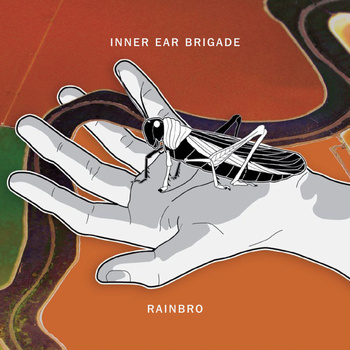
The high level of quality offered by AltrOck Productions and its subsidiary label, Fading Records, will no longer come as a surprise for progressive rock fans. However, there are times when an album released on the Milan-based label will exceed expectations – and this is definitely the case with Rainbro, Inner Ear Brigade’s debut album.  Formed in 2005 in Oakland (California) by multi-instrumentalist and composer Bill Wolter, the band  was originally a quartet; then, in the following years, the lineup grew into a 7-piece, with a number of honorary members participating in the recording of the album. Rainbro was recorded in the summer of 2010, and released on the international market in January 2012.

The Bay Area city of Oakland has long been a hotbed of cutting-edge music, being home to such highly acclaimed outfits as Sleepytime Gorilla Museum and  miRthkon (also on the AltrOck roster), as well as legendary guitarist/composer Fred Frith. However, Inner Ear Brigade have something that sets them apart from other bands that fall under the avant-progressive umbrella, and makes them more easily approachable by “mainstream” prog fans. With their extended lineup and intriguing instrumentation – featuring a healthy mix of vintage keyboards, state-of-the-art electronics and conventional rock gear, augmented by reeds, horns and vibraphone – they produce a lush, fluid sound that suggests the understated elegance of Canterbury bands such as Hatfield and the North or National Health rather than the austere beauty of Univers Zéro or the martial grandeur of Magma.

In quintessentially eclectic fashion, Inner Ear Brigade throw many diverse influences into their musical melting pot, straddling the divide between reverence towards past glories and a genuinely forward-thinking attitude. While the progressive rock scene suffers from a glut of acts often hopelessly rooted in the past and seemingly unable to go beyond reproducing the classic Seventies sound, Inner Ear Brigade use the influences drawn from the rich treasure trove of the golden age of prog as a springboard for creating their own sound, rather than as an exercise in nostalgia.

Though all of the band members are remarkably talented, Inner Ear Brigade’s ace in the hole is Melody Ferris’ voice, which at a superficial listen might recall the distinctive style associated with avant-prog and represented by Thinking Plague’s Deborah Perry and Elaine DiFalco. Indeed, the demanding vocal lines tackled by Ferris in opening track “Knee” sound like a textbook example of the subgenre’s conventions. However, as the album progresses, Ferris’ vocals become increasingly more versatile, engaging in singing and wordless vocalizing with equal effectiveness, and often  “playing” along the other instruments rather than acting as a separate entity (a fine example of this is the atmospheric “Too Good to Be True”).  The quirky lyrics enhance the album’s overall playful mood and emphasize its Zappa and Canterbury references, which the band share with their fellow Oaklanders miRthkon.

The first half of the album displays the strongest avant-prog imprint, effortlessly blending accessibility and experimentalism, catchy tunes and whooshing, spacey electronic effects.  A sunny California vibe tempers the bouts of dissonance in tracks such as “Missing the Train”, while saxes and trumpet add a buoyantly jazzy note. In some of the tracks – notably the trio of instrumentals that precede the album’s “epic”, the 10-minute “25 Miles to Freedom” (recorded in 2009 with a different lineup) – the two souls of the band seem to coexist, with melodic, laid-back passages alternating with more energetic, upbeat ones, and short yet effective forays into more experimental terrain, duly bolstered by liberally used electronics. The title-track is powered by harsh guitar riffs and blaring horns; while the closing track takes the band deep into Canterbury territory, with Ferris’ splendid vocal performance bringing to mind the incomparable Northettes, and the viola adding a wistful, lyrical touch to a rich, almost symphonic texture. Varied yet cohesive, “25 Miles to Freedom” wraps up the album with a bang, conveying a palpable sense of enjoyment on the part of the band that listeners will be hard put not to share.

With a well-balanced running time of about 52 minutes, Rainbro never overstays its welcome, in spite of the undeniable complexity of the music. The album’s ebullient yet intricate nature will attract lovers of quirky, eclectic progressive rock, while the presence of vintage instruments typical of traditional prog may encourage the more conservative set of fans to give Inner Ear Brigade’s music a try. All in all, Rainbro is an outstanding debut for a band that is definitely going places, and a strong contender for my personal “best of 2012”.

Links:
http://innerearbrigade.com/

http://innerearbrigade.bandcamp.com/

http://production.altrock.it/prod2.asp?lang=ita_&id=182&id2=183

Read Full Post »

« Newer Posts - Older Posts »