Feeds:
Posts
Comments

Archive for the ‘RIO/Avant’ Category

TRACKLISTING:
1. The Noise of Time (5:09)
2. For Those Overrun by American Violence (7:12)
3. The Wind (5:12)
4. I Fought for Nothing (5:21)
5. Election Night 2004 (and only some dogs down the street protested) (2:11)
6. Winter (5:40)
7. Fate (3:44)
8. Adrift in Empire (5:32)
9. For Those in Peril on The Sea (7:10)
10. Softly Adrift (4:53)
11. The Matter of Our Crimes (5:41)
12. Meditation for Kellie C. (5:46)

LINEUP:
Scott Brazieal – vocals, all instruments

With:
Ali Ippolito – vocals (1, 3, 4)
Adam Hurst – cello (4, 6)
Tom Hood –  bowed guitar (6, 9), guitar solo  (7)
R.D. (Dave) Hardesty – vocal narrative (11)

Followers of the US avant-progressive scene will remember Scott Brazieal as the founder of Cartoon and PFS, as well as a member of 5uu’s and Thinking Plague, who also toured with such icons as Christian Vander and John Greaves. A gifted multi-instrumentalist and composer, currently based in California, Brazieal has been lying low for the past decade or so, steadily working on his first solo project – a labour of love that began in 2003, and was finally released earlier this year. The album, titled Songs from the Empire, comprises 12 tracks mostly performed by Brazieal himself with the help of some guest musicians. According to the artist, the album was conceived as a whole rather than a collection of individual songs, and as such is meant to be listened to in its entirety – a concept that sounds almost alien to a generation weaned on iPods and single-song downloading.

Songs from the Empire is one of those albums that may need several listens before they begin to “make sense”, so to speak. While the instrumental component definitely outweighs the singing, Brazieal’s voice – reminiscent of Roger Waters’, and sounding at times rather off-key (though the effect may be intentional) – seems to emphasize the dissonance that occasionally disrupts the somber, meditative mood of the music. The most distinctive (as well as potentially controversial) aspect of the album, however, is its highly charged political content. Flag-wavers of any kind, or those who think that music should refrain from taking a political stance, will be immediately put off by titles such as “For Those Overrun by American Violence”. On the other hand,  the political message is not conveyed in a straightforward manner – that is, through “conventional” lyrics – but rather through suggestions such as sound effects, vocal narratives and original recordings. Indeed, the most overt statement can be found in  “Adrift in Empire”, which features part of Martin Luther King, Jr’s 1967 “Beyond Vietnam” speech – whose content rings uncannily true even 45 years later.

Though the message is almost inseparable from the music, in purely musical terms Songs from the Empire is a fascinating listen, hovering between atmospheric minimalism and classical references with a pinch of rock directness thrown in for added spice. The use of dissonance – to many the hallmark of the avant-prog subgenre – is quite restrained, while quite a surprising amount of melody is scattered throughout the album. Keyboards and electronics play the biggest role, but the contribution of other instruments (such as strings, guitar and drums) ensures variety, while sound effects reinforce the message and enhance the emotional impact. The slow pacing of the compositions  – at times exceedingly so – also highlights their introspective quality.

Guest vocalist Ali Ippolito’s melodious tones temper Brazieal’s harsher, more discordant ones in opener “The Noise of Time”, the rarefied, vaguely ominous “I Fought for Nothing” and the atmospheric “The Wind”; while a female church choir – superimposed to a wailing, almost tribal voice – injects a sense of eerie mysticism in the broodingly cinematic “For Those Overrun by American Violence”. The already-mentioned “I Fought for Nothing” and “Softly Adrift”, both suggestive of Roger Waters’ solo output, bridge the gap between mainstream and experimentation, coming across as skewed torch songs of sorts. On the other hand, the instrumental tracks possess the intimate, sometimes brittle feel of chamber music. The 7-minute “For Those in Peril on the Sea” starts out in mournful, string-driven fashion, then gradually turns more dissonant towards the end. In the highly descriptive “Winter”, the slow, sparse motion of the piano is disturbed by eerily creaking sound effects suggesting frost or ice. The album is then brought to a lovely, melancholy close by the subdued piano in the aptly titled “Meditation for Kellie C.”, joined by atmospheric keyboard washes towards the end.

Clocking in at about 61 minutes, Songs from the Empire is a well-balanced, carefully composed effort that will definitely please lovers of everything avant-progressive, as well as those who appreciate contemporary classical music. While the previous paragraphs should make it abundantly clear that the album is not an easily accessible proposition, it will also reward the patience of those who like music to make you think rather than offer instant gratification.

Links:
http://scottbrazieal.com/

Read Full Post »

TRACKLISTING:
1. Malthusian Dances (6:39)
2. I Cannot Fly (8:34)
3. Sleeper Cell Anthem (6:10)
4. A Virtuous Man (11:45)
5. The Gyre (4:42)
6. Climbing the Mountain (8:38)

LINEUP:
Elaine Di Falco – voice
Mark Harris – saxes, clarinets
Mike Johnson – guitars
Kimara Sajn – drums, keyboards
Dave Willey – bass

With:
Kaveh Rastegar –  bass (1)
Robin Chestnut – drums (5)
Dexter Ford – bass (5)

Described by founder Mike Johnson as an “enterprise” rather than a band in the conventional sense, Thinking Plague seem to fit the definition of “cult act” to a T. The many different incarnations of the US answer to seminal European outfits such as Henry Cow and Univers Zéro – based in the rugged mountain state of Colorado, where it was formed by Johnson and guitarist/drummer Bob Drake in 1982 – read like a veritable “who’s who” of the US avant-progressive scene. Thinking Plague’s whole existence has also been characterized by a constant struggle against circumstances, which has inevitably impacted the frequency of their releases. Indeed, with a total of 7 studio albums released in almost 30 years of history, they definitely count among the least prolific bands on the scene, together with Cuneiform label mates Miriodor.

The average progressive rock fan, steeped in the grand symphonic tradition of the early Seventies, usually has a very controversial relationship with the more forward-thinking fringes of the movement – and very few bands are as likely to send prog fans running for the exits as Thinking Plague. Unabashedly intellectual, as their very name (associating the act of thinking with a curse of sorts) suggests, with extremely well-written, thought-provoking lyrics, Thinking Plague take the proverbial complexity of the Avant subgenre up a notch.  Decline and Fall, their highly-awaited seventh album, released almost 9 years after A History of Madness, is certainly no exception. The album also showcases the band’s new lineup (though drummer Robin Chestnut, who was introduced on the occasion of Thinking Plague’s headlining appearance at Cuneifest in November 2011, only appears on one track), spotlighting the contributions of new singer Elaine DiFalco (recently seen on two outstanding albums, Dave Willey and Friends’ Immeasurable Currents and 3 Mice’s Send Me a Postcard) and drummer/keyboardist Kimara Sajn, a gifted multi-instrumentalist well-known on the Seattle experimental music scene.

Clocking in at under 47 minutes, and entirely written by Mike Johnson, Decline and Fall features 6 tracks connected by a fil rouge made all too clear by the title and artwork  – an apocalyptic reflection on the dismal state of Planet Earth, which, according to Johnson’s musings, has long gone past the point of no return. Through vivid verbal imagery flawlessly supported by the head-spinningly intricate music, humankind is depicted as rushing headlong (and heedlessly) towards destruction, its disappearance the only thing that will be able to save the Earth. While the term “concept album” is generally associated with overambitious productions that often collapse beneath the weight of their own pretensions, Decline and Fall is tight and tense, the synergy between lyrics and music embodied by Elaine DiFalco’s stunning vocal performance. Reviews often mention the role of vocals as just another instrument, but the observation is rarely as fitting as in this particular case. DiFalco’s extremely versatile voice ranges from soothing the ear with subdued gentleness to tackling parts of rollercoaster-like intensity, bolstered by the use of multi-tracking to almost vertiginous effect.

Though the word “multilayered” frequently crops up in prog reviews, it sounds like an understatement if applied to Decline and Fall. True, the listener might occasionally feel that the music is too clever or intricate for its own good, in a sort of “art for art’s sake” manner, and keeping track of the twists and turns in the compositions is anything but an easy task. Decline and Fall demands a lot from its listeners, and it is definitely not the kind of music you would want to keep in the background while doing the housework. On the other hand, contrarily to the trend shown by most “mainstream” prog, displays of individual brilliance have little or no place in Thinking Plague’s world. Each instrument, like a thread in a tight, complex weave, gets its chance to shine, but as part of a whole rather than in isolation. Consequently, solo spots are few and far between, though the excellent sound quality brings each contribution to the fore.

Similarly, Decline and Fall is best approached as a whole, even if each track has its own distinct personality. Unpredictable by definition, the music can be almost unbearably dense, while at times turning rarefied, almost ethereal. Brisk opener “Malthusian Dances” thrives on Sajn’s commanding percussion work, while Mark Harris’ assertive clarinet spars with Johnson’s guitar. “I Cannot Fly”, a barbed attack on the easy consolation offered by religion, is suitably sparse and dissonant, though fleshed out by Dave Willey’s muscular bass lines – which are also spotlighted in “Sleeper Cell Anthem”, together with Sajn’s solemn, martial drumming. The mesmerizing ebb and flow of the  album’s centerpiece, the almost 12-minute “A Virtuous Man”, is so fragmented as to be nearly impossible to describe, and yet oddly cohesive;  DiFalco’s voice seamlessly blends with the impossibly complex lines of the music, surging and fading along with it. The shorter, mostly instrumental “The Gyre” introduces closing track “Climbing the Mountain”, an oddly serene, keyboard-driven number enriched by atmospheric mellotron and understated piano whose unexpectedly abrupt ending seems to suggest humankind’s inevitable demise.

No matter how clichéd it may sound, the warning of “not for the faint-hearted” is quite fitting for an album such as Decline and Fall. Those looking for catchy melodies, conventionally “beautiful” singing and lush orchestrations are bound to be put off by Thinking Plague’s off-kilter, yet highly reasoned approach to composition, and the undeniably depressing subject matter is unlikely to appeal to fans of the more escapist side of prog. This is not the by-numbers doom-and-gloom typical of many progressive metal bands, but a genuinely dystopian vision of the future of humankind conveyed in strikingly beautiful imagery – a true soundtrack of the Apocalypse. While Decline and Fall is clearly not an easy proposition, it will yield rich rewards for those brave enough to approach it.

Links:
http://www.generalrubric.com/thinkingplague/main.html

Read Full Post »

TRACKLISTING:
1. Hot Rod Waltz (3:33)
2. Invitation (2:24)
3. Forro Fuega (2:45)
4. Tse-Tse (4:06)
5. 20 Heart (0:54)
6. Orkneys (4:12)
7. Mr. Hamster’s Dilemma (3:51)
8. Celleste (4:57)
9. Botellas de Botica (3:27)
10. Experiment (3:35)
11. Year of my Solstice (5:28)
12. Skallaloo (3:38)

LINEUP:
Elaine DiFalco – voice, piano, keyboards, vibraphone, handclaps, shaker, accordion, qarkabeb, rhythm box, percussion
Cédric Vuille – guitar,  e-bow guitar, bass, keyboards, cuatro, clarinet, ukulele, nose flute, percussion, kalimba, theremin, banjolele, flute, spoons, triangle, jew’s harp
Dave Willey – accordion, bass, tambourine, electric and acoustic guitar, surdo, zither, shaker, percussions, mailing tubes

With:
Daniel Spahni – drums (1, 6, 7, 9, 10, 12)
Raoul Rossiter – pandero, triangle (3)
Udi Koomran – shaker, hand claps (6)
Naama and Michal Koomral – happy sisters (7)

Love or hate the Internet, there is no doubt that without its existence an album such as Send Me a Postcard would have never seen the light of day – much to the detriment of the contemporary non-mainstream music scene. In fact, the three artists who have adopted the quaintly endearing name of 3 Mice reside at opposite ends of the world – Cédric Vuille (of Débile Menthol and L’Ensemble Rayé fame) in Switzerland, Dave Willey and Elaine DiFalco (both members of Thinking Plague, Willey also Hamster Theatre’s founder and mainman) in Colorado. Israeli sound engineer Udi Koomran (one of the icons of the modern Avant-Prog scene) acted as a catalyst by arranging a meeting between the three artists in 2008, when Thinking Plague performed in Vuille’s home town of Geneva. After finding out that they were kindred spirits in their musical vision, Vuille, DiFalco and Willey started their project by sharing files on the Internet, then drafting in some trusted collaborators (namely L’Ensemble Rayé’s drummer Daniel Spahni and Hamster Theatre’s percussionist Raoul Rossiter, as well as Koomran himself). Send Me a Postcard, lovingly packaged in Elaine DiFalco’s delightful artwork, was finally ready for release at the end of 2011.

Clocking in at about 42 minutes, and featuring 12 short tracks (the longest barely above 5 minutes), Send Me a Postcard belongs to the “new generation” of undeniably progressive albums that, however, dispense with most of the trappings of traditional prog – such as epics, orchestral arrangements and somewhat pretentious concepts. Even if the association of the members of 3 Mice with the RIO/Avant scene may prove daunting to those who are more conservatively inclined, the album has more in common with Hamster Theatre’s playful, folksy attitude than Thinking Plague’s austere intensity. Songwriting credits are shared equally between the three artists, who lend them their individual imprint; DiFalco’s compositions are the closest to classic RIO/Avant modes, though with a more informal, laid-back attitude.

Unlike Willey’s recent solo album, the outstanding Immeasurable Currents (which has a very similar structure in terms of running time and number of tracks), Send Me a Postcard is mostly instrumental, though DiFalco’s distinctive voice appears on half of the tracks, engaged in lovely wordless vocalization. There is nothing overly serious or academic about 3 Mice’s approach: the overall mood is decidedly upbeat, reflecting the sheer joy of making music that is at the same time complex and accessible. The emphasis is firmly placed on the sleek, seamless instrumental interplay, with the three musicians switching effortlessly from one instrument to the other; the main actors – the accordion, the guitar and the piano – are complemented by an impressive array of exotic percussion and other ethnic instruments.

Not surprisingly, being the result of the collaboration between a European artist (belonging to a French-speaking cultural environment) and  two American ones, Send Me a Postcard is a quintessentially cosmopolitan effort, merging European folk with Brazilian and Latin suggestions, with classical influences and a hint of intriguing Avant flavour thrown in for good measure. Thanks to Koomran’s peerless mix, every instrument is finely detailed with stunning clarity of sound, and the melodic quotient of each composition is brought to the fore in a remarkably ear-pleasing way. It is also quite intriguing to see how much variety can be packed in a 3-minute song, and how the rich instrumentation creates multilayered  textures in spite of the chamber-like nature of the ensemble.

“Hot Rod Waltz” opens the album with a bold rock-meets-folk flair – electric guitar, bass and drums beefing up the sound and providing a fine foil for the nostalgic tone of the accordion. As suggested by the title, “Orkneys” taps the rich Celtic folk vein, starting out very much like a traditional reel (though driven by accordion rather than the more customary fiddle), and turning more sedate towards the end. The delicate, intimist tone of “Invitation” and “Tse Tse” and the gently chiming interlude of “20 Heart” are offset by the brisk, infectious pace of the Brazilian-influenced, percussion-heavy “Forro Fuega” and the sprightly Caribbean dance of closing track “Skallaloo”. In the only song featuring lyrics, the quirky tale of “Mr Hamster’s Dilemma”, the refreshing laughter of Udi Koomran’s daughters echoes in the background, complementing the jangly, sunny tone of the guitar. On the other hand, the eerie wail of the theremin adds a faintly disquieting note to “Celleste”, and intensifies the autumnal tone of the piano-led “Year of My Solstice”; while the haunting, effects-laden drone of “Experiment” points to the three artists’ RIO/Avant background.

Though quite likely to remain a one-off, Send Me a Postcard is an excellent effort that can be warmly recommended to all lovers of great music, Fans of folk/world music with an ear for quirkiness and subtle complexity will find it especially appealing, though devotees of “traditional” prog’s grandiosely orchestrated textures might find it disappointingly simple for their standards. Easy on the ear without being poppy, brimming with lovely melodies and brilliant instrumental performances (not to mention Elaine DiFalco’s gorgeous voice), Send Me a Postcard is a little gem that will reveal its many charms at each listen.

Links:
http://www.allmusic.com/album/send-me-a-postcard-r2412999

http://www.cdbaby.com/cd/3mice

Read Full Post »

TRACKLISTING:
CD 1 – Studio:
The Pocket Orchestra Tape 1983:
1. Imam Bialdi (6:24)
2. R. V. (7:04)
3. Regiments (14:59)
4. Letters (13:53)
The Knēbnagäujie Tape 1978-1979:
5. Blueing (7:10)
6. White Organ Meats (7:03)
7. Grandma Coming Down The Hall With A Hatchet (5:32)
8. Bagon (16:52)

CD 2 – Live:
1. Annex (5:56)
2. Bagon/Wandering Aimlessly (14:48)
3. Blirt (4:05)
4. Blueing (12:01)
5. Letters (19:12)
6. Parade (5:23)
7. Regiments (Parts 1, 2 and 3) (11:32)
8. Corn Fed (5:37)
9. Sound Check Bonus (0:43)

LINEUP:
Craig Bork – keyboards
Joe Halaijan (aka Joe Who)- clarinets, saxes, incidental vocals
Bill Johnston – cello
Tim Lyons – bass
Tim Parr – guitars
Bob Stearman – drums

With:
Craig Fry – flute (CD 1, 7)
Warren Ashford – tablas (CD 1, 7)
Jack Chandler – saxes (CD 2,  5-6)

If a contest was held for the unluckiest band on the progressive rock scene, Pocket Orchestra would have quite a few chances of winning first prize. In fact, only three members are left of the original six-piece lineup that recorded two demos between 1979 and 1984. What looked like a promising career for one the trailblazers of the RIO/Avant movement in the United States was cut short first by saxophonist Joe Halajian’s family problems (which led to the band going into hiatus), then by guitarist and main composer Tim Parr’s untimely demise in 1988. Thanks to the unstinting effort of Scott Brazieal, leader of Cartoon and a personal friend of the band, the material they had recorded in those short but intense five years finally saw the light in 2005, with the release of the CD Knēbnagäujie (the original name of the band). In the meantime, bassist Tim Lyons had passed away in 1998,  while drummer Bob Stearman (who had had a stroke in 2004) followed suit in 2010.

In spite of those unfortunate circumstances, Pocket Orchestra’s reputation remained very high in RIO/Avant circles, lending them a near-legendary aura in a context that often thrives on cult status. In 2011, Marcello Marinone and Francesco Zago of Italian label AltrOck Productions , assisted by such luminaries as Cuneiform Records’ Steve Feigenbaum and renowned sound engineer Udi Koomran, brought to light some of Pocket Orchestra’s unreleased recordings – including almost 80 minutes of live material – which eventually became the double CD set Phoenix, released in the second half of the year.

The album’s title, reinforced by Paolo “Ske” Botta’s striking cover artwork,  refers to the band’s hometown in Arizona, as well as to the almost miraculous reemergence of recordings that had seemed fated to remain buried in oblivion. Since Knēbnagäujie was sold out, the release of Phoenix was greeted enthusiastically by dedicated RIO/Avant followers, especially those interested in the US scene. While such archival operations rarely claim to present material in truly organic and cohesive form, Koomran’s state-of-the-art mastering has given new life to those 30-year-old live tapes, as well as to the contents of the original Knēbnagäujie  CD. Brazieal’s detailed liner notes, complemented by vintage photos of the band on stage and other memorabilia, complete this lovingly assembled tribute to the “Phoenix reborn”.

As can be expected from their checkered history, while undeniably gifted and dedicated to their craft, Pocket Orchestra had not yet fully developed their potential when circumstances forced them to call it a day. Their compositions suffer from occasional bouts of patchiness, added to some of those features that generally make the whole RIO/Avant subgenre so daunting (often unnecessarily so) to newcomers. Indeed, both the eight tracks on the studio CD and the nine on the live CD are nothing but ambitious and unpredictable, packed with twists and turns of every description.

While the founding fathers of the RIO movement such as Henry Cow and Univers Zero are inevitably referenced, the main influence that can be detected on Phoenix is that of Samla Mannas Manna,  another band belonging to the original RIO contingent – something that earned Pocket Orchestra the tag of “Samla of the desert”. However, Pocket Orchestra’s music is completely instrumental, and also decidedly less melodic, though imbued by a similar brand of playful light-heartedness, embodied by the use of circus music in “Grandma Coming Down the Hall With a Hatchet” .  Sudden blasts of saxophone and clarinet and wailing, piercing guitar excursions seem to be the rule, with Bob Stearman engaging in a mind-boggling range of intricate rhythmic patterns to propel the sound forward.

The word “anarchic” is probably the best description of Pocket Orchestra’s approach. The average composition can suddenly shift from a laid-back, almost meditative pace to unrelieved chaos – as exemplified by “R.V”, whose first half is deceptively mellow, then erupts into an intense, free-form maelstrom of sound. The sedate, piano-driven passages in the 14-minute, Canterbury-influenced “Letters” are bound to bring to mind the easy elegance of Hatfield and the North or National Health, offset by Parr’s aggressive guitar solo at the end. On the other hand, album closer “Bagon” marries the lovely, melodic Canterbury feel with more typical RIO features such as blaring sax and strident guitar.  As a whole, the first four tracks –dating back from 1983, immediately before Pocket Orchestra went on hiatus – come across as more accomplished, showing a band well on its way to reining in the in-your-face dissonance and chaos that instead emerge in the studio CD’s second half.

The second CD offers an invaluable testimony of the band’s brisk live activity in the years 1980-1984, and includes a number of previously unreleased tracks, as well as noteworthy versions of “Letters” and “Regiments”. Udi Koomran’s experience in the studio managed to bring out the best in recordings whose original quality was less than ideal, presenting a band that was definitely at home on stage. While some of the longer tracks may still reveal a bit of self-indulgence, the shorter ones, such as “Parade” or “Corn Fed”,  show how Pocket Orchestra were gradually but clearly finding their own unique voice and direction, and at the same time tightening up on the compositional aspect.

Though somewhat clichéd, the definition of “rollercoaster ride” seems to be a perfect fit for an album like Phoenix, which probably should come with a warning sticker. While its blend of dignified chamber rock, wild, wacky all-out experimentation and the occasional foray into sophisticated, Canterbury-style jazz-rock will not fail to appeal to fans of everything RIO/Avant, even a cursory listen to opener “Imam Bialdi” will send the average “mainstream” prog fan running for the exits. While bands like Miriodor or Yugen might have a broader crossover appeal and win over staunch devotees of symphonic prog, Pocket Orchestra, as captured on this double set, were definitely raw and uncompromising. All in all, though not exactly a comfortable listen, Phoenix is a moving tribute to a band that might have grown into a force to be reckoned with, had not fate got in the way.

Links:
http://production.altrock.it/prod2.asp?lang=ita_&id=171&id2=172

http://www.allmusic.com/artist/pocket-orchestra-p876979/biography


Read Full Post »

TRACKLISTING:
1. Infinicheese (1:35)
2. Clacos Zero (0:35)
3.Untung Untungan 2.0 (11:13)
4. Clacos 1 : Notre Mère à Tous (1:58)
5. El Ruotuav Ed Sram (8:16)
6. Clacos 2 : Die Experimente von Dr Frankenschnörgl (0:48)
7. Le Meurtrier Volant (9:01)
8. La Danse du Chameau:
a) Batifolade  (5:29)
b) Soif! (1:17)
c) La Tempête De Sable (4:51)
d) Rêveries Lubriques Sous une Dune (1:09)
e) The Final Run  (5:01)

LINEUP:
Fabrice Toussaint – tenor trombone, xybraphone, congas, tam-tam, triangle, other percussionBernard Eber – trumpet, didgeridoo, cowbell, whistle, voices
Pierre Wawrzyniak – bass, acoustic guitar, voices
Philémon Walter – drums
Guillaume Gravelin – harp
Vincent Sexauer – electric guitar

 With:
Julien Travelletti – bass trombone (3, 5, 7, 8), tuba (7)
Francesco Zago – electric guitar (3)

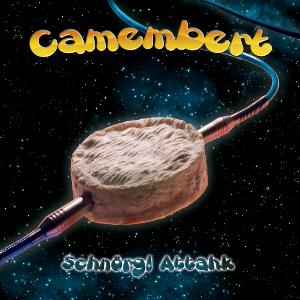
When coming across a French band named Camembert, and an album title featuring the word “Attahk”, most progressive rock fans will inevitably think of two illustrious outfits such as Magma and Gong – both of whom have also ties with France. Add to that a rather left-field story about the Earth being invaded by small, gelatin-like beings from outer space called Schnörgl, led by a mad scientist researching weapons of mass destruction, and involving a giant spaceship made of intergalactic cheese – and the resemblance will steadily grow, so that a first-time listener might wonder if they are being confronted with the new frontier of “retro-prog”. However, there is very little “retro-anything” about Camembert, whose thoroughly modern brand of jazz-rock proudly sports that strongly absurdist streak that is one of the distinctive traits of French prog.

Camembert are a six-piece hailing from the city of Strasbourg in north-eastern France, where they formed in 2005.  Schnörgl Attahk, their first full-length CD, which marks the beginning of the band’s collaboration with Milan-based label AltrOck Productions, was preceded in 2009 by the release of the 6-track EP Clacosmique. Most of the material that had originally appeared on the EP has been included on the album, though in almost completely rearranged form. Camembert members Fabrice Toussaint and Pierre Wawrzyniak had also appeared on another noteworthy 2011 release, Ske’s 1000 Autunni – and Ske mainman Paolo Botta (who also plays keyboards with Yugen, and is a gifted graphic artist) returned the favour by providing suitably wacky artwork for Camembert’s debut.

As previously hinted, Schnörgl Attahk manages the remarkable feat of combining an amazing level of complexity with an upbeat, ebullient mood that will provide the perfect antidote to the excess of earnestness of far too much prog. The outrageous tale of Dr Frankenschnörgl and his dastardly plans for a global takeover is told through the artwork and detailed liner notes, as the album is completely instrumental. On the other hand, while no actual singing is involved, the music suggests the events in strikingly effective manner, appealing to the listener’s powers of imagination.

Like the best examples of progressive rock (modern or otherwise), Schnörgl Attahk is a quintessentially eclectic effort. The band’s handling of their main sources of inspiration eschews derivativeness, moving rather along the lines of incorporating those sources into the fabric of their own original sound – whose foundation is a sinuously intricate brand of jazz-rock with roots in Frank Zappa’s output circa Apostrophe, as well as Shamal/Gazeuse!-era Gong (incidentally, both Pierre Moerlen and Mireille Bauer were originally from the Strasbourg area – perhaps something in the water?). However, the many pieces of Camembert’s musical mosaic are extremely variegated, supported by a very distinctive instrumentation that rules out keyboards, but hinges primarily on an unusual combination of horns, mallet percussion and harp. The gentle, liquid voice of the latter, blending harmoniously with the rippling tinkle of Fabrice Toussaint’s xybraphone and the warm, organic sound of various percussion instruments, gives Camembert’s sound a unique imprint.

While the two short, consecutive openers, “Infinicheese” and “Clacos Zero”, set the scene in textbook-spacey fashion, with swishing electronics and occasional guitar touches, the 11-minute “Untung Untungan 2.0” makes a bold entrance with its lively avant-fusion allure, then unfolds in a myriad of dazzling twists and turns, to which Francesco Zago’s guitar lends some extra bite. The easy, natural flow of the music, whose melodic flair almost belies its inherent complexity, brings to mind Canterbury acts like Hatfield and the North, and the energetic presence of the horns, coupled with Pierre Wawrzyniak’s solid bass lines, lend a funky swagger to tracks like “El Ruotuav ed Sram” (“Le Vautour de Mars” spelled backwards). Shades of Magma and Univers Zéro lurk in the imperious, martial pace of  the intense “Le Meurtrier Volant”, while in the 5-part suite, “La Danse du Chameau”, sprightly Latin-tinged rhythms in the style of early Santana, weird voices and dense, faintly dissonant passages coexist, held together by the lush yet unconventional instrumentation.

An exciting slice of sparkling eclecticism, combining melody, complexity and zany humour in an irresistible mixture, Schnörgl Attahk is almost mandatory listening for fans of modern jazz-rock and RIO/Avant prog, and will particularly appeal to fans of genre-straddling bands such as Frogg Café, miRthkon or Miriodor, as well as newer outfits like Calomito or Slivovitz. With all-round outstanding performances, excellent production values (courtesy of Udi Koomran and Eric Gauthier-Lafaye), and a genuinely positive attitude that will put a smile on your face (as well as a very restrained running time, which allows the music to be absorbed without weariness setting in), Schnörgl Attahk  proves that it is fully possible to pay homage to the trailblazers of the past without turning into a nostalgia act.

Links:
http://www.myspace.com/camembert67

http://production.altrock.it/home.asp?lang=ita_&id=9&id2=9

Read Full Post »

TRACKLISTING:
1. Too Much Light (Ionesco’s Theme) (3:48)
2. The Old Woods  (5:46)
3. If Two See A Unicorn  (1:58)
4. What A Night  (4:02)
5. The Conservatives  (1:50)
6. Winter  (3:22)
7. I Could Eat You Up  (3:37)
8. Wordswords  (5:40)
9. Autumn  (3:19)
10. Mitch  (2:57)
11. A Garland Of Miniatures  (2:40)
12. Nightfall  (4:31)

LINEUP:
Dave Willey – accordion, bass, drums, keyboards, percussion, guitar, mailing tubes, piano, bells, zither, whistling, electric guitar, folk guitar, organ, guitarrón, harmonium; vocals (10)
Mike Johnson – guitar, electric guitar (4, 5, 7, 8, 12)
Deborah Perry – vocals (all tracks but 9, 10)
Elaine di Falco – vocals (1, 6, 9), piano (8, 9)
Hugh Hopper – bass, loops (2, 4, 12)
Farrell Lowe – guitar (2)
Wally Scharold – vocals (5)
James Hoskins – cello (6)
Emily Bowman – viola (6)
Mark Harris – clarinet (6)
Bruce Orr – bassoon (6)
Dave Kerman – drums (7)
Hamster Theatre – vocals for loops (12)

Known as a member of avant-rock outfits Hamster Theatre and Thinking Plague (and, more recently, 3 Mice), Colorado-based multi-instrumentalist and composer Dave Willey is someone whose whole career as a musician hinges on an eclectic and broad-minded outlook, informed by the sophistication of Europe’s variegated traditions as much as by the rugged nature of the American West. Even his preferred instrument, the accordion, is an icon of  Old-World folk music (with which Willey became acquainted during his frequent visits to Europe), whose headily nostalgic flavour blends seamlessly with the austerely challenging compositions of Thinking Plague, or underpins the quirky, engaging nature of Hamster Theatre’s sound.

Released on AltrOck Productions almost 20 years after Willey’s recording debut, 1993’s  Songs from the Hamster Theatre, Willey’s second solo album, Immeasurable Currents, is a true labour of love, which, in the words of the artist himself, took him “a million years” to complete.  In a moving, heartfelt homage to his father, the late Dale Willey, the album is based on the poems written by Willey Sr. and collected in The Tin Box and Other Poems (2001). The album also marks the last recording appearance of legendary bassist Hugh Hopper before his untimely passing in 2009.  Besides Hopper, the friends assisting him in this venture include his Hamster Theatre/Thinking  Plague cohorts Mike Johnson and Mark Harris, drummer Dave Kerman, miRthkon guitarist Wally Scharold, and an extraordinary pair of vocalists – current and former Thinking Plague singers Elaine diFalco and Deborah Perry. Mostly recorded at Willey’s Colorado home, the album was then mixed and mastered by renowned sound engineer Udi Koomran in Tel Aviv – a truly international, continent-spanning effort.

The first time I heard Immeasurable Currents, a comparison immediately sprang to my mind with another emotionally charged album, released almost 40 years ago –  Robert Wyatt’s milestone Rock Bottom. The presence of the late Hopper with his signature fuzz bass adds to the sheer poignancy of the album, though – unlike some fellow reviewers – I would not apply the word “sad” to the music. Upbeat moments are scattered throughout the album, and crop up almost unexpectedly, creating a charming contrast of light and shade with the more sober, even somber passages. While Immeasurable Currents is bound to make the listener pause and think rather than get up and dance, its musical and lyrical content is a far cry from the contrived doom and gloom of a lot of progressive metal, or the navel-gazing typical of “alt. prog”.

Following an increasingly (and thankfully) popular trend for shorter albums, Immeasurable Currents runs at a mere 43 minutes, consisting of 12 vignettes (mostly penned by Willey, with some noteworthy contributions from his guests) that, in spite of their short duration and deceptively simple appearance, span a wide range of moods and musical textures. The minimalistic yet exquisite instrumental accompaniment highlights the beauty and power of the words without overwhelming them with layers upon layers of sound; while the magnificent vocal performances bring the lyrics’ vivid imagery to life – never concealing its occasionally disturbing nature, but also throwing its ultimately life-affirming quality and keen observation of nature’s phenomena into sharp relief.

Opener “Too Much Light” spotlights the breathtaking beauty of Perry and diFalco’s intertwining voices – the former higher-pitched, almost child-like, the latter deep and smooth, complementing each other perfectly, in stark contrast with the cloyingly sweet stereotype of the female prog vocalist. The nostalgia-infused sound of the accordion lends a smoky, Old-World feel to the piece, and to the following “The Old Woods”,  somewhat similar in mood.  In a dance-like movement, the songs often temper their initial briskness by noticeably slowing down in the second half – such being the case of the troubling “I Could Eat You Up”, which hints at incest while expanding on the well-known fairy tale of Haensel and Gretel; Dave Kerman’s supercharged drumming, coupled with Willey’s frantic accordion, add to the claustrophobic feel of the piece. The subtle but incisive political criticism of “The Conservatives” is set to surprisingly upbeat music, featuring one of the album’s rare guitar solos; while the solemn, chamber-like “Winter” and the understated piano- and accordion-led ballad “Autumn” render the poignancy of the two “darker” seasons of the year in flawless sonic terms.

With its striking, often harsh images intensified by Perry’s stunningly expressive vocals, “Wordswords”  is one of the highlights of the album,  a skewed Astor Piazzolla tango that gradually builds up to a haunting ending, spiced by a hint of dissonance that anchors it to Thinking Plague’s work. “Mitch” showcases Willey’s idiosyncratic but effective voice in a piece that commands comparisons to the likes of Tom Waits; while “What a Night” oozes a mix of intensity and tenderness, its superbly atmospheric coda a perfect foil to the words. The album is then wrapped up by the arresting “Nightfall”, where Perry’s vocal performance reproduces the peculiar arrangement of the written word, almost suspended in a rarefied backdrop of guitar and bass loops.

An album of subtle, multilayered beauty, Immeasurable Currents seems to embody the very definition of “progressive but not prog” (if by “prog” we mean the myriad acts that are firmly and hopelessly stuck in the Seventies).  Its deeply personal nature, coupled with musical textures ranging from mesmerizingly sparse to engagingly upbeat, will appeal to fans of such diverse artists as David Sylvian or Kate Bush, as well as the RIO/Avant brigade. Indeed, the open-minded, forward-thinking music lover will find much to appreciate in this elegant yet humble tribute to a beloved father’s artistic and human vision, set to music that constantly surprises and delights, and full of intriguing reflections on nature and the human condition.

Links:
http://www.allmusic.com/artist/dave-willey-p367258
http://production.altrock.it/prod2.asp?lang=eng_&id=167&id2=168

Read Full Post »

TRACKLISTING:
1. Ludiche Ecchimosi  (5 Danze Immaginarie) (9:42):
a) Ludiche Ecchimosi # 1 (1:44)
b) Ludiche Ecchimosi # 2 (2:30)
c) Ludiche Ecchimosi # 3 (3:04)
d) Ludiche Ecchimosi # 4 (0:51)
e) Ludiche Ecchimosi # 5 (1:33)
2. Il Folletto di Cera (4:31):
a) Miniatura # 1 (0:28)
b) Il Folletto di Cera (4:03)
3. Inseguito dai Creditori (6:01)
4. Tre Pezzi Brevi (7:46):
a) Flutter (5:50)
b) In Mezzo (0:15)
c) Snappy (1:41)
5. L’Onda Vertebrata (20:08):
a) Ouverture (1:55)
b) … Tra le Gocce Che Verso l’Alto Guardano… (2:03)
c) Tu… Onda Vertebrata (1:57)
d) …di un’Ombra… (1:00)
e) Intermezzo (1:44)
f) In Bilico (2:13)
g) Passaggio (2:00)
h) … Addomestico il Sogno (2:21)
i) Non Credere Più (2:25)
l) Coda con Fanfara (2:30)

Bonus tracks:
6. La Follia del Mimo Azoto (3:41):
a) The Breznev Funk Club
b) La Follia del Mimo Azoto
c) The Breznev Funk Club (Reprise)
7. Il Folletto di Cera (instrumental version) (4:30):
a) Miniatura # 1 (0:29)
b) Il Folletto di Cera (4:01)

LINEUP:
Franco Sciscio – voice, Sprechgesang
Giuliana Di Mitrio – mezzosoprano
Maria Mianulli – flute
Francesco Manfredi – clarinet in B flat
Michele Motola – soprano and alto sax
Gianfranco Menzella – alto, tenor and baritone sax
Francesco Panico – trumpet in B flat
Francesco Tritto – trombone
Tommaso De Vito Francesco – bass guitar, contrabass, oboe
Michele Fracchiolla – drums, percussion, vibraphone, marimba
Pino Manfredi – piano, keyboards
Rocco Lomonaco – classical, acoustic and electric guitar, banjo, mandolin, quatro, harmonica
Duilio Maci – violin
Angela Schiralli – cello

Breznev Fun Club’s cleverly amusing name, which hinges on the common mispronunciation of the words fan and fun on the part of English-speaking Italians, may not be very familiar to most progressive rock listeners, but it is certainly a secret worth learning about.  As the album’s subtitle of Lost and Found implies, L’Onda Vertebrata is a collection of music written in the years 1990-1997 by multi-instrumentalist and composer Rocco Lomonaco (based in Milan, but hailing from the southern Italian region of Basilicata) and singer/lyricist Francesco Sciscio, and performed by an extended line-up of guest musicians, most of them members of chamber and symphonic orchestras. Though Breznev Fun Club was originally born as a trio, the evolution of their music in a more experimental direction required a looser configuration. However, Lomonaco is planning to put together a smaller group in order to perform on stage the music included on this album and its follow-up, titled Il Misantropo Felice, scheduled for a 2012 release on AltrOck Productions.

For an album that can be quite comfortably placed under the capacious RIO/Avant umbrella, L’Onda Vertebrata is a surprisingly melodic and accessible effort, sophisticated yet not needlessly daunting. Indeed, despite the undeniably complex and “highbrow” nature of the music,  the album as a whole never tries to hit the listener over the head with its cleverness and supposed superiority to “mainstream” prog. Even Franco Sciscio’s half-sung, half-recited vocals (a technique called by the German word of Sprechgesang) do not sound as overdone as in other albums that employ a similar style – though obviously they can be much of an acquired taste, and a deterrent for those who prefer a more traditional approach to singing.

L’Onda Vertebrata shares a number of features with contemporary classical and chamber music, and at times– as is the case with other similar outfits, such as Aranis or Factor Burzaco – it may strike the listener as rather far removed from the directness of rock. However, there are also moments in which the whole range of rock instruments is effectively employed, emphasizing the eclecticism of Breznev Fun Club’s approach.  Though, as the liner notes point out, the individual numbers are pieced together from parts composed in different moments of the band’s activity – reflected by their structure of “mini-suites” in various movements – they come across as much more cohesive than one might expect.

As suggested in the previous paragraphs, the music on display on L’Onda Vertebrata offers a lot of variety, though in an elegantly understated way. Echoes of Canterbury (especially Hatfield and the North and National Health) surface in opener “Ludiche Ecchimosi”, introduced by the lovely vocalizing of mezzosoprano Giuliana Di Mitrio, who also appears in the final part of the sparse, Debussy-like “Tre Pezzi Brevi”, accented by the clear, lilting sound of mallet percussion; while the lively “Inseguito dai Creditori”, whose choppy, Hammond-driven first half turns solemn, almost austere towards the end, might be effectively described as “Canterbury with a bite”. “Il Folletto di Cera” is a textbook example of how avant-garde does not necessarily mean noisy or jarring, with Sciscio’s theatrical vocals (reminiscent of Nichelodeon’s Claudio Milano) offset by the gentle, romantic flow of the melodies seamlessly woven by the lush instrumentation.

More than a conventional prog “epic”, the 20-minute title-track is a mini-opera divided in 10 parts that offers a wide range of modes of expression – from the airy, slow-paced opening to heavier, dramatic passages which brought to my mind Italian Seventies cult outfit Pholas Dactylus, from solemn church organ to fluid, jazzy moments enhanced by a rich fabric of horns and reeds. The first of the two bonus tracks, “La Follia del Mimo Azoto”, harks back to the time when Breznev Fun Club were heavily funk-oriented, at times reminding me of New York-based outfit Afroskull with their powerful horn section; while the Canterbury influence emerges again in the instrumental-only version of “Il Folletto di Cera”.

In spite of its rather intellectual vibe, L’Onda Vertebrata is a surprisingly accessible album, which is sure to win over lovers of both “chamber rock” and contemporary academic music, but that may even appeal to those of more mainstream tastes – especially on account of its high melodic quotient (quite revealing of its Italian matrix). An excellent, classy testimony of Rocco Lomonaco’s over two decades of activity as a musician and composer, the album will also whet the appetite of devoted followers of AltrOck Production’s roster in anticipation of the release of Il Misantropo Felice. The very detailed liner notes (unfortunately only in Italian), illustrating the history of the band as well as of each of the tracks, and the striking green hues of the cover artwork also deserve a special mention.

Links:
http://www.myspace.com/roccolomonaco

https://www.facebook.com/pages/Breznev-Fun-Club/122126211199607?sk=wall

Read Full Post »

After pulling off the remarkable feat of bringing two progressive rock legends such as Magma and Univers Zéro to Washington DC for the 2010 edition of the Sonic Circuits Festival, cult independent label Cuneiform Records has done it again. Even if November is generally not as thriving on the live music front as the spring and summer months, the label has brought excitement to fans of genuinely progressive music (of both the rock and the jazz variety) with two events: Cuneiform Curates the Stone, a series of concerts taking place from November 15 to November 30 at John Zorn’s avant-garde space in NYC’s East Village, and a more concentrated, two-day bash aptly called CuneiFest, organized on November 19-20 at the legendary Orion Studios in Baltimore.

While RIO/Avant-Prog (as the subgenre is often called for ease of reference, though somewhat inaccurately) does have a hard core of dedicated supporters in the US, it lacks the following it enjoys in Europe, where the Rock In Opposition Festival, organized in southern France in September, has now reached its fourth edition. The presence of one or more bands identified with this particular subgenre is guaranteed to send people literally running for the exits at any US prog festival, and even the bigger names like the above-mentioned Magma or Univers Zéro have often proved controversial. No one, therefore, expected crowds of hundreds of people to show up at the Orion on Saturday, November 19. Indeed, Cuneiform mainman Steve Feigenbaum had put a mere 65 tickets on sale, and expected to sell no more than exactly that number. I am happy to report that Rock Day was sold out:  the small, cozy space of the Orion was nicely filled by people convened from various parts of the country, as well as farther afield (like Israel and Norway), comfortably sitting on the chairs provided by the Cuneiform crew. On each chair a bright yellow flyer was draped, containing detailed information not only on the day’s schedule, but also on the surrounding area (as well as the lunch and dinner menu).

For such a small, family-run enterprise, the Cuneiform team (consisting of Steve, his wife Joyce and her right-hand man Javier Diaz, both in charge of the promotional department, plus various interns) did an extremely impressive job in organizing the day. The main stage area was not as cluttered as it usually is when people bring their own chairs and coolers, leaving hardly any room to move around, and the lights festooning the walls created a festive feel in that small, high-ceilinged space. As the Orion is located at the far end of an industrial park, with very few amenities within walking (or even driving) distance, the organizers had contacted a local Italian restaurant in order to make a selection of food, both hot and cold, available to the attendees for a very reasonable price – set up buffet-style in the space opposite the Orion’s main body. The beautiful, relatively mild weather encouraged people to eat their lunch outside, enjoying the sunshine and the community atmosphere already inherent to most Orion events. To me, music and food are a quintessentially perfect pairing, and the convivial aspect was one of the highlights of the event, providing the attendees with the opportunity to chill out and socialize after each intensity-packed set.

The six bands selected for the Rock Day emphasized the amazing diversity within a subgenre that is all too often dismissed as over-intellectual (even within a non-mainstream genre like progressive rock) or just plain noisy. While none of those bands could ever be described as catchy or accessible, and very clearly not everyone’s cup of tea, most of them belied the fearsome reputation of avant-prog as a bunch of  purveyors of jarring, melody-free fare. All of them were also homegrown, hailing from such diverse environments as Colorado, New York, New England and California – a very significant move on the part of Cuneiform, and probably not just motivated by the inevitable financial considerations. In spite of many US prog fans’ obsession with foreign bands, it is easy to forget that in a such a large country, especially in these times of economic strictures, witnessing a performance of any act based on the other side of the country, or even a couple of states away, is anything but a frequent occurrence.

Steve Feigenbaum opened the festival, greeting the audience and introducing the first band, the quaintly-named Alec K. Redfearn and The Eyesores – one of the projects in which Redfearn, a singer-songwriter from the historic New England town of Providence, has been involved for a number of years. The six-piece that graced the Orion stage  had one of the most distinctive configurations I have ever seen in progressive rock, actually featuring almost no typical rock instrumentation. With contrabass, horn, organ, percussion and assorted objects, and the accordion (played by Redfearn himself) used as a pivotal element, the band’s profoundly fascinating sound possessed an unmistakable Old World flavour. Out of the six bands on the lineup, they had the highest melodic quotient, though a subtly skewed kind of melody, with a mournful, hypnotic quality intensified by the drone of Orion Rigel Dommisse’s organ and her plaintive vocals. While the strong folk component of the band’s music reminded me of modern acid-folk outfits like Espers, with hints of The Decemberists (especially as regards the Americana element and the dark lyrical matter), the many different ingredients of such a heady musical mixture made it quite unique. The longish, complex songs were surprisingly easy to follow, with “Wings of the Magpie” coming across as a particular highlight. Alec K. Redfearn and the Eyesores are a band that I would wholeheartedly recommend to anyone willing to dip their toes in the avant-prog waters, but still find the prospect somewhat daunting.

When, after an half-hour break for more socializing and refreshments, Los Angeles quartet Upsilon Acrux took to the stage, the contrast with the previous set could not have been greater. In an evening that presented a number of interesting band configurations, Upsilon Acrux’s minimalistic two-guitar, two-drummer approach easily won first prize – at least in the sheer energy and volume stakes. Having reviewed the band’s most recent album, 2009’s Radian Futura, I knew what to expect – an angular, dissonant aural onslaught, with enough manic energy coming out of the two drummers (Dylan Fuijoka and Mark Kimbrell) to light up a whole town, and a conspicuous absence of melody. In fact, Upsilon Acrux delivered a 30-minute performance that – while riveting to watch, particularly on account of the drummers’ uncanny precision in laying down jaggedly intricate patterns in perfect unison – bordered dangerously close to white-noise territory. The two guitarists, founder (and only constant member in a band known for its revolving-door policy) Paul Lai and his sidekick Noah Guevara, churned out slashing, piercing chords of almost unbearable intensity. It was math-rock in its purest form, so brutally intense to make the likes of Don Caballero sound tame – and, needless to say, it left a sizable part of the audience rather perplexed. Even those who listen to RIO/Avant-Prog as a matter of course found the band’s uncompromising approach a bit hard to take, and almost everyone agreed that a longer set would have discouraged at least some of the attendees. The band’s somewhat dour presence, with little or no interaction with the audience, also seemed to parallel the spiky, bristling nature of their music. On the other hand, Upsilon Acrux were definitely worth watching (albeit in small doses), and an excellent addition to a lineup that showcased the wide-ranging musical offer to be found under the Cuneiform umbrella.

Next on the bill were New York-based quintet Afuche, who had recently released their first album, Highly Publicized Digital Boxing Match. In a way, the title is an accurate representation of the band itself – another high-energy outfit, though imbued with a sheer sense of enthusiasm, as well as a distinct Latin flavour (the band’s name actually refers to a very distinctive percussion instrument used in Latin jazz). Their 30-minute set, while full of sonic clashes and crashes, was also spirited and entertaining, with a charismatic focal point in keyboardist/vocalist/percussionist Ruben Sindo Acosta – a wiry, diminutive dynamo with a rakish mustache and a curtain of black hair, jumping up and down when pounding the keys of his rig, or bashing his drums with unadulterated gusto. His facial expressions were a sight to behold, while his vocal style owed a lot to traditional Afro-Cuban music, though infused with a manic energy all of his own. Saxophonist Andrew Carrico also cut quite an interesting figure – tall and lanky with long hair and an impressive mustache, wielding his blaring baritone sax with a bit of a swagger, while guitarist Zach Ryalls, bassist Denny Tek and drummer Ian Chang (all three looking very young) kept a lower visual profile, though laying down the groundwork for Ruben’s unflagging energy and showmanship. With plenty of groovy, infectious rhythms and a genuinely omnivorous attitude, Afuche were for many the true revelation of the evening.

New York power trio Zevious had been one of the highlights of ProgDay 2011, so I was looking forward to seeing them again – as were those in the audience who had also attended the North Carolina festival in September. Those expecting a repeat of that astonishing Sunday-morning set, however, were in for a treat, because the band’s CuneiFest set felt markedly different – as tight as ever, but with a sense of almost claustrophobic intensity derived by the indoor setting. In the compact, dimly lit space of the Orion, the unrelenting, yet seamlessly flowing stream of music produced by the band’s three members created a veritable wall of sound,  endowed with a mesmerizing quality akin to the best King Crimson instrumentals, with hints of the primeval heaviness of Black Sabbath in the slower passages – always loud and powerful, yet never one-dimensional (unlike Upsilon Acrux no-holds-barred assault). While my playful description of “King Crimson on steroids” might be fitting in some ways, Zevious are definitely much more than that. Possibly taking to heart my criticism about their lack of interaction with the audience at ProgDay (mostly motivated by the early hour and the unfamiliar situation of playing outdoors and in broad daylight), they had gained in terms of both mobility and communication, the triangular shape of the stage perfectly suited to their configuration. Drummer extraordinaire Jeff Eber, the powerhouse at the heart of Zevious’ sound, propelled the music along with a smile on his face, his stunning polyrhythms meshing with Johnny DeBlase’s muscular bottom end and the electric fireworks of Mike Eber’s guitar. All in all, it was an almost career-defining performance, and the festival’s finest hour as far as I am concerned.

After such a scintillating set, dinner break was upon us, giving the audience a much-needed respite and more opportunities for bonding before plates of tasty food. Then, at about 7.20 (almost right on schedule), Hamster Theatre begun their set, enthusiastically introduced by Steve Feigenbaum – who pointed out that the band had only performed three times on the East Coast since their inception, almost 20 years ago. Based in Colorado, the band shares three members with headliners Thinking Plague –  multi-instrumentalist (and founder) Dave Willey, guitarist Mike Johnson and vocalist/reedist Mark Harris – so it is not surprising to hear similarities in their sounds, which share a highly eclectic bent. However, the foundation of Hamster Theatre’s music – mostly instrumental, unlike Thinking Plague’s – lies in folk, as the central role played by Dave Willey’s accordion shows quite clearly. Their set started in a rather subdued, almost soothing fashion, than things became gradually more complex, with jazzy touches creeping in, and then all of a sudden evoking reminiscences of Univers Zéro and their eerily mesmerizing brand chamber-prog. In spite of the problems caused by a dodgy guitar amp, the set flowed on smoothly, each instrument finely detailed, the sharpness of the guitar tempered by the wistful tone of the reeds and. Hamster Theatre’s music sounds big and often upbeat, with a strong Old World flavour and unexpectedly spiky moments. Even if my appreciation of their set was somewhat marred by the sleepiness that inevitably follows a meal (I am also much more of a morning than an evening person), I was impressed by the fine balance of eclecticism and discipline in the band’s music, and also by their warm, engaging stage manner, as befits seasoned performers. While, with the exception of  bassist Brian McDougal, the band members  performed sitting down, the lack of physical dynamics was amply compensated by the agile versatility of the music.

Highly awaited headliners Thinking Plague took the stage almost 20 minutes late on schedule because of soundcheck-related problems. They also had to contend with another emergency situation – the illness of singer Elaine DiFalco (who has been a member of the band for the past four years), who, however, soldiered on, dosing herself with aspirin in order to be able to perform (albeit in a limited capacity), and taking a bottle of water on stage with her in order to keep her vocal chords hydrated. As a teacher, I could relate to her plight quite well, and could not help admiring her mettle. Petite, with a striking, high-cheekboned face, Elaine possesses a surprisingly commanding stage presence, her husky, well-modulated voice oddly seductive though light years removed from the trite clichés that so many female singers feel obliged to follow. Before the festival, I had heard her on Dave Willey and Friends’ stunning Immeasurable Currents, and had been deeply impressed. Though I have some reservations on the way her haunting vocals fit into the multilayered texture of Thinking Plague’s music, I am sure the less than ideal conditions in which she performed contributed to my impression. Never the most prolific of outfits, they are releasing a new studio album (the first since 2003’s A History of Madness), titled Decline and Fall, in the early months of 2012, and the Orion set provided them with a great opportunity to showcase some of their new material, as well as some of their older compositions. Among the über-eclectic, intricate bulk of Thinking Plague’s output, there was also time for the humorously-introduced, never-played-before “The Fountain of All Tears”, a slow-burning ballad in 4/4 that very few would associate with one of the dreaded “Avant” bands. With legendary drummer Dave Kerman having relocated to Switzerland, the drum stool was occupied by Robin Chestnut, introduced by Mike Johnson as the only band member under 40;  he also joked about Robin’s forthcoming Ph.D in Mathematics, which makes him the ideal drummer for a band like Thinking Plague. Keyboardist Kimara Sajn manned his rig with an unobtrusive but engaging mien, his delight in music-making obvious from his body language. I was barely acquainted with the band’s output before the festival, and their set encouraged me to delve into their back catalogue.

By way of a conclusion, I would like to stress that, as good as all of these bands are on CD, the live setting really makes their music come alive, and also gives them a more “human” dimension that helps debunk the myth of their brainy inaccessibility. For all their dedication to the production of challenging music, these are people who, first and foremost, enjoy what they do, and obviously love being on stage as much as any “mainstream” rock band.

All in all, it was a wonderful day of music and social interaction with like-minded people, and the perfect way to spend the third anniversary of my arrival in the US – even though my husband was unable to share it with me because of work commitments, which also prevented us from attending the  festival’s Jazz Day. My sincerest thanks go to Steve, Joyce and their tireless team: though all of them were looking quite exhausted at the end of the day, their happiness and satisfaction was also palpable. The gorgeous (and delicious) layer cake served just before the Thinking Plague set was a very nice touch to celebrate the effort and care that had gone into the organization of the event. Kudos also to Mike Potter and his collaborators for the state-of-the-art sound quality of each performance, and also for getting the Orion premises in tip-top shape.  Even if it will very probably remain a one-off, CuneiFest will be long remembered in the annals of the US progressive rock community as the very embodiment of the old “small is beautiful” adage.

Links:
http://www.cuneiformrecords.com

http://bkrstk.com/alec-k-redfearn-and-the-eyesores/

http://www.myspace.com/upsilonacrux

http://www.myspace.com/afuche

http://zevious.com/

http://www.generalrubric.com/hamster/main.html

http://www.generalrubric.com/thinkingplague/main.html

Read Full Post »

TRACK LISTING:
1. Where’s the Captain? (5:11)
2. Coma Cluster (4:42)
3. Mostly Skulls (5:12)
4. That Ticket Exploded  (5:54)
5. The Noose (4:28)
6. iNCITING (4:39)
7. Gradual Decay (4:45)
8. The Ditch (5:49)
9. After the Air Raid (3:20)
10. The Children and the Rats (4:59)
11. Glass Tables (4:35)

LINEUP:
Mike Eber – guitars
Jeff Eber – drums
Johnny DeBlase – electric and upright bass

Another impressive find from the ever-reliable Cuneiform Records, Zevious hail from New York City.  Formed in 2006 by guitarist Mike Eber, his cousin, drummer Jeff Eber (formerly of experimental progressive metal band Dysrhythmia) and bassist Johnny DeBlase, they started out as a straight-ahead jazz trio before they decided to take a more innovative direction.  Their self-titled debut album was released in 2008, followed one year later by After the Air Raid, recorded and mixed by Colin Marston of tech/extreme prog-metal band Behold…The Arctopus. Following a successful US tour in the spring of 2011, Zevious have been invited to perform at the 2011 edition of ProgDay (Chapel Hill, North Carolina), the longest-running progressive rock festival in the USA.

The three members of the band have been active on the music scene for over ten years, and their collective experience is clearly brought to bear in After the Air Raid, a high-energy blend of sleek jazz/fusion, angular math-rock, and a spicy sprinkling of metal – challenging without being overtaxing, thoroughly modern without turning its back to the old-school progressive rock tradition. Not as spiky and impenetrable as their label mates Upsilon Acrux, Zevious have managed not to banish melody altogether, though it is handled in a very unconventional manner.  For all its cutting-edge allure, Zevious’ music is not meant to be abrasive or forbidding, and draws much of its power from being able to keep the listener on their toes, though without wearying them out with a relentless barrage of wildly clashing sounds.

A cutting-edge permutation of that old classic rock stalwart, the power trio, Zevious manage to produce a huge volume of sound without the use of any keyboards or other props. Theirs is also a fully collaborative effort, as it would be hard to single out any of the three members as the star of the album. While Mike Eber’s guitar weaves dazzling webs, avoiding the ever-present pitfalls of mindless shredding, Johnny DeBlase’s fluid yet powerful bass provides a solid layer of bottom end for Jeff Eber’s stunning drum patterns, displaying the experience gained as a member of avant-progressive metal band Dysrhythmia in an array of head-spinning polyrhythms – though the influence of more “classic” drummers, such as Bill Bruford, can also be detected.

The 11 tracks featured on After the Air Raid are rather short from a prog-purist point of view, but pack more twists and turns in their restrained running time than many “epics”, though without descending into the excesses to which the more experimental prog acts are often prone. While most of the compositions clearly point to math-rock’s hypnotic, multilayered angularity, the band’s original jazz foundation adds a welcome touch of melody that is often lacking in otherwise outstanding bands like Don Caballero or Battles. With such a consistently high level of quality, it is difficult to pick out any standout tracks; however, I was particularly impressed by the brilliant, Black Sabbath-meets-jazz/fusion workout of That Ticket Exploded, or the Rush-on-steroids, bass-driven extravaganza that is iNCITING. The Noose and The Ditch both steer towards heavier territory – the former strongly reminiscent of a jazzier version of King Crimson with its devastatingly effective bass-drum interplay; the latter more aggressive, with an almost punk intensity, Mike Eber’s guitar let loose over thundering drums and a steady bass line. In sharp contrast, the title-track reveals the more subdued side of the band’s sound, a hauntingly melancholy piece revolving around Mike’s muted, atmospheric guitar work.

Clocking in at 51 minutes, this is a very dense album, and perhaps just a tad overlong on account of the unabated intensity of the music. In fact, those who prefer a more traditional approach to prog, as well as those who object to a lack of vocals, may find it a somewhat stressful listen. On the other hand, with stellar performances all round, and a brilliant combination of diverse influences and creative ideas, After the Air Raid is highly recommended to anyone with a keen interest in contemporary progressive rock.

Links:
http://zevious.com/

http://www.cuneiformrecords.com

Read Full Post »


TRACKLISTING:
1. Sirens Dance (3:52)
2. Aging Backwards (5:20)
3. Flanders Fields (5:05)
4. Sleepless Night (5:59)
5. Horny (2:57)
6. Little Bird (4:09)
7. Duck on a Walk (3:25)
8. The Greatest Kick of the Day (3:23)
9. Never Lose your Mind (2:43)
10. Love Song (5:27)
11. Purple Frog (5:05)

LINEUP:
Jonathan Callens – drums, backing vocals (9)
Jouni Isoherranen – bass, backing vocals  (5, 9)
Gabor Humble Vörös – guitar, vocals
Pol Mareen – saxophone
Pedro Guridi – clarinets, backing vocals (5)
Pieter Claus – marimba, vibraphone, percussions

With:
Lisa Jordens – backing vocals (3, 5, 6, 7, 8)
Hanneke Osterlijnck – backing vocals (3, 6)
Joriska Vanhaelewyn – backing vocals  (2)
Juan Carlos Torres Iturra – Spanish vocals (6)
Leika Mochan – backing vocals (9)
Attila Czigany – harmonica (6)
Joris Buysse – flute  (6)
Fre Vandaele – whistle (3, 4)
Wouter Vandenabeele – violin (4)
Megan Quill – vocals (10, 11)
Franciska Roose – vocals (10, 11)

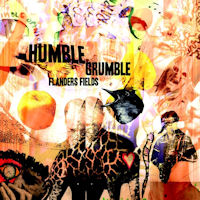
Many will almost automatically associate Belgium with the more left-field fringes of progressive rock, as the country has contributed essentially to the development of the subgenre with outfits such as Univers Zéro, Present, and Aranis. Though those bands seem to enjoy a rather daunting reputation in the more traditionalist prog circles, even a superficial listen to Humble Grumble’s debut album, Flanders Fields, will come as a positive surprise to those who tend to dismiss anything even remotely ‘avant-garde’ as noisy or depressing.

Humble Grumble was first formed in 1996 in the Belgian region of Ghent by Hungarian guitarist/vocalist Gabor Humble Vörös and other former members of a folk/jazz ensemble called Dearest Companion. Though that first incarnation disbanded after some time, the band was reformed in more recent times as a multicultural outfit, with members hailing from Finland and Chile as well as Belgium. The result was  Flanders Fields, released in the first half of 2011 by Italian label AltrOck Productions.

While placing Humble Grumble under the capacious RIO/Avant umbrella may be the easiest solution when it comes to the very popular activity of classifying a band or artist, it also paints a rather limited picture of this decidedly intriguing outfit. A sextet conspicuously lacking in keyboards, but employing instead saxophone, clarinet, vibraphone and marimba, Humble Grumble also avail themselves of the collaboration of a host of guest artists, which lends their music a well-rounded, almost orchestral quality.

On the other hand, Flanders Fields is very much a song-based effort, with 10 out of 11 tracks featuring vocals, none of them running above 6 minutes. The whole album clocks in at a very restrained 43 minutes, which allows the listener to fully appreciate the music without getting overwhelmed by it (as is far too often the case with modern releases). The short running time, however, may somewhat deceptive, since each of the tracks is densely packed with tempo changes, intriguing vocal interplay and rhythmic solutions of frequently astounding complexity – all flavoured with unashamed eclecticism. This makes for a surprisingly listener-friendly mixture, though obviously not in a commercial sense.

The most surprising thing about the album, though, is its strongly upbeat nature, and that in spite of the distincly subdued nature of the title-track, whose lyrics juxtapose somber remembrances of WWI with equally pessimistic musings on the state of modern-day Belgium. With this one notable exception, Flanders Fields brims with nonsensical, somewhat anarchic humour that inevitably brings to mind the likes of Frank Zappa and Gong. The latter band is probably the most evident term of comparison for Humble Grumble – down to its multi-national configuration. Mainman Gabor Humble’s engaging vocal approach is quite reminiscent of Daevid Allen’s (as well as Robert Wyatt and Caravan’s Pye Hastings), with the frequent intervention of female backing vocalists bringing to mind more than a fleeting echo of those notorious “space whispers” (especially in the self-explanatory “Horny”, a short, lively Gong-meets-Zappa number). Drums and percussion play a large, not merely propulsive role, while Humble’s guitar is nicely complemented by the warm, expressive tones of the reeds, so that keyboards are never really missed. In spite of the ‘avant’ tag, there is a lot of melody and very little dissonance in Humble Grumble’s sound, as well as plenty of diverse ‘world music’ influences.

Rather uncharacteristically Flanders Fields opens with its only instrumental track, “Sirens Dance”, in which Eastern touches and slow, almost sultry jazzy tones spice up a dynamic, cheerful fabric. “Aging Backwards” introduces Gabor Humble’s melodic yet keenly ironical vocals, as well as displaying his remarkably versatile guitar playing; while the title-track, as previously hinted, brings a note of sober melancholy, the beautiful female harmony vocals and the clear, tinkling sound of the marimba adding a lyrical, romantic tinge. “Sleepless Night”, with its Gentle Giant-inspired vocal harmonies, keeps up the understated mood of the title-track, enhanced by the wistful voice of the violin – a mood that recurs in the mellow, almost delicate “Never Lose Your Mind”, where the lush vocal harmonies evoke Queen as well as Gentle Giant. On the other hand, the more upbeat numbers such as  the folk-meets-Avant “Little Bird”, with vocals both in English and Spanish,  and the funny, lively “Duck on a Walk” conjure echoes of Canterbury; while the Gong and Zappa references emerge most clearly in the last couple of songs, “Love Song” and “Purple Frog”, though tempered by gentler passages led by reeds or female vocals.

Warmly recommended to devotees of Gong and the Canterbury scene in general – as well as any act that uses humour as an essential ingredient of its music –  Flanders Fields can nonetheless appeal to all but the most staunchly conservative prog fans. In particular, those who are not crazy about lengthy epics will be impressed by the way in which Humble Grumble manage to introduce a high level of complexity within the restrictions of the song format. A very enjoyable release from another excellent addition to the already outstanding AltrOck Production roster.

Links:
http://www.humblegrumble.be/

http://www.myspace.com/humblegrumble

http://production.altrock.it/

Read Full Post »

« Newer Posts - Older Posts »