Feeds:
Posts
Comments

Archive for the ‘Symphonic’ Category

TRACKLISTING:
1. Day Of Destiny (4:06)
2. The Wrap (Intro) (5:16)
3. Under The Wrap (38:19)
4. An Angel (5:42)
5. Ilusionist (1:16)
6. The Wrap (Outro) (4:59)

 LINEUP:
Antony Kalugin – keyboards, vocals, percussion
Maxim Velichko – electric guitars
Sergey Balalaev – drums
Kostya Ionenko – bass
Sergey Kovalev – bayan, vocals
Roman Gorielov – acoustic guitar, backing vocals

With:
Helen Bour – oboe (1, 2)
Alexandr Pastukhov – bassoon (1, 2, 3)
Oksana Podmaryova – cello (3, 6)
Max Morozov – viola (3, 6)
Daria Maiourova – violin (3, 6)

One of the projects by talented and prolific Ukrainian musician Antony Kalugin (also involved with Karfagen and Hoggwash), Sunchild released their debut album, The Gnomon, in 2008, followed by The Invisible Line in 2009. The Wrap, the band’s third album, was recorded over a two-year period, and released in September 2010. An accomplished artists in spite of his young age, Kalugin has picked a group of gifted Ukrainian musicians for his projects, including string and woodwind players that give his bands’ musical output a well-rounded symphonic dimension.

Like a number of other bands from the Russian Federation, Sunchild’s approach to progressive rock is more traditional than innovative, though carried through with panache and impressive technical skill. While the band’s sound is not as openly influenced by classical music as the likes of Little Tragedies, Kalugin’s use of keyboards favouring piano and synthesizers rather than organ, quite a few diverse influences are detectable in Sunchild’s music other than the expected symphonic/Neo-prog strain. Alongside the intense melodic content, enhanced by pleasing vocal harmonies and lovely piano and flute passages, a distinct progressive metal feel surfaces in some of the compositions, which is in line with the trend followed by many contemporary bands that might be gathered under the Neo umbrella.

Like its two predecessors, The Wrap is based around an elaborate, rather esoteric philosophical concept, in this case the conflict between the self and its shadow – something that is likely to send some people running for the exits, and cause great delight in others. Although Kalugin was assisted by a native speaker of English, Will Mackie, in penning the lyrics, they are somewhat hit and miss – which anyway is not a particularly important factor, as I am first and foremost interested in the music. Unless lyrics contain something highly offensive (which is not the case here), I tend to be quite indifferent to them, unlike other critics that are often quick to point out any lyrical shortcomings. In any case, Kalugin is a more than adequate vocalist, capably assisted by his bandmates in the harmony parts, and even his slight accent does not detract from his delivery as is the case of other non-English-speaking musicians

Running at slightly below 60 minutes, The Wrap is dominated by the almost 40-minute epic “Under the Wrap”, which is strategically placed in the middle of the album (a good move, in my view). As I have pointed out on several occasions, I believe that it is extremely difficult for any given band or artist to sustain a composition of such length when it is conceived as a single block, and “Under the Wrap” is no exception. In spite of the undeniable quality of the music, the epic is more of a collection of disparate passages following one another without a common thread than an organic whole, which would have probably benefited from being presented in separate sections. As things are, the composition comes across as quite patchy, its first half starting out in subdued fashion, with subtle references to the great Russian composers of the Romantic era (reinforced by the presence of a bassoon and a string section), and then heading in a strongly metal-flavoured direction suggestive of Dream Theater circa Images and Words. The second half, instead, is strongly reminiscent of Genesis, with a couple of vocal passages in which Kalugin sounds very much like Peter Gabriel, a definitely classical-sounding, string-led section, and then a beautifully melodic guitar solo fading out at the end. Though the musicianship is consistently top notch, there are simply too many ideas left somehow underdeveloped, and not enough cohesion.

The remaining five tracks on the album are noticeably shorter the epic, and certainly much more successful in sheer compositional terms. Three of them feature vocals, and are generally mid-paced, melodic pieces with lush keyboard and guitar textures and excellent vocal parts. Opener “Day of Destiny” borders on AOR, with a very catchy chorus and flawless instrumental interplay; while closing track “The Wrap (Outro)” briefly reprises the opener’s main theme, with a brief metal-tinged section leading to an atmospheric, string-led conclusion. On the other hand, “An Angel”, followed by the short, soothing acoustic interlude “Illusionist”, as the title implies is a lovely, rarefied ballad featuring a gorgeous guitar solo backed by piano and percussion. The other instrumental track, “The Wrap (Intro)”, seems to reproduce the structure of the epic, though in a more cohesive way, blending prog-metal suggestions with pastoral moments in the vein of vintage Genesis or Camel.

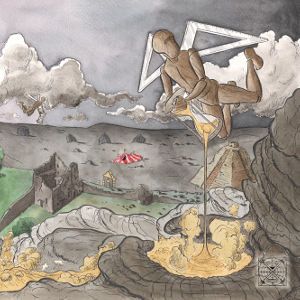
As the previous paragraphs illustrate quite clearly, The Wrap is quite likely to appeal to fans of classic symphonic and Neo-prog, even if the occasional prog metal overtones may put off some of the more traditionally-oriented listeners. In any case, even if decidedly retro in tone, it is a finely-crafted album brimming with enjoyable melodies, and executed with undisputable skill and professionalism. The very thorough booklet, with its stylish artwork and photography, is also deserving of a mention. In spite of the somewhat patchy nature of the epic, the album would be a worthy addition to the music collection of any melodic prog lover.

Links:
http://www.antonykalugin.net/


Read Full Post »

TRACKLISTING:

1. GK Contramundum (2:00)
2. Awaiting the Call. (5:10)
3. Parenting Parents (6:45)
4. Utter Once Her Name (5:30)
5. Remembering When (4:00)
6. Ramblin’ Sailor (18:14)
7. Your Healing Hand (8:18)
8. Firmus Finale (4:40)

Bonus tracks (previously unreleased 24-track recordings):
9. Rear View Mirror (3:34)
10. Alison Waits (A Ghost Story) (10:40)

LINEUP:
Alan Benjamin – guitars, basses, stick, mandolin, recorder
Henry Ptak – keyboards, lead vocals, backing vocals, percussion
Mark Ptak – keyboards, backing vocals, percussion
Drew Siciliano – drums

With:
Shunji Saegusa –  bass (6)
Ken Serio – drums (10)

My first contact with Advent’s music dates back from a couple of years ago, when I reviewed Dante’s Inferno, the first instalment of the monumental The Divine Comedy project released by Musea Records. The band’s contribution, a song called “Canto XXVI – The Evil Counselors”, impressed me as one of the most interesting tracks on that 4-CD set; therefore, I eagerly grasped at the opportunity to review their second album, Cantus Firmus – which, even if released exactly five years ago, is still recent enough not to qualify as a ‘vault’ review.

While quite a few North American bands have taken the classic English progressive rock sound of the Seventies as their blueprint, no one, when listening to this album for the first time,  would ever associate Advent with the bustling, overcrowded and down-to-earth East Coast of the US. Though hailing from New Jersey (home of a number of fine prog outfits, such as Shadow Circus, The Tea Club and 3rd Degree), here is a band that sounds more English than most contemporary English bands. Their love for the Old Country is evident right from cover artwork and logo (by artist and illustrator Michael Phipps), inspired by the stunning illuminated manuscripts of the Middle Ages.

Formed in 1989 by two highly accomplished multi-instrumentalists with a wide range of musical interests, Alan Benjamin and Henry Ptak (whose brother Mark joined the band some time later), Advent released their self-titled debut album in 1997, and then dropped off the radar for nine years. After the inevitable line-up changes (notably the addition of drummer Drew Siciliano), in 2006 Cantus Firmus finally appeared, to a very warm reception. The album’s title, meaning ‘fixed song’ in Latin, refers to a pre-existing melody that forms the base of a polyphonic composition – another nod to medieval and Renaissance musical tradition.

Like most acts, modern or otherwise, Advent have their own strong set of references, and are refreshingly honest about it. Though modern bands that openly pay homage to one or more of the prog greats of the Seventies are neither new nor surprising, Advent distinguish themselves from the myriad of Genesis or Yes-inspired outfits by having a rather unlikely pair of bands like Gentle Giant and Procol Harum as their main source of inspiration. Indeed, the band’s name brings to mind one of Gentle Giant’s most iconic songs, “The Advent of Panurge”. With such influences, it is not surprising that the music on Cantus Firmus is sophisticated, understated and devoid of hard edges – as well as admirably tight in compositional terms. Indeed, while not a concept, the album projects a sense of cohesiveness, with the first eight tracks acting much like the movements of a symphony. On the other hand, the two bonus tracks (both originally featured on the band’s debut album), though bringing the album’s running time close to a rather hefty 70 minutes, are not unwelcome additions, as they bear witness to Advent’s gradual but steady development of their own artistic personality.

Advent’s love for everything Gentle Giant immediately surfaces in the opening track, the short but sweet “GK Contramundum”, dedicated to English 20th-century author Gilbert Keith Chesterton, and sung entirely a cappella. The song flows directly into “Awaiting the Call”, a lovely instrumental number with hints of Genesis and Camel in Alan Benjamin’s stately, melodic guitar solo and the lush, elegant sweep of the Ptak brothers’ keyboards. “Parenting Parents” and its companion piece “Your Healing Hand”, both dealing with the topic of the relationship between parents and their children, share the same keenly sentimental quality (which thankfully never descends into mawkishness): while the latter is very sparse, almost hymn-like in tone with its whispered vocal harmonies, the former couples lilting, madrigal-like passages of touching sensitivity with instrumental surges led by Benjamin’s fluid, crystal-clear guitar.

“Utter Once Her Name”, a sparse, meditative number with a strong Gentle Giant vibe, and the hauntingly beautiful instrumental “Remembering When”, featuring some really inspired acoustic and electric guitar work, introduce the album’s centrepiece, the 18-minute “Ramblin’ Sailor”. Featuring the participation of Japanese band Kenso’s bassist, Shunji Saegusa, it is based on a traditional English folk song called “The Rambling Sailor”; the stunning complexity of its instrumental parts is relieved by the sprightly, cheerful nature of  the contrapuntal vocal parts, including a chorus of ‘carousing sailors’. The magnificent central section is occasionally reminiscent of the stately yet riveting pace of Genesis’ instrumental compositions, while the titular sailor’s farewell to the sea is conveyed by a slower, more sedate passage enhanced by the distinctive sound of the recorder. The core of the album is then brought to a close by the upbeat, fanfare-like “Firmus Finale”, in which hints of Gryphon’s quirky take on medieval music join the Genesis and Gentle Giant influences.

Though some might complain that Cantus Firmus is not a truly original proposition, and wave the dreaded ‘retro’ word around, the album – far from being a mere tribute-like effort – simply oozes class and dedication. In spite of the individual band members’ impressive chops, in this case technical skill is put at the service of the music, and not the other way round. Moreover, the emotional content is conveyed with grace and delicacy rather with the self-indulgent angst typical of may higher-profile bands. Gentler and more meditative than the output of bands in a similar vein such as Änglagård or Wobbler, Cantus Firmus will definitely appeal to fans of vintage prog of an eclectic bent – though some listeners might be turned off by its unabashed sentimentality and occasional church-like gravity. At the time of writing, Advent are working on their third album, which will hopefully be released within the year.

Links:
http://www.adventmusic.net

http://www.michaelphipps.net/

Read Full Post »

TRACKLISTING:
1. Verso l’Alba (2:52)
2. Insolita Parte di Me  (7:20)
3. Boccadasse  (5:20)
4. Le Due Metà della Notte  (5:18)
5. La Stanza Nascosta  (5:10)
6. Danza Esoterica di Datura  (6.07)
7. Faldistorum  (6:06)
8. L’Attesa  (4:36)
9. Il Centro Sottile  (9:39)
10. Antidoto Mentale  (3:30)

LINEUP:
Stefano “Lupo” Galifi  – vocals
Elisa Montaldo – piano, keyboards, organ, concertina, vocals, sound effects
Fabio Gremo – bass
Giulio Canepa – guitars
Paolo Tixi – drums

With:
Max Manfredi – voice (7)
Antonio Fantinuoli – cello (5)

Known outside Italy as the hometown of Christopher Columbus, the bustling seaport of Genoa has had a long tradition as a hotbed of musical creativity – starting as far back as the late 18th century with legendary violinist Niccolò Paganini. Then, in the early 1960s came the ‘Genoese school of singer-songwriters’, whose foremost representative, Fabrizio De André, is known to prog fans for his collaboration with PFM. About ten years later, a number of influential progressive rock bands were formed,  such as Delirium and New Trolls – two outfits that are still producing great music in the early 21st century. In particular, Delirium’s comeback album of 2009, Il Nome del Vento (reviewed elsewhere on this blog) stood out among the plethora of prog releases for successfully marrying the glorious heritage of Italian prog with a thoroughly modern sound quality. The same accomplished nature is shared by this stunning debut by Delirium’s label mates (and fellow Genoese) Il Tempio delle Clessidre.

Named after the final section of the titular suite of Museo Rosenbach’s one-off Zarathustra – one of the most iconic albums of the Italian Seventies – Il Tempio delle Clessidre (“The Temple of Hourglasses”) have been around since the summer of 2006, when keyboardist Elisa Montaldo and bassist Gabriele Guidi Colombi met former Museo Rosenbach vocalist Stefano “Lupo” Galifi. The idea that brought the band together was to perform the whole of the Zarathustra album live on stage with Museo Rosenbach’s original singer, using vintage instruments, and subsequently start penning original compositions inspired by the spirit of the golden years of Italian prog. After some line-up changes, Il Tempio delle Clessidre’s self-titled debut album was released in September 2010 by Genoa-based label Black Widow Records.

For all its cult status, Italian prog can be seen as very much of an acquired taste – mainly on account of its operatic, occasionally overblown nature, especially as regards the vocal department. In this respect, Galifi’s warm, bluesy vocals (also heard on one track of Delirium’s 2009 album), which add an emotional yet somehow informal note to the lush textures of the band’s music, are definitely Il Tempio delle Clessidre’s not-so-secret weapon. The tightly organized compositions, never gratuitously meandering, strike the right balance between melody and complexity, without a second wasted in pointless noodling, and with enough changes of pace to make the most demanding prog fan happy. Although the singing is strongly emphasized,  there is also a lot of room for the instrumentalists to display their considerable chops. Indeed, the pristine sound quality allows each of the musicians’ performances to shine, and captures every nuance of Galifi’s seasoned vocal delivery, honed in years of fronting blues-rock bands; while the pronounced melodic bent tempers the intensity of the lyrics and the dense esoteric symbolism of the cover art and booklet.

Interestingly, with the sole exception of the almost 10-minute “Il Centro Sottile”, the tracks on the album are all relatively short, with an average running time of 5 minutes. The album itself, at about 55 minutes, is markedly shorter than the majority of current prog releases, some of which skirt the 80-minute mark. Those who appreciate the instrumental aspect of progressive rock rather than the vocal one will be glad to learn that Il Tempio delle Clessidre manages to balance both sides quite admirably. Opener “Verso l’Alba”, the only completely instrumental track on the album, sets the scene with the deep, Gothic sound of the organ and wind-like effects, developing into a keyboard- and guitar-driven piece reminiscent of a heavier Genesis. “Insolita Parte di Me”, at 7 minutes the second longest track, alternating quieter passages with more dramatic ones, dominated by Elisa Montaldo’s magnificent keyboards, is a perfect example of how the band manage to achieve the structural complexity typical of prog without sacrificing the unique Italian attention to melody. Montaldo, who is the main composer together with bassist Fabio Gremo, handles her array of instruments with impressive skill and flair. “Le Due Metà della Notte”, interpreted with warmth and feeling by Galifi, is a splendid keyboard showcase that combines melody and intensity; while in the sedate “La Stanza Nascosta” the piano and Galifi’s stunning vocals conjure a melancholy, meditative atmosphere. On the other hand, the mid-paced “Boccadasse” (dedicated to a picturesque mariner’s neighbourhood of Genoa) is a more conventionally structured song, with a very catchy chorus and a beautiful, melodic guitar solo.

However, it is the two central numbers that prove to be the most distinctive, in keeping with Black Widow’s keen interest in the mystical and the esoteric. “Danza Esoterica di Datura”, as the title implies, opens with a brisk, dance-like pace, and culminates with an extract from Shakespeare’s Macbeth, chanted by Montaldo in tense, dramatic fashion; some of the keyboard inserts are appropriately reminiscent of Goblin’s Dario Argento soundtracks, such as the renowned Profondo Rosso. The cryptically-titled “Faldistorum” sees the Hammond organ take the lead in parallel with the drums, introducing a male voice reciting a short text in an emphatic, melodic yet slightly ominous manner, reinforced by the closing strains of a church organ. The following “L’Attesa”, a rich, energetic keyboard-fest, is very much in the vein of classic Italian heavy progressive acts such as Il Balletto di Bronzo and Biglietto per l’Inferno; while in the solemnly melodic “Il Centro Sottile” all the instruments strive to create a lush texture that can bring to mind Genesis or Banco del Mutuo Soccorso in their heyday. After a somewhat lengthy pause, the album is wrapped up by the poppy, rather undistinguished “Antidoto Mentale”, which in my view is the only track that smacks a bit of filler.

Blending the warmth and melodic flair of the Mediterranean musical tradition with the driving energy of rock and the artistic ambition of prog, Il Tempio delle Clessidre’s debut deserves to be hailed as one of the standout releases of 2010, and one of the most promising albums to have come out of Italy in a long while. While taking their cue from the music produced in the Seventies – and, thankfully, not pretending to reinvent the wheel – the band manage to sound fresh and up-to-date, and not a mere exercise in nostalgia. A flawlessly performed, lovingly presented effort, Il Tempio delle Clessidre will surely bring a lot of listening pleasure to the many fans of Italian progressive rock.

Links:
http://www.myspace.com/iltempiodelleclessidre

http://www.museo.it

http://www.blackwidow.it

Read Full Post »

TRACKLISTING:
1. Intro/Dio del Silenzio (1:23)
2. Il Nome del Vento (6:01)
3. Verso il Naufragio (6:35)
4. L’Acquario delle Stelle (6:15)
5. Luci Lontane (4:14)
6. Profeta Senza Profezie (4:20)
7. Ogni Storia (5:02)
8. Note di Tempesta (4:29)
9. Dopo il Vento (9:40)
10. Cuore Sacro (8:49)
11. L’Aurora Boreale (4:26) (bonus track)

Bonus Video:
L’Acquario delle Stelle

LINEUP:
Ettore Vigo – keyboards
Martin Grice – sax, flute, keyboards
Pino Di Santo – drums, vocals
Roberto Solinas – guitars, vocals
Fabio Chighini – bass
Mimmo Di Martino – vocals (2)

String quartet:
Chiara Giacobbe Chiarilla – violin
Diana Tizzani – violin
Simona Merlano – viola
Daniela Caschetto Helmy – cello

With:
Stefano “Lupo” Galifi – vocals (6)
Sophya Baccini – backing vocals (2, 4, 7, 9), piano (9)

After having spent the past few months concentrating on albums from the English-speaking world, now it is time for me to to spotlight some  Italian bands and artists. Though many great albums (in some cases essential for a true prog fan) have come out of my native country from the Seventies onwards, only a part of this vast, exciting output has received the attention it deserves.  Here in the US most of the attention tends to be directed at the likes of  Le Orme, PFM and Banco (also owing to their relatively frequent visits to the New World), to the detriment of other acts who seem to be familiar only to a selected few.

Genoa-based band Delirium hold a special place in my heart, since their debut album, Dolce Acqua, was the first progressive rock album that I bought – at the ripe old age of 11. Among the founders of the original Italian progressive rock scene, in 1972 they experienced mainstream success with  the anthemic single “Jesahel”, which introduced the Italian public to the gritty, bluesy vocal talents of Ivano Fossati.  Soon afterwards Fossati  left the band  to embark on a successful career as  a singer-songwriter, to be replaced by British-born Martin Frederick Grice.  After the release of their third album, released in 1974, Delirium split up, but thankfully got back together in 2001 with most of the original members on board.

When listening to Il Nome del Vento, one might almost be tempted to feel that the 30-year hiatus between  Delirium III and this album has in some way been beneficial to the band – a lengthy yet necessary ‘recharging of the batteries’, so to speak. This is indeed a mature, finely-crafted album, very much in the way of  PFM’s  Stati di Immaginazione – a sumptuous, accomplished effort from seasoned prog veterans that had been forgotten or written off far too soon.

Although Il Nome Del Vento is a concept album of sorts (the wind symbolizing the energies that sweep negativity away and usher positive change), it does not feel as contrived as many similar efforts can be. Shunning the clichés than often plague concept albums, Mauro La Luce’s lyrics opt instead for simplicity and emotion, a perfect complement to the outstanding performances of all the vocalists involved. The latter are nicely balanced by the brilliance of the instrumental sections, where the background of each musician, their individual tastes and preferences, is put to effective use. While Martin Grice’s love of jazz and vintage English prog shines through his flute and sax  work, guitarist/vocalist Roberto Solinas (a true revelation) injects a welcome dose of classic rock energy in what is largely an acoustic effort. The presence of an all-female string quartet contributes an authentically symphonic feel to many of the compositions, infused by that uniquely Italian flair for melody and lyricism.

The continuity between the new and the old incarnation of Delirium is highlighted right from the start, as “Intro/Dio del Silenzio (Reprise)” references one of the songs featured on Delirium III. This brief, intense introduction (complete with sounds of rain and thunder at the beginning) sets the scene for what is to come. The title-track is a magnificent slice of complex yet melodic prog, soulfully interpreted by the band’s former guitarist Mimmo Di Martino, whose deep, bluesy tones find a perfect foil in Sophya Baccini’s ethereal soprano. The following track, “Verso il Naufragio” (one of two instrumentals featured on the album), is an exhilarating rollercoaster ride of slow, majestic keyboard washes and electrifying guitar riffs; it also incorporates a passage from George Martin’s “Theme One” (also covered by Van Der Graaf Generator, Cozy Powell and Osanna). The jaw-dropping duel between sax and organ in the second half of the track displays the band’s jazzier side, a constant of their sound since their debut album, Dolce Acqua.

More jazzy influences surface in the uptempo “Profeta Senza Profezie”, further enriched by a  commanding vocal performance by Stefano ‘Lupo’ Galifi (of Museo Rosenbach fame), somewhat reminiscent of the late Demetrio Stratos’ acrobatics; while the romantic “L’Acquario delle Stelle” (dedicated by Martin Grice to his first grandson) is a gorgeous slice of classic Italian prog, in which flute and keyboards emote over a lush background of strings. However, it is the double whammy of “Dopo il Vento” and “Cuore Sacro” that forms the album’s climactic point. The former alternates jazzy passages with calmer, more melodic ones, the string quartet holding the fabric of the song together; while the latter is markedly darker and rockier, enhanced by rippling piano, dynamic drumming, and assertive flute work that recalls early Jethro Tull.

A truly classy offering, and undoubtedly one of the top releases of 2009, Il Nome Del Vento is the ideal showcase for the unique talents of a band that seem to be finally about to get the recognition they highly deserve. It is also a textbook example of how classic progressive rock can sound modern without jettisoning its glorious past. Hopefully this stunning comeback disc will lead the way for more releases of the same high quality from a band that still has a lot to offer to the discerning prog fan.

Links:
http://www.idelirium.it
http://www.blackwidow.it

Read Full Post »

« Newer Posts