Feeds:
Posts
Comments

Archive for the ‘Review’ Category

TRACKLISTING:
1. Sorrows of the Moon (5:10)
2. Two for Joy (6:50)
3. Little Shadow (11:48)
4. If Not Inertia (6:57)
5. The Widening Gyre (8:01)
6. Gonz (6:38)
7. Let’s  (5:23)

LINEUP:
Brett Sroka – trombone, computer, whistling
Sam Harris – piano, prepared-piano, Rhodes electric piano
Shawn Baltazor – drums

With:
Mary Halvorsen – guitar, effects (1, 5, 6)
Sebastian Kruger – acoustic guitar (7)

Electroacoustic trio Ergo was formed in the early 2000s by New York-based trombonist Brett Sroka, who was inspired by the seamless blend of electronics and more traditional instrumentation featured on Radiohead’s 2000 album Kid A. After the 2006 release of their debut, Quality Anatomechanical Music Since 2005, original drummer Damion Reid was replaced by Shawn Baltazor, while current keyboardist Sam Harris (who replaced Carl Maguire) joined in 2010. Ergo have been signed to Cuneiform Records since their second album, multitude,  solitude (2009), and have performed at a number of on avant-garde music festivals, such as Washington DC’ Sonic Circuits  – where they will be appearing again in September 2012.

The sinuous curves rendered in minimalistic black and white of the artwork (titled “Loop in Layers”) that graces the cover of If Not Inertia, Ergo’s third CD release, come across almost as a statement of intent. Indeed, the band’s sound hinges on the use of loops and a wide range of other electronic effects, controlled by Sroka’s trusted computer, which mesh with the warm, organic tones of the trombone, drums and piano. Ambient, avant-garde and free jazz mingle in seven tracks that offer dissonant patterns underpinned by insistent drones, and some unexpected snippets of skewed melody that temper the austerely rarefied quality of the music.

The seven compositions included on If Not Inertia range from the 5 minutes of opener “Sorrows of the Moon” to the almost 12 minutes of “Little Shadow”, for a total running time of around 50 minutes. Some of the tracks offer intriguing sonic renditions of celebrated literary works in a way that – while markedly different from the grandiose approach of the average progressive rock band – undeniably makes for an arresting listening experience. The three band members are supplemented by renowned avant-garde guitarist Mary Halvorson (guesting on three tracks) and acoustic guitarist Sebastian Kruger on one track.

If Not Inertia is an album of light and shade, made of sounds that possess a somewhat brittle quality, like glass that is about to break. The main instruments often seem to be playing different lines, which nevertheless coalesce to create a texture reminiscent of an abstract painting, at the same time ethereal and intensely expressive.  “Sorrows of the Moon” recreates the Baudelaire poem of the same name in melancholy, haunting fashion, depicting its inherent languor and ennui through the mournful voice of the trombone and a droning piano line overlaid by almost melodic guitar. “The Widening Gyre”, inspired by William Butler Yeats’ iconic poem “The Second Coming”, like the titular item starts out slowly with measured drums and gentle piano, then erupts into trombone-led chaos that conveys the poem’s stark, powerful imagery (“Things fall apart; the centre cannot hold/ Mere anarchy is loosed upon the world”). While “Two for Joy” and the title-track rely on plenty of sound effects (such as whistling) to weave an ethereal yet slightly spooky atmosphere, the buoyant trombone in closing track “Let’s” is almost catchy, bolstered by drums, piano and lilting acoustic guitar.

If Not Inertia will delight lovers of ambient and experimental jazz, as well as those with a keen interest in the use of computers for music-making. This is an album for adventurous listeners, and those with a high tolerance for dissonance and the lack of a recognizable structure – which means it may be of somewhat limited interest for the traditional prog fan. On the other hand, open-minded music buffs will find it a challenging but rewarding listen.

Links:
http://www.ergoisaband.com/

http://www.myspace.com/ergo

http://www.cuneiformrecords.com

Read Full Post »

TRACKLISTING:
1. Glass Lullaby (2:32 )
2. A New Day (6:59)
3. Bent Bayou (4:00)
4. Star Gazing (2:41)
5. Edith Street (3:38)
6. The Fifth (6:38)
7. Waterways  (3:08)
8. The Billows (5:49)
9. Monsieur Vintage (3:38)
10. Rapid Eye Movement (2:33)
11. Brain Funk (3:28)
12. A Spontaneous Story (3:56)
13. Two for Ya (2:44)
14. Invisible (1:35)

LINEUP:
Chad Wackerman – drums, percussion
Allan Holdsworth – guitar, SynthAxe, Starr Z-board
Jim Cox – keyboards
Jimmy Johnson – bass

California-born drummer Chad Wackerman needs no introduction for fans of jazz-rock/fusion. After his 7-year stint with Frank Zappa in the Eighties – started when he was barely 20 years old – he embarked on a successful career as a session player. He also toured with such diverse artists as his former Zappa bandmate Steve Vai, former Police guitarist Andy Summers and famed singer-songwriter James Taylor. He is also known to fusion fans for his long-standing collaboration with Allan Holdsworth, which continues on Wackerman’s fifth solo release, titled Dreams, Nightmares and Improvisations.

As the title implies, Dreams, Nightmares and Improvisations presents a collection of musical sketches that may initially come across as quite similar to each other, though subtle differences will unfold at each successive listen. With a dream team of musicians on board – including, besides Holdsworth, two veterans of the jazz-rock scene such as keyboardist Jim Cox and bassist Jimmy Johnson – the album’s 14 tracks showcase the artists’ individual skills while maintaining a sense of cohesion. The smooth, effortless dynamics within the group reveals the ease born of a long familiarity with each other’s styles and quirks, almost uncanny in the light of the largely improvised nature of the music.

All of the tracks possess a laid-back, slightly loose quality, which is particularly true of the shorter numbers in the second half of the album. While Wackerman’s state-of-the-art drumming is often placed in the spotlight (more prominently than on the average jazz-fusion album, where the drumming tends to be somewhat understated), it does not overwhelm the other instruments. Jimmy Johnson’s equally dazzling bass lines often emerge in sudden bursts of sound, while Jim Cox’s majestic keyboard washes, supported by Holdsworth’s signature SynthAxe with its atmospheric, somewhat faraway sound, round out the whole.

The tinkling percussion and surging keyboards of opener “Glass Lullaby” immediately introduce an ambient note (later reinforced by pieces such as the aptly-titled “The Billows” and “Waterways); indeed, as a whole the album tends towards a slow, meditative atmosphere rather than the sleek dynamics of more tightly structured instances of the jazz-fusion genre. In “A New Day” – at almost 7 minutes the longest number on the album – the lazy, almost meandering SynthAxe and crashing cymbals suggest the steady movement of a waterfall; while the 6-minute “The Fifth” starts out briskly, then slows down towards the end, with the guitar stepping up in elegantly unhurried fashion. The two funky numbers towards the end at the album, “Brain Funk” and “Two for Ya”, sound vaguely out of place in the context of the album, and the slightly dissonant, distorted sound of the SynthAxe may feel somewhat grating. On the other hand, the short drum solo of “Rapid Eye Movement” offers a display of Wackerman’s skills without the pointless pyrotechnics usually associated with such items.

With brilliant performances all around, Dreams, Nightmares and Improvisations is highly recommended to jazz-fusion fans (and obviously drummers), though its impact may not necessarily be immediate. Listeners may also find that it works much more effectively if taken as a whole rather than as a collection of separate tracks. All in all, the album is a classy offering that can be appreciated by anyone who loves music performed with the right balance of skill and emotion.

Links:
http://www.chadwackerman.com/

Read Full Post »

TRACKLISTING:
1. Stations of the Ghost (2:22)
2. Dark Horizons (7:32)
3. The Last Hurrah (9:20)
4. Child of the Harvest (14:26)
5. The Halloween Tree (3:39)
6. Night of the Scarecrow (13:30)
7. Lola Daydream (6:45)

LINEUP:
Fred Laird – guitars, vocals, keyboards
Jon Blacow – drums, percussion
Luis Antonio Gutarra – bass

With:
Joe Orban – keyboards (2, 4)
Ellie Willard – backing vocals (2, 4)
Ian Wright – saxophone (4)

Formed in 2004 by guitarist Fred Laird (also behind the project Moon of Ostara, whose debut album was released in May 2012), Earthling Society hail from Lancashire, in north-western England, and the rich body of history and folklore of this region has offered plenty of intriguing subject matter for the band’s 6 albums (released in almost as many years of activity, with Laird and drummer Jon Blacow the only constant members).

Stations of the Ghost, Earthling Society’s sixth studio album, is a concept of sorts, inspired by the writings of Welsh author and mystic Arthur Machen (whose novella The Great God Pan was highly praised by HP Lovecraft), and dealing with the band’s favourite topics of paganism and the occult. Clocking in at a well-balanced 57 minutes, the album features 7 tracks of varying length, from the 2 minutes of the evocative title-track (strategically located at the opening of the album) to the 13-14 minutes of “Child of the Harvest” and “Night of the Scarecrow”.

Unlike jam-oriented bands such as Öresund Space Collective, Earthling Society write compositions that are obviously structured, though not in the painstakingly detailed way of the average prog band. Even when the running time exceeds 10 minutes, none of the tracks come across as sprawling or unscripted, and their occasionally regular, hypnotic texture is nicely offset by subtle but unmistakable changes in tempo and mood. Fred Laird’s vocals, which appear on the three longest tracks, are pushed into the background rather than to the forefront, with an almost opaque effect that renders the lyrics nearly unintelligible, increasing the music’s mysterious allure; while the combination of eerily beautiful chanting, buzzy sound effects, tolling bells and recorded voices, creates an intensely cinematic atmosphere.

As is the case with the majority of psychedelic/space rock bands, the influence of early Pink Floyd is never too far, and the first half of the 9-minute “The Last Hurrah” may bring to mind Syd Barrett’s unique contribution to the legendary English outfit, with gentle acoustic guitar and tambourine overlaid by echoing electric guitar, and Fred Laird’s oddly filtered vocals conjuring a hauntingly mellow late Sixties mood; while the second half of the song gets a robust injection of energy from the whistling synth and electric guitar before reverting to the initial theme.  Keyboards are used more as an accent, for textural purposes, than as the main event as in symphonic prog. Rather than shine in solo spots, they provide eerie, haunting washes of sound that bolster Laird’s guitar exertions, or the usual array of weird sound effects that are part and parcel of the psyche/space rock subgenre. However, in “Dark Horizons” the keyboards play more of a starring role, with Laird’s contribution supplemented by Joe Orban, and electric piano and Hammond organ adding their distinctive voices in contrast with the rawer, riffy guitar sound.

The two “epics”, while similar in terms of running time, are quite different in conception and structure. While “Child of the Harvest”, with its many twists and turns, riveting quiet-loud dynamics and wistful saxophone (courtesy of guest Ian Wright) tempering the harshness of the distorted guitar, is the most likely to appeal to traditional prog fans, the decidedly heavy “Night of the Scarecrow” veers into stoner rock territory, propelled by Laird’s unleashed guitar work peppered by chanting and howling; the final section of the song, with its sitar-like steel guitar and Eastern-tinged mood,  made me think of Amon Düül II. The steady, hypnotic surge of the highly cinematic instrumental “The Halloween Tree” is  also pure Krautrock, while album closer “Lola Daydream”, driven by ever-changing guitar over a slow, measured rhythm, reprises the vintage Pink Floyd vibe of the opener.

Rooted in the Seventies, yet with enough of a modern attitude to avoid overt nostalgia, Stations of the Ghost has a potentially broad appeal, Even though built on atmosphere rather than technical skill, and therefore lacking in the pyrotechnic displays that many progressive rock fans appreciate, it nonetheless manages to balance rawness and delicacy in quite a remarkable way. The beautiful, haunting cover – suggestive of pagan rituals at summer solstice – provides a fitting complement to a very intriguing album.

Links:
http://www.earthlingsociety.co.uk/

http://www.myspace.com/earthlingsociety

http://4zerorecords.co.uk/

Read Full Post »

TRACKLISTING:
1. High Pilots (32:30)
2. Space Jazz Jam 2.2 (17:35)
3. Who Tripped On The C(h)ord? (10:35)
4. Dead Man In Space (3:02)

LINEUP:
Stefan – guitar
Kaufmann – drums, percussion
Dr. Space – synthesizer
Thomas – bass (1)
Jocke – guitar (1)
Magnus – guitar, synthesizer (1)
Pär – bass (2,3)
Mogens-  Hammond, synthesizer (2,3)
Anders –  saxophone, effects

As their name suggests, Öresund Space Collective are based on both shores of the straits separating Denmark from Sweden (now spanned by a bridge opened in 2000). Founded in 2004 by keyboardist Scott Heller (aka Dr. Space), they are a multinational group of over 30 musicians who are also members of other bands. Their loose configuration reflects the totally improvised nature of their music, and their lengthy jam sessions have provided material for numerous CD, LP and DVD releases (many of them recorded live during their extensive European tours).

The flame kindled decades ago by legendary bands such as Hawkwind and Ozric Tentacles is kept alive today by a myriad outfits and solo projects that maintain a strong network of connections. This thriving psychedelic/space rock scene seems to be particularly lively in northern Europe, though it has a keen following in other countries as well (including the US) – and that in spite of being undeniably an acquired taste. Indeed, the subgenre’s quintessentially loose, unscripted nature runs counter to the highly structured, tightly arranged quality of traditional progressive rock.

Öresund Space Collective’s uncompromising approach has made them very popular with dedicated fans of space rock. With over 10 albums released since their debut in 2006, you would expect the band to stick to a tried-and-true formula – a bit like Ozric Tentacles have done throughout their career – and therefore any of their albums to be a worthy “gateway” experience for the newcomer. On the other hand, while OSC have their own recognizable sound, they are also capable of branching out with less predictable productions – as witnessed by one of their  most recent releases, the excellent West, Space and Love, strongly influenced by Indian music.

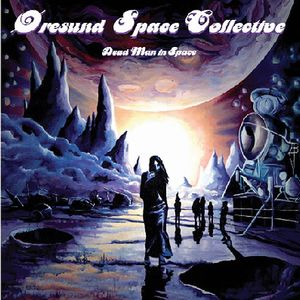
Dead Man in Space originated from sessions played by the band in 2008, which also provided material for two other albums, Slip Into the Vortex (2010) and Sleeping With the Sunworm (2011) It was originally released as an LP in January 2010, then reissued in CD format with a longer version of “High Pilots” (here clocking in at a hefty 32 minutes instead of just 22) and an additional track, the 10-minute “Who Tripped on the C(h)ord?”. With the exception of the short title-track, which closes the album with a collection of whooshing electronic effects and a muted recorded voice relating the tale of the titular dead man in space, all the tracks follow a similar template. Over a steady, unflagging bass/drum backdrop, electronics and guitar take turns in the spotlight, describing hypnotic cadences designed to evoke the mystery and vastness of space and expand the mind almost like an LSD-fuelled trip.  The somewhat raw sound quality adds to the appeal of the music, increasing the impact of the swirling guitar patterns underpinned by the low rumble of the Hammond organ.

The sprawling 32-minute guitar-synth jam of “High Pilots” offers a series of variations on the same mid-paced, trance-inducing theme. Though the weird electronics may occasionally be annoying, the subtle shifts in tempo and the alternating roles of the two main instruments hold the listener’s interest – though in a markedly different way than the twists and turns of a conventional prog “epic” of the same length. The 22-minute “Space Jazz Jam 2.2” is exactly what the title promises – a slow, surging duel between guitar and sax in the best Hawkwind tradition, with a tantalizingly mellow hint of Eastern spice contrasted with the increasingly distorted growl of the guitar. “Who Tripped on the C(h)ord?” makes effective use of the muted, chiming pace of iconic Pink Floyd compositions such as “Careful With That Axe, Eugene” or “Set the Controls for the Heart of the Sun”, bolstered by eerie organ runs and whistling synth to create a melancholy, meditative mood.

Dead Man in Space is a must for fans of vintage psychedelic/space rock,  as are all of Öresund Space Collective’s albums. While a bit too rambling and unpolished (and perhaps monotonous) to suit the tastes of the more traditional-minded prog fans, it will provide a refreshing change of pace from the often overwrought efforts of far too many celebrated artists.  On any account, Dead Man in Space provides an interesting insight into the work of one of the leading bands of the current space rock revival, and a celebration of the joys of improvisation – so often stifled by circumstances.

Links:
http://www.oresundspacecollective.com/

http://www.myspace.com/oresundspacecollective

Read Full Post »

TRACKLISTING:
1. Prologue (7:00)
2. Part I (12:25)
3. Part II (9:09)
4. Part III (16:52)
5. Part IV (13:30)

LINEUP:
Fabio Zuffanti – bass guitar, Moog Taurus bass pedals, cymbals, tambourine
Luca Scherani – Mellotron, Minimoog, Korg Sigma, Hammond organ, grand piano, Fender Rhodes and Wurlitzer electric piano, accordion, mandolin
Maurizio Di Tollo- drums
Matteo Nahum – electric, acoustic and classical guitars
Silvia Trabucco – violin
Joanne Roan – flute
Edmondo Romano – bagpipe, soprano sax, tin whistle, bodhran

With:
Alessandro Corvaglia –  lead vocals (Parts I and IV)
Carlo Carnevali – recitation, vocals (Part I)
Davide Merletto – lead vocals (Part II)
Marco Dogliotti –  lead vocals (Part III)
Simona Angioloni – lead vocals (Part IV)

In spite of its name (an homage to Ingmar Bergman’s 1978 film, Autumn Sonata in the English translation, which marked Ingrid Bergman’s final appearance on the big screen), Höstsonaten -one of the many projects in which bassist/composer Fabio Zuffanti (known to US prog fans for his work with Finisterre and La Maschera di Cera) is involved – hails from the Italian port city of Genoa. Its self-titled recording debut came in 1996, followed in 1998 by Mirrorgames, and then by the four albums comprising the Seasoncycles (Springsong, Winterthrough, Autumsymphony and Summereve), released between 2002 and 2011. Though Höstsonaten is a solo project rather than a conventional band, every one of its albums has been conceived as a group effort with the contribution of a number of talented Italian musicians, some of them members of Zuffanti’s other projects (such as Finisterre, La Maschera di Cera and Aries).

Samuel Taylor Coleridge’s iconic 9-part poem, The Rime of the Ancient Mariner (published in 1798 as part of the ground-breaking first edition of  Lyrical Ballads), is one of those literary works that seem to have been created expressly to be put to music, especially in a progressive rock setting. A riveting tale of guilt, atonement and redemption set largely at sea, it epitomizes Romanticism with its heady blend of Christianity, pantheism and Gothic horror (masterfully captured by 19th-century illustrator Gustave Doré, one of whose etchings is reproduced at the end of the CD booklet). Most rock fans will be familiar with Iron Maiden’s stunning, 13-minute rendition that was included on their fifth album, 1984’s Powerslave. Indeed, Iron Maiden’s epic (by many considered a full-fledged example of progressive rock) was the original inspiration for Zuffanti’s own interpretation of Coleridge’s poem – which first appeared in Höstsonaten’s first two albums (as Part I and Part II). However, Zuffanti was not satisfied with the results, and decided to expand his vision and present the poem in its entirety (while the Iron Maiden song condensed Coleridge’s story, quoting the poet’s words only briefly), even if split between two albums, with Chapter Two’s release planned for 2013.

The ambitious scope of The Rime of the Ancient Mariner (as well as its respected literary source) will remind dedicated prog fans of the the numerous Colossus Project CD sets released by Musea Records in the past decade or so. Zuffanti himself has frequently collaborated with those endeavours, and graphic artist/drummer Davide Guidoni (one of Colossus Project’s mainstays) has contributed his accomplished artwork to the disc. Coleridge’s original text is interpreted by four different singers plus a reciting voice. As good as the vocal performances are, however, the music is the real strength of the album, effectively conveying the dramatic development of the story – from the joyful departure of the ship to the culmination of the tragedy caused by the Mariner’s wanton killing of the albatross, the “bird of good omen” that steers the ship through a deadly ice field.

The instrumental “Prologue” sets the scene with ominously tolling bells and the haunting sound of the waves, then builds up to a rich tapestry of keyboards (manned by Luca Scherani of La Coscienza di Zeno) laced with violin and Matteo Nahum’s stately, melodic guitar. Though the Genesis influence hovers on the whole album, Zuffanti also introduces heavier elements to bolster the work’s quintessentially dramatic nature. Part I (with vocals by La Maschera di Cera’s Alessandro Corvaglia, assisted by long-time Zuffanti collaborator Carlo Carnevali) is the most consistently symphonic episode, juxtaposing lush keyboard textures, choral mellotron and melodic guitar with the lyrical touch of the violin and the pastoral sound of the flute, and then gradually increasing the intensity quotient, leading to the mournful, melancholy mood  that accompanies the killing of the albatross.  After a deceptively subdued opening, Part II quickly builds up to a powerful climax, with roaring Hammond organ and synth slashes complementing Davide Merletto’s vocals, while some sax inserts add interest, and the eerie, rarefied sound effects at the end aptly convey the plight of the ship becalmed in the middle of an empty ocean.

Part III (at 16 minutes the longest track on the album) marks a definite change of pace, often veering into prog-metal territory and bringing to mind the melodic yet powerful style of bands such as Symphony X. Marco Dogliotto’s clear, assertive tenor (reminiscent of a less histrionic James LaBrie) navigates the shifts in the narrative with confidence and flair, while Silvia Trabucco’s violin alternately soothes and roars, sparring with guitar and organ in almost aggressive fashion. The slow, inexorable approach of the ghost ship is rendered in a chillingly understated way; then the music gains momentum once again to describe the death of the ship’s crew. Piercing bagpipes at the opening of Part IV convey the plight of the Mariner, alone on a ship with the corpses of his mates, whose staring eyes curse him. Corvaglia’s vocals blend with Simona Angioloni’s pure soprano, and the folksy suggestions are reinforced by the use of typical Celtic instruments such as the tin whistle and the bodhran, as well as the accordion, which perfectly complement the wistful, romantic note of the violin. Then, grandiose mellotron and powerful riffs, propelled by Maurizio Di Tollo’s imperious drumming, lead to the climactic moment of the Mariner’s redemption.

The Rime of the Ancient Mariner – Chapter One keeps to a restrained running time of about 58 minutes, and I have to applaud Zuffanti’s choice of splitting such an ambitious endeavor in two parts, rather than  releasing a double CD that would have probably been indicted as overly pretentious. Displaying all the symphonic splendour of the golden age of prog, with a tantalizing sprinkling of folk and jazz influences and occasional forays into metal territory, the album manages nevertheless to sound modern (though obviously not “innovative”), avoiding the unabashedly retro stance of some highly praised releases of the past couple of years. Moreover, the lasting appeal of its literary source removes that whiff of cheesiness that often accompanies such ambitious productions. Highly recommended to fans of classic symphonic prog, with particular regard to the Italian school, The Rime of the Ancient Mariner – Chapter One is a very accomplished effort, and a loving homage to one of the milestones of English-language literature.

Links:
http://www.myspace.com/hostsonaten

http://www.zuffantiprojects.com/

Read Full Post »

TRACKLISTING:
CD:
1. Corps et Âmes (6:26)
2. Loin d’Issy (7:14)
3. George V (10:27)
4. Ultraviolet (8:18)
5. Feu Sacré (6:50)
6. Midi-Minuit (13:30)

DVD (Recorded live at NEARfest 2010):
1. Ultraviolet (8:34)
2. L’Axe Du Fou (16:06)
3. Feu Sacré (6:53)
4. Soleil 12 (9:09)
5. Double Sens (13:38)
6. Extralucide (10:20)
7. Éclipse (7:45)

LINEUP:
Patrick Forgas – drums
Sébastien Trognon – tenor, alto & soprano saxes, flute
Dimitri Alexaline –  trumpet, flugelhorn
Benjamin Violet – guitar
Karolina Mlodecka – violin
Igor Brover – keyboards
Kengo Mochizuki – bass

Active on the music scene since the mid-Seventies, drummer/composer Patrick Forgas has often been regarded as the French answer to Robert Wyatt. Indeed, Forgas describes his discovery of Soft Machine’s second album, at the age of 18, as nothing short of life-changing. Anyone familiar with his debut album, Cocktail (originally released in 1977, and reissued by Musea Records in 2009 as an expanded edition) will not fail to notice the similarities in the two drummers’ vocal styles, as well as in terms of musical content.

In spite of a career marked by frequent breaks from music-making, Forgas has always been able to reignite his creative spark. Forgas Band Phenomena was born in the late Nineties, and released two albums with a lineup that included mallet percussionist Mireille Bauer (of Gong fame). Then, after a 6-year hiatus, they reappeared in 2005 with a revamped configuration and a live album, Soleil 12, which featured mostly new material. The breakthrough for the band, however, came in 2009 with the release of the magnificent L’Axe du Fou, and their highly acclaimed performance at the 2010 edition of NEARfest. That career-defining show is captured on the DVD that accompanies Acte V, the band’s fifth album, released at the beginning of 2012 on Cuneiform Records.  The album’s title, which at a superficial glance may seem self-explanatory, is illustrated in the liner notes with some intriguingly esoteric references that also expand on the origin of some of the track titles.

Acte V features the same lineup as the band’s previous album – a rock-solid ensemble of 7 people, led by Patrick Forgas’ discreet but astonishingly precise drumming, bolstered by Kengo Mochizuki’s equally understated, reliable bass lines. With an  instrumentation that includes violin, trumpet, flute and saxophone as well as the rock “basics” of bass, guitar, drums and keyboards, Forgas Band Phenomena produce an impressive volume of music that comes across as lush and tight at the same time, with a slightly repetitive yet heady quality that holds the listener’s interest. Karolina Mlodecka’s violin soars above the fray with lyrical abandon, often sparring with the forceful blare of the horns and the razor-sharp edge of Benjamin Violet’s guitar. Forgas’ handles the cymbals with a firm yet delicate touch, their metallic tinkle blending with Igor Brover’s sparkling electric piano to create one of the hallmarks of the band’s sound.

As a whole, Acte V is a more nuanced effort than the ebullient L’Axe du Fou, and may need repeated listens before it starts growing on you.  While the mood is definitely upbeat, alternating energetic bursts of sound with more stately, subdued passages, those shifts are effected with remarkable subtlety, rather than in the blatantly head-spinning fashion preferred by more overtly “technical” bands. The music flows elegantly and naturally, the horns conferring an appealing “big band” touch that is quite unique. In spite of the Canterbury comparisons, Forgas Band Phenomena’s  powerful, exhilarating sound may bring to mind a cross between Caravan circa For Girls Grow Plump in the Night and early jazz-rock outfits such as Colosseum or Blood Sweat & Tears, rather than the sparser experimental approach of Soft Machine.

Clocking in at a healthy 52 minutes, Acte V comprises 6 well-balanced, richly arranged tracks. Even if, at a superficial listen, they might sound rather alike, variety is achieved by contrasting the “choral” sections, in which all the instruments emote together, driving the melody along, with solo spots that never smack of self-indulgence. Opener “Corps et Âmes” allows Violet’s guitar to step into the limelight, imparting a piercingly clear rock tone offset by the airy lyricism of the violin and the full-on blasts of Dimitri Alexaline’s trumpet and Sébastien Trognon’s sax. “Loin d’Issy” hovers between a dynamic, upbeat mood and a gentler one, the almost mournful trumpet solo in the middle bringing to mind Ennio Morricone’s iconic soundtracks; while “George V” and “Ultraviolet” raise the rock stakes with blistering guitar combined with assertive horns and violin to produce an intensely exhilarating effect. Sax and violin interweave smoothly, though with a sharp edge that emerges towards the end, in the intricate “Feu Sacré”; then the album is brought to a close by the 13-minute “Midi-Minuit”, an ambitious orchestral piece that allows each of the instruments its time in the spotlight, displaying a slightly angular, jazzy allure at first, then unexpectedly introducing a different, more regular pace before the end, with hauntingly atmospheric effects.

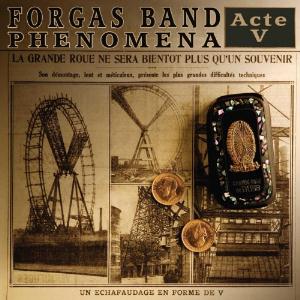
The DVD that completes the package (rounded off by a stunningly stylish cover in trendy sepia tones, reprising the Ferris wheel theme of Forgas Band Phenomena’s first three albums) offers a unique opportunity to witness the band’s blend of energy and sophistication coming alive on stage. The 75-minute set showcases a selection of compositions from the past (“Soleil 12”, “Extralucide”, “Eclipse”), the present (three out of four tracks from L’Axe du Fou, which had been released a few months before the show) and the future (“Ultraviolet” and “Feu Sacré”), as well as shots of the band. With outstanding image and sound quality, it is a must for anyone who wants to witness what, in my view, was the highlight of the whole event (together with Moraine’s breakthrough performance on the following day).

All in all, Acte V is an album that oozes pure class from one of the finest bands on the modern progressive rock scene. This is one of those rare efforts that may actually succeed in bridging the ever-widening gap between the retro-oriented and the forward-looking components of the prog audience, appealing to both “factions” on account of the strength of its musical offer. A must-listen for jazz-rock fans and lovers of instrumental music, Acte V is highly recommended to everyone.

Links:
http://forgasbp.online.fr/

http://www.myspace.com/forgasbandphenomena

http://www.cuneiformrecords.com

Read Full Post »

TRACKLISTING:
1. Prelude (1:35)
2. Ruhkukah (5:32)
3. Low Levels, High Stakes (9:03)
4. Hard Hat Area (6:03)
5. Tullio (5:59)
6. House of Mirrors (7:44)
7. Postlude (5:28)

LINEUP:
Allan Holdsworth –  guitar, SynthAxe
Steve Hunt  – keyboards
Gary Husband – drums
Skúli Sverrisson – bass guitar

TRACKLISTING:
1. Countdown (3:09)
2. Nuages (5:40)
3. How Deep Is the Ocean (5:29)
4. Isotope (5:41)
5. None Too Soon Pt. 1 / Interlude / None Too Soon Pt. 2 (7:42)
6. Norwegian Wood (5:55)
7. Very Early (7:40)
8. San Marcos (3:22)
9. Inner Urge (6:15)

LINEUP:
Gordon Beck – digital piano, keyboards
Kirk Covington – drums
Allan Holdsworth – guitar, SynthAxe
Gary Willis – bass guitar

Yorkshire-born guitarist Allan Holsworth needs no introduction for progressive rock lovers of every persuasion. Before Steve Vai, Joe Satriani, John Petrucci and their ilk’s dazzling, faster-than-the-speed-of-light skills on the six strings gained worldwide success, Holdsworth had already attained legendary status for his work both as a solo artist and with the likes of Gong, Soft Machine, Jean-Luc Ponty and UK. Though the albums released in his own name are in the minority if compared to the sheer number of his collaborations, over the years they have become almost objects of cult in the community of jazz-fusion fans

Though I was familiar with Holdsworth’s work with bands such as UK and Gong,  I had not yet got round to exploring his solo output. Holdsworth’s reputation as the quintessential “musicians’ musician” may cause his work to be somewhat daunting for those who, like myself, have never touched a musical instrument in their lives. However, even laypersons can derive a lot of enjoyment from listening to music of such outstanding level,  although the nature of our comments will necessarily be “impressionistic”, so to speak, and probably even more so than in other occasions – as we will be unable to touch on any of the technical details essential for any practicing six-stringer.

Hard Hat Area and None Too Soon belong to the stage of Holdsworth’s full maturity as a musician and composer, as well as a pioneer of the iconic SynthAxe. Released only three years apart (respectively in 1993 and 1996), they differ quite noticeably in terms of  style and lineup. Both albums were out of print for a number of years before Leonardo Pavkovic of MoonJune Records (who is a personal friend of Holdsworth’s as well as fan of his music) took it upon himself to have them remastered and reissued – complete with exhaustive liner notes retracing their history, courtesy of Guitar Player magazine associate editor Barry Cleveland (also a fine musician in his own right). The distinctive elements of both albums are lovingly brought to the fore, with excellent sound quality that allows the listeners to partake of the seamless instrumental interplay without feeling overwhelmed by thousands of notes played at the speed of light.

As Cleveland points out, Holdsworth’s eight solo album, Hard Hat Area, is a logical extension of the guitarist’s previous efforts. It also marks the first time that he recorded an album in the studio with his touring band  (comprising drummer Gary Husband, keyboardist Steve Hunt and Icelandic bassist Skúli Sverrisson), instead of recording each track on his own and then adding the other instruments. Not surprisingly, the result are 41 minutes of music that are astonishingly proficient from a technical point of view, yet also warm and fluid, showcasing Holdsworth’s trademark style without detracting from the other players’ outstanding skills. Indeed, in spite of the sky-high level of proficiency involved, the listener never gets the impression that the musicians are showing off – unlike  much of the output of modern “guitar legends”. The music possesses that easy, natural flow that can be so hard to achieve, and the crystalline sound quality emphasizes the sleek, effortless nature of the interaction between the various instruments.

The album, conceived in near-symphonic fashion with a “Prelude” and a “Postlude”, is laid-back, at times even lyrical in mood. In the almost 10-minute “Low Levels, High Stakes”, Holdsworth’s guitar and SynthAxe take on a calm, meditative tone, reflected by Hunt’s lovely rippling piano and Husband’s muted yet stunning drum work. Elegant and full of melody, the textbook-perfect fusion of “Ruhkukah” proves once again that fast playing does not have to equal soulless shredding. The title-track, on the other hand, introduces some harsh, industrial elements through mechanical sound effects and a sharper, metallic guitar tone; The atmospheric quality of “Postlude”, enhanced by ethereal keyboard washes, allows Skúli Sverrisson’s splendidly understated bass to step into the limelight, while the SynthAxe engages in a sort of “duel” with the drums, emphasizing the almost uncanny chemistry between Holdsworth and Husband.

Even if released less than three years after Hard Hat Area, None Too Soon is quite a different beast – featuring a completely new band (including Holdsworth’s longtime friend and collaborator, the late pianist Gordon Beck) and a tracklist largely consisting of covers of jazz classics by revered composers such as Bill Evans, Irving Berlin and John Coltrane. While Hard Hat Area is a top-notch example of fusion, None Too Soon treads into traditional jazz territory, though the pervasive presence of the SynthAxe pushes it firmly into a contemporary context that might alienate hardcore purists. Gary Willis and Kirk Covington of US jazz-fusion outfit Tribal Tech provide an impeccable rhythm backdrop, often understated, occasionally stepping into the limelight. However, the real protagonist of the album – in some ways even more so than Holdsworth – is Gordon Beck’s fluid, scintillating piano, which complements Holdsworth’s playing with the effortless ease born of a long partnership.

Clocking in at around 51 minutes, the album features 9 tracks, two of which are Beck’s own compositions – the three-part title-track, with its almost lazy, relaxed mood, and the brisk, energetic “San Marcos”. The jazz novice will probably be unfamiliar with most of the tracks, except for The Beatles’ “Norwegian Wood” – here almost unrecognizable, with a dazzling, piano-led central section bookended by the well-known, Indian-tinged tune. An understated, atmospheric rendition of Django Reinhardt’s “Nuages”, with Beck’s magnificent piano complementing Holdsworth’s exertions, and Bill Evans’ elegant, romantic “Very Early”, which sees Willis’ bass emerge discreetly, are also among the undisputed highlights of a very solid album.

Needless to say, both albums are essential listening for any self-respecting fan of jazz-rock/fusion, as well as for guitarists who want to learn how to effectively combine speed and technical proficiency with melody and emotion. They also offer an invaluable introduction to Holdsworth’s solo output, as well as a genuinely enjoyable listening experience for those non-musicians who  love great music. Kudos to Leonardo Pavkovic for having rescued these excellent albums from oblivion.

Links:
http://www.therealallanholdsworth.com/

http://www.moonjune.com

Read Full Post »

The name of Argentine band Cucamonga will not fail to ring a bell with Frank Zappa fans, as it references the Californian suburban city (now called Rancho Cucamonga) where Zappa’s Studio Z was located. Unfortunately, the information available on this quintet – led by guitarist Oscar “Frodo” Peralta, who is also the band’s main composer – is very sparse, and they currently have no active website or social media presence. Their debut album, Alter Huevo, recorded in early 2011 in the northern Argentine city of Santa Fe, was released a year later by AltrOck Productions.

Not surprisingly, Zappa is a major influence on Cucamonga’s sound, which comfortably straddles the line between avant-progressive rock and classic jazz-rock/fusion, with liberal doses of humour thrown in as an added bonus. Clearly a bunch of talented and dedicated musicians, their particular brand of music may not be extremely innovative (nor does it claim to be), but it is sure to intrigue the discerning listener, with enough complexity to please the most demanding fans and an endearingly light-hearted attitude to temper the technical dexterity. Though Alter Huevo is mostly instrumental, voices and bursts of laughter add a quirky touch to a few tracks. Warm hints of Latin music are scattered throughout the album, while the accordion – the iconic protagonist of tango music – lends its distinctive Old World flavour to some of  the compositions. However, Cucamonga’s sound rests on three main instruments – guitar, sax and drums – effectively complemented by keyboards and mallet percussion.

With a running time just under 40 minutes, Alter Huevo is a compact, well-balanced album that is easy to enjoy without getting overwhelmed by an excess of notes. Opener “Tetascotch”, the longest track on the album, and the most complex in terms of mood and tempo changes, kicks off with a funny circus-like tune, then takes a more laid-back turn, with all the instruments getting their chance to shine in classic jazz-rock fashion. “El Dengue De La Laguna” continues on the same path, showcasing Julian Macedo’s stellar drumming – propulsive and textural at the same time – while the instrumental interplay often suggests a dialogue without words, with an elegance that hints at vintage Canterbury. “Tu Guaina” and “Variaciones Sobre Tu Hermana” veer towards the Avant end of the spectrum, the latter throwing in some dissonance and moments of rarefied calm enhanced by the cascading tinkle of the mallet percussion.

With “Tillana”, Cucamonga tackle a traditional piece of Carnatic music (the classical music of Southern India) originally rearranged by legendary percussionist Trilok Gurtu for his 1993 album Crazy Saints – which, as can be expected, pushes percussion to the forefront, though guitar, sax and piano also play a strong role. “Cerrazón En Al Teyú Cuaré” alternates slow, melancholy moments with sudden surges of power. The short, upbeat “Dominguillo” introduces album closer “Cletalandia”, based on a hilarious radio broadcast about restoring sensuality in marriage – something that would have definitely won Zappa’s seal of approval. Those familiar with Spanish will enjoy reading the text in the CD booklet. Musically speaking, the track is bookended by energetic sections very much in classic jazz-rock style, powered by Adriano Demartini’s groovy bass lines; while the central part, which includes the broadcast, is accompanied by sparse yet expressive sax.

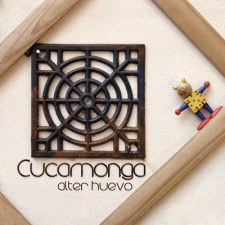
In keeping with AltrOck’s reputation for stylishly packaged products, Alter Huevo comes with a nicely illustrated booklet (courtesy of the label’s resident graphic artist, the multi-talented Paolo Ske Botta) that successfully combines elegance and whimsy. Udi Koomran’s experienced mastering guarantees excellent sound quality, emphasizing Cucamonga’s varied instrumentation and the impressive skill of the players. Lovers of eclectic jazz-rock with a pinch of avant-garde and world-music spice (as offered by bands as AltrOck’s own Calomito or MoonJune’s Slivovitz) will appreciate this solid, classy offering by an interesting new band. However, it would be a good idea if Cucamonga took a more active role in promoting their music on the Web, which in this day and age is nothing short of indispensable.

Links:
http://www.allmusic.com/artist/cucamonga-p2600792

http://production.altrock.it/prod2.asp?lang=eng_&id=179&id2=180

http://soundcloud.com/udi-koomran/sets/cucomonga-alter-huevo-altrock/

Read Full Post »

TRACKLISTING:
1. Knee (5:05)
2. Oom Pah (5:09)
3. Missing the Train (3:41)
4. Rainbro (5:02)
5. Too Good To Be True (4:11)
6. Somnambulist Subversion (4:34)
7. Nut Job (3:12)
8. Forgotten Planet (6:00)
9. Dirty Spoons (5:12)
10. 25 Miles to Freedom (10:30)

LINEUP:
Melody Ferris – vocals
Ivor Holloway – tenor and alto saxophone, clarinet
Pat Moran – electric bass
Nick Peck – Hammond B-3 organ, clavinet, Fender Rhodes electric piano, minimoog Voyager, mellotron, piano, Arp String Ensemble, Wurlitzer 200A electric piano
Doug Port – drums
David Shaff – trumpet
Ryder Shelly – vibraphone
David Slusser – Slussomatic, electronics
Andrew Vernon – keyboards, Farfisa organ
Bill Wolter –  electric and acoustic guitars, keyboards, electronics

Line-up on # 10:
Shayna Dunkelman – vibes, crotales
Melody Ferris – vocals
Jordan Glenn- drums
Ivor Holloway – tenor saxophone
Curtis McKinney – electric bass
Charith Premawardhana – viola
Max Stoffregen –  piano, synth
Bill Wolter – guitar, keyboards

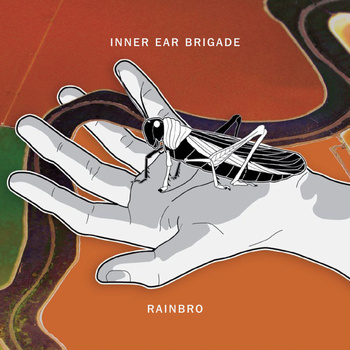
The high level of quality offered by AltrOck Productions and its subsidiary label, Fading Records, will no longer come as a surprise for progressive rock fans. However, there are times when an album released on the Milan-based label will exceed expectations – and this is definitely the case with Rainbro, Inner Ear Brigade’s debut album.  Formed in 2005 in Oakland (California) by multi-instrumentalist and composer Bill Wolter, the band  was originally a quartet; then, in the following years, the lineup grew into a 7-piece, with a number of honorary members participating in the recording of the album. Rainbro was recorded in the summer of 2010, and released on the international market in January 2012.

The Bay Area city of Oakland has long been a hotbed of cutting-edge music, being home to such highly acclaimed outfits as Sleepytime Gorilla Museum and  miRthkon (also on the AltrOck roster), as well as legendary guitarist/composer Fred Frith. However, Inner Ear Brigade have something that sets them apart from other bands that fall under the avant-progressive umbrella, and makes them more easily approachable by “mainstream” prog fans. With their extended lineup and intriguing instrumentation – featuring a healthy mix of vintage keyboards, state-of-the-art electronics and conventional rock gear, augmented by reeds, horns and vibraphone – they produce a lush, fluid sound that suggests the understated elegance of Canterbury bands such as Hatfield and the North or National Health rather than the austere beauty of Univers Zéro or the martial grandeur of Magma.

In quintessentially eclectic fashion, Inner Ear Brigade throw many diverse influences into their musical melting pot, straddling the divide between reverence towards past glories and a genuinely forward-thinking attitude. While the progressive rock scene suffers from a glut of acts often hopelessly rooted in the past and seemingly unable to go beyond reproducing the classic Seventies sound, Inner Ear Brigade use the influences drawn from the rich treasure trove of the golden age of prog as a springboard for creating their own sound, rather than as an exercise in nostalgia.

Though all of the band members are remarkably talented, Inner Ear Brigade’s ace in the hole is Melody Ferris’ voice, which at a superficial listen might recall the distinctive style associated with avant-prog and represented by Thinking Plague’s Deborah Perry and Elaine DiFalco. Indeed, the demanding vocal lines tackled by Ferris in opening track “Knee” sound like a textbook example of the subgenre’s conventions. However, as the album progresses, Ferris’ vocals become increasingly more versatile, engaging in singing and wordless vocalizing with equal effectiveness, and often  “playing” along the other instruments rather than acting as a separate entity (a fine example of this is the atmospheric “Too Good to Be True”).  The quirky lyrics enhance the album’s overall playful mood and emphasize its Zappa and Canterbury references, which the band share with their fellow Oaklanders miRthkon.

The first half of the album displays the strongest avant-prog imprint, effortlessly blending accessibility and experimentalism, catchy tunes and whooshing, spacey electronic effects.  A sunny California vibe tempers the bouts of dissonance in tracks such as “Missing the Train”, while saxes and trumpet add a buoyantly jazzy note. In some of the tracks – notably the trio of instrumentals that precede the album’s “epic”, the 10-minute “25 Miles to Freedom” (recorded in 2009 with a different lineup) – the two souls of the band seem to coexist, with melodic, laid-back passages alternating with more energetic, upbeat ones, and short yet effective forays into more experimental terrain, duly bolstered by liberally used electronics. The title-track is powered by harsh guitar riffs and blaring horns; while the closing track takes the band deep into Canterbury territory, with Ferris’ splendid vocal performance bringing to mind the incomparable Northettes, and the viola adding a wistful, lyrical touch to a rich, almost symphonic texture. Varied yet cohesive, “25 Miles to Freedom” wraps up the album with a bang, conveying a palpable sense of enjoyment on the part of the band that listeners will be hard put not to share.

With a well-balanced running time of about 52 minutes, Rainbro never overstays its welcome, in spite of the undeniable complexity of the music. The album’s ebullient yet intricate nature will attract lovers of quirky, eclectic progressive rock, while the presence of vintage instruments typical of traditional prog may encourage the more conservative set of fans to give Inner Ear Brigade’s music a try. All in all, Rainbro is an outstanding debut for a band that is definitely going places, and a strong contender for my personal “best of 2012”.

Links:
http://innerearbrigade.com/

http://innerearbrigade.bandcamp.com/

http://production.altrock.it/prod2.asp?lang=ita_&id=182&id2=183

Read Full Post »

TRACKLISTING:
1. The Noise of Time (5:09)
2. For Those Overrun by American Violence (7:12)
3. The Wind (5:12)
4. I Fought for Nothing (5:21)
5. Election Night 2004 (and only some dogs down the street protested) (2:11)
6. Winter (5:40)
7. Fate (3:44)
8. Adrift in Empire (5:32)
9. For Those in Peril on The Sea (7:10)
10. Softly Adrift (4:53)
11. The Matter of Our Crimes (5:41)
12. Meditation for Kellie C. (5:46)

LINEUP:
Scott Brazieal – vocals, all instruments

With:
Ali Ippolito – vocals (1, 3, 4)
Adam Hurst – cello (4, 6)
Tom Hood –  bowed guitar (6, 9), guitar solo  (7)
R.D. (Dave) Hardesty – vocal narrative (11)

Followers of the US avant-progressive scene will remember Scott Brazieal as the founder of Cartoon and PFS, as well as a member of 5uu’s and Thinking Plague, who also toured with such icons as Christian Vander and John Greaves. A gifted multi-instrumentalist and composer, currently based in California, Brazieal has been lying low for the past decade or so, steadily working on his first solo project – a labour of love that began in 2003, and was finally released earlier this year. The album, titled Songs from the Empire, comprises 12 tracks mostly performed by Brazieal himself with the help of some guest musicians. According to the artist, the album was conceived as a whole rather than a collection of individual songs, and as such is meant to be listened to in its entirety – a concept that sounds almost alien to a generation weaned on iPods and single-song downloading.

Songs from the Empire is one of those albums that may need several listens before they begin to “make sense”, so to speak. While the instrumental component definitely outweighs the singing, Brazieal’s voice – reminiscent of Roger Waters’, and sounding at times rather off-key (though the effect may be intentional) – seems to emphasize the dissonance that occasionally disrupts the somber, meditative mood of the music. The most distinctive (as well as potentially controversial) aspect of the album, however, is its highly charged political content. Flag-wavers of any kind, or those who think that music should refrain from taking a political stance, will be immediately put off by titles such as “For Those Overrun by American Violence”. On the other hand,  the political message is not conveyed in a straightforward manner – that is, through “conventional” lyrics – but rather through suggestions such as sound effects, vocal narratives and original recordings. Indeed, the most overt statement can be found in  “Adrift in Empire”, which features part of Martin Luther King, Jr’s 1967 “Beyond Vietnam” speech – whose content rings uncannily true even 45 years later.

Though the message is almost inseparable from the music, in purely musical terms Songs from the Empire is a fascinating listen, hovering between atmospheric minimalism and classical references with a pinch of rock directness thrown in for added spice. The use of dissonance – to many the hallmark of the avant-prog subgenre – is quite restrained, while quite a surprising amount of melody is scattered throughout the album. Keyboards and electronics play the biggest role, but the contribution of other instruments (such as strings, guitar and drums) ensures variety, while sound effects reinforce the message and enhance the emotional impact. The slow pacing of the compositions  – at times exceedingly so – also highlights their introspective quality.

Guest vocalist Ali Ippolito’s melodious tones temper Brazieal’s harsher, more discordant ones in opener “The Noise of Time”, the rarefied, vaguely ominous “I Fought for Nothing” and the atmospheric “The Wind”; while a female church choir – superimposed to a wailing, almost tribal voice – injects a sense of eerie mysticism in the broodingly cinematic “For Those Overrun by American Violence”. The already-mentioned “I Fought for Nothing” and “Softly Adrift”, both suggestive of Roger Waters’ solo output, bridge the gap between mainstream and experimentation, coming across as skewed torch songs of sorts. On the other hand, the instrumental tracks possess the intimate, sometimes brittle feel of chamber music. The 7-minute “For Those in Peril on the Sea” starts out in mournful, string-driven fashion, then gradually turns more dissonant towards the end. In the highly descriptive “Winter”, the slow, sparse motion of the piano is disturbed by eerily creaking sound effects suggesting frost or ice. The album is then brought to a lovely, melancholy close by the subdued piano in the aptly titled “Meditation for Kellie C.”, joined by atmospheric keyboard washes towards the end.

Clocking in at about 61 minutes, Songs from the Empire is a well-balanced, carefully composed effort that will definitely please lovers of everything avant-progressive, as well as those who appreciate contemporary classical music. While the previous paragraphs should make it abundantly clear that the album is not an easily accessible proposition, it will also reward the patience of those who like music to make you think rather than offer instant gratification.

Links:
http://scottbrazieal.com/

Read Full Post »

« Newer Posts - Older Posts »