Feeds:
Posts
Comments

Archive for the ‘Review’ Category

TRACKLISTING:
1. Malthusian Dances (6:39)
2. I Cannot Fly (8:34)
3. Sleeper Cell Anthem (6:10)
4. A Virtuous Man (11:45)
5. The Gyre (4:42)
6. Climbing the Mountain (8:38)

LINEUP:
Elaine Di Falco – voice
Mark Harris – saxes, clarinets
Mike Johnson – guitars
Kimara Sajn – drums, keyboards
Dave Willey – bass

With:
Kaveh Rastegar –  bass (1)
Robin Chestnut – drums (5)
Dexter Ford – bass (5)

Described by founder Mike Johnson as an “enterprise” rather than a band in the conventional sense, Thinking Plague seem to fit the definition of “cult act” to a T. The many different incarnations of the US answer to seminal European outfits such as Henry Cow and Univers Zéro – based in the rugged mountain state of Colorado, where it was formed by Johnson and guitarist/drummer Bob Drake in 1982 – read like a veritable “who’s who” of the US avant-progressive scene. Thinking Plague’s whole existence has also been characterized by a constant struggle against circumstances, which has inevitably impacted the frequency of their releases. Indeed, with a total of 7 studio albums released in almost 30 years of history, they definitely count among the least prolific bands on the scene, together with Cuneiform label mates Miriodor.

The average progressive rock fan, steeped in the grand symphonic tradition of the early Seventies, usually has a very controversial relationship with the more forward-thinking fringes of the movement – and very few bands are as likely to send prog fans running for the exits as Thinking Plague. Unabashedly intellectual, as their very name (associating the act of thinking with a curse of sorts) suggests, with extremely well-written, thought-provoking lyrics, Thinking Plague take the proverbial complexity of the Avant subgenre up a notch.  Decline and Fall, their highly-awaited seventh album, released almost 9 years after A History of Madness, is certainly no exception. The album also showcases the band’s new lineup (though drummer Robin Chestnut, who was introduced on the occasion of Thinking Plague’s headlining appearance at Cuneifest in November 2011, only appears on one track), spotlighting the contributions of new singer Elaine DiFalco (recently seen on two outstanding albums, Dave Willey and Friends’ Immeasurable Currents and 3 Mice’s Send Me a Postcard) and drummer/keyboardist Kimara Sajn, a gifted multi-instrumentalist well-known on the Seattle experimental music scene.

Clocking in at under 47 minutes, and entirely written by Mike Johnson, Decline and Fall features 6 tracks connected by a fil rouge made all too clear by the title and artwork  – an apocalyptic reflection on the dismal state of Planet Earth, which, according to Johnson’s musings, has long gone past the point of no return. Through vivid verbal imagery flawlessly supported by the head-spinningly intricate music, humankind is depicted as rushing headlong (and heedlessly) towards destruction, its disappearance the only thing that will be able to save the Earth. While the term “concept album” is generally associated with overambitious productions that often collapse beneath the weight of their own pretensions, Decline and Fall is tight and tense, the synergy between lyrics and music embodied by Elaine DiFalco’s stunning vocal performance. Reviews often mention the role of vocals as just another instrument, but the observation is rarely as fitting as in this particular case. DiFalco’s extremely versatile voice ranges from soothing the ear with subdued gentleness to tackling parts of rollercoaster-like intensity, bolstered by the use of multi-tracking to almost vertiginous effect.

Though the word “multilayered” frequently crops up in prog reviews, it sounds like an understatement if applied to Decline and Fall. True, the listener might occasionally feel that the music is too clever or intricate for its own good, in a sort of “art for art’s sake” manner, and keeping track of the twists and turns in the compositions is anything but an easy task. Decline and Fall demands a lot from its listeners, and it is definitely not the kind of music you would want to keep in the background while doing the housework. On the other hand, contrarily to the trend shown by most “mainstream” prog, displays of individual brilliance have little or no place in Thinking Plague’s world. Each instrument, like a thread in a tight, complex weave, gets its chance to shine, but as part of a whole rather than in isolation. Consequently, solo spots are few and far between, though the excellent sound quality brings each contribution to the fore.

Similarly, Decline and Fall is best approached as a whole, even if each track has its own distinct personality. Unpredictable by definition, the music can be almost unbearably dense, while at times turning rarefied, almost ethereal. Brisk opener “Malthusian Dances” thrives on Sajn’s commanding percussion work, while Mark Harris’ assertive clarinet spars with Johnson’s guitar. “I Cannot Fly”, a barbed attack on the easy consolation offered by religion, is suitably sparse and dissonant, though fleshed out by Dave Willey’s muscular bass lines – which are also spotlighted in “Sleeper Cell Anthem”, together with Sajn’s solemn, martial drumming. The mesmerizing ebb and flow of the  album’s centerpiece, the almost 12-minute “A Virtuous Man”, is so fragmented as to be nearly impossible to describe, and yet oddly cohesive;  DiFalco’s voice seamlessly blends with the impossibly complex lines of the music, surging and fading along with it. The shorter, mostly instrumental “The Gyre” introduces closing track “Climbing the Mountain”, an oddly serene, keyboard-driven number enriched by atmospheric mellotron and understated piano whose unexpectedly abrupt ending seems to suggest humankind’s inevitable demise.

No matter how clichéd it may sound, the warning of “not for the faint-hearted” is quite fitting for an album such as Decline and Fall. Those looking for catchy melodies, conventionally “beautiful” singing and lush orchestrations are bound to be put off by Thinking Plague’s off-kilter, yet highly reasoned approach to composition, and the undeniably depressing subject matter is unlikely to appeal to fans of the more escapist side of prog. This is not the by-numbers doom-and-gloom typical of many progressive metal bands, but a genuinely dystopian vision of the future of humankind conveyed in strikingly beautiful imagery – a true soundtrack of the Apocalypse. While Decline and Fall is clearly not an easy proposition, it will yield rich rewards for those brave enough to approach it.

Links:
http://www.generalrubric.com/thinkingplague/main.html
Read Full Post »

TRACKLISTING:
Studio:
1. Crescendo (8:51)
2. Sequenza Circolare (2:41)
3. La Giostra (7:27)
4. Non Chiudere a Chiave le Stelle (3:41)

Live (Asti, Teatro Alfieri, 1977):
5. Non Chiudere a Chiave le Stelle [coda] (1:02)
6. Crescendo (4:31)
7. Vendesi Saggezza (7:48)

LINEUP:
Studio album:
Leonardo Sasso – vocals
Luciano Boero – bass guitar, acoustic guitar
Oscar Mazzoglio – Hammond B3 organ, Mellotron M 400, Yamaha Motif XS6, Roland V-Combo VR-760, Korg X50
Giorgio Gardino – drums, percussion
Max Brignolo – electric guitar
Maurizio Muha – piano, minimoog, Mellotron M 400

Live album:
Leonardo Sasso – vocals
Luciano Boero – bass guitar
Ezio Vevey – guitar
Oscar Mazzoglio – Hammond organ, keyboards, minimoog
Giorgio Gardino – drums, vibraphone |
Michele Conta – piano, keyboards
Alberto Gaviglio – flute, guitar

Locanda Delle Fate’s fairytale-like name stems from a rather unromantic place – a brothel in their home town of Asti, in north-western Italy (well-known to wine lovers for its fabulous sparkling dessert wine). Originally a seven-piece, the band got together in the early Seventies to play covers of the legendary English prog acts, then moved on to writing their own material. Their first demo attracted the attention of the high-profile record label Phonogram, and their debut album, Forse le Lucciole Non Si Amano Più was released in the summer of 1977. Unfortunately the days of prog’s widespread commercial success were numbered, with the punk and disco movements already in full swing. Disappointed by the lack of response to the album, Locanda Delle Fate disbanded shortly afterwards; their partial reunion in 1999  for the pop-oriented Homo Homini Lupus was also short-lived.

In spite of being plagued by bad timing, in later years Locanda Delle Fate and their 1977 album have become a cult object of sorts for fans of classic Seventies prog, especially those more oriented towards a lush, romantic sound steeped in the Italian tradition as well as in the symphonic stylings of early Genesis. Indeed, they have often been tagged as the Italian answer to Genesis, and those who prefer the edgier side of the Italian prog scene tend to dismiss them as overly sweet and melodic. However, it cannot be denied that Locanda Delle Fate are more than just a bunch of Genesis wannabes: besides their obvious talent as musicians and composers, they can also boast of the magnificent vocals of Leonardo Sasso (who did not participate in the 1999 reunion).

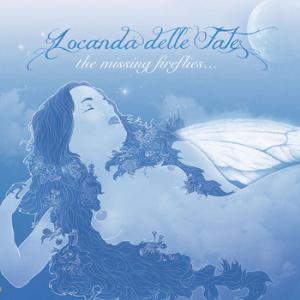
Locanda delle Fate got together once again in 2010, taking full advantage of the much-touted prog revival, and the success that eluded them the first time around seems to have finally headed their way. The release of The Missing Fireflies at the beginning of 2012 presents their loyal fans with some previously unreleased material, including some original 1977 live recordings. Thanks to Marcello Marinone of AltrOck Productions and his father Davide (who had been the sound engineer on Forse Le Lucciole…), the “missing fireflies” have finally seen the light of day;  the original live tapes have been painstakingly cleaned up, and the proofs for the cover artwork of the 1977 album have kindly been put at the band’s disposal by artist Biagio Cairone. The stylishly packaged album is enhanced by Paolo Ske Botta’s graphics and classy photography; while AltrOck stalwart Udi Koomran has lent his expertise to the mastering of the finished product.

For obvious reasons, The Missing Fireflies… will be seen more as a collectors’ item than a genuine new release. The four studio tracks, however, reveal the strength of Locanda Delle Fate’s current line-up, which includes most of its founding members. Only one of those tracks, “Non Chiudere a Chiave le Stelle”, appeared on the band’s debut album, though  the keyboard-heavy “Crescendo” (also present in a shorter live version) and “La Giostra” also date back from their early days. The only completely new track is the 2-minute piano bravura piece “Sequenza Circolare”, composed and interpreted by keyboardist Maurizio Muha, which introduces the stunning “La Giostra” – a gorgeously melodic composition with tightly-woven instrumental parts complementing Sasso’s warm, smooth vocals, melding Genesis influences (particularly evident in Max Brignolo’s airy, stately guitar work) with Italian flair.

The live tracks amount to less than half of the album – which, at around 35 minutes, is already quite short for today’s standards. In spite of the less than stellar sound quality, they allow the band’s collective talent to shine. In  the exhilarating version of “Vendesi Saggezza”, Sasso’s passionate vocal performance brings to mind Francesco Di Giacomo (to whom he has often been compared), while powerful, Banco-like keyboard parts blend with a pastoral feel in true Genesis style.

All in all, The Missing Fireflies will be a worthwhile investment for dedicated followers of the band and fans of the original RPI scene, while newcomers might want to try Forse Le Lucciole Non Si Amano Più before taking the plunge. In any case, the release of the album, together with the success of Locanda Delle Fate’s recent live outings (at the time of writing, they have just returned from Japan, where they appeared at a festival in Tokyo together with other historic Italian prog bands), bodes well for the future of the new incarnation of the band. US prog fans will have the unique opportunity to see them at Farfest, which is scheduled to take place on October 4-7, 2012, at the Grand Opera House in Wilmington, Delaware.

Links:
http://www.locandadellefate.com/

http://production.altrock.it/prod2.asp?lang=ita_&id=125&id2=176

Read Full Post »

TRACKLISTING:
1. A Child & A Well (4:46)
2. The Fall (5:27)
3. Man & Angel (5:30)
4. Little Town (5:31)
5. Run Free You Idiot (4:13)
6. Empty Promises (4:41)
7. The Postman (6:21)
8. A Fantasy (8:42)

LINEUP:
Julia Feldman – vocals
Udi Horev – guitar
Dvir Katz – flute
Yuri Tulchinsky – keyboards
Avi Cohen-Hillel – bass guitar
Michael Gorodinsky – drums

With:
Udi Koomran – electronics (8)

In spite of their name (Latin for “fake music”, referring to the use of notes lying outside the “true music” system as established by Guido D’Arezzo), there is nothing fake or contrived about Musica Ficta, an Israeli six-piece formed in 2003 by guitarist and composer Udi Horev. Their debut album, A Child & A Well (English translation of the Hebrew Yeled Vebeer) was originally recorded in 2005, but only released on the international market in 2012, on the Fading Records subdivision of  AltrOck Productions – thanks to renowned sound engineer Udi Koomran’s close relationship with the cutting-edge Italian label. Koomran, who mastered the album, also guests on one track; while Paolo “Ske” Botta is responsible for the stylish graphics.

Musica Ficta are a supergroup of sorts, featuring the considerable talents of Russian-born jazz singer Julia Feldman and flutist/composer Dvir Katz, known on the jazz scene as the leader of Chameleon Trio. The other band members (original keyboardist Yuri Tulchinsky was replaced by Omer Rizi just after the recording of the album) are also obviously very talented, and well-versed in a wide range of musical modes besides rock. This should not come as news to anyone familiar with the small but thriving Israeli progressive music scene, which last year produced one of the classiest “retro-prog” albums of 2011, Sanhedrin’s Ever After, and can boast of a strikingly original prog metal band such as Orphaned Land.

True to the multiethnic nature of their home country, Musica Ficta infuse their sound with influences that go beyond classic prog. The use of Hebrew for the lyrics (though all of the song titles are in English) adds an exotic touch to the music, whose heady blend of lyricism ad heaviness contains suggestions of medieval and Renaissance music, and tantalizing hints of Eastern European and Middle Eastern folk music (particularly evident in the title-track). With those characteristics, further enhanced by the presence of a strong female vocalist, Musica Ficta may draw comparisons to Ciccada, a band whose debut album (bearing the uncannily similar title of A Child in the Mirror) was the first Fading Records release.

In keeping with a praiseworthy trend for shorter, more compact albums, A Child & A Well clocks in at a healthy 45 minutes, with relatively short tracks (the longest, the instrumental “A Fantasy”, is under 9 minutes) that nevertheless offer all the complexity and lush instrumentation that a self-respecting prog fan might desire. Most of the compositions feature Julia Feldman’s confident, highly trained voice, as capable of hitting the high notes as of reaching for deeper, more subdued tones. For some odd reason, however, her voice failed to resonate with me – especially in the album’s attempt at a power ballad of sorts, the slightly sappy “Little Town”, which is rescued by its Genesis-meets-PFM finale. Personal gripes aside, Feldman’s performance will not fail to impress fans of commanding female vocalists such as Annie Haslam or Christina Booth. The title-track (which can be also enjoyed as a video, with the band dressed in 18th-century costume) is probably Feldman’s finest hour on this album, the lilting, dance-like pace of the singing offset by the harder-edged instrumental sections, driven by organ and guitar.

The central role of the flute in A Child & A Well has elicited inevitable comparisons with Jethro Tull, compounded by the often aggressive stance of the electric guitar – and, indeed, Udi Horev’s approach owes a lot to Martin Barre’s hard-driving style. “Man & Angel” rests on the balance between gentler, vocal-based passages and heavier instrumental ones that characterizes much of the output of Ian Anderson’s band; the same dynamics of folk-ballad-meets-hard-rock can be found in the intense “The Postman”. Indeed, However, there are also nods to lesser-known outfits like Delirium (in my view, one of the best early Italian prog bands), whose influence emerges in the jazzy, bass-driven instrumental “Run Free You Idiot”  – an intriguing concoction of Avant suggestions, razor-sharp guitar riffs and lilting harpsichord that is definitely one of the highlights of the whole album. My personal pick, however, would be the 8-minute-plus “A Fantasy” – a stately, supremely atmospheric guitar showcase, acoustic at first, then electric, complemented by the eerily surging drone of Koomran’s haunting electronic soundscapes.

A Child & A Well is a superbly performed album that,while not perfect (I personally found the second half more satisfactory than the first), has the potential to appeal to most progressive rock fans, even those more inclined towards cutting-edge stuff rather than anything with a “retro” flavour. Unfortunately, Musica Ficta seem to have dropped off the radar in the past few years, with its members engaged in other projects. It is to be hoped that they will surface again in the near future, because their debut surely shows a lot of promise.

Links:
http://www.myspace.com/mficta

http://production.altrock.it/prod2.asp?lang=eng_&id=125&id2=178

Read Full Post »

TRACKLISTING:
1. Nella Pietra e Nel Vento (5:10)
2. Silenzi (5:00)
3. Il Santo (4:04)
4. La Cosa Più Bella (4:00)
5. Un Grande Giardino (3:20)
6. Sette Passi (4:36)
7. C’è Una Vita (4:27)
8. Tra il Bene e il Male (4:11)
9. Dio Lo Sa (3:37)
10. Il Sutra del Cuore (3:14)

LINEUP:
Aldo Tagliapietra – vocals, bass, bass pedals
Aligi Pasqualetto – piano, minimoog, keyboards
Andrea De Nardi – Hammond organ, keyboards
Matteo Ballarin – electric and acoustic guitars
Manuel Smaniotto – drums, percussion

With:
Claudio Galieti – bass (8)

At the end of 2009, the news that legendary bassist/vocalist Aldo Tagliapietra – one of the most immediately recognizable voices of the original prog scene – had left Le Orme after over 40 years together caused widespread consternation among the fans of the iconic Italian band. The subsequent legal hassles related to the use of the band name added a sour note to the ending of such a long-standing, successful partnership. However, neither the remaining members of Le Orme nor Tagliapietra himself have let this unpleasant set of circumstances have a negative impact on their career. Le Orme’s 2011 album, La Via della Seta (recorded with former Metamorfosi vocalist Jimmy Spitaleri replacing Tagliapietra) got a very positive reception. On the other hand, Tagliapietra reactivated his collaboration with former Le Orme keyboardist Toni Pagliuca, as well as guitarist Tolo Marton (who appeared on Le Orme’s 1975 album Smogmagica), for a series of sold-out performances following their appearance at the first edition of the festival ProgExhibition in 2010, with violinist David Cross (of King Crimson fame) as a special guest. In May 2011 Tagliapietra released a double CD, Unplugged, featuring acoustic versions of Le Orme classics as well as his own compositions.

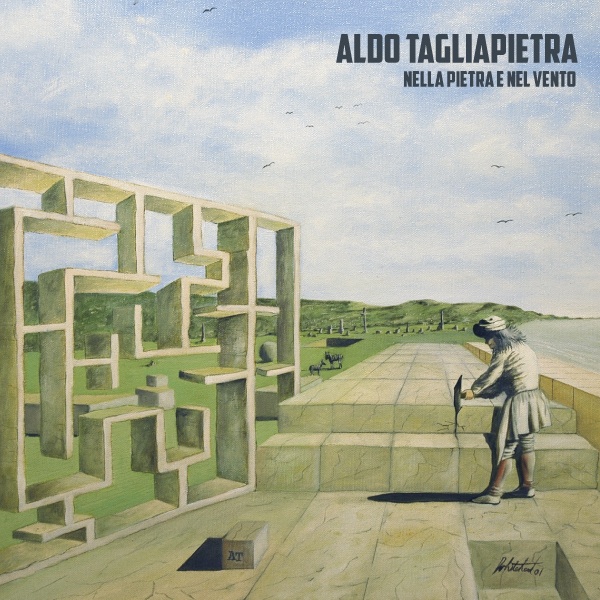
Besides the above-mentioned activity, after his split from Le Orme Tagliapietra had been steadily working at his fifth solo album, eagerly awaited by his many fans. The album, titled Nella Pietra e Nel Vento, and released at the very beginning of 2012, is a summation of his artistic and personal experiences of the past few years, and marks a new stage in the artist’s career. It also sees his renewed collaboration with English artist Paul Whitehead, the author of legendary album covers such as Genesis’ Trespass, Nursery Cryme and Foxtrot and Van Der Graaf Generator’s H to He Who Am the Only One and Pawn Hearts (as well as Le Orme’s above-mentioned Smogmagica). Whitehead’s touch is immediately recognizable in the delicate pastel hues and peaceful, pastoral feel of the album cover, which is somewhat reminiscent of Italian Renaissance painting with its bold use of perspective. The painting’s title, The Stonecutter, is the English translation of Tagliapietra’s surname.

A word of warning: those who are looking for Felona e Sorona # 2 need not apply, because – as even a cursory look at the track list will show – Nella Pietra e Nel Vento adopts a song-based, singer-songwriter style rather than a traditional progressive rock one. Those familiar with Le Orme’s early albums (especially Collage) will not fail to recognize the similarities between them and the elegant, exquisitely melodic compositions featured on Nella Pietra e Nel Vento. The prog imprint is present in the rich instrumentation, with the keyboards manned by Aligi Pasqualetto and Andrea De Nardi expertly weaving layers of lush melodies, supported by Manuel Smaniotto’s discreet drumming and Matteo Ballarin’s clear, flowing guitar work (De Nardi, Ballarin and Smaniotto are also members of The Former Life).

All the songs on Nella Pietra e Nel Vento have a straightforward structure that privileges melody and accessibility over complexity. Though a couple of tracks border dangerously close to commercial melodic pop – with “Tra il Bene e il Male” (featuring original Le Orme bassist Claudio Galieti) being the main offender – the album leans towards a prog-tinged song form with occasional classical and folk influences that occasionally bring to mind the output of another outstanding Italian artist, Angelo Branduardi . The vocals (and thus the lyrics) occupy centre stage, which may not fly very well with those who are more inclined towards the instrumental showcases typical of conventional prog. Though those who are not familiar with Italian will inevitably miss out on the content, Tagliapietra’s deeply personal, positive lyrics feel like a breath of fresh air if compared to the current trend for doom and gloom. While his life-changing experience with Indian music and culture is often referenced in the songs, the influence of Eastern music is conspicuously absent from the album, which is instead permeated with the warmth and melodic flair of the Mediterranean.

Clocking in at around 41 minutes, Nella Pietra e Nel Vento comprises 10 songs between 3 and 5 minutes long, in which the highly accomplished musical accompaniment provided by Tagliapietra himself and his young band act as a framework for the artist’s trademark vocals, slightly plaintive yet confident and expressive. While his voice may be an acquired taste for some, it is undeniable that, unlike what happened to many of his contemporaries, it has remained as strong as it was in the Seventies, and possibly grown even better with age. The title-track, introduced by the solemn note of a church organ, develops in a mid-paced, catchy tune that highlights Tagliapietra’s immaculate vocals and Aligi Pasqualetto’s rippling piano. Andrea De Nardi’s Hammond organ, discreetly yet unmistakably present to add fullness and a touch of spice to the sound, in contrast with the more lyrical voice of the piano, really comes into its own in the last two tracks –  the upbeat, almost singalong “Dio Lo Sa”, whose folksy feel may recall PFM’s more light-hearted efforts, and closing track “Il Sutra del Cuore”, where the clear, chime-like tone of the guitar offset by the earthier rumble of the organ will not fail to evoke vintage Genesis.  In contrast, “Sette Passi”, whose lyrics reference Buddha’s life story, is meditative and atmospheric, with mellotron providing a symphonic foil for Tagliapietra’s intense vocal performance.

A classy, heartwarming album that, while not exactly prog, bears nonetheless the strong imprint of Tagliapietra’s long involvement with the genre, Nella Pietra e Nel Vento will appeal most to those who prize melody and singing rather than intricate instrumental flights. Lovers of Italian music are very likely to appreciate it, as are those who are seeking a respite from the many overambitious, convoluted productions of today. The positive attitude emanating from both the music and the lyrics is refreshing, as is the mix of child-like simplicity and wisdom that contrasts so strongly with the world-weariness (or even outright pessimism) of so much modern music. Nella Pietra e Nel Vento is clearly not for everyone, but still highly recommended to fans of the more melodic side of classic prog.

Links:
http://www.aldotagliapietra.it

Read Full Post »

SETLIST:
Vroom Vroom
Smudge
Relentless
Slowglide
Cusp
Breathless
Open Pt. 3
Larks’ Tongues in Aspic Pt. II
Firebird Suite Pt. 1-4
Indiscipline
Red

Jammin’ Java, the quaint coffee house/bar doubling up as music venue located in the charming neighbourhood of Vienna, in the Washington DC metro area, seems to have become a firm favourite with Tony Levin and his Stick Men bandmates, Pat Mastelotto and Markus Reuter – even though the Boston-born bass/Chapman stick wizard must be used to much larger, flashier venues. Judging by his happy demeanour, Levin seems to have a soft spot for the place (as does his friend and former King Crimson partner, Adrian Belew) – even when, as in this case, the gig involves some considerable juggling.  Indeed, the April 27 date (following the triumphant, sold-out appearance by Two of a Perfect Trio in September 2011) had been rather oddly sandwiched between a date in Connecticut and one in upstate New York – forcing the band to cut their show rather shorter than usual to allow them to hit the road in good time.

The screen at the back of the stage proudly displayed the banner of the DC Society of Art Rock (DC-SOAR), a group that for the past few years has been quite active in promoting progressive music in the Washington/Baltimore area . Unfortunately, attendance was not what such a relatively high-profile outfit would usually command, and the long, dimly lit space before the stage was nowhere as crowded as it might have been in different circumstances. Indeed, having a concert start at 7.30 on a Friday night in a high-traffic area is quite likely to keep away quite a few prospective attendees.  Though all of the 25 VIP tickets had been sold, they were not really worth the extra $15, as the only advantage they gave was to be able to get inside early and listen to the soundcheck while partaking of food or drink in the Lobby Bar. The VIP seating area was also quite cramped, while the tables and seats that had been arranged in the general admission area were much more comfortable, and allowed a great view of the stage. Luckily, as I observed in my review of the Two of a Perfect Trio gig, the ear-shattering volume that had characterized my first two visits to the venue in 2009 has been toned down, so that people will not find themselves stunned by the sheer impact of an almost physical wall of sound.

For those who are still pining about the demise of King Crimson (at least in terms of live performances), bands like Stick Men are a godsend, as they retain all the energy and complexity of the original, coupled with a much more open, friendly attitude towards their audience. Although I have never seen Mr Fripp in action, I am well aware of his inflexible stance about taking pictures during concerts – which was replicated by Eddie Jobson’s Ultimate Zero Project at NEARfest 2010 (much to the dismay of the audience). Seeing Levin, Mastelotto and Reuter smile and wave at the fans, take pictures of the audience at the end of the concert, take some time to chat with the fans, and generally enjoy themselves on stage – all the while retaining a thoroughly professional attitude – was incredibly refreshing, and a boon to everyone who had bought a ticket in spite of the inconvenient scheduling of the gig.

In spite of the time constraints, Stick Men produced a richly satisfying setlist, expanded from their September performance, and including enough King Crimson material to please the more nostalgic component of the crowd. However, their own compositions definitely stand up to comparisons with the “mother band”, following in its footsteps while avoiding the clone-like feel that occasionally mars the output of celebrated acts’ side projects. While highly proficient in the technical department, Stick Men’s music is powerful, muscular and strikingly modern –  the endless range of expressive possibilities offered by two polyphonic instruments such as the Chapman stick and Reuter’s custom-made touch guitar (a glossy red number deceptively looking like a traditional guitar) supported by Mastelotto’s rhythmic powerhouse.

In spite of their extensive touring schedule, Stich Men are busy working on their new album, which is slated for a fall release. In the meantime, they have been writing other material: Levin jokingly stated that they had written an album last Friday, and the audience was treated to one of those new pieces, titled “Open Pt. 3”. All the original compositions were very strong, ranging from the evenly paced, atmospheric “Slowglide” (featuring Levin on vocals, and an entrancing, effects-laden middle section) to the aptly titled “Relentless”, a hard-hitting piece reminiscent of King Crimson’s late ‘90s incarnation.

As could be expected, however, it was the King Crimson stuff that drew the most applause. Classics like “Red” and “Larks’ Tongues in Aspic Pt II” were rendered in a heavier, though perhaps less subtle fashion, proving once again the essential role played by King Crimson in the development of progressive metal. Reuter filled Fripp’s role with aplomb, and Levin’s Chapman stick was all over the place, aided and abetted by Mastelotto’s unflagging beat. A particularly intense version of “Indiscipline”, with a slo-mo, drawn-out introduction and Levin doing a decent Belew impersonation, was one of the undisputed highlights of the show, together with the stunning “Firebird Suite (Pt. 1-4)”. Mastelotto’s imperious drumming paralleled Stravinsky’s trademark percussive firepower, while Levin and Reuter seamlessly worked their way through the intricate orchestral arrangements, debunking the myth that banks of keyboards are indispensable to any reinterpretation of great classical music.

In a few months, those who missed out on Friday’s gig will be able to see Stick Men perform again with Adrian Belew’s Power Trio (under the handle of Crimson ProjecKct), when they open for Dream Theater on their Washington DC date (July 13, Warner Theatre). Levin’s former partnership with John Petrucci, Mike Portnoy and Jordan Rudess in Liquid Tension Experiment should be enough to explain this apparently odd pairing. It is to be hoped that this slot on a much longer and higher-profile tour will create more interest in Stick Men’s own original material, which deserves all the exposure it can get.

Links:
http://www.papabear.com/

http://www.dc-soar.org/

Read Full Post »

TRACKLISTING:
1. Hot Rod Waltz (3:33)
2. Invitation (2:24)
3. Forro Fuega (2:45)
4. Tse-Tse (4:06)
5. 20 Heart (0:54)
6. Orkneys (4:12)
7. Mr. Hamster’s Dilemma (3:51)
8. Celleste (4:57)
9. Botellas de Botica (3:27)
10. Experiment (3:35)
11. Year of my Solstice (5:28)
12. Skallaloo (3:38)

LINEUP:
Elaine DiFalco – voice, piano, keyboards, vibraphone, handclaps, shaker, accordion, qarkabeb, rhythm box, percussion
Cédric Vuille – guitar,  e-bow guitar, bass, keyboards, cuatro, clarinet, ukulele, nose flute, percussion, kalimba, theremin, banjolele, flute, spoons, triangle, jew’s harp
Dave Willey – accordion, bass, tambourine, electric and acoustic guitar, surdo, zither, shaker, percussions, mailing tubes

With:
Daniel Spahni – drums (1, 6, 7, 9, 10, 12)
Raoul Rossiter – pandero, triangle (3)
Udi Koomran – shaker, hand claps (6)
Naama and Michal Koomral – happy sisters (7)

Love or hate the Internet, there is no doubt that without its existence an album such as Send Me a Postcard would have never seen the light of day – much to the detriment of the contemporary non-mainstream music scene. In fact, the three artists who have adopted the quaintly endearing name of 3 Mice reside at opposite ends of the world – Cédric Vuille (of Débile Menthol and L’Ensemble Rayé fame) in Switzerland, Dave Willey and Elaine DiFalco (both members of Thinking Plague, Willey also Hamster Theatre’s founder and mainman) in Colorado. Israeli sound engineer Udi Koomran (one of the icons of the modern Avant-Prog scene) acted as a catalyst by arranging a meeting between the three artists in 2008, when Thinking Plague performed in Vuille’s home town of Geneva. After finding out that they were kindred spirits in their musical vision, Vuille, DiFalco and Willey started their project by sharing files on the Internet, then drafting in some trusted collaborators (namely L’Ensemble Rayé’s drummer Daniel Spahni and Hamster Theatre’s percussionist Raoul Rossiter, as well as Koomran himself). Send Me a Postcard, lovingly packaged in Elaine DiFalco’s delightful artwork, was finally ready for release at the end of 2011.

Clocking in at about 42 minutes, and featuring 12 short tracks (the longest barely above 5 minutes), Send Me a Postcard belongs to the “new generation” of undeniably progressive albums that, however, dispense with most of the trappings of traditional prog – such as epics, orchestral arrangements and somewhat pretentious concepts. Even if the association of the members of 3 Mice with the RIO/Avant scene may prove daunting to those who are more conservatively inclined, the album has more in common with Hamster Theatre’s playful, folksy attitude than Thinking Plague’s austere intensity. Songwriting credits are shared equally between the three artists, who lend them their individual imprint; DiFalco’s compositions are the closest to classic RIO/Avant modes, though with a more informal, laid-back attitude.

Unlike Willey’s recent solo album, the outstanding Immeasurable Currents (which has a very similar structure in terms of running time and number of tracks), Send Me a Postcard is mostly instrumental, though DiFalco’s distinctive voice appears on half of the tracks, engaged in lovely wordless vocalization. There is nothing overly serious or academic about 3 Mice’s approach: the overall mood is decidedly upbeat, reflecting the sheer joy of making music that is at the same time complex and accessible. The emphasis is firmly placed on the sleek, seamless instrumental interplay, with the three musicians switching effortlessly from one instrument to the other; the main actors – the accordion, the guitar and the piano – are complemented by an impressive array of exotic percussion and other ethnic instruments.

Not surprisingly, being the result of the collaboration between a European artist (belonging to a French-speaking cultural environment) and  two American ones, Send Me a Postcard is a quintessentially cosmopolitan effort, merging European folk with Brazilian and Latin suggestions, with classical influences and a hint of intriguing Avant flavour thrown in for good measure. Thanks to Koomran’s peerless mix, every instrument is finely detailed with stunning clarity of sound, and the melodic quotient of each composition is brought to the fore in a remarkably ear-pleasing way. It is also quite intriguing to see how much variety can be packed in a 3-minute song, and how the rich instrumentation creates multilayered  textures in spite of the chamber-like nature of the ensemble.

“Hot Rod Waltz” opens the album with a bold rock-meets-folk flair – electric guitar, bass and drums beefing up the sound and providing a fine foil for the nostalgic tone of the accordion. As suggested by the title, “Orkneys” taps the rich Celtic folk vein, starting out very much like a traditional reel (though driven by accordion rather than the more customary fiddle), and turning more sedate towards the end. The delicate, intimist tone of “Invitation” and “Tse Tse” and the gently chiming interlude of “20 Heart” are offset by the brisk, infectious pace of the Brazilian-influenced, percussion-heavy “Forro Fuega” and the sprightly Caribbean dance of closing track “Skallaloo”. In the only song featuring lyrics, the quirky tale of “Mr Hamster’s Dilemma”, the refreshing laughter of Udi Koomran’s daughters echoes in the background, complementing the jangly, sunny tone of the guitar. On the other hand, the eerie wail of the theremin adds a faintly disquieting note to “Celleste”, and intensifies the autumnal tone of the piano-led “Year of My Solstice”; while the haunting, effects-laden drone of “Experiment” points to the three artists’ RIO/Avant background.

Though quite likely to remain a one-off, Send Me a Postcard is an excellent effort that can be warmly recommended to all lovers of great music, Fans of folk/world music with an ear for quirkiness and subtle complexity will find it especially appealing, though devotees of “traditional” prog’s grandiosely orchestrated textures might find it disappointingly simple for their standards. Easy on the ear without being poppy, brimming with lovely melodies and brilliant instrumental performances (not to mention Elaine DiFalco’s gorgeous voice), Send Me a Postcard is a little gem that will reveal its many charms at each listen.

Links:
http://www.allmusic.com/album/send-me-a-postcard-r2412999

http://www.cdbaby.com/cd/3mice

Read Full Post »

TRACKLISTING:
1. Past Present (6:46)
2. 16 Feet Below (5:42)
3. Underpass (5:33)
4. Push Too (5:05)
5. Pendulum (6:31)
6. Depth Charge (6:20)
7. Of Age (6:40)
8. New Resolution (8:37)

LINEUP:
Dean Watson – all instruments

Two years after the excellent Unsettled, Canadian multi-instrumentalist Dean Watson is back with his sophomore effort, Imposing Elements – inspired like its predecessor by the work of Toronto-based artist Ron Eady. Both those who download the album from Watson’s Bandcamp page and those who opt for the physical object will be treated to an impressive cover depicting one of Eady’s austere, Gothic-tinged industrial landscapes, realized with the ancient encaustic technique.

The relationship between progressive rock (in all its manifestations) and the visual arts is a long-standing one, and for many devotees of the genre it is almost impossible to separate the music from the images that graced the covers of vinyl LPs in the Sixties and Seventies. Though Eady’s work suggests a Blade Runner-like universe (perhaps more suited to a highly technical metal band) than the bright-hued flights of fancy of Roger Dean and his ilk, it is interesting to see how Watson rendered the visuals in musical terms – stressing the painting’s undeniably majestic aspect rather than its bleakness.

With impressive technical and compositional skills honed in years of experience on the music scene, Watson is not your typical self-important artist who delivers one vanity project after the other, regardless of whether quality matches quantity. Even someone who, like me, is generally a bit wary of the ubiquitous “solo-pilot” releases made possible by modern technology and the widespread use of the Internet will not fail to recognize that Watson is someone who genuinely cares about producing high-quality music, rather than out to bludgeon his audience over the head with pointless pyrotechnics.

While Unsettled was a classy, eminently listenable effort, Imposing Elements marks a big step ahead for Watson, both as an instrumentalist and a composer. Firmly rooted in the progressive jazz-fusion tradition represented by the likes of Jeff Beck circa Blow by Blow and Wired, Allan Holdsworth, John McLaughlin, Bruford and  Brand X (among many others), the  album transcends the divide between conservatism and innovation, proving that great music does not necessarily have to be groundbreaking.  Imposing Elements is a more understated effort than Unsettled, dispensing almost completely with the (admittedly trendy) metal overtones of its predecessor, while raising the bar in terms of composition. Indeed, for his sophomore effort, Watson seems to have gone for a more laid-back mood, allowing for frequent tempo changes but never pushing too hard on the accelerator. Balance and restraint are the name of the game – something that is often conspicuously absent in the work of many modern acts.

Watson’s first love, the keyboards, are the undisputed protagonists of Imposing Elements, creating rich layers of sound and seamlessly sparring with the guitar (which on this album takes on more of a supporting role).  The whistle of the synths has been decidedly toned down this time around, while organ and piano (both electric and acoustic) frequently step into the limelight. Watson even brings in the iconic mellotron to add a touch of symphonic lushness, especially evident in the soothingly meditative “Pendulum”. The drums, with their surprisingly organic sound, lay down intricate patterns that have elicited comparisons with jazz-rock luminaries such as Bruford or Cobham.

Instrumentally speaking, however, the biggest improvement is the presence of a real electric bass, especially effective in the dramatic “Of Age” (which is the closest the album gets to the prog-metal mood of the previous release), as well as stately, evocative opener “Past Present”. Watson also shines at creating rarefied atmospheres, as in slow-burning closer “New Resolution”, hovering between a loose, jazzy texture and a tighter, brisker pace, or the electronics-laden “Depth Charge”. Percussion shines in “Push Too”, bolstering the exertions of synth and guitar; while “16 Feet Below” and “Underpass” run the gamut of tempo and mood changes – the latter displaying an intriguingly funky swagger.

With tracks between 5 and 8 minutes, and a total running time of 52 minutes, Imposing Elements never outstays its welcome. While a lot of jazz/fusion may come across as formally impeccable but rather emotionless, Dean Watson’s music possesses a thoroughly human dimension, revealing the artist’s dedication to his craft. I am sure that Watson’s compositions would transfer effortlessly to a stage setting, although the current music scene makes it increasingly difficult for musicians to perform live, therefore encouraging studio-only projects. However, even if this never happens, Imposing Elements remains an outstanding release, highly recommended to fans of progressive fusion and instrumental music in general.

Links:
http://deanwatson.bandcamp.com/album/imposing-elements

http://www.cdbaby.com/cd/deanwatson12

http://www.myspace.com/deanwatson2

http://www.roneady.com

Read Full Post »

1. Sundering Jewel (5:38)
2. Hijacked (3:35)
3. Belong to the Stars (8:01)
4. MesmerEyes (5:39)
5. London Rain (8:22)
6. A Milligram of Joy (7:56)
7. Electric Stillness (5:43)

LINEUP:
Matteo Ballarin – vocals, electric, nylon string, acoustic and lap steel guitars, arrangements
Andrea De Nardi – vocals, piano, organ, keyboards, programming, arrangements

With:
Edoardo Papes – drums, percussion
Giovanni Scarabel – bass guitar

Former Life was born from the friendship between guitarist Matteo Ballarin and keyboardist Andrea De Nardi, two young and gifted musicians based in north-eastern Italy. Lifelong fans of progressive rock, they started working together at the very beginning of the new century, and by 2008 had gathered enough original material for a full-length album. Electric Stillness, released under the name Former Life and recorded with the help of bassist Giovanni Scarabel and drummer Edoardo Papes, came out three years later. Ballarin and De Nardi are also members of the Pink Floyd tribute band Pink Size; in 2011 they joined former Le Orme frontman Aldo Tagliapietra’s band, and appear on his solo album Nella Pietra e Nel Vento (also released in 2011). In October of the same year Former Life started performing as a live outfit, joined by bassist Carlo Scalet and drummer Manuel Smaniotto (who is also a member of Tagliapietra’s band).

Electric Stillness is the result of years of work on the part of two artists who, in spite of their young age, have already had extensive experience on the music scene. The care and dedication behind the album are evident right from its visual presentation, with an elegant, vaguely Impressionist cover that reflects the understated, autumnal quality of the music, and a detailed booklet including lyrics. Not surprisingly, seen the enduring popularity of the format with contemporary acts,  it is also a concept album of sorts, focusing on the close (and inevitable) relationship between the past (the “former life”) and the present. The band’s name also hints at De Nardi and Ballarin’s emotional and artistic connection with the golden age of prog of the early Seventies – which will be clearly revealed by even a cursory listen to Electric Stillness.

However, it would be unfair to Former Life to tag them as yet another nostalgia act. Unlike the many bands and artists who make a point of trying to sound almost exactly like the Seventies legends (down to refusing to use any digital equipment),  Electric Stillness manages to pay homage to those heady years while sounding modern and fresh. Though no one will mistake the album for a cutting-edge effort, the music possesses a natural, easy flow, while displaying enough complexity to please fans of “traditional” prog. At times, when listening to the album, I was distinctly reminded of Genesis circa Wind and Wuthering; on the other hand, the emphasis on atmospheric soundscapes rather than masses of sweeping keyboards brings to mind Pink Floyd in their Seventies heyday. Wish You Were Here is a particularly strong term of comparison, with the legendary intro to “Shine On You Crazy Diamond” referenced at the beginning of “A Milligram of Joy”. Indeed, though their keen sense of melody anchors them to their home country’s rich musical tradition (occasionally suggesting vintage PFM),  Former Life sound more international than typically Italian. The impression is compounded by their use of English-language lyrics, which lends a cosmopolitan flair to the whole project.

The first half of opening track “Sundering Jewel” is a classical-influenced piano solo that aptly reflects the autumnal mood of the cover artwork; the Hackettian flavour of the faraway-sounding guitar complements the polite, well-modulated vocals, reminiscent of David Gilmour’s understated delivery rather than Peter Gabriel’s assertive rasp. The album’s sole instrumental, “Hijacked”, follows with a decidedly jazzy bent, its brisk, flowing pace enhanced by the neat bass line, rumbling organ and sax inserts. The 8-minute “Belongs to the Stars” starts out slowly, with an airy melody that soon blends with the tense, dramatic note introduced by organ, piano and guitar; while the slightly longer “London Rain” is rife with references to late-Seventies Genesis, with subtle yet intriguing shifts between pauses of quiet and sprightly, almost dance-like passages. “MesmerEyes”  is the closest the album gets to a conventional song, enhanced by some fine guitar-organ interplay in the bridge. The title-track hovers between subdued, atmospheric sections and majestically symphonic ones; while the above-mentioned “A Milligram of Joy” offers some nicely upbeat moments, with sax and bass assisting guitar and keyboards in the creation of a tightly woven instrumental texture.

At under 44 minutes, Electric Stillness contains little or no filler, and Former Life deserve kudos for having produced a well-balanced album that is focused on quality rather than quantity. Even if it may not be the most innovative effort on the market, it is still a classy album – easily as good as many releases by higher-profile outfits –  that will delight fans of melodic prog and bands such as Genesis, Pink Floyd and Camel. Andrea De Nardo and Matteo Ballarin have talent in spades, and Electric Stillness augurs well for the future of their musical career.

Links:
http://www.theformerlife.com/

Read Full Post »


TRACKLISTING:
1. Down In Shadows [Part I] (8:03)
2. Day After Day (4:42)
3. Colour (3:01)
4. O.Y.O [On Your Own] (6:26)
5. Wait (5:20)
6. C18H21NO3-30 mg Kodeina (1:44)
7. Down In Shadows [Part II – Including Crime] (10:54)

LINEUP:
Walter F. – voices, acoustic and electric guitars, bass, loops and devices, synthesizers (vocoder)
Danilo A. Pannico – acoustic and electronic drums, percussions, piano, marimba, kaos-harmonica and glass, Farfisa organ, loops and devices

With:
Adina Bajenica – soprano voice (6)
David Jackson – sax, flutes, devices (2,4,7)
Marco Allocco – cello (1,3,6,7)
Trey Gunn – Warr guitar and soundscapes (1-7), touch bass (1)

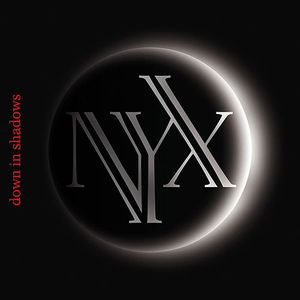
Named after the Greek goddess of night, N.y.X. is a project by a duo of talented multi-instrumentalists, Danilo A. Pannico and Walter F., based in the north-western Italian region of Piedmont.  Their recording debut, a self-titled EP released in 2005, was followed in 2009 by Down in Shadows, their first full-length CD, released on Electromantic Music, the label founded by  Arti e Mestieri’s keyboardist Beppe Crovella.

I first encountered N.y.X. last year, when reviewing Trey Gunn’s double-CD compilation I’ll Tell What I Saw, which included “Down in Shadows [Part I]”. The presence of two legends of progressive rock such as Gunn and former Van Der Graaf Generator saxophonist David Jackson aptly represents the nature of N.y.X.’s musical offer, which seems to straddle the line between tradition and modernity. Indeed, VDGG (who have had a strong following in Italy since the early days of the prog movement) are by far the most noticeable influence on N.y.X.’s music. This is not to say that N.y.X. sound derivative, but rather that their compositional approach parallels VDGG’s skillfully achieved balance of slow-burning melody and unbridled chaos (as exemplified by their magnum opus “A Plague of Lighthouse Keepers”).

Those who still believe that Italian progressive rock is for the most part sickly sweet and heavily keyboard-laden with operatic vocals should get ready to have those convictions challenged when listening to Down in Shadows – a concept album dealing with the topics of loneliness and betrayal. Not surprisingly, and quite fittingly, the music is dense and often aggressive, packed with riffs and martial drum beats, interspersed by ominously rarefied pauses – in which electronic effects and treated vocals hold sway – and almost deceptively melodic, laid-back moments. Walter F.’s idiosyncratic vocal approach often brings to mind Peter Hammill or Adrian Belew, as well as emotionally charged Italian prog singers of the classic era such as Jumbo’s Alvaro Fella. The fluid, eerily reverberating soundscapes created by Gunn’s touch guitars temper the more upfront moments, while David Jackson’s signature style enhances the music’s expressive potential.

Clocking in at under 40 minutes, and featuring seven tracks between 2 and 11 minutes, Down in Shadows is a quintessentially eclectic effort that packs a lot in its unusually compact running time. “Down in Shadows [Part I]” opens with the understated sound of a carillon, eventually exploding into harsh riffs and supercharged drumming – like King Crimson on steroids; a magnificent, Eastern-tinged Warr guitar solo vies for attention with Walter F.’s dramatic vocal performance. The much shorter “Day After Day” continues on a similar path, blending the mainstream overtones of its low-key, acoustic beginning with the unabashed experimentalism of the second half (complete with the sound of a ringing phone and subsequent recorded message). “Colour” and “O.Y.O. [On Your Own]” offer more permutations of those melody-noise dynamics – the former driven by piano and cello, the latter conjuring reminiscences of Eighties King Crimson with its subtle tempo shifts, while the vocals definitely channel Peter Hammill.

On “Wait” the haunting soundscapes expertly woven by Gunn’s Warr guitar merge with slightly breathy, sensitive Hammillesque vocals with a touch of Roger Waters; from an instrumental point of view, the track reminded me of the approach adopted by Herd of Instinct on their 2011 debut album. The short almost-instrumental “C18H21NO3-30 mg Kodeina” – in which a soprano voice is backed by cello, piano and eerie feedback effects – introduces “Down in Shadows [Part II]”, a nearly11-minute tour de force with a dynamic, VDGG-inspired, vocal-driven first half , a subdued middle section that makes good use of cellist Marco Allocco’s tango background, and an instrumental third half in turns chaotic and atmospheric. The vaguely sinister tinkle of carillon reappears at the end, bringing the album (and the story) full circle.

Three years after the release of Down in Shadows, N.y.X. seem to be very much on hiatus, with the two artists pursuing other projects. Hopefully an album that shows so much promise will not turn out to be a one-off, even though the current non-mainstream music scene is anything but easy to navigate. However things develop in the N.y.X. camp, Down in Shadows is a worthwhile effort, highly recommended to fans of King Crimson and Van Der Graaf Generator, as well as followers of the variegated “modern prog” galaxy. A special mention is deserved by the stylish CD  booklet, which includes a stunning upside-down photo of the chandelier in the entrance of Antoni Gaudí’s iconic Casa Batlló.

Links:
http://www.nyxsound.com/

http://www.myspace.com/nyxsound

http://www.electromantic.com

Read Full Post »

TRACKLISTING:
1. Eclissi Pt. 1 – L’Occhio e la Maschera (8:23)
2. La Maschera della Visione (5:58)
3. Fantasia (8:58)
4. Nel Nulla Etereo Soggiogato dall’Ignoto la Mente Si Espande (7:01)
5. Purpurea (10:00)
6. Follia (19:12)
7. Eclissi Pt. 2 – La Genesi (9:36)

LINEUP:
Gabriele Marroni – guitars
Filippo Menconi – bass
Andrea Valerio – piano, synth
Raffaele Crezzini – drums, percussion
Diego Samo – keyboards, synth

With:
Paolo Carelli – narration
Michele Sanchini – cello
Matteo Canestri – bass
Lucio Pacchieri – drums
Giovanni Ferretti – piano, synth

A band name such as Labirinto Di Specchi (Maze of Mirrors) suggests purveyors of intricate, multilayered music, heavy on atmosphere and intensity rather than smoothly flowing melodies. Indeed, the young five-piece hailing from the beautiful Tuscan town of Montepulciano (a place well known to wine lovers) belong to the growing contingent of new Italian bands that have updated the blueprint for progressive rock set by the iconic bands of the Seventies, and produced an album packed full of the twists and turns implied by their name.

Labirinto Di Specchi have been together since 2005; their first recording effort, a demo titled La Maschera della Visione, attracted the attention of Lizard Records, an independent label with a proven record for modern prog releases of a consistently high standard. Hanblecheya (a word in the Native American Lakota language denoting a vision quest), the band’s full-length debut, contains reworked material from the demo, as well as new compositions .It also sees the participation of a number of guest artists – most remarkably, that of Paolo Carelli, former vocalist of Pholas Dactylus, a short-lived outfit that in 1973 released Concerto delle Menti, one of the cult albums of the original RPI movement.

Clocking in at almost 70 minutes, Hanblecheya is impressively ambitious, its seven lengthy compositions describing the experience of the titular vision quest through a very distinctive format. Though there is no actual singing involved,  Paolo Carelli’s solemn, deep-voiced narration is like a thread connecting the seven tracks to each other. While synthesizers and assorted electronics are definitely at the core of the band’s musical vision, the fluid, melodic touch of the piano and full-throated rumble of the organ provide an organic foil, further balanced by the autumnal drone of the cello and the pervasive presence of both acoustic and electric guitars.

Any album tagged as “Porcupine Tree meets Pholas Dactylus” sounds like a rather interesting proposition, and Hanblecheya does not disappoint expectations. Though clearly not an easy listening experience, it is also surprisingly mature in its treatment of the inevitable influences. The psychedelic/space component, firmly rooted in the use of a wide range of electronics, gains a harder edge from occasional bursts of riffing that suggest a prog metal inspiration (particularly evident in “La Maschera della Visione”, the shortest track of the album and possibly the most accessible); while entrancing Mediterranean and Eastern suggestion lurk in the two compositions bookending the album , with the heady, raga-inspired section in opener “Eclissi Pt.1 – L’Occhio e la Maschera” reprised in the second half of “Eclissi Pt. 2 – La Genesi”.

Not all of the many ideas thrown into Hanblecheya’s  melting pot of are successful: the classical-meets-electronic bent of  the second half of “Fantasia” borders dangerously on the cheesiness of those classical “rock” adaptations that were quite popular in the Eighties, and clashes with the wistful, atmospheric mood of the first part of the song.  On the other hand, the ominous post rock surge of “Purpurea” and the all-out experimentalism of “Nel Nulla Etereo Soggiogato dall’Ignoto la Mente Si Espande”, revolving around Carelli’s eerily effective narration (the most reminiscent of his Pholas Dactylus days), and wrapped up by a noisy industrial section (the whole bringing to mind label mates Runaway Totem at their most impenetrable) hold up to close scrutiny, in spite of their undeniably “difficult” nature. The album’s crowning achievement, however, comes with the 19-minute “Foll(i)a” (a title conflating the Italian words for “crowd” and “madness”), an intensely cinematic piece that, while paying homage to Steven Wilson’s signature style, manages to avoid blatant derivativeness.  A fresh take on the old “epic” warhorse, the track hinges on a “duel” between a whole array of electronic effects and the gentle ripple of the piano, ending in an exhilarating cascade of cymbals, piano and majestic synth washes.

Although, as suggested in the previous paragraphs, Hanblecheya is not for everyone, it has all it takes to attract those prog fans who like the genre to look forward without completely turning its back to its glorious past. Firmly anchored to the Italian progressive tradition by its keen sense of melody and the rivetingly dramatic tone of Paolo Carelli’s narration, yet unafraid to experiment with more radical musical directions, and skilled in combining the acoustic, the electric and the electronic component (though at times the slashing, whistling presence of synths can become a tad overwhelming), Labirinto Di Specchi are a band that adventurous listeners would do well to check out.

Links:
http://www.myspace.com/labirintodispecchi

http://www.lizardrecords.it/

Read Full Post »

« Newer Posts - Older Posts »