Feeds:
Posts
Comments

Archive for the ‘Review’ Category

TRACKLISTING:
1 Never Be The Same (3:18)
2. Rage (4:37)
3. Lasso (5:17)
4. Stone Wall (4:19)
5. Emergence (4:40)
6. Starting Over (4:44)
7. Can’t Wait Anymore (4:18)
8. Equinox (5:34)
9. Goddess (4:32)
10. Continuum (6:28)
11. Read My Mind (5:02)
12. Summertime (4:37)

LINEUP:
Mike Henderson –  acoustic and electric guitars, bass, synthesizers, hand and electronic percussion, mandolin, effects
Caroline Dourley – vocals
Jack Housen – vocals, bouzouki, guitar (11)
Chuck Oken, Jr – drums
Dion Sorrell – electric cello, bass (5)

The year 2010 saw the release of two albums by side projects of members of historic US prog outfit Djam Karet, along with the band’s live-in-the-studio album The Heavy Soul Sessions. While Chuck Oken, Jr and Gayle Ellett explore electronic progressive music with Ukab Maerd,  guitarist Mike Henderson is responsible for this largely acoustic, song-oriented White Arrow Project. According to the accompanying press release, the album took many years to complete, and, though all its participants live in the same Southern Californian town, this is the first time they have actually worked together on the same project. While this lends the album a warm, endearingly ‘homemade’ feel, light years removed from the contrived nature of so many mainstream productions, White Arrow Project sounds definitely more streamlined than most of Djam Karet’s output. Not that it should come as a surprise to long-time fans of the band, who are by now quite used to its members’ need for branching out and expanding their sonic horizons – as also witnessed by the two albums released in the past couple of years by Gayle Ellett’s acoustic side project Fernwood.

Though the album is solely credited to Henderson, who lends his distinctive guitar style to the compositions (as well as playing most of the other instruments), the musicians involved (including Chuck Oken, Jr. on drums) form a very tight unit, whose contribution is essential to the fabric of the sound. Employing both male and female vocals, White Arrow Project is a quintessentially melodic offering,  with quite a few catchy, almost poppy moments (such as closing track “Summertime”) and a distinct lack of hard edges. The album lacks any numbers longer than 6 minutes, most of them featuring vocals and keeping a steady, relaxed mid-pace. The press release mentions influences such as Kate Bush, Dead Can Dance and Brian Eno, and the moody, atmospheric nature of the  instrumental tracks may indeed bring the latter musician to mind. The similarity between some of the songs and Kate Bush’s output is also quite remarkable, particularly as regards the presence of the bouzouki’s distinctive metallic twang. On the other hand,  I have found the Dead Can Dance comparisons somewhat more tenuous – since neither of the vocalists (while perfectly adequate) reaches the stellar level of Lisa Gerrard and Brendan Perry, nor does the music possess the same deeply haunting quality.

Out of the 12 tracks featured on the album, most involve singing of some sort, which, in my view, often detracts from the musical aspect instead of enhancing it as it should. Caroline Dourley, with her well-trained, well-modulated voice, only sings on a handful of tracks, the majority being performed by Jack Housen – whose contribution on the bouzouki is an essential component of the album’s overall sound. However, I found his vocals rather disappointing, at times reminiscent of Gordon Haskell on King Crimson’s Lizard, though not as grating. The presence of a truly commanding male voice such as the aforementioned Brendan Perry would have lifted the level of the album from merely pleasant to actually memorable.

Not surprisingly, then, the true highlights of this album are provided by the three instrumentals, showing that the group of musicians are indeed a finely-tuned unit. The Eastern-flavoured “Emergence” (where the Dead Can Dance comparisons surface most strongly), “Equinox”, with its acoustic/electric interplay, and the hauntingly percussive “Continuum” meld gentle, folksy strains and New-Age-tinged electronics, creating soothing textures and intriguing soundscapes. As to the vocal tracks, I found those performed by Caroline Dourley more impressive than the ones featuring Jack Housen (with the exception of the muted, hypnotic “Stone Wall”). On “Lasso”, Dourley’s subdued vocals forms a backdrop for the instruments rather than the other way round; while the Celtic undertones of “Can’t Wait Anymore” may bring to mind Clannad’s more recent output.

A lovingly crafted album by a group of gifted musicians, White Arrow Project is likely to appeal to those who like folk- and ambient-tinged music with a nice balance between vocal and instrumental parts – as well as those who are looking for some respite from the demands of the weightier instances of prog. With a very manageable running time of 57 minutes, it is a very listener-friendly disc without being overtly commercial, performed with passion and skill. On the other hand, its pleasant but not quite memorable nature might cause it to be overlooked among the glut of progressive or quasi-progressive albums that are flooding the market.

Links:
http://www.djamkaret.com
http://www.myspace.com/djamkaret

Read Full Post »

As the name of this blog should make it quite clear, I have been a major Blue Öyster Cult fan for the past 30 years or so. They are one of the very few acts whose complete discography I own, and their albums are a constant presence in my CD player. On the other hand, my love for them is something that I would be hard put to explain. How can a long-time follower of progressive rock be so keen on a band whose output is generally recognized as tangential to prog at best, and be instead rather indifferent to the widely-worshipped likes of Genesis?

Called anything from ‘the American Black Sabbath’ (even though they actually sound nothing like Iommi’s crew) to ‘the thinking man’s heavy metal band’ (as if metal was the sole prerogative of Neanderthals) throughout the almost 40 years of their career, BÖC managed to achieve a measure of stardom through their mega-hit “Don’t Fear the Reaper” and another couple of very successful songs. For a number of years, between the late Seventies and the early Eighties, they played to sold-out arenas before they entered a stage of apparently unstoppable decline (at least as regards commercial success) – which led them to lose their deal with Sanctuary Records, so that their latest studio album, Curse of the Hidden Mirror, was released almost ten years ago.

Blue Öyster Cult are one of those rare bands who appeal to both mind and body, capable of dishing out powerful rockers and catchy radio anthems, as well as complex, thought-provoking compositions with more than a nod to progressive rock – often in the space of a single album. Even if, over the years, they have lost three of their original members (the Bouchard brothers and keyboardist Allen Lanier, who retired from the music scene a few years ago), they have soldiered on, impervious to the setbacks, and delivering the goods whenever on stage. In spite of their lack of a recording deal (and consequently any new material), they have never stopped touring, even if the only two founding members left, Eric Bloom and Donald “Buck Dharma” Roeser, are in their mid-sixties, and are still a major draw for American and European audiences – as proved yesterday evening by the crowd that greeted them at Baltimore’s Bourbon Street.

Though it can hardly be denied that the quaintly-named venue in downtown Baltimore is quite unlike the arenas that BÖC used to fill back in their heyday, the reception that the band got yesterday evening was as warm and enthusiastic as it was in those years, and probably even more so. A friendly, welcoming space on the ground floor of a Victorian red brick building, with plenty of room for standing (as well as a few stools and tables for those needing to rest their legs) and well-stocked bars lining the walls, the Ballroom at Bourbon Street possesses all the character lacking in those more comfortable, yet soulless arenas without being disreputable – with a raised stage that allows most people (even short ones like me) to see what is going on, excellent sound quality (loud enough without being deafening – no ear plugs needed!), and a respectable capacity. My only quibble would concern those people seemingly unable to stay put for more than five minutes, who kept walking from the stage to the exit and back to the stage area, bumping into me or forcing me to move aside while I was trying to enjoy the show.

I had seen Blue Öyster Cult play live only once before, 25 years ago. about this time of the year 1986, and the gig was in doubt almost to the last minute due to severe weather conditions – since the venue was basically a large circus-like tent, and the snow that, very uncharacteristically for Rome, had fallen quite heavily threatened to collapse the roof. The band was touring in support of what is widely considered as their weakest album – Club Ninja – and minus Allen Lanier. In spite of that, they delivered a blinder of a performance, whose highlight for me was the 8-minute version of “Veteran of the Psychic Wars”, one of my top 10 songs of all time. After a lengthy hiatus from music due to a series of changes in my personal circumstances,  in the past few years I managed to miss the band some four or five times, which left me understandably frustrated. So, when yesterday they took to the stage at around 9.30 p.m. (after a short opening set by young Canadian blues-rocker Luke Mulholland and his band), you can imagine my disappointment when I realized that they were one member short – and the missing person was none other than charismatic frontman Eric Bloom.

However, my disappointment lasted only through the first song  (“Before the Kiss, A Redcap”, from their 1972 self-titled debut). Buck Dharma fulfilled the role of frontman suddenly thrust onto him by Bloom’s illness with enviable aplomb, a seasoned professional with an endearingly humorous approach, whose smooth, well-mannered voice has held up amazingly well. Obviously, the setlist was heavily biased towards Buck’s own compositions, which of course ruled out such behemoths as the aforementioned “Veteran…”, “Black Blade” or “Seven Screamin’ Dizbusters”, where Bloom’s gruff, supercharged bellow would be an essential ingredient. In any case, even in the absence of those weightier numbers, the band played a well-rounded 90-minute set (which nowadays is the average length of a live performance), presenting the audience with a nice selection of some of the most iconic songs of their career. For those who are curious, here is the complete setlist:

  1. Before the Kiss, A Redcap
  2. Burnin’ for You
  3. Shooting Shark
  4. Buck’s Boogie
  5. The Vigil
  6. The Red and the Black
  7. Last Days of May
  8. Godzilla
  9. Don’t Fear the Reaper
  10. Hot Rails to Hell (encore)

I had heard great things about Rudy Sarzo, and his performance of yesterday night confirmed that – far from being a showy hair-metal reject – he is a very accomplished bassist, with a commanding stage presence, looking not a day older than he was in his tenure as a member of Quiet Riot and Whitesnake, in spite of having turned 60 at the end of last year. His solo spot in the middle of “Godzilla” was introduced by Buck Dharma in his typical deadpan style, and carried off in a remarkably original manner, including snippets of famous songs from his former bands: in particular, the opening riff to Dio’s “Holy Diver” was cheered enthusiastically by the crowd. Moreover, his masterful handling of the bass part of “Shooting Shark” (originally written for Randy “The Emperor” Jackson) was probably the highlight of his whole performance. The band’s two newest members, drummer Jules Radino and keyboardist/guitarist Richie Castellano (who, when wearing sunglasses, bore an uncanny resemblance to a younger Eric Bloom), acquitted themselves admirably, being both accomplished musicians in spite of their young age. Castellano took up Bloom’s role on both guitar and vocals when needed, while Radino provided a perfect complement to Sarzo’s stunning bass lines – not a mere skin-basher, but also capable of the subtlety required by some of the band’s songs.

However, the star of the whole evening was none other than Buck Dharma himself. He stole the show with his warm, affectionate banter, accomplished singing, and incredible guitar work. Though highly rated by experts and worshipped by fans,  he gets far too easily overlooked whenever accolades for best rock or metal guitarist are awarded – in favour of other, much flashier six-stringers who simply cannot match his sheer expressive power coupled with remarkable technical skill. At the end of a week that marked the untimely passing of another guitar icon like Gary Moore,  seeing Buck perform was nothing short of sheer delight. Diminutive and unassuming, all dressed in black and sporting his trademark moustache, he tore the place down without resorting to those cheap gimmicks that are so popular with the ‘shredder’ crowd. The absolutely jaw-dropping version of “Last Days of May” (one of the most beautiful BÖC songs bar none) was alone worth the price of admission, with its customary extended solo section blisteringly introduced by Castellano, then gradually picking up speed and unleashing a frenzied yet amazingly disciplined Buck solo that saw him drop on his knees, backed by Radino’s relentless drumming – to the audience’s ecstatic response. In comparison, his instrumental showcase “Buck’s Boogie”, though quite stunningly rendered, felt almost sedate. The obligatory “The Red and the Black”, “Don’t Fear the Reaper” and “Hot Rails to Hell”, delivered with energy and flair, did not disappoint either, while the subdued, yet subtly malevolent “The Vigil” provided a taste of the more intricate fare that BÖC have produced alongside their catchier, more straightforward tunes.

All in all, it was a great evening of music in a friendly, almost intimate setting. Even if some might think that playing a small venue like the Bourbon Street Ballroom is a sort of downgrading for rock legends like Blue Öyster Cult, the faceless arenas where most of today’s ‘big-league’ concerts take place cannot compete with the genuine warmth and community feeling of those smaller, unpretentious spaces. It is quite obvious that all of the band members love performing in front of an audience, since they do not come across for a second as a bunch of people going through the motions – and, even one man short, they could deliver the goods in a way that many of the above-mentioned ‘big-league’ outfits can only dream of. Needless to say, I will be eagerly waiting for the next time BÖC will play in our area. Indeed, yesterday’s gig was worth the 25-year wait.

Read Full Post »

TRACKLISTING (2005  edition):
Disc 1:
1. Dark Side Of The Moog (6:17)
2. Down To You (9:05)
3. Gemini And Leo (4:48)
4. Secret Places (3:59)
5. On Second Thoughts (7:30)
6. Winds (10:23)
7. Castles Version 1. (previously unreleased demo – 1975)(11:09)
8. Gary’s Lament (previously unreleased demo – 1975) (7:00)
9. Walking The Park (previously unreleased demo – 1975) (7:05)

Disc 2:
1. Night Creeper (previously unreleased demo – 1976) (3:46)
2. The Awakening (previously unreleased demo – 1976) (11:43)
3. Siren Song (previously unreleased demo – 1976) (6:55)
4. Castles Version 2. (previously unreleased demo – 1976) (5:00)
5. The Scorch (previously unreleased demo – 1976) (4:39)
6. Rivers (previously unreleased demo – 1976) (4:27)
7. Interplanetary Slut (previously unreleased demo – 1976) (5:32)
8. Dark Side Of The Moog (BBC session, In Concert – June 1976) (9:00)
9. Siren Song (BBC session, In Concert- June 1976) (12:13)
10. The Awakening (BBC session, In Concert – June 1976) (15:46)

LINEUP:
Don Airey – keyboards, synthesizers
Jon Hiseman – drums, tympani, gongs
Gary Moore – guitars, vocals
Neil Murray – bass
Mike Starrs – lead vocals

Although I had been thinking for a while of posting a review of this album for my ‘vault’ series, the sad events of today have made it almost mandatory for me to do so.  And what better way to celebrate the life and work of Irish guitar legend Gary Moore – who passed away last night at the still young age of 58 – than posting a review of an album that sees some of his finest contributions to the history of rock music?

In spite of the name, the only connection between Colosseum II and the original Colosseum is the presence of monster skinsman Jon Hiseman (so conveniently forgotten in those boring “best drummer” polls, where everybody seems to think that Portnoy and his ilk are God’s gift to drumming).  The new band also showcased the considerable talents of keyboard maestro Don Airey (who went on to replace Jon Lord in Deep Purple) and bassist Neil Murray, nowadays better known for his stints in Whitesnake and Black Sabbath. Murray tends to be given less credit than other four-stringers – in spite of having previously played with such Canterbury legends as Gilgamesh and  National Health, where he took the place left vacant by Richard Sinclair after Hatfield and the North’s demise. The musical proficiency of somebody who can keep up with both Jon Hiseman and Pip Pyle cannot be so easily disregarded, and Murray’s playing on Strange New Flesh is immaculate.

However, Colosseum II’s ace in the hole was the fiery fretboard prowess of then 24-year-old Gary Moore, formerly with Dublin-based band Skid Row. Moore’s stunning guitar work gave  Colosseum II a definitely harder edge  than the band’s former incarnation – straddling the line between Colosseum’s blues-based, sax-laden jazz-rock and Deep Purple-style hard rock. Unlike other jazz-rock bands, Colosseum II did not start out as a purely instrumental outfit. For Strange New Flesh, their debut album, Hiseman and Moore enlisted the talents of  vocalist Mike Starrs  (later with German-based band Lucifer’s Friend). For some, the sometimes overpowering presence of Starrs’s otherwise excellent vocals – a powerful tenor that, at times, oddly reminds me of a richer, more restrained version of James LaBrie – detracts from the overall brilliance of the album. Personally, though I quite like Starrs’s singing (Moore’s backing vocals being quite abrasive most of the time, though he developed quite a respectable voice in later years), I must also admit to having a slight preference for the instrumental tracks.  As Starrs (together with Murray) was subsequently fired by the band’s record label, Colosseum II’s next two albums were almost completely instrumental.

Most of the songs on the album were penned by Moore, with the exception of the Joni Mitchell cover “Down to You” – apparently an odd choice, yet rather successful, mainly thanks to Starrs’ passionate vocal performance and Moore’s beautifully melodic guitar. The album, however, opens in a completely different vein, with the blistering keyboard and guitar tour de force of the aptly-titled “Dark Side of the Moog”. “Gemini and Leo” is a funkier, jazzier track, with Starrs sounding a bit like Glenn Hughes in his Trapeze years. The following songs, “Secret Place” and On Second Thoughts” continue in much the same vein, all featuring superb interplay between the four virtuoso musicians, as well as soaring, powerful vocals. Hiseman and Murray’s propulsive rhythm section is masterful throughout, but Moore and Airey are the ones who really steal the show, Airey’s majestic keyboard sweeps duelling with Moore’s fluid yet searing lead. Original album closer “Winds” , a 10-minute-plus epic, summarizes all that is great about this record, at the same time jazzy and edgy, with plenty of tempo changes and that magnificent guitar sound.

The 2005 edition contains some real treats for fans of the band, including a number of live tracks (such as a killer version of “Dark Side of the Moog”) and quite a few unreleased demos of songs, part of which would end up on the band’s following albums, Electric Savage and War Dance – notably the original versions of blistering, intricate “Intergalactic Strut” (here bearing the amusing title of “Interplanetary Slut”),  the self-explanatory “The Scorch”  and romantic ballad “Castles”.

The highlight of those bonus tracks, though, is  the utterly beautiful Moore showcase “Gary’s Lament”, a wistful slow burner that  sounds particularly poignant in the light of today’s news. Gary was the anti-shredder, a down-to-earth guy who could really make his instrument speak and sing with an almost human voice. This review is dedicated to him, one of the many great musicians who left us way too soon. On any account, Strange New Flesh is a superb album, highly recommended to all lovers of great musicianship combined with heart and soul.

Read Full Post »

TRACKLISTING:
1. Baltasaurus (14:18)
2. Flying Trip (7:51)
3. Vietato Generalizzare (6:38)
4. Mosoq Runa (18:58)
5. The Mirror (10:16)
6. La Ballata de s’Isposa ‘e Mannorri (10:16)

LINEUP:
Alberto De Grandis – drums, percussion, vocals (5)
Alberto Bonomi – Hammond A-100 organ with Leslie 760, Fender Rhodes electric piano, Steinway acoustic piano, synthesizers, flute
Silvio Minella – electric guitars
Luca Baldassari – bass guitar

With:
Andhira (Elena Nulchis, Cristina Lanzi, Egidiana Carta) –  vocals (6)
Zoltan Szabo – cello (4, 6)
Maria Vicentini – violin, viola (4, 6)

Hailing from Shakespeare’s own ‘fair Verona’ (one of the most beautiful cities in Italy), where they formed in the mid-Nineties, D.F.A. (acronym of Duty Free Area) are living proof of the old Latin saying that a prophet has no honour in his own country. Hailed as one of the best progressive rock bands of the past decade, they took the NEARfest audience by storm in 2000, and offered a stunning repeat performance in 2009 – when I first saw them, and was floored right from the opening strains of  their set. However, as seems to happen all too frequently, they are barely known in their home country, where their extremely elegant yet punchy brand of Canterbury-tinged jazz-rock starkly contrasts with worship of all things Genesis that is still widespread in Italy. That historic first NEARfest performance was captured on the band’s 2001 live album, Work in Progress, which for over seven years remained the last testimony of the band’s activity.

D.F.A. are nothing but pure class. A quartet reproducing the configuration of bands such as Hatfield and the North and National Health – with both keyboards and guitar in a prominent role,  and the occasional contribution of other instruments – they are one of those rare outfits where each member’s contribution is essential to the band’s overall sound. Even if drummer Alberto De Grandis –  a drummer that, like Christian Vander or Daniel Denis, is much more than a simple timekeeper – gets most of the composing credits, all of the instruments get their chance to shine and create a tightly woven mesh of sound. Alberto Bonomi’s multilayered keyboards lay a lush tapestry for Silvio Minella’s brilliantly expressive guitar work; while Luca Baldassarri’s bass provides ever-reliable bottom end, adding fullness and texture to De Grandis’ propulsive drumming. D.F.A.’s music is effortlessly fluid, yet complex enough to please the most demanding jazz-rock fans – striking a perfect balance between technical skill and genuine emotion, breathless dynamics and captivating atmospheres.

Taking a leaf out of Soft Machine’s book, the album’s title is a simple numeral – not surprising, in the light of their affiliation with Leonardo Pavkovic’s far-sighted MoonJune label. Though it runs at almost 70 minutes, unlike the majority of albums running at over an hour it never outstays its welcome, and always manages to hold the listener’s attention. Most of the six tracks are instrumental, with one notable exception (on which more later). Interestingly, though D.F.A. do not sound as typically ‘Italian’ as those bands who opt for a more traditionally symphonic sound, they possess the inimitable flair for melody that seems to be ingrained in most Italian musicians. Their music is never harsh or needlessly convoluted, yet it also manages to eschew that somewhat overblown theatricality that can turn people off Italian progressive rock. It would be unfair to the band, however, to imply that they are mere Canterbury imitators. While D.F.A have a definitely international appeal (as proved by their choice of giving their composition titles both in Italian and in English), their Mediterranean inspiration – even if thankfully untainted by the overly sentimental excesses of Italian melodic pop – can be often keenly felt. This is one aspect that D.F.A. share with historic jazz-rock outfits such as Area, Il Baricentro and Napoli Centrale.

Chosen to accompany the opening images of the documentary film Romantic Warriors, “Baltasaurus” introduces the album in charmingly subdued mode, a feature shared by most of the tracks. Elegant guitar licks and flawless rhythm section lead the way for a splendid, mid-paced development, in which keyboards and guitar seamlessly interact, bolstered by De Grandis’ stunning drum work – never overwhelming, but very much a protagonist. Gently atmospheric sections alternate with more energetic ones, and the many tempo changes do not break up the smooth flow of the music. The following number, “Flying Trip”,  picks up the Canterbury references with a wistful mid-tempo spiced up by occasional jazzy, Latin-flavoured passages, and featuring some stunningly beautiful organ passages and delicate flute; while the barnstorming “Vietato Generalizzare” (It Is Forbidden to Generalize – the track with which D.F.A. opened their set at NEARfest 2009) barges in, propelled by a vertiginous synth riff and high-energy drumming. Very much guitar-driven, it allows Silvio Minella to display his considerable chops in an intense, expressive solo reminiscent of Gary Moore during his Colosseum II tenure. “The Mirror”, on the other hand, is a classic jazz-rock workout, with the instruments creating a keen, somewhat darker-hued sense of tension – though eased by snippets of muted singing at the beginning and in the middle of the track – and climaxing with an arresting, yet subtle drum ‘solo’.

That leaves the album’s epic, the almost 19-minute “Mosoq Runa” (Quechua for “new human being”), which, not surprisingly, displays a definitely more symphonic bent – thanks also to the presence of strings, as well as a recurring main theme. The amazing interplay between the instruments is nowhere more evident than here, and – in spite of its running time – the track never once feels overlong or overdone; as usual, both the guitar and the keyboards get their chance to shine, with Minella’s soloing at its most soulful. However, 4th’s most distinctive track is strategically placed at the close of the disc. Sung entirely in the ancient Sardinian language (the most archaic of Romance languages) by the heavenly voices of the folk trio Andhira, “La Ballata de s’Isposa ‘e Mannorri” (The Ballad of the Bride of Mannorri) is a tale of love, betrayal and vengeance that would be perfectly at home on a Pentangle album – in spite of the frequent comparisons between Andhira and Canterbury’s own trio of female vocalists, The Northettes. The three Sardinian vocalists, though, are less operatic and more emotional; the resonant contralto timbre of one of them lends even more depth to their performance. The minimalistic instrumental accompaniment does not divert the attention from the sheer beauty of the vocal interplay – though the bridge features a lovely, touching guitar solo that seems to echo the profound sadness of the story.

At the time of writing, D.F.A. are reported to be on indefinite hiatus, due to the all too familiar pressures of ‘real life’ (i.e. family and work) on any non-professional musician. It may even be that the band has reached the end of the road – which would obviously result in a great loss for the whole progressive rock scene. However, even if they indeed decide to call it a day, they will have left a lasting legacy in the history of progressive rock, both for the beauty and power of their music and their genuinely down-to-earth attitude – as captured in the aforementioned Romantic Warriors.. Needless to say, 4th is a must-listen for devotees of the Canterbury scene and classic jazz-rock, and very highly recommended to prog fans of every persuasion. This is one of the landmark albums of the first decade of the 21st century, and one of the very best productions to ever come out of the Italian progressive music scene.

Links:
http://www.myspace.com/dutyfreearea
http://www.moonjune.com/MJR021.htm
http://www.andhira.com

Read Full Post »

TRACKLISTING:
1. La Faulx  (25:03)
2. Jack the Ripper (13:20)
3. Vous Le Saurez En Temps Voulu (12:51)
4. Chaos Hermetique (bonus track) (11:52)

LINEUP:
Michel Berckmans – oboe, bassoon (1-3)
Daniel Denis – drums, percussion
Patrick Hanappier – violin, viola
Vincent Motouille – keyboards (4)
Guy Segers – bass, voice
Roger Trigaux – guitar, piano, organ, harmonium

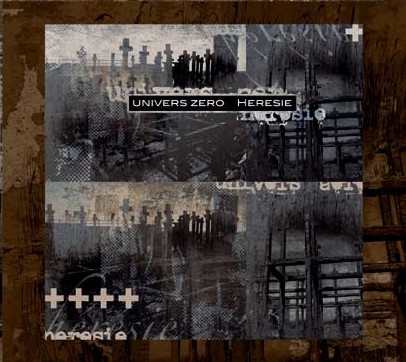
Released when the original prog movement had, for the most part, already run out of steam, over the years Heresie has built a reputation as one of the gloomiest, most disturbing records ever produced in a progressive rock context. A descent into unadulterated darkness, Univers Zéro’s second album enjoys near-legendary status in the more forward-thinking circles of prog fans. As technically brilliant as any of the ‘big name’ bands of the early Seventies (and possibly even more so), the Belgian outfit approach the creation of highly challenging music from a distinctly different angle than the likes of Genesis or Yes – while a comparison with King Crimson might feel more appropriate.

Almost 32 years after Heresie’s release, Univers Zéro are the only founding band of the Rock in Opposition movement to be still active. With their latest release, Clivages, hailed as one of the last year’s landmark albums, their performance at the 2010 edition of the Sonic Circuits Festival in Washington DC (thanks to the joint efforts of the festival organizers and the band’s label, Cuneiform Records) was nothing short of breathtaking. They are also, however, a very divisive band to the more conservative set of prog fans, who often look upon the whole RIO/Avant scene as little more than a bunch of purveyors of jarring, overly demanding fare with pseudo-intellectual pretensions. While most of the classic prog of the ‘70s is symphonic in inspiration, with Univers Zéro we enter ‘chamber rock’ territory – which, just like its classical counterpart, can be the object of equally intense love or loathing.

Originally running at a whopping 50 minutes (very unusually for a single vinyl album), and almost completely acoustic, Heresie undoubtedly shares more with academic music than conventional rock, with typical rock instruments like the guitar taking a back seat. While Daniel Denis’ astounding drumming forms the core of the band’s sound, his style distinctly clashes with the common image of the powerhouse rock drummer. Having been so lucky as to see him and Magma’s Christian Vander on stage in the space of a week, I was struck by how both of them come across as almost antithetic to the brash, flamboyant style of drummers such as Mike Portnoy. Indeed, both Denis’ and Vander’s  approach to drumming brings to mind the role of percussion in an orchestra –  not merely propulsive, but textural and expressive at the same time. .

Though frequently described as the ideal soundtrack to a horror movie (or even to one of HP Lovecraft’s insomnia-inducing short stories), Heresie does not have a lot in common with the hard-hitting, yet slightly garish music produced by the likes of Goblin and Keith Emerson for Dario Argento’s iconic slasher flicks. As pointed out in the very thorough liner notes (courtesy of Renato Moraes and Aymeric Leroy, Canterbury expert extraordinaire and founder of the Calyx website), the album’s centrepiece, the monumental, 25-minute “La Faulx” (The Scythe) parallels the structure of Ingmar Bergman’s legendary The Seventh Seal – also suggested by the bleak, sepia-tinted cover artwork. Though “La Faulx” might at first appear as Univers Zéro’s idiosyncratic take on that old prog warhorse, the ‘epic’, I see it as perfectly contained chamber piece rather than a mini-symphony like “Close to the Edge”or “Supper’s Ready”. Opening with about seven minutes of nightmarishly chaotic sounds, echoing drum beats and menacing vocal growls in an invented language that would give any death metal band a run for their money, it develops into an intense, mesmerizing theme propelled along by Denis’ subtle yet relentless drumming and Michel Berckmans’ rich tapestry of woodwinds, interspersed by the plaintive voice of the violin. When, towards the end, the controlled chaos subsides, a hint of melody surfaces, as well as a measure of calm that seem to reflect the ending of Bergman’s masterpiece.

While apparently more cohesive and linear in compositional structure, “Jack the Ripper” suggests the devastation wrought by the titular character by means of harsh violin slashes, while the bassoon and drums at the beginning evoke the slow, plodding pace of a funeral march. The whole structure of the track is indeed ruled by the drums, whose expressive potential unfolds fully, lending them a ‘voice’ that transcends mere rhythmic beat. On the other hand, “Vous Le Saurez En Temps Voulu” (We’ll Let You Know in Due Time) is the most classically-inspired of the three original compositions, with a tuneful, almost upbeat first half reminiscent of Stravinsky, gradually driving towards a disturbing, doom-laden culmination – the ‘due time’ of the title probably referring to the moment of death.

The thorough remixing process undergone by Heresie lifts the music from the murky depths of the original version – perhaps effective in terms of atmosphere, but much less so in terms of musical enjoyment. However, besides the definite improvement of the sound quality, the main attraction of the album lies in the previously unreleased track “Chaos Hermetique”, remastered from an audio cassette copy and originally recorded in 1975,  prior to Berckmans’ arrival. With a definitely more electric direction, it revolves around composer Roger Trigaux’s guitar, conjuring shades of the sleek angularity of King Crimson; while Denis assumes a more conventional rock drummer role, providing plenty of bottom end in unison with Guy Segers’ bass.

Splendidly composed and flawlessly executed, Heresie can nonetheless prove nearly unapproachable for those who believe melody and memorable tunes are essential components of music. While not as harsh or atonal as other efforts by RIO/Avant bands, and much more disciplined and tightly knit than one might expect, this is an album that needs to be listened to with care and attention, preferably when the time and mood are right – and not just because it is ‘scary’ music that might not make you sleep at night. Based on painstaking detail (like most chamber music) rather than broad sweeps, it also possesses the austere beauty of medieval architecture, stark though not exactly minimalistic, yet full of  majesty and power. In any case, I would recommend Heresie to anyone interested in authentically progressive, challenging music, though not necessarily ‘prog’ in the canonical sense of the word. A liking for early 20th-century academic music would also help when approaching Univers Zéro’s output as a whole.

Links:
http://www.univers-zero.com
http://www.cuneiformrecords.com

Read Full Post »

TRACKLISTING:
1. Bodhisattva  (5:19)
2. Razor Boy  (3:11)
3. The Boston Rag  (5:40)
4. Your Gold Teeth  (7:02)
5. Show Biz Kids  (5:25)
6. My Old School  (5:47)
7. Pearl of the Quarter  (3:50)
8. King of the World  (5:04)

LINEUP:
Donald Fagen – piano, electric piano, synthesizer, vocals
Walter Becker – electric bass, harmonica, vocals
Ray Brown – string bass on Razor Boy
Denny Dias – guitar, Stereo Mixmaster General
Jeff “Skunk” Baxter – guitar, pedal steel guitar
Jim Hodder – drums, percussion, vocals

With:
Ben Benay – acoustic guitar
Ray Brown – string bass (2)
Rick Derringer – slide guitar (5)
Victor Feldman – vibes, marimba, percussion
Ernie Watts – saxophone
Johnny Rotella – saxophone
Lanny Morgan – saxophone
Bill Perkins – saxophone
Sherlie Matthews, Myrna Matthews, Patricia Hall, David Palmer, Royce Jones, James Rolleston, Michael Fennelly – background vocals

Steely Dan are one of those bands that are loved passionately by a great many progressive rock fans, but whose legitimacy as a genuinely progressive outfit can spark some really heated debate. Now, while their music has definitely little in common with ‘traditional’ prog (as in 30-minute epics, head-spinning time signature changes, and all that jazz), its sheer complexity, sophistication and technical brilliance – not to mention Donald Fagen’s literate, sarcastic lyrics –  deserves a place in any self-respecting, comprehensive account of progressive music.

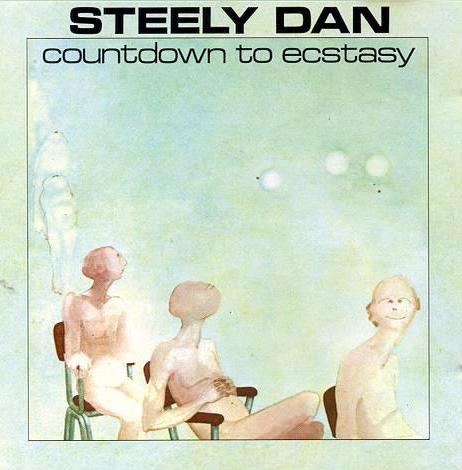
Though I was already vaguely familiar with the band, it was only in the past few years that I really got to know them in depth – thanks to the man who is now my husband. Having listened to all of their albums, I can safely state that I consider Countdown to Ecstasy (the band’s sophomore effort) their masterpiece, superior even to the much-praised Aja. Almost every track on it is a gem, a perfectly crafted example of music that is at the same time accessible and demanding, intricate and smoothly flowing. Steely Dan can do great hooks with the same ease as any seasoned pop band, and stun you with  complex instrumental interplay that would do any ‘classic’ prog band proud. Their choruses are infectiously memorable, but a dark, often seedy reality is hidden beneath those apparently carefree melodies.

Coundown to Ecstasy opens in upbeat mode with “Bodhisattva”, which targets the hippie fad for Eastern philosophies (the pun in ‘the sparkle of your China’ is quite priceless). Rich with horns, guitar and piano, the song has a brisk, almost danceable rhythm, but (unlike other songs on the album) no recognizable verse-chorus-verse structure. “Razor Boy” follows with its melancholy, laid-back vibe underlying one of Steely Dan’s many seedy tales of lost lives: “Will you still have a song to sing/When the razor boy comes and takes your fancy things away….”  The presence of an unusual instrument like the vibraphone lends a haunting quality to the song. The initial triple-whammy is closed by my favourite number, the moody, somewhat menacing “The Boston Rag”, another tale hinting at crime and punishment with one of the best choruses ever known to man (“Bring back the Boston rag/ Tell all your buddies that it ain’t no drag”), and the closest Steely Dan get to guitar power chords.

Out of the remaining songs, the hit “My Old School” and the romantic, French-flavoured “Pearl of the Quarter” lean more towards the more commercial side of things. The former is a real delight for lovers of brass rock, but as a whole leaves me somewhat cold; while I agree with those who think the latter is the weakest track on the album. “Your Gold Teeth”, the longest song at over 7 minutes, is instead an exercise in slinky elegance, deceptively lazy and effortlessly sophisticated. That leaves us with another couple of crackers – the venomous “Showbiz Kids”, punctuated by relentless background chants of ‘outrageous’, and featuring some killer slide guitar courtesy of Rick Derringer; and album closer “King of the World”, another lyrically intriguing tour-de-force enhanced by distinctive, slightly cheesy synth sounds.

Even though at a superficial listen the Dan may sound like an entertaining, yet ultimately hollow pop/jazz band, if you bother to peel away the layers you will find a lot to keep even the most demanding prog fan on their toes. Everything is there – the technical proficiency, the sterling production values, the intelligent lyrics, the expressive singing, the flawless songwriting. So, forget any labels and preconceptions, and get hold of a copy of this gem. You will not regret it.

Read Full Post »

TRACKLISTING:
1. Disarray (3:02)
2. Faceless (7:57)
3. Wither (9:23)
4. Star Bound (4:43)
5. Numb (4:05)
6. Astral Dream (7:03)
7. Delusion (4:06)
8. Dance of the Elders  (8:18)
9. Takes My Breath Away (2010)  (14:14)
10. Altered State (9:43)
11. Reflections (5:14)

LINEUP:
Jeff Hamel – guitars, keyboards, bass, vocals
Jessica Rasche – vocals
Chris Nathe – drums

With:
Jerry Swan – bass (5)
John Wooten – drums (6, 8)
Gregg Johns – guitars, talkbox (10)
Jeremy Hamel – guitars (11)

When I reviewed Majestic’s album Descension in the summer of 2009, my words reflected my lack of enthusiasm for what I saw as yet another ‘solo pilot’ project by a very skilled multi-istrumentalist (Jeff Hamel, formerly of prog-metal band Osmium), ambitious yet lacking in direction. Things took a definite turn for the better with their following album Arrival – the first recorded with the participation of vocalist Jessica Rasche – though I still expressed some reservations about the compositional aspect. Rasche’s arrival (pardon the pun), however, brought some welcome depth and intensity to Hamel’s lengthy, sometimes rambling compositions, and the added bonus of one of the best female voices heard on CD in the past few years.

With Ataraxia (a philosophical concept meaning ‘freedom from worry’ in Greek) it would not be overstating the case to speak about a quantum leap for the Minneapolis-based outfit – now become a real band, with Rasche’s husband Chris Nathe on drums. With the collaboration of a few guests (including Gregg Johns, Hamel’s partner in Proximal Distance, and leader of Mississippi-based project Slychosis), though resting mainly on Hamel’s talents as a multi-instrumentalist, Majestic have produced an album that is unabashedly ambitious – almost 80 minutes long, offering a wide range of sounds and styles that had already been foreshadowed in the band’s previous efforts, though not as coherently developed. The evident progressive metal bent of Arrival is here kept to a minimum, while the symphonic component emerges with far more authority. Indeed, Majestic seem to have grown out of that fascination with prog-metal that, in my view, caused Arrival to be not as impressive as it might have been.

This time, Majestic decidedly head for more traditional prog territories, with most of the compositions bridging the gap between Pink Floyd-style spacey moods and symphonic textures, solemn and pastoral in turn. The longer, weightier compositions (between 7 and 12 minutes) are interspersed by shorter, more accessible numbers that prevent the album from turning into too onerous a listen on account of its length. Most important, though, the music on Ataraxia keeps melody at the forefront, all the while avoiding any descents into cheesiness. As a matter of fact, the danger of sounding too close to those terminally cheesy, female-fronted symphonic metal bands (whose progressive quotient is often rather flimsy) is thankfully kept at bay by Jessica Rasche’s stunning performance. Her clear yet assertive voice steers clear of the operatic excesses of so many female singers, relying on a near-perfect balance between sweetness and power.

All but two of the tracks on Ataraxia feature vocals – mostly Jessica’s, though Jeff Hamel makes a brief appearance on the last two tracks. Touches of Genesis circa Wind and Wuthering surface in the cascading finale of the wistful, melodious opener “Disarray”; while following number “Faceless” begins very much in the prog-metal vein displayed on Majestic’s previous recording effort, then subsiding in favour of a fuller, more symphonic mood with plenty of tempo changes to add interest. The longest track on the album, the 14-minute “Take My Breath Away”, takes instead a more stately direction, with solemn, march-like passages and a lovely, nostalgic mood, enhanced by Jessica’s pure, heartfelt tones and Hamel’s clear, Gilmourian guitar. Another highlight, “Wither displays all of Jessica’s vocal versatility, with a darker mood and a sense of tension that contrast with the almost pastoral quality of “Faceless“, and more of  Hamel’s excellent guitar work.

As wonderful as Rasche’s vocals are, the two instrumentals can easily be numbered among the album’s highlights. The hard-edged riffing and overall ‘metallic’ touches in “Astral Dream” are never overdone, and do not overwhelm the spacey atmosphere created by the synths and the clear, piercing tone of the guitar; while the aptly-titled “Dance of the Elders” reveals a folksy inspiration in its lilting pace and a classical feel in the guitar parts, as well as reminiscences of the likes of Vangelis or Tangerine Dream in the haunting keyboard passages. As to the shorter tracks, the piano-led, funky workout of “Star Bound” allows Jessica to pay homage to her idol Ann Wilson of Heart, and the equally dynamic “Delusion” reveals a distinct influence of Pink Floyd circa Dark Side of the Moon, with a final section where Jessica’s vocalizing made me think of Clare Torry in the immortal “The Great Gig in the Sky”; while “Numb” and “Reflections” are both subdued, romantic ballads which, in my opinion, do not add a lot to the album – the latter providing a rather anticlimactic, though soothing, conclusion.

While Majestic do not pretend to be reinventing the wheel, Ataraxia is a classy offering, showcasing the work of a band brimming with an enthusiasm and love of their craft that have become increasingly rare in the music world, and whose compositional skills are growing by leaps and bounds. Though, as my faithful readers know, I tend to be rather critical of albums that exceed one hour in length, and believe that Ataraxia would have benefited from a bit of trimming, its refreshing lack of pomposity and ‘cheese factor’ balance its undeniable ambitiousness. Moreover, Jessica Rasche’s delightful vocals alone are worth the price of admission – she is a real find, and living proof of how a female singer does not need to indulge in operatic or cloyingly sweet excesses to offer a credible performance in a prog context.

Links:
http://www.majesticsongs.com

Read Full Post »

TRACKLISTING:
1. Hungry Ghost (8:32)
2. The Red Threaded Sexy Beast (12:42)
3. Consider Figure Three (9:48)
4. The Packing House (12:56)
5. Dedicated to KC (9:48)
6. The Gypsy and the Hegemon (10:55)

LINEUP:
Gayle Ellett – organ, analog synth, mellotron, digital synths
Mike Henderson – guitars, ebow, effects
Aaron Kenyon – 5-string bass, effects
Mike Murray – guitars, ebow, effects
Chuck Oken, Jr. – drums, altered voices

Despite their decades-long career as one of the foremost US progressive rock bands, I have to admit that this album was my very first approach to Djam Karet’s music. Although I was obviously familiar with the name – Edward Macan devoted a section of his seminal book Rocking the Classics to them as examples of ‘post-progressive’ rock – but, for some reason or the other, I had never got around to hearing any of their material. Thankfully, the opportunity came some time in 2010, when I got in touch with Gayle Ellett after reviewing the second album of his side project Fernwood, and he sent me a copy of The Heavy Soul Sessions. And what better introduction to a band’s music than a live album, even if recorded in the studio rather than before an audience? Indeed, The Heavy Soul Sessions was recorded immediately after the band’s performance at the French prog festival Crescendo in the summer of 2009, with a view to recreating the atmosphere of a live setting in the studio without any resource to overdubs or the like. An elusive outfit for most of their career, Djam Karet have not been very active on the live front in the past few years, and seeing them perform on a stage has become a rare treat for their loyal following.

Released five years after Djam Karet’s latest studio effort to date, Recollection Harvest, The Heavy Soul Sessions gathers five tracks from the band’s back catalogue, plus a cover of “Dedicated to KC” from Richard Pinhas’ album L’Ethique. The oldest number, “Consider Figure Three”, originally appeared on the Suspension and Displacement album, released in 1991 as a companion effort to the harder-edged Burning the Hard City. “The Packing House” and “The Gypsy and the Hegemon” are taken from Recollection Harvest, while “Hungry Ghost” and the “The Red-Threaded Sexy Beast” (which actually conflates two separate compositions, “Red Threads” and “Sexy Beast”) come from 2003’s A Night for Baku.  The album as a whole runs at a reasonable 64 minutes (with individual tracks between 8 and 12 minutes), presenting a highly satisfying picture of the band’s skills and expressive potential, accrued in the almost 30 years of their musical career. To Djam Karet newcomers like myself, the six tracks are a real boon, as they show a band that has grown and matured constantly over the years, and whose individual members’ side projects have proved to be a source of enrichment rather than a drain.

Djam Karet’s music has often been described as ‘King Crimson meets Pink Floyd’ – a definition which is only partly true. Following Macan’s advice, the band have finally managed to bridge the gap between their rock side and their inclination towards spacey, ambient textures that make good use of cutting-edge technology. Their unabashed eclecticism emerges from even a cursory listen to The Heavy Soul Sessions: the dynamic, riff-heavy opener “Hungry Ghost”; the gentle, almost pastoral moods of “The Gypsy and the Hegemon”; the trippy, Pinkfloydian passages in “The Red-Threaded Sexy Beast”; the airy, measured beauty of the piano and guitar work in “The Packing House”; the choppy, galloping pace of the organ-led “Dedicated to K.C.” On the other hand, “Consider Figure Three” showcases the ambient/electronic side of the band’s creativity (further explored in the side project Ukab Maerd, soon to be reviewed here). Mentioned in Macan’s overview, it is a haunting, brooding piece where the recorded voice of a doctor recites a dry scientific text over a background of spacey electronic effects, surging keyboard waves and Eastern-tinged chanting.

The compositions are ruled by the seamless interaction between Gayle Ellett’s keyboards and Mike Murray (the band’s newest member) and Mike Henderson’s guitars. Unlike the traditional ‘twin guitar’ format of many classic and hard rock bands, their main function is to add layers of sound and complement the keyboards, rather than act as perpetual sparring partners, or provide relentless rifferama – though riffs surface every now and then, aided and abetted by the powerful yet restrained rhythm section of Chuck Oken Jr and Aaron Kenyon. The music’s natural flow is not at odds with its complexity; even the frequent pauses and changes in time signature do not create that impression of patchiness or lack of a coherent structure that seem to be a constant in the output of ambitious yet less experienced bands. The remarkably fluid interplay between all the instruments puts to shame the displays of virtuosity for its own sake that plague many recent releases.

While the band’s hardcore fanbase will probably be disappointed by the lack of any new material after a five-year wait, The Heavy Soul Sessions provides a great opportunity for those who (like myself) want to get acquainted with Djam Karet’s output. Hopefully this excellent album will encourage more people to delve into the band’s back catalogue, available through their website. Highly recommended to lovers of instrumental prog, and an excellent introduction to the work of one of the most representative bands of the ‘second generation’ of progressive rock.

Links:
http://www.djamkaret.com

Read Full Post »

TRACKLISTING:
1. Fame (3:53)
2. Fiaba (6:57)
3. Claustrofilia (5:27)
4. Malamore e la Luna (8:59)
5. Amanti in Guerra (5:56)
6. Ombre Cinesi (5:38)
7. Apnea (7:15)
8. Il Giardino degli Altri (8:16)
9. La Corsa dei Trattori (ghost track) (1:44)
10. Se (7:59)
11. Lana di Vetro (7:55)
12. Ciò Che Rimane (8:59)

LINEUP:
Francesco Chiapperini –  alto and soprano sax, clarinet, flute, EWI
Andrea Illuminati – piano, melodica, bombarda
Claudio Milano – vocals
Andrea Murada – percussion, didjeridoo, noise effects, flute, rhythmic vocals
Max Pierini – electric upright bass, ocarina
Luca Pissavini – electrified viola, synth, toy instruments, “Matilda” noise machinery, field recordings, no-input mixer, duduk, theremin
Lorenzo Sempio – electric guitar, baritone guitar, guitar synth and effects

With:
Carola Caruso – backing vocals (6), vocals (2)
Stefano Delle Monache – electronics and laptop (6)
Estibaliz Igea – opera soprano singer (5)
Luciano Margorani – electric guitar, noises (4)
Luca Olivieri – synth, noises (3), glockenspiel (11)
Claudio Pirro – classical guitar (1, 2)
Antonello Raggi – electronics, laptop (10)
Marco Tuppo – synth (11)

For all the prejudice held by some so-called experts against Italian progressive rock outfits – seen as purveyors of sickly sweet melodies and bombastic, often overdone compositions – the Italian scene offers quite a surprising range of options for those who like their progressive music to have something of an edge. While not as plentiful or high-profile as those hailing from other European countries (Belgium comes to mind), avant-garde bands and solo artists have been a prominent feature on the Italian scene since the golden days of the Seventies, with names such as Picchio dal Pozzo, Opus Avantra and even Area (often too hastily labelled as a jazz-rock band). In the first decade of the 21st century, Italy has produced a number of very interesting outfits on the more left-field fringe of progressive rock – even if some of them really have very few rock elements in their musical output.

Hailing from Milan, the current incarnation Nichelodeon is a seven-piece, almost a mini-orchestra, augmented by a number of guest musicians. Originally born as a project by composer/singer Claudio Milano – a highly qualified musician and visual artist with extensive international experience – with Francesco Zago and Maurizio Fasoli of Yugen (the band that made waves in 2007 with their debut release, Labirinto d’Acqua), unlike the latter and other outfits loosely placed under the RIO/Avant umbrella, Nichelodeon are a vocal-based act rather than an instrumental one. As a matter of fact, the term ‘band’ might be seen as somewhat restrictive when referring to Nichelodeon, who see themselves as a workshop open to the contribution of any artist willing to experiment. Consequently, very much unlike many modern acts whose activity is generally limited to the studio, a marked emphasis is placed on their live performances – as witnessed by Come Sta Annie?, the DVD released as a companion effort to Il Gioco del Silenzio, recorded in the spring of 2010 as a tribute to the 20th anniversary of ground-breaking TV series Twin Peaks.

It should be obvious from this short introduction that Nichelodeon are not purveyors of ‘conventional’ progressive rock. In the very thorough liner notes of the album, they describe themselves as ‘a chemical laboratory, engaged in performing audio-visual crafts’ – a description that, for once, does not ring like idle boasting.  Running at almost 80 minutes, Il Gioco del Silenzio (whose title refers to a very popular children’s game) is anything but an easy listen, occasionally even slightly uncomfortable, but always compelling. On account of its strong vocal orientation, it reminded me of the work of another Italian avant-garde outfit, S.A.D.O. –  Claudio Milano could indeed compete with S.A.D.O. vocalist Boris Savoldelli for the title of heir of the late, great Demetrio Stratos. However, while Savoldelli’s approach tends to be more ironical  (if not exactly light-hearted), Milano’s compositions are definitely intense, demanding a lot of attention on the part of the listener, and graced by highly literate, thought-provoking lyrics that are presented both in Italian and English.

Recorded live in the studio, Il Gioco del Silenzio is a dark, angular effort with a subtly subversive vein – chamber music for the 21st century, conceived as a homage to the European song tradition and unabashedly intellectual in its appeal. Fearlessly blending different musical influences – from folk to tango, from electronica to opera – with the support of a rich, inventive instrumentation, the 12 songs challenge the mind and the ear, creating intriguingly bleak landscapes of existentialist malaise and moral decadence reminiscent of the cultural climate of the early 20th century. Needless to say, reviewing such an album can uncommonly challenging. At times the mere listening experience can feel somewhat frustrating, since the music almost begs to be rendered in visual terms. As can be expected, Il Gioco del Silenzio is not always a comfortable listening experience – on the contrary, the sudden bouts of dissonance breaking up the melodic flow of a song, and the distinct creepiness of some sound effects create disquieting atmospheres that are very likely to put off those seeking more conventional, reassuring fare.

The band cite a wide range of very diverse influences, from contemporary academic music icons such as Luciano Berio and Luigi Nono to monuments of highbrow European songwriting like Kurt Weill and Jacques Brel. On the other hand, the names of Red-era King Crimson, as well as seminal RIO/Avant outfits Henry Cow, Art Bears and Univers Zéro will ring most familiar to progressive rock fans; indeed, something of the darkly mesmerizing textures of Daniel Denis’ outfit circa Heresie can be detected while listening to Il Gioco del Silenzio. However, here the instrumental component, while not by any means secondary, is put at the service of Claudio Milano’s commanding vocal exertions. Milano’s extensive training and experience of vocal styles often quite far removed from the Western tradition  (“Il Giardino degli Altri” offers a taste of his love for ethnic chants, as well as hypnotic tribal percussion patterns) fits the moods and atmospheres evoked by the musical background like a glove. His voice, lyrical, aggressive and manic in turns, sets the pace and almost bends the instruments to its will – as shown most clearly by the positively arduous “Ombre Cinesi”.

With only a couple of exceptions, the tracks tend to be rather long (though not in an ‘epic’ sense); four of them (“Fame”, “Malamore e la Luna”, “Amanti in Guerra” e “Ciò Che Rimane”) were previously featured on Nichelodeon’s debut album, Cinemanemico (2008). Combining traditional song forms with all-out experimentation, they showcase Milano’s maddeningly versatile vocals over a rarefied, occasionally strident instrumental background of unremitting intensity. On any account, describing any of the songs in detail would be a difficult and thankless task – by and large, it might be stated that they are quite similar to each other, even without actually sounding alike. The red thread of tension running through the songs keeps listeners on their toes, enhanced by the dramatic use of hammering piano chords, sound effects and vaguely sinister reeds. Milano’s voice dips and soars in the space of a few minutes, as shown immediately by the first couple of songs, “Fame” and “Fiaba”, as well as the dramatic “Claustrofilia”, highlighted by snippets of guitar soloing in true rock style. Closing track “Ciò Che Rimane” (together with “Malamore e la Luna” the longest number on the album, clocking in at almost 9 minutes) also features some noteworthy guitar work, as well as a vocal performance that made me think of Demetrio Stratos and Area.

Though definitely a tad too long for my standards, and certainly anything but an easy or relaxing proposition,  Il Gioco del Silenzio is one of the most interesting releases of the past year. It also provides further proof that – in spite of the many practical hurdles facing musicians that do not subscribe to a mainstream view of things – the progressive scene is very much alive in Italy, and has a lot to offer to devotees of genuinely challenging music. A particular mention should also be made for the austerely elegant packaging, including some stunning photography of the band and distinctive cover artwork by painter Valentina Campagni.

Links:
http://www.myspace.com/nichelodeonband
http://www.claudiomilano.it

Read Full Post »

TRACKLISTING:
1. I Am The One You Warned Me Of  (5:04)
2. Les Invisibles (5:33)
3. In The Presence Of Another World  (6:26)
4. Del Rio’s Song  (5:31)
5. The Siege And Investiture Of Baron Von Frankenstein’s Castle At Weisseria (6:43)
6. Astronomy  (6:47)
7. Magna Of Illusion  (5:53)
8. Blue Öyster Cult  (7:18)
9. Imaginos  (5:46)

LINEUP:
Eric Bloom –  vocals
Albert Bouchard –  guitar, percussion, vocals
Joe Bouchard –  keyboard, vocals
Allen Lanier –  keyboards
Donald “Buck Dharma” Roeser –  guitars, vocals

With:
Kenny Aaronson – bass
Thommy Price –  drums
Jack Secret –  additional vocals
Tommy Moringiello –  guitars
Jack Rigg –  guitars
Tommy Zvoncheck –  keyboards
Shocking U – backing vocals (3)
Joey Cerisano – additional lead vocal (5)
Jon Rogers – additional lead vocal (9)
Daniel Levitin –  additional backing vocals
Marc Biederman –  guitar
Kevin Carlson –  guitar
Robby Krieger – lead guitar (7,8)
Daniel Levitin –  guitar
Aldo Nova – guitar
Joe Satriani –  lead guitar (5)

Back from my well-deserved vacation, I am quite ready to resume my reviewing duties as regards both new and older material.  Though I have a couple of reviews of recent releases in the works, I would like to devote the first slot of the new year to what is possibly the most intriguing album by the band that brought us the original Fire of Unknown Origin (pun unintended).

Just before Imaginos was released, the mighty Blue Oyster Cult had been in disarray, a shadow of their former powerful selves. With the departure of some key members, the spark seemed gone forever – as witnessed by their previous, rather lacklustre release, 1986’s Club Ninja, held by many as their weakest recording effort. However, the completion of this 20-year-long project (originally conceived by drummer Albert Bouchard and mastermind Sandy Pearlman) brought the original members of the band together for what was destined to be their last great album (in some ways, even their masterpiece), and certainly one of their most progressive offerings.

The very elaborate concept behind Imaginos was at least partly inspired by HP Lovecraft’s Cthulhu Mythos, and crafted in order to provide an ‘alternative’ explanation for the onset of World War One.  The titular character is a ‘modified child’ with supernatural abilities, whose story is told (though not in chronological order) in the nine songs on the album, and foreshadowed on two songs featured on 1974’s Secret Treaties – “Subhuman” and “Astronomy”. Both appear on Imaginos, the latter with a different musical arrangement (in my view inferior to the original, and way too ‘Eighties’ for my tastes), the former rewritten as “Blue Oyster Cult”.

Such an intriguing, grandiose concept needed to be implemented accordingly. Therefore, the five members of the band brought on board a number of other musicians, including the ‘Guitar Orchestra of the State of Imaginos’, an impressive array of lead guitarists that included The Doors’ Robbie Krieger (who had already guested on BOC’s “ET Live”), and six-string wizard Joe Satriani. The result is a rich, majestic sound that fits the storyline like a glove, immediately noticeable from the first strains of opener “I Am the One You Warned Me Of,” which sets things off with a bang. In comparison to the somewhat limp-wristed nature of the band’s previous two efforts, The Revolution by Night and Club Ninja,  an exhilarating sense of energy can be  clearly perceived here. Even the more accessible numbers, like the sax-driven title-track, which closes the album on a somewhat cheerful note, in spite of its rather disturbing lyrics, or the even more upbeat “Del Rio’s Song” (possibly the album’s weakest link) seem to barge in with an assertiveness approached by none of the compositions appearing on either of the above-mentioned releases.

Vocalist Eric Bloom – one of the most distinctive (and underrated) voices in rock – is at the top of his game, belting out the obscure lyrics with self-assured forcefulness. On the rousing “The Siege and Investiture of Baron von Frankenstein’s Castle at Weisseria”, though, Bloom is replaced by guest singer Joey Cerisano; the song climaxes with a haunting chorus of “World without end”, and Joe Satriani’s blistering solo makes it even more memorable. Buck Dharma’s well-mannered voice does the honours on “Les Invisibles” – though the song itself is anything but reassuring, with its sinister synth effects and guitar work, and its insistent, almost obsessive repetition of the word ‘seven’; while “In the Presence of Another World” is a dark-hued mid-tempo, almost ballady at times, with a thundering, yet oddly catchy chorus stating that “Your master is a monster”.

The true highpoint of the album, however, comes  in the second half, with the double whammy of “Magna of Illusion” and “Blue Oyster Cult”. The former, named after the mysterious obsidian mirror that Desdinova (the new name given to Imaginos by his rescuers, the human servants of ‘the Invisible Ones’) finds in a jungle in the Yucatan, and which, kept for twenty years in his attic, poisons the minds of European leaders before the outbreak of WWI, is a triumphal, keyboard- and guitar-laden march related from the point of view of the protagonist’s granddaughter. “Blue Oyster Cult”, on the other hand, is as creepily addictive as its earlier version, “Subhuman”, with an anthemic close celebrating the occult nature of the band’s name as originally conceived by Sandy Pearlman.

Many BOC albums boast outstanding cover artwork, and Imaginos is no exception – the über-Gothic Victorian mansion (a San Francisco landmark burned to the ground in 1907)  poised on a cliff on the background of a stormy sky aptly conveying the sense of mystery and menace implicit in the whole story.  At any rate, despite its Eighties-style production (rather evident, for instance, in the drum sound), this is an album of epic proportions that will appeal to both hard rock and progressive rock fans – a much-needed reminder of the greatness and unique approach of this seminal band.

Read Full Post »

« Newer Posts - Older Posts »