Feeds:
Posts
Comments

Archive for the ‘Review’ Category

Tracklisting:
CD 1:
1. The Bruised Romantic Glee Club
2. Variations on a Theme by Holst
3. Catley’s Ashes
4. When Peggy Came Home
5. Highgate Hill
6. Forgiving
7. No One Left to Lie To
8. The Things We Throw Away
9. Doxy, Dali and Duchamp
10. Srebrenica
11. When We Go Home

CD 2:
1. As Long As He Lies Perfectly Still (incorporating: That Still and Perfect
Summer – Astral Projection in Pinner)
2. Pictures of an Indian City
3. Nirvana for Mice
4. Islands
5. The Citizen King
6. Soon After

Lineup:
Jakko M. Jakszyk – vocals, electric and acoustic guitar, keyboards, mellotron, bass guitar, balalaika, sitar, flute, strings, whistles, sound effects, percussion, programming
Gavin Harrison – drums
Mel Collins – alto and tenor saxes, flute
Dave Stewart – keyboards (CD 1 – 9, CD 2 – 1, 3, 5)
Robert Fripp – soundscapes, electric guitars (CD 1 – 6, 11)
Danny Thompson – double bass (CD 1 – 9, CD 2 – 4)
Mark King – bass guitar (CD 1 -3)
Nathan King – bass guitar (CD 1 – 5)
John Giblin – bass guitar (CD 1 – 6)
Lyndon Connah – piano (CD 1 – 8 )
Ian MacDonald – flute (CD 1 – 2)
Caroline Lavelle – cello (CD 1 – 2)
Helen Kaminga – viola (CD 1 – 2)
Clive Brooks – drums (CD 2 – 1)
Gary Barnacle – alto flute, flute, bass flute and piccolo, tenor and soprano saxes (CD 2 – 1)
Hugh Hopper – bass guitar (CD 1 – 1)
Pandit Dinesh – tabla, vocals (CD 2 – 2)
Ian Wallace – drums (CD 2 – 4)
Suzanne Barbieri – backing vocals (CD 1 – 11)
Django Jakszyk – voice (CD 1 – 11)
Camille Jakszyk – voice (CD 1 – 11)
Chris Baker – Irish priest (CD 1 – 4)

After my review of the groundbreaking yet controversial debut by The Mars Volta, here is another album released during the first decade of the 21st century – though a vastly different one. This is one of the hidden progressive rock gems of recent years, courtesy of a musician who, in spite of his decades-long career and impressive curriculum, is still nowhere close to becoming a household name. In fact, while Jakko M. Jakszyk is in his early fifties, and has shared a stage or a recording studio with many a revered protagonist of the prog scene, most of the bands he has played with over the years are of the positively obscure kind. Before he joined the 21st Schizoid Band in the role that was of Robert Fripp, Jakszyk had been little more than what in my native Italy we would term as an ‘illustrious unknown’, in spite of his short-lived tenure in a relatively high-profile band like Level 42.

Much like its author, “The Bruised Romantic Glee Club” (released in 2006 to a lot of critical acclaim, and become unavailable soon afterwards, due to the record label going under) enjoys cult status among prog fans, though not many people have been able to listen to it. I was lucky to find a copy (at an almost bargain price for a double album) in one of the music stores I used to visit regularly when I lived in Rome. And what a great purchase!  This is an  album that most dedicated prog listeners will appreciate, with all the trademark features of our favourite genre, plus a healthy dose of melody and accessibility. Fans of cover versions will also be absolutely delighted by the contents of CD2 – a splendid collection of classics by the likes of King Crimson, Soft Machine and Henry Cow, performed by some of the stalwarts of the original Canterbury scene.

Right from its cover, a gorgeous, muted snapshot of Jakko walking on Brighton beach at sunset, “The Bruised Romantic Glee Club” is a thoroughly classy package. Everything – the pictures, the detailed liner notes, the graphics, the music – is designed to appeal to listeners of sophisticated tastes, who look upon an album as a complete experience. I would not hesitate to call it a beautiful album in the true sense of the word – not only on account of the very accomplished nature of the music contained within, but also of the stories behind each of the songs.

From even a casual reading of the liner notes, Jakko comes across as a very sensitive, vulnerable human being, consequently bruised by life, but keeping up his optimistic side. Some of the stories attached to individual songs are very moving indeed, especially those related to his family. As many adopted children, he got to meet his real mother much later in life, not long before her untimely death. This part of his life story is the subject of the haunting, Celtic-tinged instrumental “When Peggy Came Home”, dedicated to the burial of his natural mother’s ashes in her birthplace in Ireland; while the following song, “Highgate Hill”, reminisces about Jakko’s own birth in a hospital in the titular area of northern London.

Musically speaking, the first CD features a number of songs and instrumental tracks performed by Jakszyk and a handful of high-profile guest musicians – namely Porcupine Tree drummer Gavin Harrison, Mel Collins, former Level 42 bassist Mark King (a well-respected four-stringer), double bass legend Danny Thompson, and even His Majesty Robert Fripp himself. Canterbury keyboard king Dave Stewart also performs on one track (“Doxy, Dali and Duchamp”), as well as on most of CD2. Comparisons to other bands or artists are anything but easy to draw – I have read one review comparing some of the songs on “The Bruised Romantic Glee Club” to David Sylvian’s output, and I find myself in agreement with such a remark. Though Jakko does not have Sylvian’s distinctive, world-weary voice, I find his vocals are the perfect foil for the album’s elegant, somewhat understated musical mood.

On the other hand, there is a distinctly jazzy feel running through the album. The marvellous “Catley’s Ashes”, driven by Mark King’s pneumatic bass, is richly laced with Mel Collins’ masterful saxophone; while the melancholy “The Things We Throw Away” features Jakko’s long-time friend and former bandmate Lydon Connah, and the majestic “Srebrenica” is based on the traditional music of Serbia. Infused with sadness and loss, the atmospheric, rarefied “When We Go Home” (dedicated to the artist’s adoptive mother, Camille) features Fripp on electric guitar, as well as Camille’s own recorded voice.

All the songs are of consistent high quality, with a particular mention for the title-track and the already mentioned “Highgate Hill”. Admittedly, they sometimes border on pop, though in an adult, well-rounded kind of way, and definitely not an overtly easy or commercial one.  Jakszyk also deserves kudos for his skills as a lyricist, something not precisely common in the prog world. While he lays his soul bare, he hardly ever descends into mawkishness, and occasionally injects some humour in the overall wistfulness of his musings.

There is not much that can be said about CD2, if not that it is quite magnificent. The quality of the  ‘raw material’ alone would guarantee excellent results, but what really makes these versions special is the obvious love lavished on them by both Jakko and his distinguished guests. It would be very hard for me to pick out a highlight, though the cover of Henry Cow’s “The Citizen King” is nothing short of stunning, capturing the blend of  wistful beauty and biting irony of the original to perfection. Jakszyk’s Oriental-tinged take on King Crimson’s “Pictures of a City”, featuring Indian percussionist Pandit Dinesh (another former collaborator of the artist), also wins points for inventiveness; while “Islands”, remarkably faithful to the original, fits  perfectly within the album’s stylishly melancholy atmosphere.

As previously pointed out, up  to a couple of years ago or so, “The Bruised Romantic Glee Club” was, to all intents and purposes, impossible to find.  Now it has been reissued, which is great news with anyone whose curiosity will be whetted by this review – as it can be easily counted as one of the best releases of the past decade, a progressive rock album that pays homage to a glorious past, and at the same time feels thoroughly modern. With its intimate, confessional quality, and lush, sophisticated music, it is highly recommended to most prog fans, especially those who appreciate beautiful melodies coupled with flawless instrumental performances.
Read Full Post »

Tracklisting:
1. Son et Lumiere (1:35)
2. Inertiatic ESP (4:24)
3. Roulette Dares (The Haunt of) (7:31)
4. Tira Me a las Arañas (1:29)
5. Drunkship of Lanterns (6:20)
6. Eriatarka (7:06)
7. Cicatriz ESP (12:29)
8. This Apparatus Must Be Unearthed (4:58)
9. Televators (6:19)
10. Take the Veil Cerpin Taxt (8:42)

Lineup:
Cedric Bixler-Zavala – vocals
Omar Rodriguez-Lopez – guitars
Juan Alderete – bass
Flea – bass
Jon Theodore – drums
Ikey Isaiah Owens – keyboards
Jeremy Michael Ward – sounds

After inaugurating my blog with a series of reviews of classic albums ranging from the late Sixties to the early Eighties, now it is time for me to tackle a modern classic – one of the albums that, in my view, define modern progressive rock, and one of the few really ground-breaking releases of the first decade of the new millennium. Like many masterpieces, it is a divisive effort, and the band itself – the brilliantly-named The Mars Volta, a bunch of extremely gifted musicians led by volcanic guitarist and composer Omar Rodriguez-Lopez – almost a textbook definition of the expression ‘an acquired taste’.  On the other hand, it is undeniable that the release of  De-Loused in the Comatorium set new standards for contemporary prog.

This album was not my first experience with The Mars Volta (TMV for short). On the strength of some very positive reviews, some months before I had bought Frances the Mute, which I immediately loved  in spite of its shortcomings. However, De-loused in the Comatorium, the Hispanic-American band’s first full-length recording, is quite a different story – one of those almost perfect debut albums that it is often impossible (or at least very difficult) for a band to top.

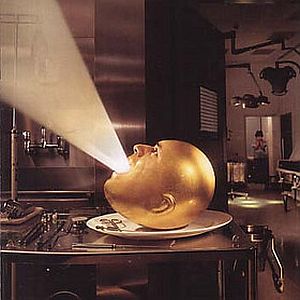
Hate them or love them, it is hard to deny that The Mars Volta are progressive in the true sense of the word. Born from the ashes of post-hardcore band At The Drive-in, they are not afraid to take elements from such disparate genres as prog, punk, metal, jazz and Latin music, and throw them together in a metaphorical blender, stamping their individual seal over the end result. The band’s display of dazzling musicianship, left-field lyrical concepts, stunning cover art (courtesy of legendary graphic artist Storm Thorgerson, better known for his work with Pink Floyd) and no-holds-barred songwriting are the hallmarks of a first-rate outfit that is ready to push prog – that stereotypically earnest, stuck-in-a-time-warp musical genre – right into the 21st century.

Most of the tracks on this album are over the 5-minute mark, with “Cicatriz Esp” clocking in at over 12 minutes. Both band mastermind Omar Rodriguez-Lopez and vocalist/lyricist Cedric Bixler-Zavala wanted to expand their horizons after leaving At the Drive-In, as shown by the clear influence of such giants of progressive rock as King Crimson and Rush. In time-honoured prog tradition, De-Loused… is also a concept album, relating the tale of Cerpin Taxt’s week-long, drug-induced coma and subsequent suicide (a story inspired by the death of former bandmate Julio Venegas).

Even if Omar and Cedric’s original punk roots rear their heads every now and then, they add a measure of spice to the exotic mixture that is TMV’s sound. The musicianship is first-rate throughout, with a special mention for inventive, powerful drummer Jon Theodore, whose rhythmic sparring partner is on this occasion a very special guest, Michael Balzary aka Flea of Red Hot Chilli Peppers fame (one of the best four-stringers on the market, even if you are not too keen on his mother band). The crisp, clear production values further enhance Theodore’s intricate, occasionally explosive drumming, as immediately shown by  killer opener  “Inertiatic ESP” (preceded by the deceptive quiet of “Son and Lumière).

In my personal opinion, though, the real strength of TMV lies in the supercharged vocals of Cedric Bixler-Zavala, whose banshee wail, interspersed with more reflective, almost lyrical moments, provided a textbook example of  really expressive singing. A richer, fuller version of Geddy Lee, he stamps his mark all over the album, perfectly complemented by his partner in crime  Omar Rodriguez Lopez’s wildly atmospheric guitar playing. Unlike on follow-up  Frances the Mute, here the band keep the use of weird, electronic noises to a minimum, with epic “Cicatriz ESP” ‘s middle section being a prime example of how such sounds can be used sparingly to their maximum effect.

With such an overall strong album, it would be difficult for me to pick any standout tracks, apart from those I have already mentioned. Haunting ballad “Televators” is a much better effort in this sense than “The Widow” on Frances the Mute; while “Eriatarka”, “This Apparatus Must Be Unearthed” and album closer “Take the Veil, Cerpin Taxt” brim with energy and freshness, Cedric’s manically brilliant vocals soaring above the band’s unleashed instrumental fury.

A brash, loud, yet sophisticated statement of intent, De-Loused in the Comatorium was clearly not conceived with mass appeal in mind – even if The Mars Volta have become a relatively successful act in their field. This is thoroughly modern progressive rock, and a must-listen for all serious devotees of the genre – weird and wonderful, and a really wild ride, but also one to enjoy to the fullest.

Read Full Post »

I apologize to my readers for having neglected my blog once again, but my ‘official’  reviewing job has kept me very busy, and then there have been some distractions – such as the wonderful event mentioned in the title of this post.

Last year (my first year in the USA) we had toyed with the idea of heading down to North Carolina for ProgDay, since one of our favourite new bands – New Jersey’s 3rd Degree – were on the bill, and the whole of the lineup was very interesting to say the least.  On the other hand, the heat and humidity often prevalent in the area at this time of year discouraged us. Neither of us is a hot weather person, and my husband (who used to live in that part of the country) had to cut short his participation to ProgDay 2006 because of heat exhaustion. However, this year our concerns proved to be unfounded, as the weather this past Labour Day weekend was nothing short of perfect – cool in the morning and evening, pleasantly breezy, and not at all humid – perfect for spending two days in a beautiful outdoor space ringed by lush woods, with grass as soft as a carpet.

I will present my impressions of the event in a more professional manner in the review I am writing for the ProgressoR website. This is just a taster for all of you who were there, and for those who are curious about the longest-running progressive rock festival in the world, but have never had the pleasure of attending it. Suffice it to say that we had a thoroughly wonderful time, feeling part of a small but stalwart community of people for whom music is much more than something to be consumed quickly like a Big Mac, or just left to run in the background when doing something else.

Besides the great music (this year’s lineup was way better than those offered by both the ‘big’ North-Eastern prog festivals), the highlight of the event was meeting so many great people, some of whom had been our ‘virtual’ friends for many months. On Saturday we spent a fantastic evening in the company of the Mars Hollow guys, who on the following day proceeded to rock the ‘house’ down with their perfectly honed blend of classic prog, catchy hooks and vocal harmonies to die for. Then, on Sunday morning we finally got to meet the Shadow Circus guys, who also put on one hell of a show.  We had been regularly in touch with John and David for a long time, and being finally able to talk to them in person felt wonderful, but it was also great to meet the band’s newer members, Felipe, Gino and Andy – all of them very nice guys, and excellent musicians. Their symphonic-meets-vintage hard rock take on prog is exhilarating and highly dramatic, and I cannot wait to see them in full stage regalia when they play on our home turf  (The Orion, Baltimore) on October 28th.

I was also looking forward to seeing Half Past Four in action – since I was one of the first people to be aware of them when they released their brilliant debut album, Rabbit in the Vestibule.  They did not disappoint one bit, and even exceeded expectations. Kyree is an astonishing frontwoman with a commanding, versatile voice, and drummer Ann Brody flies the flag for female musicians who rely on their chops rather than on their looks (though both her and Kyree are very attractive women).

Though the rest of the lineup was of equally high quality, I will save any further details for my ‘real’ review (which should be published before the end of September – watch this space and my Facebook page). This post is mainly intended as a more personal, less polished  account of a really intense weekend – one of those experiences to remember for a lifetime.

Links:
http://www.progressor.net/progday2010.html

Read Full Post »

Tracklisting:
1. Let There Be More Light (5:38)
2. Remember a Day (4:33)
3. Set the Controls for the Heart of the Sun (5:28)
4. Corporal Clegg (4:12)
5. A Saucerful of Secrets (11:57)
6. See-Saw (4:36)
7. Jugband Blues (2:59)

Lineup:
Syd Barrett – guitar, vocals
David Gilmour – guitar, vocals
Nick Mason – drums
Roger Waters – bass, vocals
Richard Wright – organ, piano, vocals

Needless to say,  Pink Floyd do not belong to the contingent of lower-profile or just plain obscure bands that are often featured in blogs like mine. On the contrary, their fame is such that, outside the restricted circles of progressive rock fans, they are considered as mainstream an act as the likes of Madonna or Michael Jackson. However, with A Saucerful of Secrets we are as far removed as possible from the stadium-filling phenomenon the band would become just a few years later. This a disc of whose existence most fans of the band’s best-selling albums are barely aware, and that gets unfairly overshadowed by the cult status achieved by The Piper at the Gates of Dawn.

Pink Floyd’s sophomore effort is undoubtedly an album that can polarize listeners’ opinions. Some see it as dated, or lacking in cohesion, since it was released at a turning point for the band, when Syd Barrett, who was slowly descending into mental illness, was being gradually replaced by his friend David Gilmour – which involved a significant shift in the band’s overall sound. In my personal opinion, though, it is one of the great unsung masterpieces of  progressive rock.

No mean feat for a band specialized in killer openers, A Saucerful of Secrets can boast of one of the strongest opening tracks ever committed to record.  “Let There Be More Light” is the archetypal psych/prog composition, with weird, mesmerizing, Eastern-influenced sound effects, and vocals alternating between chant-like whispers and shouts. Together with the album’s best-known song, the equally iconic and hypnotic “Set the Controls for the Heart of the Sun” (whose definitive version appears on the “Live at Pompeii” movie), the track was written by Roger Waters, who was well on his way to becoming the band’s true driving force. Those who maintain that Waters was a less gifted composer than Gilmour should probably take a careful listen to both songs.

The mood changes almost abruptly with the following number, the Richard Wright-penned “Remember a Day”. With soothing, wistful vocals that match the nostalgia-filled lyrics (which seem to foreshadow Wright’s untimely passing), it is a delicate, charming piece that is definitely easier on the ear in a musical sense. In a similar key, the lullaby-like “See Saw” (also written by the late keyboardist) is not, however, equally successful, and is, in my view, the weakest track on the album. On the other hand  “Corporal Clegg” and “Jugband Blues”  hark back to the whimsy of much of the Floyd’s debut album, with endearingly zany vocals, odd noises and ironic, nonsense-filled lyrics. “Jugband Blues”, which closes the album in stark contrast to the eerie soundscapes of the opener, can be seen as Barrett’s testament, and feels particularly poignant nowadays, four years after Syd’s demise.

An album’s title-track often acts as its focal point, and this is particularly true of the schizophrenic masterpiece that is “A Saucerful of Secrets”. Over 12 minutes long, the track is introduced by an uncontrolled chaos of weird noises and hypnotic percussive patterns, a sonic storm that suddenly abates to be replaced by a solemn, organ-driven section, featuring wordless singing somewhat suggestive of a church choir. In a way, the song reflects the nature of the album itself, and the circumstances in which it came into being.

For those who have come to know Pink Floyd through their milestone albums of the Seventies, this record may well turn out to be a disappointment, since it is in no way as accomplished, let alone as polished as regards production values. A Saucerful of Secrets is a child of the late Sixties – raw, experimental, slightly incoherent – and as such captures the essence of an era in which creativity and envelope-pushing were rife. It also captures Pink Floyd’s full potential just a few years before the quantum leap that would lead them to conquer the world. An essential listen, and – incidentally – my own favourite  release by the band.

Read Full Post »

Tracklist:
1. Northern Hemisphere (5:03)
2. Isadora (4:19)
3. Waterways (7:00)
4. Centaur Woman (7:09)
5. Bathers (4:57)
6. Communion (4:02)
7. Moth (4:03)
8. In The Stable Of The Sphinx (8:20)

Bonus tracks  (Eclectic re-issue, 2004):
1. Waterways (demo) (6:40)
2. In the Stable of the Sphinx (demo recorded in July 1968) (11:10)
3. Eight Miles High (recorded at Tangerine Studios, London, 3rd September 1969) (6:51)

Lineup:
Dave Arbus – electric violin, flute, bagpipe, recorders, two saxophones
Ron Caines – soprano & alto saxophones (acoustic & amplified), organ, vocals (4)
Dave Dufont – percussion
Geoff Nicholson –  guitars, vocals
Steve York – bass guitar, harmonica, Indian thumb piano

Though I have neglected my blog for some time, I have definitely not forgotten about it (and hopefully neither have you, my dear readers!). Unfortunately, my other reviewing commitments sometimes have to take precedence – unless I want to find myself even more backlogged than I already am.

Anyway, for the first update for almost three weeks, here is another 1969 album, and one of the lost gems of the earliest years of progressive rock. As a matter of fact, having been released a few months before In the Court of the Crimson King, Mercator Projected might very well be considered as the first prog album – though, sadly, nowhere as well-known as King Crimson’s iconic debut.

Mercator Projected marks the debut of East of Eden, one of the most exciting, authentically progressive acts of  those golden years, now unfairly overlooked by most.  Drenched in exoticism, from its stunning, surprisingly modern cover (depicting a heavily tattooed woman’s back) to its evocative title (a Mercator projection is a cylindrical map projection that distorts the shape and size of large objects),  the album is a thoroughly exhilarating listen, blending Eastern sounds with jazz, blues, heavy rock and psychedelia in a heady brew that might at first sound dated, but still holds a deep fascination for the  discerning music fan.

One of East of Eden’s strengths lies in their use of an impressive array of instruments that, at the time, were not yet common currency in rock music. Dave Arbus’ electric violin (which, incidentally, also graces The Who’s “Baba O’ Riley”) dominates the proceedings, weaving ethereal melodies or bringing a strident note to the compositions, while saxes and flute add their distinctive character to the band’s sound. In the best tradition of the original progressive rock movement, and not unlike the mighty Crims’  seminal debut, the songs on this album are at the same time accessible and experimental, harsh and gently soothing. While the band do not reject their rock and blues roots, they also push the envelope with their richly textured soundscapes, which evoke many different moods.

Closing track “In the Stable of the Sphinx”, a jazzy, sprawling instrumental (also present in a longer version in the 2004 remastered edition), is possibly the album’s masterpiece: mainly guitar-driven, unlike most of the other tracks, it features some brilliant sax and violin work. Flutes take centre stage in the dreamy, hippyish “Isadora”; while “Waterways” and “Bathers” conjure images of Eastern-style languor and sensuality, with lashings of sumptuous violin and keyboard melodies. On the other hand, the bluesy, harmonica-driven “Centaur Woman” sounds somewhat grating, and is in my view the weakest offering on the album, even though the slightly distorted, dramatic vocals add some spice to the song.

As even a cursory listen will make it clear, Mercator Projected is not the accomplished work of a seasoned band. However,  even in  its undeniable rawness,  it shows the promise than East of Eden would fulfill in their sophomore effort, Snafu. It is a great pity that they did not achieve the fame they would have deserved for their highly individual, creative approach to music-making – they could have become as big as Yes or King Crimson, but now they are forgotten by almost everyone but the real aficionados of the ‘golden era’  of the genre.

On any account, Mercator Projected is highly recommended to anyone who likes their prog to be eclectic and challenging, even if a bit rough around the edges. This is an album that every self-respecting prog fan should  try at least once.

Read Full Post »

Tracklisting:
1. Light Flight (3:19)
2. Once I Had a Sweetheart (4:43)
3. Spring Time Promises (4:09)
4. Lyke-Wake Dirge (3:36)
5. Train Song (4:47)
6. Hunting Song (6:44)
7. Sally Go Round the Roses (3:40)
8. The Cuckoo (4:30)
9. House Carpenter (5:32)

Bonus tracks
10. Sally Go Round the Roses (3:40)
11. Sally Go Round the Roses (3:42)
12. Cold Mountain (2:02)
13. I Saw an Angel (2:52)

Lineup:
Jacqui McShee – vocals
Bert Jansch – guitar, banjo, vocals
John Renbourn – guitar, sitar, vocals
Danny Thompson – double bass
Terry Cox – drums, percussion,  glockenspiel, vocals (4)

There must have been something in the water in Great Britain back in 1969 that inspired musicians to produce such an impressive number of landmark albums. Though best known to progressive rock fans for King Crimson’s seminal debut, the year saw the release of other essential discs for the history of rock in all its forms. Pentangle’s third album, Basket of Light, is one of those, though unfortunately it may easily fly under the radar of most listeners but dedicated folk-rock  enthusiasts – which is a pity, because the album is nothing short of a masterpiece.

Indeed, Basket of Light is everything a lover of progressive folk-rock might expect, and then some. Bert Jansch’s and John Renbourn’s fluid, jangling guitars weave seamless melodies, backed by Danny Thompson’s impeccable double bass work and Terry Cox’s precise, understated drumming, while  Jacqui McShee’s enchantingly crystalline tones soar above  the fray. Though this is the recipe for all of Pentangle’s best output, Basket of Light possesses a cohesive nature that somewhat eludes their other albums, even as good as they are. Though more than half of the material featured here consists of rearrangements of traditional British or American folk songs, the band’s original compositions are shining examples of how those traditions impacted their creative process, allowing them to craft songs that are at the same time accessible and musically complex (though very subtly so,  avoiding the over-the-top  nature of too much canonical prog).

The album’s title comes from a line of “Train Song”, probably the best-known number  in the band’s output, and one of the original compositions previously mentioned. Indeed, the title describes the album quite aptly – it is an overall uplifting slice of music, though not in the quirkily humorous way typical of Canterbury bands. For instance, “Lyke-Wake Dirge” (as the title implies) is based on an ancient Anglo-Saxon funeral chant, and as such might be expected to be quite depressing – which is, however, not the case. With its gorgeous, three-part vocals and a delicate, barely perceptible guitar accompaniment, the song possesses a melancholy kind of beauty, yet is anything but gloomy. On the other hand, album opener “Light Flight” is a deceptively light and airy tune permeated by a faint sense of nostalgia, which follows some interesting rhythm patterns and introduces the listener to the delights of Jacqui’s vocals. Gentler and less assertive than Annie Haslam’s, but powerful in its own way, her voice possesses an authentic sweetness devoid of that saccharine aftertaste so rife in her modern followers.

Interestingly, a good proportion of the album is dedicated to American music, in the shape of two folk songs derived from traditional English ballads (“Once I Had a Sweetheart” and the somewhat disturbing “House Carpenter”), and “Sally Go Round the Roses”, the only hit by New York girl group The Jaynetts, a delightful, feel-good tune (originally written by Phil Spector) showcasing a different side of Jacqui’s singing style.  The latter is also present in two different versions as a bonus track, together with two other songs that, while penned by the band or individual members, are strongly redolent of  the American musical tradition (especially the upbeat “Cold Mountain”). The aforementioned “Train Song”, written as a lament for the passing of the steam train, has a basic blues structure with vocal arrangements that reproduce the sound of a train in motion; while “The Cuckoo” is a traditional folk song from Somerset interpreted by Jacqui in piercingly sweet tones. “Hunting Song”, an original band composition based on traditional materials (namely an episode of the King Arthur cycle involving Morgana Le Fay and a hunting horn), is an almost seven-minute mini-epic sung by Jansch and McShee in their sharply contrasting timbres, and infused with the gently tinkling sound of the glockenspiel. In “House Carpenter”, which closes the original edition of the album,  Renbourn’s and Jansch’s banjo-sitar interplay reinforces the sinister atmosphere of the tale of a young woman lured to perdition by the Devil himself.

Ever since I was a child, I have been deeply fascinated by folklore and mythology, so my attraction to bands like Pentangle should not come as a surprise.  On albums like this one, the music and the lyrics seem to mesh together seamlessly, and the sheer beauty of the vocals lends new intensity to those centuries-old tales of love,  death, magic and treason.  If, according to a popular stereotype, prog fans have an affinity for fantasy literature, then the root of it all is here, in the enthralling yet disquieting ballads interpreted by the exquisite voices of Jacqui McShee and her peers – as the father of modern fantasy, J.R.R. Tolkien, pointed out in many of his writings.

In the previous paragraphs I have often used the word ”progressive’. So, can Basket of Light be really tagged as a prog album?  Of course it can, though you should not expect anything resembling the likes of Yes or Genesis. We are not talking about lengthy epics with a pinch of folksy spicing thrown in for good measure, but rather about a genuinely progressive approach, where folk, blues, jazz, country and medieval/Elizabethan music are blended together with immaculate instrumental proficiency and vocals that achieve the perfect balance between technique and emotion. This is the kind of music whose progressiveness is made of subtle layers of light and shade, rather than a pile-up of flash and bombast. Indeed, many modern bands would have a lot to learn from this album –  a masterpiece of class, expertise and restraint, and a delight from start to finish.

Read Full Post »

Tracklisting:

1. If I Could Do It All Over Again, I’d Do It All Over You (3:07)
2. And I Wish I Were Stoned – Don’t Worry (8:21)
3. As I Feel I Die (5:17)
4. With an Ear to the Ground You Can Make It / Martinian / Only Cox /     Reprise (9:56)
5. Hello Hello (3:46)
6. Asforteri 25 (1:21)
7. Can’t Be Long Now / Françoise / For Richard / Warlock (14:18)
8. Limits (1:34)

Lineup:

Pye Hastings – vocals, guitars, claves
David Sinclair – keyboards
Richard Sinclair – vocals, bass, tambourine
Richard Coughlan – drums, congas, bongos, maracas, finger cymbals

With:
Jimmy Hastings –  sax, flute

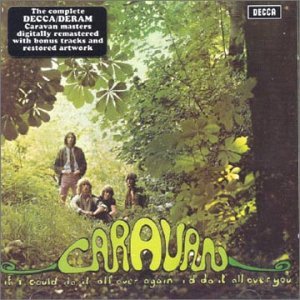
In keeping with my intention of offering a wide range of musical styles to the readers of my reviews, my next pick is one of the greatest albums to ever come out of the so-called ‘Canterbury scene’. Though for most people the most obvious choice would be the band’s most celebrated work, its follow-up In the Land of Grey and Pink, I have always found this one to be, in some ways, an even better effort – though, unlike … Grey and Pink, it is  less immediate and more of a steady grower.

The best way to listen to this album is to put on your headphones and wallow in the beautiful vocal harmonies, intricate bass lines and splendid  keyboard work. The opening title-track is an infectious, ’60s-style ditty sung by both vocalists, the deeper-voiced Richard Sinclair repeating the line “Who do you think you are?”, with the higher-pitched, graceful voice of guitarist Pye Hastings singing the verse. Most of the following tracks, though varying in length, are structured as mini-suites, with at least two movements (and accordingly long, hard-to-remember titles). “And I Wish I Were Stoned” starts off as a wistful melody, then becomes increasingly jazzy and dynamic. “As I Feel I Die”, one of the highpoints of the album, has much the same structure, with a slow intro featuring great vocals from Hastings, then culminating in a rousing instrumental duel between the two Sinclair cousins, Dave’s incendiary keyboards and Richard’s complex, fluid bass. “With an Ear to the Ground”, the second longest track on the album, sees more spectacular work from Dave Sinclair,  backed by a very tight, yet understated rhythm section.

“Hello Hello” is a lesson in how to write a song that’s both hummable and intelligent, with the added bonus of one of the strangest percussive accompaniments this side of King Crimson’s Jamie Muir – a pair of hedge clippers wielded by  Richard Sinclair himself, who also sings lead vocals. In fact, if I were to name one flaw of this otherwise flawless album, is that Sinclair does not sing often enough…  The short, delightful “Asforteri” leads the way for the album’s pièce de resistance, the 14-minute-plus “For Richard”, one of the band’s undisputed classic, and a constant presence in their live sets.  David S. gives a stunning demonstration of his impressive skills as an organ player, while Richard S. provides a solid yet intricate rhythmic background. The track ends with a brief yet tasteful guitar solo by Pye Hastings  – perhaps unlikely as a guitar hero,  but also very effective.

The remastered version (featuring the unreleased gem “A Day in the Life of Maurice Haylett”) sounds as fresh as it had been recorded last year, and not 40  years ago. This is vintage prog at its best – impeccably performed, complex and challenging, yet at the same time witty and light-hearted, devoid of the pretentiousness that can occasionally mar the output of some of the better-known bands.

Though, to some people’s ears,  If I Could Do… might sound a tad lightweight,  it is nevertheless a magnificent album by a band who, in their heyday, were able to effortlessly combine accessibility with progressive potential. Highly recommended indeed – unless you are one of those people who will shy away from anything that sounds too conventionally ‘poppy’.

Read Full Post »

Tracklisting:

1. Sequenze e frequenze (16:22)
2. Aries (5:26)
3. Aria di rivoluzione (5:01)
4. Da Oriente ad Occidente (6:32)

Lineup:

Franco Battiato – lead vocals, VCS 3, guitar, piano, calimba
Gianfranco D’Adda – percussion
Gianni Bedori –  tenor sax (2)
Jane Robertson – violoncello (3)
Daniele Cavallanti – clarinet, soprano sax (3)
Gaetano Galli – oboe (4)
Rossella Conz – soprano (1)
Jutta Nienhaus – recitative vocals (3), soprano (1, 4)

After two reviews of English-language albums, I thought it was time for me to introduce one of the greatest artists on the Italian scene – a musician that, while still relatively obscure in English-speaking countries,  has quite a strong following all over Europe.

Possibly the most eclectic, innovative artist on the Italian pop/rock scene, Sicilian-born Franco Battiato, like many of his contemporaries, started his long career in the early Seventies, when Italy was swept by a wave of musical creativity inspired by the British progressive rock movement, though only partly rooted in it. The ancient island of Sicily possesses a rich cultural tradition, where north and south, east and west comfortably meet and influence each other, and Battiato’s music is the living embodiment of this archetypal ‘melting pot’. Even his poppier Eighties songs are brimming with references to the heady exoticism of the Middle East and India, or the melancholy, decadent milieu of Central Europe before WWI. Similarly, he is not averse to using foreign languages in his lyrics, or even his native Sicilian dialect (which, like every other Italian dialect, was once a full-fledged language). His erudite, thought-provoking lyrics draw upon a vast body of knowledge, not solely limited to the western world. Philosophy, mythology, religion, literature, art, all is fair game for Battiato, the man who brought multiculturalism to Italy way before  the current wave of immigration had even begun.

Released in 1973, at the height of the popularity of progressive rock in Italy and elsewhere, Sulle corde di Aries is in every way a quantum leap from Battiato’s first two albums, the still rather immature Fetus and the more accomplished Pollution. Even if for today’s standards it is a very short recording (a bit over 30 minutes in length), its four tracks pack an aural and emotional wallop that most of the much longer offerings released nowadays can only dream of achieving. The 16-minute-plus, electronic tour-de-force  Sequenze e frequenze opens with haunting strains of synths and wind instruments, which only hint at what is to come. Then Battiato’s filtered voice kicks in, a voice miles away from the big, dramatic vocals often associated with Italian prog. Somewhat thin and reedy, with a heavy Sicilian accent, it is however perfectly, exquisitely modulated, and strongly redolent of the Middle East – almost reminiscent of a muezzin’s call. The short lyrics are incredibly evocative in a visual sense, so that when he sings “ogni tanto passava una nave” (every now and then a ship passed), in my mind’s eye I can almost see a ship slowly moving over the horizon in a hazy summer’s day.  When the singing finally fades away, the track turns into an orgy of eerie, trippy sounds wrung out of a VC3 S, overlaid by the hypnotic, lilting beat of a kalimba – and almost nothing else. It is all very simple, even minimalistic, but at the same time extremely powerful, in a way that so much electronic music can rarely achieve.

Introducing what used to be the B-side of the album, Aries is a mostly instrumental track with a definite avant-garde vibe, featuring harsh saxophone and galloping percussion beats. An excellent piece of music indeed, but in my opinion not as successful as the remaining two tracks, where Battiato’s distinctive singing style is pushed to the fore. Aria di rivoluzione paints a picture of Europe in the years between the two world wars – the Italian lyrics reference the Abyssinian war, while the German ones  (courtesy of Wolf Biermann, spoken by Analogy’s Jutta Nienhaus in a tone that hovers between martial and sensual) mention Hitler and Stalin. The juxtaposition of two such different languages, of the singing and the spoken word (a strategy that Battiato would further pursue in his career), adds depth and interest to what is the most melodic offering on the album. Finally, Da Oriente a Occidente seems to foreshadow the increasing influence of  world music in more recent times, with Battiato’s chanting vocals skillfully backed by two sopranos, and a beautiful, mandolin-led coda.

I saw Battiato performing live in the early Eighties, when he was on his way to his major commercial breakthrough. I entered the theatre as a sceptic, and came out as a convert. This unique musician, who brought a genuine breath of fresh air to the staid Italian pop scene, showed that there was a whole musical world to be explored beyond the established traditions of the opera and the canzone. Years after, I introduced my all-American husband to Battiato’s music, and am happy to say that this album has become one of his desert island discs.

Sulle corde di Aries is undoubtedly one of the great masterpieces of Italian prog, and one of the still-undiscovered gems of progressive rock. Even if the album may not be easy to find for people outside Europe, I hope this review  will encourage more people to delve into the music of this amazing artist – as well as dispel any preconceived notions about the supposedly sickly-sweet, mock-classical nature of Italian progressive rock.

Read Full Post »

Tracklisting:

1. The Art of Parties (4:09)
2. Talking Drum (3:34)
3. Ghosts (4:33)
4. Canton (5:30)
5. Still Life in Mobile Homes (5:32)
6. Visions of China (3:37)
7. Sons of Pioneers (7:07)
8. Cantonese Boy (3:44)

Lineup:

David Sylvian – vocals, guitar, keyboards
Mick Karn – bass guitar, saxophone, oboe, african flute, vocals
Steve Jansen – drums and percussion, keyboards, vocals
Richard Barbieri – keyboards, tape, programming, vocals

With:
Yuka Fujii – vocals
Simon House – violin

And now for something completely different, though this album and the one previously reviewed have something in common – the release date.

Japan’s swan song, Tin Drum, is an album that does not often get the love (or at least respect) it amply deserves.  There are still people who believe ‘New Wave’ and progressive rock to be two mutually exclusive entities, so that even the slightest connection with the likes of punk or New Wave is grounds enough to dismiss a band out of hand. For what it is worth, I believe there is more creativity to be found in many of those much-reviled Eighties bands (often tagged by hardcore prog fans as ‘guilty pleasures’) than in a great deal of  bands or artists with impeccable prog credentials. Though being progressive has nothing to do with  flinging mellotrons around with wild abandon, or penning 30-minute-long epics on would-be weighty (and often terminally boring) topics, nowadays it seems to be far more acceptable to label a symphonic metal band as progressive than one associated with those two late Seventies-early Eighties movements. A band like Japan, with their suits, make-up and hairspray, in some people’s minds becomes synonymous with  ‘synth pop’,  and end up being lumped together with the likes of Visage or Spandau Ballet.

Released just prior to the band’s split, Tin Drum is undeniably Japan’s most mature effort, and the one which earns them a rightful place in progressive territory. It is no wonder that its four members went on to pursue musical careers that brought them in much closer contact with prog: David Sylvian collaborated with Robert Fripp and Holger Czukay, among others;  his brother, drummer Steve Jansen, followed him for most of his solo career; keyboardist Richard Barbieri is now well-known as member of Porcupine Tree, and bassist Mick Karn worked with jazz guitarist David Torn and legendary drummer Terry Bozzio. Such career developments should be proof enough of the fact that Japan were much more than a mere ‘New Romantic’ band, in spite of their image – which, by the way, is as much related to  David Bowie and Roxy Music as to the likes of Duran Duran, setting the band squarely into the  elusive ‘Art Rock’ tradition.

Virtuoso bassist Mick Karn (one of the truly unsung heroes of his instrument, currently fighting advanced cancer) is probably the real star of this album – his thick, pneumatic bass lines all over the place, working in perfect unison with Steve Jansen’s agile, inventive drumming. Their finest hour as a rhythm section is the 7-minute-plus “Sons of Pioneers”, which displays more than a fleeting Krautrock influence. The album’s highlight, the haunting “Ghosts”, is instead dominated by Barbieri’s sparse synth textures and Sylvian’s brooding vocals.  The Oriental theme evident in both the band’s name and the album’s title shows up most clearly in the intriguingly catchy “Visions of China” , closing track “Cantonese Boy”, and the instrumental “Canton” – even though it can be felt throughout the record, in the lilting, intricate interplay of bass and drums, the use of exotic percussion, and even Sylvian’s highly stylised vocals (an acquired taste for sure,though absolutely perfect for the band’s sound). The overall sound of the album is further enhanced by the contribution of former High Tide and Hawkwind violinist Simon House.

The beautiful, stylish cover artwork is an added bonus to one of the best discs released in the Eighties, full of outstanding musicianship and intriguing lyrical themes. Approach this album with an open mind, forgetting any labels and tags – and you will be surprised by 38 minutes of stunning music.

Read Full Post »

Tracklisting: 1. Fire Of Unknown Origin (4:11) 2. Burnin’ For You (4:30) 3. Veteran Of The Psychic Wars (4:50) 4. Sole Survivor (4:04) 5. Heavy Metal: The Black And Silver (3:19) 6. Vengeance (The Pact) (4:41) 7. After Dark (4:25) 8. Joan Crawford (4:54) 9. Don’t Turn Your Back (4:02) Lineup: Eric Bloom – lead vocals, bass (5) Donald “Buck Dharma” Roeser –  lead guitar, vocals, bass (8) Joseph Bouchard – bass, vocals Allen Lanier-  keyboards Albert Bouchard – drums, synthesizer, vocals Though it may not be the peak of originality, I would like to inaugurate my blog by posting a review of the album from which it takes its name. Released almost 30 years ago, the wonderfully-titled Fire of Unknown Origin counts as a firm favourite of mine – strange as it may sound to those who may not find it anything special, or even think it borders too much on AOR territory for comfort. However, it also contains a few songs that I would not hesitate to call masterpieces, as well as superb artwork, and a genuinely progressive vibe (though you should not expect anything resembling Yes or Genesis, of course). Fire of Unknown Origin features a major hit in “Burnin’ for You”, written and interpreted by criminally underrated guitarist Donald “Buck Dharma” Roeser – a catchy little number that got the band a lot of airplay at the time of the album’s release. Though a more straightforward (and also more openly commercial) composition than the legendary  “Don’t Fear the Reaper”,  it is still AOR with a bite, unlike some of the band’s later output. The other songs, however, are a different story – starting with the title-track, its  typically cryptic lyrics penned by punk muse Patti Smith (who was in a long-term relationship with keyboardist Allen Lanier). A fine showcase for Lanier’s skills,  it straddles the line between sophistication and commercial potential. The album’s standout track, however, is the magnificent  “Veteran of the Psychic Wars”, written by vocalist Eric Bloom together with English fantasy writer Michael Moorcock (also known for his collaboration with Hawkwind), who in the previous couple of years had provided lyrics for two other BOC  songs, “Black Blade” and “The Great Sun Jester”.   As good as those two tracks are, “Veteran” is in a different league – definitely one of the band’s classics, and one of those songs that, right from day one, have held a constant appeal for me, especially in some difficult moments of my life: “My energy is spent at last/And my armour is destroyed/And I’ve used up all my weapons/And I’m helpless and bereaved….” A slowly but powerfully surging composition, it features a killer guitar solo by Roeser, and a haunting drum pattern that was probably inspired by Peter Gabriel’s equally riveting “Intruder”. Like most of the album, the song was originally written for the soundtrack of the animated film Heavy Metal, but was the only one to eventually feature in its final version. While “Sole Survivor”, featuring former Meat Loaf vocalist Karla DeVito, and the upbeat but somewhat weak  “After Dark”  follow the AOR-inclined path of “Burning for You”, the eerie, ominous “Vengeance (The Pact)”, and the dramatic “Joan Crawford” present the listener with frequent time changes, lush musical textures and intense, forceful vocals. The album closes with the soothing vocal harmonies, layered bass and keyboard lines of the deceptively catchy “Don’t Turn Your Back”,  whose lyrics  (not surprisingly for the band) deal with the subject of death. Like its predecessor, the excellent Cultosaurus ErectusFire of Unknown Origin was produced by hard-rock icon Martin Birch, who in those years would also revive Black Sabbath’s flagging career – and then proceed to make stars out of Iron Maiden. With great clarity of sound, sterling performances from all the band members, powerfully emotional vocals, and intriguing  lyrics, it ranks undoubtedly as one of BOC’s best offerings. Though not as strongly cohesive as their third release, the stunning Secret Treaties, it is nevertheless highly recommended to all fans of vintage classic rock with a progressive bent.

Read Full Post »

« Newer Posts