Feeds:
Posts
Comments

Archive for the ‘Review’ Category

cover_533192312014_r

TRACKLISTING:
1. Prince of the Inland Empire (5.35)
2. Living in the Future Past (4.50)
3. Desert Varnish (7.18)
4. Wind Pillow (4.39)
5. Lost Dreams (3.49)
6. Empty House (6.07)
7. On the Edge of the Moon (8.36)

LINEUP:
Gayle Ellett – electric guitar, Fender Rhodes, Moog, mellotron, Solina, bouzouki, field recordings
Mike Henderson – electric guitar, percussion
Mike Murray – electric guitar
Chuck Oken, Jr. – drums, percussion, keyboards, effects
Henry J. Osborne – bass, piano, keyboards
With:
Mark Cook – Warr guitar (2)

The Southern Californian outfit that was hailed in Edward Macan’s seminal book Rocking the Classics as one of the front-runners of “new” progressive rock have reached another milestone in their career – their 30th anniversary. Djam Karet – formed in 1984 as a quartet comprising Gayle Ellett, Mike Henderson, Henry J. Osborne and Chuck Oken, Jr. – are back with their 17th album, Regenerator 3017, featuring about 41 minutes of brand-new music, recorded by the band’s original line-up, plus guitarist Mike Murray (who joined the band for 2010’s live-in-the-studio album, The Heavy Soul Sessions). The album follows The Trip, an intriguing vintage space-rock workout that was released in 2013, and in some ways complements it, showing a different side of the band’s creative inspiration.

Quite interestingly for a band who have made a banner of their music’s lack of commercial potential (cue the title of their debut album), Regenerator 3017 – while not truly likely to endanger the reign of the likes of Beyoncé or Kanye West as darlings of the wider music-buying public – does possess quite a lot of appeal for listeners who would ordinarily be put off by prog’s excessive ambitiousness. Melody and atmosphere are the name of the game – a smoothly flowing, ear-flattering musical content imbued with a relaxed West Coast vibe. As Djam Karet proudly stress on all their albums, Regenerator 3017 was recorded without any compression or computer manipulation – resulting in a warm, organic sound that emphasizes ensemble playing, while not failing to highlight individual performances.

The breezy, summery feel of opener “Prince of the Inland Empire”, its lazy, jazzy allure faintly tinged with reminiscences of Seventies dance music, might be somewhat of a surprise (or even a turn-off) to anyone expecting something along the lines of The Trip – let alone Djam Karet’s most Crimsonesque works, such as The Devouring or Burning the Hard City. The interplay between guitar and keyboards adds to the charm of the upbeat passages, interspersed by more sedate, almost meditative moments, in a style that put me in mind of early Camel. Things take a decidedly different turn with the classic, elegant jazz-rock sound of “Living in the Future Past”, featuring some stellar electric piano from Ellett, as well as a drop-dead-gorgeous guitar solo – the whole rounded out by mellotron and Herd of Instinct’s Mark Cook’s Warr guitar. Equally understated, but more in line with Djam Karet’s trademark sound (as aptly summed up in the already-mentioned The Heavy Soul Sessions), the 7-minute “Desert Varnish” intrigues with its tantalizing use of quiet-loud patterns spotlighting Chuck Oken Jr’s textural drumming and Henry J. Osborne’s discreet but unmistakable bass, then allowing the guitar to take the lead in a reverberating escalation.

Not surprisingly, “Wind Pillow” is mellow and atmospheric, with layers of keyboards and more than a cursory nod to Pink Floyd (“A Pillow of Winds” is the title of a song from Meddle). “Lost Dreams” continues much in the same vein, down to the measured, slightly plodding pace and Gilmourian guitar solo. Choral mellotron lends a symphonic tone to the soothing yet wistful guitar and moog in “Empty House”, underpinning the subtle flares of intensity and the climactic beauty of the slow, expressive guitar soloing. Rippling piano and fiery lead guitar shine in closing track “On the Edge of the Moon”), vying with the classical-tinged presence of the mellotron in a lovely, evocative 8-minute slice of atmosphere with some welcome bite.

While Regenerator 3017 might disappoint those who were expecting a throwback to Djam Karet’s Crimsonian roots, its deceptively lazy, upbeat feel and accessibility may well gain the band a few well-deserved new fans. Aficionados of Pink Floyd (especially the years between Meddle and Wish You Were Here) and Camel’s instrumental output will definitely find a lot to enjoy here. However, the album will offer a solid 41 minutes of very rewarding listening – even if not too overtly intricate or aggressive – to everyone with an interest in exploring the different facets of instrumental prog, and also provide a fine point of entry to Djam Karet newcomers. Last but not least, Regenerator 3017’s airy, spacious feel makes it ideal listening for the summer season that is almost upon us, without any of the cheesiness of so much stereotyped “summery” music. A special mention is also deserved by the striking, Southwestern-inspired cover designed by guitarist Mike Murray.

Links:
http://www.djamkaret.com/
http://djamkaret.bandcamp.com/album/regenerator-3017

 

Read Full Post »

201403ilrumorebianco

TRACKLISTING:
1. Tutto un sogno (parte 1) (6:15)
2. Il vestito buono (6:21)
3. Il primo attore (6:13)
4. Tutto un sogno (parte 2) (9:05)

LINEUP:
Eddy Fiorio – lead vocals, synth
Michele Zanotti – guitars, sax
Federico Lonardi – guitars
Thomas Pessina – keyboards, synth, backing vocals
Alessandro Danzi – bass guitar
Umberto Sartorii – drums

Il Rumore Bianco (White Noise) are a six-piece hailing from the historic Italian city of Verona, where they were born from the ashes of another project called Side C (who released two EPs between 2009 and 2011 before disbanding). In the summer of 2012, former Side C members Michele Zanotti, Thomas Pessina and Alessandro Danzi got together with the intention of forming a new band with a more eclectic, “progressive” direction, and recruited vocalist Eddy Fiorio, guitarist Federico Lonardi and drummer Umberto Sartorii  – all dedicated musicians with extensive experience in spite of their young age. The band’s recording debut, a 4-track EP by the title of Mediocrazia, was released at the end of November 2013.

Though Il Rumore Bianco claim to have been inspired, first and foremost, by progressive rock’s classic era, Mediocrazia eschews the overtly retro sound of many recent releases. The typically grandiose, symphonic approach of many Italian prog bands is only marginally touched upon, leaving the stage to a wide range of sources of inspiration that, in some case, are tangential to prog – such as electronics and jazz, as well as Italian-style alternative rock. The different  backgrounds of the band members are brought together to create a tight yet varied musical texture that supports thought-provoking lyrics dealing with the overwhelming presence of the media in modern society, and the resulting pervasive mediocrity that stifles the aspirations of genuinely creative people.

The EP is bookended by a two-part suite titled  “Tutto un sogno”. The energetic, organ-drenched first part often  hints at Deep Purple, though Eddy Fiorio’s voice – following the line of the music like an additional instrument instead of dominating it (as it often happens in Italian prog) – evokes a modern-day Demetrio Stratos; the song culminates in an exhilarating guitar solo backed by deep, rumbling organ. On the other hand, “Il vestito buono” combines an elusive vintage flavour  with a more modern allure; organ, mellotron and ambient-tinged synth washes provide a lush tapestry for Fiorio’s expressive vocals and Lonardi’s multifaceted guitar, and an engagingly warm sense of melody balances the surges of intensity.

The influence of Area looms large over the sleek jazz-rock romp of “Il primo attore”, where Fiorio deploys all the power and versatility of his impressive pipes, and Alessandro Danzi’s bass throws a generous pinch of funky spice in the heady stew of elegantly sharp guitar, blaring sax and jaunty electric piano. The 9-minute second part of “Tutto un sogno” wraps up the album in style, though avoiding the excesses of the stereotypical “epic” –  its atmospheric, muted intro gradually building up to a veritable explosion of sound  in which all the instruments seem to strive for primacy, then slowly winding down to a spacey, slo-mo finale.

The use of the inherently musical Italian language and the innate flair for a good melody possessed by seemingly all Italian musicians imbues Mediocrazia with that sense of Mediterranean warmth that surfaces in the work of the otherwise edgy Area, as well as later outfits such as Deus ex Machina, D.F.A. (incidentally, also from Verona) or Accordo dei Contrari. All in all, in spite of its short running time, this is a surprisingly mature debut – with very few, if any, rough edges, and a very promising display of songwriting skills. Those who prefer their prog on the modern side, but are not averse to the presence of distinguishing elements of the classic Seventies style, will not fail to be intrigued by Mediocrazia – which is highly recommended to fans of the thriving, variegated Italian prog scene.

Links:
http://www.ilrumorebianco.com

https://www.facebook.com/ilrumorebianco

http://ilrumorebianco.bandcamp.com/album/mediocrazia

Read Full Post »

Pensiero-Nomade

TRACKLISTING:
1. Barcarola (4:25)
2. Cerchi d’acqua (4:26)
3. Danza notturna (5:14)
4. Calce e carbone (5:09)
5. La colomba e il pavone (4:17)
6. Tournesol (4:28)
7. Prima dell’estate (5:50)
8. Scirocco (5:03)
9. Imperfetta solitudine (6:19)
10. Sensitive (2:54)
11. Verso casa (4:07)

LINEUP
:
Salvo Lazzara – guitars
Luca Pietropaoli – trumpet, flugelhorn, contrabass, piano, electronics
Davide Guidoni – drums, percussion

With:
Clarissa Botsford – vocals (10)

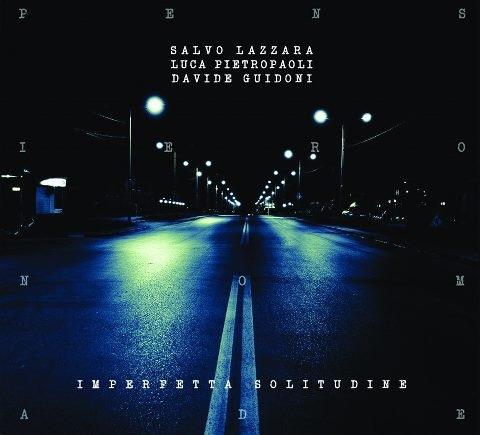
Pensiero Nomade is a solo project by Sicilian-born guitarist/composer Salvo Lazzara – previously know to fans of Italian progressive rock as a member of Germinale, a band that released three albums for Mellow Records in the Nineties, and also participated in some of the tribute compilations released by that label. At the beginning of the new century Lazzara moved to Rome, where he realized that his musical interests were changing, and took up the study of jazz and improvisation. Pensiero Nomade was born from that experience: the project’s very name hints at the wide range of influences that inform Lazzara’s compositional approach, from jazz to world music to ambient/electronics. The project’s debut album, Per questi e altri naufragi, was released in 2007, and followed by Tempi migliori (2009), Materie e memorie (2011), and, finally, Imperfetta solitudine in the summer of 2013.

While Pensiero Nomade’s previous album saw Lazzara flanked by a group of four musicians, including a flutist and a keyboardist, the lineup on Imperfetta solitudine is a stripped-down trio that features Luca Pietropaoli on trumpet, flugelhorn, piano, contrabass and electronics, and Davide Guidoni (one-half of Daal, as well an excellent graphic artist) on drums and percussion. The result is an album that, while undoubtedly “progressive”, is quite far removed from “prog” in a conventional sense.

Indeed, unlike many contemporary prog albums, Imperfetta solitudine is neither brash or loud, though it would be a mistake to consider it mere background music. It certainly needs to be savoured at the right time and in the right surroundings, preferably after the sun has gone down, and when it is possible to lend it some attention – as is the case with albums in which subtlety and nuance are much more important than forced variety. Nothing is fast or hurried here, and the musical texture is loose and atmospheric, though not random. The sounds are organic, never jarring, but not artificially smooth either. The gentle movement of Lazzara’s acoustic guitar in opener “Barcarola” evokes flowing water, while the trumpet’s smoky, melancholy voice sounds almost human. The same pensive tone, almost an aid to meditation and reflection, can be found in the melodiously wistful “Calce e carbone”, the ethereal  “Tournesol” and solemn closing track “Verso casa”. The faintly disquieting “Sensitive” is the only number to feature the haunting vocals of guest artist Clarissa Botsford; while the uplifting “Cerchi d’acqua” exudes an almost vintage West Coast feel.

The 11 tracks are all relatively short, and only the title-track – a lovely, harmonious guitar bravura piece in which Lazzara uses the strings to create a percussion-like effect – exceeds 6 minutes. While the emphasis is firmly placed on the seamless, constantly riveting interplay between Lazzara’s guitar and Pietropaoli’s trumpet, Guidoni’s elegant, accomplished rhythmic touch adds dimension to otherwise low-key tracks such as “Scirocco” and La colomba e il pavone”; then it comes into its own in the lively “Prima dell’estate”, where it engages in a striking “dialogue” with the trumpet, and” and the stately “Danza notturna”, to which hand percussion adds a discreet touch of warmth.

Although Imperfetta solitudine is very likely to have flown under the radar of most “mainstream” prog fans, it can be warmly recommended to lovers of music that speaks to inner feelings and emotions as well as the ear, and evokes far subtler moods and atmospheres than those usually associated with the pomp and circumstance of classic progressive rock. Complemented by stylishly minimalist cover photography that reflects the nocturnal, meditative nature of the music, this album will appeal to devotees of the output of labels such as ECM or Moonjune Records, as well as those who are keen to explore the thriving diversity of the Italian music scene.

Links:
http://www.reverbnation.com/pensieronomade

http://www.myspace.com/pensieronomade

http://www.zonedimusica.com

Read Full Post »

39375d_c617b1137850bbcf7edf8f58a463cf51.jpg_srz_p_335_335_75_22_0.50_1.20_0.00_jpg_srz

TRACKLISTING:
1. Two Views on Flight (4:17)
2. Ankoku (4:55)
3. Words Lurking (3:12)
4. Kurai (5:50)
5. Flow My Tears (4:17)
6. Ananke (1:34)
7. Running Water (5:04)
8. The Ghosts of Dawn (4:14)
9. In Darkness Let Me Dwell (4:55)
10. A Knife Under the Pillow (1:22)
11. Coming Back Home (3:56)
12. Waiting For the Crash (2:08)
13. A Dark Vanessa (3:03)
14. This Night Wounds Time (3:16)

LINEUP
:
Paolo «Ske» Botta – keyboards
Jacopo Costa – vibes
Elaine Di Falco – vocals
Maurizio Fasoli – piano
Pat Moonchy – electric zen garden
Giuseppe A. Olivini – percussion, theremin
Francesco Zago – guitars, mellotron, bass

With:
Bianca Fervidi – cello (1-3)
Rachel O’Brien – vocals (5)

2013 was another very busy year for guitarist/composer (and AltrOck Productions co-founder) Francesco Zago. In the summer, his new “vintage prog” band Not A Good Sign made its recording and concert debut, and a few months later  he appeared on In Between, the new album by his long-time associate Markus Stauss’ outfit Spaltklang – to which should be added his participation in original RIO band Stormy Six’s live CD/DVD Benvenuti nel Ghetto.

However, it is with the Empty Days project that Zago offers his most distinctive contribution to the rich musical landscape of the recently ended year. Featuring some of his Yugen cohorts (the ubiquitous Paolo “Ske” Botta, Jacopo Costa, Maurizio Fasoli and Giuseppe Olivini), plus Milan-based sound/noise artist Pat Moonchy and US-based vocalist Elaine Di Falco (of Thinking Plague/3 Mice fame, who had also guested on Yugen’s 2010 album Iridule), Empty Days was not conceived as a studio-only project: the release of their eponymous album in September 2013 was accompanied by a few live appearances in Italy and Switzerland, as well as at Wurzburg’s Freakshow Festival in Germany.

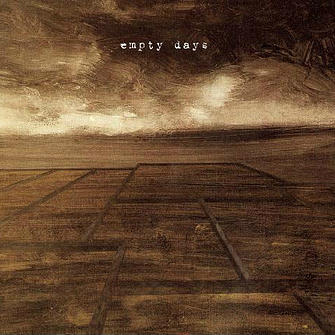
Clocking in at about 50 minutes, Empty Days includes 7 songs and 7 instrumentals, all relatively short, which represent the two main directions of Zago’s current musical interests: art-rock songs with brooding lyrics and ethereal melodies, and darkly rarefied ambient compositions, arranged in a neatly alternating pattern. Unlike Yugen’s intricate, carefully composed pieces, the tracks are more like impressionistic sketches created through a shimmering sonic palette in delicate patterns of light and shade.  Interestingly, Empty Days’ outstanding artwork, with its muted sepia shades and  austere layout, for once is not credited to AltrOck’s in-house graphic artist Paolo “Ske” Botta. While the cover image was provided by renowned contemporary artist Salvatore Garau (who is also Stormy Six’s drummer), the booklet is credited to Zago himself, proving the versatility of his artistic inspiration.

Elaine Di Falco’s performance is one of the undisputed strengths of Empty Days. Here she shows a different side of her art than on Thinking Plague’s 2012 album, Decline and Fall – where the music’s mind-boggling complexity forced her voice into an apparently flat, yet oddly riveting timbre. Here, her dusky contralto displays more curves than angles, lending a hauntingly soft quality to Zago’s wistful vignettes, and providing the ideal vehicle for the pensive, often rather gloomy lyrics. Only one of the songs, the well-known “Flow My Tears” by English Renaissance composer John Dowland,   is interpreted by a different singer – mezzo soprano Rachel O’Brien, whose classically trained voice adds to the piece’s mournful feel.

Di Falco’s multitracked vocals, complemented by Fasoli’s rippling piano and Costa’s gently chiming vibraphone in opener “Two Views on Flight”, weaves a magical, dreamlike atmosphere reminiscent of Dead Can Dance or Kate Bush (or even Gentle Giant), while the somber drone of the cello fits her like a glove in the delicate “Words Lurking”, echoed by Zago’s subtle guitar. “Coming Back Home” revisits one of the songs featured on Not A Good Sign’s debut in understated yet markedly atmospheric fashion, enhanced by mellotron surges and ethereal guitar arpeggios. On the other hand, “In Darkness Let Me Dwell” (another Dowland composition) and “A Dark Vanessa” (from Vladimir Nabokov’s novel Pale Fire) hinge on Di Falco’s deep, almost whispered vocals and minimalist instrumentation to create a mysterious, faintly unsettling mood. The album’s centerpiece, however, is the arrestingly beautiful “Running Water” (with lyrics by Nobel Prize winner Seamus Heaney), whose title is evoked by Fasoli’s flowing piano and DiFalco’s compelling voice, almost chasing each other in a hypnotic movement.

Ranging from the almost 6 minutes of “Kurai” to the barely over one minute of the piano interlude of“A Knife Under the Pillow”, the instrumentals, explore the instruments’ potential to build up cinematic ambient soundscapes that veer from the soothing, Japanese-inspired “The Ghosts of Dawn”, with its rarefied, crystalline sound effects, to the strident, menacing “Ananke” and “Waiting for the Crash”. The longest track on the album at almost 6 minutes, “Kurai”, with its sparse, ominous texture, slashed by sudden cascading chimes and eerily reverberating sounds, aptly reflects its title (Japanese for “dark”, and also the name of another of Zago’s projects, whose album was released in 2009). The 5-minute “Ankoku” is a spacey, faintly discordant piece anchored by Bianca Fervidi’s cello’s muted drone; while in closing track “This Night Wounds Time” piano and mellotron surge in unison, echoing between pauses of near-silence.
:
As I anticipated in my 2013 retrospective, Empty Days fully deserves to be included among the year’s landmark albums. Though, not surprisingly, its main target will be the ever-demanding RIO/Avant crowd, the strong melodic quotient of the songs make the album potentially more accessible for people who are normally daunted by “weird” music. In any case, Empty Days is a thing of beauty, lovingly crafted by one of the most genuinely creative artists on the current progressive rock scene, and highly recommended to anyone who loves music that flies in the face of today’s depressing commercial trends

Links:
http://www.francescozago.com

https://www.facebook.com/FrancescoZagoMusician

http://www.altrock.it

Read Full Post »

giardino

TRACKLISTING:
1. Mattino (2:09)
2. Caduta massi (6:07)
3. Dal recinto (3:58)
4. Palude del diavolo (4:14)
5. Tema dei campi (5:01)
6. Ed io non c’ero (4:59)
7. Dite a mia moglie (5:05)
8. Il giardino disincantato (8:43)
9. Sopra tutto e tutti (9:01)
10. Per mano conduco Matilde (4:35)
11. Terre emerse (Bolero primo) (7:43)

LINEUP:
Valeria Marzocchi – flute, piccolo, vocals
Nicola Bimbi – oboe, English horn
Lorenzo Del Pecchia – clarinet, bass clarinet
Maicol Pucci – trumpet, flugelhorn
Stefano Giannotti –  lead vocals, classical and electric guitars, banjo, componium, harmonica, synth, teponatzli, metallophone, plastic bottle
Emanuela Lari – piano, organ, vocals
Valentina Cinquini –  harp, vocals
Gabriele Michetti –  bass guitar, double bass, vocals
Matteo Cammisa –  drums, xylophone, tympani

With:
Thomas Bloch – glass harmonica (1)

The name OTEME – an almost-acronym for Osservatorio delle Terre Emerse (Observatory of Dry Lands) – will in all likelihood not ring familiar to most progressive rock fans, even though the ensemble’s founder, Stefano Giannotti, has had a long and distinguished career in the field of contemporary music. Hailing from the beautiful medieval city of Lucca in Italy’s Tuscany, Giannotti has been writing and performing music for over 30 years, and his work – which encompasses songs, orchestral scores, chamber music, radio and video art, and  much more – has received numerous international awards, especially in Germany.  OTEME is one of his most recent projects, begun in 2010, though the compositions were developed over a period of about 21 years. The ensemble’s debut album, Il giardino disincantato (The Disenchanted Garden), was recorded in 2011, and finally released in 2013 by independent French label Edd Strapontins (internationally distributed by Ma.ra.cash Records).

Il giardino disincantato’s lavish, lovingly assembled packaging goes to show that fortunately not everyone subscribes to the theory of the visual aspect of music-making (embodied, in this case, by the “physical” CD) being on its way out. With his extensive artistic background (which includes videomaking), Giannotti obviously still believes in the partnership of music and visuals. The 27-page booklet features gorgeous photography that juxtaposes nature and everyday objects (such as the vintage saucepan that represents the “dry lands” in the ensemble’s name, in a modern take on the classic still life), as well as detailed notes and all the lyrics in both Italian and English. The understated elegance of the package, blending minimalism and an appealing “shabby chic” feel, will whet the listener’s appetite, hinting at the nature of the musical content while avoiding sensory overload.

Right from the very first notes of  Il giardino disincantato, Stefano Giannotti’s  mastery of a wide range of expressive modes becomes evident. Though he is credited as the sole writer, the album is very much a group effort. The richly variegated instrumentation merges traditional rock and classical/chamber music staples with rare instruments such as the componium (a programmable music box) and the teponatzli, an Aztec wooden drum. However, Giannotti’s understated yet well-modulated voice works much as an additional instrument, assisted by the ethereal backing vocals contributed by some (mostly female) band members. His interpretation of the beautiful lyrics – fusing literate references with an everyday, matter-of fact tone, and making full use of the many distinctive features of the Italian language – is riveting in its simplicity, far removed from the theatrics to which many prog and avant-garde singers are prone. While listening to the album, I was occasionally reminded of Franco Battiato’s effortless mix of the popular and the highbrow.

Though not a concept album, Il giardino disincantato should be heard as a whole rather than by picking and choosing songs in the manner of the iPod generation. In fact, even if the various tracks date back from different times, they work seamlessly rather than coming across as a disparate collection of items. The intriguing minimalism of opener “Mattino” – in which Giannotti’s voice is accompanied by renowned French musician Thomas Bloch’s eerie glass harmonica – immediately catches the attention and prepares the listener for what is to come. Out of the album’s four instrumentals, “Caduta massi” and the title-track decidedly veer into RIO/Avant territory – the former’s angular, expressive texture interspersed by gentler moments with an appealing Canterbury tinge, the latter taking an almost free-jazz direction with its buoyant, blaring horns – while the haunting “Tema dei campi” evokes reminiscences of Oriental music and the rarefied “Terre emerse (Bolero Primo)” evidences a clear modern classical matrix.

On the other hand, the songs draw upon Italy’s rich singer-songwriter tradition, painting charmingly surrealistic images through Giannotti’s cultivated vocal delivery and a discreet yet unmistakable instrumental presence: the delightfully lilting “Dal recinto”, the delicately wistful “Palude del diavolo” and the wry “Dite a mia moglie”, where the voice is punctuated by English horn. “Per mano conduco Matilde” is a mesmerizing, minimalistic sound sculpture in which the intersecting five voices are complemented by the componium’s eerie tinkling. The 9-minute “Sopra tutto e tutti”, however, is the album’s highlight, bringing all the main components together in an easily flowing, irresistibly melodic song that subtly introduces elements of prog’s trademark intricacy through the seamless interplay of  piano and woodwinds.

Even though Il giardino disincantato may have flown under the radar of most prog fans, especially those dwelling outside Europe, anyone who is keen to explore new challenging music should make an effort to get this album – in particular, those who in 2013 appreciated the likes of Five-Storey Ensemble’s Not That City and Francesco Zago’s project Empty Days. The excellent English translations in the booklet allow non-Italian speakers an insight into Giannotti’s thought-provoking lyrics, helping them to gain an even deeper appreciation for the essential synergy between words and music. A true gem (for the discovery of which I cannot thank my fellow writer Donato Zoppo enough) and one of the standout albums of 2013, Il giardino disincantato will be a treat for all discerning music lovers.

Links:
http://www.stefanogiannotti.com

http://www.maracash.com

http://www.eddstrapontins.net

Read Full Post »

cover_4618212312013_r

TRACKLISTING:
1. The Pilman Radiant (26:15):
i. Visitation
ii. The Divine Vessel
iii. Wriggling Magnet
iv. Mosquito Mange
v. Divine Vessel’s Reprise
2. Complex #7 (4:47)
3. Tremors From the Future (11:15)

Bonus Live DVD:
1. Five Suns (32:19)
2. King Lindorm (14:19)

LINEUP:
Emmet Elvin – Fender Rhodes, organ, synth, harmonium, screeching guitar (1.i)
James Sedwards  – bass
Kavus Torabi – guitar, santoor
David J. Smith – drums, percussion, additional keyboards, santoor

With
:
Thomas Frasier Scott – soprano sax, alto sax, flute, clarinet, oboe, bassoon
Dave Newhouse – baritone sax, tenor sax, bass clarinet, alto flute
Chloe Herington – bassoon
Sarah Anderson – violin, viola
Geri McEwan – violin
Sam Morris – French horn
Emma Sullivan – trumpet
Antti Uusimaki – additional keyboards and effects

After  having produced one of the most powerful album trilogies in recent times – Five Suns (2003), Black Oni (2004) and Elixirs (2008) – in the past few years British outfit Guapo seemed to have dropped off the radar. Multi-instrumentalist Daniel O’Sullivan’s departure following the release of Elixirs (which had been recorded as a duo by O’Sullivan and drummer David J. Smith after the departure of bassist/guitarist Matt Thompson in 2005) brought about a lengthy hiatus and rumours of the band’s demise. However, at the end of January 2013 Guapo resurfaced with a veritable bang – a brand-new studio album (their ninth), titled History of the Visitation, which also saw their return to the Cuneiform Records fold ten years after the career-defining Five Suns.

Lineup changes are nothing new in Guapo’s chequered history, which began in the mid-Nineties with the release of three EPs, and then unfolded with various recordings and collaborations. In the intervening years, the trio configuration that had recorded  Five Suns and Black Oni became a quartet with the addition of Iranian-born guitarist Kavus Torabi (of Cardiacs and Knifeworld fame, recently announced as the new guitarist for Gong) and bassist James Sedwards, while  keyboardist Emmett Elvin (like Sedwards, also a member of fellow Cuneiform outfit Chrome Hoof) replaced O’Sullivan in time for the recording of History of the Visitation.

Guapo are a textbook example of the mind-boggling variety to be found under the RIO/Avant umbrella – a label that, as is the case of bands such as miRthkon and Zevious, fits them only in part .Though the names of Magma and Univers Zéro often crop up in reviews of their material, those two seminal left-field bands are just a small part of Guapo’s musical identity in the second decade of the 21th century. The central role of David J. Smith (the only member left of the band’s original lineup) evokes comparisons with Christian Vander and Daniel Denis. However, Kavus Torabi’s pyrotechnic guitar skills lend to modern-day Guapo a keen, metal-like edge, while Emmett Elvin’s keyboards can weave heady, majestic textures in the best prog tradition, and James Sedwards’ rumbling bottom end often emerges from the fray to add another dimension to the uncompromisingly arcane, brooding nature of the band’s sound. The frequent repetition of lines and themes increases the hypnotic feel of the music in a fashion that brings to mind King Crimson and also some instances of post-rock.

Recorded with the assistance of a number of guest musicians (including The Muffins’ Dave Newhouse), History of the Visitation clocks in at a mere 42 minutes. The first of the album’s three tracks is a 26-minute, 5-movement suite titled “The Pilman Radiant” – a title that, just like the album’s own title, references the cult Russian science-fiction novel Roadside Picnic, written by the brothers Arkady and Boris Strugatsky in 1971, on which Andrey Tarkovsky’s 1979 film Stalker is also based.  Guapo’s  moody yet hard-hitting music renders the intricate, visionary content of the story without any need for words, painting a picture that, in its own way, is as grandiose as any “classic” prog, though more viscerally intense.

Somewhat more streamlined than the monumental Five Suns and Black Oni suites, “The Pilman Radiant” wins my personal prize as best “epic” of 2013. Its five movements are easily distinguishable, yet they form an organic whole. Introduced by the surging layers of keyboards, assorted sound effects and crashing drums of “Visitation” – later reprised by the short, appropriately spacey “Mosquito Mange” – the suite comes into its own with the eerie, quietly brooding beauty of the waltz-like “The Divine Vessel”, led by fluid electric piano and unexpectedly melodic guitar; pace and intensity increase, propelled by drums and bass, in the driving “Wriggling Magnet”, in which Elvin’s roaring organ complements Torabi’s gorgeous, rock-styled solo turn, then a grittier, metal-edged reprise of “The Divine Vessel” brings this exhilarating musical experience to a close.

Strategically inserted between two much longer, more complex compositions, the 4-minute dark ambient piece of “Complex #7” skillfully piles up layers keyboards and assorted sound effects with the added contribution of reeds, creating a mounting sense of tension with the ominous feel of a horror-movie soundtrack.  On the other hand, “Tremors From the Future” concentrates a dizzying variety of twists and turns in slightly over 11 minutes, its skewed melodic development powered by guitar and organ sparring and interweaving while drums and bass evoke the titular tremors with their steadily pulsing movement.

The interest value of History of the Visitation gets a further boost from the presence of an almost 50-minute DVD featuring two of the band’s most iconic live performances from the past few years. The NEARfest 2006 performance of a somewhat shortened version of Five Suns, flawlessly shot in black and white, highlights Torabi’s flamboyant stage presence and boundless energy, as well as Smith’s role as the band’s rhythmic engine; while the more rudimentary quality of the video recorded the following year at the RIO festival does not detract at all from the power of the angular “King Lindorm” thanks to Udi Koomran’s top-notch mixing and mastering work.

In spite of the band’s reputation for scaring away some of the more conservative prog fans – also on account of the notoriously loud volume of their performances – History of the Visitation is a relatively more listener-friendly proposition than Guapo’s previous albums. The higher melodic content and skillfully achieved balance between hard-driving sections and more low-key ones are likely to surprise people who would not ordinarily appreciate anything bearing a RIO/Avant tag. Indeed, there are moments of sheer beauty on History of the Visitation that offset the band’s trademark looming darkness and wall-of-sound heaviness. With its toweringly Gothic atmosphere conveyed through stunning musicianship, this is definitely one of the year’s landmark releases.

Links:
http://guaponews.blogspot.com/

https://www.facebook.com/guapoband/info

http://guapo1.bandcamp.com/album/history-of-the-visitation

http://www.cuneiformrecords.com

Read Full Post »

cover_17723192013_r

TRACKLISTING:
1. Attend to Your Configuration (2:47)
2. Was Solis (6:02)
3. Pantocyclus (4:07)
4. White Minus Red (6:55)
5. Crime of Separate Action (6:32)
6. Entanglement (4:19)
7. A Tiller in a Tempest (3:15)
8. Passing Through the Wall (4:22)
9. This Could Be the End of the Line (2:23)
10. Plying the Cold Trade (8:02)

LINEUP:
Mike Eber – guitars
Jeff Eber – drums
Johnny DeBlase – bass

Four years after their barnstorming second album, the aptly-titled After the Air Raid, New York-based trio Zevious are back with their long-awaited third full-length CD, Passing Through the Wall, also released on Cuneiform Records. In the intervening years the band have maintained a brisk schedule of live performances – including the 2011 edition of ProgDay and, a couple of months later, Cuneifest at Baltimore’s Orion Studios. All three Zevious members are also involved in other projects, which pits them against the likes of Steven Wilson as the most hard-working people in progressive rock.

Zevious, like miRthkon and many of the bands and artists featured on these pages, stand on the outer limits of the progressive rock spectrum – that twilight zone that some would label as “progressive but not prog”, a definition that shows how for many fans the genre has become nothing more than a collection of dated mannerisms. The trio’s musical approach, however, is every bit as complex as the average “mainstream” prog band’s, though relying only on the essential rock instrumentation to create an impressive volume of sound characterized by a very high level of energy. Indeed, Zevious are definitely not for everyone, especially those who believe that the “progressive” in “progressive rock” has been stripped of its original meaning.

The definition of “King Crimson on steroids” that I used in my previous reviews of the band still holds true for Passing Through the Wall – perhaps even more so than for its predecessor. Zevious take the hauntingly repetitive, angular structure of pieces like “Red” or “Discipline” as a springboard, and inject it with an almost manic energy that owes a lot to metal and punk. As drummer Jeff Ebert, whose mind-boggling polyrhythms are at the core of the band’s sound, is also a member of hyper-technical metal band Dysrhythmia (with whom Zevious played some shows in November 2013), Zevious are seriously heavy, though in a different way than, for instance, miRthkon or Guapo – two bands that, like Zevious, straddle the line between Avant Progressive and experimental metal.

Clocking in at about 48 minutes, and packaged in a minimalistic, black-and-white cover with an Escherian feel, Passing Through the Wall comprises 10 tracks ranging from 2 to 8 minutes – a structure both similar and different from their previous album. The shorter tracks emphasize energy and dynamic pacing, while the longer ones allow for more variation. However, those who are looking for dramatic shifts within the same track  in classic prog tradition are in for a disappointment, because at a first listen the compositions on the album may sound all rather alike. Tempo changes are handled subtly as a whole, and the music’s hard-driving intensity does not disguise the complexity of the instrumental interplay.

The imperiously-titled and –paced “Attend to Your Configuration” barges in with its relentless web of interlocking bass and guitar lines driven by Jeff Ebert’s acrobatic drumming, then slows down to an almost Sabbathian plod in the second half. In  the considerably longer “Was Solis” Mike Ebert’s clear-toned guitar weaves sinuously in and out the rumbling backdrop of Johnny DeBlase’s bass, sparring with the drums and occasionally going into slo-mo mode for atmospheric effect. “Pantocyclus” melds skewed melody and haunting, insistent pattern peppered by piercing guitar effects, while the strikingly Crimsonian “White Minus Red” is powered by a superb performance by DeBlase, the rhythmic foundation steadily surging and flowing, then gaining momentum towards the end. The slow, ominous strains of “Crime of Separate Action” wrap up the first half of the album, again showcasing DeBlase’s astonishing propulsive/textural bass work supporting Mike Eber’s eerily chiming guitar.

The first half of“Entanglement” pulls out all the stops in terms of escalating guitar assault,  with drums all over the place; in contrast, “A Tiller in the Tempest” slower, somewhat rarefied pauses relieve the tension of the tight instrumental work. The short, fast-paced “This Could Be the End of the Line” acts as an interlude of sorts between the two most distinctive pieces on the album – the title-track, with its uncharacteristically muted guitar-bass-drum pattern, whose understated intensity creates a heady, drone-like texture; and 8-minute closing track “Plying the Cold Trade”, whose dirge-like pace and somber, Gothic feel offer a rather sharp departure from the unrelenting energy of the previous numbers.

Obviously, Zevious are not going to encounter the favour of the average melodic prog fan, while their music should prove to be far more appealing to the younger generations, weaned on a diet of post/math rock, technical metal and crossover bands such as The Mars Volta. They are also one of those bands who – as good as they sound on CD – have to be experienced live to be fully appreciated, as their hard-driving yet sophisticated music gains a whole new dimension on stage. In any case, Passing Through the Wall is a riveting slice of modern progressive music, powerful and intricate though not devoid of melody, and definitely deserving to be heard with some measure of concentration. Highly recommended to all adventurous prog fans, this album is sure to be featured in many “best of 2013” lists.

Links:
http://zevioustrio.blogspot.com/

http://cuneiformrecords.com

Read Full Post »

a2677764587_2

TRACKLISTING:
1. QXP-13 Space Modulator (3:49)
2. Eat a Bag of DiX (5:08)
3. Hapax Legomena (4:47)
4. Nocturne, op.33 (4:15)
5. The Cascades (6:37)
6. Snack(s) – The Song! (7:12)
7. Osedax (6:16)
8. Mymaridae (6:25)
9. Variety Pack (2:52)
10.Fairies Wear Boots (7:35)

LINEUP:
Wally Scharold – electric and acoustic guitars, vocals, programming, clapping, keyboards, synths
Travis Andrews – electric and acoustic guitars, baritone guitar, vocals
Carolyn Walter – clarinet, bass clarinet, baritone sax, bassoon
Jamison Smeltz – alto sax, baritone sax, clapping
Matt Lebofsky – bass, vocals, keyboards, guitars, junk drums
Matt Guggemos – drums

In the late spring of 2009, the debut album of a hitherto unknown band from Oakland (California), by the idiosyncratically-spelled name of miRthkon, made waves on the progressive rock scene. A monumental, 70-minute slab of quirky, Zappaesque avant-progressive rock with a healthy dose of metal-inspired energy and intriguing references to contemporary classical music –  a package rounded out by outstanding artwork and a wacky background mythology – Vehicle was mentioned by many (including myself) in their personal “best of 2009” lists. Once again, Marcello Marinone and his AltrOck Productions cohorts had unearthed a gem.

Founded around 2005 by guitarist/composer Wally Scharold, miRthkon went through the customary stages of upheaval (and the release of EP The Joy of Illusion) before stabilizing their lineup. With two new members on board – guitarist Travis Andrews and bassist/keyboardistMatt Lebofsky (also a member of Secret Chiefs 3 and MoeTar) replacing Rob Pumpelly and Nat Hawkes – the band are a solid six-piece propelled by a twin-guitar and twin-reed attack that sets them apart from almost everyone else. A quintessential live outfit, they have recently managed to bring their unique brand of progressive rock to Europe. Indeed, after Scharold recovered from some health issues that had forced the band to cancel the second half of their 2012 tour with MoeTar, 2013 has proved to be very good year for miRthkon as a live act, with successful appearances at the first edition of Seaprog in Seattle, the 2013 edition of the Rock in Opposition Festival in Carmaux, and a one-day festival organized by the AltrOck staff in Milan. In addition to their busy concert schedule, the band have spent a good part of the past few years working on the follow-up to Vehicle – a full-length album by the title of Snack(s), which was finally released in the autumn of 2013, following the band’s European tour.

Though miRthkon are anything but your conventional “nostalgia prog” band, they seem to have learned an important lesson from the genre’s golden age: that is, the importance of the visual aspect. Their albums are not just challenging sonic buffets of wide-ranging eclecticism, but also visual feasts that display another facet of Wally Scharold’s considerable talent. Snack(s)’s artwork is a true stroke of genius,  a parody of modern society’s addiction to junk food, with the cover and each page of the booklet imitating the packaging of some popular snacks, down to the mandatory (in the US at least) nutritional breakdown – which contains detailed information about each track, including the daunting time signatures, as well as the lyrics cleverly disguised as “ingredients”. Not your average Roger Dean opus for sure, but extremely well-made, and hugely entertaining.

Though it might raise eyebrows, the “avant-garde metal” tag that has been attached to miRthkon is not as far-fetched as it may seem. The combination of deadpan humour and highbrow references is far from uncommon in the world of technical/avant-garde metal, though miRthkon take it up a notch and imbue their heady genre-bending blend with the jazz-tinged energy of Carolyn Walter and Jamison Smeltz’s array of reeds. Indeed, Snack(s) is the kind of album that will keep you on the edge of your seat, not knowing if that low-key, almost conventionally melodic passage will erupt into chaos (albeit of the controlled variety) in just a couple of seconds. Most of the album’s 10 tracks were written by either Scharold or Lebovsky, with the notable exception of an unrecognizable version of Samuel Barber’s piano piece “Nocturne” (which was part of the band’s setlist at the Orion Studios in August 2012), and a similarly idiosyncratic cover of Black Sabbath’s “Fairies Wear Boots”.

Compared to Vehicle, Snack(s) is more focused (also in virtue of being almost 15 minutes shorter) and also somewhat heavier, though losing none of the compositional complexity that had made miRthkon’s debut so riveting. Crushingly heavy guitar riffs coexist with joyfully blaring reeds in the exhilarating jazz-metal blend tinged with ska (of all things!) of opener “QXP-13 Space Modulator”, a hyper-energetic instrumental that prepares the listener for the mind-boggling twists and turns of “Eat a Bag of DiX”, which juxtaposes brooding chamber-like sections with electrifying guitar forays and almost punk vocals. “Hapax Legomena” ’s deceptively laid-back, jazzy intro soon turns into a bracing duel between guitars and reeds; while wistful clarinet keeps the classical flavour in “Nocturne”, though offset by the guitars and spiked by an odd reggae-like rhythm. The first half of the album ends with the angular yet atmospheric heaviness (and rather apocalyptic lyrics) of “The Cascades”, enhanced by the organic sound of the glockenspiel, organ and piano.

Eerie electronic effects and upbeat, anthemic singing pepper the 7-minute “Snack(s) – The Song!”, driven by Matt Guggemos’ spectacular drumming and reeds blaring in unison. The sinuous, faintly disturbing first half of “Osedax” again brings melody into the equation, with haunting clarinet and a brief yet striking bass-guitar duet followed by a choppy, drum-driven section complete with shouting vocals at the end. After the maze-like complexity of the multilayered “Mymaridae”- whose inexhaustible intensity evokes a swarm of the titular “microscopic parasitic wasps” in a textbook example of controlled chaos – the less than 3 minutes of the bassoon-led “Variety Pack” provide a short but welcome oasis of calm before the grand finale. The longest track on the album, miRthkon’s take on “Fairies Wear Boots” keeps the spirit of the original even in its “deconstructive” approach, replacing Tony Iommi’s iconic riffing with a spirited double baritone sax attack, and Scharold channeling his inner Ozzy Osbourne in a very aggressive vocal turn.

The somewhat clichéd expression “not for the faint-hearted” seems to have been tailor-made for miRthkon. Snack(s), just like the band’s live shows, is a constant adrenaline rush, with only occasional moments of respite, and therefore not very likely to make a dent in the convictions of those who equate prog with lush melodies and grandiose, quasi-symphonic arrangements. Such intense music, almost relentless at times, may require a lot of concentration on the part of the listener. In any case, Snack(s) is one of the most original albums released in 2013, and a must-listen for fans of truly progressive, challenging music. Highly recommended to anyone wishing to step out of their comfort zone.

Links:
http://www.mirthkon.com/

http://mirthkon.bandcamp.com/album/snack-s

http://www.altrock.it

Read Full Post »

Relics+from+the+Wasteland

TRACKLISTING:
1. That’s a Malört (3:17)
2. Relapse (3:40)
3. Forty Flights (3:33)
4. Bardog  (4:03)
5. Trials of Cromulence (4:03)
6. The Camels Make the Rules (4:15)
7.  La Hojarasca (4:05)
8.  Crab Recess (2:37)
9.  Medea’s Dance of Vengeance (3:10)
10. Sarabande (5:18)
11. For Ellie (2:57)
12. Songs from the Wood (4:40)

LINEUP:
Aaron Geller – acoustic guitar
Andy Tillotson – acoustic guitar
Tim McCaskey – acoustic guitar
Luis Nasser – acoustic bass

With:
Brian Harris – keyboards (10)

With their distinctive name that celebrates the joys of possibility, all-acoustic outfit Might Could started out as a duo formed by Andy Tillotson and Tim McCaskey when they were in graduate school at the University of Maryland. They expanded to a trio with the arrival of Aaron Geller in 2003, and finally became a quartet when Luis “Gordo” Nasser, who was at college with both founders, joined on acoustic bass. They released two albums, All Intertwined and Wood Knot,  in 2005 and 2007 respectively, before going on hiatus for a few years. Nasser, Tillotson and McCaskey are also members of Sonus Umbra, and Might Could’s third effort, Relics from the Wasteland, was released at the end of August 2013, at the same time as Sonus Umbra’s Winter Soulstice.

For all their high technical quotient, acoustic guitar albums can fail to impress some progressive rock fans, who may not fully appreciate the subtlety of music that dispenses with the conventional trappings of rock – without realizing that a band such as Might Could  can produce as much complexity as the average prog band with their lush keyboard textures and  intricate arrangements. Additionally, as exciting an instrument as the electric guitar can be, it can occasionally come across as ham-fisted if compared to the versatility of its acoustic counterpart – which can be in some ways compared to that of the human voice. Even if acoustic guitar albums can be perceived by some as one-dimensional, Relics from the Wasteland proves this common misconception quite wrong, displaying as many layers of complexity and as wide a range of influences as any “real” prog album.  In fact, the presence of Luis Nasser’s acoustic bass adds a depth that compensates for the lack of a conventional rock rhythm section, and the riveting interplay between the three guitars possesses a natural elegance all too often disguised by an electric instrumentation.

Relics from the Wasteland’s 12 tracks – none longer than 5 minutes – were all written by Geller, Nasser and Tillotson, with the sole exception of the band’s first two covers: an intense rendition of Samuel Barber’s “Medea’s Dance of Vengeance”, with its spiraling lead guitar, and a version of Jethro Tull’s “Songs from the Wood”. The entertaining liner notes relate the story of some of the titles, mixing family life (the delightful “Crab Recess” and “For Ellie”) with good-natured debauchery (“That’s a Malört” and “Bardog”), and creating a connection between musicians and listeners that accentuates the intimate nature of music such as this – made of a palette of subtle nuances rather than bold brushstrokes.

As acoustic guitar music is often associated with the Spanish and Latin tradition, it is not surprising to find a definite Latin flavour right in opener “That’s a Malört”, as well as the sprightly “La Hojarasca”. The lovely, pensive “Relapse”, with its circular structure, and the lilting “Crab Recess” emphasize the band’s more subdued side, while in “Forty Flights” and “Bardog” pace and mood shift nimbly, juxtaposing moments of bouncy energy with pauses of melodic reflection. “Trials of Cromulence” and “The Camels Make the Rules” explore more complex territory, the former introducing some frantic riffs and dynamic percussive patterns in an almost counterpointal structure, the latter unfolding like a conversation between the three guitars, with the bass in a solid supporting role. “For Ellie”, after a very low-key start, turns into a lively homage to Django Reinhardt’s “gypsy jazz” style, while the swaying dance movement of “Sarabande” is fleshed out by organ (courtesy of Sonus Umbra’s keyboardist Brian Harris). An amazingly faithful cover of “Songs from the Wood” wraps up the album, the guitars recreating the vocal interplay of the original, while the bass comes into its own in the second half of the song, with some great percussive effects.

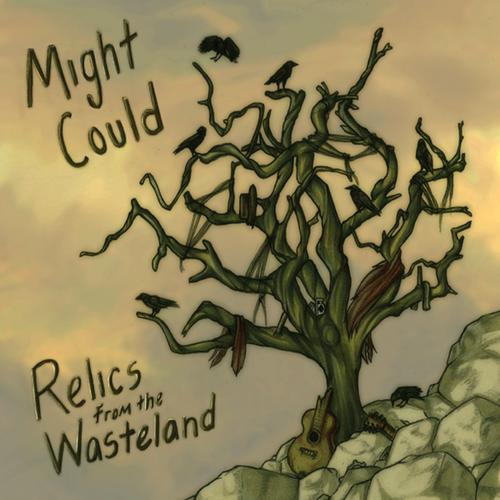
Relics from the Wasteland is highly recommended to lovers of acoustic, progressive-oriented instrumental music such as California Guitar Trio, Béla Fleck or Djam Karet’s Gayle Ellett’s side project Fernwood. This is the kind of music that shines in a live setting, highlighting ensemble playing as well as each musician’s individual style. The cover artwork by New England artist Elizabeth Moss, striking in its stark, almost primitive style, rounds out a classy package that will appeal to all fans of sophisticated music, especially those keen to explore the intriguing soundscapes created by acoustic string instruments..

Links:
https://www.facebook.com/pages/Might-Could/85937785745

https://mightcouldguitars.bandcamp.com/

https://myspace.com/mightcould/music/album/relics-from-the-wasteland-19221682

Read Full Post »

cover_1936132222011_r

TRACKLISTING:
1. Terra Sancta (12:25)
2. Move Over I’m Driving (7:58)
3. Pasta Fazeuhl (14:02)
4-6. Under Wuhu Son:
In the Bright Light (8:22)
Left for Dead (5:36)
Brace Against the Fall (6:15)
7. From the Fence (12:05)
8. Belgian Boogie Board (10:31)

LINEUP:
Bill Ayasse – violin, viola, mandolin, hand percussion, vocals
Frank Camiola – electric guitar, banjo, string bass
James Guarnieri – drums, glockenspiel, orchestral percussion
John Lieto – trombone and bass trombone
Nick Lieto – lead vocals, piano, keyboards, trumpet, flugelhorn
Andrew Sussman – electric bass, cello, acoustic guitar

With:
Sharon Ayasse – flute (3, 4, 5, 6, 8)
Dennis Lippe – electric guitar (1, 7)
Dee Harris – Indian slide guitar, tambora (1)
Nitim Mohan-  tabla (1)
Vessela Stoyanova – marimba (1, 4, 5, 6)
Michael Kollmer – marimba, xylophone (3, 8)
Jon Preddice – cello (3, 8)
Steven Sussman – clarinet, bass clarinet (4, 5, 6, 8)
Steve Katsikas – keyboards (4)
Mike Kauffman – alto and tenor saxophones (8)

Though my reviewing efforts usually focus on recent releases, every now and then it feels good do break my own rules. This review should have been published three years ago on a different website, but, unfortunately, circumstances dictated otherwise. Almost unexpectedly, the opportunity for writing this long-overdue piece came barely over a month ago, when I had the privilege of seeing Frogg Café perform at the NJ Proghouse Homecoming Weekend – a triumphant return to the stage after years of absence, and hopefully not a one-off.

Born towards the end of the 20th century in the New York metropolitan area as a Frank Zappa tribute band named Lumpy Gravy, Frogg Café have been through their share of lineup changes. However, their fifth studio album, Bateless Edge  – released in the early summer of 2010 – saw the return of their original lineup (including guitarist Frank Camiola),  augmented by trombonist John Lieto, who had appeared on their double live CD The Safenzee Diaries (2007). Although highly anticipated albums may often disappoint expectations, this is definitely not the case of Bateless Edge – an effort as monumental in scope as the odd-looking contraptions gracing its stylishly grungy cover in  muted shades of grey.

With the band’s six-piece configuration expanded by a host of guest musicians (including Steve Katsikas of 10T Records label mates Little Atlas) contributing a wide range of additional instruments, it is no wonder that Bateless Edge sounds big – symphonic in the true sense of the word. Indeed, in spite of the generic jazz-rock tag often attached to them, Frogg Café might be effectively described as the link between brass rock in the style of early Chicago, Blood, Sweat and Tears and Colosseum and progressive rock proper, with frequent forays into more experimental territory and a healthy balance between loose-textured jams and tighter, more disciplined compositions.

With a running time between 6 and over 20 minutes, the six tracks on Bateless Edge well represent their authors’ different personalities. Frank Camiola’s two ambitious contributions reflect his fascination with the more left-field fringes of the progressive spectrum (well displayed in his side project Cardboard Amanda’s eponymous 2006 album). The amusingly-titled “Pasta Fazeuhl” (inspired by Magma’s appearance at NEARfest 2003)  is a veritable rollercoaster ride in which angular Frippian guitar forms collide with brooding, cello-driven passages reminiscent of Univers Zéro and hauntingly military marches in true Magma style, with brief yet intriguing classical touches, freely blaring horns and wild bursts of guitar. Album closer “Belgian Boogie Board” was originally written in minimalistic form for the Cardboard Amanda album, but was then expanded and rearranged as a 28-page score involving almost as many instruments – a true tour-de-force that might easily be described as RIO meets brass rock, a joyful instance of controlled chaos.

Nick Lieto’s contributions, in stark contrast with Camiola’s, are definitely the most accessible on the album, emphasizing melody and a bright, upbeat mood. In the instrumental “Move Over I’m Driving”, Bill Ayasse’s sprightly violin and mandolin introduce folksy elements in its choppy, dance-like pace, to which the horns add a quasi-orchestral quality, and all the instruments take turns in a call-and-response pattern. On the other hand, “From the Fence”, for all its 12-minute running time, is the closest the album gets to a conventional song with a lovely, easy flow enhanced by Lieto’s expressive vocals and memorable, almost Beatlesian chorus; Ayasse’s stunning violin turn lends an appealing Old-World feel to the piece.

Andrew Sussman’s own two pieces bring those two strains together, with plenty of variety and a hint of an edge to temper the melodic quotient. “Terra Sancta”, dedicated to the children who lost parents in the 9/11 bombings, opens the album in authoritative yet catchy fashion (at odds with the stark, poignant lyrics), driven by buoyant horns and spiced by Eastern instruments such as the tabla and Indian slide guitar. A more somber, slightly dissonant section in the middle breaks this deceptively upbeat feel, with the guitar launching into a very expressive solo before the reprise of the main theme. The second of Sussman’s compositions, “Under Wuhu Son”,  is a three-part suite with another deeply emotional story behind it (this time a very personal one, as it refers to the musician and his family’s struggle to adopt a little Chinese girl), and acts as the album’s centerpiece also in a literal sense. The wistful, elegiac tone of “In the Bright Light”, intensified by lyrical violin, flute and marimba, segues into the surprisingly intense, metal-tinged riffing and forceful horns of the instrumental “Left for Dead”; then the intensity eases with the jaunty, melodic “Brace Against the Fall”, featuring a lovely guitar solo that shows Camiola’s more sensitive side.

Although my regular readers know that I am generally very critical of albums that I perceive to be excessively long, I will make an exception for Bateless Edge – the only album I have heard in the past few years whose almost 80-minute running time hardly has any negative impact on its quality. While there might be a bit of self-indulgence here and there, the overall level of the music is so high that those occasional lapses can easily be overlooked. With its tight musicianship and eclectic compositional approach, Bateless Edge celebrates the pleasure of music-making by offering the sonic equivalent of a lavish banquet. Though most dedicated prog fans will already have heard the album by now, those who have missed it would do well to give it a listen – or possibly more than one, as this is easily one of the best releases of the past few years.

Links:
http://www.froggcafe.com/

http://10trecords.com/

Read Full Post »

« Newer Posts - Older Posts »