Feeds:
Posts
Comments

Archive for the ‘Review’ Category

cover_large

TRACKLISTING:
1. There Is a War Going On (3:22)
2. Jalal (7:16)
3. No More Quarrel With the Devil (4:41)
4. Rising Upon Clouds (5:41)
5. Purple Haze (4:47)
6. The Invitation (4:03)
7. Mercy, Pity, Peace & Love (12:14)
8. There Is a War Going On (reprise) (1:18)
9. Tears Before Bedtime (2:44)
10. The Human Abstract (6:24)
11. No More Quarrel With the Devil (reprise) (1:14)
12. Mercury (4:19)
13. Goodbye My Fellow Soldier (9:10)

LINEUP:
Alex Maguire – keyboards, sequencer
Michel Delville – guitar, Roland GR09, samples
Tony Bianco – drums, sequencer

Three years after the release of their debut, Never Pet a Burning Dog (with Canterbury legend Richard Sinclair guesting on three tracks), multinational trio douBt are back with a new album whose title of Mercy, Pity, Peace & Love comes from “The Divine Image”, one of the poems in William Blake’s inspirational Songs of Innocence and Experience. The album, recorded in 2011, was released in the autumn of 2012. The three band members – British keyboardist Alex Maguire, seasoned American drummer Tony Bianco and volcanic Belgian guitarist Michel Delville  – come from different yet complementary musical experiences, and have also collaborated on previous occasions (Delville and Bianco in Machine Mass Trio, Delville and Maguire on the Brewed in Belgium live album, released by Moonjune in 2008). Together they form an unconventional power trio, where the bass guitar is replaced by cutting-edge technology:  indeed, on Mercy, Pity, Peace & Love the role of technology as support to the explosive energy of rock is promoted with great effectiveness.

Just like its predecessor, Never Pet a Burning Dog (where the improvisational, free-jazz component was married to an unmistakable Canterbury influence), Mercy. Pity, Peace & Love sums up the current direction of Moonjune Records mainman Leonardo Pavkovic’s view of progressive music-making. Drawing upon rock, jazz, fusion, ambient and avant-garde with a fearlessly genre-bending attitude, the three band members bring their respective musical backgrounds to the table and merge them in a multifaceted yet cohesive whole. Tony Bianco’s jazz-inflected drumming is capable of understated finesse as well as muscular, propulsive power, and lays down a reliably eclectic foundation for the interplay between Alex Maguire’s fuzzy, slightly hoarse-sounding organ, reminiscent of Mike Ratledge’s unique tone, and Michel Delville’s dazzling guitar exertions.

Including parts of a recorded speech in an album is not a new device in rock music, and may come across either as a powerful statement of intent or as a rather cheap gimmick Here, the speech in question – delivered by firebrand US Senator Bernie Sanders – is focused on “class warfare” and the gradual disappearance of the middle class. The vintage psychedelic feel of the swirling organ and guitar fits the mood of the song perfectly, and is briefly reprised later in the album, reinforcing the sense of cohesiveness of the whole work. In a similar vein, the mid-paced yet raw-sounding “Tears Before Bedtime” and  a blistering cover of Jimi Hendrix’s iconic “Purple Haze” showcase Delville’s fierce, distorted guitar while emphasizing the remarkable synergy between the three musicians. Propelled by Bianco’s flawlessly dynamic drumming patterns, the  funky “Jalal” features stunning guitar and piano in an alternation of atmospheric and fiery moments.

Mercy, Pity, Peace & Love’s two “epics” – 12-minute title-track, strategically placed in the middle of the album, and  9-minute closing track “Goodbye My Fellow Soldier”-  highlight the fundamental influence of Soft Machine on douBt’s sound. Indeed, the  wailing keyboards and sinuous drumming of the former – bolstered by sampled strings at the onset, then allowed free rein –   bring to mind the legendary Canterbury outfit on steroids, while the latter takes a solemn, even somber direction, as hinted by the title. The angular, riff-driven opening of “No More Quarrel With the Devil” leads into a scorching guitar-organ duel that blends King Crimson and Deep Purple, while “Rising Upon Clouds” offers a surging, appropriately chaotic sonic description of a gathering storm that evokes Pink Floyd’s “A Saucerful of Secrets”. On the other hand, the band’s jazz matrix emerges clearly in the discreet, piano-led “Mercury” and the nostalgic, ballad-like “The Invitation”, where Delville’s beautifully melodic guitar is underpinned by understated drums and keyboards.. Finally in “The Human Abstract”, the instruments seem almost to be playing at odds, yet everything holds together, with electronics adding a spacey touch.

Combining outstanding musicianship, a healthy dose of eclecticism and plenty of emotion (which is not always the case with this kind of music),  Mercy, Pity, Peace & Love is riveting from start to finish, and – though clocking in at a rather hefty 67 minutes – never feels as padded or overstretched as other albums with a comparable running time. Highly recommended to all lovers of instrumental music, both of the rock and the jazz persuasion, Mercy, Pity, Peace & Love will equally appeal to fans of Soft Machine and Jimi Hendrix, and will definitely earn a mention in many a “best of 2012” list.

Links:
http://www.myspace.com/doubt3

http://www.moonjune.com

Read Full Post »

201153latheorie

TRACKLISTING:
1. Supernova (8:28)
2. Rêves Prémonitoires (6:46)
3. D’Hêtre À Être (9:47)
4. Singes (8:31)
5. Le Bas Art de l’Épouvante (8:11)
6. Berceuse Moderne (7:06)
7. Renaissances (9:51)

LINEUP:
Mathieu Torres – guitar
Tadzio Gottberg – drums
Stéphanie Artaud – piano

With:
Maxime Jaslier – saxophone (2), bass guitar (6)

With a name taken from theoretical physics,  which in English translates as “string theory” (particularly suited to a musical venture), French band La Théorie des Cordes started out as a trio in 2010. Their debut album, Premières Vibrations, released in 2011 on Musea Records, was recorded with a fourth musician, Maxime Jaslier, guesting on two tracks. In the summer of 2012, the band’s core members – guitarist Mathieu Torres and pianist Stéphanie Artaud – were joined by drummer Ophélie Luminati (who replaced original member Tadzio Gottberg), reedist/percussionist Julien Langlois and bassist George Storey, so that the trio has now become a quintet. In the meantime, La Théorie des Cordes have started recording their second album, titled Singes Electriques, and have also been busy on the live front. Their schedule for 2013 includes a slot at the prestigious Crescendo festival in the month of August.

La Théorie des Cordes call themselves “a creative family”, and theirs is a multifaceted concept, involving the use of elaborate stage costumes, the realization of videoclips, and  a lavishly illustrated CD booklet in which a set of  high-sounding “lyrics” explains each of the completely instrumental tracks. Indeed, Premières Vibrations comes across as a very ambitious project. In spite of their obvious youth, the band members are extremely accomplished, and their music – an elegant, deeply melodic form of jazz-rock with an appealingly warm Latin tinge, and occasional forays into edgier territory – relies on a rather idiosyncratic configuration that rules out the bass guitar (here only present in one out of seven tracks), and hinges on the scintillating interplay of Stéphanie Artaud’s piano and Mathieu Torres’ guitar.

Clocking in at around 58 minutes, and featuring 7 tracks with an average running time of 8 minutes, Premières Vibrations is not excessively long for today’s standards, and does not outstay its welcome. On the other hand, while the music is overall very pleasing to the ear, with a smooth, natural flow, it sometimes gives the same impression as those stories whose author likes to use a lot of words to express a relatively straightforward concept. The tracks all share a similar structure, alternating slower and faster sections in which guitar and piano take turns into the spotlight, with drums providing a dynamic and often inventive rhythmic accompaniment  – sometimes resulting in a loose, almost rambling feel.

Opener “Supernova” aptly exemplifies the album’s general direction, introducing the instruments almost tentatively, and then gradually building up, with Mathieu Torres’ brilliant guitar neatly meshing with fluid piano. The Latin-flavoured “Rêves Premonitoires” is enhanced by the presence of Maxime Jaslier’s saxophone, which duets with the two main instruments adding depth of expression to the sound. At almost 10 minutes, the sedate, vaguely somber “D’Hêtre À Être”, is perhaps a tad overlong and somewhat monotonous, though picking up towards the end; while “Singes”, enhanced by electric piano and echoing effects that oddly reminded me of Pink Floyd, blends a haunting atmosphere with some harder-edged moments.

“Le Bas Art de l’Épouvante” marks a sharp change of mood, with its almost cinematic sweep and dramatic tempo shifts, pauses of respite followed by piercing guitar and cascading piano. As its title (“modern lullaby”) implies, the jazzy “Berceuse Moderne” is stately and soothing, with discreet drumming and bass adding some bottom end to the airy exertions of the guitar and piano. Finally, “Renaissance” pushes the heavier elements to the fore – especially those guitar riffs that had been lurking in the background in some of the previous tracks – evoking comparisons with King Crimson circa Thrak and The Power to Believe.

In spite of the misgivings previously expressed on some aspects of the composition, Premières Vibrations contains some fine music that is likely to please fans of classic jazz-rock, especially those who prize melody as well as technical skill. Thankfully the album is devoid of that deplorable tendency to show off that sometimes mars other releases in the same vein, though La Théorie des Cordes should keep a tighter rein on the compositional aspect. In any case, the album is a rewarding listen, and a promising debut from a group of excellent musicians.

Links:
http://www.latheoriedescordes.com

http://www.myspace.com/theoriedescordes

http://www.musearecords.com

Read Full Post »

TRACKLISTING:
1. Overture (8:09)
2. Daddy’s Gone (5:56)
3. Whosit, Whatsit and Which (6:33)
4. Make Way for the Big Show (8:42)
5. Tesseract (5:20)
6. Uriel (5:50)
7. Camazotz (6:22)
8. Ixchel (4:39)
9. The Battle for Charles Wallace (7:00)

LINEUP:
David Bobick – lead vocals
Jason Brower – drums, percussion, backing vocals
John Fontana – guitar, orchestral and incidental keyboards, keyboards (8)
Matt Masek – bass, cellos, backing vocals, 12-string guitar (2), nylon string guitar (8)
David Silver – keyboards

With:
Roo Brower – vocals (7, 8, 9)

Formed in 2006 in the New York/New Jersey area by guitarist/keyboardist John Fontana and vocalist David Bobick, Shadow Circus might have ended up as one of the many progressive rock projects limited to the four walls of a recording studio. Instead, right from day one, Fontana and Bobick’s vision involved a full-fledged band that would perform on stage as often as possible, emphasizing the theatrical component introduced in prog by Peter Gabriel-era Genesis (as well as some lesser-known outfits). Though not without hiccups (i.e. frequent lineup changes), the band have managed to hold to their initial aim, perfecting their stage craft whenever given the opportunity to play live.

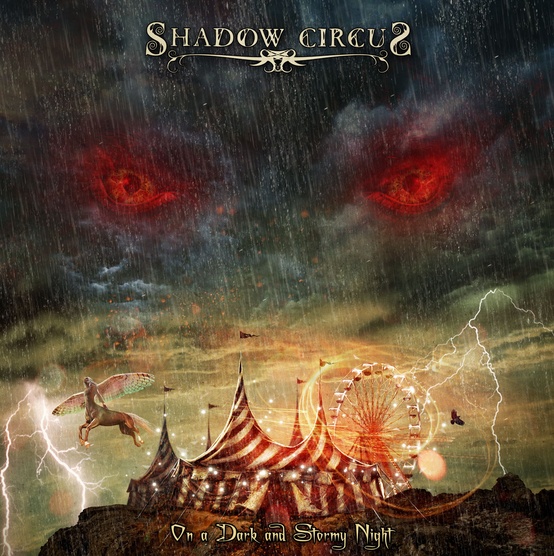
Although often tagged as “retro-prog”, Shadow Circus are quite unlike the many outfits that sound like a tired retread of Seventies – albeit with a modern veneer. While their debut album, Welcome to the Freakroom, took an eclectic yet accessible approach, Whispers and Screams upped the ante in terms of “prog quotient”, half of it dedicated to the seven-part suite “Project Blue”, which, in its 34 minutes, summed up the band’s musical vision. On a Dark and Stormy Night (released on Georgia-based label 10T Records) takes up where “Project Blue” left off, expanding and developing the format in a compact 58 minutes, each track flowing organically into the other without any noticeable breaks, in classic “rock opera” style. Indeed, this is the first time  that the band have taken the “concept album” route, basing their third recording effort on Madeleine L’Engle’s young adult fantasy novel A Wrinkle in Time – a fitting tribute on the book’s 50th anniversary. Literary inspiration is a fil rouge that runs through Shadow Circus’ six-year history– starting with  the band’s own name, which references Ray Bradbury’s Something Wicked This Way Comes; additionally, “Project Blue” and “Journey of Everyman” (the 12-minute epic included on their debut album) are based on Stephen King’s The Stand and The Talisman.

Though concept albums as a whole, in spite of their enduring popularity with prog fans, can easily result in an overblown mess, Shadow Circus have navigated the potential pitfalls with admirable skill. The finished product is solid and cohesive, striking a fine balance between engaging melodies, fiery instrumental cavalcades and atmospheric, meditative moments. While a good proportion of the album is instrumental, the contrast with the generally catchier vocal parts is handled with a light touch, without creating the dreaded “patchwork” effect that mars many overly ambitious efforts.

Though Shadow Circus’ previous releases have often elicited comparisons to the obligatory Yes, Genesis and ELP (as well as more radio-friendly bands such as Kansas or Styx), On a Dark and Stormy Night develops the strong hard rock vein openly displayed on Whispers and Screams by tracks such as “Captain Trips” and “The Seduction of Harold Lauder”. In fact, the album’s core lies in remarkable synergy between John Fontana’s guitar – capable of sharpness, yet consistently melodic – and David Silver’s commanding keyboards, reminiscent of the epic duels between Ritchie Blackmore and Jon Lord immortalized by Deep Purple’s In Rock and Machine Head.

On a Dark and Stormy Night is bookended by two longish tracks with a deeply cinematic sweep, both of them referencing some of the main themes of the album. Introduced by ominous sounds of rain and thunder, “Overture” builds up slowly with orchestral grandeur and soaring guitar until it erupts in a wild guitar-organ ride in Deep Purple/Uriah Heep style. The following trio of songs showcase David Bobick’s confident delivery, rooted in AOR and classic rock rather than traditional prog. “Daddy’s Gone” juxtaposes a catchy, almost radio-friendly vein with a wistful note, enhanced by elegant piano and an emotional guitar solo at the end; while the jaunty pace and infectious chorus of “Whatsit, Whosit and Which” lead the way to a powerful Hammond solo. The longest track at over 8 minutes, “Make Way for the Big  Show”- based on a theme composed by drummer Jason Brower – is a stately, melodic piece that combines an almost classical feel with suggestions of vintage Kansas and Supertramp, dominated by Silver’s splendidly flowing piano and Bobick’s soaring vocals.

The 5-minute rollercoaster ride of “Tesseract” is strategically placed in the middle of the album, signaling a shift  into decidedly more adventurous territory. Eerie electronic effects complement echoing, chiming guitar lines that recall Porcupine Tree’s iconic style, then the Deep Purple vibe resurfaces for a fiery guitar-organ duel, adding a hint of Iron Maiden along the way. “Uriel” provides a momentary respite with the lyrical cello and piano at the beginning, then swiftly turns into an upbeat, dance-like tune enlivened by a great vocal performance by Bobick; while the martial, menacing pace of the über-eclectic “Camazotz” morphs first  into a soulful, bluesy chorus, then into a space-rock workout that pushes Matt Masek’s powerful, dynamic bass into the spotlight together with the guitar and keyboards. The lovely “Ixchel” – a soothing moment with a haunting Celtic tinge – wordlessly conveys the healing atmosphere of the titular planet through gentle acoustic guitar, sparse piano and Roo Brower’s ethereal vocalizing. In sharp contrast, closing track “The Battle for Charles Wallace” surges along like a triumphant sci-fi soundtrack, spotlighting the intense keyboard-guitar interplay, while Brower’s imperious drums set the pace; then vocals return, reprising the “Big Show” theme, and an expressive guitar solo wraps up the album.

By an interesting coincidence, On a Dark and Stormy Night’s official release is scheduled just a few days before another adaptation of a well-known young adult novel – J.R.R. Tolkien’s The Hobbit. Though Shadow Circus’ third album will probably not meet with same worldwide success as Peter Jackson’s film, it will probably feature in quite a few “best of 2012” retrospectives. Impressively well-structured and cohesive from both a musical and lyrical point of view, the album shows a band that have finally attained full maturity. Although On a Dark and Stormy Night is quite unlikely to please everyone in the increasingly fragmented prog community – and those of an elitist bent would be well advised to handle with care – those who approve of paying homage to the golden age of prog without sounding like a carbon copy of those modes will find a lot to appreciate. This is also a good “gateway” album for fans of classic and hard rock, and obviously recommended to those who like musical adaptations of literary material.

Links:
http://www.shadowcircusmusic.com/

http://10trecords.com/

http://www.madeleinelengle.com/

Read Full Post »

TRACKLISTING:
1. First Difference (3:18)
2. Edge of the Earth (3:40)
3. Ode to the Summer (4:10)
4. Dorothy (4:25)
5. Truth Seeker (3:06)
6. Night Shaped Light (3:38)
7. Promise Me (2:40)
8. Black Wave (2:40)
9. Moving World (4:08)
10. Paradise Lost (8:22)

LINEUP:
Liam Magill – lead vocals, guitar, flute, percussion, effects
Raven Bush – violin, mandolin, piano, percussion, vocals, effects
Fred Rother – drums
Joel Magill – bass, vocals, percussion, effects

For all my familiarity with the current progressive rock scene, English band Syd Arthur took me completely by surprise, as I had never heard their name prior to receiving On And On, their debut album, as a gift from a friend. Though very few albums make a deep impression on me on first listen, On And On was one of those rare cases, and one of the strongest releases I have heard in a year that has not been at all stingy with interesting music.

In the past couple of years, Syd Arthur have received extensive coverage on magazines and websites dedicated to non-mainstream music, and on February 15, 2010 were featured as New Band of the Day by British newspaper The Guardian, notoriously harsh towards old-school prog. While most of those articles mentioned the “P” word, the numerous webzines and blog sites specializing in the genre seem to  have been largely unaware of them – which is not the case with other bands associated with the psychedelic rock revival, such as Dungen or Black Mountain.

Syd Arthur (whose name was inspired by Herman Hesse’s novel Siddharta, one of the iconic texts of the hippie era, and also the inspiration for Yes’ Close to the Edge) are a quartet hailing from the historic English town of Canterbury – a place synonymous with one of the most distinctive strains of the multifaceted progressive rock  universe. Indeed, it would not be far-fetched to call them the direct heirs of the scene that developed in the late Sixties, producing highly influential bands such as Soft Machine, Caravan and Gong. In many ways, Syd Arthur are deeply rooted in that scene, pursuing the path laid out by Caravan and Soft Machine in their early albums before both bands took a more “progressive” direction. In addition, the “Syd” part of the band’s name evokes the spirit of  psychedelic rock icon Syd Barrett, who was also an important influence on the original Canterbury bands.

While Syd Arthur’s music may not be the most ground-breaking on the market, it undoubtedly modernizes a sound that is all too often prone to showing its age. The four band members, in spite of their obvious youth, have been together since 2006, and have already accumulated enough experience to set up their own recording studio and independent label (named Dawn Chorus Recording Company). Their recording debut, the EP Moving World, was released in 2010, followed by the single “Ode to the Summer” in the following year, and finally by On And On in the summer of 2012. Like most progressive bands that shun the “prog” tag, they also have an impressive record of live performances in the UK and in other European countries. Interestingly, violinist Raven Bush is the son of writer and photographer John Carder Bush, Kate Bush’s elder brother, and – though Syd Arthur’s music as a whole might not immediately recall Kate’s – some similarities can be noticed, especially in terms of approach to the traditional song format.

With their distinctive configuration – which gives violin a starring role in conjunction with the guitar, while keyboards are used very sparingly – Syd Arthur play music from a bygone era with a contemporary flair, blending psychedelic folk with funky jazz-rock suggestions and some heady spacey nuances, both acoustic and electric elements well in evidence. The eclectic inspiration – so often resulting in a mishmash of unfinished ideas – is instead handled skillfully, and the songs have an easy, natural flow, their delightful musical texture enhanced by Liam Magill’s unique vocal delivery – a 21st century take on Robert Wyatt, a tenor imbued with a gentle wistfulness and innate sense of melody, yet never whiny or overdramatic.

Clocking in at a mere 38 minutes, On And On is a short album, and  – with the sole exception of closer “Paradise Lost”, its songs are also short (3 minutes on average). However, the traditional verse-chorus-verse structure is often cleverly disguised or understated, and the appeal of the melodies is never made too obvious. Opener “First Difference” blends the airy lyricism of the violin and acoustic guitar with the slight edge injected by the electric guitar, and a hint of reggae in the song’s easy mid-pace. Liam Magill’s voice follows the musical line, never dominating the instruments though not taking a back seat either. The following two songs are variations on the same theme, but with enough personality of their own to stand individually – the changes in pacing within each piece handled with subtlety, allowing the music to flow naturally without ever sounding strained or contrived.

“Dorothy” (recently released as a single), on the other hand, is a slow, nostalgic number – almost a jazzy torch song, while the uptempo “Truth Seeker” introduces a vein of psychedelic electricity, which in “Night Shaped Light” coexists with a samba-tinged saunter. “Moving World” brings back echoes of early Soft Machine, though with a folksier flavour softening the psychedelic edge. The 8 minutes of “Paradise Lost” come almost as a surprise, as the track diverges noticeably from the rest of the album – not only in running time, but also in its looser structure and in the different role of the vocals – mostly present in the form of chanting, or else treated as to be almost unrecognizable. The heavy, distorted guitar-violin interplay in the middle of the track hints at stoner rock, or even Jefferson Airplane at their most experimental. All of this, as well as the recourse to atmospheric sound effects, hints at possible future developments in the band’s style.

Unlike other bands that tap into the rich vein of the psychedelic rock tradition, Syd Arthur do not indulge in lengthy, hypnotic riff-feasts, and introduce elements of “prog” complexity with admirable lightness of hand – much as Caravan or Soft Machine did in their early stages, or Hatfield and the North when blending catchy tunes with intricate jazz-rock patterns. Highly recommended to to fans of the Canterbury scene and early Pink Floyd, as well as to anyone who does not equate progressive rock with 30-minute epics, On and On is a surprisingly accomplished production, and a genuinely delightful listen.

Links:
http://sydarthur.co.uk/

http://www.myspace.com/sydarthur

http://www.dawnchorusrecordco.com/

http://www.guardian.co.uk/music/2010/feb/15/new-band-syd-arthur

Read Full Post »

TRACKLISTING:
1. Horse Heart (6:06)
2. Taurokathapsia (4:52)
3. Cream Sky (6:23)
4. Spiraling (12:48)
5. Roots Growth (5:47)
6. See You in Me (7:50)
7. Ritual of Apollo & Dionysus (4:00)
8. Northern Lights (5:49)

LINEUP:
Stelios Romaliadis – flute

With:
Lisa Isaksson – vocals, balalaika, harp, flute (1)
David Svedmyr – mellotron, zither, bells (1)
Jennie Ståbis –  vocals (1)
Fotini Kallianou – cello (1, 2, 5, 7)
Katerina Papachristou – double bass (1, 2, 7)
Fotis Siotas – viola, violin (2, 5)
Lefteris Moumtzis – vocals, acoustic guitar (3)
Alex Bolpasis – acoustic guitar (3)
Pavlos Michaelides – violin (3)
Andria Degens – vocals (4, 6)
Giorgos Varoutas – electric guitar (4)
David Jackson – saxophones (5)
Elsa Kundig – cello (5)
Nikos Fokas – Fender Rhodes piano (5)
Nikos Papanagiotou – drums (5)
Greg Haines – cello (6)
Georgia Smerou – bassoon (7)
Georgia Konstadopoulou  – cor anglais, oboe (7)

The distinctively-named Lüüp (an idiosyncratic spelling of the word “loop”) is a project by flutist and composer Stelios Romaliadis, a young but very gifted artist based in Athens (Greece). Lüüp’s recording debut, Distress Signal Code (released in October 2008 on Musea Records) saw the participation of legendary ex-VDGG saxophonist David Jackson. The project’s second release, Meadow Rituals, was released in May 2011 on independent label Experimedia, but only recently came to my attention – thanks to the networking opportunities offered by the social media scene.

Unlike Distress Signal Code – which had been recorded with the input of a restricted number of musicians – Meadow Rituals involves a large cast of artists from different European countries who supply a varied, largely acoustic instrumentation ranging from strings to guitars. Some of the guest musicians, such as David Jackson, vocalist Lisa Isaksson (of Swedish outfit Lisa o Piu) and pianist Nikos Fokas, also performed on Lüüp’s debut. The album was recorded in Greece, Germany, Sweden and the UK – the home countries of the musicians involved.

While certainly progressive, both in spirit and in actual execution, Meadow Rituals is not a rock album, and traditional rock instruments only make occasional appearances. Vocals – whenever present – seamlessly blend with the other instruments so as to enhance the delicate, almost brittle nature of each piece. Though Romaliadis’s flute, as can be expected, is at the core of Lüüp’s music, each instrument contributes to the development of the compositions in its own individual way.

In opening track “Horse Heart”, vocals take centre stage: Lisa Isaksson’s pure, ethereal voice – supported by backing vocalist Jennie Ståbis and a heady mélange of mellotron, zither, balalaika and harp – tempers the dark, melancholy feel of the piece, and the deep-toned twang of Katerina Papachristou’s double bass evokes memories of Pentangle – though in a more experimental vein. Intriguing world music suggestions emerge in the riveting “Cream Sky”, where flute, acoustic guitar and violin find a perfect foil in Lefteris Moumtzis’ soothing baritone – reminiscent of Dead Can Dance’s Brendan Perry. The album’s centerpiece, however, lies in the 12-minute “Spiraling”, masterfully built around the subdued yet deeply haunting voice of Andria Degens (of British act Pantaleimon), with its timeless Celtic tinge complemented by sparse guitar, violin and flute, which  mesh with the vocal line to create a magical atmosphere. Degens’ voice returns in the nearly 8-minute “See You in Me”, accompanied by Romaliadis’ flute and British composer Greg Haines’ cello in an almost avant-garde workout of austere beauty.

The remaining four tracks are all instrumental. In the solemn “Taurokathapsia” (a Greek word for the ancient Cretan ritual of bull-leaping, depicted in Minoan frescoes), the interplay of deep, resonating cello and double bass and delicate describes the scene in sonic terms, with violin injecting a stately, classical feel. Another strongly descriptive number, “Ritual of Apollo & Dionysus” conveys the dialogue between the two gods through the alternation of flute and oboe on one hand, and cor anglais and bassoon on the other; while in closer “Northern Lights” Romaliadis’ flute evokes the titular phenomenon with trills and leaps, followed by pauses of quiet. On the other hand, “Roots Growth” is the closest the album gets to a more conventional rock sound, and the only track that features drums, as well as electric piano – though there is nothing conventional about it. A folk-tinged number, with a lilting, dance-like movement, it revolves around the contrast between Romaliadis’ pastoral flute and David Jackson’s more assertive saxophone.

Clocking in at almost 54 minutes, Meadow Rituals is a well-balanced, carefully structured effort that, as hinted in the previous paragraphs, is focused on atmosphere rather than energy. While those who need the adrenalin rush provided by guitar solos or banks of keyboards will probably find it disappointing or just plain uninspiring, fans of world music, New Age, ambient and the whole ECM catalogue – as well as classical and chamber music, especially of the 20th-century variety (Debussy comes to mind) – will find a lot to appreciate. Highly recommended to those who have been intrigued by some of the music that I have reviewed in recent times (such as Janel & Anthony, Ergo and Knitting By Twilight/John Orsi), Meadow Rituals is beautiful aural and visual experience, whose stunning photography and haunting musical content will engage your mind and soothe your soul.

Links:
http://label.experimedia.net/015/

https://www.facebook.com/pages/L%C3%BC%C3%BCp/193352967368528

Read Full Post »

Ephemeral Sun
Theme from Top Gun
Untitled #1
Prism
Harvest Aorta Part I
Untitled #2
Winter Has No Mercy
Harvest Aorta Part II

Shadow Circus
Overture
Daddy’s Gone
Whosit, Whatsit & Witch
Make Way for the Big Show
Tesseract
Uriel
Camazotz
Shadow Circus
Captain Trips
The Long Road
Big Fire
The Seduction of Harold Lauder

As I announced a couple of months ago, the DC Society of Art Rock (DC-SOAR) has organized two shows at the Orion Studios in Baltimore to raise funds for its activity, which hinges on the promotion of progressive music in one of the most densely populated urban areas in the US. The first of the two events, scheduled for November 3, 2012, was to have been a triple bill, featuring New Jersey bands Shadow Circus and 3RDegree, as well as Northern Virginia’s finest, Ephemeral Sun. Unfortunately, 3RDegree had to pull out due to conflicts between their professional and family lives and the inevitable need for rehearsals, but the show went ahead as a double bill.

While the presence of 3RDegree would have made the show an even bigger draw, the two bands treated the audience to excellent performances, which highlighted both the differences and the similarities in their approach. In spite of its fundraising status, the gig was sparsely attended (which is the rule rather than the exception, unless the bill features a foreign band or one of the few domestic acts with a relatively strong following), but the 30-odd people who turned out more than made up with their obvious enthusiasm. Although some technical problems occurred during the soundcheck, the actual performances were characterized by outstanding sound quality (thanks to Mike Potter’s tireless work), which brought out each of the band’s strengths and detailed every instrument’s contribution.

As I pointed out in my review of ProgDay 2012, Ephemeral Sun’s music is more suited to the dark than the light, and the dimly lit setting of the Orion Studios enhanced the rivetingly cinematic quality of their music. After the turmoil of the past years, the band have now found a stability that is clearly reflected in the synergy between the four members, whose individual input is equally essential in the fabric of he sound. The pulsating power of Charles Gore and Jeff Malone’s rhythm section unfolds a rock-solid, yet subtly shifting foundation for Brian O’Neill’s sharp yet elegant guitar exertions and John Battema’s dramatic layers of keyboards. Ephemeral Sun treated the audience to a mix of older material (such as the metal-edged “Winter Has No Mercy” from their debut album Broken Door) and more recent offerings, such as the majestic “Harvest Aorta” suite (split in two halves) from their eponymous second album, and a couple of new compositions still without an official title – as well as a rousing version of Harold Faltermeyer’s iconic theme from Top Gun at the very opening of their set.

The quartet’s collective performance was flawless as usual, their music deploying all of its powerful emotional punch in the small, intimate premises. One of the most striking elements of Saturday night’s show was the band members’ impressive handling of the frequent tempo shifts in their generally lengthy compositions, keeping an eye on internal coherence so that the music flowed effortlessly without ever coming across as patchy. And then, the passage in which Battema let rip on the organ in true Emerson fashion was alone worth the price of admission. All in all, Ephemeral Sun seem to be going from strength to strength, and their new material sounds extremely promising – even if it will be some time before  their new album finally sees the light of day.

With a name inspired by the traveling carnival in Ray Bradbury’s iconic novel Something Wicked This Way Comes, Shadow Circus’ theatrical streak comes as no surprise, and makes good use of frontman David Bobick’s degree in musical theatre. The band’s founders, Bobick and guitarist John Fontana, are also fans of fantasy, science fiction and horror, and this interest is reflected in the subject matter of the majority of their songs. Saturday night’s show offered Shadow Circus the opportunity to showcase some of the material (no less than 7 songs) from their forthcoming third album, On a Dark and Stormy Night, which will be released on 10T Records in early December. Shadow Circus had played at the Orion almost exactly 2 years ago, opening for Italian band  The Watch, though with a different line-up. The band’s new configuration – comprising, besides mainstays Fontana and Bobick, original bassist Matt Masek, keyboardist David Silver and drummer Jason Brower, augmented by backing vocalist Paroo Streich – blazed through new and older material with assurance and flair, displaying chops and heart in equal measure.

Although all of the band members cite progressive rock as their main source of  inspiration, Shadow Circus’s music is also deeply rooted in classic and hard rock, and the influence of the likes of Deep Purple, Uriah Heep and Led Zeppelin is unmistakable. As is the case with Ephemeral Sun, keyboards play a very prominent in Shadow Circus’ sound. With his impassive mien and slight frame, David Silver proved an essential foil for Fontana’s guitar, his love of Keith Emerson evident throughout the set, especially in the fiery Hammond runs that enhanced stunning instrumentals such as “Overture” and “Tesseract”; indeed, the latter may easily be the best thing that the band has ever recorded. he dramatic intensity of the instrumentals was balanced by the catchy quality of the songs featuring David Bobick’s expressive vocal delivery and flamboyant stage presence, with Paroo Streich’s backing vocals providing a pleasing contrast. The rhythm section of Matt Masek and Jason Brower anchored the sound with power and style, the two musicians complementing each other perfectly. Always attentive to the visual aspect of their performance, the band members were all decked in black with a touch of red (a special mention for Bobick’s beard and the large red flower sported by Streich, who also provided a bit of eye candy for the predominantly male audience), and also employed a few stage props to enhance the impact of their music with a quirky theatrical touch thankfully devoid of cheesiness.

By way of a conclusion, I have to admit that I found the not exactly stellar turnout quite depressing, especially on a weekend night. Even if the impact of Hurricane Sandy on the north-eastern corridor cannot be discounted, neither can the well-known apathy of many of those who think supporting progressive rock means getting embroiled in pointless discussions on some Internet forum. While modern technology offers almost any band or solo artist the possibility to record and release their own material with relatively little expense, it has also emphasized the lack of quality control of many such projects. Therefore, live performance has increasing become the benchmark by which to judge a band’s real worth. However, the diminishing opportunities – compounded by the cliquish mentality of a large part of the already fragmented prog audience –will probably to lead to the demise of many a fine outfit, discouraged and frustrated by the lack of support. It is immensely sad to see such gifted musicians grateful for the opportunity to play before a handful of people.

This situation has also impacted my own enthusiasm for writing about music, There is only so much that a reviewer/critic can do to support the scene, when it is the fans themselves who seem to be hell-bent on destroying the motivation of artists who already face considerable struggles in getting their music across in an oversaturated market while dealing with the demands of real life. As much as I like to listen to music at home, nothing beats the experience of a live show, and it will be a sad day when only big (i.e. commercially successful) names will be able to perform on stage.

Links:
http://www.ephemeralsun.com

http://www.shadowcircusmusic.com

http://www.dc-soar.org

Read Full Post »

TRACKLISTING:
1. Houndstooth Pt. 1 (4:04)
2. Houndstooth Pt. 2 (5:29)
3. Expo ’67 (5:04)
4. Flossing With Buddha (4:35)
5. Message From Uncle Stan: Grey Shirt (8:29)
6. Message From Uncle Stan: Green House (3:49)
7. Saffron Myst (4:02)
8. Aqua Love Ice Cream Delivery Service (7:46)

LINEUP:
Graham Epp – electric guitars, MicroMoog, Farfisa Organ, Farf Muff, ARP String Ensemble, Korg MS2000, electric and acoustic pianos
Jesse Warkentin – electric guitars, MicroMoog, Farfisa Organ, Farf Muff, ARP String Ensemble, Korg MS2000, electric and acoustic pianos
Scott Ellenberger –  electric and acoustic bass, Briscoe organ, percussion
Andy Rudolph – drums, percussion, electronics

With:
Eric Lussier – harpsichord (8)

At the end of February 2012, Mahogany Frog played two dates in the Brazilian metropolis of São Paulo – one of the largest cities in the world, and the birthplace of Formula One driver Ayrton Senna, who died in a tragic accident in 1994. The sixth album of the Canadian quartet is dedicated to this legendary figure, who enjoys the status of national hero in his native country.

Based in Winnipeg (Manitoba), and named after an amphibian from south-east Asia, Mahogany Frog have been together since the late Nineties, and released six albums with different lineups – founders Jesse Warkentin and Graham Epp being the only constant members of the band. Senna, released in September 2012 by New York label Moonjune Records, comes four years after DO5, their first album for Moonjune. Besides their recording activity, Mahogany Frog are quite busy on the live front, gigging regularly in Canada and occasionally elsewhere: in 2010 they were invited to perform at the 16th edition of ProgDay, and wowed the crowd with their unique brand of wildly eclectic instrumental progressive rock.

Before Senna’s release, Mahogany Frog had undergone another lineup change, as drummer Jean-Paul Perron (who had been with the band since its inception) was replaced with Andy Rudolph, an electronic performance artist whose expertise with drum machines as well as a traditional kit adds a keen contemporary edge to the jazz-tinged, psychedelic wall of sound produced by the band. With all members possessing multi-instrumentalist skills, and  switching effortlessly from keyboards (both analog and digital) to guitars and all sorts of cutting-edge electronic gadgets, Mahogany Frog’s music is at the same time cheerfully chaotic and sharply energizing –  a collection of soundscapes that throw together a multitude of influences with wild abandon and unabashed eclecticism, but also with a method to its madness. Not surprisingly, the band have managed to land concert opportunities that most prog bands can only dream of – and that in spite of the often counterproductive “progressive rock” tag. While paying homage to Seventies trailblazers such as Soft Machine and early Pink Floyd, Mahogany Frog also embrace modern trends such as post-rock and even techno and trip-hop, seasoning the heady brew of their sound with the ambient-like flavour of field recordings of birds and whales.

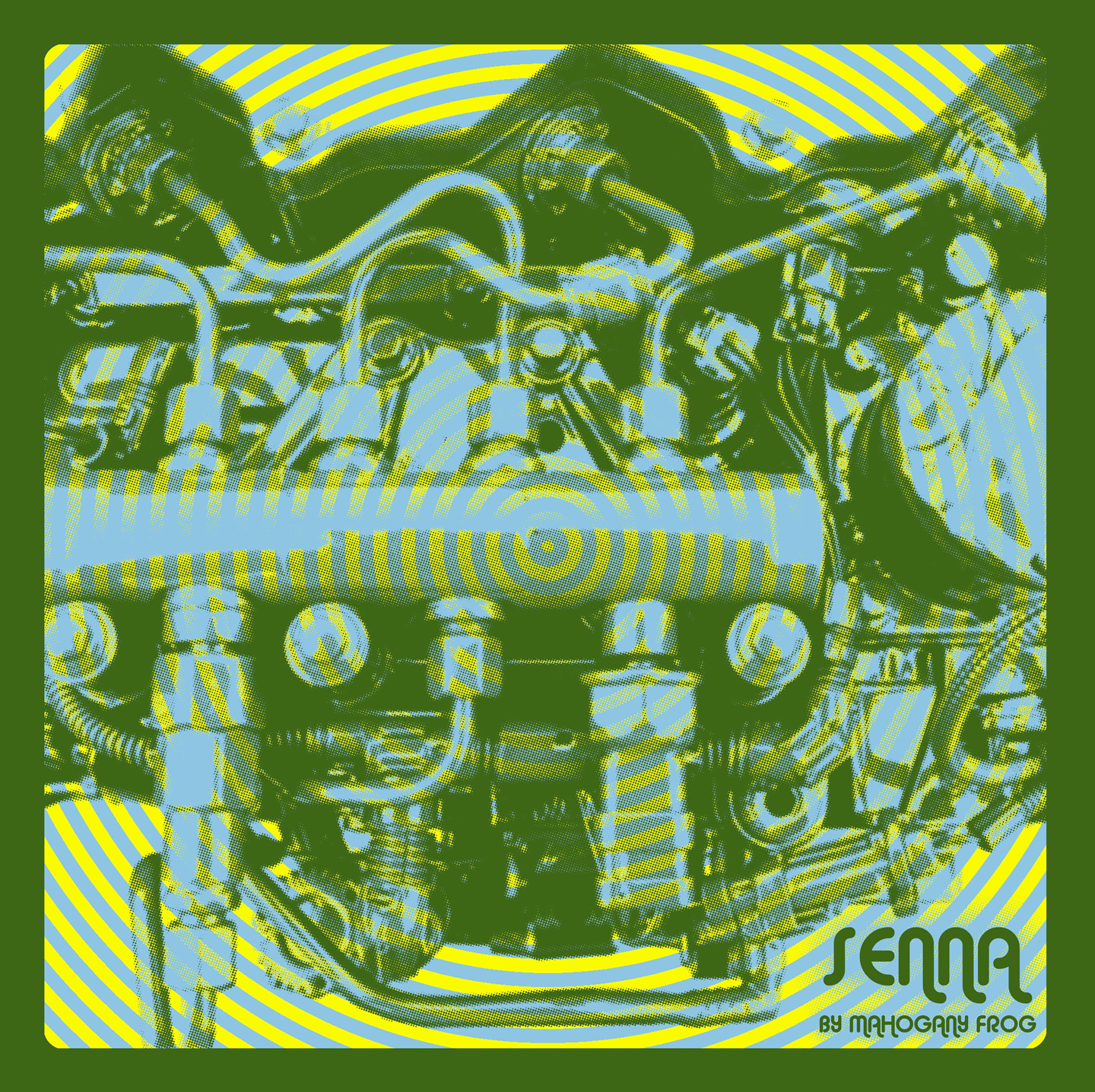
The juxtaposition of organic warmth and state-of-the-art technology is revealed right from  the intro of  “Houndstooth Pt 1”, suggesting the sound of an engine being started (in keeping with the album’s title and cover artwork). The solemn drone of the organ evokes Pink Floyd circa A Saucerful of Secrets, and the mix of piercing slide guitar, rugged riffing and wacky electronic effects rivets the attention. “Houndstooth Pt 2” pushes distorted, almost Hendrixian guitar chords to the fore with a strong space-rock matrix, mingled with an atmospheric surge propelled by Andy Rudolph’s authoritative drumming. The compact, dense riffing and whistling synth in “Expo ‘67” are tempered by organ sweeps redolent of The Doors and a clear, sharp guitar solo; while bucolic birdsong introduces the lively, dance-like pace of “Flossing With Buddha”, in which layers of keyboards are bolstered by Andy Rudolph’s powerful drums.

The second half of the album opens with the sparse texture of “Message From Uncle Stan: Grey Shirt” (the longest track on the album), resting on strident, almost industrial sound effects, but soon evolving into an exhilarating guitar duel, backed by assertive organ and clearly inspired by Ennio Morricone’s iconic style. The shorter “Message From Uncle Stan: Green House” starts out slowly with a faintly ominous, spacey drone, then the organ signals a sudden, crescendo-like change of pace. Then, after the brief respite of the airy, electronic mood piece of “Saffron Myst”, chaos erupts with “Aqua Love Ice Cream Delivery Service”, where buzzing feedback and metal-tinged riffing coexist with a field recording of whales, as well as an unexpected harpsichord finale with an elegant, almost classical lilt.

Clocking in at a very restrained 43 minutes, with only one of the 8 tracks exceeding the 8-minute mark, Senna makes the most of its highly concentrated musical content, striking a nearly perfect balance between inventiveness and sheer energy – a rare achievement even for an all-instrumental album. It also shows a band at the top of their game, whose expressive power seems to have been honed by their four-year break between albums. Indeed, Mahogany Frog deliver the kind of music that has the potential to appeal to a large cross-section of the non-mainstream audience – not just dyed-in-the-wool prog fans, but also those who actually believe in the original meaning of that pesky “progressive” word. A highly recommended album, Senna is definitely one of the most consistently strong releases of the year.

Links:
http://www.mahoganyfrog.com

http://www.myspace.com/mahoganyfrog

http://www.moonjune.com

Read Full Post »

TRACKLISTING:
1. Paradox (7:11)
2. Stravinsky (with Bach intro) (11:32)
3. Future (7:17)
4. Don Juan (6:13)
5. Bliker 3 (10:15)
6. Etude Indienne (12:51)
7. Miles Away (4:15)
8. Transparansi (13:16)

LINEUP:
Adi Darmawan – bass guitar, piano (5)
Agam Hamzah – guitar
Gusti Hendi – drums, percussion

In Bahasa Indonesia, the language spoken in the vast south-east Asian archipelago, orgil means “crazy people”, and its backward spelling. Ligro, has been chosen as a handle by a fiery power trio led by guitarist extraordinaire Agam Hamzah – together with Tohpati Ario Hutomo, one of the hottest new names on the contemporary guitar scene. Dictionary 2 is the barnstorming international debut by Hamzah and his equally talented cohorts, bassist Adi Darmawan and drummer Gusti Hendi, released on NYC label Moonjune Records – whose mainman, Leonardo Pavkovic, keeps unearthing new gems in far-flung places like Indonesia, obscure to most Westerners in spite of their rich musical tradition. Formed in 2004, Ligro have already released an album (titled Dictionary 1), and participated to various musical events in their home country and abroad.

As pointed out on the band’s website, the three members have different cultural backgrounds –which might well surprise those Western listeners who are unaware of Indonesia’s history and cultural diversity. In particular, drummer Gusti Hendi originates from Kalimantan (the Indonesian part of the island of Borneo), and a Gondang drum – a percussion instrument of the Batak people of Sumatra,  which he plays with a “Kalimantan beat” – seamlessly integrates with the rest of his Western-style kit. Ligro’s sound, on the other hand, is for the most part inspired by jazz-rock/fusion greats such as Jeff Beck, Allan Holdsworth, Mahavishnu Orchestra and their ilk – in this, a perfect complement to another excellent 2012 album coming from Indonesia, Tohpati Bertiga’s Riot.

As can be expected, the eight tracks on Dictionary 2 – ranging from the 4 minutes of the Miles Davis tribute of “Miles Away” to the 13 minutes of closer “Transparansi” – hinge on Hamzah’s scintillating guitar, which manages to run the gamut from understated, almost wistful melody to fiery, hard-edged runs and breathtaking bravura pieces. While Adi Damarwan’s bass provides a discreet but ever-present bottom end, its flexible, well-rounded sound emerging in selected occasions (such as the stunningly intricate interplay of “Etude Indienne”), Gusti Hendi proves to be Hamzah’s true sparring partner on the album. This becomes evident right from the opening bars of “Paradox”, where Hendi’s authoritative, cymbal-heavy style sets the pace for a barrage of stop-start riffs, repeated in different pitches until pace slows down, allowing Hamzah to deploy his more sensitive, melodic side. “Stravinsky”, one of the album’s undisputed highlights, is based on the titular composer’s “An Easy Piece Using Five Notes”, and introduced by a Bach-inspired intro sketched by guitar and bass. The low-key mood of the intro, however, soon gains in intensity, with drums and guitar sparring fiercely until the almost slo-mo ending. A respite is offered by the measured, melody-infused “Future”, and the bluesy yet subdued “Don Juan”, with its nod to vintage Jeff Beck.

While the lovely, classical-styled piano intro (courtesy of Adi Dimarwan) of the 10-minute “Bliker 3” might point to another low-key affair, this is only partly true, because the loose, almost improvisational texture of the track hides a keen sense of tension, complete with eerie spacey effects – and even veering into heavier territory in the track’s exhilarating climax. Hamzah and Dimarwan duel at often breakneck speed in the virtuoso piece “Etude Indienne”, which employs Indian scales traditionally played on the sitar; Hendi’s drumming, on the other hand, keeps a low profile until the end, when it resumes its assertive tone. As the tongue-in-cheek title suggests,”Miles Away” is the jazziest (and the shortest) number on the album, its choppy, jaunty pace somewhat muted in contrast with the earlier fireworks. The jam-like “Transparansi” closes the album with a bang, almost drawing together all the motifs previously introduced, and allowing Hendi to indulge in some traditional percussion work that adds a note of warmth to the slightly chaotic texture of the composition.

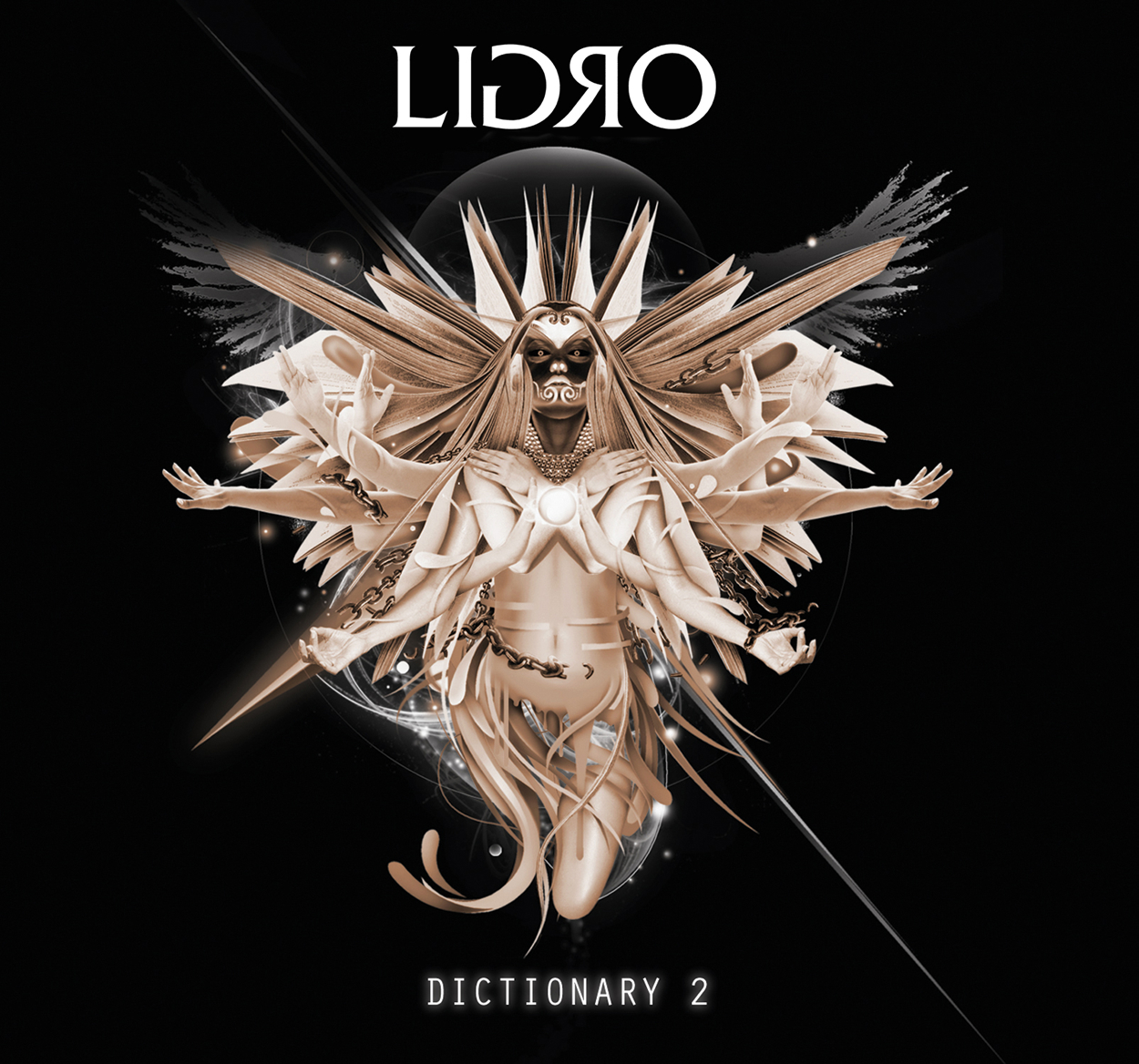
Clocking in at about 73 minutes, Dictionary 2 is undoubtedly an ambitious endeavour, though – quite unlike the majority of albums with such a hefty running time – it hardly ever outstays its welcome. The sheer amount of energy and enthusiasm that permeate almost every minute of the album make listening a much easier and more rewarding task than it would ordinarily be for an album half of whose tracks exceed the 10-minute mark. While the East-meets-West component is limited, the tantalizing input of ethnic elements increases the interest quotient of the ebullient, jazz-rock matrix of the sound. Last but not least, the striking cover artwork connects the album to the rich cultural tradition of Ligro’s homeland.  Dictionary 2 is highly recommended to guitar freaks and jazz-rock fans – and, in general, to anyone keen on discovering new frontiers in progressive music-making. Agam Hamzah, Adi Damarwan and Gusti Hendi are indeed “crazy people”, but in the best possible way.

Links:
http://www.ligrotrio.com

http://www.moonjune.com

Read Full Post »

TRACKLISTING:
1. Firebears (17:52)
2. The Eternal German Infant (8:11)
3. Mister Freeze (6:49)
4. I Shall Consume Everything (9:26)

LINEUP:
Dan McGowan –  lead vocals (2,3,4),  backing vocals, acoustic  and electric guitar
Patrick McGowan – electric guitar, lead vocals (1), backing vocals, bass (2)
Becky Osenenko – keyboards
Charles Batdorf – bass (1,3,4), guitar (2)
Joe Rizzolo – drums

Additional instruments by R McGeddon

New Jersey band The Tea Club seem to follow a regular schedule in the release of their albums: indeed, their third effort, bearing the snappy title of Quickly, Quickly, Quickly, comes two years after Rabbit , which in turn had come two years after their debut, General Winter’s Secret Museum. In the span of those four years, the band went from a trio of brothers Pat and Dan McGowan and drummer Kyle Minnick  to a four-piece with the addition of keyboardist Becky Osenenko, then, in the months after Rabbit’s release, added two more members (bassist Charles Batdorf and guitarist Jim Berger) and replaced Minnick with Joe Rizzolo. Quickly, Quickly, Quickly was recorded by the band as a quintet, with the mysteriously-named R. McGeddon providing additional instruments. At the time of writing, the band have reverted to a trio format, with only Rizzolo left of all those “new entries”.

In spite of the permanent state of flux of their lineup, The Tea Club have been actively pursuing their own artistic path, which has marked them as one of the most interesting and original acts of the contemporary progressive rock scene. In the two years that have followed  Rabbit  – an album that has earned them the attention of those prog fans that the more straightforward nature of General Winter’s Secret Museum had left somewhat unimpressed – the band have appeared at ProgDay 2011, supported Swedish act Beardfish in their 2012 US mini-tour,  produced a number of videos, and written 80 minutes worth of music for their new album, half of which is featured on Quickly, Quickly, Quicky. As a non-fan of excessively long albums, I commend their choice of splitting the material in two parts – as Radiohead (one of their undisputed influences) did in the early 2000’s with the sessions that led to Kid A and Amnesiac.

The caption “pastoral post-rock blending into proper progressiveness” proudly featured on The Tea Club’s website effectively describes the band’s musical direction, which acknowledges their membership of the vast, somewhat indistinct “prog” universe, while at the same time distancing them from anything smacking too much of nostalgia. Indeed, the band – for all their constant shape-shifting – have succeeded in retaining their own recognizable sound, painstakingly refined over the years, and characterized by a masterful handling of post-prog’s trademark quiet-loud dynamics. The high-pitched but always tuneful voices of the McGowan brothers – often twined in heady harmonies – also anchor The Tea Club’s sound to the modern prog aesthetics, evoking iconic singers such as Radiohead’s Thom Yorke, Muse’s Matt Bellamy or The Pineapple Thief’s Bruce Soord, or even The Mars Volta’s Cedric Bixler-Zavala – though avoiding the occasionally whiny, abrasive tones that can make those vocalists an acquired taste. Indeed, the brothers’ voices are treated more like additional instruments than as something separate, complementing  Quickly, Quickly, Quickly‘s largely lyrics-oriented nature.

The Tea Club’s allegiance to traditional prog modes is revealed by the increasing length of their compositions, which comes to full fruition on Quickly. Quickly, Quickly. In spite of the title, the music is anything but quick to sink in, and – as in the case of Rabbit – it may take a while to click. Interestingly, throughout the album the guitars are used more as an accent than as the main event, and the sleek, pulsing interplay of Charles Batdorf’s meaty bass lines, Joe Rizzolo’s authoritative drumming and Becky Osenenko’s layers of keyboards (including piano and Hammond organ) suggest the expertly rendered contrast between softness and angularity of Yes at their peak – though with a distinctly contemporary slant. Rizzolo’s trademark, surging drum rolls, on the other hand,  may often recall The Mars Volta, particularly on their genre-defining debut, De-Loused in the Comatorium.

The band’s choice to open the album with the  18-minute workout of “Firebears”, which somehow sums up the band’s vision and their evolution of the past four years, is undoubtedly a brave move – as epic-length openers all too often render the album top-heavy, to the detriment of what comes afterwards. However, things are balanced by the respectable running time of the  remaining three songs. “Firebears” kicks off in unmistakable Tea Club style, with majestic drum rolls, soaring vocals and jangly guitar riffs, then gradually slows down to a rarefied, pastoral middle section, with half-spoken, almost whispered vocals: then things pick up again, and the final part of the song sees all the instruments converge in an exhilarating, intense climax. Although the song might have benefited by some trimming – as it is packed with good ideas that do not always coalesce into a perfect whole – it showcases the band’s potential in tantalizing fashion.

Like the previous track, “The Eternal German Infant” opens on a high note, building up and then slowing down in an intriguing ebb-and-flow structure. Soothing, almost Beatlesian vocal harmonies (which, together with Dan McGowan’s vocals, put me in mind of Echolyn), pastoral keyboards and gently chiming guitar coexist with tense, jagged moments that, however, do not neglect melody. In contrast, the dark lullaby of “Mister Freeze” reprises the spirit of “Royal Oil Can” on Rabbit, while spacey keyboards and bits of Hammond organ add to the vaguely menacing atmosphere – again, bringing to mind The Mars Volta, and even some of King Crimson’s subdued yet tense pieces. The almost 10-minute “I Shall Consume Everything” wraps up the album by bringing together all the strains and themes introduced by the previous numbers, juxtaposing moments of pastoral gentleness with flares of sheer intensity, surging like a wave propelled by a remarkable instrumental synergy.

With its visionary, sometimes slightly disturbing lyrics, paralleled by Kendra De Simone’s customary quirky artwork, Quickly, Quickly, Quickly is a bold statement that thankfully eschews the pitfalls of  pretentiousness by keeping its running time at a restrained 42 minutes. Not an easy album to get into at first – unlike the band’s punchy, more streamlined debut – but rewarding in the long run, it shows a band that is constantly evolving, in spite of the growing pains manifested in in their frequent lineup changes. In any case, this is a fine release that is likely to be appreciated  both by fans of modern prog and more traditional-minded listeners.

Links:
http://theteaclub.net/

Read Full Post »

TRACKLISTING:
Disc One (CD)
1.  Beat Mm (3:16)
2.  Siska (2:02)
3.  Crazy Stuff (1:05)
4. Tyskromans (3:15)
5.  Nyfin (2:23)
6.  Mellan Stol Och Bord (2:30)
7.  Skrona (1:24)
8.  Tages (2:01)
9.  Kanske (1:08)
10.  Den Arga Kvinnan (1:08)
11.  Tivolimarsch (3:32)
12.  Forutbestämningen (Predestinator) (2:50)
13.  Vendelvarianter (2:34)
14.  Okjak (2:41)
15.  Ukuleles (2:33)
16.  Bam ba ra (0:33)
17.  Antilobo (1:31)
18.  Innanpop (2:49)
19.  Proggövergång (0:12)
20.  Talrika (original) (4:36)
21.  Radioyl (2:07)
22.  Aningar (1983) (2:45)
23.  Go to Africa (3:58)
24.  Vandelmässa (1:11)
25.  Franklåt (original) (3:01)
26.  In the R.I.O. (concept) (1:37)

Disc Two (DVD)
Live: Gouveia Art Rock Festival 2005
1. Viandra (3:52)
2. Simfågeldans (4:48)
3. Moro (1:45)
4. Dron (4:20)
5. Tama-Chan Snoa (3:40)
6. Höstvisa (4:09)
With Michel Berckmans (bassoon):
7. Portaletyde (3:41)
8. Nåt (4:13)
9. Utflykt Med Damcykel (6:04)
10. Inte Quanta (2:54)
With Miriodor:
11. Talrika (4:59)

Live: Houwiesse, Weite, Switzerland 2005 (with Fizzè [accordion])
  1. Portaletyde (4:03)
2. Franska Valsen (2:47)
3. Nåt (4:27)
4. Höstvisa (3:42)
5. Boeves Psalm (3:26)
6. Dron (4:31)
7. Inte Quanta (3:02)

LINEUP:
Lars Hollmer – accordion, keyboards, melodic, ukulele, mandolin, percussion, voices, and more

With:
Eino Haapala – guitar (14)

The release of With Floury Hand (English translation of the Swedish Med Mjölad Hand) in the summer of 2012 – three and a half years after Lars Hollmer’s untimely passing on Christmas Day, 2008 – came as a boon to all the devoted followers of the influential Swedish artist who had still not come to terms with his demise. The presence of a 72-minute DVD, capturing Hollmer on stage on two different occasions, both in 2005, makes the album an even more valuable document of the creativity of a musician who, in the almost forty years of his career, managed to carve a niche for himself even when playing music that never pandered to commercial trends.

The album’s quirky title, derived from a recipe that Hollmer’s daughter was reading aloud during a family dinner in 2007, highlights the artist’s keen sense of humour, always a prominent feature of his musical output. As pointed out by its bracketed subtitle, With Floury Hand is a collection of sketches – 26 short tracks (the longest clocking in at slightly over 4 minutes), belonging to different periods of Hollmer’s career, some of them still in a draft state, which showcase the artist’s zest for inventive, boundary-pushing music-making. As both the CD and the DVD poignantly illustrate, Hollmer’s creative spark was clearly far from being extinguished: indeed, unlike in the case of many of his contemporaries, his wide-ranging inspiration and brilliantly eclectic vein had not been dimmed by the passing years.

A year or so after his father’s passing, when the worst of the grief had run its course, Hollmer’s son Gabriel started to delve into the extensive archives that the artist himself had been exploring when, in May 2008, he was diagnosed with the advanced-stage lung cancer that took his life a few months later. The result of this not always comfortable, yet ultimately cathartic process was released three years later thanks to the intervention of Steve Feigenbaum of Cuneiform Records, who helped Gabriel give shape to the project. Some of the material that Hollmer had intended for the follow-up to 2007’s somber, subdued Viandra – an album that was to have a very different tone, reflecting the more upbeat, whimsical side of the artist’s creativity – has been included on With Floury Hand. As Gabriel explains in his thorough liner notes, the album as a whole blends finished and unfinished material, experimentation and tradition, melody and  endearing silliness – summing up Hollmer’s artistic personality in under an hour’s running time.

With Floury Hand is introduced by the bracing tune of “Beat Mm”, a jam built around a sequencer theme that Hollmer had conceived as a “car song”. Jaunty, folksy accordion showcases such as “Siska” or the infectious, circus-like “Tivolimarsch” alternate with more sedate, gently melancholy pieces reminiscent of another master of the instrument, Argentinian composer Astor Piazzolla – such as the melancholy “Tages”, “Nyfin” or “Vendelvarianter”. The warm tone of the accordion is often complemented by neat percussion patterns, while the liberal use of electronics introduces modernity in a traditional context. Nods to Hollmer’s role as one of the founders of the RIO movement appear in the more left-field offerings, such as “Den Arga Kvinnan” (The Angry Woman”), with its clashing sounds, the eerie electronics of “Radioyl” , and the multilayered, synth-driven “Mellan Stol Och Bord”.

The few tracks that feature vocals reveal Hollmer’s playful side,  like the ‘fake German lied’ of “Tyskromans”, or the ‘stupid and funny’ “Kanske”. On the other hand, the very aptly-titled “Aningar” (Premonitions” exemplifies Hollmer’s darker vein, its menacing. cinematic pace hinting at Univers Zéro; while “Go to Africa”, as the title implies, is a vocal jam over a steady arpeggiator beat that pays homage to the African musical tradition. Finally, the exhilarating “Okjak” – a fine specimen of ‘happy’ RIO/Avant composition – sees Hollmer flanked by his former Von Zamla bandmate Eino Haapala on guitar.

The two performances featured on the  DVD, while quite different from each other, will delight Hollmer’s fans in equal measure. The first half shows Hollmer on stage at the Gouveia Art Rock Festival – first on his own, accompanied only by his faithful accordion and melodica, then by his friend and longtime collaborator Michel Berckmans (of Univers Zéro fame) on bassoon, and finally with Miriodor, for a stunning rendition of “Talrika” (featured on the French Canadian band’s 2005 album Parade, and whose original version appears on the CD). In the second half of the DVD, the artist is captured in the small, intimate setting of Swiss club Heuwiesse, performing as a duo with Swiss accordionist Fizzè.

With its colourful cover artwork (by Hollmer’s daughter Rinda) and heartfelt liner notes, With Floury Hand is a touching homage to a gifted artist who never compromised his integrity, and who would have continued to produce great music if fate had not decreed otherwise. The album is obviously recommended to fans of the original RIO/Avant movement, as well as European folk; however, it can be enjoyed by anyone who is interested in quality rather  than labels or tags.

Links:
http://www.allmusic.com/artist/lars-hollmer-mn0000783767

http://www.myspace.com/larshollmer

http://www.cuneiformrecords.com

Read Full Post »

« Newer Posts - Older Posts »