Feeds:
Posts
Comments

TRACKLISTING:
1. Koskella (3:50)
2. Isätön Poika (5:03)
3. Valonvaltiatar (4:59)
4. Lintunen (4:10)
5. Kaihomieli (3:45)
6. Suolla (4:17)
7. Aihetta Lauluun (4:22)
8. Pohjalainen Pitkä Poika (3:57)
9. Oivallus (3:49)
10. Virran Mukana (5:24)

LINEUP:
Petri Koivistoinen – guitars, kantele, bass (9), all kinds of gadgets
Nina Hiironniemi – vocals
Mika Hiironniemi – drums, percussion & thingies, keyboards (3, 10)
Pate Laitinen – bass

With:
Janne Haka-Risku – keyboards

This will be the first of a trio of reviews dedicated to new bands from Finland – a country that, in spite of its relative isolation in geographical terms, has earned a place of its own on the contemporary music scene. Though the country is often associated with metal – both of the power/symphonic and the extreme variety – the Land of a Thousand Lakes enjoys a thriving, variegated progressive rock scene, and a very high rate of musical activity (not to mention excellent educational standards) for a population of slightly over 5 million. As I mentioned last year when reviewing Tuvalu’s debut album, I always welcome the opportunity to listen to some new music coming from Finland, on account of my close personal connection with the country. Therefore, once again I thank my good friend, Helsinki-based artist Eetu Pellonpää, for exposing me to some of the bands whose recordings are graced by his distinctive artwork.

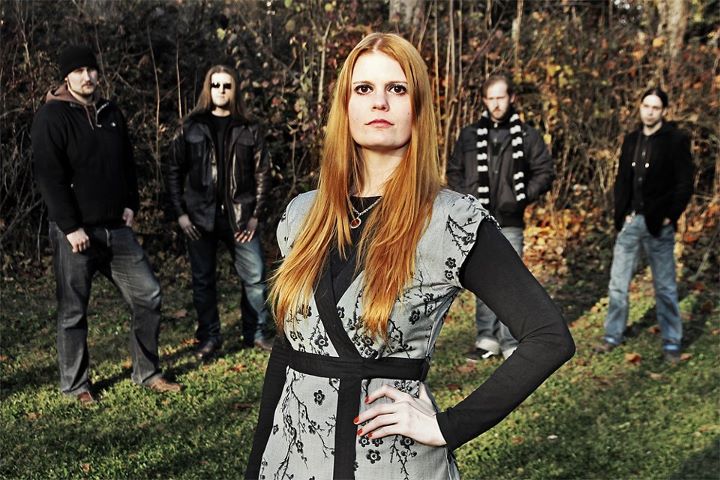
Hiidensointi (whose name, meaning “The Voice of Hiisi”, references a nature deity of the ancient Finnish religion) are a quintet based in the thriving city of Tampere, where they were formed in 2007 by guitarist Petri Kivistoinen and drummer Mika Hiironniemi. After the 2010 release of their self-titled debut, the band underwent a line-up change, with keyboardist Janne Haka-Risku leaving the band to be replaced by violinist Petri Ahonen. They also started work on their second album (which should be released some time in 2012), all the while keeping up with their busy performance schedule around the Tampere region.

Though barely known outside Finland, the members of Hiidensointi (as is very often the case with artists from northern Europe) are very accomplished instrumentalists, with a solid  background and plenty of experience. While they call themselves “folk-oriented progressive rock”, their debut album, rather than anything suggesting the complexity or epic sweep of classic prog, is an accessible, song-oriented effort featuring 10 tracks with an average running time of 4 minutes. The folk overtones are not as evident as in the debut album by Positive Wave (a band with a similar musical direction), and always take a back seat to a conventional verse-chorus-verse structure.  On the other hand, recent live recordings of the band reveal that the presence of a violinist lends a more definite folksy tone to their sound, which will probably come to the fore in their second album.

Like Tuvalu and Positive Wave, Hiidensointi sing in their native language – which is likely to be a turn-off for those who think that English is the only suitable medium for music – and are fronted by a female vocalist. Nina Hiironniemi (wife of drummer Mika), who is also responsible for the lyrics, possesses a confident, versatile voice (though not as impressive as Positive Wave’s Susan Karttunen) that avoids the cookie-cutter, saccharine sweetness plaguing many modern prog bands, and tackles the material with considerable assurance. Petri Koivistoinen replaces her in the plaintive “Suolla”, the one track with a clear-cut folk matrix – assisted by the subdued lilt of the kantele, or Finnish zither (the Finnish national instrument, an object of mythical proportions).

As a whole, and right from opening track “Koskella”, Hiidensointi comes across as remarkably catchy and upbeat, often dance-like – almost debunking the myth of the supposedly melancholy nature of Scandinavian music.  The pervasive rumble of the organ, coupled with Petri Koivistoinen’s energetic guitar, inject an unmistakable classic hard rock vibe à la Deep Purple into tracks like “Isäton Poika” and “Kaihomieli”. Suffused with a gentle wistfulness, “Lintunen” showcases Nina Hiironniemi’s vocal dexterity in adopting a deeper, lower register to complement the instrumental mood, and alternating between singing and speaking in the final section of the song.  Album closer “Virran Mukana” marks a distinct change of pace, with Pate Laitinen’s funky bass line beefed up by organ and guitar, reminding me a bit of Camel’s “Summer Lightning” with its hints at Seventies dance music.

Clocking in at a compact 41 minutes, Hiidensointi is a well-crafted debut by a talented band, with plenty of catchy hooks, pleasing melodies and excellent singing. However, it is also not very likely to impress those looking for a musical offer more firmly rooted in the Finnish folk tradition, in the style of an internationally renowned band like Värttinä. In my view, the album would have proved more interesting if it had pursued the route shown by “Suolla” (and hinted at by the mysterious, dark green hue of the artwork), and delved deeper into the fascinating treasure trove of Finnish folklore. Hopefully their forthcoming second album will take a more definite turn in that direction.

Links:
http://www.myspace.com/hiidensointi

http://sites.google.com/site/hiidensointi/

http://eetupellonpaa.deviantart.com/

http://www.reverbnation.com/hiidensointi

Bassist Michael Schetter (born in Poland as Michał Pruchnicki) moved to Germany with his family at the age of 7, and his now based in the German city of Nürnberg  (known to English speakers as Nuremberg), in the south-eastern region of Bavaria.  He made his recording debut in 2010 with the multi-national progressive fusion band Relocator, whose self-titled first album featured keyboardist extraordinaire Derek Sherinian as a special guest, and was very positively received on the prog scene.

The difficulties encountered by modern, non-mainstream bands and artists in finding live gigs spurred Schetter to try his hand at organizing his own festival, Generation Prog – a two-day event that took place in Nürnberg  in September 2011. A few months later, Schetter unveiled his latest venture – a brand-new label, called Generation Prog Records. To further the debate on the future of progressive rock, and support the endeavours of those who are striving to move the genre forward, I have approached Michael and asked him a few questions about his experience as a festival organizer and independent label owner.

————————-

First of all, what prompted you to take the plunge and organize your own festival? Was it a spur-of-the-moment decision, or rather something that developed in your mind over time?

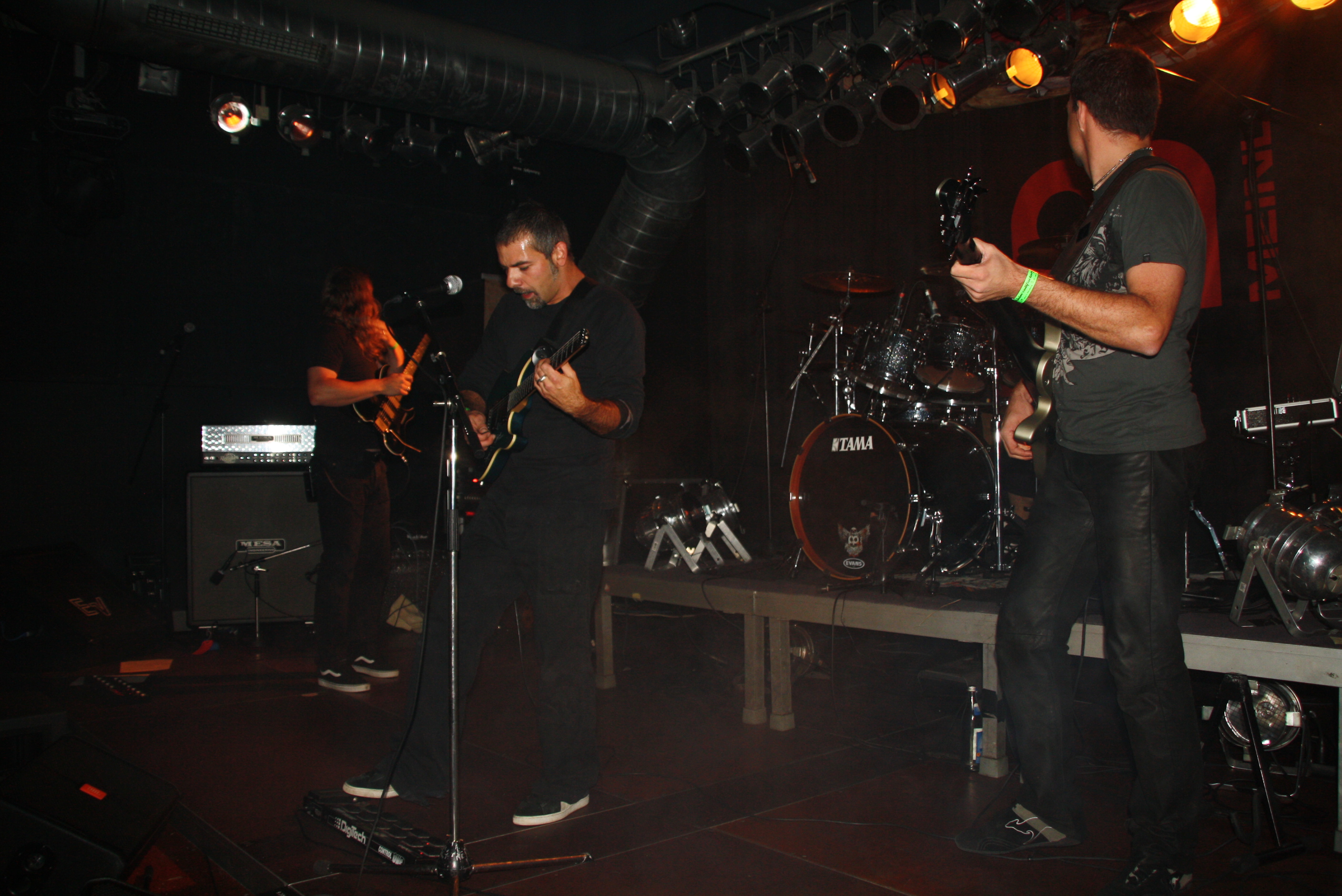
 It was something that developed over time. The original idea was just to play a few gigs with my own band Relocator – preferably with a decent number of people in the audience! And how do you do that when you have just one album out? You team up with other bands. We had already been working on plans for a small tour with a couple of other bands in late 2010 and, while that didn’t quite work out, we ended up using some of the contacts from that time to lay the groundwork for the festival. In early 2011 we put together a gig that teamed Relocator with fellow German proggers Effloresce and Dante as a test run. After that we figured that if we were going to do this, we should be going for something bigger than just two or three bands. After all, the ads in magazines and the posters all around town cost us the same, no matter whether it’s a tiny gig or a full-blown weekend festival.

Effloresce

Though the European situation, in spite of the well-publicized debt crisis, is quite different from the one in the US, I am sure my readers on this side of the Atlantic will be curious about the steps you took to make the festival come to fruition. Can you expand a bit upon that?

 We had been talking to a few bands about possible gigs together – Exivious (even back in late 2009!), Haken, Andromeda. When all of them had signaled interest in playing a possible prog festival in Nürnberg, I was convinced that we had a potential lineup special enough to attract people from quite far away.

The next step was finding a suitable venue. We had been talking to the staff of the Luise in Nürnberg before and my enthusiasm for this international festival finally won them over. It’s a great venue, but since it’s a youth center first and foremost, it can be quite hard to land a gig there – unless you’re a punk band composed of local 16-year-olds.

Then came the search for sponsors. We got some great press for the Relocator/Effloresce/Dante gig and I think that helped a lot – I managed to secure some financial support from the city of Nürnberg, and then some local music companies (Meinl, BTM Guitars, Musik Klier) helped us out with gear –it’s not easy to find a rental drum kit that will satisfy the typical prog metal drummer!

I also managed to secure a collaboration with our biggest local newspaper, the Nürnberger Nachrichten, and both Eclipsed magazine and local radio afk max officially presented the event, so we had quite a bit of support from the media.

Exivious


I remember that, when you were in the process of putting the lineup together, you stressed that you did not want any old-timers on the bill. What can you tell me about the band selection process?

The initial idea was simply to team Relocator with some bands where our music wouldn’t seem totally out of place. As a fellow instrumental band, Exivious were always my first choice, so I was very happy to have them on board. But I didn’t want too many instrumental bands on the bill, so the idea was to add bands who have great singers, but who also know how to write gripping instrumental sections within their songs – that way we’d satisfy those fans who want vocals in their prog while (hopefully) having many of their fans appreciate our material as well.

There were other considerations as well: If I was going to stage a prog festival, it would have to be a platform for the newer bands shaping the prog scene right now! If people want to see any of the more established bands play, they can just attend their tours anyway. But if you look at a band like Andromeda, who I think are easily one of the best progressive metal bands on the scene, they had four albums out when the festival took place – and yet the last time they had played a gig in Germany was in 2006! Haken were lucky enough to score a slot at the Night of the Prog festival last July, but other than that there was no way to see them live in Germany, and Exivious played their first gig on German soil at our festival. So it was a pretty special combination! People easily forget how unique these things can be – maybe the next time you’ll get to see a band, they won’t be playing those great songs from their current album anymore? Or maybe some key members will have left? Or they will break up before you ever get a chance to see them? People like to get nostalgic about gigs from some prog legend’s classic period – well, for some bands that future “classic period” is right now! Maybe if people were supporting them instead of buying some 40th Anniversary Deluxe Edition reissue of an album they’ve already bought twice, there would be more gigs for the current bands to get nostalgic about a few decades down the road.

Andromeda

So I was very aware how few good opportunities there are for bands to present their music to an appreciative audience, both as a musician and as a fan myself. Most of the time, the bigger bands who can afford to tour either bring their own support act (often picked by the label and not a particularly good fit musically) or just play all by themselves. I think it’s a shame and it makes it really difficult for newer bands to get noticed. That leads to another idea that played a part in the band selection: Since a prog festival won’t draw thousands of people, adding local bands with a following can really make a difference. So in the end we ended up with a 50/50 ratio of international and local bands. I’m not sure it’ll be possible to do that again without too many repeats (the regional prog scene here isn’t too big), but we certainly take our local bands seriously.

Ocean Spout

The festival lineup was mostly oriented towards progressive metal, which is somewhat controversial among older prog fans. As you are also a jazz and fusion fan, what made you decide to keep to more or less to a single subgenre, rather than branch out?

First of all, I somewhat disagree with this assessment. We had only three bands who were decidedly metal: Andromeda, Effloresce and Exivious – the latter even with a strong fusion element to their sound. The other five bands had some metal elements to their sound, but I wouldn’t say those were predominant. For example, Subsignal are hardly a heavy metal band, but they don’t shy away from a nice riff if it works for the song. And I think that actually goes to show why metal had such a presence in the overall sound: It’s just quite hard to find a modern prog band who doesn’t assimilate at least some of that into its sound. After all, being open to different musical styles is what leads many people to prog in the first place!
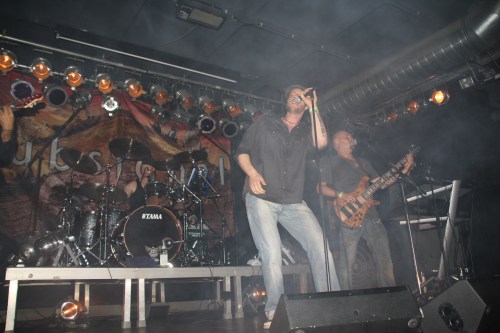
Subsignal

But all that aside, I think your preface already answers the question: prog fans tend to be picky and often dismissive of certain subgenres. If you mix things up too much, there will be a lot of coming and going between bands. With really large events that is not much of an issue, but with the smaller audiences that prog gigs usually draw it can be a real problem. I didn’t want an event where the total numbers were satisfactory while individual bands ended up playing to just a tiny fraction of the audience. I’ve seen that happen at local gigs too many times, it’s just frustrating for the musicians. I wanted a lineup that maximizes turnout while keeping the audience somewhat homogeneous throughout. I might actually put together some fusion festival at some point, it would just have to be separate from the prog metal stuff.

 If you had to mention the most frustrating and the most rewarding aspect of the whole festival organizing experience, which would you choose?

Most frustrating: Doing accounting work in the back office while Haken were playing their headlining set on Friday was pretty frustrating. But the worst was clearly the fact that not ONE website, magazine or newspaper actually sent anyone to cover the whole event. Quite a few told us they were going to, but for various reasons in the end none of them came. So while we ended up with lots of photos from the event, there was not a single review. Very disappointing!

Most rewarding: Getting off the stage with my own band Relocator and getting our backs patted (literally and figuratively) by the guys from Andromeda. It was quite daring to schedule our set right between the two main bands on Saturday, but rather than flee the scene, the audience stayed with us until the end and gave us a huge applause. It was great!
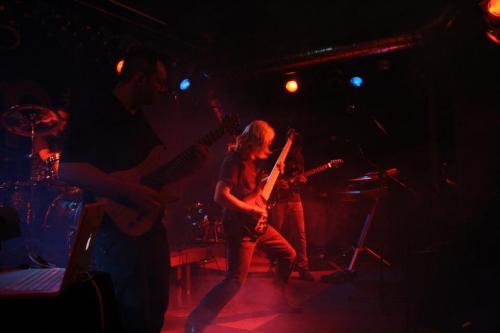
Haken

Have you already started planning the 2012 edition of the festival? Will you be implementing any changes, or are you happy with the way things worked in 2011?

I’ve been working on some plans, but it’s too early to tell if there’s going to be a 2012 festival. I don’t necessarily want to stage an annual event at all costs. Sure, it would be nice, but if I can’t get the right lineup together for a 2012 festival, I’d rather skip one year than put on a show that I don’t fully believe in. It’s just too much work – to a certain degree, I am doing this for myself.

How did you get the idea of starting your own label? Was it a consequence of the festival’s success, or something that you had already been thinking about?

It had nothing to do with the festival, although obviously expanding the “Generation Prog” brand to include the label was the logical decision once it all got started. No, the idea was born out of the experience with promoting the Relocator album on our own and from discussions with some other artists (especially Effloresce, who became the first to join the label). It’s pretty hard for a single band to generate some media interest all on its own and buying magazine ads just for a single album (with little distribution) rarely makes sense financially. A label can run ads for several bands at the same time and it has more than just one CD to advertise and to distribute, so it makes a lot more sense. The idea was for this to be beneficial for everyone involved.

Theory of Elements

You have two bands signed to Generation Prog Records so far – Relocator and Effloresce. Have you already approached other bands or solo artists? Are you planning to concentrate on local acts, or provide a haven for bands from other parts of Europe (or even outside Europe)?

I don’t care if the band is local or European. I have been talking to some artists and I have been approached by a staggering number of bands, but I don’t want to rush things, my day only has 24 hours, and on top of that I am pretty picky when it comes to the music. But there’s one band in particular that I would really like to work with and unless they get snatched up by a bigger label first, we might well end up putting out their album later this year.

On the label’s Facebook page it is stated that Generation Prog Records specializes in “modern progressive music”, and, as also pointed out on its official website, Relocator and Effloresce occupy different ends of the prog spectrum. Are you planning to sign even more diverse acts, or rather concentrate on the fusion and prog metal side of things?

I’m open to all sorts of things, but I tend to dismiss bands that I would classify as more regular (non-prog) metal or pop, for example. It’s not necessarily because I don’t like the music, but the whole label idea only works when there’s some sort of synergy. If I promote a bunch of stylistically somewhat similar bands, I can deal with mostly the same media in promoting them, and hopefully some fans of one band will discover a few of the others through the label affiliation. Ideally, you end up with a label whose name implies a certain style and quality level. That won’t work if I end up working with death metal and pop/rock bands, no matter how good they may be, and they would be worse off because in many cases I wouldn’t even know where to promote them.

Are you planning to release physical CDs, or rather opt for a digital format?

Ideally we would always have a physical CD release, but I could imagine some things like live recordings being download only.

Are there any independent record labels that you would like to take as an example for your venture, or would you rather want to provide something unique?

I don’t want to emulate anyone, but I’ve always been a fan of Ken Golden’s labels – The Laser’s Edge, Sensory and Free Electric Sound.

You will agree with me that it takes some courage to start a new independent label at a time when artists are threatened by the seemingly uncontrollable (and uncontrolled) diffusion of illegal downloading. Do you think it is still worth bothering with record labels in this day and age? Do you see Generation Prog Records as a sort of mission to help fellow artists?

1. Yes (don’t even get me started…).

2. Yes, if both the label’s and the artist’s expectations are realistic – then it can be mutually beneficial. If not, it can be a very bad idea.

3. Yes, but there’s only so much we can do, and it has to be a collaborative effort.

What are Relocator’s plans for 2012, and possibly beyond that?

Right now we are preparing for a couple of gigs – on April 13 we’ll be playing at a smaller Generation Prog live event (a bit of a mini-festival, if you will) with Dreamscape, Counter-World Experience and Effloresce in Nürnberg, and on April 14 we’ll be joining the mighty Haken and Flaming Row in Rüsselsheim. Two gigs in a row – for us that’s a record!

After that, we’ll hopefully start working on our second album. Stefan [Artwin, Relocator guitarist and co-founder] has been writing new material, and right now there are six tracks in various states of completion. It might be enough for an album, especially once everyone starts adding ideas to the basic demos, but it’s too early to tell.

Relocator

And now for the million-dollar question… From your unique perspective as an artist/festival organizer/label owner, how do you see the future of the progressive rock scene? Do you think that the genre’s popularity has already reached its apex, and a decline is inevitable, or do you still keep an optimistic outlook?

First of all, there’s probably no such thing as *the* progressive rock scene, which is what makes these events so much more difficult. You have various sub-groups of people who all consider themselves prog fans but who couldn’t agree on anything. But I think the music itself is doing quite well. There’s a lot of variety to the prog of today and no matter whether you want your prog to be adventurous and fresh, or just the way you know it from the 70s, there’s a lot of music being released. I think one of the most interesting aspects of prog is the openness to new influences, so I think (the retro bands aside) the music remains as interesting and modern as ever if you know where to look – especially since the technological advances make it possible for even obscure bands to put out albums that sound quite professional. So there’s no lack of interesting new music. If anything, I’d say these days the abundance of well-produced recordings is becoming a problem – there’s only so much music that listeners have the time to deal with! And with every year, a new band has to compete with even more classic albums out there.

But while there’s a lot of recorded music coming out, I think there’s a striking lack of gigging opportunities for prog bands, especially the newer ones. It’s pretty bad, because so many people have been convinced that playing live is where bands make money these days (a popular excuse for piracy). The reality is very different for most prog bands. Decent gigs are rare. Decent gigs that you don’t lose any money on are even rarer. But at least I’ve seen quite a few new people promoting prog gigs in their region recently, so maybe the situation is about to improve?

 Thank you very much for your patience in answering my questions, and all my best wishes for your new label! I will be looking forward to reviewing some of your releases.

Links:

http://www.generation-prog.com/

http://www.relocator-project.com/

TRACKLISTING:
1. Invisible Rays (22:19)
2. The Magic Ring of Invisibility (6:50)
3. Where Is Juan? (5:52)
4. The Secret Handshake With Danger (6:21)
5. Greatest Hits (1:04)
6. The Last Guru (4:55)
7. Take A Bath With Lenin (2:13)
8. Ghost Red Wires (4:25)
9. Invisibility Clause (4:35)
10. Understudy To The Stars (0:18)
11. An Unusually Nice Hotel (12:40)

LINEUP:
Morgan Ågren – drums, zither
Trey Gunn – touch guitar, bass
Henry Kaiser – guitar

Born from a fortuitous encounter between three outstanding musicians with a distinguished career in the field of progressive music, Invisible Rays seems to embody the very definition of “one-off”. The album is the result of an impromptu jam that took place in March 2011, when Warr guitarist Trey Gunn (known for his tenure with King Crimson in the late Nineties), San Francisco guitarist Henry Kaiser (one of the pioneers of American free improvisation) and Swedish drummer Morgan Ågren (of Zappa, Kaipa and Mats/Morgan fame) found themselves with some time on their hands before a presentation at a music conference in Sweden. When they first heard the rough mixes, the sheer quality of the recordings took them by surprise, in spite of the almost completely unstructured nature of the material.

The above description makes it clear that Invisible Rays is the product of a spur-of-the-moment situation, prompted by a unique set of circumstances that allowed the three artists to make music together for the first time. While the bulk of the tracks do have a semblance of compositional structure, the two pieces that bookend the album are intentionally loose and sprawling, brimming with the simple joy of playing without a recognizable script. The title-track, strategically positioned at the opening of the album, acts as a sort of gatekeeper, its intensely powerful 22 minutes occasionally bordering on white noise. Kaiser’s guitar tone can turn almost unbearably sharp, aided and abetted by Ågren’s explosive drumming, while the eerie wail of Gunn’s Warr guitar supplies a gentler undercurrent. While certainly not cohesive, and the kind of stuff that is more than likely to scare the more conservative prog  set away, the track often hints at King Crimson’s live improvisations, though in some ways brasher and bolder.

Interestingly, though the three artists produce an impressive volume of sound, there is also a minimalistic aspect to the music, due to the  limited number of instruments involved. Rhythm is very much at the heart of Invisible Rays, with Ågren’s supercharged drumming all over the place, setting the pace for Kaiser’s wild guitar exertions and Gunn’s more sedate, atmospheric contribution. Tantalizing ethnic suggestions – one of the constant features of Gunn’s extensive output – emerge in “The Magic Ring of Invisibility”, which acts as a foil to the unbridled improvisation of the title-track, and at the opening of “The Last Guru”, before things turn more dissonant, with an almost metal-like sense of aggression.

Only “Ghost Red Wires” maintains a hauntingly mellow mien throughout its 4 minutes, the guitar sound flowing smoothly in contrast with its imperious presence in most of the other tracks; while in “Where Is Juan?”, Gunn and Ågren indulge in some funky sparring. In closer “An Unusually Nice Hotel”, the slow, solemn pace of the drums – which provides a steady, nearly unchanging backdrop throughout the whole 12 minutes of the track –  and the mournful tone of the Warr guitar are offset by the gradual progress of Kaiser’s piercing, abrasive guitar.

Clocking in at a hefty 71 minutes, Invisible Rays – which comes packaged in a striking cover out of a Fifties science fiction B-movie – is definitely not for the faint-hearted. Even staunch King Crimson fans might find the album a somewhat daunting proposition, while lovers of free improvisation are bound to appreciate it much more than those who prize melodic content or compositional cohesion. A worthwhile testimony of a unique opportunity, it may, however, ultimately prove less than satisfying because of its basically raw (though powerful) nature. Therefore, the album is probably not the best bet for those who would like to get acquainted with Trey Gunn’s outstanding contribution to the cause of progressive music.

Links:
http://www.treygunn.com

http://www.morganagren.com

http://www.thehenrykaisercollection.blogspot.com


TRACKLISTING:
CD 1 – Studio:
The Pocket Orchestra Tape 1983:
1. Imam Bialdi (6:24)
2. R. V. (7:04)
3. Regiments (14:59)
4. Letters (13:53)
The Knēbnagäujie Tape 1978-1979:
5. Blueing (7:10)
6. White Organ Meats (7:03)
7. Grandma Coming Down The Hall With A Hatchet (5:32)
8. Bagon (16:52)

CD 2 – Live:
1. Annex (5:56)
2. Bagon/Wandering Aimlessly (14:48)
3. Blirt (4:05)
4. Blueing (12:01)
5. Letters (19:12)
6. Parade (5:23)
7. Regiments (Parts 1, 2 and 3) (11:32)
8. Corn Fed (5:37)
9. Sound Check Bonus (0:43)

LINEUP:
Craig Bork – keyboards
Joe Halaijan (aka Joe Who)- clarinets, saxes, incidental vocals
Bill Johnston – cello
Tim Lyons – bass
Tim Parr – guitars
Bob Stearman – drums

With:
Craig Fry – flute (CD 1, 7)
Warren Ashford – tablas (CD 1, 7)
Jack Chandler – saxes (CD 2,  5-6)

If a contest was held for the unluckiest band on the progressive rock scene, Pocket Orchestra would have quite a few chances of winning first prize. In fact, only three members are left of the original six-piece lineup that recorded two demos between 1979 and 1984. What looked like a promising career for one the trailblazers of the RIO/Avant movement in the United States was cut short first by saxophonist Joe Halajian’s family problems (which led to the band going into hiatus), then by guitarist and main composer Tim Parr’s untimely demise in 1988. Thanks to the unstinting effort of Scott Brazieal, leader of Cartoon and a personal friend of the band, the material they had recorded in those short but intense five years finally saw the light in 2005, with the release of the CD Knēbnagäujie (the original name of the band). In the meantime, bassist Tim Lyons had passed away in 1998,  while drummer Bob Stearman (who had had a stroke in 2004) followed suit in 2010.

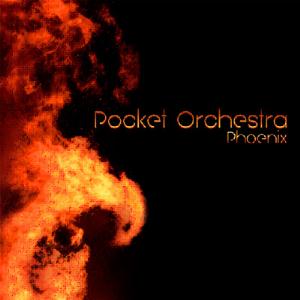
In spite of those unfortunate circumstances, Pocket Orchestra’s reputation remained very high in RIO/Avant circles, lending them a near-legendary aura in a context that often thrives on cult status. In 2011, Marcello Marinone and Francesco Zago of Italian label AltrOck Productions , assisted by such luminaries as Cuneiform Records’ Steve Feigenbaum and renowned sound engineer Udi Koomran, brought to light some of Pocket Orchestra’s unreleased recordings – including almost 80 minutes of live material – which eventually became the double CD set Phoenix, released in the second half of the year.

The album’s title, reinforced by Paolo “Ske” Botta’s striking cover artwork,  refers to the band’s hometown in Arizona, as well as to the almost miraculous reemergence of recordings that had seemed fated to remain buried in oblivion. Since Knēbnagäujie was sold out, the release of Phoenix was greeted enthusiastically by dedicated RIO/Avant followers, especially those interested in the US scene. While such archival operations rarely claim to present material in truly organic and cohesive form, Koomran’s state-of-the-art mastering has given new life to those 30-year-old live tapes, as well as to the contents of the original Knēbnagäujie  CD. Brazieal’s detailed liner notes, complemented by vintage photos of the band on stage and other memorabilia, complete this lovingly assembled tribute to the “Phoenix reborn”.

As can be expected from their checkered history, while undeniably gifted and dedicated to their craft, Pocket Orchestra had not yet fully developed their potential when circumstances forced them to call it a day. Their compositions suffer from occasional bouts of patchiness, added to some of those features that generally make the whole RIO/Avant subgenre so daunting (often unnecessarily so) to newcomers. Indeed, both the eight tracks on the studio CD and the nine on the live CD are nothing but ambitious and unpredictable, packed with twists and turns of every description.

While the founding fathers of the RIO movement such as Henry Cow and Univers Zero are inevitably referenced, the main influence that can be detected on Phoenix is that of Samla Mannas Manna,  another band belonging to the original RIO contingent – something that earned Pocket Orchestra the tag of “Samla of the desert”. However, Pocket Orchestra’s music is completely instrumental, and also decidedly less melodic, though imbued by a similar brand of playful light-heartedness, embodied by the use of circus music in “Grandma Coming Down the Hall With a Hatchet” .  Sudden blasts of saxophone and clarinet and wailing, piercing guitar excursions seem to be the rule, with Bob Stearman engaging in a mind-boggling range of intricate rhythmic patterns to propel the sound forward.

The word “anarchic” is probably the best description of Pocket Orchestra’s approach. The average composition can suddenly shift from a laid-back, almost meditative pace to unrelieved chaos – as exemplified by “R.V”, whose first half is deceptively mellow, then erupts into an intense, free-form maelstrom of sound. The sedate, piano-driven passages in the 14-minute, Canterbury-influenced “Letters” are bound to bring to mind the easy elegance of Hatfield and the North or National Health, offset by Parr’s aggressive guitar solo at the end. On the other hand, album closer “Bagon” marries the lovely, melodic Canterbury feel with more typical RIO features such as blaring sax and strident guitar.  As a whole, the first four tracks –dating back from 1983, immediately before Pocket Orchestra went on hiatus – come across as more accomplished, showing a band well on its way to reining in the in-your-face dissonance and chaos that instead emerge in the studio CD’s second half.

The second CD offers an invaluable testimony of the band’s brisk live activity in the years 1980-1984, and includes a number of previously unreleased tracks, as well as noteworthy versions of “Letters” and “Regiments”. Udi Koomran’s experience in the studio managed to bring out the best in recordings whose original quality was less than ideal, presenting a band that was definitely at home on stage. While some of the longer tracks may still reveal a bit of self-indulgence, the shorter ones, such as “Parade” or “Corn Fed”,  show how Pocket Orchestra were gradually but clearly finding their own unique voice and direction, and at the same time tightening up on the compositional aspect.

Though somewhat clichéd, the definition of “rollercoaster ride” seems to be a perfect fit for an album like Phoenix, which probably should come with a warning sticker. While its blend of dignified chamber rock, wild, wacky all-out experimentation and the occasional foray into sophisticated, Canterbury-style jazz-rock will not fail to appeal to fans of everything RIO/Avant, even a cursory listen to opener “Imam Bialdi” will send the average “mainstream” prog fan running for the exits. While bands like Miriodor or Yugen might have a broader crossover appeal and win over staunch devotees of symphonic prog, Pocket Orchestra, as captured on this double set, were definitely raw and uncompromising. All in all, though not exactly a comfortable listen, Phoenix is a moving tribute to a band that might have grown into a force to be reckoned with, had not fate got in the way.

Links:
http://production.altrock.it/prod2.asp?lang=ita_&id=171&id2=172

http://www.allmusic.com/artist/pocket-orchestra-p876979/biography


TRACKLISTING:
1. Cuckoo (9:23)
2. Knowledge (6:09)
3. Let Go (4:54)
4. Khajurao (5:22)
5. Hero (10:13)
6. UFO-RA (6:44)
7. Falling Up (18:03)
8. Palitana Mood (3:05)

LINEUP:
Tony Bianco – drums, loops, percussion
Michel Delville – electric guitar, bouzouki, electronics
Jordi Grognard – tenor sax, bass clarinet, flute, bansuri, electronic tempura

Machine Mass Trio was originally born as a side project of douBt, the electric jazz trio formed by Belgian guitarist Michel Delville whose acclaimed debut album, Never Pet a Burning Dog, was released in 2009 by influential New York-based label Moonjune Records. For this project, Delville and renowned NYC drummer Tony Bianco recruited a rising star of the modern jazz scene, Belgian reedist/saxophonist Jordi Grognard, who is also well-versed in non-Western woodwind instruments. Machine Mass Trio’s debut, As Real As Thinking, recorded live in the studio in October 2010, was released in November 2011 with the support of the Belgian French Community.

Like most of Moonjune Records’ output, As Real As Thinking is definitely not an immediately accessible album – sophisticated and multilayered, yet permeated with a sense of sharp urgency that surfaces when you would least expect it. In a veritable melting pot of diverse influences, the album merges the raw power of free jazz and guitar-based progressive rock à la King Crimson with the heady mysticism of Eastern music filtered through the electronic experimentalism of Krautrock. The three band members alternating in the spotlight or blending their collective strengths together to produce music that is constantly challenging but always rewarding, contribute in equal measure to the success of the final product.

At the core of Machine Mass Trio’s sound lies Tony Bianco’s astonishing drumming, a concentrate of pure energy and flawless time-keeping. He lays down an unflagging beat for the whole 10 minutes of the jammy, deceptively sedate “Hero”, providing a steady rhythmic backdrop for Delville and Grognard’s exertions. On the other hand, in the spectacular 18 minutes of “Falling Up Nº 9” – a tour de force that marries intoxicating psychedelic suggestions with chaotic free-jazz improvisation – he unleashes the pyrotechnics, the drums starting out in a subdued fashion, then gradually gaining intensity, sparring with Delville’s guitar and eerie electronic effects in an exhilarating crescendo.

Delville’s guitar runs the gamut from the blistering riffage of “Let Go”, with its almost metallic edge coupled with Grognard’s unbridled, highly emotional sax, to the intriguingly laid-back textures and staggered rhythms of “Knowledge”. The distinctive sound of the bouzouki, with its haunting, sitar-like twang, replaces the guitar in the Eastern-inspired “Khajurao” (named after the Hindu temple complex famous for its erotic sculptures) and album closer “Palitana Mood” – sinuously intertwining with Grognard’s breathy flutes, discreet percussion and buzzing electronic effects; while “UFO-RA” revolves around Delville’s slightly dissonant synth guitar, emoting over the lively pace set by drums, piano and sax.

A classy blend of stunning technical prowess, energy and creativity, As Real As Thinking is never predictable, and will not disappoint fans of independent labels such as ECM and Cuneiform, which, like Moonjune, comfortably straddle the lines between jazz, avant-garde, world music and progressive rock. In spite of the collective talent gathered here, the album celebrates the joy of unfettered playing, in a spirit that is both collaborative and mindful of each musician’s background and inclination. Though the album may be a daunting prospect for those who prize flowing melodies and carefully structured compositions, it is highly recommended to adventurous listeners and anyone who supports genuinely progressive music-making.

Links:
http://www.myspace.com/machinemasstrio

http://www.moonjune.com


TRACKLISTING:
Now I Know:
1. Fateful Days (7:37)
2. Grounded (5:29)
3. Kites (3:19)
4.  Flight (6:36)

5. Current Events (5:24)
Winds of Change
Heirs
Winds of Change II
Errs

Book of Airs:
6. History (instrumental) (1:22)
7. Heritage (4:39)
8. Experiments (3:12)
9. Floating (instrumental) (1:34)

The Flyer:
10. Annabelle (5:02)
11. The Center (4:39)
12. Fateful Days II (1:16)
13. Hannah (4:00)

Airs:
14. The Great Salt Pond (5:53)
15. Grounded II (5.11)
16. Kites II (2:14)
17. Flight II (5:00)
18. Owen (1:33)

LINEUP:
The Singing Cast:
Paul Adrian Villareal – Owen (1, 18)
Gordon Tittsworth – Owen (2, 5, 7, 8, 11, 15), Derrick (2), The Narrator (7)
Cornelius Kappabani – Owen (4, 13, 17) Craig (4, 5), The Islanders (5)
Tilman Eckelt – Owen (3)
Jan Oving – Owen (10)
Antila Thomsen – Hannah (12, 13, 17)
Floor Kraaijvanger –Annabelle (11, 17), The Narrator (14)

The Spoken Cast:
George Andrade – Owen
Seann Jackson – Craig
Leigh Andrade  – Rachel
Nicolette Collard-Andrade – Annabelle
Tony Kost  – Coleman Burke

The Band:
Steve Brockmann – guitars, bass, keyboards
Jochen Ohl – drums
Dave Meros – bass (10, 17)
Alan Morse – guitar (17)
Christoph “Luppi” Brockmann – bass (14)
Phil Robertson – drums (15)

In spite of a venerable tradition stretching back to the glory days of the late Sixties and early Seventies that gave us iconic works like The Who’s Tommy or Andrew Lloyd Webber’s Jesus Christ Superstar, rock operas seem to have lost quite a bit of their luster in recent times, and acquired instead a rather embarrassing aura of cheesiness. On the other hand, while rock operas may be pretentious by definition, this is not necessarily a bad thing – as long as it is not overdone.

For New England writer George Andrade (who is also the author of the lyrics of The Anabasis’ debut album Back from Being Gone), AIRS – A Rock Opera was the proverbial labour of love, developed over the years, with a storyline (based on the subplot of one of his novels) that dealt with a forgotten episode in the history of his native Rhode Island. The historical fact, however, became a deeply personal story of guilt, loss and ultimate redemption, focused upon the character of Owen Deane and his complex relationship with his family and his troubled past. It was only when, in 2008, George met German multi-instrumentalist and composer Steve Brockmann on a music discussion board, that his dream of turning the story into a full-fledged rock opera became reality.  In the intervening years, Brockmann and Andrade drafted in a number of distinguished musicians and vocalists (as well as family members) to give voice to the various characters. The completed album finally saw the light in the early months of 2012.

The project’s structure, in five movements conceived like the chapters in a novel or the acts in a play, reveals Andrade’s literary background. The story moves from Owen’s return to his island home after six years in prison to his final liberation – symbolized by being lifted high up into the air by the biggest of his father’s kites, made of sails. The Doane family had gathered their knowledge  of wind currents in a book, called the Book of Airs (hence the title), handed down through the generations, and found by Owen in an attic after years of neglect. Andrade’s approach remains endearingly humble, focusing on the characters’ often flawed humanity rather than adopting the grandiose approach of much-touted efforts like Ayreon’s The Human Equation, and avoiding those often badly handled fantasy/supernatural overtones that invariably spell cheesiness.

In order to convey all the different facets of Owen’s personality and his emotional journey, Brockmann and Andrade decided to recruit a range of singers with different vocal characteristics  instead of just one – a choice that, though it might come across at somewhat odd, works surprisingly well. The music is mostly performed by Brockmann himself with the help of drummer Jochen Ohl, though a couple of songs feature contributions from Dave Meros and Alan Morse of Spock’s Beard – not surprisingly, since their shared love for the influential Los Angeles band was the catalyst for Brockmann and Andrade’s meeting.

Like the best rock operas of the past, AIRS encompasses a wide range of musical influences, though it is more of a song-based, AOR/classic rock effort with prog overtones than a full-fledged prog album. The occasional spoken parts inject a dramatic dimension, complemented by the thorough booklet illustrating the story. From the point of view of the average prog listener, the first half of the album is definitely the most interesting, while the second half emphasizes the catchier, airplay-worthy side of the project. Prog-metal fans will surely appreciate the epic sweep and intensity of the Iron Maiden-tinged “Grounded” and “Grounded II”, as well as the heady tempo changes of “Heritage” – all masterfully interpreted by Gordon Tittsworth , vocalist with US band Images of Eden (who also appeared on The Anabasis’ debut). The lovely power ballad “Fateful Days” (later reprised as short instrumental, and as “Owen” at the very close of the album) showcases Paul Adrian Villareal’s confident, melodic tenor, already appreciated in Sun Caged’s The Lotus Effect, further enhanced by Brockmann’s splendid guitar and keyboard work.

Singing is of crucial importance for any rock opera, and on AIRS instrumental tracks only appear in the form of short interludes between the narrative parts. Though the overall quality of the singing is quite high, two vocal performances stand out from the rest. Cornelius Kappabani’s poignant turn as Owen in “Flight” spotlights his rugged baritone, oddly reminiscent of Pearl Jam’s Eddie Vedder (and the musical accompaniment also suggests some of the songs on the Seattle band’s debut Ten); while his sinister, menacing Craig in “Current Events” hints at a typical extreme metal growl, and pinpoints the character’s rather unpleasant nature. On the other hand, Floor Kraaijvanger’s stunning, soulful contralto renders Annabelle’s mix of strength and vulnerability in impressive fashion. How refreshing to hear a vocalist that sounds more like Aretha Franklin or Tina Turner than the umpteenth Annie Haslam clone! Finally, young Antila Thomsen’s pure, sweet voice is a perfect fit for Hannah’s wounded innocence.

Clocking in at around 74 minutes, AIRS is definitely not a short album – though, being essentially narrative in nature,  its length can be readily justified. As hinted in the previous paragraphs, it is not an album for those who are looking for cutting-edge material, nor does it pretend to offer anything other than well-executed music with plenty of melody and catchy hooks and choruses, performed by a group of outstanding artists. Indeed, even though the mainstream component is more in evidence than the progressive one, AIRS is a very pleasing listen – especially for those times when more complicated, demanding fare sounds like a slightly exhausting prospect. The genuinely moving storyline is also masterfully conveyed by Andrade’s keen sensibility and skill with words. While AIRS is probably not the right choice for prog elitists and anyone who resents mainstream influences, I can think of much worse ways to spend 74 minutes.

Links:
http://www.airs-arockopera.com/

TRACKLISTING:
1. Infinicheese (1:35)
2. Clacos Zero (0:35)
3.Untung Untungan 2.0 (11:13)
4. Clacos 1 : Notre Mère à Tous (1:58)
5. El Ruotuav Ed Sram (8:16)
6. Clacos 2 : Die Experimente von Dr Frankenschnörgl (0:48)
7. Le Meurtrier Volant (9:01)
8. La Danse du Chameau:
a) Batifolade  (5:29)
b) Soif! (1:17)
c) La Tempête De Sable (4:51)
d) Rêveries Lubriques Sous une Dune (1:09)
e) The Final Run  (5:01)

LINEUP:
Fabrice Toussaint – tenor trombone, xybraphone, congas, tam-tam, triangle, other percussionBernard Eber – trumpet, didgeridoo, cowbell, whistle, voices
Pierre Wawrzyniak – bass, acoustic guitar, voices
Philémon Walter – drums
Guillaume Gravelin – harp
Vincent Sexauer – electric guitar

 With:
Julien Travelletti – bass trombone (3, 5, 7, 8), tuba (7)
Francesco Zago – electric guitar (3)

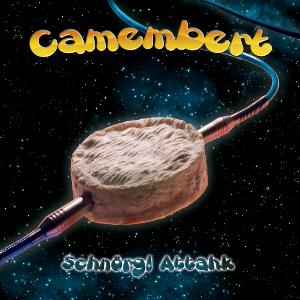
When coming across a French band named Camembert, and an album title featuring the word “Attahk”, most progressive rock fans will inevitably think of two illustrious outfits such as Magma and Gong – both of whom have also ties with France. Add to that a rather left-field story about the Earth being invaded by small, gelatin-like beings from outer space called Schnörgl, led by a mad scientist researching weapons of mass destruction, and involving a giant spaceship made of intergalactic cheese – and the resemblance will steadily grow, so that a first-time listener might wonder if they are being confronted with the new frontier of “retro-prog”. However, there is very little “retro-anything” about Camembert, whose thoroughly modern brand of jazz-rock proudly sports that strongly absurdist streak that is one of the distinctive traits of French prog.

Camembert are a six-piece hailing from the city of Strasbourg in north-eastern France, where they formed in 2005.  Schnörgl Attahk, their first full-length CD, which marks the beginning of the band’s collaboration with Milan-based label AltrOck Productions, was preceded in 2009 by the release of the 6-track EP Clacosmique. Most of the material that had originally appeared on the EP has been included on the album, though in almost completely rearranged form. Camembert members Fabrice Toussaint and Pierre Wawrzyniak had also appeared on another noteworthy 2011 release, Ske’s 1000 Autunni – and Ske mainman Paolo Botta (who also plays keyboards with Yugen, and is a gifted graphic artist) returned the favour by providing suitably wacky artwork for Camembert’s debut.

As previously hinted, Schnörgl Attahk manages the remarkable feat of combining an amazing level of complexity with an upbeat, ebullient mood that will provide the perfect antidote to the excess of earnestness of far too much prog. The outrageous tale of Dr Frankenschnörgl and his dastardly plans for a global takeover is told through the artwork and detailed liner notes, as the album is completely instrumental. On the other hand, while no actual singing is involved, the music suggests the events in strikingly effective manner, appealing to the listener’s powers of imagination.

Like the best examples of progressive rock (modern or otherwise), Schnörgl Attahk is a quintessentially eclectic effort. The band’s handling of their main sources of inspiration eschews derivativeness, moving rather along the lines of incorporating those sources into the fabric of their own original sound – whose foundation is a sinuously intricate brand of jazz-rock with roots in Frank Zappa’s output circa Apostrophe, as well as Shamal/Gazeuse!-era Gong (incidentally, both Pierre Moerlen and Mireille Bauer were originally from the Strasbourg area – perhaps something in the water?). However, the many pieces of Camembert’s musical mosaic are extremely variegated, supported by a very distinctive instrumentation that rules out keyboards, but hinges primarily on an unusual combination of horns, mallet percussion and harp. The gentle, liquid voice of the latter, blending harmoniously with the rippling tinkle of Fabrice Toussaint’s xybraphone and the warm, organic sound of various percussion instruments, gives Camembert’s sound a unique imprint.

While the two short, consecutive openers, “Infinicheese” and “Clacos Zero”, set the scene in textbook-spacey fashion, with swishing electronics and occasional guitar touches, the 11-minute “Untung Untungan 2.0” makes a bold entrance with its lively avant-fusion allure, then unfolds in a myriad of dazzling twists and turns, to which Francesco Zago’s guitar lends some extra bite. The easy, natural flow of the music, whose melodic flair almost belies its inherent complexity, brings to mind Canterbury acts like Hatfield and the North, and the energetic presence of the horns, coupled with Pierre Wawrzyniak’s solid bass lines, lend a funky swagger to tracks like “El Ruotuav ed Sram” (“Le Vautour de Mars” spelled backwards). Shades of Magma and Univers Zéro lurk in the imperious, martial pace of  the intense “Le Meurtrier Volant”, while in the 5-part suite, “La Danse du Chameau”, sprightly Latin-tinged rhythms in the style of early Santana, weird voices and dense, faintly dissonant passages coexist, held together by the lush yet unconventional instrumentation.

An exciting slice of sparkling eclecticism, combining melody, complexity and zany humour in an irresistible mixture, Schnörgl Attahk is almost mandatory listening for fans of modern jazz-rock and RIO/Avant prog, and will particularly appeal to fans of genre-straddling bands such as Frogg Café, miRthkon or Miriodor, as well as newer outfits like Calomito or Slivovitz. With all-round outstanding performances, excellent production values (courtesy of Udi Koomran and Eric Gauthier-Lafaye), and a genuinely positive attitude that will put a smile on your face (as well as a very restrained running time, which allows the music to be absorbed without weariness setting in), Schnörgl Attahk  proves that it is fully possible to pay homage to the trailblazers of the past without turning into a nostalgia act.

Links:
http://www.myspace.com/camembert67

http://production.altrock.it/home.asp?lang=ita_&id=9&id2=9

TRACKLISTING:
1. Iperbole (6:21)
2. Butterfly Song (8:31)
3. Trasfiguratofunky (7:31)
4. Negative (7:03)
5. Just Cannot Forget (2:25)
6. Flash (5:23)
7. Clamores Horrendos Ad Sidera Tollit (6:49)
8. Vacuum Fluctuation (8:04)
9. Re-Awakening (8:03)
10. Isterectomia (7.26)

LINEUP:
Alessandro Seravalle – vocals, electric, acoustic, e-bow & 12-string guitars, synths, keyboards, samples
Raffaello Indri – electric guitar
William Toson – fretted & fretless bass guitars
Ivan Moni Bidin – drums
Gianpietro Seravalle – electronic percussion, soundscapes

With:
Simone D’Eusanio – violin (1, 2, 8)
Cristian Rigano – synth solos (3)
Giorgio Pacorig – keyboards (3)
Pietro Sponton – congas (3), vibraphone (4)
Flavia Quass – vocals (4)
Andrea Fontana – percussion (4)
Davide Casali – bass clarinet (5)
Jacques Centonze – percussion (8)
Carlo Franceschinis – double bass (8)
Alessandro Bertoni – piano (9)
Mariano Bulligan – cellos (9)
Massimo De Mattia – flute (9, 10), bass flute (10)

In spite of a name referencing one of Genesis’ most popular songs and a “progressive metal” tag, Italian band Garden Wall are neither one of the many followers of the “retro-prog” trend, nor a bunch of Opeth or Dream Theater devotees. Hailing from the north-eastern Italian region of Friuli, the band was put together by vocalist and multi-instrumentalist Alessandro Seravalle in the late Eighties, and released their debut album in 1993. Assurdo, their eight album, forms the third and final chapter of the trilogy begun in 2002 with Forget the Colours, and continued with 2004’s Towards the Silence. It is also their first release with Lizard Records  (one of the most rolific independent labels for modern progressive rock), and – unlike their 2008 album, Aliena(c)tion – contains completely new material.

Now a quintet, with only Seravalle and guitarist Raffaello Indri left of the original lineup, Garden Wall have pulled out all the stops for their recording comeback. Not being familiar with their previous output, and misled by the “prog-metal” tag, when I first heard the album I was confronted with something that was almost impossible to label. Moreover, while most of my reviews include comparisons with other bands or artists (something that readers generally appreciate), this time I was hard put to find any suitable frame of reference within the progressive rock spectrum.

If I had to use a single adjective to define Assurdo, I would call it unpredictable. While far too many albums and individual songs seem to endlessly reproduce the same structure, the 10 compositions featured on Garden Wall’s eight CD take the listener on a veritable rollercoaster ride that will leave all but the most open-minded rather bewildered, as well as drained. To say that Assurdo is not an easy listen would be an understatement: spanning a wide range of influences and moods, each song conceived as a mini-suite in many different movements, and providing a canvas for Alessandro Seravalle’s amazing vocal gymnastics, the album is an exercise in deconstruction rather than a showcase for cohesive compositional standards.

Obviously, this is not meant as criticism: though Assurdo is clearly a daunting prospect for anyone not used to more challenging fare than the average “mainstream prog” release, it can also be immensely rewarding for those who will invest time and patience in  trying to “unlock” it. Its densely woven texture, made of so many different layers, its deeply literate nature (the album’s title comes a quote from Robert Musil’s The Man Without Qualities, “Everything is absurd when you see it clearly”), a complex instrumentation  blending state-of-the-art electronic soundscapes with warm ethnic percussion, lyrical flute and violin, and gutsy electric guitar – all make for a very demanding listening experience, though one that can confidently bear the “progressive” label. For all its cosmopolitan, cutting-edge allure, Assurdo does have that indefinable “Italian” quality that the use of the Italian language (though juxtaposed with English) lends to even the most avant-garde musical efforts – as proved by a band like Nichelodeon, whose mainman Claudio Milano has been actively involved in the realization of Garden Wall’s latest effort.

Assurdo is one of those albums that need to be absorbed as a whole, so that trying to describe any of the tracks in detail would feel like a pointless exercise. The tracks run between 2 and 8 minutes, with the lone instrumental “Just Cannot Forget” strategically placed in the middle, as a sort of interlude. Taking Demetrio Stratos as a springboard, Seravalle dominates the rest – at times speaking, at others whispering, or even screaming or growling.  Garden Wall’s  impressively omnivorous approach encompasses the academic suggestions of opener “Iperbole”, to the deconstructed funk of the appropriately-named “Trasfiguratofunky”, the haunting trip-hop of “Negative”, the heady Middle Eastern flavour of “Vacuum Fluctuation” – blending jazzy organ, industrial electronics and heavy riffing as in “Clamores Horrendos Ad Sidera Tollit”, employing flute and violin to complement the spacey, ambient-like electronics of closer “Isterectomia”.

At under 70 minutes, Assurdo is not an excessively long album for today’s standards.  However, with its unabashedly eclectic, experimental bent, coupled with a distinct lack of anything even remotely resembling a catchy tune (as well as Seravalle’s acquired-taste vocals), the album is rarely a comfortable listening experience – though a much more solid effort than some overly pretentious releases in the experimental prog field. In any case, adventurous listeners will find a lot to appreciate in Assurdo, one of the most intriguing albums released in 2011, and one that definitely deserves more exposure.

Links:
http://www.gardenwallband.com/

http://www.lizardrecords.net63.net/index.php

TRACKLISTING:
1. Diabolique (2:27)
2. Nobody Dies Forever Part 1 (2:37)
3. Aquamarine (5:07)
4. Ready to Lose (6:02)
5. The Conjurer (4:13)
6. No Specific Harm (10:58)
7. Solace (2:43)
8. Nobody Dies Forever Part 2 (1:51)
9. Great & Terrible Potions (9:06)

Bonus tracks:
10. Ready to Lose (Single Edit) (3:39)
11. Nobody Dies Forever (Single Edit) (2:59)
12. No Specific Harm (Single Edit) (3:29)

LINEUP:
Ben Craven – vocals, all instruments

Prior to the release of this CD, Ben Craven may not have been a household name for progressive rock fans; however, an album whose cover bears the unmistakable style of legendary artist Roger Dean is bound not to fly under the radar for too long. A self-taught “cinematic progressive rock singer-songwriter” from Brisbane (Australia), in 2005 he released his debut album, Two False Idols, under the handle of Tunisia. Great & Terrible Potions, Craven’s first full-length CD under his own name (preceded in 2007 by a digital-only EP, Under Deconstruction), was released in the late summer of 2011 after Dean had put the finishing touches to the artwork.

Modern technology offers artists the opportunity to release and record their own music without having to rely on outside assistance – be it the backing of a record label or  simply the presence of other musicians – and, as a result, the market has been flooded with “solo-pilot” projects that, more often than not, have little to recommend them. However, this is not the case with Great & Terrible Potions, as the album – though obviously targeted to the “mainstream” prog crowd – is not only very accomplished in a technical sense, but even manages to display some measure of originality. While the overall sound does reference classic symphonic/neo acts such as Genesis and Marillion (with occasional nods to Pink Floyd), Craven’s warm, engaging vocals hint at a singer-songwriter matrix rather than conventional prog. Catchy, almost hummable tunes abound, but at the same time the music often possesses a broad, cinematic sweep that is not overdone to the point of cheesiness.

Running at around 55 minutes, Great & Terrible Potions offers a nice balance of shorter and longer tracks, both instrumental and featuring vocals. While Craven has chosen to dispense with the ever-popular multi-part epics, the presence of two songs hovering around the 10-minute mark will keep the more traditionally-minded set happy. On the other hand, the three bonus tracks appended to the album, though emphasizing the accessibility of the material, do not really add anything of particular interest to the equation.

The cinematic bent of Craven’s compositional approach immediately shows up in the short but punchy instrumental opener “Diabolique”, complete with ominous sound effects, leading to an intense Hammond organ coda in pure Jon Lord style. The first part of “Nobody Dies Forever” is introduced by atmospheric noises in true spy-movie fashion, then develops into a slow, measured number in which Craven’s slightly breathy, yet well-modulated voice is complemented by guitar and keyboards. “Aquamarine”, the longest of the instrumentals at 5 minutes, gradually builds a sense of tension through keyboard washes and faint choral effects, then softens into a clear, melodic guitar solo in the classic Hackett/Gilmour mould. The remaining two instrumentals, “The Conjurer” (dedicated to the late Richard Wright) and “Solace” are quite similar in mood and structure, the harmonious interplay of piano and guitar highlighting the emotional content.

While the catchy mid-tempo “Ready to Lose” shows some serious airplay potential, blending neo-prog stylings with almost Beatlesian suggestions, “No Specific Harm” and the title-track, the two longest numbers on the CD, head for more ambitious territory, though avoiding the excesses that often plague prog epics. The Middle-Eastern flavour of the former parallels the Biblical references of the lyrics, with a dramatic, eerie keyboard-driven middle section bookended by gently haunting vocal-led passages offset by piano and acoustic guitar. Similarly, the title-track develops from a subdued, piano-and-voice opening into a  lilting, waltz-like pace enhanced by strings and majestic keyboard sweeps, then climaxes in a soaring slide guitar solo.

While not breaking any new ground, and probably a bit too “traditional” to attract the interest of those looking for more cutting-edge fare, Great & Terrible Potions is definitely above the average of the many rather derivative releases that flood the market on an almost daily basis. Offering a well-balanced mix of instrumental complexity and catchy melodies interpreted by a strong, confident voice, it references past glories while not aiming for an unabashedly retro sound. Coupled with the striking visuals of Roger Dean’s cover and overall stylish packaging (including a foldout booklet that doubles as a mini-poster), the music will not fail to satisfy fans of classic symphonic prog, as well as those who appreciate good-quality movie soundtracks.

Links:
http://bencraven.com/

http://www.rogerdean.com

TRACKLISTING:
1. Achilles (14:51):
a. Troy
b. Achilles To Patroclus
c. Achilles To Hector
d. Achilles To Priam
e. Achilles To Thetis
f. Crossing The River Styx
2. The Quind (9:23)
3. The Eyes Of Age (4:30)
4. Alice’s Eerie Dream (11:50):
a. Searching For Alice
b. A Mad Tea Party From 7 To 11
c. Across The Looking-Glass
5. The Last Oddity (10:17)
6. The Carpet Crawlers (6:06)
7. Alice’s Eerie Dream [Radio Edit] (3:59)

LINEUP:
Franck Carducci –  basses, electric and acoustic guitars, lead and backing vocals, keyboards, mandolin, percussion

With:
Richard Vecchi – keyboards, guitar
Phildas Bhakta  – drums (1)
John Hackett  – flute (1)
Florence Marien – voices (1)
Niko Leroy – Hammond organ, synths (1)
Christophe Obadia – guitar, didgeridoo, vocals (2)
Toff “Crazy Monk” – drums (2, 5)
Vivika Sapori-Sudemäe – violin (3, 6)
Yanne Matis – vocals (3, 6)
Fred Boisson – drums (3, 6)
Gilles Carducci – mandolin (3)
Larry Crockett – drums (4)
Michael Strobel – guitar (4)
Nicolas Gauthier – vocals (2,4), handclaps (4)
Marianne Delphin – vocals (2, 4), handclaps (4)
Chris Morphin – handclaps (4)
Julia – reading from Lewis Carroll’s “Jabberwocky” (4)

Netherlands-based multi-instrumentalist and composer Franck Carducci grew up in a musical family, and learned his first instrument (the Hammond organ) at the age of 5. He then joined his first rock band at 14, and between the ages of 20 and 30 was involved with many different bands and recording projects. The real turning point in his career, however, came in 2010, when he opened for Steve Hackett, one of his heroes, and the legendary guitarist encouraged him to release his own solo material. The result was Oddity, released in the late spring of 2011.

Though the slightly kitschy cover artwork (by Italian graphic artist Manuela Mambretti) might put off some prospective listeners, it is always wise not to judge a book by its cover, because the music showcased in Oddity is surprisingly accomplished. Performed by Carducci with the help of a number of guest artists (who include Steve’s brother, John Hackett, and renowned session drummers Phildas Bhakta and  Larry Crockett), this is not your typical “solo-pilot” project featuring the inevitable programmed drums, but definitely a group effort with a warm,  organic feel. While you will not find anything ground-breaking here, there is plenty to satisfy the cravings of fans of classic progressive rock, served with lashings of melody and brilliant instrumental interplay. Carducci’s voice, though pleasant, may not be the most memorable on the scene, but this is compensated by the presence of backing vocalists such as French folk singer Yanne Matis, with whom Carducci toured and recorded two albums.

In 61 minutes’ running time, Oddity features a neat mix of epic-length tracks and shorter numbers, including a cover of Genesis’ iconic “The Carpet Crawlers” (which, though enhanced by the wistful tone of the violin, suffers in the vocal department from comparisons with Peter Gabriel’s stunning performance). Although the Genesis influence is quite pervasive, by and large the album manages to avoid the blatant derivativeness that mars other similarly “retro-oriented” efforts. The almost 15-minute, 6-part epic “Achilles”, placed at the onset of the album, is a definite attention-catcher for the symphonic prog set, offering a suitable mix of dramatic grandiosity – with soaring guitar, layers upon layers of Mellotron, organ and synth, and solemn drum rolls – and more sedate passages, with rippling piano and pastoral flute (courtesy of John Hackett). On the other hand, “The Quind” (an invented word  meaning “quiet mind”) hinges on rarefied, ambient-like textures enhanced by the use of eerie sound effects and ethnic instruments like the didgeridoo that may bring to mind early Pink Floyd; while the heavily keyboard-based  “The Last Oddity” (inspired by Kubrick’s 2001: A Space Odissey) blends spacey suggestions with classic symphonic ones, while the bluesy Hammond coda adds some bite.

A couple of tracks break (at least in part) the traditional prog mould. “The Eyes of Age”, with its lilting, mandolin- and violin-laced pace, sounds a lot like something out of the repertoire of an Irish folk outfit with hints of American country. Apart from the dramatic, Genesis-like middle section, which includes some excerpts of Lewis Carroll’s nonsense poem “Jabberwocky”, the other multi-part epic, “Alice’s Eerie Dream” (also present as a much shorter radio edit), is a classic hard rock workout whose rather catchy chorus hints at Jimi Hendrix’s legendary “Voodoo Chile”, powered by Carducci’s Hammond organ and Michael Strobel’s fiery lead guitar in a way that made me think of the Allman Brothers Band – though a gutsy, bluesy voice would have served the song better than Carducci’s rather high-pitched vocals.

Even if the artwork may not be to everyone’s taste, Oddity comes very nicely packaged for an independent production, with exhaustive liner notes and lyrics. With plenty of melody, soothingly atmospheric moments and some noteworthy Hammond organ work, they album may firmly entrenched in the “retro” camp, but, very refreshingly, does not pretend to be otherwise. While Oddity is unlikely to find favour with those who are searching for more challenging (or authentically progressive) fare, fans of mainstream prog will find a lot to appreciate.

Links:
http://www.franckcarducci.com/