Feeds:
Posts
Comments

Progressive metal may not be everyone’s cup of tea, but it is definitely a phenomenon that is here to stay, and that has also brought a much-need input of new ideas to the often stale prog scene. As a result, an increasing number of events specifically dedicated to this subgenre are cropping up both in Europe and America. Europe, however, seems to have the edge in this respect, also helped by the fact that it is relatively easy for festival organizers to get public funding, and therefore avoid imposing steep ticket prices on would-be attendees.

The latest addition to the roster of progressive metal festivals, Generation Prog 2011 is an ‘inside job’, so to speak, being the brainchild of Relocator bassist Michael Schetter (formerly Pruchnicki). The event, scheduled to take place on September 23 and 24 in the historic  German city of Nuremberg , will see the participation of 8 European bands, including local acts Effloresce, Ocean Spout and Theory of Elements, as well as Relocator (whose live keyboardist, Sergej Schamber, is also a member of  Ocean Spout).  The line-up will be completed by two British bands, To-Mera and Haken, ground-breaking Dutch ‘jazz-metal’ combo Exivious, and Swedish outfit Andromeda as Saturday night headliner.

As the schedule is not yet 100%  final, I would recommend that anyone interested in attending check both the event’s website (which is in German, with a shorter English section) and its Facebook page for the latest updates.

By way of a conclusion, I would like to praise Michael Schetter and his collaborators for taking the plunge, and investing so much time (and possibly money) into the organization of an event that will serve as a showcase for up-and-coming bands, as well as more established ones. In my view, this is the way to go, if we really want the progressive rock scene to survive and prosper for a long time.

Links:
http://www.generation-prog.com/?page_id=41

https://www.facebook.com/GenerationProg

TRACKLISTING:
1. 1969 (14:14)
2. Turn It Up (6:55)
3. The World Is Caving In (9:00)
4. Can’t Take It With You (5:44)
5. There’s Nothing Wrong With the World (7:23)
6. Bite the Grit (4:59)
7. When Fear Came to Town (9:55)

LINEUP:
Jonas Reingold – fretted and fretless bass, backing vocals
Marcus Liliequist – drums
Göran Edman – vocals
Lalle Larsson – keyboards, backing vocals
Nils Erikson – vocals, keyboards
Krister Jonsson – guitars

Even if I tend to be familiar with most of the names circulating around the progressive rock scene, there are quite a few bands or artists whose music will remain an unknown quantity at least until I receive one of their albums for reviewing purposes  Swedish band Karmakanic belong to the group of acts who, in spite of their impressive pedigree and reputation among prog fans, so far had managed to fly under my personal radar. While my ignorance of all things Karmakanic was all set to end at this year’s edition of NEARfest, after the festival’s unfortunate cancellation I welcomed the opportunity to review their latest album, and finally get acquainted with such a highly rated outfit.

Started at the very beginning of the 21st century, Karmakanic is one of the numerous projects in which bassist Jonas Reingold (of Flower Kings fame) is involved. In a Perfect World is their fourth studio release, highly awaited by those fans who lean towards the melodic, traditional end of the prog spectrum. Though I tend to privilege music that is somewhat more challenging, I am open-minded enough to recognize quality, and – while In a Perfect World may not impress the listener overmuch at first – its tightly organized structure and richly varied musical offer gradually unfold with each successive listen.

Karmakanic might be firmly rooted in the great classic progressive tradition, but their musical approach privileges the creation of engaging melodies, striking the right balance between accessibility and complexity, with rather down-to-earth lyrics and songs that, even when long, do not overstay their welcome. From such an album as In a Perfect World you can expect extremely accomplished musicianship, strong vocals,  with a broad spectrum of influences ranging from the golden years of progressive rock to classic rock and even some quality pop (namely The Beatles). Moreover, while some of the songs wear their influences on their sleeve, so to speak, the healthy dose of eclecticism (in some cases responsible for some rather daring combinations), lends the album a freshness often missing from a lot of ‘mainstream’ prog.

For a band created as a side project by one of the most celebrated bassists on the prog scene, Karmakanic’s sound is not as dominated by the ‘bottom end’ as one might expect. In their current configuration as a six-piece, the band present a remarkably balanced picture, with all the instruments contributing to the intricate yet smoothly flowing texture of each individual composition. Lead singer Göran Edman has a confident, often understated voice that is an excellent match for the material, and capable of displays of assertiveness when needed. The two keyboardists, Lalle Larsson and Nils Erikson, provide plenty of those lush textures so prized by fans of vintage prog, accented by the versatility of Krister Jonsson’s guitars, effortlessy shifting from melody to aggressive riffing; while Reingold’s bass, bolstered by Marcus Liliequist’s strong drumming, emerges through the fray without stealing the limelight or overpowering the other instruments.

Out of the album’s 7 tracks (running at a total of 58 minutes), opener “1969” is the closest Karmakanic get to recreating a classic symphonic prog vibe. A 14-minute epic brimming with instrumental brilliance and plenty of tempo and mood changes, occasional touches of atmospheric Pink Floyd inspiration, and a veritable feast of majestic, sweeping keyboards and rippling piano, its Yes influences are particularly evident in Reingold’s full, twangy bass sound and the soaring vocal harmonies. In sharp contrast, “Turn It Up” is a much more linear number, whose Yes references hark back to the much-maligned Rabin era, and whose catchy chorus, powered by keyboard flurries and heavy riffing, would have some serious airplay potential in a more discerning world. “The World Is Caving In” begins instead in a deceptively low-key, almost somber fashion before developing into a pomp-rock behemoth with more than a passing nod to the likes of Styx or Kansas, and Edman channelling Steve Walsh especially in the grandiose, passionate ending.

With “Can’t Take It With You”, undoubtedly the most distinctive track on the album, Karmakanic take a leaf out of their fellow Swedes Diablo Swing Orchestra’s book, juxtaposing an upbeat, Cuban-flavoured rhythm with crushingly heavy riffs and almost atonal vocal lines; while things go back to normal with the dynamic, yet melodic “There’s Nothing Wrong With the World”, influenced by Yes’ more recent output.  “Bite the Grit”, on the other hand,. marries catchy Beatles-inspired melodies with more heavy riffage and whistling synths. The album is then wrapped up by the slow-burning blues of “When Fear Comes to Town”, complete with smoky piano and a smouldering, Gilmour-tinged guitar solo, and featuring a soulful vocal performance by Edman.

Highly recommended to anyone with an interest in symphonic prog with an eclectic attitude, In a Perfect World is not as unabashedly ‘retro’ as other recent releases, though it  may still disappoint those who are looking for cutting-edge music. It is nonetheless a finely crafted effort by a truly  excellent band, and thankfully devoid of that overweening ambitiousness that can be the downfall of many an album.

Links:
http://www.jonasreingold.com/

http://www.reingoldmusic.com/

http://www.insideoutmusic.com/

TRACKLISTING:
1. G.B. Evidence (5:19)
2. Arabesque (12:32)
3. Dark Magus (9:00)
4. L’Ombra di un Sogno (6:55)
5. Più Limpida e Chiara di Ogni Impressione Vissuta, Part I (5:08)
6. Battery Park (6:37)

LINEUP:
Giovanni Parmeggiani – Hammond organ, acoustic and electric piano, Arp Odyssey, Minimoog
Cristian Franchi – drums
Daniele Piccinini – bass
Marco Marzo Maracas – guitar, oud

With:
Richard Sinclair – vocals (4)
Antonio “Cooper” Cupertino – percussion (4)

Hailing from the historic Italian city of Bologna, home to the oldest university in the world, Accordo dei Contrari (Italian for “Agreement of the Opposites”) started out their career in as a trio; then, after a number of line-up changes, recorded their debut album, Kinesis (released in 2007) as a quartet. The same line-up is featured on Kublai, their sophomore effort, released in the spring of 2011 – an album that is sure to put them on the map of even the most demanding lovers of progressive rock. Sadly, the band was one of the “innocent victims”, so to speak, of the unfortunate cancellation of the 2011 edition of NEARfest, which deprived American prog fans of the opportunity to witness a number of exciting modern bands.

While the album’s title may bring to mind the fabled character of the Mongolian emperor celebrated by the likes of Marco Polo and S.T. Coleridge, in this case the name Kublai is meant to  represent “the most distant point in an imaginary landscape. It represents ordered chaos, light and dark, the balance between written and improvised music.” A clear statement of intent that accurately sums up the musical content of Accordo dei Contrari’s second album. With its stylishly minimalistic cover artwork, Kublai is a supremely classy package that shows a band whose compositional and instrumental mastery is growing by leaps and bounds.

Running at a compact, perfectly balanced 45 minutes, the album sounds fresh and original even when the band’s main sources of inspiration are referenced. While Accordo dei Contrari do not choose to employ as extensive an array of instruments as other modern bands, they manage to create an impressive volume of sound with a rather restrained instrumentation, dispensing with the violin and saxophone featured on their debut, and therefore perfecting the “electric quartet” format. For an album that might be tagged as jazz-rock, Kublai seems to revolve a lot around Giovanni Parmeggiani’s stunning keyboard work. Indeed, the keyboards are definitely the driving force of the disc, with the distinctive rumble of the Hammond organ lending a touch of unbridled hard rock passion to the overall sound: there are moments on Kublai in which Parmeggiani sounds as if he was channeling Jon Lord.

Opener “G.B. Evidence”, a variation on a Thelonious Monk composition, immediately introduces the listener to the fascinating world of Accordo dei Contrari, with Cristian Franci’s crisp, inventive drumming, bolstered by Daniele Piccinini’s sleek, versatile bass lines, sparring with Marco Marzo’s simmering guitar and Parmeggiani’s subtly layered keyboards. In the second half, guitar and organ engage in a sort of dialogue that conjures images of Deep Purple jamming with Mahavishnu Orchestra. Clocking in at 12 minutes “Arabesque” presents Accordo dei Contrari’s own twist on the obligatory prog ‘epic’, making effective use of a steady electronic drone to create a faintly ominous atmosphere underlying the stately beauty of the Eastern-flavoured acoustic guitar arpeggios in the first part of the track. The overall loose, somewhat rarefied texture, the flow of the music broken by frequent pauses and surges in volume, occasionally gains intensity in bursts of energy that bring to mind the revolutionary sonic melting pot of Area circa Arbeit Macht Frei. Bookended by sonorous gong. “Dark Magus” (a nod to Miles Davis’ 1974 album of the same title) reinforces the impression of classic jazz rock coupled with the intensity of vintage hard rock. Parmeggiani attacks his Hammond with unadulterated abandon, while Franci’s stellar drumming propels the whole of the composition along, with Marco Marzo’s guitar in an invaluable supporting role.

Strategically placed at the opening of the album’s second half, “L’Ombra di un Sogno (Shadow of a Dream)” is the only track with vocals, provided by none other than the ‘voice of Canterbury’, Richard Sinclair, who also wrote the gentle, moving lyrics in memory of his dog. Centred around Sinclair’s subdued yet emotional interpretation, his velvety baritone bending the music to its will, the song – somewhat sparse at first, with a hauntingly insistent guitar line, then taking a jazzier turn towards the end – brings the the sound of iconic Canterbury bands such as Hatfield and the North and National Health into the 21st century. On the other hand, “Piu’ Limpida e Chiara di Ogni Espressione Vissuta, Pt. 1”  steers towards a more symphonic direction, with organ and guitar alternating in the lead role, and an overall solemn, meditative feel even when the pace picks up. The album ends with the “Battery Park” (inspired by a windy, sunny February day by the Hudson River in New York City), a lovely, piano-led  piece based around a main theme developed in a stop-start movement, the various sections climaxing and then subsiding like the natural flow of a water course.

A perfect marriage of formal elegance and emotion, rich with diverse influences but always cohesive, Kublai clearly proves that Accordo dei Contrari are ready to take their rightful place alongside D.F.A. as purveyors of impeccably executed, yet warm and emotional jazz-rock in which keyboards play a prominent role. The band have amply fulfilled the promise shown by their debut, Kinesis, and the compositional and technical maturity shown on their sophomore effort bodes extremely well for their future career. A must for fans of the Canterbury scene and classic jazz-rock in general, Kublai will delight anyone who loves great music – whatever the label attached to it.

Links:
http://www.accordodeicontrari.com/


TRACKLISTING:

1. Transformation (2.01)
2. Room Without Shadows (4.49)
3. Road To Asheville (5.40)
4. Hex (4.35)
5. Blood Sky (5.01)
6. Anamnesis (5.50)
7. Vibrissa (4.47)
8. Possession (4.22)
9. S. Karma (4.43)
10. The Face Of Another (4.20)

LINEUP:
Mark Cook – Warr guitar, fretless bass, fretless guitar, ebow, synth, acoustic and nylon string guitars, chunk guitar, programming, synth treatments, loops, keyboards
Mike Davison – guitars, guitar synth, nylon string guitar, sitar
Jason Spradlin – drums, marimba, camel bells, low synth drone

With:
Gayle Ellett – mellotron (5), guitar (5, 6, 7), upright bass, bouzouki (7)
Bob Fisher – flute (3, 9)
Gavin Harrison – drums (7, 8 )
Jerry Marotta – drums, percussion (5)
Pat Mastelotto – drums, electronics, percussion (6)
Martin McCall – percussion (3)
Mike McGary – keyboards, additional synth treatments (7)
Markus Reuter – touch guitar, guitar, loops (6, 8 )
Dave Streett – Warr guitar (3, 5), bass guitar (6, 7, 10)
Kris Swenson – vocals (5), vocal samples (8)

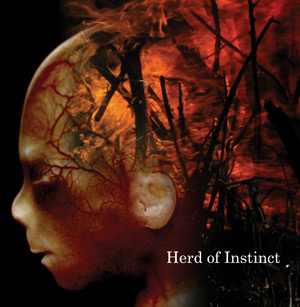
A trio of musicians based in Arlington (Texas), Herd of Instinct are one of the hottest new names on the vast progressive rock scene. The band was formed in 2007 by guitarist Mark Cook and drummer Jason Spradlin after the demise of their previous band, 99 Names of God, and started work on their self-titled debut immediately after the addtion of guitarist Mike Davison. The album, finally released in May 2011 on Djam Karet’s new label, Firepool Record, sees the collaboration of an impressive roster of guest musicians, including Djam Karet’s Gayle Ellett, German guitarist and composer Markus Reuter, and celebrated drummers Gavin Harrison, Jerry Marotta and Pat Mastelotto.

The connection with Djam Karet, one of the few genuine cult bands on the whole progressive rock scene, undoubtedly creates expectations of intricate yet dynamic instrumental music – and this is exactly what Herd of Instinct offer in their debut (in spite of the presence of one track with vocals). Instrumental prog bands are often outstanding, and also tend to branch out far more than bands that prominently feature vocals. In a way, the instrumental dimension, fuelling the eclecticism that is an essential component of truly progressive music, allows musicians to explore avenues that sometimes are limited by the presence of a singer, and experiment with different aspects of sound (including pauses of silence) and the creation of a wide range of moods.

Gloriously omnivorous and unabashedly bold, Herd of Instinct stake their claim on the territory where King Crimson held sway for 35 years. Even if Fripp has made a comeback of sorts in very recent times with the excellent A Scarcity of Miracles, Herd of Instinct’s debut brings back memories of state-of-the-art instrumental masterpieces such as “Larks’ Tongues in Aspic”, “Fracture” or “The Sheltering Sky”-  a towering, multilayered achievement marrying flawless technical skill with a healthy dose of emotion, a feast of haunting soundscapes and jagged rhythms that seems to epitomize the very idea of progressiveness.

Clocking in at about 48 minutes, Herd of Instinct features 10 relatively short tracks that are nevertheless packed with changes in tempo and mood, striking an admirable balance between edginess, melody and atmosphere “Transformation” introduces the album in brooding, highly cinematic fashion, with pounding drums and piano, ominously surging keyboard waves and tinkling bells. With the following track, “Room Without Shadows”, things take a decidedly heavier turn, the spacious orchestral effects already featured in the previous number blending with borderline metal riffing, and a stunning guitar solo that would not be out of place on an album like Starless and Bible Black. The gorgeously muted, Eastern-tinged opening to “Road to Asheville”, with its haunting flute, sitar and ethnic percussion, suddenly shifts into a crushingly heavy, riff-driven passage, ending on a mournful note with slow, acoustic guitar chords: while the aptly-titled “Hex” (the perfect soundtrack for some horror movie) opens with eerie electronic effects and then, slowly but inexorably, gains intensity, with crashing cymbals and spiky riffing opening in a marvellous guitar solo. “Anamnesis” is very much in a similar vein, a veritable feast for guitar lovers fuelled by spectacular drum work (courtesy of King Crimson’s very own Pat Mastelotto), with loops and other electronic effects depicting a richly emotional soundscape.

“Blood Sky”, the only track featuring vocals, is one of the undisputed highlights of the album, a haunting showcase for the husky, understated vocals of former 99 Names of God singer Kris Swenson. Mellotron and marimba add subtle atmospheric layers to the spectacular guitar interplay, fleshed out by stunning percussion patterns.”Vibrissa” and “Possession” pursue a similar route, the former slow and measured, with interlocking guitar lines and soloing alternating between wildness and melody; the latter sparse and percussion-driven, with understated guitar work enhanced by snippets of wailing vocal samples. On “S. Karma”, the echoing, almost liquid sound of Mike Cook’s Warr guitar comes into its own, offset by an uncharacteristically aggressive flute solo that seems to mimic the heavy riffing. Closing track “The Face of Another” presents a basic power trio configuration assisted by electronics that provide a range of interesting effects as a background for Cook’s splendid guitar excursions – like a 21st-century take on King Crimson’s iconic “Discipline”.

Herd of Instinct is one of those rare debut albums that are practically perfect in every respect, and need no suggestions for further improvement. An absolute must for fans of King Crimson, it will delight devotees of complex, hard-edged yet atmospheric prog, and those who are somewhat weary of technically competent bands that are sorely lacking in the originality department. With outstanding (though slightly disturbing) cover artwork and photography,  as well as excellent production by guest bassist/Warr guitarist Dave Streett, Herd of Instinct can be hailed as a serious contender for best release of 2011.

Links:
http://www.wix.com/herdofinstinct/herdofinstinct

http://www.myspace.com/herdofinstinctband

http://www.cdbaby.com/Artist/HerdofInstinct

http://www.djamkaret.com/disc-fr001.php

In spite of the difficult economic times, and also of the prevailing “the grass is greener” attitude, in 2011 Europe is all set to offer an almost unprecedented range of progressive rock (and related) festivals – in sharp contrast with the (hopefully temporary) demise of both NEARfest and CalProg in the North American continent. In the past few weeks I have come across no less than four announcements of respectably-sized events taking place in various part of the boot-shaped peninsula.

The first edition of the Civitella Progressive Rock Festival will be held at the sports centre of the town of Civitella Paganico, in the Tuscan province of Grosseto, starting on July 16 with guitarist Alex Carpani and Pink Floyd tribute band Time Machine, and then continuing on the weekend of July 22/23  with Classic ELP Tribute, local band Gran Turismo Veloce and legends Le Orme (July 22), and The Watch opening for Fish (July 23).

On the same weekend (July 22-24), the festival We Love Vintage will be held at the sports centre Due Madonne in Bologna, with an impressive lineup featuring well-known names of the classic prog era such as the new supergroup CCLR (with Bernardo Lanzetti, and Aldo Tagliapietra as a special guest) and Arti e Mestieri with Mel Collins and David Cross, as well as up-and-coming acts such as Paolo Schianchi, Alex Carpani, Ego, Altare Thotemico, Stereokimono, Mappe Nootiche, Astralia, and Bologna’s own Accordo dei Contrari (with legendary ‘voice of Canterbury’ Richard Sinclair as a special guest).

In the same week, on July 21, the Austin-based duo WD-41 (recently interviewed here) at the Portello River Festival in Padova, an event that is sure to appeal to those with a keen interest in experimental and world music.

While the month of August in Italy is traditionally dedicated to vacation, progressive rock will make a comeback in September with another two extremely intriguing events. The 2 Days Prog Veruno will take place at the Piazzetta della Musica in the town of Veruno, in the Piedmontese province of Novara. This year the festival, in spite of its name, will last 3 days instead of two (September 2-4), and its exciting lineup will feature Italian acts such as Alex Carpani Band, Methodica, Il Tempio delle Clessidre, Arti e Mestieri (again with Mel Collins and David Cross) and Goblin, alongside celebrated international acts such as RPWL, Anathema, Riverside and Agents of Mercy.

This staggeringly rich season of music will be wrapped up by the Progressivamente Festival held at the Casa del Jazz in Rome on the following week (September 6-11). The event, dedicated to the memory of Italian musician and Chapman stick virtuoso Virginia Splendore (who tragically passed away at the end of May 2011), will offer a veritable ‘who is who’ of classic and modern Italian prog, with bands such as Il Tempio delle Clessidre, Locanda delle Fate, Murple, Fonderia, Metamorfosi, Le Orme and Banco del Mutuo Soccorso, as well as Gentle Giant offshoot Three Friends and tribute acts Us and Them, Goblin…Rebirth and Progtop. An additional feature of the event will be listening ‘seminars’ for audiophiles comparing analog and digital recordings of the great prog albums of the Seventies.

As unbelievable as it may sound to my American readers, some of these events will be free of charge, or have a very accessible price (no higher than 20 euros).  Whoever is planning a trip to Italy in the summer months may be interested in planning things so as to be able to attend at least one of those concerts, which will offer the added bonus of great surroundings and excellent food and drink.

Links:
Civitella Progressive Rock Festival: http://www.synpress44.com/01Comunicati.asp?id=1113

We Love Vintage: http://www.welovevintage.it/

Portello River Festival: http://www.riverfilmfestival.org/PRF7.pdf

2 Days Prog Veruno: http://www.lastfm.it/festival/1936079+2+Days+Prog+Veruno

Progressivamente Festival: http://www.progressivamente.com/


This is the kind of post I would have never wanted to publish. Even if most of my readers think I am very good with words, there are circumstances in which I find myself completely at a loss, and feel that whatever I say will ring hollow and contrived.

Less than an hour ago, through my Facebook contacts, I learned of the tragic death of Alberto Bonomi, keyboardist of D.F.A, one of the best progressive bands to ever come out of Italy – a review of whose fourth and final album I had posted here a few months ago. I had met Alberto and his bandmates two years ago at NEARfest, and fallen in love with their music, so I was sad to learn that the band had called it a day because of the all too usual clashes between the life of a musician and family and work commitments. However, the terrible news of Alberto’s passing in a car accident have put things in a very different perspective.

As soon as I read the news, I walked to my player and put 4th on, my heart heavy with sadness. As someone who has lost quite a few loved ones in the past few years, my thoughts immediately went to Alberto’s family and his former bandmates. The sense of sadness that I am experiencing now is not just for the loss of an outstanding musician, but for the loss of a man who, at 48 years old, was just 3 years younger than me, and whose untimely demise is going to leave a hole in many people’s lives that not even the passing of time will ever completely fill.

My dear readers, as corny as it may sound, the bottom line is, life is short, and we are all hanging by a thread. Let us make the most of what we have today, instead of wasting it by wallowing in negativity and resentment. Let us celebrate Alberto’s life today by playing his wonderful music, the legacy he left to the world, and remember that music is, and always will be, one of the most powerful, life-affirming forces. Thank you, Alberto, and goodbye…

On June 25, 2010, the very first post on Fire of Unknown Origin was published. It was a very short statement of intent, no more than a couple of sentences, illustrating to my would-be readers what this blog was going to be like. At the time, I was still writing for another prog-based site, so the blog was meant to host reviews of older (and often rather obscure) material, mainly revamped versions of reviews I had already posted elsewhere in the early years of my ‘career’. With a growing backlog of to-be-reviewed CDs (which eventually reached the staggering number of 80), there was simply no time for me to do anything else – such as writing brand-new reviews of some of the lesser-known albums in my collection.

However, as my regular readers will already know, things changed quite fast in the following months, and, at the beginning of October 2010, the first reviews of recently-released albums started to appear. The floodgates were open, and the older stuff – now tagged, in not completely original fashion, as ‘from the vault’ – eventually took a backseat to the new. After a relatively brief adjustment phase, the monthly post count began to climb, and so did the views. The end-of-year stats for those mere 5 months of operation were extremely flattering for a venture started in such an unassuming way. But the best was yet to come…

In the following six months, Fire of Unknown Origin has received almost 9,000 views, with some articles garnering a level of success that I would not have foreseen when I decided to start my own blog. The two essays written as a consequence of the cancellation of NEARfest 2001 were viewed over 600 times altogether, and sparked a lively debate with over 60 comments. Moreover, though  there is obviously a core of loyal readers and subscribers, the number of people who have stumbled upon the blog, or been otherwise directed to it by well-placed links, seems to be steadily growing. This has encouraged me to strive for quality, and avoid giving in to the temptation of writing a higher amount of shorter, more superficial reviews. Each and every one of my posts has a lot of work behind it, and obviously the frequency of the postings depends on a number of factors – such as occasional bouts of writer’s block versus periods of high inspiration. Even if I am my own boss and have no deadlines to honour, I am as disciplined a writer as I can, and try not to keep the artists or labels that send me their material waiting too long.

In the past few months, Fire of Unknown Origin has expanded from a mere repository of reviews to something on a larger scale, in spite of the constraints inherent to any one-person operation. My very first interview was posted a few days ago, and reviews of live events have already become a regular feature. I also hope to include more press releases to inform my readers about events of interest, especially those happening in my native Italy. While progressive rock has been the blog’s main thrust since its inception, I will continue to publish reviews and articles covering other genres that can be seen as tangential to prog, from classic rock to jazz to world music, reflecting the constant expansion and growth of my own musical tastes.

Even though I am on the verge of starting a new collaboration with a rather high-profile website, I will not put Fire of Unknown Origin on the back burner, but keep it up and running as a parallel project to host reviews and articles on music-related issues. I am proud to say that this blog has probably been the greatest success story of my life, and the friendships and interesting contacts that were born out of it more than make up for the lack of that financial reward that these days seems to have sadly become the be-all and end-all of many people’s  lives.

Therefore, I wish to thank all of you who have been supporting this blog since its earliest days, as well as those who have come to it in more recent times – the artists and label owners who have encouraged me with their praise and given exposure to my writings, the friends who have become regular guests, and also  those who have chanced upon it through Google searches. I hope to keep delivering the goods for a long time yet!

TRACKLISTING:
1. Suite: Yehsu Beelzebobs (8:07)
2. Nauxluv (2:35)
3. The Ballad of Bobby (2:17)
4. Own Best Friend Today (4:08)
5. Bobby’s Lament (1:35)
6. Tatisef/Hatihafren (3:59)
7. A Party of Friends (6:49)
8. R Time (3:22)
9. War on Friends (10:43)
10. Forever After (6:29)

LINEUP:
Derek Campbell – vocals, guitar, voice of  Advertisement, voice of Friends
Micah Carbonneau – drums, percussion, bass, upright bass, guitar, keyboards, vocals, voice of Bobby
Luke Laplant – baritone saxophone, E.W.I. , keyboards

With:
Alex Wolston – trumpet (3, 9)
Natalie Cooper – vocals, voice of Mary (4, 7)
Megan Garrity – voice of Bedsy (7)

“Zappa is dead, long live Zappa!”… This could be a perfect caption for Believe in Your Own Best Friend, Electric Sorcery’s third album. The über-eclectic outfit, hailing from Vermont’s Northeast Kingdom, first came to my attention when I reviewed their second release (simply titled Electric Sorcery II) couple of years ago. A dynamic power trio with a twist, whose individual members have played in a number of local bands since the early Nineties, Electric Sorcery are one of the most potentially exciting bands I have happened to come across in my years as a reviewer. With that genuinely omnivorous attitude that is the trademark of the best progressive rock acts, for their third CD release they have taken the plunge and adopted the loved/loathed ‘rock opera’ format, which over the years has produced a number of masterpieces, but also quite a few turkeys.

Quite busy as a live band on their home turf, Electric Sorcery often play covers alongside their original material, with Frank Zappa as ne of the mainstays of their repertoire. While Zappa’s influence on many bands of the RIO/Avant persuasion is quite evident, no one had yet had the audacity to attempt a recreation of his more irreverent, censorship-prone material, rather than the sophisticated jazz-rock of albums such as Hot Rats or Apostrophe.  However, Electric Sorcery have done it, and concocted a whole album revolving around as outrageous a story as they come, which seems to be a perfect fit for the general socio-political climate of the early 21st century – though  viewed through a grotesque filter rather than in the gloomy, dystopian terms of the likes of Queensryche’s Operation:Mindcrime.

On the band’s website, the album is introduced by a hilarious ‘warning’ note (as in a send-up of those “parental advisory” stickers) that quotes Zappa’s own words, as well as mentioning the evils of cable TV. Based on an idea by drummer Micah Carbonneau and developed in writing by guitarist/vocalist Derek Campbell, the background story (the titular ‘best friend’ being a nickname for an electronic sex aid) throws in such taboo subjects as murder and cannibalism, together with the relatively tamer issues of sex with underage partners, drug use, and the inevitable political shenanigans, wrapping things up with a global-scale war. Undoubtedly an outlandish, over-the-top tale, it is also oddly intriguing, in spite of its overtly seedy nature (which is likely to put off the more strait-laced listeners).

Though the music might be expected to take a back seat to the story, it nevertheless manages to break through even the most manic singing episodes, as immediately displayed in album opener “Suite: Yehsu Beelzebobs”, a number of astounding complexity, peppered with sound and vocal effects, and introducing the album’s leitmotiv. Campbell’s deep baritone voice often sounds like a dead ringer for Zappa’s, and the head-spinning tempo changes and sultry sax solo at the end are sure to catch the attention of sophisticated listeners. The following track, “Nauxluv”, introduces one of the distinctive elements of Electric Sorcery’s musical melting pot, a jaunty reggae rhythm punctuated by Luke Laplant’s sax.  After “The Ballad of Bobby”, a brief, subdued instrumental interlude featuring the slow, mournful surge of guest Alex Wolston’s trumpet, the upbeat mood of the first two tracks is reprised  in “Own Best Friend Today”, one of the main narrative pieces with plenty of vocal interplay, and great sax and drum work to push the musical component to the fore.

The second instrumental interlude, the country/folk-tinged “Bobby’s Lament”, acts as a gateway of sorts to the second half of the album, decidedly more experimental in tone than the first. Narrative pieces like the theatrical, drum-powered “Tatisef/Hatihafren” and the chaotic “Party of Friends”, laden with distorted vocals and electronic effects, are balanced by the mainly instrumental direction of the last three tracks, in which the band veer towards decidedly psychedelic territory. While “R Time” features very expressive vocals by Campbell (who is an excellent singer, as I first noticed when reviewing the band’s previous album), “War on Friends” (at over 10 minutes, the longest number on an album clocking in at a very restrained 48 minutes) and “Forever After” have the sparse, loose feel of a jam session, relying heavily on spacey guitar and keyboards, burbling sound effects and dramatic cymbal crashes that create an ominous, cinematic soundscape. While the unstructured nature of these tracks might put off those listeners who like more disciplined compositions – as well as those whose main interest lies in the story line – they provide a fitting conclusion for such an unabashedly wacky, anarchic effort.

Though Frank Zappa is very openly referenced on the album, both musically and lyrically, it would be unfair to call Believe in Your Own Best Friend derivative. It should rather be seen as a heartfelt homage to one of the few genuinely revolutionary musicians in the history of rock, and also as a brave proposition for a band who is still an unknown quantity in most prog circles. Even if I am not completely sure that such an idiosyncratic album may be the most effective way to put them on the extensive prog map, it is an entertaining, lovingly crafted disc by a trio of open-minded musicians who obviously do not care about fads or labels, and will keep on doing the music they want for as long as they enjoy it. The album can be downloaded from the Bandcamp link below.

Links:
http://lyndonunderground.com/electricsorcery.htm

http://electricsorcery.bandcamp.com/album/believe-in-own-best-friend

SETLIST:
Black Country
One Last Soul
Crossfire
Save Me
The Battle for Hadrian’s Wall
Beggarman
Faithless
Song of Yesterday
The Outsider
Cold
The Ballad of John Henry
I Can See Your Spirit
Sista Jane

————–

Man In the Middle
Burn

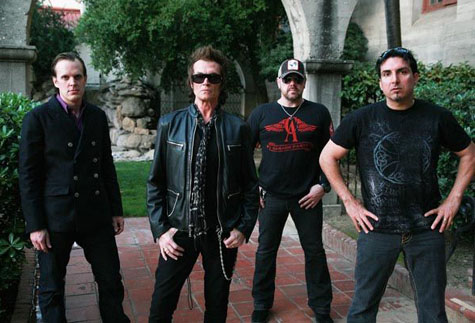
Even though this blog is mostly focused on progressive rock in all its forms, I am, and always have been, a fan of good, old-fashioned hard rock. As much as I love the sophistication and intellectual appeal of prog, there is something about the powerful wail of a cranked-up electric guitar, or the equally powerful roar of an iron-lunged vocalist that appeals to both the physical and the emotional side of my nature. It is no wonder, then, to find an album like Black Sabbath’s Heaven and Hell in my personal Top 10 – and no wonder either that a band like Black Country Communion, in the ten months since the release of their debut album, has immediately become such a firm favourite that both their CDs get almost daily spins in our player.

When the band’s formation was first announced, the presence of Glenn Hughes alone would have been enough to attract my interest, as he has been my favourite vocalist for the past ten years or so, even over such luminaries as Ronnie James Dio and Ian Gillan. The first time I saw him perform live, at London’s Mean Fiddler club in October 2003, as soon as he started to sing my jaw dropped on the floor and stayed there for the whole duration of the concert. I have also been following his career closely, and acquired quite a few of the numerous albums he has released over the years – including the near-legendary Hughes-Thrall album (originally released in 1982), and his collaborations with another rock legend, Black Sabbath guitarist Tony Iommi.

However, nothing could have prepared me for the sheer magnificence that is Black Country Communion.  Even though supergroups can often be rather hit-and-miss affairs that hardly ever last beyond one album, scuppered by ego clashes or by just failing to deliver the musical goods, BCC are all set to become the glaring exception to the rule. While snobs might superciliously label them as a retro or nostalgia act, accusing them of rehashing old modes of musical expression, or cashing in on some members’ erstwhile fame, in my humble view they possess the same classic, timeless quality of those dishes or items of clothing that never go out of fashion. There is something deeply comforting in the knowledge that, on a music scene all too often dominated by fads, where most of the offer seems to be little more than a triumph of style over substance, there are still artists that choose to play the music they want, and use the same strategies as the trailblazers of the late Sixties – writing brilliant material, releasing albums every few months or so (instead of keeping fans waiting for years), and – most importantly – performing their music on stage, where it really belongs.

Indeed, while  probably a good half of current prog releases are studio-only projects (sometimes carried out through the Internet), Black Country Communion’s music begs to be played in front of an audience. While each of the four members could live comfortably for the rest of their lives without having ever to tread the boards of a stage again, seeing them perform on the evening of June 19  confirmed that this is an outfit tailor-made for raising hell in a live setting. The 9.30 Club – a no-frills venue situated in a slightly seedy (though full of character) neighbourhood of Washington DC, with no seating except for a handful of bar stools, a balcony and a stage raised high enough to make it visible even to small people like me – provided the perfect locale for a profoundly satisfying evening of loud, passionate, flawlessly performed, bluesy hard rock – the kind of entertainment that leaves you physically drained because you have been standing up for over three hours in close proximity to other equally excited fans, dancing, yelling, singing along and pumping your fists in the air, while being hit by the full force of the sound blasting out of a stack of Marshall amps. Indeed, quite a change from being comfortably seated in a theatre, listening intently to the elaborate musical concoctions of your average prog band…

The sizable crowd was a mix of the older and the younger generations; some audience members had brought their children with them, as living proof of BCC’s timeless appeal – unlike, I am sorry to say, far too many stuck-in-a-time-warp progressive rock acts. I had noticed the same thing at the Blue Oyster Cult show in Baltimore, back in February – there is a reason why such bands are often  called ‘classic rock’. When we got in, securing a nice position a few feet from the stage, the anticipation was palpable. At 8 p.m., the lights dimmed, and Wagner’s “Ride of the Valkyries” started blaring from the PA, eliciting a round of excited yells from the audience. A bit clichéd maybe, but a fitting introduction to one of the very best concerts I have been fortunate to attend.

The concert was the last date of the band’s first US tour – expected, as Glenn Hughes repeated on several occasions, to ‘build a foundation’ for a band that aims to fill a void in the current music market – judging from the comments gathered around the Web, an unqualified success in spite of its short duration. With no opening act, the audience was allowed to concentrate completely on BCC’s show, introduced by the formidable one-two punch of “Black Country” and “One Last Soul” (from the band’s debut album). As expected, Glenn Hughes totally owned the stage, wielding a nicely battered, vintage red and white bass, and displaying a level of energy that many people half his age (he will turn 60 at the end of August)  would kill for. As soon as he opened his mouth to belt out the first lines of the pulsating anthem “Black Country”, there was no doubt that he amply deserved his nickname of ‘The Voice of Rock”.  Most of those who have been lucky to see him live will wonder how those golden pipes of his can withstand the strain of singing with that kind of intensity night after night. Though some people cannot warm to his voice, and are annoyed by what they perceive as over-the-top vocal acrobatics, I am happy to report that he has toned things down considerably, his voice adapting to the music rather than the other way around.

Indeed, BCC is not a Glenn Hughes vehicle, but very much of a tight unit in which everyone works towards the final result. No one with a large ego would share vocal duties with someone as gifted as Joe Bonamassa (whose voice sounds at times like a higher-pitched version of Paul Rodgers). Glenn is also a fine lyricist, capable of penning standard rock anthems as well as deeply emotional pieces, such as the ones dealing with those dark years when he came very close to self-destruction. For somebody who has stared in the face of death, and lost many a good friend in recent years (including his childhood friend and fellow Trapeze member, Mel Galley), he is in superb shape, and his positive attitude  to life is to be commended in an age when people seem to enjoy wallowing in negativity. He is also one of those rare singers whose voice has actually improved with age, in spite of his struggle with various addictions. While in his Trapeze and Deep Purple days Glenn’s voice had occasionally sounded a tad shrill, now it has acquired a depth and versatility that, coupled with his awesome range, allow him to sing just about anything with stunning results.

Though they have been jokingly called “Purple Led” or “Deep Zeppelin”, BCC actually do not sound anything like Hughes’ former band. On the other hand, the Led Zeppelin comparisons are certainly more appropriate: Joe Bonamassa is the 21st century’s answer to Jimmy Page, and has also stepped into the void left by Gary Moore’s unexpected passing in February 2011. In a scene riddled with shredders, Bonamassa’s brilliantly emotional playing and considerable songwriting skills (as shown by “The Battle of Hadrian’s Wall” and “Song of Yesterday”, the latter possibly the highlight of the whole set) are a breath of fresh air, proving once again that great music does not necessarily have to break new ground each and every time. On stage he employed a nice array of guitars, including a double-necked one for the wistful, folk-tinged “The Battle for Hadrian’s Wall” (stirring memories of the immortal “The Battle of Evermore”), and a Flying V for the two encores – as well as a spot of Theremin towards the end of the set.

Keyboard maestro Derek Sherinian plays an even larger role on stage than he does on record, putting to rest any allegations of BCC being a power trio with just a token helping of keyboards. His maple-encased Hammond B-3 provided that indispensable background rumble (though at times it tended to overwhelm the vocals); he also performed the only solo spot of the evening. Jason Bonham pounded away at his rather understated kit (especially if you are used to the likes of Mike Portnoy) with enthusiasm and precision – clearly a very capable drummer in the no-nonsense mould of his father or Cozy Powell, and perfectly suited to the band’s sound, which does not need fancy flourishes, but rather solid, powerful time-keeping. Until halfway through the set, both him and Sherinian looked dead serious, almost grim – but then both of their faces lit up when Hughes heaped lavish (and clearly heartfelt) praise on his fellow band members. The deep personal bond between the four players is clearly the secret to BCC’s success, and bodes very well for the band’s future endeavours.

Besides 8 out of 11 tracks from the band’s second album (released only a few days before the gig),  the stunning two-hour set featured a selection of songs from their debut, the gorgeous, slow-burning Bonamassa composition “The Ballad of John Henry” (from his 2009 album of the same title), and a blistering rendition of Deep Purple’s “Burn” as a final encore, with its iconic Hammond riff and Hughes screaming his heart out as he did almost 40 years ago at the legendary California Jam. Though I was a bit disappointed about the absence of personal favourites such as “Medusa” or “Down Again”, BCC’s performance was so exhilarating that it left no room for minor quibbles. In spite of the feeling of physical exhaustion and the ringing in our ears, we were left wanting more, and the promise of another US tour next year filled us with joy and anticipation. Clichéd as it may sound, Black Country Communion have really put the “super” back in “supergroup”. Long may they reign!


SETLIST:
July, July!
Down by the Water
Calamity Song
Rise to Me
The Bagman’s Gambit
Annan Water
Won’t Want for Love (Margaret In The Taiga)
The Crane Wife 3
Don’t Carry It All
All Arise!
The Rake’s Song
Rox in the Box
O Valencia!
The Perfect Crime #2
This Is Why We Fight

January Hymn
When U Love Somebody
The Chimbley Sweep

June Hymn

The arrival of warmer weather heralds the start of the big concert season in the northeast US, taking full advantage of the many capacious outdoor venues of the region, as well as the usual indoor venues of every size that are available throughout the year. Obviously, concerts are also held during the colder months, but especially in the summer the offer of live music is so plentiful that even the most dedicated fans must pick and choose what gigs to attend – unless they have an endless supply of time and money.

According to our original plan, at the end of this week my husband and I would have headed out to Bethlehem, Pennsylvania, for our third NEARfest. As most of my readers know all too well, the event was not meant to be, but we found ways to fill the gap in the month of June, picking and choosing among the vast range of live gigs scheduled in our area. Our choice fell on two bands that, in their own very different ways, have become mainstays of our listening routine: The Decemberists and Black Country Communion – one an established outfit with six studio albums under their belt, the other  the latest supergroup to take the rock scene by storm. Neither of those bands, strictly speaking, are ‘prog’, though they have quite a few points of contact with the genre, and both have often been covered by magazines and websites geared towards prog fans.

We had been so lucky as to see The Decemberists for the first time on their celebrated 2009 tour in support of their fifth studio album, The Hazards of Love, a monumental achievement that won them many fans among the often rather conservative ranks of prog lovers. On that occasion, they were joined by Becky Stark and Shara Worden, the two amazing female vocalists that had guested on the album – which was performed in its entirety, much to the audience’s ecstatic reaction. On the other hand, their latest recording effort, The King Is Dead – a slice of song-oriented Americana, offering very little of the intriguing eclecticism of its predecessors, released at the very beginning of 2011 – had left me somewhat cold. We were nonetheless delighted to learn that they would be playing the same venue as two years ago – the quaintly bucolic Merriweather Post Pavilion, a largish outdoor theatre deep in the Maryland woods, almost a stone’s throw from Baltimore.

Such rustic surroundings seem to be the perfect complement for the warmly engaging music of the Portland-based quintet, a seamless blend of articulate, often challenging lyrics and eclectic music rich with diverse influences. In sharp contrast with the suffocatingly humid heat of the previous week, the cool, dry weather of the evening of June 13 made being outdoors a real pleasure – to the extent that some of the people sitting on the lawn rather than under the pavilion were longing for warmer clothing. Our excellent seats allowed us a great view of the stage, and the two big screens placed on either side were a boon to those who were sitting at the back. If compared to the prog gigs and festivals that we usually attend, the nearly sellout crowd was much younger on average, with a definitely higher proportion of women to men. Even if, in my personal view, The King Is Dead is probably be the weakest of the band’s releases, it has undoubtedly been a relatively major commercial breakthrough for them, exposing them to a much larger audience. It also shows a band refusing to get stuck in a rut or taken for granted, and more than willing to surprise their audience with bold changes of direction.

After  a short opening set by supporting band Best Coast, a rather nondescript, female-fronted indie/garage rock outfit who nonetheless seemed to have their own loyal following, The Decemberists came on stage at 9 p.m., greeted deliriously by the crowd. Stripped down to their basic line-up of Colin Meloy, Chris Funk, Nate Query and John Moen, with bluegrass artist Sara Watkins standing in for Jenny Conlee (who is undergoing treatment for breast cancer), they delivered a strong, invigorating set, mainly revolving around The King Is Dead (performed almost in its entirety, with the exception of one track), but also including a number of songs from their back catalogue. According to Meloy, the songs on the setlist had been chosen for their affinity with the summer season – the show opening with the infectious “July! July!” (from their 2006 album The Crane Wife), and  closing with “June Hymn” (from The King Is Dead), performed as a second and final encore.

Though, from a prog standpoint, The Decemberists’ music is not as mind-blowingly complex as the genre’s most beloved bands’ – relying as it does on conventional song structures and the occasional catchy hook – there is no denying that the band’s members know their business, and then some. Watching bassist Nate Query swing a double bass around with the nonchalant ease of a consummate old-school jazz player, drummer John Moen add subtle, intriguing percussive touches, or guitarist Chris Funk wring poignantly wailing sounds from his lap steel guitar, was a feast for the eyes as well as the ears. Sara Watkins (a recording artist in her own right, and already part of the tour prior to the announcement of Conlee’s illness) is also an outstanding multi-instrumentalist, though favouring the fiddle rather than the keyboards. She is also a fine singer, as proved by solo performance of “Won’t Want for Love” – though her voice has more of a gutsy rock feel than Becky Stark’s ethereal soprano, featured  in the song’s original version. Indeed, while the distinctive rumble of Conlee’s Hammond organ may have been missing, Watkins’ talented contribution complemented the alt.country slant of the newer material quite perfectly.

In spite of his nerdy, bookish appearance (this time around tempered by a full beard, which made him look somewhat older and more rugged), Colin Meloy is an outstanding frontman, not afraid to dive into the audience together with his acoustic guitar to be hauled back on stage by the crowd during the rousing encore of “The Chimbley Sweep”, and not averse to peppering his between-song banter with bits of pointed political commentary. While his voice may be an acquired taste, it fits the band’s music to a T, and his witty raconteur personality is undeniably pivotal to their appeal. Furthermore, he is an extremely versatile interpreter, conveying a sense of genuine menace in the stunning rendition of “The Rake’s Song” (one of the highlights of the show, drenched in dramatic red light, and enhanced by Sara Watkins and Chris Funk’s energetic drum-banging), while pleading heartbreakingly in “Annan Water”, and orchestrating the crowd’s enthusiastic response in the eminently catchy “O Valencia!” and “The Perfect Crime # 2”.

As I previously pointed out, I was not as impressed by The King Is Dead as I had been by The Decemberists’ other albums, which all get regular spins in our player. However, the same songs that had sounded a tad flat and uninvolving on CD came alive on stage, and acquired an appealing edge that the polished production did not always adequately get across. For all the polite, somewhat highbrow mien of their music, once on stage they rock with an endearingly old-fashioned intensity, getting the crowd to sing along, clap, dance and wave their arms in tried and true rock’n’roll fashion. Even in the absence of elaborate trappings and gimmicks, and relying only on a good light show and their own stage skills, The Decemberists are one of the most entertaining live acts on the current scene, capable of imbuing their musical output with a rare sense of warmth and genuine emotion. The more listener-friendly approach displayed on The King Is Dead  may have attracted a younger, hipper audience, but this has not turned them into one of those countless “here today, gone tomorrow” bands. With a solid catalogue, a cohesive, highly accomplished line-up and a great songwriter and frontman in Colin Meloy, The Decemberists are a force to be reckoned with, and –  regardless of those pesky tags and labels – a band firmly rooted in that great rock tradition that prog sometimes seems to have  forgotten.