Feeds:
Posts
Comments

It is my pleasure to present the very first guest review to be featured on my blog – a wonderful account of Van der Graaf Generator’s Rome show written by my dear friend Victor Andrei Părău, a professional musician whom ProgArchives regulars will remember by his screen name of Ricochet. Enjoy!

————————————————————————————————-

Such a great concert.” That was all I managed to write down, three days after returning home. Surely, a Van der Graaf Generator concert has to be more inspiring than that.

Well, my first impulse was to catch a flight to the nearest stop of their spring tour, since they did quite an arch throughout Europe after playing several times in England. It is perhaps strange for some, this express desire to finally see one of your favorite bands on stage, to make on your own all the right moves in order to accomplish that, to travel and make a special case out of it, or even to think of it as something to be done “at least once in your lifetime”. Yet, to be honest, most of the concerts I’ve attended were this emotional. While I do already have a strong backup of jazz or experimental concerts, should Jethro Tull’s progressiveness be up for debate (I think that’s the trend lately) and also not count a few less evoking names, then what Van der Graaf offered was quite the first fully ranked progressive rock concert for me, in all its details – from the atmosphere down to the trio’s own manifest.

Time affecting bands was never a hot topic for me, although many groups have embarrased themselves – some still do. Make no mistake, time is ticking loud enough for VdGG themselves. Peter Hammill looks the most dried up; even Guy Evans’ look isn’t as badass as it was a couple of years ago. In contrast, Hugh Banton’s appearance is elegant and humble, something further proved by how he looked so zen at the keyboards, playing his part, more so brilliantly.  But their reunion is truly one of the most successful. The first great sign of this concert was to witness these seniors’ instrumental skills, as good as ever, most of the times veraciously energetic, even with a tinge of crassness, with all their trademark accents and maddening difficult rhythms, something they’ve never let go of.

Of course, I did miss the best rides of their comeback, those up until 2007, highlighted by the live gem Real Time, if not by the work on Present as well, which I always considered to be a great album, with its clever duality. I’ve seen enough fans being a little more sceptical  when it comes to the new trio form and their recent acts. While preparing for the trip, I caught news of this tour’s first shows being heavily focused on the new material, while later mixing it with the heavily desired classics. Actually, if you check the Live List on their homepage, this is all pretty relative. Nevertheless, let’s just say the Rome concert was one of the odd-numbered ones or something, indeed promoting the new stuff, with the old tracks being the high points. Hammill even joked about it a bit when announcing they will move on to something “vecchioma non troppo vecchio”.

Oh right, Rome! Well, Prague would have initially been my pick, had it not taken me a total of two days just to travel by train back and forth. There was no window for me to go to the smaller town of Cesena, so it had to be the Eternal City, adding touristic pressure to the entire trip. By the end of a five-day experience, it was hard  to consider that I went there just to see the guys. The Auditorium Parco della Musica was a destination in itself, with exhibits taking place in the Luciano Berio Largo, with chatty and modish people at the coffeehouse making me look like a peasant, with Mahler’s Ninth playing at the same time in another concert hall. I was definitely split in many sides that evening: one completely burned out after seeing Ancient Rome the whole day, one being, of course, the eager music fan and a third moderating, as in trying to keep the first alive and the second from pretentiously picking the pulse, thus simply enjoy the whole thing. As I waited for the M bus to arrive and take me to the Auditorium, along with a rather impatient British old lady and a German couple of the same age, I feared I might actually be among the youngest spectators. Fortunately, the public proved to be mixed: genuine rock enthusiasts and Graaf fanboys, people who had forgotten to change their clothes since the ‘70s, young bloods equally interested.

The screechy “nearer and nearer” (constantly misheard by me as mirror, mirror) chorus, or even the keyboard polyphonic frolics from Interference Patterns could have proved annoying, but I felt it was a good opener. The chorus blasts were heavier than usual and the keyboard animation was also of great effect. As mentioned before, picking up the strange rhythms and intricate melodic patterns, all in heterogeneous time signatures, can be the first thing that connects you with the profoundly personal, however awkward, Van der Graaf spirit – something even Trisector, as shabby of an album as it is often credited, does manage. This, on the other hand, is the departure I regret on A Grounding in Numbers, an album I met with too great expectations, the positive reactions doing no good either. Actually, even without thinking about the past when listening to it  (which is indeed a rather bad viewpoint), I find very little substance in their new songs – or the slideshow itself. The trio picked the decent stuff from that album, avoiding, for instance, nutty songs on mathematics and such. First was Mr. Sands – a sort of odd character every band gives life to at some point (see R.E.M.’s Mr. Richards) – and the more halcyon Your Time Starts Now, with a first fully sonorous organ line from Banton. Hammill moved to electric guitar, acting clumsy between each piece to mask the seconds delayed by his preparations. The heavy instrumental verve returned with All That Before,  portions of an already towering intensity.

There was no greater enthusiasm than when the classics were played (a small sad side to it being  that it felt like they were the only thing the public was truly waiting for). Hammill did prepare us for them, yet, as the ovations interrupted the first line of Childlike Faith in Childhood’s End, it was clear the game would carry on. There was indeed more to it. When Hammill made his dramatic pause at “frightening in the silence”, someone from the audience jumped in, screaming the “sileeeeeeeeence” in perfect imitation. Hammill replied  faithfully. It was a bloody genius moment. Needless to say, at the end of the final triumphing choral of the piece, the audience jumped to its feet. It felt less great to follow up with irritating keyboard dialogues from All Over the Place, something matched on the new album only by the awful irregularities on Splink. I really enjoyed  Over the Hill next. It’s the most powerful separator between Trisector and A Grounding in Numbers, also linking closest to the old Van der Graaf, with its catchphrases, cold/pulsating transitions, lyrically & musically encompassing.

Finalmente there was Man-Erg, apparently a given in these concerts, proving even more what this band is all about. The sentimental, lyrical opening was never too comforting, while the thundering section was downright macabre and convulsive. At one point, Evans kicked the hell out of his small gong so much that he send it flying. People were shouting requests by the time of the encore, be it Sleepwalkers, Wondering or Necromancer (what!). However, it was Scorched Earth – probably my favorite VdGG of all time (but I could be biased to say that right now). I can’t think of a better encore that I’ve heard. Yes, it did lack Jaxxon’s crazy improvisations, but everything else was in place. It pierced through me entirely and it was mind-blowing. The lights were turned back on right after the trio left the stage, and the fans gave up too quickly.

So, going back to my first line, it was a great concert. Hammill’s vocals were slightly off, but I dare mention it again that all three of them were absolutely impressive at their instruments. Becoming their fan(boy) was a rough deal, so I’m pretty content with going all the way through this – except, perhaps, a couple more bits and pieces on their creation that aren’t quite put together, even now. Occasionally, it’s great to also hear others puzzle over what Van der Graaf were able to create, extending to how refined music sounded back in those days.

…okay, maybe it was my dad being so nostalgic. But my feelings persist.
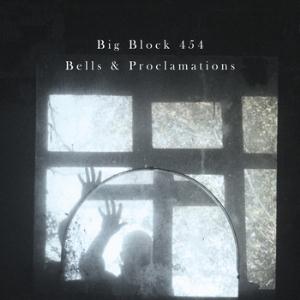
TRACKLISTING:
1. Pyjamageddon  4:16
2. Blind Jack of Knaresborough  4:21
3. Yockenthwaite  3:59
4. Metal Trees  4:52
5. The Cloud Of Unknowing 6:56
6. Blind Jack’s Unicycle 0:59
7. The Modern Architrave  5:43
8. Kirton In The Rain  3:55
9. Long Shore Drift  3:33
10. Rubber Road  3:16
11. Crossing the Bay 0:37
12. The Sun Unconquered  3:34

LINEUP:
Mark Joell – keyboards, tumbi, shouting through cymbals, funny vocals, funny handshake
Colin Robinson – 6-string fretless bass, corrupted vocals, shehnai, xaphoon, tablas, junk
Alex Stone –  guitar, accordion, kantele, portable harmonium, serious vocals

With:
Sean Corlett – voice (1)
Tim Bradshaw – trombone  (7)
Nastassja Joell – vocals (8,12)

In spite of England’s exalted status as the cradle of the original progressive rock movement, I do not get to review modern English bands very often. This week, however, I have chosen to devote both of  my new reviews to bands hailing from the British Isles, even if I can hardly imagine two acts as different from each other as purveyors of classy pop-prog Exhibit A and arch-experimental outfit Big Block 454.

Hailing from the north-western English city of Manchester – better known for its pre-Britpop scene of the early Nineties than for progressive music – Big Block 454 (named after a car engine developed in the Seventies) were founded in 1988 by Colin Robinson and Pete Scullion, and have been active since then, though in different configurations. Bells and Proclamations, their seventh album, sees them stripped down to a trio of multi-instrumentalists (including Robinson, the one constant member of the band) with guest musicians featured on some tracks.

Even a cursory look at Big Block 454’s back catalogue will clearly reveal their self-proclaimed nature as “a semi-amorphous post-modern / situationist neo-dada cross-platform compositional construct” rather than a band in the traditional sense. While quirky, absurdist titles such as Their Coats Flapped Like God’s Chops (their fifth album, released in 2004) might bring to mind post-rock bands, Big Block 454 are quite a different beast – a veritable melting pot of diverse influences and sources of inspiration, rendered in an outwardly conventional song form, with short, even snappy morsels which are instead densely packed with ideas and variations. This is art-rock in its purest and most literal form – indeed, in its earliest manifestation, the band provided the soundtrack for a Dadaist art installation. Though the easiest way to categorize Big Block 454 would be to place them squarely in the somewhat overcrowded RIO/Avant camp, if you expect something along the lines of the darkly mesmerizing chamber-rock of Univers Zéro or the Canterbury-meets-avant-garde compositions of Henry Cow, you will be disappointed. In fact, the band lean more towards the humorous side of the RIO/Avant spectrum, as embodied by the likes Samla Mammas Manna or Stormy Six, though with an uniquely British twist.

Armed with an impressive instrumentation, including both conventional rock staples and more exotic items, the band offer 12 tracks none of which runs longer than 7 minutes, and which might be very effectively described as deconstructed pop songs. While there faint mainstream suggestions to be found in Bells and Proclamations, they are treated as parts of a fascinating mosaic. Indeed, though the very first impression may be a bit too off-kilter for comfort, threads of melody will emerge from repeated listens, and the album as a whole may prove much less impenetrable than a lot of music bearing the RIO/Avant tag. Eclecticism is the name of the game here, and – though it will probably not have symphonic prog fans jumping for joy – the album will intrigue and reward motivated listeners.

All of the 12 numbers feature vocals, and the vocal style adopted by the members of the band complements the music perfectly – deep-toned, not exactly melodic, yet oddly catchy, occasionally even infectious. Opener “Pyjamageddon” immediately sets the tone, both with its quirky title (used as a chorus of sorts throughout the song) and its extensive use of electronic effects, enhancing an almost danceable tune that might bring to mind some instances of techno/house music. The next two songs develop in a similar vein: “Blind Jack of Knaresborough” blends snippets of melody with electronic noises, theatrical vocals and blaring sax over a strong percussive background; while “Yockenthwaite”, with its mix of the pastoral, the quirky and the experimental, made me think of Barrett-era Pink Floyd. Things turn mellower with the haunting, folksy “Metal Trees” and its accordion-infused coda, and especially the beautiful “The Cloud of Unknowing”, the album’s longest item at almost 7 minutes – a hypnotic, psychedelic mini-epic driven by organ and melancholy guitar chords and vocals, again strongly reminiscent of early Pink Floyd – like a 21st-century version of “Careful With That Axe, Eugene” minus the scream.

After the short, chaotic interlude of “Blind Jack’s Unicycle”, “The Modern Architrave” offers a skewed take on an Eighties synth-pop song, suggestive of archetypal ‘pronk’ acts such as The Stranglers, followed by an entertaining (though quite unrelated), circus-like section; while the brisk “Kirton in the Rain” evokes memories of Devo, with its funny vocal harmonies weaving in and out of the song. The hauntingly minimalistic “Long Shore Drift” is another highlight, with its slow, almost liquid movement and mournful vocals, which seems to flow into the muted, lullaby-like “Rubber Road”, peppered by faintly sinister creaking sounds. The album is then wrapped up by the snappy “Crossing the Bay”, almost like a Fifties’ pop song filtered through modern electronics, and the New Wave-meets-raga of  “The Sun Unconquered”, with its quirky, slightly out-of-tune vocals and atmospheric keyboard coda.

From the above description, it should be quite clear that Bells and Proclamations is the kind of album that is likely to send fans of traditional prog running for the exits. Indeed, I would call it a textbook example of the ‘great divide’ between ‘progressive’ and ‘Prog’. Needless to say, an open mind is indispensable in approaching this album, as well as the whole of Big Block 454’s output. This is an album that, as I previously hinted, may need repeated listens in order to sink in fully, and is also very unlikely to appeal to people who prize melody and great hooks. On the other hand, fans of Krautrock, Eighties new wave, electronic music and genre-bending acts such as Zappa, Gong and King Crimson (and eclectic-minded listeners in general) will find a lot to appreciate in Bells and Proclamations – a genuinely progressive effort with a welcome dose of offbeat, very British humour. The album can be downloaded (for free or by naming your own price) from Big Block 454’s Bandcamp page.

Links:
http://bigblock454.bandcamp.com/

http://bigblock454.tumblr.com/

TRACKLISTING:
1. Touch the Stars (4:21)
2. Carousel (4:16)
3. First to Last (5:24)
4. A Far Cry (5:37)
5. Rush of Blood (6:00)
6. Darker Sun (6:54)
7. Wake Up to Reality (5:08)
8. Missing Years (4:45)
9. Scenario (6:32)

LINEUP:
Dave Foss – vocals
Nick Hampson – guitars, voices (spooky)
Neil Foss – guitar, backing vocals
Steve Watts – keyboards, backing vocals
Paul Caswell – drums

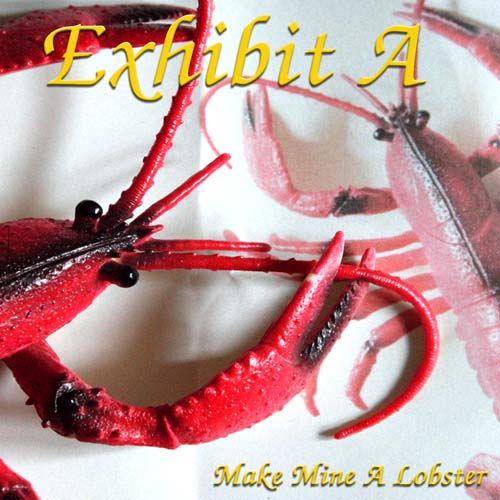
As my long-time readers probably know, I have never been a keen follower of either neo-prog or AOR. In the Eighties – that supposed wasteland for good music – I mostly listened to heavy metal or new wave, and I never went much further than Fish-era Marillion in my exploration of the neo-prog scene. In recent years, thanks to my activity as a reviewer for several progressive rock websites and, I have got acquainted with a lot of diverse, challenging music, which has shaped my tastes in a direction that is often quite the opposite of radio-friendliness. Anyway, whatever my personal tastes, it is essential for a reviewer to keep an open mind and be able to step out of his or her comfort zone – which can lead to pleasant surprises, such as Exhibit A’s third album, the quaintly-titled Make Mine a Lobster.

Based in the county of Essex in southern England, Exhibit A were formed in 1986 after the demise of another band called Mithra. They released two albums in the early Nineties, then went into a lengthy hiatus that lasted until 2007, when the five members of the band got back together to discuss recording some new material. In the second half of 2010, Make Mine a Lobster was finally released – sixteen years after the band’s second album – attracting the attention of fans of the more melodic, listener-friendly variety of progressive rock.

Unlike so many modern outfits that do so while blithely ripping off other bands or artists, the members of Exhibit A do not claim to be purveyors of wildly innovative fare. Their album – skilfully composed, arranged and performed – is a tribute to the sheer joy of making music that has nothing to do with a desire to rake in the big bucks. They clearly play the music they like, without caring about whether it is trendy or rather a bit on the dated side. Although some reviewers have compared them to Asia, there is a world of difference between that custom-built supergroup, put together with the clear purpose of scaling the charts, and Exhibit A’s  genuine enthusiasm.

After reading reviews of Make Mine a Lobster, I was somewhat doubtful about what I was going to find – and was, instead, confronted with a genuinely pleasing listen, something that I might slip into my CD player for pleasure and not just for reviewing purposes. Thankfully, my attitude towards ‘pop music’ (a definition that is, in my opinion, way too broad to be used with any real accuracy) is anything but snobbish and narrow-minded. It takes quite a lot of skill to write a good pop song, and I would take good pop over bad prog any day. Bands like Exhibit A, who are not afraid of labelling themselves ‘prog-pop-rock’, are perfect for those times when I need music to please my ear without challenging it too much – and I do not mean this statement to be in the least patronizing. Weary as I am of the endless posturing and waving around of the word ‘proggy’ as if it was the greatest accolade, I found Exhibit A’s approach to music-making extremely refreshing and honest. In the Eighties, mentioning prog and Duran Duran in the same breath would have been next to anathema, but on their website Exhibit A proudly display quotes referencing the former ‘pin-up’ band. Indeed, their sound is firmly rooted in the Eighties, blending AOR, quality synth-driven pop and progressive suggestions in a classy mixture, admirably complemented by the clear, versatile tenor of lead vocalist Dave Foss.

Not surprisingly, Make Mine a Lobster is based on relatively short songs that display a rather traditional verse-chorus-verse structure. However, what sets the album above many comparable efforts is the tightness of both the songwriting and the performances, which does not allow for the presence of weak links. The two longest numbers, “Darker Sun” and “Scenario”, clocking in at almost 7 minutes, offer plenty of unobtrusive but noticeable progressive touches in the instrumental parts, such as excellent guitar-keyboards interplay bolstered by precise drumming, and slower, atmospheric sections. Album opener “Touch the Stars” and “Rush of Blood”, on the other hand, are definitely accessible tracks with some serious airplay potential, offering plenty of sweeping keyboards, soaring vocals and melodic guitar licks. All of the above-mentioned songs, as well as “Carousel”, bear the imprint of Rush circa Hold Your Fire. The slower, more subdued numbers like “First to Last”, with its moody guitar coda, and the piano-infused ballad “Missing Years” (featuring a lovely, almost Gilmourian guitar solo) may bring to mind Asia at their best, or even purveyors of quality Eighties pop like Tears for Fears or Talk Talk. “Wake Up to Reality”, with its subtle tempo changes and remarkable synth-guitar interplay, is somewhat more complex than the rest; while “A Far Cry”, despite the Rush reference in the title, brings again Asia to mind, spiced up by some sharper guitar riffing and enhanced by Dave Foss’s outstanding vocals.

Though I would not call it a masterpiece (and masterpieces are rather thin on the ground these days…), Make Mine a Lobster is quite a worthwhile effort, at least for those progressive rock fans who are not averse to the more accessible side of their favourite musical genre. True, the keyboards (especially the synths) may occasionally sound a bit dated, and, if you object to high tenor vocals or 4/4 time signatures, then you should probably give this one a pass.In any case, this is as accomplished an album as those released by bands in the same vein with far higher aspirations, and one that will appeal not just to fans of AOR and the catchier end of the prog spectrum, but also to anyone keeping an open mind as regards musical matters.

Links:
http://www.exhibita.org.uk/

Now that the dust has settled, and life is slowly getting back to normal for the ‘prog community’ after a lengthy wound-licking session, it is time to draw some conclusions, and see if there is any way forward for the whole scene after such a traumatic, unexpected event – or else, if we have to consider the possibility that NEARfest’s cancellation might spell the genre’s upcoming demise. The many thoughtful responses to my original article go to show that this unfortunate occurrence had a strong impact on the far-flung community of progressive rock fans. However, it is probably much too soon to gauge if this impact will have a destructive effect on the prog scene, or rather help people to understand that nothing can be taken for granted, and that the music which we all claim to love should be cherished and nurtured.

When the full import of the cancellation finally sank in, some long-time NEARfest attendees reacted as if they had experienced the loss of a loved one, or, at the very least, of something precious and unique. Some, believing that the festival (like the Titanic) was unsinkable, and would always break even, had been completely blindsided the situation. Others, conversely, stood by their conviction that the organizers had somehow ‘asked for it’ by assembling a weak line-up, and claimed their right to bail out if the programme was not attractive enough. All in all, it was not a particularly pretty sight.

Those outside the core group of stalwart festival-goers had rather different insights to provide. While the news made no one happy, most of the ‘outsiders’ contested the motivations that had led the organizers to their decision, and – almost unanimously – laid the blame on the lack of support on the part of the community. After a few days from the announcement, people’s façades of goodwill and equanimity began to slip. Instead of pulling together, the community showed that the cracks were deepening, and none more noticeably than the one between the two main ‘factions’ – those still steeped in nostalgia, and those who choose to look forward. It feels like, to paraphrase Rudyard Kipling, the twain shall never meet, at least not for some time.

One of the biggest implications of the whole débacle is that the prog scene has been left with a metaphorical black eye – even if now, some two weeks after the fact,  everything seems to be back to ‘business as usual’ in the extensive network of prog-related sites. With prog fans’ long-standing reputation for elitism and ‘living in the past’, this is not going to do them any favours with the rest of the underground music scene. In spite of the negative comments that had accompanied the announcement of their headliner status, the members of Umphrey’s McGee had been looking forward to performing for the NEARfest audience, and  the statement posted on their own website after the cancellation made their disappointment quite obvious.

Unfortunately, in their stubborn close-mindedness, many prog fans do not realize that even a relatively successful band like Umphrey’s McGee might be glad to be involved in something that might expose them to a new audience and pose them a challenge of sorts. Caught up in endless, hair-splitting debates about the nature of prog, and obsessed with putting a label on everything they hear, they seem to forget that in their beloved Seventies the music scene was much more open and accepting. It was normal at the time to see bands as diverse as ELP, Deep Purple, Black Sabbath, The Eagles and Earth, Wind and Fire share a stage at California Jam without people having hissy fits –a trend that seems to have made a comeback in recent years, as proved by last year’s High Voltage festival in London. Many festival-goers also seem to have forgotten about the “Art Rock” present in the NEARfest acronym in their cries of woe over the booking of anything that does not fit their own narrow definition of progressive rock.

Indeed, the adventurous spirit of the late Sixties and early Seventies seems to have deserted a large slice of the prog community, in spite of the almost idealized portrait painted by last year’s documentary Romantic Warriors. To paraphrase Genesis, far too many fans seem to know what they like, and like what they know – and, in times of severe economic crisis, this has made them even more suspicious of leaving their individual comfort zones. Therefore, the need for ‘big names’ (a musical equivalent of designer labels) in order to draw the crowds, even when they do not necessarily mean better quality. The 2010 edition of NEARfest was headlined by Eddie Jobson and his Ultimate Zero Project (an impressive collection of gifted musicians), which, against all expectations, left a good part of the audience cold, when not positively frustrated. Indeed, the complaining about the band coming on stage late (with accusations of ‘star behaviour’ liberally thrown around), or just not delivering from a musical point of view, went on for days – just like any discussion brimming with negative comments about Yes’ latest incarnation or Phil Collins’ alleged destruction of Genesis usually does.

Yet, it seems the lesson has not been learned. At least here in the US, any ‘vintage’ band will always have the edge over modern bands, no matter how good the latter may be. The comments that I have often come across about bands or artists not being as good live as they are on CD are quite revealing of this suspicious (for lack of a better word) attitude towards anything new. Moreover, bands or artists who try to publicize their activity on discussion boards may end up being accused of ‘spamming’ – not to mention the deplorable attitude that seems to consider ‘international’ acts the only ones worth spending money on. Apparently, for quite a few prog fans, so-called ‘obscure’ bands are interesting only as additions to their already extensive CD or vinyl collections.

At the time of writing, only three of the major US prog festivals are still standing. ROSfest (which mainly appeals to a more ‘conservative’ audience) will be taking place on the third weekend of May, and has indeed has taken advantage of NEARfest’s cancellation by attracting at least some of its ‘orphans’ (including myself and my husband), especially those living in the Northeast. The ProgDay lineup seems to have already been finalized, though only two bands have been announced so far; while the future of CalProg is still uncertain. In the meantime, Europe, in spite of the economic crisis, is teeming with prog and other music festivals, most of them featuring up-and-coming bands.

As I observed in my opening paragraph, my original essay received a lot of feedback, both from artists and fans. Interestingly (though not surprisingly), the points of view of these two groups often differ quite sharply. While the fans displayed a range of feelings that went from censure to disappointment and even outright sadness, the musicians’ attitude as a whole expressed worry about the future of the scene, especially as regards opportunities for live performances. Having met many of those people in the past few years, and knowing about the constant struggles they face in order to get their music to be heard, I have no qualms in stating that I am completely on their side – even if I have never played a note in my whole life. Here are a few of the points that have emerged from the discussion of the past two weeks.

  • Promoters and independent label owners are growing disenchanted with the overall attitude of the fandom. Bringing international artists to the USA is neither cheap nor fast, and a snag in the visa process may cause a cancellation of a band or artist’s appearance (as it already did several times in the past). Moreover, those who work behind the scenes are quite likely to sustain financial losses in the event of a cancellation, as well as damage to their reputation of reliability – on top of the inevitable practical headaches. Promoters have already started wondering whether is worth going through all that hassle in order to bring bands to the US with the looming risk of seeing  an event evaporate if their prospective audience do not find their names appealing enough.
  • Home-grown acts are growing increasingly frustrated with being relegated to the status of stopgaps to fall back on when international names defect – ignoring the struggles they have to go through in order to find gigs outside the narrow borders of their home states or regions. Some of the comments about last year’s amazing ProgDay line-up being second-rate because of the lack of international bands were rather enlightening, as well as profoundly depressing. The US are currently home to a large number of exciting acts, ranging from the retro-oriented to those of a more avant-garde bent.  Quite a few of them have also produced genuinely challenging music, which does not deserve being dismissed so offhandedly. It is not like any of those bands are able to perform every weekend somewhere around the country. Such a blinkered attitude is not only deeply unfair towards those talented, hard-working musicians, but unmotivated as well. The oversaturation of the market that I so often mention in my reviews does not help either, as it causes a staggering number of bands or solo artists to compete for a handful of live spots.
  • A number of interesting suggestions have come from the ranks of the artists, who in some cases have had direct experience of organizing events. The almost unanimous advice was to stop catering solely to a niche audience, and consider the idea of multi-genre festivals, like the above-mentioned High Voltage, Reading Festival and other lower-profile events taking place in Europe and on the American continent. In spite of the jaded, world-weary attitude of many members of the community, who blithely foresee the death of live performances, people still enjoy live music quite a lot, and multi-genre events have the advantage of offering something to everyone. While most musicians would welcome the opportunity to perform at a festival covering a broader range of genres, they are also aware of the often unbending mindset of many fans. There is a clear disconnect between the two camps, with the fans standing their ground and claiming their right to support only the music they find worthwhile, and musicians feeling increasingly marginalized and taken for granted.
  • The disconnect between the organizers and their prospective audience also played a large role in the festival’s demise. Having been able to rely for years on end on a core of regular attendees, the organizers put too much faith in them, and were caught off guard when support dropped as sharply as it did this year. Practically no efforts were made to reach outside this restricted group, and the tools offered by the Internet were not deployed to their full effect. Not only did the organizers neglect to advertise the event on other progressive sites than their privileged channel (a US-based forum), but they declined to use the three public Facebook pages dedicated to the event, or even their own board. The latter has been down for over a year, and their dedicated mailing list is only accessible to those who register from the event’s website – not as visible as the social networking sites of which other events make widespread use. Since patron sales were the festival’s cornerstone, no efforts should have been spared to gain new supporters – possibly among forward-thinking people who would have jumped at the opportunity of seeing the bands on the bill, instead of turning up their noses because they were not famous or not ‘prog’ enough.
  • A number of NEARfest attendees (including myself and my husband) have often been left with the feeling of intruding on a private club meeting. Some have felt definitely rebuffed, and complained about a borderline hostile atmosphere – an impression that the core community has tried to refute in every way, even to the point of denying the evidence. In my humble opinion, when organizers rely so heavily on patrons’ donations in order to keep the festival going, they cannot afford to give part of the audience the impression of a high-school-style clique that keeps interlopers at bay. Last year’s incident with my review made me briefly consider not to attend in 2011, no matter how much I liked most other aspects of the festival. Other people had decided to stop attending altogether after one snub too many. Unfortunately, it seems that the members of the core group are either unaware of their attitude, or have decided not to care about other people’s opinions.
  • Some people from both camps have also suggested alternative methods of funding events, such as using funding platforms like Kickstarter or CrowdFund – as well as scaling back the size of the events, at least until the economy recovers. Indeed, as illustrated by the previous paragraphs, it is not wise to rely too much on the goodwill of patrons, especially when such reliance implies damaging the prospects of younger bands in order to craft a more attractive line-up. This might be a viable option to pursue in a country like the US, where public funding for the arts is not as widespread as in Europe and other Western countries.

To be perfectly honest, many of the reactions I have come across in the past two weeks do not bode well for the future of the US progressive rock scene. Thanks to the Internet, bands and artists would still be able to get their material across to interested listeners – but the opportunities for live performances would get even more scarce than they currently are, which would favour those bands who are chiefly studio-based projects. The frustration may eventually put an end to the existence of many bands, and the competition for the very few remaining live slots may well become unsustainable. Even worse, many of the more cutting-edge bands that in the past few years have been welcomed under the prog umbrella might decide to seek greener pastures, and disassociate themselves from the scene. That would leave prog as the preserve of those bands that, with their conservative, even ‘regressive’ approach,  are still capable of attracting crowds. The gap between ‘Prog’ and ‘progressive’ would inevitably widen, and become almost impossible to bridge – as a few enlightened people realize. Anyway, even if it is probably too soon to give in to pessimism, as long as the majority of the fans are unwilling to step out of their comfort zones, the future of the scene looks anything but bright.

TRACKLISTING:
1. Le Labyrinthe Du Cochon (9:15)
2. Jeudi (De) Poisson (10:34)
3. Sombre Trafic Sur Le Nil (3:40)
4. La Marmite Du Pygmée (8:55)
5. Le Château De L’Eléphant (6:26)
6. Cravate Sauvage (9:27)
7. Oppression, Dépression, Les Valeurs Du Cool (13:37)

LINEUP:
Arnaud M’Doihoma – bass, vocals
Gregory Pozzoli – guitars, vocals
Thomas Larsen – drums, percussion, vocals
Philippe Prebet – guitars, vocals

Just like Jethro Tull and Pink Floyd (“by the way, which one’s Pink?”), Jack Dupon is not a solo artist, but a French quartet whose debut album, L’Echelle du Désir, was released in the second half of 2008. It is also the name of the fictitious character whose picaresque stories are told in the band’s songs and live performances. Formed in 2001 by three school mates, Arnaud M’Doihoma, Gregory Pozzoli and Thomas Larsen (now in their late twenties), in 2004 Jack Dupon was joined by an older, more experienced musician, guitarist Philippe Prebet.  In September 2010 the band embarked on their first US tour, playing in venues such as the legendary Orion Studios in Baltimore, as well as the ProgDay Festival Pre-Show – their quirky, theatrical performances leaving a strong impression on American audiences.

My first contact with Jack Dupon occurred in 2009, when I reviewed L’Echelle du Désir, and was left with mixed feelings. While I could not help appreciating the band’s eclecticism and the undeniable impact of their music, I also felt they had been overambitious in recording an album that clocked in at nearly 75 minutes, and opened with a 30-minute epic. It seemed that the members of Jack Dupon, as talented and inventive as they obviously were, had not yet learned the valuable lesson that sometimes less is more – with the result that the album, after a while, overstayed its welcome. This time around, however, they seem to have heeded the advice of most reviewers, and gone for a relatively pared-down offering, slightly over an hour long, and avoiding the over-indulgence of L’Echelle du Désir’s two sprawling epics.

Unlike other bands placed under the RIO/Avant umbrella (a subgenre that is much more diverse than its detractors might think), Jack Dupon use a very traditional rock instrumentation – which means no strings, no woodwinds, no saxes, and even no keyboards. Indeed, their configuration (two guitars plus rhythm section) closely resembles King Crimson’s in the Eighties and onward – and Fripp’s crew, together with Frank Zappa, are clearly one of the main inspirations behind Jack Dupon’s output. However, the theatrical bent of the band, as well as the ‘mythology’ on which their music is based,  possess an unmistakably European flavour. While their French origins bring to mind concept-based bands like Magma and Gong (as well as Ange, a clear blueprint for the vocal department), some Italian bands of the Seventies are also evoked, especially those that, like Jumbo and the short-lived Pholas Dactylus, pushed the dramatic element at the forefront of their sound.

One of the biggest obstacles for people who approach Jack Dupon’s music are undeniably the vocals, mostly handled by bassist Arnaud M’Doihoma with the assistance of his bandmates. Harsh, grating and exaggerated, reminiscent of Ange’s Christian Descamps or even Jumbo’s Alvaro Fella, M’Doihoma’s singing style fits the music like a glove, but is likely to put off those who like a more traditional approach. Personally, I see the vocals very much as another instrument.  From the instrumental point of view, though there is plenty of razor-sharp riffing, Jack Dupon’s sound hardly ever suggests the heaviness of metal, but rather the angularity of King Crimson – with interlocking guitar lines very much in Fripp/Belew style, insistent to the point of occasional monotonousness, and frequent surges followed by pauses of relative calm that create sonic peaks and valleys. The undercurrent of zany, Dadaist humour running through the album (also reflected by the titles, as well as by the nonsensical lyrics and distinctive artwork suggestive of German Expressionism) – echoes not only Zappa, but also Gong (whose flying teapots are referenced in “Le Château de l’Eléphant”), RIO/Avant bands like Samla Mammas Manna and Höyry-Kone, and borderline progressive bands like Primus and Les Claypool’s Frog Brigade.

The tracks on Démon Hardi (“Bold Demon”), with the sole exception of the Middle-Eastern-tinged instrumental “Sombre Trafic Sur le Nil”, an unusually melodic, guitar-driven piece, are all over 6 minutes in length, though this time the longest number is strategically placed at the album’s close. The remaining tracks are prevailingly similar in structure, with an ‘ebb and flow’ movement that alternates slow, almost ominous passages and frantic ones, the vocals used sparingly but forcefully to add further intensity to the musical texture. The Zappa influence clearly surfaces in the more upbeat sections, as in the almost cheerful “Le Château de l’Eléphant”, a veritable drum tour de force with a classic rock feel in the guitar parts and occasionally funky touches. “Cravate Sauvage”, on the other hand, is somber and somewhat monotonous, spiced up with effects-laden guitars seemingly ‘conversing’ with the drums in the style perfected by King Crimson in their Eighties period; while “La Marmite du Pygmée” drags a bit at times, but features some outstanding guitar work. The longer tracks (such as opener “Le Labyrinthe du Cochon” or the jazz-meets-King-Crimson “Jeudi (de) Poisson”) offer plenty of changes, even though an impression of patchiness may occasionally emerge – as on closing track “Oppression, Dépression, Les Valeurs du Cool” (at 13 minutes the longest track on the album), whose riff-driven intro hints at metal and is then followed by a sedate, melodic section with a bluesy guitar solo, then climaxes with a choppy, funky passage.

As other reviewers have pointed out, Jack Dupon’s music seems to be tailor-made for the stage – which means that its effectiveness is not always as strong as one might expect when heard on CD. While the vocals are undeniably an acquired taste, they go hand-in-hand with the music and the concept behind it, and it is not hard to imagine that a live setting would increase their impact exponentially. The somewhat repetitive, jam-like nature of the music, with its often hypnotic pacing, also seems to be much more suited to live performance than more or less ‘passive’ listening. On any account, even if clearly not everyone’s cup of tea, Démon Hardi is definitely an interesting album, and Jack Dupon a very promising band that have obviously grown a lot since their debut. Though their musical offer may not be to everyone’s taste, and needs the right disposition on the part of the listener to be appreciated in full, they manage to deliver a product in which the various influences are reworked in a genuinely personal manner. At the time of writing, Jack Dupon are about to embark on a European tour, and are scheduled to appear at the 2011 edition of the Rock in Opposition Festival (Carmaux, France) in September.

Links:
http://www.jack-dupon-rock-progressif.net/

TRACKLISTING:
1. Un Dono (2:13)
2. Wizard Intro (3:03)
3. Madre Africa (7:54)
4. Questa Penombra E’ Lenta (6:57)
5. Chimera (4:23)
6. The Game (10:38)
a. Wizard of your Sky
b. Mickey’s
c. Jump
d. Wizard of your Life
7. Cluster Bombs (6:43)
8. This Open Show (3:16)
9. C’Era Una Volta (2:59)

LINEUP:
Paolo Siani – drums, vocals, keyboards, bass, guitars

With:
Ricky Belloni – electric guitar (6)
Carlo Cantini – violin (6)
Guido Guglielminetti – bass (2, 4, 6)
Mauro Pagani / flute (3)
Alessandro Siani – electronics (1, 5)
Franco Testa – bass (5)
Roberto Tiranti – vocals (3, 6, 7)
Giorgio Usai – Hammond organ (6)
Joe Vescovi – Hammond organ (3)
Marco Zoccheddu – electric guitar (2, 3, 4, 7), piano (5, 7)
Gianni Alberti – sax (5)
Ottavia Bruno – vocals (5)
Giacomo Caiolo – acoustic guitar (4)
Nadia Enghèben – soprano (3)
Alberto “Artley” Buttarelli – vocals, flute (8)
Diego Gordi – piano (8)
Fabio Gordi – piano (8)
Daniele Pagani – piano (8)
Giuliano Papa – cello (8)
Vittorio Pedrali – vocal recitation (1)

In spite of his tenure as the drummer of Italian Seventies band Nuova Idea, Paolo Siani is certainly not a household name in the world of progressive rock – unless you count those dedicated fans of the scene who collect even the most obscure albums. Additionally, he shares the same name with an Italian-American artist of vastly different temperament, which can be misleading to those who are looking for more information. Although an excellent outfit, Nuova Idea did not achieve the fame of their fellow Genoese New Trolls (whom keyboardist Giorgio Usai and guitarist Ricky Belloni joined after the band’s demise) or Delirium, and disbanded after their third album, the highly-regarded Clowns, released in 1973. Subsequently Siani joined avant-garde outfit Opus Avantra for their second album, then beat band Equipe 84. Though he dropped off the musical radar for almost three decades, he worked as a producer and kept writing and recording his own music. It was the renewed interest in prog and the Italian Seventies scene that prompted Siani to resume his career as a musician – as well as a commendable humanitarian purpose, that is, raising funds on behalf of Genoa’s renowned Gaslini paediatric hospital.

Though Castles, Wings, Stories and Dreams, released by Genoa-based label Black Widow, is to all intents and purposes a solo project by Siani, it also sees a reunion of sorts of his mother band, as well as an impressive roster of guest musicians, including three of his former Nuova Idea bandmates: the above-mentioned Giorgio Usai and Ricky Belloni, plus guitarist Marco Zoccheddu, who had left the band to join Osage Tribe after Nuova Idea’s debut. Unlike many albums of this kind, however, it is remarkably tight from a compositional point of view. Moreover, despite Italian prog’s reputation for being somewhat overwrought,  the album avoids that particular trap, keeping melody and clarity at the forefront while not neglecting the occasional flight of instrumental fancy.

Clocking in at under 50 minutes, Castles, Wings, Stories and Dreams is a decidedly song-oriented effort that manages to achieve a good balance between vocal and instrumental parts. The album opens with “Un Dono”, where an expressive male voice recites a brief, uplifting text by Mahatma Gandhi on a backdrop of sparse electronic keyboards. The following instrumental, “Wizard Intro”, blends symphonic suggestions à la Yes with hard rock touches, all infused with an unmistakable Italian flavour. “Chimera”, also instrumental, hints instead at a jazzy inspiration, with a loose structure made up of different solo spots (bass, sax and piano) over a train-like background rhythm provided by drums and keyboards. Siani’s voice can be heard on one track, “Questa Penombra E’ Lenta” (which is also the closest the album gets to a conventional ballad in the unique Italian style), assisted by the clear, melodic voice of Ottavia Bruno, and complemented by lovely acoustic guitar and an airy synth solo.

Three tracks feature the powerful yet clear voice of Roberto Tiranti, lead singer of power/progressive metal band Labyrinth (with a brief stint in New Trolls in the late Nineties). His gritty performance on “Cluster Bombs” – a hard-hitting, anti-war song powered by Hammond and military-style drumming that owes more than a little to Deep Purple or Uriah Heep – increases the song’s emotional impact. Tiranti shows his more melodic side on the 10-minute, 4-part epic “The Game”, a richly textured composition where all the instruments get their chance to shine without overwhelming each other, with Hammond flurries and wistful violin strains. Tiranti then reverts to a more authoritative, hard-rocking persona in the haunting “Madre Africa”, where the Deep Purple influences represented by Joe Vescovi (formerly of The Trip, a band that briefly included Ritchie Blackmore among his members) and his Hammond organ are tempered by Mauro Pagani’s flute, whose sound brings to mind Delirium or Osanna. The album is wrapped up by two short, low-key pieces, the melancholy, cello-driven “This Open Show” and the instrumental “C’Era Una Volta”, a Baroque-inspired number performed by Siani alone.

As can be expected, Castles, Wings, Stories and Dreams is not particularly innovative, nor does it pretend to be such. Like other fellow reviewers, I also have some reservations on the choice of mixing Italian and English lyrics. The supposed ‘international appeal’ of English vocals, in my opinion, dilutes that unique quality of Italian prog that is so often connected with the use of such a great vehicle for music as the Italian language. However, in spite of these drawbacks, the album is a solid effort, a fine slice of vintage Italian prog with a thoroughly 21st-century sound quality, and excellent performances all round from Siani and his guest musicians. The album should also appeal to fans of classic hard rock with progressive overtones. At the time of writing, Paolo Siani is planning a live show in October in his hometown of Genoa, which hopefully will not remain a one-off.

Links:
http://www.blackwidow.it

http://www.progarchives.com/forum/forum_posts.asp?TID=77100


TRACKLISTING:
1. Oro Caldo (18:30)
2. Stanza Città (1:45)
3. Animale Senza Respiro (21:36)

LINEUP:
Danilo Rustici – guitars, vox organ, electric piano, vocals
Lino Vairetti – lead vocals, rhythm guitars, ARP 2600, Mellotron
Elio D’Anna – tenor and soprano sax, flute, vocals
Massimo Guarino – drums, vibraphone, percussion
Lello Brandi – bass

Palepoli (The Old Town, currently the gorgeous seafront area called Santa Lucia) is the original nucleus of the city that would later become Naples, one of the most loved and loathed places in the world – the Italian music capital, and a notorious abode of crime and squalor (cue the hard-hitting movie Gomorrah, and the deplorable rubbish débacle of a few years ago, which seems to have reared its ugly head once again). Naples is breathtaking in its splendour, and infuriating in its unbridled anarchy – perhaps not the best place to live for those who like quiet and order, but also one to  experience  at least once in a lifetime (for the glorious food as well as for the scenery, the art and the music). The old adage  “See Naples and then die” is indeed quite true. A walk in the so-called Spanish quarters is the closest you can get to a Middle Eastern souk in the heart of western Europe – and probably no one has managed to capture that heady atmosphere better than the third album released by Naples’ own Osanna.

One of the most distinctive bands of the original RPI scene, Osanna were hot stuff back in the Seventies. With their painted faces (harking back to the city’s traditional mask of Pulcinella) and wild, energetic sound, they blended British-style heavy rock with influences coming from the venerable musical tradition of their hometown. It has even been intimated that Peter Gabriel took his cue from Osanna for his stage make-up when the two bands toured Italy together. Like so many of their fellow Neapolitans, the five members of the band had music in their blood – not the tasteful, restrained kind practiced by northern Italians PFM, though, but rather a full-throttle blend of passion, energy and chops.

Much in the same way as ELP’s output, Palepoli is not for those in search of subtlety, though I would not call it self-indulgent either. The chaos on display on the album is of the controlled variety, in spite of the somewhat fragmented nature of the compositions. However, those fragments, like the pieces of a puzzle, eventually fall together to form a complete picture. The two main tracks, sprawling epics that approach or even exceed 20 minutes in length, are linked by a short piece reprising the opening of the album itself, and give an entirely new meaning to the expression ‘rollercoaster ride’. It is no wonder that Palepoli commands such adoration on the part of prog fans. Indeed, it shows progressive rock at its authentic best, soothing and lyrical at times, and at others raw, aggressive and passionate. It also offers further proof of the invaluable contribution brought by local musical traditions  to the progressive melting pot.

Unlike Banco del Mutuo Soccorso and their fellow Neapolitans Balletto di Bronzo, Osanna’s sound is driven by Danilo Rustici’s slashing guitar and Elio D’Anna’s sax and flute – which add a mixture of lyricism and aggression to the already exciting texture of the music – rather than by keyboards. However, it is Lino Vairetti’s stellar vocal performance that lends the album a unique appeal.  Heir to one of the greatest singing traditions in the Western world, Vairetti fully deserves pride of place among the great prog singers:  in my view, his clear, versatile voice is probably second only to Banco’s Francesco Di Giacomo on the Italian prog scene.

The intro to the first track, “Oro Caldo”, a colourful, richly-textured patchwork of musical moods,  suggests the atmosphere of Naples’ narrow alleys and street markets, dirty, noisy, and thoroughly fascinating, a babel of sounds, voices and sights. The influence of Neapolitan folk music, such as the frantic rhythms of the tarantella, is evident throughout the piece, especially when, at the beginning, the band members sing in Neapolitan – probably one of the best vehicles for song and music known to man, and a language with a rich literary tradition in its own right.  “Oro Caldo” rocks hard, but also offers quieter, more meditative moments – just like escaping the chaotic atmosphere of the Naples alleys into a darkened, half-deserted church.

The second epic, “Animale Senza Respiro”, is a somewhat more structured piece, though it does adopt the same eclectic approach as “Oro Caldo”. It is also a distinctly darker offering, with some angular, jazzy stylings bordering on the avant-garde, dominated by flutes and saxes, interspersed with almost unexpected acoustic breaks. Though it is definitely not as easy on the ear as PFM’s stately, melodic compositions, it is nonetheless a captivating number with a strong emotional impact.

If you want soothing, pastoral beauty, or music that does not demand too much engagement from the listener, give this one a miss. Like the city of Naples itself, Palepoli is not for the squeamish. However, if you like your prog with some bite (and here there is plenty – think lashings of red hot pepper), and do not mind hearing people sing in a language other than English, this will grab you like few other discs produced in the Seventies. A concept album that is rooted in gritty reality and not in the airy-fairy, supported by first-class musicianship and singing, Palepoli has  acquired near-legendary status among prog fans, and deservedly so.

After an almost 20-year hiatus, Osanna reformed in the early 2000s (though only Lino Vairetti remains of the original line-up), and recently joined forces with former Van Der Graaf Generator’s saxophonist David Jackson. Their 2009 album, Prog Family, is an excellent compendium of the band’s whole output, with new arrangements of their classics and the contribution of such distinguished guests as singer Sophya Baccini (also a native of Naples), Balletto di Bronzo keyboardist Gianni Leone, and former King Crimson violinist David Cross.

Below this post you will find a link to an interview with Lino Vairetti which I translated for the ProgSphere website, shedding some light on the band’s past and recent history. In the light of the events of the past weekend (amply discussed in my previous blog post), the interviewer’s mention of NEARfest  feels particularly poignant. In my view, Osanna would have made a wonderful headliner for the festival, but were not even considered… Food for thought?

Links:
http://www.osanna.it/

http://www.prog-sphere.com/index.php?s=Lino+Vairetti

The Internet channels dedicated to progressive rock were bursting at the seams yesterday after the shocking news of the cancellation of one of the year’s most awaited events, the North-East Art Rock Festival, affectionately known as NEARfest.  When I first saw the announcement, posted as a link on the Wall of one of my Facebook friends, my first impulse was to check mentally if it was already April 1…

Unfortunately, yesterday was only March 26, and the news was no joke.  As could be expected, the general mood in the so-called ‘prog community’ was subdued,  and many of the people who had been attending the event for years (not to mention actively contributing to its realization) were positively devastated. For many, NEARfest went beyond a simple music festival: it was an opportunity to meet friends living thousands of miles away, and spend a weekend away from the worries and routine of ‘normal’ life. Now, instead, people are going to lose money they have already paid for airfares, car rentals and the like – not to mention the sadness at seeing their expectations of a wonderful weekend of music and friendship brutally dashed. Considering the average age of the attendees, this is not something that should be discounted.

Obviously, as all too often happens in similar circumstances, speculation was rife, as well as unashamed finger-pointing. People will always be people, and, in their disappointment,  the NEARfest ‘orphans’ were looking for something – or, even better, someone – to shoulder the blame.  While some blamed the poor state of the economy, others pointed their finger squarely at the close-mindedness, snobbishness and elitism of prog fans, which this year reached unprecedented levels due to a rather controversial line-up. The choice of a so-called ‘jam band’ like Umphrey’s McGee as Sunday headliner drew fierce criticism, and – added to a rather ‘experimental’ line-up lacking (unlike the previous years) any of the big names of the Seventies – contributed to a general lack of enthusiasm for this year’s edition. Some were even berating the organizers for not having disclosed the reality of the situation and asked for help before cancelling the event  – something which, after some of the flak they got for their choices, I cannot blame them for not doing.

Did the news take me completely by surprise? To be perfectly honest, it  did not. In some ways, I had seen it coming, especially when I compared last year’s patron sales with this year’s. Anyway, though I started putting down my thoughts yesterday afternoon, I decided to let the night bring me counsel (as we would say in Italy), and complete my essay with a clearer mind, without giving in to the temptation to blast everyone in sight. Having got our tickets in the mail two days before, that temptation would have been understandable.

As a latecomer to NEARfest,  I had been looking forward to the event, possibly even more so than the previous two editions. In the past year I have been able to meet an increasing number of members of the community, both through concert attendances, my activity as a reviewer, and the ubiquitous Facebook.  For me – a relative newcomer to the country, still with a semi-precarious status, and not yet feeling completely at ease in my new surroundings – feeling part of a group of people that shared a passion for a musical genre had provided a sense of belonging that is essential for expatriates. Though last year I had been deeply disappointed by the attitude of the organizers, who never bothered to acknowledge the lengthy review I had written for the website I was collaborating with at the time, I decided to go again this year, and contribute to the festival through the Patron Program (which, for two people, amounts to the not inconsiderable sum of $ 650).

As the regular readers of my blog know quite well, I am not interested in labels, and am by nature very curious of anything new – a prerequisite for anyone who ‘works’ as a more or less official reviewer. I also have rather diverse musical tastes, and will give anything a chance before dismissing it. On the other hand, years of frequentation of the online prog scene have made one thing very clear: for many fans, ‘progressive’ is just a word stripped of its original meaning. This seems to be especially true in my native country of Italy, where people worship Genesis and their ilk to the extent that newer bands are often forced to look for an audience outside the national borders, while tribute bands do a roaring trade. However, Europe as a whole seems to fare somewhat better in this sense, with festivals such as Gouveia Art Rock (which takes place in Portugal, a country that is far from wealthy for Western standards) that keep selling out, not to mention large-scale events such as High Voltage. Moreover, the nature of the continent (including the ease of travelling within the member states of the European Union) makes it easier for artists to tour other European countries if things are not too rosy on their home turf.

Though, as every adult person knows, very little in life is black and white, and things are obviously not as clear-cut as one might wish, I cannot help feeling that a festival that had become one of the year’s bright lights for many people (not to mention an event many bands and artists from all over the world would have sold their souls to play) has been failed, if not outright sabotaged, by the same people who were expected to support it – even if, in many cases, because of very real impediments. Even if this may sound harsh, it is hard not to wonder when one year people flock to see a bunch of glorified tribute bands – financial and other worries notwithstanding – and the following year the festival suddenly loses all appeal for them.

The sad truth, in my view, is that prog fans have become complacent with the astonishing revival of the genre in past few years – and have also got into the typical frame of mind of  ‘having your cake and eating it’, or, if you prefer, ‘my way or the highway’. Yes, they want prog to prosper and all that, and spend hours on the Internet dissecting the most obscure albums – but, when it comes to supporting those bands and artists that are flying the flag in the here and now, then all of a sudden they bail out, unless they see one  of the ‘big names’ (preferably dating back from the Seventies, though a few from later years would also qualify) on the bill. I wonder how any of those ‘new’ bands (many of whom have been around for ten years or more) are supposed to become ‘headliner material’ if no one gives them a chance to play in front of a decent audience. In a sort of perverse way, it reminds me of the situation in which many young job-seekers find themselves – being unable to apply for jobs due to lack of experience, which no one allows them to gain by hiring them.

It does not help either that many of the hardcore members of the ‘community’ have a much more limited view of prog than the one espoused by the press – as even a cursory look at Classic Rock Presents Prog (a magazine I do not particularly care for, but which has been undeniably successful) should be  enough to prove. Additionally, the younger set of prog fans are also more likely to be into progressive metal (even in its more extreme incarnations) or ‘crossover’ acts, both of which are looked upon with suspicion or even disdain by a good deal of the older stalwarts. In spite of the organizers having made it very clear in last year’s festival programme that the 2011 edition was going to be a transitional one, people still refused to accept that the future of progressive rock – if it is to survive – lies beyond the slowly drying out reservoir of  the ‘old guard’, and those newer bands that, to various degrees, reproduce the Seventies vibe. When a band like Iona are considered ‘more prog’ (whatever that means) than The Pineapple Thief or The Mars Volta, then you know that the future of the whole genre is in serious trouble.

Obviously, the above remarks do not apply to everyone, and I would never downplay the very serious difficulties that many people are going through in their everyday lives. It would also be crass of me to suggest people have to force themselves to like music that is not to their taste – I, for one, know how excruciating it can be to sit through a CD you cannot get into. However, while not suggesting that people go against the grain of their own tastes – let alone resort to stealing in order to finance their festival-going habit –  it is also clear that a change of attitude is needed if we do not want progressive music (rock or otherwise) to die out for good.

Anyway, whatever the truth of the situation, yesterday will be remembered as a very sad day for the whole community of progressive rock fans, at least as regards the USA. Even if the NEARfest organizers decide to regroup and make a comeback next year, it is unlikely that things will ever be the same. Might it have been avoided? Not being privy to the organization’s inner workings, I do not claim to have any easy answers. Clearly there were issues of miscommunication, as no one who was not an insider had any idea that the general sales were going so badly. However, it is also difficult to ignore the bickering that went on for days after every band announcement, and the nasty words that accompanied the disclosure of the Sunday headliner. This is why many of yesterday’s proclamations smack of crocodile tears, or at least sound needlessly defensive. I do not want to sound overly pessimistic, but I cannot help wondering if yesterday’s events will mean a death knell for this amazing ‘prog revival’, or rather a much-needed wake-up call for the whole scene.

TRACKLISTING:
1. Apophenia (4:45)
2. It Works (5:05)
3. Narrow-Caster (3:09)
4. Live With This Forever (5:09)
5. Cautionary Tale (5:05)
6. The Proverbial Banana Peel (3:09)
7. Young Once (5:14)
8. Scenery (5:49)
9. Free For All (4:35)
10. The Last Gasp (4:57)

LINEUP:
George Dobbs – lead vocals, keyboards
Robert James Pashman – bass, keyboards, vocals
Pat Kliesch – guitars, vocals
Rob Durham – drums, percussion

With:
Dan D’Elia – drums (3, 10)
Veronica Puleo – backing vocals (10)

“3RDegree – Defiling perfectly good songs with prog since 1990”

The definition of ‘narrow-caster’ (as opposed to a broadcaster) –  “one who transmits a TV programme […] or otherwise disseminate information, to a comparatively small audience defined by special interest or geographical location” – seems to be a perfect fit for anyone engaged in the production of progressive rock. In spite of the genre’s relative popularity these days, both the musicians and those who (like myself and many others) support it through our writings are perfectly aware that prog is not likely to become the next mainstream sensation, and its appeal will remain limited to a niche audience.

Based in New Jersey (though guitarist Pat Kliesch resides in Los Angeles), 3RDegree formed over 20 years ago, but disbanded after a few years after the release of two albums, discouraged by the lack of response from their intended audience. In 2005, Kliesch and the other two original members, bassist Robert James Pashman and drummer Rob Durham (vocalist/keyboardist George Dobbs would join them later), met again with a view to reforming the band, taking advantage of those opportunities offered by the Internet that were not yet fully available in the mid-Nineties. The result was Narrow-Caster, released in the first half of 2008, mostly comprising material that had been conceived prior to the band’s demise in 1997, but completely rearranged for the occasion.

The reactions of the ‘prog community’ to the album have been somewhat mixed, as illustrated by the many reviews published since its release. Although 3RDegree have always proclaimed their love of progressive rock (as stated by the quote I used as a heading, which is proudly emblazoned on the band’s official T-shirt), the influences they list on their Facebook page point to a very eclectic bunch of musicians – with the likes of Rush, Level 42, Genesis and Stevie Wonder mentioned in the same breath. In fact, labelling 3RDegree as a ‘conventional’ prog band would do them a serious disservice: they should rather be counted among the rightful heirs of legendary genre-bending outfits such as 10cc, Supertramp, Roxy Music and Queen. These bands and others, pioneers of the much-debated genre called Art Rock, are seen by some as little more than marginally related to prog, by others as no less progressive than icons such as Yes or Genesis.

For today’s standards, Narrow-Caster is a short album, with no track longer than 5-odd minutes. Chock-full of hooks and melodies that would be the envy of many bigger-name bands, it is one of those independent releases that manage to sound like a million dollars. While the label-happy brigade (the ones that always wonder if a band, artist or album is prog or not before they say anything else) might frown and turn up their noses, at the beginning of the 21st century, with progressive rock in all its manifestations enjoying an almost unexpected Renaissance, an increasing number of outfits have rediscovered the importance of a well-crafted song as opposed to sprawling, patchy  and often terminally boring epics. 3RDegree are part of a solid, though not too large, contingent of bands who do not believe that ‘pop’ is always a bad word, and who deliver consistently intelligent, classy music without the need to release a whopping 80 minutes of it.

While all the members of 3RDegree are gifted musicians, creating rich sonic textures without anyone seeking to outdo the other, the band’s real ace in the hole is George Dobbs’ absolutely stunning voice (which, I am happy to say, sounds every bit as good live as it does on CD). Though I have seen it compared to the likes of Michael Jackson, in my view the closest comparison are Glenn Hughes (of Trapeze, Deep Purple and, more recently, Black Country Communion fame), and of course Stevie Wonder. George’s versatile, soul-infused tenor can shift from soothing to aggressive in the space of a single song, stamping his unique imprint on the band’s music without overwhelming it. 3RDegree’s love of classic prog acts such as Yes and Gentle Giant – as well as The Beatles and the hard-to-pinpoint King’s X – shines through the superb vocal harmonies that grace most of the songs.

The album kicks off in high gear with “Apophenia”, an intriguing mid-tempo with echoes of Rush in the guitar parts that immediately introduces the listener to 3RDegree’s heady blend of aggressive, catchy and atmospheric elements. Dobbs delivers the thought-provoking lyrics, belying the apparently carefree tone of the music (something perfected by the likes of Steely Dan and Supertramp, to name but two) in impassioned yet perfectly controlled fashion. The Steely Dan comparisons rear their head in the splendid “It Works”, my favourite number on the album, with excellent guitar and keyboard work bolstered by Pashman’s nimble bass lines, and one of Dobbs’ finest moments together with the energetic “Free for All” – where a deceptively blissful chorus is offset by the spiky, riff-heavy electricity of the verse.

While the title-track and the smooth, jazz- and soul-tinged “Scenery” showcase 3RDegree’s more accessible side, with plenty of catchy vocal harmonies and laid-back melodies, the short but punchy “The Proverbial Banana Peel” sees the band experiment with both electronics and metal-like power chords The nicely-paced “Cautionary Tale” delivers a biting indictment of religious fanaticism through almost seductive vocals and an atmospheric guitar solo, and “Live With This Forever” marries a great hook, supported by Dobbs’ stellar performance both on vocals and keyboards, with some harder-edged guitar work. “Young Once” and “The Last Gasp”, on the other hand, are probably the two songs where the constantly lurking progressive component of 3RDegree’s sound emerges most clearly: the former, a wistful number in the Steely Dan vein, unexpectedly features a lovely, ambient-like bridge; while the latter closes the album in style with a brilliant combination of dreamy vocals, Rush-like guitar riffs and a majestic, orchestra-backed, bass- and keyboards-led coda that brings Yes to mind.

If you are looking for music that successfully combines accessibility, great musicianship and stunning vocals, look no further than Narrow-Caster, definitely one of the best releases of the first decade of the 21st century – regardless of labels.  In a perfect world, these guys would be stars, since it takes a whole lot of skill and dedication to write music that is at the same time approachable and sophisticated. At the time of writing, 3RDegree are working on their fourth album, which will hopefully be released by the end of the year. In the meantime, check out the band’s two DVD releases, The Reunion Concerts (released in the same year as Narrow-Caster) and Live at ProgDay 2009, capturing their performance on the small but legendary stage in the beautiful surroundings of  Storybook Farm.

Links:
http://www.3rdegreeonline.com/3RDegree/Home.html

http://www.myspace.com/3RDegreeNJ


TRACKLISTING:
1. Helmi (5:52)
2. Huominen Ei Lopu Koskaan (6:01)
3. Utuinen (4:10)
4. Sumuista Metsää (3:57)
5. Siniset Laineet (5:47)
6. Valkoinen Huone (4:07)
7. Kauan (5:11)
8. Päivä Kerrallaan (4:31)
9. Elämä (5:09)
10. Yli Niittyjen (5:18)
11. Viimeistä Iltaa (4:26)

LINEUP:
Susan Karttunen – vocals
Jani Häggblom – keyboards, backing vocals
Pekka Kalliosuo – guitars
Ayhan Akgez – bass
Henri Tuomi – drums
Sini Palokangas – saxophone, vibes, violin
Henri Onodera – percussion

As pointed out at the beginning of the previous review, Positive Wave and Tuvalu share quite a few features: they are both based in Helsinki, have female vocalists, and sing in Finnish rather than the ubiquitous English. Here, however, the similarities end, because Positive Wave is definitely a different beast. There is nothing whatsoever that might remind the listener of Tuvalu’s brooding intensity on Positive Wave’s debut album, but rather a triumph of upbeat rhythms, joyful vocal performances and plenty of melody, with liberal sprinklings of folk and jazz influences that bring to mind other eclectic Finnish outfits like Piirpauke and Värttinä.

Though they have been around, in different incarnations, since 1998, this album is Positive Wave’s recording debut, released in 2010 when the band – always very active on the live front in their native country – finally found a stable line-up. Now a seven-piece, besides the more traditional rock instrumentation they also include saxophone and violin, like a mini-orchestra. As is the case of most Finnish bands, the collective musicianship is excellent, but the band’s real strength is undoubtedly Susan Karttunen’s stunning voice. While resembling Tuvalu’s Annina Antinranta’s  in pitch and tone, Susan’s singing approach is quite different, and fits the band’s musical direction like a glove.

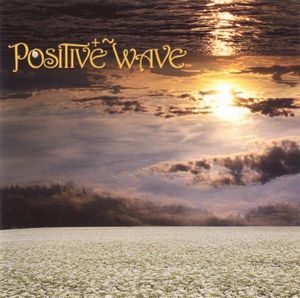
When I first heard Positive Wave, I superficially thought they sounded like an above-average pop band rather than a prog one. Although subsequent listens  changed my opinion of the album, there is no denying that it is indeed very much a song-oriented effort. The songs, on the other hand, in some ways differ from the standard format. Some of them are downright infectious, and the overall mood of the album – reflecting the band’s name – is upbeat and uplifting, debunking the all too common myth of  the morose Finns. With a beautiful yet simple cover that hints at the love of nature that is deeply rooted in the Finnish psyche (also referenced in many of the song titles), the album comes across as a celebration of life – and one of the songs is in fact called “Elämä”, which in Finnish means “life”.

In spite of the catchy, song-oriented nature of the album, those features so highly prized by progressive rock fans lurk in the instrumental parts, while Susan Karttunen’s vocals blend jazz, pop, folk and even soul stylings in a heady mixture that cannot fail to captivate lovers of great singing. The unmistakable sound of vintage keyboards interacting with fluid, melodic electric guitar bring to mind Canterbury bands, especially Caravan (as my friend Torodd Fuglesteg pointed out in his review of the album), and the addition of sax  and violin enriches the sound and enhances the jazzy nature of some of the arrangements. There are no lengthy numbers of staggering complexity: the individual members’ skills are conveyed in a subtle, tasteful fashion, best exemplified by the twists and turns of the longest track, “Huominen Ei Lopu Koskaan” (Tomorrow Never Ends), a jazzy offering chock full of great keyboard and sax passages, brisk percussion, muted guitar, and, of course, excellent vocals.

While Opener “Helmi” (Pearl) leans more towards the folksy side of things, with jangling, Celtic-tinged guitar, “Valkoinen Huone” (White Room) is an elegant number with echoes of Steely Dan’s classy style, especially in the opening section, and “Siniset Laineet” (Blue Waves) brings back comparisons with Caravan’s unique mix of accessibility and progressive sensibilities. As can be expected, not all of the 11 tracks are equally successful, and towards the end the album tends to drag a bit, especially as the material becomes more subdued and even slightly monotonous. Closing number “Viimeistä Iltaa” (Last Evening), however, though uncharacteristically subdued and melancholy, is in my view a good choice to wrap up the album, and the combination of violin and Susan’s delicate vocals sounds especially poignant.

Though not perfect, and a tad naïve at times, Positive Wave is a very interesting proposition for those who enjoy song-based prog as well as its more complex manifestations. While there is clearly some filler material, and – while not long for today’s standards – the album might have benefited from some trimming, the strengths of the band come across quite clearly, and their obvious enthusiasm and positive attitude (pardon the pun) bodes very well for the future. An intriguing find, and a must for fans of female vocals.

Links:
http://www.positivewave.net

http://www.myspace.com/positivewave