Feeds:
Posts
Comments

svarttjernadbanner

In general terms, the word “saga” evokes images of grandiosely epic tales steeped in myth or remote history. In fact, this book’s high-sounding title, together with the obviously Scandinavian sound of its author’s name, may very well lead readers to expect something quite different from what is actually offered in its pages.

Fragments of Peter Svarttjern’s Saga, the second novel by Norwegian author Torodd Fuglesteg resembles its predecessor, The Final Ride, though it also diverges from it in quite a few ways. First of all, it is narrated in the third person – therefore lacking The Final Ride’s obvious autobiographical flavour; moreover, the presence of multiple points of view besides the main character’s lends a more realistic, multidimensional feel to the narration. However, the matter-of-fact, often unadorned style – a legacy from the author’s past experiences as a journalist – has not changed, even if the story has a much more ambitious scope, and is over twice as long as the author’s previous effort.

Organized in five rather lengthy chapters, the novel chronicles the life of a peculiar figure of “man without qualities”, his relationship with his family and the world at large. While the narration revolves around Peter Svarttjern, his family and friends are equally important to the development of the story. References to contemporary events and phenomena (first and foremost, the rise of computers and information technology) frequently crop up – especially as regards changes in the fabric of Norwegian society – but, as a whole, this backdrop often reads as a sort of alternate history, as the information is patchy and there are no dates to provide an actual timeframe. This, however, is in no way detrimental to the story, whose main focus is private rather than public.

Fragments of Peter Svarttjern’s Saga would comfortably fit in the “family saga” subgenre that includes famed literary works such as Thomas Mann’s The Buddenbrooks and Gabriel García Marquez’s One Hundred Years of Solitude. Not surprisingly, death and loss are constant presences – but then, so is life, as generation follows generation. Illness, financial and professional setbacks, and failed relationships disrupt the lives of the novel’s many characters, but optimism surfaces as the younger generations learn from their elders’ mistakes, and forge their own path in life.

Though the novel’s blurb states in no uncertain terms that Fragments is the story of “a man forgotten by everyone”, and “pointless as life itself” – therefore warning the reader that this is not an exactly uplifting read – the tale is far less gloomy than one might expect. The author’s main concern are those who, on account of personality disorders or other mental problems, have shut themselves out of a “normal” life – presented in all their vulnerable humanity with deep empathy, albeit without whitewashing. Peter Svarttjern is what today would be called a nerd: computers become his lifeline as he grows up in surroundings that become increasingly alien, even hostile, cultivating his mostly solitary hobbies (such as fly-fishing, jigsaw puzzles, and subsequently motorbike rides) and his unflagging work ethic to the detriment of human relationships. Especially in the second half of the story, he comes across like an outsider trying to look in, and never being able to recreate the simplicity of his earlier life as regards human relationships. On the other hand, it is made clear that he does have feelings for the people in his life, both family and friends, and that any loss or falling out wounds him deeply. Particularly poignant is his almost non-existent relationship to women, who often see him as a freak and ultimately cause him to adopt a cold, distant attitude as a defense against further rejection.

The author’s own rather conflicted relationship with his native country, which was also explored in The Final Ride, is one of the central themes of the novel. Like the author, Peter Svarttjern leaves Norway when still young, and most of his life unfolds away from it. Unlike the author, though, he never forms an attachment any of the countries where he spends his working life, and never manages to sever his ties with Norway – no matter how hard he tries. In the way of many expatriates (something I personally know all too well), he nurtures a love-hate relationship with his native country, which he leaves gladly (and with good reason), but which then becomes an object of yearning almost immediately after moving away.

The use of a third-person narrator with multiple points of view allows for a more objective take on the events, if compared to the intensely personal perspective displayed on The Final Ride. However, the narrator is not as detached that one might expect, as if he/she was an observer with at least a partial interest in the plight of the characters – an aspect highlighted by the detailed way in which the relationships within Peter’s family and with the outside world are illustrated. His tendency to repeat the name of the subject of each paragraph reinforces his focus on each character, so that the events are laid out almost as in a list, often dispensing with the use of connectors and other words that give a written text a sense of natural flow.

The author saves his descriptive, almost lyrical vein for the paragraphs that have different animals as protagonists frequently interrupting the narrative – a way of emphasizing the ultimate pointlessness of human existence (with all its attending toil and strife) in the grand scheme of things. For those passages, he reveals a deeply sensitive, emotional understanding of nature, and a touching identification with non-human creatures. In fact, the story opens and closes with the appearance of the same animals, as if minimizing the true relevance of the human-centred narrative in comparison with the endless cycle of nature.

Even if Torodd Fuglesteg’s style may not be everyone’s cup of tea, and his chosen subject matter is not always comfortable to read about, his genuine love of writing and storytelling shines out of every page. Moreover, his reluctance to patronize either the reader or his characters, together with his obvious empathy for the many failings of human nature, make his work likely to appeal to sensitive, insightful readers. At the moment, the author is already at work on his third novel, which he states will be shorter though considerably darker in tone. The official release is planned by the end of this year, or the early months of 2015.

Links:
http://www.amazon.co.uk/dp/B00IPRD688
http://www.toroddfuglesteg.com/
http://toroddfuglesteg.blogspot.co.uk/
http://thesoundoffightingcats.blogspot.co.uk/


a2030374746_10

TRACKLISTING:
1. Life Is (4:21)
2. A Good Man (3:49)
3. Childhood Dreams (6:31)
4. Les Larmes (9:36)
5. Tuesday Rain (5:08)
6. Ileana’s Song (3:37)
7. When You’re Dead (7:15)
8. Pigeon’s Intrusion (6:00)
9. Le Voyage (3:22)
10. Linear Blindness (4:12)
11. Butterflies (6:38)

LINEUP:
Susan Clynes – piano, vocals
Simon Lenski – cello (3, 4, 7, 8, 11)
Pierre Mottet – bass (2, 6)
Nico Chkifi – drums (2, 6)

Belgian singer/pianist/composer Susan Clynes first came to the attention of the progressive rock audience for her stunning vocal performance on the song “Glass Cubes” (written by her husband, keyboardist Antoine Guenet, also a member of Univers Zéro and Sh.t.gn) on The Wrong Object’s critically acclaimed 2013 album After the Exhibition. With a solid academic background supporting her obvious passion for music, it was just a matter of time before Clynes’s talent – first showcased in the piano trio album Sugar for a Dream, released in 2005, when the artist was just 17 years old – was recognized outside the boundaries of her native country, thanks to the sponsorship of peerless talent-scout Leonardo Pavkovic of Moonjune Records.

Released in February 2014, Life Is… marks Clynes’ international debut, and presents material recorded by the artist during three concerts held in two different locations. Although not exactly a prog album (indeed, its conventional rock quotient is very limited, it does stand squarely in that vast “grey area” at the periphery of that much-debated genre, and does have enough progressive characteristics to appeal to a sizable slice of its fandom. True, its intimate nature and stripped-down instrumentation, may be seen as a turn-off by those who crave lush, multilayered arrangements and an impressive arsenal of instruments, both traditional and exotic. On the other hand, Life Is… is a poster child for that often-applied tag of “progressive but not prog” (a blessing or a curse, depending on points of view).

While comparisons to highly regarded artists such as Kate Bush, Tori Amos or Fiona Apple (not to mention their spiritual “mothers”, Laura Nyro and Joni Mitchell) abound, it would be unfair to suggest that Clynes is in any way a copycat artist. For one thing, her strong, confident voice (sounding a bit strained on a couple of tracks, but then at 26 years of age she has still plenty of room for growth), eschews the overly ethereal or mock-operatic tones adopted by far too many female singers, and is actually more effective when keeping to a mid-range. Additionally, Clynes places an even stronger emphasis on the instrumental component, often using her voice as an instrument rather than in “traditional” singing.

With its catchy melody and uplifting, life-affirming lyrics, the title-track possesses a faint Canterbury vibe even in its chamber dimension; Clynes’ emotional vocals and dramatic piano do not need any further embellishments to keep listeners on their toes. The song is one of four recorded during a solo performance at the library of the Cultural Centre of the Flemish town of Bree – together with the rarefied torch song of “Tuesday Rain”, the more assertive “Linear Blindness” and the gentle, impressionistic instrumental vignette of “Le Voyage”. On the other hand, the jaunty, energetic “A Good Man” (which reminded me a lot of Kate Bush) and the delightful, lilting ballad “Ileana’s Song” (dedicated to her daughter, who was born during the recording of the album) feature the discreet presence of Pierre Mottet’s double bass and Nico Chkifi’s drums, and were recorded during the first of two shows at Brussels’ historic Art Deco bar The Archiduc.

In the remaining five tracks (also recorded at The Archiduc, though on a different occasion), Clynes is accompanied by cellist Simon Lenski of Belgian chamber rock outfit DAAU on cello, with truly outstanding results. The distinctive sound of the instrument complements her voice, and allows her to display her full potential – as in the scintillating “Childhood Dreams” (dedicated to another influential figure in Clynes’ life, her aunt Yoka, who passed away while she was writing the album), with its breezy scat overtones. The 9-minute “Les Larmes” (the longest track on the album), dedicated to the Israeli-Palestinian conflict, is infused by a warm Spanish/Mediterranean feel enhanced by Susan’s lovely wordless vocalizing, while the cello, even with its occasionally strident, drawn-out tone, lends it an almost classical solemnity – which also emerges in the autumnal, Old-World-flavoured instrumental “Pigeon’s Intrusion”. In sharp contrast with the bright-eyed optimism of the title-track, “When You Are Dead” sounds hypnotic and ominous, with Clynes’ lower-pitched voice and the treated cello dipping and surging in unison in a blend of romanticism and tension – a pattern also displayed in haunting closing track “Butterflies”.

With a well-balanced running time of about one hour, plenty of melody, yet also ample room for more offbeat fare, Life Is… offers an accessible listening experience, yet with enough of an edge to appeal to listeners of a more adventurous bent. Packaged in an attractively minimalist cover showing a lovely photo of the artist’s face – embellished by clear gems that mirror the sparkling nature of her music – and the added interest value of Sid Smith’s impeccably penned liner notes, this album is already poised to become one of 2014’s highlights in terms of non-mainstream music releases.

Links:
http://susanoclynes.wix.com/susanclynes-music
http://www.moonjune.com/mjr_web_2013/catalog_mjr/061_SUSAN-CLYNES_Life-Is_MJR061/
http://moonjunerecords.bandcamp.com/album/life-is


cover_1241212932014_r

TRACKLISTING:
1. “There Seem to Be Knifestains in Your Blood” (4:17)
2. The Sheltering Waters (6:30)
3. The Counterfeit Pedestrian (2:36)
4. (A) Glimpse (of Possible Endings) (15:24)
5. The Worst Is Behind Us (8:40)

LINEUP:
David Lundberg – all instruments
Mattias Olsson – all instruments

With:
Kristofer Eng Radjabi – theremin (1)
Rob Martino – Chapman stick (2)
Einar Baldursson – electric guitar, slide guitar, e-bow (4)
Leo Svensson-Sander – cello (1,4), musical saw (4)
Elias Modig – bass (4)
Yann Le Nestour – bass clarinet, metal clarinet (4)
Martin Von Bahr – oboe (4, 5)
Tiger Olsson – vocals (5)

Just one year after the release of their debut Necroplex, the dynamic Swedish duo of Mattias Olsson and David Lundberg – aka Necromonkey – are back with their sophomore effort, titled A Glimpse of Possible Endings. While both musicians have continued their regular recording and concert activity (Lundberg with Gösta Berlings Saga, Olsson with, among others, The Opium Cartel and barnstorming Italian newcomers Ingranaggi della Valle), they have also kept up their collaboration throughout the year, ensconced in Olsson’s state-of-the-art Roth Händle Studios in Stockholm (where Gösta Berlings Saga’s magnificent Glue Works was also recorded).

While marking a continuity of sorts with its predecessor, A Glimpse of Possible Endings is also different in quite a few respects – notably more ambitious and more focused. On the other hand, the first thing most listeners will notice is the album’s very restrained running time of a mere 37 minutes. With so many bands and artists opting for sprawling opuses that are inevitably packed with filler, this definitely sounds like a statement of intent on the part of Olsson and Lundberg. In no way affecting the interest value of the compositions – which, in their own way, are as complex as any traditional prog numbers – this streamlined approach makes the most of the duo’s impressive instrumentation, supplemented by the contribution of a number of guest artists (including Gösta Berlings Saga’s guitarist Einar Baldursson, who had also guested on Necroplex, and talented US Chapman stickist Rob Martino). Interestingly, the mellotron’s starring role is interpreted in decidedly unexpected fashion – more as an endless repository of samples of various instruments than a creator of retro-tinged symphonic atmospheres.

The five tracks on the album are conceived as impressionistic vignettes rather than highly structured compositions, though not as random as they may first seem. They range from the two minutes of the sparse piano interlude “The Counterfeit Pedestrian” – backed by the faint crackle of a blind record player – to the 15 of the title-track. This most unconventional “epic” is an intricate but oddly cohesive sonic patchwork in which the hauntingly organic texture of mellotron, piano,  marimba and xylophone, bolstered by cello, woodwinds and dramatic massed choirs, vie with Einar Baldursson’s sharp, almost free-form guitar and a wide array of riveting electronic effects.

Opener “There Seem to Be Knifestains in Your Blood” sets the mood, though with an unexpectedly catchy note. A jangling, Morriconesque guitar, backed by unflagging electronic drums, weaves a memorable tune at a slow, hypnotic pace, soon joined by the ghostly wail of a theremin. The very title of “The Sheltering Waters” will not fail to evoke one of “new” King Crimson’s most iconic pieces – and, indeed, the presence of Rob Martino’s Chapman stick, combined with the gentle, echoing guitar and eerie percussive effects, ideally connects this hauntingly atmospheric track to its illustrious quasi-namesake. The album’s wrap-up comes with the stately, surging synth washes of “The Worst Is Behind Us”, whose subdued, serene ending indeed suggests the calm after a real or metaphorical storm.

As already observed in my review of Necroplex, Necromonkey’s music may be an acquired taste, and disappoint those who are looking for connections with the high-profile Scandinavian outfits that brought Olsson and Lundberg to the attention of the prog audience. In any case, A Glimpse of Possible Endings is a flawlessly performed album, in which Olsson and Lundberg’s outstanding musicianship and compositional skills are subtly displayed, yet never flaunted – just like the music’s high emotional content. It is perhaps a more “serious” endeavour than Necroplex, bound to appeal to fans of non-traditional progressive music (not necessarily rock) rather than those with more mainstream sensibilities, and requiring repeated listens in order to be fully appreciated. The stylish, sepia-toned cover artwork by Henning Lindahl, with its faint Art Deco suggestions, rounds out a most excellent musical experience.

Links:
https://www.facebook.com/pages/Necromonkey/109218875773387
http://rothhandlestudios.blogspot.com/2014/02/necromonkey-glimpse-of-possible-endings.html


cover

TRACKLISTING:
1. Dominion (5:16)
2. Images (3:10)
3. One Day (2:20)
4. Harbinger (3:37)
5. Lost One (3:25)
6. Pain Map (7:25)
7. Persona (3:17)
8. Splendid Sisters (3:17)
9. Tilting at Windmills (6:11)
10. Accord (2:32)
11. Dichotomy (3:33)
12. Drama of Display (3:58)

LINEUP:
Mark Cook – Warr guitar, ADG fretless bass, guitar, keyboards
Bill Bachman – drums

With:
Joe Blair – guitar (10)
Gayle Ellett – mellotron, Fender Rhodes (8)
Bob Fisher – flute (2, 4, 5, 7, 8, 9)
Michael Harris – guitar (4)
Jeff Plant – fretless bass (12)
Tony Rohrbough – guitar (2, 4, 6, 9, 11)
Dave Streett – Warr guitar (8)
Shannon Wickline – piano (3)

The project named Spoke of Shadows was born in early 2013, when a mutual friend put Texas-based multi-instrumentalist Mark Cook (who had been writing some music of his own after completing the mixing of Herd of Instinct’s second album, Conjure) in touch with renowned session drummer Bill Bachman. After some virtual recording sessions, Mark and Bill met in person for the first time in Dallas – an essential step for taking their project to the next level. The duo’s self-titled debut album, recorded in various locations throughout the US, was finally released in February 2014 on Djam Karet’s label Firepool Records, like Herd of Instinct’s two albums.

As Spoke of Shadows features 12 relatively short, completely instrumental tracks, first-time listeners might be forgiven for expecting the third chapter of the Herd of Instinct saga, although with different personnel involved. However, Cook has stated on several occasions that the project has allowed him to branch out from his main band’s trademark Gothic-tinged, cinematic sound, and add new elements to his sonic palette – also thanks to the contribution of artists coming from a wide range of musical backgrounds. Obviously, the connection to Cook’s work with Herd of Instinct is clearly on display, but quite a few surprises await the listener throughout the 48 minutes of this sophisticated, highly eclectic album. While the obvious comparisons with King Crimson have been made, Spoke of Shadows does possess a strong individual imprint that sets it apart from so much overly derivative fare.

Unlike some musicians who seem to be in a hurry to take their distance from the “prog” tag, Cook and Bachman (who, among other things, share a love of Gabriel-era Genesis) embrace the definition, as highlighted by the prominent role given to the genre’s iconic instrument, the mellotron. Coupled with Cook’s masterful handling of the hauntingly versatile Warr guitar (an instrument that, in many ways, symbolizes modern prog, even if it has never become truly widespread), it builds lush yet deeply mesmerizing atmospheres that surge and shimmer, conveying a wide range of moods in a subtle yet clearly recognizable way.

The resemblance with Herd of Instinct emerges in the skillful blend of atmospherics and aggression of opener “Dominion”, with its polyphonic guitar chords offset by Bachman’s nuanced drumming. “Images”, however, heralds a keen change in approach – more straightforward in compositional terms, and therefore more reliant on contrasts of light and shade, Bob Fisher’s expressive flute adding an almost free-form touch towards the end. The short, jazzy mood piece of “One Day” – embellished by Charlie Daniels Band’s keyboardist Shannon Wickline’s lovely flowing piano – introduces the razor-sharp Crimsonian workout of “Harbinger”, where the haunting wail of the Warr guitar and the pastoral tone of flute and mellotron rub elbows with a “shredder” solo by Thought Chamber guitarist Michael Harris, as well as a funk-tinged one by Tony Rohrbough (formerly of West Virginia metal band Byzantine). “Lost One” brings back a gentle pastoral mood fleshed out by lush mellotron, while the 7-minute “Pain Map” (the album’s longest track) closes the album’s first half on a striking modern classical note – mellotron and evocative field recordings vying with riff-heavy passages and eerily echoing guitar.

Generally speaking, the album’s second half heads in a more low-key direction, with “Splendid Sisters” a particular highlight. Co-written and -performed by Dave Streett, another Warr guitar enthusiast and long-time collaborator of Cook’s, the wistful, elegiac track with its soothing guitar and flute, understated drumming, and solemn mellotron and electric piano (courtesy of Djam Karet’s Gayle Ellett) is dedicated to talented Italian stickist Virginia Splendore, who passed away in 2011. The restrained, atmospheric “Persona” and “Accord” are conceived along similar lines, while the dramatic, cinematic sweep and doom-laden riffing of “Tilting at Windmills” hint again at Herd of Instinct, and “Dichotomy” starts out in deceptively subdued fashion before developing into another commanding, Crimson-hued number propelled by Bachman’s imperious drumming. “Drama of Display” wraps up the album by expertly mixing different styles, assertive riffs coexisting with ethnic-tinged drumming and a panoply of intriguing sound effects.

An album whose understated elegance belies its high level of technical accomplishment, Spoke of Shadows offers an ideal complement to Herd of Instinct’s two albums and Djam Karet’s latest release, Regenerator 3017. As usual, the visual aspect – with a dark grey background interrupted by a row of bright orange windows (courtesy of photographer Garth Hill) – has been carefully thought out, providing a fine foil to the music within. While the album should not be missed by devotees of the King Crimson school of instrumental progressive rock (which includes the work of Trey Gunn and Tony Levin), it also has the potential to appeal to a broader section of the prog audience (unless, of course, they object to all-instrumental music).

Links:
http://spokeofshadows.wix.com/spokeofshadows

cover_533192312014_r

TRACKLISTING:
1. Prince of the Inland Empire (5.35)
2. Living in the Future Past (4.50)
3. Desert Varnish (7.18)
4. Wind Pillow (4.39)
5. Lost Dreams (3.49)
6. Empty House (6.07)
7. On the Edge of the Moon (8.36)

LINEUP:
Gayle Ellett – electric guitar, Fender Rhodes, Moog, mellotron, Solina, bouzouki, field recordings
Mike Henderson – electric guitar, percussion
Mike Murray – electric guitar
Chuck Oken, Jr. – drums, percussion, keyboards, effects
Henry J. Osborne – bass, piano, keyboards
With:
Mark Cook – Warr guitar (2)

The Southern Californian outfit that was hailed in Edward Macan’s seminal book Rocking the Classics as one of the front-runners of “new” progressive rock have reached another milestone in their career – their 30th anniversary. Djam Karet – formed in 1984 as a quartet comprising Gayle Ellett, Mike Henderson, Henry J. Osborne and Chuck Oken, Jr. – are back with their 17th album, Regenerator 3017, featuring about 41 minutes of brand-new music, recorded by the band’s original line-up, plus guitarist Mike Murray (who joined the band for 2010’s live-in-the-studio album, The Heavy Soul Sessions). The album follows The Trip, an intriguing vintage space-rock workout that was released in 2013, and in some ways complements it, showing a different side of the band’s creative inspiration.

Quite interestingly for a band who have made a banner of their music’s lack of commercial potential (cue the title of their debut album), Regenerator 3017 – while not truly likely to endanger the reign of the likes of Beyoncé or Kanye West as darlings of the wider music-buying public – does possess quite a lot of appeal for listeners who would ordinarily be put off by prog’s excessive ambitiousness. Melody and atmosphere are the name of the game – a smoothly flowing, ear-flattering musical content imbued with a relaxed West Coast vibe. As Djam Karet proudly stress on all their albums, Regenerator 3017 was recorded without any compression or computer manipulation – resulting in a warm, organic sound that emphasizes ensemble playing, while not failing to highlight individual performances.

The breezy, summery feel of opener “Prince of the Inland Empire”, its lazy, jazzy allure faintly tinged with reminiscences of Seventies dance music, might be somewhat of a surprise (or even a turn-off) to anyone expecting something along the lines of The Trip – let alone Djam Karet’s most Crimsonesque works, such as The Devouring or Burning the Hard City. The interplay between guitar and keyboards adds to the charm of the upbeat passages, interspersed by more sedate, almost meditative moments, in a style that put me in mind of early Camel. Things take a decidedly different turn with the classic, elegant jazz-rock sound of “Living in the Future Past”, featuring some stellar electric piano from Ellett, as well as a drop-dead-gorgeous guitar solo – the whole rounded out by mellotron and Herd of Instinct’s Mark Cook’s Warr guitar. Equally understated, but more in line with Djam Karet’s trademark sound (as aptly summed up in the already-mentioned The Heavy Soul Sessions), the 7-minute “Desert Varnish” intrigues with its tantalizing use of quiet-loud patterns spotlighting Chuck Oken Jr’s textural drumming and Henry J. Osborne’s discreet but unmistakable bass, then allowing the guitar to take the lead in a reverberating escalation.

Not surprisingly, “Wind Pillow” is mellow and atmospheric, with layers of keyboards and more than a cursory nod to Pink Floyd (“A Pillow of Winds” is the title of a song from Meddle). “Lost Dreams” continues much in the same vein, down to the measured, slightly plodding pace and Gilmourian guitar solo. Choral mellotron lends a symphonic tone to the soothing yet wistful guitar and moog in “Empty House”, underpinning the subtle flares of intensity and the climactic beauty of the slow, expressive guitar soloing. Rippling piano and fiery lead guitar shine in closing track “On the Edge of the Moon”), vying with the classical-tinged presence of the mellotron in a lovely, evocative 8-minute slice of atmosphere with some welcome bite.

While Regenerator 3017 might disappoint those who were expecting a throwback to Djam Karet’s Crimsonian roots, its deceptively lazy, upbeat feel and accessibility may well gain the band a few well-deserved new fans. Aficionados of Pink Floyd (especially the years between Meddle and Wish You Were Here) and Camel’s instrumental output will definitely find a lot to enjoy here. However, the album will offer a solid 41 minutes of very rewarding listening – even if not too overtly intricate or aggressive – to everyone with an interest in exploring the different facets of instrumental prog, and also provide a fine point of entry to Djam Karet newcomers. Last but not least, Regenerator 3017’s airy, spacious feel makes it ideal listening for the summer season that is almost upon us, without any of the cheesiness of so much stereotyped “summery” music. A special mention is also deserved by the striking, Southwestern-inspired cover designed by guitarist Mike Murray.

Links:
http://www.djamkaret.com/
http://djamkaret.bandcamp.com/album/regenerator-3017


201403ilrumorebianco

TRACKLISTING:
1. Tutto un sogno (parte 1) (6:15)
2. Il vestito buono (6:21)
3. Il primo attore (6:13)
4. Tutto un sogno (parte 2) (9:05)

LINEUP:
Eddy Fiorio – lead vocals, synth
Michele Zanotti – guitars, sax
Federico Lonardi – guitars
Thomas Pessina – keyboards, synth, backing vocals
Alessandro Danzi – bass guitar
Umberto Sartorii – drums

Il Rumore Bianco (White Noise) are a six-piece hailing from the historic Italian city of Verona, where they were born from the ashes of another project called Side C (who released two EPs between 2009 and 2011 before disbanding). In the summer of 2012, former Side C members Michele Zanotti, Thomas Pessina and Alessandro Danzi got together with the intention of forming a new band with a more eclectic, “progressive” direction, and recruited vocalist Eddy Fiorio, guitarist Federico Lonardi and drummer Umberto Sartorii  – all dedicated musicians with extensive experience in spite of their young age. The band’s recording debut, a 4-track EP by the title of Mediocrazia, was released at the end of November 2013.

Though Il Rumore Bianco claim to have been inspired, first and foremost, by progressive rock’s classic era, Mediocrazia eschews the overtly retro sound of many recent releases. The typically grandiose, symphonic approach of many Italian prog bands is only marginally touched upon, leaving the stage to a wide range of sources of inspiration that, in some case, are tangential to prog – such as electronics and jazz, as well as Italian-style alternative rock. The different  backgrounds of the band members are brought together to create a tight yet varied musical texture that supports thought-provoking lyrics dealing with the overwhelming presence of the media in modern society, and the resulting pervasive mediocrity that stifles the aspirations of genuinely creative people.

The EP is bookended by a two-part suite titled  “Tutto un sogno”. The energetic, organ-drenched first part often  hints at Deep Purple, though Eddy Fiorio’s voice – following the line of the music like an additional instrument instead of dominating it (as it often happens in Italian prog) – evokes a modern-day Demetrio Stratos; the song culminates in an exhilarating guitar solo backed by deep, rumbling organ. On the other hand, “Il vestito buono” combines an elusive vintage flavour  with a more modern allure; organ, mellotron and ambient-tinged synth washes provide a lush tapestry for Fiorio’s expressive vocals and Lonardi’s multifaceted guitar, and an engagingly warm sense of melody balances the surges of intensity.

The influence of Area looms large over the sleek jazz-rock romp of “Il primo attore”, where Fiorio deploys all the power and versatility of his impressive pipes, and Alessandro Danzi’s bass throws a generous pinch of funky spice in the heady stew of elegantly sharp guitar, blaring sax and jaunty electric piano. The 9-minute second part of “Tutto un sogno” wraps up the album in style, though avoiding the excesses of the stereotypical “epic” –  its atmospheric, muted intro gradually building up to a veritable explosion of sound  in which all the instruments seem to strive for primacy, then slowly winding down to a spacey, slo-mo finale.

The use of the inherently musical Italian language and the innate flair for a good melody possessed by seemingly all Italian musicians imbues Mediocrazia with that sense of Mediterranean warmth that surfaces in the work of the otherwise edgy Area, as well as later outfits such as Deus ex Machina, D.F.A. (incidentally, also from Verona) or Accordo dei Contrari. All in all, in spite of its short running time, this is a surprisingly mature debut – with very few, if any, rough edges, and a very promising display of songwriting skills. Those who prefer their prog on the modern side, but are not averse to the presence of distinguishing elements of the classic Seventies style, will not fail to be intrigued by Mediocrazia – which is highly recommended to fans of the thriving, variegated Italian prog scene.

Links:
http://www.ilrumorebianco.com

https://www.facebook.com/ilrumorebianco

http://ilrumorebianco.bandcamp.com/album/mediocrazia

Pensiero-Nomade

TRACKLISTING:
1. Barcarola (4:25)
2. Cerchi d’acqua (4:26)
3. Danza notturna (5:14)
4. Calce e carbone (5:09)
5. La colomba e il pavone (4:17)
6. Tournesol (4:28)
7. Prima dell’estate (5:50)
8. Scirocco (5:03)
9. Imperfetta solitudine (6:19)
10. Sensitive (2:54)
11. Verso casa (4:07)

LINEUP
:
Salvo Lazzara – guitars
Luca Pietropaoli – trumpet, flugelhorn, contrabass, piano, electronics
Davide Guidoni – drums, percussion

With:
Clarissa Botsford – vocals (10)

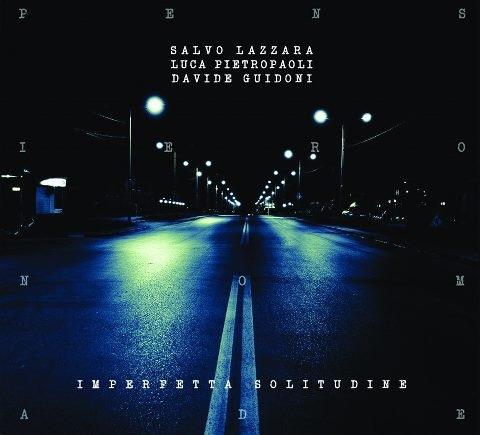
Pensiero Nomade is a solo project by Sicilian-born guitarist/composer Salvo Lazzara – previously know to fans of Italian progressive rock as a member of Germinale, a band that released three albums for Mellow Records in the Nineties, and also participated in some of the tribute compilations released by that label. At the beginning of the new century Lazzara moved to Rome, where he realized that his musical interests were changing, and took up the study of jazz and improvisation. Pensiero Nomade was born from that experience: the project’s very name hints at the wide range of influences that inform Lazzara’s compositional approach, from jazz to world music to ambient/electronics. The project’s debut album, Per questi e altri naufragi, was released in 2007, and followed by Tempi migliori (2009), Materie e memorie (2011), and, finally, Imperfetta solitudine in the summer of 2013.

While Pensiero Nomade’s previous album saw Lazzara flanked by a group of four musicians, including a flutist and a keyboardist, the lineup on Imperfetta solitudine is a stripped-down trio that features Luca Pietropaoli on trumpet, flugelhorn, piano, contrabass and electronics, and Davide Guidoni (one-half of Daal, as well an excellent graphic artist) on drums and percussion. The result is an album that, while undoubtedly “progressive”, is quite far removed from “prog” in a conventional sense.

Indeed, unlike many contemporary prog albums, Imperfetta solitudine is neither brash or loud, though it would be a mistake to consider it mere background music. It certainly needs to be savoured at the right time and in the right surroundings, preferably after the sun has gone down, and when it is possible to lend it some attention – as is the case with albums in which subtlety and nuance are much more important than forced variety. Nothing is fast or hurried here, and the musical texture is loose and atmospheric, though not random. The sounds are organic, never jarring, but not artificially smooth either. The gentle movement of Lazzara’s acoustic guitar in opener “Barcarola” evokes flowing water, while the trumpet’s smoky, melancholy voice sounds almost human. The same pensive tone, almost an aid to meditation and reflection, can be found in the melodiously wistful “Calce e carbone”, the ethereal  “Tournesol” and solemn closing track “Verso casa”. The faintly disquieting “Sensitive” is the only number to feature the haunting vocals of guest artist Clarissa Botsford; while the uplifting “Cerchi d’acqua” exudes an almost vintage West Coast feel.

The 11 tracks are all relatively short, and only the title-track – a lovely, harmonious guitar bravura piece in which Lazzara uses the strings to create a percussion-like effect – exceeds 6 minutes. While the emphasis is firmly placed on the seamless, constantly riveting interplay between Lazzara’s guitar and Pietropaoli’s trumpet, Guidoni’s elegant, accomplished rhythmic touch adds dimension to otherwise low-key tracks such as “Scirocco” and La colomba e il pavone”; then it comes into its own in the lively “Prima dell’estate”, where it engages in a striking “dialogue” with the trumpet, and” and the stately “Danza notturna”, to which hand percussion adds a discreet touch of warmth.

Although Imperfetta solitudine is very likely to have flown under the radar of most “mainstream” prog fans, it can be warmly recommended to lovers of music that speaks to inner feelings and emotions as well as the ear, and evokes far subtler moods and atmospheres than those usually associated with the pomp and circumstance of classic progressive rock. Complemented by stylishly minimalist cover photography that reflects the nocturnal, meditative nature of the music, this album will appeal to devotees of the output of labels such as ECM or Moonjune Records, as well as those who are keen to explore the thriving diversity of the Italian music scene.

Links:
http://www.reverbnation.com/pensieronomade

http://www.myspace.com/pensieronomade

http://www.zonedimusica.com

39375d_c617b1137850bbcf7edf8f58a463cf51.jpg_srz_p_335_335_75_22_0.50_1.20_0.00_jpg_srz

TRACKLISTING:
1. Two Views on Flight (4:17)
2. Ankoku (4:55)
3. Words Lurking (3:12)
4. Kurai (5:50)
5. Flow My Tears (4:17)
6. Ananke (1:34)
7. Running Water (5:04)
8. The Ghosts of Dawn (4:14)
9. In Darkness Let Me Dwell (4:55)
10. A Knife Under the Pillow (1:22)
11. Coming Back Home (3:56)
12. Waiting For the Crash (2:08)
13. A Dark Vanessa (3:03)
14. This Night Wounds Time (3:16)

LINEUP
:
Paolo «Ske» Botta – keyboards
Jacopo Costa – vibes
Elaine Di Falco – vocals
Maurizio Fasoli – piano
Pat Moonchy – electric zen garden
Giuseppe A. Olivini – percussion, theremin
Francesco Zago – guitars, mellotron, bass

With:
Bianca Fervidi – cello (1-3)
Rachel O’Brien – vocals (5)

2013 was another very busy year for guitarist/composer (and AltrOck Productions co-founder) Francesco Zago. In the summer, his new “vintage prog” band Not A Good Sign made its recording and concert debut, and a few months later  he appeared on In Between, the new album by his long-time associate Markus Stauss’ outfit Spaltklang – to which should be added his participation in original RIO band Stormy Six’s live CD/DVD Benvenuti nel Ghetto.

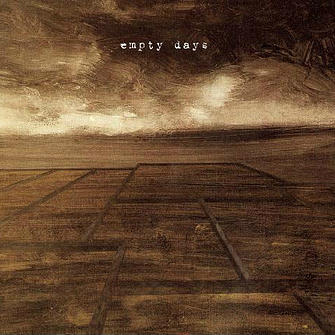
However, it is with the Empty Days project that Zago offers his most distinctive contribution to the rich musical landscape of the recently ended year. Featuring some of his Yugen cohorts (the ubiquitous Paolo “Ske” Botta, Jacopo Costa, Maurizio Fasoli and Giuseppe Olivini), plus Milan-based sound/noise artist Pat Moonchy and US-based vocalist Elaine Di Falco (of Thinking Plague/3 Mice fame, who had also guested on Yugen’s 2010 album Iridule), Empty Days was not conceived as a studio-only project: the release of their eponymous album in September 2013 was accompanied by a few live appearances in Italy and Switzerland, as well as at Wurzburg’s Freakshow Festival in Germany.

Clocking in at about 50 minutes, Empty Days includes 7 songs and 7 instrumentals, all relatively short, which represent the two main directions of Zago’s current musical interests: art-rock songs with brooding lyrics and ethereal melodies, and darkly rarefied ambient compositions, arranged in a neatly alternating pattern. Unlike Yugen’s intricate, carefully composed pieces, the tracks are more like impressionistic sketches created through a shimmering sonic palette in delicate patterns of light and shade.  Interestingly, Empty Days’ outstanding artwork, with its muted sepia shades and  austere layout, for once is not credited to AltrOck’s in-house graphic artist Paolo “Ske” Botta. While the cover image was provided by renowned contemporary artist Salvatore Garau (who is also Stormy Six’s drummer), the booklet is credited to Zago himself, proving the versatility of his artistic inspiration.

Elaine Di Falco’s performance is one of the undisputed strengths of Empty Days. Here she shows a different side of her art than on Thinking Plague’s 2012 album, Decline and Fall – where the music’s mind-boggling complexity forced her voice into an apparently flat, yet oddly riveting timbre. Here, her dusky contralto displays more curves than angles, lending a hauntingly soft quality to Zago’s wistful vignettes, and providing the ideal vehicle for the pensive, often rather gloomy lyrics. Only one of the songs, the well-known “Flow My Tears” by English Renaissance composer John Dowland,   is interpreted by a different singer – mezzo soprano Rachel O’Brien, whose classically trained voice adds to the piece’s mournful feel.

Di Falco’s multitracked vocals, complemented by Fasoli’s rippling piano and Costa’s gently chiming vibraphone in opener “Two Views on Flight”, weaves a magical, dreamlike atmosphere reminiscent of Dead Can Dance or Kate Bush (or even Gentle Giant), while the somber drone of the cello fits her like a glove in the delicate “Words Lurking”, echoed by Zago’s subtle guitar. “Coming Back Home” revisits one of the songs featured on Not A Good Sign’s debut in understated yet markedly atmospheric fashion, enhanced by mellotron surges and ethereal guitar arpeggios. On the other hand, “In Darkness Let Me Dwell” (another Dowland composition) and “A Dark Vanessa” (from Vladimir Nabokov’s novel Pale Fire) hinge on Di Falco’s deep, almost whispered vocals and minimalist instrumentation to create a mysterious, faintly unsettling mood. The album’s centerpiece, however, is the arrestingly beautiful “Running Water” (with lyrics by Nobel Prize winner Seamus Heaney), whose title is evoked by Fasoli’s flowing piano and DiFalco’s compelling voice, almost chasing each other in a hypnotic movement.

Ranging from the almost 6 minutes of “Kurai” to the barely over one minute of the piano interlude of“A Knife Under the Pillow”, the instrumentals, explore the instruments’ potential to build up cinematic ambient soundscapes that veer from the soothing, Japanese-inspired “The Ghosts of Dawn”, with its rarefied, crystalline sound effects, to the strident, menacing “Ananke” and “Waiting for the Crash”. The longest track on the album at almost 6 minutes, “Kurai”, with its sparse, ominous texture, slashed by sudden cascading chimes and eerily reverberating sounds, aptly reflects its title (Japanese for “dark”, and also the name of another of Zago’s projects, whose album was released in 2009). The 5-minute “Ankoku” is a spacey, faintly discordant piece anchored by Bianca Fervidi’s cello’s muted drone; while in closing track “This Night Wounds Time” piano and mellotron surge in unison, echoing between pauses of near-silence.
:
As I anticipated in my 2013 retrospective, Empty Days fully deserves to be included among the year’s landmark albums. Though, not surprisingly, its main target will be the ever-demanding RIO/Avant crowd, the strong melodic quotient of the songs make the album potentially more accessible for people who are normally daunted by “weird” music. In any case, Empty Days is a thing of beauty, lovingly crafted by one of the most genuinely creative artists on the current progressive rock scene, and highly recommended to anyone who loves music that flies in the face of today’s depressing commercial trends

Links:
http://www.francescozago.com

https://www.facebook.com/FrancescoZagoMusician

http://www.altrock.it

giardino

TRACKLISTING:
1. Mattino (2:09)
2. Caduta massi (6:07)
3. Dal recinto (3:58)
4. Palude del diavolo (4:14)
5. Tema dei campi (5:01)
6. Ed io non c’ero (4:59)
7. Dite a mia moglie (5:05)
8. Il giardino disincantato (8:43)
9. Sopra tutto e tutti (9:01)
10. Per mano conduco Matilde (4:35)
11. Terre emerse (Bolero primo) (7:43)

LINEUP:
Valeria Marzocchi – flute, piccolo, vocals
Nicola Bimbi – oboe, English horn
Lorenzo Del Pecchia – clarinet, bass clarinet
Maicol Pucci – trumpet, flugelhorn
Stefano Giannotti –  lead vocals, classical and electric guitars, banjo, componium, harmonica, synth, teponatzli, metallophone, plastic bottle
Emanuela Lari – piano, organ, vocals
Valentina Cinquini –  harp, vocals
Gabriele Michetti –  bass guitar, double bass, vocals
Matteo Cammisa –  drums, xylophone, tympani

With:
Thomas Bloch – glass harmonica (1)

The name OTEME – an almost-acronym for Osservatorio delle Terre Emerse (Observatory of Dry Lands) – will in all likelihood not ring familiar to most progressive rock fans, even though the ensemble’s founder, Stefano Giannotti, has had a long and distinguished career in the field of contemporary music. Hailing from the beautiful medieval city of Lucca in Italy’s Tuscany, Giannotti has been writing and performing music for over 30 years, and his work – which encompasses songs, orchestral scores, chamber music, radio and video art, and  much more – has received numerous international awards, especially in Germany.  OTEME is one of his most recent projects, begun in 2010, though the compositions were developed over a period of about 21 years. The ensemble’s debut album, Il giardino disincantato (The Disenchanted Garden), was recorded in 2011, and finally released in 2013 by independent French label Edd Strapontins (internationally distributed by Ma.ra.cash Records).

Il giardino disincantato’s lavish, lovingly assembled packaging goes to show that fortunately not everyone subscribes to the theory of the visual aspect of music-making (embodied, in this case, by the “physical” CD) being on its way out. With his extensive artistic background (which includes videomaking), Giannotti obviously still believes in the partnership of music and visuals. The 27-page booklet features gorgeous photography that juxtaposes nature and everyday objects (such as the vintage saucepan that represents the “dry lands” in the ensemble’s name, in a modern take on the classic still life), as well as detailed notes and all the lyrics in both Italian and English. The understated elegance of the package, blending minimalism and an appealing “shabby chic” feel, will whet the listener’s appetite, hinting at the nature of the musical content while avoiding sensory overload.

Right from the very first notes of  Il giardino disincantato, Stefano Giannotti’s  mastery of a wide range of expressive modes becomes evident. Though he is credited as the sole writer, the album is very much a group effort. The richly variegated instrumentation merges traditional rock and classical/chamber music staples with rare instruments such as the componium (a programmable music box) and the teponatzli, an Aztec wooden drum. However, Giannotti’s understated yet well-modulated voice works much as an additional instrument, assisted by the ethereal backing vocals contributed by some (mostly female) band members. His interpretation of the beautiful lyrics – fusing literate references with an everyday, matter-of fact tone, and making full use of the many distinctive features of the Italian language – is riveting in its simplicity, far removed from the theatrics to which many prog and avant-garde singers are prone. While listening to the album, I was occasionally reminded of Franco Battiato’s effortless mix of the popular and the highbrow.

Though not a concept album, Il giardino disincantato should be heard as a whole rather than by picking and choosing songs in the manner of the iPod generation. In fact, even if the various tracks date back from different times, they work seamlessly rather than coming across as a disparate collection of items. The intriguing minimalism of opener “Mattino” – in which Giannotti’s voice is accompanied by renowned French musician Thomas Bloch’s eerie glass harmonica – immediately catches the attention and prepares the listener for what is to come. Out of the album’s four instrumentals, “Caduta massi” and the title-track decidedly veer into RIO/Avant territory – the former’s angular, expressive texture interspersed by gentler moments with an appealing Canterbury tinge, the latter taking an almost free-jazz direction with its buoyant, blaring horns – while the haunting “Tema dei campi” evokes reminiscences of Oriental music and the rarefied “Terre emerse (Bolero Primo)” evidences a clear modern classical matrix.

On the other hand, the songs draw upon Italy’s rich singer-songwriter tradition, painting charmingly surrealistic images through Giannotti’s cultivated vocal delivery and a discreet yet unmistakable instrumental presence: the delightfully lilting “Dal recinto”, the delicately wistful “Palude del diavolo” and the wry “Dite a mia moglie”, where the voice is punctuated by English horn. “Per mano conduco Matilde” is a mesmerizing, minimalistic sound sculpture in which the intersecting five voices are complemented by the componium’s eerie tinkling. The 9-minute “Sopra tutto e tutti”, however, is the album’s highlight, bringing all the main components together in an easily flowing, irresistibly melodic song that subtly introduces elements of prog’s trademark intricacy through the seamless interplay of  piano and woodwinds.

Even though Il giardino disincantato may have flown under the radar of most prog fans, especially those dwelling outside Europe, anyone who is keen to explore new challenging music should make an effort to get this album – in particular, those who in 2013 appreciated the likes of Five-Storey Ensemble’s Not That City and Francesco Zago’s project Empty Days. The excellent English translations in the booklet allow non-Italian speakers an insight into Giannotti’s thought-provoking lyrics, helping them to gain an even deeper appreciation for the essential synergy between words and music. A true gem (for the discovery of which I cannot thank my fellow writer Donato Zoppo enough) and one of the standout albums of 2013, Il giardino disincantato will be a treat for all discerning music lovers.

Links:
http://www.stefanogiannotti.com

http://www.maracash.com

http://www.eddstrapontins.net

ptg02584652

As the title of this post suggests, 2013 was another bumper year for progressive music – perhaps without as many peaks of excellence as the two previous years, but still offering a wide range of high-quality releases to the discerning listener. On the other hand, it was also a year in which the need for some form of quality control emerged quite sharply. The sheer number of releases that might be gathered under the “prog” umbrella made listening to everything a practically impossible feat – unless one wanted to risk some serious burnout. As modern technology has afforded the tools to release their own music to almost anyone, it has also fostered a sense of entitlement in some artists as regards positive feedback, even when their product is clearly not up to scratch. 2013 also evidenced the growing divide within the elusive “prog community”, with the lingering worship of anything Seventies-related in often sharp contrast with the genuine progressive spirit of many artists who delve deep into musical modes of expression of a different nature from those that inspired the golden age of the genre.

While, on a global level, 2013 was fraught with as many difficulties as 2012, personally speaking (with the exception of the last two or three months) the year as a whole was definitely more favourable – which should have encouraged me to write much more than I actually did. Unfortunately, a severe form of burnout forced me into semi-retirement in the first few months of the year, occasionally leading me to believe that I would never write a review ever again. Because of that, I reviewed only a small percentage of the albums released during the past 12 months; however, thanks to invaluable resources such as Progstreaming, Progify and Bandcamp, I was able to listen to a great deal of new music, and form an opinion on many of the year’s highlights.

I apologize beforehand to my readers if there will be some glaring omissions in this essay. As usual, my personal choices will probably diverge from the “mainstream” of the prog audience, though I am sure they will resonate with others. This year I have chosen to use a slightly different format than in the previous two years, giving more or less the same relevance to all the albums mentioned in the following paragraphs. Those who enjoy reading “top 10/50/100” lists will be better served by other websites or magazines: my intent here is to provide an overview of what I found to be worthy of note in the past 12 months, rather than rank my choices in order of preference.

Interestingly, two of my top 2013 albums (both released at the end of January) came from the UK – a country that, in spite of its glorious past, nowadays rarely produces music that sets my world on fire. Although the magnificent Gothic cathedral of Guapo’s History of the Visitation and the lyricism and subtle complexity of Thieves’ Kitchen’s One for Sorrow, Two for Joy may sound wildly different, they both represent a side of the British progressive rock scene where the production of challenging music is still viewed as viable, and image-related concerns are a very low priority.

Indeed, in 2013 the UK was prodigal with interesting releases for every prog taste. Among the more left-field offerings coming from the other side of the pond, I will mention Sanguine Hum’s multilayered sophomore effort, The Weight of the World – one of those rare albums that are impossible to label; Godsticks’ intricate, hard-hitting The Envisage Conundrum; the unique “classical crossover” of Karda Estra’s Mondo Profondo; The Fierce and the Dead’s fast and furious Spooky Action (think King Crimson meets punk rock); Tim Bowness’ Henry Fool with Men Singing, their second album after a 12-year hiatus; and Brighton-based outfit Baron (who share members with Diagonal and Autumn Chorus) with their haunting Columns. A mention is also amply deserved by volcanic multi-instrumentalist Colin Robinson’s projects Jumble Hole Clough and Churn Milk Joan – whose numerous albums are all available on Bandcamp. The prize for the most authentically progressive UK release of the year, however, should probably be awarded to Chrome Black Gold by “experimental chamber rock orchestra” Chrome Hoof, who are part of the Cuneiform Records roster and share members with their label mates Guapo.

The US scene inaugurated the year with the late January release of Herd of Instinct’s second album, Conjure, a completely instrumental effort that saw the basic trio augmented by Djam Karet’s Gayle Ellett on keyboards fleshing out the band’s haunting, cinematic sound. Ellett’s main gig (who will be celebrating their 30th anniversary in 2014) also made their studio comeback with The Trip, featuring a single 47-minute track combining ambient, electronics-laden atmospheres (as per self-explanatory title) with a full-tilt psychedelic rock jam. Later in the year, Little Atlas’ solid Automatic Day and Sonus Umbra’s brooding Winter Soulstice brought back two bands that had long been out of the limelight. From the US also came a few gems that, unfortunately, have almost flown under the radar of the prog fandom, such as The Knells’ eponymous debut with its heady blend of post-rock, classical music and polyphony; Jack O’The Clock’s intriguing American folk/RIO crossover All My Friends; Birds and Buildings’ über-eclectic Multipurpose Trap; The Red Masque’s intensely Gothic Mythalogue; and the ambitious modern prog epic of And The Traveler’s The Road, The Reason.

The fall season brought some more left-field fireworks from the ever-reliable AltrOck Productions and Cuneiform Records. miRthkon’s Snack(s) and ZeviousPassing Through the Wall, both outstanding examples of high-energy modern progressive rock by two veritable forces of nature in a live setting, were preceded by Miriodor’s long-awaited eighth studio album, Cobra Fakir, premiered at ProgDay in an utterly flawless set. More RIO/Avant goodness came from Europe with Humble Grumble’s delightfully weird Guzzle It Up, Rhùn’s Zeuhl workout Ïh, October Equus’s darkly beautiful Permafrost, and Spaltklang’s unpredictable In Between. From Sweden came Necromonkey’s self-titled debut, an idiosyncratic but fascinating effort born of the collaboration between drummer extraordinaire Mattias Olsson and Gösta Berlings Saga keyboardist David Lundberg.

Among the myriad of prog-metal releases of the year, another UK band, Haken, stood head and shoulders above the competition: their third album The Mountain transcended the limitations of the subgenre, and drew positive feedback even from people who would ordinarily shun anything bearing a prog-metal tag. Much of the same considerations might apply to Kayo Dot’s highly anticipated Hubardo, though the latter album is definitely much less accessible and unlikely to appeal to more traditional-minded listeners. Fans of old-fashioned rock operas found a lot to appreciate in Circle of Illusion’s debut, Jeremias: Foreshadow of Forgotten Realms, a monumentally ambitious, yet surprisingly listenable album in the tradition of Ayreon’s sprawling epics, rated by many much more highly than the latter’s rather lacklustre The Theory of Everything.

Some of the year’s most intriguing releases came from countries that are rarely featured on the prog map. One of my personal top 10 albums, Not That City by Belarus’ Five-Storey Ensemble (one of two bands born from the split of Rational Diet) is a sublime slice of chamber-prog that shares more with classical music than with rock. Five-Storey Ensemble’s Vitaly Appow also appears on the deeply erudite, eclectic pastiche of fellow Belarusians (and AltrOck Productions label mates) The Worm OuroborosOf Things That Never Were. The exhilarating jazz-rock-meets-Eastern-European-folk brew provided by Norwegian quintet Farmers’ Market’s fifth studio album, Slav to the Rhythm, was another of the year’s highlights, guaranteed to please fans of eclectic progressive music. From an even more exotic locale, Uzbekistan’s own Fromuz regaled their many fans with the dramatic Sodom and Gomorrah, a recording dating back from 2008 and featuring the band’s original lineup.

In the jazz-rock realm, releases ran the gamut from modern, high-adrenalin efforts such as The AristocratsCulture Clash, Volto!’s Incitare by (featuring Tool’s drummer Danny Carey), and keyboardist Alessandro Bertoni’s debut Keystone (produced by Derek Sherinian) to the multifaceted approach of French outfit La Théorie des Cordes’ ambitious, all-instrumental double CD Singes Eléctriques, the sprawling, ambient-tinged improv of Shrunken Head Shop’s Live in Germany, and the hauntingly emotional beauty of Blue Cranes’ Swim. Trance Lucid’s elegantly eclectic Palace of Ether and the intricate acoustic webs of Might Could’s Relics from the Wasteland can also be warmly recommended to fans of guitar-driven, jazz-inflected instrumental music.

Leonardo Pavkovic’s Moonjune Records, however, proved throughout the year as the most reliable single provider of high-quality music effortlessly straddling the rock and the jazz universe, with the triumphant comeback of Soft Machine Legacy and their superb Burden of Proof, The Wrong Object’s stunning slice of modern Canterbury, After the Exhibition, and Marbin’s sophisticated (if occasionally a a bit too “easy”) Last Chapter of Dreaming. Pavkovic’s frequent forays into the booming Indonesian scene brought masterpieces such as simakDialog’s fascinating, East-meets-West The 6th Story, and I Know You Well Miss Clara’s stylish Chapter One – as well as Dewa Budjana’s ebullient six-string exertions in Joged Kahyangan. Dialeto’s contemporary take on the power trio, The Last Tribe, and Dusan Jevtovic’s high-octane Am I Walking Wrong? also featured some noteworthy examples of modern guitar playing with plenty of energy and emotion.

Song-based yet challenging progressive rock was well represented in 2013 by the likes of Half Past Four’s second album, the amazingly accomplished Good Things, propelled by lead vocalist Kyree Vibrant’s career-defining performance; fellow Canadians The Rebel Wheel’s spiky, digital-only concept album Whore’s Breakfast;  Simon McKechnie’s sophisticated, literate debut Clocks and Dark Clouds; and newcomers Fractal Mirror with their moody, New Wave-influenced Strange Attractors. New Jersey’s 3RDegree also released a remastered, digital-only version of their second album, Human Interest Story (originally released in 1996). Iranian band Mavara’s first international release, Season of Salvation, also deserves a mention on account of the band’s struggles to carve out a new life in the US, away from the many troubles of their home country.

Even more so than in the past few years, many of 2013’s gems hailed from my home country of Italy, bearing witness to the endless stream of creativity of a scene that no economic downturn can dampen. One of the most impressive debut albums of the past few years came from a young Rome-based band by the name of Ingranaggi della Valle, whose barnstorming In Hoc Signo told the story of the Crusades through plenty of exciting modern jazz-rock chops, without a hint of the cheesiness usually associated with such ventures. Another stunning debut, the wonderfully quirky Limiti all’eguaglianza della parte con il tutto by Sicilian outfit Homunculus Res, delighted fans of the Canterbury scene; while Not A Good Sign’s eponymous debut blended the angular, King Crimson-inspired melancholia of Änglagård and Anekdoten with that uniquely Italian melodic flair. After their successful NEARfest appearance in 2012, Il Tempio delle Clessidre made their comeback with  AlieNatura, an outstanding example of modern symphonic prog recorded with new vocalist Francesco Ciapica; while fellow Genoese quintet La Coscienza di Zeno made many a Top 10 list with their supremely accomplished sophomore effort, Sensitività. Another highly-rated Genoese outfit, La Maschera di Cera, paid homage to one of the landmark albums of vintage RPI – Le Orme’s Felona and Sorona – by releasing a sequel, titled Le Porte del Domani (The Gates of Tomorrow in its English version). Aldo Tagliapietra’s L’angelo rinchiuso saw the legendary former Le Orme bassist and frontman revert to a more classic prog vein, while iconic one-shot band Museo Rosenbach followed the example of other historic RPI bands and got back together to release Barbarica. Even PFM treated their many fans to a new double album, though scarce on truly new material: as the title implies, PFM in Classic: Da Mozart a Celebration contains versions of iconic classical pieces performed by the band with a full orchestra, as well as five of their best-known songs. Among the newcomers, Camelias Garden’s elegant You Have a Chance presents a streamlined take on melodic symphonic prog, while Unreal City’s La crudeltà di Aprile blends Gothic suggestions with the classic RPI sound; on the other hand, Oxhuitza’s self-titled debut and Pandora’s Alibi Filosofico tap into the progressive metal vein without turning their backs to their Italian heritage. Il Rumore Bianco’s Area-influenced debut EP Mediocrazia brought another promising young band to the attention of prog fans.

However, some of the most impressive Italian releases of the year can be found on the avant-garde fringes of the prog spectrum. Besides Francesco Zago’s project Empty Days (featuring contributions by Thinking Plague’s Elaine DiFalco, as well as most of his Yugen bandmates), OTEME’s superb Il giardino disincantato – a unique blend of high-class singer-songwriter music and Avant-Prog complexity – and the sophisticated, atmospheric jazz-rock of Pensiero Nomade’s Imperfette Solitudini deserve to be included in the top albums of the year. To be filed under “difficult but ultimately rewarding” is Claudio Milano’s international project InSonar with the double CD L’enfant et le Ménure, while Nichelodeon’s ambitious Bath Salts (another double CD) will appeal to those who enjoy vocal experimentation in the tradition of Demetrio Stratos.

My readers will have noticed a distinct lack of high-profile releases in the previous paragraphs.n Not surprisingly for those who know me, some of the year’s top-rated albums (such as The Tangent’s Le Sacre du Travail, The Flower KingsDesolation Rose and Spock’s Beard’s Brief Nocturnes and Dreamless Sleep) are missing from this list because I have not yet had the opportunity to listen to them. Others have instead been heard, but have not left a positive enough impression to be mentioned here, and I would rather focus on the positives than on what did not click with me. In any case, most of those albums have received their share of rave reviews on many other blogs, websites and print magazines. I will make, however, one exception for Steven Wilson’s much-praised The Raven Who Refused to Sing, as I had the privilege of seeing it performed in its entirety on the stage of the Howard Theatre in Washington DC at the end of April. Though the concert was excellent, and the stellar level of Wilson’s backing band undoubtedly did justice to the material, I am still not completely sold about the album being the undisputed masterpiece many have waxed lyrical about.

In addition to successful editions of both ROSfest and ProgDay (which will be celebrating its 20th  anniversary in 2014), 2013 saw the birth of two new US festivals: Seaprog (held in Seattle on the last weekend of June) and the NJ Proghouse Homecoming Weekend (held in Dunellen, New Jersey, on October 12-13). As luckily both events enjoyed a good turnout, 2014 editions are already being planned. There were also quite a few memorable concerts held throughout the year, though we did not attend as many as we would have wished. In spite of the often painfully low turnout (unless some big name of the Seventies is involved), it is heartwarming to see that bands still make an effort to bring their music to the stage, where it truly belongs.

On a more somber note, the year 2013 brought its share of heartache to the progressive rock community. Alongside the passing of many influential artists (such as Peter Banks, Kevin Ayers and Allen Lanier), in December I found myself mourning the loss of John Orsi and Dave Kulju, two fine US musicians whose work I had the pleasure of reviewing in the past few years. Other members of the community were also affected by grievous personal losses. Once again, even in such difficult moments, music offers comfort to those who remain, and keeps the memory of the departed alive.

In my own little corner of the world, music has been essential in giving me a sense of belonging in a country where I will probably never feel completely at home. Even if my enjoyment of music does have its ups and downs, and sometimes it is inevitable to feel overwhelmed by the seemingly never-ending stream of new stuff to check out, I cannot help looking forward to the new musical adventures that 2014 will bring.