Feeds:
Posts
Comments

Posts Tagged ‘bass’

TRACKLISTING:

1. Transformation (2.01)
2. Room Without Shadows (4.49)
3. Road To Asheville (5.40)
4. Hex (4.35)
5. Blood Sky (5.01)
6. Anamnesis (5.50)
7. Vibrissa (4.47)
8. Possession (4.22)
9. S. Karma (4.43)
10. The Face Of Another (4.20)

LINEUP:
Mark Cook – Warr guitar, fretless bass, fretless guitar, ebow, synth, acoustic and nylon string guitars, chunk guitar, programming, synth treatments, loops, keyboards
Mike Davison – guitars, guitar synth, nylon string guitar, sitar
Jason Spradlin – drums, marimba, camel bells, low synth drone

With:
Gayle Ellett – mellotron (5), guitar (5, 6, 7), upright bass, bouzouki (7)
Bob Fisher – flute (3, 9)
Gavin Harrison – drums (7, 8 )
Jerry Marotta – drums, percussion (5)
Pat Mastelotto – drums, electronics, percussion (6)
Martin McCall – percussion (3)
Mike McGary – keyboards, additional synth treatments (7)
Markus Reuter – touch guitar, guitar, loops (6, 8 )
Dave Streett – Warr guitar (3, 5), bass guitar (6, 7, 10)
Kris Swenson – vocals (5), vocal samples (8)

A trio of musicians based in Arlington (Texas), Herd of Instinct are one of the hottest new names on the vast progressive rock scene. The band was formed in 2007 by guitarist Mark Cook and drummer Jason Spradlin after the demise of their previous band, 99 Names of God, and started work on their self-titled debut immediately after the addtion of guitarist Mike Davison. The album, finally released in May 2011 on Djam Karet’s new label, Firepool Record, sees the collaboration of an impressive roster of guest musicians, including Djam Karet’s Gayle Ellett, German guitarist and composer Markus Reuter, and celebrated drummers Gavin Harrison, Jerry Marotta and Pat Mastelotto.

The connection with Djam Karet, one of the few genuine cult bands on the whole progressive rock scene, undoubtedly creates expectations of intricate yet dynamic instrumental music – and this is exactly what Herd of Instinct offer in their debut (in spite of the presence of one track with vocals). Instrumental prog bands are often outstanding, and also tend to branch out far more than bands that prominently feature vocals. In a way, the instrumental dimension, fuelling the eclecticism that is an essential component of truly progressive music, allows musicians to explore avenues that sometimes are limited by the presence of a singer, and experiment with different aspects of sound (including pauses of silence) and the creation of a wide range of moods.

Gloriously omnivorous and unabashedly bold, Herd of Instinct stake their claim on the territory where King Crimson held sway for 35 years. Even if Fripp has made a comeback of sorts in very recent times with the excellent A Scarcity of Miracles, Herd of Instinct’s debut brings back memories of state-of-the-art instrumental masterpieces such as “Larks’ Tongues in Aspic”, “Fracture” or “The Sheltering Sky”-  a towering, multilayered achievement marrying flawless technical skill with a healthy dose of emotion, a feast of haunting soundscapes and jagged rhythms that seems to epitomize the very idea of progressiveness.

Clocking in at about 48 minutes, Herd of Instinct features 10 relatively short tracks that are nevertheless packed with changes in tempo and mood, striking an admirable balance between edginess, melody and atmosphere “Transformation” introduces the album in brooding, highly cinematic fashion, with pounding drums and piano, ominously surging keyboard waves and tinkling bells. With the following track, “Room Without Shadows”, things take a decidedly heavier turn, the spacious orchestral effects already featured in the previous number blending with borderline metal riffing, and a stunning guitar solo that would not be out of place on an album like Starless and Bible Black. The gorgeously muted, Eastern-tinged opening to “Road to Asheville”, with its haunting flute, sitar and ethnic percussion, suddenly shifts into a crushingly heavy, riff-driven passage, ending on a mournful note with slow, acoustic guitar chords: while the aptly-titled “Hex” (the perfect soundtrack for some horror movie) opens with eerie electronic effects and then, slowly but inexorably, gains intensity, with crashing cymbals and spiky riffing opening in a marvellous guitar solo. “Anamnesis” is very much in a similar vein, a veritable feast for guitar lovers fuelled by spectacular drum work (courtesy of King Crimson’s very own Pat Mastelotto), with loops and other electronic effects depicting a richly emotional soundscape.

“Blood Sky”, the only track featuring vocals, is one of the undisputed highlights of the album, a haunting showcase for the husky, understated vocals of former 99 Names of God singer Kris Swenson. Mellotron and marimba add subtle atmospheric layers to the spectacular guitar interplay, fleshed out by stunning percussion patterns.”Vibrissa” and “Possession” pursue a similar route, the former slow and measured, with interlocking guitar lines and soloing alternating between wildness and melody; the latter sparse and percussion-driven, with understated guitar work enhanced by snippets of wailing vocal samples. On “S. Karma”, the echoing, almost liquid sound of Mike Cook’s Warr guitar comes into its own, offset by an uncharacteristically aggressive flute solo that seems to mimic the heavy riffing. Closing track “The Face of Another” presents a basic power trio configuration assisted by electronics that provide a range of interesting effects as a background for Cook’s splendid guitar excursions – like a 21st-century take on King Crimson’s iconic “Discipline”.

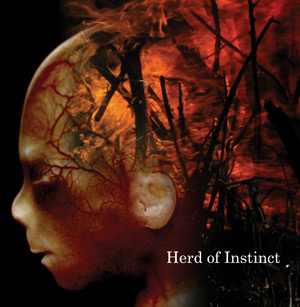
Herd of Instinct is one of those rare debut albums that are practically perfect in every respect, and need no suggestions for further improvement. An absolute must for fans of King Crimson, it will delight devotees of complex, hard-edged yet atmospheric prog, and those who are somewhat weary of technically competent bands that are sorely lacking in the originality department. With outstanding (though slightly disturbing) cover artwork and photography,  as well as excellent production by guest bassist/Warr guitarist Dave Streett, Herd of Instinct can be hailed as a serious contender for best release of 2011.

Links:
http://www.wix.com/herdofinstinct/herdofinstinct

http://www.myspace.com/herdofinstinctband

http://www.cdbaby.com/Artist/HerdofInstinct

http://www.djamkaret.com/disc-fr001.php

Read Full Post »

SETLIST:
Black Country
One Last Soul
Crossfire
Save Me
The Battle for Hadrian’s Wall
Beggarman
Faithless
Song of Yesterday
The Outsider
Cold
The Ballad of John Henry
I Can See Your Spirit
Sista Jane

————–

Man In the Middle
Burn

Even though this blog is mostly focused on progressive rock in all its forms, I am, and always have been, a fan of good, old-fashioned hard rock. As much as I love the sophistication and intellectual appeal of prog, there is something about the powerful wail of a cranked-up electric guitar, or the equally powerful roar of an iron-lunged vocalist that appeals to both the physical and the emotional side of my nature. It is no wonder, then, to find an album like Black Sabbath’s Heaven and Hell in my personal Top 10 – and no wonder either that a band like Black Country Communion, in the ten months since the release of their debut album, has immediately become such a firm favourite that both their CDs get almost daily spins in our player.

When the band’s formation was first announced, the presence of Glenn Hughes alone would have been enough to attract my interest, as he has been my favourite vocalist for the past ten years or so, even over such luminaries as Ronnie James Dio and Ian Gillan. The first time I saw him perform live, at London’s Mean Fiddler club in October 2003, as soon as he started to sing my jaw dropped on the floor and stayed there for the whole duration of the concert. I have also been following his career closely, and acquired quite a few of the numerous albums he has released over the years – including the near-legendary Hughes-Thrall album (originally released in 1982), and his collaborations with another rock legend, Black Sabbath guitarist Tony Iommi.

However, nothing could have prepared me for the sheer magnificence that is Black Country Communion.  Even though supergroups can often be rather hit-and-miss affairs that hardly ever last beyond one album, scuppered by ego clashes or by just failing to deliver the musical goods, BCC are all set to become the glaring exception to the rule. While snobs might superciliously label them as a retro or nostalgia act, accusing them of rehashing old modes of musical expression, or cashing in on some members’ erstwhile fame, in my humble view they possess the same classic, timeless quality of those dishes or items of clothing that never go out of fashion. There is something deeply comforting in the knowledge that, on a music scene all too often dominated by fads, where most of the offer seems to be little more than a triumph of style over substance, there are still artists that choose to play the music they want, and use the same strategies as the trailblazers of the late Sixties – writing brilliant material, releasing albums every few months or so (instead of keeping fans waiting for years), and – most importantly – performing their music on stage, where it really belongs.

Indeed, while  probably a good half of current prog releases are studio-only projects (sometimes carried out through the Internet), Black Country Communion’s music begs to be played in front of an audience. While each of the four members could live comfortably for the rest of their lives without having ever to tread the boards of a stage again, seeing them perform on the evening of June 19  confirmed that this is an outfit tailor-made for raising hell in a live setting. The 9.30 Club – a no-frills venue situated in a slightly seedy (though full of character) neighbourhood of Washington DC, with no seating except for a handful of bar stools, a balcony and a stage raised high enough to make it visible even to small people like me – provided the perfect locale for a profoundly satisfying evening of loud, passionate, flawlessly performed, bluesy hard rock – the kind of entertainment that leaves you physically drained because you have been standing up for over three hours in close proximity to other equally excited fans, dancing, yelling, singing along and pumping your fists in the air, while being hit by the full force of the sound blasting out of a stack of Marshall amps. Indeed, quite a change from being comfortably seated in a theatre, listening intently to the elaborate musical concoctions of your average prog band…

The sizable crowd was a mix of the older and the younger generations; some audience members had brought their children with them, as living proof of BCC’s timeless appeal – unlike, I am sorry to say, far too many stuck-in-a-time-warp progressive rock acts. I had noticed the same thing at the Blue Oyster Cult show in Baltimore, back in February – there is a reason why such bands are often  called ‘classic rock’. When we got in, securing a nice position a few feet from the stage, the anticipation was palpable. At 8 p.m., the lights dimmed, and Wagner’s “Ride of the Valkyries” started blaring from the PA, eliciting a round of excited yells from the audience. A bit clichéd maybe, but a fitting introduction to one of the very best concerts I have been fortunate to attend.

The concert was the last date of the band’s first US tour – expected, as Glenn Hughes repeated on several occasions, to ‘build a foundation’ for a band that aims to fill a void in the current music market – judging from the comments gathered around the Web, an unqualified success in spite of its short duration. With no opening act, the audience was allowed to concentrate completely on BCC’s show, introduced by the formidable one-two punch of “Black Country” and “One Last Soul” (from the band’s debut album). As expected, Glenn Hughes totally owned the stage, wielding a nicely battered, vintage red and white bass, and displaying a level of energy that many people half his age (he will turn 60 at the end of August)  would kill for. As soon as he opened his mouth to belt out the first lines of the pulsating anthem “Black Country”, there was no doubt that he amply deserved his nickname of ‘The Voice of Rock”.  Most of those who have been lucky to see him live will wonder how those golden pipes of his can withstand the strain of singing with that kind of intensity night after night. Though some people cannot warm to his voice, and are annoyed by what they perceive as over-the-top vocal acrobatics, I am happy to report that he has toned things down considerably, his voice adapting to the music rather than the other way around.

Indeed, BCC is not a Glenn Hughes vehicle, but very much of a tight unit in which everyone works towards the final result. No one with a large ego would share vocal duties with someone as gifted as Joe Bonamassa (whose voice sounds at times like a higher-pitched version of Paul Rodgers). Glenn is also a fine lyricist, capable of penning standard rock anthems as well as deeply emotional pieces, such as the ones dealing with those dark years when he came very close to self-destruction. For somebody who has stared in the face of death, and lost many a good friend in recent years (including his childhood friend and fellow Trapeze member, Mel Galley), he is in superb shape, and his positive attitude  to life is to be commended in an age when people seem to enjoy wallowing in negativity. He is also one of those rare singers whose voice has actually improved with age, in spite of his struggle with various addictions. While in his Trapeze and Deep Purple days Glenn’s voice had occasionally sounded a tad shrill, now it has acquired a depth and versatility that, coupled with his awesome range, allow him to sing just about anything with stunning results.

Though they have been jokingly called “Purple Led” or “Deep Zeppelin”, BCC actually do not sound anything like Hughes’ former band. On the other hand, the Led Zeppelin comparisons are certainly more appropriate: Joe Bonamassa is the 21st century’s answer to Jimmy Page, and has also stepped into the void left by Gary Moore’s unexpected passing in February 2011. In a scene riddled with shredders, Bonamassa’s brilliantly emotional playing and considerable songwriting skills (as shown by “The Battle of Hadrian’s Wall” and “Song of Yesterday”, the latter possibly the highlight of the whole set) are a breath of fresh air, proving once again that great music does not necessarily have to break new ground each and every time. On stage he employed a nice array of guitars, including a double-necked one for the wistful, folk-tinged “The Battle for Hadrian’s Wall” (stirring memories of the immortal “The Battle of Evermore”), and a Flying V for the two encores – as well as a spot of Theremin towards the end of the set.

Keyboard maestro Derek Sherinian plays an even larger role on stage than he does on record, putting to rest any allegations of BCC being a power trio with just a token helping of keyboards. His maple-encased Hammond B-3 provided that indispensable background rumble (though at times it tended to overwhelm the vocals); he also performed the only solo spot of the evening. Jason Bonham pounded away at his rather understated kit (especially if you are used to the likes of Mike Portnoy) with enthusiasm and precision – clearly a very capable drummer in the no-nonsense mould of his father or Cozy Powell, and perfectly suited to the band’s sound, which does not need fancy flourishes, but rather solid, powerful time-keeping. Until halfway through the set, both him and Sherinian looked dead serious, almost grim – but then both of their faces lit up when Hughes heaped lavish (and clearly heartfelt) praise on his fellow band members. The deep personal bond between the four players is clearly the secret to BCC’s success, and bodes very well for the band’s future endeavours.

Besides 8 out of 11 tracks from the band’s second album (released only a few days before the gig),  the stunning two-hour set featured a selection of songs from their debut, the gorgeous, slow-burning Bonamassa composition “The Ballad of John Henry” (from his 2009 album of the same title), and a blistering rendition of Deep Purple’s “Burn” as a final encore, with its iconic Hammond riff and Hughes screaming his heart out as he did almost 40 years ago at the legendary California Jam. Though I was a bit disappointed about the absence of personal favourites such as “Medusa” or “Down Again”, BCC’s performance was so exhilarating that it left no room for minor quibbles. In spite of the feeling of physical exhaustion and the ringing in our ears, we were left wanting more, and the promise of another US tour next year filled us with joy and anticipation. Clichéd as it may sound, Black Country Communion have really put the “super” back in “supergroup”. Long may they reign!


Read Full Post »

TRACKLISTING:
1. Walk On Alone (12:31)
2. Voices (6:24)
3. Weapon (6:52)
4. What I Have Done (5:56)
5. Mind Over Matter (2:38)
6. Prelude (1:48)
7. World in Front of Me (11:19)

LINEUP:
John Baker – lead and backing vocals, guitars, guitar synthesizer, mandolin
Kerry Chicoine – bass, backing vocals
Steve Mauk – keyboards, backing vocals
Jerry Beller – drums, percussion, backing vocals

A quartet of experienced musicians based in Los Angeles, Mars Hollow were brought to the attention of progressive rock fans by the release of their self-titled debut album, almost one year ago. The highly awaited disc did not disappoint, and the band were immediately invited to perform at the 2010 edition of ProgDay, where I had the pleasure to meet them and see them on stage. In spite of the dreaded word ‘hype’ rearing its ugly head, or of those who may point out that Mars Hollow’s music does not really bring anything new to the prog table, and that it is also too poppy for its own good, the band’s dedication to music-making is undeniable, as is their professional attitude.

These days it is certainly not usual for artists to release an album a year, and long waits are often in order for fans of any musical genre. This seems to be even truer in the world of prog, when it is not uncommon for acts to let at least three years pass between releases – mainly due to those practical issues that I have often mentioned in my writing. Mars Hollow, however, chose to buck the trend by going into the studio a mere two months after their successful ProgDay appearance – with a well-respected musician and producer like Billy Sherwood (of Yes, Conspiracy and Circa fame) at the helm, and a strong commitment to delivering the goods in an even more impressive manner than their debut. Needless to say, the band’s sophomore effort – heralded by another prestigious live appearance, this time at the 2011 edition of ROSfest – was even more highly awaited than their debut, though the anticipation was tinged with the kind of anxiety engendered by far too many examples of anything but lucky second times.

While Mars Hollow, with refreshing honesty, have never claimed to be purveyors of daringly cutting-edge music (as is the case with some acts that, in my opinion, are nowhere as consistently good), World in Front of Me rises way above any considerations of innovation, progression, or whatever you choose to call it. Even though their self-titled debut was a hugely enjoyable slice of catchy, melodic prog with modern production values and all-round excellent performances, World in Front of Me is, simply put, pure gold – an album possessed of an almost timeless quality, a flawlessly executed homage to the best that progressive rock has to offer that, in many ways, transcends the very definition of prog. Odd as it may sound, I would compare it with another recent release that has left a lasting impression on me – Black Country Communion’s debut. Now, while the latter are definitely more of a classic hard rock act than a progressive one, their first album is also one of those very rare efforts that manage to reach a very high standard of quality without reinventing the wheel, so to speak.

Clocking in at a perfect 47 minutes, World in Front of Me is bookended by two 10-minute-plus tracks which – like “Dawn of Creation” on their debut album – eschew the tired, worn-out template of the ultra-convoluted (and ultimately patchy) ‘epic’ in favour of an orgy of enchanting melodies, splendid vocal parts, and scintillating instrumental interplay. With consummate sense of balance, the five tracks sandwiched between those two display a variety of moods, from the melancholy, mainly acoustic “Mind Over Matter” to the jagged, somewhat tense “Voices” – shorter, yet no less dense and involved. To use a cliché, Mars Hollow are like a well-oiled machine, their individual skills honed by years of experience and a genuine love of their craft, creating layer upon layer of lovely sounds that, while sustaining that uplifting quality so evident in their debut, are tinged with a hint of gentle sadness suggesting the wisdom that comes with maturity. And mature is probably one of the most effective descriptions for World in Front of Me: though lacking anything as infectious as “Midnight”, it is hard not to find yourself singing along the title-track or “Walk on Alone”, as well as listening raptly to the seamless ebb and flow of the instrumental passages.

As was the case with the band’s debut, World in Front of Me is strongly keyboard-based, with John Baker’s guitar used in a supporting (though indispensable) role rather than as the star of the show. However, Sherwood’s crystal-clear production has given the rhythm section a much more prominent role. Jerry Beller’s dynamic yet sophisticated drumming is not merely propulsive, but adds a lot of dimension to the music, sometimes following the melody laid out by the keyboards and guitar, sometimes playing in a sort of counterpoint; while Kerry Chicoine’s rumbling, pneumatic Rickenbacker bursts out of the densely woven fabric of the sound in a way rarely heard since Chris Squire introduced his ‘lead bass’ approach to the instrument. Indeed, Yes might be mentioned as probably the biggest influence on this album – though, rather than the toweringly unapproachable Yes of Close to the Edge fame, Mars Hollow bring to mind the band that, with their first three albums, gave the music world a textbook-perfect example of contamination between classic pop-rock and the fledgling progressive trend.

Steve Mauk handles his array of keyboards with impressive aplomb, supported by the relentless work of the rhythm section. While the gorgeously wistful, rippling piano piece that is “Prelude” puts him directly in the spotlight, his lush yet sedate contribution to the overall sound perfectly complements John Baker’s understated guitar work and commanding vocal performance. As I stated in my review of Mars Hollow’s debut, Baker’s voice – a soaring, admirably controlled tenor reminiscent of a smoother Geddy Lee, with touches of early Steve Walsh – may not be to everyone’s taste, but his handling of the somewhat downbeat, meditative lyrics (mostly focusing on the end of a relationship) is nothing short of masterful, and the harmony sections suggest the effortless grace of vintage Yes and, occasionally, even Gentle Giant.

As regards the individual tracks, opener “Walk On Alone” and the title-track are classic prog heaven, blending memorable melodies – catchy, though in a very subtle fashion, and dispensing with a conventional verse-chorus-verse structure – with instrumental passages of stunning elegance and understated complexity. While the former number is more airy and relaxed, the latter seems to slowly build up to a climax, with a sense of tension occasionally surfacing. “Voices” and “Weapon”, though shorter, are conceived along similar lines, successfully merging haunting vocal sections with intense instrumental passages; while “What I Have Done”, with its more streamlined approach and catchy harmony vocals, comes closest to the spirit of Mars Hollow’s debut, though without the bold airplay potential of songs like “Midnight” or “Eureka”.

Down to its stylish cover photo, depicting the stark beauty of the Death Valley desert, World in Front of Me is a supremely elegant album that succeeds in the task of combining accessibility with dazzling technical proficiency and a genuine feeling of warmth. Let us forget for a moment about ‘retro-prog’ or any such ultimately pointless labels. Mars Hollow’s intention was never to revolutionize the music world, but rather to produce an album that people will enjoy, cherish, and possibly relate to in terms of their own experience. A pleasure from start to finish, this is definitely a very serious contender for album of the year.

Links:
http://www.marshollow.com/

http://www.10trecords.com/


Read Full Post »

TRACKLISTING:

1. Schizoid & Guntrip (2:46)
2. In the Movie of You (7:57)
3. Devotee (7:24)
4. Ambiance for the Active Mind (6:40)
5. Fantastic Dreamer (6:26)
6. Releasing (5:21)
7. Fading in the Rain (6:29)
8. Upon Further Review (4:26)
9. Vision (13:50)

LINEUP:

Henry Tarnecky – vocals, keyboards
Blake Tobias – keyboards, bass
Jack Wright – guitars, drums

With:
Glenn Arpino – keyboards
Tom Shiben – bass
Nicole Tarnecky – vocals

Temporal Chaos Project (TCP for short) are a trio based in different states of north-eastern USA, who initially met on the Internet and started a collaboration that resulted in the album The Way, released in 2009. Their second album, Fantastic Dreamer, followed in April 2011, with the core group of Henry Tarnecky, Blake Tobias and Jack Wright augmented by three guest musicians. Both albums were released on Georgia-based label 10T Records, one of the most interesting independent labels for progressive rock.

In spite of their name, there is nothing chaotic about TCP. Fantastic Dreamer, which has garnered a lot of positive critical attention since its release, is one of those albums for which the definition ‘solid’ seems to be tailor-made. Though studio-only projects can often be hit-and-miss, formally perfect but somewhat lacking in the soul department – therefore producing an overall unsatisfactory impression – TCP’s sophomore effort comes across as a mature, well-balanced album, with excellent instrumental performances, enough compositional complexity to appeal to fans of traditional prog, and more than just a smattering of contemporary flair. While some bands or artists show a more or less clear direction (as in symphonic, neo or prog-metal), TCP are unabashedly eclectic, with roots in the great progressive tradition and some recognizable classic influences, yet no fear of dipping their collective toes in more modern waters. While TCP’s eclecticism is of a different kind than the one displayed by bands of a more innovative disposition, the end result is definitely worthy of attention.

Running at about one hour (in my opinion, the almost perfect length), Fantastic Dreamer features 10 tracks, most of them between 2 and 8 minutes, with the exception of the ‘epic’ “Visions”, an ambitious yet cohesive piece that wraps up the album in fitting fashion.. Though, like many modern prog albums, Fantastic Dreamer is very much vocal-based, TCP achieve admirable balance between the singing and the lush, varied instrumental sections. Keyboardist Henry Tarnecky is in charge of the vocals, and does a fine job of it. His voice brings to mind the husky, slightly rough around the edges tone of Peter Gabriel, with some hints of the dramatic power of Peter Hammill or Fish, and fits the material perfectly.

Though clocking in at under 3 minutes, opener “Schizoid & Guntrip” already sets the tone for the whole album – a melodic yet assertive number, evoking a vintage hard rock vibe, with a subtly catchy quality and sleek instrumental interplay. “In the Movie of You” blends suggestions of early Pink Floyd (down to the use of recorded ambient sounds) with heavier tones, the sharpness of the guitar tempered by the gentleness of the piano. Pink Floyd references also crop up in the aptly-titled “Ambiance for the Active Mind”, where the atmospheric surge of the keyboards climaxes in dramatic rifferama before loosening up in a lovely guitar solo amidst waves of mellotron; while the mid-paced “Releasing”, with the faintly eerie tone of the guitar solo, points rather to the later output of the seminal English band. The catchiest number on the album, “Devotee” pushes keyboards and vocals to the forefront, with plenty of drama and melody in the vein of crossover/art rock bands like Queen or Supertramp.

With the title-track and “Fading in the Rain”, TCP tread similar territory, displaying their grandiose, even bombastic side, though without overdoing things; the latter song in particular, in which Tarnecky is assisted by a female guest vocalist, Nicole Tarnecky, clearly references Genesis, with airy guitar soloing and masses of stately keyboards. The folksy, mainly acoustic “Upon Further Review”, embellished by harpsichord and Mellotron, acts as an introduction of sorts to the 13-minute “Visions”, a powerful keyboard-driven extravaganza composed by guest musician Glenn Arpino, in which a climactic crescendo somewhat reminiscent of Supertramp’s more ambitious pieces is bookended by rarefied, understated passages and fluidly melodic guitar leads.

While I would not go as far as to call Fantastic Dreamer a masterpiece (as other enthusiastic reviewers have done), it is undoubtedly a very well-crafted album, with all-round excellent performances, and an interesting compositional structure. The occasional bouts of heaviness do not disrupt the melodic, nicely knit fabric of the music, and Henry Tarnecky’s expressive vocals tackle the often ambitious lyrical matter with assurance and aplomb. The very detailed CD booklet, enhanced by striking artwork and photography, adds visual interest to a substantial musical package. Even if TCP are, at least for the time being, a studio-based project, I hope they will consider taking their music on the road in the near future, because they sound like a band worth hearing in a live setting.

Links:
http://www.temporalchaos.com/html/home.html

http://10trecords.com/


Read Full Post »

TRACKLISTING:
1. Skating on Europa 9:35
2. Know Again 6:26
3. A Poet’s Talespin I: Half-Slept Moments 1:56
4. A Poet’s Talespin II: Soft Collisions 8:28
5. A Poet’s Talespin III: The Bridge 7:55
6. A Poet’s Talespin IV: I Write 5:01
7. A Poet’s Talespin V: In the Shadows 6:17
8. Get the Hell off my Lawn 4:20
9. Counted the Stars 1:18

LINEUP:
Dave Kulju – electric and acoustic guitars, bass guitar, keyboards, guitar synthesizer, sound effects and programming
Frank Basile – drums

With:
Annie Oya – vocals (3)
Ian Cameron – electric and acoustic violins (2)

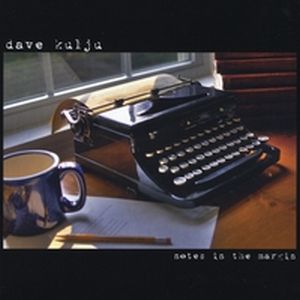
Notes in the Margin is the second album released by US multi-instrumentalist Dave Kulju, based in Rochester (New Hampshire). After his recording debut with Electrum, Frames of Mind (1998), followed in 2002 by Standard Deviation, when the band went on hiatus he started devoting his free time to his solo career, releasing Abstract Expression in 2007, which brought him to the attention of the community of progressive rock followers.  Like Abstract Expressions – even if Kulju is in charge of the majority of the instrumentation – Notes in the Margin is not your typical, ubiquitous ‘solo-pilot’ projects made possible by modern recording technology, but features a real drummer, Frank Basile, as well as a couple of other guests. Unlike its predecessor, though, the album is not completely instrumental, and its centrepiece, the five-part epic “A Poet’s Talespin” (adapted from two poems by Australian poet Amanda Joy) features the amazing contribution of UK-based  session vocalist Annie Oya.

Three years in the making, the process lovingly detailed on Dave’s own website, Notes in the Margin is an unusually elegant, deeply literate effort that eschews any of the pretentiousness often associated with prog, and manages to emphasize emotional content without being mawkish or contrived. The striking cover, a photo taken by Kulju himself (who is a gifted photographer as well as a talented musician), immediately projects a stylish contemporary image that sharply deviates from the old prog cliché of fantasy/sci-fi themed artwork, with its still life centred around a vintage typewriter. According to the artist, the album title is a reflection on the process of making the record itself – a process involving a lot of rewriting and refinement, just like a work of literature.

For a project completely conceived in the studio, Notes in the Margin sounds remarkably organic,  multilayered though never overdone, each instrument standing out in clear detail. It comes very much across as a guitar-based album, showcasing Kulju’s fluid, clean style, inspired by the likes of David Gilmour and Andy Latimer without being derivative. Keyboards, on the other hand, are used more as a foundation than the main event, though the epic can boast of some positively gorgeous piano passages. Surprisingly, however, the real protagonist of Notes in the Margin is the bass, merging seamlessly with Frank Basile’s excellent drum work to set the pace, and stamping its own distinctive touch on the fabric of the compositions. The music flows smoothly, with enough complexity to satisfy the cravings of most prog fans, except those who are looking for innovation at all costs. Indeed, while Notes in the Margin does not offer anything startlingly new, neither does the vast majority of current releases, and the musical content here is undeniably above average.

With a practically perfect running time of about 51 minutes, no filler is needed on Notes in the Margin, and none of the tracks feels padded or stretched beyond reason. Album opener “Skating on Europa”, loosely based on the work of sci-fi author Arthur C. Clarke, is a forceful yet melodic number which, in spite of its almost 10-minute duration, never outstays its welcome. Driven by thunderous yet not overwhelming drums and a sleek, dynamic bass line, it pushes Kulju’s fluid, fiery lead guitar to the forefront with exhilarating effect. In “Know Again” (the English translation of the Greek word anagnorisis, the moment of recognition for the protagonist of a Greek tragedy)  the keyboards take more of a lead role, and Ian Cameron’s contribution on acoustic and electric violin add further layers of dimension to a piece that, while not exactly jazzy, shifts subtly from a subdued tone to a sort of crescendo, slowing down again towards the end.

The album’s epic, “A Poet’s Talespin”, which (like Shadow Circus’ “Project Blue” or The Rebel Wheel’s “The Discovery of Witchcraft”, to name but two recent examples) is conceived as five separate pieces strung together by a  musical and lyrical fil rouge, rather than as a massive 30-minute behemoth. As previously hinted, it is also the only composition featuring Annie Oya’s lovely vocals, soothing and melodious yet devoid of that cloying sweetness all too frequent in female prog singers. Introduced by a gorgeous classical piano piece, the romantic, mid-paced (and very aptly titled) “Soft Collisions” develops into a number of subtle complexity where the vocals are complemented by Kulju’s superb guitar and bass work and the recurring presence of the piano. “The Bridge” treads spacey territory, with a subdued, more acoustic bent; while the symphonic, keyboard-driven “I Write” is brimming with gentle sadness, and “In the Shadows” closes the epic with an instrumental reprise of the main theme, rendered in spacious, atmospheric tones reminiscent of Pink Floyd. The album is wrapped up by two instrumentals – the highly dynamic, riff-based “Get the Hell Off My Lawn”, bringing to mind Rush compositions such as “Leave That Thing Alone”, with bass and guitar working together to create intense textures; and the short, somber keyboard piece “Counted the Stars”, named after a phrase in an Anne Sexton poem that was the earliest inspiration for the epic.

With superb production values and sterling sound quality, Notes in the Margin is indeed an excellent release, worthy of the attention of even the more demanding prog listeners. It is a pity that – like most studio-only projects – it will probably flow under the radar of many fans in favour of more extensively publicized albums. A labour of love in every sense of the term, classy and literate yet full of endearing warmth, this is a must for everyone who loves melodic, guitar-oriented progressive rock. It would be a boon if, one day, Dave managed to put a band together and perform his music on stage, in spite of all the well-documented difficulties that plague those artists looking for live outlets for their work.

Links:
http://www.davekmusic.com/

http://www.littleglasspen.com/

Read Full Post »

TRACKLISTING:
1. Neon Knights (3:54)
2. Children of the Sea (5:35)
3. Lady Evil (4:26)
4. Heaven and Hell (6.59)
5. Wishing Well (4.08)
6. Die Young (4:46)
7. Walk Away (4:26)
8. Lonely Is the Word (5:53)

LINEUP:
Ronnie James Dio – vocals
Tony Iommi – guitar
Geezer Butler – bass
Bill Ward – drums
Geoff Nichols – keyboards

Though I generally try to be as unbiased as possible in my reviews, in this particular occasion I will have to let objectivity take a back seat, because Heaven and Hell, Black Sabbath’s ninth album, is one of my top 10 albums of all time. As my faithful readers should know by now, even if the majority of the music I review can be placed under the extensive ‘progressive rock’ umbrella, my listening tastes are quite eclectic, and I do have quite a soft spot for what might be termed ‘classic heavy metal’. Indeed, Heaven and Hell is a masterpiece of the genre, signaling the band’s return to sparkling form after the severe decline shown by their late Seventies albums

At the beginning of the new decade, Sabbath underwent what could be called a total makeover. Gone was the muddy, uncertain sound a of their earlier albums, to be replaced by Martin Birch’s state-of-the-art, crystal-clear production, which allowed every instrument to shine – not just Geezer Butler’s and Bill Ward’s thunderous rhythm section or Tony Iommi’s legendary riffing, but especially new guy Ronnie James Dio’s awe-inspiring roar. The latter’s addition  made the real difference in the band’s performance: though Ozzy’s distinctive, eerie wail had been Black Sabbath’s trademark  since the beginning of their career, Dio (who had left Ritchie Blackmore’s Rainbow to join the band) was something else completely. Such changes obviously altered the band’s sound in a rather substantial way, so that  Heaven and Hell sounds quite unlike their Seventies output – less chillingly menacing, more crushingly powerful, yet also more accessible.

The hard-driving “Neon Knights” (one of the strongest opening tracks ever) sounds like a statement of intent right from the start, brimming with Iommi’s towering guitar riffs and Dio’s soaring bellow. Things slow down for the following number, the epic, doom-laden “Children of the Sea” – one of Dio’s career-defining vocal performances together with Rainbow’s “Stargazer”.  On the other hand, “Lady Evil” is a catchy, uptempo song, punctuated by Butler’s booming, dynamic bass lines, which provides a respite of sorts before the monumental title-track – strategically placed at the end of Side A when the album was originally released.

A concert classic for both Dio-era Black Sabbath and its unfortunately short-lived, eponymous band, “Heaven and Hell” is a crushingly heavy cavalcade bolstered by Butler’s thundering bass and Iommi’s manic riffing, with Dio’s voice soaring and swooping above the din in true epic style. As a sort of release of tension, another catchy tune follows, the almost poppy “Wishing Well” (no relation to the Free song of the same title).   “Die Young” can instead be counted as another of the album’s highlights – a powerful, keyboard-laden hard rocker, it sees another cracking vocal performance from Dio, enhanced by Iommi’s  sterling guitar work.

While the slightly nondescript “Walk Away” is, in my view, the only track   that approaches filler status, the album is wrapped up by another memorable number.  “Lonely Is the Word” most closely resembles Sabbath’s earlier output with Ozzy – a sinister slice of doom driven by Iommi’s iconic riffing,  while Dio’s vocals sound pleading and commanding in turn. The wistful yet intense guitar solo at the end of the song is undoubtedly one of Iommi’s finest moments.

Originally released on April 25, 1980, Heaven and Hell  is still revered by rock fans, even though the younger generations of metal fans may find it  somewhat lightweight if compared with the output of the countless extreme metal acts flooding the current scene.  While it  does contain occasional progressive touches, it  was never as influential to the development of prog-metal as Black Sabbath’s Ozzy-era offerings. The presence of a few catchy tunes might also put off some purists, who might find the likes of  “Lady Evil” o “Wishing Well” too close to AOR for comfort.

All this criticism notwithstanding, Heaven and Hell is one of the milestone releases of the past 40 years, and one of the greatest vocal albums in the history of rock. As well as being a celebration of the album’s 31st anniversary, this review is meant as a homage to Ronnie James Dio, who passed away almost a year ago, on May 16, 2010. Together with Rainbow’s Rising, this album was possibly Ronnie’s finest hour.

Read Full Post »


TRACKLISTING:
1. Aria (2:09)
2. Biocosmopolitan (3:36)
3. Concrete Clima (4:26)
4. The Discordia (3:42)
5. Kerouac in New York City (3:13)
6. Is Difficult to Fly Without Whisky (3:26)
7. Dandy Dog (2:12)
8. Danny Is a Man Now (1:42)
9. Biocosmo (3:39)
10. Lovecity (2:47)
11. Springstorm (3:21)
12. The Miss Kiss (2:57)
13. My Barry Lindon (1:28)
14. Closin’ Theme (2:32)
15. Crosstown Traffic (bonus track) (4:03)
16. Biocosmo (English version – bonus track) (4:14)

Bonus video:
The Miss Kiss

LINEUP:
Boris Savoldelli – all vocals and vocal instruments, piano (9, 16)

With:
Jimmy Haslip – bass (2)
Paolo Fresu – trumpet, flugelhorn (3, 5)

At a first glance, Boris Savoldelli’s second solo album does not spell ‘progressive rock’. With 14 songs (plus two bonus tracks) between 1 and 4 minutes in length, and a rather minimalistic instrumental accompaniment, Biocosmopolitan looks light years away from the lushly orchestrated productions of the flag-bearers of the genre. Moreover, even if the output of New York-based MoonJune Records (one of the few authentically forward-thinking labels in the business) is frequently placed under the used-and-abused ‘prog’ umbrella, this album displays a somewhat different approach to music-making, one that tries to offers something genuinely original rather than a more or less successful replica of Seventies modes.

My first encounter with Boris Savoldelli’s music dates back from 2009, when I reviewed his solo debut, Insanology – an album that impressed me for its unique blend of elegance and uncontrived cheerfulness. It was one of those truly enjoyable discs whose apparent simplicity reveals layers of complexity with every successive listen. It is, however, not the complexity for its own sake that can be sometimes encountered in ‘standard’ progressive rock, but is rather achieved with a lightness of  touch, a kind of consummate subtlety that is all too rare on the modern music scene – all accomplished with one main instrument, Savoldelli’s voice, a veritable one-man-orchestra of stunning versatility that has been compared to luminaries like Bobby McFerrin or Demetrio Stratos.

Indeed, Boris Savoldelli is much more than an ordinary singer – to quote our fellow Italians PFM, he is a real maestro della voce, a master of the art of shaping his voice in ways that would sound impossible to most people, replacing most of the conventional instrumentation used in jazz and rock with an array of awe-inspiring effects whose apparently effortless nature belie the years of hard work behind it all. While most of the songs, which blend traditional and unconventional features, have a similar structure – where two or more vocal lines (both percussive and harmonic) intersect and spar with each other – as a whole Biocosmopolitan does not sound monotonous or repetitive. In my view, his unique handling of the linguistic aspects is probably the single most important factor for the album’s success. English and Italian intermingle with astounding naturalness (while on most other albums a mix of languages would sound contrived) that lends the album a truly cosmopolitan feel – with devices such as alliteration and assonance used to bolster the musical content, creating intriguing rhythms and textures.

In the four years between Insanology and Biocosmopolitan, Boris Savoldelli has been quite busy, though on a more decidedly experimental level – releasing the album Protoplasmic in collaboration with Elliott Sharp, as well as three albums with avant-garde outfit S.A.D.O. While Insanology saw the presence of veteran jazz guitarist Marc Ribot on two tracks, this time Savoldelli avails himself of the collaboration of two outstanding musicians – renowned Italian trumpeter Paolo Fresu, and bassist Jimmy Haslip (of Yellowjackets fame). Haslip’s bass adds depth and interest to the title-track, complementing Savoldelli’s bluesy vocals in a song that is much more complex than it short running time would suggest. Fresu’s wistful-sounding trumpet punctuates the cheery, infectious repetition of the line “the corner is dirty” in the pause-laden “Concrete Clima” (the longest track on the album at slightly over 4 minutes), and its sudden bursts of sounds enrich the fabric of the bright, endearingly nonsensical “Kerouac in New York”.

Most of the songs share the same sunny, upbeat nature and exude a genuine sense of warmth, reminding the listener of exotic vocal styles or of the sensuality of Latin rhythms, combining modernity and a charming retro feel (most evident in the Fifties’ doo-wop style of the hugely entertaining “The Miss Kiss”). Boris’s voice ranges from gritty, passionate blues tones to elegant, jazzy smoothness, infused with a genuine sense of humour and enjoyment. The only number that clearly differs from the rest is the melancholy ballad “Biocosmo”, a slow-burner (also present as a bonus track with English-language vocals) accompanied by piano and ending with solemn, choir-like chanting and distant clinking sounds, which one can almost imagine Savoldelli performing in the semi-darkness of a smoky night club. The album is then wrapped up, in cinematic fashion,  by two humorous complementary pieces, “My Barry Lindon “ – basically a series of ‘thank you’, handclaps and assorted sounds with occasional vocal harmonies thrown in – and “Closin’ Theme”, where a voice recites the album’s credits in English with mock seriousness. The second bonus track, a cover of Jimi Hendrix’s “Crosstown Traffic”(already included on Insanology), is the closest the album goes to traditional rock, with Savoldelli offering a more than credible performance as a hard rock vocalist.

Biocosmopolitan is one of those rare albums that are potentially appealing to all music lovers, regardless of genres and labels – though it might disappoint those who require songs to be over 10 minutes in length, or object to the lack of ‘proper’ instruments, or even shun any kind of music that is not dead serious or just plain depressing. Progressive without necessarily being ‘prog’, entertaining and at times even exhilarating, Biocosmopolitan is an ideal showcase for the amazing vocal and compositional talents of an artist whose work proves that impeccably performed music can also be fun.

Links:
http://www.borisinger.eu

http://www.moonjune.com

Read Full Post »

TRACKLISTING:
1. Clear Air Turbulence  (7:35)
2. Five Moons  (7:30)
3. Money Lender  (5:38)
4. Over the Hill (7:14)
5. Goodhand Liza  (5:24)
7. Angel Manchenio  (5:17)

LINEUP:
Ian Gillan – lead vocals
Colin Towns – keyboards, flutes
John Gustafson – bass, vocals
Ray Fenwick – guitars, vocals
Mark Nauseef – drums, percussion
Martin Firth – baritone saxophone
John Huckridge – trumpets
Derek Healey – trumpets
Malcolm Griffiths – trombone
Phil Kersie – tenor saxophone (2)

It would not be too much of an exaggeration to call  Clear Air Turbulence, the second album released by the sadly short-lived Ian Gillan Band, one of the forgotten masterpieces of Seventies progressive rock. For those who think of Ian Gillan as little more than a hirsute hard rock screamer,  even a casual listen to this record may definitely bring somewhat of a shock – and not just because of the vocals.

Following his return to the world of music after a series of unsuccessful business ventures, Ian surrounded himself with a bunch of seasoned musicians (including bassist John Gustafson, of Quatermass and Roxy Music fame), and proceeded to surprise his fans by slowly but inexorably detaching himself from his Deep Purple past. Unfortunately, though, rock fans are not always as open-minded as we would wish them to be, and the project folded after releasing a total of three studio albums, plus a posthumous live one.

When listening to Clear Air Turbulence,  we cannot but regret the demise of such an exciting outfit, offering an incredibly high level of musicianship as well as  creativity. The six tracks on the album, which all exceed the five-minute mark, feature complex, multi-layered structures, enhanced by the discreet presence of a horn section, and distinguished by an overall sense of  sophistication, a lightness of touch seldom associated with Gillan’s mother band. Even Ian’s vocals, while easily recognizable, never really sound like the original ‘air raid siren’ unleashed on the likes of  Machine Head and  Made in Japan.

However, the ace in the hole on Clear Air Turbulence is undoubtedly keyboardist Colin Towns.  Another of the many unsung heroes of the rock world, now a composer of jazz and soundtrack music, Towns joined the band for the recording of this album (replacing original member Mike Moran), and immediately stamped his mark on their music, as well as on the band’s later incarnation – simply called Gillan, and much more akin to Deep Purple in sound, with excursions into outright heavy metal.

Weird, spaced-out keyboard sounds introduce the title-track, surging into a crescendo that soon gives way to a manic, bass- and drum-driven riff, and a wildly exhilarating, 7-minute-plus ride, powered by Towns’ sweeping synthesizers. In the middle section of the song, guitarist Ray Fenwick (a veteran of the British rock scene, formerly with the Spencer Davis Group) demonstrates his skills with a slow-burning, emotional solo. Towns is  also responsible for the delicate flutes on the dreamy, soulful ballad “Five Moons”; while on the funky “Money Lender” horns take pride of place, with Gillan’s  commanding, even aggressive vocal performance somewhat reminiscent of his hard-rockin’ past.

“Over the Hill” (my personal favourite, together with the title-track) showcases drummer Mark Nauseef’s impressive skills, as well as brilliant piano and synth in the bridge, and more understated yet distinctive guitar work. The atmospheric “Good Hand Liza” follows, punctuated by Latin-style percussion and spacey synths, and driven along by John Gustafson’s meaty, dynamic bass lines. The album ends in style with another intricate, highly structured number, the romantic “Angel Manchenio”, dedicated to a Gypsy who became Gillan’s blood brother (an intriguing tale, as told by both the lyrics and the liner notes). The song, which alternates slower, almost Latin-flavoured moments with full-fledged jazzy flights of instrumental and vocal prowess, is probably the furthest Gillan ever strayed away from his hard rock roots, and a perfect closer for such a distinctive album.

At the time of its release, Clear Air Turbulence was not considered rock enough by Deep Purple fans, and probably not jazzy enough by fusion devotees; moreover,  the competition of the fledgling punk scene did it no favours. Over thirty years later, however, it is high time it was recognized as an adventurous, stimulating effort, at times bordering on masterpiece status. It is a sad fact of the music world that, all too often, musicians are much more ready to try new avenues than their fans…  I would encourage my readers not to make the same mistake:  if you love sophisticated, complex jazz-rock/fusion, do not be put off by the name, and get hold of this album.

Read Full Post »

« Newer Posts