Feeds:
Posts
Comments

Posts Tagged ‘Guitar’

TRACKLISTING:

1. Schizoid & Guntrip (2:46)
2. In the Movie of You (7:57)
3. Devotee (7:24)
4. Ambiance for the Active Mind (6:40)
5. Fantastic Dreamer (6:26)
6. Releasing (5:21)
7. Fading in the Rain (6:29)
8. Upon Further Review (4:26)
9. Vision (13:50)

LINEUP:

Henry Tarnecky – vocals, keyboards
Blake Tobias – keyboards, bass
Jack Wright – guitars, drums

With:
Glenn Arpino – keyboards
Tom Shiben – bass
Nicole Tarnecky – vocals

Temporal Chaos Project (TCP for short) are a trio based in different states of north-eastern USA, who initially met on the Internet and started a collaboration that resulted in the album The Way, released in 2009. Their second album, Fantastic Dreamer, followed in April 2011, with the core group of Henry Tarnecky, Blake Tobias and Jack Wright augmented by three guest musicians. Both albums were released on Georgia-based label 10T Records, one of the most interesting independent labels for progressive rock.

In spite of their name, there is nothing chaotic about TCP. Fantastic Dreamer, which has garnered a lot of positive critical attention since its release, is one of those albums for which the definition ‘solid’ seems to be tailor-made. Though studio-only projects can often be hit-and-miss, formally perfect but somewhat lacking in the soul department – therefore producing an overall unsatisfactory impression – TCP’s sophomore effort comes across as a mature, well-balanced album, with excellent instrumental performances, enough compositional complexity to appeal to fans of traditional prog, and more than just a smattering of contemporary flair. While some bands or artists show a more or less clear direction (as in symphonic, neo or prog-metal), TCP are unabashedly eclectic, with roots in the great progressive tradition and some recognizable classic influences, yet no fear of dipping their collective toes in more modern waters. While TCP’s eclecticism is of a different kind than the one displayed by bands of a more innovative disposition, the end result is definitely worthy of attention.

Running at about one hour (in my opinion, the almost perfect length), Fantastic Dreamer features 10 tracks, most of them between 2 and 8 minutes, with the exception of the ‘epic’ “Visions”, an ambitious yet cohesive piece that wraps up the album in fitting fashion.. Though, like many modern prog albums, Fantastic Dreamer is very much vocal-based, TCP achieve admirable balance between the singing and the lush, varied instrumental sections. Keyboardist Henry Tarnecky is in charge of the vocals, and does a fine job of it. His voice brings to mind the husky, slightly rough around the edges tone of Peter Gabriel, with some hints of the dramatic power of Peter Hammill or Fish, and fits the material perfectly.

Though clocking in at under 3 minutes, opener “Schizoid & Guntrip” already sets the tone for the whole album – a melodic yet assertive number, evoking a vintage hard rock vibe, with a subtly catchy quality and sleek instrumental interplay. “In the Movie of You” blends suggestions of early Pink Floyd (down to the use of recorded ambient sounds) with heavier tones, the sharpness of the guitar tempered by the gentleness of the piano. Pink Floyd references also crop up in the aptly-titled “Ambiance for the Active Mind”, where the atmospheric surge of the keyboards climaxes in dramatic rifferama before loosening up in a lovely guitar solo amidst waves of mellotron; while the mid-paced “Releasing”, with the faintly eerie tone of the guitar solo, points rather to the later output of the seminal English band. The catchiest number on the album, “Devotee” pushes keyboards and vocals to the forefront, with plenty of drama and melody in the vein of crossover/art rock bands like Queen or Supertramp.

With the title-track and “Fading in the Rain”, TCP tread similar territory, displaying their grandiose, even bombastic side, though without overdoing things; the latter song in particular, in which Tarnecky is assisted by a female guest vocalist, Nicole Tarnecky, clearly references Genesis, with airy guitar soloing and masses of stately keyboards. The folksy, mainly acoustic “Upon Further Review”, embellished by harpsichord and Mellotron, acts as an introduction of sorts to the 13-minute “Visions”, a powerful keyboard-driven extravaganza composed by guest musician Glenn Arpino, in which a climactic crescendo somewhat reminiscent of Supertramp’s more ambitious pieces is bookended by rarefied, understated passages and fluidly melodic guitar leads.

While I would not go as far as to call Fantastic Dreamer a masterpiece (as other enthusiastic reviewers have done), it is undoubtedly a very well-crafted album, with all-round excellent performances, and an interesting compositional structure. The occasional bouts of heaviness do not disrupt the melodic, nicely knit fabric of the music, and Henry Tarnecky’s expressive vocals tackle the often ambitious lyrical matter with assurance and aplomb. The very detailed CD booklet, enhanced by striking artwork and photography, adds visual interest to a substantial musical package. Even if TCP are, at least for the time being, a studio-based project, I hope they will consider taking their music on the road in the near future, because they sound like a band worth hearing in a live setting.

Links:
http://www.temporalchaos.com/html/home.html
http://10trecords.com/


Read Full Post »

TRACKLISTING:
1. Day Of Destiny (4:06)
2. The Wrap (Intro) (5:16)
3. Under The Wrap (38:19)
4. An Angel (5:42)
5. Ilusionist (1:16)
6. The Wrap (Outro) (4:59)

 LINEUP:
Antony Kalugin – keyboards, vocals, percussion
Maxim Velichko – electric guitars
Sergey Balalaev – drums
Kostya Ionenko – bass
Sergey Kovalev – bayan, vocals
Roman Gorielov – acoustic guitar, backing vocals

With:
Helen Bour – oboe (1, 2)
Alexandr Pastukhov – bassoon (1, 2, 3)
Oksana Podmaryova – cello (3, 6)
Max Morozov – viola (3, 6)
Daria Maiourova – violin (3, 6)

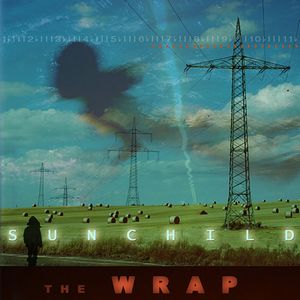
One of the projects by talented and prolific Ukrainian musician Antony Kalugin (also involved with Karfagen and Hoggwash), Sunchild released their debut album, The Gnomon, in 2008, followed by The Invisible Line in 2009. The Wrap, the band’s third album, was recorded over a two-year period, and released in September 2010. An accomplished artists in spite of his young age, Kalugin has picked a group of gifted Ukrainian musicians for his projects, including string and woodwind players that give his bands’ musical output a well-rounded symphonic dimension.

Like a number of other bands from the Russian Federation, Sunchild’s approach to progressive rock is more traditional than innovative, though carried through with panache and impressive technical skill. While the band’s sound is not as openly influenced by classical music as the likes of Little Tragedies, Kalugin’s use of keyboards favouring piano and synthesizers rather than organ, quite a few diverse influences are detectable in Sunchild’s music other than the expected symphonic/Neo-prog strain. Alongside the intense melodic content, enhanced by pleasing vocal harmonies and lovely piano and flute passages, a distinct progressive metal feel surfaces in some of the compositions, which is in line with the trend followed by many contemporary bands that might be gathered under the Neo umbrella.

Like its two predecessors, The Wrap is based around an elaborate, rather esoteric philosophical concept, in this case the conflict between the self and its shadow – something that is likely to send some people running for the exits, and cause great delight in others. Although Kalugin was assisted by a native speaker of English, Will Mackie, in penning the lyrics, they are somewhat hit and miss – which anyway is not a particularly important factor, as I am first and foremost interested in the music. Unless lyrics contain something highly offensive (which is not the case here), I tend to be quite indifferent to them, unlike other critics that are often quick to point out any lyrical shortcomings. In any case, Kalugin is a more than adequate vocalist, capably assisted by his bandmates in the harmony parts, and even his slight accent does not detract from his delivery as is the case of other non-English-speaking musicians

Running at slightly below 60 minutes, The Wrap is dominated by the almost 40-minute epic “Under the Wrap”, which is strategically placed in the middle of the album (a good move, in my view). As I have pointed out on several occasions, I believe that it is extremely difficult for any given band or artist to sustain a composition of such length when it is conceived as a single block, and “Under the Wrap” is no exception. In spite of the undeniable quality of the music, the epic is more of a collection of disparate passages following one another without a common thread than an organic whole, which would have probably benefited from being presented in separate sections. As things are, the composition comes across as quite patchy, its first half starting out in subdued fashion, with subtle references to the great Russian composers of the Romantic era (reinforced by the presence of a bassoon and a string section), and then heading in a strongly metal-flavoured direction suggestive of Dream Theater circa Images and Words. The second half, instead, is strongly reminiscent of Genesis, with a couple of vocal passages in which Kalugin sounds very much like Peter Gabriel, a definitely classical-sounding, string-led section, and then a beautifully melodic guitar solo fading out at the end. Though the musicianship is consistently top notch, there are simply too many ideas left somehow underdeveloped, and not enough cohesion.

The remaining five tracks on the album are noticeably shorter the epic, and certainly much more successful in sheer compositional terms. Three of them feature vocals, and are generally mid-paced, melodic pieces with lush keyboard and guitar textures and excellent vocal parts. Opener “Day of Destiny” borders on AOR, with a very catchy chorus and flawless instrumental interplay; while closing track “The Wrap (Outro)” briefly reprises the opener’s main theme, with a brief metal-tinged section leading to an atmospheric, string-led conclusion. On the other hand, “An Angel”, followed by the short, soothing acoustic interlude “Illusionist”, as the title implies is a lovely, rarefied ballad featuring a gorgeous guitar solo backed by piano and percussion. The other instrumental track, “The Wrap (Intro)”, seems to reproduce the structure of the epic, though in a more cohesive way, blending prog-metal suggestions with pastoral moments in the vein of vintage Genesis or Camel.

As the previous paragraphs illustrate quite clearly, The Wrap is quite likely to appeal to fans of classic symphonic and Neo-prog, even if the occasional prog metal overtones may put off some of the more traditionally-oriented listeners. In any case, even if decidedly retro in tone, it is a finely-crafted album brimming with enjoyable melodies, and executed with undisputable skill and professionalism. The very thorough booklet, with its stylish artwork and photography, is also deserving of a mention. In spite of the somewhat patchy nature of the epic, the album would be a worthy addition to the music collection of any melodic prog lover.

Links:
http://www.antonykalugin.net/


Read Full Post »

TRACKLISTING:
1. Skating on Europa 9:35
2. Know Again 6:26
3. A Poet’s Talespin I: Half-Slept Moments 1:56
4. A Poet’s Talespin II: Soft Collisions 8:28
5. A Poet’s Talespin III: The Bridge 7:55
6. A Poet’s Talespin IV: I Write 5:01
7. A Poet’s Talespin V: In the Shadows 6:17
8. Get the Hell off my Lawn 4:20
9. Counted the Stars 1:18

LINEUP:
Dave Kulju – electric and acoustic guitars, bass guitar, keyboards, guitar synthesizer, sound effects and programming
Frank Basile – drums

With:
Annie Oya – vocals (3)
Ian Cameron – electric and acoustic violins (2)

Notes in the Margin is the second album released by US multi-instrumentalist Dave Kulju, based in Rochester (New Hampshire). After his recording debut with Electrum, Frames of Mind (1998), followed in 2002 by Standard Deviation, when the band went on hiatus he started devoting his free time to his solo career, releasing Abstract Expression in 2007, which brought him to the attention of the community of progressive rock followers.  Like Abstract Expressions – even if Kulju is in charge of the majority of the instrumentation – Notes in the Margin is not your typical, ubiquitous ‘solo-pilot’ projects made possible by modern recording technology, but features a real drummer, Frank Basile, as well as a couple of other guests. Unlike its predecessor, though, the album is not completely instrumental, and its centrepiece, the five-part epic “A Poet’s Talespin” (adapted from two poems by Australian poet Amanda Joy) features the amazing contribution of UK-based  session vocalist Annie Oya.

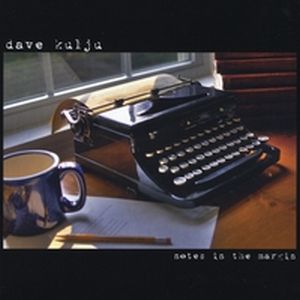
Three years in the making, the process lovingly detailed on Dave’s own website, Notes in the Margin is an unusually elegant, deeply literate effort that eschews any of the pretentiousness often associated with prog, and manages to emphasize emotional content without being mawkish or contrived. The striking cover, a photo taken by Kulju himself (who is a gifted photographer as well as a talented musician), immediately projects a stylish contemporary image that sharply deviates from the old prog cliché of fantasy/sci-fi themed artwork, with its still life centred around a vintage typewriter. According to the artist, the album title is a reflection on the process of making the record itself – a process involving a lot of rewriting and refinement, just like a work of literature.

For a project completely conceived in the studio, Notes in the Margin sounds remarkably organic,  multilayered though never overdone, each instrument standing out in clear detail. It comes very much across as a guitar-based album, showcasing Kulju’s fluid, clean style, inspired by the likes of David Gilmour and Andy Latimer without being derivative. Keyboards, on the other hand, are used more as a foundation than the main event, though the epic can boast of some positively gorgeous piano passages. Surprisingly, however, the real protagonist of Notes in the Margin is the bass, merging seamlessly with Frank Basile’s excellent drum work to set the pace, and stamping its own distinctive touch on the fabric of the compositions. The music flows smoothly, with enough complexity to satisfy the cravings of most prog fans, except those who are looking for innovation at all costs. Indeed, while Notes in the Margin does not offer anything startlingly new, neither does the vast majority of current releases, and the musical content here is undeniably above average.

With a practically perfect running time of about 51 minutes, no filler is needed on Notes in the Margin, and none of the tracks feels padded or stretched beyond reason. Album opener “Skating on Europa”, loosely based on the work of sci-fi author Arthur C. Clarke, is a forceful yet melodic number which, in spite of its almost 10-minute duration, never outstays its welcome. Driven by thunderous yet not overwhelming drums and a sleek, dynamic bass line, it pushes Kulju’s fluid, fiery lead guitar to the forefront with exhilarating effect. In “Know Again” (the English translation of the Greek word anagnorisis, the moment of recognition for the protagonist of a Greek tragedy)  the keyboards take more of a lead role, and Ian Cameron’s contribution on acoustic and electric violin add further layers of dimension to a piece that, while not exactly jazzy, shifts subtly from a subdued tone to a sort of crescendo, slowing down again towards the end.

The album’s epic, “A Poet’s Talespin”, which (like Shadow Circus’ “Project Blue” or The Rebel Wheel’s “The Discovery of Witchcraft”, to name but two recent examples) is conceived as five separate pieces strung together by a  musical and lyrical fil rouge, rather than as a massive 30-minute behemoth. As previously hinted, it is also the only composition featuring Annie Oya’s lovely vocals, soothing and melodious yet devoid of that cloying sweetness all too frequent in female prog singers. Introduced by a gorgeous classical piano piece, the romantic, mid-paced (and very aptly titled) “Soft Collisions” develops into a number of subtle complexity where the vocals are complemented by Kulju’s superb guitar and bass work and the recurring presence of the piano. “The Bridge” treads spacey territory, with a subdued, more acoustic bent; while the symphonic, keyboard-driven “I Write” is brimming with gentle sadness, and “In the Shadows” closes the epic with an instrumental reprise of the main theme, rendered in spacious, atmospheric tones reminiscent of Pink Floyd. The album is wrapped up by two instrumentals – the highly dynamic, riff-based “Get the Hell Off My Lawn”, bringing to mind Rush compositions such as “Leave That Thing Alone”, with bass and guitar working together to create intense textures; and the short, somber keyboard piece “Counted the Stars”, named after a phrase in an Anne Sexton poem that was the earliest inspiration for the epic.

With superb production values and sterling sound quality, Notes in the Margin is indeed an excellent release, worthy of the attention of even the more demanding prog listeners. It is a pity that – like most studio-only projects – it will probably flow under the radar of many fans in favour of more extensively publicized albums. A labour of love in every sense of the term, classy and literate yet full of endearing warmth, this is a must for everyone who loves melodic, guitar-oriented progressive rock. It would be a boon if, one day, Dave managed to put a band together and perform his music on stage, in spite of all the well-documented difficulties that plague those artists looking for live outlets for their work.

Links:
http://www.davekmusic.com/

http://www.littleglasspen.com/

Read Full Post »

TRACKLISTING:
1. Fino all’Aurora (6:44)
2. D-Sigma (4:13)
3. 4.18 (1:37)
4. Discesa (7:32)
5. Tra Due Petali di Fuoco (6:06)
6. L’Inganno (7:20)
7. Agli Uomini Che Sanno Già Volare (4:36)
8. Il Declino (5:44)
9. Phoenix (5:07)
10. La Notte Trasparente (7:47)

LINEUP:
Alessandro Corvaglia – vocals
Fabio Zuffanti –  bass, bass pedals, backing vocals
Agostino Macor – keyboards
Andrea Monetti – flute, sax
Matteo Nahum – guitars
Maurizio Di Tollo – drums, backing vocals

One of the many projects in which Genoa-based bassist and composer Fabio Zuffanti is involved, La Maschera di Cera (The Wax Mask, named after a ‘50s horror movie starring Vincent Price) have been active since the beginning of the new millennium, releasing four studio albums and a live one. Their third album, LuxAde (released in 2006, and based on the Greek myth of Orpheus) brought them to the attention of the many fans of classic Italian prog scattered around the globe, which culminated with their appearances at the 2007 edition of NEARfest and the 2009 edition of ProgDay, two of the highest-profile progressive rock events in the world. They also appeared in the Romantic Warriors documentary, alongside fellow Italians D.F.A.

Petali di Fuoco, their fourth studio release (produced by a veritable RPI icon such as PFM drummer/frontman Franz Di Cioccio) marks a distinct change in the band’s compositional approach, and consequently also in their sound, which has been somewhat streamlined. While the band’s three previous albums had the hard-edged, retro-symphonic sound of Seventies outfits such Il Balletto di Bronzo and Biglietto per l’Inferno down pat, dispensing with the electric guitar in favour of luxurious keyboard textures and plenty of Mellotron – as well as sporting a strong conceptual bent – Petali di Fuoco takes a more mainstream direction, featuring 9 shorter, unconnected songs with more straightforward lyrics. While there are still Italian bands paying homage to the great tradition of the elaborate concept album, La Maschera di Cera seem to have followed the example set by other Genoese bands like Delirium (with their superb comeback release Il Nome del Vento) and Il Tempio delle Clessidre, and chosen a more accessible format for this album.

On Petali di Fuoco, the core of founding members Alessandro Corvaglia, Fabio Zuffanti, Agostino Macor and Andrea Monetti (plus drummer Maurizio Di Tollo, who joined the band in 2004) has been augmented by guitarist Matteo Nahum, who proves to be the album’s real ace in the hole. A classically-trained musician (and devoted Steve Hackett fan)  with the perfect combination of flawless technique (without any concessions to the deplorable shredding trend) and genuine emotion, his contribution lifts the level of the album from merely good to excellent. Even though the music is unabashedly retro, a loving homage to the classic Italian prog sound of the Seventies without any real claim to innovation, and the songs sometimes skirt the Italian melodic pop tradition a bit too close for comfort, Petali di Fuoco delivers a very satisfying listening experience, at least for those people who like their prog with lots of vocals. On the other hand, Alessandro Corvaglia’s strong, confident voice, markedly different from the operatic style of the likes of Francesco Di Giacomo, but equally suited to tackling material at the same time melodic and challenging, can bring to mind some internationally-known Italian pop singers, and therefore come across as vaguely annoying to those who like the angular, acquired-taste vocal styles of so many prog singers.

Running at about 55 minutes, Petali di Fuoco is a well-balanced effort that never threatens to outstay its welcome. Most of the songs – as immediately evidenced by opener “Fino all’Aurora”, an upbeat, organ- and flute-driven number ending with a beautiful guitar solo  – have a conventional verse-chorus-verse structure, but the lush orchestration and seamless instrumental interplay reveal their progressive matrix. Though Corvaglia’s voice often seems to dominate the proceedings, the instruments spin a tightly-knit web of sound that provides a solid foundation for the development of each song. While “D-Sigma” and “Discesa” keep things simmering in the same spirit as the opener, with melodious, Hackett-inspired guitar passages opening airy spaces in the dense, keyboard-driven heavy prog textures of the songs, the title-track and “Agli Uomini Che Sanno Già Volare” take a more subdued direction, with a sparser, somewhat melancholy instrumental backdrop that pushes the vocals to the forefront and leaves a lot of room for Corvaglia’s emotional delivery.

Though Petali di Fuoco is a strongly vocal-driven album, two instrumentals have been included – one, “4.18”, a short classical guitar number in the style of Genesis’ “Horizons”, the other, “Phoenix”, starting out slowly but building up to a crescendo powered by keyboards and drums – a structure paralleled by “Il Declino”, in which a somewhat somber piano solo is offset by the unbridled passion of Corvaglia’s vocals. On the other hand, with “L’Inganno” La Maschera di Cera explore vintage hard rock territory, powered by Agostino Macor’s rumbling Hammond organ and whistling Moog, and featuring an almost jazzy piano passage in the middle, as well as a soaring guitar solo at the end. The album ends with a veritable bang: “La Notte Trasparente”, at almost 8 minutes the longest track on the album, is also the most complex, with all the instruments creating intricate yet airy textures with more than a nod to classic Genesis, and a showcase for Matteo Nahum’s spectacular guitar work. His solo at the end starts out slowly, and then gradually drives towards an exhilarating climax that had me think about Gary Moore or Blue Oyster Cult’s Buck Dharma.

Though some prog fans may be disappointed by the lack of epics and the generally more streamlined nature of Petali di Fuoco, the album will certainy prove a treat for lovers of the sounds of vintage Italian prog. With lush instrumentation, a nice balance between orchestral grandiosity and more intimate, subdued moments, plenty of melody and warm, passionate vocals, it contains all the elements that keep attracting many listeners to Italian progressive rock – as well as those that often turn people off, such as the enhanced sentimentality and occasionally bombastic passage (though not as prominently as in their previous studio albums). It is, indeed, very much a ‘retro-prog’ effort – which might make it pointless (as a fellow reviewer put it) in the eyes of some of the more jaded set – but it cannot be denied that Petali di Fuoco is a quality offering brimming with flair and songwriting expertise. Even if, speaking from a strictly personal point of view, the music on the album is not always my cup of tea, I would not hesitate to recommend the album to everyone interested in Italian prog.

Links:
http://www.myspace.com/lamascheradicera

http://www.zuffantiprojects.com/

Read Full Post »

TRACKLISTING:
1. Into the Subatomic (5:21)
2. Free at Last! (5:17)
3. Mud Becomes Mind (5:14)
4. I Don’t Believe (5:53)
5. Matter Is Energy (4:55)
6. Comprehensible (6:38)
7. Infinite Strength (8:05)
8. Where No One Can Win (8:05)
9. Step Out of Your Body (5:12)
10. The Cauldron (15:18)

LINEUP:
Copernicus – poetry, lead vocals, keyboards
Pierce Turner – musical director, piano, Hammond organ, percussion, backing vocals
Larry Kirwan – electric guitar, vocals
Mike Fazio – electric guitar
Bob Hoffnar – steel guitar
Raimundo Penaforte – viola, acoustic guitar, cavaquinho, percussion, vocals
Cesar Aragundi – electric and acoustic guitar
Fred Parcells – trombone
Rob Thomas – violin
Matty Fillou – tenor saxophone, percussion
Marvin Wright – bass guitar, electric guitar, percussion
George Rush – tuba, contrabass, bass guitar
Thomas Hamlin – drums, percussion
Mark Brotter – drums, percussion

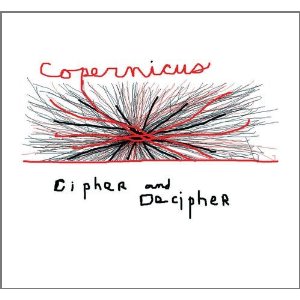
The thirteenth album by New York-based performer-poet Copernicus (aka Joseph Smalkovski), and the third released by MoonJune Records (which is going to reissue the artist’s whole catalogue), Cipher and Decipher is definitely not your average ‘progressive rock’ album, ambitious but ultimately accessible. In fact, is one of those records for which the expression ‘acquired taste’ seems to be tailor-made, and which is at the same time easy and difficult to describe: easy if you want to simplify matters, and say that it is based around a somewhat loopy guy’s ranting and raving over a rather free-form musical background; difficult if you want, instead, to avoid platitudes and offer would-be listeners a more in-depth, nuanced analysis.

Needless to say, even from a quick perusing of the release notes it should be clear that Cipher and Decipher is not for the faint-hearted, or those who like carefully structured music, engaging melodies and conventional singing. This is the archetypal underground production, a marriage of music and poetry steeped in the American beat tradition, dripping with existential ennui and metaphysical musings, in which the music often feels like an afterthought, often sharply diverging from the vocal parts in a sort of schizophrenic effect. Clocking in at slightly under 70 minutes, and barely offering any respite from Copernicus’ over-the-top vocal exertions, it sounds more than a bit daunting (even for a forward-thinking label like MoonJune) and as such quite unlikely to appeal to casual or mainstream-oriented listeners.

And yet, in spite of all these drawbacks, Cipher and Decipher exerts a weird sort of attraction. After a while everything seems to click and, so to speak, begins to make sense. Even as Copernicus’ voice may rub you the wrong way, and make you wish he limited himself to publishing books of poetry like most other people would do, the music perversely sucks you in, and you may find yourself actually enjoying the experience – almost in spite of yourself. At times Copernicus’ secular-preacher recitation blends with the music, at others the two go their separate ways, in a somewhat frustrating fashion. He roars, cajoles, whines, chants, emotes like a Shakespearian actor, leaving very little breathing space to the listener, repeating the key words around which his whole work seems to revolve with a sort of incantatory effect, often augmented by the loose yet oddly mesmerizing nature of the musical accompaniment.

Regarding the concept on which Cipher and Decipher is based, my readers will be able to find all the background information they need in the links I have provided at the end of the review – as well as in the album’s very thorough liner notes. While other reviewers have dedicated at least some space to the album’s lyrical content, I would rather concentrate on the musical aspect, even if I realize it is far from easy to divorce the two. Generally, I do not particularly care for nihilism, and have to admit not being too interested in speculations about the nature of the universe, though neither aspect disturbs me as other kinds of content (i.e. overtly racist lyrics) would. My main interest here is the music, and this is why I would rather avoid launching in any detailed analysis of Copernicus’ message which is much better presented elsewhere.

When listening to Cipher and Decipher, it is important to bear in mind that the music and the vocals often seem to be at odds with each other instead of working together, as would happen in more mainstream recordings. This means that special attention to the musical part is required, and it obviously helps if you like almost completely unscripted music as opposed to the carefully constructed patterns of most conventional progressive rock. Provided by a veritable orchestra of 15 outstanding musicians (including 4 guitarists and almost a full horn section) led by long-time Copernicus associates, expatriate Irishmen Pierce Turner and Larry Kirwan (the latter, together with Thomas Hamlin and Fred Parcells, a member of Celtic-inspired band Black 47), the musical accompaniment to Copernicus’ proclamations is a wildly eclectic mix of influences ranging from experimental free-jazz to early Pink Floyd-style psychedelia.

Organ-drenched opener “Into the Subatomic” immediately sets the scene, both musically and lyrically, followed by the lovely but somber “Free at Last!”, the most genuinely Pinkfloydian number on offer, embellished by some noteworthy acoustic and electric guitar work; while “Mud Becomes Mind” sports a cheery, Afro-Brazilian vibe. The disc’s central section owes quite a lot to free-jazz, rather gloomy in “I Don’t Believe” with its lonesome-sounding trumpet, sparse yet upbeat in “Matter Is Energy”. On the other hand, “Comprehensible” superimposes an overt homage to Pink Floyd, with Larry Kirwan repeating “set the controls further out of the sun” (a paraphrase of the title of one of their most iconic early compositions) to the somewhat chaotic free-jazz template, and “Infinite Strength” (based on Van Morrison’s celebrated “Gloria”) sounds like something out of the Blues Brothers soundtrack – making you want to dance in spite of Copernicus’ weighty proclamations. More Latin influences surface in the funky “Step Out of Your Body”, and the references to Iraq and Afghanistan in “No One Can Win” are aptly punctuated by Middle Eastern echoes conjured by flute and strings. The album climaxes with the sonic and verbal apocalypse of the aptly-titled “The Cauldron”, a 15-minute, voice-driven space jam.

As the previous paragraphs clearly illustrate, Cipher and Decipher is a very peculiar effort, targeted to adventurous listeners, and likely to send the more conservative set of prog fans running for the exits. This is not background music, and is definitely not relaxing – on the contrary, it can easily become a tad wearying, especially on account of Copernicus’ very idiosyncratic vocal delivery and apocalyptic lyrics. The album’s running time can also be an issue, so those who find it hard to concentrate for long might want to avoid tackling it in one go. However, its somewhat sneaky allure may well win over those who are not afraid to get acquainted with less predictable approaches to progressive music.

Links:
http://www.copernicusonline.net

http://www.moonjune.com

http://www.progarchives.com/forum/forum_posts.asp?TID=74511 (interview)

Read Full Post »

SETLIST:
1. Irreducible Complexity
2. Manifest Density
3. Nacho Sunset
4. Kuru
5. Disillusioned Avatar > Dub > Ephebus Amoebus
6. Skein
7. Synecdoche
8. Okanogan Lobe
[Break]
9. Bagua > Kan Hai De Re Zi > Third View
10. Save the Yuppie Breeding Grounds
11. Fountain of Euthanasia
12. Uncle Tang’s Cabinet of Dr Caligari
13. Blues for a Bruised Planet
14. Waylaid
15. Middlebräu [encore]

Last year at NEARfest I had my first taste of Moraine’s music, even if in the months prior to the event I had often been tempted to check out their debut album, Manifest Density, after reading some flattering comments around the Internet. Unfortunately, my commitments as a reviewer did not allow me a lot of room for ‘recreational listening’, so to speak, so the day of Moraine’s performance found me still completely unfamiliar with their considerable talent. Those who have read my review of the festival will know that I considered Moraine to be probably the most authentically progressive band of the whole weekend, and one of my personal highlights together with Forgas Band Phenomena (an outfit whose music has some similarities with Moraine’s, though more noticeably influenced by the Canterbury sound). Even though they had been placed in the awkward slot of Sunday openers, and faced with an audience many members of which swooned at The Enid’s somewhat cheesy antics and thought that The Pineapple Thief were not ‘prog enough’ for the hallowed halls of the Zoellner Arts Center, they managed to gain quite a few fans – including my husband and myself. Indeed, we were so impressed by their performance that we went to meet the band after their set. In the following months, that first contact blossomed into a treasured friendship.

Even if somebody might think that my judgment as regards Moraine’s performance on the night of Saturday, April 30 (the third date of a 4-date Northeast tour) might be clouded by my personal feelings, I am quite capable of being objective, and would not spare any criticism if I believed it was in any way warranted. However, I am happy to say that Saturday’s gig at the Orion was an unqualified success. Having had almost a whole year to become familiar with Moraine’s output,  this time I was able to appreciate every nuance of the show, as well as the subtle but noticeable modifications in their sound brought about by the line-up change that followed the release of Manifest Density. In spite of the hurdles faced by almost every independent outfit these days – lack of touring opportunities, real-life commitments and such – on the Orion stage Moraine came across as a well-oiled machine, the chemistry between the five members nothing short of amazing.

Those who have watched the seminal documentary Romantic Warriors will remember the Orion Studios, a former warehouse located in a decidedly unglamorous neighbourhood on the outskirts of Baltimore, yet possessed of a unique, club-like character. With a couple of couches, a few folding chairs and a table generally laid out with snacks and drinks, countless posters and flyers decorating the walls, a couple of weird figures hanging from the ceiling, it reminds me of the basements (or ‘cellars’) in the centre of Rome which, in the Eighties, functioned as both rehearsal spaces for bands and meeting points for their friends and supporters. In spite of the diminutive size of the main stage area, the place is like a maze, offering valuable recording and rehearsing spaces to local musicians. This quirky yet intimate backdrop was ideal for a band like Moraine, even more so than the immaculate NEARfest stage. As regards attendance, I judged about 50 people to be present – more than the band are used to attracting in their home town of Seattle,  and a satisfactory turnout for a single-bill evening – even though last year I had seen twice as many people line up outside the venue in order to see a tribute band. This, unfortunately, seems to be the nature of the ‘prog community’ in the US Northeast, as I pointed out in the two essays I wrote after NEARfest 2011’s cancellation.

Though often tagged as ‘avant-garde’ (much to their amusement), like all truly progressive bands Moraine defy description. Their variegated backgrounds converge very effectively both on stage and on record, instead of resulting in a patchy mess: while their compositions – often penned by individual members rather than shared efforts – showcase their different approaches. With the dry, slightly self-deprecating humour that characterizes their interaction with the public, the band describe themselves as ‘omnivorous’. On the other hand, at least from what was seen at the Orion, they have not abandoned their rock roots – though of course there is not even a whiff of the time-honoured, though somewhat corny antics of the typical rock musician in Moraine’s stage presence. Even if towards the end of the set we were treated to a short drum solo, it was blessedly devoid of the cheesiness often inherent to such spots.

Coming on stage at about 8.30 p.m., the band delivered an extremely tight performance, richly eclectic and riveting in its intensity, interspersed by Dennis Rea’s brief but humorous introductions. A short break allowed both the band and audience to recharge their batteries, and from comments overheard during that time it was clear that the audience was won over by Moraine’s blend of chops and sheer enthusiasm. This was progressive rock with a capital P, fresh and innovative even when occasionally hinting at some ‘golden oldies’. Unlike far too many modern prog bands, Moraine manage not to sound like anyone else: the closest term of comparison would be King Crimson circa Red, though more in terms of attitude than actual sound, especially as regards the coexistence of melody and angularity, and the presence of both violin and reeds coupled with the conspicuous absence of prog’s ‘sacred cow’, the keyboards. The departure of cellist and band founder Ruth Davidson (a fan of Univers Zéro, as evidenced by her composition “Save the Yuppie Breeding Grounds”) has also altered the ‘chamber’ nature of the band in favour of a more dynamic approach, powered by Jim DeJoie’s assertive sax (which on Saturday night was a bit low in the mix).

To those who had read reviews of the band’s NEARfest performance described as ‘noise-drenched’ (something that, coupled with the ‘avant-garde’ tag, is guaranteed to strike fear into the hearts of the more conservative set of prog fans), the melodic quotient of Saturday night’s show is likely to have come as a surprise. The medley featuring Alicia DeJoie’s gorgeous “Disillusioned Avatar” and Kevin Millard’s “Ephebus Amoebus” aptly displayed the band’s more sensitive side; while the overtly jarring chaos of “Uncle Tang’s Cabinet of Dr Caligari” (wittily introduced as a ‘romantic ballad’, and probably the one track actually deserving of the ‘avant-garde’ tag) was followed by the melancholy beauty of “Blues for a Bruised Planet”. Millard’s distinctive-looking, customized Chapman stick (dubbed ‘baliset’ by the bassist, a long-time fan of Frank Herbert’s iconic Dune) meshed seamlessly with Stephen Cavit’s complex yet remarkably unflashy drum patterns, and Alicia DeJoie’s shiny purple violin caught the eye as well as the ear. Jim DeJoie (Alicia’s husband) expertly wielded his impressive saxophone, coming across as the most ‘physical’ member of the band. In fact, if I had to level one criticism at Moraine’s performance, it would concern their somewhat static presence, at least partially due to the size of the stage. Not that anyone was expecting Dennis Rea to start throwing guitar-hero-style shapes, though his solos revealed a definitely sharper rock bent than evidenced either on Manifest Density or in his other recent projects. Besides the jazz, rock and avant-garde influences, fans of world music were also catered for by the enchanting “Asian Suite”, featuring themes from three of the five tracks included on View from Chicheng Precipice, Rea’s first solo venture.

The show also provided Moraine with the opportunity to present some of the new material they had been working on in the past year or so – namely three intense, hard-hitting yet multifaceted numbers titled “Skein”, “Synecdoche” and “Fountain of Euthanasia”, which showed a band growing by leaps and bounds both in cohesion and on the compositional level. Like the material on Manifest Density, those new tracks are rather short for prog standards, yet brimming with energy and a kind of creative impulse divorced from sterile displays of technical skill. On the other hand, unlike the debut’s compositions, which in many ways represented each member’s temperament, the new numbers sound more clearly shaped by collective input.  As impressive as Moraine’s debut was, their future – judging by what was heard on Saturday night – looks even brighter.

The wonderful musical experience was wrapped up by a night out in downtown Baltimore, complete with a walk through the city’s rather seedy red-light district and a late-night dinner (or perhaps early breakfast, since it was 2 a.m. when we sat down) at an ‘Italian’ restaurant – the kind that serves filling but rather unauthentic dishes such as spaghetti with meatballs. We also managed to get the last of the T-shirts and mugs designed expressly for the tour by David Gaines, a friend of the band and talented musician himself, based like us in the DC metro area. All in all, it was an evening that packed the friendly, laid-back vibe of a get-together at someone’s house with a select group of friends, as well as that community spirit that I have often mentioned in my reviews. Hopefully Moraine will be able to return to the Northeast soon after the release of their second album, which will mainly feature music recorded live at NEARfest.

Links:
http://www.moraineband.com

http://www.orionsound.com/

Read Full Post »

TRACKLISTING:
1. Neon Knights (3:54)
2. Children of the Sea (5:35)
3. Lady Evil (4:26)
4. Heaven and Hell (6.59)
5. Wishing Well (4.08)
6. Die Young (4:46)
7. Walk Away (4:26)
8. Lonely Is the Word (5:53)

LINEUP:
Ronnie James Dio – vocals
Tony Iommi – guitar
Geezer Butler – bass
Bill Ward – drums
Geoff Nichols – keyboards

Though I generally try to be as unbiased as possible in my reviews, in this particular occasion I will have to let objectivity take a back seat, because Heaven and Hell, Black Sabbath’s ninth album, is one of my top 10 albums of all time. As my faithful readers should know by now, even if the majority of the music I review can be placed under the extensive ‘progressive rock’ umbrella, my listening tastes are quite eclectic, and I do have quite a soft spot for what might be termed ‘classic heavy metal’. Indeed, Heaven and Hell is a masterpiece of the genre, signaling the band’s return to sparkling form after the severe decline shown by their late Seventies albums

At the beginning of the new decade, Sabbath underwent what could be called a total makeover. Gone was the muddy, uncertain sound a of their earlier albums, to be replaced by Martin Birch’s state-of-the-art, crystal-clear production, which allowed every instrument to shine – not just Geezer Butler’s and Bill Ward’s thunderous rhythm section or Tony Iommi’s legendary riffing, but especially new guy Ronnie James Dio’s awe-inspiring roar. The latter’s addition  made the real difference in the band’s performance: though Ozzy’s distinctive, eerie wail had been Black Sabbath’s trademark  since the beginning of their career, Dio (who had left Ritchie Blackmore’s Rainbow to join the band) was something else completely. Such changes obviously altered the band’s sound in a rather substantial way, so that  Heaven and Hell sounds quite unlike their Seventies output – less chillingly menacing, more crushingly powerful, yet also more accessible.

The hard-driving “Neon Knights” (one of the strongest opening tracks ever) sounds like a statement of intent right from the start, brimming with Iommi’s towering guitar riffs and Dio’s soaring bellow. Things slow down for the following number, the epic, doom-laden “Children of the Sea” – one of Dio’s career-defining vocal performances together with Rainbow’s “Stargazer”.  On the other hand, “Lady Evil” is a catchy, uptempo song, punctuated by Butler’s booming, dynamic bass lines, which provides a respite of sorts before the monumental title-track – strategically placed at the end of Side A when the album was originally released.

A concert classic for both Dio-era Black Sabbath and its unfortunately short-lived, eponymous band, “Heaven and Hell” is a crushingly heavy cavalcade bolstered by Butler’s thundering bass and Iommi’s manic riffing, with Dio’s voice soaring and swooping above the din in true epic style. As a sort of release of tension, another catchy tune follows, the almost poppy “Wishing Well” (no relation to the Free song of the same title).   “Die Young” can instead be counted as another of the album’s highlights – a powerful, keyboard-laden hard rocker, it sees another cracking vocal performance from Dio, enhanced by Iommi’s  sterling guitar work.

While the slightly nondescript “Walk Away” is, in my view, the only track   that approaches filler status, the album is wrapped up by another memorable number.  “Lonely Is the Word” most closely resembles Sabbath’s earlier output with Ozzy – a sinister slice of doom driven by Iommi’s iconic riffing,  while Dio’s vocals sound pleading and commanding in turn. The wistful yet intense guitar solo at the end of the song is undoubtedly one of Iommi’s finest moments.

Originally released on April 25, 1980, Heaven and Hell  is still revered by rock fans, even though the younger generations of metal fans may find it  somewhat lightweight if compared with the output of the countless extreme metal acts flooding the current scene.  While it  does contain occasional progressive touches, it  was never as influential to the development of prog-metal as Black Sabbath’s Ozzy-era offerings. The presence of a few catchy tunes might also put off some purists, who might find the likes of  “Lady Evil” o “Wishing Well” too close to AOR for comfort.

All this criticism notwithstanding, Heaven and Hell is one of the milestone releases of the past 40 years, and one of the greatest vocal albums in the history of rock. As well as being a celebration of the album’s 31st anniversary, this review is meant as a homage to Ronnie James Dio, who passed away almost a year ago, on May 16, 2010. Together with Rainbow’s Rising, this album was possibly Ronnie’s finest hour.

Read Full Post »

TRACKLISTING:
1. Loopy (5.59)
2. A Serious Man (3.49)
3. Mom’s Song (2.05)
4. Bar Stomp (3.04)
5. Outdoor Revolution (3.08)
6. Western Sky (2.12)
7. Burning Match (5.11)
8. Claire’s Indigo (2.11)
9. Snufkin (2.48)
10. Old Silhouette (4.12)
11. Winds of Grace (8.39)

LINEUP:
Dani Rabin – guitar
Danny Markovitch – saxophone
Steve Rodby – bass
Paul Wertico – drums, percussion (1, 8)

With:
Jamey Haddad – percussion (2, 4, 6, 8, 9, 10)
Matt Davidson – vocals (3, 6)
Leslie Beukelman – vocals (3, 6)
Makaya McCraven – drums (4)
Daniel White – lyrics, vocals (11)

Marbin’s eponymous debut came to my attention towards the end of 2009, soon after its release. Even if the duo formed by two young, talented Israeli-born musicians who had recently moved to Chicago was an unknown quantity to me and most other reviewers, the album’s endearingly naïve artwork and intriguing musical offer were enough to warrant closer scrutiny. With a name cleverly fashioned out of the surnames of the two artists (Danny MARkovitch and Dani RaBIN), Marbin made their debut on the US music scene with an album full of intriguing melodies crafted with ony two instruments – Rabin’s guitar and Markovitch’s saxophone – characterised by an ethereal, almost brittle quality, reminiscent of the delicacy of Far Eastern art, complex yet at the same time not too taxing for the listener.

The year 2010 marked a veritable quantum leap for Marbin (very active on the live front in the Chicago area), when they came under the radar of MoonJune Records’ mainman Leonardo Pavkovic, a man with a keen eye for new acts of outstanding quality. Promptly snapped up by the New York-based label, Marbin – who in the meantime had become a real band, with the addition of  Pat Metheny alumni Steve Rodby (bass) and Paul Wertico (drums) – released their second album at the beginning of 2011.

Breaking the Cycle is indeed an impressive effort, which sees the band build upon the foundation laid by their debut, while fine-tuning their sound and adding layers of complexity, though without making things unnecessarily convoluted. Indeed, rather interestingly, a fellow reviewer used the term ‘easy listening’ in connection to the album –  a definition that may conjure images of that openly commercial subgenre known as smooth jazz. However, while Breaking the Cycle does have plenty of smoothness and melody, I would certainly never call it background music. The presence of a full-blown rhythm section has given a boost to the ambient-tinged, chamber-like atmosphere of the debut, and some of the tracks display a more than satisfying level of energy and dynamics, all the while keeping true to the deeper nature of their sound.

Clocking in at slightly over 40 minutes, Breaking the Cycle immediately appears as a supremely sophisticated effort, starting from the striking cover artwork whose mix of the industrial (the bridge on the front cover) and the natural (the elephant on the back cover) seems to reflect the nature of the music itself. While the majority of the tracks lean towards the slower, more atmospheric side of things, delivered in a rather short, somewhat compact format, the album is bookended by two numbers that differ quite sharply from the rest, as well as from each other. Opener “Loopy” is the closest Marbin get to a ‘conventional’ jazz-fusion sound, almost 6 minutes of sax and guitar emoting over an exhilarating jungle beat laid down by Wertico’s drums and percussion that gives a first taste of the seamless interplay between the instruments. On the other hand, the medieval-tinged, acoustic folk ballad “Winds of Grace”, masterfully interpreted by guest singer Daniel White (who also wrote the lyrics), though apparently out of place in the context of the album,  is imbued with a feeling of nostalgia and loss suggested by several other tracks.

Indeed, the three numbers that form the central section of the album might almost be considered as parts of a single suite, since they are characterized by a wistful, romantic (though anything but cheesy) mood. An extended sax solo is the real showstopper in “Outdoor Revolution”, while wordless vocalizing enhances the country-tinged acoustic guitar in “Western Sky”. “Burning Match” seems to reflect its title almost perfectly, its smouldering atmosphere touched with a hint of sadness, the yearning tone of the sax suggesting the end of a love affair. A strong visual element is evoked throughout the album: “Old Silhouette” creates a faintly mysterious picture, yet full of subtle warmth intensified by the slow, deep movement of the percussion; while the sweet, soothing chanting in “Mom’s Song”, combined with the gentleness of the guitar, brought to my mind images of a beach at sunset. In sharp contrast, “Bar Stomp” delivers exactly what the title promises – a bluesy, electrified romp with Rabin’s guitar taking centre stage, bolstered by an imposing percussive apparatus involving the presence of three drummers (Wertico plus guests Makaya McCraven and Jamey Haddad), and spiced up with a hint of cinematic tension.

The final remarks I made in my review of Boris Savoldelli’s Biocosmopolitan may also apply to Breaking the Cycle. Oozing sheer class, with outstanding performances all round, yet plenty of warmth and accessibility (unlike a lot of hyper-technical albums), this is a release that has the potential to appeal to anyone who loves good music and does not care about sticking a label on anything they hear. Judging from the positive reactions to this album, Marbin are definitely going to be another asset for the ever-reliable MoonJune Records.

Links:
http://www.marbinmusic.com

http://www.moonjune.com

Read Full Post »

TRACKLISTING:
1. Un Dono (2:13)
2. Wizard Intro (3:03)
3. Madre Africa (7:54)
4. Questa Penombra E’ Lenta (6:57)
5. Chimera (4:23)
6. The Game (10:38)
a. Wizard of your Sky
b. Mickey’s
c. Jump
d. Wizard of your Life
7. Cluster Bombs (6:43)
8. This Open Show (3:16)
9. C’Era Una Volta (2:59)

LINEUP:
Paolo Siani – drums, vocals, keyboards, bass, guitars

With:
Ricky Belloni – electric guitar (6)
Carlo Cantini – violin (6)
Guido Guglielminetti – bass (2, 4, 6)
Mauro Pagani / flute (3)
Alessandro Siani – electronics (1, 5)
Franco Testa – bass (5)
Roberto Tiranti – vocals (3, 6, 7)
Giorgio Usai – Hammond organ (6)
Joe Vescovi – Hammond organ (3)
Marco Zoccheddu – electric guitar (2, 3, 4, 7), piano (5, 7)
Gianni Alberti – sax (5)
Ottavia Bruno – vocals (5)
Giacomo Caiolo – acoustic guitar (4)
Nadia Enghèben – soprano (3)
Alberto “Artley” Buttarelli – vocals, flute (8)
Diego Gordi – piano (8)
Fabio Gordi – piano (8)
Daniele Pagani – piano (8)
Giuliano Papa – cello (8)
Vittorio Pedrali – vocal recitation (1)

In spite of his tenure as the drummer of Italian Seventies band Nuova Idea, Paolo Siani is certainly not a household name in the world of progressive rock – unless you count those dedicated fans of the scene who collect even the most obscure albums. Additionally, he shares the same name with an Italian-American artist of vastly different temperament, which can be misleading to those who are looking for more information. Although an excellent outfit, Nuova Idea did not achieve the fame of their fellow Genoese New Trolls (whom keyboardist Giorgio Usai and guitarist Ricky Belloni joined after the band’s demise) or Delirium, and disbanded after their third album, the highly-regarded Clowns, released in 1973. Subsequently Siani joined avant-garde outfit Opus Avantra for their second album, then beat band Equipe 84. Though he dropped off the musical radar for almost three decades, he worked as a producer and kept writing and recording his own music. It was the renewed interest in prog and the Italian Seventies scene that prompted Siani to resume his career as a musician – as well as a commendable humanitarian purpose, that is, raising funds on behalf of Genoa’s renowned Gaslini paediatric hospital.

Though Castles, Wings, Stories and Dreams, released by Genoa-based label Black Widow, is to all intents and purposes a solo project by Siani, it also sees a reunion of sorts of his mother band, as well as an impressive roster of guest musicians, including three of his former Nuova Idea bandmates: the above-mentioned Giorgio Usai and Ricky Belloni, plus guitarist Marco Zoccheddu, who had left the band to join Osage Tribe after Nuova Idea’s debut. Unlike many albums of this kind, however, it is remarkably tight from a compositional point of view. Moreover, despite Italian prog’s reputation for being somewhat overwrought,  the album avoids that particular trap, keeping melody and clarity at the forefront while not neglecting the occasional flight of instrumental fancy.

Clocking in at under 50 minutes, Castles, Wings, Stories and Dreams is a decidedly song-oriented effort that manages to achieve a good balance between vocal and instrumental parts. The album opens with “Un Dono”, where an expressive male voice recites a brief, uplifting text by Mahatma Gandhi on a backdrop of sparse electronic keyboards. The following instrumental, “Wizard Intro”, blends symphonic suggestions à la Yes with hard rock touches, all infused with an unmistakable Italian flavour. “Chimera”, also instrumental, hints instead at a jazzy inspiration, with a loose structure made up of different solo spots (bass, sax and piano) over a train-like background rhythm provided by drums and keyboards. Siani’s voice can be heard on one track, “Questa Penombra E’ Lenta” (which is also the closest the album gets to a conventional ballad in the unique Italian style), assisted by the clear, melodic voice of Ottavia Bruno, and complemented by lovely acoustic guitar and an airy synth solo.

Three tracks feature the powerful yet clear voice of Roberto Tiranti, lead singer of power/progressive metal band Labyrinth (with a brief stint in New Trolls in the late Nineties). His gritty performance on “Cluster Bombs” – a hard-hitting, anti-war song powered by Hammond and military-style drumming that owes more than a little to Deep Purple or Uriah Heep – increases the song’s emotional impact. Tiranti shows his more melodic side on the 10-minute, 4-part epic “The Game”, a richly textured composition where all the instruments get their chance to shine without overwhelming each other, with Hammond flurries and wistful violin strains. Tiranti then reverts to a more authoritative, hard-rocking persona in the haunting “Madre Africa”, where the Deep Purple influences represented by Joe Vescovi (formerly of The Trip, a band that briefly included Ritchie Blackmore among his members) and his Hammond organ are tempered by Mauro Pagani’s flute, whose sound brings to mind Delirium or Osanna. The album is wrapped up by two short, low-key pieces, the melancholy, cello-driven “This Open Show” and the instrumental “C’Era Una Volta”, a Baroque-inspired number performed by Siani alone.

As can be expected, Castles, Wings, Stories and Dreams is not particularly innovative, nor does it pretend to be such. Like other fellow reviewers, I also have some reservations on the choice of mixing Italian and English lyrics. The supposed ‘international appeal’ of English vocals, in my opinion, dilutes that unique quality of Italian prog that is so often connected with the use of such a great vehicle for music as the Italian language. However, in spite of these drawbacks, the album is a solid effort, a fine slice of vintage Italian prog with a thoroughly 21st-century sound quality, and excellent performances all round from Siani and his guest musicians. The album should also appeal to fans of classic hard rock with progressive overtones. At the time of writing, Paolo Siani is planning a live show in October in his hometown of Genoa, which hopefully will not remain a one-off.

Links:
http://www.blackwidow.it

http://www.progarchives.com/forum/forum_posts.asp?TID=77100


Read Full Post »

TRACKLISTING:
1. Oro Caldo (18:30)
2. Stanza Città (1:45)
3. Animale Senza Respiro (21:36)

LINEUP:
Danilo Rustici – guitars, vox organ, electric piano, vocals
Lino Vairetti – lead vocals, rhythm guitars, ARP 2600, Mellotron
Elio D’Anna – tenor and soprano sax, flute, vocals
Massimo Guarino – drums, vibraphone, percussion
Lello Brandi – bass

Palepoli (The Old Town, currently the gorgeous seafront area called Santa Lucia) is the original nucleus of the city that would later become Naples, one of the most loved and loathed places in the world – the Italian music capital, and a notorious abode of crime and squalor (cue the hard-hitting movie Gomorrah, and the deplorable rubbish débacle of a few years ago, which seems to have reared its ugly head once again). Naples is breathtaking in its splendour, and infuriating in its unbridled anarchy – perhaps not the best place to live for those who like quiet and order, but also one to  experience  at least once in a lifetime (for the glorious food as well as for the scenery, the art and the music). The old adage  “See Naples and then die” is indeed quite true. A walk in the so-called Spanish quarters is the closest you can get to a Middle Eastern souk in the heart of western Europe – and probably no one has managed to capture that heady atmosphere better than the third album released by Naples’ own Osanna.

One of the most distinctive bands of the original RPI scene, Osanna were hot stuff back in the Seventies. With their painted faces (harking back to the city’s traditional mask of Pulcinella) and wild, energetic sound, they blended British-style heavy rock with influences coming from the venerable musical tradition of their hometown. It has even been intimated that Peter Gabriel took his cue from Osanna for his stage make-up when the two bands toured Italy together. Like so many of their fellow Neapolitans, the five members of the band had music in their blood – not the tasteful, restrained kind practiced by northern Italians PFM, though, but rather a full-throttle blend of passion, energy and chops.

Much in the same way as ELP’s output, Palepoli is not for those in search of subtlety, though I would not call it self-indulgent either. The chaos on display on the album is of the controlled variety, in spite of the somewhat fragmented nature of the compositions. However, those fragments, like the pieces of a puzzle, eventually fall together to form a complete picture. The two main tracks, sprawling epics that approach or even exceed 20 minutes in length, are linked by a short piece reprising the opening of the album itself, and give an entirely new meaning to the expression ‘rollercoaster ride’. It is no wonder that Palepoli commands such adoration on the part of prog fans. Indeed, it shows progressive rock at its authentic best, soothing and lyrical at times, and at others raw, aggressive and passionate. It also offers further proof of the invaluable contribution brought by local musical traditions  to the progressive melting pot.

Unlike Banco del Mutuo Soccorso and their fellow Neapolitans Balletto di Bronzo, Osanna’s sound is driven by Danilo Rustici’s slashing guitar and Elio D’Anna’s sax and flute – which add a mixture of lyricism and aggression to the already exciting texture of the music – rather than by keyboards. However, it is Lino Vairetti’s stellar vocal performance that lends the album a unique appeal.  Heir to one of the greatest singing traditions in the Western world, Vairetti fully deserves pride of place among the great prog singers:  in my view, his clear, versatile voice is probably second only to Banco’s Francesco Di Giacomo on the Italian prog scene.

The intro to the first track, “Oro Caldo”, a colourful, richly-textured patchwork of musical moods,  suggests the atmosphere of Naples’ narrow alleys and street markets, dirty, noisy, and thoroughly fascinating, a babel of sounds, voices and sights. The influence of Neapolitan folk music, such as the frantic rhythms of the tarantella, is evident throughout the piece, especially when, at the beginning, the band members sing in Neapolitan – probably one of the best vehicles for song and music known to man, and a language with a rich literary tradition in its own right.  “Oro Caldo” rocks hard, but also offers quieter, more meditative moments – just like escaping the chaotic atmosphere of the Naples alleys into a darkened, half-deserted church.

The second epic, “Animale Senza Respiro”, is a somewhat more structured piece, though it does adopt the same eclectic approach as “Oro Caldo”. It is also a distinctly darker offering, with some angular, jazzy stylings bordering on the avant-garde, dominated by flutes and saxes, interspersed with almost unexpected acoustic breaks. Though it is definitely not as easy on the ear as PFM’s stately, melodic compositions, it is nonetheless a captivating number with a strong emotional impact.

If you want soothing, pastoral beauty, or music that does not demand too much engagement from the listener, give this one a miss. Like the city of Naples itself, Palepoli is not for the squeamish. However, if you like your prog with some bite (and here there is plenty – think lashings of red hot pepper), and do not mind hearing people sing in a language other than English, this will grab you like few other discs produced in the Seventies. A concept album that is rooted in gritty reality and not in the airy-fairy, supported by first-class musicianship and singing, Palepoli has  acquired near-legendary status among prog fans, and deservedly so.

After an almost 20-year hiatus, Osanna reformed in the early 2000s (though only Lino Vairetti remains of the original line-up), and recently joined forces with former Van Der Graaf Generator’s saxophonist David Jackson. Their 2009 album, Prog Family, is an excellent compendium of the band’s whole output, with new arrangements of their classics and the contribution of such distinguished guests as singer Sophya Baccini (also a native of Naples), Balletto di Bronzo keyboardist Gianni Leone, and former King Crimson violinist David Cross.

Below this post you will find a link to an interview with Lino Vairetti which I translated for the ProgSphere website, shedding some light on the band’s past and recent history. In the light of the events of the past weekend (amply discussed in my previous blog post), the interviewer’s mention of NEARfest  feels particularly poignant. In my view, Osanna would have made a wonderful headliner for the festival, but were not even considered… Food for thought?

Links:
http://www.osanna.it/

http://www.prog-sphere.com/index.php?s=Lino+Vairetti

Read Full Post »

« Newer Posts - Older Posts »