Feeds:
Posts
Comments

Posts Tagged ‘Keyboards’

TRACKLISTING:
1.  Commencement (2:47)
2.  Neap Tide (9:20)
3.  Primrose Path  (6:38)
4.  Dawn  (2:56)
5.  Catlord  (8:54)
6.  Illuminati  (0:42)
7.  Work In Progress  (6:54)
8.  Missing Time (8:49)
9.  Faunus  (11:17)
10. Io  (9:13)

LINEUP:
Michael J. Butzen – electric and acoustic guitars, mandolin
Jeffrey Schuelke – keyboards, piano
Thomas Ford – drums, electronic percussion

With:
Chris Kringel – fretless bass  (1-7, 9-10)
Elizabeth Grimm – violin (8, 9, 10)
Chad Burkholz – bass (8)

The name ‘Fibonacci sequence’ refers to a series of numbers in which each number is the sum of the previous two. Named after medieval Italian mathematician Leonardo Fibonacci, who introduced it to Western Europe, it is featured in literature, cinema, the visual arts and music: for instance, the lyrics to the title-track of Tool’s celebrated Lateralus album are arranged on the basis of the Fibonacci sequence.

On the other hand, even if Fibonacci Sequence would be a perfect name for a math-rock band, the Milwaukee-based trio bearing this name are quite a different beast. Those who delight in sticking labels on everything and everyone will certainly have their work cut out for them with a band like Fibonacci Sequence, as their unabashed eclecticism makes classification all but impossible. While one moment they may conjure shades of progressive metal, the next passage will take the listener into almost symphonic territory, with clear, melodic sounds and lush layers of keyboards – not to mention the tantalizing Latin and Middle Eastern references and the sprinkling of jazzy touches. Their omnivorous approach is further borne out by the influences mentioned by the band – a list ranging from Yes, Rush and Dream Theater to The Police, Sting and Mahavishnu Orchestra.

For those who thrive on making comparisons with more established acts, I would mention equally eclectic instrumental outfits like From.uz or Djam Karet, as well as more metal-oriented ones like Canvas Solaris or Relocator – as well as the obligatory Liquid Tension Experiment or Planet X. Unlike the latter bands, though, Fibonacci Sequence’s sound is more distinctly guitar-based, with keyboards used as an accent rather than dominating their whole music. Faced with such almost effortless proficiency, which nevertheless does not come across as cold and detached, the listener would be forgiven for thinking that the band are one of the many projects that (often due to practical issues) have no life outside the walls of a recording studio. The band, however, are quite active on the live front in their home town of Milwaukee, and the announcement of their participation to the 2011 edition of ProgDay has whetted the appetite of the  numerous fans of instrumental progressive rock.

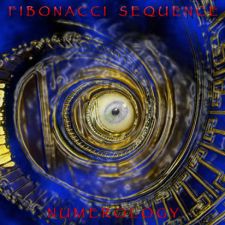
The aptly-titled Numerology, Fibonacci Sequence’s debut full-lenght album, was released about a year after the 2-track EP We Three Kings, which featured a very interesting arrangement of the popular 19th century Christmas carol. On this album, the three core musicians avail themselves of the valuable contribution of fretless bassist Chris Kringel (formerly with Cynic and their offshoot Portal) on all but one of the tracks, as well as bassist Chad Burkholz on “Missing Time”, and violinist Elizabeth Grimm on the last three numbers. Most of the tracks on Numerology run between 6 and 11 minutes, long enough to allow the band members to branch out and create intricate musical weaves; the album as a whole clocks in at a quite manageable 65 minutes. The band manage to produce an impressive volume of sound of exceptional clarity, every instrument given a strikingly dimensional feel in the mix. As in the best productions, in spite of the complexity of the compositions, the music flows smoothly and naturally, without giving the impression of being too complicated for its own good.

Right from the opening strains of the short but punchy “Commencement” – a lush, melodic guitar number powered by an impressive drum sound – the sheer quality of the recording comes across in no uncertain terms. While Michael J. Butzen’s guitars take the leading role, the engine propelling Fibonacci Sequence’s music along is Thomas Ford’s powerful yet restrained drumming, a full-bodied sound that manages not to overwhelm the other instruments. Fibonacci Sequence’s trademark blend of melody, heaviness and sleek instrumental expertise emerges in “Neap Tide” (also featured on the EP), a heady, multilayered mix of sharp riffing, acoustic, pastoral beauty and jazzy licks whose dense sonic texture manages not to feel stifling or contrived. On the other hand, “Primrose Path” comes across as a contemporary-sounding version of vintage Santana, down to the jazzy, Latin-tinged guitar work. Perfectly descriptive of its title, “Dawn” is a slow, meditative acoustic guitar piece introduced by atmospheric keyboards and birdsong, which introduces the thunderously drum-driven “Catlord”, its heaviness spiced by Eastern touches in the clean, mesmerizing guitar lines.

After the very short ambient piece “Illuminati”, Fibonacci Sequence display more of their exciting compositional skills in the album’s final four tracks, starting with the splendid bass showcase that is “Work in Progress”, peppered by frequent pauses that, instead of disrupting the flow of the music, seem to stimulate the listener’s attention. With “Missing Time” we enter Liquid Tension Experiment/Planet X territory, Jeffrey Schuelke’s keyboards taking more of a lead role and Butzen’s guitar injecting a touch of fiery, yet shred-free edginess, and the violin adding a symphonic note to the second half of the track. The 11-minute “Faunus” (the longest track on the album) is deceptively more linear in structure, with a tense, riff-laden first half and a slow, almost melancholy ending punctuated by lovely guitar and violin; while closing track “Io” picks up from where the previous number left off, with a moody beginning and a mainly keyboard-driven middle section, culminating with an extended guitar solo of outstanding quality. Interestingly, the album begins and ends with the crackling of an old vinyl record – a sound dear to many old-school prog fans.

Besides the obvious quality of their  music, both in terms of composition and execution, Fibonacci Sequence’s nature of real live outfit makes them an even more intriguing proposition. The simple fact that they are not easy to pigeonhole should be seen as a positive sign, especially in these times when increasingly outrageous labels are created with alarming regularity. In any case, Numerology is one of the finest instrumental prog albums released in the past couple of years or so, and their ProgDay appearance will hopefully contribute to putting Fibonacci Sequence on the map for those progressive rock fans who are still unaware of them. Highly recommended.

Links:
http://fib-seq.blogspot.com/

http://www.myspace.com/fibonaccisequenceband


Read Full Post »

TRACKLISTING:

1. Schizoid & Guntrip (2:46)
2. In the Movie of You (7:57)
3. Devotee (7:24)
4. Ambiance for the Active Mind (6:40)
5. Fantastic Dreamer (6:26)
6. Releasing (5:21)
7. Fading in the Rain (6:29)
8. Upon Further Review (4:26)
9. Vision (13:50)

LINEUP:

Henry Tarnecky – vocals, keyboards
Blake Tobias – keyboards, bass
Jack Wright – guitars, drums

With:
Glenn Arpino – keyboards
Tom Shiben – bass
Nicole Tarnecky – vocals

Temporal Chaos Project (TCP for short) are a trio based in different states of north-eastern USA, who initially met on the Internet and started a collaboration that resulted in the album The Way, released in 2009. Their second album, Fantastic Dreamer, followed in April 2011, with the core group of Henry Tarnecky, Blake Tobias and Jack Wright augmented by three guest musicians. Both albums were released on Georgia-based label 10T Records, one of the most interesting independent labels for progressive rock.

In spite of their name, there is nothing chaotic about TCP. Fantastic Dreamer, which has garnered a lot of positive critical attention since its release, is one of those albums for which the definition ‘solid’ seems to be tailor-made. Though studio-only projects can often be hit-and-miss, formally perfect but somewhat lacking in the soul department – therefore producing an overall unsatisfactory impression – TCP’s sophomore effort comes across as a mature, well-balanced album, with excellent instrumental performances, enough compositional complexity to appeal to fans of traditional prog, and more than just a smattering of contemporary flair. While some bands or artists show a more or less clear direction (as in symphonic, neo or prog-metal), TCP are unabashedly eclectic, with roots in the great progressive tradition and some recognizable classic influences, yet no fear of dipping their collective toes in more modern waters. While TCP’s eclecticism is of a different kind than the one displayed by bands of a more innovative disposition, the end result is definitely worthy of attention.

Running at about one hour (in my opinion, the almost perfect length), Fantastic Dreamer features 10 tracks, most of them between 2 and 8 minutes, with the exception of the ‘epic’ “Visions”, an ambitious yet cohesive piece that wraps up the album in fitting fashion.. Though, like many modern prog albums, Fantastic Dreamer is very much vocal-based, TCP achieve admirable balance between the singing and the lush, varied instrumental sections. Keyboardist Henry Tarnecky is in charge of the vocals, and does a fine job of it. His voice brings to mind the husky, slightly rough around the edges tone of Peter Gabriel, with some hints of the dramatic power of Peter Hammill or Fish, and fits the material perfectly.

Though clocking in at under 3 minutes, opener “Schizoid & Guntrip” already sets the tone for the whole album – a melodic yet assertive number, evoking a vintage hard rock vibe, with a subtly catchy quality and sleek instrumental interplay. “In the Movie of You” blends suggestions of early Pink Floyd (down to the use of recorded ambient sounds) with heavier tones, the sharpness of the guitar tempered by the gentleness of the piano. Pink Floyd references also crop up in the aptly-titled “Ambiance for the Active Mind”, where the atmospheric surge of the keyboards climaxes in dramatic rifferama before loosening up in a lovely guitar solo amidst waves of mellotron; while the mid-paced “Releasing”, with the faintly eerie tone of the guitar solo, points rather to the later output of the seminal English band. The catchiest number on the album, “Devotee” pushes keyboards and vocals to the forefront, with plenty of drama and melody in the vein of crossover/art rock bands like Queen or Supertramp.

With the title-track and “Fading in the Rain”, TCP tread similar territory, displaying their grandiose, even bombastic side, though without overdoing things; the latter song in particular, in which Tarnecky is assisted by a female guest vocalist, Nicole Tarnecky, clearly references Genesis, with airy guitar soloing and masses of stately keyboards. The folksy, mainly acoustic “Upon Further Review”, embellished by harpsichord and Mellotron, acts as an introduction of sorts to the 13-minute “Visions”, a powerful keyboard-driven extravaganza composed by guest musician Glenn Arpino, in which a climactic crescendo somewhat reminiscent of Supertramp’s more ambitious pieces is bookended by rarefied, understated passages and fluidly melodic guitar leads.

While I would not go as far as to call Fantastic Dreamer a masterpiece (as other enthusiastic reviewers have done), it is undoubtedly a very well-crafted album, with all-round excellent performances, and an interesting compositional structure. The occasional bouts of heaviness do not disrupt the melodic, nicely knit fabric of the music, and Henry Tarnecky’s expressive vocals tackle the often ambitious lyrical matter with assurance and aplomb. The very detailed CD booklet, enhanced by striking artwork and photography, adds visual interest to a substantial musical package. Even if TCP are, at least for the time being, a studio-based project, I hope they will consider taking their music on the road in the near future, because they sound like a band worth hearing in a live setting.

Links:
http://www.temporalchaos.com/html/home.html

http://10trecords.com/


Read Full Post »

TRACKLISTING:
1. Day Of Destiny (4:06)
2. The Wrap (Intro) (5:16)
3. Under The Wrap (38:19)
4. An Angel (5:42)
5. Ilusionist (1:16)
6. The Wrap (Outro) (4:59)

 LINEUP:
Antony Kalugin – keyboards, vocals, percussion
Maxim Velichko – electric guitars
Sergey Balalaev – drums
Kostya Ionenko – bass
Sergey Kovalev – bayan, vocals
Roman Gorielov – acoustic guitar, backing vocals

With:
Helen Bour – oboe (1, 2)
Alexandr Pastukhov – bassoon (1, 2, 3)
Oksana Podmaryova – cello (3, 6)
Max Morozov – viola (3, 6)
Daria Maiourova – violin (3, 6)

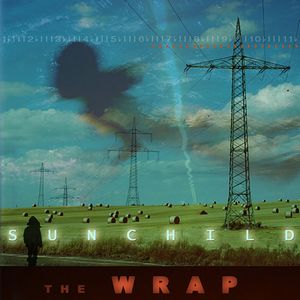
One of the projects by talented and prolific Ukrainian musician Antony Kalugin (also involved with Karfagen and Hoggwash), Sunchild released their debut album, The Gnomon, in 2008, followed by The Invisible Line in 2009. The Wrap, the band’s third album, was recorded over a two-year period, and released in September 2010. An accomplished artists in spite of his young age, Kalugin has picked a group of gifted Ukrainian musicians for his projects, including string and woodwind players that give his bands’ musical output a well-rounded symphonic dimension.

Like a number of other bands from the Russian Federation, Sunchild’s approach to progressive rock is more traditional than innovative, though carried through with panache and impressive technical skill. While the band’s sound is not as openly influenced by classical music as the likes of Little Tragedies, Kalugin’s use of keyboards favouring piano and synthesizers rather than organ, quite a few diverse influences are detectable in Sunchild’s music other than the expected symphonic/Neo-prog strain. Alongside the intense melodic content, enhanced by pleasing vocal harmonies and lovely piano and flute passages, a distinct progressive metal feel surfaces in some of the compositions, which is in line with the trend followed by many contemporary bands that might be gathered under the Neo umbrella.

Like its two predecessors, The Wrap is based around an elaborate, rather esoteric philosophical concept, in this case the conflict between the self and its shadow – something that is likely to send some people running for the exits, and cause great delight in others. Although Kalugin was assisted by a native speaker of English, Will Mackie, in penning the lyrics, they are somewhat hit and miss – which anyway is not a particularly important factor, as I am first and foremost interested in the music. Unless lyrics contain something highly offensive (which is not the case here), I tend to be quite indifferent to them, unlike other critics that are often quick to point out any lyrical shortcomings. In any case, Kalugin is a more than adequate vocalist, capably assisted by his bandmates in the harmony parts, and even his slight accent does not detract from his delivery as is the case of other non-English-speaking musicians

Running at slightly below 60 minutes, The Wrap is dominated by the almost 40-minute epic “Under the Wrap”, which is strategically placed in the middle of the album (a good move, in my view). As I have pointed out on several occasions, I believe that it is extremely difficult for any given band or artist to sustain a composition of such length when it is conceived as a single block, and “Under the Wrap” is no exception. In spite of the undeniable quality of the music, the epic is more of a collection of disparate passages following one another without a common thread than an organic whole, which would have probably benefited from being presented in separate sections. As things are, the composition comes across as quite patchy, its first half starting out in subdued fashion, with subtle references to the great Russian composers of the Romantic era (reinforced by the presence of a bassoon and a string section), and then heading in a strongly metal-flavoured direction suggestive of Dream Theater circa Images and Words. The second half, instead, is strongly reminiscent of Genesis, with a couple of vocal passages in which Kalugin sounds very much like Peter Gabriel, a definitely classical-sounding, string-led section, and then a beautifully melodic guitar solo fading out at the end. Though the musicianship is consistently top notch, there are simply too many ideas left somehow underdeveloped, and not enough cohesion.

The remaining five tracks on the album are noticeably shorter the epic, and certainly much more successful in sheer compositional terms. Three of them feature vocals, and are generally mid-paced, melodic pieces with lush keyboard and guitar textures and excellent vocal parts. Opener “Day of Destiny” borders on AOR, with a very catchy chorus and flawless instrumental interplay; while closing track “The Wrap (Outro)” briefly reprises the opener’s main theme, with a brief metal-tinged section leading to an atmospheric, string-led conclusion. On the other hand, “An Angel”, followed by the short, soothing acoustic interlude “Illusionist”, as the title implies is a lovely, rarefied ballad featuring a gorgeous guitar solo backed by piano and percussion. The other instrumental track, “The Wrap (Intro)”, seems to reproduce the structure of the epic, though in a more cohesive way, blending prog-metal suggestions with pastoral moments in the vein of vintage Genesis or Camel.

As the previous paragraphs illustrate quite clearly, The Wrap is quite likely to appeal to fans of classic symphonic and Neo-prog, even if the occasional prog metal overtones may put off some of the more traditionally-oriented listeners. In any case, even if decidedly retro in tone, it is a finely-crafted album brimming with enjoyable melodies, and executed with undisputable skill and professionalism. The very thorough booklet, with its stylish artwork and photography, is also deserving of a mention. In spite of the somewhat patchy nature of the epic, the album would be a worthy addition to the music collection of any melodic prog lover.

Links:
http://www.antonykalugin.net/


Read Full Post »

TRACKLISTING:
1. Skating on Europa 9:35
2. Know Again 6:26
3. A Poet’s Talespin I: Half-Slept Moments 1:56
4. A Poet’s Talespin II: Soft Collisions 8:28
5. A Poet’s Talespin III: The Bridge 7:55
6. A Poet’s Talespin IV: I Write 5:01
7. A Poet’s Talespin V: In the Shadows 6:17
8. Get the Hell off my Lawn 4:20
9. Counted the Stars 1:18

LINEUP:
Dave Kulju – electric and acoustic guitars, bass guitar, keyboards, guitar synthesizer, sound effects and programming
Frank Basile – drums

With:
Annie Oya – vocals (3)
Ian Cameron – electric and acoustic violins (2)

Notes in the Margin is the second album released by US multi-instrumentalist Dave Kulju, based in Rochester (New Hampshire). After his recording debut with Electrum, Frames of Mind (1998), followed in 2002 by Standard Deviation, when the band went on hiatus he started devoting his free time to his solo career, releasing Abstract Expression in 2007, which brought him to the attention of the community of progressive rock followers.  Like Abstract Expressions – even if Kulju is in charge of the majority of the instrumentation – Notes in the Margin is not your typical, ubiquitous ‘solo-pilot’ projects made possible by modern recording technology, but features a real drummer, Frank Basile, as well as a couple of other guests. Unlike its predecessor, though, the album is not completely instrumental, and its centrepiece, the five-part epic “A Poet’s Talespin” (adapted from two poems by Australian poet Amanda Joy) features the amazing contribution of UK-based  session vocalist Annie Oya.

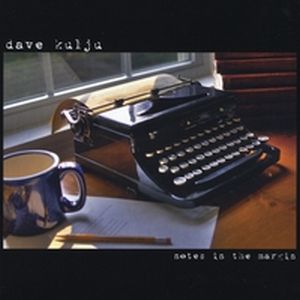
Three years in the making, the process lovingly detailed on Dave’s own website, Notes in the Margin is an unusually elegant, deeply literate effort that eschews any of the pretentiousness often associated with prog, and manages to emphasize emotional content without being mawkish or contrived. The striking cover, a photo taken by Kulju himself (who is a gifted photographer as well as a talented musician), immediately projects a stylish contemporary image that sharply deviates from the old prog cliché of fantasy/sci-fi themed artwork, with its still life centred around a vintage typewriter. According to the artist, the album title is a reflection on the process of making the record itself – a process involving a lot of rewriting and refinement, just like a work of literature.

For a project completely conceived in the studio, Notes in the Margin sounds remarkably organic,  multilayered though never overdone, each instrument standing out in clear detail. It comes very much across as a guitar-based album, showcasing Kulju’s fluid, clean style, inspired by the likes of David Gilmour and Andy Latimer without being derivative. Keyboards, on the other hand, are used more as a foundation than the main event, though the epic can boast of some positively gorgeous piano passages. Surprisingly, however, the real protagonist of Notes in the Margin is the bass, merging seamlessly with Frank Basile’s excellent drum work to set the pace, and stamping its own distinctive touch on the fabric of the compositions. The music flows smoothly, with enough complexity to satisfy the cravings of most prog fans, except those who are looking for innovation at all costs. Indeed, while Notes in the Margin does not offer anything startlingly new, neither does the vast majority of current releases, and the musical content here is undeniably above average.

With a practically perfect running time of about 51 minutes, no filler is needed on Notes in the Margin, and none of the tracks feels padded or stretched beyond reason. Album opener “Skating on Europa”, loosely based on the work of sci-fi author Arthur C. Clarke, is a forceful yet melodic number which, in spite of its almost 10-minute duration, never outstays its welcome. Driven by thunderous yet not overwhelming drums and a sleek, dynamic bass line, it pushes Kulju’s fluid, fiery lead guitar to the forefront with exhilarating effect. In “Know Again” (the English translation of the Greek word anagnorisis, the moment of recognition for the protagonist of a Greek tragedy)  the keyboards take more of a lead role, and Ian Cameron’s contribution on acoustic and electric violin add further layers of dimension to a piece that, while not exactly jazzy, shifts subtly from a subdued tone to a sort of crescendo, slowing down again towards the end.

The album’s epic, “A Poet’s Talespin”, which (like Shadow Circus’ “Project Blue” or The Rebel Wheel’s “The Discovery of Witchcraft”, to name but two recent examples) is conceived as five separate pieces strung together by a  musical and lyrical fil rouge, rather than as a massive 30-minute behemoth. As previously hinted, it is also the only composition featuring Annie Oya’s lovely vocals, soothing and melodious yet devoid of that cloying sweetness all too frequent in female prog singers. Introduced by a gorgeous classical piano piece, the romantic, mid-paced (and very aptly titled) “Soft Collisions” develops into a number of subtle complexity where the vocals are complemented by Kulju’s superb guitar and bass work and the recurring presence of the piano. “The Bridge” treads spacey territory, with a subdued, more acoustic bent; while the symphonic, keyboard-driven “I Write” is brimming with gentle sadness, and “In the Shadows” closes the epic with an instrumental reprise of the main theme, rendered in spacious, atmospheric tones reminiscent of Pink Floyd. The album is wrapped up by two instrumentals – the highly dynamic, riff-based “Get the Hell Off My Lawn”, bringing to mind Rush compositions such as “Leave That Thing Alone”, with bass and guitar working together to create intense textures; and the short, somber keyboard piece “Counted the Stars”, named after a phrase in an Anne Sexton poem that was the earliest inspiration for the epic.

With superb production values and sterling sound quality, Notes in the Margin is indeed an excellent release, worthy of the attention of even the more demanding prog listeners. It is a pity that – like most studio-only projects – it will probably flow under the radar of many fans in favour of more extensively publicized albums. A labour of love in every sense of the term, classy and literate yet full of endearing warmth, this is a must for everyone who loves melodic, guitar-oriented progressive rock. It would be a boon if, one day, Dave managed to put a band together and perform his music on stage, in spite of all the well-documented difficulties that plague those artists looking for live outlets for their work.

Links:
http://www.davekmusic.com/

http://www.littleglasspen.com/

Read Full Post »

TRACKLISTING:
1. Fino all’Aurora (6:44)
2. D-Sigma (4:13)
3. 4.18 (1:37)
4. Discesa (7:32)
5. Tra Due Petali di Fuoco (6:06)
6. L’Inganno (7:20)
7. Agli Uomini Che Sanno Già Volare (4:36)
8. Il Declino (5:44)
9. Phoenix (5:07)
10. La Notte Trasparente (7:47)

LINEUP:
Alessandro Corvaglia – vocals
Fabio Zuffanti –  bass, bass pedals, backing vocals
Agostino Macor – keyboards
Andrea Monetti – flute, sax
Matteo Nahum – guitars
Maurizio Di Tollo – drums, backing vocals

One of the many projects in which Genoa-based bassist and composer Fabio Zuffanti is involved, La Maschera di Cera (The Wax Mask, named after a ‘50s horror movie starring Vincent Price) have been active since the beginning of the new millennium, releasing four studio albums and a live one. Their third album, LuxAde (released in 2006, and based on the Greek myth of Orpheus) brought them to the attention of the many fans of classic Italian prog scattered around the globe, which culminated with their appearances at the 2007 edition of NEARfest and the 2009 edition of ProgDay, two of the highest-profile progressive rock events in the world. They also appeared in the Romantic Warriors documentary, alongside fellow Italians D.F.A.

Petali di Fuoco, their fourth studio release (produced by a veritable RPI icon such as PFM drummer/frontman Franz Di Cioccio) marks a distinct change in the band’s compositional approach, and consequently also in their sound, which has been somewhat streamlined. While the band’s three previous albums had the hard-edged, retro-symphonic sound of Seventies outfits such Il Balletto di Bronzo and Biglietto per l’Inferno down pat, dispensing with the electric guitar in favour of luxurious keyboard textures and plenty of Mellotron – as well as sporting a strong conceptual bent – Petali di Fuoco takes a more mainstream direction, featuring 9 shorter, unconnected songs with more straightforward lyrics. While there are still Italian bands paying homage to the great tradition of the elaborate concept album, La Maschera di Cera seem to have followed the example set by other Genoese bands like Delirium (with their superb comeback release Il Nome del Vento) and Il Tempio delle Clessidre, and chosen a more accessible format for this album.

On Petali di Fuoco, the core of founding members Alessandro Corvaglia, Fabio Zuffanti, Agostino Macor and Andrea Monetti (plus drummer Maurizio Di Tollo, who joined the band in 2004) has been augmented by guitarist Matteo Nahum, who proves to be the album’s real ace in the hole. A classically-trained musician (and devoted Steve Hackett fan)  with the perfect combination of flawless technique (without any concessions to the deplorable shredding trend) and genuine emotion, his contribution lifts the level of the album from merely good to excellent. Even though the music is unabashedly retro, a loving homage to the classic Italian prog sound of the Seventies without any real claim to innovation, and the songs sometimes skirt the Italian melodic pop tradition a bit too close for comfort, Petali di Fuoco delivers a very satisfying listening experience, at least for those people who like their prog with lots of vocals. On the other hand, Alessandro Corvaglia’s strong, confident voice, markedly different from the operatic style of the likes of Francesco Di Giacomo, but equally suited to tackling material at the same time melodic and challenging, can bring to mind some internationally-known Italian pop singers, and therefore come across as vaguely annoying to those who like the angular, acquired-taste vocal styles of so many prog singers.

Running at about 55 minutes, Petali di Fuoco is a well-balanced effort that never threatens to outstay its welcome. Most of the songs – as immediately evidenced by opener “Fino all’Aurora”, an upbeat, organ- and flute-driven number ending with a beautiful guitar solo  – have a conventional verse-chorus-verse structure, but the lush orchestration and seamless instrumental interplay reveal their progressive matrix. Though Corvaglia’s voice often seems to dominate the proceedings, the instruments spin a tightly-knit web of sound that provides a solid foundation for the development of each song. While “D-Sigma” and “Discesa” keep things simmering in the same spirit as the opener, with melodious, Hackett-inspired guitar passages opening airy spaces in the dense, keyboard-driven heavy prog textures of the songs, the title-track and “Agli Uomini Che Sanno Già Volare” take a more subdued direction, with a sparser, somewhat melancholy instrumental backdrop that pushes the vocals to the forefront and leaves a lot of room for Corvaglia’s emotional delivery.

Though Petali di Fuoco is a strongly vocal-driven album, two instrumentals have been included – one, “4.18”, a short classical guitar number in the style of Genesis’ “Horizons”, the other, “Phoenix”, starting out slowly but building up to a crescendo powered by keyboards and drums – a structure paralleled by “Il Declino”, in which a somewhat somber piano solo is offset by the unbridled passion of Corvaglia’s vocals. On the other hand, with “L’Inganno” La Maschera di Cera explore vintage hard rock territory, powered by Agostino Macor’s rumbling Hammond organ and whistling Moog, and featuring an almost jazzy piano passage in the middle, as well as a soaring guitar solo at the end. The album ends with a veritable bang: “La Notte Trasparente”, at almost 8 minutes the longest track on the album, is also the most complex, with all the instruments creating intricate yet airy textures with more than a nod to classic Genesis, and a showcase for Matteo Nahum’s spectacular guitar work. His solo at the end starts out slowly, and then gradually drives towards an exhilarating climax that had me think about Gary Moore or Blue Oyster Cult’s Buck Dharma.

Though some prog fans may be disappointed by the lack of epics and the generally more streamlined nature of Petali di Fuoco, the album will certainy prove a treat for lovers of the sounds of vintage Italian prog. With lush instrumentation, a nice balance between orchestral grandiosity and more intimate, subdued moments, plenty of melody and warm, passionate vocals, it contains all the elements that keep attracting many listeners to Italian progressive rock – as well as those that often turn people off, such as the enhanced sentimentality and occasionally bombastic passage (though not as prominently as in their previous studio albums). It is, indeed, very much a ‘retro-prog’ effort – which might make it pointless (as a fellow reviewer put it) in the eyes of some of the more jaded set – but it cannot be denied that Petali di Fuoco is a quality offering brimming with flair and songwriting expertise. Even if, speaking from a strictly personal point of view, the music on the album is not always my cup of tea, I would not hesitate to recommend the album to everyone interested in Italian prog.

Links:
http://www.myspace.com/lamascheradicera

http://www.zuffantiprojects.com/

Read Full Post »

TRACKLISTING:
1. Un Dono (2:13)
2. Wizard Intro (3:03)
3. Madre Africa (7:54)
4. Questa Penombra E’ Lenta (6:57)
5. Chimera (4:23)
6. The Game (10:38)
a. Wizard of your Sky
b. Mickey’s
c. Jump
d. Wizard of your Life
7. Cluster Bombs (6:43)
8. This Open Show (3:16)
9. C’Era Una Volta (2:59)

LINEUP:
Paolo Siani – drums, vocals, keyboards, bass, guitars

With:
Ricky Belloni – electric guitar (6)
Carlo Cantini – violin (6)
Guido Guglielminetti – bass (2, 4, 6)
Mauro Pagani / flute (3)
Alessandro Siani – electronics (1, 5)
Franco Testa – bass (5)
Roberto Tiranti – vocals (3, 6, 7)
Giorgio Usai – Hammond organ (6)
Joe Vescovi – Hammond organ (3)
Marco Zoccheddu – electric guitar (2, 3, 4, 7), piano (5, 7)
Gianni Alberti – sax (5)
Ottavia Bruno – vocals (5)
Giacomo Caiolo – acoustic guitar (4)
Nadia Enghèben – soprano (3)
Alberto “Artley” Buttarelli – vocals, flute (8)
Diego Gordi – piano (8)
Fabio Gordi – piano (8)
Daniele Pagani – piano (8)
Giuliano Papa – cello (8)
Vittorio Pedrali – vocal recitation (1)

In spite of his tenure as the drummer of Italian Seventies band Nuova Idea, Paolo Siani is certainly not a household name in the world of progressive rock – unless you count those dedicated fans of the scene who collect even the most obscure albums. Additionally, he shares the same name with an Italian-American artist of vastly different temperament, which can be misleading to those who are looking for more information. Although an excellent outfit, Nuova Idea did not achieve the fame of their fellow Genoese New Trolls (whom keyboardist Giorgio Usai and guitarist Ricky Belloni joined after the band’s demise) or Delirium, and disbanded after their third album, the highly-regarded Clowns, released in 1973. Subsequently Siani joined avant-garde outfit Opus Avantra for their second album, then beat band Equipe 84. Though he dropped off the musical radar for almost three decades, he worked as a producer and kept writing and recording his own music. It was the renewed interest in prog and the Italian Seventies scene that prompted Siani to resume his career as a musician – as well as a commendable humanitarian purpose, that is, raising funds on behalf of Genoa’s renowned Gaslini paediatric hospital.

Though Castles, Wings, Stories and Dreams, released by Genoa-based label Black Widow, is to all intents and purposes a solo project by Siani, it also sees a reunion of sorts of his mother band, as well as an impressive roster of guest musicians, including three of his former Nuova Idea bandmates: the above-mentioned Giorgio Usai and Ricky Belloni, plus guitarist Marco Zoccheddu, who had left the band to join Osage Tribe after Nuova Idea’s debut. Unlike many albums of this kind, however, it is remarkably tight from a compositional point of view. Moreover, despite Italian prog’s reputation for being somewhat overwrought,  the album avoids that particular trap, keeping melody and clarity at the forefront while not neglecting the occasional flight of instrumental fancy.

Clocking in at under 50 minutes, Castles, Wings, Stories and Dreams is a decidedly song-oriented effort that manages to achieve a good balance between vocal and instrumental parts. The album opens with “Un Dono”, where an expressive male voice recites a brief, uplifting text by Mahatma Gandhi on a backdrop of sparse electronic keyboards. The following instrumental, “Wizard Intro”, blends symphonic suggestions à la Yes with hard rock touches, all infused with an unmistakable Italian flavour. “Chimera”, also instrumental, hints instead at a jazzy inspiration, with a loose structure made up of different solo spots (bass, sax and piano) over a train-like background rhythm provided by drums and keyboards. Siani’s voice can be heard on one track, “Questa Penombra E’ Lenta” (which is also the closest the album gets to a conventional ballad in the unique Italian style), assisted by the clear, melodic voice of Ottavia Bruno, and complemented by lovely acoustic guitar and an airy synth solo.

Three tracks feature the powerful yet clear voice of Roberto Tiranti, lead singer of power/progressive metal band Labyrinth (with a brief stint in New Trolls in the late Nineties). His gritty performance on “Cluster Bombs” – a hard-hitting, anti-war song powered by Hammond and military-style drumming that owes more than a little to Deep Purple or Uriah Heep – increases the song’s emotional impact. Tiranti shows his more melodic side on the 10-minute, 4-part epic “The Game”, a richly textured composition where all the instruments get their chance to shine without overwhelming each other, with Hammond flurries and wistful violin strains. Tiranti then reverts to a more authoritative, hard-rocking persona in the haunting “Madre Africa”, where the Deep Purple influences represented by Joe Vescovi (formerly of The Trip, a band that briefly included Ritchie Blackmore among his members) and his Hammond organ are tempered by Mauro Pagani’s flute, whose sound brings to mind Delirium or Osanna. The album is wrapped up by two short, low-key pieces, the melancholy, cello-driven “This Open Show” and the instrumental “C’Era Una Volta”, a Baroque-inspired number performed by Siani alone.

As can be expected, Castles, Wings, Stories and Dreams is not particularly innovative, nor does it pretend to be such. Like other fellow reviewers, I also have some reservations on the choice of mixing Italian and English lyrics. The supposed ‘international appeal’ of English vocals, in my opinion, dilutes that unique quality of Italian prog that is so often connected with the use of such a great vehicle for music as the Italian language. However, in spite of these drawbacks, the album is a solid effort, a fine slice of vintage Italian prog with a thoroughly 21st-century sound quality, and excellent performances all round from Siani and his guest musicians. The album should also appeal to fans of classic hard rock with progressive overtones. At the time of writing, Paolo Siani is planning a live show in October in his hometown of Genoa, which hopefully will not remain a one-off.

Links:
http://www.blackwidow.it

http://www.progarchives.com/forum/forum_posts.asp?TID=77100


Read Full Post »

TRACKLISTING:
1. Apophenia (4:45)
2. It Works (5:05)
3. Narrow-Caster (3:09)
4. Live With This Forever (5:09)
5. Cautionary Tale (5:05)
6. The Proverbial Banana Peel (3:09)
7. Young Once (5:14)
8. Scenery (5:49)
9. Free For All (4:35)
10. The Last Gasp (4:57)

LINEUP:
George Dobbs – lead vocals, keyboards
Robert James Pashman – bass, keyboards, vocals
Pat Kliesch – guitars, vocals
Rob Durham – drums, percussion

With:
Dan D’Elia – drums (3, 10)
Veronica Puleo – backing vocals (10)

“3RDegree – Defiling perfectly good songs with prog since 1990”

The definition of ‘narrow-caster’ (as opposed to a broadcaster) –  “one who transmits a TV programme […] or otherwise disseminate information, to a comparatively small audience defined by special interest or geographical location” – seems to be a perfect fit for anyone engaged in the production of progressive rock. In spite of the genre’s relative popularity these days, both the musicians and those who (like myself and many others) support it through our writings are perfectly aware that prog is not likely to become the next mainstream sensation, and its appeal will remain limited to a niche audience.

Based in New Jersey (though guitarist Pat Kliesch resides in Los Angeles), 3RDegree formed over 20 years ago, but disbanded after a few years after the release of two albums, discouraged by the lack of response from their intended audience. In 2005, Kliesch and the other two original members, bassist Robert James Pashman and drummer Rob Durham (vocalist/keyboardist George Dobbs would join them later), met again with a view to reforming the band, taking advantage of those opportunities offered by the Internet that were not yet fully available in the mid-Nineties. The result was Narrow-Caster, released in the first half of 2008, mostly comprising material that had been conceived prior to the band’s demise in 1997, but completely rearranged for the occasion.

The reactions of the ‘prog community’ to the album have been somewhat mixed, as illustrated by the many reviews published since its release. Although 3RDegree have always proclaimed their love of progressive rock (as stated by the quote I used as a heading, which is proudly emblazoned on the band’s official T-shirt), the influences they list on their Facebook page point to a very eclectic bunch of musicians – with the likes of Rush, Level 42, Genesis and Stevie Wonder mentioned in the same breath. In fact, labelling 3RDegree as a ‘conventional’ prog band would do them a serious disservice: they should rather be counted among the rightful heirs of legendary genre-bending outfits such as 10cc, Supertramp, Roxy Music and Queen. These bands and others, pioneers of the much-debated genre called Art Rock, are seen by some as little more than marginally related to prog, by others as no less progressive than icons such as Yes or Genesis.

For today’s standards, Narrow-Caster is a short album, with no track longer than 5-odd minutes. Chock-full of hooks and melodies that would be the envy of many bigger-name bands, it is one of those independent releases that manage to sound like a million dollars. While the label-happy brigade (the ones that always wonder if a band, artist or album is prog or not before they say anything else) might frown and turn up their noses, at the beginning of the 21st century, with progressive rock in all its manifestations enjoying an almost unexpected Renaissance, an increasing number of outfits have rediscovered the importance of a well-crafted song as opposed to sprawling, patchy  and often terminally boring epics. 3RDegree are part of a solid, though not too large, contingent of bands who do not believe that ‘pop’ is always a bad word, and who deliver consistently intelligent, classy music without the need to release a whopping 80 minutes of it.

While all the members of 3RDegree are gifted musicians, creating rich sonic textures without anyone seeking to outdo the other, the band’s real ace in the hole is George Dobbs’ absolutely stunning voice (which, I am happy to say, sounds every bit as good live as it does on CD). Though I have seen it compared to the likes of Michael Jackson, in my view the closest comparison are Glenn Hughes (of Trapeze, Deep Purple and, more recently, Black Country Communion fame), and of course Stevie Wonder. George’s versatile, soul-infused tenor can shift from soothing to aggressive in the space of a single song, stamping his unique imprint on the band’s music without overwhelming it. 3RDegree’s love of classic prog acts such as Yes and Gentle Giant – as well as The Beatles and the hard-to-pinpoint King’s X – shines through the superb vocal harmonies that grace most of the songs.

The album kicks off in high gear with “Apophenia”, an intriguing mid-tempo with echoes of Rush in the guitar parts that immediately introduces the listener to 3RDegree’s heady blend of aggressive, catchy and atmospheric elements. Dobbs delivers the thought-provoking lyrics, belying the apparently carefree tone of the music (something perfected by the likes of Steely Dan and Supertramp, to name but two) in impassioned yet perfectly controlled fashion. The Steely Dan comparisons rear their head in the splendid “It Works”, my favourite number on the album, with excellent guitar and keyboard work bolstered by Pashman’s nimble bass lines, and one of Dobbs’ finest moments together with the energetic “Free for All” – where a deceptively blissful chorus is offset by the spiky, riff-heavy electricity of the verse.

While the title-track and the smooth, jazz- and soul-tinged “Scenery” showcase 3RDegree’s more accessible side, with plenty of catchy vocal harmonies and laid-back melodies, the short but punchy “The Proverbial Banana Peel” sees the band experiment with both electronics and metal-like power chords The nicely-paced “Cautionary Tale” delivers a biting indictment of religious fanaticism through almost seductive vocals and an atmospheric guitar solo, and “Live With This Forever” marries a great hook, supported by Dobbs’ stellar performance both on vocals and keyboards, with some harder-edged guitar work. “Young Once” and “The Last Gasp”, on the other hand, are probably the two songs where the constantly lurking progressive component of 3RDegree’s sound emerges most clearly: the former, a wistful number in the Steely Dan vein, unexpectedly features a lovely, ambient-like bridge; while the latter closes the album in style with a brilliant combination of dreamy vocals, Rush-like guitar riffs and a majestic, orchestra-backed, bass- and keyboards-led coda that brings Yes to mind.

If you are looking for music that successfully combines accessibility, great musicianship and stunning vocals, look no further than Narrow-Caster, definitely one of the best releases of the first decade of the 21st century – regardless of labels.  In a perfect world, these guys would be stars, since it takes a whole lot of skill and dedication to write music that is at the same time approachable and sophisticated. At the time of writing, 3RDegree are working on their fourth album, which will hopefully be released by the end of the year. In the meantime, check out the band’s two DVD releases, The Reunion Concerts (released in the same year as Narrow-Caster) and Live at ProgDay 2009, capturing their performance on the small but legendary stage in the beautiful surroundings of  Storybook Farm.

Links:
http://www.3rdegreeonline.com/3RDegree/Home.html

http://www.myspace.com/3RDegreeNJ


Read Full Post »


TRACKLISTING:
1. Death Walks Behind You (7:24)
2. VUG  (5:03)
3. Tomorrow Night (4:02)
4. 7 Streets (6:47)
5. Sleeping For Years (5:30)
6. I Can’t Take No More (3:36)
7. Nobody Else (5:04)
8. Gershatzer (8:01)

LINEUP:
Vincent Crane – piano, keyboards, Hammond organ, vocals
John DuCann – guitar, vocals
Paul Hammond – drums, percussion

In the progressive rock community there is some controversy regarding the status of Atomic Rooster as a full-fledged prog band.  Like many Seventies acts often placed under the ‘heavy prog’ umbrella (Captain Beyond and High Tide to name but two), in the eyes of purists they are little more than glorified hard rock combos with some hints of something more complex, yet more akin to Deep Purple and Black Sabbath than Genesis or Yes. In recent times I have happened to see Atomic Rooster labeled as a ‘dark’ band – a definition that made me think of the likes of The Cure or Siouxsie and the Banshees rather than any of the classic bands of the Seventies.

On the other hand, as both the brilliant title and the iconic cover (depicting William Blake’s “Nebuchadnezzar” on a simple black background) suggest, Death Walks Behind You is a very dark album – a haunting, Hammond-drenched effort which sounds like a encounter between Black Sabbath and Deep Purple with ELP writing the soundtrack. In many ways, it can be seen as the blueprint for the heavier side of prog, a lavish feast for any self-respecting fan of the mighty Hammond organ, and a welcome respite from the pastoral soundscapes of  Camel or Genesis, or the mind-boggling intricacy of Yes. Definitely hard-edged, occasionally oppressive, undeniably raw and unpolished, it possesses the kind of power that many more recent albums strive in vain to achieve.

This is one of the rare albums that captured my attention right from the first listen. True, Death Walks Behind You is not perfect, but then very few albums are, even those normally hailed as masterpieces. Vincent Crane’s highly effective, aggressive playing style, perfectly complemented by the expressive voice and blistering guitar lines of John DuCann (formerly with proto-prog outfit Andromeda), is a real treat for the ears of every Hammond lover. The third band member, drummer Paul Hammond (who replaced co-founder Carl Palmer when the latter joined ELP), lays down a powerful backbeat, assisted by Crane’s skillful use of both keyboard and foot pedals to replace the missing bass lines. This idiosyncratic take on the classic power trio unleashes a massive volume of music that, while not as technically impeccable as what ELP or Deep Purple were producing at the time, is brimming with sheer intensity.

A couple of tracks relieve the tension and overall dark mood of the album – namely the catchy, almost upbeat “Tomorrow Night” (originally released as a single), and the heavy rock-goes-commercial “I Can’t Take No More”. Neither are personal favourites: in my view, especially the latter could be scrapped from the album without doing a whole lot of damage. On the other hand, the slow, melancholy number “Nobody Else”, dominated by Crane’s piano, sees a remarkably emotional vocal performance by DuCann, providing a perfect foil for Crane’s despondent, foreboding lyrics (he suffered from mental problems and ended up committing suicide, as did Hammond).

The real highlights of the album, however, are to be found elsewhere. The title-track is introduced by dissonant, menacing piano, then explodes into a memorably hypnotic organ riff punctuated by the obsessive repetition of the title, “Death Walks Behind You”.  “7 Streets” is a more structured composition, based on the interplay between organ and guitar, while “Sleeping for Years” is in a similar vein, though with a slightly darker tone – both excellent examples of vintage heavy prog, somewhat influenced by Black Sabbath, but with better vocals and lashings of keyboards replacing Tony Iommi’s monstrous riffing. The two instrumentals, “VUG” and “Gershatzer”, are probably the most progressive offerings on the album, showcasing Crane’s skills as a Hammond player; the latter, which is almost 8 minutes long, has the slightly loose feel of a jam session, intensified by the presence of a short drum solo.

Though not exactly flawless, Death Walks Behind You is an impressive offering  that is  almost a must-listen for Hammond fans and anyone who likes their prog with a harder edge (though not necessarily metal). A fascinating, almost addictive album by an underrated band, whose long but chequered career ended tragically with Vincent Crane’s death in 1989.

Read Full Post »

TRACKLISTING:

1. Geistly Suite (7:51)
2. Importance (7:34)
3. Fallen Tiger (6:53)
4. Things Unsaid (5:14)
5. Odessa (5:44)
6. Angelus Novusaum (7:26)
7. When the Fog Clears (6:01)
8. Midnight (6:43)

LINEUP:
Gregg Johns – guitar, bass, keyboards, vocals
Ceci Whitehurst – lead vocals
Clay Pell – bass
Todd Sears – drums, percussion, keyboards, vocals

With:
Jeff Hamel – guitar, keyboards (1)
Bones Theriot – guitar (4)
Michael Fortenberry – trumpet (6)
Bridget Shield – lead vocals (8)

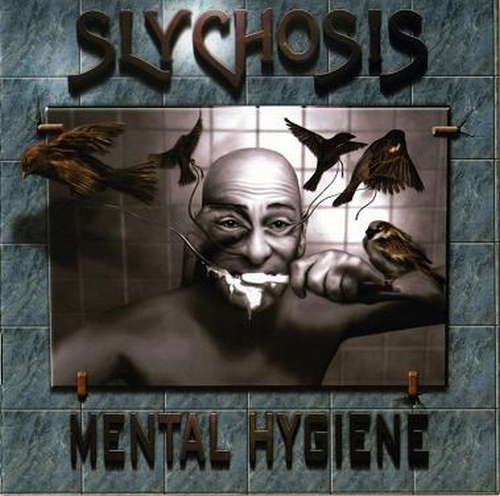
Two years ago I received Slychosis’ second album, Slychedelia, to review, and was immediately impressed by the CD’s striking artwork. Visuals have always been essential in progressive rock, and the Mississippi-based outfit had pulled out all the stops by enlisting the services of Surrealist Ukrainian artist Vladimir Moldavsky. Such a strong visual appeal boded well for the album – which, while not as downright quirky as Moldavsky’s imagery, nonetheless presented an intriguing blend of skilfully used electronics and more traditional instrumentation firmly rooted in a prog framework, with a nice balance between vocal and instrumental parts. My main criticism towards Slychedelia was that it was basically a solo album by mainman Gregg Johns with some guest musicians rather than a band effort, and in some of the tracks the presence of programmed drums (that reliable staple of many a ‘solo-pilot’ project) was often hard to ignore.

For Slychosis’ third album, Gregg Johns seemingly followed my advice by putting together a real band, with vocalist Ceci Whitehurst and drummer/vocalist Todd Sears (both of whom had appeared on Slychedelia), and brand-new bassist Clay Pell. While on Slychedelia a number of tracks had been recorded by Johns without any outside help, Mental Hygiene (a title that hints at Johns’ day job as a psychologist), is very much a group effort, and can also count on the contribution of some guest musicians. With a remarkably restrained running time of under 54 minutes (almost 10 minutes shorter than the previous effort), and tracks averaging 6 minutes, the album sounds like a definite step forward for Slychosis – in the same way as putting together a steady line-up was a step forward for Majestic, the band led by Jeff Hamel, Johns’ collaborator in the Proximal Distance project (guesting here on one track).

However, while I am sure that Slychosis’ evolution will be appreciated by a lot of listeners, my view is (perhaps perversely so) somewhat different. Though the album was obviously put together with a lot of care and dedication, I cannot help seeing it as a step backward if compared with Slychedelia, an album I had found genuinely enjoyable in spite of its flaws. My first listen of Mental Hygiene, on the other hand, left me somewhat puzzled, and – while subsequent listens helped me warm to the album somehow – I still do not find it as convincing as I was expecting it to be. Though there are undoubtedly a number of good ideas there, they are not fully brought to fruition. It feels almost as if the album had two souls – a progressive one, with frequent excursions into prog-metal territory, and a more listener-friendly one, expressed by catchy choruses and engaging melodies. This is the kind of formula perfected by Porcupine Tree (a clear influence on this album) in their more recent releases, and nowadays employed by quite a few outfits – with varying degrees of success

Mental Hygiene makes use of both a female and a male vocalist, one of the hottest trends on the current prog scene Now, though Ceci Whitehurst’s low-pitched, well-modulated voice is undoubtedly pleasing, it does not seem completely suited to the material on offer here. The Slychedelia song on which she guested, the wry “Cosmic Irony”, made good use of her somewhat androgynous tone. Here, instead, she is occasionally swamped by the heavy riffing, and I often found myself wishing for a higher-pitched voice– such as Majestic’s Jessica Rasche, who also contributed her impressive pipes to Proximal Distance’s debut. Moreover, when Todd Sears steps behind the microphone, he sounds oddly similar to Whitehurst – while the definite metallic bent of some of the compositions would call for more assertive voices.

Opener “Geistly Suite” is a prime example of  some of the album’s shortcomings. In less than 8 minutes, three or four main sections can be identified, each of them somewhat at odds with the other. While the first part veers towards prog-metal, with hints of Queensryche’s more symphonic-oriented pieces, the second part features some funky electric piano and synth work, and is then followed by a sedate, vocal-led section vaguely reminiscent of Genesis. While all the instrumental performances are quite worthy of note, the composition as a whole sounds a bit patchy. The same problem surfaces in closing track “Midnight” (featuring guest singer Bridget Shield’s soulful vocals), where a catchy chorus, heavy riffing and distorted guitar coexist without really harmonizing.

Most of the tracks are in a similar mould, with really good bits let down by some less successful ones. The lone instrumental “Odessa”, probably the album’s highlight, provides a showcase for Johns’ considerable skill as a guitarist, ranging from a beautiful, melodic solo with echoes of David Gilmour to wild, unleashed wailing. On the other hand, the melodic ballad “Fallen Tiger” borders dangerously on cheesiness, and might have been omitted without any detriment to the album.  The Celtic-tinged “Things Unsaid” (whose melody reminds me in some odd way of Mike Oldfield’s “Moonlight Shadow”) features an aggressive guitar solo by Bones Theriot of Louisiana-based band Abigail’s Ghost; while the short trumpet solo in the slow, almost plodding “Angelus Novusaum” seems somewhat misplaced in the fabric of the song.

Though this review may come across as a tad harsh, Mental Hygiene – while not as intriguing as Slychosis’ previous release – is nevertheless a perfectly competent album, and points to a band that is gradually coming of age, so to speak. It is to be hoped, however, that their next effort will see them concentrate more on the compositional aspect, as well as not leaning too heavily on the Porcupine Tree/symphonic prog metal influences. The members of Slychosis are obviously talented musicians with a lot to offer, but – in my opinion – they need to find a more distinctive voice of their own, or they will risk going unnoticed on the oversaturated progressive rock scene.

Links:
http://www.slychosis.com

http://www.vladimir-moldavsky.com

Read Full Post »

TRACKLISTING:

1. GK Contramundum (2:00)
2. Awaiting the Call. (5:10)
3. Parenting Parents (6:45)
4. Utter Once Her Name (5:30)
5. Remembering When (4:00)
6. Ramblin’ Sailor (18:14)
7. Your Healing Hand (8:18)
8. Firmus Finale (4:40)

Bonus tracks (previously unreleased 24-track recordings):
9. Rear View Mirror (3:34)
10. Alison Waits (A Ghost Story) (10:40)

LINEUP:
Alan Benjamin – guitars, basses, stick, mandolin, recorder
Henry Ptak – keyboards, lead vocals, backing vocals, percussion
Mark Ptak – keyboards, backing vocals, percussion
Drew Siciliano – drums

With:
Shunji Saegusa –  bass (6)
Ken Serio – drums (10)

My first contact with Advent’s music dates back from a couple of years ago, when I reviewed Dante’s Inferno, the first instalment of the monumental The Divine Comedy project released by Musea Records. The band’s contribution, a song called “Canto XXVI – The Evil Counselors”, impressed me as one of the most interesting tracks on that 4-CD set; therefore, I eagerly grasped at the opportunity to review their second album, Cantus Firmus – which, even if released exactly five years ago, is still recent enough not to qualify as a ‘vault’ review.

While quite a few North American bands have taken the classic English progressive rock sound of the Seventies as their blueprint, no one, when listening to this album for the first time,  would ever associate Advent with the bustling, overcrowded and down-to-earth East Coast of the US. Though hailing from New Jersey (home of a number of fine prog outfits, such as Shadow Circus, The Tea Club and 3rd Degree), here is a band that sounds more English than most contemporary English bands. Their love for the Old Country is evident right from cover artwork and logo (by artist and illustrator Michael Phipps), inspired by the stunning illuminated manuscripts of the Middle Ages.

Formed in 1989 by two highly accomplished multi-instrumentalists with a wide range of musical interests, Alan Benjamin and Henry Ptak (whose brother Mark joined the band some time later), Advent released their self-titled debut album in 1997, and then dropped off the radar for nine years. After the inevitable line-up changes (notably the addition of drummer Drew Siciliano), in 2006 Cantus Firmus finally appeared, to a very warm reception. The album’s title, meaning ‘fixed song’ in Latin, refers to a pre-existing melody that forms the base of a polyphonic composition – another nod to medieval and Renaissance musical tradition.

Like most acts, modern or otherwise, Advent have their own strong set of references, and are refreshingly honest about it. Though modern bands that openly pay homage to one or more of the prog greats of the Seventies are neither new nor surprising, Advent distinguish themselves from the myriad of Genesis or Yes-inspired outfits by having a rather unlikely pair of bands like Gentle Giant and Procol Harum as their main source of inspiration. Indeed, the band’s name brings to mind one of Gentle Giant’s most iconic songs, “The Advent of Panurge”. With such influences, it is not surprising that the music on Cantus Firmus is sophisticated, understated and devoid of hard edges – as well as admirably tight in compositional terms. Indeed, while not a concept, the album projects a sense of cohesiveness, with the first eight tracks acting much like the movements of a symphony. On the other hand, the two bonus tracks (both originally featured on the band’s debut album), though bringing the album’s running time close to a rather hefty 70 minutes, are not unwelcome additions, as they bear witness to Advent’s gradual but steady development of their own artistic personality.

Advent’s love for everything Gentle Giant immediately surfaces in the opening track, the short but sweet “GK Contramundum”, dedicated to English 20th-century author Gilbert Keith Chesterton, and sung entirely a cappella. The song flows directly into “Awaiting the Call”, a lovely instrumental number with hints of Genesis and Camel in Alan Benjamin’s stately, melodic guitar solo and the lush, elegant sweep of the Ptak brothers’ keyboards. “Parenting Parents” and its companion piece “Your Healing Hand”, both dealing with the topic of the relationship between parents and their children, share the same keenly sentimental quality (which thankfully never descends into mawkishness): while the latter is very sparse, almost hymn-like in tone with its whispered vocal harmonies, the former couples lilting, madrigal-like passages of touching sensitivity with instrumental surges led by Benjamin’s fluid, crystal-clear guitar.

“Utter Once Her Name”, a sparse, meditative number with a strong Gentle Giant vibe, and the hauntingly beautiful instrumental “Remembering When”, featuring some really inspired acoustic and electric guitar work, introduce the album’s centrepiece, the 18-minute “Ramblin’ Sailor”. Featuring the participation of Japanese band Kenso’s bassist, Shunji Saegusa, it is based on a traditional English folk song called “The Rambling Sailor”; the stunning complexity of its instrumental parts is relieved by the sprightly, cheerful nature of  the contrapuntal vocal parts, including a chorus of ‘carousing sailors’. The magnificent central section is occasionally reminiscent of the stately yet riveting pace of Genesis’ instrumental compositions, while the titular sailor’s farewell to the sea is conveyed by a slower, more sedate passage enhanced by the distinctive sound of the recorder. The core of the album is then brought to a close by the upbeat, fanfare-like “Firmus Finale”, in which hints of Gryphon’s quirky take on medieval music join the Genesis and Gentle Giant influences.

Though some might complain that Cantus Firmus is not a truly original proposition, and wave the dreaded ‘retro’ word around, the album – far from being a mere tribute-like effort – simply oozes class and dedication. In spite of the individual band members’ impressive chops, in this case technical skill is put at the service of the music, and not the other way round. Moreover, the emotional content is conveyed with grace and delicacy rather with the self-indulgent angst typical of may higher-profile bands. Gentler and more meditative than the output of bands in a similar vein such as Änglagård or Wobbler, Cantus Firmus will definitely appeal to fans of vintage prog of an eclectic bent – though some listeners might be turned off by its unabashed sentimentality and occasional church-like gravity. At the time of writing, Advent are working on their third album, which will hopefully be released within the year.

Links:
http://www.adventmusic.net

http://www.michaelphipps.net/

Read Full Post »

« Newer Posts - Older Posts »