Feeds:
Posts
Comments

Posts Tagged ‘Keyboards’

TRACKLISTING:
1. Clear Air Turbulence  (7:35)
2. Five Moons  (7:30)
3. Money Lender  (5:38)
4. Over the Hill (7:14)
5. Goodhand Liza  (5:24)
7. Angel Manchenio  (5:17)

LINEUP:
Ian Gillan – lead vocals
Colin Towns – keyboards, flutes
John Gustafson – bass, vocals
Ray Fenwick – guitars, vocals
Mark Nauseef – drums, percussion
Martin Firth – baritone saxophone
John Huckridge – trumpets
Derek Healey – trumpets
Malcolm Griffiths – trombone
Phil Kersie – tenor saxophone (2)

It would not be too much of an exaggeration to call  Clear Air Turbulence, the second album released by the sadly short-lived Ian Gillan Band, one of the forgotten masterpieces of Seventies progressive rock. For those who think of Ian Gillan as little more than a hirsute hard rock screamer,  even a casual listen to this record may definitely bring somewhat of a shock – and not just because of the vocals.

Following his return to the world of music after a series of unsuccessful business ventures, Ian surrounded himself with a bunch of seasoned musicians (including bassist John Gustafson, of Quatermass and Roxy Music fame), and proceeded to surprise his fans by slowly but inexorably detaching himself from his Deep Purple past. Unfortunately, though, rock fans are not always as open-minded as we would wish them to be, and the project folded after releasing a total of three studio albums, plus a posthumous live one.

When listening to Clear Air Turbulence,  we cannot but regret the demise of such an exciting outfit, offering an incredibly high level of musicianship as well as  creativity. The six tracks on the album, which all exceed the five-minute mark, feature complex, multi-layered structures, enhanced by the discreet presence of a horn section, and distinguished by an overall sense of  sophistication, a lightness of touch seldom associated with Gillan’s mother band. Even Ian’s vocals, while easily recognizable, never really sound like the original ‘air raid siren’ unleashed on the likes of  Machine Head and  Made in Japan.

However, the ace in the hole on Clear Air Turbulence is undoubtedly keyboardist Colin Towns.  Another of the many unsung heroes of the rock world, now a composer of jazz and soundtrack music, Towns joined the band for the recording of this album (replacing original member Mike Moran), and immediately stamped his mark on their music, as well as on the band’s later incarnation – simply called Gillan, and much more akin to Deep Purple in sound, with excursions into outright heavy metal.

Weird, spaced-out keyboard sounds introduce the title-track, surging into a crescendo that soon gives way to a manic, bass- and drum-driven riff, and a wildly exhilarating, 7-minute-plus ride, powered by Towns’ sweeping synthesizers. In the middle section of the song, guitarist Ray Fenwick (a veteran of the British rock scene, formerly with the Spencer Davis Group) demonstrates his skills with a slow-burning, emotional solo. Towns is  also responsible for the delicate flutes on the dreamy, soulful ballad “Five Moons”; while on the funky “Money Lender” horns take pride of place, with Gillan’s  commanding, even aggressive vocal performance somewhat reminiscent of his hard-rockin’ past.

“Over the Hill” (my personal favourite, together with the title-track) showcases drummer Mark Nauseef’s impressive skills, as well as brilliant piano and synth in the bridge, and more understated yet distinctive guitar work. The atmospheric “Good Hand Liza” follows, punctuated by Latin-style percussion and spacey synths, and driven along by John Gustafson’s meaty, dynamic bass lines. The album ends in style with another intricate, highly structured number, the romantic “Angel Manchenio”, dedicated to a Gypsy who became Gillan’s blood brother (an intriguing tale, as told by both the lyrics and the liner notes). The song, which alternates slower, almost Latin-flavoured moments with full-fledged jazzy flights of instrumental and vocal prowess, is probably the furthest Gillan ever strayed away from his hard rock roots, and a perfect closer for such a distinctive album.

At the time of its release, Clear Air Turbulence was not considered rock enough by Deep Purple fans, and probably not jazzy enough by fusion devotees; moreover,  the competition of the fledgling punk scene did it no favours. Over thirty years later, however, it is high time it was recognized as an adventurous, stimulating effort, at times bordering on masterpiece status. It is a sad fact of the music world that, all too often, musicians are much more ready to try new avenues than their fans…  I would encourage my readers not to make the same mistake:  if you love sophisticated, complex jazz-rock/fusion, do not be put off by the name, and get hold of this album.

Read Full Post »

TRACKLISTING:
1. September Song (9.27)
2. Antarctica  (9.05)
3. The Byways  (4.17)
4. Orange Ice  (10.20)
5. Concrete, Glass, Steel  (4.37)
6. Four Faradays in a Cage  (16.25)

LINEUP:
John MacNeill – keyboards
Mike Marando – bass guitar
John Orsi – drumset, percussion
Don Sullivan – guitar, guitar-to-MIDI

Based in Providence, Rhode Island (USA), instrumental quartet Incandescent Sky are part of the roster of fine musicians signed to the label It’s Twilight Time – founded in 1994 by musicians/composers John Orsi and Michael Watson, and home to a number of highly interesting acts. I first came across the label in the late spring of 2009, when I was sent Knitting By Twilight’s album An Evening Out of Town to review – by a fortunate coincidence, that album was to be the very first review I wrote for the site I collaborated with until recently. Because of the almost complete lack of exposure that It’s Twilight Time’s output has received so far – even in terms of specialized press and websites – very few people have had the opportunity to know the beautiful music produced by Orsi and his cohorts, as well as the stunning artwork accompanying each of their releases. As the caption on the label’s website recites, its acts provide ‘works of whimsy, wonder and wistful thinking’ – which is as apt a description as they come.

Four Faradays in a Cage (a pun referring to an electrical device called Faraday cage) is the third CD release by Incandescent Sky, following Glorious Stereo (2003) and Paths and Angles (2005). Originally recorded in September 2007 during a live improvisation session, the album was only committed to CD in 2010. It is therefore alike in conception to a number of other albums I have recently reviewed, seemingly going against the grain of the modern tendency to spend ages in the studio in order to get things ‘right’. These ‘live in the studio’ efforts, while sounding anything but shoddy or haphazard, inject a welcome sense of freshness and spontaneity into today’s often contrived approach to music-making.

Tagged on their own website as ‘an inventive improvisational instrumental ensemble’ (yes, Orsi does like his alliterations!), Incandescent Sky prove true to their definition, as it immediately becomes obvious when listening to Four Faradays in a Cage. In spite of the improvisational nature of the six compositions presented on the album, there is nothing sloppy about them. While there are some similarities in pattern, each track has got its own individuality, which prevents the album as a whole from sounding repetitive. The end result is a disc chock full of music that is in turn hypnotic, invigorating and deeply atmospheric, mainly based on a traditional rock instrumentation though making judicious use of cutting-edge technology. Running at about 53 minutes, it never overstays its welcome, with the two shorter tracks nicely balancing the longer offerings. In spite of the obvious talent and experience of the musicians involved, Four Faradays in a Cage always steers clear of spotlighting any of the band members’ individual chops at the expense of the bigger picture – a fine example of how talent can be effectively put to the service of the music, and not the other way around.

All of the six compositions possess a rich texture, to which all the instruments contribute in a distinctive yet somewhat understated fashion. The music feels spacious, beautifully flowing, yet at times almost seething with intensity. Most importantly, though some occasional references to external sources can be picked out, it sounds original in a way that has become increasingly rare in these days of unashamedly derivative productions. It might be said that describing the individual numbers is simple and at the same time rather demanding. Unlike so many ‘mainstream’ prog recordings, where the complexity is shoved right in the listener’s face – often with the unwelcome result of obliterating any sense of genuine emotion – Four Faradays in a Cage comes across as an extremely emotional album. However, there is also a sense of energy emanating from the music, which is not at odds with the delicate, melancholy nature of some of its parts.

“September Song” sums up the album’s main features, as well as rendering its title quite perfectly in musical terms. Opening with sparse, spacey keyboards and guitar, it develops into an airy, slow-paced composition, with Don Sullivan’s clear, relaxed guitar occasionally bringing to mind Pink Floyd’s David Gilmour, or Pat Metheny when it adopts a lower register in the second half of the track. Propelled by Orsi’s impeccably creative percussion work, the tempo increases, slightly at first, then steadily, until the piece reaches a climax – a pattern that can be noticed in most of the tracks, although with variations. The following number, “Anctartica”, manages to conjure views of the icy, windswept wastes of the titular continent through the ebb and flow of the keyboards and the slow-burning interplay of drums and guitar which, especially towards the end, creates a mesmerizing ambient mood.

While “The Byways”, the shortest track on the album, acts as a laid-back, hypnotic interlude where the guitar seems to follow the pattern laid out by the drums, further enhanced by electronic effects, the intriguingly-titled “Orange Ice” brings the listener into Vangelis territory, with its steadily surging waves of electronic keyboards, and the guitar sounding almost suspended in time and space – though the second half sees the drums and bass take the lead, setting an almost military pace spiked by slashes of electronics. Not surprisingly, seen its title, “Concrete, Glass, Steel” brims with energy reminiscent of the third incarnation of King Crimson (albeit mellowed out by melodic keyboard work), and introduces the tour de force that is the 16-minute title-track – a stunning workout of really epic proportions where all the instruments strive together in order to create a densely textured, somewhat cinematic soundscape that at times feels like King Crimson on steroids. Synthetizers are pushed to the forefront, with keyboardist John MacNeill delivering passages that might comfortably sit in Keith Emerson’s oeuvre. As usual, Orsi’s outstanding drumming, bolstered by Mike Marando’s ever-reliable bass, is the driving force behind the composition, punctuating wild keyboard flights and unleashed guitar exertions, then slowing things down until all the instruments gradually subside.

The above description should make it clear that Four Faradays in a Cage is much more likely to appeal to lovers of instrumental music that combines technical skill with hefty doses of ambiance and emotion, rather than to worshippers of anything fast and flashy. It is, indeed, an album to be savoured slowly and carefully, in order to appreciate its moments of sheer beauty, as well as its moody intensity and the subtle yet flawless interaction between the instruments. Highly recommended to all fans of genuinely progressive music (as well as drum enthusiasts, who should check out John Orsi’s magnificent performance), it will hopefully encourage my readers to get acquainted with the remarkable talents gathered under the It’s Twilight Time banner.

Links:
http://www.incandescentsky.com
http://www.itstwilightmusic.com

Read Full Post »

TRACKLISTING:
1. Simon Magus  (6:23)
2. Diamondized  (6:33)
3. The Night I Killed Steve Shelley  (9:07)
4. Royal Oil Can  (5:15)
5. Out of the Oceans  (7:17)
6. He is Like a Spider  (6:20)
7. Nuclear Density Gauge  (7:21)
8. Tumbleweeds  (4:09)
9. Astro  (11:30)

LINEUP:
Patrick McGowan – vocals, guitar
Dan McGowan – vocals, guitar
Kyle Minnick – drums
Becky Osenenko – bass

With:
Tom Brislin – keyboards

In 2008, New Jersey-based trio The Tea Club’s debut release made waves on the progressive rock scene, and sparked a lot of interest in this youthful new band. A completely self-produced effort, General Winter’s Secret Museum brimmed with freshness, enthusiasm and not inconsiderable chops. Moreover – most important in this age of manufactured, cookie-cutter musical outfits – it sounded original, not sporting its influences too openly. The Tea Club were at the forefront of the new generation of ‘crossover’ progressive rock bands, fuelled by the raw energy of post-punk and indie/alternative rock, with an eye to melody and another to complexity –  a power trio for the new millennium, with enough quirkiness and intricacy to appeal to the old-school set, and contemporary-sounding enough to make headway with the younger fans.

It is no wonder, therefore, that the release of Rabbit, the band’s sophomore effort, was eagerly awaited in prog circles. Due to their ideal location right in the middle of the ‘prog hub’ of the US Northeast (the main subject of the documentary film Romantic Warriors), they have been able to gain a loyal following, as well as the opportunity to increase their visibility by playing relatively frequent live shows. Unlike other bands of recent formation, they have never suffered from overhype, and still retain an endearingly down-to-earth attitude. On the other hand, Rabbit comes across as a clearly more ambitious project that its somewhat stripped-down predecessor. With the basic lineup augmented by bassist Becky Osenenko, longer track times (including a couple of almost epic-length numbers) and the unobtrusive but constant presence of the keyboards (manned by an experienced musician such as Tom Brislin, known for his associations with the likes of Yes and Renaissance), the albums marks a shift away from General Winter’s… immediate, hard-rocking impact into more nuanced modern prog territories.

This time around,The Tea Club are a tad less restrained about letting their sources of inspiration show – though this does by no means spell derivativeness. The band occasionally sound like a toned-down version of The Mars Volta, an impression compounded by the McGowan brothers’ high-pitched vocals – even though they go for a distinctly more melodic approach than Cedric Bixler-Zavala’s occasionally abrasive tones. There actually are some numbers that bring to mind the generally low-key mood of Octahedron, the Volta’s latest release. The first two songs, “Simon Magus” and “Diamondized”, are both sophisticated, well-constructed numbers, the former with a more dramatic edge, the second relying on atmosphere rather than power. Indeed, Rabbit’s most remarkable distinguishing feature is its slower pacing, seemingly light years removed from General Winter’s… exhilarating urgency. Its reflective, somewhat attenuated mood cannot but bring to mind  the haunting atmospheres created by bands like Radiohead and The Pineapple Thief. A song like the 9-minute “The Night I Killed Steve Shelley” (one of the undisputed highlights of the album) seems to bring together the two strains of the band’s creative impulse, alternating understated, almost meditative, moments with bursts of intensity driven by fat bass chords, eerie keyboard effecs and high-energy riffing.

True to their new direction, The Tea Club also throw a couple of slow-burners into the mix – namely the muted, mesmerizing “Royal Oil Can”, with its solemn drumming and tinkling guitars, and the gentle, percussion-less “Tumbleweeds”, reminiscent of Radiohead circa OK Computer. While the closing epic “Astro”, in my view, is not a completely successful endeavour, reproducing in some way the stop-start structure of “…Steve Shelley” (though featuring a nice instrumental section with one of the rare guitar solos on the album, as well as assertive keyboard touches and commanding vocals), Rabbit’s real highlight lies in the powerful “Nuclear Density Gauge”, a kind of mellower yet subtly menacing version of a Mars Volta number spiced by jagged drum patterns, neat bass lines and haunting vocal exchanges.

Although I suspect Rabbit is one of those albums that will slowly but relentlessly grow on me, I also have to admit that, at least on the first couple of listens, it did not grip me in the same way as General Winter’ Secret Museum. As a whole, the album seems to lack the ‘peaks and valleys’ that made its predecessor such a compelling effort, and sometimes the tracks seem to blur into each other. I also found the ubiquitous vocalizing a tad off-putting, as if it deprived the music of some much-needed energy. Personally speaking, I would be glad to see The Tea Club adopt a more ‘back to basics’ approach for their next release, recapturing some of the edginess and vitality of their debut and blending it with their newfound sophistication. However, in spite of these shortcomings, Rabbit is undeniably a lovingly-crafted effort from a band that oozes potential. With a striking cover in gorgeous hues of blue and green (courtesy of  Kendra DeSimone), the McGowan brothers’ own quirky artwork gracing the booklet, and intriguing, thought-provoking lyrics, it offers a complete package in the finest progressive rock tradition.

Links:
http://www.theteaclub.net

Read Full Post »

TRACKLISTING:
…Rattlin’ All the Time
:
1. Tarabos  (5:10)
2. Chloe And The Pirates  (7:56)
3. All White  (6:24)
4. The Man Who Waved At Trains  (3:54)
5. As If  (4:14)
6. Hibou, Anemone And Bear  (3:28)
7. Out-Bloody-Rageous  (8:36)
8. Pig   (4:28)
9. Esther’s Nose Job   (6:04)
10. Slightly All the Time  (9:32)

…Before the Moon:
11. Leonardo’s E-Mail  (4:11)
12. Moonvision   (2:17)
13. Many Moons, Many Junes  (3:05)

…After the Moon:
14. Lunar Impression  (1:17)
15. Circular Lines In The Air  (2:46
16. Moon Geezers (to Elton and Hugh)  (3:27)

LINEUP:
Beppe Crovella – Mellotron, Wurlitzer E200 electric piano, Fender Rhodes Stage 73 electric piano, Hammond organ M102, Hohner electric piano, Hohner Clavinet D6, Roesler Grand Piano, Farfisa Professional

This is meant as the second instalment in a trio of reviews of albums released by one of the most forward-thinking independent labels on the current music scene  – New York-based MoonJune Records. As a follow-up to View from Chicheng Precipice, here is another album that many listeners may very well see as nearly unapproachable, but whose authentically progressive nature can hardly be denied.

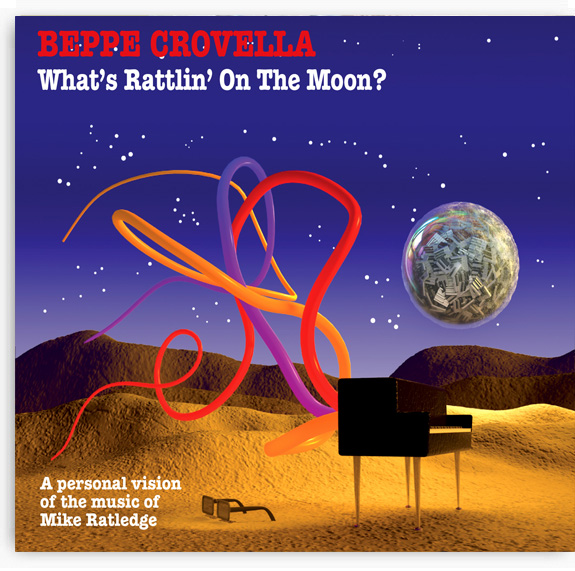
The subtitle to Beppe Crovella’s  What’s Rattlin’ on the Moon? reads “A Personal Vision of the Music of Mike Ratledge” – which alone should put paid to any allegations that this is yet another run-of-the-mill tribute album. An extraordinary musician in his own right, with an impressive career both as a solo artist and the mind behind Italian jazz-rock outfit Arti e Mestieri, Crovella is clearly not interested in faithfully reproducing music that is available elsewhere – but rather in offering his own reinterpretation of some of the legendary Soft Machine keyboardist’s ground-breaking compositions. The result of this daring, enlightened operation (conceived by Crovella and MoonJune Records mainman Leonardo Pavkovic) is a disc that, while anything but easy to approach, and obviously possessing very limited mass appeal, is a fascinating listen, especially for anyone with a keen interest in vintage keyboards.

Since the music of Soft Machine is undeniably an acquired taste in itself, commanding an almost fanatical adoration on the part of its fans, and an equally strong rejection on the part of ‘unbelievers’, an album offering an apparently one-dimensional take on said music is very likely to send a lot of people running for the exits. First of all, it requires quite a bit of patience on the part of the listener, even from those who should be used to the less than easily digestible nature of most progressive rock. Moreover, the distinct lack of the ‘rock’ part of the genre definition can prove a turn off – and the sheer length of the project (close to 80 minutes) is not likely to help sceptics warm to it.  However, those who will stick with the album and give it the attention it deserves will reap their rewards, because  What’s Rattlin’ on the Moon? offers many moments of real interest, and some of sheer delight.

A master of his craft, Crovella recreates the sound of an entire band with his array of vintage keyboards – ruling out the use of those synthesizers and their ilk that have become so indispensable in modern music-making. It is often astonishing to hear those keyboards fulfil the role of the bass or drums, though in most cases they just weave layers of sound in the Softs’ typically free-form style. As the album is divided into three recognizable parts,  the pauses between the individual numbers are almost non-existent – as if each part was meant to be listened to as a single track. This makes for a very distinctive listening experience, the polar opposite of a conventional song-based approach – though equally far removed from the somewhat sterile displays of technical dexterity that are often an integral part of ‘prog’ recordings.

The ten Soft Machine compositions are reinterpreted in such a way as to be nearly unrecognizable. This is especially the case of the two tracks from the band’s iconic Third album, “Out-Bloody-Rageous” and “Slightly All the Time”, the latter being possibly the highlight of the disc with its hypnotic yet melodic line and fascinating use of the Mellotron to provide choral effects. All the compositions share the same rarefied, riveting texture, which is intended to be savoured slowly, possibly not in one take. At every successive listen, different effects will unfold – pulsating,  surging, solemn, sometimes flowing, sometimes choppy, creating subtly shifting layers of sound. It is the kind of music that will fade in the background if left unattended, so to speak – meant to be listened to, not just heard.

The two mini-suites at the end of the album are original Crovella compositions intended, in some ways, to ‘describe’ the creative process behind the album. Both are largely piano-based and less idiosyncratic than the first part of the disc, with a stronger melodic development and some jazzy touches. “Moon Geezers”, dedicated to the sadly deceased former Soft Machine members Elton Dean and Hugh Hopper, closes the album on a suitably measured, melancholy note.

As already intimated, What’s Rattlin’ on the Moon? is not an album that will appeal to everyone, especially not those with short attention spans. It does, however, stand head and shoulders above the many hackneyed tribute albums that flood the progressive rock market. Experimental and very personal (even if a tad overlong), this is a must-listen for Soft Machine fans, and highly recommended to lovers of genuinely personal takes on prog classics.

Links:
http://www.beppecrovella.com/

Read Full Post »

Tracklisting:
CD 1:
1. The Bruised Romantic Glee Club
2. Variations on a Theme by Holst
3. Catley’s Ashes
4. When Peggy Came Home
5. Highgate Hill
6. Forgiving
7. No One Left to Lie To
8. The Things We Throw Away
9. Doxy, Dali and Duchamp
10. Srebrenica
11. When We Go Home

CD 2:
1. As Long As He Lies Perfectly Still (incorporating: That Still and Perfect
Summer – Astral Projection in Pinner)
2. Pictures of an Indian City
3. Nirvana for Mice
4. Islands
5. The Citizen King
6. Soon After

Lineup:
Jakko M. Jakszyk – vocals, electric and acoustic guitar, keyboards, mellotron, bass guitar, balalaika, sitar, flute, strings, whistles, sound effects, percussion, programming
Gavin Harrison – drums
Mel Collins – alto and tenor saxes, flute
Dave Stewart – keyboards (CD 1 – 9, CD 2 – 1, 3, 5)
Robert Fripp – soundscapes, electric guitars (CD 1 – 6, 11)
Danny Thompson – double bass (CD 1 – 9, CD 2 – 4)
Mark King – bass guitar (CD 1 -3)
Nathan King – bass guitar (CD 1 – 5)
John Giblin – bass guitar (CD 1 – 6)
Lyndon Connah – piano (CD 1 – 8 )
Ian MacDonald – flute (CD 1 – 2)
Caroline Lavelle – cello (CD 1 – 2)
Helen Kaminga – viola (CD 1 – 2)
Clive Brooks – drums (CD 2 – 1)
Gary Barnacle – alto flute, flute, bass flute and piccolo, tenor and soprano saxes (CD 2 – 1)
Hugh Hopper – bass guitar (CD 1 – 1)
Pandit Dinesh – tabla, vocals (CD 2 – 2)
Ian Wallace – drums (CD 2 – 4)
Suzanne Barbieri – backing vocals (CD 1 – 11)
Django Jakszyk – voice (CD 1 – 11)
Camille Jakszyk – voice (CD 1 – 11)
Chris Baker – Irish priest (CD 1 – 4)

After my review of the groundbreaking yet controversial debut by The Mars Volta, here is another album released during the first decade of the 21st century – though a vastly different one. This is one of the hidden progressive rock gems of recent years, courtesy of a musician who, in spite of his decades-long career and impressive curriculum, is still nowhere close to becoming a household name. In fact, while Jakko M. Jakszyk is in his early fifties, and has shared a stage or a recording studio with many a revered protagonist of the prog scene, most of the bands he has played with over the years are of the positively obscure kind. Before he joined the 21st Schizoid Band in the role that was of Robert Fripp, Jakszyk had been little more than what in my native Italy we would term as an ‘illustrious unknown’, in spite of his short-lived tenure in a relatively high-profile band like Level 42.

Much like its author, “The Bruised Romantic Glee Club” (released in 2006 to a lot of critical acclaim, and become unavailable soon afterwards, due to the record label going under) enjoys cult status among prog fans, though not many people have been able to listen to it. I was lucky to find a copy (at an almost bargain price for a double album) in one of the music stores I used to visit regularly when I lived in Rome. And what a great purchase!  This is an  album that most dedicated prog listeners will appreciate, with all the trademark features of our favourite genre, plus a healthy dose of melody and accessibility. Fans of cover versions will also be absolutely delighted by the contents of CD2 – a splendid collection of classics by the likes of King Crimson, Soft Machine and Henry Cow, performed by some of the stalwarts of the original Canterbury scene.

Right from its cover, a gorgeous, muted snapshot of Jakko walking on Brighton beach at sunset, “The Bruised Romantic Glee Club” is a thoroughly classy package. Everything – the pictures, the detailed liner notes, the graphics, the music – is designed to appeal to listeners of sophisticated tastes, who look upon an album as a complete experience. I would not hesitate to call it a beautiful album in the true sense of the word – not only on account of the very accomplished nature of the music contained within, but also of the stories behind each of the songs.

From even a casual reading of the liner notes, Jakko comes across as a very sensitive, vulnerable human being, consequently bruised by life, but keeping up his optimistic side. Some of the stories attached to individual songs are very moving indeed, especially those related to his family. As many adopted children, he got to meet his real mother much later in life, not long before her untimely death. This part of his life story is the subject of the haunting, Celtic-tinged instrumental “When Peggy Came Home”, dedicated to the burial of his natural mother’s ashes in her birthplace in Ireland; while the following song, “Highgate Hill”, reminisces about Jakko’s own birth in a hospital in the titular area of northern London.

Musically speaking, the first CD features a number of songs and instrumental tracks performed by Jakszyk and a handful of high-profile guest musicians – namely Porcupine Tree drummer Gavin Harrison, Mel Collins, former Level 42 bassist Mark King (a well-respected four-stringer), double bass legend Danny Thompson, and even His Majesty Robert Fripp himself. Canterbury keyboard king Dave Stewart also performs on one track (“Doxy, Dali and Duchamp”), as well as on most of CD2. Comparisons to other bands or artists are anything but easy to draw – I have read one review comparing some of the songs on “The Bruised Romantic Glee Club” to David Sylvian’s output, and I find myself in agreement with such a remark. Though Jakko does not have Sylvian’s distinctive, world-weary voice, I find his vocals are the perfect foil for the album’s elegant, somewhat understated musical mood.

On the other hand, there is a distinctly jazzy feel running through the album. The marvellous “Catley’s Ashes”, driven by Mark King’s pneumatic bass, is richly laced with Mel Collins’ masterful saxophone; while the melancholy “The Things We Throw Away” features Jakko’s long-time friend and former bandmate Lydon Connah, and the majestic “Srebrenica” is based on the traditional music of Serbia. Infused with sadness and loss, the atmospheric, rarefied “When We Go Home” (dedicated to the artist’s adoptive mother, Camille) features Fripp on electric guitar, as well as Camille’s own recorded voice.

All the songs are of consistent high quality, with a particular mention for the title-track and the already mentioned “Highgate Hill”. Admittedly, they sometimes border on pop, though in an adult, well-rounded kind of way, and definitely not an overtly easy or commercial one.  Jakszyk also deserves kudos for his skills as a lyricist, something not precisely common in the prog world. While he lays his soul bare, he hardly ever descends into mawkishness, and occasionally injects some humour in the overall wistfulness of his musings.

There is not much that can be said about CD2, if not that it is quite magnificent. The quality of the  ‘raw material’ alone would guarantee excellent results, but what really makes these versions special is the obvious love lavished on them by both Jakko and his distinguished guests. It would be very hard for me to pick out a highlight, though the cover of Henry Cow’s “The Citizen King” is nothing short of stunning, capturing the blend of  wistful beauty and biting irony of the original to perfection. Jakszyk’s Oriental-tinged take on King Crimson’s “Pictures of a City”, featuring Indian percussionist Pandit Dinesh (another former collaborator of the artist), also wins points for inventiveness; while “Islands”, remarkably faithful to the original, fits  perfectly within the album’s stylishly melancholy atmosphere.

As previously pointed out, up  to a couple of years ago or so, “The Bruised Romantic Glee Club” was, to all intents and purposes, impossible to find.  Now it has been reissued, which is great news with anyone whose curiosity will be whetted by this review – as it can be easily counted as one of the best releases of the past decade, a progressive rock album that pays homage to a glorious past, and at the same time feels thoroughly modern. With its intimate, confessional quality, and lush, sophisticated music, it is highly recommended to most prog fans, especially those who appreciate beautiful melodies coupled with flawless instrumental performances.

Read Full Post »

Tracklisting:

1. If I Could Do It All Over Again, I’d Do It All Over You (3:07)
2. And I Wish I Were Stoned – Don’t Worry (8:21)
3. As I Feel I Die (5:17)
4. With an Ear to the Ground You Can Make It / Martinian / Only Cox /     Reprise (9:56)
5. Hello Hello (3:46)
6. Asforteri 25 (1:21)
7. Can’t Be Long Now / Françoise / For Richard / Warlock (14:18)
8. Limits (1:34)

Lineup:

Pye Hastings – vocals, guitars, claves
David Sinclair – keyboards
Richard Sinclair – vocals, bass, tambourine
Richard Coughlan – drums, congas, bongos, maracas, finger cymbals

With:
Jimmy Hastings –  sax, flute

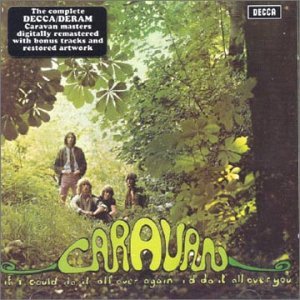
In keeping with my intention of offering a wide range of musical styles to the readers of my reviews, my next pick is one of the greatest albums to ever come out of the so-called ‘Canterbury scene’. Though for most people the most obvious choice would be the band’s most celebrated work, its follow-up In the Land of Grey and Pink, I have always found this one to be, in some ways, an even better effort – though, unlike … Grey and Pink, it is  less immediate and more of a steady grower.

The best way to listen to this album is to put on your headphones and wallow in the beautiful vocal harmonies, intricate bass lines and splendid  keyboard work. The opening title-track is an infectious, ’60s-style ditty sung by both vocalists, the deeper-voiced Richard Sinclair repeating the line “Who do you think you are?”, with the higher-pitched, graceful voice of guitarist Pye Hastings singing the verse. Most of the following tracks, though varying in length, are structured as mini-suites, with at least two movements (and accordingly long, hard-to-remember titles). “And I Wish I Were Stoned” starts off as a wistful melody, then becomes increasingly jazzy and dynamic. “As I Feel I Die”, one of the highpoints of the album, has much the same structure, with a slow intro featuring great vocals from Hastings, then culminating in a rousing instrumental duel between the two Sinclair cousins, Dave’s incendiary keyboards and Richard’s complex, fluid bass. “With an Ear to the Ground”, the second longest track on the album, sees more spectacular work from Dave Sinclair,  backed by a very tight, yet understated rhythm section.

“Hello Hello” is a lesson in how to write a song that’s both hummable and intelligent, with the added bonus of one of the strangest percussive accompaniments this side of King Crimson’s Jamie Muir – a pair of hedge clippers wielded by  Richard Sinclair himself, who also sings lead vocals. In fact, if I were to name one flaw of this otherwise flawless album, is that Sinclair does not sing often enough…  The short, delightful “Asforteri” leads the way for the album’s pièce de resistance, the 14-minute-plus “For Richard”, one of the band’s undisputed classic, and a constant presence in their live sets.  David S. gives a stunning demonstration of his impressive skills as an organ player, while Richard S. provides a solid yet intricate rhythmic background. The track ends with a brief yet tasteful guitar solo by Pye Hastings  – perhaps unlikely as a guitar hero,  but also very effective.

The remastered version (featuring the unreleased gem “A Day in the Life of Maurice Haylett”) sounds as fresh as it had been recorded last year, and not 40  years ago. This is vintage prog at its best – impeccably performed, complex and challenging, yet at the same time witty and light-hearted, devoid of the pretentiousness that can occasionally mar the output of some of the better-known bands.

Though, to some people’s ears,  If I Could Do… might sound a tad lightweight,  it is nevertheless a magnificent album by a band who, in their heyday, were able to effortlessly combine accessibility with progressive potential. Highly recommended indeed – unless you are one of those people who will shy away from anything that sounds too conventionally ‘poppy’.

Read Full Post »

Tracklisting:

1. The Art of Parties (4:09)
2. Talking Drum (3:34)
3. Ghosts (4:33)
4. Canton (5:30)
5. Still Life in Mobile Homes (5:32)
6. Visions of China (3:37)
7. Sons of Pioneers (7:07)
8. Cantonese Boy (3:44)

Lineup:

David Sylvian – vocals, guitar, keyboards
Mick Karn – bass guitar, saxophone, oboe, african flute, vocals
Steve Jansen – drums and percussion, keyboards, vocals
Richard Barbieri – keyboards, tape, programming, vocals

With:
Yuka Fujii – vocals
Simon House – violin

And now for something completely different, though this album and the one previously reviewed have something in common – the release date.

Japan’s swan song, Tin Drum, is an album that does not often get the love (or at least respect) it amply deserves.  There are still people who believe ‘New Wave’ and progressive rock to be two mutually exclusive entities, so that even the slightest connection with the likes of punk or New Wave is grounds enough to dismiss a band out of hand. For what it is worth, I believe there is more creativity to be found in many of those much-reviled Eighties bands (often tagged by hardcore prog fans as ‘guilty pleasures’) than in a great deal of  bands or artists with impeccable prog credentials. Though being progressive has nothing to do with  flinging mellotrons around with wild abandon, or penning 30-minute-long epics on would-be weighty (and often terminally boring) topics, nowadays it seems to be far more acceptable to label a symphonic metal band as progressive than one associated with those two late Seventies-early Eighties movements. A band like Japan, with their suits, make-up and hairspray, in some people’s minds becomes synonymous with  ‘synth pop’,  and end up being lumped together with the likes of Visage or Spandau Ballet.

Released just prior to the band’s split, Tin Drum is undeniably Japan’s most mature effort, and the one which earns them a rightful place in progressive territory. It is no wonder that its four members went on to pursue musical careers that brought them in much closer contact with prog: David Sylvian collaborated with Robert Fripp and Holger Czukay, among others;  his brother, drummer Steve Jansen, followed him for most of his solo career; keyboardist Richard Barbieri is now well-known as member of Porcupine Tree, and bassist Mick Karn worked with jazz guitarist David Torn and legendary drummer Terry Bozzio. Such career developments should be proof enough of the fact that Japan were much more than a mere ‘New Romantic’ band, in spite of their image – which, by the way, is as much related to  David Bowie and Roxy Music as to the likes of Duran Duran, setting the band squarely into the  elusive ‘Art Rock’ tradition.

Virtuoso bassist Mick Karn (one of the truly unsung heroes of his instrument, currently fighting advanced cancer) is probably the real star of this album – his thick, pneumatic bass lines all over the place, working in perfect unison with Steve Jansen’s agile, inventive drumming. Their finest hour as a rhythm section is the 7-minute-plus “Sons of Pioneers”, which displays more than a fleeting Krautrock influence. The album’s highlight, the haunting “Ghosts”, is instead dominated by Barbieri’s sparse synth textures and Sylvian’s brooding vocals.  The Oriental theme evident in both the band’s name and the album’s title shows up most clearly in the intriguingly catchy “Visions of China” , closing track “Cantonese Boy”, and the instrumental “Canton” – even though it can be felt throughout the record, in the lilting, intricate interplay of bass and drums, the use of exotic percussion, and even Sylvian’s highly stylised vocals (an acquired taste for sure,though absolutely perfect for the band’s sound). The overall sound of the album is further enhanced by the contribution of former High Tide and Hawkwind violinist Simon House.

The beautiful, stylish cover artwork is an added bonus to one of the best discs released in the Eighties, full of outstanding musicianship and intriguing lyrical themes. Approach this album with an open mind, forgetting any labels and tags – and you will be surprised by 38 minutes of stunning music.

Read Full Post »

« Newer Posts