Feeds:
Posts
Comments

Posts Tagged ‘Udi Koomran’

TRACKLISTING:
CD 1 – Studio:
The Pocket Orchestra Tape 1983:
1. Imam Bialdi (6:24)
2. R. V. (7:04)
3. Regiments (14:59)
4. Letters (13:53)
The Knēbnagäujie Tape 1978-1979:
5. Blueing (7:10)
6. White Organ Meats (7:03)
7. Grandma Coming Down The Hall With A Hatchet (5:32)
8. Bagon (16:52)

CD 2 – Live:
1. Annex (5:56)
2. Bagon/Wandering Aimlessly (14:48)
3. Blirt (4:05)
4. Blueing (12:01)
5. Letters (19:12)
6. Parade (5:23)
7. Regiments (Parts 1, 2 and 3) (11:32)
8. Corn Fed (5:37)
9. Sound Check Bonus (0:43)

LINEUP:
Craig Bork – keyboards
Joe Halaijan (aka Joe Who)- clarinets, saxes, incidental vocals
Bill Johnston – cello
Tim Lyons – bass
Tim Parr – guitars
Bob Stearman – drums

With:
Craig Fry – flute (CD 1, 7)
Warren Ashford – tablas (CD 1, 7)
Jack Chandler – saxes (CD 2,  5-6)

If a contest was held for the unluckiest band on the progressive rock scene, Pocket Orchestra would have quite a few chances of winning first prize. In fact, only three members are left of the original six-piece lineup that recorded two demos between 1979 and 1984. What looked like a promising career for one the trailblazers of the RIO/Avant movement in the United States was cut short first by saxophonist Joe Halajian’s family problems (which led to the band going into hiatus), then by guitarist and main composer Tim Parr’s untimely demise in 1988. Thanks to the unstinting effort of Scott Brazieal, leader of Cartoon and a personal friend of the band, the material they had recorded in those short but intense five years finally saw the light in 2005, with the release of the CD Knēbnagäujie (the original name of the band). In the meantime, bassist Tim Lyons had passed away in 1998,  while drummer Bob Stearman (who had had a stroke in 2004) followed suit in 2010.

In spite of those unfortunate circumstances, Pocket Orchestra’s reputation remained very high in RIO/Avant circles, lending them a near-legendary aura in a context that often thrives on cult status. In 2011, Marcello Marinone and Francesco Zago of Italian label AltrOck Productions , assisted by such luminaries as Cuneiform Records’ Steve Feigenbaum and renowned sound engineer Udi Koomran, brought to light some of Pocket Orchestra’s unreleased recordings – including almost 80 minutes of live material – which eventually became the double CD set Phoenix, released in the second half of the year.

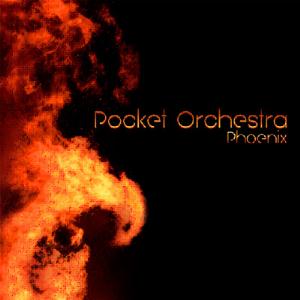
The album’s title, reinforced by Paolo “Ske” Botta’s striking cover artwork,  refers to the band’s hometown in Arizona, as well as to the almost miraculous reemergence of recordings that had seemed fated to remain buried in oblivion. Since Knēbnagäujie was sold out, the release of Phoenix was greeted enthusiastically by dedicated RIO/Avant followers, especially those interested in the US scene. While such archival operations rarely claim to present material in truly organic and cohesive form, Koomran’s state-of-the-art mastering has given new life to those 30-year-old live tapes, as well as to the contents of the original Knēbnagäujie  CD. Brazieal’s detailed liner notes, complemented by vintage photos of the band on stage and other memorabilia, complete this lovingly assembled tribute to the “Phoenix reborn”.

As can be expected from their checkered history, while undeniably gifted and dedicated to their craft, Pocket Orchestra had not yet fully developed their potential when circumstances forced them to call it a day. Their compositions suffer from occasional bouts of patchiness, added to some of those features that generally make the whole RIO/Avant subgenre so daunting (often unnecessarily so) to newcomers. Indeed, both the eight tracks on the studio CD and the nine on the live CD are nothing but ambitious and unpredictable, packed with twists and turns of every description.

While the founding fathers of the RIO movement such as Henry Cow and Univers Zero are inevitably referenced, the main influence that can be detected on Phoenix is that of Samla Mannas Manna,  another band belonging to the original RIO contingent – something that earned Pocket Orchestra the tag of “Samla of the desert”. However, Pocket Orchestra’s music is completely instrumental, and also decidedly less melodic, though imbued by a similar brand of playful light-heartedness, embodied by the use of circus music in “Grandma Coming Down the Hall With a Hatchet” .  Sudden blasts of saxophone and clarinet and wailing, piercing guitar excursions seem to be the rule, with Bob Stearman engaging in a mind-boggling range of intricate rhythmic patterns to propel the sound forward.

The word “anarchic” is probably the best description of Pocket Orchestra’s approach. The average composition can suddenly shift from a laid-back, almost meditative pace to unrelieved chaos – as exemplified by “R.V”, whose first half is deceptively mellow, then erupts into an intense, free-form maelstrom of sound. The sedate, piano-driven passages in the 14-minute, Canterbury-influenced “Letters” are bound to bring to mind the easy elegance of Hatfield and the North or National Health, offset by Parr’s aggressive guitar solo at the end. On the other hand, album closer “Bagon” marries the lovely, melodic Canterbury feel with more typical RIO features such as blaring sax and strident guitar.  As a whole, the first four tracks –dating back from 1983, immediately before Pocket Orchestra went on hiatus – come across as more accomplished, showing a band well on its way to reining in the in-your-face dissonance and chaos that instead emerge in the studio CD’s second half.

The second CD offers an invaluable testimony of the band’s brisk live activity in the years 1980-1984, and includes a number of previously unreleased tracks, as well as noteworthy versions of “Letters” and “Regiments”. Udi Koomran’s experience in the studio managed to bring out the best in recordings whose original quality was less than ideal, presenting a band that was definitely at home on stage. While some of the longer tracks may still reveal a bit of self-indulgence, the shorter ones, such as “Parade” or “Corn Fed”,  show how Pocket Orchestra were gradually but clearly finding their own unique voice and direction, and at the same time tightening up on the compositional aspect.

Though somewhat clichéd, the definition of “rollercoaster ride” seems to be a perfect fit for an album like Phoenix, which probably should come with a warning sticker. While its blend of dignified chamber rock, wild, wacky all-out experimentation and the occasional foray into sophisticated, Canterbury-style jazz-rock will not fail to appeal to fans of everything RIO/Avant, even a cursory listen to opener “Imam Bialdi” will send the average “mainstream” prog fan running for the exits. While bands like Miriodor or Yugen might have a broader crossover appeal and win over staunch devotees of symphonic prog, Pocket Orchestra, as captured on this double set, were definitely raw and uncompromising. All in all, though not exactly a comfortable listen, Phoenix is a moving tribute to a band that might have grown into a force to be reckoned with, had not fate got in the way.

Links:
http://production.altrock.it/prod2.asp?lang=ita_&id=171&id2=172

http://www.allmusic.com/artist/pocket-orchestra-p876979/biography


Read Full Post »

TRACKLISTING:
1. Infinicheese (1:35)
2. Clacos Zero (0:35)
3.Untung Untungan 2.0 (11:13)
4. Clacos 1 : Notre Mère à Tous (1:58)
5. El Ruotuav Ed Sram (8:16)
6. Clacos 2 : Die Experimente von Dr Frankenschnörgl (0:48)
7. Le Meurtrier Volant (9:01)
8. La Danse du Chameau:
a) Batifolade  (5:29)
b) Soif! (1:17)
c) La Tempête De Sable (4:51)
d) Rêveries Lubriques Sous une Dune (1:09)
e) The Final Run  (5:01)

LINEUP:
Fabrice Toussaint – tenor trombone, xybraphone, congas, tam-tam, triangle, other percussionBernard Eber – trumpet, didgeridoo, cowbell, whistle, voices
Pierre Wawrzyniak – bass, acoustic guitar, voices
Philémon Walter – drums
Guillaume Gravelin – harp
Vincent Sexauer – electric guitar

 With:
Julien Travelletti – bass trombone (3, 5, 7, 8), tuba (7)
Francesco Zago – electric guitar (3)

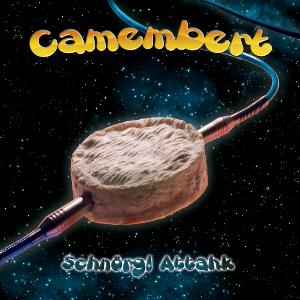
When coming across a French band named Camembert, and an album title featuring the word “Attahk”, most progressive rock fans will inevitably think of two illustrious outfits such as Magma and Gong – both of whom have also ties with France. Add to that a rather left-field story about the Earth being invaded by small, gelatin-like beings from outer space called Schnörgl, led by a mad scientist researching weapons of mass destruction, and involving a giant spaceship made of intergalactic cheese – and the resemblance will steadily grow, so that a first-time listener might wonder if they are being confronted with the new frontier of “retro-prog”. However, there is very little “retro-anything” about Camembert, whose thoroughly modern brand of jazz-rock proudly sports that strongly absurdist streak that is one of the distinctive traits of French prog.

Camembert are a six-piece hailing from the city of Strasbourg in north-eastern France, where they formed in 2005.  Schnörgl Attahk, their first full-length CD, which marks the beginning of the band’s collaboration with Milan-based label AltrOck Productions, was preceded in 2009 by the release of the 6-track EP Clacosmique. Most of the material that had originally appeared on the EP has been included on the album, though in almost completely rearranged form. Camembert members Fabrice Toussaint and Pierre Wawrzyniak had also appeared on another noteworthy 2011 release, Ske’s 1000 Autunni – and Ske mainman Paolo Botta (who also plays keyboards with Yugen, and is a gifted graphic artist) returned the favour by providing suitably wacky artwork for Camembert’s debut.

As previously hinted, Schnörgl Attahk manages the remarkable feat of combining an amazing level of complexity with an upbeat, ebullient mood that will provide the perfect antidote to the excess of earnestness of far too much prog. The outrageous tale of Dr Frankenschnörgl and his dastardly plans for a global takeover is told through the artwork and detailed liner notes, as the album is completely instrumental. On the other hand, while no actual singing is involved, the music suggests the events in strikingly effective manner, appealing to the listener’s powers of imagination.

Like the best examples of progressive rock (modern or otherwise), Schnörgl Attahk is a quintessentially eclectic effort. The band’s handling of their main sources of inspiration eschews derivativeness, moving rather along the lines of incorporating those sources into the fabric of their own original sound – whose foundation is a sinuously intricate brand of jazz-rock with roots in Frank Zappa’s output circa Apostrophe, as well as Shamal/Gazeuse!-era Gong (incidentally, both Pierre Moerlen and Mireille Bauer were originally from the Strasbourg area – perhaps something in the water?). However, the many pieces of Camembert’s musical mosaic are extremely variegated, supported by a very distinctive instrumentation that rules out keyboards, but hinges primarily on an unusual combination of horns, mallet percussion and harp. The gentle, liquid voice of the latter, blending harmoniously with the rippling tinkle of Fabrice Toussaint’s xybraphone and the warm, organic sound of various percussion instruments, gives Camembert’s sound a unique imprint.

While the two short, consecutive openers, “Infinicheese” and “Clacos Zero”, set the scene in textbook-spacey fashion, with swishing electronics and occasional guitar touches, the 11-minute “Untung Untungan 2.0” makes a bold entrance with its lively avant-fusion allure, then unfolds in a myriad of dazzling twists and turns, to which Francesco Zago’s guitar lends some extra bite. The easy, natural flow of the music, whose melodic flair almost belies its inherent complexity, brings to mind Canterbury acts like Hatfield and the North, and the energetic presence of the horns, coupled with Pierre Wawrzyniak’s solid bass lines, lend a funky swagger to tracks like “El Ruotuav ed Sram” (“Le Vautour de Mars” spelled backwards). Shades of Magma and Univers Zéro lurk in the imperious, martial pace of  the intense “Le Meurtrier Volant”, while in the 5-part suite, “La Danse du Chameau”, sprightly Latin-tinged rhythms in the style of early Santana, weird voices and dense, faintly dissonant passages coexist, held together by the lush yet unconventional instrumentation.

An exciting slice of sparkling eclecticism, combining melody, complexity and zany humour in an irresistible mixture, Schnörgl Attahk is almost mandatory listening for fans of modern jazz-rock and RIO/Avant prog, and will particularly appeal to fans of genre-straddling bands such as Frogg Café, miRthkon or Miriodor, as well as newer outfits like Calomito or Slivovitz. With all-round outstanding performances, excellent production values (courtesy of Udi Koomran and Eric Gauthier-Lafaye), and a genuinely positive attitude that will put a smile on your face (as well as a very restrained running time, which allows the music to be absorbed without weariness setting in), Schnörgl Attahk  proves that it is fully possible to pay homage to the trailblazers of the past without turning into a nostalgia act.

Links:
http://www.myspace.com/camembert67

http://production.altrock.it/home.asp?lang=ita_&id=9&id2=9

Read Full Post »

TRACKLISTING:
1. Too Much Light (Ionesco’s Theme) (3:48)
2. The Old Woods  (5:46)
3. If Two See A Unicorn  (1:58)
4. What A Night  (4:02)
5. The Conservatives  (1:50)
6. Winter  (3:22)
7. I Could Eat You Up  (3:37)
8. Wordswords  (5:40)
9. Autumn  (3:19)
10. Mitch  (2:57)
11. A Garland Of Miniatures  (2:40)
12. Nightfall  (4:31)

LINEUP:
Dave Willey – accordion, bass, drums, keyboards, percussion, guitar, mailing tubes, piano, bells, zither, whistling, electric guitar, folk guitar, organ, guitarrón, harmonium; vocals (10)
Mike Johnson – guitar, electric guitar (4, 5, 7, 8, 12)
Deborah Perry – vocals (all tracks but 9, 10)
Elaine di Falco – vocals (1, 6, 9), piano (8, 9)
Hugh Hopper – bass, loops (2, 4, 12)
Farrell Lowe – guitar (2)
Wally Scharold – vocals (5)
James Hoskins – cello (6)
Emily Bowman – viola (6)
Mark Harris – clarinet (6)
Bruce Orr – bassoon (6)
Dave Kerman – drums (7)
Hamster Theatre – vocals for loops (12)

Known as a member of avant-rock outfits Hamster Theatre and Thinking Plague (and, more recently, 3 Mice), Colorado-based multi-instrumentalist and composer Dave Willey is someone whose whole career as a musician hinges on an eclectic and broad-minded outlook, informed by the sophistication of Europe’s variegated traditions as much as by the rugged nature of the American West. Even his preferred instrument, the accordion, is an icon of  Old-World folk music (with which Willey became acquainted during his frequent visits to Europe), whose headily nostalgic flavour blends seamlessly with the austerely challenging compositions of Thinking Plague, or underpins the quirky, engaging nature of Hamster Theatre’s sound.

Released on AltrOck Productions almost 20 years after Willey’s recording debut, 1993’s  Songs from the Hamster Theatre, Willey’s second solo album, Immeasurable Currents, is a true labour of love, which, in the words of the artist himself, took him “a million years” to complete.  In a moving, heartfelt homage to his father, the late Dale Willey, the album is based on the poems written by Willey Sr. and collected in The Tin Box and Other Poems (2001). The album also marks the last recording appearance of legendary bassist Hugh Hopper before his untimely passing in 2009.  Besides Hopper, the friends assisting him in this venture include his Hamster Theatre/Thinking  Plague cohorts Mike Johnson and Mark Harris, drummer Dave Kerman, miRthkon guitarist Wally Scharold, and an extraordinary pair of vocalists – current and former Thinking Plague singers Elaine diFalco and Deborah Perry. Mostly recorded at Willey’s Colorado home, the album was then mixed and mastered by renowned sound engineer Udi Koomran in Tel Aviv – a truly international, continent-spanning effort.

The first time I heard Immeasurable Currents, a comparison immediately sprang to my mind with another emotionally charged album, released almost 40 years ago –  Robert Wyatt’s milestone Rock Bottom. The presence of the late Hopper with his signature fuzz bass adds to the sheer poignancy of the album, though – unlike some fellow reviewers – I would not apply the word “sad” to the music. Upbeat moments are scattered throughout the album, and crop up almost unexpectedly, creating a charming contrast of light and shade with the more sober, even somber passages. While Immeasurable Currents is bound to make the listener pause and think rather than get up and dance, its musical and lyrical content is a far cry from the contrived doom and gloom of a lot of progressive metal, or the navel-gazing typical of “alt. prog”.

Following an increasingly (and thankfully) popular trend for shorter albums, Immeasurable Currents runs at a mere 43 minutes, consisting of 12 vignettes (mostly penned by Willey, with some noteworthy contributions from his guests) that, in spite of their short duration and deceptively simple appearance, span a wide range of moods and musical textures. The minimalistic yet exquisite instrumental accompaniment highlights the beauty and power of the words without overwhelming them with layers upon layers of sound; while the magnificent vocal performances bring the lyrics’ vivid imagery to life – never concealing its occasionally disturbing nature, but also throwing its ultimately life-affirming quality and keen observation of nature’s phenomena into sharp relief.

Opener “Too Much Light” spotlights the breathtaking beauty of Perry and diFalco’s intertwining voices – the former higher-pitched, almost child-like, the latter deep and smooth, complementing each other perfectly, in stark contrast with the cloyingly sweet stereotype of the female prog vocalist. The nostalgia-infused sound of the accordion lends a smoky, Old-World feel to the piece, and to the following “The Old Woods”,  somewhat similar in mood.  In a dance-like movement, the songs often temper their initial briskness by noticeably slowing down in the second half – such being the case of the troubling “I Could Eat You Up”, which hints at incest while expanding on the well-known fairy tale of Haensel and Gretel; Dave Kerman’s supercharged drumming, coupled with Willey’s frantic accordion, add to the claustrophobic feel of the piece. The subtle but incisive political criticism of “The Conservatives” is set to surprisingly upbeat music, featuring one of the album’s rare guitar solos; while the solemn, chamber-like “Winter” and the understated piano- and accordion-led ballad “Autumn” render the poignancy of the two “darker” seasons of the year in flawless sonic terms.

With its striking, often harsh images intensified by Perry’s stunningly expressive vocals, “Wordswords”  is one of the highlights of the album,  a skewed Astor Piazzolla tango that gradually builds up to a haunting ending, spiced by a hint of dissonance that anchors it to Thinking Plague’s work. “Mitch” showcases Willey’s idiosyncratic but effective voice in a piece that commands comparisons to the likes of Tom Waits; while “What a Night” oozes a mix of intensity and tenderness, its superbly atmospheric coda a perfect foil to the words. The album is then wrapped up by the arresting “Nightfall”, where Perry’s vocal performance reproduces the peculiar arrangement of the written word, almost suspended in a rarefied backdrop of guitar and bass loops.

An album of subtle, multilayered beauty, Immeasurable Currents seems to embody the very definition of “progressive but not prog” (if by “prog” we mean the myriad acts that are firmly and hopelessly stuck in the Seventies).  Its deeply personal nature, coupled with musical textures ranging from mesmerizingly sparse to engagingly upbeat, will appeal to fans of such diverse artists as David Sylvian or Kate Bush, as well as the RIO/Avant brigade. Indeed, the open-minded, forward-thinking music lover will find much to appreciate in this elegant yet humble tribute to a beloved father’s artistic and human vision, set to music that constantly surprises and delights, and full of intriguing reflections on nature and the human condition.

Links:
http://www.allmusic.com/artist/dave-willey-p367258
http://production.altrock.it/prod2.asp?lang=eng_&id=167&id2=168

Read Full Post »

TRACKLISTING:
1. Overture 3.07
2. Il Tredici 11.46
3. Dark Age 6.18
4. The Guillotine 6.00
5. Timepiece 5.30
6. Sobriety 8.19
7. Tema 1.08
8. Steam 9.30

LINEUP:
Gadi Ben Elisha – electric and acoustic guitars, mandolin
Sagi Barness – bass guitar
Aviv Barness – keyboards, saxophone
Igal Baram – drums, percussion
Shem-Tov Levi – flute

With:
Michael Lam – English horn
Elinoy Yogev – bassoon

The name Sanhedrin will not fail to ring a bell with those who are familiar with the Gospels – either because of their religious upbringing or inclination, or for reasons of historical interest – as the name indicates the supreme court of ancient Israel by which Jesus Christ was tried. Though there are also three extreme metal outfits bearing the same name, this particular band (unlike the others, and like the original institution)  hails from Israel, a country whose contribution to the progressive rock scene has been steadily growing – especially in terms of quality – over the past few years.

Originally formed by brothers Sagi and Aviv Barness as a Camel tribute band, Sanhedrin soon started writing their own material, influenced by the golden era of progressive rock. After going through the usual turmoil of line-up changes, in 2006 they started recording their debut album. Four years in the making, Ever After was mixed and mastered by renowned Israeli sound engineer and  producer Udi Koomran, and completed in 2010 – to be released in February 2011 as on the Fading Records division of Italian label AltrOck Productions.

The musical connection between Sanhedrin and Camel will soon become evident even to a first-time listener. Andy Latimer’s crew, even if not as hugely influential on the younger generations of prog bands  as the likes of Genesis, Yes or ELP,  have clearly been a source of inspiration for many outfits who choose a more melodic direction while avoiding the excess of bombast that occasionally characterizes symphonic prog. Even if Camel have sometimes been rather unkindly indicted of being purveyors of ‘elevator prog’, or just a second-tier band lacking the clout of the bigger-name acts, it is undeniable that their restrained elegance has won over a lot of fans.

While Ever After may not be the most original album released in the past few months or so, it is definitely not overtly derivative – at least not as much as other albums which I have recently heard, and which are quite highly rated. Fading Records has been created for albums with a more traditional prog bent than the material usually issued by AltrOck Productions, and their first release, Ciccada’s A Child in the Mirror, was a stunning example of ‘retro-prog’ that managed not to sound like a carbon copy of the great Seventies bands. Ever After is much in the same vein, a classy product performed with impressive technical skill, yet exuding a sense of warmth and pastoral beauty that makes listening a genuinely enjoyable experience. While Camel are obviously the most relevant influence, on numerous occasions Pink Floyd (especially their early Seventies output) spring to mind, and echoes of early Genesis can also be detected. However, Sanhedrin also bring their own signature to the table: the ethnic references subtly scattered throughout the album (not just Middle Eastern, but also Celtic and central European) remind the listener of Israel’s multicultural milieu. Like Camel, the basic combination of guitar-bass-drums-keyboards is enhanced by the exquisitely soothing sound of the flute, with additional woodwinds also employed to add depth and dimension. Unlike the English band, though, Sanhedrin have opted for an exclusively instrumental format, which is quite an interesting choice, and a deviation from the standard symphonic tradition, where vocals play a rather important role.

As Israel is part of the Mediterranean region, it is not surprising to find echoes of vintage Italian prog right from the opening track, appropriately called “Ouverture”, together with a nice pinch of Middle Eastern spicing and jazzy touches. The 3-minute number sets the album’s mood very effectively, with its beautifully clear guitar tone, gentle flute and airy keyboards, the various sections flowing seamlessly into each other. The nearly 12-minute ”Il Tredici”, the longest track on the album (which runs at a very sensible 51 minutes), brings the Camel and Pink Floyd influences together in a majestic slice of gently melancholy symphonic prog, with magnificent Latimer- and Gilmour-inspired guitar leads and layers of keyboards. In spite of its slightly macabre title (suggested by the faint recorded sounds of an angry mob heard throughout the piece), “The Guillotine” alternates atmospheric, almost meditative moments with brisker ones driven along by organ and march-like drumming.

More ethnic influences emerge in the first half of “Dark Age”, possibly the highlight of the whole album, dedicated to fellow Israeli musician Arik Hayat of Sympozion, who committed suicide at the end of 2008. The lively, Celtic-tinged tune, described by lilting mandolin and flute, reminded me of some instances of Italian ‘minstrel’ Angelo Branduardi’s output, while the somber, organ-dominated mood of the middle section lifts towards the end, with a slightly dissonant passage suggestive of King Crimson. “Sobriety”, true to its title, merges the Celtic flavour of its flute-and-drum opening with the spacey yet majestic tone of Pink Floyd circa A Saucerful of Secrets (clearly referenced in a particular organ passage), and an intricate ending that brings martial drums and sharp, clear guitar to the fore. While “Timepiece” adds some almost tentative bouts of heavier riffing to a framework that combines the pastoral feel of Camel with the atmospheric mood of Pink Floyd, closing track “Steam” (introduced by the short acoustic interlude of “Tema”) explores definitely heavier territory, especially in its second half, where the assertive tone of the guitar and the subtle shifts in tempo commanded by bass and drums seem to suggest a running train; the electric piano section in the middle brought instead to my mind Ray Manzarek’s stunning performance in The Doors’ iconic “Riders on the Storm”.

While, as the previous paragraphs make it abundantly clear, Ever After may not be the most innovative proposition on the current prog scene, it is an album whose every note spells class and a deep love of the musical craft. A thoroughly enjoyable listen, highly recommended to fans of classic symphonic prog, especially those who lean more towards the instrumental side of things, it is an excellent debut from an equally excellent new band.

Links:
http://www.myspace.com/sanhedrin1

http://www.reverbnation.com/sanhedrin1

http://production.altrock.it/index.htm

Read Full Post »

« Newer Posts