Feeds:
Posts
Comments

Posts Tagged ‘voice’

TRACKLISTING:
1. Disarray (3:02)
2. Faceless (7:57)
3. Wither (9:23)
4. Star Bound (4:43)
5. Numb (4:05)
6. Astral Dream (7:03)
7. Delusion (4:06)
8. Dance of the Elders  (8:18)
9. Takes My Breath Away (2010)  (14:14)
10. Altered State (9:43)
11. Reflections (5:14)

LINEUP:
Jeff Hamel – guitars, keyboards, bass, vocals
Jessica Rasche – vocals
Chris Nathe – drums

With:
Jerry Swan – bass (5)
John Wooten – drums (6, 8)
Gregg Johns – guitars, talkbox (10)
Jeremy Hamel – guitars (11)

When I reviewed Majestic’s album Descension in the summer of 2009, my words reflected my lack of enthusiasm for what I saw as yet another ‘solo pilot’ project by a very skilled multi-istrumentalist (Jeff Hamel, formerly of prog-metal band Osmium), ambitious yet lacking in direction. Things took a definite turn for the better with their following album Arrival – the first recorded with the participation of vocalist Jessica Rasche – though I still expressed some reservations about the compositional aspect. Rasche’s arrival (pardon the pun), however, brought some welcome depth and intensity to Hamel’s lengthy, sometimes rambling compositions, and the added bonus of one of the best female voices heard on CD in the past few years.

With Ataraxia (a philosophical concept meaning ‘freedom from worry’ in Greek) it would not be overstating the case to speak about a quantum leap for the Minneapolis-based outfit – now become a real band, with Rasche’s husband Chris Nathe on drums. With the collaboration of a few guests (including Gregg Johns, Hamel’s partner in Proximal Distance, and leader of Mississippi-based project Slychosis), though resting mainly on Hamel’s talents as a multi-instrumentalist, Majestic have produced an album that is unabashedly ambitious – almost 80 minutes long, offering a wide range of sounds and styles that had already been foreshadowed in the band’s previous efforts, though not as coherently developed. The evident progressive metal bent of Arrival is here kept to a minimum, while the symphonic component emerges with far more authority. Indeed, Majestic seem to have grown out of that fascination with prog-metal that, in my view, caused Arrival to be not as impressive as it might have been.

This time, Majestic decidedly head for more traditional prog territories, with most of the compositions bridging the gap between Pink Floyd-style spacey moods and symphonic textures, solemn and pastoral in turn. The longer, weightier compositions (between 7 and 12 minutes) are interspersed by shorter, more accessible numbers that prevent the album from turning into too onerous a listen on account of its length. Most important, though, the music on Ataraxia keeps melody at the forefront, all the while avoiding any descents into cheesiness. As a matter of fact, the danger of sounding too close to those terminally cheesy, female-fronted symphonic metal bands (whose progressive quotient is often rather flimsy) is thankfully kept at bay by Jessica Rasche’s stunning performance. Her clear yet assertive voice steers clear of the operatic excesses of so many female singers, relying on a near-perfect balance between sweetness and power.

All but two of the tracks on Ataraxia feature vocals – mostly Jessica’s, though Jeff Hamel makes a brief appearance on the last two tracks. Touches of Genesis circa Wind and Wuthering surface in the cascading finale of the wistful, melodious opener “Disarray”; while following number “Faceless” begins very much in the prog-metal vein displayed on Majestic’s previous recording effort, then subsiding in favour of a fuller, more symphonic mood with plenty of tempo changes to add interest. The longest track on the album, the 14-minute “Take My Breath Away”, takes instead a more stately direction, with solemn, march-like passages and a lovely, nostalgic mood, enhanced by Jessica’s pure, heartfelt tones and Hamel’s clear, Gilmourian guitar. Another highlight, “Wither displays all of Jessica’s vocal versatility, with a darker mood and a sense of tension that contrast with the almost pastoral quality of “Faceless“, and more of  Hamel’s excellent guitar work.

As wonderful as Rasche’s vocals are, the two instrumentals can easily be numbered among the album’s highlights. The hard-edged riffing and overall ‘metallic’ touches in “Astral Dream” are never overdone, and do not overwhelm the spacey atmosphere created by the synths and the clear, piercing tone of the guitar; while the aptly-titled “Dance of the Elders” reveals a folksy inspiration in its lilting pace and a classical feel in the guitar parts, as well as reminiscences of the likes of Vangelis or Tangerine Dream in the haunting keyboard passages. As to the shorter tracks, the piano-led, funky workout of “Star Bound” allows Jessica to pay homage to her idol Ann Wilson of Heart, and the equally dynamic “Delusion” reveals a distinct influence of Pink Floyd circa Dark Side of the Moon, with a final section where Jessica’s vocalizing made me think of Clare Torry in the immortal “The Great Gig in the Sky”; while “Numb” and “Reflections” are both subdued, romantic ballads which, in my opinion, do not add a lot to the album – the latter providing a rather anticlimactic, though soothing, conclusion.

While Majestic do not pretend to be reinventing the wheel, Ataraxia is a classy offering, showcasing the work of a band brimming with an enthusiasm and love of their craft that have become increasingly rare in the music world, and whose compositional skills are growing by leaps and bounds. Though, as my faithful readers know, I tend to be rather critical of albums that exceed one hour in length, and believe that Ataraxia would have benefited from a bit of trimming, its refreshing lack of pomposity and ‘cheese factor’ balance its undeniable ambitiousness. Moreover, Jessica Rasche’s delightful vocals alone are worth the price of admission – she is a real find, and living proof of how a female singer does not need to indulge in operatic or cloyingly sweet excesses to offer a credible performance in a prog context.

Links:
http://www.majesticsongs.com

Read Full Post »

TRACKLISTING:
1. Fame (3:53)
2. Fiaba (6:57)
3. Claustrofilia (5:27)
4. Malamore e la Luna (8:59)
5. Amanti in Guerra (5:56)
6. Ombre Cinesi (5:38)
7. Apnea (7:15)
8. Il Giardino degli Altri (8:16)
9. La Corsa dei Trattori (ghost track) (1:44)
10. Se (7:59)
11. Lana di Vetro (7:55)
12. Ciò Che Rimane (8:59)

LINEUP:
Francesco Chiapperini –  alto and soprano sax, clarinet, flute, EWI
Andrea Illuminati – piano, melodica, bombarda
Claudio Milano – vocals
Andrea Murada – percussion, didjeridoo, noise effects, flute, rhythmic vocals
Max Pierini – electric upright bass, ocarina
Luca Pissavini – electrified viola, synth, toy instruments, “Matilda” noise machinery, field recordings, no-input mixer, duduk, theremin
Lorenzo Sempio – electric guitar, baritone guitar, guitar synth and effects

With:
Carola Caruso – backing vocals (6), vocals (2)
Stefano Delle Monache – electronics and laptop (6)
Estibaliz Igea – opera soprano singer (5)
Luciano Margorani – electric guitar, noises (4)
Luca Olivieri – synth, noises (3), glockenspiel (11)
Claudio Pirro – classical guitar (1, 2)
Antonello Raggi – electronics, laptop (10)
Marco Tuppo – synth (11)

For all the prejudice held by some so-called experts against Italian progressive rock outfits – seen as purveyors of sickly sweet melodies and bombastic, often overdone compositions – the Italian scene offers quite a surprising range of options for those who like their progressive music to have something of an edge. While not as plentiful or high-profile as those hailing from other European countries (Belgium comes to mind), avant-garde bands and solo artists have been a prominent feature on the Italian scene since the golden days of the Seventies, with names such as Picchio dal Pozzo, Opus Avantra and even Area (often too hastily labelled as a jazz-rock band). In the first decade of the 21st century, Italy has produced a number of very interesting outfits on the more left-field fringe of progressive rock – even if some of them really have very few rock elements in their musical output.

Hailing from Milan, the current incarnation Nichelodeon is a seven-piece, almost a mini-orchestra, augmented by a number of guest musicians. Originally born as a project by composer/singer Claudio Milano – a highly qualified musician and visual artist with extensive international experience – with Francesco Zago and Maurizio Fasoli of Yugen (the band that made waves in 2007 with their debut release, Labirinto d’Acqua), unlike the latter and other outfits loosely placed under the RIO/Avant umbrella, Nichelodeon are a vocal-based act rather than an instrumental one. As a matter of fact, the term ‘band’ might be seen as somewhat restrictive when referring to Nichelodeon, who see themselves as a workshop open to the contribution of any artist willing to experiment. Consequently, very much unlike many modern acts whose activity is generally limited to the studio, a marked emphasis is placed on their live performances – as witnessed by Come Sta Annie?, the DVD released as a companion effort to Il Gioco del Silenzio, recorded in the spring of 2010 as a tribute to the 20th anniversary of ground-breaking TV series Twin Peaks.

It should be obvious from this short introduction that Nichelodeon are not purveyors of ‘conventional’ progressive rock. In the very thorough liner notes of the album, they describe themselves as ‘a chemical laboratory, engaged in performing audio-visual crafts’ – a description that, for once, does not ring like idle boasting.  Running at almost 80 minutes, Il Gioco del Silenzio (whose title refers to a very popular children’s game) is anything but an easy listen, occasionally even slightly uncomfortable, but always compelling. On account of its strong vocal orientation, it reminded me of the work of another Italian avant-garde outfit, S.A.D.O. –  Claudio Milano could indeed compete with S.A.D.O. vocalist Boris Savoldelli for the title of heir of the late, great Demetrio Stratos. However, while Savoldelli’s approach tends to be more ironical  (if not exactly light-hearted), Milano’s compositions are definitely intense, demanding a lot of attention on the part of the listener, and graced by highly literate, thought-provoking lyrics that are presented both in Italian and English.

Recorded live in the studio, Il Gioco del Silenzio is a dark, angular effort with a subtly subversive vein – chamber music for the 21st century, conceived as a homage to the European song tradition and unabashedly intellectual in its appeal. Fearlessly blending different musical influences – from folk to tango, from electronica to opera – with the support of a rich, inventive instrumentation, the 12 songs challenge the mind and the ear, creating intriguingly bleak landscapes of existentialist malaise and moral decadence reminiscent of the cultural climate of the early 20th century. Needless to say, reviewing such an album can uncommonly challenging. At times the mere listening experience can feel somewhat frustrating, since the music almost begs to be rendered in visual terms. As can be expected, Il Gioco del Silenzio is not always a comfortable listening experience – on the contrary, the sudden bouts of dissonance breaking up the melodic flow of a song, and the distinct creepiness of some sound effects create disquieting atmospheres that are very likely to put off those seeking more conventional, reassuring fare.

The band cite a wide range of very diverse influences, from contemporary academic music icons such as Luciano Berio and Luigi Nono to monuments of highbrow European songwriting like Kurt Weill and Jacques Brel. On the other hand, the names of Red-era King Crimson, as well as seminal RIO/Avant outfits Henry Cow, Art Bears and Univers Zéro will ring most familiar to progressive rock fans; indeed, something of the darkly mesmerizing textures of Daniel Denis’ outfit circa Heresie can be detected while listening to Il Gioco del Silenzio. However, here the instrumental component, while not by any means secondary, is put at the service of Claudio Milano’s commanding vocal exertions. Milano’s extensive training and experience of vocal styles often quite far removed from the Western tradition  (“Il Giardino degli Altri” offers a taste of his love for ethnic chants, as well as hypnotic tribal percussion patterns) fits the moods and atmospheres evoked by the musical background like a glove. His voice, lyrical, aggressive and manic in turns, sets the pace and almost bends the instruments to its will – as shown most clearly by the positively arduous “Ombre Cinesi”.

With only a couple of exceptions, the tracks tend to be rather long (though not in an ‘epic’ sense); four of them (“Fame”, “Malamore e la Luna”, “Amanti in Guerra” e “Ciò Che Rimane”) were previously featured on Nichelodeon’s debut album, Cinemanemico (2008). Combining traditional song forms with all-out experimentation, they showcase Milano’s maddeningly versatile vocals over a rarefied, occasionally strident instrumental background of unremitting intensity. On any account, describing any of the songs in detail would be a difficult and thankless task – by and large, it might be stated that they are quite similar to each other, even without actually sounding alike. The red thread of tension running through the songs keeps listeners on their toes, enhanced by the dramatic use of hammering piano chords, sound effects and vaguely sinister reeds. Milano’s voice dips and soars in the space of a few minutes, as shown immediately by the first couple of songs, “Fame” and “Fiaba”, as well as the dramatic “Claustrofilia”, highlighted by snippets of guitar soloing in true rock style. Closing track “Ciò Che Rimane” (together with “Malamore e la Luna” the longest number on the album, clocking in at almost 9 minutes) also features some noteworthy guitar work, as well as a vocal performance that made me think of Demetrio Stratos and Area.

Though definitely a tad too long for my standards, and certainly anything but an easy or relaxing proposition,  Il Gioco del Silenzio is one of the most interesting releases of the past year. It also provides further proof that – in spite of the many practical hurdles facing musicians that do not subscribe to a mainstream view of things – the progressive scene is very much alive in Italy, and has a lot to offer to devotees of genuinely challenging music. A particular mention should also be made for the austerely elegant packaging, including some stunning photography of the band and distinctive cover artwork by painter Valentina Campagni.

Links:
http://www.myspace.com/nichelodeonband
http://www.claudiomilano.it

Read Full Post »

TRACKLISTING:
1. I Am The One You Warned Me Of  (5:04)
2. Les Invisibles (5:33)
3. In The Presence Of Another World  (6:26)
4. Del Rio’s Song  (5:31)
5. The Siege And Investiture Of Baron Von Frankenstein’s Castle At Weisseria (6:43)
6. Astronomy  (6:47)
7. Magna Of Illusion  (5:53)
8. Blue Öyster Cult  (7:18)
9. Imaginos  (5:46)

LINEUP:
Eric Bloom –  vocals
Albert Bouchard –  guitar, percussion, vocals
Joe Bouchard –  keyboard, vocals
Allen Lanier –  keyboards
Donald “Buck Dharma” Roeser –  guitars, vocals

With:
Kenny Aaronson – bass
Thommy Price –  drums
Jack Secret –  additional vocals
Tommy Moringiello –  guitars
Jack Rigg –  guitars
Tommy Zvoncheck –  keyboards
Shocking U – backing vocals (3)
Joey Cerisano – additional lead vocal (5)
Jon Rogers – additional lead vocal (9)
Daniel Levitin –  additional backing vocals
Marc Biederman –  guitar
Kevin Carlson –  guitar
Robby Krieger – lead guitar (7,8)
Daniel Levitin –  guitar
Aldo Nova – guitar
Joe Satriani –  lead guitar (5)

Back from my well-deserved vacation, I am quite ready to resume my reviewing duties as regards both new and older material.  Though I have a couple of reviews of recent releases in the works, I would like to devote the first slot of the new year to what is possibly the most intriguing album by the band that brought us the original Fire of Unknown Origin (pun unintended).

Just before Imaginos was released, the mighty Blue Oyster Cult had been in disarray, a shadow of their former powerful selves. With the departure of some key members, the spark seemed gone forever – as witnessed by their previous, rather lacklustre release, 1986’s Club Ninja, held by many as their weakest recording effort. However, the completion of this 20-year-long project (originally conceived by drummer Albert Bouchard and mastermind Sandy Pearlman) brought the original members of the band together for what was destined to be their last great album (in some ways, even their masterpiece), and certainly one of their most progressive offerings.

The very elaborate concept behind Imaginos was at least partly inspired by HP Lovecraft’s Cthulhu Mythos, and crafted in order to provide an ‘alternative’ explanation for the onset of World War One.  The titular character is a ‘modified child’ with supernatural abilities, whose story is told (though not in chronological order) in the nine songs on the album, and foreshadowed on two songs featured on 1974’s Secret Treaties – “Subhuman” and “Astronomy”. Both appear on Imaginos, the latter with a different musical arrangement (in my view inferior to the original, and way too ‘Eighties’ for my tastes), the former rewritten as “Blue Oyster Cult”.

Such an intriguing, grandiose concept needed to be implemented accordingly. Therefore, the five members of the band brought on board a number of other musicians, including the ‘Guitar Orchestra of the State of Imaginos’, an impressive array of lead guitarists that included The Doors’ Robbie Krieger (who had already guested on BOC’s “ET Live”), and six-string wizard Joe Satriani. The result is a rich, majestic sound that fits the storyline like a glove, immediately noticeable from the first strains of opener “I Am the One You Warned Me Of,” which sets things off with a bang. In comparison to the somewhat limp-wristed nature of the band’s previous two efforts, The Revolution by Night and Club Ninja,  an exhilarating sense of energy can be  clearly perceived here. Even the more accessible numbers, like the sax-driven title-track, which closes the album on a somewhat cheerful note, in spite of its rather disturbing lyrics, or the even more upbeat “Del Rio’s Song” (possibly the album’s weakest link) seem to barge in with an assertiveness approached by none of the compositions appearing on either of the above-mentioned releases.

Vocalist Eric Bloom – one of the most distinctive (and underrated) voices in rock – is at the top of his game, belting out the obscure lyrics with self-assured forcefulness. On the rousing “The Siege and Investiture of Baron von Frankenstein’s Castle at Weisseria”, though, Bloom is replaced by guest singer Joey Cerisano; the song climaxes with a haunting chorus of “World without end”, and Joe Satriani’s blistering solo makes it even more memorable. Buck Dharma’s well-mannered voice does the honours on “Les Invisibles” – though the song itself is anything but reassuring, with its sinister synth effects and guitar work, and its insistent, almost obsessive repetition of the word ‘seven’; while “In the Presence of Another World” is a dark-hued mid-tempo, almost ballady at times, with a thundering, yet oddly catchy chorus stating that “Your master is a monster”.

The true highpoint of the album, however, comes  in the second half, with the double whammy of “Magna of Illusion” and “Blue Oyster Cult”. The former, named after the mysterious obsidian mirror that Desdinova (the new name given to Imaginos by his rescuers, the human servants of ‘the Invisible Ones’) finds in a jungle in the Yucatan, and which, kept for twenty years in his attic, poisons the minds of European leaders before the outbreak of WWI, is a triumphal, keyboard- and guitar-laden march related from the point of view of the protagonist’s granddaughter. “Blue Oyster Cult”, on the other hand, is as creepily addictive as its earlier version, “Subhuman”, with an anthemic close celebrating the occult nature of the band’s name as originally conceived by Sandy Pearlman.

Many BOC albums boast outstanding cover artwork, and Imaginos is no exception – the über-Gothic Victorian mansion (a San Francisco landmark burned to the ground in 1907)  poised on a cliff on the background of a stormy sky aptly conveying the sense of mystery and menace implicit in the whole story.  At any rate, despite its Eighties-style production (rather evident, for instance, in the drum sound), this is an album of epic proportions that will appeal to both hard rock and progressive rock fans – a much-needed reminder of the greatness and unique approach of this seminal band.

Read Full Post »

TRACKLISTING:
1. Three Score And Ten, Amen (5:36)
2. Time Lament (6:04)
3. Take Me Back To Doomsday (4:26)
4. The Daughter Of Time (3:30)
5. Theme For An Imaginary Western (4:05)
6. Bring Out Your Dead (4:25)
7. Downhill And Shadows (6:11)
8. The Time Machine (8:12)

LINEUP:
Jon Hiseman – drums
Dick-Heckstall-Smith – saxes
Dave Greenslade – organ, piano, vibes
Clem Clempson – guitar, vocals
Mark Clarke  – bass
Chris Farlowe – vocals

With:
Barbara Thompson – flute, saxes
Louis Cennamo – bass

Colosseum’s first studio album since the departure of singer/guitarist James Litherland (who went on to form the short-lived Mogul Thrash, known for having been John Wetton’s first band) sounds at the same time similar and unlike its illustrious predecessor, Valentyne Suite.  In comparison with the latter, it is a bluesier, jazzier effort, somewhat ‘bigger’-sounding, and with a harder, more guitar-oriented edge.

While progressive rock  fans will find a lot to enjoy in Daughter of Time, at least as regards the instrumental performances, new singer Chris Farlowe’s powerful, blues-tinged vocals do not fit with many people’s expectations of what a prog singer should sound like, and for some they may even be an acquired taste. To these ears, though, his voice is simply stunning, and complements perfectly the epic sweep and overall uplifting mood of the album.

I set great store by the opening track of an album, and “Three Score and Ten, Amen” does not disappoint, with Farlowe’s commanding vocals fitting perfectly into the lush texture of Colosseum’s music. Saxophonist  Dick Heckstall-Smith is joined by Barbara Thompson (Jon Hiseman’s wife) on flute, so that the presence of a mini brass section boosts the band’s already dramatic sound, providing a foil for Hiseman’s textbook-perfect drumming. Clem Clempson’s brilliant guitar work shines throughout the album,  and the instrumental section of “Time Lament” showcases his sadly underrated skills as a six-stringer. “Take Me Back to Doomsday”, my own personal favourite, is an exhilarating ride dominated by an awesome vocal performance by Farlowe and Greenslade’s scintillating piano, as well as a soothing, tasteful flute section.

While the title-track may sound slightly too bombastic for comfort, “Theme for an Imaginary Western” is another vocal tour-de-force for Farlowe, though of a somewhat more understated nature than his trademark, over-the-top style. Originally written by legendary bassist Jack Bruce for his 1969 album, Songs for a Tailor, it is a melancholy ballad vaguely reminiscent of Procol Harum’s best efforts. The intricate instrumental “Bring Out Your Dead” “, featuring sterling organ work by Dave Greenslade, comes closest to the band’s sound on Valentyne Suite; while the powerful, bluesy “Downhill and Shadows” introduces the live recording of “The Time Machine”, mainly an extended solo by master drummer Jon Hiseman. Even if drum solos have the reputation of being all too often terminally boring, this one is eminently listenable even for non-musicians.

The release of Daughter of Time was followed in 1971 by the legendary  Colosseum Live!, and then by the rather unexpected demise of the band.  The same line-up got back together in 1994 for a tour, which led to a permanent reformation of Colosseum.  Barbara Thompson, who had often guested in the band’s live performances, eventually replaced Dick Heckstall-Smith after his untimely passing in 2004.  On any account, though not as ground-breaking as Valentyne Suite, and slightly less cohesive, Daughter of Time is an excellent offering, blending jazz, blues, classic rock and progressive stylings in a single package – as well as lashings of genuine emotion. A highly recommended release from one of the landmark years in the history of rock.

Read Full Post »

TRACKLISTING:
1. Intro/Dio del Silenzio (1:23)
2. Il Nome del Vento (6:01)
3. Verso il Naufragio (6:35)
4. L’Acquario delle Stelle (6:15)
5. Luci Lontane (4:14)
6. Profeta Senza Profezie (4:20)
7. Ogni Storia (5:02)
8. Note di Tempesta (4:29)
9. Dopo il Vento (9:40)
10. Cuore Sacro (8:49)
11. L’Aurora Boreale (4:26) (bonus track)

Bonus Video:
L’Acquario delle Stelle

LINEUP:
Ettore Vigo – keyboards
Martin Grice – sax, flute, keyboards
Pino Di Santo – drums, vocals
Roberto Solinas – guitars, vocals
Fabio Chighini – bass
Mimmo Di Martino – vocals (2)

String quartet:
Chiara Giacobbe Chiarilla – violin
Diana Tizzani – violin
Simona Merlano – viola
Daniela Caschetto Helmy – cello

With:
Stefano “Lupo” Galifi – vocals (6)
Sophya Baccini – backing vocals (2, 4, 7, 9), piano (9)

After having spent the past few months concentrating on albums from the English-speaking world, now it is time for me to to spotlight some  Italian bands and artists. Though many great albums (in some cases essential for a true prog fan) have come out of my native country from the Seventies onwards, only a part of this vast, exciting output has received the attention it deserves.  Here in the US most of the attention tends to be directed at the likes of  Le Orme, PFM and Banco (also owing to their relatively frequent visits to the New World), to the detriment of other acts who seem to be familiar only to a selected few.

Genoa-based band Delirium hold a special place in my heart, since their debut album, Dolce Acqua, was the first progressive rock album that I bought – at the ripe old age of 11. Among the founders of the original Italian progressive rock scene, in 1972 they experienced mainstream success with  the anthemic single “Jesahel”, which introduced the Italian public to the gritty, bluesy vocal talents of Ivano Fossati.  Soon afterwards Fossati  left the band  to embark on a successful career as  a singer-songwriter, to be replaced by British-born Martin Frederick Grice.  After the release of their third album, released in 1974, Delirium split up, but thankfully got back together in 2001 with most of the original members on board.

When listening to Il Nome del Vento, one might almost be tempted to feel that the 30-year hiatus between  Delirium III and this album has in some way been beneficial to the band – a lengthy yet necessary ‘recharging of the batteries’, so to speak. This is indeed a mature, finely-crafted album, very much in the way of  PFM’s  Stati di Immaginazione – a sumptuous, accomplished effort from seasoned prog veterans that had been forgotten or written off far too soon.

Although Il Nome Del Vento is a concept album of sorts (the wind symbolizing the energies that sweep negativity away and usher positive change), it does not feel as contrived as many similar efforts can be. Shunning the clichés than often plague concept albums, Mauro La Luce’s lyrics opt instead for simplicity and emotion, a perfect complement to the outstanding performances of all the vocalists involved. The latter are nicely balanced by the brilliance of the instrumental sections, where the background of each musician, their individual tastes and preferences, is put to effective use. While Martin Grice’s love of jazz and vintage English prog shines through his flute and sax  work, guitarist/vocalist Roberto Solinas (a true revelation) injects a welcome dose of classic rock energy in what is largely an acoustic effort. The presence of an all-female string quartet contributes an authentically symphonic feel to many of the compositions, infused by that uniquely Italian flair for melody and lyricism.

The continuity between the new and the old incarnation of Delirium is highlighted right from the start, as “Intro/Dio del Silenzio (Reprise)” references one of the songs featured on Delirium III. This brief, intense introduction (complete with sounds of rain and thunder at the beginning) sets the scene for what is to come. The title-track is a magnificent slice of complex yet melodic prog, soulfully interpreted by the band’s former guitarist Mimmo Di Martino, whose deep, bluesy tones find a perfect foil in Sophya Baccini’s ethereal soprano. The following track, “Verso il Naufragio” (one of two instrumentals featured on the album), is an exhilarating rollercoaster ride of slow, majestic keyboard washes and electrifying guitar riffs; it also incorporates a passage from George Martin’s “Theme One” (also covered by Van Der Graaf Generator, Cozy Powell and Osanna). The jaw-dropping duel between sax and organ in the second half of the track displays the band’s jazzier side, a constant of their sound since their debut album, Dolce Acqua.

More jazzy influences surface in the uptempo “Profeta Senza Profezie”, further enriched by a  commanding vocal performance by Stefano ‘Lupo’ Galifi (of Museo Rosenbach fame), somewhat reminiscent of the late Demetrio Stratos’ acrobatics; while the romantic “L’Acquario delle Stelle” (dedicated by Martin Grice to his first grandson) is a gorgeous slice of classic Italian prog, in which flute and keyboards emote over a lush background of strings. However, it is the double whammy of “Dopo il Vento” and “Cuore Sacro” that forms the album’s climactic point. The former alternates jazzy passages with calmer, more melodic ones, the string quartet holding the fabric of the song together; while the latter is markedly darker and rockier, enhanced by rippling piano, dynamic drumming, and assertive flute work that recalls early Jethro Tull.

A truly classy offering, and undoubtedly one of the top releases of 2009, Il Nome Del Vento is the ideal showcase for the unique talents of a band that seem to be finally about to get the recognition they highly deserve. It is also a textbook example of how classic progressive rock can sound modern without jettisoning its glorious past. Hopefully this stunning comeback disc will lead the way for more releases of the same high quality from a band that still has a lot to offer to the discerning prog fan.

Links:
http://www.idelirium.it
http://www.blackwidow.it

Read Full Post »

TRACKLISTING:
1. Clear Air Turbulence  (7:35)
2. Five Moons  (7:30)
3. Money Lender  (5:38)
4. Over the Hill (7:14)
5. Goodhand Liza  (5:24)
7. Angel Manchenio  (5:17)

LINEUP:
Ian Gillan – lead vocals
Colin Towns – keyboards, flutes
John Gustafson – bass, vocals
Ray Fenwick – guitars, vocals
Mark Nauseef – drums, percussion
Martin Firth – baritone saxophone
John Huckridge – trumpets
Derek Healey – trumpets
Malcolm Griffiths – trombone
Phil Kersie – tenor saxophone (2)

It would not be too much of an exaggeration to call  Clear Air Turbulence, the second album released by the sadly short-lived Ian Gillan Band, one of the forgotten masterpieces of Seventies progressive rock. For those who think of Ian Gillan as little more than a hirsute hard rock screamer,  even a casual listen to this record may definitely bring somewhat of a shock – and not just because of the vocals.

Following his return to the world of music after a series of unsuccessful business ventures, Ian surrounded himself with a bunch of seasoned musicians (including bassist John Gustafson, of Quatermass and Roxy Music fame), and proceeded to surprise his fans by slowly but inexorably detaching himself from his Deep Purple past. Unfortunately, though, rock fans are not always as open-minded as we would wish them to be, and the project folded after releasing a total of three studio albums, plus a posthumous live one.

When listening to Clear Air Turbulence,  we cannot but regret the demise of such an exciting outfit, offering an incredibly high level of musicianship as well as  creativity. The six tracks on the album, which all exceed the five-minute mark, feature complex, multi-layered structures, enhanced by the discreet presence of a horn section, and distinguished by an overall sense of  sophistication, a lightness of touch seldom associated with Gillan’s mother band. Even Ian’s vocals, while easily recognizable, never really sound like the original ‘air raid siren’ unleashed on the likes of  Machine Head and  Made in Japan.

However, the ace in the hole on Clear Air Turbulence is undoubtedly keyboardist Colin Towns.  Another of the many unsung heroes of the rock world, now a composer of jazz and soundtrack music, Towns joined the band for the recording of this album (replacing original member Mike Moran), and immediately stamped his mark on their music, as well as on the band’s later incarnation – simply called Gillan, and much more akin to Deep Purple in sound, with excursions into outright heavy metal.

Weird, spaced-out keyboard sounds introduce the title-track, surging into a crescendo that soon gives way to a manic, bass- and drum-driven riff, and a wildly exhilarating, 7-minute-plus ride, powered by Towns’ sweeping synthesizers. In the middle section of the song, guitarist Ray Fenwick (a veteran of the British rock scene, formerly with the Spencer Davis Group) demonstrates his skills with a slow-burning, emotional solo. Towns is  also responsible for the delicate flutes on the dreamy, soulful ballad “Five Moons”; while on the funky “Money Lender” horns take pride of place, with Gillan’s  commanding, even aggressive vocal performance somewhat reminiscent of his hard-rockin’ past.

“Over the Hill” (my personal favourite, together with the title-track) showcases drummer Mark Nauseef’s impressive skills, as well as brilliant piano and synth in the bridge, and more understated yet distinctive guitar work. The atmospheric “Good Hand Liza” follows, punctuated by Latin-style percussion and spacey synths, and driven along by John Gustafson’s meaty, dynamic bass lines. The album ends in style with another intricate, highly structured number, the romantic “Angel Manchenio”, dedicated to a Gypsy who became Gillan’s blood brother (an intriguing tale, as told by both the lyrics and the liner notes). The song, which alternates slower, almost Latin-flavoured moments with full-fledged jazzy flights of instrumental and vocal prowess, is probably the furthest Gillan ever strayed away from his hard rock roots, and a perfect closer for such a distinctive album.

At the time of its release, Clear Air Turbulence was not considered rock enough by Deep Purple fans, and probably not jazzy enough by fusion devotees; moreover,  the competition of the fledgling punk scene did it no favours. Over thirty years later, however, it is high time it was recognized as an adventurous, stimulating effort, at times bordering on masterpiece status. It is a sad fact of the music world that, all too often, musicians are much more ready to try new avenues than their fans…  I would encourage my readers not to make the same mistake:  if you love sophisticated, complex jazz-rock/fusion, do not be put off by the name, and get hold of this album.

Read Full Post »

TRACKLISTING:
1. Simon Magus  (6:23)
2. Diamondized  (6:33)
3. The Night I Killed Steve Shelley  (9:07)
4. Royal Oil Can  (5:15)
5. Out of the Oceans  (7:17)
6. He is Like a Spider  (6:20)
7. Nuclear Density Gauge  (7:21)
8. Tumbleweeds  (4:09)
9. Astro  (11:30)

LINEUP:
Patrick McGowan – vocals, guitar
Dan McGowan – vocals, guitar
Kyle Minnick – drums
Becky Osenenko – bass

With:
Tom Brislin – keyboards

In 2008, New Jersey-based trio The Tea Club’s debut release made waves on the progressive rock scene, and sparked a lot of interest in this youthful new band. A completely self-produced effort, General Winter’s Secret Museum brimmed with freshness, enthusiasm and not inconsiderable chops. Moreover – most important in this age of manufactured, cookie-cutter musical outfits – it sounded original, not sporting its influences too openly. The Tea Club were at the forefront of the new generation of ‘crossover’ progressive rock bands, fuelled by the raw energy of post-punk and indie/alternative rock, with an eye to melody and another to complexity –  a power trio for the new millennium, with enough quirkiness and intricacy to appeal to the old-school set, and contemporary-sounding enough to make headway with the younger fans.

It is no wonder, therefore, that the release of Rabbit, the band’s sophomore effort, was eagerly awaited in prog circles. Due to their ideal location right in the middle of the ‘prog hub’ of the US Northeast (the main subject of the documentary film Romantic Warriors), they have been able to gain a loyal following, as well as the opportunity to increase their visibility by playing relatively frequent live shows. Unlike other bands of recent formation, they have never suffered from overhype, and still retain an endearingly down-to-earth attitude. On the other hand, Rabbit comes across as a clearly more ambitious project that its somewhat stripped-down predecessor. With the basic lineup augmented by bassist Becky Osenenko, longer track times (including a couple of almost epic-length numbers) and the unobtrusive but constant presence of the keyboards (manned by an experienced musician such as Tom Brislin, known for his associations with the likes of Yes and Renaissance), the albums marks a shift away from General Winter’s… immediate, hard-rocking impact into more nuanced modern prog territories.

This time around,The Tea Club are a tad less restrained about letting their sources of inspiration show – though this does by no means spell derivativeness. The band occasionally sound like a toned-down version of The Mars Volta, an impression compounded by the McGowan brothers’ high-pitched vocals – even though they go for a distinctly more melodic approach than Cedric Bixler-Zavala’s occasionally abrasive tones. There actually are some numbers that bring to mind the generally low-key mood of Octahedron, the Volta’s latest release. The first two songs, “Simon Magus” and “Diamondized”, are both sophisticated, well-constructed numbers, the former with a more dramatic edge, the second relying on atmosphere rather than power. Indeed, Rabbit’s most remarkable distinguishing feature is its slower pacing, seemingly light years removed from General Winter’s… exhilarating urgency. Its reflective, somewhat attenuated mood cannot but bring to mind  the haunting atmospheres created by bands like Radiohead and The Pineapple Thief. A song like the 9-minute “The Night I Killed Steve Shelley” (one of the undisputed highlights of the album) seems to bring together the two strains of the band’s creative impulse, alternating understated, almost meditative, moments with bursts of intensity driven by fat bass chords, eerie keyboard effecs and high-energy riffing.

True to their new direction, The Tea Club also throw a couple of slow-burners into the mix – namely the muted, mesmerizing “Royal Oil Can”, with its solemn drumming and tinkling guitars, and the gentle, percussion-less “Tumbleweeds”, reminiscent of Radiohead circa OK Computer. While the closing epic “Astro”, in my view, is not a completely successful endeavour, reproducing in some way the stop-start structure of “…Steve Shelley” (though featuring a nice instrumental section with one of the rare guitar solos on the album, as well as assertive keyboard touches and commanding vocals), Rabbit’s real highlight lies in the powerful “Nuclear Density Gauge”, a kind of mellower yet subtly menacing version of a Mars Volta number spiced by jagged drum patterns, neat bass lines and haunting vocal exchanges.

Although I suspect Rabbit is one of those albums that will slowly but relentlessly grow on me, I also have to admit that, at least on the first couple of listens, it did not grip me in the same way as General Winter’ Secret Museum. As a whole, the album seems to lack the ‘peaks and valleys’ that made its predecessor such a compelling effort, and sometimes the tracks seem to blur into each other. I also found the ubiquitous vocalizing a tad off-putting, as if it deprived the music of some much-needed energy. Personally speaking, I would be glad to see The Tea Club adopt a more ‘back to basics’ approach for their next release, recapturing some of the edginess and vitality of their debut and blending it with their newfound sophistication. However, in spite of these shortcomings, Rabbit is undeniably a lovingly-crafted effort from a band that oozes potential. With a striking cover in gorgeous hues of blue and green (courtesy of  Kendra DeSimone), the McGowan brothers’ own quirky artwork gracing the booklet, and intriguing, thought-provoking lyrics, it offers a complete package in the finest progressive rock tradition.

Links:
http://www.theteaclub.net

Read Full Post »

Tracklisting:
1. Elephant Talk (4:43)
2. Frame by Frame (5:09)
3. Matte Kudasai  (3:47)
4. Indiscipline  (4:33)
5. Thela Hun Ginjeet  (6:26)
6. The Sheltering Sky (8:22)
7. Discipline (5:13)

Lineup:
Adrian Belew – lead vocals, guitars
Robert Fripp – guitars, devices (Frippertronics)
Tony Levin – bass, Chapman stick, backing vocals
Bill Bruford – drums, percussion

After two posts dedicated to recent albums,  now it is time to go back almost thirty years – to the beginning of that decade that, in the eyes of many people, is synonymous with the ‘dark ages’ as far as progressive rock is concerned.  In the eyes of many, the Eighties marked the triumph of style over substance, and therefore offered very little of interest to anyone looking for authentically progressive music. Obviously, this is in many ways a misconception, because during those momentous ten years for the history of the world a lot of great music was  produced – even though it sounded different from anything released by the trailblazing acts of the early Seventies.

One of those bands, King Crimson (whose 1969 masterpiece, the legendary In the Court of the Crimson King, had reputedly marked the official birth of the progressive rock era), had been laid to rest by its mastermind Robert Fripp after the release of the monumental Red in 1974.  Very few people expected them to resurface at the beginning of the new decade, when prog had become all but a four-letter word – not just with the inevitable Fripp at the helm, but also drummer Bill Bruford on board, as well as two newcomers (though with already a sizable amount of experience behind them) – bassist Tony Levin with his Chapman stick, and guitarist/vocalist Adrian Belew.

For those who had known King Crimson during their Seventies glory days, the release of Discipline in 1981 was nothing short of a shock.  No mellotrons (or any keyboards for that matter), no majestic vocal performances, no visionary lyrics – just a rhythm section to die for, two gifted guitarists trying to outdo each other at every opportunity, an incredibly expressive vocalist with an endearingly lazy American twang, and oodles of intriguing ethnic influences – notably Javanese gamelan music.  On the other hand, it would not be correct to say that Discipline has no connection with  the Crims ’70s  output.  Indeed, in some ways it takes up where “Lark’s Tongue in Aspic” left off – there is more than a touch of Jamie Muir’s crazy percussive brilliance in Bruford’s performance on this album.

One very evident influence on  Discipline,  especially as regards the  tracks featuring vocals,  is celebrated New Wave band Talking Heads, easily one of the most ‘progressive’ (in the true sense of the word) representatives of the so-called post-punk era – and no wonder, seen as Adrian Belew collaborated for some time with the New York band before being invited by Fripp to join the new incarnation of King Crimson. Belew’s manic, emotionally charged vocal delivery is noticeably influenced by David Byrne’s, although in my view Belew is by far the better vocalist. Needless to say, his style is light years removed from Greg Lake’s smooth, quintessentially English tones, or John Wetton’s rawer yet powerful delivery: as much of an acquired taste as Belew’s vocals may be, they are a perfect fit for the music showcased on Discipline.

It must be pointed out, however, that the numbers which feature more or less traditional singing amount to just half of the album. The true strength of “Discipline” lies in its magnificent instrumental tracks: the tense electric storm of “Indiscipline”, slashed by almost violent guitar flurries, and featuring a slightly disturbing spoken-word section; the ambient-influenced, African-tinged mood piece of “The Sheltering Sky” (inspired, like The Police’s  “Tea in the Sahara”, by Paul Bowles’ novel of the same title), which provides a welcome respite from the overall intensity of the album; and the title-track, which rounds things off in style with Fripp and Belew’s dueling guitars weaving in and out of Bruford’s and Levin’s thunderous, intricate rhythmic background.

Of the tracks featuring vocals, the laid-back, atmospheric ballad “Matte Kudasai” (Japanese for “please wait”), an alternate version of which is provided as a bonus track in the 2004 edition of the album, is the closest the album gets to the mainstream.  Though it is not a bad song by any means, displaying Belew’s gentler side as a vocalist, it feels somewhat out of place among the other, more exciting and innovative tracks. Conversely, opener “Elephant Talk”, spiked by all sorts of weird noises (courtesy of Belew’s notorious “elephant guitar”), a real vocal tour de force, with Belew half-singing, half-reciting his whimsical lyrics, sets immediately the scene, making it clear what the new Crimson are all about.  In a similar vein are the dynamic, though not as frantic, “Frame by Frame”, and the funky, percussion-driven “Thela Hun Ginjeet” (anagram of “Heat in the Jungle”), in whose central section Belew relates his narrow escape from muggers in NYC.

King Crimson  have always been quite famous for their stunning cover art, and Discipline is no exception, though – almost paralleling the album’s musical content  – the cover is much more minimalistic and streamlined than such baroque masterpieces as ITCOTCK and “Lizard”. Incidentally, the background colour is that shade of dark red commonly known as crimson, framing a spectacularly intricate Celtic knot – deceptively simple, extremely stylish, just like the album it contains.  However, do not be mistaken into thinking that Discipline might be – in true Eighties fashion – a triumph of style over substance. Although it may not everyone’s cup of tea, it is one of the undisputed masterpieces of progressive rock, and an enormously influential effort – as pointed out by Edward Macan, who dedicated a whole chapter of his seminal book Rocking the Classics to King Crimson’s comeback album.

Read Full Post »

Tracklisting:
CD 1:
1. The Bruised Romantic Glee Club
2. Variations on a Theme by Holst
3. Catley’s Ashes
4. When Peggy Came Home
5. Highgate Hill
6. Forgiving
7. No One Left to Lie To
8. The Things We Throw Away
9. Doxy, Dali and Duchamp
10. Srebrenica
11. When We Go Home

CD 2:
1. As Long As He Lies Perfectly Still (incorporating: That Still and Perfect
Summer – Astral Projection in Pinner)
2. Pictures of an Indian City
3. Nirvana for Mice
4. Islands
5. The Citizen King
6. Soon After

Lineup:
Jakko M. Jakszyk – vocals, electric and acoustic guitar, keyboards, mellotron, bass guitar, balalaika, sitar, flute, strings, whistles, sound effects, percussion, programming
Gavin Harrison – drums
Mel Collins – alto and tenor saxes, flute
Dave Stewart – keyboards (CD 1 – 9, CD 2 – 1, 3, 5)
Robert Fripp – soundscapes, electric guitars (CD 1 – 6, 11)
Danny Thompson – double bass (CD 1 – 9, CD 2 – 4)
Mark King – bass guitar (CD 1 -3)
Nathan King – bass guitar (CD 1 – 5)
John Giblin – bass guitar (CD 1 – 6)
Lyndon Connah – piano (CD 1 – 8 )
Ian MacDonald – flute (CD 1 – 2)
Caroline Lavelle – cello (CD 1 – 2)
Helen Kaminga – viola (CD 1 – 2)
Clive Brooks – drums (CD 2 – 1)
Gary Barnacle – alto flute, flute, bass flute and piccolo, tenor and soprano saxes (CD 2 – 1)
Hugh Hopper – bass guitar (CD 1 – 1)
Pandit Dinesh – tabla, vocals (CD 2 – 2)
Ian Wallace – drums (CD 2 – 4)
Suzanne Barbieri – backing vocals (CD 1 – 11)
Django Jakszyk – voice (CD 1 – 11)
Camille Jakszyk – voice (CD 1 – 11)
Chris Baker – Irish priest (CD 1 – 4)

After my review of the groundbreaking yet controversial debut by The Mars Volta, here is another album released during the first decade of the 21st century – though a vastly different one. This is one of the hidden progressive rock gems of recent years, courtesy of a musician who, in spite of his decades-long career and impressive curriculum, is still nowhere close to becoming a household name. In fact, while Jakko M. Jakszyk is in his early fifties, and has shared a stage or a recording studio with many a revered protagonist of the prog scene, most of the bands he has played with over the years are of the positively obscure kind. Before he joined the 21st Schizoid Band in the role that was of Robert Fripp, Jakszyk had been little more than what in my native Italy we would term as an ‘illustrious unknown’, in spite of his short-lived tenure in a relatively high-profile band like Level 42.

Much like its author, “The Bruised Romantic Glee Club” (released in 2006 to a lot of critical acclaim, and become unavailable soon afterwards, due to the record label going under) enjoys cult status among prog fans, though not many people have been able to listen to it. I was lucky to find a copy (at an almost bargain price for a double album) in one of the music stores I used to visit regularly when I lived in Rome. And what a great purchase!  This is an  album that most dedicated prog listeners will appreciate, with all the trademark features of our favourite genre, plus a healthy dose of melody and accessibility. Fans of cover versions will also be absolutely delighted by the contents of CD2 – a splendid collection of classics by the likes of King Crimson, Soft Machine and Henry Cow, performed by some of the stalwarts of the original Canterbury scene.

Right from its cover, a gorgeous, muted snapshot of Jakko walking on Brighton beach at sunset, “The Bruised Romantic Glee Club” is a thoroughly classy package. Everything – the pictures, the detailed liner notes, the graphics, the music – is designed to appeal to listeners of sophisticated tastes, who look upon an album as a complete experience. I would not hesitate to call it a beautiful album in the true sense of the word – not only on account of the very accomplished nature of the music contained within, but also of the stories behind each of the songs.

From even a casual reading of the liner notes, Jakko comes across as a very sensitive, vulnerable human being, consequently bruised by life, but keeping up his optimistic side. Some of the stories attached to individual songs are very moving indeed, especially those related to his family. As many adopted children, he got to meet his real mother much later in life, not long before her untimely death. This part of his life story is the subject of the haunting, Celtic-tinged instrumental “When Peggy Came Home”, dedicated to the burial of his natural mother’s ashes in her birthplace in Ireland; while the following song, “Highgate Hill”, reminisces about Jakko’s own birth in a hospital in the titular area of northern London.

Musically speaking, the first CD features a number of songs and instrumental tracks performed by Jakszyk and a handful of high-profile guest musicians – namely Porcupine Tree drummer Gavin Harrison, Mel Collins, former Level 42 bassist Mark King (a well-respected four-stringer), double bass legend Danny Thompson, and even His Majesty Robert Fripp himself. Canterbury keyboard king Dave Stewart also performs on one track (“Doxy, Dali and Duchamp”), as well as on most of CD2. Comparisons to other bands or artists are anything but easy to draw – I have read one review comparing some of the songs on “The Bruised Romantic Glee Club” to David Sylvian’s output, and I find myself in agreement with such a remark. Though Jakko does not have Sylvian’s distinctive, world-weary voice, I find his vocals are the perfect foil for the album’s elegant, somewhat understated musical mood.

On the other hand, there is a distinctly jazzy feel running through the album. The marvellous “Catley’s Ashes”, driven by Mark King’s pneumatic bass, is richly laced with Mel Collins’ masterful saxophone; while the melancholy “The Things We Throw Away” features Jakko’s long-time friend and former bandmate Lydon Connah, and the majestic “Srebrenica” is based on the traditional music of Serbia. Infused with sadness and loss, the atmospheric, rarefied “When We Go Home” (dedicated to the artist’s adoptive mother, Camille) features Fripp on electric guitar, as well as Camille’s own recorded voice.

All the songs are of consistent high quality, with a particular mention for the title-track and the already mentioned “Highgate Hill”. Admittedly, they sometimes border on pop, though in an adult, well-rounded kind of way, and definitely not an overtly easy or commercial one.  Jakszyk also deserves kudos for his skills as a lyricist, something not precisely common in the prog world. While he lays his soul bare, he hardly ever descends into mawkishness, and occasionally injects some humour in the overall wistfulness of his musings.

There is not much that can be said about CD2, if not that it is quite magnificent. The quality of the  ‘raw material’ alone would guarantee excellent results, but what really makes these versions special is the obvious love lavished on them by both Jakko and his distinguished guests. It would be very hard for me to pick out a highlight, though the cover of Henry Cow’s “The Citizen King” is nothing short of stunning, capturing the blend of  wistful beauty and biting irony of the original to perfection. Jakszyk’s Oriental-tinged take on King Crimson’s “Pictures of a City”, featuring Indian percussionist Pandit Dinesh (another former collaborator of the artist), also wins points for inventiveness; while “Islands”, remarkably faithful to the original, fits  perfectly within the album’s stylishly melancholy atmosphere.

As previously pointed out, up  to a couple of years ago or so, “The Bruised Romantic Glee Club” was, to all intents and purposes, impossible to find.  Now it has been reissued, which is great news with anyone whose curiosity will be whetted by this review – as it can be easily counted as one of the best releases of the past decade, a progressive rock album that pays homage to a glorious past, and at the same time feels thoroughly modern. With its intimate, confessional quality, and lush, sophisticated music, it is highly recommended to most prog fans, especially those who appreciate beautiful melodies coupled with flawless instrumental performances.

Read Full Post »

Tracklisting:
1. Son et Lumiere (1:35)
2. Inertiatic ESP (4:24)
3. Roulette Dares (The Haunt of) (7:31)
4. Tira Me a las Arañas (1:29)
5. Drunkship of Lanterns (6:20)
6. Eriatarka (7:06)
7. Cicatriz ESP (12:29)
8. This Apparatus Must Be Unearthed (4:58)
9. Televators (6:19)
10. Take the Veil Cerpin Taxt (8:42)

Lineup:
Cedric Bixler-Zavala – vocals
Omar Rodriguez-Lopez – guitars
Juan Alderete – bass
Flea – bass
Jon Theodore – drums
Ikey Isaiah Owens – keyboards
Jeremy Michael Ward – sounds

After inaugurating my blog with a series of reviews of classic albums ranging from the late Sixties to the early Eighties, now it is time for me to tackle a modern classic – one of the albums that, in my view, define modern progressive rock, and one of the few really ground-breaking releases of the first decade of the new millennium. Like many masterpieces, it is a divisive effort, and the band itself – the brilliantly-named The Mars Volta, a bunch of extremely gifted musicians led by volcanic guitarist and composer Omar Rodriguez-Lopez – almost a textbook definition of the expression ‘an acquired taste’.  On the other hand, it is undeniable that the release of  De-Loused in the Comatorium set new standards for contemporary prog.

This album was not my first experience with The Mars Volta (TMV for short). On the strength of some very positive reviews, some months before I had bought Frances the Mute, which I immediately loved  in spite of its shortcomings. However, De-loused in the Comatorium, the Hispanic-American band’s first full-length recording, is quite a different story – one of those almost perfect debut albums that it is often impossible (or at least very difficult) for a band to top.

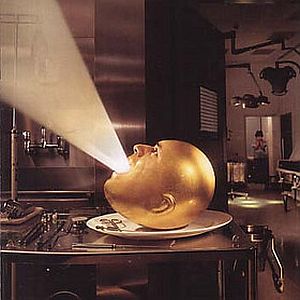
Hate them or love them, it is hard to deny that The Mars Volta are progressive in the true sense of the word. Born from the ashes of post-hardcore band At The Drive-in, they are not afraid to take elements from such disparate genres as prog, punk, metal, jazz and Latin music, and throw them together in a metaphorical blender, stamping their individual seal over the end result. The band’s display of dazzling musicianship, left-field lyrical concepts, stunning cover art (courtesy of legendary graphic artist Storm Thorgerson, better known for his work with Pink Floyd) and no-holds-barred songwriting are the hallmarks of a first-rate outfit that is ready to push prog – that stereotypically earnest, stuck-in-a-time-warp musical genre – right into the 21st century.

Most of the tracks on this album are over the 5-minute mark, with “Cicatriz Esp” clocking in at over 12 minutes. Both band mastermind Omar Rodriguez-Lopez and vocalist/lyricist Cedric Bixler-Zavala wanted to expand their horizons after leaving At the Drive-In, as shown by the clear influence of such giants of progressive rock as King Crimson and Rush. In time-honoured prog tradition, De-Loused… is also a concept album, relating the tale of Cerpin Taxt’s week-long, drug-induced coma and subsequent suicide (a story inspired by the death of former bandmate Julio Venegas).

Even if Omar and Cedric’s original punk roots rear their heads every now and then, they add a measure of spice to the exotic mixture that is TMV’s sound. The musicianship is first-rate throughout, with a special mention for inventive, powerful drummer Jon Theodore, whose rhythmic sparring partner is on this occasion a very special guest, Michael Balzary aka Flea of Red Hot Chilli Peppers fame (one of the best four-stringers on the market, even if you are not too keen on his mother band). The crisp, clear production values further enhance Theodore’s intricate, occasionally explosive drumming, as immediately shown by  killer opener  “Inertiatic ESP” (preceded by the deceptive quiet of “Son and Lumière).

In my personal opinion, though, the real strength of TMV lies in the supercharged vocals of Cedric Bixler-Zavala, whose banshee wail, interspersed with more reflective, almost lyrical moments, provided a textbook example of  really expressive singing. A richer, fuller version of Geddy Lee, he stamps his mark all over the album, perfectly complemented by his partner in crime  Omar Rodriguez Lopez’s wildly atmospheric guitar playing. Unlike on follow-up  Frances the Mute, here the band keep the use of weird, electronic noises to a minimum, with epic “Cicatriz ESP” ‘s middle section being a prime example of how such sounds can be used sparingly to their maximum effect.

With such an overall strong album, it would be difficult for me to pick any standout tracks, apart from those I have already mentioned. Haunting ballad “Televators” is a much better effort in this sense than “The Widow” on Frances the Mute; while “Eriatarka”, “This Apparatus Must Be Unearthed” and album closer “Take the Veil, Cerpin Taxt” brim with energy and freshness, Cedric’s manically brilliant vocals soaring above the band’s unleashed instrumental fury.

A brash, loud, yet sophisticated statement of intent, De-Loused in the Comatorium was clearly not conceived with mass appeal in mind – even if The Mars Volta have become a relatively successful act in their field. This is thoroughly modern progressive rock, and a must-listen for all serious devotees of the genre – weird and wonderful, and a really wild ride, but also one to enjoy to the fullest.

Read Full Post »

« Newer Posts - Older Posts »