Feeds:
Posts
Comments

TRACKLISTING:
1. Big Sur (4:51)
2. The Clearing  (2:21)
3. Leaving The Woods (5:40)
4. Symphony Hills (1:07)
5. Lily In The Garden (4:15)
6. Auburn Road (0:43)
7. Mustang Song (5:40)
8. Stay With Me (0:51)
9. A Viennesian Life (3:50)
10. Broome’s Orchard (7:56)
11. ‘Cross The Williamsburg Bridge (1:33)
12. Where Will We Go (6:39)
13. Finale (1:28)

LINEUP:
Janel Leppin – cello, Indian cello, violin, Saarang Maestro DX,  Prophet 5, piano, koto, electric guitar, Hammond organ, Mellotron, harpsichord, vibraphone, detuned autoharp, singing spoon, loops, electronics
Anthony Pirog – electric and acoustic guitars, baritone guitar, electric sitar, lap harp, lap steel, bass mandolin, bass, cymbals, gong, vibraphone, music boxes, loops, electronics

With:
Mike Reina – mellotron (9)

Janel Leppin and Anthony Pirog are two accomplished multi-instrumentalists who grew up in Vienna, a charming Northern Virginia town that is part of the Washington DC metropolitan area, where they attended the same high school. During those years, they began playing together at Leppin’s home village of Wedderburn, though they only started performing as a duo in 2005. Their eponymous debut album was released in 2006, and since then the duo has attracted a lot of attention on the independent music scene. The memory of the two musicians’ idyllic teenage years and the loss of the Leppin family home (converted into yet another housing development) is the inspiration behind Where Is Home, their sophomore effort, released in the summer of 2012 after three years of  steady work.

Janel and Anthony have different, yet complementary musical backgrounds: Pirog, a Berklee graduate, is a guitarist with a jazz background and an eclectic attitude, while Leppin is a conservatory-trained cellist deeply influenced by North Indian and Persian classical music. Those wide-ranging sources of inspiration converge in the duo’s musical output, which even the most obsessive classification geeks would find it hard to label, and even harder to compare to other acts. Seamlessly blending acoustic and electric instruments with cutting-edge electronics, enhanced by  a discreet sprinkling of percussion (though without drums), Janel & Anthony’s music possesses a uniquely intimate charm and gently wistful tone that would make it the ideal soundtrack for a crisp autumn evening. Though the instrumentation featured on the album is surprisingly rich, the compositions hinge on the sleek interplay between Leppin’s cello and Pirog’s electric guitar on an entrancing backdrop of skillfully employed loops. the high level of complexity is realized with an elegant subtlety that contrasts with the over-the-top antics of so many modern prog acts.

The elegiac nature of Where Is Home – steeped in the nostalgia for a bygone era, and suggested by most of the track titles –  unfolds gradually, as opener “Big Sur” is jaunty romp with the heady Eastern flavour contributed by Leppin’s sitar and Saarang Maestro DX (a digital version of the tanpura, a long-necked North Indian lute), while pizzicato cello lends a sharp, almost percussive rhythm that complements the insistent chime of Pirog’s guitar. Then, “The Clearing” marks a shift in tone, introducing a slight element of dissonance in the track’s sedate, meditative mood vaguely tinged with menace – a mood that continues in the haunting “Leaving the Woods”, based on a slow, measured conversation between guitar and cello, which sometimes merge, sometimes go their separate ways. The longer tracks are interspersed by short, ambient-like interludes mostly based on electronics, though the album itself runs at a very restrained 46 minutes – the ideal duration for such a sophisticated, mood-based effort.

While the cello-driven “Lily in the Garden” exudes a lovely autumnal charm, intensified by the almost monotonous pace of the guitar, “Mustang Song” sees Leppin and Pirog engage in a bracing guitar-based duet, shifting from a soothing, melodic tone to a more assertive one. In “A Viennesian Life” two mellotrons (one of them courtesy of sound engineer Mike Reina) are brought in to add further layers to the lush atmosphere of the piece, in which several different strains play at the same time and are expertly meshed by the two musicians. In contrast, the longest track on the album, the almost 8-minute “Broome’s Orchard” has a more straightforward structure, and the many instruments involved act discreetly, without disrupting the sparse, meditative mood of the piece. Finally, the middle section of “Where Will We Go” introduces atonal elements and eerie electronic noises, bookended by more melodic parts.

An exquisite album that conflates impeccable formal skill with genuine feeling, Where Is Home is highly recommended to lovers of chamber-rock and instrumental music that privileges atmosphere and emotion over complexity for its own sake. In spite of the “avant” tag that Janel and Anthony’s association with Cuneiform Records or events such as the Sonic Circuits festival might evoke, the album is surprisingly accessible, and will hold an almost irresistible appeal for those for whom music means more than just a backdrop to everyday activities.

Links:
http://www.janelandanthony.com

http://www.janelleppin.com

http://www.anthonypirog.com

http://www.cuneiformrecords.com

TRACKLISTING:
1. Crescent Park (2:36)
2. Hodges’ Lodge (4:17)
3. Jaldi (2:26)
4. Togetherness (2:30)
5. Companion Wheel (1:39)
6. Two Trains Passing in the Night (not that many trains pass in my night anymore) (9:39)

LINEUP:
John Orsi – all instruments

Although he would amply deserve to be a household name to devotees of progressive rock in all its forms, John Orsi is quite content to occupy a niche – as he has been doing for the past 30 years or so. The talented multi-instrumentalist and composer, hailing from the historic New England city of Providence, has been active since the early 1980s with a number of projects, which – even though they might have flown under the radar of most “mainstream” prog fans – have been characterized by a constant flow of creative ideas, as well as intensive research into the possibilities offered by percussion instruments, both canonical and unorthodox.

Since 1994, Orsi has been channeling most of his creative efforts in musical collective Knitting By Twilight, as well as a few other projects (such as Incandescent Sky and Herd of Mers), and A Room for the Night is his first solo release in quite a long time. The 23-minute EP –  released in August 2012 , while Orsi and his “guitar mates” were waiting for their respective schedules to be sorted out before taking their music to the stage –has been conceived on a much smaller scale than Knitting By Twilight’s Weathering or Incandescent Sky’s Four Faradays in a Cage. On the other hand, it allows Orsi to indulge in a less formal style of composition, as well as handle all the instruments (both the “proper” and the “improper” ones, as the artist points out in the liner notes with his customary sense of humour).

Those who witnessed Dame Evelyn Glennie’s amazing performance during the opening ceremony of the London Olympics earlier this summer might be intrigued to learn that the Scottish percussionist is one of Orsi’s major influences, together with a host of other artists, some of them quite obscure, others instead familiar to a wider public. Indeed, those who are always looking for terms of comparison will recognize some echoes of Kate Bush’s most experimental work (such as showcased in her 1982 album The Dreaming) while listening to the EP.

While unlikely to attract fans of the more elaborate forms of prog, A Room for the Night is an utterly charming slice of instrumental music that is hard to label, though the ambient component of Orsi’s inspiration is very much in evidence. The six tracks – most of them rather short, with the sole exception of closer “Two Trains Passing in the Night”, which, at over 9 minutes, expands on the themes introduced by the previous compositions, reproducing the motion of a train through the alternation of different rhythm patterns – are like sonic sketches that listeners are almost encouraged to flesh out in their mind. Bound together by discreet keyboards, the music showcases Orsi’s lifelong love of percussion, bringing very unusual implements into the musical arena – such as tin pie plates and metal tubs – as well as more conventional gear, albeit belonging to different ethnic traditions than the Western one. The addition of  recordings of diverse sounds and human voices (taken from real-life situations) produces the sonic equivalent of an artistic collage based on found objects  – riveting to the eye (or, in this case, the ear) even in its somewhat fluid, unplanned quality. The result is 23 minutes of music that shifts from whimsical to meditative, with some occasional forays into vaguely ominous, cinematic moods created by sustained keyboard washes and subtle layers of percussion patterns.

As the previous paragraphs make it clear, a track-by-track analysis of A Room for the Night would be counterproductive, as the EP should be enjoyed as a whole – possibly, as Orsi himself suggests, with the help of headphones, and in the right situation. This is not sonic wallpaper meant to unobtrusively fade in the background, but rather the kind of ambient-tinged music that will stimulate the mind as much as the ear. With Orsi’s usual attention to the visual aspect of his productions, the lovingly-packaged CD comes accompanied by the delightful artwork of early 20th-century illustrator Kayren Draper. A delicate, almost brittle, hauntingly fascinating collection of musical pieces with no other purpose than creative expression, A Room for the Night may not be the kind of release that appeals to everyone across the progressive rock spectrum. However, just like all of Orsi’s back catalogue, it is definitely an effort highly deserving of attention on the part of adventurous listeners.

Links:
www.overflower.com

TRACKLISTING:
1. Springsong (12.56)
2. Prism (9.38)
3. Memoirs (4.52)
4. Harvest Aorta (41.55)

LINEUP:
John Battema – keyboards
Charlie Gore – bass
Jeff Malone – drums
Brian O’Neill – guitar

Instrumental four-piece Ephemeral Sun, who are celebrating their tenth anniversary this year, are based in Northern Virginia, in the Washington DC metropolitan area. Formed after the demise of doom/symphonic metal outfit Rain Fell Within, they started out as a female-fronted Gothic/progressive metal band, releasing their debut album, Broken Door, in 2004. Harvest Aorta, their sophomore effort, was released in early 2010 after five years of work and lineup changes that led the remaining band members to choose a completely instrumental direction. Ephemeral Sun have a number of live appearances under their belt, including the 2006 edition of ROSfest and ProgDay 2012.

Often miscategorized as progressive metal, Ephemeral Sun in the second decade of the 21st century are one of those bands that defy the labels so cherished by the prog fandom. The metal component, indeed, is mainly represented by Brian O’Neill’s bouts of sharp, dense riffing, which merge seamlessly with John Battema’s dramatic keyboard textures to create an intensely cinematic atmosphere. While the band’s earlier experience in the symphonic/Gothic metal field occasionally surfaces on Harvest Aorta, the instrumental dimension enhances the expressive potential of the music without the distraction factor sometimes contributed by vocals. The music surges along powerfully, supported by Jeff Malone’s imperious drumming and Charles Gore’s impeccable bottom end – a rhythm section that can display a sense of delicacy when needed, as well as power. The frequent, ambient-like pauses of respite, imbued with the autumnal feel of Battema’s meditative piano, possess a gentle melancholy that would provide a perfect soundtrack for the twilight hour. And, indeed, “soundtrack” seems to be the operative word when referring to Ephemeral Sun’s sound – it is not hard to imagine the music on Harvest Aorta employed as the score for a science fiction movie, or a documentary on space travel.

Almost two-thirds of the album (which clocks in at nearly 70 minutes) is taken up by the title-track, a massive, 42-minute tour-de-force that has made quite a few of those “long songs” lists so popular with staunch prog fans. The first half of Harvest Aorta comprises three shorter numbers, with the gorgeous mood piece of the aptly-titled “Memoirs” – with its crystalline guitar and rippling piano tinged by solemn Mellotron washes – preparing the listener for the album’s pièce de resistance. As unbalanced and pretentious as this may seem, there is a sense of cohesion to Ephemeral Sun’s music that rarely gives the impression of sprawling excess that often mars comparably ambitious endeavours. Most importantly, the music – hovering between vivid flares of emotion and soothing, evocative melody – is always eminently listenable, and even the hard edges are never abrasive. Pink Floyd and their modern-day heirs, Porcupine Tree, are occasionally referenced, as are Genesis and a few other bands, but the album thankfully eschews any overt sense of derivativeness.

Opener “Springsong”, probably the heaviest offering on the album, allows O’Neill to let loose with the riffage when a contrast is needed with Battema’s airy mellotron washes. On the other hand, the astonishingly lovely, clear-voiced guitar solos are reminiscent of David Gilmour’s signature style, and the spacey synth sweeps add a sense of urgency. In a similar fashion, “Prism” juxtaposes the intensity of the guitar riffs and martial drumming with vaguely spooky electronic effects, and a delightful, classical-tinged guitar-piano interlude that showcases the band’s keen sense of melody. After the relatively short breathing space provided by “Memoirs”, the title-track kicks in with dramatic flair, subsuming all of the features already displayed by the previous numbers, and adding some more touches – like an extended atmospheric section that owes a lot to Tangerine Dream, a slightly chaotic guitar jam and a roaring Hammond organ passage in true Deep Purple style. Quite oddly for such a long piece of music, “Harvest Aorta” does not give that cobbled-together impression that is all too common in tracks of that scope; however, it cannot be denied that after a while the listener’s attention starts to wander, and some repetition of themes and styles becomes inevitable.

On any account, even if the title-track might have benefited from some editing, Harvest Aorta is a finely-crafted album by a group of very talented musicians that deserves all the positive feedback earned since its release. What impresses most is their tight synergy as a group, which does not allow for any self-gratifying displays of technical fireworks, but allows the each of the members’s individual skill to contribute to the musical construction. While waiting for Ephemeral Sun to release their third album, a listen (or preferably more than one) to Harvest Aorta is highly recommended, especially to fans of music with a high cinematic quotient.

Links:
http://www.ephemeralsun.com/

TRACKLISTING:
1. Can You Hear Me? (10:11)
2. Middle Man (6:41)
3. Age of Foeces (4:09)
4. MindWarp (4:31)
5. Senescence (6:59)
6. Driver (5:25)
7. The Sleeper (13:39)

LINEUP:
John Hagelbarger – keyboards, saxes, woodwinds, lead vocals (3)
John Reagan – drums
Ron Rutherford – guitar, guitar synth, keyboards, bass, lead and backing vocals

Dissonati are a trio based in the Pacific Northwest region of the US. In the spring of 2006 drummer John Reagan (formerly of late Seventies outfit Harlequin Mass) formed a band called Elsewhen with Portland-based multi-instrumentalist John Hagelbarger; later that same year the duo teamed up with Ron Rutherford, another talented multi-instrumentalist (who is also the main composer of the music featured on this album). A couple of years later bassist Bill Bainbridge joined the band, which in early 2010 changed its name to Dissonati. The band have recently enlisted the services of bassist Ryan Hankins to replace Bainbridge in their live performances.

In spite of their undeniable chops and extensive experience, Dissonati do not claim to be the best thing since sliced bread, but rather a group of people who share a common love of writing and performing music in the progressive rock vein. Although the band members grew up with the historic bands of the “golden age” of prog, Reductio Ad Absurdum successfully avoids overt derivativeness, and  manages to sound fresh and original almost against the odds – something that often eludes younger, more ambitious acts. In fact, the many prog fans who constantly feel the urge to label anything they can lay their hands on will find themselves baffled by this album, which combines the experimental bent of RIO/Avant prog with a somewhat skewed, but very present sense of accessibility.

With the exception of the two longer (though not exactly “epic-length”) tracks that bookend the album, the bulk of Reductio Ad Absurdum consists of songs between 4 and 7 minutes with a recognizable verse-chorus-verse structure, though spiced with subtly idiosyncratic details that give their music a definitely unconventional twist. For one thing, quite unusually for a band whose members have reached their full maturity, Dissonati incorporate influences that go beyond the usual Seventies icons. Indeed, nods to Porcupine Tree and Steven Wilson – those standard-bearers of modern prog – can be detected in some of the more atmospheric passages of the album. However, if I had to compare Dissonati to one or more non-Seventies acts, I would mention Discipline and The Rebel Wheel,  two North American bands that share the Pacific Northwest trio’s obvious love of Van Der Graaf Generator, but have also manage to establish their own individual sound. Interestingly, it is John Hagelbarger who sounds closest to Peter Hammill in the only track where he sings, the quirky “Age of Foeces”; while Ron Rutherford’s voice is more in an understated singer-songwriter, sounding slightly hoarse and occasionally flat – which, even if not beautiful in any canonical sense, fits the music like a glove.

Opener “Can You Hear Me?” introduces the listener to Dissonati’s peculiar musical universe with doomy, industrial-sounding electronics and tense synth that blend almost seamlessly with melodic, almost catchy elements, and plenty of those mood and tempo changes that any prog fan would expect from a 10-minute track. Ron Rutherford’s dry but highly effective vocals follow the development of the musical thread, and the haunting keyboard washes and drawn-out guitar discreetly hint at Porcupine Tree, though with a personal touch. In “Middle Man” Rutherford’s deep, powerful bass lines come into their own, supported by John Reagan’s dramatic drumming and Hagelbarger’s eerie, slightly dissonant synth runs, while the chorus injects an element of catchiness that effectively blends mainstream and experimental tendencies. Hagelbarger’s solo spot, the above-mentioned “Age of Foeces”, brings to mind VDGG in the theatrical tone of the vocals, but the band’s strong individual imprint surfaces in the hammering harpsichord, twangy bass and echoing, distorted guitar solo.

With its almost infectious chorus and spacey suggestions, “MindWarp” is Rutherford’s own moment as a solo-pilot, as he handles all the instruments besides vocal duties; while “Senescence” and “Driver” juxtapose accessibility and complexity in a fashion reminiscent of Yes at their best – an impression reinforced by Rutherford’s stunningly versatile bass work offset by Reagan’s effortless drumming, often veering into jazz-rock territory. However, the album’s highlight comes right at the end, with “The Sleeper”, Dissonati’s own version of “A Plague of Lighthouse Keepers” – similar in structure to the legendary VDGG epic, but more cohesive and (most importantly) purified of any filler. In the 13-minute track, a haunting, almost cinematic instrumental section – sparse and darkly ominous at first, then culminating in dramatic guitar/keyboards interplay propelled by thunderous drums – is bookended by half-spoken vocals and subdued instrumental accompaniment.

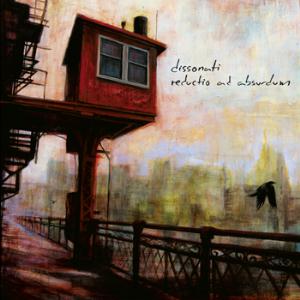
With top-notch musicianship and solid compositional skills – an element that has become increasingly scarce on today’s oversaturated progressive rock scene – as well as a very sensible running time of about 50 minutes, Reductio Ad Absurdum manages to be original without trying too hard to reinvent the wheel (which is a common problem with younger bands). Eclectic without being rambling or overambitious, the album is an outstanding example of true “crossover” prog –successfully striking that elusive balance between the past and the present – and a genuinely enjoyable listen, with enough quirkiness to please those that do not like their music to take itself too seriously. The striking cover artwork, a painting (titled “Bridgehouse”) by Portland artist Brin Levinson, rounds out this unassuming but highly satisfying package.

Links:
http://www.dissonati.com/

http://brinlevinson.com

The DC Society of Art Rock (DC-SOAR)  has been active for the past nine years in the Washington/Baltimore metropolitan area of the US, organizing concerts and other events for those who share a love for progressive music in all its forms. DC-SOAR, which is a non-profit educational organization, currently counts nearly 200 members, and its activities are entirely funded through donations and ticket sales rather than through conventional membership fees.

In order to give exposure to the Society’s activity and support its future projects, in the month of November DC-SOAR will be holding two fundraising concerts at Baltimore’s famed Orion Studios that will showcase some of the best progressive/art rock bands currently active in the north-eastern part of the US.

The first concert, scheduled for  November 3 at 7 p.m. (admission: $20), will feature Northern Virginia’s own Ephemeral Sun (recently appeared at ProgDay 2012), alongside two New Jersey-based bands, 3RDegree and Shadow Circus, also ProgDay alumni (in 2009 and 2010 respectively). 3RDegree have recently released their fourth studio album, The Long Division, which has been received in very positive terms, while Shadow Circus’ third studio album, A Dark and Stormy Night, will be released in a few weeks on Georgia-based label 10T Records. All-instrumental quartet Ephemeral Sun are presently working on the follow-up of their critically acclaimed 2010 album, Harvest Aorta. The different styles and approaches of the three bands will offer the audience a cross-section of some of the most interesting trends in modern progressive rock.

The second concert, scheduled for November 17 at 7.p.m. (admission: $ 15), will present new Baltimore-based outfit Prophet Code (featuring Iluvatar’s keyboardist Jim Rezek), Washington art/music collective Zero Mercury, and genre-bending quartet Kabob-O-Taj, hailing from Gaithersburg (MD). Though these three bands may not be as well-known as the ones previously mentioned, anyone interested in discovering new music should check them out.

Both shows are open to people of all ages. As usual, members of the audience are encouraged to bring small folding chairs and coolers.

Address:
Orion Studios,
2903 Whittington Ave., Suite C,
Baltimore, MD 21230

Admission:
$ 20 (Nov 3)
$ 15 (Nov 17)

Links:
http://www.dc-soar.org

http://www.ephemeralsun.com

http://www.3rdegreeonline.com

http://www.shadowcircusmusic.com/

http://www.facebook.com/ProphetCode

http://www.facebook.com/ZeroMercuryMusic

http://kabobotaj.com/

TRACKLISTING:
1. Invocazione alle Muse (2:02)
2. Indignatio (Infedeli in Terra Santa) (8:03)
3. Urbano II Bandisce la Prima Crociata (3:07)
4. Simplicio (4:27)
5. Deus Lo Vult (7:15)
6. Verso Casa (3:49)
7. La Beffa (Non un Trono, Non un Regno…Solo Sdegno) (5:10)

LINEUP:
Simone Cecchini – lead and backing vocals, acoustic 6- and 12-string guitar, harp
Diego Petrini – drums, percussion, mellotron, organ
Federico Caprai – bass
Simone Brozzetti – electric guitar
Eva Morelli – flute, piccolo, alto, soprano and tenor sax, theremin

Almost 7 years after their breakthrough second album, Discesa agli Inferi di Un Giovane Amante, and 10 years after their foundation, Il Bacio della Medusa have made their recording comeback with an album that is bound to  leave a lasting impression. Hailing from the beautiful medieval city of Perugia in central Italy, the band (now a quintet after the departure of violinist Daniele Rinchi) have also parted company with Genoa-based label Black Widow, in a bold move that is becoming increasingly common with new bands.  However, the quality of their product has not suffered one bit from dispensing with a label’s support.

Like side project Ornithos’ La Trasfigurazione, Deus Lo Vult  is a concept album, but, unlike the former, it places a strong emphasis on vocals and narration. In a drastic reversal of the current trend for endless, filler-packed releases, the album concentrates a lot in a mere 33 minutes (the average running time of a vinyl LP), and this rather unusual leanness protects it from the usual pitfalls of the concept format. Even though Deus Lo Vult has drawn some criticism on account of its supposedly “incomplete” feel, it is extremely refreshing to see a band managing to describe a complete story arch in barely over half an hour, without relying on the gimmicks that often give concept albums a bad name.

The band also strike a near-perfect balance between words (penned by lead vocalist Simone Cecchini) and music, avoiding an excess of wordiness and allowing the music to convey as much emotion as the vocals. All the members of Il Bacio della Medusa are superb instrumentalists, and the music (written by drummer Diego Petrini, also a member of Ornithos like reedist Eva Morelli and bassist Federico Caprai) runs the gamut from gentle, folk-tinged balladry to no-holds-barred heavy prog. Cecchini’s extremely versatile voice, firmly rooted in the great RPI tradition of charismatic singers such as Jumbo’s Alvaro Fella or Biglietto per l’Inferno’s Claudio Canali (to name but two), at times blends with the instruments, at others completely dominates them, performing two or more roles at once in thoroughly convincing fashion.

Lavishly packaged with striking, medieval-style cover artwork  and a very thorough 18-page booklet, Deus Lo Vult blends musical quality and visual appeal in true vintage prog fashion. As those well-versed in the history of the Western world will know, the album’s title (meaning “God wills it” in medieval Latin) refers to the rallying cry of the people when the first Crusade was declared by Pope Urban II at the end of the 11th century. However, rather than with the bigger picture, the album deals with the story of a young lordling, Simplicio (whose very name hints at a naïve, trusting nature), who joins the Crusade in search of fame and fortune – only to meet with bitter disappointment upon his return home.

In spite of Deus Lo Vult’s limited running time, none of the tracks sound alike. Opening with an homage to classical epic literature in the shape of an invocation to the Muses (“Invocazione alle Muse”) – a soothing, pastoral-sounding piece in which Cecchini’s melodic yet assertive voice is accompanied by acoustic guitar, mellotron and flute – the album immediately dives into the thick of things with its longest track, the 8-minute “Indignatio (Infedeli in Terra Santa”. Introduced by majestic mellotron and expressive flute (which reminded me of Delirium or Quella Vecchia Locanda rather than Jethro Tull), the song is driven by Diego Petrini’s imperious drums and Cecchini’s intense, theatrical vocal performance, paralleled by Eva Morelli frantically blaring sax and Simone Brozzetti’s searing lead guitar; the music reflects the tone of the lyrics – an invective against the Muslim presence in the Holy Land conveyed in almost visionary terms. The mphatic, march-like “Urbano II Bandisce la Prima Crociata”, with its trumpets, drums and martial chanting, strikes a half-serious, half-comical note, allowing Cecchini to interpret two different characters with deadpan effectiveness; while in the folksy ballad “Simplicio” Cecchini’s voice displays its melodic potential, well complemented by guitar and flute.

With the title-track, Il Bacio della Medusa deliver another showstopper. After a deceptively mellow, piccolo- and mellotron-led intro, a Gillan-like, banshee wail leads into a veritable hard rock feast that sounds like Iron Maiden jamming with Balletto di Bronzo, with no less than three blazing guitar solos, raging Hammond organ runs, aggressive sax and flute in the tradition of Jethro Tull’s heaviest episodes. “Verso Casa” relates Simplicio’s journey towards his home (where a nasty surprise awaits him) with a lively, waltz-like pace and very expressive, slightly histrionic vocals. The story reaches an unexpected climax in “La Beffa”, dominated by Cecchini’s suitably deranged vocals, then wrapped up by a galloping, exhilarating flute-guitar section, and ending with the ominous sound of a crackling fire.

Besides the outstanding quality of the music, which successfully blends a vintage feel with a thoroughly modern allure, Il Bacio della Medusa should be commended for the painstaking attention devoted to the lyrics – though, unfortunately, non-speakers of Italian are bound to miss out on this aspect, as even the best translation is unlikely to convey the stylistic subtlety of Simone Cecchini’s work. In any case, Deus Lo Vult  is undoubtedly  poised to become one of the standout Italian prog releases of this first part of the 21st century. Especially recommended to fans of bands at the heavier end of the RPI spectrum (such as Osanna and the already-mentioned Balletto di Bronzo and Biglietto per l’Inferno), this intense slice of top-notch musical skill and exquisitely Italian drama will probably be mentioned in many “best of 2012” lists at the end of the year.

Links:
http://www.ilbaciodellamedusa.com/

http://www.myspace.com/ilbaciodellamedusa

TRACKLISTING:
Absence (29:38):
1. overt (2:25)
2. primo frammento (2:24)
3. epicicli I (2:24)
4. secondo frammento (2:09)
5. arioso (2:01)
6. terzo frammento (2:12)
7. un coeur mécanique (2:14)
8. resti (quarto frammento) (1:58)
9. epicicli II (2:22)
10. toccata (2:29)
11. hélas avril (2:15)
12. danzante (quinto frammento) (2:05)
13. clos (2:41)
Upon a Ground (15:29):
14. part I (5:22)
15. part II (6:01)
16. part III (4:00)

LINEUP:
Michele Epifani – Hammond organ (1-13), e-piano, synthesizer (14-16)
Stefano Colombi – e-guitar (1-16)
Luca Falsetti- drums, percussion (1-16)
Valerio Cipollone – clarinet, bass clarinet (1-13)
Maurizio Fasoli – grand piano (1-13)
Antonio Marrone – e-bass (1-13)
Pierluigi Mencattini – violin (1-13)
Cristiano Pomante – vibraphone, marimba (1-13)
Carmine Ianieri – tenor sax (14-16)
Massimo Magri – cello (14-16)
Simone Pacelli – e-bass (14-16)
Manuel Trabucco – tenor sax (14-16)

Subtilior (Latin for  “more refined”) is the name adopted by Michele Epifani, keyboardist and main driving force of Italian “retro-prog” band Areknamés, for his first solo outing. With its rather obscure reference to a musical style of the late Middle Ages, called ars subtilior, the project hints at a highly complex, sophisticated offer, and indeed –  very much in keeping with AltrOck Productions’ consistently high level of quality – this is what Absence Upon a Ground delivers.

Though Epifani is credited as composer on all the 16 short pieces featured on the album, Absence Upon a Ground is anything but one of those ubiquitous (and often tiresome) “solo pilot” projects that clutter the oversaturated progressive market. It is instead very much an ensemble effort, to which each of the 12 musicians involved contributes his unique expertise. In some ways, this album is a perfect complement to Altrock Chamber Quartet’s Sonata Islands Goes Rio, as both represent a fusion of traditional chamber music and progressive rock that demands a lot from the listener, but will offer rich rewards to those who will have the patience to give it their full attention.

Due to Absence Upon a Ground’s peculiar structure, a track-by-track analysis would be hard to conduct, if not actually counterproductive. The album features two main multi-part suites – the almost 30-minute “Absence”, and the 15-minute “Upon a Ground”. Epifani, drummer Luca Falsetti and guitarist Stefano Colombi perform on all the tracks, while the other artists appear on either one or the other composition. Valerio Cipollone and Maurizio Fasoli of Yugen are among the performers on “Absence” (Epifani guested on both Le Uova Fatali and Iridule, the second and third release of the Milan-based outfit). In true chamber-rock tradition, the instrumentation blends rock staples such as drums, guitar and bass with reeds (clarinet and saxophone), strings and the haunting chimes of marimba and vibraphone, which combine seamlessly with the warm, fluid sound of the grand piano. Epifani’s signature Hammond organ, though credited in the liner notes, is barely perceptible, while the reeds, strings and percussion form the most readily noticeable layer of the sound’s fabric.

“Absence”  (which, as the title suggests, is meant to be a reflection in musical terms on the topic of absence) comprises 13 short movements – all around the 2-minute mark – that are meant to be taken in as a whole. The chamber feel is very strong in the stately pace and often sparse texture of the music, or in the occasionally lively, conversation-like interaction between different instruments. Dissonance is used sparingly, and hints of melody – though handled in rather unconventional fashion – surface to bind the parts of the suite together. Sudden flares of intensity leave room to rarefied, ambient-like moods with a meditative, almost autumnal feel. The overall effect is one of understated elegance, though with an underlying density that makes repeated listens essential.

The 15-minute “Upon a Ground” features three longer, relatively self-contained sections, characterized by a more cinematic feel that leans more towards the RIO/Avant-Prog side of things. Mainstays of the genre such as sax and cello, as well as eerily intriguing electronic effects, replace the lyrical sounds of clarinet and violin, and the texture often feels looser, almost improvisational – in that deceptive fashion typical of Avant-Prog that effectively disguises a high degree of compositional discipline. All the three movements alternate atonal, knotty passages, with bursts of tenor sax and underpinned by the steady, mournful drone of the cello, and more subdued moments sprinkled by the gentle, tinkling sound of the mallet percussion.

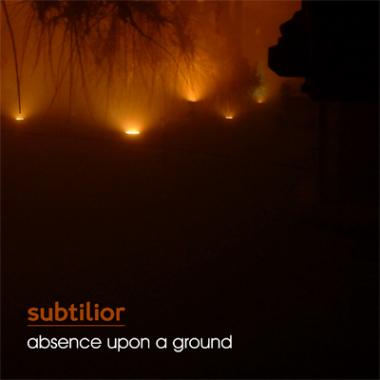
If I had to level some criticism at Absence Upon a Ground, I might say that the album may come across as slightly cold and detached – a not uncommon problem with a lot of Avant/chamber rock. On the other hand, the sheer quality of the performances and the superior compositional skills involved are undeniable, and will delight those who privilege this particular manifestation of progressive music. Highly recommended to lovers of RIO/Avant prog and chamber music – as well as any open-minded listeners – the album is, however, unlikely to appeal to those who like a more “mainstream” approach to progressive rock. As usual for AltrOck releases, the visual aspect of the packaging (with Paolo Ske Botta in charge of the artwork) is top-notch, adding to the album’s interest value.

Links:
http://production.altrock.it/prod2.asp?lang=eng_&id=188&id2=193

http://altrockproductions.bandcamp.com/track/subtilior-medley

http://www.allmusic.com/album/absence-upon-a-ground-mw0002389334

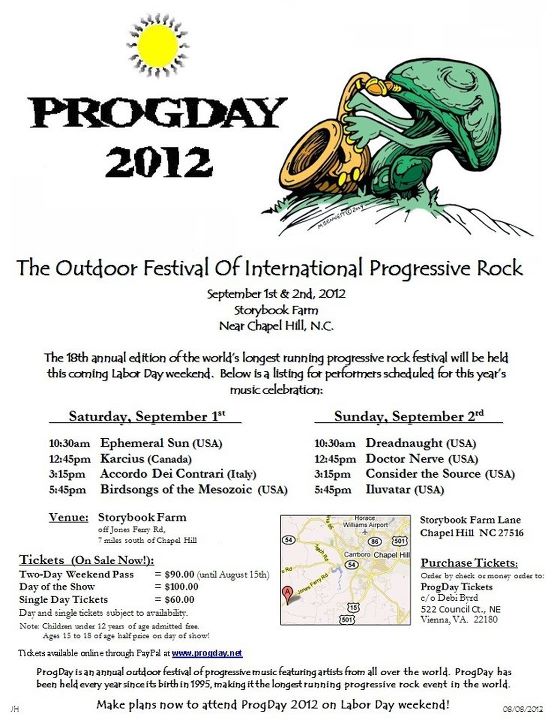
Though the title of this review is not meant to spark a debate on climate change, it is an apt description of the kind of atmosphere that characterized the 18th consecutive edition of ProgDay. If my first time at the festival, back in 2010, had been perfect climate-wise, and the second marred by a rather uncomfortably hot and humid Saturday, this year was record-breaking, and not in a good way. To put it bluntly, the past weekend on the lovely grounds of Storybook Farm felt like being  in Bangkok or Singapore in the middle of the summer, with temperatures in the mid-90s (especially on Saturday), and humidity close to 90%. For a hot-weather hater such as myself, it was a nightmare scenario. After this weekend, I believe I know how chocolate must feel when melted slowly on the stove… The last hurrah of this long, hot summer – quite unexpected after a rather mild August – might have wreaked some serious havoc on the festival, and indeed the unrelenting heat affected many people’s enjoyment of a spectacular weekend of music.

Adverse climatic conditions notwithstanding, ProgDay 2012 was fulfilling in every sense, and even the physical discomfort of trying to find relief from the onslaught of the heat pales in comparison to the wonderful musical offer and overall atmosphere of the 18th edition of the world’s longest-running progressive rock festival. Many of the observations I made in my review of the 2011 edition hold true for this one as well, so I will spare my readers a repeat and try to include some new insights. If last year’s ProgDay had been a success, this one was nearly a triumph, from many different points of view. The musical aspect, of course, is fundamental in any such event, and the festival seems to be going from strength to strength in assembling lineups that manage to capture the best of the contemporary progressive rock scene. However, no event can exist in a vacuum, and the human factor is of paramount importance whenever the arts are concerned.

On Friday morning, the leisurely, four-hour drive from our Northern Virginia home took us down the familiar, tree-lined corridor of Highway 85, a quiet and sparsely frequented route in comparison to the unceasing bustle of the Baltimore/Washington area. For long stretches of the road, no cars could be seen ahead of us, and the feeling of being in the middle of nowhere was somewhat eerie, but also deeply charming in its own way. The last two hours of the drive prepared us for the unique ambiance of the festival, where the attractions of nature and music are magically fused together, and nourished by friendship and the joy of being almost removed from “civilization” and the demands of everyday life.

We reached Durham in the early afternoon, just in time for a satisfying lunch at the BBQ place across the road from the hotel. Then, after some well-deserved rest, it was time for us to meet friends that, while separated from us by geography, are a constant part of our lives thanks to modern technology. Unfortunately, the oppressive heat was getting worse by the hour, and on Saturday morning it was immediately clear that things were going to be anything but pleasant weather-wise. That suffocating blanket of humidity was something I had hardly ever experienced before – and I come from a country where summers can get quite hot. When we got to Storybook Farm, the grass was wet with dew, and a very faint breeze blew from the trees. The high humidity made the surroundings even more beautiful than usual, and the occasional hawks circling overhead added to the almost magical atmosphere. However, as the day progressed, the discomfort caused by the heat was compounded by the misery of feeling sticky and dirty. Beneath the corrugated metal roof of the stage, the heat must have been unbearable, and a large fan had been strategically placed at the back of the stage in an attempt to make things marginally more comfortable for the bands and the crew.

Though they had landed the somewhat awkward opening slot at 10.30 in the morning, the music of Northern Virginia’s finest, Ephemeral Sun, would have made a perfect soundtrack for what T.S. Eliot called “the violet hour”. The young and personable quartet, led by the impossibly fresh-faced John Battema (an outstanding keyboardist and a real gentleman) have transitioned from a Gothic-metal, female-fronted outfit to a much more distinctive, hard to label brand of cinematic, ambient-laden instrumental prog, rich in melody yet laced with heaviness. In some ways, they reminded me of last year’s opening act, Fibonacci Sequence – though the Wisconsin band’s sound is more muscular and not as atmospheric. The band as a whole proved to have an impressive mastery in the build-up of surging waves of sound, driven by the impeccable rhythm section of Charles Gore and Jeff Malone, with Gore’s deep, powerful bass lines occasionally reminiscent of Geezer Butler’s genre-defining style. Guitarist Brian O’Neill’s occasional bouts of razor-sharp riffing injected a healthy dose of remarkably uncheesy heaviness in the fabric of Battema’s lush keyboards – at times unleashed to resemble a modern-day Keith Emerson, at others relying on stately mellotron samples to bolster and lend symphonic fullness to the soaring, Gilmour-tinged lead guitar parts. While at first communication with the audience was kept to a minimum, it did not take long for the band to open up, and for Battema to display some of his endearingly self-deprecating sense of humour. All in all, it was an excellent opening set from a band that has definitely a lot of potential for future greatness.
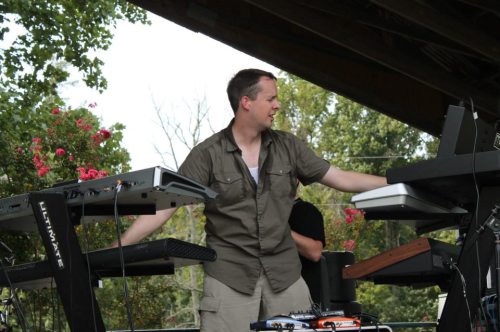
John Battema of Ephemeral Sun

By the time Montreal-based quartet Karcius got on stage, the heat and humidity were starting to get out of control. Before the start of their set, I had forced myself to eat some of the rather tasty food on offer, then sat down again with my notepad – only to realize that the heat was badly sapping my enjoyment of the music. I had heard a lot of praise about the band, who – in spite of their young age – already have four albums and a number of high-profile live appearances under their belt. Though I had seen them described as jazz-rock, they sounded all over the place, reminding me of those bands  who, like Umphrey’s McGee, straddle the line between the jam scene and progressive rock proper. The jazz-rock matrix was conveyed by the emphasis on the sleek interplay between Sylvain Auclair’s bass and Thomas Brodeur’s drums, but other influences cropped up with regularity. While Auclair’s blues-tinged voice was undoubtedly good, I felt that it did not actually gel with the rest of the sound, and the instrumental parts (such as the excellent opening track) were a much better representation of Karcius’ collective strength. While I usually appreciate eclecticism, there was a sense of lack of cohesion in the way the band handled their diverse sources of inspiration, which ranged from metal (with a couple of frantic passages verging on speed metal) to King Crimson by way of Steely Dan, and a lot of other stuff – including hints of reggae and other ethnic music, as well as evident pop touches conveyed by the vocals. On the other hand, the chemistry between the four musicians was outstanding, with the ease born of a long collaboration and plenty of stage experience. Mingan Sauriol manned the keyboards with aplomb, rounding out the dynamic rhythm section, while guitarist Simon L’Espérance contributed a nice rock edge. The band also catered to the nostalgia-inclined members of the crowd by performing a cover of Pink Floyd’s “Dogs” (perhaps not the best choice, seen the song’s running time and somewhat depressing subject matter) almost at the end of their set.
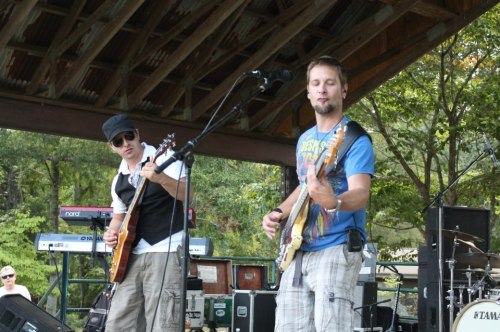
Simon L’Espérance and Sylvan Auclair of Karcius

After waxing lyrical for months about Kublai, their sophomore release, and raging about their aborted participation to the ill-fated 2011 edition of NEARfest, I had been elated to learn of my fellow Italians Accordo dei Contrari being selected for Progday 2012. Needless to say, theirs was my most anticipated set of the whole festival, and – even if they had the bad luck to perform in the worst slot of such a miserably hot day (though a breeze made things temporarily more bearable in the afternoon, before the blanket of humidity descended again) – the Bologna-based quartet delivered the goods in abundance. The audience was held captive for the best part of their 90-minute set, which comprised a selection of tracks from their two albums, plus two new numbers that will be featured on their third release. With its trademark blend of jazzy, Canterbury-inspired elegance, uniquely Italian melodic flair and sinuous exotic touches, solidly anchored by Cristian Franchi and Daniele Piccinini’s seamless rhythm section and spiced by Marco Marzo’s fluid guitar, the band’s music manages to sound modern even when paying homage to the past. Keyboardist Giovanni Parmeggiani (the band’s main composer and driving force) acquitted himself splendidly in handling unfamiliar gear (kindly provided by Ephemeral Sun’s John Battema, in an admirable example of cooperation between musicians from different backgrounds), and his rich, heady textures were at the heart of  Accordo dei Contrari’s complex yet smoothly flowing sound. Their exhilarating jam with Birdsongs of the Mesozoic’s Ken Field guesting on saxophone was definitely one of the highlights of the whole weekend. Though their music may elicit comparisons with  D.F.A. (especially for those who had witnessed the latter band’s highly acclaimed American performances), Accordo dei Contrari sound even tighter and more focused in their approach. The band members were absolutely elated to be there, and – even if a bit shy at first – won the hearts of the audience with their professional yet warm attitude. On a personal level, it was a real pleasure to meet them at last, and to have the opportunity to speak my native tongue with like-minded people.
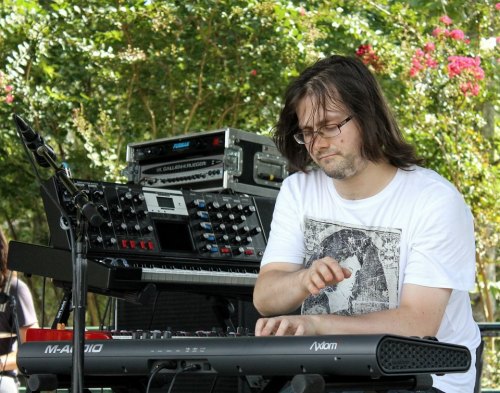
Giovanni Parmeggiani of Accordo dei Contrari

When Birdsongs of the Mesozoic – another instrumental quartet, though one with considerable experience and a respectable back catalogue (their first incarnation dates back from the early Eighties) – took to the stage, the breeze had died out, and the majority of the attendees were wilting in their seats. Of all the past weekend’s performances, this was the one most negatively affected by the hostile weather conditions, as people seemed to have no energy left – which obviously did no favours to the Boston ensemble’s beautiful, highly idiosyncratic music. I was feeling so drained that, about half an hour through their set, my attention started to wander  – even though my brain perceived the beauty of the music and desperately wanted to enjoy it. In any case, Birdsongs of the Mesozoic are one of the most genuinely intriguing musical offers I have heard in the past few years. Blending jazz, rock, minimalism and classical music, they have all the hallmarks of a chamber ensemble without using classical instruments, privileging instead Rick Scott’s eerie electronic effects and Erik Lindgren’s stunning piano, whose rippling, liquid sound gently accompanied the slow setting of the sun. Michael Bierylo’s guitar and Ken Field’s woodwinds complemented the keyboard textures with elegance and emotion; while percussion was added rather sparingly by a drum machine and, very occasionally, a floor tom. The hypnotic, often soothing cadence of their sound – intricate but without the knotty, daunting feel of the average RIO/Avant band – had a cinematic yet touchingly intimate quality. When I was still able to concentrate on the music, I mentally compared them to The Muffins, who had headlined my first ProgDay in 2010. Though the Baltimore band have more of a rock flair, with percussion playing a bigger role, the two outfits’ approach is in some ways similar. All in all, Birdsongs of the Mesozoic regaled the audience with some astonishingly beautiful moments, and I would love to listen to them again in more favourable circumstances.

Erik Lindgren and Michael Bierylo of Birdsongs of the Mesozoic

Like other attendees, we had bought tickets for the Dead Can Dance concert in Durham on the same evening. However, we both realized that we were so exhausted that all we wanted was a quiet meal followed by some well-deserved rest. In any case, we were in no shape to enjoy the show, even in the comfort of an air-conditioned theatre. So we headed back to the hotel, had dinner and went to bed, in order to be in properly refreshed for the following day.

On Sunday morning, the temperature was marginally more comfortable than on the previous day, and the cloudy sky promised at least some respite from the sun. The humidity level, however, was still very high, and did not encourage moving around too much. At 10.30, right on schedule, New Hampshire trio Dreadnaught took to the stage, and treated the audience to a set that someone aptly described as “how Yes would sound if they played country music”. Led by Bob Lord’s massive Rickenbacker sound, the trio are one of the best-kept secrets of the US progressive rock scene – in spite of having been around for over 10 years. Clearly comfortable in a live setting, the three members moved around with plenty of energy, and their highly eclectic take on the classic power trio format combined sterling chops with a friendly, relaxed attitude that put the crowd at ease. The American roots of their sound –  country, bluegrass and also a hint of blues – got added spice from some heavier touches (which occasionally put me in mind of Rush’s instrumental output) – somewhat similar to Karcius in approach, though more focused and with better songwriting. Drummer Rick Habib complemented Lord’s powerful yet intricate lines with his dynamic though never overstated drumming, and also supplied occasional lead vocals. As in the case of Karcius, Dreadnaught work best as an instrumental trio, with Justin Walton’s guitar contributing melody and a bit of a sharp edge to the complex patterns laid out by the rhythm section. Such demanding music can easily become a chore for listeners if not supported by an adequately light-hearted attitude, but Dreadnaught looked as if they were thoroughly enjoying themselves, and communicated their visible enthusiasm to the crowd in spite of the draining heat.
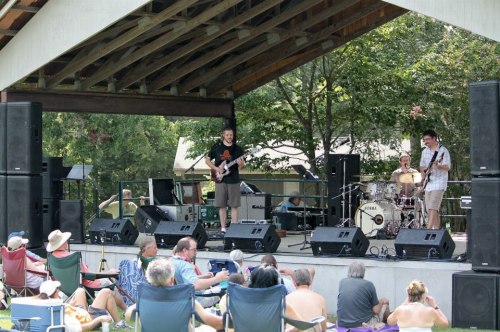
Dreadnaught

By the time Doctor Nerve made their appearance on stage, the sky had turned very dark.  Sparse drops of rain began to fall, thunder rumbled overhead, and the sense of relief from the heat mingled with worry. Summer storms in that region are not to be taken lightly, as they can be extremely violent, and being caught by one of them in an open field was a potentially dangerous situation. However, the New York-based ensemble’s pyrotechnic performance managed to drive the clouds away. Led by charismatic guitarist Nick Didkovsky – a consummate frontman with an endearingly spunky attitude and wacky sense of humour –  the veteran eight-piece had been introduced as a brain-melting experience, which was not far from the truth. Definitely the kind of band that is bound to send traditional-minded prog fans running from the exits at high speed, they delivered a set that, while characterized by a high level of energy, also offered moments of exquisite beauty – as in the slow, meditative track dedicated to the memory of Niall Coti-Sears, Paul Sears’ son, killed in Afghanistan at the end of June. Doctor Nerve was also the only band that included a woman in their lineup – keyboardist Kathleen Supove, a classically-trained pianist with a remarkable stage presence in spite of her petite frame. While Didkovsky’s blistering guitar infused a strong metal component in the band’s music, the impressive horn section (featuring Yves Dubois on soprano sax, Ben Herrington on trombone, Rob Henke on trumpet and Michael Lytle on bass clarinet) propelled the sound in a thoroughly exhilarating way, while the rhythm section of Jesse Krakow (bass) and Leo Ciesa (drums) adroitly set the pace, keeping up with the music’s unpredictable shifts. Indeed, in my mind I described Doctor Nerve as “a big band with a solid foundation of metal riffs, mixed with some seriously punk attitude.” Though their music is clearly not everyone’s cup of tea, many of the attendees thought they were one of the undisputed highlights of the festival.
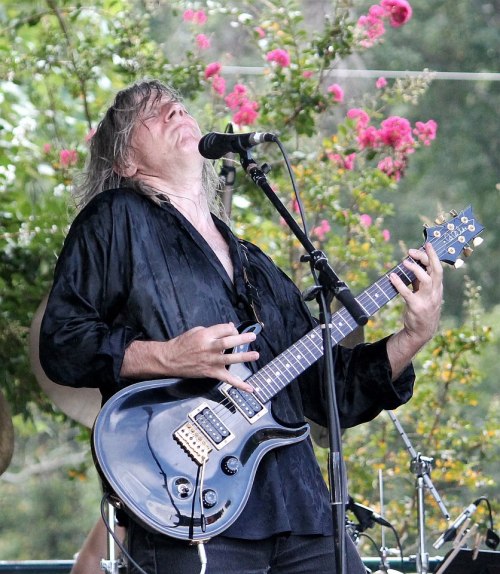
Nick Didkovsky of Doctor Nerve

With a storm threat successfully averted, the heat and humidity had already made their comeback when Consider The Source’s turn on the stage arrived. The three young band members, all dressed in white, loose-fitting clothing that gave a nod to the Eastern component so prominent in their music, were not exactly well-known to most of the crowd, in spite of being very active on the live circuit of the New York/New Jersey region. Like other bands invited to perform at prog festivals for the first time, they were not familiar with the progressive rock scene, as they had previously associated the genre with the symphonic bands of the Seventies and their devoted followers. With four albums under their belt, and extensive touring experience both in the US and abroad, they were obviously very much at home on a stage. Dashing guitarist Gabriel Marin, his blonde mane hidden beneath a quirky cap, sported an obviously custom-made contraption – a fretless double-necked guitar – that allowed him to produce a wide range of sounds. Like many modern instrumental bands, they had a hard, almost metal edge that elicited comparisons with the likes of ProgDay alumni Canvas Solaris and Scale The Summit, though tempered by the warm, organic sound of ethnic percussion. The Indian influence, though less evident than in a quintessential “Indo-prog” band like Shakti, came often to the fore, seamlessly intertwined with fiery fusion and hypnotic space-rock cadences, driven along by bassist John Ferrara and drummer Louis Miller, who tackled elaborate, King Crimson-style polyrhythms with consummate skill. Like a bare-bones Mahavishnu Orchestra (stripped of violin and keyboards) on massive amounts of steroids, modern enough to appeal to the younger, jam-band set, but also with a clear jazz-rock bent – occasionally laced with a funky swagger – that emerged particularly towards the end of their set, Consider The Source took no prisoners, and their blistering performance earned them many new fans.
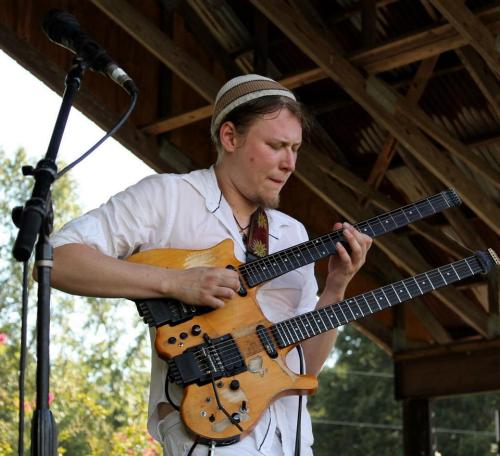
Gabriel Marin of Consider the Source

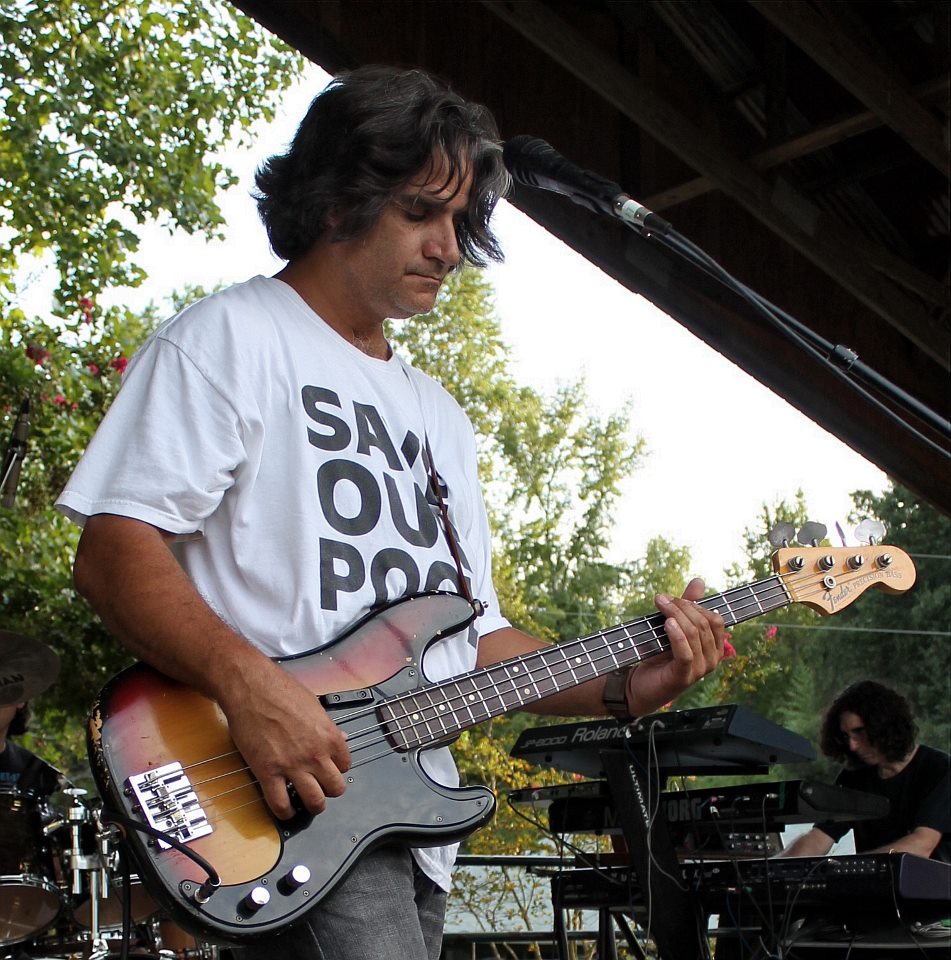
We had seen headliners Ilúvatar barely two months ago at the Jammin’ Java, so when their turn came (somewhat late on schedule) we were in a relaxed mood, knowing that their set would be not as demanding than most of the other bands, though definitely every bit as good in terms of quality. The Baltimore quintet were the only band on the lineup to fit the conventional prog mould, though laced with classic and hard rock influences, and solidly song-based – in this respect almost paralleling 2010 Saturday headliners Flash. This was in some ways an even stronger performance than the one witnessed in early July, with lead vocalist Jeff Sirody increasingly at ease in his frontman role. The set opened with longer, more complex compositions, where the influence of Genesis (especially their late Seventies period) was unmistakable, and Jim Rezek’s masterful keyboards got their chance to shine and wow the audience, then moved on to the more streamlined material, in which Sirody’s voice was allowed to rock out. The rhythm section of Dean Morekas (the barefoot bassist) and Chris Mack provided a solid foundation for Rezek and Dennis Mullin’s clear, melodic lead guitar. Unlike other so-called “neo-prog” bands, Ilúvatar avoid sounding cheesy or overtly derivative, and their keen sense of melody makes them eminently listenable, even for those who – like myself – prefer more spice than sugar with their music. With extensive experience as a live outfit (festivals included), Ilúvatar were like a well-oiled machine, and each member gave his best on stage. All in all, it was a very enjoyable performance – which ended when the sun had already disappeared from the horizon and darkness was setting in – and the perfect conclusion to a day characterized by a high intensity quotient.

Dean Morekas and Jim Rezek of Ilúvatar

After helping with the clean-up, we headed back to the hotel to get changed and have some dinner before the customary end-of-festival poolside party. Unfortunately, the weather was not yet done with us, and treated us to a veritable display of pyrotechnics – a fierce heat storm with wild streaks of lightning in the night sky, copious rainfall, and the added excitement of a tornado warning. Needless to say, there was no going near the pool in that weather, but – thanks to the kindness of the staff – the party was held in the hotel lobby, and a great time was had by all.

It was with a touch of sadness that we said goodbye to our friends on Monday morning, before we headed home again. The past weekend was not one that will be easily forgotten, in spite of the weather’s lack of cooperation. Everything else had been perfect, from the music (as usual, enhanced by the pristine sound quality) to the choice of caterers, far superior to the previous years. However, probably the most positive feeling I brought home from the festival was seeing the much-reviled US prog community rally together and decree the edition’s unqualified success, with an almost unprecedented amount of tickets sold, and the presence of some new, younger faces among the audience. The realization that NEARfest is over for good and the FarFest cancellation must have sounded a wake-up call for those who want the scene to thrive, and it was enough to guarantee the festival’s survival for at least another year – and hopefully much longer.

Interestingly, the majority of the bands on this year’s lineup were not easily tagged as “prog” in the conventional sense of the word. On the other hand, their music owed very little to the newfangled (and often soporific) “post-prog” trend spearheaded by Porcupine Tree and their ilk, and offered instead an exciting blend of raw energy, endearing quirkiness and serious chops, liberally spiced with world-music influences. In particular, the power trio format seems to be a perfect fit for the ProgDay stage, as proved by this year’s lineup as well as last year’s, which saw spectacular performances from the likes of Mörglbl, Zevious and Freak Kitchen.

Even more so than the previous editions I had attended, ProgDay 2012 was a celebration of the sheer power and joy of live music. The very atmosphere of the festival, by encouraging bands and audience members to mingle before and after each set (and not just at the hotel bar for the often cliquish “after-parties”), does not foster  the self-centered antics that have occasionally marred higher-profile events. Spending a whole weekend together reinforces the impression of an almost family-like occasion that the larger scale of the other festivals does not allow. And then, even if the open-air setting makes it easy to “tune out”, so to speak, it is also much easier to concentrate by just sitting in your chair and letting the music sink in without the restrictions of a theatre – however comfortable it might be. There is also very little resembling the painstaking dissection of every single note or stage moment that accompanies the bigger festivals. Even if ProgDay may look like a country picnic rather than a “serious” event, the people who attend it year after year are as seriously into the music as those who crowd the hallowed halls of the Zoellner Arts Center.

As usual in my event reviews, the final paragraph is dedicated to all the people who made the festival a success – first of all, chief organizer Michael Bennett and his far-reaching vision, the organizing committee, all the volunteers who worked hard in spite of the punishing heat, the ultra-professional sound and stage crew, and obviously all of the bands. On a personal level, I would also like to thank the collective members of Ephemeral Sun and Accordo dei Contrari, Kathleen Supove of Doctor Nerve, Bob Lord of Dreadnaught, John Ferrara and Louis Miller of Consider The Source, Debi Byrd, Paul and Debbie Sears, “Romantic Warriors” José Zegarra Holder, Adele Schmidt and their daughter Paloma, Mike Potter of Orion Studios, Steve Feigenbaum of Cuneiform Records, Lew Fisher, Jeff and Coralita Wilson, Rick Dashiell, Jon and Andrea Reed, Noel Levan and Laura Dent, fellow Stranglers fan Steve Astley, Chris Lamka, Chris Buckley, John Hagelbarger, Mike Visaggio Missy Ferguson, Connie from Missouri (with whom we had a nice talk about cooking), Judson J. Patterson and his fantastic Italian-style sodas, our dear friends Michael Inman and Djalma Carvalho, and – last but not least – the lovely Helaine Carson Burch, who provided some of her outstanding photos for this review.

Links:
http://www.progday.net

TRACKLISTING:
1. Snake Eating Its Tail (1:44)
2. Norrgarden Nyvla (3:03)
3. Hands of the Juggler  (4:44)
4. Rethinking Plague (3:49)
5. Presage (10:21)
6. Land Arf   (6:19)
7. Brachilogia (3:08)
8. Distillando   (4:11)
9. Crossroads (4:37)
10. Luoghi Che Aspettano (6:44)

LINEUP:
Emilio Galante – flute, piccolo
Valerio Cipollone – bass clarinet, clarinet
Andrea Pecolo – violin
Bianca Fervidi – cello

With:
Massimo Giuntoli – piano (6)

As my readers will have noticed, this blog generally deals with music that, in one way or the other, belongs to the rock universe. However, the album that will be reviewed in the following paragraphs (as the ensemble’s own name aptly points out), while conceived as an homage to a movement in whose name the word is prominently featured, cannot by any stretch of the imagination be described as rock.

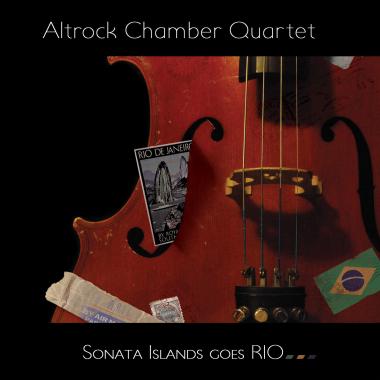
AltrOck Chamber Quartet is the brainchild of gifted flutist and composer Emilio Galante, known for his work with avant-jazz ensemble Sonata Islands (hence the album’s title), who is here assisted by Valerio Cipollone (also a member of Yugen, one of the finest modern outfits in the RIO/Avant vein), Bianca Fervidi and Andrea Pecolo. The album’s witty cover artwork (a brilliant concept by AltrOck resident graphic artist Paolo Ske Botta), showing a violin adorned by Brazilian-themed images, plays on the possible misunderstanding of the word RIO  by those unaware of the acronym’s meaning. Composer Giovanni Venosta, who was responsible for the transcription of three of the original compositions featured on the album, revisits his first experiences with the Rock in Opposition movement in the album’s foreword (offered also in an English-language version, with an eye for AltrOck’s growing international following).

Recorded in February 2012 and released a few months later,  Sonata Islands Goes RIO might be  called (at least in part) a rather highbrow take on a very popular rock product such as the tribute album. Indeed, half of the 10 tracks on the album reinterpret well-known RIO/Avant compositions, while the remaining five are the work of modern Italian composers (including Galante himself) who have been influenced by the subgenre’s distinctive modes of expression. In true chamber tradition, the music is performed by a very limited number of instruments – flute, piccolo, clarinet, violin and cello – ruling out the presence of percussion, guitars or keyboards (with the exception of Massimo Giuntoli’s “Land Arf”, on which the composer himself guests on piano). While at first the result is very intriguing, even fascinating, those who are not chamber music devotees may find things a bit heavy going after a while – even if the album, at around 48 minutes, is by no means excessively long.

For the chamber-music novice, the most approachable tracks are definitely those in the first half of the album, especially the three Fred Frith compositions, “Snake Eating Its Tail” (transcribed by renowned clarinetist Mauro Pedron), “Norrgarden Nyvla” and “Hands of the Juggler” (both transcribed by Giovanni Venosta). In the second, Galante’s flute adopts a particularly assertive, almost harsh tone, while the first makes the most of the lively dialogue-like interplay of the reeds, and the third skillfully shifts from stately melody to dissonance. Galante’s revisitation of Thinking Plague’s “Love” – aptly titled “Rethinking Plague” –  conveys the  elaborate angularity of the Denver band’s sound, while adapting it to a somewhat different musical format. However, Venosta’s string-driven transcription of Univers Zéro’s iconic “Presage”, while undoubtedly faithful to the spirit of the original, cannot fully convey its hauntingly martial allure, and the absence of  Daniel Denis’ imperious drumming diminishes the impact of the final product .

On the other hand, the more recent compositions seem to  be much more suited to the minimalistic chamber format – starting with Francesco Zago’s jagged, intricate “Brachilogia7”, led by Galante’s sharp-toned piccolo. Massimo Giuntoli’s brisk, almost upbeat piano lends a sense of fullness and rhythm to “Land Arf”, whose melancholy middle section showcases Andrea Pecolo’s violin to great effect. Galante’s own composition “Distillando” (originally commissioned by the History Museum of the north-eastern Italian city of Trento) is sparse and almost ethereal in spite of the piercing tone of the piccolo, while the lilting tango of Tiziano Popoli’s “Crossroads” reintroduces a measure of melody in its engaging duet between violin and reeds. “Luoghi Che Aspettano”, penned by Stefano Zorzanello, closes the album with its ambitious but surprisingly effective combination of eerie dissonance and more upbeat, almost melodic flow.

From the above description, it should be quite clear that Sonata Islands Goes RIO is not for everyone. Chamber music in itself can be an acquired taste even for classical music fans, and the daunting nature of anything bearing a RIO label has been discussed all too often in this blog. However, the sheer excellence of the individual performances and the often riveting quality of the music should be enough to attract open-minded listeners who are looking for something more challenging than traditional progressive rock. Needless to say, the album will delight fans of RIO/Avant Prog and contemporary chamber music.

Links:
http://www.altrock.it

http://www.allmusic.com/album/sonata-islands-goe-rio-mw0002397513

http://www.sonataislands.com/


TRACKLISTING:
1. Nebulos (4:40)
2. Un Peuplier Un Peu Plié (5:32)
3. Sprouts (3:11)
4. Sprouts (Continued) (1:57)
5. Sprouts (Continued) (1:19)
6. Sprouts (Continued) (3:57)
7. Troïde (7:31)
8. La Serrure (2:32)
9. Soft Fate (1:25)
10. Boletus Edulis (2:52)
11. Dynamique Cassoulet (2:28)
12. Fast Fate (0:35)
13. Le Chiffre (4:05)

LINEUP:
Guillaume Amiel-  bass marimba, vibraphone, percussion
Maxime Delporte – double bass
Ferdinand Doumerc – tenor, alto and sopranino saxes, flute, crooning (11)
Stéphane Gratteau –  drums
Rémi Leclerc – Fender Rhodes, clavinet, Moog, Hammond organ, piano
Marc Maffiolo – bass and tenor saxes

With:
Olivier Cussac – lap steel guitar (2)
Sarah Roussel – words (3-7)
Nicolas Gardel – trumpet (9, 12, 13)
Olivier “Lapin” Sabatier – trombone (9, 12, 13)

Based in the southern French city of Toulouse, Stabat Akish are a sextet formed in 2007 by bassist/composer Maxime Delporte. In 2009 they caught the attention of free-jazz icon John Zorn, who released their self-titled debut album on his own label, Tzadik Records. The band’s sophomore effort, Nebulos, was released on Italian label AltrOck Productions in the early summer of 2012.

As much as I try to avoid resorting to definitions that might sound a bit overblown, “jazz meets chamber rock with a liberal dash of Zappaesque humour thrown in for good measure” describes Stabat Akish’s music quite effectively. With a distinctive, mostly acoustic instrumentation that rules out the guitar on all but one track, but places a heavy emphasis on reeds and mallet percussion (as well as on founder Maxime Delporte’s expertly handled double bass)  they privilege a sophisticated delivery that, while undeniably full of twists and turns, is not as daunting as the typical output of other bands and artists found under the RIO/Avant umbrella. In fact, Nebulos is at the same time very complex and surprisingly approachable, and not just on account of its very restrained running time and light-hearted attitude. The band members, while all considerably gifted and in full command of their own instruments, behave like true ensemble players, and avoid hitting the listener over the head with their technical skill.

On the whole, Nebulos is elegant and very pleasing to the ear, its intricate instrumental texture relieved by an appealing lightness of touch and a keen sense of melody that is not often associated with the genre. Even when the music possesses a loose, almost improvisational feel, it never sounds unscripted or haphazard. The title-track acts introduces the album in style, opening briskly then gradually slowing down, with all the instruments engaged in a sort of lively conversation, blending subtle electronics with warmer, organic tones. However, it is the second track – bearing the tongue-twister-like title of “Un Peuplier Un Peu Plié” (A Slightly Bent Poplar) – that best illustrates Stabat Akish’s effortless marriage of sheer melodic beauty and avant-garde tendencies. Pervaded by the heady tinkle of marimba and vibraphone and the ethereal, faraway strains of Olivier Cussac’s lap steel guitar, contrasted with  buzzing sound effects and cascading drums, it is oddly cinematic and thoroughly riveting.

Stabat Akish’s take on the old prog stalwart of the “epic”, the four-part “Sprouts”,  is made of almost bite-size sections veering from the sax-driven, meditative mood of the first part to the classic jazz feel of the final part, and includes a short spoken-word section in which Sarah Roussel recites something concerning the titular sprouts. Roussel’s voice – almost an additional instrument – also stars in the 7-minute “Troïde”, the longest track on the album, and also the most openly experimental, in which an increasingly agitated phone conversation in three languages is punctuated by sparse drums, piano and whistling synth. “La Serrure” begins in low-key, atmospheric fashion, then suddenly turns into a very upbeat, circus-like tune; similarly, “Dynamique Cassoulet” packs an astonishing amount of variety in under 3 minutes, including a very entertaining appearance by reedist Ferdinand Doumerc in the role of a crooner. On the other hand, “Boletus Edulis” (the scientific name of the delicious porcini mushrooms) blends ambient-like sound effects of birdsong and burbling water with charming, Eastern-tinged  percussion and flute; while “Le Chiffre” closes the album in style with a triumphant, albeit slightly chaotic big-band workout, in which the saxes are augmented by trumpet and trombone.

An intriguingly classy effort, Nebulos is warmly recommended to lovers of modern jazz and RIO/Avant/chamber rock, though the more traditionally-minded faction of the prog audience might find it a more appealing proposition than other recent releases in a similar vein.  Another fine release from the AltrOck roster, purveyor of endless musical surprises, the album – in keeping with the label’s tradition for outstanding visual packaging – is accompanied by high-quality artwork and photography.

Links:
http://stabatakish.com/

http://www.altrock.it