Feeds:
Posts
Comments

After pulling off the remarkable feat of bringing two progressive rock legends such as Magma and Univers Zéro to Washington DC for the 2010 edition of the Sonic Circuits Festival, cult independent label Cuneiform Records has done it again. Even if November is generally not as thriving on the live music front as the spring and summer months, the label has brought excitement to fans of genuinely progressive music (of both the rock and the jazz variety) with two events: Cuneiform Curates the Stone, a series of concerts taking place from November 15 to November 30 at John Zorn’s avant-garde space in NYC’s East Village, and a more concentrated, two-day bash aptly called CuneiFest, organized on November 19-20 at the legendary Orion Studios in Baltimore.

While RIO/Avant-Prog (as the subgenre is often called for ease of reference, though somewhat inaccurately) does have a hard core of dedicated supporters in the US, it lacks the following it enjoys in Europe, where the Rock In Opposition Festival, organized in southern France in September, has now reached its fourth edition. The presence of one or more bands identified with this particular subgenre is guaranteed to send people literally running for the exits at any US prog festival, and even the bigger names like the above-mentioned Magma or Univers Zéro have often proved controversial. No one, therefore, expected crowds of hundreds of people to show up at the Orion on Saturday, November 19. Indeed, Cuneiform mainman Steve Feigenbaum had put a mere 65 tickets on sale, and expected to sell no more than exactly that number. I am happy to report that Rock Day was sold out:  the small, cozy space of the Orion was nicely filled by people convened from various parts of the country, as well as farther afield (like Israel and Norway), comfortably sitting on the chairs provided by the Cuneiform crew. On each chair a bright yellow flyer was draped, containing detailed information not only on the day’s schedule, but also on the surrounding area (as well as the lunch and dinner menu).

For such a small, family-run enterprise, the Cuneiform team (consisting of Steve, his wife Joyce and her right-hand man Javier Diaz, both in charge of the promotional department, plus various interns) did an extremely impressive job in organizing the day. The main stage area was not as cluttered as it usually is when people bring their own chairs and coolers, leaving hardly any room to move around, and the lights festooning the walls created a festive feel in that small, high-ceilinged space. As the Orion is located at the far end of an industrial park, with very few amenities within walking (or even driving) distance, the organizers had contacted a local Italian restaurant in order to make a selection of food, both hot and cold, available to the attendees for a very reasonable price – set up buffet-style in the space opposite the Orion’s main body. The beautiful, relatively mild weather encouraged people to eat their lunch outside, enjoying the sunshine and the community atmosphere already inherent to most Orion events. To me, music and food are a quintessentially perfect pairing, and the convivial aspect was one of the highlights of the event, providing the attendees with the opportunity to chill out and socialize after each intensity-packed set.

The six bands selected for the Rock Day emphasized the amazing diversity within a subgenre that is all too often dismissed as over-intellectual (even within a non-mainstream genre like progressive rock) or just plain noisy. While none of those bands could ever be described as catchy or accessible, and very clearly not everyone’s cup of tea, most of them belied the fearsome reputation of avant-prog as a bunch of  purveyors of jarring, melody-free fare. All of them were also homegrown, hailing from such diverse environments as Colorado, New York, New England and California – a very significant move on the part of Cuneiform, and probably not just motivated by the inevitable financial considerations. In spite of many US prog fans’ obsession with foreign bands, it is easy to forget that in a such a large country, especially in these times of economic strictures, witnessing a performance of any act based on the other side of the country, or even a couple of states away, is anything but a frequent occurrence.

Steve Feigenbaum opened the festival, greeting the audience and introducing the first band, the quaintly-named Alec K. Redfearn and The Eyesores – one of the projects in which Redfearn, a singer-songwriter from the historic New England town of Providence, has been involved for a number of years. The six-piece that graced the Orion stage  had one of the most distinctive configurations I have ever seen in progressive rock, actually featuring almost no typical rock instrumentation. With contrabass, horn, organ, percussion and assorted objects, and the accordion (played by Redfearn himself) used as a pivotal element, the band’s profoundly fascinating sound possessed an unmistakable Old World flavour. Out of the six bands on the lineup, they had the highest melodic quotient, though a subtly skewed kind of melody, with a mournful, hypnotic quality intensified by the drone of Orion Rigel Dommisse’s organ and her plaintive vocals. While the strong folk component of the band’s music reminded me of modern acid-folk outfits like Espers, with hints of The Decemberists (especially as regards the Americana element and the dark lyrical matter), the many different ingredients of such a heady musical mixture made it quite unique. The longish, complex songs were surprisingly easy to follow, with “Wings of the Magpie” coming across as a particular highlight. Alec K. Redfearn and the Eyesores are a band that I would wholeheartedly recommend to anyone willing to dip their toes in the avant-prog waters, but still find the prospect somewhat daunting.

When, after an half-hour break for more socializing and refreshments, Los Angeles quartet Upsilon Acrux took to the stage, the contrast with the previous set could not have been greater. In an evening that presented a number of interesting band configurations, Upsilon Acrux’s minimalistic two-guitar, two-drummer approach easily won first prize – at least in the sheer energy and volume stakes. Having reviewed the band’s most recent album, 2009’s Radian Futura, I knew what to expect – an angular, dissonant aural onslaught, with enough manic energy coming out of the two drummers (Dylan Fuijoka and Mark Kimbrell) to light up a whole town, and a conspicuous absence of melody. In fact, Upsilon Acrux delivered a 30-minute performance that – while riveting to watch, particularly on account of the drummers’ uncanny precision in laying down jaggedly intricate patterns in perfect unison – bordered dangerously close to white-noise territory. The two guitarists, founder (and only constant member in a band known for its revolving-door policy) Paul Lai and his sidekick Noah Guevara, churned out slashing, piercing chords of almost unbearable intensity. It was math-rock in its purest form, so brutally intense to make the likes of Don Caballero sound tame – and, needless to say, it left a sizable part of the audience rather perplexed. Even those who listen to RIO/Avant-Prog as a matter of course found the band’s uncompromising approach a bit hard to take, and almost everyone agreed that a longer set would have discouraged at least some of the attendees. The band’s somewhat dour presence, with little or no interaction with the audience, also seemed to parallel the spiky, bristling nature of their music. On the other hand, Upsilon Acrux were definitely worth watching (albeit in small doses), and an excellent addition to a lineup that showcased the wide-ranging musical offer to be found under the Cuneiform umbrella.

Next on the bill were New York-based quintet Afuche, who had recently released their first album, Highly Publicized Digital Boxing Match. In a way, the title is an accurate representation of the band itself – another high-energy outfit, though imbued with a sheer sense of enthusiasm, as well as a distinct Latin flavour (the band’s name actually refers to a very distinctive percussion instrument used in Latin jazz). Their 30-minute set, while full of sonic clashes and crashes, was also spirited and entertaining, with a charismatic focal point in keyboardist/vocalist/percussionist Ruben Sindo Acosta – a wiry, diminutive dynamo with a rakish mustache and a curtain of black hair, jumping up and down when pounding the keys of his rig, or bashing his drums with unadulterated gusto. His facial expressions were a sight to behold, while his vocal style owed a lot to traditional Afro-Cuban music, though infused with a manic energy all of his own. Saxophonist Andrew Carrico also cut quite an interesting figure – tall and lanky with long hair and an impressive mustache, wielding his blaring baritone sax with a bit of a swagger, while guitarist Zach Ryalls, bassist Denny Tek and drummer Ian Chang (all three looking very young) kept a lower visual profile, though laying down the groundwork for Ruben’s unflagging energy and showmanship. With plenty of groovy, infectious rhythms and a genuinely omnivorous attitude, Afuche were for many the true revelation of the evening.

New York power trio Zevious had been one of the highlights of ProgDay 2011, so I was looking forward to seeing them again – as were those in the audience who had also attended the North Carolina festival in September. Those expecting a repeat of that astonishing Sunday-morning set, however, were in for a treat, because the band’s CuneiFest set felt markedly different – as tight as ever, but with a sense of almost claustrophobic intensity derived by the indoor setting. In the compact, dimly lit space of the Orion, the unrelenting, yet seamlessly flowing stream of music produced by the band’s three members created a veritable wall of sound,  endowed with a mesmerizing quality akin to the best King Crimson instrumentals, with hints of the primeval heaviness of Black Sabbath in the slower passages – always loud and powerful, yet never one-dimensional (unlike Upsilon Acrux no-holds-barred assault). While my playful description of “King Crimson on steroids” might be fitting in some ways, Zevious are definitely much more than that. Possibly taking to heart my criticism about their lack of interaction with the audience at ProgDay (mostly motivated by the early hour and the unfamiliar situation of playing outdoors and in broad daylight), they had gained in terms of both mobility and communication, the triangular shape of the stage perfectly suited to their configuration. Drummer extraordinaire Jeff Eber, the powerhouse at the heart of Zevious’ sound, propelled the music along with a smile on his face, his stunning polyrhythms meshing with Johnny DeBlase’s muscular bottom end and the electric fireworks of Mike Eber’s guitar. All in all, it was an almost career-defining performance, and the festival’s finest hour as far as I am concerned.

After such a scintillating set, dinner break was upon us, giving the audience a much-needed respite and more opportunities for bonding before plates of tasty food. Then, at about 7.20 (almost right on schedule), Hamster Theatre begun their set, enthusiastically introduced by Steve Feigenbaum – who pointed out that the band had only performed three times on the East Coast since their inception, almost 20 years ago. Based in Colorado, the band shares three members with headliners Thinking Plague –  multi-instrumentalist (and founder) Dave Willey, guitarist Mike Johnson and vocalist/reedist Mark Harris – so it is not surprising to hear similarities in their sounds, which share a highly eclectic bent. However, the foundation of Hamster Theatre’s music – mostly instrumental, unlike Thinking Plague’s – lies in folk, as the central role played by Dave Willey’s accordion shows quite clearly. Their set started in a rather subdued, almost soothing fashion, than things became gradually more complex, with jazzy touches creeping in, and then all of a sudden evoking reminiscences of Univers Zéro and their eerily mesmerizing brand chamber-prog. In spite of the problems caused by a dodgy guitar amp, the set flowed on smoothly, each instrument finely detailed, the sharpness of the guitar tempered by the wistful tone of the reeds and. Hamster Theatre’s music sounds big and often upbeat, with a strong Old World flavour and unexpectedly spiky moments. Even if my appreciation of their set was somewhat marred by the sleepiness that inevitably follows a meal (I am also much more of a morning than an evening person), I was impressed by the fine balance of eclecticism and discipline in the band’s music, and also by their warm, engaging stage manner, as befits seasoned performers. While, with the exception of  bassist Brian McDougal, the band members  performed sitting down, the lack of physical dynamics was amply compensated by the agile versatility of the music.

Highly awaited headliners Thinking Plague took the stage almost 20 minutes late on schedule because of soundcheck-related problems. They also had to contend with another emergency situation – the illness of singer Elaine DiFalco (who has been a member of the band for the past four years), who, however, soldiered on, dosing herself with aspirin in order to be able to perform (albeit in a limited capacity), and taking a bottle of water on stage with her in order to keep her vocal chords hydrated. As a teacher, I could relate to her plight quite well, and could not help admiring her mettle. Petite, with a striking, high-cheekboned face, Elaine possesses a surprisingly commanding stage presence, her husky, well-modulated voice oddly seductive though light years removed from the trite clichés that so many female singers feel obliged to follow. Before the festival, I had heard her on Dave Willey and Friends’ stunning Immeasurable Currents, and had been deeply impressed. Though I have some reservations on the way her haunting vocals fit into the multilayered texture of Thinking Plague’s music, I am sure the less than ideal conditions in which she performed contributed to my impression. Never the most prolific of outfits, they are releasing a new studio album (the first since 2003’s A History of Madness), titled Decline and Fall, in the early months of 2012, and the Orion set provided them with a great opportunity to showcase some of their new material, as well as some of their older compositions. Among the über-eclectic, intricate bulk of Thinking Plague’s output, there was also time for the humorously-introduced, never-played-before “The Fountain of All Tears”, a slow-burning ballad in 4/4 that very few would associate with one of the dreaded “Avant” bands. With legendary drummer Dave Kerman having relocated to Switzerland, the drum stool was occupied by Robin Chestnut, introduced by Mike Johnson as the only band member under 40;  he also joked about Robin’s forthcoming Ph.D in Mathematics, which makes him the ideal drummer for a band like Thinking Plague. Keyboardist Kimara Sajn manned his rig with an unobtrusive but engaging mien, his delight in music-making obvious from his body language. I was barely acquainted with the band’s output before the festival, and their set encouraged me to delve into their back catalogue.

By way of a conclusion, I would like to stress that, as good as all of these bands are on CD, the live setting really makes their music come alive, and also gives them a more “human” dimension that helps debunk the myth of their brainy inaccessibility. For all their dedication to the production of challenging music, these are people who, first and foremost, enjoy what they do, and obviously love being on stage as much as any “mainstream” rock band.

All in all, it was a wonderful day of music and social interaction with like-minded people, and the perfect way to spend the third anniversary of my arrival in the US – even though my husband was unable to share it with me because of work commitments, which also prevented us from attending the  festival’s Jazz Day. My sincerest thanks go to Steve, Joyce and their tireless team: though all of them were looking quite exhausted at the end of the day, their happiness and satisfaction was also palpable. The gorgeous (and delicious) layer cake served just before the Thinking Plague set was a very nice touch to celebrate the effort and care that had gone into the organization of the event. Kudos also to Mike Potter and his collaborators for the state-of-the-art sound quality of each performance, and also for getting the Orion premises in tip-top shape.  Even if it will very probably remain a one-off, CuneiFest will be long remembered in the annals of the US progressive rock community as the very embodiment of the old “small is beautiful” adage.

Links:
http://www.cuneiformrecords.com

http://bkrstk.com/alec-k-redfearn-and-the-eyesores/

http://www.myspace.com/upsilonacrux

http://www.myspace.com/afuche

http://zevious.com/

http://www.generalrubric.com/hamster/main.html

http://www.generalrubric.com/thinkingplague/main.html

TRACKLISTING:
1. Rome (14:11):
I. Prologue
II. Back To The Future (Part 1)
III. The Sands of Time (Part 1)
IV. The Final Word
V. Playing With Fire
2.  Fly (6:47)
3. Carpe Diem (5:47)
4. Vikings (17:28)
I.  Lindisfarne Abbey 793 AD.
II.Mercia 877 AD
III.Along The Fjords
IV.A Price To Pray
5. Epiphany (5:54)
6. Egypt (23:52):
I.  The Sands of Time
II. The End and The Beginning
III. Along The Nile
IV. Back To The Future
V.  The Sands of Time (Reprise)

LINEUP:
Barry Thompson- guitar, bass guitar, keyboards, lyrics (5)
George Andrade – lyrics, arrangements
Ryo Okumoto – keyboards, arrangements
Per Fredrik “Pellek” Åsly – lead vocals

With
:
Gerald “Mully” Mulligan – drums
Gordon Tittsworth –  lead vocals (5), backing vocals
Plini – lead guitar (1, 4, 5)
Brian Hong – violin (1, 5)
Lee Abraham – bass guitar (2, 3)
Jeroen Hendrix – keyboards (2, 3)
Brick Williams – lead guitar (3)
Christopher James Harrison – lead guitar  (4)
Stefan Artwin  – lead guitar (6)
Josh Sager – lead guitar (6)
Mark Higgins, Nicolette Collard-Andrade, Hannah Andrade, Taylor Andrade, George Andrade – spoken words

In spite of my long-standing relationship with progressive rock, I have never been a huge proponent of concept albums or rock operas. With few exceptions, these ventures are often underwhelming, resulting in overambitious pastiches that do no favours to the career or reputation of any act. For this and other reasons, I could not help approaching The Anabasis’ debut album, Back From Being Gone, with a feeling of trepidation.

Born in 2009 from the collaboration (and personal friendship) between two New England residents – multi-instrumentalist and composer Barry Thompson and professional writer George Andrade – The Anabasis is a project that was conducted and developed almost completely over the Internet. Though neither Thompson nor Andrade may be household names for the majority of prog fans, their extensive network of contacts on the international scene has helped them to gather a sterling team for the realization of their debut album. While the presence of keyboardist extraordinaire Ryo Okumoto (of Spock’s Beard and K2 fame) – as well as the support of 10T Records, one of the leading independent labels on the current scene –  is the most likely to attract the average prog fan, the other musicians on board are all equally talented, though perhaps not as well-known.

The Anabasis’ very name rings familiar to those who, like me and many of my contemporaries, have got years of classical studies under their belt. Meaning “advance”, it is mostly known as the title of Greek historian Xenophon’s most renowned work, concerning the feats of Persian prince Cyrus the Younger  and his army of ten thousand Greek mercenaries. Though Back From Being Gone bears no direct relation to Xenophon’s work, the connection with ancient history is very much in evidence on the album –right from the lush imagery contained in the stylish, very thorough booklet. The artwork superimposes Roman architecture and sculpture, Egyptian pyramids and Viking swords with computers and other trappings of modernity, and the striking cover suggests that our own very advanced civilization may soon go the same way as its predecessors.

The whole album, indeed, is a reflection on modern society and the legacy of the past, with its seemingly endless cycles of ascent, decline and fall – closely intertwined with an intensely personal story of fall and redemption. The six songs are split between three historically-themed epics and three shorter numbers based on the main character’s individual journey. Although such a concept might have turned out into a terminally cheesy, contrived mess, it radiates instead a palpable sense of  genuine emotion that characterizes a true labour of love, but all too often eludes undertakings of a similar nature

For an album entirely recorded over the Internet, Back From Being Gone is a surprisingly cohesive, organic-sounding effort. While the three epics follow very much the traditional, multi-part template, employing a recurring leitmotiv (both musical and lyrical) to emphasize the fil rouge running through them, the three free-standing songs, though obviously connected by topic, are quite distinct from each other in musical terms. “Fly”, with its sprightly, dance-like pace and bright guitar/synth alternation, is followed by the melodic yet riff-heavy texture of “Carpe Diem”; while the dramatic “Epiphany” veers sharply into metal territory, propelled by Gerald Mulligan’s acrobatic drumming and slashed by sharp guitar and whistling synth, Gordon Tittsworth’s ominous growl providing a perfect foil to Pellek Åsly’s melodic, well-modulated high tenor.

At 14 minutes, “Rome” is the shortest of the epic pieces, and also the most cohesive, with a haunting, Middle Eastern-influenced theme developed slowly but steadily by violin, guitar and Okumoto’s tapestry of keyboards – including the unmistakable rumble of the Hammond organ. A series of quotes from ancient and modern historical characters (from Julius Caesar to George W. Bush) anchor the lyrical content to present times, providing ample food for thought; the grandiosity of the piece, appropriate to its topic, never descends into mere pretentiousness, and the instrumental interplay always keeps melody at the forefront. “Vikings”, introduced by Gregorian chant and a narrating voice, takes on a darker, more aggressive tone – culminating with a dramatized account of the attack on a village in Mercia underscored by tense, cinematic riffs and crashing drums. Guest guitarists Plini and Christopher James Harrison contribute blistering fretwork, complementing Pellek’s passionate vocal performance. “Egypt”., at almost 24 minutes, is the longest and most ambitious number on the album, and, in my view, also the one that would have benefited from some editing (especially as regards the last part, catchy and upbeat but also a bit run-of-the-mill). Not surprisingly, it reprises the Eastern influences of “Rome”, though in a heavier key, with plenty of riffing and dramatic tempo changes; guest guitarists Josh Sager and Stefan Artwin (of German outfit Relocator) provide solos that range from shreddy, almost discordant to slow and melodic, with echoes of Pink Floyd’s David Gilmour.

Clocking in at about 74 minutes, Back From Being Gone is a long album, even for today’s standards. As clearly illustrated in the previous paragraphs, it also possesses a solidly traditional vibe that might put off those looking for more left-field listening material. It is, however, a lovingly-crafted effort, full of genuine warmth and enthusiasm, as well as outstanding musicianship – and a cut above the rest in terms of lyrical content, which is genuinely thought-provoking and accurately researched without being overly pretentious. Even if I am generally oriented towards more challenging stuff, I found Back From Being Gone a very enjoyable listen, and I cannot but applaud the effort and vision behind it. It is a pity that we will probably never be able to see this work performed on stage… Then again, who knows?

Links:
http://www.theanabasisproject.com/Home.aspx

http://10trecords.com/


TRACKLISTING:
1. Bogus (7:41)
2. Dead Man Walking (6:26)
3. De Rerum Natura (7:42)
4. Follow the Weaver (7:49)
5. Ride the Owl (4:26)
6. Avoid Feelings (6:40)
7. That Night (7:04)
8. Ultraworld (9:45)

LINEUP:
Barbara Rubin – vocals
Francesco Salvadeo – guitars
Giordano Mattiuzzo – bass
Lorenzo Marcenaro – keyboards
Claudio Cavalli – drums

Hailing from Alessandria, in north-western Italy, Loreweaver began their career in 2008, when vocalist Barbara Rubin (a classically-trained violinist) joined  a quartet of musicians that had been playing together for some time – guitarist Francesco Salvadeo, keyboardist Lorenzo Marcenaro, bassist Giordano Mattiuzzo and drummer Andrea Mazza (later replaced by Claudio Cavalli). Imperviae Auditiones (which in English sounds more or less like “difficult listening”) their recording debut, was first released in 2009 by the band themselves; then, in the spring of 2011, after Loreweaver got signed by SG Records (an Italian label specializing in heavy metal, punk and alternative rock), the album finally got an official release.

As my readers may know, I am not a fan of progressive metal, and most of my contacts with this subgenre have been through reviewing rather than personal choice. In particular, anything that might remind me of subgenre icons Dream Theater leaves me quite cold. However, I also pride myself on being as objective as possible, and, even if an album may not be my listening material of choice, I make a point of giving quality its due  – and Loreweaver’s debut, in spite of the almost inevitable rough edges, is quite a remarkable effort.

While Italy is home to an impressive number of progressive metal bands, the genre is somehow perceived as “foreign”, and not only on account of the widespread practice of using English for both lyrics and band names. In the Eighties, a few Italian metal bands adopted their native language, but nowadays this trend seems to have faded almost completely. The choice of English is undoubtedly crucial for all those bands that want to travel outside their home country and make a name for themselves on the international market (as fellow Italians Lacuna Coil did with unqualified success). This strategy certainly helped Loreweaver, whose appearance at the 2011 edition of the Fused Festival in Lydney (UK) drew a lot of attention to this distinctive version of a female-fronted prog-metal band.

Indeed, Loreweaver’s ace in the hole, the single factor that prevents them from sounding just like another of the many Dream Theater disciples, is the presence of Barbara Rubin behind the microphone. My first contact with her came in 2009, when I reviewed her debut solo album, Under the Ice, and was impressed by her voice, a warm, self-assured contralto with enough versatility to tackle both out-and-out rockers and gentler, more intimate pieces. On a music scene overrun with pseudo-operatic wailers or cloyingly sweet, cutesy sopranos, Barbara’s clear, powerful pipes sound refreshingly different – as does her avoidance of either femme-fatale or tough-chick affectations. Her classical training has clearly influenced her singing technique, and her voice sounds perfectly in control, negotiating the often wild shifts in tempo and mood typical of the genre in an almost effortless, authoritative manner. Although her voice is unmistakably feminine, her approach is more masculine, steering well clear of mawkishness and saccharine-sweetness even in the  obligatory, piano-infused power ballad That Night. Indeed, Rubin comes across as a heavier version of Janis Joplin or Grace Slick rather than yet another Tarja Turunen clone, decked in corsets and lace.

The songs, all between 6 and almost 10 minutes (with the exception of the lone instrumental Ride the Own, at barely over 4 minutes the shortest track on the album), blend riff-driven heaviness with synth sweeps, eerie electronics and occasional bouts of mellowness provided by piano and acoustic guitar. Bogus kicks off  with a slice of classic of prog-metal, in which the hissing synthesizers and inevitable spots of rapid-fire drumming  receive a welcome injection of remarkably un-cheesy melody from Rubin’s powerful, yet astonishingly controlled vocals. In Dead Man Walking an atmospheric, slightly sinister component prevails, with Rubin’s voice alternately soothing and shouting, and Francesco Salvadeo’s sharp, clear guitar solo drawing things to a close with just a touch of shredding; while De Rerum Natura is grandiosely dramatic, with so many changes to make the average listener’s head spin, veering from doomy slowness to a more upbeat, dance-like pace. Follow the Weaver, on the other hand, seems to take the contrast between melody and aggression to extremes, with an airy, melodic middle section decidedly at odds with the rest of the track. Avoid Feelings has a similar structure, though more nuanced, and lashings of whistling, wheezing sound effects offset by wistful piano. The album is then wrapped up by the sci-fi-tinged epic Ultraworld, complete with ominous recorded voices and strident electronics, and propelled by Rubin’s sensational vocal performance, whose intensity is paralleled by the smooth guitar-keyboard interplay.

Professionally packaged with suitably disturbing artwork, liner notes and lyrics (which are, however, somewhat difficult to read), Imperviae Auditiones does not stray far from the template, of “traditional” progressive metal, either musically or lyrically. However, Barbara Rubin’s vocals are enough to make a difference, and attract the interest of those fans of the genre that are a bit weary of run-of-the-mill, Gothic/symphonic bands fronted by the token siren-voiced temptress. Loreweaver are a promising band with the potential to develop an even more personal sound in their future releases.

Links:
http://www.myspace.com/loreweaverband

http://www.sgrecords.it


After months of speculation and restless waiting, barely a month ago NEARfest’s comeback in 2012 was finally announced. Unfortunately, only a few days later, the enthusiasm of US progressive rock fans was dampened again when the organizers unequivocably stated that the  fittingly- titled NEARfest Apocalypse would signal the end of the festival that for 12 years had occupied a prominent place in the calendar of devotees of all things progressive. On the Internet discussion board that has been providing the main support for the festival since its inception, the organizing committee (now down to 3 members) promised a bash to be remembered in the annals of the international prog community – sparking off thread after thread of suggestions, speculations and the occasional attempt at levity.

On the evening of Saturday, October 29, the eagerly-awaited lineup was officially announced on the Philadelphia-based Gagliarchives online radio station. Having followed the debate, and mulled over the organizers’ outspoken statements about pleasing the crowd with strong headliners – in order to avoid a repeat of this year’s cancellation, as well as cater to expectations about bowing out with a bang – I had few illusions about the lineup, which I expected to be a collection of “classic” bands from the Seventies (those that some of my acquaintances, much less charitably, would call “museum” or “dinosaur” acts) with a handful of newer bands thrown in to appease those with more cutting-edge tastes. Three years of regular contact with the US prog scene have taught me that, for most people, new or obscure bands are a wonderful resource to gain “cool” credentials in online discussions, but this does not extend to supporting their live endeavours, especially as regards festival appearances.

Unfortunately, in spite of the USA’s reputation as a cradle of progress and modernity, prog fans, musically speaking, are by and large a surprisingly conservative bunch. While this may be related to the country’s somewhat marginal status in the “prog explosion” of the Seventies, the way US prog fans seem to cling desperately to the past never fails to unsettle me. There is an obvious disconnect between the vibrant, variegated scene – comprising hundreds of bands of all ages that compose and perform outstanding examples of progressive rock, from symphonic to avant-garde to prog-metal, and have long since overtaken the genre’s cradle, the UK, in terms of quality – and its often hidebound audience. The dismal state of the economy may not have helped, but (as I pointed out in one of the articles I wrote in the aftermath of NEARfest 2011’s cancellation) it has not prevented festivals of every description from springing up all over Europe. In the summer of 2011, my native Italy (despite its well-known economic woes) was teeming with prog festivals that encompassed both “old glories” and modern acts – in some cases allowing seasoned veterans and up-and-coming musicians to share a stage, as in the case of the collaboration between Canterbury legend Richard Sinclair and the excellent jazz-rock outfit Accordo dei Contrari.

Anyway, I was rather taken aback by how the lineup announcement was greeted by the prospective attendees on their discussion board of choice. While the previous days had seen a proliferation of threads containing the inevitable speculations, nostalgia-drenched reminiscences, and the obligatory sniping, on the “day after” the tone of the discussion was oddly subdued. Although there was a measure of gushing praise (including definitions of “dream lineup” and the like), on the whole it felt a bit hollow, as if the enthusiasm was somewhat forced, and – at least judging by the limited number of responses – not too widely shared. Knowing that the 2012 bash will be the last edition of the festival has undoubtedly put a damper on the fans’ enthusiasm, in spite of their attempts to rationalize things and turn NEARfest’s final curtain into a celebration. To make matters worse, the decision to call it quits has resulted in a sort of protracted wake with rather creepy overtones. Life can be sad enough without having to commemorate the passing of something that was dear to us almost a year in advance, wallowing in the expectation of dissolving in tears when the curtain will fall for the last time. While I am all too aware that everything must end, I do not think it is particularly healthy to spend months anticipating something that will ultimately cause sadness.

On any account, I am quite sure that people (though most of them will never admit it) are very much aware that the festival’s demise might have been avoided. I realize that, back in the spring, the organizers were left with little choice but cancel, unless they wanted to risk losing large amounts of their own money; nonetheless, such a traumatic event caused a visible rift in the US prog community, one that may never heal completely. NEARfest’s disappearance will mean the loss of one of the most important showcases for bands old and new, as well as a means for artists to network and sell their music and merchandise. I know for a fact that, in the community of artists, there is widespread resentment against the close-mindedness of those who were supposed to support them, and the splintering of the prog audience into parochial, subgenre-focused events is certainly not going to improve things for anyone looking for gigs. NEARfest’s greatest strength lay in its eclectic nature, and the mere suspicion that this very eclecticism may have contributed to its demise is very sobering.

As to the lineup itself – though my aim here is not to criticize the organizers, who had to deal with the strictures of having to satisfy an audience largely and firmly stuck in the past – it left me more than a tad perplexed, and definitely underwhelmed. Some of the historic Seventies bands that are still active on the live front, such as Yes and Jethro Tull, are too expensive for the organization’s budget, and the same applies to some of the icons of the modern scene, like Steven Wilson/Porcupine Tree or Dream Theater. Then, after last spring’s cold shower, the close-mindedness of the prog community as a whole had become quite evident, so it seemed wise to rule out acts with roots in heavy metal or alternative rock; even RIO/Avant bands might be considered a risky choice, bound as they are to appeal to a “fringe”.

However, as aware as I was of the quest for the “big draw”, I found the choice of Sunday headliner particularly puzzling. While Eloy seem to be great favourites with some prominent members of the community, I fail to see how, in the grand scheme of things, they can be seen as less obscure than Curved Air or New Trolls, or more influential for the development of the genre than Van Der Graaf Generator (one of the few “vintage” acts that are still very much relevant nowadays).  On the other hand, Eloy have never performed in the US before, which will make their performance an historic occurrence of sorts, and their European origins make them automatically superior to any homegrown band. Another rather puzzling choice was the inclusion of Gösta Berlings Saga, one of the bands that were on this year’s aborted lineup. In my view, it would have been best to start completely from scratch, as the Swedish band’s inclusion will inevitably feel like a slight to the other bands that were damaged by NEARfest 2011’s sudden cancellation.

Some of my readers might wonder why I am so invested in the matter, and have made the effort of writing some rather extensive opinion pieces. After all, I am not a musician, and – though I have been living in the US for three years – I am not a native of the country, and will probably move away some time in the future. True, I might qualify as a “prog fan”, though I like to see myself rather as a fan of interesting music. However, the main cause lies in my own psychological makeup. I tend to embrace causes that I deem worthy,  even if my personal investment in the matter is not particularly strong. Getting in touch with so many recording artists, and in quite a few cases meeting them personally and forming friendships, has undoubtedly been one of the most rewarding aspects of my move to the US (otherwise somewhat frustrating for a number of reasons). Paralleled by my collaboration as a reviewer with some established websites dedicated to progressive rock, this has given me an insider’s view of the struggles of non-mainstream musicians in this day and age. Being aware of what these talented people often have to endure in order to practice their artistic calling has driven me to champion their cause, and I have no problem in admitting that I would definitely like to do more – like investing some time and money in the organization of even a small-scale event, in spite of not being exactly business-minded.

Indeed, I believe that scaling things back, instead of calling it quits altogether, might have been an alternative worth exploring. Choosing a smaller venue (with consequently lower prices, more affordable for people badly hit by the recession), at least for a couple of years, would have avoided a cancellation that, to all intents of purposes, sounded the festival’s death knell. As for many people the attraction of those events is social as much as musical, they might have appreciated the possibility to hang out with their friends without risking bankruptcy. That would have also allowed the organizers a broader range of choices.

At risk of sounding overly pessimistic, I do not hold much hope for the US prog scene, in spite of the wealth of great bands and artists that go through all sorts of struggles to get their music across. Bluntly put, even the highest-rated modern US-based band may attract 100 people at a venue like the Orion Studios (as witnessed by the Phideaux gig of October 1), but will always be considered second- or third-tier if compared to any foreign band, and certainly not worthy as a festival headliner. The lack of performing opportunities, coupled with people’s apathy, will advantage studio-only projects, and the illegal downloading culture may well do the rest – stunting the amazing revival of progressive music that has been going on for over a decade. Those of us who are in the reviewing “business” in order to help the artists and not just to get music for free may end up feeling (as I do sometimes) that our work is like Sisyphus’ endless, pointless task. Still, I will try to keep a positive outlook, and hope that, after NEARfest 2012 is archived, the US prog community will regroup in order to prevent the scene from dying a slow death. For the time being, I would be satisfied if the NEARfest parable had taught people not to take anything for granted – especially those few things that bring joy into our lives.

Links:
http://www.nearfest.com

TRACKLISTING:
1. Enigma 5 (4:07)
2. We Got It All (6:26)
3. Dialeto (3:50)
4. Está No Ar (4:43)
5. As Pedras Voam (3:29)
6. This Is The World (8:01)
7. Chromatic Freedom (6:26)
8. Eu Me Lembro (6:05)
9. Falsa Valsa (4:28)
10. Rainha Perversa (2:43)
11. Train Of Destruction (4:23)
12. Divided By Zero (3:09)

LINEUP:
Nelson Coelho – guitars, vocals
Andrei Ivanovic – fretless bass
Miguel Angel – drums, backing vocals

With:
Nice Juliano – backing vocals (1, 4, 6)

Hailing from the Brazilian metropolis of São Paulo – one of the largest cities in the world, and no less of a cultural melting pot than its North American equivalents – Dialeto are a modern take on the time-honoured rock stalwart of the power trio. Though they were formed as far back as 1987 by guitarist Nelson Coelho, bassist Andrei Ivanovic and drummer Miguel Angel – three musicians with extensive experience in the underground scene of their home town – and released an album in 1991, they went on hiatus in 1994, and surfaced again almost 15 years later. Will Exist Forever, released in 2008, featured the original content of their debut, including “Existence” (whose chorus line provided the title for the album itself), a composition based on a traditional theme from Pakistan and Afghanistan.

Though the Middle Eastern connection may sound surprising to those who are not acquainted with Brazilian culture, it is deeply rooted in the social and ethnic makeup of the country. In a truly cosmopolitan city like São Paulo, people of Italian, Spanish, Portuguese, northern European, Middle and Far Eastern origin and a myriad others live side by side, and cultural cross-fertilization – even in matters relating to everyday life, like food – is a common occurrence. The members of Dialeto  may have grown up listening to Western progressive rock, but in such an environment the influence of “world music” – as well as Brazil’s own peerless musical heritage – was always present in some way or another. The band’s music, a heady blend of angular, hard-edged prog as developed and perfected by King Crimson, haunting Eastern tunes, a pinch of that inimitably Brazilian sense of wistful melody, and more than a whiff of post-punk/new wave dynamics, seems to reflect their multicultural background.

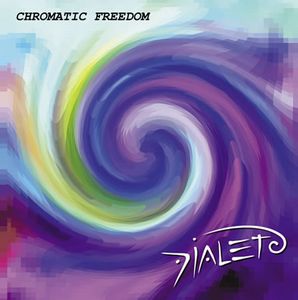
The title of Dialeto’s second album, Chromatic Freedom, refers to a specific concept derived from influential Hungarian composer Béla Bartók, and adapted to rock music – the exploration of the 12-note scale, also known as chromatic scale. The simple yet striking cover artwork reinforces the concept with a sort of visual pun. The essential role of cultural and ethnic integration in Dialeto’s sound is also rooted in Bartok’s artistic vision, as witnessed by the quote that introduces the band’s bio on their website. However, the album, far from being overly pretentious, is surprisingly approachable, its eclecticism realized in a streamlined rather than sprawling manner. Dialeto’s stripped-down format allows the three musicians remarkable freedom, their instruments emoting in synch or adopting a more free-form stance according to the requirements of the composition. They also produce an impressive amount of sound – a characteristic they share with the two King Crimson-related outfits that have been wowing American audiences these past few weeks, Tony Levin’s Stick Men and Adrian Belew’s Power Trio. All of these bands display an almost uncanny ability to produce endlessly intriguing textures using just the basic rock instruments – a markedly different approach to progressive rock than the traditional symphonic one.

Just like King Crimson and its offshoots, Dialeto allow vocals into the equation, often using them as an additional instrument – at times gentle and soothing, at others harsh and assertive. Lyrics are both in English and the band’s native Portuguese – the latter, in my view, a much more interesting choice, especially as the unique phonetic features of Portuguese and its proven effectiveness as a vehicle for music inject a sense of alluringly exotic warmth in the intricate fabric of Dialeto’s sound.

When listening to Chromatic Freedom, I was reminded of Texas-based band Herd of Instinct, another trio that made its recording debut earlier this year – though Dialeto lack the latter’s extensive use of touch guitars and the contribution of keyboards and other instruments to create eerie, ambient-like textures. The bare-bones instrumentation adopted by Dialeto, as well as the insistent, aggressively riff-based nature of many of their compositions, has prompted comparisons with punk and post-punk – reinforced by the vocal style in songs such as “Train of Destruction”. On the other hand, the analogy with Herd of Instinct’s debut (or even some of Trey Gunn’s output) is most evidently borne out by the album’s longest track, the hypnotic “This Is the World”, where the three instruments begin in a subdued tone – paralleled by the muted, almost whispered vocals – then the guitar gains strength towards the end.

Almost in a statement of intent, opener “Enigma”, propelled by Andrei Ivanovic’s pneumatic fretless bass and Miguel Angel’s tribal drum beat, skillfully blends echoes of King Crimson with Eastern-tinged chanting and eerie, drawn-out guitar sounds. The brooding bass line of “We Got It All” echoes the moody monotone of the singing, then the track takes a chaotic turn, with the vocals gaining a punk-like intensity; while the band’s signature tune “Dialeto” wanders into funky territory, with superb bass work throughout. The influence of Brazilian music emerges most clearly in the lovely, melodic “Falsa Valsa”, featuring a clear, piercing guitar solo, and in “Está No Ar” Brazil meets the Orient with a solid injection of abrasive Frippian guitar and towering bass lines. The most distinctly Crimsonian echoes, however, can be found the title-track, with its relentless, guitar-driven build-up, and the hauntingly atmospheric “Eu Me Lembro” – both of them bringing to mind the Wetton-Bruford period.

Although King Crimson have been frequently mentioned in the previous paragraphs, I wish to dispel any impressions that Chromatic Freedom is in any way a derivative effort. Dialeto have a very strong individual imprint, and any influences are reworked and integrated into the fabric of a sound made even more distinctive by the Brazilian and Middle Eastern suggestions. While the presence of vocals may be seen as disruptive by faithful devotees of purely instrumental music, in my view it contributes to making Dialeto an almost unique proposition. With an ideal running time below one hour and a nice balance between shorter, punchier numbers and longer, more atmospheric ones, Chromatic Freedom will appeal to the adventurous listener, and to everyone who still believes that prog can actually be progressive.

Links:
http://www.dialeto.org

SETLIST:
The Red and the Black
The Golden Age of Leather
ME 262
Burnin’ for You
Cities on Flame
Harvest Moon
Black Blade
The Vigil
Buck’s Boogie
Last Days of May
Godzilla
Don’t Fear the Reaper

Encore:
Hot Rails to Hell

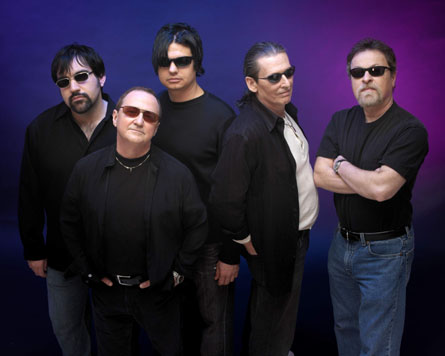
The saying “feast or famine” comes to mind when referring to Blue Öyster Cult live appearances, at least in my particular case. After having missed the band countless times in the past few years, finally in 2011 I had the opportunity to see them not once, but twice – a rare occurrence indeed.  The 25-year wait had wetted my appetite, and, not surprisingly, my review of their February 12 gig at Baltimore’s Bourbon Street was coached in glowing terms. In spite of  the loss of their status as one of the biggest draws in the world of “stadium rock”, accompanied by constant line-up changes,  the legendary outfit could still deliver the goods – and then some.

This time around, the concert was scheduled to take place in a real, old-fashioned theatre, one of the most popular institutions in the Washington DC metro area – a handsome Art Deco building that has been providing musical entertainment to capital dwellers for over 70 years. While the State Theatre has frequently hosted BÖC performances in the past, their last appearance there dated back from early 2008 – meaning that those who had not wanted to travel to Maryland to catch them in the past three years were definitely chomping at the bit. The theatre – a roomy, white-walled, high-ceilinged space with about 200 comfortable seats in the balcony, a small standing area in front of the stage, and a number of dining tables at the main level for those who want to combine the pleasures of music with those of food. Indeed, the smell of chili wafting upwards from the dining area and the happy noise of the diners made for a rather distinctive experience. With well-stocked bars and spacious common areas, the theatre allows for social interaction – unlike the average music club, where the dim lighting and loud volume of the background music often get in the way of conversation.

Even if for BÖC the days of  massive, state-of-the-art light shows and special effects are gone, to paraphrase one of their songs they certainly do not go through the motions whenever they are on stage. The attendance reflected their reputation as one of their best live acts around – even if  the lack of a record deal has prevented them from releasing any new material following 2001’s Curse of the Hidden Mirror. For a long-time BÖC fan like me, it was heartwarming to see people of all ages flock to the State Theatre. A guy sitting in the balcony, not far from us, had brought his young son (a boy of around 7-8 years of age), and there were also a lot of women – many more that at the average progressive rock concert. Anticipation ran high among the crowd, and the short opening set by six-piece Midnight Hike – an enthusiastic though not particularly impressive local outfit, very much in the alt-rock vein – was greeted with polite indifference. I could not help being a bit jealous of the lucky denizens of the New York area that, the night before, had been able to witness a double bill that also involved Uriah Heep, another legendary band that can still deliver in spades.

After the opening set, the stage was rearranged in short order, and at around 9 p.m. a volley of rather scary electronics (referencing some of the band’s best-known material) signaled the entrance of the long-awaited heroes of the evening. This time, charismatic frontman Eric Bloom was very much on board – relieving the burden that had been placed on Buck Dharma on the Baltimore date – and in fine shape, his witty banter (which included a couple of fleeting but rather barbed political references) adding spice to the musical offer. Bassist Rudy Sarzo, on the other hand, was engaged with Dio Disciples (who were playing the last date of their US tour), and was replaced by an old acquaintance of BÖC fans, Emmy winner Jon Rogers, who cut a dashing figure with his bobbed silver hair, dark shades and bright red bass guitar.

The almost 90-minute set included the inevitable “Godzilla”, “Hot Rails to Hell” and “Don’t Fear the Reaper”, which are always great to hear in a live setting. However, as much as I love BÖC’s out-and-out rockers, I found the central part of the concert, dedicated to some of their longer, more complex songs, especially satisfying. Besides the UFO-themed “The Vigil”, with its enthralling blend of the melodic and the sinister, and the deceptively catchy “Harvest Moon”, with its suggestion of disturbing Stephen King-like happenings in a quiet country town (perfectly rendered by the intense guitar bridge), we were treated to rousing versions of the towering biker epic “The Golden Age of Leather” and the BÖC-meets-Hawkwind space saga “Black Blade” – inspired by the Elric of Melniboné tales by British fantasy/sci-fi author Michael Moorcock.

Though, the set was not as Buck-centric as in Baltimore, when the guitarist had had to perform Eric Bloom’s role as well as his own, the pocket-sized six-stringer delighted the audience with his stunning, yet remarkably understated skills. The magnificent coda to “Cities on Flame” erupted after the audience had been teased with a series false starts; while the heart-stopping second half of the solo of “Last Days of May” – played at almost impossible speed – contrasted Buck Dharma’s cool, collected approach with Richie Castellano’s textbook-shredder performance (announced by Bloom with his customary deadpan humour). After Castellano had thrown the expected guitar-hero shapes and extracted all sorts of wailing sounds from his guitar, Buck unleashed his full firepower with effortless grace. Bloom and Castellano alternated behind the keyboard rig, with a particularly impressive organ run bolstering Buck’s guitar exertions in the splendid instrumental tour de force of “Buck’s Boogie”. While Buck’s politely melodic voice is still perfectly in command, Bloom’s gruff bellow has lost a bit of his edge: however, his delivery on the dramatic “Black Blade” was as effective as ever.

Though BÖC delivered a top-notch performance, the quality of the sound was somewhat disappointing, and took some of the punch out of the guitar-based songs, such as opener “The Red and The Black”, while the drums were occasionally too loud in the mix. Though I was elated by the inclusion of some of my personal favourites, I agreed with my husband when he stated that he had found the Baltimore gig more involving. I would also be happy if the band considered delving deeper into their peerless back catalogue, including some of their more complex, multilayered songs in their sets and retiring the likes of “Godzilla” or “Burnin’ for You” at least for a while. On the whole, however, in spite of this minor quibbling, it was an evening of great music from one of the greatest bands in the history of rock. It is to be hoped that their recording deal woes will end as soon as possible, allowing them to release some long-overdue new material.

Links:
http://www.blueoystercult.com


TRACKLISTING:
1. Hawks Circle The Mountain (7:09)
2. Snowswept (4:12)
3. Kansas Regrets (4:39)
4. Red Leaves (8.39)
5. Floor 67 (9:53)
6. Natasha of the Burning Woods (6:28)
7. Searise (13:10)
8. A Rumour of Twilight (2:33)
9. The Howling Wind (5:28) (bonus track)

LINEUP:
Jacob Holm-Lupo – guitars
Lars Fredrik Frøislie – keyboards
Sylvia Skjellestad – vocals
Mattias Olsson – drums
Ketil Vestrum Einarsen – flutes, woodwinds
Ellen Andrea Wang – bass

With:
Tim Bowness – vocals (3)
David Lundberg – Fender Rhodes and Wurlitzer (3), orchestration (2)
Michael S Judge – guitar solo (1)

In the early Nineties, Norwegian outfit White Willow was among the contingent of Scandinavian bands that spearheaded a revival of progressive rock that in the next two decades would spread to the rest of the world. After almost 20 years of activity, appearances at high-profile festivals such as NEARfest, Crescendo and Summer’s End,  and the release of 6 studio album, they have established themselves as one of the most important modern prog acts. Led by multi-instrumentalist and composer Jacob Holm-Lupo (owner of Termo Records together with keyboardist Lars Fredrik Frøislie), the band have gone through numerous line-up changes, and the release of their fifth album, Signal To Noise (2006) was followed by a six-year hiatus. Now down to a quintet, with only Holm-Lupo remaining of the band that had debuted in 1995 with the acclaimed Ignis Fatuus, White Willow have made their long-awaited comeback with the return of original vocalist Sylvia Erichsen (now Skjellestad), as well as two new entries  – bassist Ellen Andrea Wang (of Norwegian avant-garde outfit SynKoke) and drummer Mattias Olsson (known for his work with Änglagård and Pär Lindh Project).

Before Terminal Twilight, White Willow were one of the (unfortunately) many bands with whose name and reputation I was acquainted – without, however, having ever heard any of their music. Being familiar with the “big two” names of the Scandinavian prog renaissance, and having read reviews of the band’s previous albums, I was expecting something along the lines of Änglagård or Anekdoten’s output, a  riveting mixture of melody and angularity tinged with sadness, though never gratuitously depressing. My first taste of Terminal Twilight was, however, quite different, as some of the songs (especially those in the first half of the album) featured catchy, almost upbeat elements typical of successful “crossovers” between conventional progressive rock modes and more mainstream genres. Sylvia Skjellestad occasionally sounded like a gentler, less quirky version of Björk, and a few times I was reminded of Celtic/New Age artists such as Clannad or Loreena McKennitt.

It took me a number of listens before the many layers of the album began to unfold, revealing the sheer eclecticism of the band. While the album is not tainted with the blatant derivativeness that seems to be common currency nowadays, I was able to detect quite a few diverse influences while listening to Terminal Twilight. At first,  the mainstream component (mainly conveyed by the vocals) seemed to prevail, but with successive listens the complexity of the compositions began to emerge. The classic symphonic component, represented by Frøislie’s impressive array of vintage keyboards, is at times cleverly concealed, and will often surface when least expected. With a line-up that reads like a “who’s who” of Scandinavian prog (besides Olsson’s past associations, Frøislie is also involved with Wobbler and In Lingua Mortua, and flutist Ketil Westrum Einarsen was a member of Jaga Jazzist), the stunning musicianship displayed on the album will certainly not come as a surprise, though listeners never feels they are being bludgeoned over the head with technical fireworks. In true Scandinavian tradition, the members of White Willow are ensemble players, and individual skill is put at the service of the end result.

Clocking in at about one hour, Terminal Twilight features eight “official” tracks, plus a bonus track, the strongly percussive “The Howling Wind”, which with its experimental feel might point to intriguing future developments in the band’s sound. Opener “Hawks Circling the Mountain” immediately evidences the contrast between the mellow, almost genial vocals and the intricacy of the instrumental sections. Frøislie’s keyboards paint a rich range of soundscapes, with chilly electronics competing with the warmth of the piano and mellotron to which the flute adds its distinctive voice, while the guitar remains on the sidelines for most of the song, emerging towards the end in a jangly, slightly discordant solo (courtesy of Mike Judge, aka The Nerve Institute). In the next two tracks, with their restrained running time and strong crossover appeal, White Willow veer into contemporary prog/art rock territorie,. The combination of martial, tribal-sounding drums and chiming guitar in “Snowswept” reminded me of U2, while the atmospheric “Kansas Regrets” sees a sensitive vocal performance from guest Tim Bowness of No-Man; not surprisingly, the song contains echoes of Porcupine Tree, as well as Jakko Jakszyk’s work as a solo artist and on the latest King Crimson project, A Scarcity of Miracles.

With “Red Leaves”, the album enters more traditional prog territory, with an orgy of Mellotron and other keyboards whose majestic sweep brings to mind Rick Wakeman and his essential contribution to the classic Yes albums of the early Seventies. Jacob Holm-Lupo’s guitar steps into the limelight in the second half of the track, lending both a harder edge and an almost Hackettian lyricism. “Floor 67”, the second longest song on the album, merges the poppy, Latin-tinged accessibility of the vocals (reinforced by the mention of siestas and verandas in the lyrics) with faintly new-agey acoustic passages, and heavier, drum-fuelled  moments – in my view, not very successfully, since the track comes across as a bit patchy. On the other hand, the album’s pièce de resistance, the 13-minute “Searise”, will delight fans of vintage Anglagard and Anekdoten. Mattias Olsson’s sensational drum performance is aided and abetted by Froislie’s no-holds-barred keyboards (incuding some particularly fine Hammond organ runs), and tempered by gently pastoral flute inserts that reminded me of early PFM. Mostly instrumental, the song packs quite a few tempo changes, and its solemn symphonic structure is enlivened by glimpses of jazz and folk influences. The album is wrapped up by the short “A Rumour of Twilight”, a melancholy, mainly acoustic number with lovely guitar; the other instrumental, “Natasha of the Burning Woods”, hovers between rarefied and densely orchestrated without clearly choosing either direction, though enhanced by the clear, melodic tone of the steel guitar.

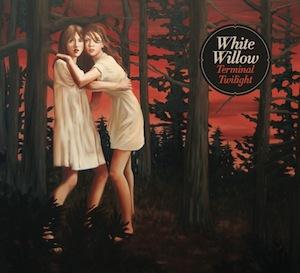
With its beautiful though faintly disturbing cover artwork,  Terminal Twilight enjoys superb sound quality (not surprising to anyone acquainted with both Frøislie and Holm-Lupo’s painstaking search for sonic perfection), and achieves a commendable balance between vocal and instrumental sections. However, it is an also an album that requires time and attention in order to be fully appreciated, and the first approach might be deceiving as well as disappointing. Moreover, the album’s unabashed eclecticism may produce an impression of patchiness that only repeated listens will dispel. In any case, Terminal Twilight is a very solid release that manages to  reconcile the classic symphonic prog tradition with the more contemporary trends of the genre, and is therefore likely to appeal to both conservative and adventurous fans.

Links:
http://www.whitewillow.info/

http://www.myspace.com/whitewillowband

http://www.termorecords.com/

TRACKLISTING:
1. Irreducible Complexity (3:39)
2. Manifest Density (3:45)
3. Save the Yuppie Breeding Grounds (4:07)
4. Disillusioned Avatar/Dub Interlude/Ephebus Amoebus (10:25)
5.  Disoriental Suite (11:46):
a) Bagua
b) Kan Hai De Re Zi
c) Views from Chicheng Precipice
6. Kuru (4:31)
7. The Okanogan Lobe (7:36)
8. Uncle Tang’s Cabinet of Dr. Caligari (3:44)
9. Blues for a Bruised Planet (4:35)
10. Waylaid (5:31)
11.  Middlebräu (9:09)

LINEUP:
Dennis Rea – guitar
Alicia DeJoie – violin
James DeJoie – baritone sax, flute, percussion
Kevin Millard – NS/Stick (8-string extended-range bass)
Stephen Cavit – drums, percussion

Two years after the release of their debut album, Manifest Density, Seattle-based quintet Moraine enjoy an impressive reputation as one of the most eclectic outfits on the modern progressive rock scene, purveyors of music that, while constantly dynamic and challenging, is never devoid of atmosphere and melody. In the months between the release of the album and their career-defining performance at NEARfest 2010, the band, led by veteran guitarist and composer Dennis Rea, underwent a lineup change, with the departure of cellist Ruth Davidson and drummer Jay Jaskot that determined a distinct shift in their sound.

For their sophomore effort – bearing the brilliant name of Metamorphic Rock, which, like the band’s own, reflects Dennis Rea’s passion for geology and mountaineering, as well as referring to the metamorphosis undergone by the band – Moraine have chosen a rather unconventional format. Though it is a live album, capturing their NEARfest set in crystal-clear detail, it focuses on new, unreleased material as much as on compositions originally featured on Manifest Density. The latter have been rearranged to accommodate the obvious differences in sound due to the presence of a baritone saxophone instead of a cello, their running time often extended as if to indulge the average prog fan’s preference for longer tracks.

With five members coming from very different musical backgrounds, Moraine are quite unlike conventional prog bands in being much less prone to reproduce their compositions verbatim when on stage, and thrive on freedom of improvisation. This diversity results in a headily eclectic direction, blending rock with jazz, funk, blues, world music and avant-garde, which however never descends into the sprawling “kitchen sink” approach adopted by many acts, with often debatable outcomes. Since its very beginning, Moraine has been a collaborative effort, with every member getting an opportunity to contribute to the songwriting – even if Dennis Rea gets the most credit on this album as a composer. As much as he is the band’s mouthpiece and most experienced member, even a cursory listen to either of Moraine’s albums will reveal a dense, tightly woven structure in which all instruments bring their own distinctive voice, and no one overwhelms the other.

The 11 tracks chosen for the band’s NEARfest set highlight their unique dynamics and the wide range of influences and ideas that characterize their compositional approach. Traces of their beginnings as a “chamber rock” outfit (or, as Rea puts it, a string quartet with drums) emerge occasionally throughout the set, but the definite rock turn taken by the band is hard to miss. In its three minutes, opener “Irreducible Complexity” effectively sums up the “new” Moraine: written by James DeJoie, it emphasizes how seamlessly the saxophone has become part of the whole, replacing the solemn drone of the cello with its more forceful tone, acting both as foundation (together with Stephen Cavit’s understated but subtly propulsive drumming and Kevin Millard’s versatile 8-string bass) and as a protagonist, in combination with the flowing, melodic strains of Alicia DeJoie’s violin and Rea’s clear, almost tinkling guitar.

Interestingly, the majority of Moraine’s compositions seem to make use of a leitmotiv device, a main theme, generally introduced right from the beginning, which crops up in different parts of a song, rendering it more memorable as well as more cohesive. This device is also explored by “Manifest Density”, with its catchy guitar-sax-violin riff, and the more angular “Kuru” – as well as newer material like the hauntingly majestic “The Okanogan Lobe”, and the forceful, slightly chaotic “Waylaid”. Like many of those RIO/Avant bands they have often been compared with, Moraine balance beautifully melodic, lyrical sections, dominated by Alicia DeJoie’s soaring violin, with others where a carefully controlled chaos seems to reign. “Uncle Tang’s Cabinet of Dr. Caligari” represents the band’s noisier side; while in the 10-minute medley of “Disillusioned Avatar/Dub Interlude/ Ephebus Amoebus”, all the different souls of Moraine are given a voice – from the gorgeously melancholy, violin-driven beginning – a masterpiece of careful atmosphere-building with its loose, rarefied texture – to the lazy reggae pace of the “dub interlude” (which allows the rhythm section to step into the limelight), finally climaxing with an effects-drenched, free-jazz workout.

Running at almost 12 minutes, the amusingly-named “Disoriental Suite”, based on Dennis Rea’s solo album Views from Chicheng Precipice illustrates Moraine’s more meditative side, opening with a gentle, lilting melody enhanced by James DeJoie’s flute, and culminating with a sparser, more experimental, violin-led section. As its title implies, the somber mood of “Blues for a Bruised Planet” – a fresh take on the old warhorse of the blues ballad – expressed by the mournful voice of the sax and reinforced by violin and guitar, stems from Dennis Rea’s deep concern with the sorry state of Planet Earth. My personal favourite from the band, the towering “Middlebräu”, closes the album with a bang, its funky intro followed by a short, snappy drum solo, and then culminating with the gorgeous, slow-motion coda in which the interplay between guitar and violin reaches unparalleled heights.

The sheer quality of the recording (mixed by legendary Seattle-based engineer Steve Fisk) and the brilliance of the individual performances more than compensates for the editing of Rea’s unassumingly witty on-stage banter – my only quibble about an otherwise outstanding album. As I pointed out in my review of the 2010 edition of NEARfest, Moraine were by far the most authentically progressive band on the bill. Moreover, their particular brand of “East-meets-West” is quite far removed from cheesy attempts at exoticism for its own sake, but rather motivated by genuine love and interest for different musical modes than ours. Needless to say, Metamorphic Rock is unlikely to be fully appreciated by symphonic prog traditionalists, especially those who object to the absence of keyboards, but it is otherwise highly recommended to all open-minded prog fans. Another contender for my personal Top 10 of 2011 – hoping for a third album some time in 2012.

Links:
http://www.moraineband.com

http://www.moonjune.com

SETLIST
Rob Martino:
The Long Circle I/One Cloud
Conscious Dream
Differential
The Long Circle II

Rob Martino/Phideaux Xavier:
Vultures & Mosquitoes (with Cyndee Lee Rule)
Universal

Phideaux:
Darkness At Noon/Prequiem/Coda 99
Thank You For The Evil
Snowtorch Part 1 Extract/Dormouse – An End [instrumental]
The Search For Terrestrial Life
Doom Suite [Micro Softdeathstar/Doctrine Of Ice 1/Candybrain/Crumble]
Waiting For The Axe/The Claws Of A Crayfish
Abducted
Helix
Coronal Mass Ejection
Microdeath Softstar

Encore:
Tempest Of Mutiny

In spite of its relative closeness to our Northern Virginia home, my husband and I are not frequent visitors to the Orion Studios – much to our detriment, because the very distinctive atmosphere of the legendary Baltimore venue and the constant excellence of its musical offer never fail to make for a memorable experience. It might be said that the Orion is an indoor equivalent of the beautiful surroundings of Storybook Farm (the ProgDay venue), with the audience bringing their own chairs and drinks and mingling with the artists in a way that is light years removed from those overpriced “Meet and Greets” that allow mainstream concert promoters to rake in the big bucks. Sadly, even a niche event like the Two of a Perfect Trio gig of September 24 was not exempt from attempts to cash in on the two bands’ relative notoriety.

The concert planned for the evening of Saturday, October 1 was one of those that manage to draw out even the laziest member of the prog community of the Baltimore/DC area, and even further afield – especially as it was a one-off performance by one of the highest-rated bands on the current prog scene. On a rainy, chilly autumnal evening more suited to mid-November than early October, nearly 100 people flocked to the Orion Studios, some of them having travelled considerable distances; the small space in front of the stage was crowded with folding chairs, and anticipation was running high for what promised to be a night to remember. Phideaux were about to wrap up a very favourable year – which had seen the release of their spectacular eighth album, Snowtorch, followed by a career-defining appearance at ROSfest 2011 in the month of May – with what was expected to be their last performance for quite a while. In fact, the band had announced they would be taking a lengthy break in order to concentrate on the completion of Infernal, the final episode of the trilogy begun in 2006 with The Great Leap and continued with Doomsday Afternoon.

Even though Phideaux’s career as a live outfit started relatively recently, with their participation in the 2007 edition of the Crescendo Festival in France, they seem to have a natural affinity with the  stage – in spite of the obvious practical difficulties involved in setting up a tour with 10 people living in different areas of a large country such as the US. However, those who had been able to attend one of their shows had commented enthusiastically, and Phideaux’s ROSfest appearance consolidated their reputation as one of those acts whose music acquires a whole new dimension in a live setting. A group of uncommonly talented people, most of whom have known each other since childhood, Phideaux’s unique configuration allows each of the members to bring his or her individual contribution to the table in a heady mix of melody, power and passion. Their deeply literate concepts eschew the trite fantasy-based topics often associated with prog, following instead in the footsteps of artists such as Roger Waters, Jethro Tull’s Ian Anderson  and Peter Gabriel in offering a complete package of music and thought-provoking lyrical content.

The show started right on schedule at 8 p.m. with Rob Martino’s short but delightful Chapman stick solo set. Like Phideaux, Martino had appeared in the Romantic Warriors documentary – whose authors, the indefatigable Adele Schimidt and José Zegarra Holder, were also present, filming the event. While single-instrument sets can sometimes overstay their welcome, Martino’s skill and engaging presence made for compulsive watching and listening. After having witnessed Tony Levin’s astonishing performance just one week earlier, I was looking forward to some more Chapman stick action, this time unencumbered by the presence of other instruments. In spite of his modest, unassuming attitude – he was visibly delighted at having been invited to open for one of his favourite bands – Martino is a real virtuoso, and also a gifted composer. His tightly structured pieces (showcased on his 2010 debut album, One Cloud) describe haunting soundscapes full of melody and complexity, exploiting the considerable possibilities offered by his distinctive instrument, and avoiding any semblance of pointless noodling.

At the end of his set, Martino invited Phideaux Xavier and Pennsylvania-based violinist Cyndee Lee Rule (a classically-trained musician with an impressive discography under her belt) to join him on stage. Rule’s handsome signature instrument, called the Viper, bestowed a stately yet lyrical touch to the interplay between Martino’s stick and Phideaux’s acoustic guitar. The trio played a beautiful version of “Vultures and Mosquitoes” (from Fiendish), followed by a rendition of “Universal” (from Phideaux’s debut album Ghost Story) performed only by Martino and Xavier. While Rob’s solo spot was quite striking, seeing him perform with other artists led me to believe that he would be a great asset to any band.

After a short break for refreshments and social interaction, the time came for Phideaux the band to take the stage. While by no means small in comparison to other venues (including the Jammin’ Java), the Orion stage must have felt somewhat cramped to the 10 members of the band after the ample room provided by the Majestic Theatre in Gettysburg.  However, they arranged themselves in a perfectly conceived triangular shape, with the two keyboardists, Johnny Unicorn and Mark Sherkus, positioned on both sides of “Bloody Rich” Hutchins’ drum kit, bassist Matthew Kennedy sitting on the drum riser, and the rest of the members forming the base of the triangle at the front of the stage. Unicorn, Sherkus and Kennedy’s quiet, unassuming mien was nicely offset by the flamboyance of drummer Hutchins, with his heavily tattooed arms and jaunty hat, while the front line – together with Phideaux the man’s boyish smile and engaging stage manner, and tall, serious-looking guitarist Gabriel Moffat (who is also the producer of all the band’s releases) –  displayed a formidable assembly of female talent: diminutive violinist/vocalist Ariel Farber, willowy lead vocalist Valerie Gracious, and identical twin sisters Molly Ruttan and Linda Ruttan Moldawsky, purveyors of vocals and various metal percussion. Gracious’ pure yet forceful voice (particularly in evidence on “Crumble” and “Helix”) was a perfect foil for Phideaux’s warm tones, with their slightly rough around the edges note, the harmonies soaring in exhilarating fashion, complementing the crescendo-like structure of most of the songs.

Enhanced by excellent sound quality (even if the drums sounded perhaps a bit too loud in that limited space), Phideaux’s set offered a selection of tracks taken from all their albums except Chupacabras (with pride of place given to their three most recent releases, Doomsday Afternoon, Number Seven and Snowtorch) presented in a somewhat different format than their CD equivalents. This time around, the Snowtorch material was given a starring role, the sheer beauty of the music and vocal performances unfolding in the warm, intimate setting of the venue, brimming with poignancy and intensity; while the rousing encore, the maritime-themed “Tempest of Mutiny”, brought to mind echoes of Jethro Tull and vintage English folk-rock. The folk element of the band’s sound was particularly evident throughout the performance, validating the comparisons with The Decemberists that I had chanced upon in the past few days. Like Colin Meloy’s  crew, Phideaux offer a complete artistic experience; moreover, both bands seem to concentrate on both the masculine and the feminine element – the yin and the yang – though dispensing with any tiresome peddling of mere sex appeal. As I observed in my review of the ROSfest set, Phideaux also manage not to sound like anyone else – pace the remarkably wrong-headed label of “regressive rock” that some nitpickers have stuck on them. While no one in their right mind would state that the band are the second coming of Magma (though, in some odd way, they do resemble them when on stage, especially as regards the central role of women), they transcend any of the influences detectable in their compositions.

It is really unfortunate that practical considerations stand in the way of a full-fledged tour, because Phideaux are tailor-made for the stage. The chemistry between the members is impressive, and the genuine affection and gratitude with which Phideaux the man introduced each of his bandmates, highlighting their contribution to the band’s musical architecture and revisiting the beginnings of his acquaintance with each of them, was extremely moving. Unlike many other bands (prog or otherwise), Phideaux are a tightly-knit group of friends who genuinely care about each other, and because of that they have managed to put together a sort of “cottage industry” that allows them to produce albums almost without relying on outside help

On the whole, the show – nearly three solid hours of utterly brilliant music – was everything that a prog concert should be: not only outstanding from a purely musical point of view, but also full of warmth and a genuine collaborative spirit, enhanced by the intimate, unpretentious setting of the Orion. It also reinforced my conviction that Phideaux have the full potential to become the next “big name” on the modern progressive rock scene – if the fans will allow such a thing to happen, and stop pining for the past. The evening of October 1 proved that, with bands such as Phideaux, prog can still look forward to a bright future.

Links:
http://www.robmartino.com

http://www.bloodfish.com

Interview: Moraine

Seattle-based band Moraine, one of the most interesting finds by MoonJune Record’s volcanic mastermind, Leonardo Pavkovic, first came to the attention of the progressive rock scene in 2009, with the release of their debut album Manifest Density. Their reputation as purveyors of complex, intelligent and energetic music with a definitely eclectic bent – chamber rock with an edge – was consolidated by their exhilarating performance at the 2010 edition of NEARfest, and, earlier this year, by a short but successful East Coast tour. With the official release of their second album, Metamorphic Rock (recorded on the occasion of the above-mentioned NEARfest appearance) less than a month away, band members – guitarist Dennis Rea, violinist Alicia DeJoie, saxophonist Jim DeJoie, bassist Kevin Millard and drummer Stephen Cavit – have kindly agreed to share some of their thoughts and experiences on behalf of my readers.

———————————————————————————————————————

Let us start with a rather unoriginal, though obligatory, question. How did the band come into existence, and what was the reason for its inception?

Dennis: Speaking of metamorphosis, Moraine has mutated so thoroughly since its inception that its origins as a free-improvising duo between myself and cellist Ruth Davidson are barely discernable now. The project began as a casual series of get-togethers with no specific agenda; there was certainly no expectation that it would evolve into the type of band it is today. As the musical relationship deepened, both of us brought in some compositions and it soon became apparent that the music would benefit from additional instruments. So we enlisted violinist Alicia DeJoie and drummer Jay Jaskot and named the newly formed band Moraine, a term denoting the debris carried along and deposited by a glacier, very apt for our part of the world. I had worked with Alicia in singer-songwriter Eric Apoe’s group They and knew that she would be perfect for what I had in mind. Jay had been the drummer in my late-90s band Axolotl and we had always been keen to continue our musical partnership.

After briefly trying out a couple of bassists, we found the ideal fit in Kevin Millard, who had played with Ruth back in their native Minnesota; it was an odd coincidence that I met the two of them independently. This lineup persisted for a year or so until Ruth departed for graduate school on the East Coast and Jay relocated to New York City. The drum chair was filled by Stephen Cavit, a longtime musical associate of mine who, in addition to being a phenomenal drummer, is also an Emmy Award–winning film composer and choir director. We considered replacing Ruth with another cellist but didn’t know any in Seattle who had the right temperament for this particular project, so we decided to deploy woodwinds (primarily baritone saxophone) in place of cello. James DeJoie was an easy choice for this role because he is not only one of the finest and most versatile saxophonists in the Pacific Northwest, but also is married to Alicia and thus had already grown familiar with our repertoire. This lineup has been in place for about two years now, and there’s every reason to believe that it will continue indefinitely.

Most of the interviews I have read so far seem to focus on Dennis Rea’s background. However, this time I would rather concentrate on everyone else’s experiences prior to joining the band. What prompted you to join, and how different are Moraine from your previous (or even current) musical experiences?

Alicia: When Dennis Rea approached me about Moraine, I was immediately interested. I had played with Dennis before and had greatly enjoyed it, profoundly impressed by his unique sound and compositional prowess. I had also seen him in the group Axolotl and absolutely loved that band, and was very excited to learn that Moraine would be doing some tunes in common. Moraine is unlike any band I’ve ever been in – our sound is unique, ultra-creative, yet what I like to think of as approachable. In addition to the musical camaraderie shared amongst us in the band, we all get along extraordinarily well as people, which is another aspect of the group I love and appreciate.

Jim: Prior to joining Moraine, I was doing a lot of jazz (well, still do!). I’ve always played in a few large ensembles as well as my own groups. I feel I have a little different take on “jazz” than most, by including “rock” and “pop” elements into the revered jazz world. I have been into using effects on my saxes, flutes, and clarinets for years and really love exploring the sounds created with what are essentially guitar efffects. When Ruth Davidson (Moraine’s cello player) left the band to continue her educational pursuits, Dennis asked if I would be interested in joining. The range of the bari sax and bass clarinet seemed an appropriate replacement for the cello (and they were rehearsing at my wife’s and my house!). I did have some reservations at first, only because I knew my sound would be a completely different thing for the group. I said “yes” with the condition that if it didn’t work out, Dennis could fire me – no hard feelings. Needless to say, I think it’s working out fantastically!

Stephen: When Dennis called me to potentially replace Jay (how is that possible?!?), I was fully engrossed in my composition career — during which time I’ve won an Emmy Award and been named a Sundance Composers Lab Fellow, among other great honors. I had been pretty active in the Seattle music scene before returning to live in Los Angeles for work in early 2000. When I made it back to Seattle a few short years later I found the scene had changed substantially and I didn’t recognize many of the new faces. Which is what made Dennis’ call all the more sweet: I was really jones-ing to perform again!

Kevin: My earliest musical experiences in Seattle (having moved here in ’96) were in the experimental music circles; I met Dennis back then.  He was playing in a band I adored called Axolotl, and my own band at the time (Panopticon, we called ourselves “avant-groove” or “trailer park jazz”) briefly shared a practice space with them.  I also had known Ruth back in Minneapolis; when she moved here, I introduced her to Dennis’ music.  Fast forward several years: imagine my delight to find they had formed an amazing band.  A month after seeing Moraine for the first time, their bassist left town suddenly.  I auditioned, and the fit was very natural.  I love playing music with such good friends.  The band’s music itself is very close to my heart, being a fan of Dr. Nerve, Univers Zero, and 70’s King Crimson.

What is your approach to your respective instruments, and to the compositional process? What about your main musical influences?

Dennis: In a word, I am nondoctrinaire in my approach to playing the guitar; that is, I don’t subscribe to any particular doctrine, ideology, or school of playing. I’m not a jazz guitarist, I’m not a rock guitarist or avant-garde guitarist, but simply a guitarist who is free to exercise any of my many musical interests.

Although I started out taking the standard lessons like everyone else and have periodically studied this or that aspect of music making, I’ve had relatively little formal musical training. I long ago came to the realization that my gift is my ear and that a more intuitive, listening-based approach suits me best. I can read music with a gun to my head but prefer to communicate simply through playing whenever possible. Some people have commented that my playing has a ‘searching’ quality, and that’s because I am literally searching for the right note or phrase rather than following patterns and formulae. As for composing, most of my tunes begin with a single musical motif that gets embedded in my mind; from there I begin crafting variations and complementary parts for my fellow musicians. I typically compose the other players’ parts in my pieces while making sure to leave them ample room for soloing and interpretation. Most of this polyphonic writing actually takes place in my head rather than on paper, when I’m walking down the street or doing something similarly innocuous – I seem to have the ability to hear fully formed pieces in my imagination. I then bring the parts to the other musicians at rehearsal, either in written or recorded form or transmitted using a sort of musical onomatopoeia.

As for my main influences, it’s futile to try to compress them into a baker’s dozen, but some very important influences would have to include John Abercrombie, Art Ensemble of Chicago/AACM, Derek Bailey, Paul Bley, Anthony Braxton, Brotherhood of Breath, John Cage, Eugene Chadbourne, Don Cherry, John Coltrane, Cui Jian, Miles Davis, Stuart Dempster, Eric Dolphy, the ECM catalog in general, Bill Evans, free improvisation, Fred Frith, Stan Getz, Egberto Gismonti, Jimi Hendrix, King Crimson, Gyorgy Ligeti, John McLaughlin, Charles Mingus, Ben Monder, the NYC No Wave movement, William Parker, Harry Partch, Annette Peacock, Jim Pepper, psychedelia, George Russell, Terje Rypdal, Elliott Sharp, Soft Machine, Sun Ra, Toru Takemitsu, Keith Tippett, Ralph Towner, Robert Wyatt, and the music of Brazil, Cambodia, China, Korea, the Naxi people of southwest China, North Africa, Vietnam, and Xinjiang

Alicia: My approach to the violin is to be as present as I can with the instrument while I’m playing, yet free enough to plunge into the unknown, stretching the gamut of sounds the instrument is capable of making. The solid, sonic landscapes laid down by Moraine compositions provide compelling foundations which inspire me to explore myriad melodic and rhythmic elements when soloing. The compositions I’ve brought to Moraine have all started at the piano and migrated to the different instruments from there. I love knowing that when I bring a new piece to rehearsal, the rest of the band will contribute much more with their unique sounds and ideas. Every piece is then honed, enhanced, and ultimately transformed into an expression of the entire band.

Jim: Well, I’ve always approached all my instruments with the mantra “sound first.”  In other words, tone and passion – the effects I use are extensions of my acoustic tone and feel. Compositionally, my ideas generally come from the sax and piano – once an idea starts, I  try to keep fleshing it out until it feels done – I have many, many unfinished pieces! My main influences are wide: John Hollenbeck, Miles Davis, Yusef Lateef, Ornette Coleman, and Tom Waits are some of my personal heroes. Of course there are many others: Eric Dolphy, George Crumb, Morton Feldman, Jim Black, Chris Speed, Portishead, Battles, Anthony Braxton, Dave Douglas, David Bowie… There is so much great music to explore.

Stephen: I haven’t written anything for Moraine, probably because I am not a tune writer and feel more than a little intimidated by the prospect, but I do have a very developed process when it comes to scoring for film…..   I have pretty broad influences and, in regards to drumming, I would cite Paul Motian, Ed Blackwell, Gene Lake, and a few others of that ilk as my favs. When I first joined Moraine the music seemed to have a free-flowing jazz sensibility, more so than the driving rock sound it has today. The music spoke to me in that way and I feel, as a whole, our arrangements became tighter and more dynamic as a result of that shift.  In terms of what I listen to daily, I am mostly a classical music junky. I enjoy Eastern European post-minimalism, in particular, including most of the usual suspects like Arvo Part and Henryk Gorecki and some possibly lesser known composers like Petris Vasks. It’s hard to say how that listening effects my drumming on a conscious level, but I’m certain it does. There’s a much more direct influence on my choral, concert and film work.

Kevin: I am a bit of a “red-headed stepchild” in Moraine, given that I don’t read music and am self-taught on tapping instruments and bass guitar.  (I’m not ashamed to admit that the Violent Femmes and Tones On Tail helped inspire me to take up the bass.)  But when I picked up my first Chapman Stick, it encouraged my dabblings in music theory and into “fancier” music.  My only real ‘bass idol,’ as it were, is Mick Karn (RIP) – a humble, self-taught iconoclast whose lack of formal training helped him develop his own unique tones and voice.  As for composition, I am not much of a tune-writer, having contributed only one tune to Moraine thus far (which was a tune I wrote for Panopticon).  I prefer to take more of a collaborative approach to writing music, probably because I am secretly a lazy man.

How has Moraine’s sound developed since its beginnings, and how did it change with the addition of Stephen and Jim?

Dennis: As mentioned previously, the group began as a free-improvising duo, morphed into a sort of chamber-rock quintet with a ‘string quartet plus drums’ configuration, and then arrived at its current lineup of guitar, violin, woodwinds (including flute), drums, and bass (an eight-string NS/Stick, to be precise). The net result of this transformation is that we are much more of a rock band now, albeit one that is just as likely to make excursions into jazz, world (particularly East Asian) music, and any other musical dialect that interests us.

The addition of Stephen and Jim pretty cemented our current, more forceful approach, for a number of reasons. For one thing, we had often faced challenges making the cello heard in an electric band setting due to issues with amplification, feedback, and overlapping range, whereas Jim’s baritone saxophone, fitted with a microphone, cuts through loud and clear. And unlike his more straightahead jazz gigs, Jim sees in Moraine an opportunity to explore creative sound processing, so his use of various effects such as harmonizers further beefs up the group sound, to the point where it’s almost as though we have a second heavy-duty guitarist on board. Alicia has recently begun incorporating more effects into her sound as well, which opens up a whole other set of possibilities.

Our previous drummer, Jay Jaskot, is a gifted musician whose heart really lies in jazz. With Moraine, he tended to play freely across the bar lines rather than delineate the transitions in our compositions. This approach often produced marvelous results, but as our repertoire grew increasingly intricate, the music called for a more architectural rather than free-flowing style of drumming. While Stephen is also adept at playing jazz, his parallel career as a composer brings a more structural approach to the music, thus enhancing dynamics and lending more drama to the music.

Since I was present at NEARfest 2010, where I had the pleasure to meet all of you for the first time, I am interested in your take  on the whole experience – especially as the future of the festival seems to be hanging by a thread. I also know that most of you had had no involvement with the “prog scene” prior to the release of Manifest Density. What have been your impressions so far?

Dennis: For us, NEARfest was a dream gig in every respect. We were frankly stunned to have been invited, given our exceedingly low profile among progressive rock enthusiasts at the time. Indeed, I saw quite a few “Who?” responses to the announcement in Internet forums. That makes it all the more satisfying that our set was not only well attended but very enthusiastically received.

To put things in perspective, our gigs in Seattle are typically in small dive bars and cafes for about 10-20 people. We’ve landed some decent gigs at local festivals and performance series, but nothing remotely approaching the caliber of NEARfest. It goes without saying that we had never experienced such top-flight sound, lighting, and acoustics as a band, and indeed that’s what made Metamorphic Rock possible. For starters, the warm hospitality and overall good vibe fortunately elicited one of the band’s best performances to date. The recording we obtained from NEARfest was of superb audio fidelity, and subsequent mix work with legendary Northwest producer / sonic genius Steve Fisk and mastering wizard Barry Corliss made it even richer. It’s the best-sounding specimen of my own playing ever.

I was especially blown away to find myself sharing a stage with what was essentially Gentle Giant (Three Friends), one of my towering musical icons. And the experience of connecting with so many like-minded people (yourself included) was priceless.

I was dismayed at the sudden, unexpected cancellation of this year’s NEARfest – since we played on the festival’s last day in 2010, I sometimes quip, ‘Was it something we played?’ Seriously, I really hope that the organizers regroup and come back stronger than ever next year, and some of them have indicated to me that they will. I really don’t want to get caught up in the controversy over why public support for NEARfest dropped off so abruptly this year, though I suspect that part of it is that a certain segment of the once-loyal NEARfest audience doesn’t have the patience for newer bands like ours.

Alicia: We had a fabulous time at NEARfest 2010. I was thrilled at the response we received there, as well as the wonderful contacts we made and have kept since then. Our East Coast tour in the spring of 2011 was a small reunion of sorts with many of the people we met at NEARfest, which makes the release of our upcoming album Metamorphic Rock: Live at NEARfest that much more exciting to us.

Jim: I loved the experience. Usually, I consider myself a “journeyman” in a lot of groups – sort of show up and play and try not to make too many requests. But the NEARfest people were so accommodating and nice, it made the whole time a great experience (and for once I didn’t feel bad asking for more of me in the monitors!). The “prog scene” seemed really cool to me – full of people who truly love and are excited about music, a phenomenon not always associated with the “jazz” crowd. I’m disappointed to hear that the festival may not be happening in the future.

Stephen: If  having two drum techs is any kind of a taste of heaven, then I will be sure to be a good boy! We were so well cared for by people who clearly had a passion for this music. Fortunately, I was the only band member not to have any of the famous, high-octane espresso before the gig (I don’t drink coffee); otherwise, it’s possible Metamorphic Rock would have turned supersonic!!

Kevin: NEARfest was such a fantastic experience.  Having such an accommodating and friendly technical staff was a special pleasure (heck, having *any* technical help at all was a rare treat for us!, but seriously, the NEARfest crew was superb).  The coffee before the show was truly world-class.  And playing through not one but TWO full SVT 8×10 stacks was wish-fulfillment fantasy for me.  If NEARfest is, or was, the prog scene, then I look forward to more!  Such great audience and staff as well.

You recently completed a 4-date tour of the US East Coast. Do you consider it a success, or do you wish you could have done something otherwise?

Dennis: Though it was a modest tour by most measures, we felt that it was an almost complete success, marred only by some problems with borrowed equipment and a rather thin turnout in Philadelphia, but it was after all a Sunday night. Even so, we played very well that night and went down great with the the audience. Overall we received a tremendous response at every tour stop and offers to come back anytime (and we will). It was an almost disorienting contrast to our usual lot in Seattle (more on that below). In several cases people traveled long distances to see us, which was humbling; some had seen us the previous year at NEARfest and wanted more. Audience enthusiasm was palpable, and that fed into the music and charged up the performances. What’s more, we were astonished to actually break even on our travel costs through admissions and merchandise sales, which was wholly unexpected. We’ve also noticed that the touring experience has lifted us up to a new level of confidence and tightness – the Seattle shows we’ve done since then have been very high-energy.

Playing East Coast venues did underline our isolation in faraway Seattle. It was hard not to conclude that there is far more support for progressive rock in the U.S. Northeast than out in the Northwestern Hemisphere; folks back there might not think so, but all things are relative. Naturally, this makes us eager to return for more, but the geographical distance makes it a steep challenge to bring a five-piece band across the country without going deep in the hole. But we’ll be back, one way or another.

How did the new tracks featured  on Metamorphic Rock come about, and what makes them different from the material on Manifest Density?

Dennis: What’s different about our newer material is that it is being written expressly with our current instrumentation and musical personalities in mind, whereas many pieces on the previous two CDs were written before Moraine was formed and then adapted for our specific instrumental resources. Everyone in the band has a stake in the new material, and most of us are writing.

There are also different considerations when writing for woodwinds rather than cello. This will be apparent to those who listen to Metamorphic Rock who’ve also heard Manifest Density. We considered releasing a shorter version of the concert at first, to avoid repeating tracks that appeared on the first album, but found the total listening experience to be so cohesive that the energy would be sompromised by removing any pieces from the set list. We felt that it was excusable to reissue tracks from Manifest Density because with the new lineup, the arrangements are sometimes dramatically different from the previous versions. I’m pretty confident that people will be down with the record’s mix of new and refashioned material.

I know that you have been asked about your name more times than you care to admit, so this time I would rather inquire about the new album’s name, which sounds fantastic. Does it have anything to do with the Pacific Northwest being a heavily volcanic area?

Dennis: Not exactly, as volcanic rock is considered igneous rather than metamorphic rock. Due to the geological nature of our name, I like the idea of threading that theme through our work, not because it has any direct bearing on the music itself but because it’s a perennial area of interest for me. In fact, one of the song titles on Metamorphic Rock, “The Okanogan Lobe,” continues the theme, for the track’s namesake was a feature of the vast ice sheet that once covered parts of Washington State.

Strictly speaking, metamorphic rock isn’t related to moraines, except in an incidental way. Metamorphic Rock occurred to me in a flash of insight as the perfect way of answering that perennial question dreaded by musicians, ‘What type of music do you play?’ In our case we play a variety of rock music that continually seeks to transform itself, hence metamorphosis, hence Metamorphic Rock, which also plays on rock music and underscores that our music-making is a dynamic process.

While Seattle is commonly perceived as a sort of mecca for rock music, I know your experience is rather different, especially as regards getting opportunities for live performances. What are the main strengths (if any) and weaknesses of the Seattle scene?

Dennis: Seattle gets a lot of hype for being a happening music town, but personally I think it’s greatly overrated. As in any city its size, you can find many fabulously gifted musicians working in any genre you can name, but by far the lion’s share of opportunities and attention go to unimaginative indie rock and, lately, the fad for stovepipe-beard neo-Americana. There is no prog scene as such, and while there are a fair number of musicians whose music more or less fits that description, venues that will occasionally present that sort of thing are rare as hen’s teeth, and attention from the local music press scarcer still. Apart from the local jazz publication, where we have allies, Moraine has never received a single mention in any of the Seattle weeklies or arts/music scene rags – and yes, we do send them our CDs and press releases. But if I were to tattoo a middle finger on my forehead, guzzle a flask of Jägermeister, moon the audience, and throw up on the drummer, I can guarantee that there’d be a breathless feature profile of me in the local paper the following week 😉 While Seattle certainly has no monopoly on this sorry state of affairs, the fact remains that for a majority of listeners, physical appearance and attitude trump the music itself.

Lately I’ve seen some signs of a possible resurgence of interest in progressive rock out here, but it seems to be facing resolutely backward. For example, I came across a ‘Seattle Progressive and Art Rock Community’ Facebook group with great interest, but all I ever see discussed there are things like announcements of Kansas and Return to Forever concerts and calls for forming yet another Genesis tribute band. The few postings I’ve seen or submitted about live local progressive music events have been met with total radio silence – most of these folks would apparently rather hole up with their ‘70s records than support a living artform. In fact, I just heard about a local prog nut who passed up seeing a best friend’s first public performance in 10 years in favor of going to listen to old prog LPs at a local bar. There seems to be a persistent perception among many (particularly older) prog fans that local music is somehow always inferior, and that nothing can ever live up to the gold standards set by their ‘70s heroes.

But not to dwell on the negative… Whatever challenges Seattle progressive musicians face in terms of bookings and publicity, we’re blessed with an incredibly rich community of gifted musicians working in the areas of avant-rock, leading-edge jazz and improvised music, noise and experimental forms, world music, and more. Moraine cofounder Ruth Davidson informs me that Seattle has probably the best weird art-metal scene anywhere in the country, and extreme post-rockers like Sunn O))) are having a big impact outside of Seattle. Figures like Bill Frisell, Trey Gunn, and Stuart Dempster are recognized as master innovators around the globe. While many exceptional players end up following the well-worn path to New York or other big-league entrepots in search of more and better opprtunities, those of us who choose to remain here do so for any number of reasons that may or may not have anything to do with music – the inspiring natural surroundings, human-scale urban core, and so on.

Jim: Seattle is a great city with a lot of things happening. Generally, you have to search a bit to find those “happenings,” but there a lot of truly innovative musicians here. The Seattle music scene does tend to move in cliques, with the same group playing the same venues (especially true in the “jazz” scene). In my opinion, Moraine is one of the top jazz bands going. (I know, I know – jazz has such a bad rap these days, and unfortunately deservedly so!) Moraine sure ain’t Ellington, but I feel we exemplify what I consider the best thing about jazz: adventurous explorations into music.

Stephen: The strengths, as with any art scene, lie squarely with the array of great, creative players who make it up. Without a doubt, we have an embarrassment of riches in that regard. When things are good, that creative spirit is accompanied by a supportive, well established, infrastructure of venues and promoters/bookers who care as much for their end of the bargain as us players do for ours. There are some great people involved in booking here and a few great venues to showcase our wares, but for the most part, Seattle is not one of those high-functioning scenes. So far, as a general rule, we find our best opportunities outside of the Northwest.

Kevin:  In my experience, there are a great many Seattle “scenes,” and the town is full of good music, but it seems very clique-ish.  Each genre and sub-genre seems to keep to itself.  Fans of one band rarely seem interested in checking out other bands on the same bill. Also, there are thousands of bands (of all kinds) in the area, but we’re all scrabbling for the same short list of decent clubs.  Consequently, the venues often take the bands for granted – unpaid (or underpaid) and slighted.  But I have a hunch these are very common problems these days – I doubt this is unique to Seattle.

Do you see Moraine as a progressive (rather than “prog”) band? In case you do, how so?

Dennis: Well, I can’t rightly say, since nobody seems to be able to agree on a definition of progressive rock. If by progressive you mean a type of music that privileges instrumental and compositional skill and a spirit of inquiry over recycled forms, personality, fashion, and attitude, I’d say the label fits. But if progressive rock is taken to mean banks of florid keyboards, 20-minute multi-movement suites, and vocalists emoting dramatically about the battle at the end of the world, then no, we’re clearly not. Maybe this gets to the heart of the distinction you drew between ‘progressive’ and ‘prog.’

Based on many reviews and discussions I’ve seen, a lot of people seem to view us as a prog band. That’s valid to some extent, but I’m the only member of Moraine who has a progressive rock background, so we have to factor in the others’ widely varying musical backgrounds as well. One thing’s for sure, we did not consciously set out to become a ‘prog’ band. If anything, I’d say that Moraine has much more in common with the sort of avant-jazz-rock associated with the Downtown NYC scene; it has always puzzled me why more prog rock enthusiasts don’t embrace that music, which more faithfully carries forward the questing spirit of the progressive pioneers than most of the current crop of prog bands if you ask me.

Some reviewers have placed Moraine in the Canterbury or RIO subgenre. I don’t feel that we have much musical affinity to the so-called Canterbury scene since our music tends to be darker, is short on whimsy, and lacks vocals. Not that I’m not a huge fan of several of those groups, particularly Soft Machine. The RIO comparison is much more apt in terms of instrumentation and a somewhat similar compositional approach; I have no problem with that linkage. But in the end, we’re not consciously trying to emulate any models – our influences are going to show through sometimes, but that’s only natural.

Do you have any plans for a third album in the near future? I know you have been writing and performing new material in the past few months, and it would be great if Metamorphic Rock was followed by another studio album relatively soon.

Dennis: We’re getting close to having enough material for our third CD, which will be a studio effort and will probably see release in fall 2012 as MoonJune has many astounding projects to unleash on the world in the interim.

A little bird told me about a possible tour of South America and Europe in the fall or early next year. Any news as to now? Which countries are high on your list?

Dennis: Negotiations are underway for a possible tour of Brazil sometime in 2012, arranged through MoonJune contacts. It goes without saying that we would be absolutely thrilled to visit and play in that country, where we apparently have some fans. Several MoonJune artists were there earlier this year for a gigantic festival in Sao Paolo; they were very well received and had a fabulous time. Brazilian music – particularly bossa nova, tropicalia, and musica popular brasileira – have long been a major influence on me.

We also may have an opportunity to perform in a major jazz festival in Korea, in which case we’d try to set up additional shows in that part of Asia. The opportunity arose through our recent collaboration with Korean master musician Young Sub Lee, a national treasure in the field of Korean traditional music who was integrated into Moraine for a special performance of our East Asian repertoire, a memorable event.

As for Europe, the funding doesn’t appear to be there for that at present. We’d like nothing better than to tour Europe as we’ve gained a lot of fans over there, but realistically it will have to wait until travel funding is forthcoming. We will likely return to the East Coast and make our way farther down the West Coast over the coming year as well.

Thank you very much for your time and patience in answering all these questions! Really looking forward to listening to Metamorphic Rock, and hopefully to another East Coast tour.


Links:
http://www.moraineband.com

http://www.moonjune.com