Feeds:
Posts
Comments

A few months ago, fans of King Crimson had reason to rejoice when the amusingly-named Two of a Perfect Trio tour was announced – an extensive North American tour that would feature Adrian Belew and Tony Levin with their respective bands, Adrian Belew’s Power Trio (AB3 for short) and Stick Men. Many of those fans (including myself) had been waiting in vain for a full-fledged 40th anniversary tour, and in 2009 news of its cancellation had caused widespread consternation among the ranks of those who had been unable to attend any of the four 2008 concerts. Even if the release of A Scarcity of Miracles earlier this year brought some respite to the starved Crimson fans, the lack of live action and the uncertainty about the future of the band were discouraging to say the least.

Not surprisingly, about a week before the event, tickets for the date in the Washington DC metro area were already sold out . While other dates of the tour had been booked in medium-sized theatres, the DC gig was slated to take place at a rather unlikely venue, considering the relative fame of the artists involved. In fact, the Jammin’ Java  (as its name suggests) is a café/bar that doubles up as a music club with a regular schedule of evening concerts. Incidentally, Adrian Belew’s Power Trio had performed there in the summer of 2009 (a week or so after the near-legendary performance of Eddie Jobson’s U-Z with Marco Minnemann, Simon Phillips, Greg Howe and Trey Gunn), so the venue was a known quantity at least to one of the artists involved.

Anyway, though rather unconventional and far from capacious, the Jammin’ Java is very conveniently situated for anyone living in the DC metro area, and also quite pleasant and full of character – even if the dim, cellar-like lighting does not allow for a lot of social interaction. For the occasion, though, the venue had been redesigned in order to allow as many people inside as possible: the seating had been removed, with the exception of the small, fenced “VIP area” and the bar benches at the entrance for those who were partaking of food bought on the premises. On my two previous visits to the club, the volume of the music had approached eardrum-shattering proportions; this time around, however, the sound system operated at a manageable decibel level, rendering the use of earplugs unnecessary even when standing very close to the stage. To be perfectly honest, I would have enjoyed the concert even more if I had been able to sit down, but the music was so incredibly good (and plentiful) that even the mild discomfort of having to stand up was considerably lessened.

The morning before the concert, as a warm-up, my husband and I had played the complete “red-blue-yellow” trilogy, and were expecting  an evening to remember, encouraged by some of the comments already available on the Internet. However, the concert exceeded those expectations, with nearly three hours of incredible music and a very warm, friendly atmosphere – and that in spite of its rather stripped-down nature. With no gimmicks or special effects besides a few well-placed lights, the two trios relied only on their considerable experience and creativity – letting the music do the talking, as clichéd as it may sound.

Though the music associated with King Crimson projects an aura of intellectualism and near-unapproachability, and is often indicted of being very “masculine”, lacking the necessary melodic quotient to attract women, there was quite a fair number of ladies crowding around the stage, and none of them appeared to be suffering. Personally, I believe that melody is a very important component of music, and do not generally enjoy “noise” for its own sake. However, King Crimson and its related projects simply transcend any specious conflict between  “accessible” and “difficult” progressive rock. Indeed,  the concert proved once again that King Crimson’s music possesses a freshness and cutting-edge appeal that have not been dimmed one whit by time. Not surprisingly, the music of both trios is indebted to the “mother band”, though not in an overtly derivative way, but rather as a form of development. I firmly believe that, while it is perfectly feasible to sound identical to Yes or Genesis (check the latest Wobbler album for confirmation), sounding exactly like King Crimson is next to impossible – due to the fluid, ever-evolving nature of the band’s musical output.

The concert was opened by Tony Levin’s Stick Men, introducing their new member Markus Reuter, who had replaced Michael Bernier earlier this year. Levin’s warm, gracious interaction with the enthusiastic crowd subtly complemented the sheer intensity of the music – as did his vocals, definitely not “beautiful” in any conventional sense, but still an oddly successful fit for the  band’s sound. Alongside tracks from his 2007  solo album Stick Man and the trio’s latest release, Soup, Levin surprised the audience with a blistering version of “VROOM” that  anticipated what would happen in the last half an hour or so of the show. The trio’s astonishing rendition of Stravinsky’s Firebird suite proved once again progressive rock’s affinity for the works of the great Russian composer; while the rap intro and funky suggestions of  “Soup” were also warmly greeted by an audience clearly more open to all sorts of contaminations than the average fan of traditional prog. Markus Reuter, his serious mien occasionally softened by a friendly smile, with his touch guitar (designed and built by himself) offered a perfect foil for Levin’s acrobatic excursions on the Chapman stick – which included using a bow, Jimmy Page-style, as well as his famed “funk fingers”. With the supreme ease and confidence born of a long partnership, Pat Mastelotto provided an impeccable backbeat, meshing with the riveting patterns woven by the two string instruments, and creating textures of astounding beauty.

After a short break, Adrian Belew and his cohorts – Julie Slick on bass and Tobias Ralph (who had replaced Julie’s brother, Eric) on drums – took to the stage for some more humour-laced mayhem. Belew, ever the genial host, looked in excellent shape, his voice still capable of delivering the goods with confidence and flair, while the instrumental firepower unleashed by the three musicians was quite awe-inspiring.  In some ways, AB3’s music has an even sharper edge than Stick Men’s, as amply proved by the almost 10 minutes of  e, the title-track of the trio’s latest recording effort. Adrian’s twangy, trebly guitar tone, like his voice, may be an acquired taste, but makes for a gripping listening experience, especially when assisted by such an impeccable rhythm section – redefining the old warhorse of the power trio in thoroughly modern terms. As far as I am concerned, however, the real focal point of the trio’s performance was Julie Slick, a monster bassist with an uncanny sense of rhythm, perfectly integrating with Tobias Ralph’s powerful yet restrained drumming– and a refreshing example of a new generation of women artists who are in the business of making great music rather than flaunting their physical charms. Though a very attractive young woman, with her bare feet and mop of curly hair, Julie is a musician first and foremost, who amply deserves all the respect due to any musician as skilled and dedicated as she is.

And then it was time for the “extended Crim-centric encore” everyone in the audience had been waiting for. Though I am usually a bit harsh on people whom I perceive as “living in the past” – failing thus to appreciate the excellent music put out by modern acts – I will proudly admit to not practicing what I preach when it comes to anything King Crimson-related. Having never been so lucky as to see them perform live (when they played in Rome in 2003 I had to give the concert a miss because I was not feeling well), this was the closest I had got to “real” Crimson live action. Moreover, unlike some more conservative proggers, I am a staunch fan of the Eighties trilogy, and Discipline ranks as one of my all-time favourite albums –  so I was understandably stoked at the very idea of witnessing a live performance of some of those classic songs.

The third part of the show began with only the three tenured KC members on stage, effortlessly running through the funky pace and engagingly nonsensical vocals of “Elephant Talk” (in which the influence of Talking Heads’ take on afrobeat was hard to miss) and the more laid-back strains of “Three of a Perfect Pair”. When the trio was joined by Reuter, the audience was treated to a barnstorming rendition of the iconic “Red”, beefed up by the distinctive contribution of the touch guitar. The infectious “Dinosaur” and the angular “Frame by Frame” had the crowd eating out of the two combined trio’s hands; while  the eerie soundscapes and double-drum spot of “B’Boom” (the latter reminding me of Simon Phillips and Marco Minnemann’s drum duel during the Eddie Jobson set in 2009) and the soothing, almost seductive “One Time” laid the groundwork for the show’s white-hot climax.

Though women are not generally expected to like such stuff, “Indiscipline” ranks as one of my all-time favourite King Crimson tracks, so you can imagine my delight when I heard Levin (assisted by Slick and Reuter) sketch the song’s unmistakable intro – this time stretched into an almost unbearable build-up of tension and false starts, then exploding into a maelstrom of slashing, wailing guitar. Heavier than the heaviest metal, and totally mind-blowing, the song oozed with the pure beauty of chaos. After briefly bowing out, leaving the audience wrung out but deliriously happy, the two bands came back on stage and got everyone to dance and sing along with the irrestistible “Thela Hun Ginjeet”. Who said you cannot dance at a prog gig?

If I wanted to nitpick, I might say that I missed some of my favourites – particularly “Level Five” and “Sleepless” with its killer bass line – but I suppose that, after such a performance, quibbling would sound a bit excessive. Almost three hours of music at that level of quality and intensity are anything but an everyday occurrence, and the two trios delivered everything their dedicated fans were expecting – and then some. They made music written over 30 years ago sound as fresh and relevant as if it had been released today, reaffirming King Crimson’s essential role in the continuing evolution of progressive rock.

TRACKLISTING:
1. Repeat It (4:33)
2. In A Sense (5:24)
3. A (Post-Apocalyptic) Bedtime Story (5:07)
4. Chrysalis:
Part 1: In Between The Lines (2:53)
Part 2:  The Pundits (3:00)
Part 3: The Muse Returns (1:41)
Part 4: Free to Fall (3:15)
5. The Projectionist (4:40)
6. Tear Gas (4:46)
7. Higher Than Mountains (4:19)
8. Gravity (10:12)
9. Gravity (instrumental – bonus track) (10:02)

LINEUP:
Eric Sands – fretted and fretless bass, electric guitars
Jeff Hodges – vocals, piano, organ, synth, samples, percussion
Elise Testone – vocals
Quentin Ravenel – drums
Cameron Harder Handel – trumpet
Jenny Hugh – violin
Steve Carroll – lyrics, imagery

With:
Keith Bruce – electric guitar (1, 5)
Oliver Caminos – guitar (2, 3)
Alexandra Hodges – backing vocals (5)
Tim Hodson – acoustic guitar (2, 8 )
Vitaly Popeloff – guitar (1, 4/1, 4/2)
Dan Wright – guitar (4/4, 6)

Hailing from Atlanta, Georgia, where they were founded by multi-instrumentalists Eric Sands and Jeff Hodges, Man On Fire first appeared on the music scene in 1998 with the release of their eponymous debut album. It was followed by The Undefined Design (2003), which featured Kansas’ David Ragsdale on violin, and Habitat (2006), with Adrian Belew guesting on guitar (as well as  Ragsdale’s return). Chrysalis, their long-awaited fourth album, sees the band expanded to a six-piece, with lyrics provided once again by 10T Records president Steve Carroll.

Though I was familiar with the band’s name, my only contact with Man On Fire prior to Chrysalis occurred when I had the opportunity to listen to Undercover, a compilation of cover versions of famous progressive rock songs released by 10T Records in 2009. Man On Fire’s contribution to the album, Japan’s “Visions of China”, obviously attracted my attention, as the song is a great favourite of mine; however, in the intervening months I was so overwhelmed with music to review that I all but forgot about it. The comments I had heard about the band were all largely positive, but most of them pointed out that Man On Fire were not “really” prog – meaning they did not sound like Yes or Genesis, and had at least some “mainstream” potential, which made them somewhat suspect in the eyes of purists.

When, a couple of weeks ago, I received a promo copy of Chrysalis in the mail, I did expect a measure of accessibility from the band. What took me completely by surprise, however, was the sheer brilliance of the music that came out of my speakers once I put the CD into my player. Fresh and exhilarating, brimming with memorable melodies and stunning vocal performances, it took me back to that time – the early to mid-1980s – when I spent most of my days glued to the radio, soaking in all the newest releases. In spite of that period’s grim reputation of being a wasteland for progressive rock, the ‘80s were rife with incredible talent, both as regards quality pop and more experimental fare (not to mention the wealth of classic heavy metal albums). The essence of that musical bounty – so undeservedly reviled by the snobs of this world – came back in full force when I first heard Chrysalis. The album was that rare beast – a perfect marriage between the cream of the ‘80s’ musical crop and a genuinely progressive attitude, made of technical brilliance and unabashed eclecticism.

Indeed, to borrow a metaphor from the world of cooking, Chrysalis is definitely not “your mom’s prog” Though the very mention of  the ‘80s and prog in the same breath may conjure memories of extremely divisive albums such as Yes’ 90125 or the whole of Genesis’ output in that decade, Chrysalis possesses a warm, organic sound that avoids some of the excesses of that decade (such as the over-reliance on electronic drums), all the while keeping that inimitable blend of accessibility and subtle complexity. Unlike so many “real” prog releases, which seem to adopt a “more is more” approach often resulting in bloated, pretentious affairs, this is an album that makes listening a pleasure rather than a chore. Chrysalis is a lean, mean machine offering 58 minutes of perfectly balanced music – with the majority of the tracks between 4 and 5 minutes, a 4-part epic that, in spite of its very restrained running time (10 minutes), manages to hold the attention much better than its twice-as-long counterparts, and a stunner of a closing track that sums up the album and lays the groundwork for the future developments of the band’s career.

Right from the opening strains of “Repeat It” it becomes obvious that Chrysalis is not your average symphonic prog album with a Seventies fetish. Its funky swagger, with Eric Sands’s meaty bass lines enhanced by synth bursts, provides a perfect foil for Jeff Hodges’ occasionally gruff, immensely expressive vocals. Organ flurries and airy keyboards, accented by guitar (courtesy of From.uz mainman Vitaly Popeloff), add layers of texture to the catchy yet intriguing fabric of the song. The haunting folksy beauty of Jenny Hugh’s violin refrain joins the mix of pneumatic bass and weird electronics – so reminiscent of Japan’s best moments – to make “In a Sense” one of the highlights of the album, driven to an exhilarating pace by the soulful vocal interplay between Hodges and Elise Testone, and tempered by more atmospheric moments. The Japan influence is unmistakable on most of the album, though Hodges’ voice is definitely not as languid as David Sylvian’s, often coming across as more Motown than standard prog. The skewed ballad of “A (Post-Apocalyptic) Bedtime Story”, bolstered by the flawless work of the rhythm section and peppered with trumpet bursts underscoring the intensity of the vocals, reminded me of another exquisitely boundary-crossing outfit – New Jersey’s own 3RDegree, who share Man On Fire’s appreciation of eclectic acts such as Rush. The Canadian trio’s influence crops up in the most accessible track on the album, the upbeat “Higher Than Mountains”, whose mainstream appeal is subtly spiked by a slightly chaotic ending.

The title-track offers a nice twist on the old warhorse of the multi-part epic, with short sections strung together by a main theme, and made especially memorable by the wistful voice of Cameron Harder Handel’s trumpet. Eric Sands is again joined by Vitaly Popeloff on guitar, providing both clean, melodic lines with an almost Gilmourian touch and  harsh riffs, while the mood runs the gamut from hauntingly melancholy (as in Pt 3, “The Muse Returns”) to dynamic and muscular (as in Pt 4, “Free to Fall”), with distinct echoes of bands such as Tears for Fears or Talk Talk as well as Rush or Pink Floyd. With “The Projectionist” the band dive headlong into pure ‘80s territory with an irresistibly funky, slightly angular number propelled by Quentin Ravenel’s drums, spiced up by bits of dissonance and softened by lovely vocal harmonies and entrancing keyboard washes,  hinting at some of Duran Duran’s best output. “Tear Gas” goes even further, regaling the listener with a prime example of “progressive dance” that  evokes both Madonna and the “red/blue/yellow” period of King Crimson’s career – throwing in weird electronic effects, razor-sharp riffing, slinky bass lines, soulful trumpet and haunting female backing vocals. Then, when you thought things could not get more interesting, “Gravity (also included in an instrumental-only version) kicks in, wrapping up the album with 10 minutes of absolute bliss, and the splendid voice of Elise Testone (bringing back memories of Alison Moyet or Frankie Goes To Hollywood’s Holly Johnson) as the icing on the cake. The song is so funky and exhilarating that it makes you want to dance, the synergy between the instruments nothing short of astonishing, while the trumpet solo at the end, followed by sparse, wistful piano and recorded voices, is alone worth the price of admission.

As many of the references I have used in the previous paragraphs make abundantly clear, those who believe that the 1980s were a dismal time for interesting music would do very well to steer clear of Chrysalis. While, from a compositional point of view, the album has enough complexity to sustain any comparisons with  more “traditional” prog releases,  the music featured on Chrysalis is quite unlikely to appeal to purists or staunch ‘70s worshippers. On the other hand, anyone into art rock/crossover (labels that are often used condescendingly to define something that cannot fully aspire to the hallowed “prog” tag), and, obviously, devotees of ‘80s music will not fail to appreciate the brilliance of Man On Fire’s latest effort. With striking artwork and photography and Steve Carroll’s literate, thought-provoking lyrics rounding off a thoroughly modern package, Chrysalis is another strong contender for my personal Top 10 of 2011. Hopefully the band will not keep us waiting for another six years before their next release.

Links:
http://www.myspace.com/manonfireband

http://10trecords.com/

TRACKLISTING:
1. Seamripper (& The Blanket Statement) (8:13)
2. Tip-Toe the Fault-Line (6:57)
3. Ashes To Ear (5:18)
4. Shades Of Hades (5:43)
5. Reductio Ad Absurdum (6:18)
6. On Again/Off Again (7:25)
7. Lotus (6:17)
8. Ashtamangala (The 8 Auspicious Symbols):
Pt. 1 – Pareidolized (The Ocean In The Shell) (10:00)
Pt. 2 – Parasol (1:43)
Pt. 3 – Wave The Banner (1:41)
Pt. 4 – Fish Afraid Of Drowning (2:14)
Pt. 5 – Moebius Knot (2:26)
Pt. 6 – Full Circle (1:55)
Pt. 7 – Let it Wash Away (The Lotus Effect) (5:49)

LINEUP:
Paul Adrian Villarreal – vocals, guitars
Marcel Coenen – guitars
Daniel Kohn – bass
Rene Kroon – keyboards
Roel Van Helden – drums

Dutch quintet Sun Caged was first formed in 1999 by guitarist Marcel Coenen and drummer Dennis Leeflang. Their self-titled debut album (mixed by Arjen Lucassen of Ayreon) was released in 2003, followed by Artemisia in 2007 (with new lead singer Paul Adrian Villareal on board), and then by The Lotus Effect in the early summer of 2011 (the first with new bassist Daniel Kohn). All of the band’s albums have been released on Finnish label Lion Music. Sun Caged have also toured in support of established bands such as Vanden Plas and Fates Warning.

As some of my regular readers may already know, I am not the biggest fan of “classic” progressive metal – that is, the subgenre that was made popular by Dream Theater with their 1992 album Images and Words, and since then attracted adoration and abuse in almost equal proportion. While I have always had a lot of time for classic heavy metal, I find its marriage with progressive rock (mostly of the symphonic persuasion) largely uninspiring, with very few exceptions. For this reason, I generally refrain from reviewing albums by bands that follow in the wake of the New York quintet – as it is not always easy to keep our personal tastes and inclinations from getting in the way of objectivity.

Though firmly placed in the classic prog metal tradition of soaring vocals, guitar fireworks and majestic keyboard sweeps, Sun Caged’s third studio album has got enough individuality to separate it from the mass of run-of-the-mill Dream Theater clones that are flooding the market with their CDs. While the album, running at about 72 minutes, and complete with rather esoteric titles (though tinged with a sort of skewed humour that is not too usual in the genre), is undoubtedly an ambitious undertaking, the band’s cohesion allows them to come across as a unit rather than a random collection of virtuosos. Moreover, this ambition does not result in an unchecked proliferation of sprawling pieces with more twists and turns than the average listener can effectively digest. In fact, the songs are all quite tight in compositional terms, making the most of the instrumental and vocal expertise of the members, yet keeping to a relatively straightforward structure.

The vast majority of the tracks feature vocals, making the most of Paul Adrian Villareal’s impressive range and clarity. While a high tenor like most singers in the genre, his powerful, yet melodic voice adapts to the music with remarkable adroitness, rarely if ever indulging in over-the-top antics, and – most importantly – never sounding strained, as unfortunately it is often the case with Dream Theater’s James LaBrie. Though voices such as Villareal’s can be much of an acquired taste, his consistently solid performance on The Lotus Effect show that is very much in control of everything that is going on around him. His skill and confidence  are especially spotlighted in “On Again/Off Again”, his voice soaring above the relentless tapestry of riffs and keyboards, and the mellow “Reductio Ad Absurdum” , a ballad in the tradition of Dream Theater’s “Another Day” or “Space Dye Vest”.

The Lotus Effect has a rather distinctive structure, featuring 7 stand-alone tracks and the 7-part epic “Ashtamangala (The 8 Auspicious Symbols)”, most of the tracks striking a nice balance between melody and heaviness. Though driven by often harsh, aggressive guitar riffs, the music relies on the contribution of keyboards for texture and depth, and the piano tempers  the high level of energy with its gentle, fluid touch. While Marcel Coenen’s guitar is always at the forefront, its interplay with Rene Kroon’s sweeping, piercing synth gives distinction to tracks such as “Tip-Toe the Fault Line”, the intense but melodic “Pareidolized” and the ultra-heavy “Moebius Knot” (the only completely instrumental track on the album), which borders on extreme metal with its dense riffing and Roel Van Helden’s frantic drumming. Opener “Seamripper (& The Blanket Statement)” is also high on the heaviness quotient, with its energetic riffing reminiscent of classic thrash metal. Here and there, however, other influences crop up, such as in the funky slap bass line in the middle of “Shades of Hades”, and the Eastern echoes in the synth line and percussion pattern of “Lotus”; while “Parasol” has a relaxed, almost Latin feel. On the other hand, closing track “Let It Wash Away (The Lotus Effect)”, with its lush keyboard parts, exudes that sense of melodic grandiosity that is typical of a lot of classic prog.

While The Lotus Effect may not be exactly my cup of tea, it is undoubtedly a finely-crafted production that will not fail to appeal to the many followers of “traditional” progressive metal. A tad overlong for my tastes, but much better structured than many efforts of comparable length and scope, the album offers a nice mix of melody, heaviness and virtuosity – the latter hardly ever descending into mere showing off. Band founder Marcel Coenen is also to be commended for the versatility of his guitar playing, and his avoidance (for the most part) of the dreaded pitfalls of shredding. That said, as talented a band as Sun Caged undeniably are, The Lotus Effect is quite unlikely to convert any naysayers to the joys of prog metal

Links:
http://www.suncaged.com/home.html

http://www.myspace.com/suncaged

http://www.reverbnation.com/suncaged

http://www.lionmusic.com/

You cannot get lucky all the time, as this year’s edition of ProgDay abundantly proved. Indeed, while last year the weather had been  as perfect for early September as anyone could have wished – sunny yet cool, breezy and dry, which made spending two days outdoors a real delight – this time, especially on the festival’s first day, we got a nice taste of typical Southern US summer weather, with relatively high temperatures made much worse by humidity close to 80% . Every time I checked the weather forecast in the days before the event, my heart sank lower and lower, and I have to admit that – as a staunch hot-weather-hater – I was more than a bit worried. Thankfully, nothing bad happened, at least to me (one of my fellow attendees suffered heatstroke and had to be taken to hospital), though most people’s enjoyment was somewhat marred by the unrelenting onslaught of the heat and humidity.

Despite the lack of cooperation on the part of the weather (which, considering the recent hurricane threats on the US East Coast, might have been far worse), ProgDay 2011 was an unqualified success. With a top-notch lineup representing the very best of modern-day prog, plenty of variety to satisfy even the most jaded fan, and – most important of all – lashings of humour and pure fun (two words that are not often associated with the prog scene), the festival managed to wipe out the bad taste still lingering months after the traumatic cancellation of NEARfest (whose future, at the time of writing, still hangs in the balance), and restore at least in part my faith in the future of progressive rock. No event can survive for 16 uninterrupted years without good reason – in this particular case, a healthy mix of humility, dedication and open-mindedness. Even if ProgDay has never aspired to the grandeur of other events, with their state-of-the-art theatres and “prestigious” lineups, it has acted as a showcase for a wide range of subgenres within the prog spectrum, and provided a springboard for up-and-coming bands, both domestic and international. And then, last but not least, the festival has been able to create – much more so than its higher-end cousins – an authentic community spirit, where everyone brings something to the table, avoiding the cliquish atmosphere that has often spoiled the experience of other events for those who are in some ways outsiders.

This year we set out on Friday morning, in order to avoid the Labour Day weekend traffic later in the afternoon, so were able to spend some quality time with friends at the renovated Comfort Inn Hotel – and eat way too much food, as often happens in such happy occasions. The anticipation for the event ran high, and attendance was noticeably up from last year, when the festival had been penalized by the lack of the coveted “international” bands, in spite of a superb lineup showcasing some of the finest acts on the North American scene. This year, the NEARfest cancellation had encouraged more people to head South, and – even if still far from the record highs reached on previous editions – the increase was noticeable as soon as we reached the festival grounds on Saturday morning. In spite of their constant fight with financial strictures, the organizers had managed to put together an incredibly tight lineup, catering to all progressive tastes. Even the two cancellations – first Czech band Uz Jsme Doma, then Sunday headliners Quantum Fantay  – did not undermine the strength of the musical offer.

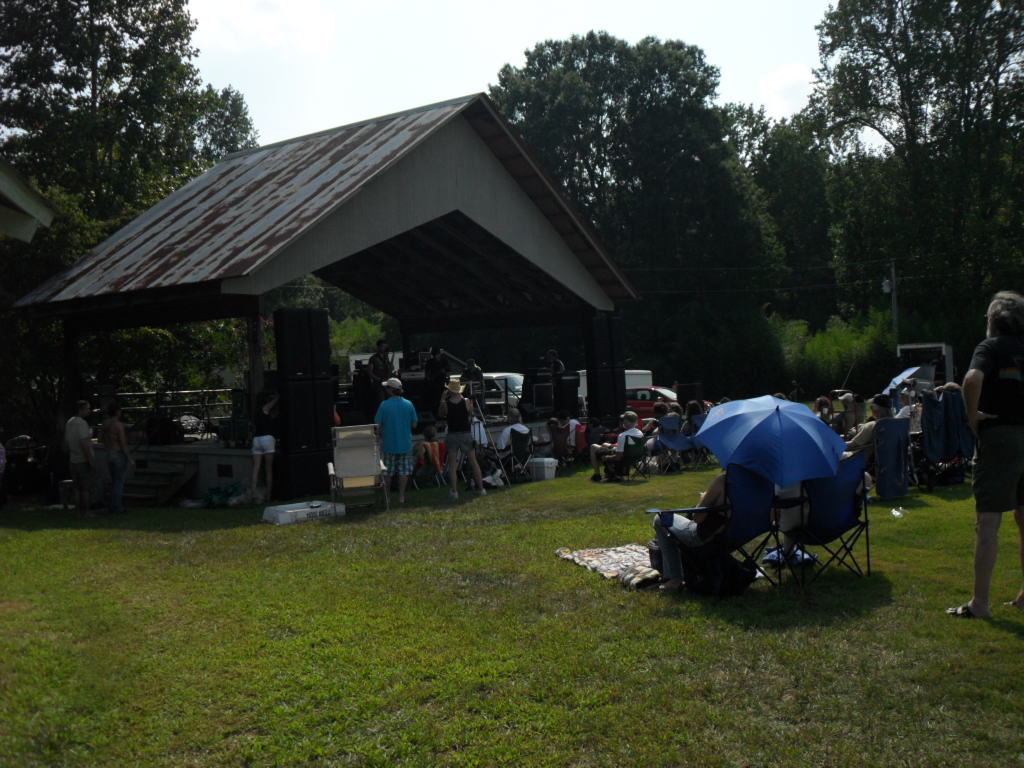
The heat building up on Friday afternoon did not show any promise of abating the following day, though when we reached the beautiful festival location at Storybook Farm things were still relatively pleasant. Photographs do not do full  justice to the beauty of the surroundings, the green field ringed by woods where you can hear the echo of the music if you walk far enough from the stage area. The lack of rain in the summer months was made particularly evident by the clouds of dust raised by the cars approaching the festival premises (hence the title of my review), and the dry, prickly feel of the grass. Thankfully, in the morning and early evening a breeze blowing from the trees made things bearable, and my lightweight folding chair allowed me to move around in order to catch it. There was no respite from the sun, however, and leaving the shelter of the covered pavilion meant being hit by the full force of its rays, especially in the early hours of the afternoon.

Half of the bands on this year’s lineup were instrumental, and Milwaukee-based quartet Fibonacci Sequence introduced the festival in style. After having braved a 15-hour drive to reach North Carolina, the four musicians treated the crowd to almost 90 minutes of intricate yet effortlessly flowing music that showed an impressive level of maturity. Though their debut album, the excellent Numerology, had been recorded as a trio with a guest bassist (former Portal/Cynic member Chris Kringel), the band now feature the considerable talents of bassist Chad Novell, who looked more like a member of a modern metal outfit than a prog musician. However, for all the keen edge present in their compositions, Fibonacci Sequence are a full-fledged progressive rock band whose remarkably clean sound was flattered by excellent acoustics that allowed each instrument to be heard clearly and distinctly. As I wrote in my review of Numerology, they are one of those rare bands that have managed to achieve a sound of their own – even if they jokingly refer to themselves as “Rush with keyboards”. Like the Canadian trio, their music is eclectic but deeply cohesive, built on the solid foundation of the outstanding rhythm section of Novell and drummer Tom Ford (whose sleek interplay was riveting to watch), which allows Mike Butzen’s guitar to unfold all its melodic range, with Jeff Schuelke’s keyboards adding layers of depth. Their warm yet inobtrusive interaction with the crowd revealed their experience as a live act, and their heartfelt tribute to Kopecky drummer Paul Kopecky, who passed away two years ago, was particularly touching. In today’s materialistic, cutthroat world, it is heartwarming to see musicians from a particular region form a bond and work together towards the diffusion of non-mainstream music. Kudos to Fibonacci Sequence for being part of this trend, and for sharing their appreciation of their fellow Wisconsin artists with the ProgDay crowd. All in all, they are a very tight unit, who deserve as much exposure as they can get, especially among devotees of instrumental prog.

Another fine example of the thriving New Jersey prog scene, The Tea Club had been the last band to be announced, a mere couple of weeks before the event. Having followed them for the past three years, I had hoped to be able to see them on stage for a while, and was elated on their behalf at the announcement, as a festival slot can be a turning point for a band, exposing them to a much larger audience than their normal live appearances. In spite of their collective young ages, the fresh-faced members of The Tea Club – now extended to a six-piece – are accomplished musicians and songwriters, their music astonishingly complex and multilayered, even if not always conforming to traditional prog standards. After the departure of drummer (and founding member) Kyle Minnick, brothers Pat and Dan McGowan recruited a new bassist (Charles Batdorf), drummer (Joe Rizzolo) and third guitarist (Jim Berger), while original bassist Becky Osenenko (a classically-trained pianist) took charge of the keyboards, which on their second album Rabbit had been provided by Tom Brislin. Because of Minnick’s involvement in the writing of their 2008 debut album, General Winter’s Secret Museum, they chose not to play any tracks from it, and concentrated instead on Rabbit and some new material. While The Tea Club clearly tread the post-prog path of bands like The Pineapple Thief and Oceansize, with bouts of intensity that may bring The Mars Volta to mind, the complexity of their songwriting goes way beyond most alternative bands.While I had found Rabbit a bit of a step backwards, as it sounded somewhat one-dimensional if compared to the boundless energy of General Winter’s Secret Museum, the material taken from the band’s sophomore effort came positively alive on stage. Enhanced by the seamless instrumental dynamics and the striking stage presence of the McGowan brothers, each of the songs possessed a deeply intriguing quality, with “The Night I Killed Steve Shelley” deserving a special mention. Even the relentless assault of the heat and humidity could not detract from the band’s brilliant set. The new songs reprised the atmospheric, laid-back mood evidenced on Rabbit, though spiked by instrumental surges exuding a keen sense of tension. The McGowan brothers are also fine vocalists, capable of delivering soothing harmonies as well as more aggressive parts, while steering clear of the excessively plaintive tone of post-prog icons such as Radiohead’s Thom Yorke or The Pineapple Thief’s Bruce Soord. With their sheer enthusiasm and obvious dedication to their music, The Tea Club have enormous potential, and their performance won them many new fans.

Though the weather certainly did no favours to The Rebel Wheel, the Ottawa-based quartet, led by guitarist David Campbell and featuring a highly awaited guest appearance by keyboardist Guy LeBlanc (of Nathan Mahl and Camel fame) delivered a stunning (though somewhat short) set, featuring a slightly modified version of the 30-minute epic “The Discovery of Witchcraft”, the centrepiece of their 2010 album We Are in the Time of Evil Clocks. Being familiar with the album, undoubtedly one of the standout releases of last year, I was looking forward to the band’s set, which was a delight to start to finish – even if, by the time they got on stage, I was feeling somewhat faint, and lay half-slumped in my chair. The music, however, was so riveting that it was impossible not to listen intently. Like a well-oiled machine, the band churned out flawless tune after flawless tune, their choppy, jazzy Crimsonian vibe well complemented by Campbell’s powerful, expressive vocals and LeBlanc’s masterful keyboard sweeps and rumbling organ flurries, while relentlessly driven forward by the splendidly pneumatic rhythm section of Andrew Burns and Aaron Clark. The dark, angular “Death at Sea”, from a 2005 Gentle Giant tribute album, was a particular highlight, with echoes of King Crimson’s “The Great Deceiver”. Though the epic was adapted to the absence of vocalist/saxophonist Angie McIvor (on leave following the birth of her first child), it lost none of its punchy, gutsy effectiveness. An impressively professional outfit, oozing confidence and flair, The Rebel Wheel manage to sound thoroughly modern while paying homage to the great Seventies tradition. I really hope to see them again in the very near future, and will be looking forward to their new album.

In the interval between the third and the fourth set we were treated to an impromptu acoustic guitar solo spot by Jimmy Robinson of Woodenhead (whovwere due to play the traditional festival pre-show at a local club, this year extended also to the Saturday evening). Robinson displayed an astonishing mastery of the instrument, his short but intense performance including versions of Led Zeppelin’s classics “Kashmir” and “When the Levee Breaks”. It was a fitting introduction to another dazzling display of guitar fireworks, this time of the electric variety – courtesy of Mörglbl, introduced by one of the festival’s elder statesmen, Paul Sears of The Muffins. A classic power trio in which Christophe Godin’s scintillating guitar is supported by the hyper-dynamic rhythm section of Ivan Rougny and Aurélien Ouzoulias, the French outfit have often been tagged as jazz-metal, and, while the metal element is an unmistakable component, there is a lot more to their music than just ultra-technical noodling. While listening to their set (in spite of my extreme physical weariness) I could hear a lot of different influences in Mörglbl’s sound, such as funk, blues, Latin music and reggae, besides the obvious rock matrix. Technically awesome and very tight from a compositional point of view, their set was highly energetic, heavy but consistently fluid and never jarring, and, above all, extremely entertaining. With his shaved head, distinctive white goatee and fluorescent yellow guitar, Godin is a consummate frontman, throwing all sorts of funny shapes during his solos, his warm, amusing on-stage banter delivered in excellent English. The band are known for concluding their shows with covers of rock classics reinterpreted in their own inimitable style, and this time was no exception – their  lounge-jazz version of AC/DC’s “Highway to Hell” (the only number featuring Godin’s excellent vocals) was one of the most hilarious moments of the weekend.

After a good night’s sleep, on Sunday morning we felt ready to face another day of great music, and this time the weather was definitely more helpful, with lower humidity levels and a nice breeze making things more comfortable. And a good thing it was, because the second day of the festival promised a lot of intensity, and the audience had better be in their best shape to fully enjoy what was on the musical menu. Opening act Zevious also belonged to the group of bands I had had the pleasure of reviewing in the past two years or so, and I had found their second album, After the Air Raid, one of the most impressive releases of 2009. A power trio based in New York, unlike Mörglbl they projected a rather serious image, in spite of their youth, and proceeded to deliver a set of astounding complexity, chock full of asymmetrical rhythm patterns overlaid by Mike Eber’s clear, piercing guitar, and propelled by Jeff Eber’s monstrous drumming. While not too high on melody, the band’s music never once descended into mere dissonance, and the sheer amount of sound produced by a trio of musicians employing very basic instrumentation was nothing short of astonishing.  The unceasing flow of dynamic bottom end provided by Johnny DeBlase’s Fender Jazz bass complemented Jeff Eber’s unbelievable polyrhythms, delivered with effortless simplicity, without the antics that might have been expected from such a gifted drummer. As good as they sounded on CD, Zevious’ music acquired a new dimension on stage, and, when fully unleashed, the band sounded like King Crimson  to the power of 3 – despite the “math-rock” or “RIO/Avant” tags so often (and awkwardly) stuck onto them. They are clearly not everyone’s cup of tea, and, although incredibly nice offstage,  they were not as communicative towards the audience as most of the other bands – hence my use of the term “serious” at the beginning of the paragraph. Their music, however, speaks for itself, and they have all the time in the world to hone their stagecraft.

Those who, like me, were sitting under the pavilion during Zevious’s set had the opportunity to watch the members of Persephone’s Dream set up their gear on one side of the stage. Though I was not familiar with the Pittsburgh-based outfit’s music prior to the festival, I had read enthusiastic accounts of their latest album, Pan: An Urban Pastoral, released in 2010 – which I knew the band were going to perform in its entirety for the very first time. I anticipated a treat when I saw the incredibly elaborate array of percussion instruments being carefully arranged on the lawn, including a gong and bells and chimes of every description. And, indeed, a treat it was, both musically and visually, even if – as can be expected – the show suffered a bit from being squeezed on a relatively small stage without the use of lightning and the appropriate backdrop trappings. The band, a seven-piece, might have used a little more space, especially the two female vocalists, Josie Crooks (a really beautiful voice, powerful yet melodic) and Leah Martell (who twirled and danced all over the place), who had to change costumes, chase each other and run up and down the stage for most of the set. However, Persephone’s Dream pulled it off superbly. Though by far the most conventionally “prog” of the bands on this year’s bill, they were anything than the kind of derivative, snooze-inducing neo/symphonic fare that sends some fans into fits of ecstasy – as a matter of fact, their sound was quite heavy at times, with Jim Waugaman’s powerful keyboard excursions almost out of ELP’s heyday,  accented by John “JT” Tallent’s brilliant percussion work (which has elicited comparisons with Jamie Muir of Larks’ Tongues in Aspic fame). The “urban pastoral” setting – reminiscent in some ways of Peter Gabriel’s vision in The Lamb Lies Down on Broadway – was also imbued with genuinely menacing overtones, offset by pauses of quiet and gentle birdsong. The dramatic, larger-than-life music had more than a whiff of Italian prog to it – as well as nods to Celtic folklore and even early 20th-century classical music – and the band as a whole sounded more European than American. While those festival attendees who favour the more left-field stuff assessed the band’s performance rather harshly for being a collection of all the worst prog clichés – such as the mythological inspiration and the over-the-top instrumentation (in stark contrast to the minimalistic approach of bands like Zevious or Mörglbl), Persephone’s Dream’s set had an often mesmerizing quality, their music obviously tailor-made for the live dimension.

When people were still in a relaxed mood, following lunch and the consumption of quite a few excellent beers (which, unfortunately, I could not enjoy because, for me, heat and alcohol do not mix well), German quintet Panzerballett, ontheir first US visit, took the stage, and woke everyone up with their unique brand of “wellness death jazz” (I kid you not). In the seven years since their inception, the young but extremely proficient outfit have already earned a fearsome reputation among lovers of the more experimental branches of progressive rock for their highly energetic brand of avant-garde, metal-tinged jazz-rock served with liberal helpings of humour – debunking the commonly held myth of the dour, humourless Germans. Some of the song titles alone were worth the price of admission – “A Vulgar Display of Sauerkraut”, anyone? The on-stage banter of guitarist Jan Zehrfeld (whose English may not have been as fluent as Christophe Godin’s, but still effective in interacting with the audience) was delivered in quiet, polite tones that contrasted with the manic urgency of the music – unabashedly eclectic, cramming a lot of diverse influences in the space of a single number, and spiced with a healthy pinch of irreverence. Nothing is safe from Panzerballett’s imaginative reinterpretations (or rather deconstructions) – the love theme from Dirty Dancing, Dave Brubeck’s “Take Five” (rechristened “Fake Five”, and played simultaneously in two different tempos), Weather Report’s “Birdland”, all got the Panzerballett treatment, to the audience’s delight. As in the case of Zevious, their music is clearly not for the faint-hearted or those who crave melody and catchy hooks, but their enthusiasm is infectious, and you have to admire a band that proudly claims to improvise every time they are on stage, dispensing with setlists. Though all of the band members were brilliant, powerhouse drummer Sebastian Lanser deserves a particular mention for his unflagging energy and perfect time-keeping.

After such an exhilarating performance, as the evening drew near and the temperature cooled down, the audience was well stoked for headliners Freak Kitchen – currently touring the US as Mörglbl’s opening act, and drafted in at the very last moment after Quantum Fantay’s cancellation (due to airline woes following in the wake of Hurricane Irene). Though I was not familiar with their music, what I had read around the Internet had whetted my curiosity, and I realized that we were in for a pyrotechnic conclusion. Yet another power trio, active since 1992, with seven albums under their belt, the band consists of a guitarist (Mattias Eklundh, aka The Axemaster of Sweden) and drummer (Björn Fryklund) that embody the Scandinavian archetype of tall, lean frames and flowing blonde manes, and a bassist (Christer Ortefors) that was a sight to behold, with his heavily tattooed arms, braided beard, combat helmet and low-slung bass in pure Lemmy style. All in all, Freak Kitchen are the opposite of every prog stereotype, looking (and sounding) like an Eighties thrash metal band with progressive undertones. Extremely gifted in a technical sense, they wrapped up the festival with a bang, combining sheer heaviness with plenty of infectious hooks and a bit of a funky swagger, whipping the crowd to a frenzy, getting the notoriously staid prog fans to get up and dance, headbang and sing along in a cathartic explosion of pure fun. With song titles as wacky as “Teargas Jazz”  and “Chest Pain Waltz” (one of the highlights of their set), and influences ranging from Megadeth and Metallica to King’s X and Living Colour with a sprinkling of punk rawness (mostly evident in the vocals), they have a commanding frontman in the soft-spoken Eklundh, who treated the audience to a constant stream of funny quips and anecdotes (like the one about the vibrating dildo belt), and poking gentle fun at the average progger’s obsession with odd time signatures. A memorable ending to ProgDay 2011, even though purists would have been positively horrified.

Although the lovely bucolic setting and general laid-back vibe, reminiscent of a family picnic complete with children, games and dogs, might lead outside observers not to take ProgDay too seriously in musical terms, the consistently high quality of the lineups assembled by the organizers throughout the years gives the lie to this impression. The members of the band selection committee are to be commended for their forward-thinking attitude, which allows attendees to sample a broad range of the many subgenres to be found under the welcoming “prog” umbrella, always striking a perfect balance between accessibility and cutting-edge potential. Unfortunately, it is also true that ProgDay can get away with having a full-fledged metal act as a headliner only because it is basically perceived as not quite as prestigious as the indoor festivals. The cancellation of NEARfest 2011 proved all too clearly the danger of overestimating the open-mindedness of prog fans, and booking anything with dubious prog status can be the kiss of death for even the highest-profile event. However, in spite of the overall lack of support from the US prog community, ProgDay soldiers on, thanks to the help (financial and otherwise) of a core of loyal patrons, and getting better and better with time, as demonstrated by this year’s stellar lineup. This past weekend, on the stage at Storybook Farm, I saw the future of progressive rock – a future that may not look like the Seventies bands that are still widely worshipped, but that is surely every bit as exciting and musically worthwhile. It is up to us to let it prosper, or kill it slowly but inexorably with our obsession with the past.

At the end of my review, I wish to thank everyone involved in the success of ProgDay 2011 – first and foremost the organizers, the band selection committee and all the volunteers (a particularly big thumbs-up for providing a “quiet room” for the numerous prog ladies present at Storybook Farm). Then, as usual, a shout out to all the great people that made our weekend special: the collective members of Fibonacci Sequence, The Tea Club, The Rebel Wheel, Mörglbl and Zevious, John Tennant of Persephone’s Dream, ProgDay founder (and purveyor of musical goodies) Peter Renfro, Michael McCormack, Alan and Amy Benjamin, Helaine Carson Burch, Debi Byrd, Lew Fisher, Doug Hinson, Michael Bennett, Jeff Wilson, Paul and Debbie Sears, Mike Visaggio of Kinetic Element, Rick Dashiell, Eyal Amir – and, last but not least, our dear friends Michael Inman and Djalma Carvalho. Here’s to ProgDay 2012, and many more years of great music!

TRACKLISTING:
1. Goodbye Sweet Innocence (10:40)
2. Living In The Past (11:59)
3. Forgotten Land (9:57)

LINEUP:
Mariusz Duda – vocal, bass, acoustic guitar
Piotr Grudziński – guitars
Piotr Kozieradzki – drums
Michał Łapaj – keyboards, Hammond organ

Hailing from the Polish capital of Warsaw, Riverside need no introduction to fans of modern progressive rock. After 10 years of activity, the release of four full-length albums, a live CD/DVD and a number of singles and EPs, and an extensive touring activity that has brought them to perform at numerous events in Europe and America, the quartet fronted by bassist/vocalist Mariusz Duda  has established itself as one of the top acts in the genre, particularly in progressive metal circles.

To be honest, I have always thought that the progressive metal tag was a rather uncomfortable fit for a band like Riverside. While their sound undeniably possesses a keen edge, in my view the more explicit metal traits, such as harsh, dense riffing and aggressive vocals, are used as accents rather than the main event; their music also seems to have more in common with eclectic, hard-to-pinpoint bands such as Porcupine Tree and Tool than the pyrotechnics of Dream Theater and their ilk, or the cerebral experimentalism of bands like UneXpect. With the moody, brooding atmosphere shared by other Polish bands, spiked by sudden surges in intensity, yet mellow and subtly haunting, Riverside’s compositions take full advantage of modern technology, and find a perfect foil to the instrumental side of things in Mariusz Duda’s velvet-smooth voice – equally at home on slower, meditative numbers and on those that push the aggressive elements to the forefront.

Released in June 2011 on the occasion of the band’s 10th anniversary tour, Memories in My Head is a mini-album featuring three new songs (all around the 10-minute mark), the first studio material following their acclaimed fourth album, Anno Domini High Definition. Clocking in at 32 minutes, the disc is in some ways a return to Riverside’s more mellow beginnings, bookended by atmospheric, ambient-like sounds produced by Michał Łapaj’s array of keyboards – something that has been criticized by some reviewers as superfluous, but which I found an interesting addition to the heavier approach adopted by the band in their recent output. The spacey, hypnotic textures of those instrumental passages clearly reveal the influence of Pink Floyd – especially the obsessive, mechanical sound effects in the intro to “Goodbye Sweet Innocence” that inevitably bring to mind Dark Side of the Moon. The track then develops into a slow, somber piece, showcasing Mariusz Duda’s throaty, soothing vocals and some fine guitar work by Piotr Grudziński (sometimes evidencing that faint Eastern vibe that seems to be a constant of Riverside’s music) sparring with Lapaj’s piercing synths.

Strategically placed in the middle, “Living in the Past” is not only the longest track on the CD, but also the one with the strongest ties to Riverside’s metal-hued tendencies of the past few years. Some of the initial parts juxtapose spacey Pink Floyd-like moments with hints of the guitar-organ dynamics so crucial for the sound of Deep Purple and other vintage hard rock outfits, while whistling synth and heavy riffing sharpen the taste. Though the composition comes across as occasionally patchy, mainly on account of the frequent, abrupt shifts between quiet and loud sections, the instrumental interplay is outstanding, and the coda, driven by clean, melodic guitar and Hammond flurries, is alone worth the price of admission. Finally, on closing track “Forgotten Land” Duda’s bass steps into the limelight, and his voice turns occasionally more assertive, while beautiful, mellow guitar and slow, measured pace, together with plentiful sound effects, create a haunting mood that fits the lyrical matter like a glove.

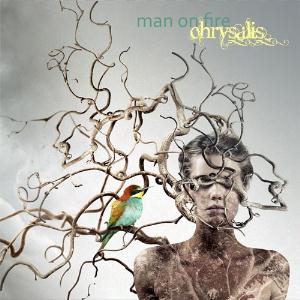
With stylish photography in a variety of hues of grey, bleak imagery suggesting the passing of time, and lyrics relating to memory and loss (as the titles make it abundantly clear), Memories in My Head is a finely-crafted release, though clearly a transitional one for the Polish band. Its more laid-back, atmospheric nature will appeal to the more conservative-minded prog fans turned off by overtly metal nature of Anno Domini High Definition (as witnessed by some of the reactions to the band’s excellent set at the 2010 edition of  NEARFest), and the lavish use of electronics in the tradition of vintage Pink Floyd, or even of seminal electro-prog bands like Tangerine Dream, may point at interesting developments in Riverside’s future releases.

Links:
http://riversideband.pl/en/

TRACKLISTING:
1. Cronovisione (7:36)
2. Gatto Lupesco (7:23)
3. Nei Cerchi del Legno (13:09):
– a. Pinocchio (0:00)
– b. V.I.T.R.I.O.L. (2:17)
– c. L’Eterna Spirale del Destino (5:22)
– d. Radici di una Coscienza (8:57)
4. Il Fattore Precipitante (7:00)
5. Il Basilisco (6:19)
6. Un Insolito Baratto Alchemico (7:11)
7. Acustica Felina (9:37)

 LINEUP:
Gabriele Guidi Colombi – bass
Andrea Orlando – drums, percussion
Alessio Calandriello – vocals
Davide Serpico – electric and acoustic guitars
Andrea Lotti – piano, keyboards, acoustic guitar
Stefano Agnini – piano, keyboards

With:
Luca Scherani –  accordion (5), flute arrangement (6)
Joanne Roan – flute (6)
Rossano Villa – string arrangement (3, 7)
Lidia Molinari – voice (1, 7)

Another outstanding addition to the thriving music scene of the Italian port city of Genoa, La Coscienza di Zeno was founded in  2007 by a group of experienced musicians – bassist Gabriele “Estunno” Guidi Colombi (also a founding member of Il Tempio delle Clessidre), drummer Andrea Orlando and vocalist Alessio Calandriello. Keyboardist and lyricist Stefano Agnini joined the band at the beginning of 2008, while guitarist Davide Serpico (who replaced original guitarist Matteo Malvezzi) and keyboardist Andrea Lotti joined between 2008 and 2009. Agnini left at the end of the recording sessions for La Coscienza di Zeno’s self-titled debut album, which had started in May 2010.

The band takes its distinctive name (meaning “Zeno’s Conscience” in English, and often shortened to CDZ for ease of reference) from one of the masterpieces of Italian literature, the ground-breaking psychological novel published in 1923 by writer and businessman Italo Svevo, and written in the form of an autobiography meant to help the titular Zeno’s attempts to quit smoking through psychoanalysis. Not surprisingly, La Coscienza di Zeno’s debut possesses a definite intellectual appeal – though without the level of pretentiousness that might be expected _ revolving around Stefano Agnini’s highly literate lyrics (loosely inspired by the novel) masterfully interpreted by lead singer Alessio Calandriello’s technically impeccable voice, passionate without being overwrought.

La Coscienza di Zeno is one of those rare albums that, while in keeping with the classic prog tradition of long tracks, rich instrumentation (with special prominence given to the keyboards) and intricate arrangements, achieves the considerable feat of never overstaying its welcome.  As other reviewers have pointed out, the album is not as easy to approach as other comparable efforts, and the first impression might be somewhat deceiving. To be perfectly honest, after my first listen I thought, here is another of the many Italian Genesis-worshipping bands – which, after successive listens, turned out to be a very unfair assessment. Indeed, while the Genesis influence is occasionally hard to miss, the album’s roots lie firmly and deeply in the great Italian prog tradition, with Banco del Mutuo Soccorso a particularly apt reference, mainly on account the presence of two keyboardists and the remarkable balance between vocal and instrumental parts.

Clocking in at slightly under one hour, La Coscienza di Zeno features seven tracks between 6 and 13 minutes. Though the main foundation of the album is symphonic, lush and multilayered, with plenty of seamless instrumental interplay, outstanding solo passages and rivetingly expressive singing, there is also enough variety to keep the interest of the more eclectic-minded listeners, with a wide range of influences cropping up almost unexpectedly, from waltz to folk by way of jazz and even hard rock. The almost wholly instrumental (except for the spoken-word vocals in the middle) opener “Cronovisione” is melodic and intricate at the same time, with echoes of Yes in the airy synth sweeps laced with faintly spiky guitar, and of Banco in the majestic yet dynamic feel imparted by the twin keyboards. “Gatto Lupesco”, hinges on Alessio Calandriello’s amazing vocal range and expressive power, complemented by a musical accompaniment that is melancholy and intense in turns, driven by keyboards and dramatic drumming. The obligatory epic, “Nei Cerchi del Legno” (partly inspired by the iconic tale of Pinocchio, one of the few instances of Italian literature that have had some international resonance) has a rather unusual format, being mostly instrumental, with vocals making an appearance only towards the end. The music, on the other hand, is a triumph of imposing symphonic passages rendered even more lush by the double keyboard setup and string arrangement, almost jazzy inserts offset by gently meditative episodes, and stunning synth-guitar interplay that brings to mind Genesis’ immortal “Firth of Fifth”.

Out of the remaining four tracks, “Il Fattore Precipitante” pursues the classic Italian prog route, with the lavish, airy Genesis-like suggestions sharpened by some heavy riffing and high-powered rhythm work courtesy of Gabriele Guidi Colombi and Andrea Orlando – though Calandriello steals the show here, his vocal tour de force complemented by a superb instrumental tapestry of keyboards, drums and guitar. “Il Basilisco”, on the other hand, signals a sharp change in mood and musical style – a folk-tinged number veined with melancholy and enhanced by the arresting, unmistakably Old-World accordion of guest artist Luca Scherani of Höstsonaten, also showcasing Davide Serpico’s lovely acoustic guitar work. The splendid, exquisitely tense instrumental “Un Insolito Baratto Alchemico” juxtaposes quieter, flute-led sections and stormy keyboard passages spiced by metal-hued riffing, enriched by solemn organ and lilting piano; while closer “Acustica Felina” (the second longest track on the album) reprises the lush symphonic mood of the beginning, rounded up by the deep choral tone of the inevitable Mellotron. Calandriello’s voice tackles the challenging lyrical matter with superb expertise, veering from gentleness to a deep, almost menacing tone; the song is then wrapped up by a magnificent, Hackettian guitar solo.

With refreshing honesty, La Coscienza di Zeno make no bones about paying homage to the progressive rock tradition of the Seventies, both Italian and British – even if the sound quality and production values of their debut album are thoroughly modern, and lend extra depth and dimension to the elegantly complex music. An obvious labour of love, every aspect of the album has been carefully considered in order to offer a complete experience to the discerning listener – with stylish, mostly black-and-white photography and detailed liner notes, including the lyrics (which make worthwhile reading for anyone familiar with the Italian language). Indeed, La Coscienza di Zeno is a must for all lovers of vintage Italian prog, adding the band to the growing list of excellent “traditional but modern” acts that already includes their fellow Genoese Il Tempio delle Clessidre and La Maschera di Cera, as well as the revamped Delirium. Highly recommended to symphonic prog fans and anyone who is not put off by foreign-language vocals, this is another classy package coming from the ever-dependable Italian prog scene.

Links:
http://www.myspace.com/lacoscienzadizeno


TRACKLISTING:
1. Here I Stand (4:11)
2. In My Place (3:33)
3. The Keeper (5:33)
4. Cannibal Tango (3:27)
5. Fever (the Battle Rages On) (4:48)
6. Hate Incarnate (2:58)
7. Get Out of My Way (4:38)
8. Russian Girls (3:32)
9. Demon Disco (4:05)
10. Be My Pride (4:30)
11. Fathers & Sons (5:01)
12. Inner Feelings (Silence) (18:54)

LINEUP:
Christophe Godin – guitar, lead and background vocals
Julien “Peter Puke” Rousset – vocals, drums, percussion, background vocals
Gaby Vegh – vocals, bass guitar, background vocals; tablas (3)

With:
Lilit Karapetyan – Russian girl’s voice (8)

French power trio Gnô are one of the projects of guitarist Christophe Godin, known in progressive rock circles as the founder and mastermind of Mörglbl, as well as one of France’s hottest guitar players. Cannibal Tango, Gnô’s second album, was released in the early summer of 2011 on the US-based label The Laser’s Edge – 10 years after their debut, Trash Deluxe, released in 2001 after Mörglbl’s temporary demise.

Mörglbl are widely considered as one of the most exciting bands on the current prog scene, and anticipation is running very high for their forthcoming US tour – whose culmination will be the  headlining slot on Saturday, September 3, at the legendary ProgDay festival in Chapel Hill, North Carolina. Though adopting a somewhat more straightforward format than Mörglbl’s output, Cannibal Tango is bound to win over most fans of Godin’s main gig, especially those who have a broader view of progressive rock than the average fan pining for the good old days of the Seventies. With their irrepressible, genre-bending attitude and obvious enthusiasm for making music, Gnô deliver a real rollercoaster ride of an album, bubbling with a wild and wacky sense of humour, crushingly heavy but also full of infectious grooves and catchy hooks.

Cannibal Tango’s press release describes the band as “Pantera meets The Beatles” – a rather weird, but oddly effective definition.  Driven by Godin’s high-powered, razor-sharp riffs and searing lead breaks, propelled by Julien “Peter Puke” Rousset’s thunderous drums and Gaby Vegh’s solid yet nimble bass lines, Gnô;s music is always brimming with energy, but capable of unexpected twists and turns. While the influence of heavy metal – both in its classic incarnation (as in Black Sabbath and Iron Maiden) and the more eclectic strains represented by the likes of the above-mentioned Pantera, Faith No More or System of a Down – is clearly recognizable, one of the closest terms of comparison would be King’s X, whose imprint is hard to miss in the impossibly catchy vocal harmonies. Like the American trio, Gnô rely on conventional song structures spiced up by intriguing hints of a higher complexity.

With 12 tracks averaging between 3 and 5 minutes, the album’s 63-minute running time is quite deceptive, as it includes the unexpected “Easter egg” (a funny a cappella version of “Fever”) tacked at the end of closing number “Inner Feelings (Silence)” after a lengthy pause.  Although the canonical “prog” features of mind-boggling time signature changes and extended instrumental sections are conspicuously absent on Cannibal Tango, there is still plenty of variety to hold the listener’s interest. Starting with opener “Here I Stand”, the songs as a whole are bold and relentlessly dynamic, without too much subtlety, yet introducing different elements into the sheer heaviness of their foundation. The funky  pace and catchy chorus coexisting with an aggressive guitar solo reminded me of another of the seminal crossover bands of the Eighties, New Yorkers Living Colour; while with “In My Place” some lazy reggae licks are thrown into the mix, together with a chorus that owes a lot to The Beatles, though with a much harder edge. Echoes of King’s X emerges in numbers such as the slower, doom-infused “The Keeper” with its faint Middle Eastern vibe, the groovy “Get Out of My Way” and the intense, slow-burning “Inner Feelings”. The more nuanced instrumental bridge of  the brisk “Demon Disco”, on the other hand, points to another hugely influential power trio – the mighty Rush; while the unabated intensity of “Russian Girls”, probably the heaviest number on the album, borders on hardcore punk.

As pointed out in the previous paragraphs, Cannibal Tango requires a high level of tolerance for heaviness and fast and furious riffing in order to be fully enjoyed – as well as a taste for artists such as Frank Zappa or Primus, whose music prominently features a blend of chops and off-the-wall humour. Packaged in a colourful, zany cover proudly emblazoned with the band’s striking logo,  and photos hinting at the “cannibal” motif gracing the CD’s inner sleeve, this is a genuinely entertaining album from a very talented outfit, which fans of the more crossover-

Links:
http://www.gno-music.com/

TRACKLISTING:
1. B (5.34)
2. C  (3:02
3. D  (1:39)
4. F  (1:36)
5. G (2:03
6. H  (3:48)
7. J  (3:39)
8. K  (2:56)
9. L  (3:41)
10. M (3:00)
11. N  (3 :11)
12. P  (3 :23)
13. Q  (3 :34)
14. R  (2:00)
15. S  (2:41)
16. T  (1:24)
17. V  (1:48)
18. W (2:34)
19. X  (2:38)
20. Z  (7:50)

LINEUP:
Jocelyn Maheux – guitar
Michel Landry – drums
Thierry Alexandre Zambo – bass

Opusculus are a trio based in Montréal (Canada), where they were first formed in 2004 by drummer Michel Landry. The current line-up, featuring guitarist Jocelyn Maheux and bassist Thierry Alexandre Zambo, has been together since 2007. Part of the material on Consonant, the band’s debut album,  released in the second half of 2010, dates back from their early years. All of the three members have extensive musical training and experience; the band are also quite active on the live front in their home town, both as performers and organizers of musical events, though they are still relatively unknown outside Québec. Fiercely proud of their independent status, Opusculus fly the flag for all those bands who would rather take risks rather than bow down to market pressures.

The mention of a  power trio hailing from Canada is inevitably bound to bring Rush to mind, and the legendary Toronto outfit is indeed listed among the main influences on Opusculus’ music. However, while Rush’s output has always been based on songs, even in the days when they still wrote 20-minute epics, Opusculus have adopted a sharply different approach for their debut album – which is basically a single, completely instrumental composition divided into 20 movements (or, as the band put it, “a 20-chapter epic song”), each named after a consonant of the English alphabet. Though employing nothing more than the basic rock setup of guitar, bass and drums, the trio produce an impressive volume of highly complex music, aided by superb sound quality that lends a detailed, multi-dimensional feel to each instrument’s contribution.

The CD’s press release points out that Consonant was inspired by a wide range of musical genres, and as such likely to appeal to fans of such iconic bands as King Crimson, Rush, Porcupine Tree, Liquid Tension Experiment and Tool. While all of those acts base their sound on a finely balanced mix of creativity and outstanding technical skill, most of them also employ vocals and more conventional song structures, as well as keyboards, seen by many as an almost mandatory ingredient of progressive rock. Indeed, although the lack of the depth and fullness that keyboards can provide to instrumental music can occasionally be felt on Consonant, the classic “power trio” format encourages the three musicians to push their own boundaries, weaving a tight web of sound with the rather minimalistic instrumentation at their disposal.

Clocking in at almost 62 minutes, Consonant is bookended by its two longest segments, which seem to summarize the  whole of the band’s musical conception in a more articulate fashion. The remaining 18 tracks, all between 1 and 3 minutes, run into each other without any clearly defined pauses, though often distinguished by sharp changes in mood and pace. Like a statement of intent, opener “B” introduces the listener to the three instruments’ seamless interaction – alternating aggressively riff-driven sections with more sedate ones, which spotlight Thierry Alexandre Zambo’s role in providing a steady, rumbling stream of bottom end to complement Michel Landry’s acrobatic drumming. The track reminded me of Rush in terms of style rather than actual sound, with the rhythm section playing as much of a starring role as the guitar, though Jocelyn Maheux’s amazing performance runs the gamut from harsh, metal-infused riffing to laid-back, melodic soloing. The band’s wide- ranging network of influences is clearly displayed throughout the album, from the strong King Crimson vibe of “C” and “S” to the mellower, jazzy feel of “K” and the Latin suggestions in “G”. The almost 8-minute “Z” wraps up the album by juxtaposing two very different styles such as the relaxed, faintly hypnotic warmth of reggae and the obsessive angularity of math-rock. The latter influence pervades most of the album, with some of the frantic, high-energy drum parts reminiscent of heavily percussion-focused bands like Battles or Don Caballero.

Complemented by stylish though slightly disturbing cover artwork, Consonant is a very ambitious project, especially for a debut album, and a bit of an acquired taste on account of its idiosyncratic format.  Definitely an attractive proposition for fans of instrumental progressive rock with a high degree of complexity and eclecticism, the bare-bones instrumentation, frequently repetitive patterns and occasional bouts of dissonance may put off those who prize carefully structured compositions with plenty of melody to offset the technical brilliance. However, while the album might have benefited from some editing here and there, Consonant is an intriguing first effort by a trio of very talented and dedicated artists, and would deserve to get more exposure in prog circles, especially when all-instrumental bands are discussed.

Links:
http://opusculusprog.blogspot.com/

http://www.myspace.com/opusculus

TRACKLISTING:
1. A Thousand Islands (3:59)
2. Clouds and Stars (2:46)
3. Heavy Water (5:55)
4. Biddeford Pool (4.30)
5. Harold’s Budds (6:01)
6. The Doorman’s Dairy Dream(4:10)
7. Rainy Day Trains (6:33)
8. Weathering (5:36)

LINEUP:
John Orsi  – drums, percussion, keyboards
Mike Marando – guitars (3, 5, 7, 8), bass (5, 7), ebow guitar (7)
Manny Silva – guitars (1)

Knitting By Twilight is a music and art collective based in the historic New England city of Providence (known as the hometown of cult horror writer HP Lovecraft), where it was founded by John Orsi and Michael Watson in the spring of 1994. Orsi, a talented composer and multi-instrumentalist, has been the only constant in the outfit throughout the years. Weathering, the sixth CD released by Knitting By Twilight since their inception, comes in a stunning six-panel package graced with a full-size image of late 19th-century French artist Antoine Bouguereau’s painting Biblis. Orsi is also involved with Incandescent Sky and Herd of Mers, both signed to his own label It’s Twilight Time.

When I started my “career” as an official reviewer (as opposed to writing about albums in my own collection), I chose Knitting By Twilight’s fourth album, bearing the charming title of An Evening Out of Time, for my very first review. In spite of my extensive exposure to all kinds of music, I had rarely chanced upon something so distinctive and delicate, yet bearing very little resemblance to the “prog” that made up the bulk of my listening and reviewing routine. Everything about the album drew my attention – from the lovely, romantic artwork (a constant of Knitting By Twilight’s output) to the quirkily delightful titles, reminiscent of haiku-style poems or Impressionist paintings rather than the slightly self-conscious grandeur of a lot of “mainstream” progressive rock. The music within was no less fascinating, even if very much of an acquired taste, requiring both patience and an appreciation for muted contrasts of light and shade rather than intricate arrangements, flowing melodies or instrumental flights of fancy.

Knitting By Twilight’s music revolves around John Orsi’s remarkable, yet understated skill as a percussionist. Totally passionate about his craft, and using his extensive, inspirational array of instruments (listed in loving detail on the CD) to generate sounds that range from pastoral gentleness to eerie dissonance, Orsi is the polar opposite of the stereotype of the muscular, propulsive rock drummer, his approach quite far removed from the technically gifted, yet overly assertive likes of Mike Portnoy and his ilk. He also handles keyboards, which add depth to the compositions and create an atmospheric backdrop for both his percussive forays and the guitar touches provided by Manny Silva and Mike Marando (the latter also a member of Incandescent Sky) on some of the tracks.

Unlike most traditional prog, the music featured on Weathering is not tightly orchestrated, but rather loose and improvisational, deeply evocative, often airy and rarefied, occasionally a tad uncomfortable. As both the main title and the individual titles suggest, the album is very much a celebration of weather and nature, seen as metaphors for many of life’s situations. However, though some listeners might expect a new-agey, somewhat limp-wristed musical offer, there are different kinds of beauty on display on this album, some of them reflecting the languor and sensuality of the cover art, others edgier and slightly ominous.

At a superficial glance, there is not a lot of variety on Weathering, centred as it is on Orsi’s elaborate, yet oddly natural percussive patterns, achieved with both traditional instruments and more exotic ones – many made of metal, producing sharp, bell-like sounds. Clocking in at a very restrained 38 minutes, the album is a collection of tracks that run the gamut from the understated, haunting beauty of opener “A Thousand Islands” to the chaotic, challenging bouts of dissonance of the aptly-titled “Heavy Water” and the eerily buzzing keyboard tapestry of “Harold’s Budds” (a pun on the name of American composer Harold Budd), punctuated by bells and piercing guitar. In “Rainy Day Trains”, the title’s vivid imagery is conjured by clanging cymbals and surging keyboard waves, a difficult though exhilarating combination of sounds tempered by the solemn tone of Marando’s guitar. In the subtly melodic “The Doorman’s Dairy Dream”, layers of keyboards support the delicate, sparse percussion, used more as an accent than as the main event.  “Clouds and Stars” is as gracefully romantic as its title implies, with a main theme embroidered by various percussion, and faint Eastern suggestions backed by faraway-sounding keyboards; while in “Biddeford Pool” the keyboards suggest the ebb and flow of water, spiked by the faint metallic dissonance produced by the percussion. The title-track wraps up the album in stately fashion, with guitar, percussion and keyboards interacting slowly and steadily to create a rich, haunting texture.

As hinted in the previous paragraphs, Weathering is not for everyone – its refined minimalism very much in contrast with the carefully arranged lushness of most symphonic/neo prog, and the lack of memorable melodic structures posing another hurdle for those accustomed to more conventional fare. Like all mood/ambient-based music, it has its own time and place, being much better suited to moments of calm and meditation than more energetic activities. Warmly recommended to those who appreciate music that can evoke subtle nuances, dreamy soundscapes and also slightly disquieting atmospheres, it should also not be missed by  dedicated percussionists and lovers of inventive drumming. Fans of artists such as Robert Fripp, David Sylvian, Peter Gabriel, Kate Bush and Dead Can Dance are also quite likely to appreciate Weathering’s exquisite, though not immediately accessible nature.

Links:
http://www.overflower.com/KnittingByTwilight_Welcome.htm

TRACK LISTING:
1. Where’s the Captain? (5:11)
2. Coma Cluster (4:42)
3. Mostly Skulls (5:12)
4. That Ticket Exploded  (5:54)
5. The Noose (4:28)
6. iNCITING (4:39)
7. Gradual Decay (4:45)
8. The Ditch (5:49)
9. After the Air Raid (3:20)
10. The Children and the Rats (4:59)
11. Glass Tables (4:35)

LINEUP:
Mike Eber – guitars
Jeff Eber – drums
Johnny DeBlase – electric and upright bass

Another impressive find from the ever-reliable Cuneiform Records, Zevious hail from New York City.  Formed in 2006 by guitarist Mike Eber, his cousin, drummer Jeff Eber (formerly of experimental progressive metal band Dysrhythmia) and bassist Johnny DeBlase, they started out as a straight-ahead jazz trio before they decided to take a more innovative direction.  Their self-titled debut album was released in 2008, followed one year later by After the Air Raid, recorded and mixed by Colin Marston of tech/extreme prog-metal band Behold…The Arctopus. Following a successful US tour in the spring of 2011, Zevious have been invited to perform at the 2011 edition of ProgDay (Chapel Hill, North Carolina), the longest-running progressive rock festival in the USA.

The three members of the band have been active on the music scene for over ten years, and their collective experience is clearly brought to bear in After the Air Raid, a high-energy blend of sleek jazz/fusion, angular math-rock, and a spicy sprinkling of metal – challenging without being overtaxing, thoroughly modern without turning its back to the old-school progressive rock tradition. Not as spiky and impenetrable as their label mates Upsilon Acrux, Zevious have managed not to banish melody altogether, though it is handled in a very unconventional manner.  For all its cutting-edge allure, Zevious’ music is not meant to be abrasive or forbidding, and draws much of its power from being able to keep the listener on their toes, though without wearying them out with a relentless barrage of wildly clashing sounds.

A cutting-edge permutation of that old classic rock stalwart, the power trio, Zevious manage to produce a huge volume of sound without the use of any keyboards or other props. Theirs is also a fully collaborative effort, as it would be hard to single out any of the three members as the star of the album. While Mike Eber’s guitar weaves dazzling webs, avoiding the ever-present pitfalls of mindless shredding, Johnny DeBlase’s fluid yet powerful bass provides a solid layer of bottom end for Jeff Eber’s stunning drum patterns, displaying the experience gained as a member of avant-progressive metal band Dysrhythmia in an array of head-spinning polyrhythms – though the influence of more “classic” drummers, such as Bill Bruford, can also be detected.

The 11 tracks featured on After the Air Raid are rather short from a prog-purist point of view, but pack more twists and turns in their restrained running time than many “epics”, though without descending into the excesses to which the more experimental prog acts are often prone. While most of the compositions clearly point to math-rock’s hypnotic, multilayered angularity, the band’s original jazz foundation adds a welcome touch of melody that is often lacking in otherwise outstanding bands like Don Caballero or Battles. With such a consistently high level of quality, it is difficult to pick out any standout tracks; however, I was particularly impressed by the brilliant, Black Sabbath-meets-jazz/fusion workout of That Ticket Exploded, or the Rush-on-steroids, bass-driven extravaganza that is iNCITING. The Noose and The Ditch both steer towards heavier territory – the former strongly reminiscent of a jazzier version of King Crimson with its devastatingly effective bass-drum interplay; the latter more aggressive, with an almost punk intensity, Mike Eber’s guitar let loose over thundering drums and a steady bass line. In sharp contrast, the title-track reveals the more subdued side of the band’s sound, a hauntingly melancholy piece revolving around Mike’s muted, atmospheric guitar work.

Clocking in at 51 minutes, this is a very dense album, and perhaps just a tad overlong on account of the unabated intensity of the music. In fact, those who prefer a more traditional approach to prog, as well as those who object to a lack of vocals, may find it a somewhat stressful listen. On the other hand, with stellar performances all round, and a brilliant combination of diverse influences and creative ideas, After the Air Raid is highly recommended to anyone with a keen interest in contemporary progressive rock.

Links:
http://zevious.com/

http://www.cuneiformrecords.com