Feeds:
Posts
Comments

Posts Tagged ‘AltrOck Productions’

TRACKLISTING:
1. Knee (5:05)
2. Oom Pah (5:09)
3. Missing the Train (3:41)
4. Rainbro (5:02)
5. Too Good To Be True (4:11)
6. Somnambulist Subversion (4:34)
7. Nut Job (3:12)
8. Forgotten Planet (6:00)
9. Dirty Spoons (5:12)
10. 25 Miles to Freedom (10:30)

LINEUP:
Melody Ferris – vocals
Ivor Holloway – tenor and alto saxophone, clarinet
Pat Moran – electric bass
Nick Peck – Hammond B-3 organ, clavinet, Fender Rhodes electric piano, minimoog Voyager, mellotron, piano, Arp String Ensemble, Wurlitzer 200A electric piano
Doug Port – drums
David Shaff – trumpet
Ryder Shelly – vibraphone
David Slusser – Slussomatic, electronics
Andrew Vernon – keyboards, Farfisa organ
Bill Wolter –  electric and acoustic guitars, keyboards, electronics

Line-up on # 10:
Shayna Dunkelman – vibes, crotales
Melody Ferris – vocals
Jordan Glenn- drums
Ivor Holloway – tenor saxophone
Curtis McKinney – electric bass
Charith Premawardhana – viola
Max Stoffregen –  piano, synth
Bill Wolter – guitar, keyboards

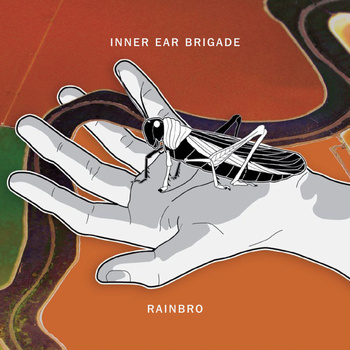
The high level of quality offered by AltrOck Productions and its subsidiary label, Fading Records, will no longer come as a surprise for progressive rock fans. However, there are times when an album released on the Milan-based label will exceed expectations – and this is definitely the case with Rainbro, Inner Ear Brigade’s debut album.  Formed in 2005 in Oakland (California) by multi-instrumentalist and composer Bill Wolter, the band  was originally a quartet; then, in the following years, the lineup grew into a 7-piece, with a number of honorary members participating in the recording of the album. Rainbro was recorded in the summer of 2010, and released on the international market in January 2012.

The Bay Area city of Oakland has long been a hotbed of cutting-edge music, being home to such highly acclaimed outfits as Sleepytime Gorilla Museum and  miRthkon (also on the AltrOck roster), as well as legendary guitarist/composer Fred Frith. However, Inner Ear Brigade have something that sets them apart from other bands that fall under the avant-progressive umbrella, and makes them more easily approachable by “mainstream” prog fans. With their extended lineup and intriguing instrumentation – featuring a healthy mix of vintage keyboards, state-of-the-art electronics and conventional rock gear, augmented by reeds, horns and vibraphone – they produce a lush, fluid sound that suggests the understated elegance of Canterbury bands such as Hatfield and the North or National Health rather than the austere beauty of Univers Zéro or the martial grandeur of Magma.

In quintessentially eclectic fashion, Inner Ear Brigade throw many diverse influences into their musical melting pot, straddling the divide between reverence towards past glories and a genuinely forward-thinking attitude. While the progressive rock scene suffers from a glut of acts often hopelessly rooted in the past and seemingly unable to go beyond reproducing the classic Seventies sound, Inner Ear Brigade use the influences drawn from the rich treasure trove of the golden age of prog as a springboard for creating their own sound, rather than as an exercise in nostalgia.

Though all of the band members are remarkably talented, Inner Ear Brigade’s ace in the hole is Melody Ferris’ voice, which at a superficial listen might recall the distinctive style associated with avant-prog and represented by Thinking Plague’s Deborah Perry and Elaine DiFalco. Indeed, the demanding vocal lines tackled by Ferris in opening track “Knee” sound like a textbook example of the subgenre’s conventions. However, as the album progresses, Ferris’ vocals become increasingly more versatile, engaging in singing and wordless vocalizing with equal effectiveness, and often  “playing” along the other instruments rather than acting as a separate entity (a fine example of this is the atmospheric “Too Good to Be True”).  The quirky lyrics enhance the album’s overall playful mood and emphasize its Zappa and Canterbury references, which the band share with their fellow Oaklanders miRthkon.

The first half of the album displays the strongest avant-prog imprint, effortlessly blending accessibility and experimentalism, catchy tunes and whooshing, spacey electronic effects.  A sunny California vibe tempers the bouts of dissonance in tracks such as “Missing the Train”, while saxes and trumpet add a buoyantly jazzy note. In some of the tracks – notably the trio of instrumentals that precede the album’s “epic”, the 10-minute “25 Miles to Freedom” (recorded in 2009 with a different lineup) – the two souls of the band seem to coexist, with melodic, laid-back passages alternating with more energetic, upbeat ones, and short yet effective forays into more experimental terrain, duly bolstered by liberally used electronics. The title-track is powered by harsh guitar riffs and blaring horns; while the closing track takes the band deep into Canterbury territory, with Ferris’ splendid vocal performance bringing to mind the incomparable Northettes, and the viola adding a wistful, lyrical touch to a rich, almost symphonic texture. Varied yet cohesive, “25 Miles to Freedom” wraps up the album with a bang, conveying a palpable sense of enjoyment on the part of the band that listeners will be hard put not to share.

With a well-balanced running time of about 52 minutes, Rainbro never overstays its welcome, in spite of the undeniable complexity of the music. The album’s ebullient yet intricate nature will attract lovers of quirky, eclectic progressive rock, while the presence of vintage instruments typical of traditional prog may encourage the more conservative set of fans to give Inner Ear Brigade’s music a try. All in all, Rainbro is an outstanding debut for a band that is definitely going places, and a strong contender for my personal “best of 2012”.

Links:
http://innerearbrigade.com/

http://innerearbrigade.bandcamp.com/

http://production.altrock.it/prod2.asp?lang=ita_&id=182&id2=183

Read Full Post »

TRACKLISTING:
CD 1 – Studio:
The Pocket Orchestra Tape 1983:
1. Imam Bialdi (6:24)
2. R. V. (7:04)
3. Regiments (14:59)
4. Letters (13:53)
The Knēbnagäujie Tape 1978-1979:
5. Blueing (7:10)
6. White Organ Meats (7:03)
7. Grandma Coming Down The Hall With A Hatchet (5:32)
8. Bagon (16:52)

CD 2 – Live:
1. Annex (5:56)
2. Bagon/Wandering Aimlessly (14:48)
3. Blirt (4:05)
4. Blueing (12:01)
5. Letters (19:12)
6. Parade (5:23)
7. Regiments (Parts 1, 2 and 3) (11:32)
8. Corn Fed (5:37)
9. Sound Check Bonus (0:43)

LINEUP:
Craig Bork – keyboards
Joe Halaijan (aka Joe Who)- clarinets, saxes, incidental vocals
Bill Johnston – cello
Tim Lyons – bass
Tim Parr – guitars
Bob Stearman – drums

With:
Craig Fry – flute (CD 1, 7)
Warren Ashford – tablas (CD 1, 7)
Jack Chandler – saxes (CD 2,  5-6)

If a contest was held for the unluckiest band on the progressive rock scene, Pocket Orchestra would have quite a few chances of winning first prize. In fact, only three members are left of the original six-piece lineup that recorded two demos between 1979 and 1984. What looked like a promising career for one the trailblazers of the RIO/Avant movement in the United States was cut short first by saxophonist Joe Halajian’s family problems (which led to the band going into hiatus), then by guitarist and main composer Tim Parr’s untimely demise in 1988. Thanks to the unstinting effort of Scott Brazieal, leader of Cartoon and a personal friend of the band, the material they had recorded in those short but intense five years finally saw the light in 2005, with the release of the CD Knēbnagäujie (the original name of the band). In the meantime, bassist Tim Lyons had passed away in 1998,  while drummer Bob Stearman (who had had a stroke in 2004) followed suit in 2010.

In spite of those unfortunate circumstances, Pocket Orchestra’s reputation remained very high in RIO/Avant circles, lending them a near-legendary aura in a context that often thrives on cult status. In 2011, Marcello Marinone and Francesco Zago of Italian label AltrOck Productions , assisted by such luminaries as Cuneiform Records’ Steve Feigenbaum and renowned sound engineer Udi Koomran, brought to light some of Pocket Orchestra’s unreleased recordings – including almost 80 minutes of live material – which eventually became the double CD set Phoenix, released in the second half of the year.

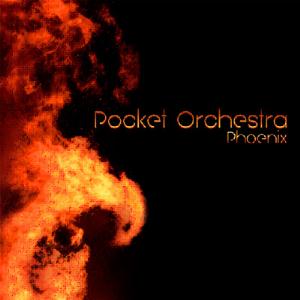
The album’s title, reinforced by Paolo “Ske” Botta’s striking cover artwork,  refers to the band’s hometown in Arizona, as well as to the almost miraculous reemergence of recordings that had seemed fated to remain buried in oblivion. Since Knēbnagäujie was sold out, the release of Phoenix was greeted enthusiastically by dedicated RIO/Avant followers, especially those interested in the US scene. While such archival operations rarely claim to present material in truly organic and cohesive form, Koomran’s state-of-the-art mastering has given new life to those 30-year-old live tapes, as well as to the contents of the original Knēbnagäujie  CD. Brazieal’s detailed liner notes, complemented by vintage photos of the band on stage and other memorabilia, complete this lovingly assembled tribute to the “Phoenix reborn”.

As can be expected from their checkered history, while undeniably gifted and dedicated to their craft, Pocket Orchestra had not yet fully developed their potential when circumstances forced them to call it a day. Their compositions suffer from occasional bouts of patchiness, added to some of those features that generally make the whole RIO/Avant subgenre so daunting (often unnecessarily so) to newcomers. Indeed, both the eight tracks on the studio CD and the nine on the live CD are nothing but ambitious and unpredictable, packed with twists and turns of every description.

While the founding fathers of the RIO movement such as Henry Cow and Univers Zero are inevitably referenced, the main influence that can be detected on Phoenix is that of Samla Mannas Manna,  another band belonging to the original RIO contingent – something that earned Pocket Orchestra the tag of “Samla of the desert”. However, Pocket Orchestra’s music is completely instrumental, and also decidedly less melodic, though imbued by a similar brand of playful light-heartedness, embodied by the use of circus music in “Grandma Coming Down the Hall With a Hatchet” .  Sudden blasts of saxophone and clarinet and wailing, piercing guitar excursions seem to be the rule, with Bob Stearman engaging in a mind-boggling range of intricate rhythmic patterns to propel the sound forward.

The word “anarchic” is probably the best description of Pocket Orchestra’s approach. The average composition can suddenly shift from a laid-back, almost meditative pace to unrelieved chaos – as exemplified by “R.V”, whose first half is deceptively mellow, then erupts into an intense, free-form maelstrom of sound. The sedate, piano-driven passages in the 14-minute, Canterbury-influenced “Letters” are bound to bring to mind the easy elegance of Hatfield and the North or National Health, offset by Parr’s aggressive guitar solo at the end. On the other hand, album closer “Bagon” marries the lovely, melodic Canterbury feel with more typical RIO features such as blaring sax and strident guitar.  As a whole, the first four tracks –dating back from 1983, immediately before Pocket Orchestra went on hiatus – come across as more accomplished, showing a band well on its way to reining in the in-your-face dissonance and chaos that instead emerge in the studio CD’s second half.

The second CD offers an invaluable testimony of the band’s brisk live activity in the years 1980-1984, and includes a number of previously unreleased tracks, as well as noteworthy versions of “Letters” and “Regiments”. Udi Koomran’s experience in the studio managed to bring out the best in recordings whose original quality was less than ideal, presenting a band that was definitely at home on stage. While some of the longer tracks may still reveal a bit of self-indulgence, the shorter ones, such as “Parade” or “Corn Fed”,  show how Pocket Orchestra were gradually but clearly finding their own unique voice and direction, and at the same time tightening up on the compositional aspect.

Though somewhat clichéd, the definition of “rollercoaster ride” seems to be a perfect fit for an album like Phoenix, which probably should come with a warning sticker. While its blend of dignified chamber rock, wild, wacky all-out experimentation and the occasional foray into sophisticated, Canterbury-style jazz-rock will not fail to appeal to fans of everything RIO/Avant, even a cursory listen to opener “Imam Bialdi” will send the average “mainstream” prog fan running for the exits. While bands like Miriodor or Yugen might have a broader crossover appeal and win over staunch devotees of symphonic prog, Pocket Orchestra, as captured on this double set, were definitely raw and uncompromising. All in all, though not exactly a comfortable listen, Phoenix is a moving tribute to a band that might have grown into a force to be reckoned with, had not fate got in the way.

Links:
http://production.altrock.it/prod2.asp?lang=ita_&id=171&id2=172

http://www.allmusic.com/artist/pocket-orchestra-p876979/biography


Read Full Post »

TRACKLISTING:
1. Infinicheese (1:35)
2. Clacos Zero (0:35)
3.Untung Untungan 2.0 (11:13)
4. Clacos 1 : Notre Mère à Tous (1:58)
5. El Ruotuav Ed Sram (8:16)
6. Clacos 2 : Die Experimente von Dr Frankenschnörgl (0:48)
7. Le Meurtrier Volant (9:01)
8. La Danse du Chameau:
a) Batifolade  (5:29)
b) Soif! (1:17)
c) La Tempête De Sable (4:51)
d) Rêveries Lubriques Sous une Dune (1:09)
e) The Final Run  (5:01)

LINEUP:
Fabrice Toussaint – tenor trombone, xybraphone, congas, tam-tam, triangle, other percussionBernard Eber – trumpet, didgeridoo, cowbell, whistle, voices
Pierre Wawrzyniak – bass, acoustic guitar, voices
Philémon Walter – drums
Guillaume Gravelin – harp
Vincent Sexauer – electric guitar

 With:
Julien Travelletti – bass trombone (3, 5, 7, 8), tuba (7)
Francesco Zago – electric guitar (3)

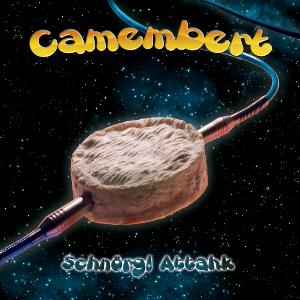
When coming across a French band named Camembert, and an album title featuring the word “Attahk”, most progressive rock fans will inevitably think of two illustrious outfits such as Magma and Gong – both of whom have also ties with France. Add to that a rather left-field story about the Earth being invaded by small, gelatin-like beings from outer space called Schnörgl, led by a mad scientist researching weapons of mass destruction, and involving a giant spaceship made of intergalactic cheese – and the resemblance will steadily grow, so that a first-time listener might wonder if they are being confronted with the new frontier of “retro-prog”. However, there is very little “retro-anything” about Camembert, whose thoroughly modern brand of jazz-rock proudly sports that strongly absurdist streak that is one of the distinctive traits of French prog.

Camembert are a six-piece hailing from the city of Strasbourg in north-eastern France, where they formed in 2005.  Schnörgl Attahk, their first full-length CD, which marks the beginning of the band’s collaboration with Milan-based label AltrOck Productions, was preceded in 2009 by the release of the 6-track EP Clacosmique. Most of the material that had originally appeared on the EP has been included on the album, though in almost completely rearranged form. Camembert members Fabrice Toussaint and Pierre Wawrzyniak had also appeared on another noteworthy 2011 release, Ske’s 1000 Autunni – and Ske mainman Paolo Botta (who also plays keyboards with Yugen, and is a gifted graphic artist) returned the favour by providing suitably wacky artwork for Camembert’s debut.

As previously hinted, Schnörgl Attahk manages the remarkable feat of combining an amazing level of complexity with an upbeat, ebullient mood that will provide the perfect antidote to the excess of earnestness of far too much prog. The outrageous tale of Dr Frankenschnörgl and his dastardly plans for a global takeover is told through the artwork and detailed liner notes, as the album is completely instrumental. On the other hand, while no actual singing is involved, the music suggests the events in strikingly effective manner, appealing to the listener’s powers of imagination.

Like the best examples of progressive rock (modern or otherwise), Schnörgl Attahk is a quintessentially eclectic effort. The band’s handling of their main sources of inspiration eschews derivativeness, moving rather along the lines of incorporating those sources into the fabric of their own original sound – whose foundation is a sinuously intricate brand of jazz-rock with roots in Frank Zappa’s output circa Apostrophe, as well as Shamal/Gazeuse!-era Gong (incidentally, both Pierre Moerlen and Mireille Bauer were originally from the Strasbourg area – perhaps something in the water?). However, the many pieces of Camembert’s musical mosaic are extremely variegated, supported by a very distinctive instrumentation that rules out keyboards, but hinges primarily on an unusual combination of horns, mallet percussion and harp. The gentle, liquid voice of the latter, blending harmoniously with the rippling tinkle of Fabrice Toussaint’s xybraphone and the warm, organic sound of various percussion instruments, gives Camembert’s sound a unique imprint.

While the two short, consecutive openers, “Infinicheese” and “Clacos Zero”, set the scene in textbook-spacey fashion, with swishing electronics and occasional guitar touches, the 11-minute “Untung Untungan 2.0” makes a bold entrance with its lively avant-fusion allure, then unfolds in a myriad of dazzling twists and turns, to which Francesco Zago’s guitar lends some extra bite. The easy, natural flow of the music, whose melodic flair almost belies its inherent complexity, brings to mind Canterbury acts like Hatfield and the North, and the energetic presence of the horns, coupled with Pierre Wawrzyniak’s solid bass lines, lend a funky swagger to tracks like “El Ruotuav ed Sram” (“Le Vautour de Mars” spelled backwards). Shades of Magma and Univers Zéro lurk in the imperious, martial pace of  the intense “Le Meurtrier Volant”, while in the 5-part suite, “La Danse du Chameau”, sprightly Latin-tinged rhythms in the style of early Santana, weird voices and dense, faintly dissonant passages coexist, held together by the lush yet unconventional instrumentation.

An exciting slice of sparkling eclecticism, combining melody, complexity and zany humour in an irresistible mixture, Schnörgl Attahk is almost mandatory listening for fans of modern jazz-rock and RIO/Avant prog, and will particularly appeal to fans of genre-straddling bands such as Frogg Café, miRthkon or Miriodor, as well as newer outfits like Calomito or Slivovitz. With all-round outstanding performances, excellent production values (courtesy of Udi Koomran and Eric Gauthier-Lafaye), and a genuinely positive attitude that will put a smile on your face (as well as a very restrained running time, which allows the music to be absorbed without weariness setting in), Schnörgl Attahk  proves that it is fully possible to pay homage to the trailblazers of the past without turning into a nostalgia act.

Links:
http://www.myspace.com/camembert67

http://production.altrock.it/home.asp?lang=ita_&id=9&id2=9

Read Full Post »

TRACKLISTING:
1. Too Much Light (Ionesco’s Theme) (3:48)
2. The Old Woods  (5:46)
3. If Two See A Unicorn  (1:58)
4. What A Night  (4:02)
5. The Conservatives  (1:50)
6. Winter  (3:22)
7. I Could Eat You Up  (3:37)
8. Wordswords  (5:40)
9. Autumn  (3:19)
10. Mitch  (2:57)
11. A Garland Of Miniatures  (2:40)
12. Nightfall  (4:31)

LINEUP:
Dave Willey – accordion, bass, drums, keyboards, percussion, guitar, mailing tubes, piano, bells, zither, whistling, electric guitar, folk guitar, organ, guitarrón, harmonium; vocals (10)
Mike Johnson – guitar, electric guitar (4, 5, 7, 8, 12)
Deborah Perry – vocals (all tracks but 9, 10)
Elaine di Falco – vocals (1, 6, 9), piano (8, 9)
Hugh Hopper – bass, loops (2, 4, 12)
Farrell Lowe – guitar (2)
Wally Scharold – vocals (5)
James Hoskins – cello (6)
Emily Bowman – viola (6)
Mark Harris – clarinet (6)
Bruce Orr – bassoon (6)
Dave Kerman – drums (7)
Hamster Theatre – vocals for loops (12)

Known as a member of avant-rock outfits Hamster Theatre and Thinking Plague (and, more recently, 3 Mice), Colorado-based multi-instrumentalist and composer Dave Willey is someone whose whole career as a musician hinges on an eclectic and broad-minded outlook, informed by the sophistication of Europe’s variegated traditions as much as by the rugged nature of the American West. Even his preferred instrument, the accordion, is an icon of  Old-World folk music (with which Willey became acquainted during his frequent visits to Europe), whose headily nostalgic flavour blends seamlessly with the austerely challenging compositions of Thinking Plague, or underpins the quirky, engaging nature of Hamster Theatre’s sound.

Released on AltrOck Productions almost 20 years after Willey’s recording debut, 1993’s  Songs from the Hamster Theatre, Willey’s second solo album, Immeasurable Currents, is a true labour of love, which, in the words of the artist himself, took him “a million years” to complete.  In a moving, heartfelt homage to his father, the late Dale Willey, the album is based on the poems written by Willey Sr. and collected in The Tin Box and Other Poems (2001). The album also marks the last recording appearance of legendary bassist Hugh Hopper before his untimely passing in 2009.  Besides Hopper, the friends assisting him in this venture include his Hamster Theatre/Thinking  Plague cohorts Mike Johnson and Mark Harris, drummer Dave Kerman, miRthkon guitarist Wally Scharold, and an extraordinary pair of vocalists – current and former Thinking Plague singers Elaine diFalco and Deborah Perry. Mostly recorded at Willey’s Colorado home, the album was then mixed and mastered by renowned sound engineer Udi Koomran in Tel Aviv – a truly international, continent-spanning effort.

The first time I heard Immeasurable Currents, a comparison immediately sprang to my mind with another emotionally charged album, released almost 40 years ago –  Robert Wyatt’s milestone Rock Bottom. The presence of the late Hopper with his signature fuzz bass adds to the sheer poignancy of the album, though – unlike some fellow reviewers – I would not apply the word “sad” to the music. Upbeat moments are scattered throughout the album, and crop up almost unexpectedly, creating a charming contrast of light and shade with the more sober, even somber passages. While Immeasurable Currents is bound to make the listener pause and think rather than get up and dance, its musical and lyrical content is a far cry from the contrived doom and gloom of a lot of progressive metal, or the navel-gazing typical of “alt. prog”.

Following an increasingly (and thankfully) popular trend for shorter albums, Immeasurable Currents runs at a mere 43 minutes, consisting of 12 vignettes (mostly penned by Willey, with some noteworthy contributions from his guests) that, in spite of their short duration and deceptively simple appearance, span a wide range of moods and musical textures. The minimalistic yet exquisite instrumental accompaniment highlights the beauty and power of the words without overwhelming them with layers upon layers of sound; while the magnificent vocal performances bring the lyrics’ vivid imagery to life – never concealing its occasionally disturbing nature, but also throwing its ultimately life-affirming quality and keen observation of nature’s phenomena into sharp relief.

Opener “Too Much Light” spotlights the breathtaking beauty of Perry and diFalco’s intertwining voices – the former higher-pitched, almost child-like, the latter deep and smooth, complementing each other perfectly, in stark contrast with the cloyingly sweet stereotype of the female prog vocalist. The nostalgia-infused sound of the accordion lends a smoky, Old-World feel to the piece, and to the following “The Old Woods”,  somewhat similar in mood.  In a dance-like movement, the songs often temper their initial briskness by noticeably slowing down in the second half – such being the case of the troubling “I Could Eat You Up”, which hints at incest while expanding on the well-known fairy tale of Haensel and Gretel; Dave Kerman’s supercharged drumming, coupled with Willey’s frantic accordion, add to the claustrophobic feel of the piece. The subtle but incisive political criticism of “The Conservatives” is set to surprisingly upbeat music, featuring one of the album’s rare guitar solos; while the solemn, chamber-like “Winter” and the understated piano- and accordion-led ballad “Autumn” render the poignancy of the two “darker” seasons of the year in flawless sonic terms.

With its striking, often harsh images intensified by Perry’s stunningly expressive vocals, “Wordswords”  is one of the highlights of the album,  a skewed Astor Piazzolla tango that gradually builds up to a haunting ending, spiced by a hint of dissonance that anchors it to Thinking Plague’s work. “Mitch” showcases Willey’s idiosyncratic but effective voice in a piece that commands comparisons to the likes of Tom Waits; while “What a Night” oozes a mix of intensity and tenderness, its superbly atmospheric coda a perfect foil to the words. The album is then wrapped up by the arresting “Nightfall”, where Perry’s vocal performance reproduces the peculiar arrangement of the written word, almost suspended in a rarefied backdrop of guitar and bass loops.

An album of subtle, multilayered beauty, Immeasurable Currents seems to embody the very definition of “progressive but not prog” (if by “prog” we mean the myriad acts that are firmly and hopelessly stuck in the Seventies).  Its deeply personal nature, coupled with musical textures ranging from mesmerizingly sparse to engagingly upbeat, will appeal to fans of such diverse artists as David Sylvian or Kate Bush, as well as the RIO/Avant brigade. Indeed, the open-minded, forward-thinking music lover will find much to appreciate in this elegant yet humble tribute to a beloved father’s artistic and human vision, set to music that constantly surprises and delights, and full of intriguing reflections on nature and the human condition.

Links:
http://www.allmusic.com/artist/dave-willey-p367258
http://production.altrock.it/prod2.asp?lang=eng_&id=167&id2=168

Read Full Post »

TRACKLISTING:
1. Ludiche Ecchimosi  (5 Danze Immaginarie) (9:42):
a) Ludiche Ecchimosi # 1 (1:44)
b) Ludiche Ecchimosi # 2 (2:30)
c) Ludiche Ecchimosi # 3 (3:04)
d) Ludiche Ecchimosi # 4 (0:51)
e) Ludiche Ecchimosi # 5 (1:33)
2. Il Folletto di Cera (4:31):
a) Miniatura # 1 (0:28)
b) Il Folletto di Cera (4:03)
3. Inseguito dai Creditori (6:01)
4. Tre Pezzi Brevi (7:46):
a) Flutter (5:50)
b) In Mezzo (0:15)
c) Snappy (1:41)
5. L’Onda Vertebrata (20:08):
a) Ouverture (1:55)
b) … Tra le Gocce Che Verso l’Alto Guardano… (2:03)
c) Tu… Onda Vertebrata (1:57)
d) …di un’Ombra… (1:00)
e) Intermezzo (1:44)
f) In Bilico (2:13)
g) Passaggio (2:00)
h) … Addomestico il Sogno (2:21)
i) Non Credere Più (2:25)
l) Coda con Fanfara (2:30)

Bonus tracks:
6. La Follia del Mimo Azoto (3:41):
a) The Breznev Funk Club
b) La Follia del Mimo Azoto
c) The Breznev Funk Club (Reprise)
7. Il Folletto di Cera (instrumental version) (4:30):
a) Miniatura # 1 (0:29)
b) Il Folletto di Cera (4:01)

LINEUP:
Franco Sciscio – voice, Sprechgesang
Giuliana Di Mitrio – mezzosoprano
Maria Mianulli – flute
Francesco Manfredi – clarinet in B flat
Michele Motola – soprano and alto sax
Gianfranco Menzella – alto, tenor and baritone sax
Francesco Panico – trumpet in B flat
Francesco Tritto – trombone
Tommaso De Vito Francesco – bass guitar, contrabass, oboe
Michele Fracchiolla – drums, percussion, vibraphone, marimba
Pino Manfredi – piano, keyboards
Rocco Lomonaco – classical, acoustic and electric guitar, banjo, mandolin, quatro, harmonica
Duilio Maci – violin
Angela Schiralli – cello

Breznev Fun Club’s cleverly amusing name, which hinges on the common mispronunciation of the words fan and fun on the part of English-speaking Italians, may not be very familiar to most progressive rock listeners, but it is certainly a secret worth learning about.  As the album’s subtitle of Lost and Found implies, L’Onda Vertebrata is a collection of music written in the years 1990-1997 by multi-instrumentalist and composer Rocco Lomonaco (based in Milan, but hailing from the southern Italian region of Basilicata) and singer/lyricist Francesco Sciscio, and performed by an extended line-up of guest musicians, most of them members of chamber and symphonic orchestras. Though Breznev Fun Club was originally born as a trio, the evolution of their music in a more experimental direction required a looser configuration. However, Lomonaco is planning to put together a smaller group in order to perform on stage the music included on this album and its follow-up, titled Il Misantropo Felice, scheduled for a 2012 release on AltrOck Productions.

For an album that can be quite comfortably placed under the capacious RIO/Avant umbrella, L’Onda Vertebrata is a surprisingly melodic and accessible effort, sophisticated yet not needlessly daunting. Indeed, despite the undeniably complex and “highbrow” nature of the music,  the album as a whole never tries to hit the listener over the head with its cleverness and supposed superiority to “mainstream” prog. Even Franco Sciscio’s half-sung, half-recited vocals (a technique called by the German word of Sprechgesang) do not sound as overdone as in other albums that employ a similar style – though obviously they can be much of an acquired taste, and a deterrent for those who prefer a more traditional approach to singing.

L’Onda Vertebrata shares a number of features with contemporary classical and chamber music, and at times– as is the case with other similar outfits, such as Aranis or Factor Burzaco – it may strike the listener as rather far removed from the directness of rock. However, there are also moments in which the whole range of rock instruments is effectively employed, emphasizing the eclecticism of Breznev Fun Club’s approach.  Though, as the liner notes point out, the individual numbers are pieced together from parts composed in different moments of the band’s activity – reflected by their structure of “mini-suites” in various movements – they come across as much more cohesive than one might expect.

As suggested in the previous paragraphs, the music on display on L’Onda Vertebrata offers a lot of variety, though in an elegantly understated way. Echoes of Canterbury (especially Hatfield and the North and National Health) surface in opener “Ludiche Ecchimosi”, introduced by the lovely vocalizing of mezzosoprano Giuliana Di Mitrio, who also appears in the final part of the sparse, Debussy-like “Tre Pezzi Brevi”, accented by the clear, lilting sound of mallet percussion; while the lively “Inseguito dai Creditori”, whose choppy, Hammond-driven first half turns solemn, almost austere towards the end, might be effectively described as “Canterbury with a bite”. “Il Folletto di Cera” is a textbook example of how avant-garde does not necessarily mean noisy or jarring, with Sciscio’s theatrical vocals (reminiscent of Nichelodeon’s Claudio Milano) offset by the gentle, romantic flow of the melodies seamlessly woven by the lush instrumentation.

More than a conventional prog “epic”, the 20-minute title-track is a mini-opera divided in 10 parts that offers a wide range of modes of expression – from the airy, slow-paced opening to heavier, dramatic passages which brought to my mind Italian Seventies cult outfit Pholas Dactylus, from solemn church organ to fluid, jazzy moments enhanced by a rich fabric of horns and reeds. The first of the two bonus tracks, “La Follia del Mimo Azoto”, harks back to the time when Breznev Fun Club were heavily funk-oriented, at times reminding me of New York-based outfit Afroskull with their powerful horn section; while the Canterbury influence emerges again in the instrumental-only version of “Il Folletto di Cera”.

In spite of its rather intellectual vibe, L’Onda Vertebrata is a surprisingly accessible album, which is sure to win over lovers of both “chamber rock” and contemporary academic music, but that may even appeal to those of more mainstream tastes – especially on account of its high melodic quotient (quite revealing of its Italian matrix). An excellent, classy testimony of Rocco Lomonaco’s over two decades of activity as a musician and composer, the album will also whet the appetite of devoted followers of AltrOck Production’s roster in anticipation of the release of Il Misantropo Felice. The very detailed liner notes (unfortunately only in Italian), illustrating the history of the band as well as of each of the tracks, and the striking green hues of the cover artwork also deserve a special mention.

Links:
http://www.myspace.com/roccolomonaco

https://www.facebook.com/pages/Breznev-Fun-Club/122126211199607?sk=wall

Read Full Post »

Even though it comes slightly late in comparison to other blogs and websites, this retrospective of the past year has been in the pipeline for a while. It is a first time for me, though obviously I have participated in quite a few surveys of this kind in my time as a collaborator of various music sites. However, the year 2011 has been uncommonly rich in excellent releases covering the whole of the progressive rock spectrum – similar in this to 2009 rather than the somewhat lackluster 2010.

My activity as a reviewer has also reached an unprecedented level in the past 12 months, and this (as well as other factors) have allowed me to listen to a wider range and number of new albums than in previous years – though not all of the albums I will be mentioning in the following paragraphs have been the object of a review. I have also been actively involved on the prog scene, attending festivals and gigs and keeping up a steady network of contacts with artists, label owners and fellow reviewers and fans. As the end-of-year statistics point out, the total number of views received by this blog in 2011 exceeded any of the expectations I had at the start of this venture, one and a half years ago.

Obviously, I cannot claim to have heard each and every prog (and related) album released in 2011, and quite of few of the big-name releases of the past year will be conspicuously absent from this overview. I will also refrain from using the usual list format, let alone a “Top 10/20/100” one, in spite of its undeniable popularity with music fans. While I am sure that everyone will be very curious to learn about my # 1 album of 2011,  this curiosity will have to remain unsatisfied, because I hardly ever think in terms of “absolute favourites”, and would be hard put to name my favourite band or artist (or literary author, for that matter). Although most “year in review” pieces do contain a measure of narcissism, the main aim of this post is to stimulate people’s curiosity, as well as debate, rather than turning it into a pointless competition of the “my list is better than yours” sort. We are all adult enough to be aware of the mostly subjective nature of lists, overviews, retrospectives and the like, and hopefully no one here is out to change other people’s minds.

In 2011, the prog “revival” reached unparalleled proportions, bolstered by the many opportunities offered by the Internet. In spite of the loud cries of woe about a supposed “death of the CD”, the number of acts that keep releasing their material in physical format is still quite high, and many of them still choose to put extra care in the artwork and liner notes, with often remarkable results. While the oversaturation of what remains very much a niche market cannot be denied, it is also true that high-quality productions are far from scarce, and the advent of legal streaming sites like the excellent Progstreaming has made it possible for everyone to sample an album before taking the plunge. Unfortunately, the wealth of music available either in digital or physical form does not correspond to higher availability of performing opportunities for those acts who still believe in the power of live performances. The shocking announcement of NEARfest 2011’s cancellation, at the end of March, rocked the prog fandom for months, and even the subsequent announcement of NEARfest Apocalypse for June 2012 did not allay many people’s fears concerning the dwindling range of gigging opportunities, especially here in the US (Europe, in spite of the economic crisis, seems to be doing much better in this respect). The prog community is also splintering in a way that, coupled with a worryingly nostalgic attitude and increasing reluctance to leave one’s own comfort zone, might spell disaster for the future.

2011 marked not only the return of a number of high-profile acts, but also some outstanding recording debuts. If I was forced at gunpoint to choose a favourite, this award would probably go to Texas-based trio Herd of Instinct’s self-titled debut, the first album released on Firepool Records, legendary Californian band Djam Karet’s own label. An almost entirely instrumental effort with the exception of one (gorgeous) song, the Herd’s debut shares this format with another of the year’s milestones, Accordo dei Contrari’s Kublai (whose only song features the incomparable vocals of Canterbury legend Richard Sinclair). These two albums, as well as Marbin’s classy Breaking the Cycle and Dialeto’s intriguing Chromatic Freedom, illustrate how the song form can be reinvented in such a way as not to disrupt the flow of the music, incorporating the vocals into a fabric that hinges on complex instrumental interplay.

In the realm of the purely instrumental releases, top marks go to Gösta Berlings Saga’s stunning third album, Glue Works (“Island” alone is worth the price of admission), alongside a trio of AltrOck Productions releases – Ske’s elegant 1000 Autunni (the first solo project by Yugen keyboardist Paolo Botta), Calomito’s intense Cane di Schiena and Camembert’s ebullient Schnörgl Attack – and a couple of outstanding offers from the ever-reliable MoonJune Records, the world-jazz of Slivovitz’s Bani Ahead and the superb testimony of Moraine’s NEARfest 2010 set, Metamorphic Rock. Lovers of creative percussion will surely enjoy Knitting By Twilight’s enchanting Weathering (and possibly check out the Providence collective’s previous releases); while Lunatic Soul’s Impressions (the third solo album by Riverside’s Mariusz Duda) will satisfy those addicted to haunting, ethnic-tinged soundscapes. On a more traditional note, Derek Sherinian’s Oceana presents a solid example of guitar- and keyboard-based progressive fusion, which spotlights ensemble playing rather than individual displays of technical fireworks.

The 2011 releases that feature vocals as an essential part run the gamut from experimental to melody- and song-oriented. Big Block 454’s quirky Bells and Proclamations, and another couple of AltrOck releases – The Nerve Institute’s multifaceted Architect of Flesh-Density, and Dave Willey and Friends’ moving homage to Willey’s father, the beautiful Immeasurable Currents (review forthcoming) – are outstanding instances of the first category. More in a jazz than a rock vein, Boris Savoldelli’s Biocosmopolitan showcases the Italian artist’s superlative vocal technique, all the while offering music that is eminently listenable and upbeat. The ultra-eclectic Zappa homage that is Electric Sorcery’s Believe in Your Own Best Friend throws a lot of diverse influences into its heady mix of outrageous storyline and constantly challenging music. On the other hand, Man On Fire’s Chrysalis is a blueprint for modern “crossover prog”, seamlessly blending the accessibility of Eighties-style quality pop with some seriously intricate instrumental work; while fellow 10T Records band Mars Hollow make a true quantum leap with their second album, World in Front of Me, which follows in the footsteps of early Yes in terms of successfully marrying gorgeous pop melodies with instrumental flights of fancy. However, the crown for 2011 in the realm of “mainstream” progressive rock goes to Phideaux’s magnificent Snowtorch, an incredibly dense concentrate of haunting vocals, memorable tunes and thought-provoking lyrical content.

Some landmark albums released during the past year are at least tangentially related to progressive rock. In all probability, my personal award of most played album of the year should go to Black Country Communion’s 2, a more mature, well-rounded effort than its barnstorming predecessor. Thanks to the Glenn Hughes-led quartet, classic hard rock is undergoing a renaissance, with a recognizable yet subtly updated sound. BCC guitarist Joe Bonamassa’s latest opus, Dust Bowl, while not revolutionary in any sense, features scintillating guitar and soulful vocals in its modern treatment of time-honoured blues modes. In a completely different vein, Kate Bush’s ninth studio album (not counting the rather controversial Director’s Cut, released a few months earlier), 50 Words for Snow, shows an artist that still possesses the ability and the power to surprise her followers. English contemporary classical ensemble North Sea Radio Orchestra’s I A Moon (one of the year’s biggest discoveries for me, thanks to a friend’s recommendation) offer a mesmerizing blend of Old-World folk, avant-garde and academic chamber music that is, in many ways, much more progressive than the slew of cookie-cutter acts so revered in prog circles.

Some other albums, while not quite making the cut, have attracted enough of my interest, and are very much worth checking out: AltrOck releases Sanhedrin’s Ever After, Abrete Gandul’s Enjambre Sismico, Humble Grumble’s Flanders Fields, Factor Burzaco’s II and October EquusSaturnal, Ozric TentaclesPaper Monkeys, CopernicusCipher and Decipher, and From.uz’s Quartus Artifactus; for the more conservatively-minded listeners, The AnabasisBack From Being Gone, La Coscienza di Zeno’s self-titled debut, and TCP’s Fantastic Dreamer also deserve a mention. There have also been a number of albums that, even though heard superficially, and mainly in the final weeks of the year, have left enough of an impression to make me want to write about them at some point – chief among those, Discipline’s To Shatter All Accord.

As I anticipated at the opening of this essay, my readers will be sure to notice some glaring omissions from this overview. The most noticeable ones  are probably Jakszyk Fripp CollinsA Scarcity of Miracles and Steven Wilson’s Grace for Drowning – undoubtedly two of the most highly rated releases of the year. Unfortunately, in spite of repeated listens, neither album has yet clicked with me, even if I clearly perceive their very high standard of quality. Though I hesitate to use the term “disappointment”, The DecemberistsThe King Is Dead did not resonate with me in the same way as its predecessors; its songs, however, acquired a new dimension when performed live.

Some other high-profile 2011 releases have failed to register on my personal meter. Such is the case of Opeth’s Heritage, Karmakanic’s In a Perfect World, and White Willow’s Terminal Twilight – all excellent albums, but lacking in that undefinable “something” that would kindle my enthusiasm. Others (such as Wobbler’s acclaimed Rites at Dawn or Glass Hammer’s Cor Cordium), though in no way displeasing to the ear, are too staunchly, unabashedly retro to truly impress,. As to YesFly from Here (possibly the year’s most eagerly awaited release), I am not ashamed to admit that I have refused to listen to it – even though I own most of the band’s back catalogue, and their earlier albums get regular spins in my player. With up-and-coming acts struggling to get their music across, I believe that spending too much time on the interpersonal dynamics of a band that do not particularly need to be supported is quite detrimental to the scene as a whole.

Some other albums that have been very positively received (at least by part of the fandom) have escaped my attention completely, in some cases for lack of interest (Dream Theater’s A Dramatic Turn of Events), or simply for lack of listening opportunities (Agents of Mercy’s The Black Forest, Mastodon’s The Hunter, Van Der Graaf Generator’s A Grounding in Numbers, The Tangent’s COMM, among others). Hopefully I will manage to hear at least some of those discs in the near future, and possibly write reviews of them. With the overwhelming quantity of music released in the past year, the very concrete danger of getting burned out (and therefore becoming unable to appreciate anything at all) is always lurking around the corner.

2011 has also been an outstanding year for concerts, as witnessed by the live reviews I have published in these pages. Besides seeing my beloved Blue Oyster Cult not once but twice (after a 25-year wait), I was treated to an outstanding edition of ProgDay, a stunning “goodbye” performance by Phideaux at the Orion Studios, the electrifying Two of a Perfect Trio tour, and the highly successful one-off CuneiFest (to name but a few). While the NEARfest cancellation cast a pall on the prog scene for some time, bands and artists are still doing their best to bring their music on stage for the benefits of those fans who still love to attend live shows.

Unlike other sites, I will refrain from mentioning “prog personalities”, or awarding any other such dubious prizes. As I previously stated, the whole point of this piece is to encourage people to delve into the abundant musical output of the past year, especially in regard to those lesser-known acts that deserve more exposure. With a few highly-awaited releases already in the pipeline for the coming months, it remains to be seen if 2012 will be able to keep up with its predecessor. On behalf of the survival of non-mainstream music, we all hope this will be the case.

Read Full Post »

TRACKLISTING:
1. Sirens Dance (3:52)
2. Aging Backwards (5:20)
3. Flanders Fields (5:05)
4. Sleepless Night (5:59)
5. Horny (2:57)
6. Little Bird (4:09)
7. Duck on a Walk (3:25)
8. The Greatest Kick of the Day (3:23)
9. Never Lose your Mind (2:43)
10. Love Song (5:27)
11. Purple Frog (5:05)

LINEUP:
Jonathan Callens – drums, backing vocals (9)
Jouni Isoherranen – bass, backing vocals  (5, 9)
Gabor Humble Vörös – guitar, vocals
Pol Mareen – saxophone
Pedro Guridi – clarinets, backing vocals (5)
Pieter Claus – marimba, vibraphone, percussions

With:
Lisa Jordens – backing vocals (3, 5, 6, 7, 8)
Hanneke Osterlijnck – backing vocals (3, 6)
Joriska Vanhaelewyn – backing vocals  (2)
Juan Carlos Torres Iturra – Spanish vocals (6)
Leika Mochan – backing vocals (9)
Attila Czigany – harmonica (6)
Joris Buysse – flute  (6)
Fre Vandaele – whistle (3, 4)
Wouter Vandenabeele – violin (4)
Megan Quill – vocals (10, 11)
Franciska Roose – vocals (10, 11)

Many will almost automatically associate Belgium with the more left-field fringes of progressive rock, as the country has contributed essentially to the development of the subgenre with outfits such as Univers Zéro, Present, and Aranis. Though those bands seem to enjoy a rather daunting reputation in the more traditionalist prog circles, even a superficial listen to Humble Grumble’s debut album, Flanders Fields, will come as a positive surprise to those who tend to dismiss anything even remotely ‘avant-garde’ as noisy or depressing.

Humble Grumble was first formed in 1996 in the Belgian region of Ghent by Hungarian guitarist/vocalist Gabor Humble Vörös and other former members of a folk/jazz ensemble called Dearest Companion. Though that first incarnation disbanded after some time, the band was reformed in more recent times as a multicultural outfit, with members hailing from Finland and Chile as well as Belgium. The result was  Flanders Fields, released in the first half of 2011 by Italian label AltrOck Productions.

While placing Humble Grumble under the capacious RIO/Avant umbrella may be the easiest solution when it comes to the very popular activity of classifying a band or artist, it also paints a rather limited picture of this decidedly intriguing outfit. A sextet conspicuously lacking in keyboards, but employing instead saxophone, clarinet, vibraphone and marimba, Humble Grumble also avail themselves of the collaboration of a host of guest artists, which lends their music a well-rounded, almost orchestral quality.

On the other hand, Flanders Fields is very much a song-based effort, with 10 out of 11 tracks featuring vocals, none of them running above 6 minutes. The whole album clocks in at a very restrained 43 minutes, which allows the listener to fully appreciate the music without getting overwhelmed by it (as is far too often the case with modern releases). The short running time, however, may somewhat deceptive, since each of the tracks is densely packed with tempo changes, intriguing vocal interplay and rhythmic solutions of frequently astounding complexity – all flavoured with unashamed eclecticism. This makes for a surprisingly listener-friendly mixture, though obviously not in a commercial sense.

The most surprising thing about the album, though, is its strongly upbeat nature, and that in spite of the distincly subdued nature of the title-track, whose lyrics juxtapose somber remembrances of WWI with equally pessimistic musings on the state of modern-day Belgium. With this one notable exception, Flanders Fields brims with nonsensical, somewhat anarchic humour that inevitably brings to mind the likes of Frank Zappa and Gong. The latter band is probably the most evident term of comparison for Humble Grumble – down to its multi-national configuration. Mainman Gabor Humble’s engaging vocal approach is quite reminiscent of Daevid Allen’s (as well as Robert Wyatt and Caravan’s Pye Hastings), with the frequent intervention of female backing vocalists bringing to mind more than a fleeting echo of those notorious “space whispers” (especially in the self-explanatory “Horny”, a short, lively Gong-meets-Zappa number). Drums and percussion play a large, not merely propulsive role, while Humble’s guitar is nicely complemented by the warm, expressive tones of the reeds, so that keyboards are never really missed. In spite of the ‘avant’ tag, there is a lot of melody and very little dissonance in Humble Grumble’s sound, as well as plenty of diverse ‘world music’ influences.

Rather uncharacteristically Flanders Fields opens with its only instrumental track, “Sirens Dance”, in which Eastern touches and slow, almost sultry jazzy tones spice up a dynamic, cheerful fabric. “Aging Backwards” introduces Gabor Humble’s melodic yet keenly ironical vocals, as well as displaying his remarkably versatile guitar playing; while the title-track, as previously hinted, brings a note of sober melancholy, the beautiful female harmony vocals and the clear, tinkling sound of the marimba adding a lyrical, romantic tinge. “Sleepless Night”, with its Gentle Giant-inspired vocal harmonies, keeps up the understated mood of the title-track, enhanced by the wistful voice of the violin – a mood that recurs in the mellow, almost delicate “Never Lose Your Mind”, where the lush vocal harmonies evoke Queen as well as Gentle Giant. On the other hand, the more upbeat numbers such as  the folk-meets-Avant “Little Bird”, with vocals both in English and Spanish,  and the funny, lively “Duck on a Walk” conjure echoes of Canterbury; while the Gong and Zappa references emerge most clearly in the last couple of songs, “Love Song” and “Purple Frog”, though tempered by gentler passages led by reeds or female vocals.

Warmly recommended to devotees of Gong and the Canterbury scene in general – as well as any act that uses humour as an essential ingredient of its music –  Flanders Fields can nonetheless appeal to all but the most staunchly conservative prog fans. In particular, those who are not crazy about lengthy epics will be impressed by the way in which Humble Grumble manage to introduce a high level of complexity within the restrictions of the song format. A very enjoyable release from another excellent addition to the already outstanding AltrOck Production roster.

Links:
http://www.humblegrumble.be/

http://www.myspace.com/humblegrumble

http://production.altrock.it/

Read Full Post »

TRACKLISTING:
1. Beginning (1:51)
2. Progressions (4:53)
3. What (2:23)
4. In Memoriam (5:39)
5. Guantanabu 1 (7:07)
6. Guantanabu 2 (1:38)
7. Guantanabu 3 (4:15)
8. Straviko (5:59)
9. Before the End (0:32)
10. Mereditika (7:34)

LINEUP:
Carolina Restuccia – vocals
Pol González – vocals
Paul Torterolo – drums
Fernando Taborda – guitars
Nahuel Tavosnanska – bass
Alan Courtis – guitars
Carlos Lucero – guitars
Fabian Keroglian – vibraphone, percussion
Sebastian Schachtel –  accordion
Sergio Catalán – flutes
Federico Landaburu – clarinet
Will Genz – bassoon, double bassoon
Mauro Rosales – soprano sax
Nolly Rosa – alto and baritone sax
Dana Najlis – clarinet
Mauro Zannoli – electronic processes

Chamber orchestra directed by Marcelo Delgado

Hailing from Buenos Aires, the capital of Argentina (a city generally not associated with progressive music, rock or otherwise, in spite of its venerable musical tradition), Factor Burzaco are the brainchild of composer Abel Gilbert. However, Gilbert is not part of the impressive line-up performing on the band’s second album – while he was directly involved as a musician on Factor Burzaco’s debut, released in 2007 on the homegrown label Viajero Inmóvil.  The album was greeted with lavish praise in RIO/Avant prog circles, and also managed to win over a few of the more conservative fans of ‘mainstream’ prog. Their sophomore effort, simply titled II, was recorded between 2008 and 2010, and released in the first half of 2011.

Calling Factor Burzaco a band in the rock sense of the word would be very limiting, as well as rather inaccurate. With a staggering sixteen musicians credited as playon on the album, the term ‘chamber ensemble’ would definitely sound more appropriate. Additionally, the music showcased on II only bears a slight resemblance to conventiona ‘progressive rock’, even more so than in the case of other RIO/Avant outfits. Though Abel Gilbert mentions bands like King Crimson and Henry Cow among his chief sources of inspiration, while listening to the album I was sharply reminded of the work of classical composers such as Debussy or Stravinsky (also listed by Gilbert as major influences on his writing).

Though the album, at under 40 minutes, is very short for today’s standards, it is definitely not an easy listening experience, not even for  devotees of all things RIO/Avant. The 10 tracks, rather than as individual numbers, are meant to be seen as movements of a single composition, a true chamber piece that commands the utmost attention from the listener, and will not tolerate being relegated to the role of sonic wallpaper. Indeed, II is not for the faint-hearted, and will appeal to those who like music to stimulate the mind rather than the body. As the liner notes illustrate quite clearly, this is a highly intellectual musical effort, and not one for the casual listener.

Factor Burzaco’s most distinctive feature lies in Carolina Restuccia’s acrobatic, unconventional soprano, which has drawn comparisons to Kate Bush and Dagmar Krause. A couple of tracks also brought to mind another intriguing new band in a similar vein, Italian outfit Nichelodeon and their outstanding singer Claudio Milano. While Restuccia’s voice is pivotal to the fabric of the music, it does not dominate it, performing the function of an additional instrument rather than overwhelming the others. In a few tracks she is flanked by male vocalist, Pol González, which creates an intensely dramatic contrast imbued with a sort of skewed operatic quality.

In spite of the sheer number of musicians involved, the music on II comes across as somewhat minimalistic, and eminently sophisticated – the kind that you cannot just let run in the background and more or less ignore. Its complexity does not come from piling up elements, or packing more tempo changes into a single track than anyone can wrap their heard around. Its layers are gossamer thin, its moods a play of light and shade, the music itself forming sharp peaks and valleys of sound, with sudden climaxes and equally sudden pauses, moving from whispers to screams. Some passages are intensely cinematic, their sparse, ominous quality the perfect foil for some movie based on psychological horror rather than in-your-face gore. Though conventional melody may be thin on the ground, the dissonant patterns are expertly handled, so they never feel gratuitously jarring.

With an album of this nature, a detailed track-by-track description would be ineffective, as well as counterproductive. In fact, as previously intimated, II should be approached as a single composition divided into separate movements, the shorter ones intended as interludes or introductory pieces – as in the case of the aptly-titled “Beginning”, in which slowly mounting keyboards and vocals set the tone for the entire album – and making use of electronic effects to evoke a sense of anticipation or sheer tension. Mallet percussion instruments produce cascades of tinkling sounds to fill the pauses, while melancholy reeds paint delicate soundscapes reminiscent of Debussy – especially noticeable in “Straviko” and “Mereditika”, a magnificently atmospheric number that provides a perfect ending for the album. On the other hand, “In Memoriam” relies on the theatrical effect produced by vocal and guitar bursts interspersed by whispers; while “Guantanabu 1” and “Guantanabu 3” revolve around the stunning interplay of Restuccia and González’s voices emoting and chasing each other over a loose, haunting instrumental backdrop.

As the previous paragraphs should make it abundantly clear, Factor Burzaco’s sophomore effort is not recommended for those listeners who find it difficult to step outside their individual comfort zones. Those looking for the rock component in the ‘progressive rock’ definition are also quite likely to be disappointed, as II qualifies more as modern chamber music than conventional rock  (though typical rock instruments such as guitar and bass are featured in the line-up). Open-minded, inquisitive listeners, on the other hand, will find a lot to love in this album, although it may need repeated spins in order to fully sink in. All in all, another excellent release from the ever-reliable AltrOck Productions, and a must for fans of RIO/Avant prog.

Links:
http://www.myspace.com/factorburzaco

http://production.altrock.it/


Read Full Post »

TRACKLISTING:
1. Bella Lee (3:34)
2. Parliamone (5:43)
3. Infraditi (7:36)
4. Fungo (6:42)
5 Cane di Schiena (6:32)
6. Pappa Irreale (2:27)
7. Antenna (7:59)
8. Klez (4:16)
9. Max Dembo (8:47)

LINEUP:
Filippo Cantarella – violin, viola
Marco Ravera – electric and acoustic guitar, synthesizer
Tommaso Rolando  – acoustic bass, electric bass, acoustic guitar, synthesizer, sampler, trumpet
Nando Magni – trombone
Nicola Magri – drums

With:
Cosimo Francavilla – soprano saxophone (2)
Antonio Carletti – weird vocals (7)

In my writings I have often mentioned the lively music scene of the great port of Genoa – not surprising for a city that, throughout its long history, has been one of the many melting pots of the Mediterranean region, bringing together East and West, North and South in a heady mixture of tradition and modernity. This is the kind of fertile ground from where Fabrizio De André’s Creuza de Ma, one of the undisputed masterpieces of the whole ‘world music’ scene, originated. Five-piece Calomito, a relatively recent addition to the variegated Italian music scene, bring an unique twist to the time-honoured musical heritage of their home town, with a sound that marries the warmth of the Mediterranean with a strong international bent.

Calomito have been around since the mid-2000, releasing their debut album, Inaudito, in 2005. After a five-year hiatus and some line-up changes, the band have made a comeback with Cane di Schiena, issued in the first half of 2011 by Milan-based label AltrOck Productions (also responsible for outstanding, cutting-edge releases such as Yugen’s three albums and mirRthkon’s Vehicle). Though they have been almost forcibly placed under the RIO/Avant umbrella, Calomito are one of those bands that – luckily for fans of genuinely interesting music, much less so for those who delight in labelling everything – are extremely hard to pigeonhole, due to their boldly eclectic approach to music-making.

As a fellow Italian reviewer  jokingly stated at the beginning of his own review of the album, you may want to consider taking a couple of days off in order to listen to Cane di Schiena properly. Indeed, though clocking in at a mere 53 minutes, the album presents an  incredibly dense (though never claustrophobic) amount of music which unfolds with each successive listen, and therefore devoid of any immediately digestible tunes. On the other hand, unlike what many believe about any kind of music that bears even a faint whiff of ‘avant-garde’, there is nothing discordant, abrasive or random about Calomito’s sound. Each of the tracks is clearly very carefully structured, as it is nearly always the case with ‘chamber rock’ outfits – a definition that, in my view, fits Calomito to a T. Like their label mates Yugen, they transcend the boundaries of the RIO/Avant classification, and should rather be seen as purveyors of eclectic yet oddly intimate music tha requires all of the listener’s attention to be fully appreciated.

This does not imply that Cane di Schiena is one of those deadly serious albums that command a quasi-religious devotion. Calomito’s humorous disposition, which descends directly from the likes of Stormy Six and Picchio dal Pozzo (as well as the Canterbury scene, which is also a clear musical influence), immediately comes across from titles such as “Pappa Irreale”(a pun on pappa reale, the Italian for “royal jelly”) or “Infraditi” (an intentionally ungrammatical spelling of the  word meaning “flip-flops”). The music itself, while quite light-hearted at times, can on occasion reach for a more subdued, sober tone. On the whole, Cane di Schiena comes across as a flawlessly executed album that never descends into a depressing or overly involved tone.

As is the case of other ‘chamber prog’ ensembles, Calomito employ a number of other instruments alongside the traditional rock trinity of bass, guitar and drums, assisted by various synthesizers. The substantial contribution of the horns evokes parallels with bands such as Miriodor, which emerge quite clearly right from the album’s opening track, “Bella Lee” – an incredibly dense 3 minutes of music; while the equally important role played by strings (violin and viola) brings instead to mind one of the best modern‘chamber rock’ outfits,  Seattle-based band Moraine, as well as vintage Frank Zappa. The more upbeat passages, suggesting a jazz-rock or Canterbury matrix, made me think of Forgas Band Phenomena, though Calomito sound slightly more angular than the French band. Furthermore, while Univers Zéro’s broodingly apocalyptic production seems to be the polar opposite in tone to Calomito’s essentially cheerful approach, Nicola Magri’s stunning, beyond-merely-propulsive drumming style cannot but evoke the way in which Daniel Denis supports the whole fabric of the Belgian outfit’s sound.

Trying to describe any of the nine tracks in detail would not do any of them justice. While “Infraditi” is probably the one track with the strongest connections to the RIO/Avant school of progressive rock – an astoundingly complex, 7-minute rollercoaster ride apparently throwing in anything but the proverbial kitchen sink, from carnival-like music to jazzy touches to jagged, almost dissonant passages – the somewhat low-key “Parliamone”, true to its title (meaning “let’s talk about it”) seems to reproduce a dialogue between two persons, with horns and synthesizers in the role of human voices. The choppy, dynamic “Fungo” exemplifies the way in which Calomito use pauses to create interest, rather than produce an impression of patchiness; while the title-track’s slow, meditative mood, some passages so low as to be barely audible, produces an intense, almost mesmerizing effect.

Especially in the second half of the album some intriguingly exotic influences show up, which bring to mind comparisons with Slivovitz, another über-eclectic Italian outfit hailing from Naples, my home country’s second biggest port (and musical capital). “ Pappa Irreale”’s lilting, dance-like pace punctuated by violin is sharply redolent of Irish folk, or even American country; and the upbeat, drum-driven “Klez”, as the title points out, contains elements of klezmer and Eastern European gypsy music. A folksy also tone emerges in parts of the initially low-key “Antenna”, possibly the most complex number on the album (and the only one briefly featuring ‘weird vocals’), ending with an exhilarating crescendo in which guitar, trombone and violin seem to engage in a sort of conversation. Closing track “Max Dembo” introduces some new elements, such as spacey sound effects that  enhance the powerful, rolling tone of the drums and the echoing guitar lines, as well as shades of Brazil in the relaxed, almost sultry pace of first half of the track.

In spite of the density of its musical content, Cane di Schiena is far from inaccessible, and – while undoubtedly a challenging listen – does not rely on spiky, jarring sounds to make its impact. There is plenty of melody to be found on the album, and the music possesses a natural flow and easy elegance that make listening a pleasure rather than a chore. Even though fans of traditional symphonic prog may be daunted by anything bearing the label of ‘avant-garde’, I would encourage everyone who loves progressive music to give Calomito a try. With their successful blend of technical skill, seemingly boundless creativity, eclectic influences and keen sense of humour, they are one of the most interesting bands heard in the past couple of years, and definitely one to watch.

Links:
http://www.calomito.com/

http://www.myspace.com/calomito

http://production.altrock.it/start.asp

Read Full Post »

« Newer Posts